Here’s a quick update on things we’ve posted about recently.
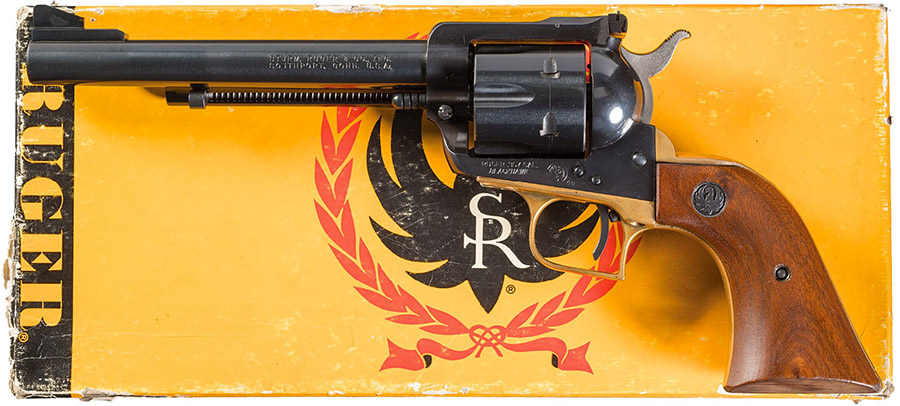
Someone else won the auction for Hank Williams .357 Ruger Blackhawk, and like I said I would, I ordered a New Model Ruger Blackhawk instead. To my astonishment, the Hank Williams gun sold for a whopping $4,993.37 (when new in 1972, it was a scosh over $100). My New Model .357 Blackhawk is at the local dealer, and I’m in the Peoples Republik 10-day cooling off period. I snagged it for $659 on Gunbroker, a reasonable price in today’s economy. I’ve got a bunch of ammo in a variety of flavors reloaded and ready to test, but I think I know what works in a Blackhawk. We’ll see.
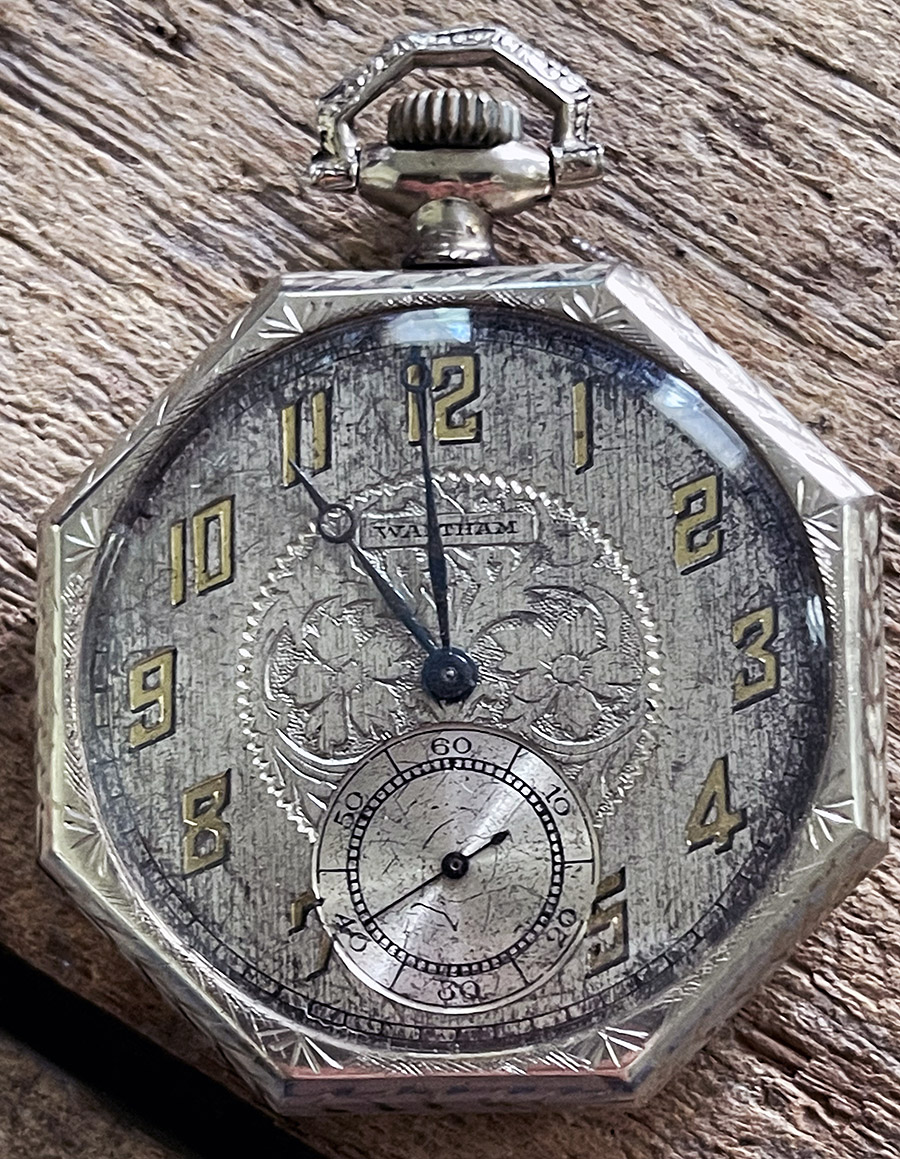
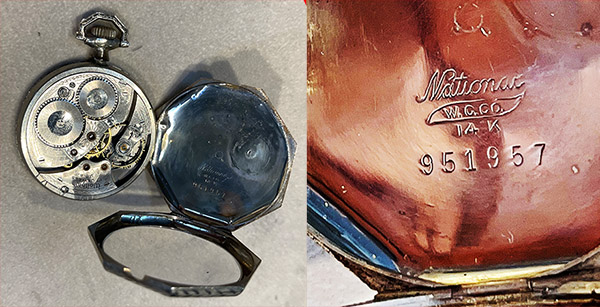
I took Poppy’s watch to the repair shop and it was enlightening. My guy opened the watch up, which confirmed it is 14-carat white gold and revealed the serial number. The watch tech looked it up, and I learned that Poppy’s watch dates to 1884. It’s 138 years old and it’s still ticking. It’s the oldest and coolest thing I own.
Gresh’s blog on a proposed vintage bike gathering in New Mexico garnered a lot of comments and it was picked up by Motorcycle.com. I think this event it is going to happen. A few guys have posted it on other forums (we appreciate that). We’ll keep you updated right here on the ExNotes blog.
The Harley that flew off the Oakland Bay Bridge? It’s still under water (dive crews can’t find it). I wouldn’t have thought it worth the effort (you know, you can buy a brand new Chinese motorcycle from CSC for less than what a used Harley costs). I would think the divers could just look for the oil spots and work back, but hey, what do I know?
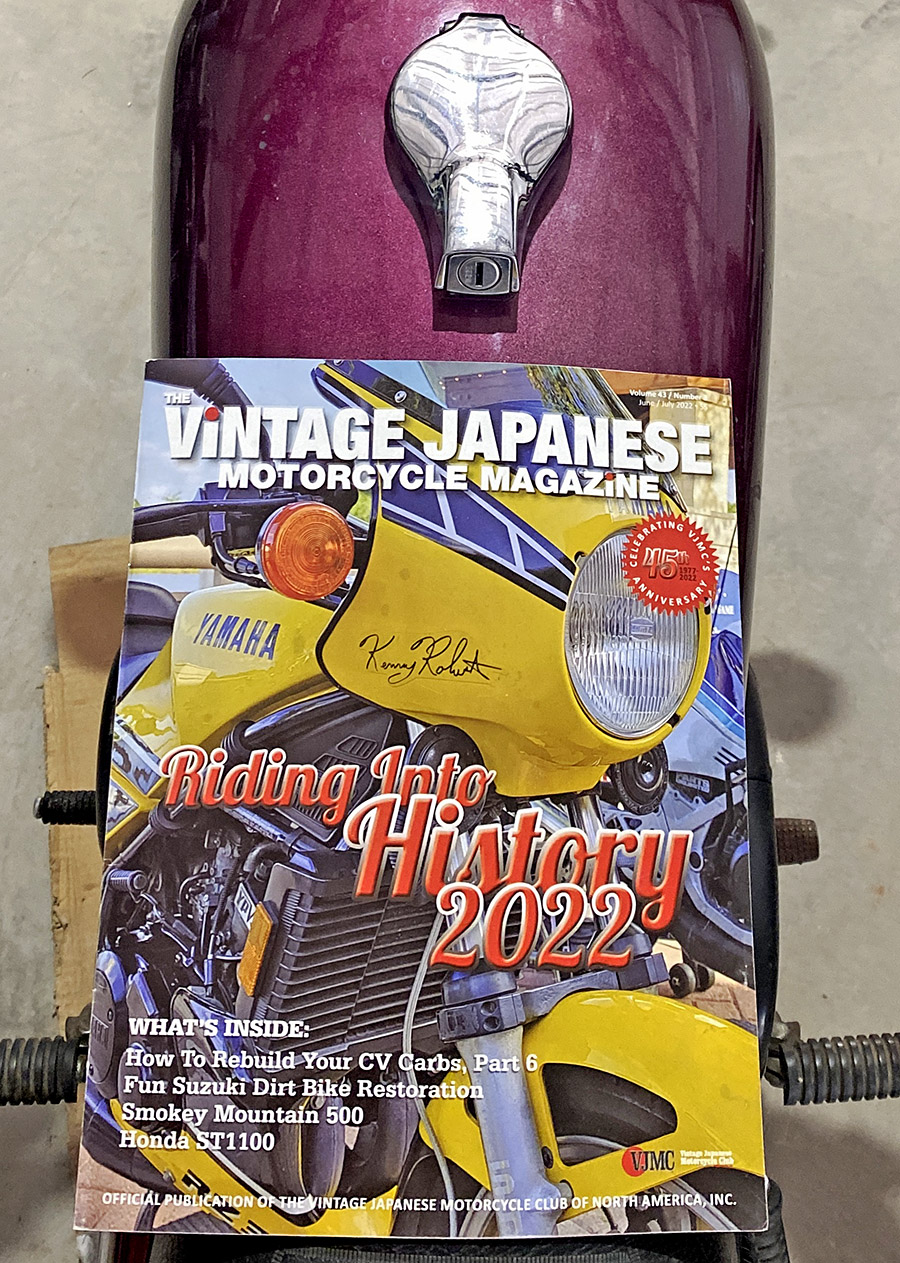
I found the piece Gresh did on the Vintage Japanese Motorcycle Club particularly appealing and I joined the VJMC, too. Like Joe, I recently received my first print magazine, and Gresh was right….there is a special excitement in getting an actual printed magazine in the mail.
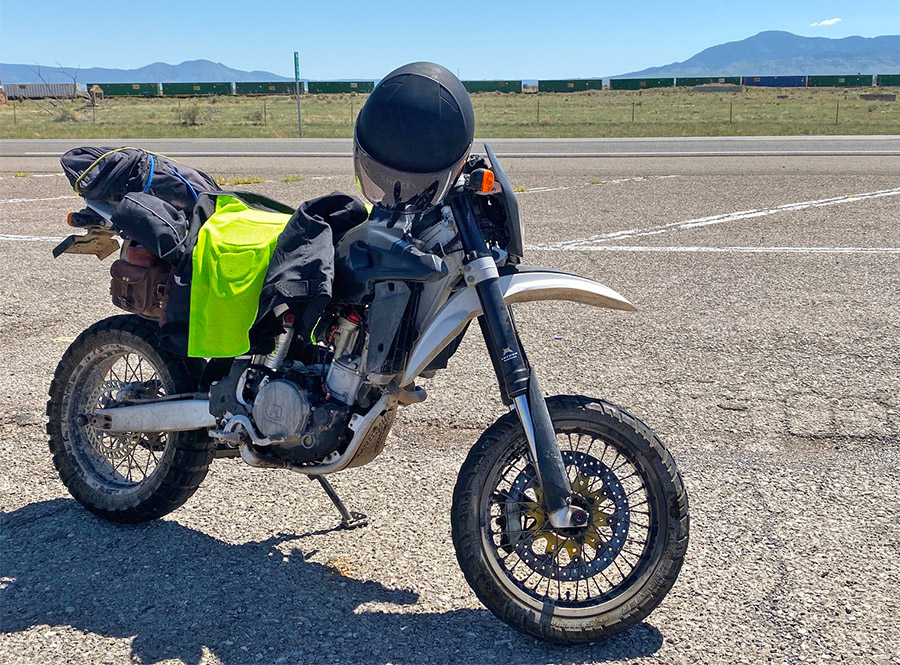
The Gresh Husky saga soldiers on. Joe is already deep into the guts of his Husky’s transmission, and his engineering talents and Ebay prowess are moving things in the right direction (you’ll get an update on that in the very next ExNotes blog). Good buddy Terry pointed out that Gresh could have bought a used Sportster for what he’ll have into his Swedish meatball (it seems that Harleys are the benchmark for all things motorcycle). With Gresh’s considerable skills and Harley’s rumored reliability, maybe the best approach would be to wedge a Milwaukee transmission into the Husky (a Husky-Davidson?). Like you, I’m looking forward reading about how this adventure progresses.
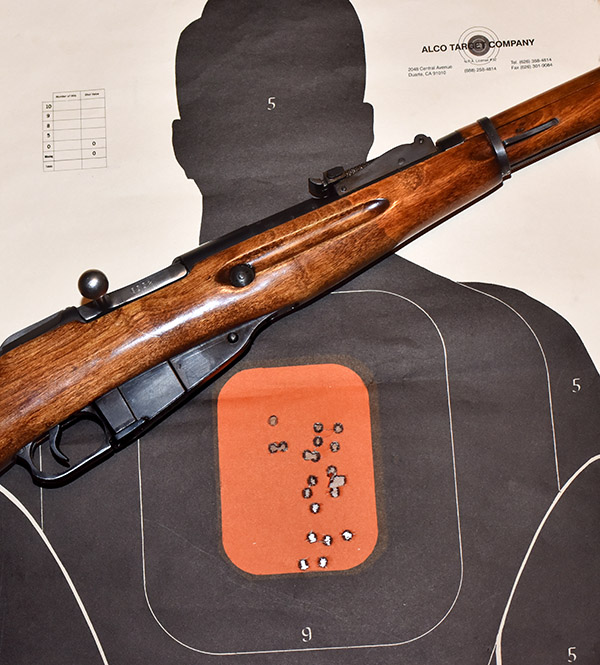
And finally, one last comment, this one on Mosin-Nagant rifles. We’ve done Mosin stories (see the Tales of the Gun page). It’s no secret I’m a big fan, and it looks like that interest could pay dividends if I was interested in selling my Mosins (I’m not). Rock Island Auctions recently published an article on Mosin-Nagant price trends, and it shows they are sharply up. That’s good.
So there you have it. We appreciate you following the ExNotes blog and we appreciate your comments. Please keep the comments coming, and as always, please keep hitting those popup ads!
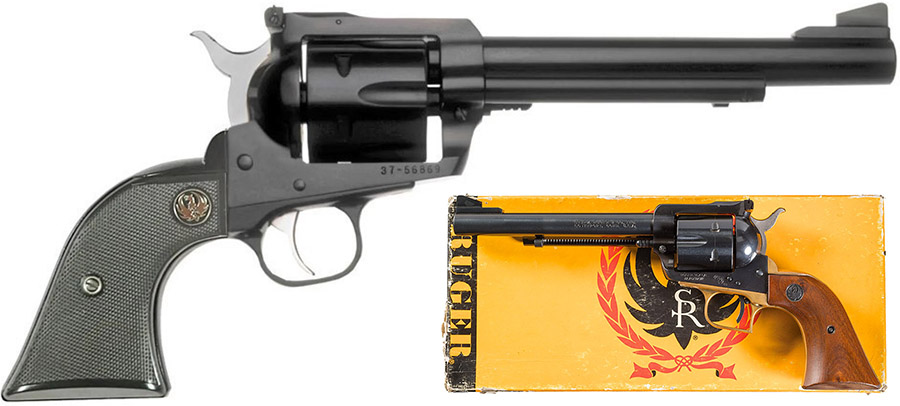
If I had to select one handgun above all others, my choice would be easy. It’s Ruger’s .357 Magnum Blackhawk. I don’t have one, but that’s something I aim to fix in the near term. I’m watching two .357 Blackhawks on the auction block right now. One is that drop dead gorgeous brass frame Old Model you see in the big photo above. That one is not just any Blackhawk, either. It was previously owned by Hank Williams, Junior.
The Hank Williams Blackhawk has a lot going for it. It’s the Old Model Blackhawk, which has a feel when cocked similar to a Colt Single Action Army. There’s the provenance (this one has a letter attesting to its prior ownership and its factory brass grip frame). And, there’s that rare (and highly desirable) brass grip frame. Ruger only made a few of those.
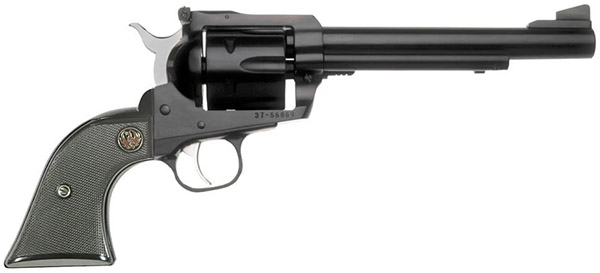
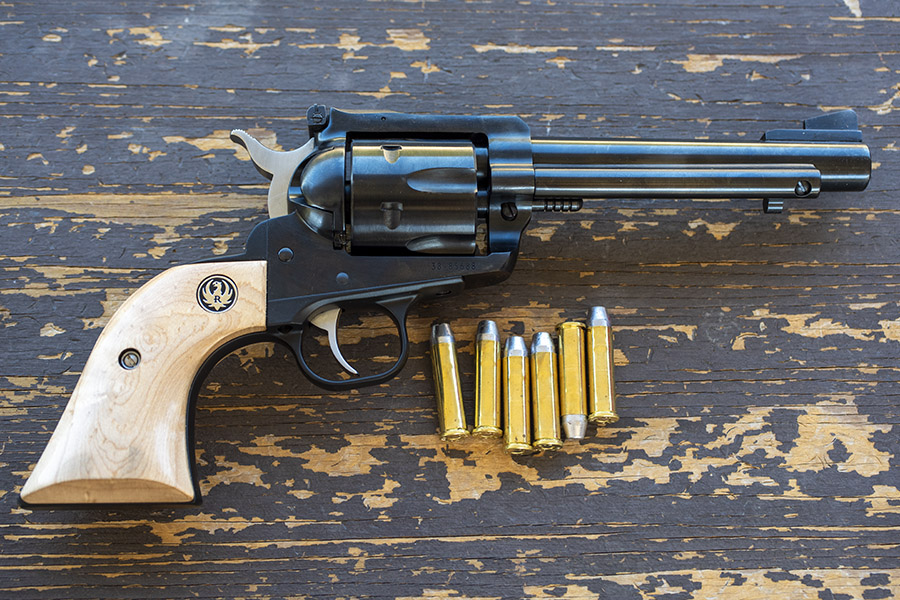
Winning the auction for the Hank Williams Blackhawk is a long shot. My backup is to buy a new Blackhawk, and I have my eye on the one shown in the photo below.
A new New Model Ruger .357 Blackhawk with a 6 1/2-inch barrel.
I guess I need to go tangential for a minute and explain this business about Old Model and New Model Blackhawks. The basic difference between the Old Model and the New Model is that the Old Model can fire if you drop it on a hard surface. The New Model incorporates a transfer bar to prevent that from happening. You should carry an Old Model with the hammer resting on an empty chamber; you can safely carry a New Model with all six chambers loaded. Naturally, geezers like me prefer the look and feel of the Old Model (and we tend not to drop our guns), but the new Model Model is every bit as good and every bit as accurate. Geezers just like old stuff.
I found a used 200th year stainless steel one on Gunbroker about a dozen years ago, I won the auction for it, and I ran the equivalent of a lead mine’s annual output down the bore (including some ultra-heavy 200-grain loads). I am the only guy I know who wore out a .357 Blackhawk. The loading latch wouldn’t stay open, and when I returned it for repair to Ruger, they were as amazed as I was that I wore it out. It was beyond repair, they told me, but as a good will gesture they paid me what I paid for it. Nobody, but nobody, has better customer service than Ruger.
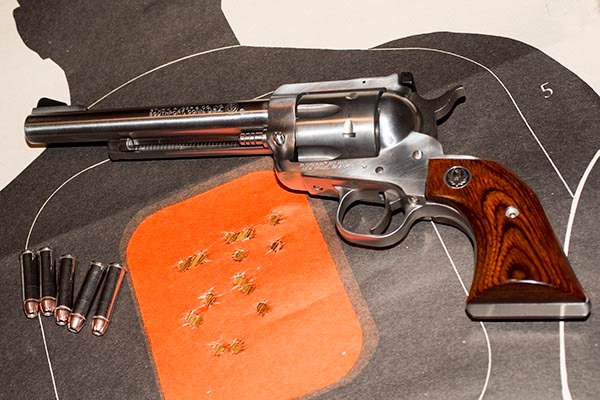
A 25-yard group with the .357 Blackhawk. The Blackhawk will do this all day long.
Part of the reason the .357 Blackhawk I describe above went south, I think, is that it was stainless steel. I have it in my mind that stainless steel is softer than blued carbon steel, and I think they just don’t hold up as well under a steady diet of heavy loads. That’s why my next .357 Blackhawk will be blue steel.
To me, the Blackhawk is a “do anything” .357 Magnum. It’s a good buy in today’s inflated world, it’s a solid defense round, you can hunt with it, and it is accurate. I like the longer barrel for the sight radius. You can believe this or not, but I can easily hit targets at 100 yards with a .357 Blackhawk and the right load.
Typical .357 Blackhawk groups.
It’s been at least a couple of years now that I’ve been without a .357 Blackhawk, and like I said, I aim to fix that problem. I’ll let you know which of the above two guns (a brand new blue steel Blackhawk, or the Hank Williams Old Model) I pick up. Most likely it won’t be the Hank Williams revolver (competition and bidding will be intense on that one and it will probably be too rich for my blood), but the New Model will make me just as happy. Good times lie ahead. Stay tuned.
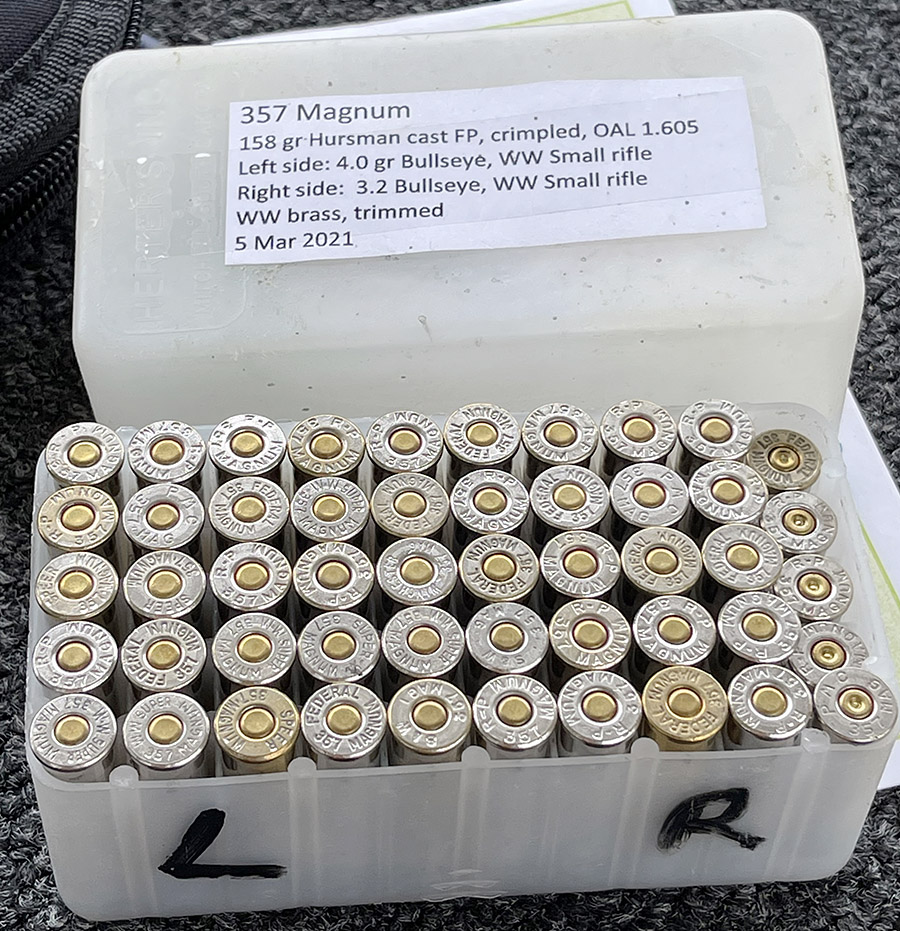
With reloading components still hard to find, the question emerges: Can you use rifle primers in handgun cartridges? If you’re flush with rifle primers but hurting for pistol primers (as I am), it’s a logical question. To evaluate this, loaded a box of .357 Magnum ammo for my Colt Python. I tried to different loads of Bullseye (not an ideal .357 Magnum propellant, but it’s what I had available) and Winchester small rifle primers.
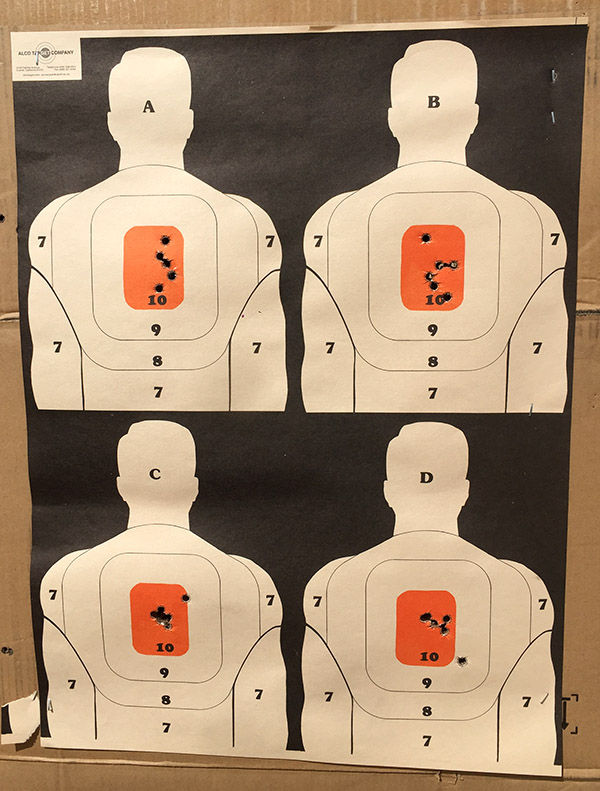
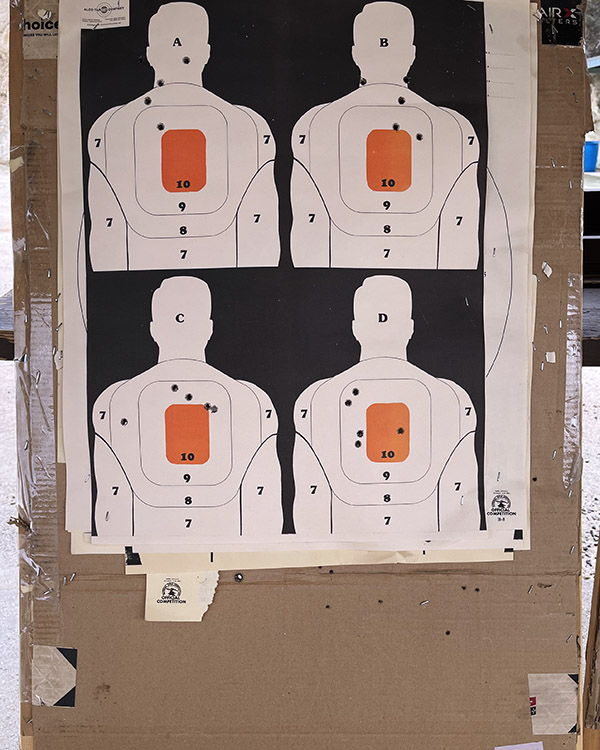
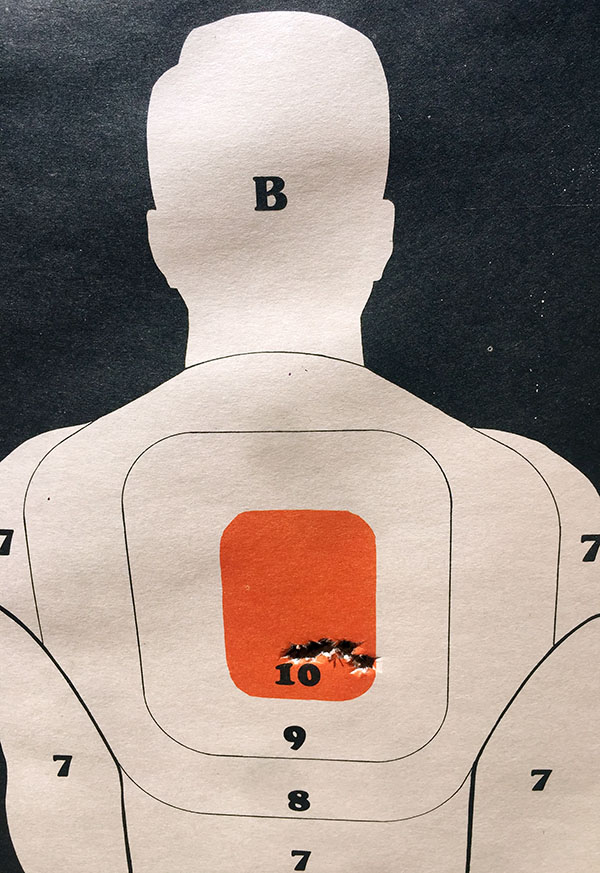
I thought I would simultaneously test for accuracy and reliability on Alco 4-silhouette targets at 25 yards, firing single action at the top two targets and double action on the bottom two targets. The first load was 3.2 grains of Bullseye, a 158 grain cast flatpoint bullet, and Winchester small rifle primers.
Accuracy was mediocre (if you’re ever assaulted by four little men with orange bullseyes painted on their chest, you’d be good enough for government work, but you won’t be taking home any accuracy trophies). The upper two little orange guys were fired single action, and every round discharged. The bottom two little orange guys were fired double action, and on those two targets, I had two misfires. That’s two misfires in 10 rounds, and that’s not good. When I fired the two misfired rounds a second time, they discharged normally.
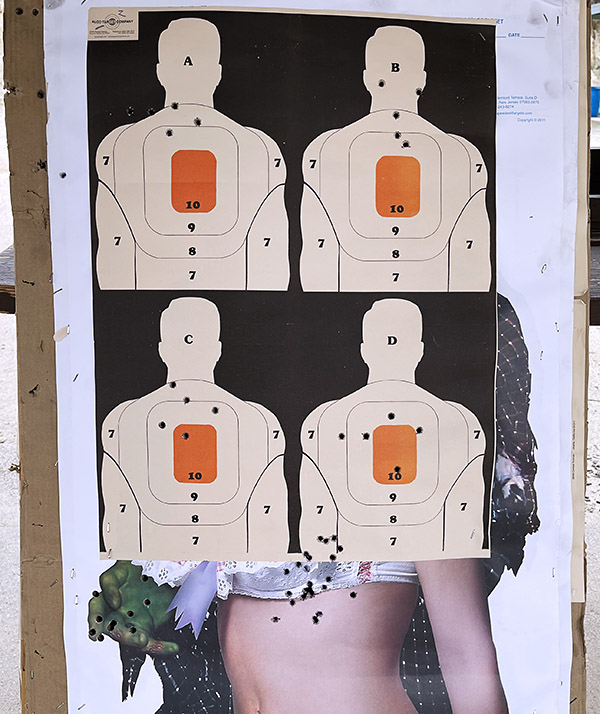
The next target was a repeat of the first, except the ammo I shot at it had 4.0 grains of Bullseye. Everything else was the same. The top two targets were fired single action and the bottom two were fired double action. All rounds fired normally.
You can ignore the shots below the bottom two targets. I was just shooting up some ammo I had left loaded with different combos. The lower left group on the zombie’s green hand were .38 Special 148 grain wadcutter loads (with 2.7 grains of Bullseye); the ones between the two targets were .38 Special loads with the 158 grain flat point bullets and 4.5 grains of Bullseye (a very hot .38 Special load).
The propellant’s name notwithstanding, none of the above were not particularly accurate loads.
As to the primary question: Will rifle primers work in handgun cartridges, my take on this is yes, if fired single action. In double action, ignition is unreliable. On handguns with heavy hammers, you’re probably okay if firing single action. That’s true on the Colt Python, and it’s definitely true on single action Ruger Blackhawks (I have a .30 Carbine Ruger Blackhawk and I always load .30 Carbine ammo with rifle primers).
I suppose it’s possible that the two rounds that misfired double action in the Python may have been suffering from primers that were not completely seated, but I don’t see a need to continue testing. I learned enough from this quick look.
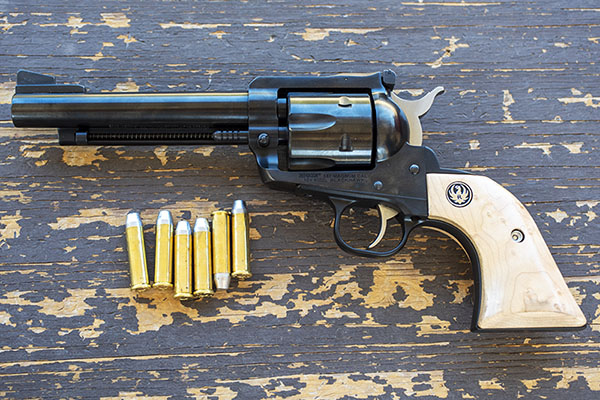
Good buddy Greg and I (along with about a gazillion other people) are long term Ruger Blackhawk fans, and last week we were on the range with a new .357 Magnum Blackhawk Greg recently acquired. It’s one of a limited run offered by Talo, a distributor specializing in custom guns from a variety of manufacturers.
Greg’s Blackhawk has a 5 1/2-inch barrel (standard New Model .357 Blackhawks have either a 4 5/8-inch or 6 1/2-inch barrel) and really cool birdseye maple grips (most Blackhawks these days have black plastic grips). The birdseye maple grips contrast well with the Ruger’s deep bluing, and that 5 1/2-inch barrel just flat works on a single action revolver. At 40 ounces (one ounce heavier than a 1911 Government Model .45 auto), the Ruger balances well and feels right. Greg’s birdseye Blackhawk is beautiful, it groups well, and it has a superb trigger. This particular offering from Talo includes an extra cylinder chambered in 9mm, so Greg can use .357 Magnum, .38 Special, or 9mm ammo (I guess he won’t be running out any time soon).
Greg loads the same .357 Magnum ammunition that I do (a 158-grain cast lead bullet with 7.0 grains of Unique), which is the “go to” accuracy recipe in .357 Magnum. It sure shoots well. A target load that is superbly accurate in a Blackhawk is the .38 Special with a 148-grain wadcutter bullet and 2.7 grains of Bullseye propellant (that’s been a preferred .38 Special accuracy load for decades).
Ruger makes a beautiful revolver, and this Talo birdseye Blackhawk’s limited production run almost guarantees these will be investment grade guns. Most dealers are sold out, but if you poke around a bit on Gunbroker.com, you may still find one.
Help us keep bringing these articles to you. Please click on the popup ads!
Like our gun posts? Hey, there’s a lot more on Tales of the Gun!
Never miss an ExNotes blog! Sign up here for a free subscription:
I had a hard time selecting the title for this blog. I ultimately went with the one you see above because I think it will show up better on the search engines. But I almost went with Stupid is as Stupid Does (you know, from the Forrest Gump movie). Read on. You’ll see.
I am a big fan of the Ruger Blackhawk, and I wanted to try something different a few years ago, so I bought an older .30 Carbine Blackhawk on Gunbroker. I was excited about getting it, but I have to tell you that revolver had issues, one of which led to its ultimate destruction. One issue was that every case stuck in the cylinder after firing, and the other issue was that the cartridges dragged on the frame and the cylinder wouldn’t turn freely.
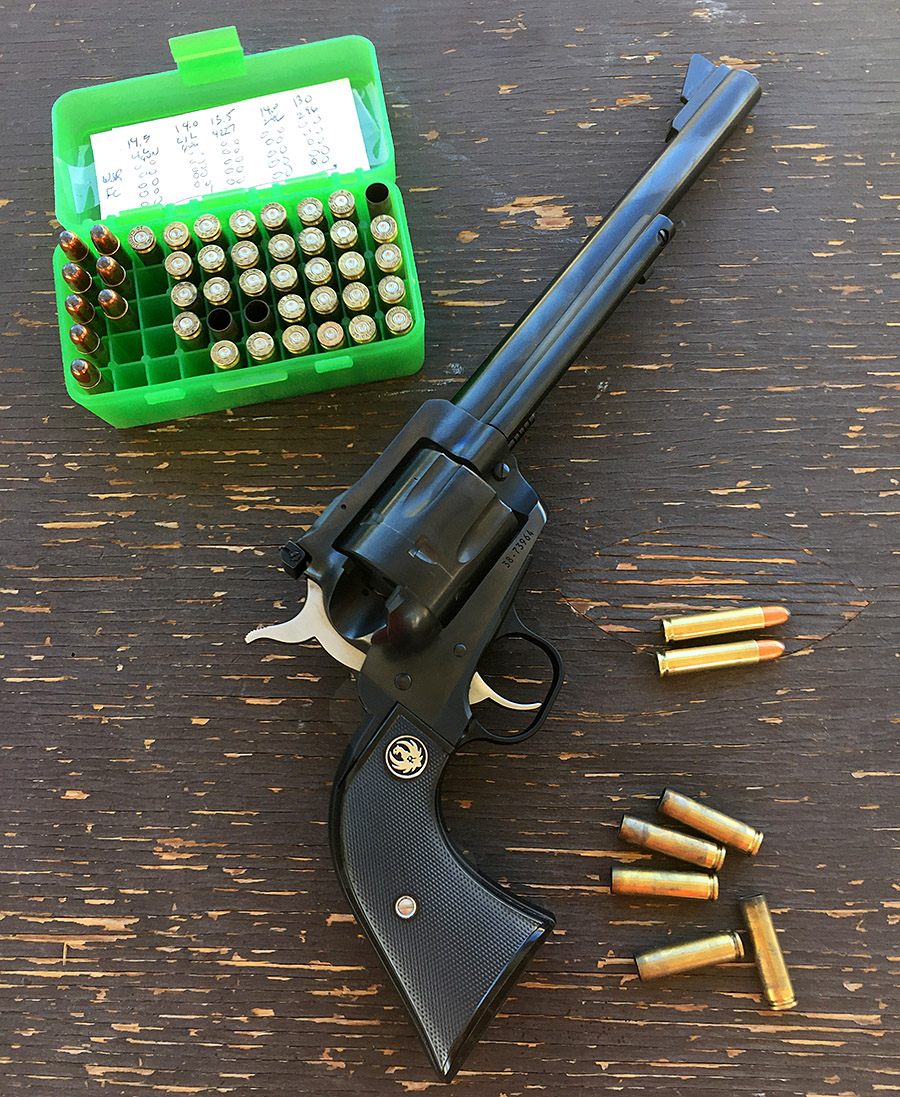
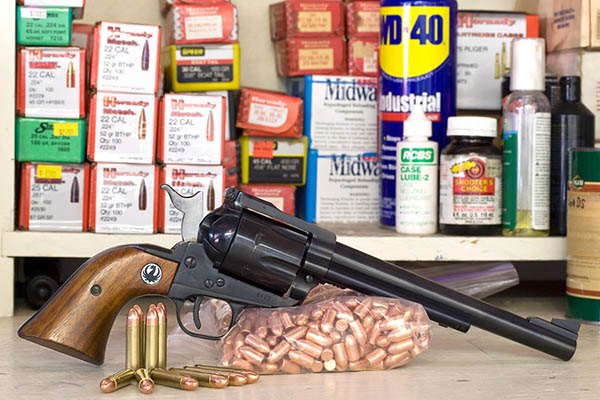
The first Ruger .30 Carbine I owned. It was the original design, informally referred to as the Old Model. It was a beautiful handgun, but it had problems.
I doped out the cylinder drag issue fairly quickly. You have to trim the brass after nearly ever firing, and you have to make absolutely certain the primer is at or below flush after seating (something you should do for all cartridges). The .30 Carbine is a cartridge that is unusually sensitive to all this in the Blackhawk. .30 Carbine cases shrink in length when fired, and then they grow in length when you resize them. The cartridge headspaces on the case mouth so case length is critical, and the .30 Carbine case seems to grow and shrink more than others. Let it get too long, even by just a few thousandths, and the based of the cartridge will drag on the frame and the cylinder won’t turn freely. I learned to check case length every time I reload this cartridge, and I usually have to trim about half of them.
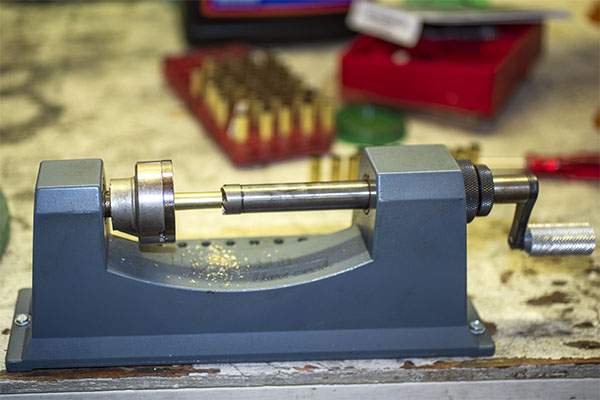
I use a old Lyman case trimmer I’ve had since the 1970s. It’s a little manual lathe (I’ll let Gresh handle the big ones). That’s a .30 Carbine case you see in there.
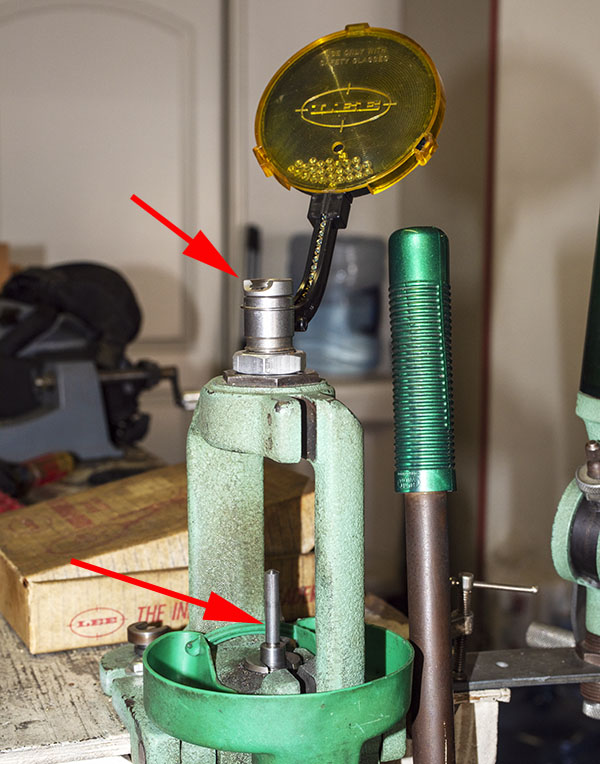
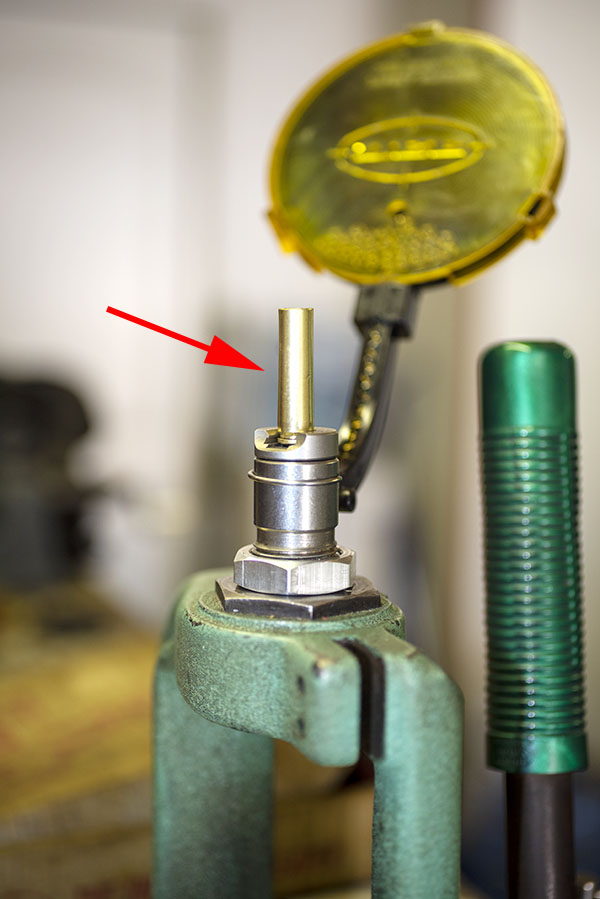
The next issue is primer seating. Even though I clean the primer pockets each time I reload, I found that a handheld priming tool won’t always fully seat primers in a .30 Carbine case. Hey, I’m not looking for an argument here and if you can do this with your hand priming tool, more power to you. I’m telling what my experience has been. I have another priming setup (also made by Lee), and it’s the Auto Prime tool that mounts on the press. It positively seats the primer below flush on every cartridge. It’s what I use now when priming .30 Carbine cases.
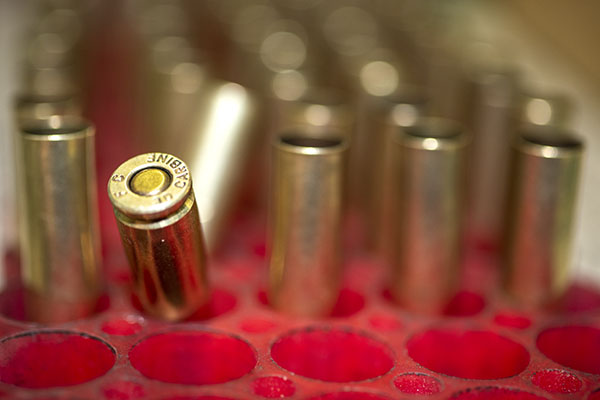
A Lee Auto Prime tool mounted on an RCBS Rockchucker reloading press. The shell holder mounts on top of the tool (upper arrow). A ram (lower arrow) pushes a machined rod that seats the primers.A .30 Carbine brass case in the shell holder waiting for its primer.A Winchester Small Rifle primer properly seated in a Federal .30 Carbine cartridge case.
All the above is a prelude. I fixed the cylinder drag issue on my first .30 Carbine Blackhawk using the reloading process shown above, but I still had the extraction problem. The cases just did not want to leave the cylinder. The extractor rod was bending and the cases still wouldn’t extract. It was so bad that I usually had to take the cylinder out of the revolver to drive the cases out with a cleaning rod. I tried everything to fix that problem. I polished the chambers and I swabbed them with alcohol to remove any traces of oil (an oily chamber or cartridge case allows brass to flow into any machine marks in the chamber, locking it in place), but I still had the extraction problem.
Then I tried lighter loads. A little bit lighter wasn’t doing it with the propellants I had been using, so I went to Trail Boss (a powder known for working well with lighter loads). That’s how I got in trouble. You have to understand that reloading manuals don’t include data on Trail Boss for many cartridges, and in particular, there was no data in any of the several reloading manuals I own on using this powder with the .30 Carbine. The Trail Boss manufacturer’s guidance is to load to the base of the bullet for a max load, and not less than 70% of that amount as a minimum load. I loaded at just under the max load.
I thought I was doing pretty good when I fired the first Trail Boss load and ejected the case. It extracted easily. This is progress, I remember thinking. Things are looking good. So I fired the remaining four rounds. Then I walked downrange to check the target.
Hmmmm. That’s odd. Not a single shot was on the target. My first thoughts were the load was either terribly inaccurate, or it was so light the bullets were hitting below the target. Then, when I walked back to the firing line, I saw it: A sickening glint of copper peeking out of the Blackhawk’s barrel. A stuck bullet. Five of them, actually. I got a bullet stuck in the bore and didn’t realize it. Then I had fired another, and another, and…well, you know. They liked that barrel, those bullets did, and that’s where they stayed. I felt even worse when I ran my fingers along the length of the barrel. I could feel the swells in its diameter from each bullet to the next. Good Lord, they build Rugers tough (that’s why I’m here to tell this story). Forrest Gump has nothing on me. Like I said at the beginning of this blog, stupid is as stupid does. The weird part to me was that I couldn’t feel anything different when firing the gun.
I was embarrassed and thoroughly disgusted. It was the dumbest thing I’d ever done. When I got home I put the gun in the back of my safe and I left it there for a year. I didn’t want to think about it and I didn’t want to see it. But I knew it was there, bearing silent witness to my stupidity. I wanted to get it fixed, but I didn’t want to admit to anyone I had done something so dumb. The barrel was toast, and the revolver’s frame looked a little distorted to me. Best to just forget about it. Maybe save it for a gun buyback program.
Then one day I figured I had waited long enough, and I called Ruger. I told them my story and the nice lady on the other end told me I wasn’t the first one to call with stuck bullets in the barrel. I felt a little better. I asked if they could re-barrel my Blackhawk. Sure, she said, and off it went. A few days later Ruger called me, and that same nice lady told me a new barrel would be $400.48, but they weren’t too sure about the gun’s structural integrity. Or, they could sell me a brand new Blackhawk. How much would that be, I asked. $400.48, she said. Ah, I get it. What they were really telling me is to buy the new gun at the steeply-discounted price (MSRP on a new .30 Carbine Blackhawk is $669). I was in. Here’s my credit card number. Send me the new gun.
So I received the Blackhawk, but like its predecessor it went in the safe. I still didn’t want to be reminded of what I had done. And, I had managed to convince myself that shooting a 40,000 psi M1 Carbine cartridge in a handgun maybe was just not meant to be. What I was really afraid of was that the new Blackhawk would have case extraction issues like the first one.
Another three years went by, and then something clicked: I woke up and felt like shooting my .30 Carbine revolver. I can’t say why it took three years. It just did. I had the urge and I loaded a box of .30 Carbine ammo in different flavors to test what worked best. And a couple of days ago, we went to the range.
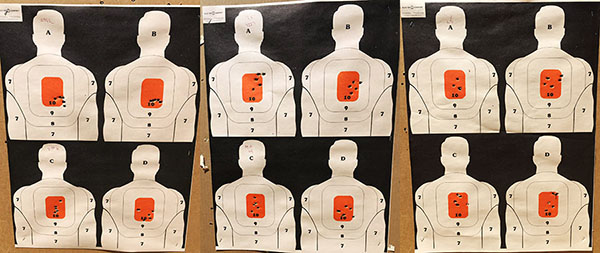
How did it go? In a word, awesome. Take a look:
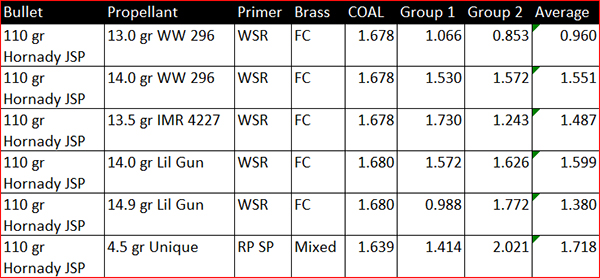
Six different loads tested on two targets each. All groups are 5 shots, and all are at 15 yards.The loads. My .30 Carbine New Model Blackhawk seems to like everything.
This new .30 Carbine Ruger Blackhawk revolver liked every load I tested. One was exceptional:
The secret sauce: 13.0 grains of 296 and the 110-grain Hornady jacketed soft point bullet. It’s consistent, too.
Shooting a .30 Carbine Blackhawk is fun. You get massive muzzle blast, a huge muzzle flash, and major noise (hey, 40,000 psi is 40,000 psi), but little recoil. And, as the above target and load data show, it is accurate. This puppy can shoot.
You know what else? The spent brass practically fell out of the cylinder when I emptied it. The extraction problem is gone. I’m wondering if something was wrong with the first .30 Carbine Blackhawk that caused the pressures to go excessively high and seize the brass cases in the cylinder (the chamber exit bores could have been too small, or maybe the barrel was undersized). I’ll never know, but I don’t care. This new Blackhawk is a honey.
A bit about the gear I use in my .30 Carbine reloading activities. I use Lee dies, although just about .30 Carbine reloading dies will do the trick. I normally stick with RCBS reloading gear, but I could get the Lee dies quicker so that’s what I bought. I like them. Most of my other reloading gear is RCBS, including the RCBS powder dispenser, the RCBS Rockchucker press, and the scale. Again, any brand will work. In looking at the prices for RCBS gear, I notice that it has become fairly expensive. If you want to get into reloading for a lot less, you might take a look at this LEE PRECISION Anniversary Challenger Kit. It contains most of what you need except for the dies. Knowing what I know after having been a reloader for 50 years, it’s what I would buy if I was starting out all over again.
Keep us afloat…please click on those popup ads!
Keep us in components!
More Tales of the Gun stuff? Just click right here!


 will do the trick. I normally stick with RCBS reloading gear, but I could get the Lee dies quicker so that’s what I bought. I like them. Most of my other reloading gear is RCBS, including the