
By Bobbie Surber
We left Sedona on Valentine’s Day, riding through Jerome, the old mining town clinging to the cliffside, and down through Skull Valley to Yuma for the night. The next day, we crossed into Baja at Los Algodones, the desert flattening out toward the Colorado River. The landscape changed around us. It took a few days before we did, too.
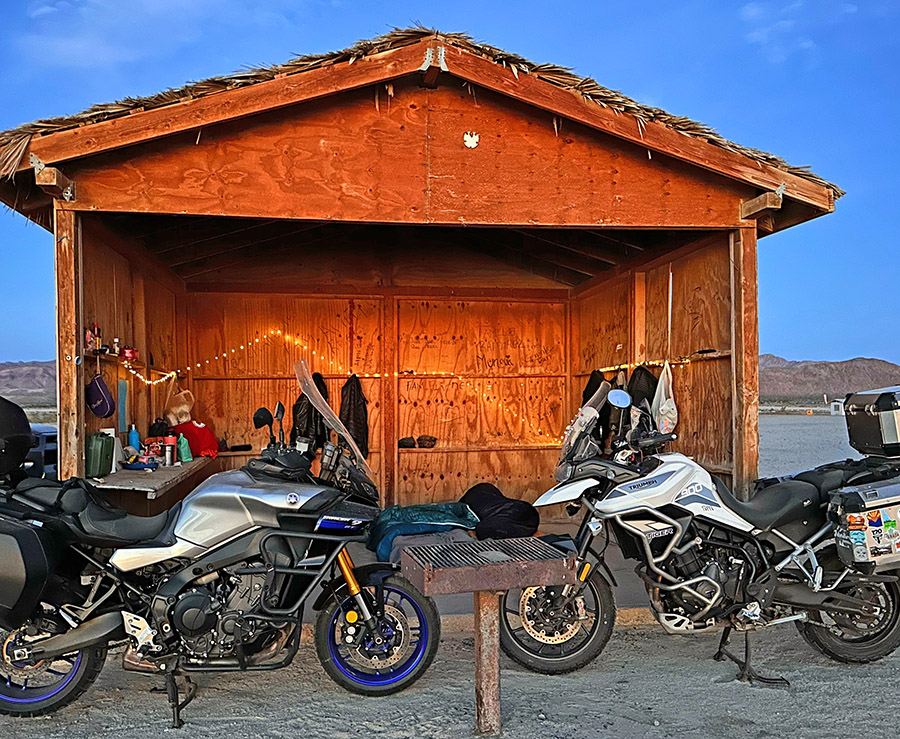
Tom was on his Yamaha Tracer 900, me on Tippi, my Triumph 900 GT Pro. I’d been to Baja before and loved it the way you love a place that doesn’t make anything easy for you. What I love most is the riding itself, the exhaustion of getting from Point A to Point B while moving through a desert that feels alive.
Strange cacti rise everywhere, topped with these single blooms that look like they wandered out of a Dr. Seuss drawing. Osprey and vultures are constant companions. In the mornings, the vultures sit atop the cactus, wings spread wide, completely still, like sculptures set out in the open.
I kept watching Tom take it all in. The little pauses at stops, the way he’d look back at the Sea of Cortez like it was still talking to him.
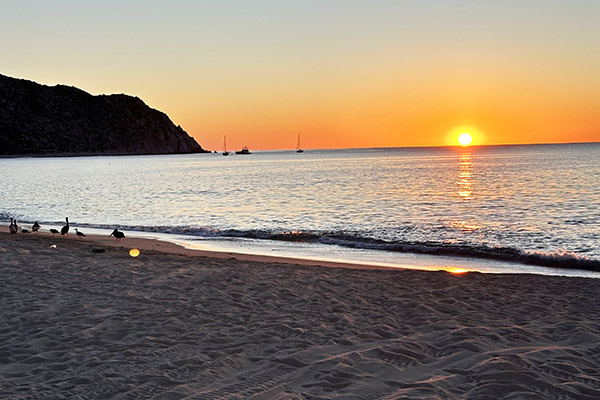
And then there are the people. The quiet kindness you run into along the way. The way everything settles when you finally stop at night, simple places, camping on the beach where nothing is asking anything of you.
We were unprepared for the heat. Usually, this time of year, it’s mild. Not this time. It sat on everything for most of the trip. On the bikes, it was relentless with gear on, sun overhead, and asphalt radiating up. You ride early, hide in shade by midday, and eventually stop arguing with it. We talked about it every day and then just leaned into the absurdity of riding in such conditions.
My sister Debbie and her husband Jim met us a day after we landed at Pete’s Camp in San Felipe, towing their renovated 9-foot Scamp behind them. Cold drinks in hand, the Sea of Cortez was going pink as the four of us toasted the start of a good beginning.
Gonzaga Bay, two hours south, feels like the edge of something, a few palapas, a dirt airstrip, water that doesn’t look real. We took a palapa on the beach and felt pleased, until a windstorm rolled in and sand filled everything: sleeping bags, boots, food, teeth. I lay awake waiting for the palapa to go airborne, crashing around us, while Tom slept in complete peace. By morning, we were laughing about it. Baja always wins; it’s best to accept both her gifts and challenges.
Guerrero Negro is all about the whales. It was blessedly cool there, which we didn’t take for granted. Debbie, Tom, and I climbed into a panga at first light under soft sun and calm water as we headed farther towards the mouth of the bay. Then a gray whale surfaced close enough that you could hear her breath hit the air. Everything just stopped. Massive, completely unbothered. The day brought several mothers to our panga, and our excitement was palpable as the juveniles delighted everyone with spectacular displays of breaching and tail-slapping.
Afterward: Tony’s Tacos. Don’t argue!
San Ignacio has been there a long time, and it shows in the plaza, the mission walls, and the pace of everything. We stayed just outside town at a newer camp with yurts and a working garden. Walked into town for drinks, drove out to the petroglyphs, pulled vegetables from the garden for dinner. No schedule. No agenda.
From there, we rode to Mulegé for the night at Historica Casitas—a small, characterful place that’s been soaking up travelers for decades. The morning we left Mulegé, I already knew what was waiting. My excitement was building as I pushed for an early departure. Leaving Mulegé, the road hugs the coastline and gives you these unreal views over the bay as you drop south toward Bahía Concepción.
Three perfect nights on the beach. If you’ve been there, you already know. Warm, impossibly clear water, coves tucked into the coastline, mountains dropping straight into the sea. The days just stopped having shape, which was the whole point.
Vendors came by in cars, selling fresh seafood they’d pulled from the water that morning. We couldn’t resist the fresh shrimp and clams vendors made into a dip.
Our last night, we stayed out on the beach until the light softened and the tide crept closer, the whole coastline feeling like it might just keep us if we stayed still long enough.
We finally pulled ourselves together, loaded the bikes, and the road turned inland toward the mountains and the short ride into Loreto.
Loreto is another mission town where the mountains meet the water, and the Sea of Cortez really opens up. The square and the mission are perfect for sitting with a cold beer or an unnecessary margarita and just watching life happen.
On my last morning there, I was up before dawn and walked the malecón with my sister as the sun came up over the mountains and hit the water. The sunlight turned the water shades of pink, red, and purple. Just time with my sister and fishing boats heading out, pelicans squabbling relentlessly over scraps from the boats, street coffee with cinnamon warming your hands. A perfect start to our day. Then back on the road for the long haul to La Paz, doing our best not to lose the battle with the heat.
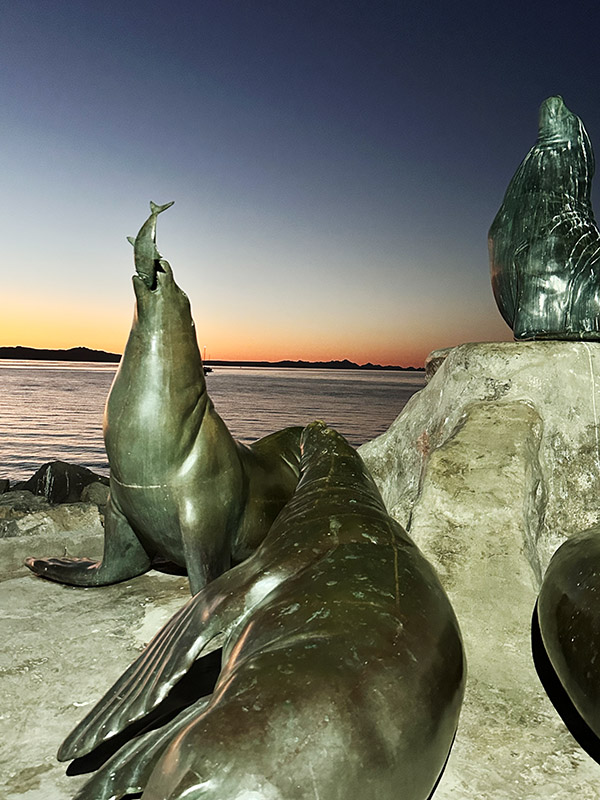
La Paz hit differently after all that camping, dust, and sun. Clean clothes, long dinners, fresh seafood, sunsets over the water. We stopped rushing without really deciding to — and then swam with whale sharks. Pools of krill draw them close to shore, and snorkeling next to something the size of a bus has a way of rearranging your sense of scale. Then the seals: curious teenagers bumping your fist, chasing fins into caves where the pups wrestled each other to the seafloor. We didn’t know any of that was possible.
La Ventana had a different energy, windy, alive, full of kitesurfers moving constantly across the water. Small family spots serving incredible tacos and agua chile that stopped us mid-bite. We stayed in a little hotel where the patio opened straight onto the sand and the beach, a simple palapa to your left with plenty of cold beverages calling to you ridiculously early in the day. It’s Baja time, which means sipping on a margarita at 10 AM is not just acceptable, it’s absolutely essential!
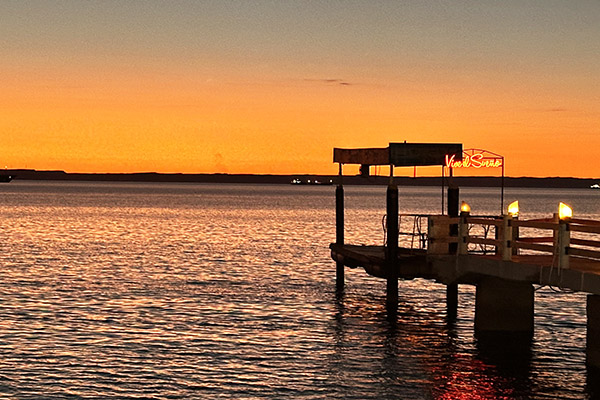
From La Ventana, we rode to El Pescadero, just below Todos Santos. Three nights in a small beach condo on the Pacific with a real kitchen, simple food, and a daybed facing straight out to the ocean. The sunsets there weren’t something I was ready for. Every evening, the sky just broke open over the water, and I sat there and let it happen.
Cabo Pulmo, we dispersed camped. No facilities, no shade—just desert, reef, and that impossible blue water. We swam until the ocean took the edge off everything and the heat stopped mattering.
The eco-farm above Santiago was a good place to end our adventure to the tip of Baja. Three nights under trees and coffee plants, cooking under a big palapa while hummingbirds worked the flowers like they were on a deadline. A river below, mountains above. Everything slowed down, a peaceful ending before the challenging ride home.
We left Baja the way you leave a place like that, not quite done exploring, and seriously planning the return trip in January to see the blue whales.
Subscribe to ExNotes for free!
We need your support! Do what you can to help ExNotes stay in the black!

More Gresh and Berk? You bet! Check out A Cup O’ Joes!