The Six Best Motorcycles for Baja

This is a blog that is sure to be controversial and elicit a few comments. It attempts to answer a very specific question: Which motorcycles are best for Baja?

As a qualifier, let me mention a few things up front:

    • Most of my Baja riding is on asphalt, and that necessarily colors my opinions. Yeah, there’s a lot of great dirt riding in Baja, but I am a streetster at heart. Your mileage may vary.
    • You don’t need to spend $30K on a Baja blaster.  What good is driveway jewelry if you are afraid to get it dirty and if you’re constantly worried about where you parked?  In Baja, a big, heavy motorcycle (ADV-styled or otherwise) puts you at a disadvantage.  I am not a fan of huge displacement, tall, expensive motorcycles.  For real world riding (especially in Baja), monster motorcycles are more of a liability than an asset.  Even that new one that’s 20 years late to the party.
    • What I think you need in Baja is a comfortable bike with range. There are places where you can go more than a hundred miles between fuel stops, and you need a bike that can go the distance. That means good fuel economy and a good-sized fuel tank.
    • Luggage capacity is a good thing, but if your bike doesn’t have bags, you can make do with soft luggage. In fact, I’d argue that soft luggage is better, because it’s usually easier to detach and bring in with you at night.

With that said, here goes:

CSC’s RX3

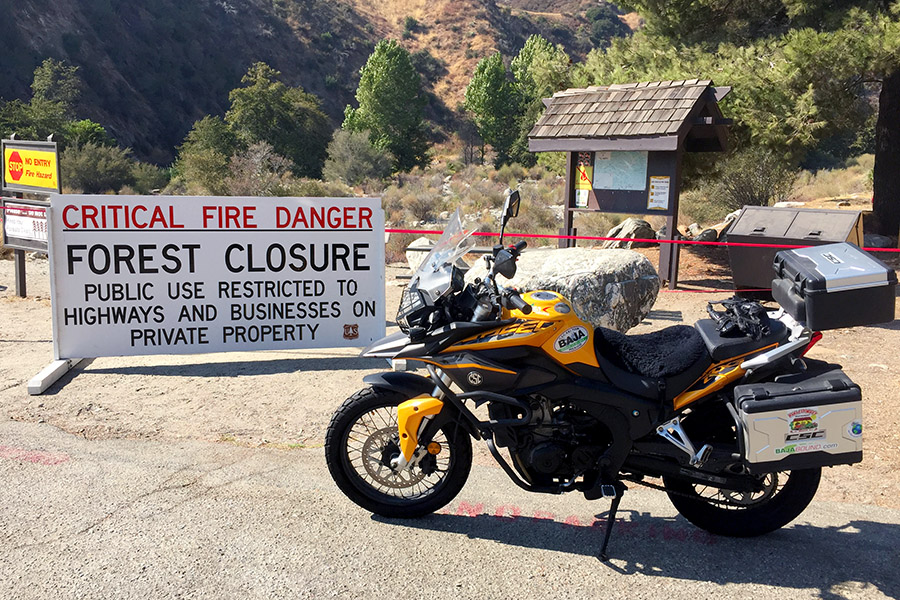
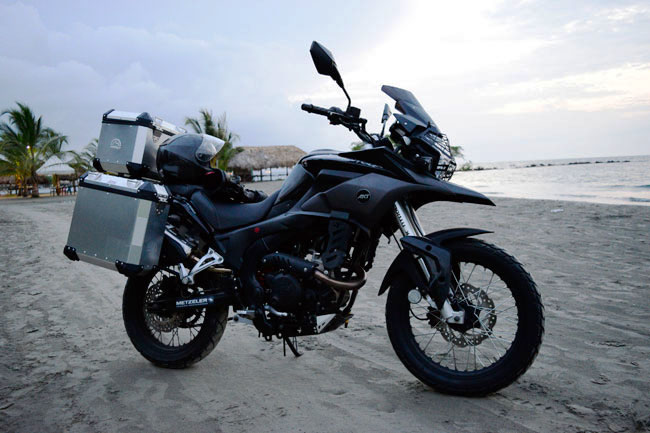
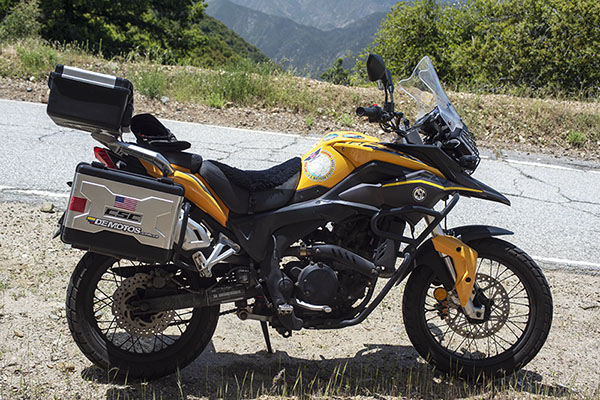
Say what you want about Chinese bikes, and say what you want about smallbore bikes, I’m convinced my 250cc CSC RX3 was the best bike ever for Baja.
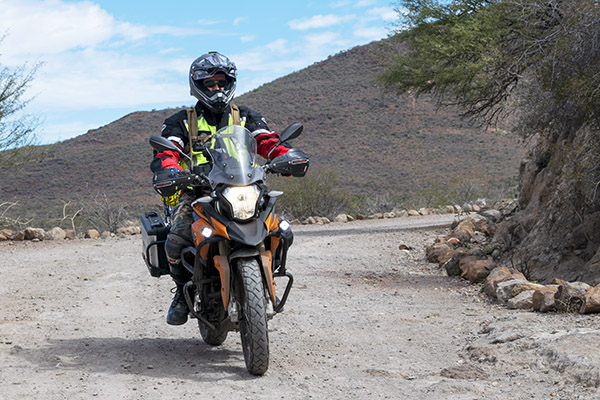
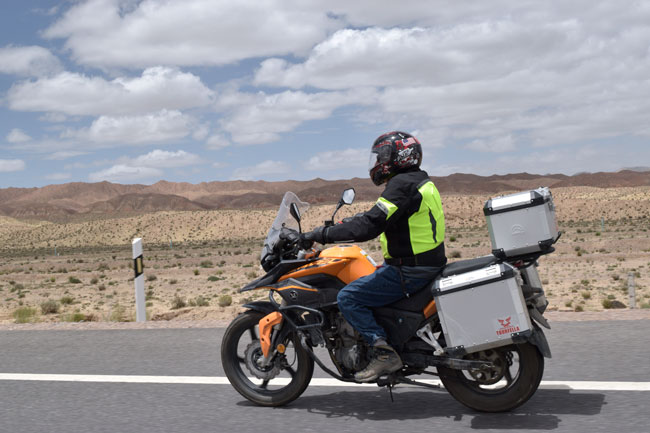
The RX3 tops out at about 80 mph and that’s more than enough for Baja’s Transpeninsular Highway (the road that runs from the US border all the way down to Cabo San Lucas). The bike is comfortable and it gets 70 mpg. The fuel tank holds over 4 gallons. I could carry everything I needed (including a laptop, a big Nikon and a couple of lenses, and clothes) in the bike’s standard panniers and topcase. I also carried tools and spare parts, but I never needed them. It was superbly well suited for Baja exploration, as I and more than a few others know.   One more thought…before you pummel me with the inevitable “Ah need at least a thousand cc” comments, take a look at our earlier blog, Why a 250?

Kawasaki’s KLR 650

I owned a 2006 KLR 650 Kawasaki for about 10 years. I bought it new and I loved the thing.  I think it is one of the best bikes I’ve ever ridden in Baja.  Yeah, it was a little tall, but once in the saddle I had no problem touching the ground.
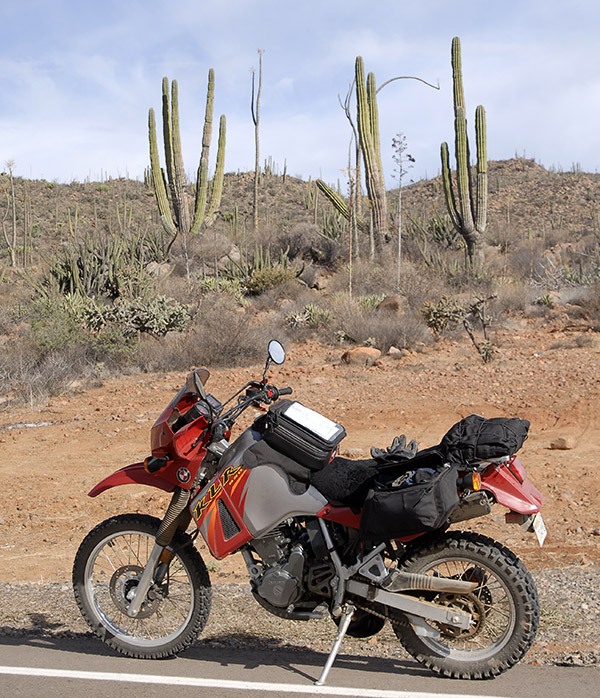
The Kawi didn’t come with luggage, but I bought the cheap Kawasaki soft luggage panniers and a Nelson Rigg tankbag and I was good to go (I didn’t need the obligatory KLR milk crate). Although the KLR was heavy, it did surprisingly well off road (especially running at higher speeds over the rough stuff), and I did more offroad riding with the KLR than I have with any of the other motorcycles I brought into Baja. It averaged 56 mpg, and with its 6-gallon gas tank, I could make the trek between El Rosario and that first Pemex 200 miles further south without stopping for fuel.

CSC’s RX4

I’ve never owned an RX4, but I’ve ridden one a fair amount and I’ve done detailed comparisons between the RX4, the RX3, and the KLR.
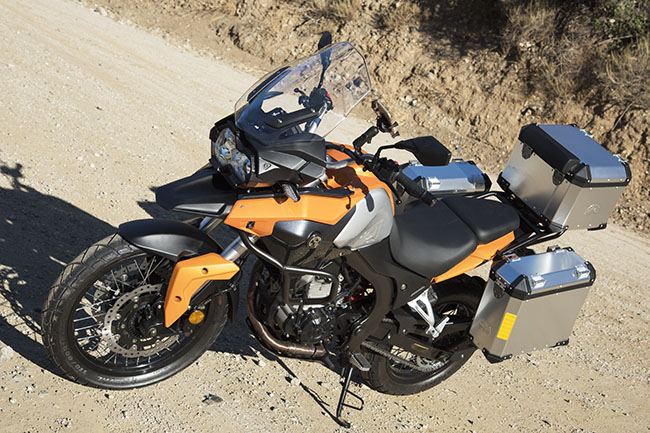
I’ve never taken an RX4 into Baja, but I’ve ridden both (the RX4 and Baja) enough to know that it would do well down there. Think of the RX4 as an RX3 with more top end, more acceleration, and a bit more weight. It’s got the luggage and the ground clearance for extended travels with some offroad thrown in, and it also gets about the same fuel economy as the RX3. Fit and finish on the RX4 is superior (it’s almost too nice to take offroad).  The RX4 is a lot of motorcycle for the money.  The pandemic hit our shores not too long after the RX4 did, or I would have seen more of the RX4 south of the border.

Genuine’s G400c

I rode Genuine’s new G400c in San Francisco, courtesy of good buddy Barry Gwin’s San Francisco Scooter Center, and I liked it a lot.  It’s compact, it has adequate power, it has an instrument layout I like, and it’s a fairly simple motorcycle.
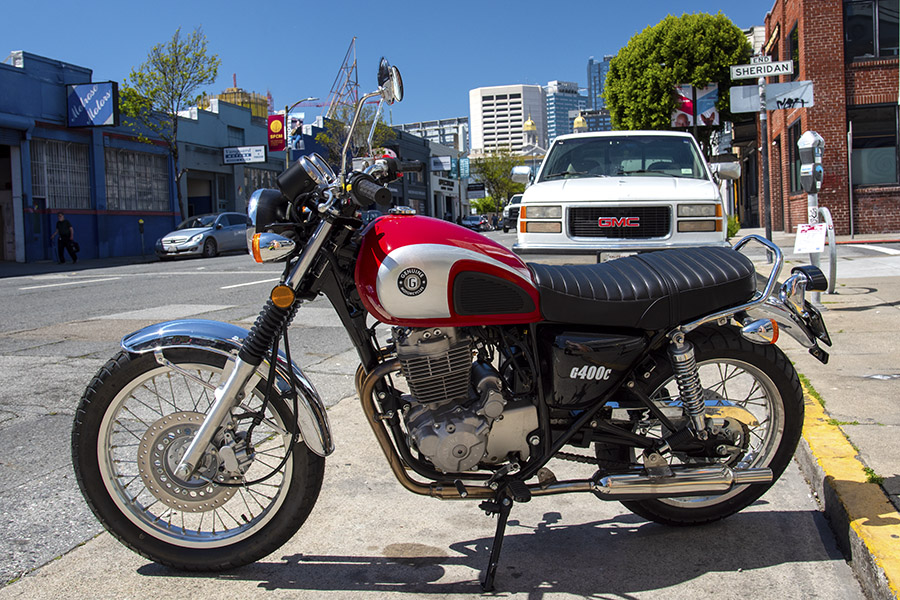
I think with soft luggage, the Genuine G400c would make an ideal Baja blaster, and the price is right:  It rings in right around $5K.  With its Honda-clone 400cc motor (one also used in the Chinese Shineray line and others), it has enough power to get up to around 90 mph, and that’s plenty for Baja.  I rode a different motorcycle with this powerplant in China and I was impressed.  I think this would be an ideal bike for exploring Baja.

Royal Enfield’s 650 Interceptor

Yeah, I know, the new Enfield Interceptor is a street bike with no luggage. But with a Nelson Rigg tailpak and Wolf soft luggage, the Interceptor was surprisingly in its element in Baja. Gresh will back me up on this.

We had a whale of a time exploring Baja on a loaner 650 Enfield (thanks to Enfield North America and good buddy Bree), and I liked the bike so much I bought one as soon as I could find a dealer that didn’t bend me over a barrel on freight and setup. There’s one parked in my garage now. The bike is happy loping along at 65-70 mph, it’s comfortable (although I’ll be the first to admit it needs a sheepskin cover on that 2×4 of a seat), and it gets 70 miles per gallon. I wouldn’t take it off road (except maybe for that 10-mile stretch to go see the cave paintings in the Sierra San Francisco mountains), but like I said at the beginning of this conversation starter, I’m mostly a street rider.

Royal Enfield’s 400cc Himalayan

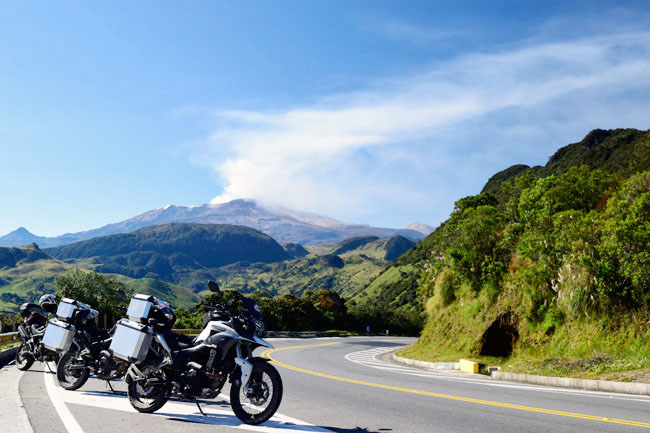
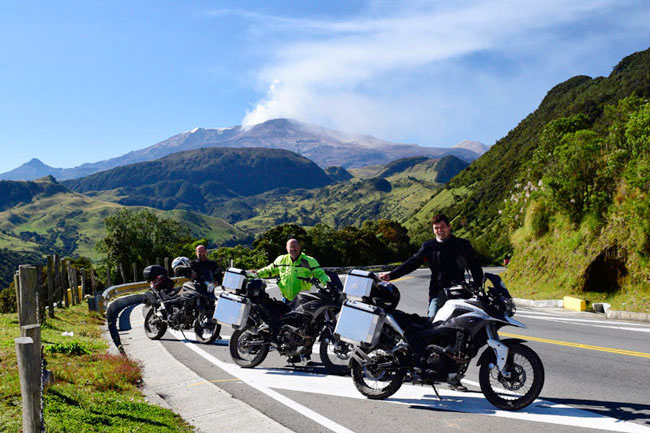
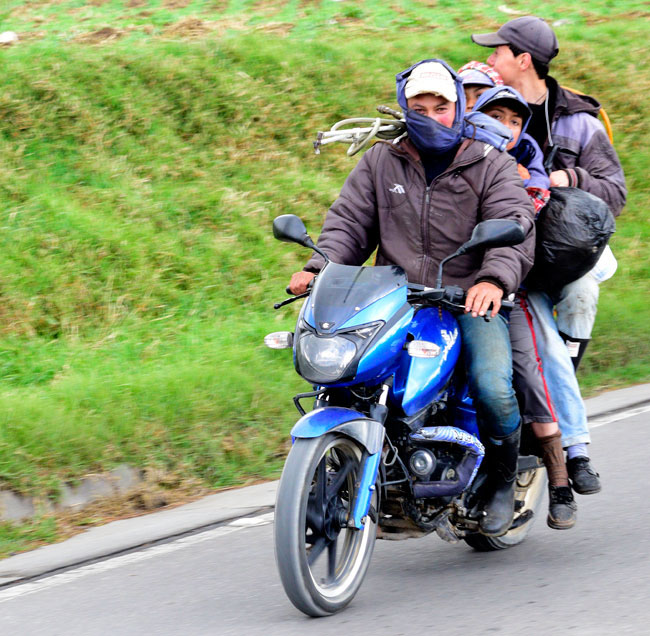
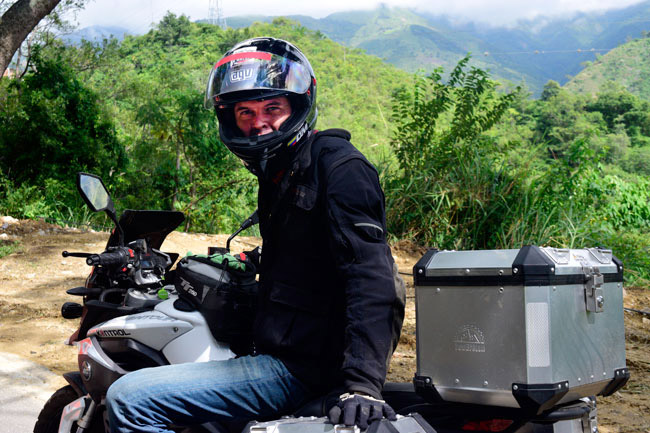
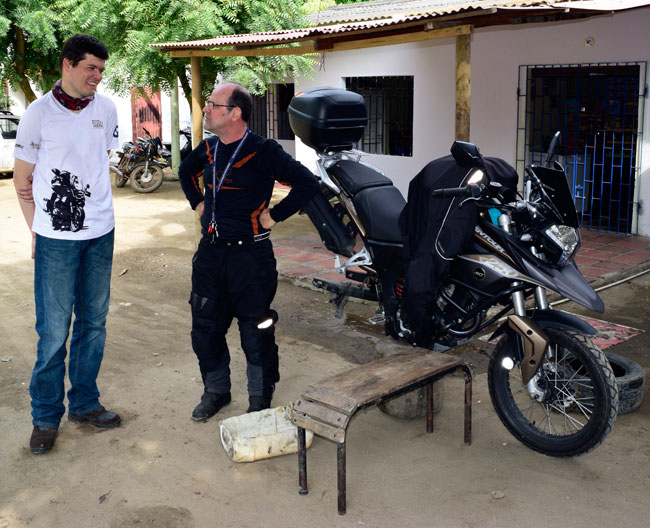
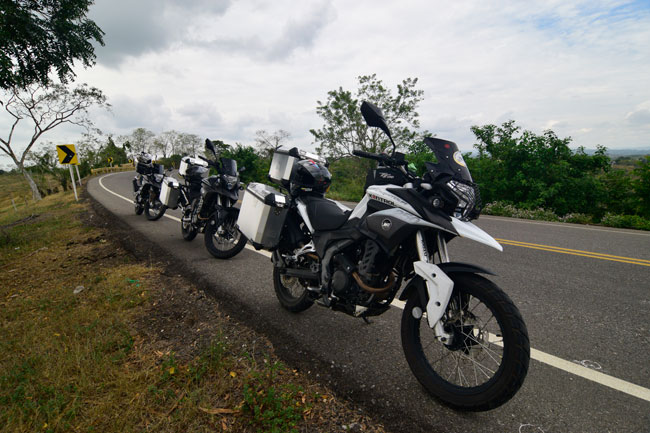
I’ve seen these but not ridden one yet.  Good buddy Juan Carlos, a great guy with whom I rode in Colombia, has gone all over South America on Enfield’s new Himalayan and he loves it (that’s his photo below).  Juan knows more about motorcycles than I ever will, and if Juan says it’s good, it’s good.
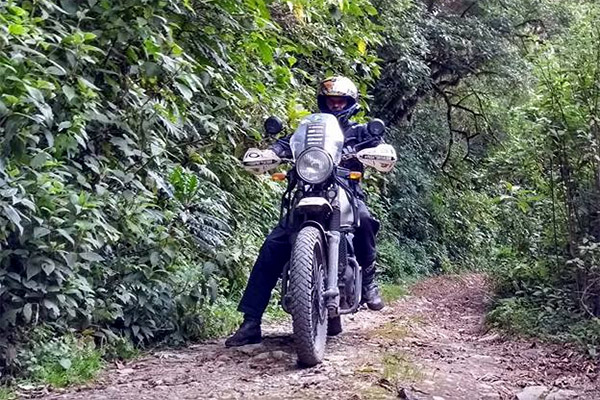
I like the look of the Himalayan and I like its single-cylinder simplicity (come to think of it, with the exception of the Enfield Intercepter, every bike on this list is a single).  400cc, I think, is about the right size for Baja. The price is right, too.   Royal Enfield is making fine motorcycles that won’t break the bank.  I think the Enfield Himalayan would be a solid choice for poking around the Baja peninsula, one that probably has the best off-road capabilities of any bike in this list.


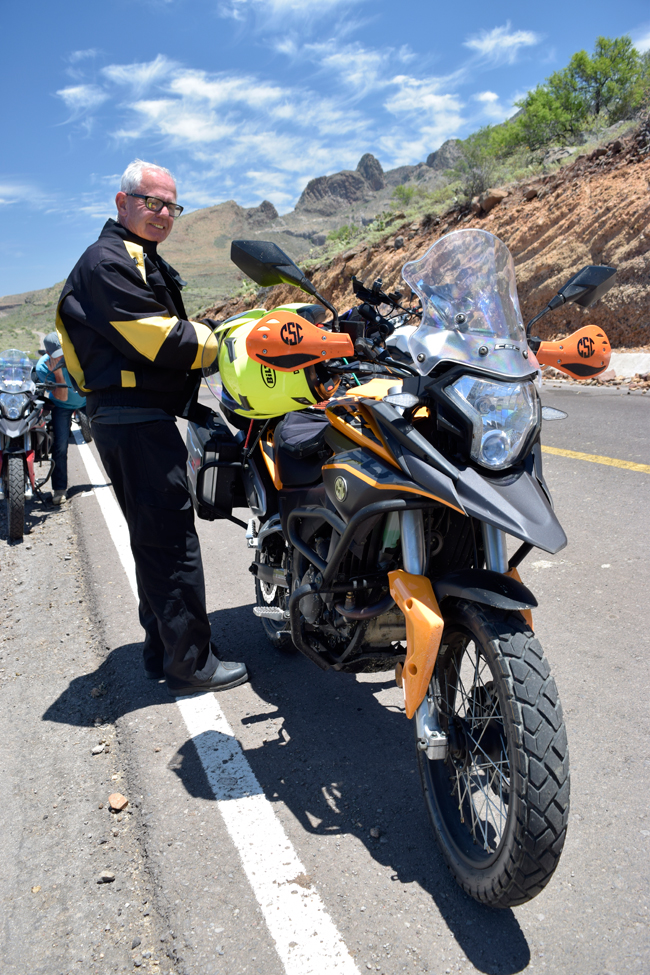
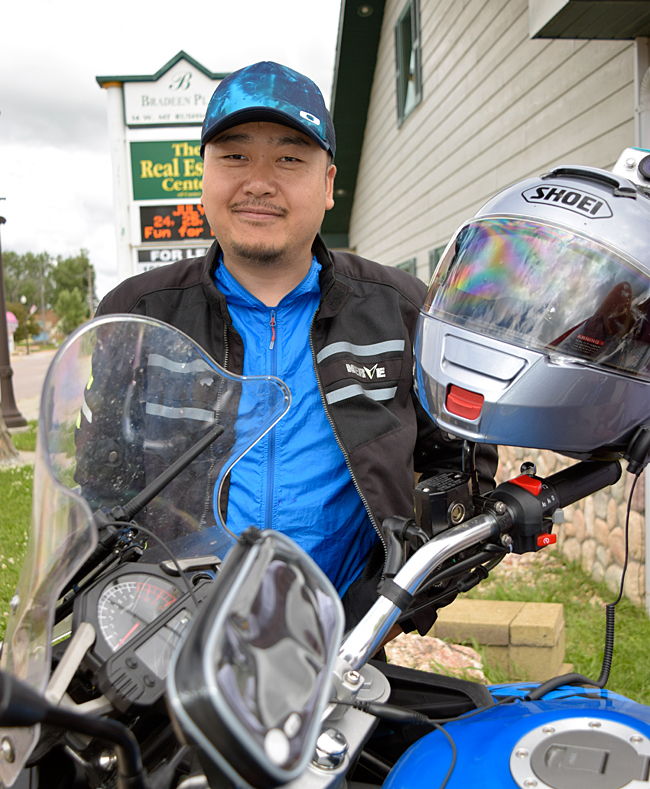
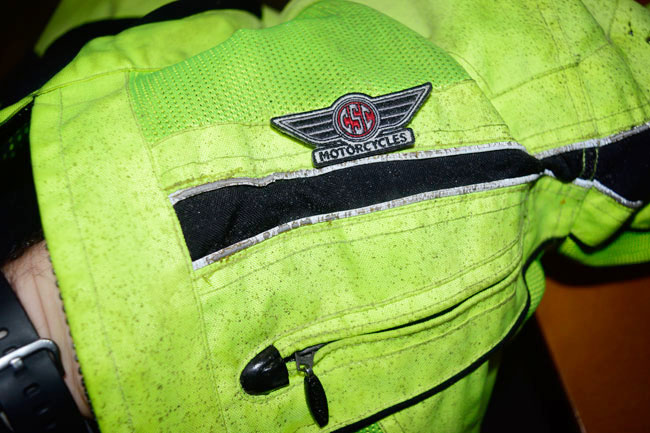
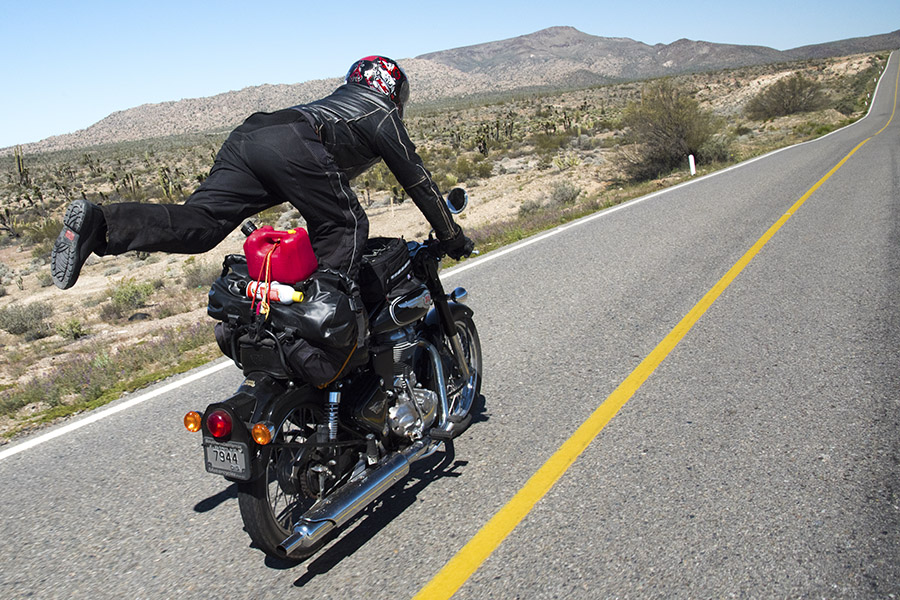
I’m sure I’m ruffling a few feathers with this piece, and I’m doing that on purpose.  I’ve been taking pot-stirring lessons from Gresh (that’s him in the photo at the top of this blog).  We’d like to hear your comments if you disagree with any of the above. Do us a favor and leave them here on the ExNotes blog (don’t waste your time posting on Facebook as that stuff will scroll on by and be gone; ExNotes is forever).

All the above notwithstanding, I’ll add one more point:  The best Baja motorcycle for each of us is the one we have.  You can ride Baja on just about anything.  I’ve been to Cabo San Lucas and back on everything from a 150cc California Scooter to a Harley Heritage Softail cruiser.  They’re all good.  Don’t put off a trip because you don’t think you have the perfect motorcycle for a Baja adventure.  Baja is the best riding I’ve ever done.


Please visit our advertisers and click on the ads!


I’ve done a lot of riding on a lot of different motorcycles in Baja.  You can read all about that in Moto Baja!

Heading into Baja?  Make sure you insure with BajaBound, our choice for the best motorcycle insurance in Mexico!


More info on Baja?  It’s right here!


Never miss an ExNotes blog.  We cover an eclectic mix of topics, including motorcycles, travel, bicycles, construction, guns, reloading, all kinds of product reviews, and more.  Subscribe here for free:
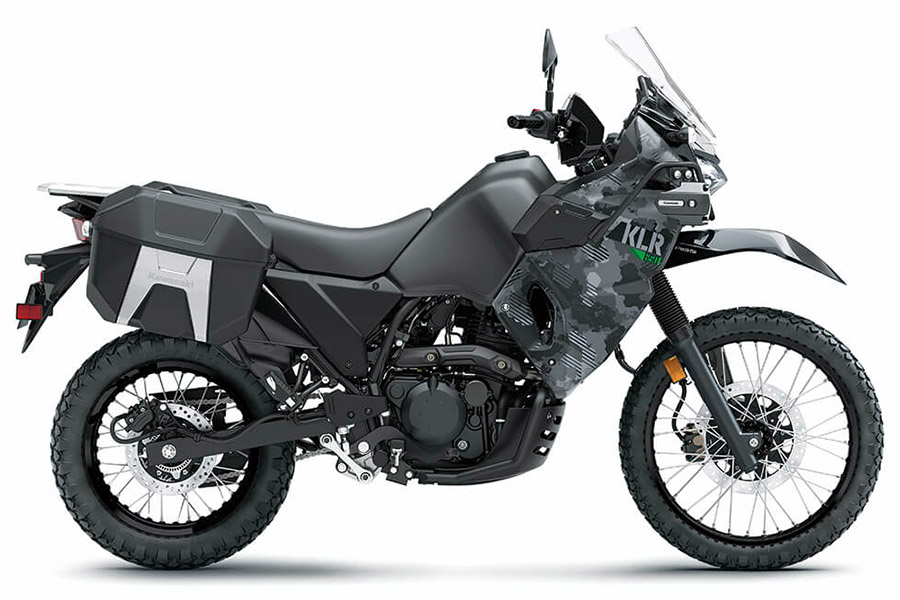
The KLR 650 is back!

An new exciting thing is that Kawasaki brought back the KLR 650.  A review of the Kawi info makes it look like the big change is fuel injection, along with a few other things (like digital instrumentation, accessory and USB outlets, higher alternator output, optional integrated locking luggage, and optional ABS).  Per the Kawasaki announcement:
The all-new KLR®650 dual-sport motorcycle is built to empower your passion to escape and explore. Featuring a 652cc engine, new fuel injection system, all-digital instrumentation, disc brakes, and optional ABS, the KLR650 is ready and eager to make new memories. Dual-sport capability allows the journey to go on- and off-road with all three available models, including two special edition models that are equipped with factory-installed Kawasaki Genuine Accessories. With the KLR650, KLR650 Traveler, and KLR650 Adventure motorcycles, your next great expedition awaits.
This is good; Kawasaki is finally catching up to CSC’s RX3 and RX4 series of adventure motorcycles.  Don’t get me wrong; I owned a KLR 650 (first gen) and it was a stellar motorcycle.  One of my good buddies is still riding it.  They were fabulous motorcycles; I hope the new one is as good.  By the way, if you’d like to read our comparison of the KLR 650 to the CSC RX4, you can do so here.

My 2006 KLR 650 in Baja.

Pricing, per Kawasaki, is $6699 for the base model and $7,999 for the fully-loaded model, with a Kawasaki-listed destination charge of $410.   There’s no mention of the setup fee.  But they do mention in the small print that the dealer sets the actual destination charge and your price may vary.  You think?  Mark my words…dealers will throw on a $1500 freight and setup fee on this bike.  When you enter the green room, be forewarned: Having worked in the motorcycle industry, I can tell you that actual freight (what the dealer really pays) is well under $400, and setup on a KLR 650 takes under an hour.  And as point of reference, when I bought my ’06 KLR 650 new, it was $5200 out the door.  Let the good times roll.

Used Sportsters: Who knew?

I think CSC gets $3995 for a new RX3 these days, and that’s with all the goodies…skid plate, luggage, ABS, 300W alternator, auxiliary accessory switches, the 19-inch front wheel, and probably a few more things I don’t know about.  That’s my RX3 in the photo above.  I’ve been riding it for more than 5 years.  For the Sinophobic haterbators out there, I’ve never found any fish oil in it, I’ve spent substantial time in the factories where they make the RX3 and there are no children chained to the manufacturing equipment, and the Zong techs are most definitely not slave labor.  My RX3 has been and still is a good motorcycle.

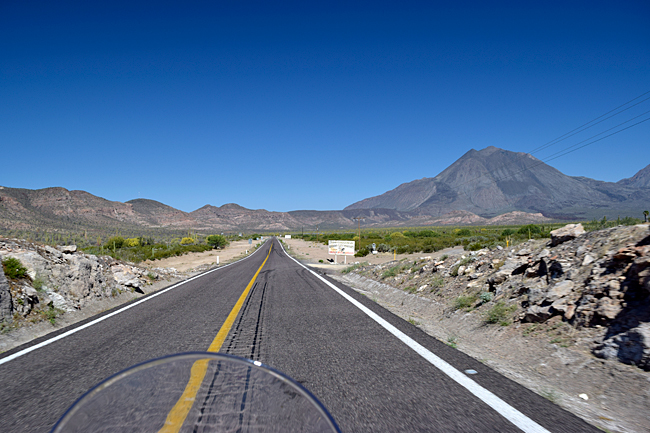
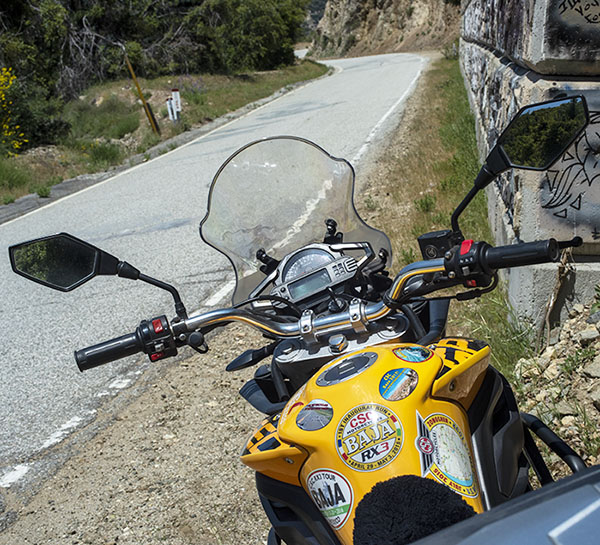
Looking over the windshield, on the road in Baja.

I know you can buy a used Sportster for what a new RX3 costs if you shop around; the topic comes up nearly every time I mention the price of an RX3.  It’s a silly thought, actually, because I’m still looking for that prospective buyer who is trying to decide between a used Sportster and a new RX3.  I’ve been on that quest ever since I started writing about the RX3 six years ago, when the keyboard commandos first started pushing the used-Sportster-in-lieu-of-an-RX3 argument.

Here’s a hot flash:  That person (the dude or dudette struggling with such a decision) doesn’t exist.  You either want an ADV motorcycle, or you want a used bar-hopper with “much chrome” (as the Sportster ads often highlight).  I have never met, or even heard of, somebody pondering whether they should buy a used Sportster or an RX3.
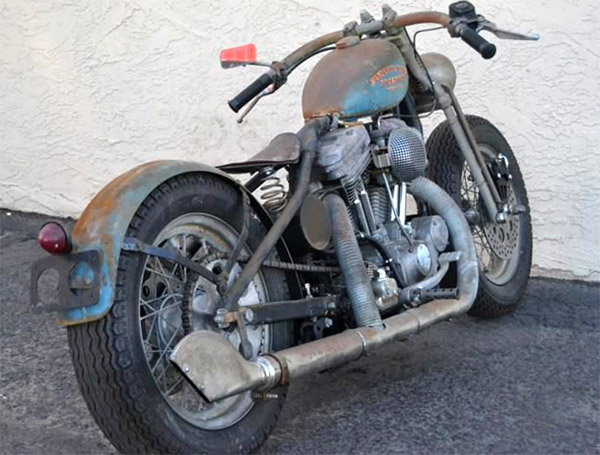
Behold:  The financial equivalent of a new RX3.

I hear the same kind of keyboard drivel when Janus motorcycles are mentioned.  They’re stunning motorcycles, and I’ve had good times riding them through northern Baja. Invariably, though, the used Sportster financial comparison will emerge. Janus is always polite in their responses.  Me?  I’m a noncombatant and I don’t respond to such Internet drivel. If you want a used Sportster, it’s a free country. Go for it.

To listen to the keyboard commandos, there must be a lot of folks out there dreaming about used Sportsters.  Maybe that’s the answer to Harley’s problem.  Even though motorcycle sales in general are up sharply since the pandemic started, Harley’s sales most definitely are not. In fact, to read The Wall Street Journal, Harley is circling the drain.  Not to worry, though, because I think I have the answer: Rather than rewiring or hardwiring or screwing around with $30K electric motorcycles, or hiring high-priced executives with zero motorcycle experience (as they seem to love to do), Harley should simply stop production and only traffic in used Sportsters.  There would be no need for a factory; that’s a huge savings right there.  More savings? Harley wouldn’t need to spend anything on advertising; there’s a potful of worldwide web wannabe wizards pushing used Sportsters already doing that for free.

Used Sportsters. Who knew?

Back to my RX3:  I’ve covered a lot of miles on it here and overseas. I had it out this Sunday charging through the smoke we call breathable air here in the Peoples Republik of Kalifornia.  I hadn’t ridden the RX3 in a couple of months, but it started right up (like it always does) and it’s still running strong (like it always has).

Good buddy Greg on the road to the cave paintings in Sierra San Francisco, Baja California Sur.

It’s kind of a funny story about how the RX3 came to America.  I was in China on a consulting gig for another client when CSC asked me to poke around for a 250cc engine for its line of Mustang replicas.  It’s funny in the sense that a lot of Internet people told us they’d buy the Mustang if only the bike had a 250cc engine (instead of its 150cc engine).  I found a source for the 250cc engine (Zongshen; they weren’t very hard to find).  CSC put the 250cc Zong engine in the Mustang and sales…well, they remained essentially the same.  All those yahoos who said they’d buy one if the bike had a 250cc motor?  They went MIA. I don’t know what they did after CSC introduced the 250cc engine, but they sure didn’t buy a new Mustang.  Ah, I take that back…I do know what they did…they posted more comments on Facebook.  It’s hard work being a keyboard commando, I guess, and it’s lonely down there in those basements.  But they kept at it.  Why buy a CSC Mustang, they said.  You could buy a used Sportster for that kind of money, they said. Actually, most of the CSC Mustangs were optioned up by their customers so much that their cost approached and sometimes exceeded what a new Sportster would cost, but that’s neither here nor there.

A 250cc CSC Mustang, accessorized to the max.

The arrangement with the Big Z was a good one, and it led directly to things like the RX3, the RX4, the City Slicker, the TT250, the SG250, and more.  It’s how I came to own my RX3, and like I said above, I am still riding and enjoying it.  Even though I could have bought a used Sportster.

Good buddy Kyle from China, somewhere in South Dakota’s Black Hills. Don’t worry; he’s not armed (and if you’re wondering what that’s all about, you can read that story here).

I’ve been up and down Baja lots of times with lots of RX3 riders.  I’ve been across China, including the Gobi Desert and the Tibetan Plateau, and I’ve ridden around the Andes Mountains in Colombia.  I’ve ridden to Sturgis, then back across the top of the US, and down the Pacific Coast with a bunch of guys from China.  Gresh rode with me on a lot of of those rides.  I know, I know, he didn’t get invited on the Colombia adventure, but hey, he didn’t invite me on the Russia ride, either.  But to stay on topic:  It’s all been on the RX3.

Riding into the Gobi Desert with Joe Gresh as my wingman. Or was I his?  In 6000 miles and 40 days of riding across China, we did not see a single Sportster, used or new.

Those early RX3 rides were marketing demos, basically, designed to show a few guys having the time of their life and demonstrating to everybody else that the RX3 had real chops as an ADV bike.  But don’t think I wasn’t nervous.  We took 14 guys and one gal on a 1700-mile ride through Baja literally the same week the first RX3s arrived in the US from China (I was sweating bullets on that one), and then we immediately took another 12 or 15 guys from China and Colombia (and one motojournalist from Motorcyclist) on a 5000-mile ride from southern California to Sturgis, back across the top of the US, and down the Pacific coast on what was arguably one of the most highly-publicized (in real time, too) motorcycle publicity stunts ever.  I was scared the entire time, thinking something might break and generate a lot of bad press.  I guess I didn’t realize how well things were going until the last night of the trip, 4700 miles into it, when Gresh told me to relax.  “You won, man,” he said.   He was right.  But just think: I coulda had that used Sportster.


You know you want to…subscribe here:

Day 8: Sweet Home La Ceja!

Our last day on the road in Colombia was just a few days before Christmas, and it was a fine ride down from the Volcan Nevado del Ruiz back home to La Ceja.  It had been a grand adventure, and I had mixed emotions about it coming to an end.  I was looking forward to going home, but I felt bad about wrapping up what had been one of the greatest rides of my life.


Posted on December 22, 2015

Yesterday was our last day on the road. It was yet another glorious day of adventure riding in Colombia.

The night we spent under the Volcan Nevado del Ruiz was freezing. It was the coldest night we experienced on this trip. I had on every layer of clothing I brought with me when we left. Juan told me not to worry, it would warm up as we descended. As always, his prediction was right on the money.

I had mixed emotions as we rolled out that morning. This ride has been one of the great ones, and I am always a little sad on the last day of a major ride because I know it is drawing to a close. But I am also eager to get home. This was a magnificent ride, and it was a physically demanding one. We experienced temperature extremes, from the humid and sultry tropics to the frigid alpine environment we were leaving. The riding was simultaneously exhilarating and terrifying. We road magnificent winding mountain roads, but at times the traffic (especially when we were passing the big 22-wheeled tractor trailer trucks) was unnerving. My neck was sore, most likely from the stress of this kind of riding. But it was grand, and riding Colombia is one of life’s grand adventures.

Juan knows all the good spots in Colombia, and he took us to this one where we could grab a few photos with the volcano steaming in the background.

I had to get a shot of the three of us with the bikes, using the D3300’s self-timer. If we look like three guys (the three amigos) who were having the ride of their lives, well, it’s because we were.

We rode on. We went through towns, we went through the twisties, and we passed more trucks. Another day in Colombia, another few hundred miles. At one point, Juan took us on a very sharp 150-degree right turn and we climbed what appeared to be a paved goat trail. Ah, another one of Juan’s short cuts, I thought. And then we stopped.

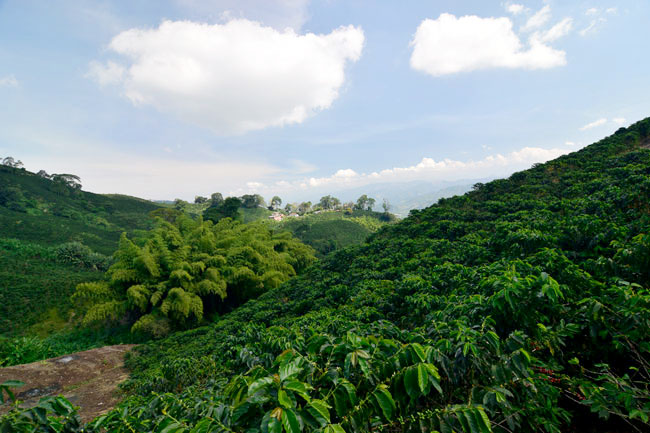
“This is Colombia’s major coffee-producing region, and we are on a coffee plantation,” he announced when we took our helmets off. Wow. I half expected Juan Valdez (you know, from the old coffee commercials) to appear, leading his burro laden with only the finest beans. It was amazing. I had never been on a coffee plantation (or even seen a coffee bean before it had been processed), and now here we were. On a coffee plantation. In Colombia. This has been a truly amazing ride.

That big stand of lighter yellowish-green plants you see just left of center in the above photograph is a bamboo grove. More amazing stuff.

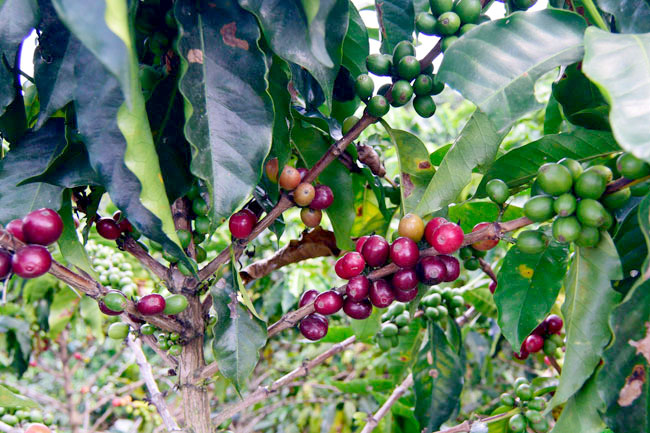
These are coffee beans, folks. Real coffee beans.

The beans are picked by hand, Juan explained. It’s very labor-intensive, and these areas are struggling because the world-wide coffee commodities markets are down.

Juan picked a bean and showed me how to peel it open. You can take the inner bean and put it in your mouth like a lozenge (you don’t chew it). To my surprise, it was sweet. It didn’t have even a vague hint of coffee flavor.

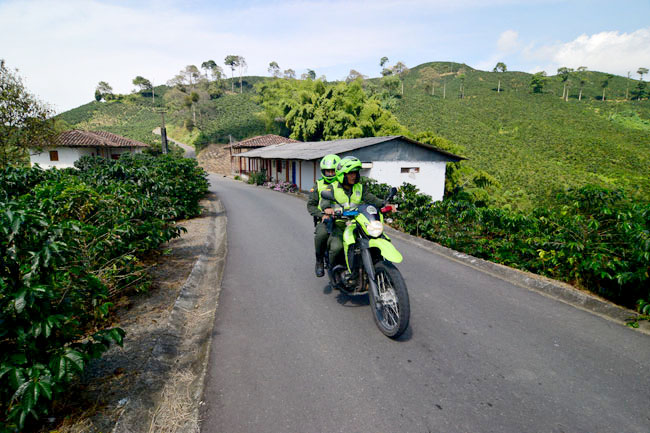
As we were taking all of this in, two of Colombia’s finest rolled by.

Juan told me that the police officers in Colombia often ride two up. I had seen that a lot during the last 8 days. Frequently, the guy in back was carrying a large HK 7.62 assault rifle or an Uzi. Colombia is mostly safe today, but that is a fairly recent development.

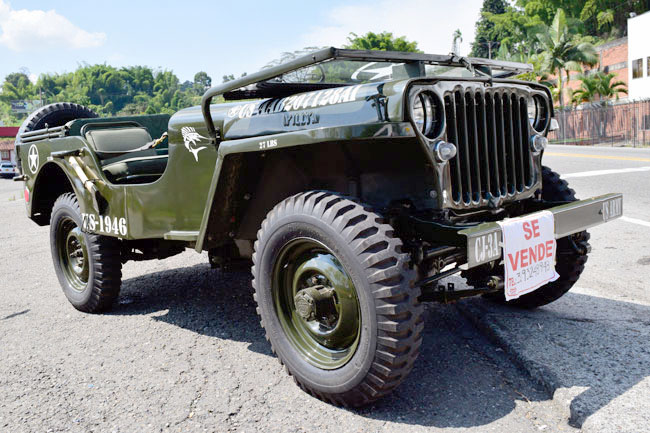
Vintage cars are a big thing in Colombia. A little further down the road we saw this pristine US Army Jeep for sale. I thought of my good buddy San Marino Bill, who owns a similar restored military Jeep.

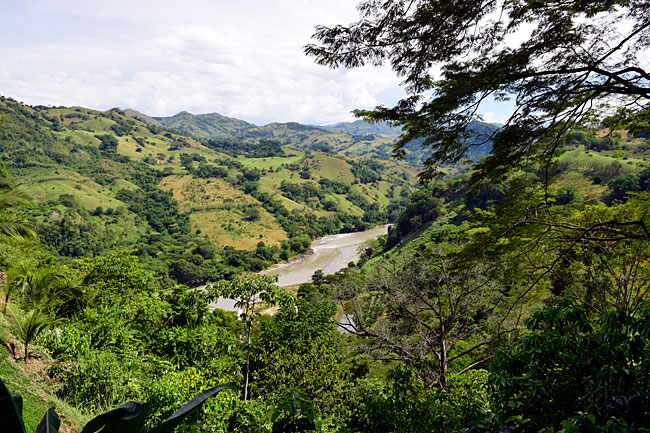
Here’s one last shot of yesterday’s ride…it’s the Cauca River valley.

The Andes Mountains enter Colombia from the south, and then split into three Andean ranges running roughly south to north. You can think of this as a fork with three tines. There’s an eastern range of the Andes, a central range, and a western range. The Cauca River (which we rode along for much of yesterday) runs between the western and central Andes. The Magdalena River runs between the central and eastern ranges.

Okay, enough geography…we rolled on toward Medellin (or Medda-jeen, as they say over here) and dropped Carlos off at his home. Juan and I rode on another 40 kilometers to La Ceja (or La Sayza, to pronounce it correctly) to Juan’s home, and folks, that was it. Our Colombian ride was over.

Like I said above, I always have mixed emotions when these rides end. It was indeed a grand adventure, and I don’t mind telling you that I mentally heard the theme from Raiders of the Lost Ark playing in my head more than a few times as we rode through this wonderful place.

In the next few days, I’ll post more impressions of the trip. In a word, our AKT Moto RX3s performed magnificently. The RX3 is a world-class motorcycle, and anyone who dismisses the bike as a serious adventure riding machine is just flat wrong. I’ve been riding for over 50 years, and this is the best motorcycle for serious world travel I’ve ever ridden. Zongshen hit a home run with the RX3.

I’ll write more about the minor technical distinctions between the AKT and CSC versions of this bike, my experiences with the Tourfella luggage (all good), and more in coming blogs. I’ll tell you a bit about the camera gear I used on this trip, too (a preview…the Nikon D3300 did an awesome job).

Today I’m visiting with the good folks from AKT Moto to personally thank them for the use of their motorcycle and to see their factory. It’s going to be fun.

More to come, my friends…stay tuned!


Get all of the blogs on Colombia here.  If you want to read the book about this ride, pick up a copy of Moto Colombia!

Day 7: Volcan Nevado del Ruiz

On my 8th day in Colombia and 7th day on the road, we left the town of Honda and rode to the top of Volcan Nevado del Ruiz, which took us up to about 14,000 feet.   It was the highest I’d ever ridden and I was surprised at how well the RS3 (the carbureted version of the RX3) was doing.  But I’m getting ahead of myself…let’s get into the blog I wrote for CSC Motorcycles at the end of that fine day.


Posted on December 21, 2015

A delightful hotel, sweltering heat, more mountain twisties, freezing cold, fog that cut visibility down to 30 feet, dirt roads, riding at 13,576 feet, hot sulfur baths, and a burbling volcano that killed 23,000 people in 1985…all in a day’s ride for us.

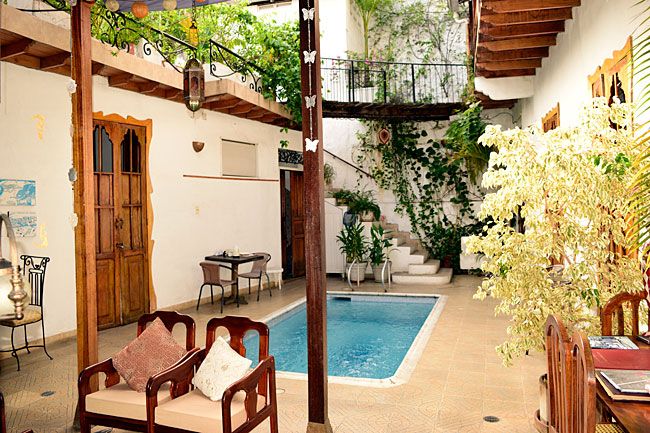
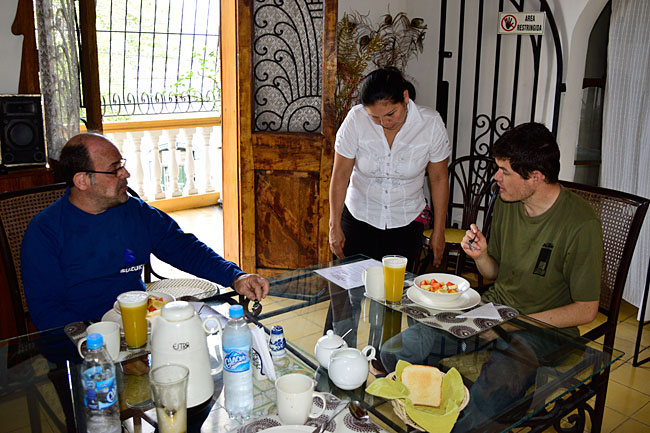
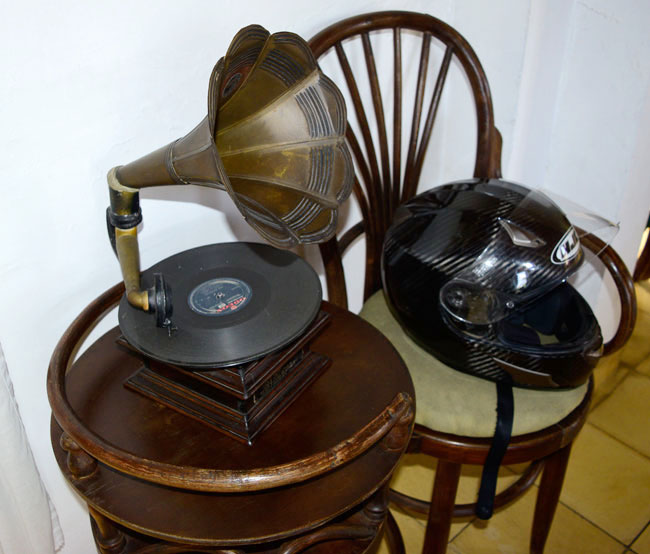
The hotel first…it was the Epoque, a great little boutique hotel in Honda that was one of the coolest places (in one of the hottest cities) I’ve ever parked a motorcycle. It was arranged in a square around a small pool (which we enjoyed immensely the previous night). Here are a few shots of the courtyard, Juan and Carlos having breakfast, and an antique record player in the dining room…

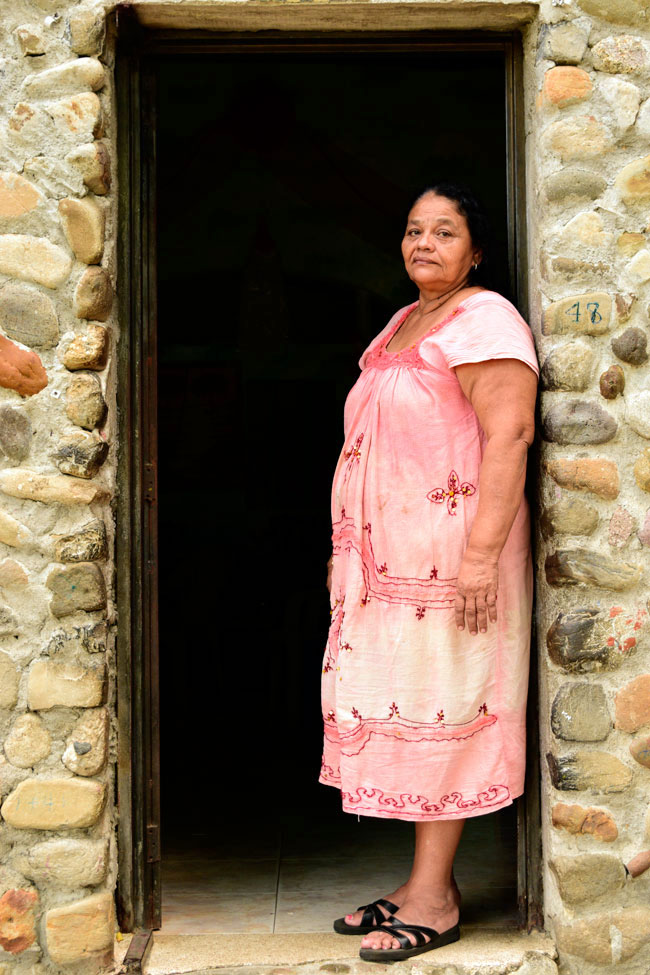
From there, it was another trials ride following the boys from Medellin as we twisted, turned, climbed, and descended cobbleboulder streets in Honda. Juan took us to the first bridge to ever span the Magdalena River, where I grabbed this shot of a Colombian woman taking in the humid morning air of Honda…

Here’s the bridge. It has planks across the bottom as the road surface. It’s real Indiana Jones stuff….

We saw the Magdalena River museum, and stopped in to check it out. Folks, it was hot. I was soaking wet by now, drenched in sweat.

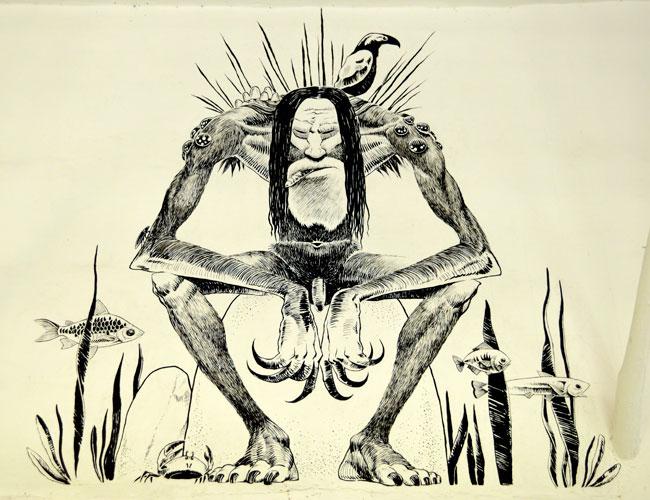
The museum was interesting and it had some bizarre art. This guy reminds me of a boss I had a couple of decades ago…

The Colombians used steamships on the Magdalena, just like we did on the Mississippi River.

We left Honda and started to climb. The temperatures dropped mercifully. We stopped in Fresno. Yep, Colombia has a Fresno, too.

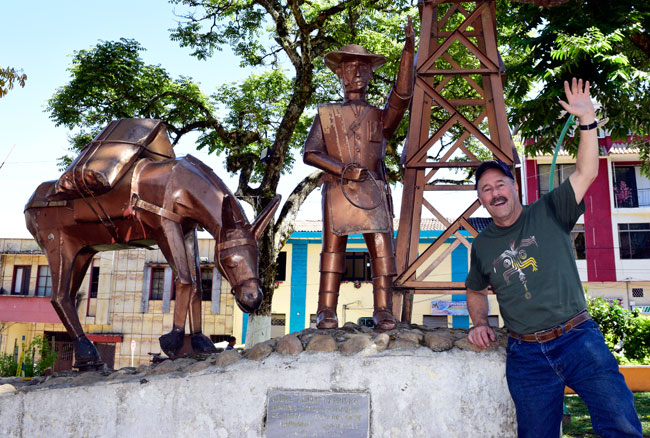
That’s me in the town square. I’m the guy on the right.

Two young ladies in a small store in Fresno.

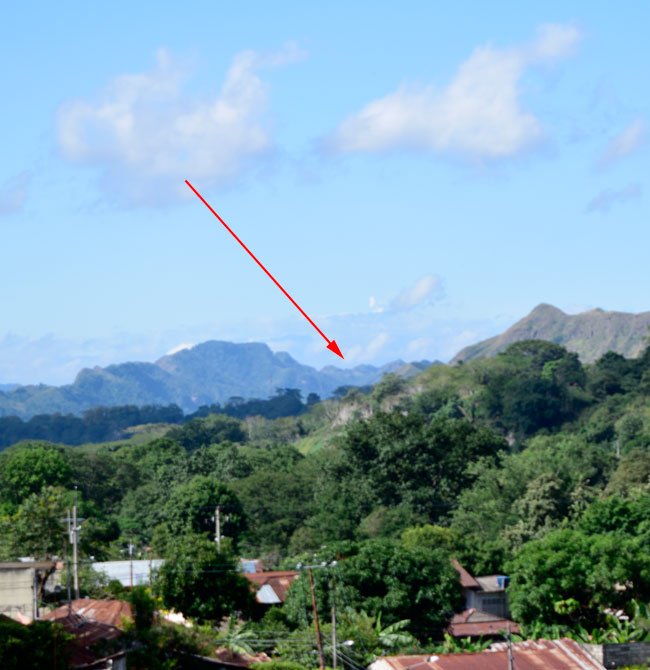
As we were sipping energy drinks, Juan pointed out our destination for that evening, the Volcan Nevado del Ruiz. It was showing a little steam, and I stuck an arrow in this picture so you could see it.

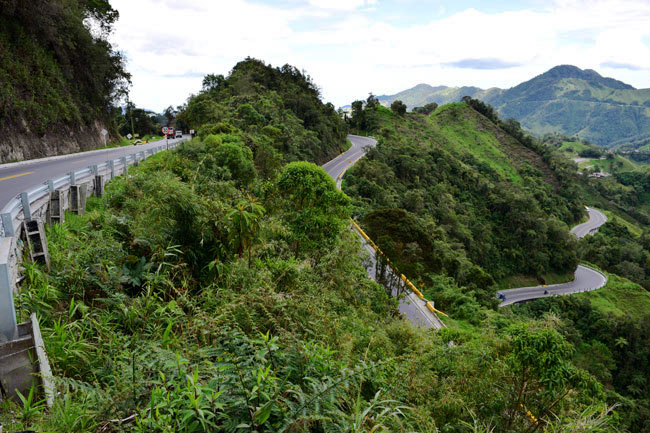
We continued our climb. The roads were magnificent.

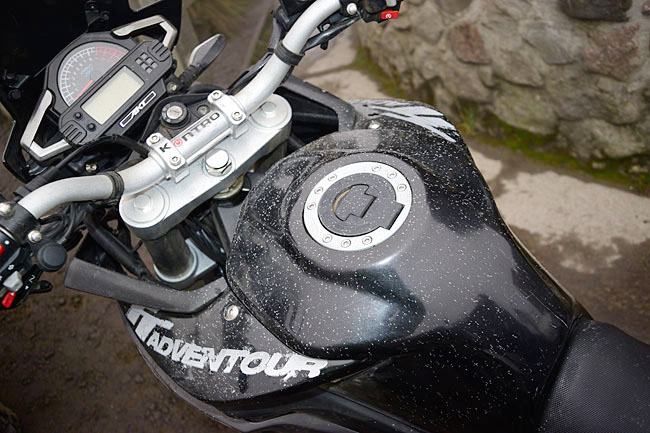
The photo below shows my front tire, with chicken strips that are about as small as I’ve ever been able to make them. I was getting better at keeping up with the Colombian motorcycle community.

Our riding positions are Juan, me, and Carlos. Juan is amazing. I’m struggling to keep up in the twisties, and I know he’s dialed it back for me. He’ll ride through the corners (and the roads are all corners, folks) standing on the pegs. At one point, we were taking a set of curves at speeds way above those at which I would normally ride, with the bikes leaned over at an unimaginable angle, when I looked ahead and saw Juan. He was standing on the pegs, similarly leaned over, and while all this was going on, he was reaching back to check the latch on one of his saddlebags as if it was the most normal thing in the world to do. The guy is an incredible rider.

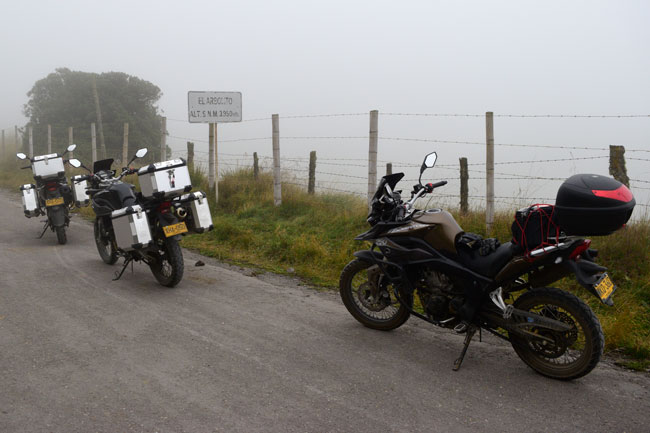
As we continued to climb, we entered the clouds. Literally. We left the pavement and got on a dirt road headed up to the volcano.

4,138 meters! That’s 13,576 feet, and it’s as high as you can go on a motorcycle anywhere in Colombia. Juan told me he once did this ride on a Yamaha DT100, carrying a passenger on the back!

That’s not dirt on my RX3, folks. It’s volcanic ash. This was not your typical motorcycle ride.

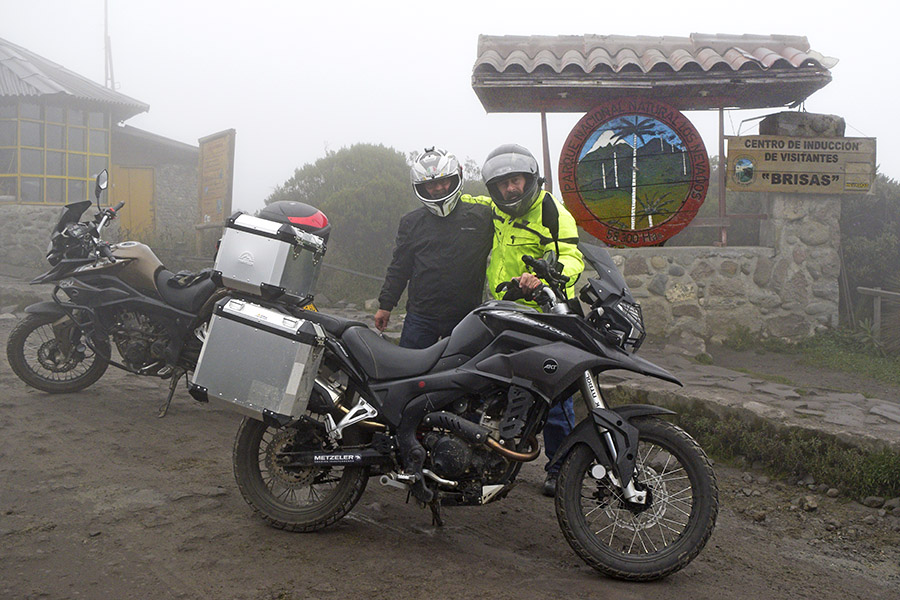
Yours truly, posing with Carlos, on the top of the world, on top of a volcano with indigestion. Wow. This volcano is the very same one that blew in 1985 and wiped out an entire community. It was like Pompeii, as the guys explained it to me. 23,000 people lost their lives in that event. And here we were, riding in conditions where I could barely see Juan’s tail light in front of me, on dirt roads, in bitter cold. Wow.

Here are a couple of shots showing my helmet and my jacket, dusted with Volcan Nevado del Ruiz ash.

We left the volcano, rode another 20 kilometers on this dirt road, and found our hotel in the middle of nowhere.

The hotel had hot springs, and they were awesome. I had a good soak, we had dinner, and that was the end of Day 7 on this epic journey.

Today is our last day. We’re finishing our great circumnavigation and headed back to Medellin. Much of our ride today will be on dirt. I’ll take a few shots and post about it tomorrow.

Later, my friends.


You can read the earlier blogs from this great trip, and a few other moto adventures, here on our Epic Rides page!


Please click on the popup ads!


Never miss an ExNotes blog:

Day 6: Honda

The Colombia motoventure continues!  This is Day 6 of my epic ride through Colombia’s Andes Mountains with good buddies Juan and Carlos, two great guys with whom I’ve stayed in contact ever since our Andean adventure.   Without further ado, here we go!


Originally posted on December 20, 2015

Let me see if I can get this right: I’m a guy from California riding a Chinese motorcycle in Colombia headed to a town called Honda. Yep, that was yesterday’s ticket.

We left Villa de Leyva early in the morning, climbed higher into the Andes, and wow, was it ever cold. Juan Carlos stopped so we could grab a few photos..

As I was taking in the scenery, this Colombian SUV rolled into the scene…

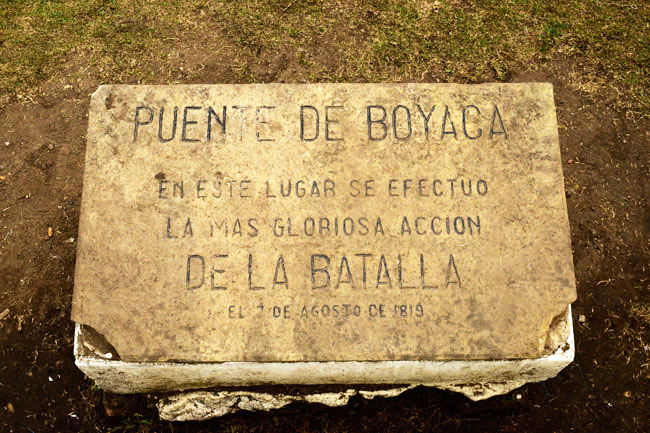
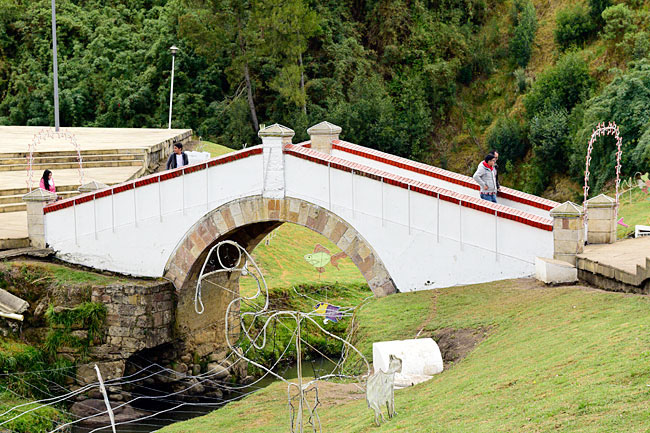
We next stopped at the point where Colombia was born. The last battle of the Colombian war of independence (against Spain) occurred right here at this bridge in Boyaga…

The Colombian rebels defeated the Spanish regulars here, and at that point, Colombia was born. There are a lot of parallels between how Colombia came into being and our Revolutionary War.

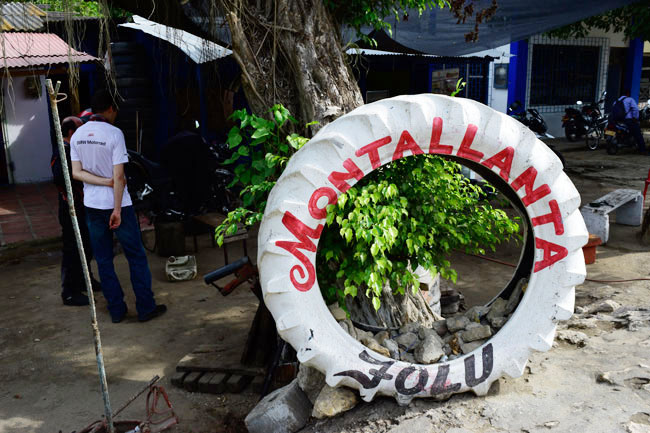
Boyaga is actually pronounced “boy-jogga.” In Colombian Spanish, a y is pronounced like a j. So is a double l (as in ll). A montallanta (a tire repair place) is called a “monta-jonta.” Interesting.

Following Juan through these small towns was fascinating and taxing. We’re up in the Andes, and everything is steep. Juan is incredible…we climb these steep cobblestone streets, cut across some guy’s front lawn, grab a dirt road, pick up a new street, every once in a while (while still riding) he pulls up alongside a guy on horse or a tractor to confirm directions (Juan’s GPS, as he calls it), and we cut across the Colombian countryside. It’s amazing. Here’s a sampling of what it looks like, both in the dirt (and there is a lot of dirt riding) and through the small towns…

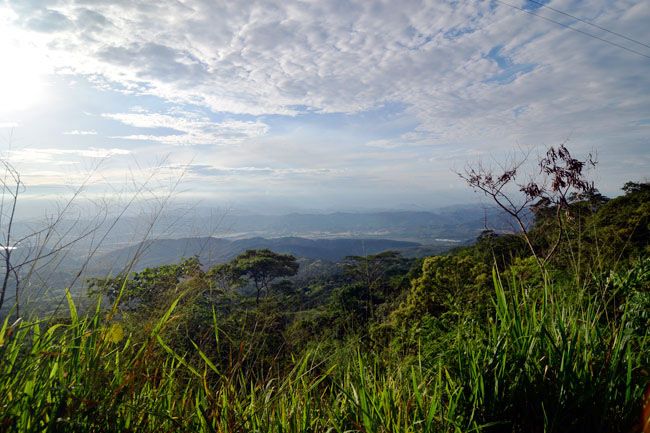
We hit a last stretch of twisties (a 50-mile stretch) and then we pulled over for a photo of the Magdalena River valley. Our destination (the town of Honda) is down there somewhere…

Honda is a another steep town. This street (that’s our hotel, the Epoque, on the left) is a typical super steep Colombian town road. The road is a one way road…I tried parking the bike facing down hill, but it was too steep. I thought I could just leave the bike in first gear and kill the ignition, but the street was so steep it pulled the bike through the compression stroke. That’s why the bikes are facing uphill. These are unusual riding conditions for me, but totally normal to the Colombians.

Today we’re headed to Santa Rosa de Cabal. You can read all about it in the next installment in this series!


You can read the earlier blogs in this series from Colombia here!

Time for a ride…

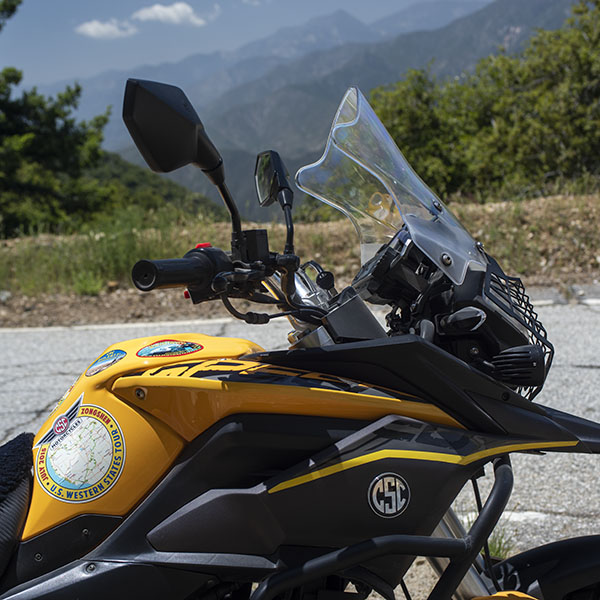
My RX3, one of the very first bikes in the US. Numerous Baja trips, a ride through the American Southwest and Pacific Northwest, and more. That little 250 is always good for an attitude adjustment.

Not a lot of writing today, my friends.  I fired up the old RX3 and rode into the mountains to clear my mind and create my own reality.  It was long past time to shed the shackles of a world gone mad.  No left or right wing news media (that’s all there is any more), no Covid 19, no protests, no riots, no police brutality, no defunding police departments, no masks, no shelter in place, no stupid stuff on Facebook (now there’s a redundant expression), no ridiculously bad choices in the next election (damned if you do and damned even more if you don’t), and no one telling me how to think about this, that, or the other thing.   No thank you, I can think for myself, and today I thought I would go for a motorcycle ride.  Other than captions, I’ll keep the words down and let the pictures do the talking.

That headlight grille and the spotlamps were gifts from Enrique Vargas, AKT Motos General Manager (and a genuine nice guy) in Medellin, Colombia.
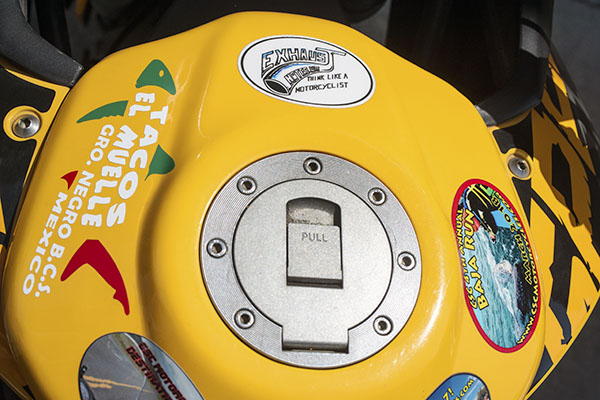
Steve Seidner, CEO of CSC Motorcycles, created decals for each of our multi-day company rides back in the good old days. I ran out of campaign ribbon real estate on my fuel tank.
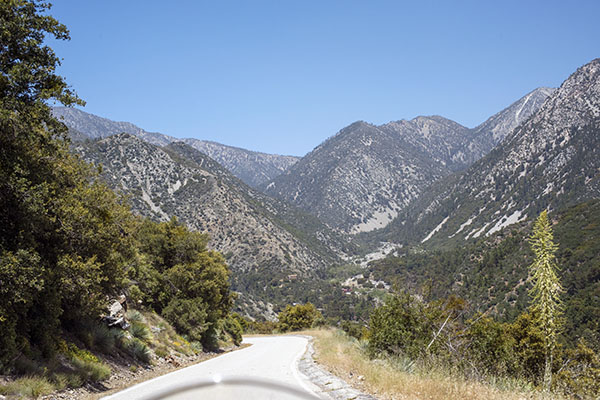
Glendora Ridge Road, my happy place. That’s Mt. Baldy and Mt. San Antonio dead ahead.
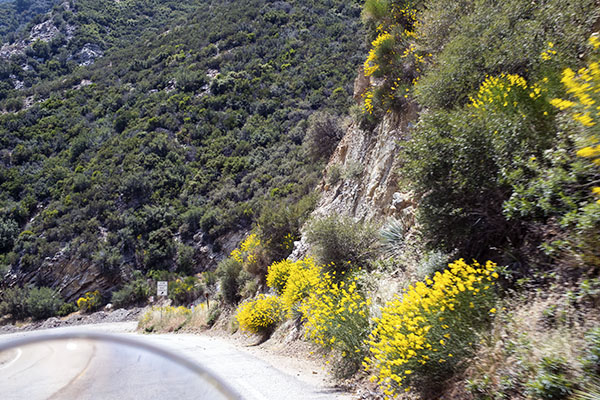
Glendora Ridge Road is one of the best wildflower spots in the country. I’ve been up there when there are red, orange, yellow, and purple wildflowers blooming at the same time.
I’ve done Mexico, California, Nevada, Utah, Arizona, Colorado, South Dakota, Wyoming, Montana, Idaho, Washington, and Oregon on my 250. The most beautiful state? That’s easy: Utah, hands down. But they are all pretty if you know where to ride (and I do). The best riding and the best times? That’s another easy call: Baja. I’ve ridden Colombia and I’ve ridden China on RX3 motorcycles. Once, when I was in Turkey, a young Turk let me ride his RX3. This is a bike with long legs, folks.

So there you have it.  I’m back, it was a great ride, and I had a good time.  You might consider doing the same.


Epic rides reside here!

Day 4: Barichara!

Continuing the Colombia adventure, this was my post for the CSC blog on the 18th of December in 2016.  We were having a hell of a time and very nearly everywhere we went good buddies Juan and Carlos explained to me that we could not have ridden these roads just a few years ago due to the narcos and FARC instability in Colombia.  It was an amazing trip and I was thoroughly enjoying myself.


More riding, another Andean crossing, a bit of rain, and we arrived in Barichara!

Barichara is an artist’s town, and it’s one of the most exclusive places in all of Colombia. It was another glorious day of mountain riding. I did not take too many photos on the ride to Barichara, mostly because of the rain, our late arrival, and I was enjoying our dinner too much that evening in Barichara to break out the Nikon. But I did get a few photos.

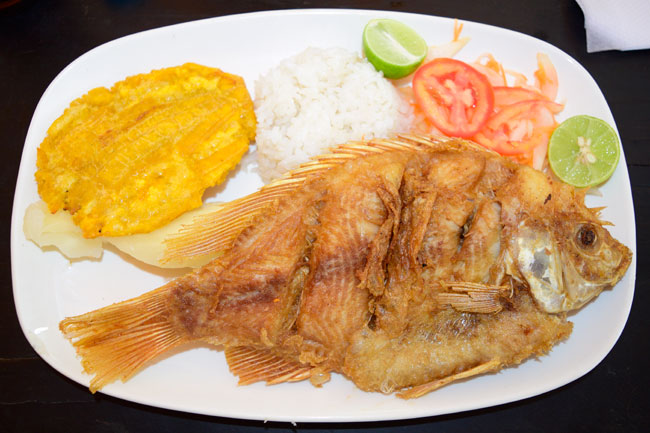
My lunch at a restaurant along the Chicamocha River…

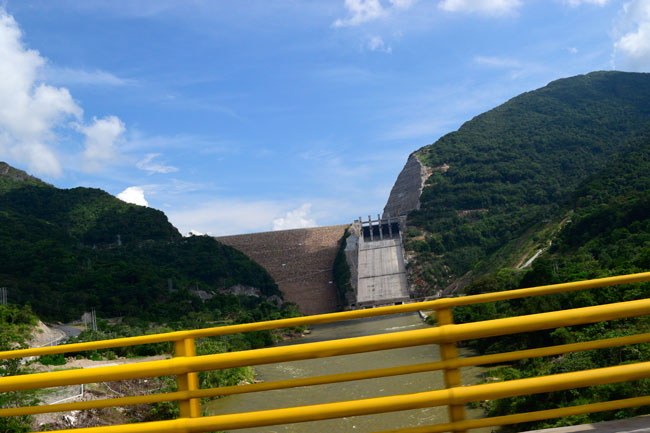
One of my “from the saddle” shots of a hydroelectric dam on the Chicamocha River…

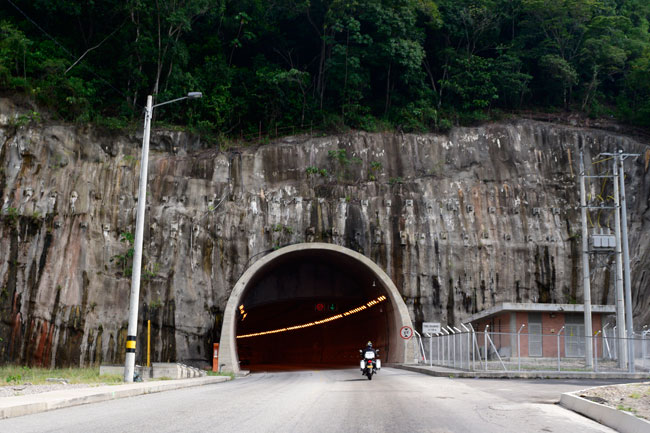
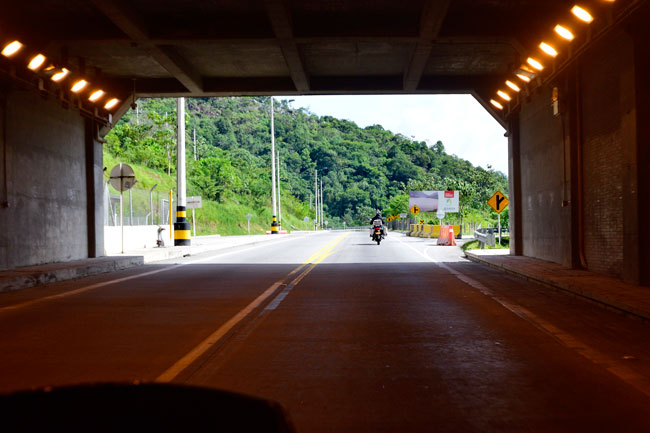
A couple of shots chasing Juan Carlos through a massive tunnel in the Andes Mountains…

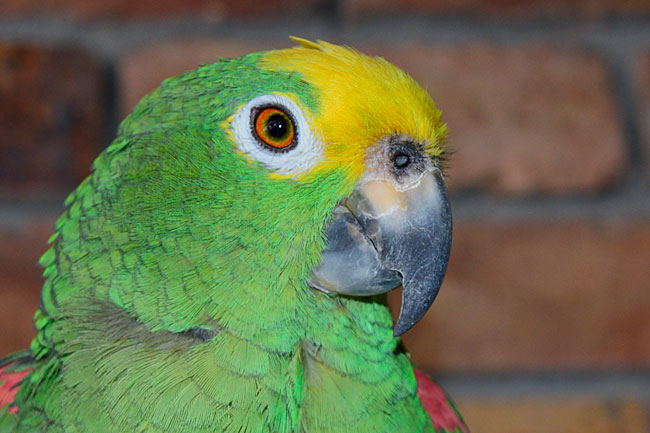
A fine feathered friend at a fuel stop…

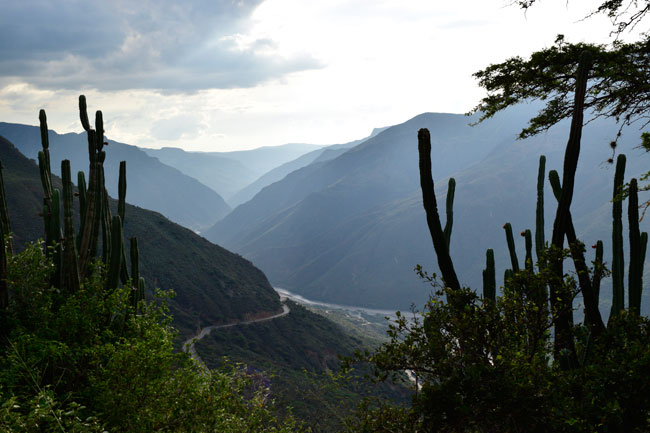
And finally, a shot after the rain ended of the Chicamocha valley…

I’m enjoying the AKT Moto RX3. It’s different in a few minor ways than the CSC bike, and they are both fantastic motorcycles. I’ll do a blog after I return home describing the differences.

I’m calling it a night, folks. More to follow…as always, stay tuned!


I’ll post a few more photos and another video or two from Barichara in the next installment of our Colombian trip travelogue.  I wrote this blog before we went out that night, and I grabbed a lot more with my Nikon on our night out in Barichara.  It was an impressive town.   I’ve got to get back there one of these days.

More of the Colombia adventure and other epic rides are here!

Day 3 in Colombia: On to La Playa de Belem

Our Colombian adventure continues…this is the blog from the third day on the road in beautiful Colombia.  It was a ride sponsored by CSC Motorcycles and AKT Motos (one of the largest motorcycle manufacturers in Colombia).  Our destination was La Playa de Belem and it was awesome.  Juan and Carlos were taking good care of me, proudly guiding me through their beautiful country, and I was loving every minute of it.


They tell me la playa means beach in Spanish, and Belem means Bethlehem. There was no beach, but I’m getting ahead of myself.

La Playa de Belem was our destination on the third day of our Colombian moto adventure, and it was indeed awesome. We did a cool 260 miles to get to the evening’s destination, and I have to tell you that 260 miles in Colombia is a long day. What I didn’t realize when we started in the morning is that a good 40 miles of it would be on dirt. And sand. And mud. And I’d even get a chance to play cowboy, except I was mounted on an RX3 instead of a horse.

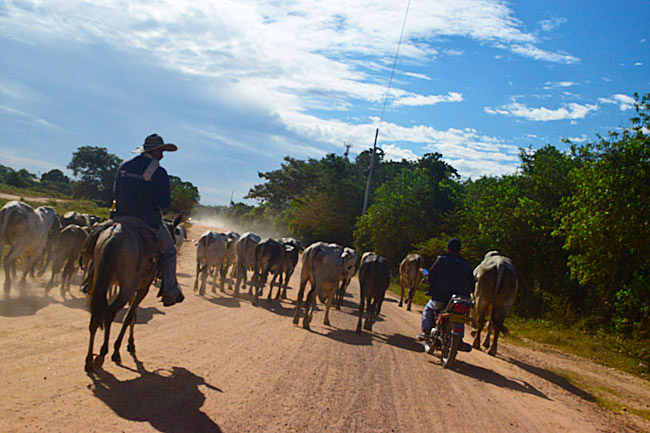
No kidding, folks, those are cows, and they were on the road. This was something new to me. I mean, when you’re on a 250cc motorcycle, how do you make cows get out of the way? Even if you’re on a big bike, what’s the protocol? These questions were on my mind, when like always, Juan Carlos took the lead. Our bovine buddies just kind of moved aside to let him move through the herd. I wasn’t too sure about that, and then a guy on a little 100cc something-or-other did the same. In for a penny, in for a pound. As I got closer, the sea of cows parted, and I was through. Amazing stuff.

As was the case the day before, it was sweltering, so we stopped to get a juice drink. They have a lot of juices in Colombia, and I’ve been trying them all. I haven’t found one I didn’t like yet.

This little gal was fascinated by us. She let me take her picture.

What I missed getting a photo of were the dinosaurs. No kidding. I looked over at a tree and there were three or four iguanas that were huge. As in 2 1/2 or 3 feet long. They startled me. We ain’t in Kansas anymore, Toto. I jumped up and fumbled around putting the 70-300 lens on the D3300, but by the time I was ready the lizards were gone. Maybe I’ll see more of them again on this trip. Who knows? Things like that are incredible. I’m enjoying the hell out of this trip.

Ah, a few more “watching the world go by in Colombia” photos…all the gear, all the time.

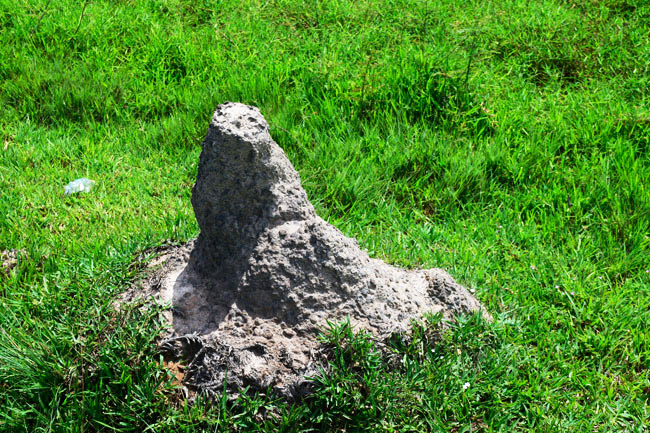
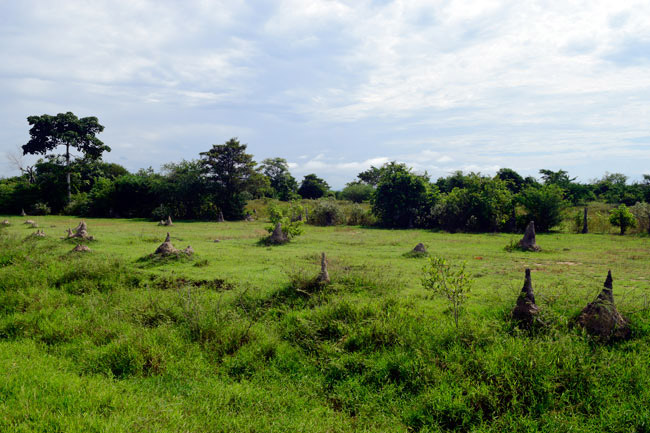
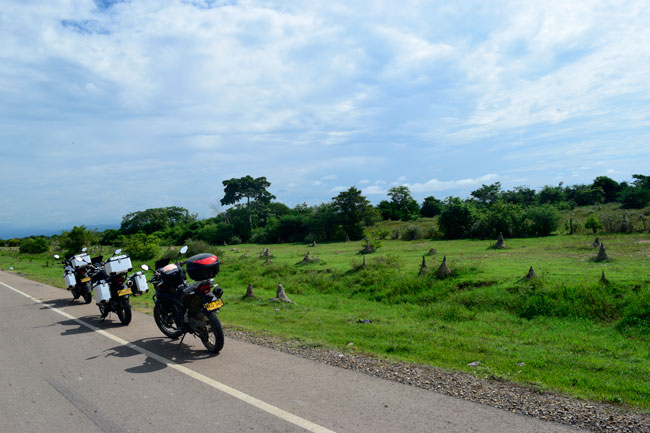
After dodging and dicing through traffic (and there’s lots of traffic in these Colombian towns, and it’s mostly motorcycles), we finally hit a highway that ran straight. Yippee! We accelerated up to about 70 mph and cruised, and then Juan pulled over. What he pointed out to me was amazing. Ant hills. Not the little kind we are used to, but big monsters that are as hard as concrete. Check this stuff out, folks.

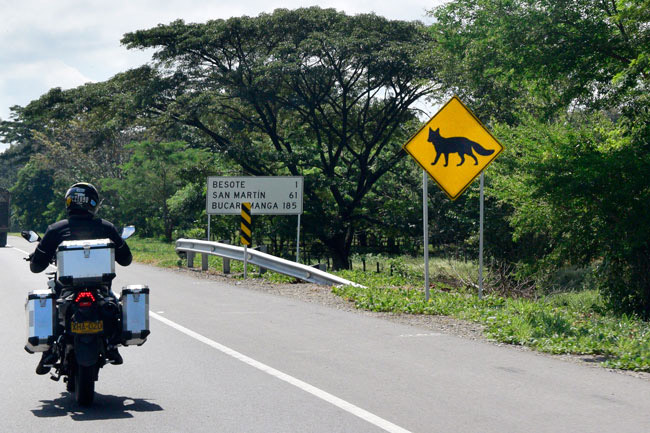
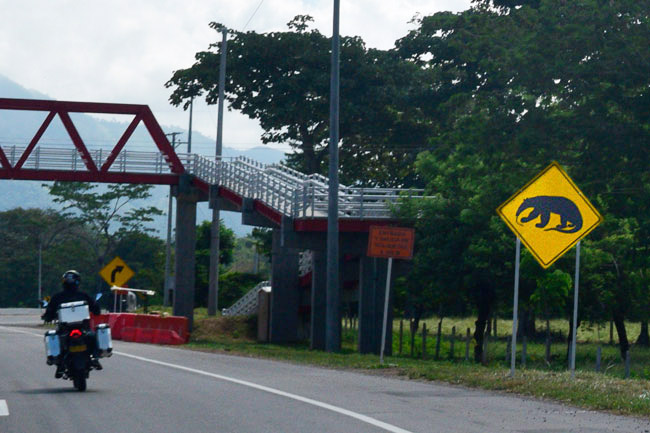
And then, much to my surprise, the animal signs started popping up.

Okay, that one was easy. Fox. I get it. I never saw a sign before warning about a fox crossing, but I can wrap my mind around that one.

What came next…well, that wasn’t so easy to surround with the old gray matter.

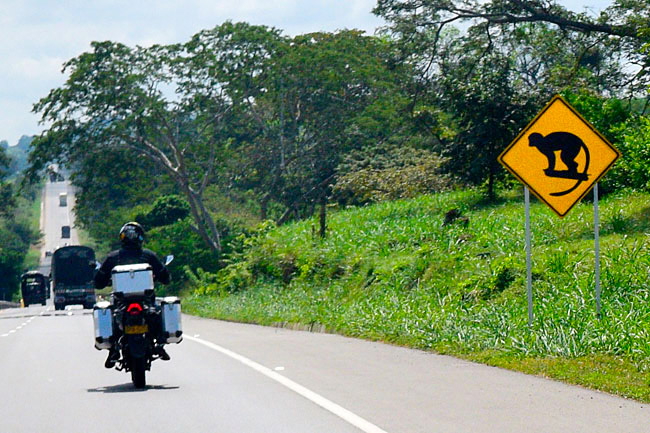
Anteaters. Wow. The image quality isn’t so great, but hey, we were zooming along and that one crept up on me. And how about this next one?

Okay, enough monkeying around. Back to the journey.

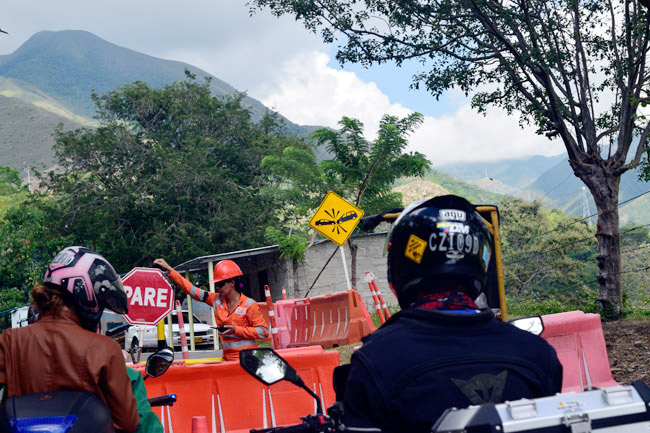
We entered the eastern arm of the Andes Mountains and started to climb. It was a two-lane road, and we rode it for a good 150 miles. It’s like the Angeles Crest Highway, but it goes on forever, and there were construction stops every 10 miles or so. These next few shots were taken at one of the construction stops. Juan Carlos told me we were very close to the Venezuelan border at this point.

A shot of Juan Carlos.

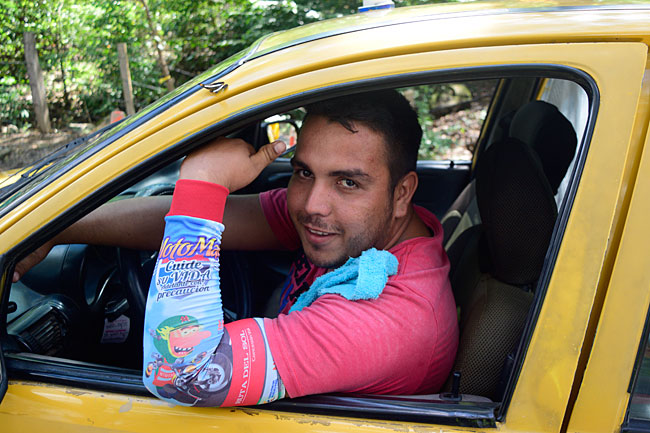
A Colombian taxi driver.

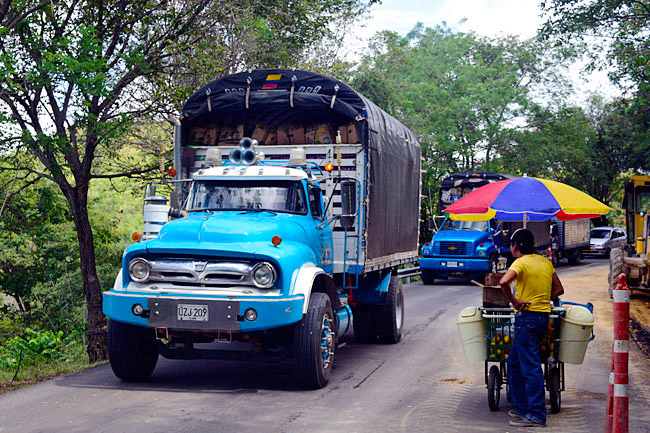
I’m seeing medium-sized trucks that are 60 years old nearly every day on these roads. The ’56 Ford seems to be especially popular.

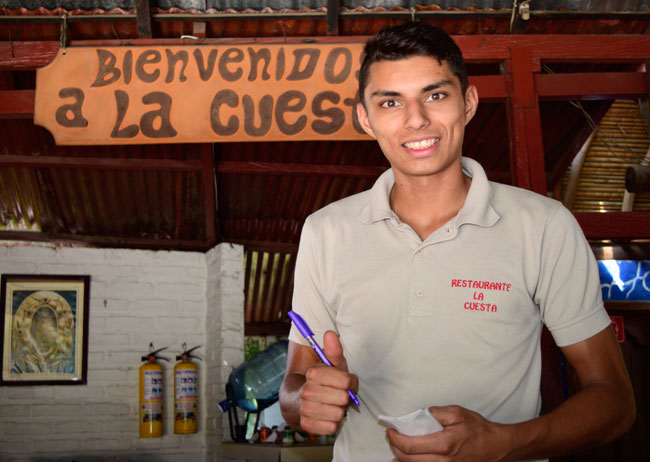
Our next stop was in another Andean town at a cool little restaurant. This was our waiter.

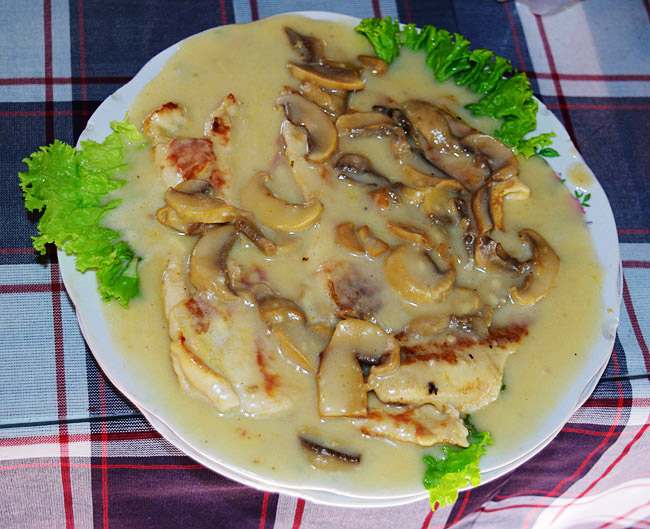
I had chicken and mushrooms. It was awesome. I ate maybe half of it.

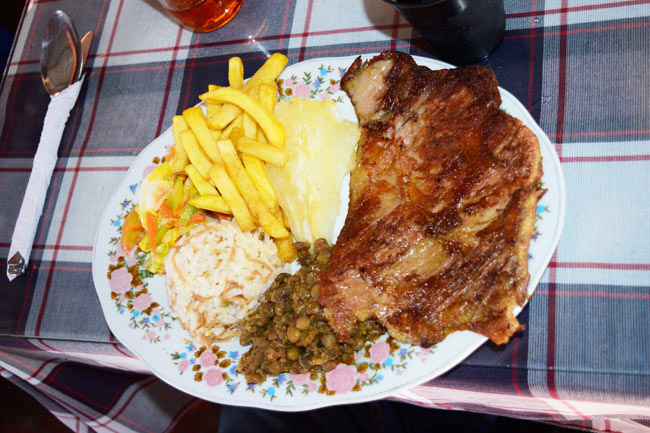
Carlos and Juan Carlos both ordered something in Spanish (naturally), and they were excited to get it. I thought it was beef, or maybe pork. Nope. It was pig stomach lining. Very tasty, according to them. They offered a taste, but I declined.

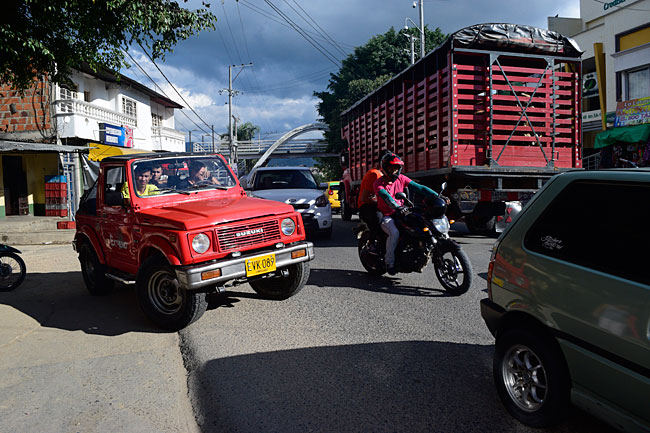
A word or two on the riding is in order, I guess, at this point. It is exhilarating and terrifying at the same time. In the cities and towns, it’s a free for all. It’s like one of the YouTube videos you see of city intersections with tons of scooters in Asia. Here, it’s scooters, motorcycles, cars, and trucks. There are few traffic lights, and Juan told me nobody pays attention to the stop signs or speed limits. “They are like suggestions,” he said.

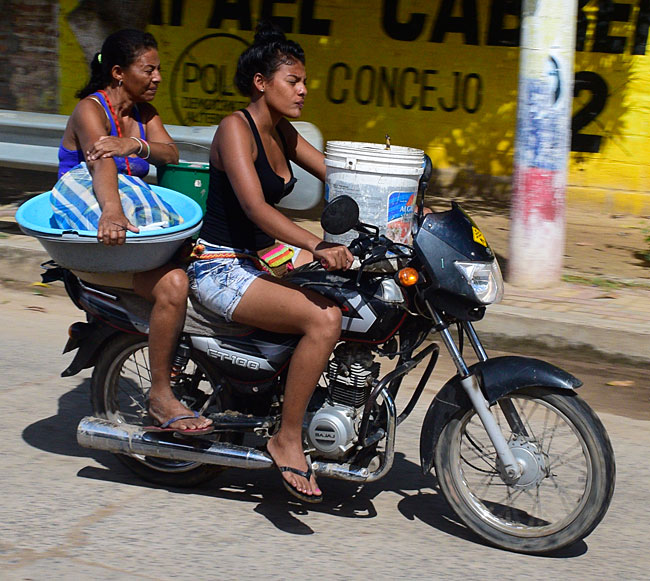
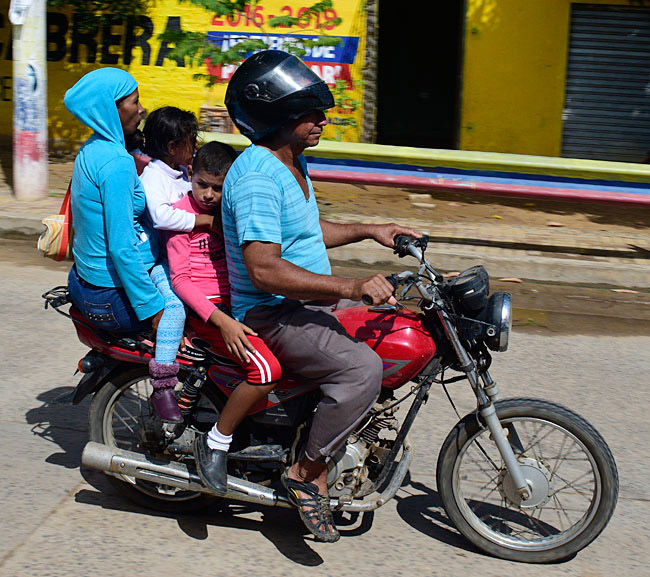
I’m a big fan of the twisties, but in Colombia, they take on a new meaning. The national sport seems to be passing everyone you can everywhere you can. It’s tense. Juan Carlos and Carlos are totally used to it. I’m getting there, but it is unnerving. It’s also weird just how good every rider seems to be. I’m riding at my limits (not the bike’s limits, but mine) too often, and while I’m doing this taking a corner way faster than I ever would in the US, some Colombian will pass me on a 125cc Suzuki cruiser or something with his girlfriend on the back, leaned way over, like it was the most natural thing in the world. They look totally at ease doing it, too. These folks are natural riders, and they’re good.

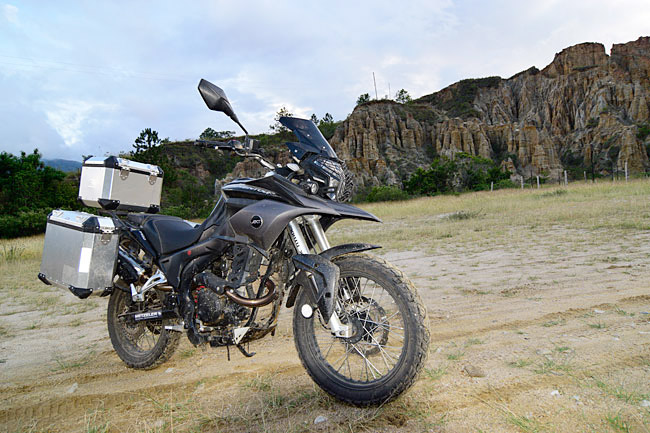
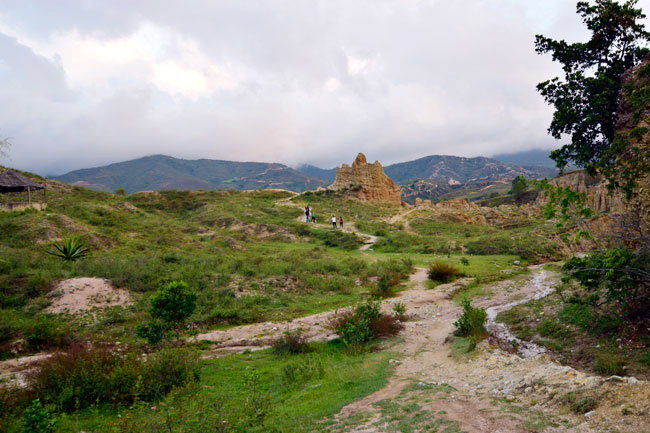
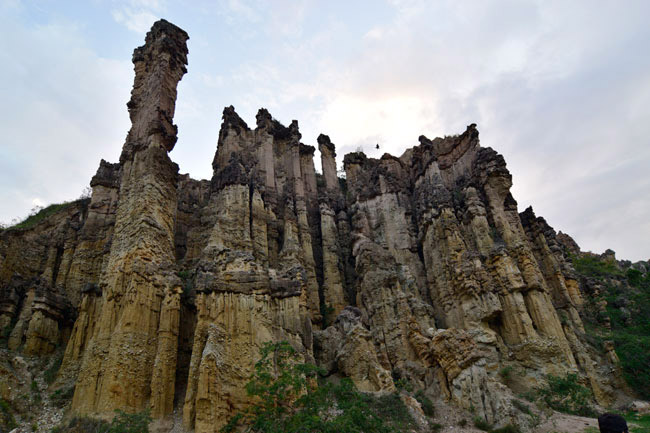
We arrived in La Playa de Belem about an hour before sunset, and immediately split for a one of many Colombian national parks. It was kind of like Bryce. I grabbed a few shots there, including one of my AKT RX3.

Getting in was interesting. We had to ride a pretty rough dirt road that had a stream running down it because it had been raining. The RX3 took it in stride.

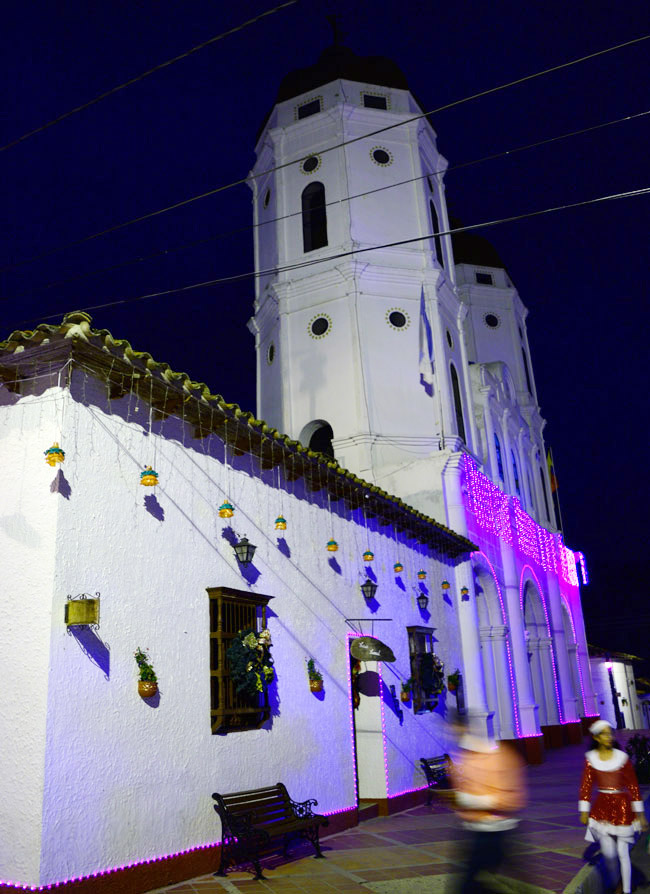
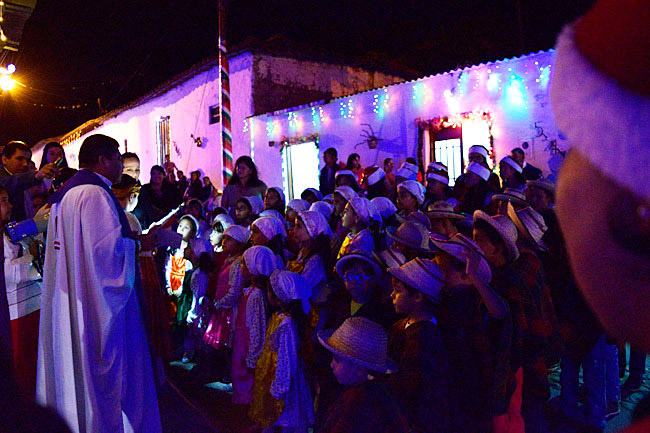
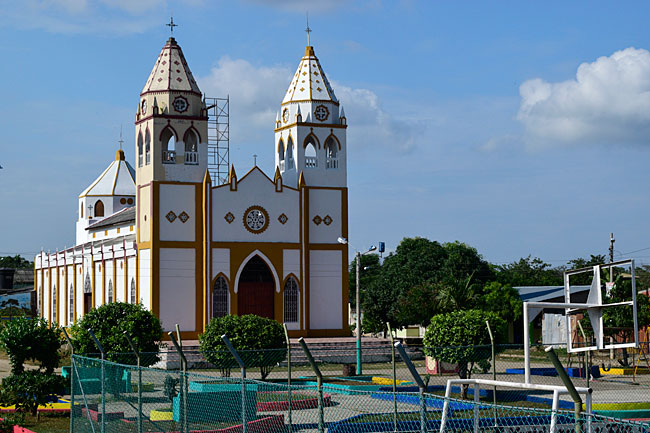
So, back to the Bethlehem thing (as I said at the start of this blog, Belem means Bethlehem in Spanish). La Playa de Belem is a beautiful little town dominated by the town square and a magnificent church (like many little towns in Colombia), and it turns out we arrived at a special time. The Colombians start celebrating Christmas nine days before Christmas, and this was that day. The town was buzzing. We hung out and watched kids singing at an outdoor service, we saw fireworks, we watched the service in the church, and then we got to see the vaca loca. I recorded it, so I won’t tell you the vaca loca story now, but if this Internet connection holds I’ll upload the video and tell you about it later.

Two more quick photos in La Playa de Belem, a video, and that’s all for now.

There’s lots more coming, folks. You probably already know this, but I’ll say it anyway: I’m having fun.


If you want to catch up on the Colombia ride, or explore any of the other exotic rides we’ve had, click on over to our Epic Rides page!

Day 2: Mompos!

The Colombia adventure continues.   For those of you just joining us, this is a series of blogs I wrote four years ago for CSC Motorcycles when I was rode an AKT Moto RS3 (the carbureted Colombian version of the RX3) through the Andes Mountains.  Day 2 of that ride was absolutely awesome, ending with a visit to an enchanted town after a ferry ride down the Magdalena River.


Our second day on the road in Colombia started in Coveñas, and the humidity was oppressive. It was going to get worse as the day went on. We’re in the tropics, not too far from the equator, and hot and humid is the normal way of things here. On the plus side, you don’t care if it rains because you’re already drenched. It actually helps because it’s cooling.

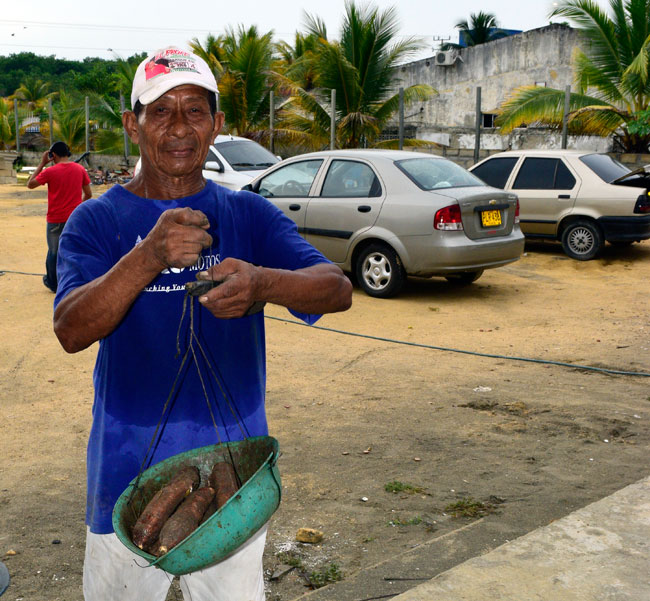
Anyway, back to the morning in Coveñas. We ate in the hotel, and while we were waiting for breakfast, this dude was selling some kind of yams or roots, and Juan Carlos pointed out the scale he was using. It’s about as crude a scale as I’ve ever seen, but it’s sound technically, and it sure makes for an interesting photo.

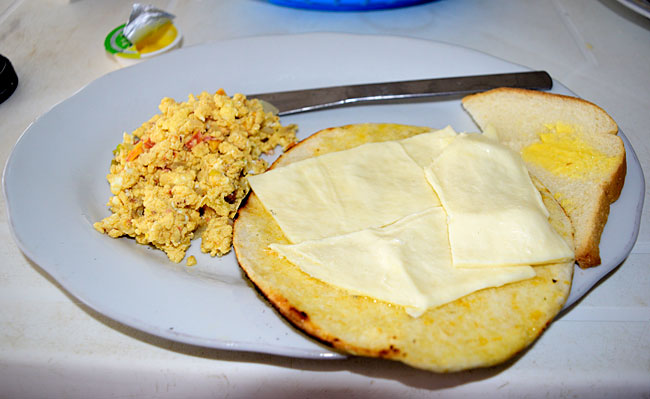
Here’s a typical Colombian breakfast: Scrambled eggs with tomatoes and onions, bread, and a corn or flour tortilla with cheese (that’s called arrepo). The Colombians are big on cheeses, with different regions producing unique cheeses. It’s quite good.

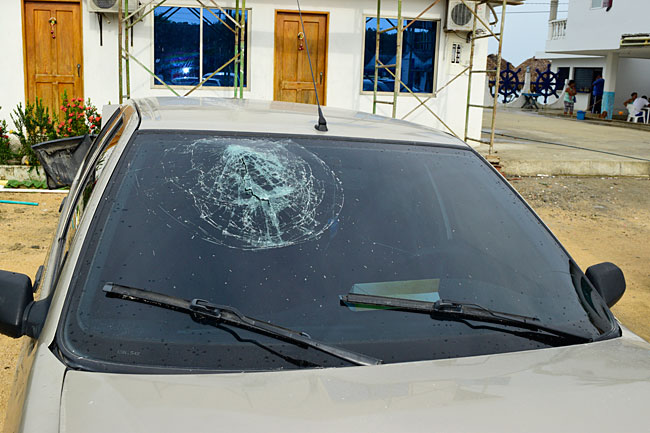
The guys pointed out this car as we packed the bikes. This probably didn’t end well for the passenger, who most likely was not wearing a seat belt. The riding in Colombia is glorious, but it is stressful. Juan and Carlos said when they ride anywhere else (other than Colombia), it makes them sleepy because there’s only scenery. In Colombia, there’s scenery, but you have to watch out for everyone else. It’s intense. In a country full of twisties, people pass on blind corners routinely. I guess the theory is you pray a lot. People think nothing of passing if the oncoming traffic has room to move over, or if the oncoming traffic is a motorcycle. It’s weird, but you kind of get used to it. But it is intense (just like the heat and the humidity).

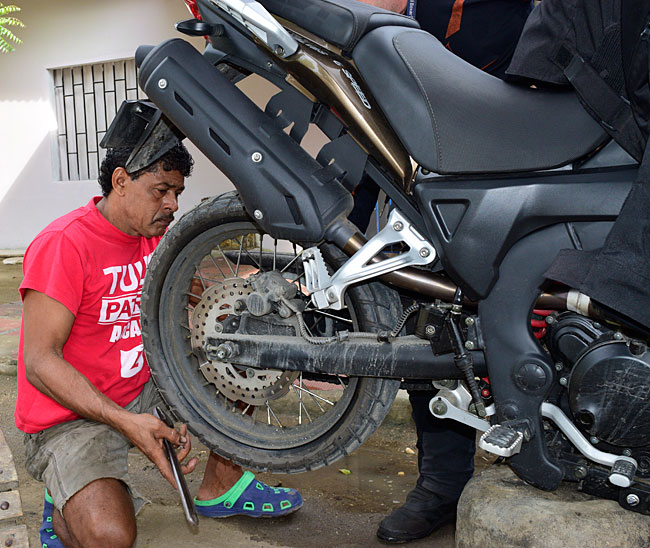
When we got on the road after breakfast, we only went maybe a mile when Carlos had a flat tire. Watching the guy repair it was interesting, and so was hanging out watching the world go by in Colombia.

And here are some of those watching the world go by in Colombia photos.

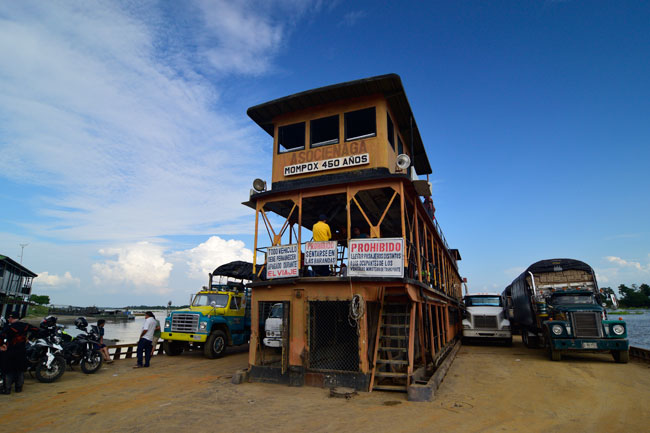
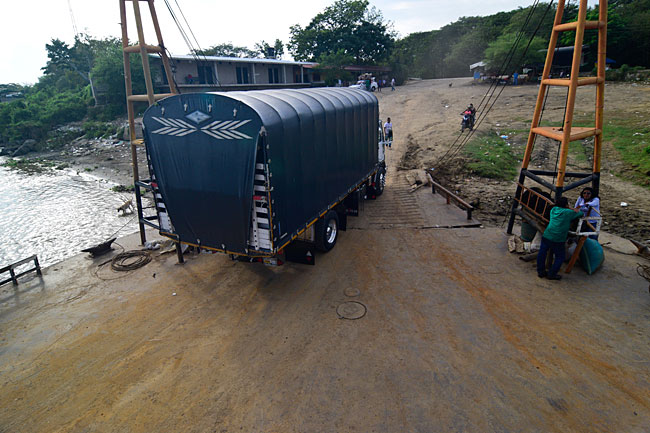
Here’s a photo of our RX3s somewhere on the road, headed to the ferry that would take us to Mompos, a remote town 45 minutes down the Magdalena River.

This church was across the street and just down the road from the ferry loading spot.

I only grabbed a few photos while we were boarding the ferry. The heat and humidity were getting to me at this point. It was about 4:00 in the in the afternoon, and it was sweltering.

Once we were underway, it got a little cooler on the river. You probably saw my video of that ride.

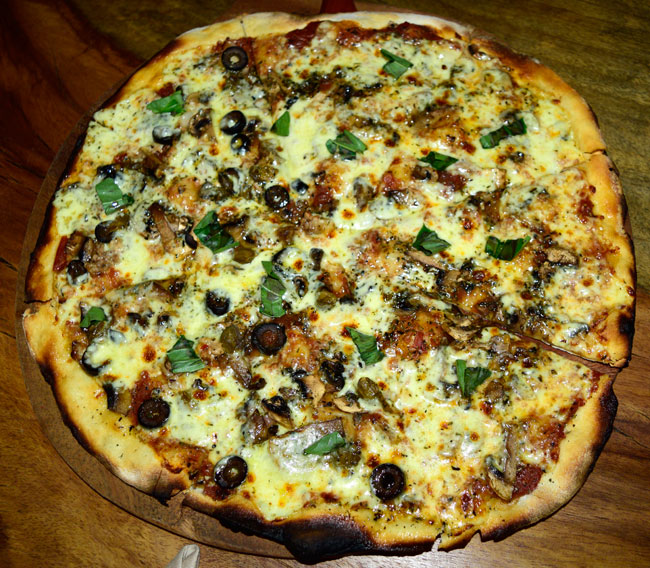
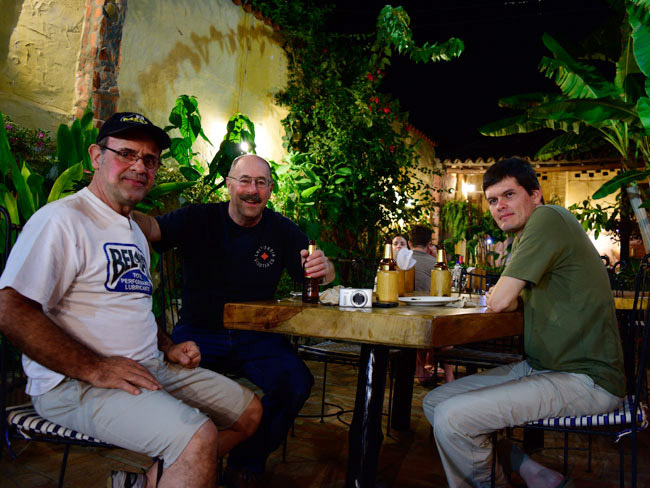
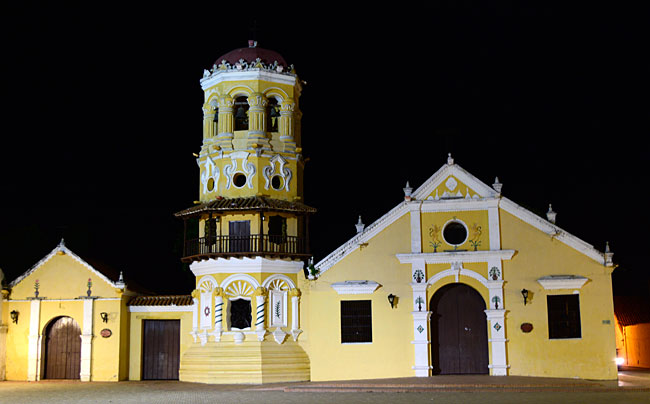
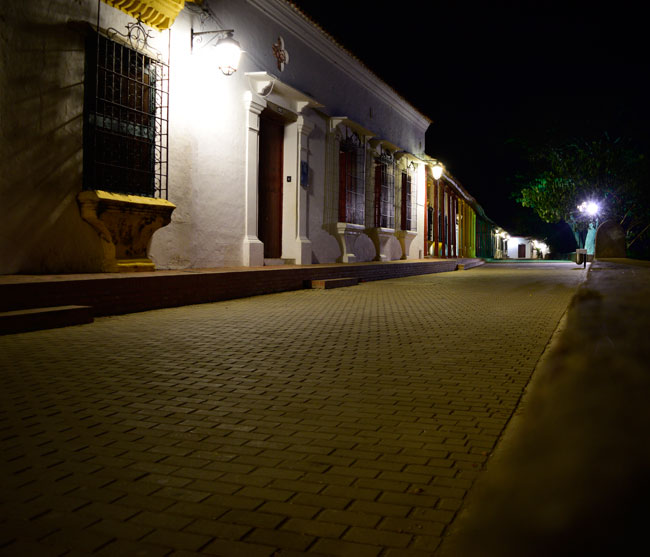
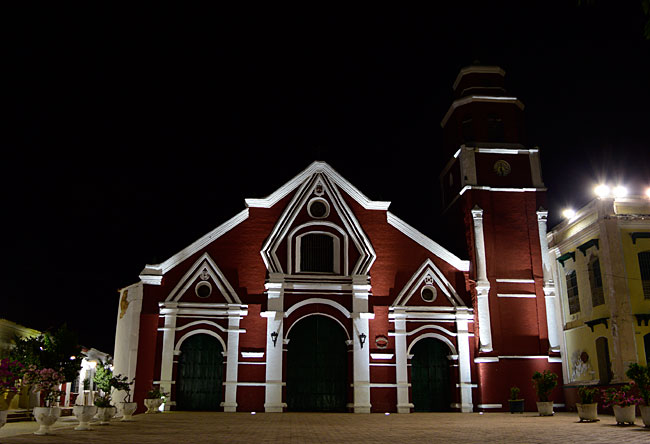
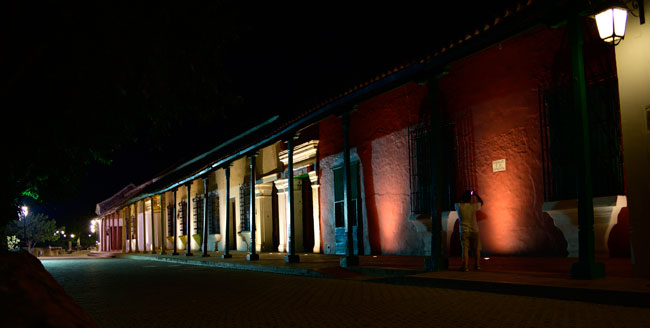
We arrived in Mompos and it was impressive. It’s the oldest town in Colombia, and to say it is off the beaten path would be an understatement. We had dinner in a restaurant run by an Austrian, where I had the best pizza I’ve ever had in my life.

After dinner, we chatted with the owner for a bit, and then we walked along the river front…I grabbed a bunch of photos there.

Folks, that’s about it for now. I’m a day behind in keeping you up to date on this trip, but Internet connectivity is dicey in these remote locations. As always, more to follow, if not today, then in a day or two (or three). Stay tuned.


If you’d like to see our earlier blogs in Colombia, please click here.