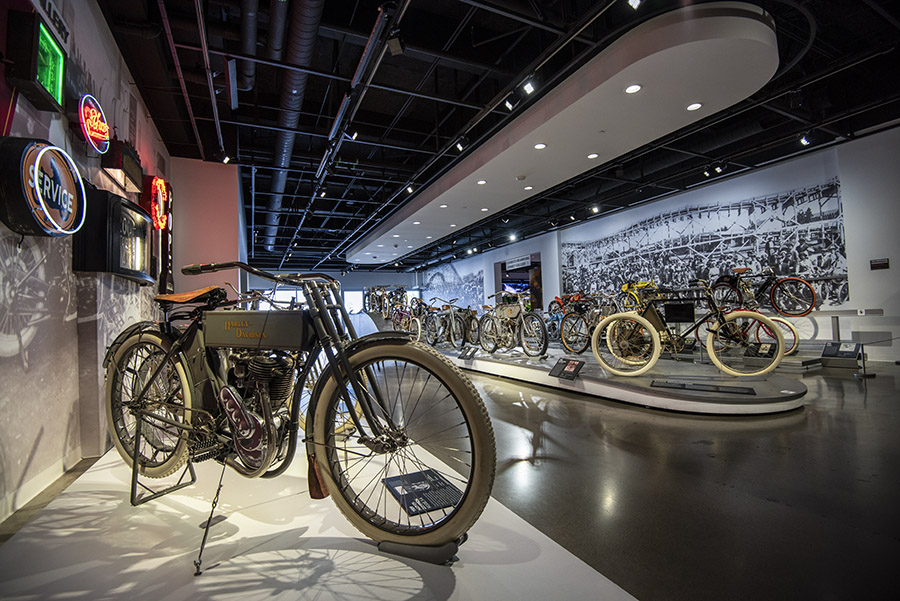
That shot above is a nice one, I think. It shows the subject of today’s blog, the 1909 Harley Model 5-A, with the rest of the Petersen’s Bunch exhibit in the background.
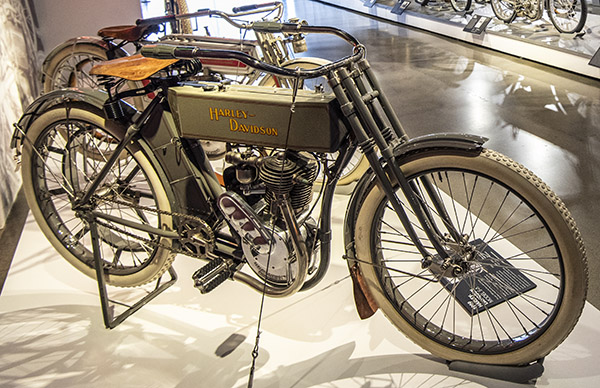
A 1909 Harley-Davidson Model 5-A. The Single was a better motorcycle than that year’s V-twin.
1909 was a good year for Harley. It was the first year they made more than a thousand motorcycles, and it was their fifth year of production (hence this motorcycle’s name, the Model 5). The Model 5 had several variants. The 5 and the 5-A had 28-inch wheels and either magneto or battery ignition. The 5-B and 5-C had 26-inch wheels with the same electrical system options. And (pay attention here, folks) the Model 5-D had a V-twin engine as an option. The V-twin was a bust. It was cancelled after Harley had manufactured only 27 of the V-twin engines.
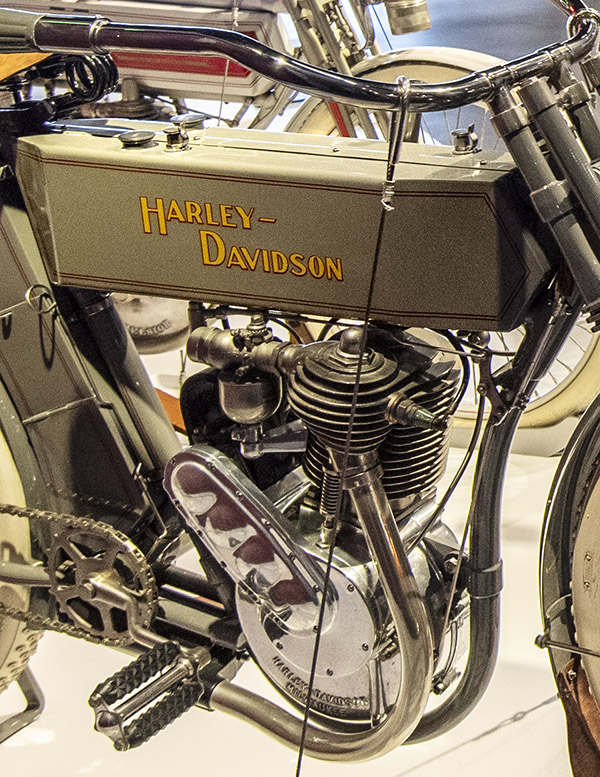
The Model 5-A’s 495cc engine. Check out the bicycle pedal arrangement.
Harley’s single-cylinder Model 5 motorcycles had a 4.3-horsepower, 495cc engine. That engine could propel the Model 5 to an estimated top speed of 40 mph.
Did you ever wonder about the bicycle pedals and crankshaft you see on these motorcycles? Yeah, me, too, until I wrote a piece on a Thor motorcycle a few years ago and deduced how it all operated. The way a rider started these old bikes back in the day was, in a word, complicated. It went something like this:
You made sure the oil line was switched open.
You made sure the gasoline line was switched open.
You put the bike on the center stand, which held the rear wheel off the ground.
You retarded the ignition.
You primed the engine.
You pulled in the clutch.
You switched the ignition on (if the bike had an ignition switch).
You pedaled furiously, until the rear wheel, tire, sprocket, etc. had attained sufficient rotational inertia.
You let the clutch out, which transferred the rear wheel’s inertia to the crankshaft.
You said a little prayer and, if the Good Lord was listening, the engine caught and started.
Today, we don’t even need to insert an ignition switch (some new bikes feature keyless ignition, like cars). We just press the starter and go. And we count ourselve lucky. Until something breaks. Then, we are at the mercy of modern motorcycle maintenance shops. And they ain’t too merciful.
I’ve been a Billy Joel fan for as long as I can remember, and I’m guessing if you are reading this blog, you are, too. I like everything about Billy Joel, and I especially like the fact that he is a fellow east coast guy and a motorcycle enthusiast.
Billy Joel is 77 years old now, and when you get on in years, things go south (don’t ask me how I know). He was diagnosed with normal pressure hydrocephalus (NPH) last year, a brain disorder where spinal fluid builds up in the brain. It usually occurs in older adults and it has no known cause. It’s incurable. Like a lot of things us older folks get, all the doctors can do is treat the symptoms, and the symptoms of this affliction are life altering.
As a result of the diagnosis, Billy Joel canceled all remaining concerts and he’s selling his motorcycle collection. His music is amazing; his successes even more so. Billy Joel has had 33 of his songs in the US Top 40. Just a few of his songs include It’s Still Rock and Roll to Me, Tell Her About It, We Didn’t Start the Fire, Piano Man, Uptown Girl, and Only the Good Die Young. There are many, many more. If you’re like me, when you read those titles you hear the music in your head.
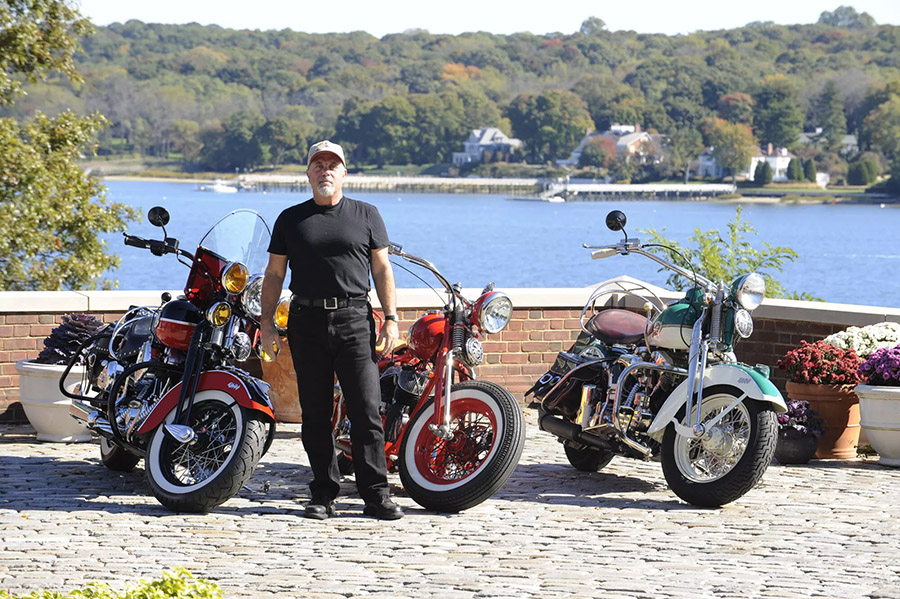
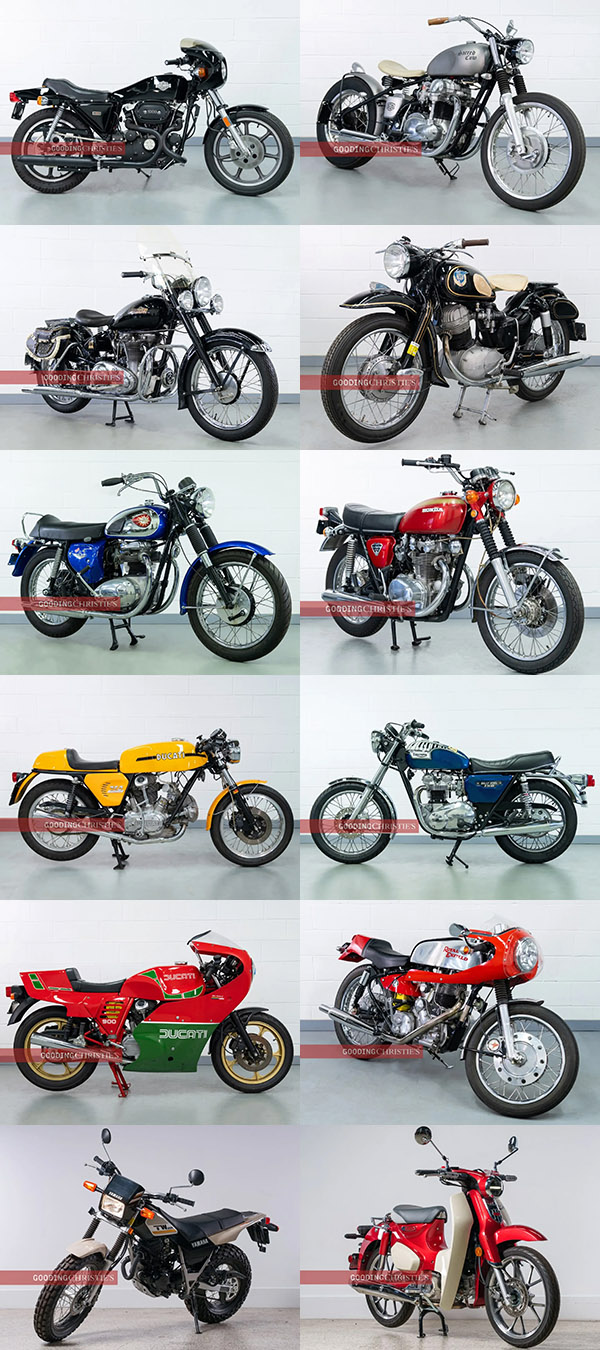
Just a few of the motorcycles from the Billy Joel collection being auctioned (there are 70 in total) are shown below:
The motorcycles are all interesting, as Billy Joel’s taste in motorcycles is eclectic. The two-auction will take place on Friday, November 20, and Saturday, November 21, in New York. The bikes are being auctioned by Gooding Christie’s.
Misery makes for strong memories, and nowhere is that more true than on a motorcycle in cold wet weather. I’ve had times when I’ve been absolutely teeth-chattering cold and couldn’t shake it. Hypothermia, they call it.
We have all experienced cold and wet weather riding experiences. These are the ones that reside in my memory.
My First Big Baja Trip
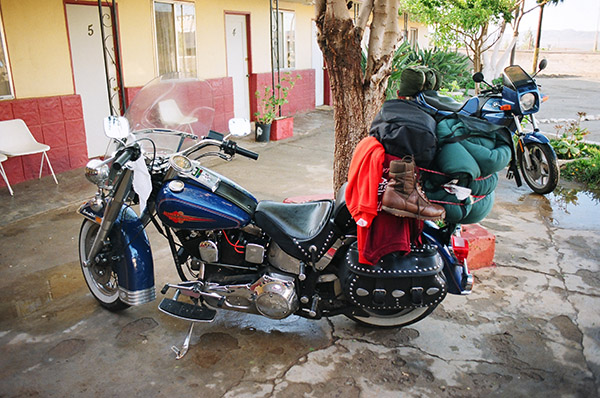
Back in 1994, Baja John and I did our first big Baja ride, from southern California all the way down to Cabo San Lucas. I met John somewhere on the way down in So Cal (I can’t remember where), but what I do remember is starting out around 4:00 a.m. in a heavy downpour. I must have had some kind of rain gear (in those early days of my big trip rides we didn’t wear the kind of gear that came later), but it was relatively ineffective and before long I was pretty wet and miserable. I remember I was wearing jeans and a heavy leather motorcycle jacket. I was on my ’92 Softail, and John was on his Yamaha Virago.
Our thawing out stop in Vicente Guerrero. We didn’t cover too many miles that first day entering Baja, mostly because of the rain and the cold.
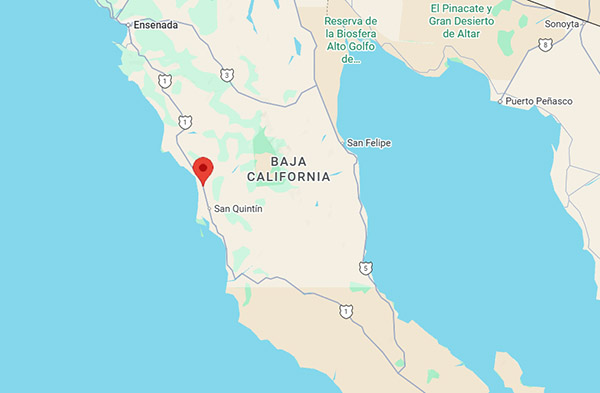
It rained off and on for most of that day. John and I stopped in Ensenada, took a few pictures, stopped again at La Bufadora, and from Bufadora on it was a steady downpour. We were young and dumb, and we just keep going. Somewhere around Vicente Guerrero (about 200 miles south of the border) I saw a hotel and stopped. My teeth were chattering uncontrollably and I felt like I was having a hard time controlling the motorcycle. It was around 4:00 in the afternoon and I was absolutely miserable.
The hotel was a cheap Baja place with concrete floors and no heat. The front desk had a register we both had to sign and I was shaking so badly I couldn’t sign my name, so I just made a big X like a hillbilly (not that there’s anything wrong with being a hillbilly). I remember the hotel clerk gave us a roll of toilet paper. We found our room, I stripped down, unrolled my sleeping bag (it had stayed dry, fortunately), and fell asleep in it shaking like a crazy person (not that there’s anything wrong with being a crazy person). I’d wake up every hour or so, check my watch, and realize I was still shivering. Finally, when I woke up at 4:00 a.m. (exactly 12 hours after climbing into my sleeping bag), I had stopped shaking. I slept for another couple of hours and was good to go.
By the next morning, the rain had stopped. The Harley and our clothes took a little longer to dry out. The guy on the BMW snagged the electric heater.
When we checked out that morning, another traveler was doing the same and I watched in surprise as he turned in an electric heater. We could have asked for one to put in our room, but we didn’t know. I remember thinking those BMW riders knew a thing or two.
That first day riding into the Baja El Nino rains was a brutal experience. We had nice weather and a rain-free ride all the way down to Cabo and back.
The Tibetan Plateau
I am a slow learner. Maybe a better description would be a learner who forgets and has to learn all over again.
When we prepared for the big ride circumnavigating China (20 years after the Baja ride described above), I had a very flaky rain suit that I knew would let water penetrate. Prior to getting on the plane for China, I sprayed the hell out of it with Scotchguard and hoped for the best.
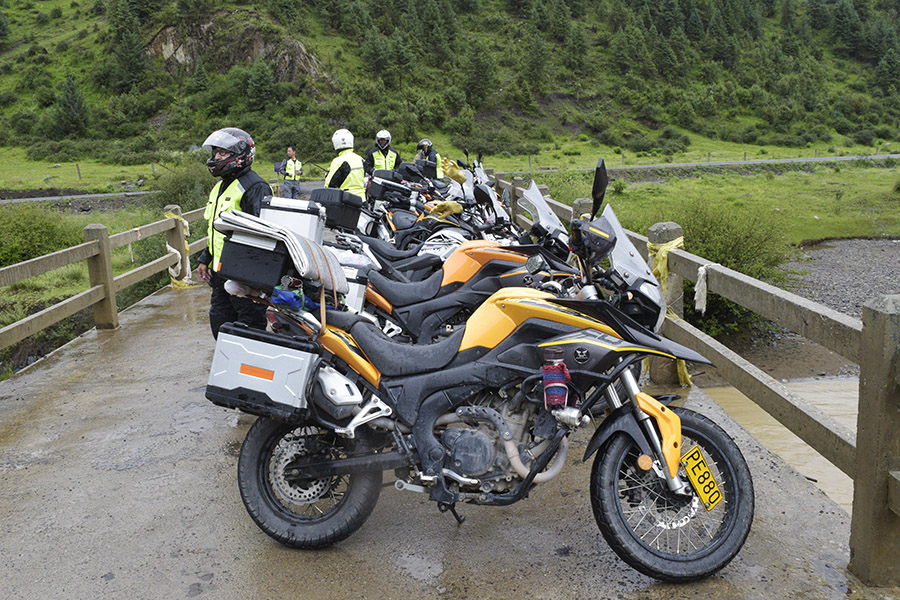
Hope is not a strategy, as I again learned riding through another motorcycle trip downpour. This time we were headed to the Tibetan Plateau, with the very capable Sergeant Zuo leading the way (that intro photo above was on the way up to the Tibetan Plateau in that downpour). The rains were oppressive, the mountain roads were curvy and dark, it was cold, my Scotchguard didn’t work worth a damn, and I was wet and cold. Bitter cold. Not quite hypothermic, but cold nonetheless.
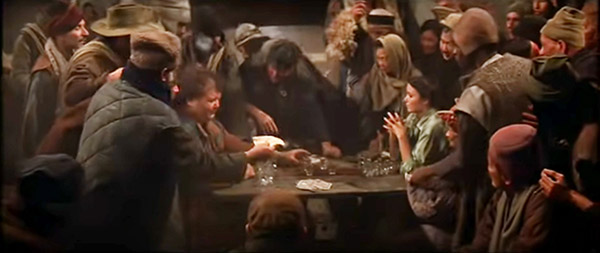
The Raiders Tibetan bar scene. Gresh and I lived it.
We finally arrived at our destination late that evening. It was wooden hotel in a tiny town with an adjoining dining area, and both looked like Indiana Jones’ girlfriend’s place from his first movie, Raiders of the Lost Ark. Gresh and I ducked into our room and I changed into dry clothes. The dining area didn’t have a menu. They had but one offering for dinner: Dumplings. All boiling in a big pot that looked like the one you’d see cannibals cooking people in. No kidding…it was that big. There must have been 900 dumplings floating around in that boiling cauldron. It was an all you can eat arrangement, and I ate plenty. They were great, and they were hot, both attributes that were perfect for my low-temperature condition.
We filled a smaller serving bowl with just a few of the dumplings from the giant dumpling cauldron. They really hit the spot.
Back to the “freeze your butt off” aspect of this blog. The room had some sort of a heater in the bathroom (complete with a Chinese style squat toilet, which was good for a few laughs). Gresh and I could not figure out how to get the heater to work. I’m not that smart, so I wasn’t surprised I couldn’t find the path to enlightenment. Gresh…he’s pretty smart, and his similar inability to crack the code made me feel not quite so dumb. We could get it to give us hot water, but we couldn’t get it to throw any heat. Being an engineer, I finally said screw it: We’ll just let the hot shower run all night and hope that’s enough to keep the room a degree or two above the outside temperature.
I woke up a few times during the night to the sound of the shower running. The room was like a sauna. Steamy, zero visibility, but warm. That hot water worked great.
A Cold Night In Tangke
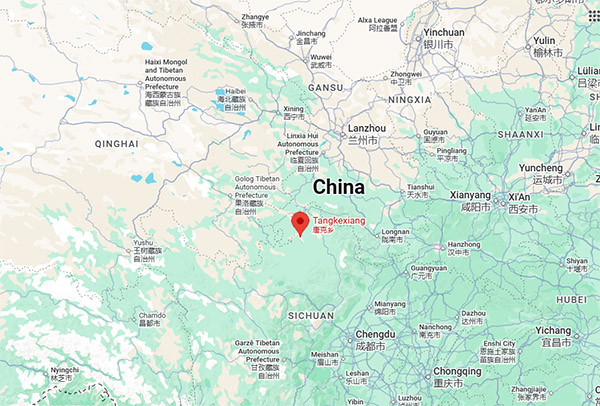
When we were coming down off the Tibetan Plateau on the China ride, we rolled into a tiny town called Tangke.
Gresh and I joked about now being able to say “when I rode down off the Tibetan Plateau…”
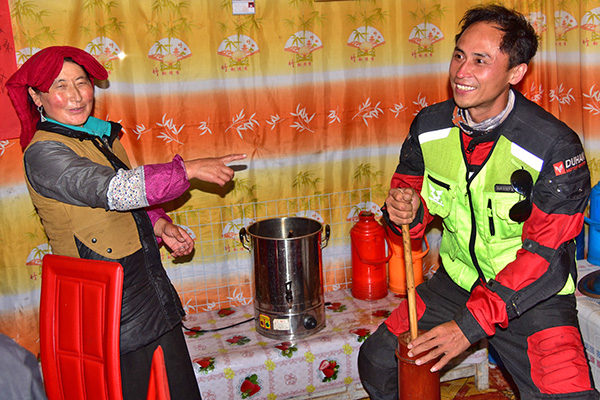
Tangke was remote and primitive, and it was cold. It felt like it was going to rain as we entered, but it did not. We stayed in another place that had a restaurant with a hotel behind it. The restaurant was kind of fun because one of our riders (a fellow name Lu) saw a Tibetan woman making butter and asked if he could try it. She agreed. The approach was different than what I would have thought. Instead of churning the butter in a circular motion (like I’d seen done in countless Western movies), her approach involved slowly pumping a big stick up and down in a floor-based bucket. Lu was a real cut up. He started pumping the rod in a manner that could only be described as suggestive, which the Tibetan lady thought was hilarious. We did, too.
Good buddy Lu, suggesting unnatural acts with a Tibetan maiden. It was a fun ride, China was.
To get to the hotel behind the restaurant, we had to follow a dirt path and carefully avoid stepping in dog poop (at least I hope it was dog poop). I was thinking the hotel room would be a real disappointment, but it was actually pretty nice. When the hotel guy showed us the room, I looked around and couldn’t find a thermostat, and not wishing to run the shower all night, I asked about it. He didn’t speak English, but I managed to get my point across visually (I was a mime on a radio show in another life), and he showed me how to work the electric bed. It was like an electric blanket, except the heater was built into the mattress.
I was a little leery about sleeping on a toaster, but that electric bed worked wonderfully well. It was cold, real cold, that night, so much so there was frost on the bikes the next morning. But I was snug as a bug.
The Honda Electric Shower Heater
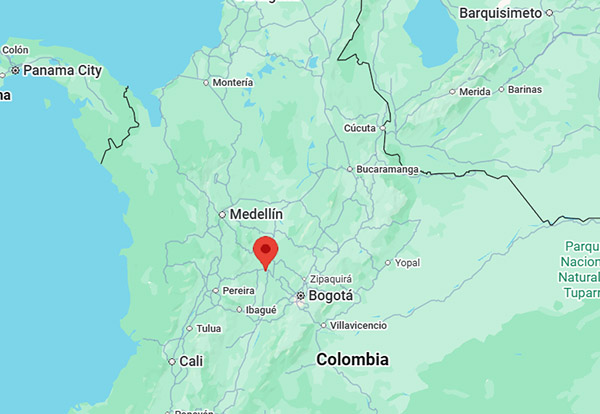
Nope, this has nothing to do with Honda motorcycles. There’s actually a town in Colombia up in the Andes Mountains called Honda.
This was one of my best rides ever.
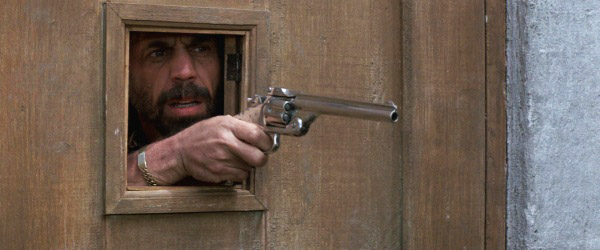
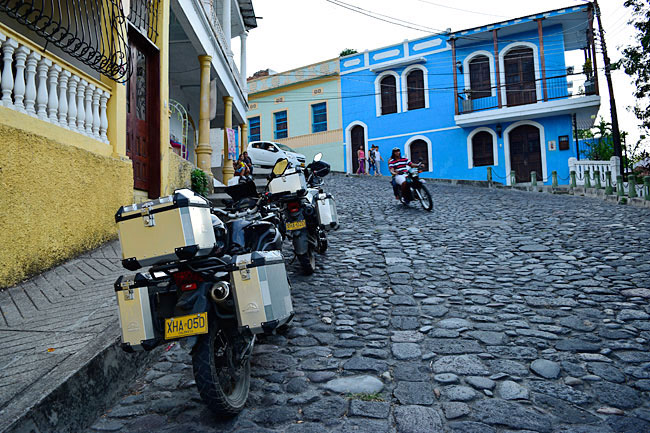
Like most of the towns we rode through in the Andes, this one was hilly. The hills were so steep you couldn’t park the bike and rely on the kickstand to keep it from rolling away; keeping the bike in gear was necessary. Good buddy Juan, who led our ride, stopped in front of our hotel, which was securely hidden behind a tall wall and gigantic doors. “Security is an issue here,” Juan explained. The big doors had a little door at eye level. I immediately thought of that scene in Romancing the Stone (which was supposed to be in Colombia, but was actually filmed in Mexico).
A scene from Romancing the Stone. Our hotel in Honda had a similar little door in its gates.
Just like in the movie, someone from the hotel opened the eye level little door, conversed with Juan for a minute, and decided to allow us in. We couldn’t leave the bikes on the street (“Too dangerous,” Juan said), so we parked that at a secure warehouse around the corner.
Our hotel in Honda. The big gated doors to the left of our bikes (in the yellow wall) actually had a little door that could be opened to check out whoever wanted to enter before opening the big doors.
Once inside the hotel, I showered before dinner. There was only one faucet in the shower, and the shower was cold. I saw a switch on the showerhead, and what appeared to be an electrical coil that the water flowed through. I nervously tried the switch (standing naked in the icy water pouring through the showerhead), but the water remained icy. Oh well, I thought. I’ve taken cold showers before (no jokes, please).
At dinner in the hotel that night (which was excellent), I asked Juan about the showerhead. He smiled. “The electrical coil is supposed to heat the water as it flows through,” he said. “That’s the theory, anyway. Most of the time they don’t work,” he added, with a weak smile. Maybe that’s a good thing, I remember thinking.
Dad’s Super Hawk Heading to Cooper’s
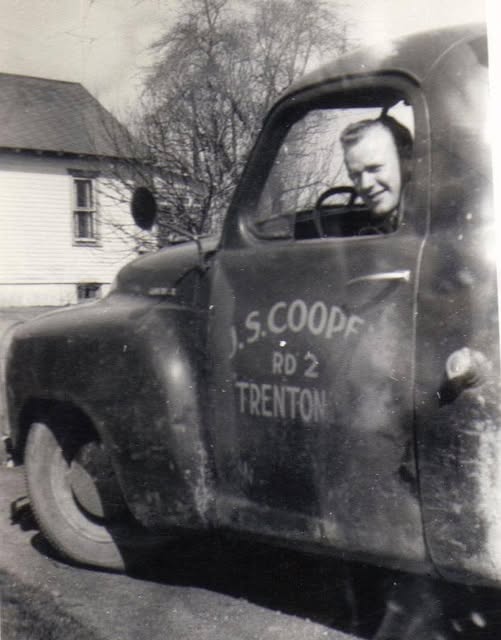
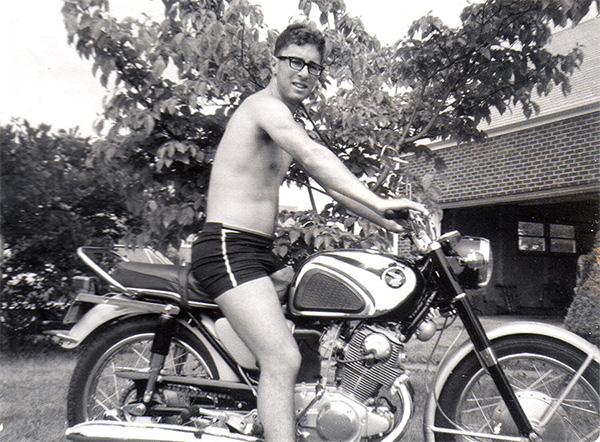
When I was a 14-year-old kid back in rural New Jersey, I managed to get my Dad interested in motorcycles. In the space of less than 4 months, he bought a used CB 160 Honda (the baby Super Hawk), a new 305cc Super Hawk, and then a ’66 Triumph Bonneville. Cooper’s Cycle Ranch in Hamilton was our dealer, and in the early days, it was a ranch, with a big barn and all the accoutrements that went with it.
Sherm Cooper, a well-known Triumph flat track racer who became a very successful Honda and Triumph dealer in the 1960s and 1970s. He was a nice guy.
One morning (I’m guessing it was in the Spring, after the snow and ice disappeared, but before the temps starting getting reasonable), we left early on a Saturday morning to bring the Super Hawk in for its 500-mile service. The ride was along Route 130, a highway that ran from our area to Hamilton (a distance of about 35 miles).
It didn’t seem like it was going to be that cold on that distant-past Saturday morning, but let me tell you, it sure was. Dad and I both had jackets, but nothing like the motorcycle gear folks wear these days. And we had not counted on the wind chill. It was bitter. I had Dad to shield me from the wind chill; he was out in it. I guess you could say he was a Popsickle (or maybe a Popcycle).
We pulled into a store and bought a couple of newspapers, and we each stuffed them into the front of our jackets to cut the wind chill. It was a good idea, but it didn’t work very well. We still froze our butts off. I was freezing; it must have been terrible for Dad.
Yours truly at age 14 on Dad’s Super Hawk. We were dressed only slightly warmed on that ride to Cooper’s.
When we reached Cooper’s, it was still cold but at least we could warm up in the shop. The techs (they were called mechanics back in the day) had to wait for the engine to cool so they could adjust the valves, but their wait wasn’t very long that morning. When we left, central Jersey had already warmed up a bit and it was a pleasant ride home. But that ride there…wow, that was a cold one.
I should have noticed (and noted) that our previous blog (published on 6 August) was our 1,800th blog. This one is our 1,801st. That’s a lot of blogging.
I’ve managed to get the Buell oil leaks slowed down to a few drops per ride so I decided to give that part of the Buell resurrection a rest. This winter I’ll try again on the rocker boxes and I’ve got real H-D umbrella valves to replace the cheap aftermarket ones in there now. A guy can chase oil leaks on a Sportster til the Kawasakis come home.
We’re well into monsoon season here in New Mexico that means rain every day or every couple days. All this rain makes the driveway at The Ranch a muddy mess (dirt bike season) so I spent some time trying to cut down on rattling noises emanating from the Buell.
With the air cleaner spaced outboard and the frame slightly higher the scuffing should stop.
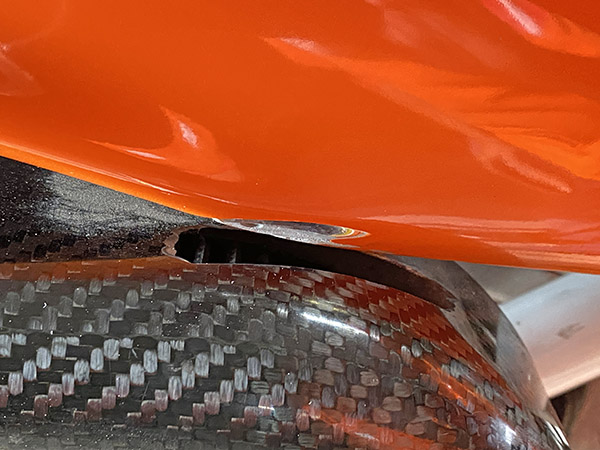
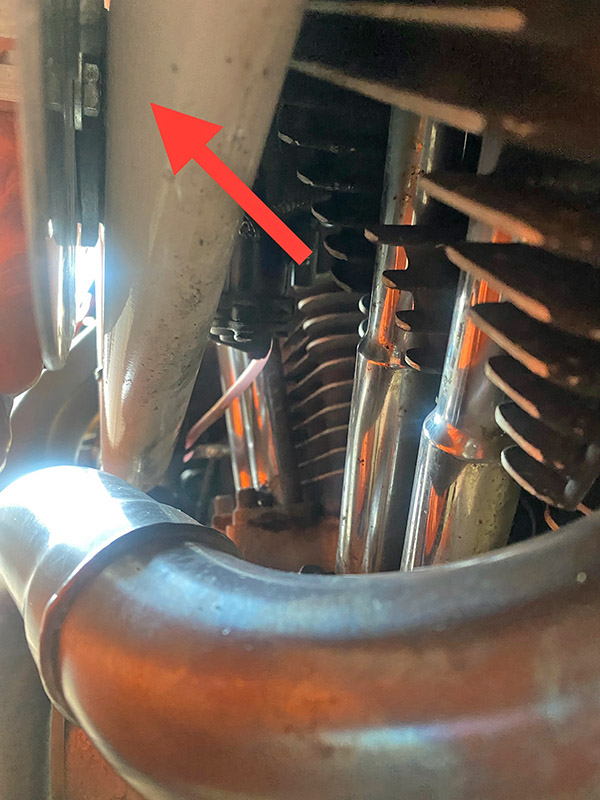
One annoying rattle was the air cleaner housing. The backing plate rubbed the frame very slightly, not enough to wear through the paint but enough to scuff the frame tube. Additionally, the fiberglass fuel tank cover rubbed on the air cleaner cover, wearing away the cool VR1000 orange paint. At some point in the past a groove was cut into the cover in an attempt to stop the erosion.
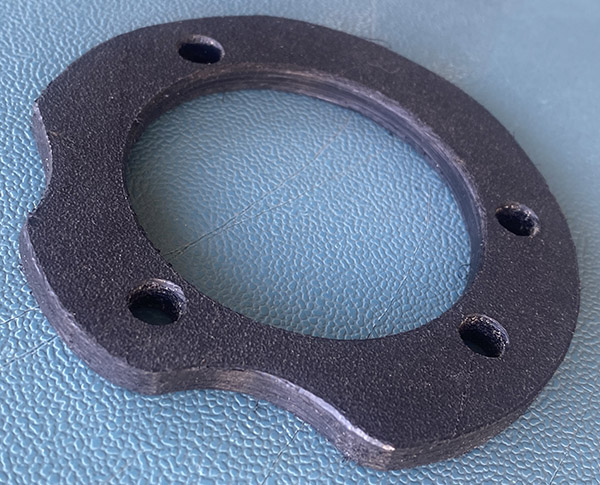
Working with Starboard material is like carving a bar of soap. I would have used aluminum but I didn’t have any the right thickness.
The fix for both of these problems was the same: move the air cleaner out 1/4″ to clear the frame and line up the cover slot with the tank.
With the spacer installed there is a little breathing room between the frame tube and the air cleaner back-plate.
I used a piece of black Starboard (plastic sheet used in boat building) left over from my working days to cut a spacer. Longer bolts were needed to attach the mess to the carburetor. Hopefully this knocks down the noise a bit.
This acorn nut hitting the faring bracket made a hell of a racket. The photo shows the cluster raised a bit.
The next rattle was the a speedometer acorn nut hitting the faring support frame tube. This was noisy as hell but mostly around 2800 RPM. After 3000 the rattle stopped. The problem was the fiberglass instrument housing. The housing is attached by 3 screws into the faring bracket, the speedometer is cantilevered to the left, beyond the mounting screws so it hangs out there unsupported and bopping into the bracket. The solution was easy: 3 thick rubber grommets under the mounting screws spaced the instrument cluster high enough to stop the noise.
New isolator on right.
While I was in rattle-mode I decided to replace the sagged out rear isolators. This Buell uses two large rubber bagels between the swingarm area and the frame in an attempt to quell the Sportster engine’s vibe. There is an actual Buell-style isolator but the ones that fit a Dyna seem to work ok.
The new isolator in place. They come drilled off-center and sag to center.
After all this tinkering I took the Buell out for (yet) another test ride. The bike was almost civilized! No excessive rattles, no squeaks, just the normal clatter emanating from the antique Sportster mill.
The new isolators jacked the bike up about 1/2″ but I can still reach the ground ok. The vibration characteristics have changed slightly. On the Buell S2 the mirrors stick out a long way. They would shake pretty well, the left one pretty violently, until 3500 RPM where the image would sharpen into tolerable. With the new bagels the right mirrors is sharp at all RPMs and the left is noticeably improved. After 3200 RPM both mirrors are crystal clear.
Over all speeds the bike feels less Vibey, 2800 to 3000 RPM is still the worse spot but it’s not bad at all. After 3500 RPM the Buell is a smooth operator and the faster you go the smoother it gets. Like I say, almost civilized.
The old isolators were sagged out. The Allen bolt rested at the top of this opening. With the new isolators the bolt centers in the pivot/frame.
Handling is slightly different, I imagine due to the .001-degree change in rake from the fresh isolators. Nothing major but the Buell feels the tiniest bit more frisky in the turns. Straight line stability is unchanged: like a rock.
With the stock muffler the Buell is impressively quiet. All you hear at 80 MPH is the wind, vibration is minimal, I’m thinking this is close to how the bike performed as new. A far cry from Japanese excellence but way better than a standard Sportster of the era. I like it.
Saturday morning I wet the bed. It wasn’t me, I’m not that old… yet, it was the incredible humidity. The fly-roof of my tent got so heavy with dew that it sagged down onto the mesh part which sealed off the air gap that helps keep the tent dry.
A full paddock is a happy paddock.
Water dripped down from the ceiling in an irregular pattern. Puddles of water were everywhere but not completely, there were dry spots. My phone was wet, my jacket soaked, and this was with no rain. Coming from New Mexico my nose can hardly believe that air can hold so much moisture.
Would it have killed them to add a few extra conduit clamps? They’re like 75 cents each.
It was too cold outside so I made coffee inside the tent and waited for it to warm up. I use Bustelo instant. It’s not great coffee but it has caffeine and is easy to make. Hesketh slept poorly on a deflated air mattress, still he declined my offer of Bustelo saying he’s a coffee snob. He went off to do corner work at the track near the front straight. I guess corner workers get a breakfast in the morning.
I think the driver’s side rear tire on the Toyota is going flat. Maybe it’s the angle at which I’m parked. It won’t surprise me; I’m always getting flat tires. I’m the god of low pressure.
The corkscrew, the legendary corner (s) at Laguna Seca. If you look around you may see an ExhaustNotes sticker somewhere.
I’ve got bigger problems. The 3-day, race-weekend wristband Laguna Seca issues is one I haven’t seen before. Instead of snapping on or using adhesive, the band has a sliding collar. I was checking it out, wondering how it was supposed to stay tight when I test slid the collar. It moved east too easily. Now the band was too small to go over my wrist. It’s an ingenious thing. The collar has one-way teeth inside preventing it from coming loose. It’s a real step up in the wristband world. I managed to get a few inches of relief by stabbing inside the collar with a knife blade. I can see these working well as handcuffs or for executions.
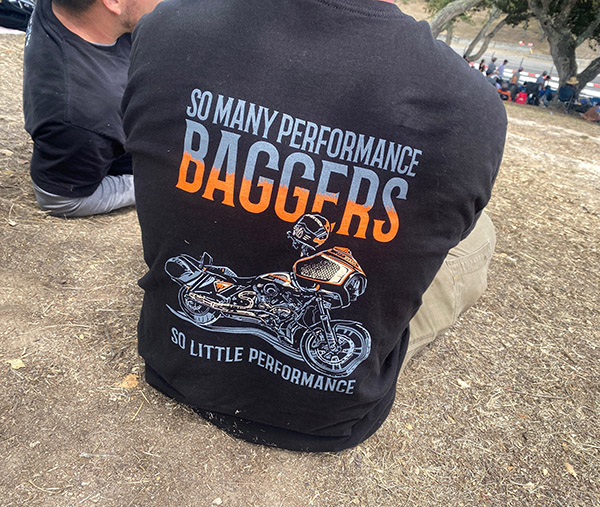
A salty fan wears his Bagger opinion on his shirt.
Some track observations:
A muffled KTM sounds like a blown speaker
The Arch motorcycle looked ok. Much improved over the early models. They’re cheap; get two.
Kenny Robert’s had a KR logoed racing team at Laguna Seca. As you can imagine the bikes ran well.
On the last practice lap many riders stopped in front of the grandstands (facing the tire bridge) and practiced starts. The drill is peg the bike into the rev limiter and feed out the clutch just enough to remove the sputter.
When the video camera operator pivots after a bike makes the turn, it must be a big shot rider. Otherwise, the camera never moves.
The fast 600s turn laps around 1.28.
The fast Baggers turn laps around 1.28
The fast Super Hooligan bikes turn laps around 1.28. I’m not a conspiracy nut, but this looks suspect.
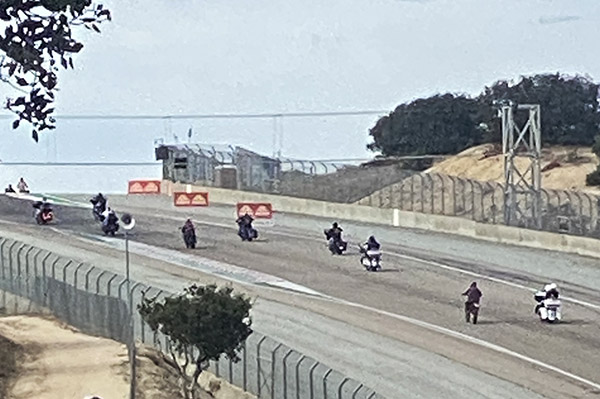
Real Baggers on parade. You can toss the proprietor a few bucks and ride the track. Of course, with all those Harleys you’ll need some kitty litter.
We have one more day of racing. I must stay strong.
Andy Rooney, the proto-crank from 60 Minutes, back when 60 minutes was an hour, not a lap dog, said something important. I’m sure I’m messing it up, but he said you never know when your last time doing a thing will be done. His example was sledding in the winter. It was a rite, a ritual, a flim-flammy go-round: he did it every year without fail. Each year he’d sled down the hill but one year he was too tired or busy. Maybe he got mature. He didn’t go up the hill that year. And then he didn’t do it again. And again. He fell out of the habit, see? After a while he couldn’t remember why he went sledding at all.
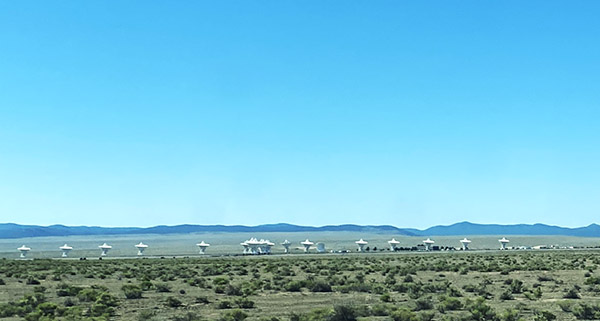
You don’t often see the Very Large Array grouped up tight like this. Must be shooting wide angle stuff.
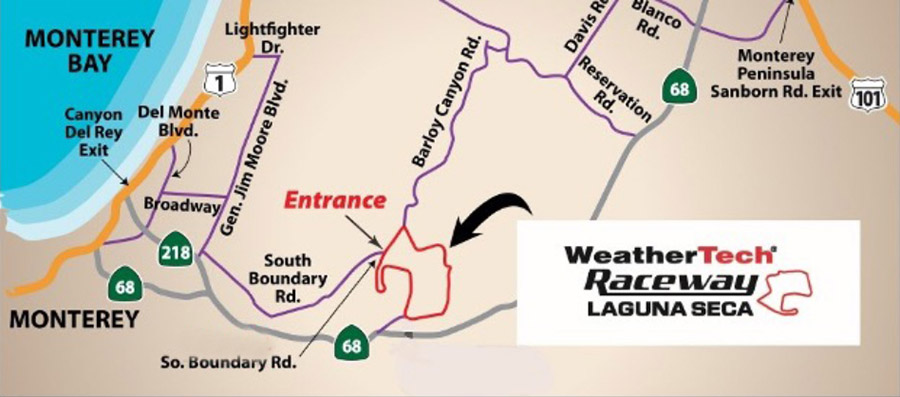
I went to the motorcycle races at Laguna Seca because if I don’t, one day I won’t remember why I went to motorcycle races. And there are good reasons to go even if it’s a pain in the butt. This year I went for Moto America races but any sort of motorcycle racing will do.
It was 116 degrees when I pulled into Needles, California on the first night. The heat didn’t let up; it was still over 100 into the wee hours. I know this because I check on the bike every few hours, this goes on through the night. It’s my issue, it’s not like I suspect the good citizens of Needles or something. It’s not like Barstow.
Luxury living.
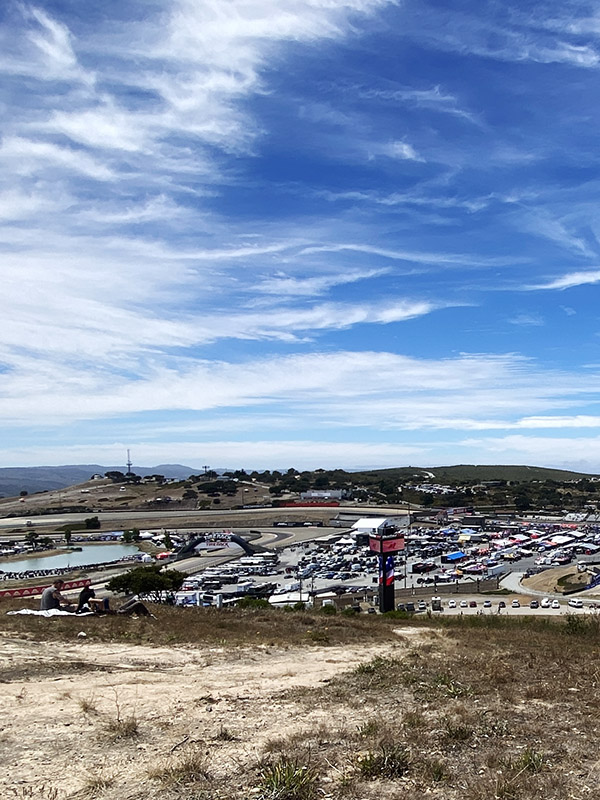
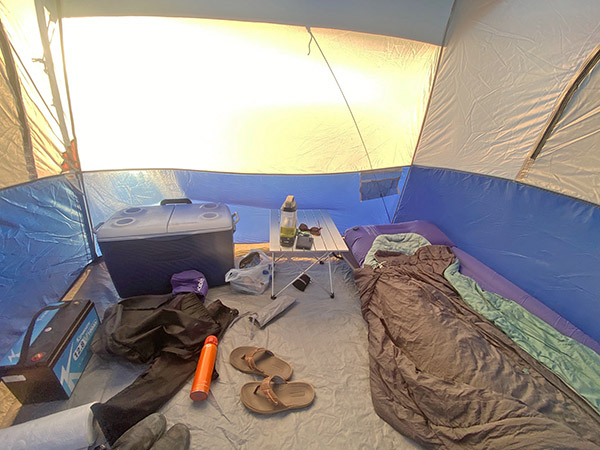
The next evening I made Laguna Seca, it was kind of cold. Two long days on the road, a stiff sea breeze sliced through the Laguna Seca campgrounds and I almost put on long pants. After my initial set up, I laid down inside the tent and got sleeping-bag warm. It was nice. I have a really nice tent set up now. Plenty of room, a cot, a nightstand, ice chest full of food and drinks, even a battery to charge my phone.
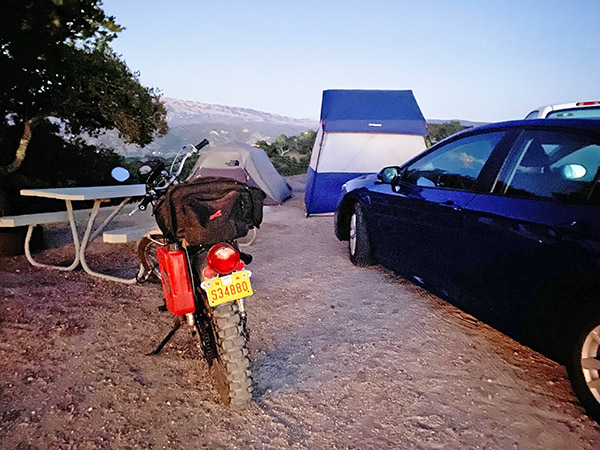
Cool, damp weather pushed inland, making camp kind of nippy.
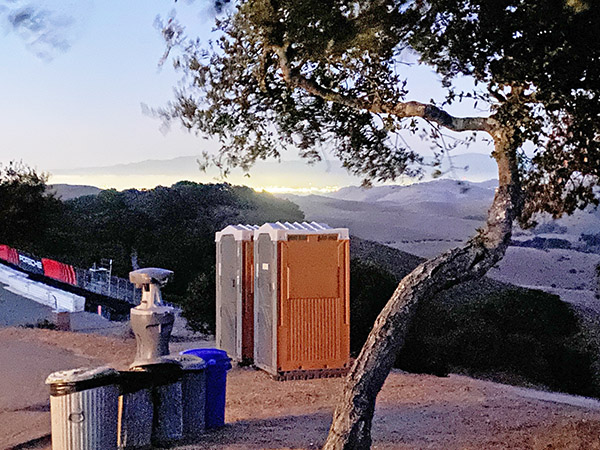
Photons from Salinas, 10 miles away blast through the thin membrane of my tent, glamorous as it is. It’s 11:40 p.m. and the wind has eased. This is John Steinbeck’s old stomping grounds. Not my tent exactly but the general area. Most likely Steinbeck was also hit by photons from Salinas at some point in his life. Maybe not the same photons but Quantum Entanglement says it might have been one just like it, or maybe the mirror image, a reverse spin. Mine look like they are spinning clockwise so Steinbeck’s were probably going counterclockwise.
Lights from Salinas, 10 miles away, frame the porta-potties.
I have to take a leak.
A glowing doughnut of far-away lights surrounds me on the east and southwest. Houses and businesses, overhead a clear, cloudless sky full of stars. All these damn photons. My tent is so roomy I actually have enough space to reel without bumping into anything.
My internet buddy Hesketh stopped by earlier and tossed his tent on the ground. He’s in there napping now, blocking stray photons that might have gotten to me. I hear generators running. It sounds like the noise is coming from the paddock direction. Faintly, it’s not annoying because I’m deaf so you know other people can hear the generator.
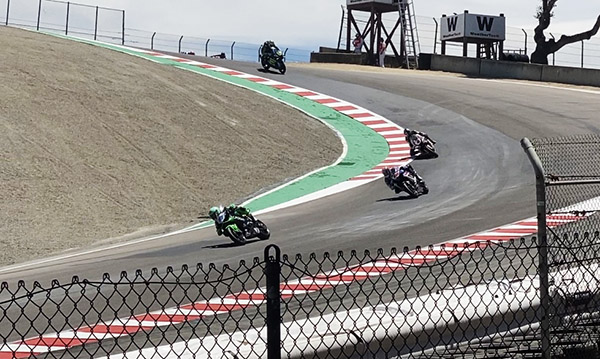
Friday is set up camp and the riders are testing. When I first got here, the Baggers were stuttering on the rev limiter going up the hill to the corkscrew. It sounds like they hit the limiter at pretty low RPM’s. Maybe 7000? Then the modern bikes were out. I was tossing gear into my luxury, tent-majal as they went past at some crazy engine speed. A piercing screech that was sort of annoying after the flat roar of the Baggers. At first, I thought the Baggers racing was a gimmick. It still is a gimmick, but I give it my blessing now. I’m sure Moto America was worried about how I would receive the series.
The main thing is I made it to the top of the hill one more time. I’ve seen it all, but I haven’t seen all of it, my brothers.
This is a sort of a Wayback Machine post, one that goes way back. It’s from June of 2012, which is way before Gresh and I started the ExhaustNotes blog. I used to write the CSC Motorcycles blog (it’s where I started as a blogger). I was thinking about Tennessee the other day and I remembered that I had written a blog about the Memphis bike nights, but I couldn’t find it in the ExNotes archives. Then I realized: It predated ExNotes. It was a CSC blog.
I have got to be the luckiest guy on the planet. I’m taking this great tour through the South, and yesterday we found ourselves in Memphis. Memphis is a great city for many reasons, not the least of which is Graceland. As I mentioned in the CSC blog yesterday, Susie and I took the Graceland tour and we loved it. It was beyond awesome. I’m a great Elvis Presley fan, and the opportunity to visit his home was not one to be missed. Folks, if you ever get to Memphis, Graceland is a must!
Well, our good fortune did not end there. We had an awesome dinner at the Rendezvous, a super barbeque joint my good buddy Georgia Robby recommended. Folks, trust me on this…barbeque just doesn’t get any better than this!
The Rendezvous in Memphis…the best of the best!
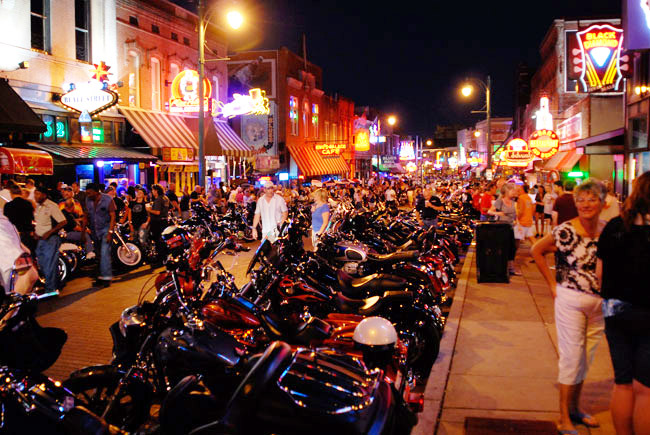
After our great dinner, we moseyed on over to Beale Street. That’s kind of like the Memphis version of New Orlean’s Bourbon Street…it’s the place to be in Memphis. We noticed a lot of motorcycles heading that way, and then, hey, we saw that the street was shutdown…and it was nothing but motorcycles! Turns out that Wednesday night is Motorcycle Night on Beale Street! Check this out…
Midweek Memphis Moto Madness on Beale Street!
The Memphis moto night is one big street party, folks! We were having a blast talking to the riders there. They saw my California Scooter shirt and everyone wanted to know about the CSC bikes. It was awesome. We met a lot of people and made a lot of friends.
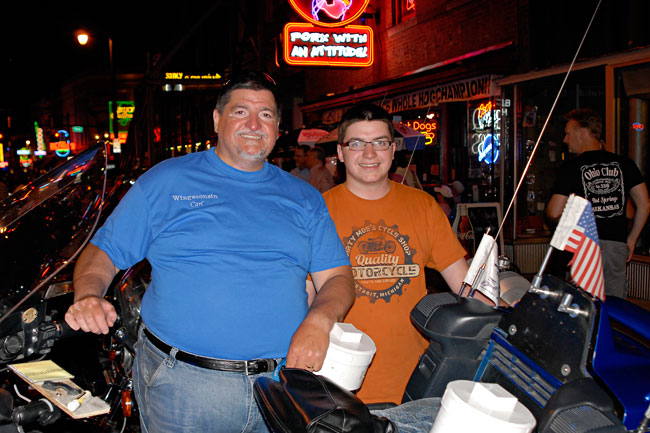
The photo below shows Carl and Ryan, a father and son team. These are cool guys. Carl was on his Gold Wing, and Ryan was on a CX500 he and Carl rebuilt. Ryan just graduated from technical school, and when his father asked him what he’d like for a graduation present, Ryan just asked to go with Carl on his next motorcycle trip. That’s pretty cool stuff, folks.
Wisconsin Carl and his son Ryan…riders extraordinaire!
We actually rode alongside these guys about 100 miles east of Memphis without meeting them. Susie recognized the Gold Wing when we saw them again at the Memphis moto night. Talk about a small world!
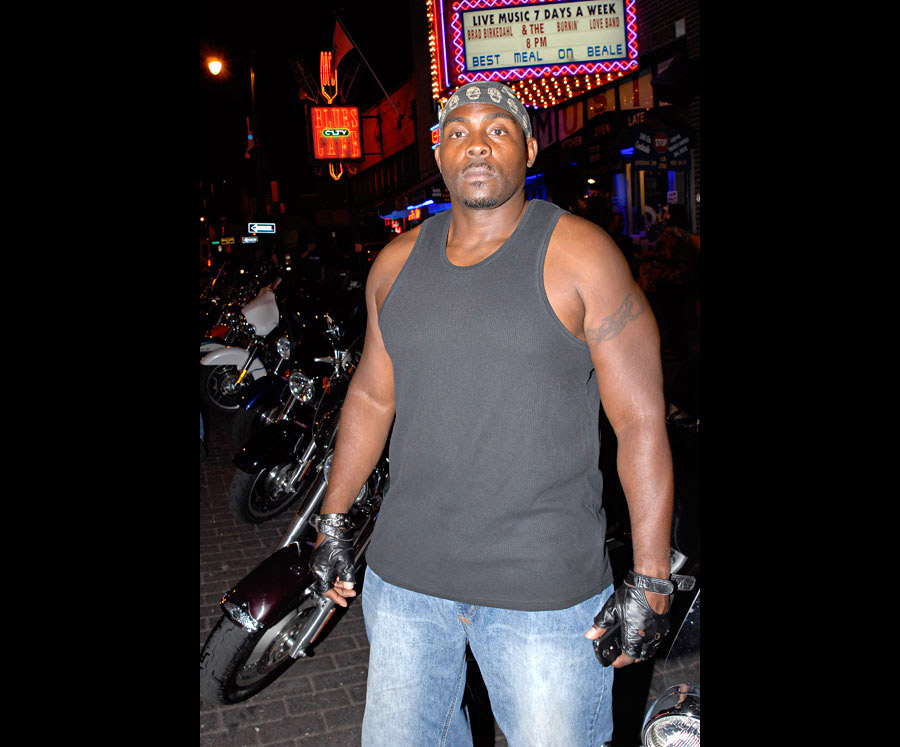
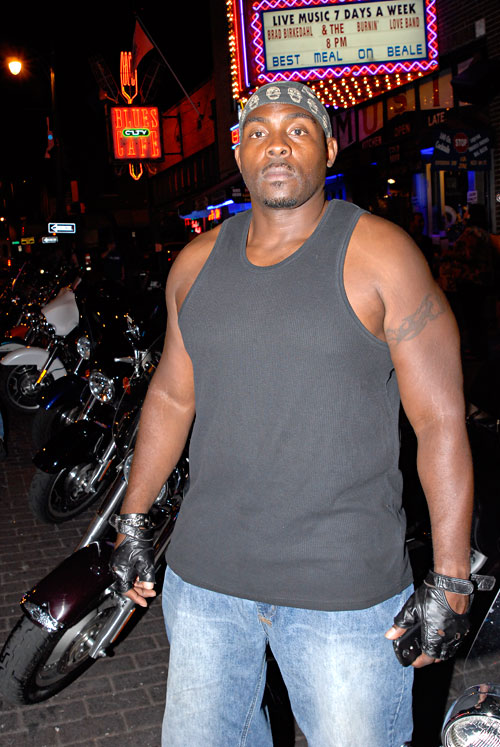
I grabbed a lot of photos on Beale Street. Every body was having a good time. I asked the fellow below if I could grab a shot, but he kept smiling for every shot and looking like too nice of a guy. I asked him to strike a tougher pose, and wow, did he ever!
He’s really a nice guy!
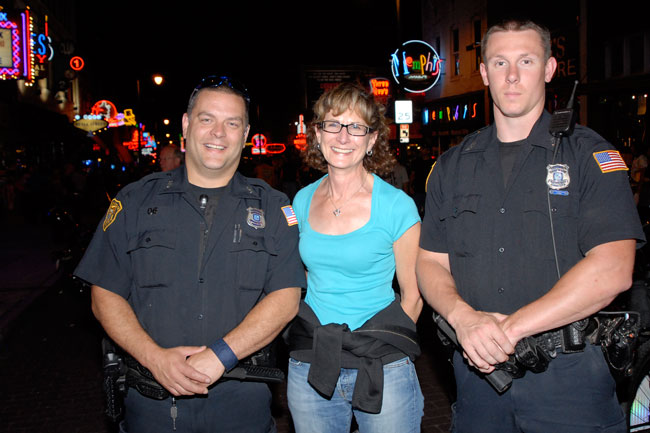
We were having a lot of fun. We noticed police officers at each intersection making sure that Beale Street allowed no one other than motorcyclists, and I asked a couple of them if I could grab their photo. They said sure, but only if Susie was in the picture…
Susie with two of Memphis’ finest!
The police officer on the left looks like he’s having a good time…but the guy on the right looks like he wanted me to explain that traffic ticket I never paid…
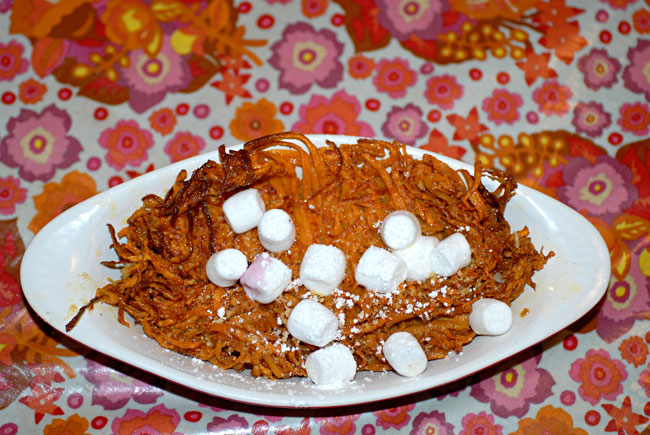
Well, hey, the next day we had an absolutely awesome Memphis breakfast. I had a French toast fluffer-nutter with whipped cream and blueberries, and hash brown sweet potatoes with marshmallow.
There’s peanut butter and bananas sandwiched between those slices of French toast!Hash brown sweet potatoes with marshmallows!
Steve saw the above photos and told me I might need to lower the gearing on my CSC motorcycle when I returned to California.
The next night we made it to Mobile, another great southern US city. In the morning, we toured the USS Alabama, a floating museum just outside of Mobile. It was beyond awesome. The ship bristled with guns. I was amazed, and I have to tell you, it’s worth a trip to this part of the country just to see this magnificent battleship. After seeing the USS Alabama, we followed the Alabama Scenic Byway to the Emerald Coast in Florida’s panhandle, and we had a great grilled amberjack dinner in Fort Walton Beach. Imagine bone white sand and emerald green water, and you’ll have a pretty good handle on Florida’s Emerald Coast.
That trip was 14 years ago, and I remember it like it was yesterday. Good times brought to life once again through the miracles of the Wayback Machine! The blog you read above evolved into a Destinations piece for Motorcycle Classics magazine. You can find it and more here.
Subscribe to ExNotes for free!
We need your support! Do what you can to help ExNotes stay in the black!
I’ve kind of lost count on which Buell installment dealt with the muffler falling off. The story was about how the muffler was held on by a T-bolt clamp on the header pipe (basically a heavy-duty hose clamp) and two vertical brackets that located the rear of the muffler. Those vertical brackets would come loose letting the muffler slide back into the wheel. In that previous story I welded the rear bracket so the muffler couldn’t slide back unless the bolt was removed. This setup no longer relied on the clamping force of fasteners alone.
I thought I had it fixed, a common misconception that I have frequently, and both the muffler bolts of my belt-and-suspenders repair vibrated out. The muffler fell off again. Most riders would write this off as a bad design on Buell’s part, but I look at it as a challenge. Just like Lucy always pulled the football away from Charlie Brown the Buell keeps snatching success away from me.
The Buell lives and dies in real time. No waiting around for Honda-like reliability to finally fail. Each individual Buell-ride has a beginning, a middle and an end. The end being something to fix. And sometimes fix it again.
There were two of these. One is on the road a few miles ahead of the bolts that fell out.
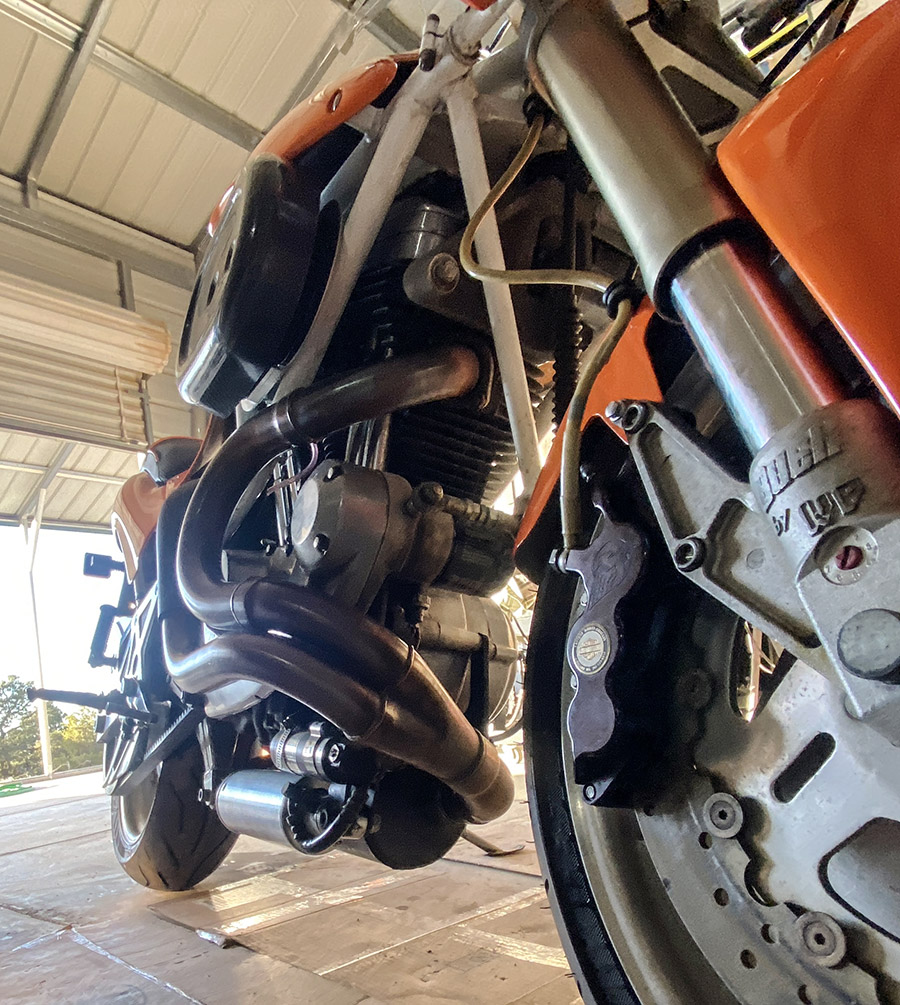
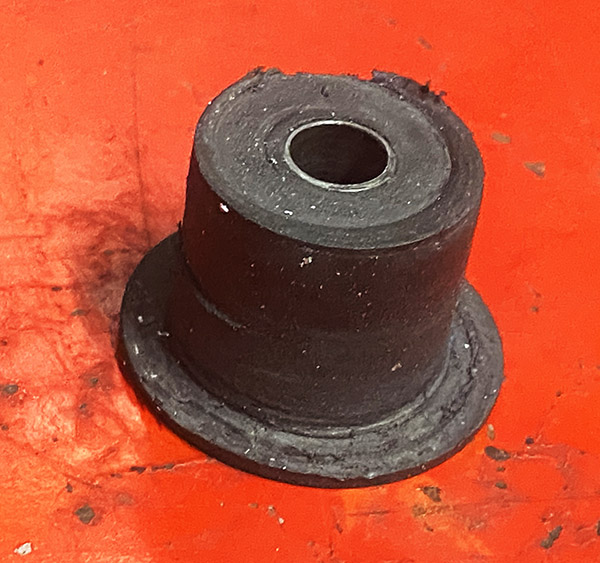
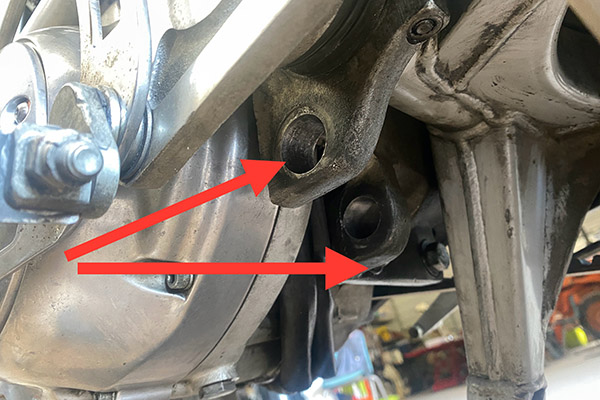
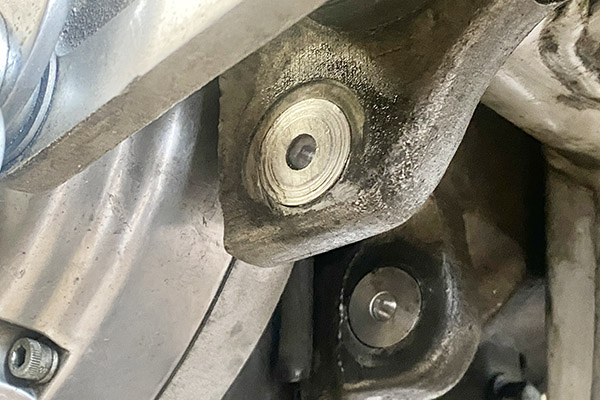
When the muffler bolts fell out one of the two rubber bushings fell out also. These bushings fit into two holes cast into the Buell’s engine crankcases. It was a good system and I should have used Loctite or safety-wired the bolts the first time.
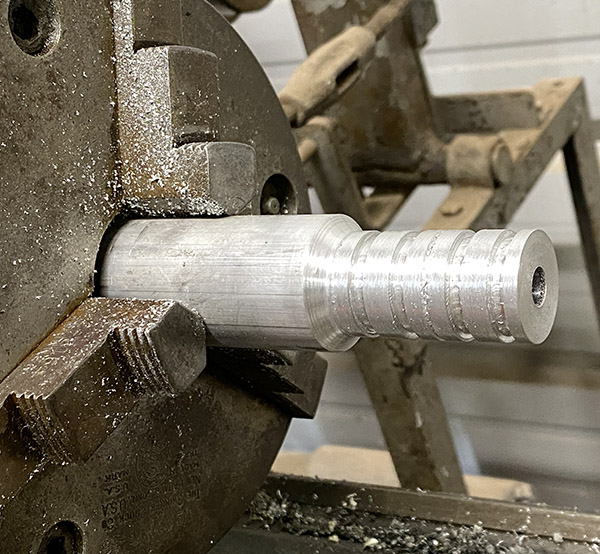
I wasn’t in the mood to hunt online for another bushing and the thin, molded-in tube preventing the rubber from crushing made me wary of really cranking down on the muffler bolts. I decided to take things into hand and make two new bushings since it’s as easy to make two as it is one.
I’ll need a better cut-off tool but you can see, two is as easy as one.
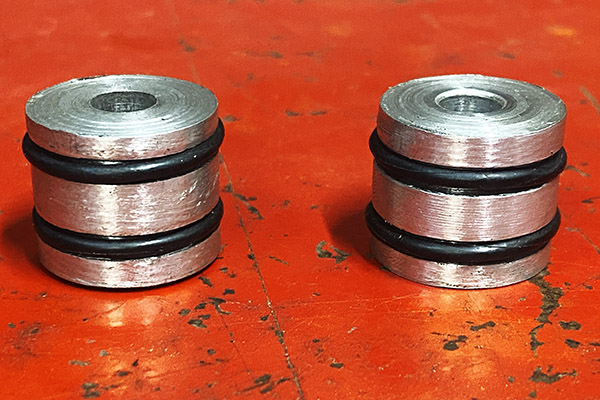
I have plenty of aluminum round stock and the crude bushings I spun out would shock a real toolmaker. I added a couple of grooves for o-rings to cushion the aluminum. Regardless, I now had something I could tighten a bolt against as much as I wanted. Putting the hangers back together I used nylon locknuts on fresh bolts hoping to slow down the rate of failure.
The finished bushings.Harley cast in a couple of sturdy mounting holes on the Sportster crankcase.The bushings are slightly longer than the mounting holes allowing for tight bolts with a bit of give for the shaky Sportster engine.
On yet another long test rides the bolts stayed tight and the muffler did not fall off. Lucy-1, Joe-1. I’m adding checking the muffler bolts to my pre-flight inspection list until this fix proves permanent.
After years of Kawasaki perfection, knowing every ride will be successful, I’m loving the Buell’s humanity. The Buell needs a steady handful of wrenches and ingenuity. Riding and tinkering with the thing brings me back to my youth of edger-powered minibikes roaring through the hot, humid Florida nights. Riding those old minibikes was a crash engineering course. You learned fast or you pushed the thing. So far, I haven’t needed to push the Buell.
I’ve said it before and I’ll say it again because it gets the word count up: when you leave town in New Mexico you are more out-of-town than other places. Traffic here is light, cell phone coverage is spotty, gas stations are fewer and far between-er. If you break down 10 miles from home, you might as well be 100 miles from home. It could be a few hours before a car comes along and are there any ax murderers out there?
Even though it annoys my internet buddy, Hacksaw, or maybe because it annoys him, I like to have a few tools, a patch kit, a rain suit, a tire inflator, some water and a few snacks. I even carry a tiny emergency tent and bivouac in case I need to spend the night doing a bit of unplanned camping.
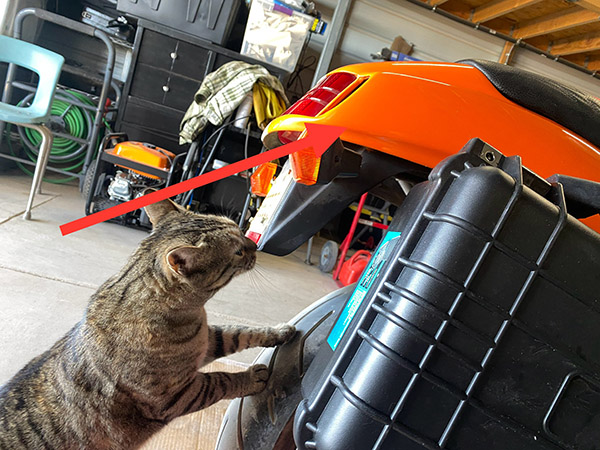
Arrow points to the small tail compartment. Who let the cat out of the bag?
The Buell has a small compartment in the tail section that will hold a few items, but that’s about it. Normally a tank bag holds most of my on-the-road junk and I may rig one on the Buell. I’d hate to mess up the cool paint job (which is what sold me on the Buell in the first place).
A rear rack is another option, I looked around the World Wide Web and didn’t see much for an S2. I didn’t feel like making one either. Which left saddle bags.
Erik did a neater job of it.
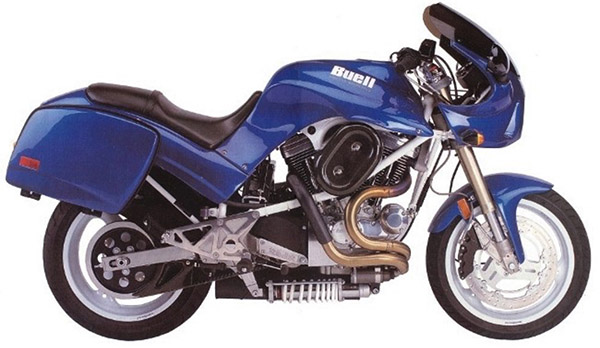
Buell made a touring version of the S2 called the S2T; that bike had nice looking bags that blended into the subsonic styling of the Thunderbolt. I didn’t see any of those for sale. I’m guessing people keep them if they have a set. After I started this project, I found a set for $1000, one-third the cost of the entire Buell.
Who knew Harbor Freight sold motorcycle gear?
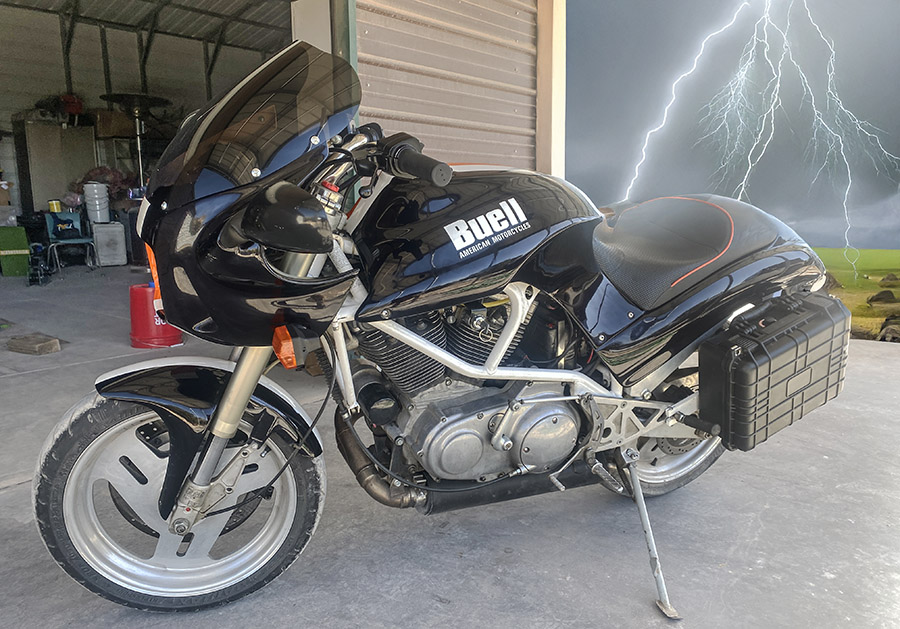
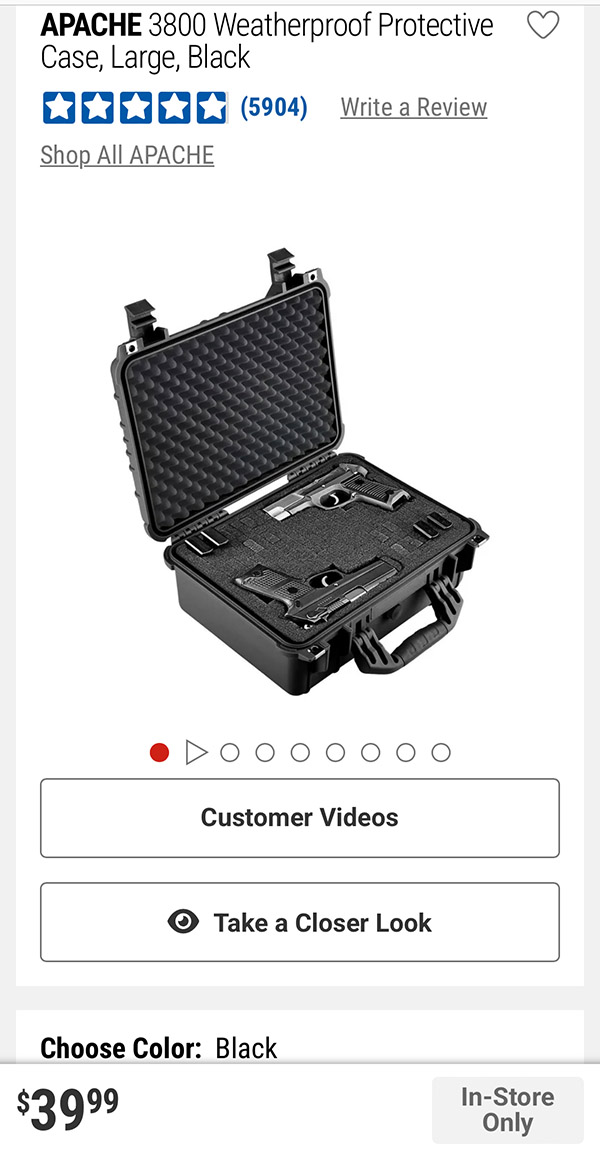
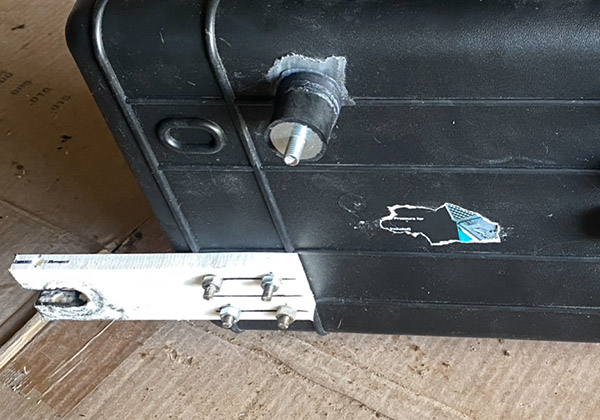
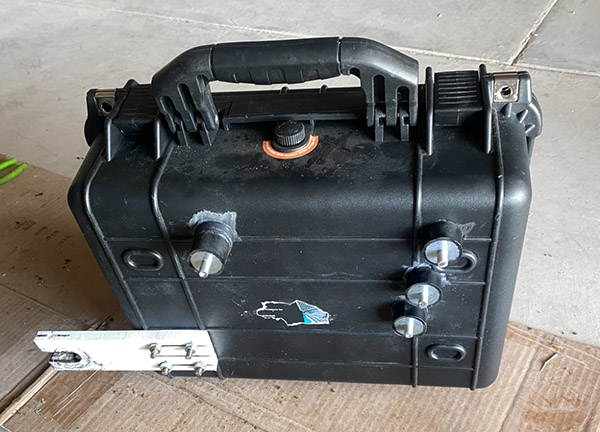
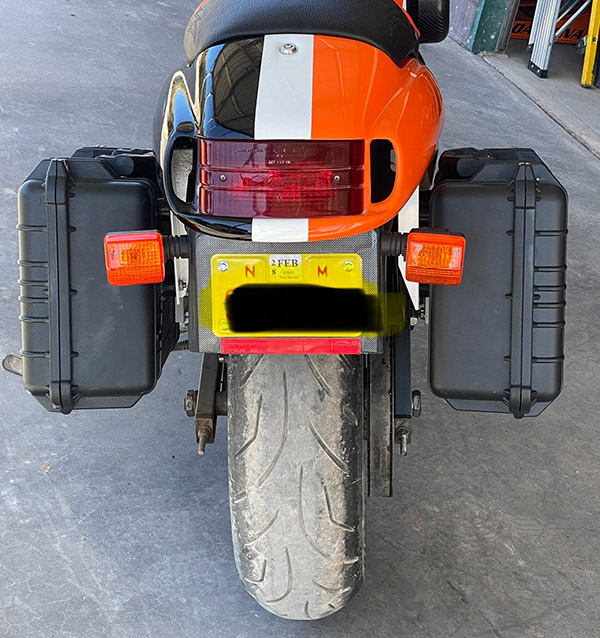
My favorite store, Harbor Freight, had a sale on pelican-style plastic cases. Branded Apache, they are fairly sturdy, weather tight boxes that even have a pressure relief valve for those high altitude runs. Normally these cases are used for cameras, test equipment or anything that needs protection from the bumps and bruises of life in these United States. The HF cases look like most of the bags attached to popular Adventure Barges except a bit smaller. I bought two of the 3800 series for $50 total. Attaching them to the Buell was a challenge. Being an underslung monoshock frame there’s not a lot of bolts on the back section to attach things to. One obvious spot is the passenger peg. It’s a big, strong bolt that you could lift the bike from. The first step was to make a bit of plastic (brand name: Starboard) to connect the bag to the footpeg. This gave me a starting point to work out the rest of the mounting system.
Mount slides over passenger peg and is secured with a pinch bolt in front.
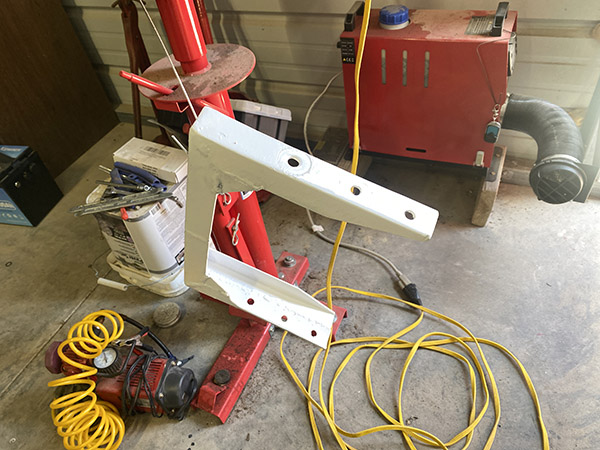
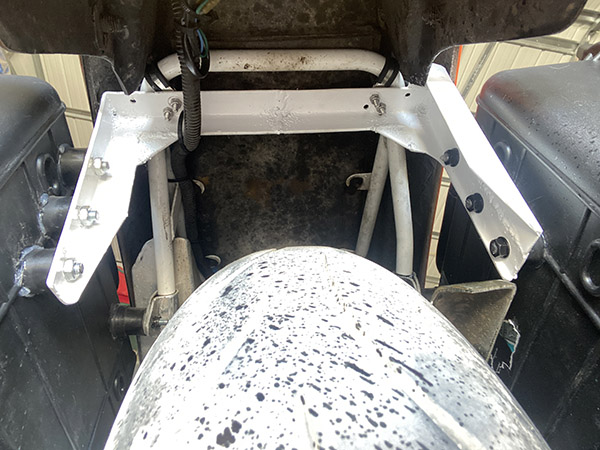
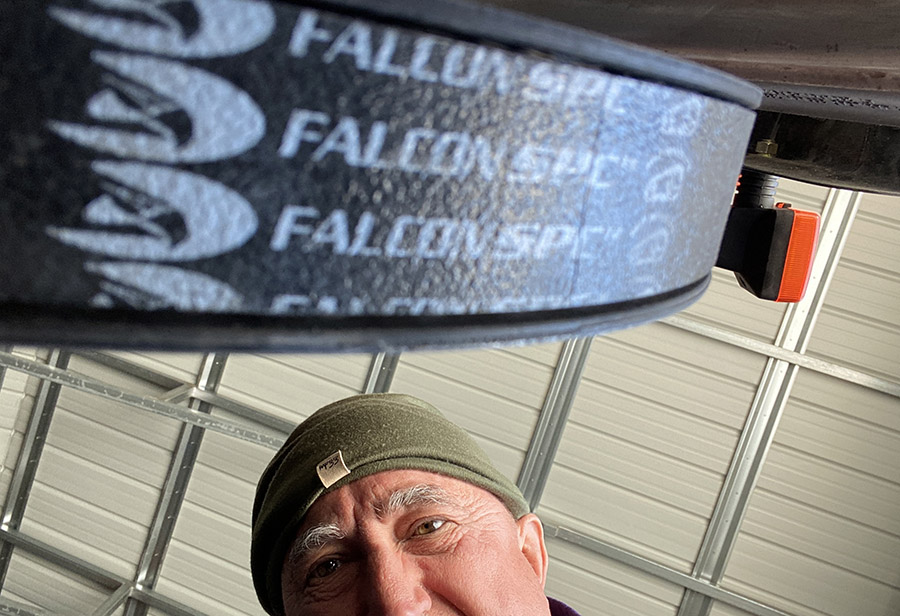
To keep the back part of the saddle out of the rear tire I made a U-shaped bracket that attaches under the seat with rubber covered Adel clamps. The right-hand side is tight due to the Buell’s wide belt drive pulley. After a few tries, I had an ugly brace welded up.
Not a thing of beauty. Hopefully it will keep the bad away from the tire.
For a mid-mount I bent a piece of aluminum to fit around the rear subframe tube. I probably didn’t need this, but more support is always more support.
I may not need this mount but I like it.
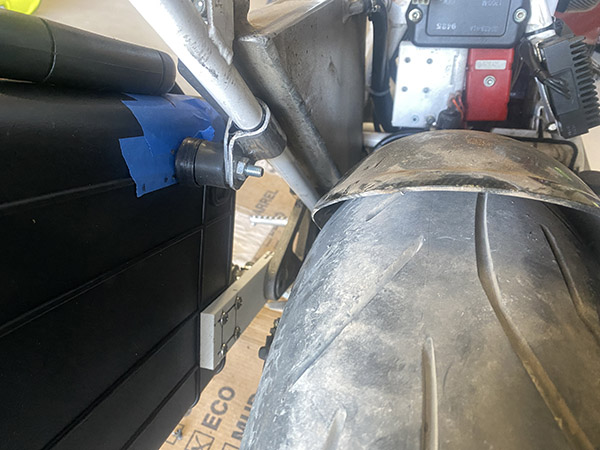
Anything mounted solidly to a Sportster-engined motorcycle usually has a short lifespan. Because of this, the bag-to-rear-bracket connections are those rubber isolator type deals (four on each side for a total of eight). If these isolators don’t survive, it will be easy to replace them with progressively larger isolators until the entire bag is all isolator, leaving little room for storage.
A total of four isolators and the flexible plastic peg mount should keep the bag on the Buell.
The HF bags have two snap-type latches that seem to hold ok but there are also two holes for a padlock or carabiner to ensure they don’t pop open. I’m going to add a small padlock for extra security. Not for theft, but instead for unplanned bag opening.
I seem to do a lot of test rides on the Buell. I’ve put 1500 miles of testing on the bike, and the bagger test ride took me on a 280-mile mountain loop out to Roswell then back on Highway 70 through Ruidoso and tacos at Los Agaves-east (the other Los Agaves is in Artesia). After eating delicious tacos, I noticed oil on the right saddle bag. It wasn’t coming from the tacos. In fact, there was oil all over the place.
I checked the rear cylinder, the source of a previous leak, but it was nice and dry. The Buell had been getting kind of bouncy, and the rear shock was dripping oil. By the time I got home there was no rebound damping at all. The Buell was wallowing like an overloaded Chevy station wagon complete with sticky brats in the way-back.
Do these bags make my butt look big?
I need to do a little work on the shock absorber (two steps back), but the bags turned out well. (One step forward) at speed I reached back to touch them, and they were mostly vibration-free. The rear bracket is not my finest hour and if these bags hold up, I may take a stab at a better-looking rear bracket.
Under side view of rear bracket. I may re-do this part later. Tubing would look better.
On the lonely western roads between Mayhill and Roswell it was comforting to have a few tools and water in case of breakdown. I like a more practical motorcycle, and the Bagger Buell is practical. I may add a refrigerator and a microwave to make my rides even more practical.
The stereotypical image of a Harley-Davidson motorcycle leaking oil has become a cultural icon. Dirty, unshaven and drunk riders astride seeping, smoking, rattling, home-built murdercycles were made popular in biker movies from the 1970’s and the image persists today.
How real is that image? I can’t say because my Buell was manufactured in 1995 but I hear new Harleys mostly don’t leak…much, if at all. My 30 year-old Buell leaked oil. Before we dive into the engine oil leak we have to get a few other leaks out of the way. .
You’ll remember all the trouble I had with the original Mikuni carburetor, the float needle leaked through various repair attempts and I thought I had the problem licked. The Buell ran good and got 50 miles to a gallon of gas. I took it out for a few rides and no carburetor leaks. Then I walked into the shed one day, straddled the Buell, hoisted it up straight and gas poured out the air cleaner. Like a lot of gas.
China, China, China.
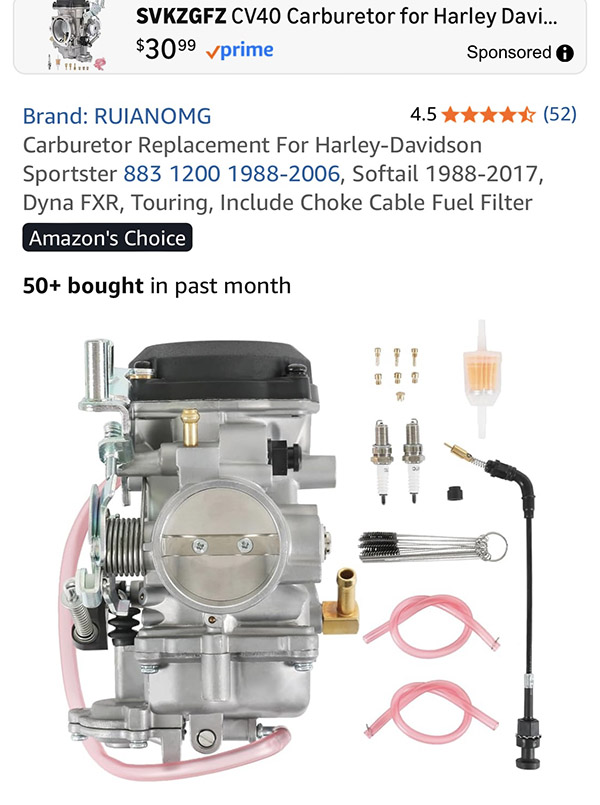
That was the final straw for the original Mikuni carburetor. I replaced the entire unit with a Chinese clone carb from Amazon and the bike has never run better and it doesn’t leak out of the carburetor or the air cleaner. Thanks, Global Trade!
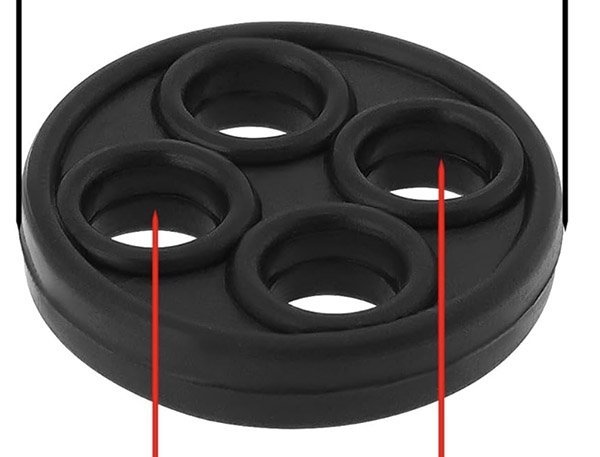
But here’s my question: why did the old carburetor overflow at all? I had the fuel petcock off, where did the gas running out of the carb come from, you may well ask? Turns out the petcock was not completely shutting off as a steady drip of gasoline wormed its way past the 4-hole rubber seal in the petcock. Thus, the fuel shut-off was never really shut-off.
This isn’t the actual petcock gasket but you get the idea.
I took the petcock apart and flipped the 4-hole rubber seal around. That cured the fuel leaking to the carburetor in the off position but it created a bigger problem in that gas leaked out of the body of the petcock in all positions.
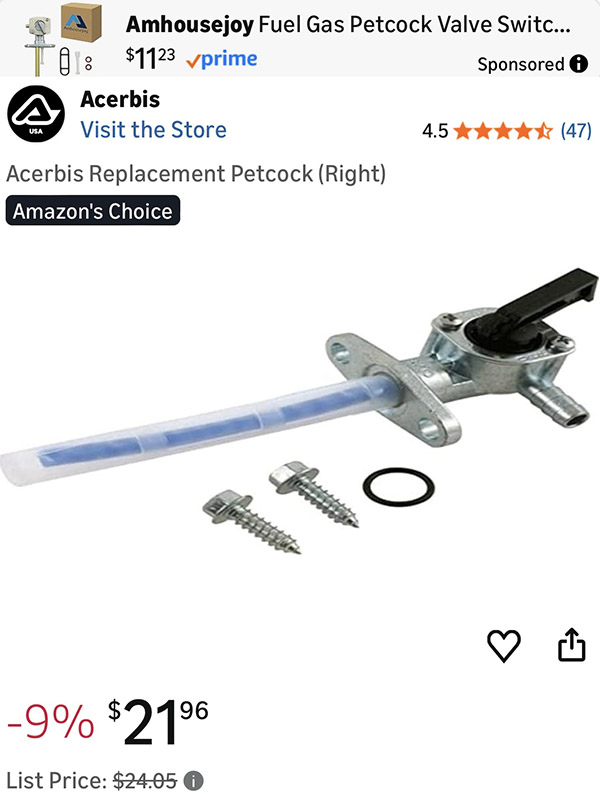
Finding a replacement rubber, 4-hole o-ring was uneventful as none were to be found. Instead, I bought a new petcock on Amazon and the new valve fixed the bypassing problem. But there was another gas leak.
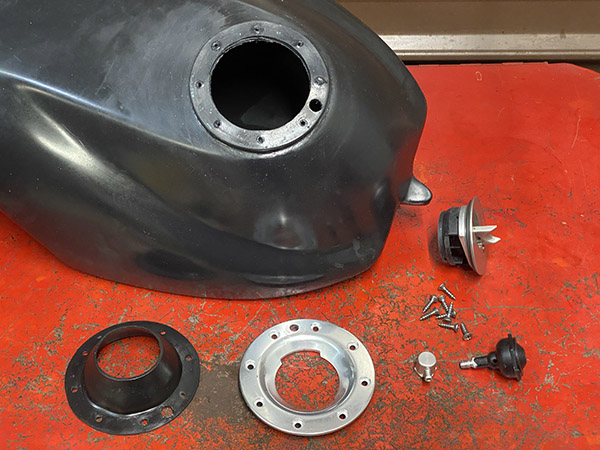
The Buell has a roto-cast plastic gas tank under that pretty, race-bike inspired, but heavy, fiberglass bodywork. An aluminum gas cap flange screws onto the tank with a rubber gasket. This joint weeped gas when riding the bike. Not a lot, but annoying and enough to leave streaks of fuel mungus down the side of the gas tank.
Not so many parts to the Buell tank but the few that are there may leak.
Dismantling the flange, I discovered a check valve under the tank vent that needed to be removed before the flange would come off.
I got rid of this check valve. I expect the bike to burst into flames any minute.
The valve must have something to do with emissions control as it only let air into the tank. I’m sure this added to the float needle issue as the tank was under slight pressure just sitting in the warm New Mexico sun.
Fixing the flange leak was as easy as cleaning off the gasket. Blasting it with a little Permatex high-tack and reassembling the mess. I omitted the check valve to equalize the pressure between the tank and the Earth’s atmosphere. Of course now when the bike falls over it will leak gas like every other old motorcycle I own.
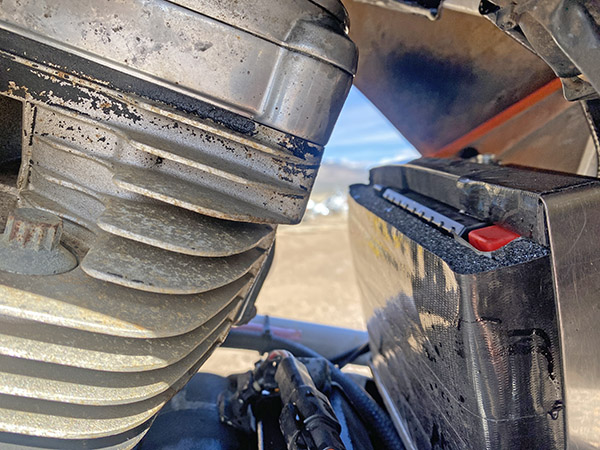
You can’t see it well in this photo but the rear cylinder is an oily mess.
With the gas leaks sorted I turned my attention to the oil leaks. The rear rocker cover was dribbling oil down the cylinder where turbulent air whisked it onto the battery and all points south. It wasn’t a huge leak but let’s just say the back of the Buell is not likely to rust anytime soon.
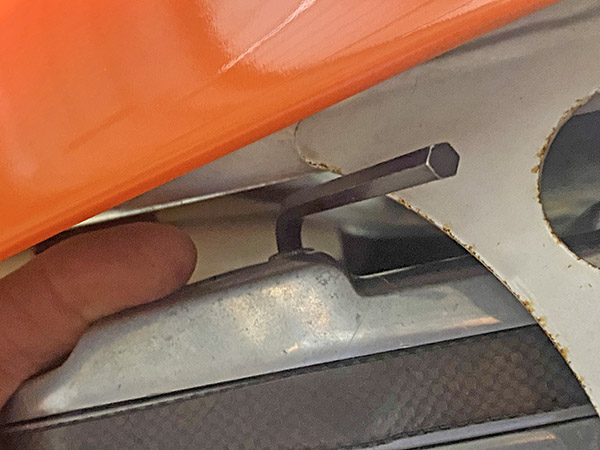
Luckily Erik built the S2 so that the rocker covers are removable without dropping the engine. I did have to cut an Allen wrench short to clear the frame tube, but it was an easy job all things considered.
It’s a snug fit but as long as you’re willing to chop your tools it’s do-able.
With the new rocker cover gaskets, I took the bike out for a spin and the rear cylinder puked oil as badly as ever. I figured the oil must be leaking from under the rocker box. I’m nothing if not persistent so I took the rocker covers back off and then the rocker boxes. (This year Sportster engine has 3-piece rocker assemblies)
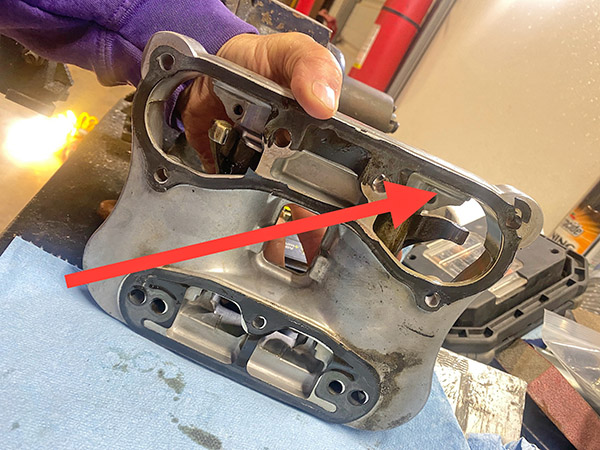
The gaskets crumbled upon removal of the rocker boxes.
The paper gasket is under the rear rocker box was brittle and broken. I replaced both front and rear gaskets with a metal version of the paper gasket. I knew for sure I had the leak fixed.
On the test run the reassembled rear rocker leaked as bad as ever. Back to the shed and everything came apart again for the third time. I was pretty much out of ideas.
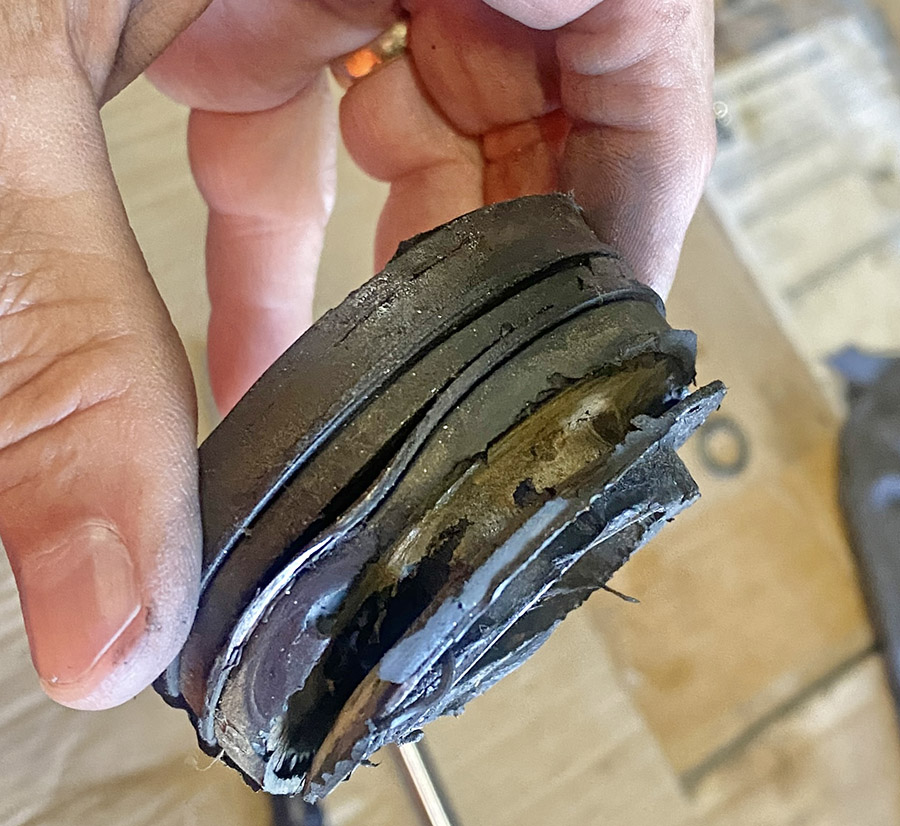
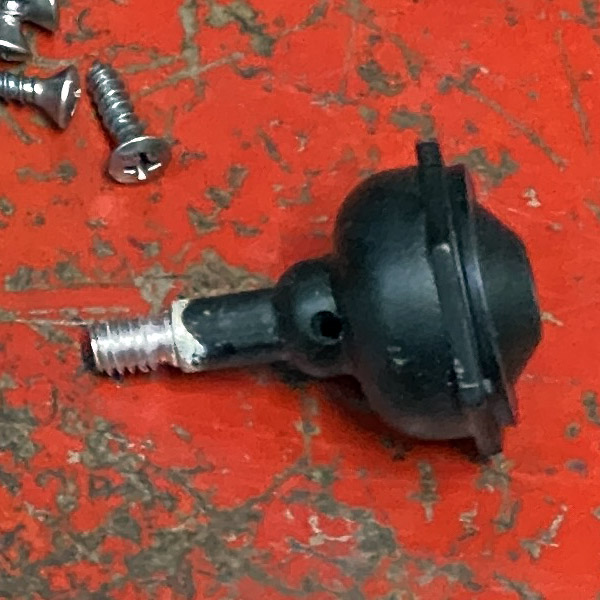
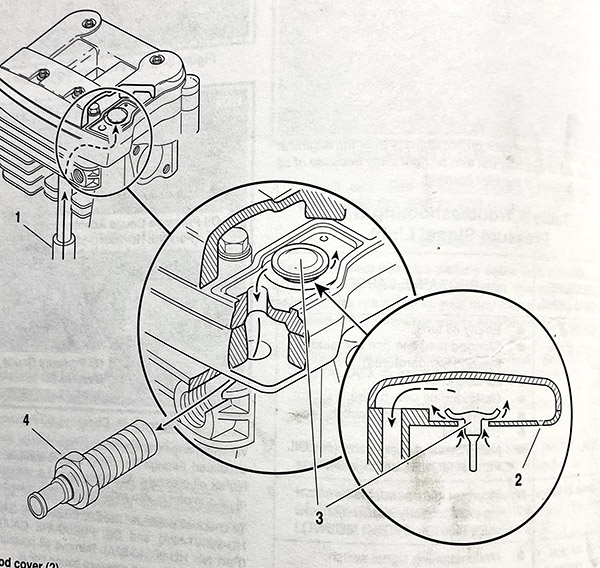
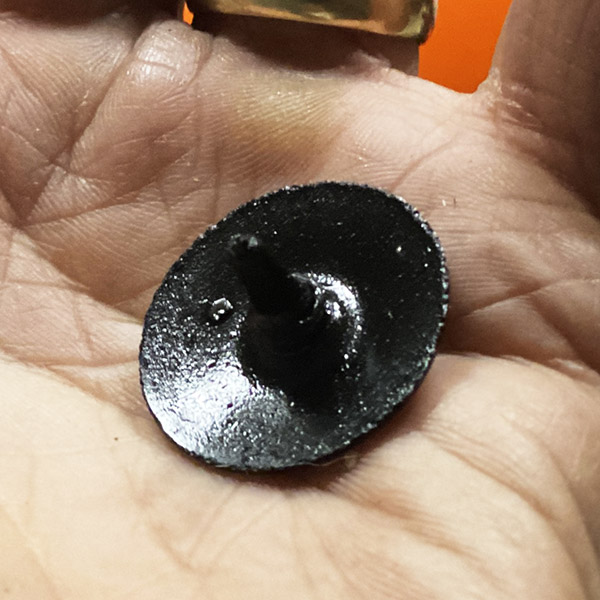
Studying the situation over the course of several days I observed the rear umbrella valve (a nickel-sized, round flapper-type deal in the rocker cover) was much harder than the front umbrella valve. Like hard plastic instead of soft rubber. I swapped both umbrella valves with new ones. Then assembled the mess thinking no way it could be those little valves.
This little valve caused the rear cylinder rocker cover leak.
I test rode the Buell 200 miles and no oil leaked out the rear cylinder. The battery area and aft sections were dry. Look, I’m not complaining. I can’t pin this on Harley’s image. 30-year old motorcycles are going to leak oil. Seals harden, gaskets dry up and split, 0-rings lose their O-ness and umbrella valves aren’t going to bounce. Besides, I enjoy working on the Buell. It’s a weird, wonderful machine that fits no known stereotype.
Subscribe to ExNotes for free!
We need your support! Do what you can to help ExNotes stay in the black!