I’ve managed to get the Buell oil leaks slowed down to a few drops per ride so I decided to give that part of the Buell resurrection a rest. This winter I’ll try again on the rocker boxes and I’ve got real H-D umbrella valves to replace the cheap aftermarket ones in there now. A guy can chase oil leaks on a Sportster til the Kawasakis come home.
We’re well into monsoon season here in New Mexico that means rain every day or every couple days. All this rain makes the driveway at The Ranch a muddy mess (dirt bike season) so I spent some time trying to cut down on rattling noises emanating from the Buell.
With the air cleaner spaced outboard and the frame slightly higher the scuffing should stop.
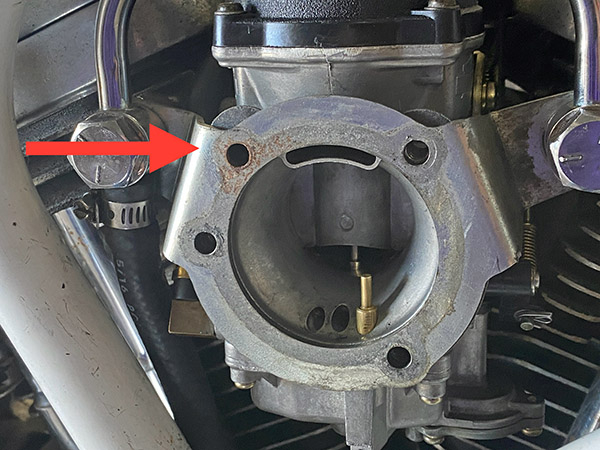
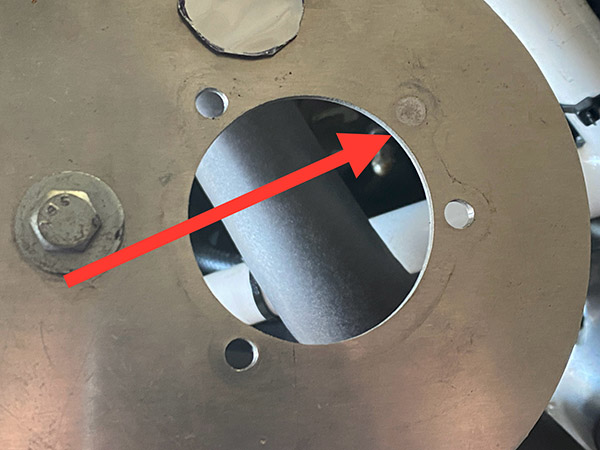
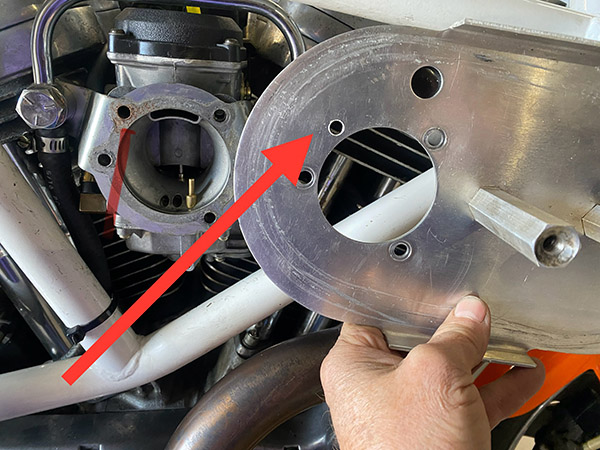
One annoying rattle was the air cleaner housing. The backing plate rubbed the frame very slightly, not enough to wear through the paint but enough to scuff the frame tube. Additionally, the fiberglass fuel tank cover rubbed on the air cleaner cover, wearing away the cool VR1000 orange paint. At some point in the past a groove was cut into the cover in an attempt to stop the erosion.
Working with Starboard material is like carving a bar of soap. I would have used aluminum but I didn’t have any the right thickness.
The fix for both of these problems was the same: move the air cleaner out 1/4″ to clear the frame and line up the cover slot with the tank.
With the spacer installed there is a little breathing room between the frame tube and the air cleaner back-plate.
I used a piece of black Starboard (plastic sheet used in boat building) left over from my working days to cut a spacer. Longer bolts were needed to attach the mess to the carburetor. Hopefully this knocks down the noise a bit.
This acorn nut hitting the faring bracket made a hell of a racket. The photo shows the cluster raised a bit.
The next rattle was the a speedometer acorn nut hitting the faring support frame tube. This was noisy as hell but mostly around 2800 RPM. After 3000 the rattle stopped. The problem was the fiberglass instrument housing. The housing is attached by 3 screws into the faring bracket, the speedometer is cantilevered to the left, beyond the mounting screws so it hangs out there unsupported and bopping into the bracket. The solution was easy: 3 thick rubber grommets under the mounting screws spaced the instrument cluster high enough to stop the noise.
New isolator on right.
While I was in rattle-mode I decided to replace the sagged out rear isolators. This Buell uses two large rubber bagels between the swingarm area and the frame in an attempt to quell the Sportster engine’s vibe. There is an actual Buell-style isolator but the ones that fit a Dyna seem to work ok.
The new isolator in place. They come drilled off-center and sag to center.
After all this tinkering I took the Buell out for (yet) another test ride. The bike was almost civilized! No excessive rattles, no squeaks, just the normal clatter emanating from the antique Sportster mill.
The new isolators jacked the bike up about 1/2″ but I can still reach the ground ok. The vibration characteristics have changed slightly. On the Buell S2 the mirrors stick out a long way. They would shake pretty well, the left one pretty violently, until 3500 RPM where the image would sharpen into tolerable. With the new bagels the right mirrors is sharp at all RPMs and the left is noticeably improved. After 3200 RPM both mirrors are crystal clear.
Over all speeds the bike feels less Vibey, 2800 to 3000 RPM is still the worse spot but it’s not bad at all. After 3500 RPM the Buell is a smooth operator and the faster you go the smoother it gets. Like I say, almost civilized.
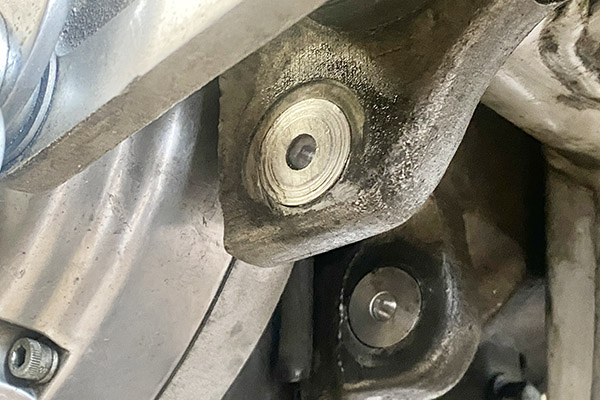
The old isolators were sagged out. The Allen bolt rested at the top of this opening. With the new isolators the bolt centers in the pivot/frame.
Handling is slightly different, I imagine due to the .001-degree change in rake from the fresh isolators. Nothing major but the Buell feels the tiniest bit more frisky in the turns. Straight line stability is unchanged: like a rock.
With the stock muffler the Buell is impressively quiet. All you hear at 80 MPH is the wind, vibration is minimal, I’m thinking this is close to how the bike performed as new. A far cry from Japanese excellence but way better than a standard Sportster of the era. I like it.
As you may recall from an earlier Buell episode, the Buell’s underslung rear shock absorber lost most of its fluid and the back half of the Buell became more like a pogo stick. I’m not too picky about suspension action. I don’t fine tune a motorcycle suspension. Maybe crank up the preload or turn a compression knob if I’m bored but I can hardly tell the difference. If the bike goes over bumps without see-sawing and doesn’t bottom out too frequently I’m good to go. The Buell was hobby-horsing like an old Chevy station wagon toting a load of sweaty teenagers across some railroad tracks. The bouncy rear end of the Buell was just too much of a distraction even for a rider with my unrefined skills.
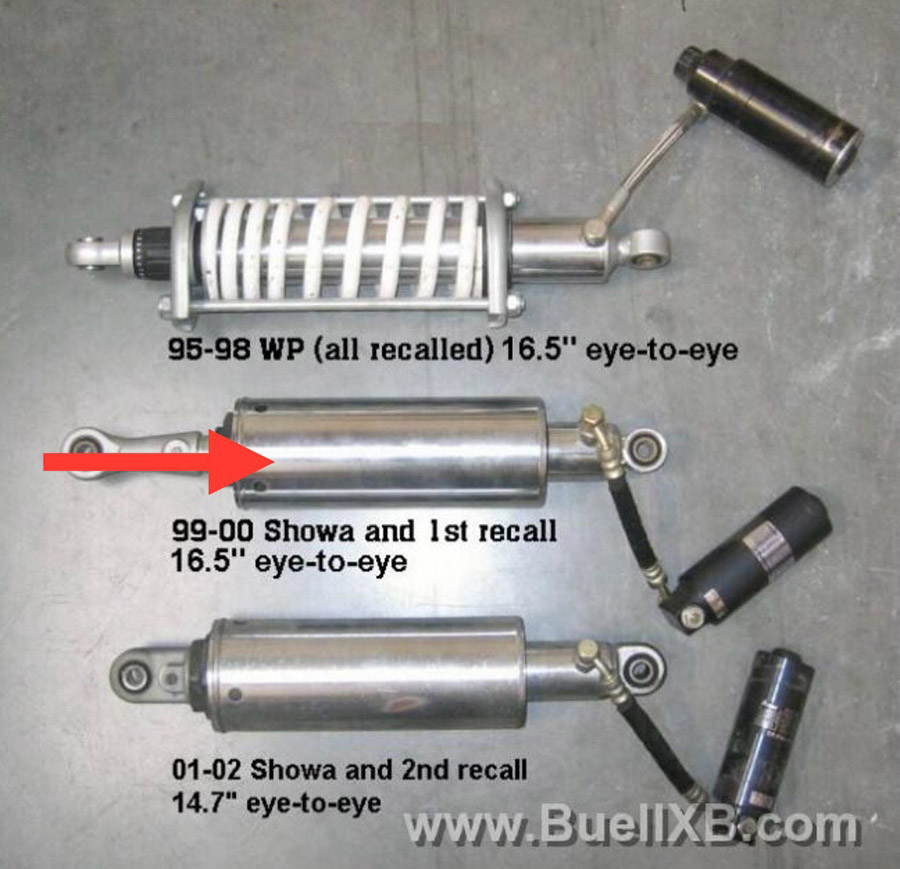
The rear shock on Buell tubers is quite a story in itself. I’ve researched on the internet (like I do for all medical questions) and I’m not 100% sure I’ve got the story straight but here goes: the first shock mid-90’s Tubers came with was a White Power made unit that was recalled at some point. Apparently the shock eye could break, the rear suspension would collapse and the engine/muffler/shock would hit the ground. As you can imagine, if this happened while riding along at 80MPH things could get dicey.
The second recall Showa shock is the one my Tuber came with and checking with Harley (they still have records), mine was replaced under the recall. In fact my Tuber had several unrelated recalls done, like 23-odd recalls. Early Buells had a few teething issues. The previous owner kept up on that stuff and my Buell had all the recalls done except a warning sticker. The two shocks look completely different, White Power being open spring and the Showa with a non-decorative, chrome steel cover that also serves to compress the spring in use.
A third recall shock is kind of shrouded in mystery. Again, it’s totally different in appearance and quite a bit shorter. I noticed the shock eye area is much more substantial than my Showa. I think this third shock went on later model Tubers, and the steel mount on the front of the engine is different. But I could be wrong.
Of course none of this matters to the problem at hand: a leaking shock. Even as a recall the Showa is probably 25 years old, and sitting right next to the muffler can’t help its lifespan.
I had a few directions to go with the shock. I could buy a used shock for around $350. I could buy a new, aftermarket shock for around $1000 or I could rebuild the existing shock. If you can find one, a new old stock Showa would set me back $700-$800 and be 25 years old. Sitting in the box the seal might be bad.
My thoughts were a used shock could start leaking as soon as I hit the first bump. A new aftermarket shock is appealing but no way am I buying a $1000 shock absorber for a $3000 motorcycle. And I couldn’t find a NOS Showa. That left rebuilding the existing shock.
Back to the internet and I couldn’t find any information on rebuilding the Showa shock. Like zero. I decided to try and rebuild the shock myself. There are a few problems with that approach. The first is the lack of information. How does the shock come apart? How much oil goes in? Does the remote reservoir need to be recharged? Where do I get seals? I found nothing. I went on Buell pages and all the hive mind could come up with was: send it out to be rebuilt or buy a new one.
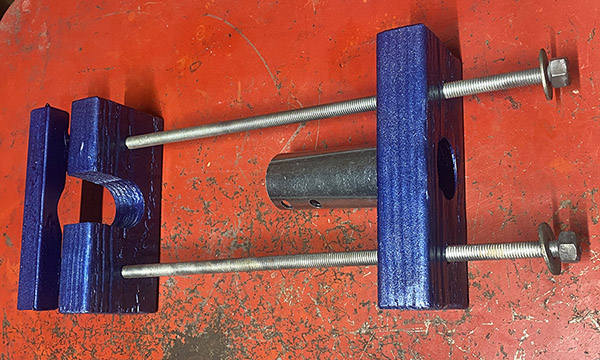
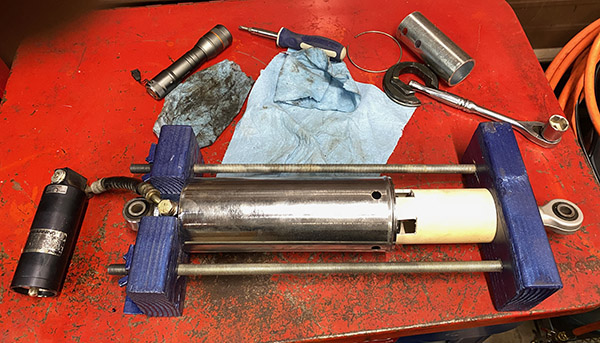
A couple lengths of all-thread and some wood make a serviceable Buell spring compressor.
The Universe was trying to tell me something but who listens to that old bag?
To get the Showa apart you’ll need a spring compressor. With the spring under a shroud the normal compressor that grabs the coils won’t work.
Finding no information on a Buell spring compressor I knocked one up out of 2x4s and all-thread. The compressor only has to squeeze the spring 1/2-inch or so to allow removal of a large internal ring. This ring holds most of the spring followed by a smaller spring on the shock body.
Once the spring is out of the way you’ll need to remove the shock eye. The eye is slathered in thread locker so it’s a battle to remove. After the eye is out of the way there are a couple more threaded bits to remove.
Once all the junk is out of the way I couldn’t figure out this bump stop. Turns out it’s pressed in.
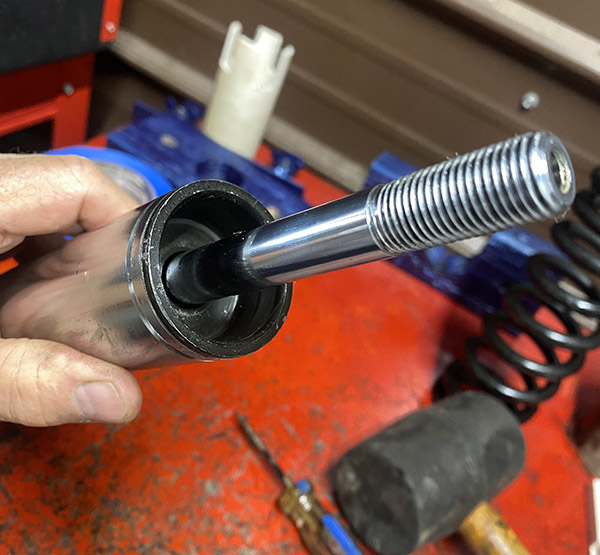
Now that the shock shaft is clear of obstacles the little bumper cup is a light press fit and a few boos with a sharp screwdriver will get it loose.
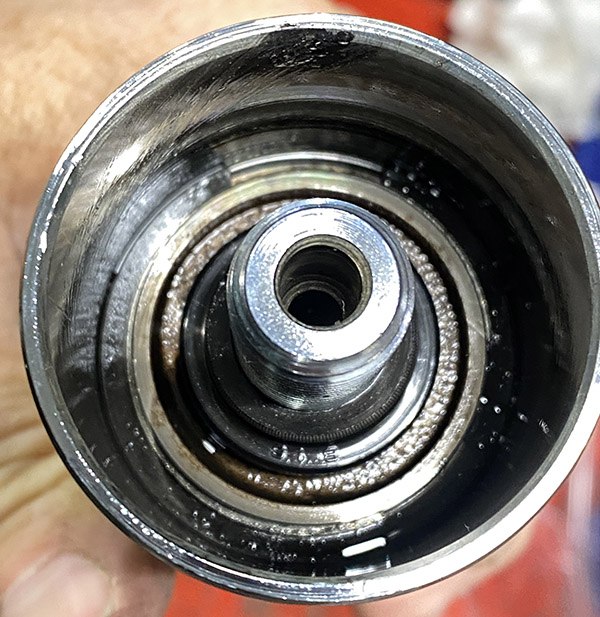
The end of the road. I saw no good outcome trying to get the internal snap ring removed. In retrospect I should have tried harder. I think pushing the seal into the shock body would have given me access to the ring.
And that’s as far as I got. Holding the seal in the shock body is another internal ring that snaps outward into the body. I couldn’t figure out how to grasp that ring. Maybe you push the seal down further into the shock body to access? Once I got it apart how much oil goes back in? How do I charge the nitrogen canister?
I was pretty over the Buell shock at this point so I sent the remains of it to Applied Technology in Colorado. This was an expensive decision. $500-plus dollars later and several progressively more desperate e-mails and phone calls I had my rebuilt shock in hand. Apparently the shock was fixed the first week I sent it in it became misplaced. The thing sat there a few weeks before I convinced someone to go look for it.
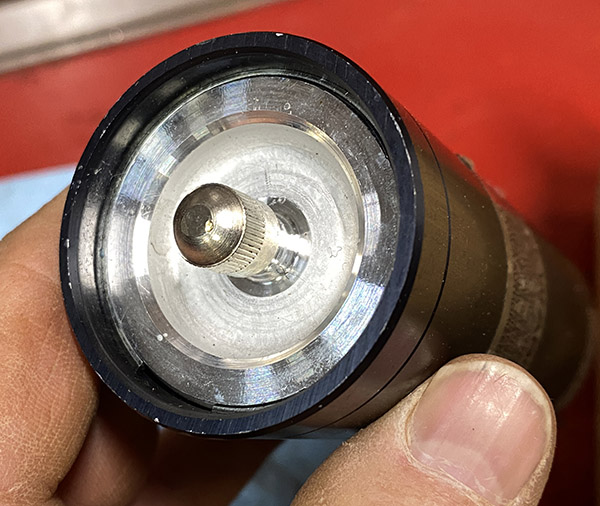
Rebuilt shock going back together. Pro tip: the rebuild price is the same if you send in an unmolested shock.How do you replace the nitrogen? You replace the reservoir end cap with a new one, Schrader valve built in. Don’t ask me how Showa did it the first time as the original set up had no valve.
In Applied Technology’s defense the price would have been the same if I sent the entire shock back. I didn’t need to dismantle the thing.
All water under the bridge. The rebuilt shock works like you would expect: no pogo, less bottoming out (I need to crank up the compression damping) and no oil leaking out of the chrome surround.
Still, my curiosity is not sated. Deep down, I think I should have tried harder to rebuild the shock. Maybe find a generic seal, figure the capacity using the volume of the shock and the reservoir, and plain old air has plenty of nitrogen (would it matter that much?).
I’m such a quitter. Next time the Buell shock pukes its guts I think I’m going all-in. The not knowing and the $500 hole in my wallet must be avenged!
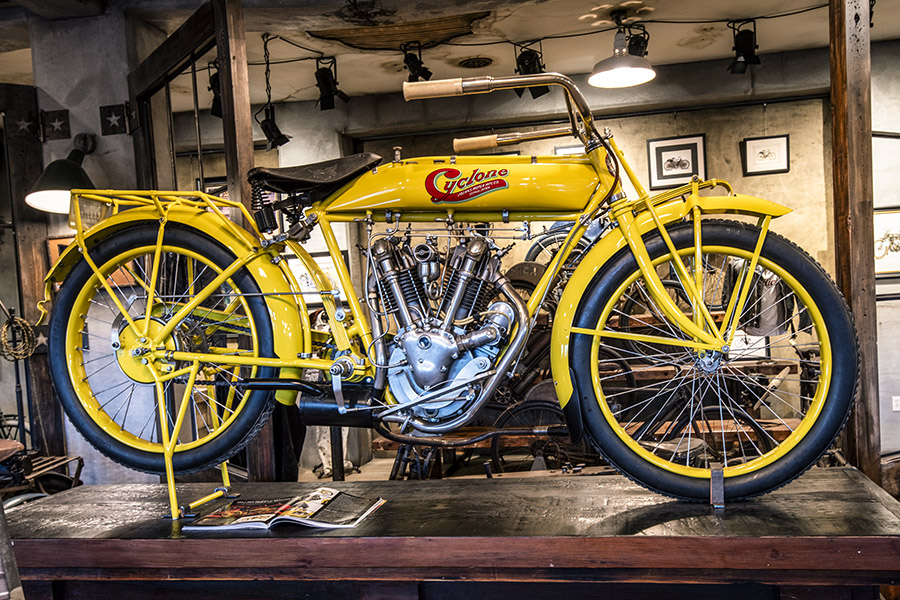
That stunning motorcycle you see above is a 1915 Cyclone, one of only 12 known to exist. I took the photo during a recent visit to the Legends Motorcycle Museum in Springville, Utah (a visit which will be the subject of an upcoming blog and an article in Motorcycle Classics magazine). I was in bad shape during that visit. My leg was giving me a lot of grief, and that, too, will be the subject of an upcoming blog. Because of that, I was in and out of the Legends Museum quickly, snapping photos, and eager to settle back into my uber-comfortable Subie Outback for the 600-mile trek back to California. It wasn’t until I was home and I started processing the Legends photos through PhotoShop that I took a close look at the Cyclone. I had three thoughts:
Damn, that’s a stunning motorcycle,
Gresh’s current resurrection effort is focused on (sort of) a Buell Cyclone, and
Zongshen also uses the Cyclone name (the RX1, RX2, RX3, RX4, and RX6 motorcycles are all branded as Cyclone motorcycles).
The above had me wondering: What is the story behind that stunning yellow motorcycle in the Legends Museum, and are there other motorcycles out there called Cyclones?
The Zongshen Cyclones
I fired off an email to my good buddy Fan at Zongshen with the above picture, who readily agreed the Legends Cyclone was drop dead gorgeous.
You know, names can be a funny thing. When we started importing Zongshen motorcycles from Zongshen, the chief marketing/export guy in Zongshen chided me for using the Zongshen name when we (i.e., CSC) starting writing and blogging about the RX3. It seemed that calling the bikes Zongshens would be the natural thing to do, but I jumped the gun at that one. Zongshen wanted us to use our name (CSC) on the bikes, so we did. The other bit of RX3 naming funny business back in 2014 were the large decals that Zongshen put on the fuel tank. They said “Speed” in large letters. When we started publishing those photos, the Internet trolls made fun of us. I told the troll community that we originally wanted the decals to say “methamphetamine,” but that was too long to fit on the fuel tank.
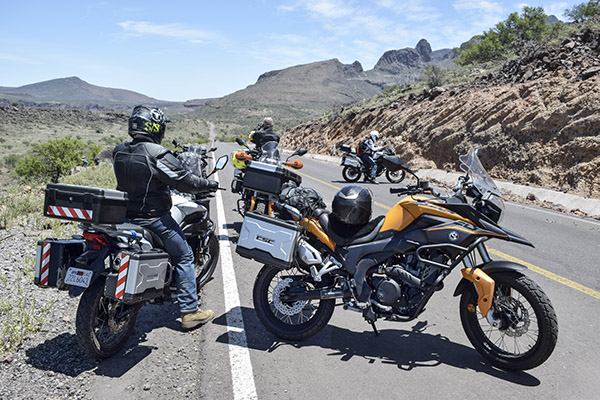
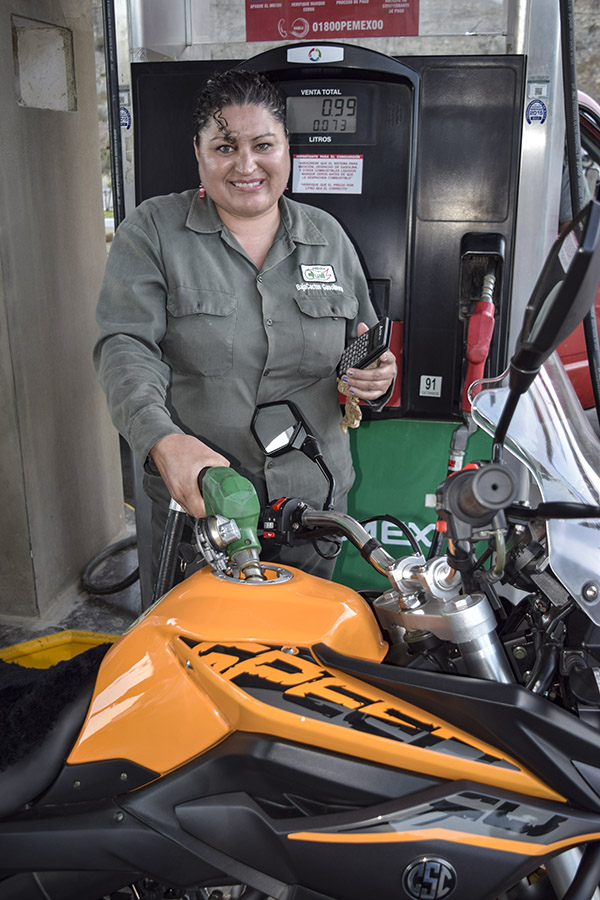
CSC/Zongshen RX3 motorcycles enroute to 12,000-year-old cave paintings in Baja.A friendly gas station attendant in El Rosario, Mexico. Note the “Speed” moniker on the fuel tank.
Back to the Cyclone name: I searched Google because I knew BSA used “Cyclone” as a model name back in the 1960s and I wondered if there were others. There were. In addition to BSA, Buell, Ariel and Kawasaki used the name, too. Let’s take a look at each.
The Buell Cyclone
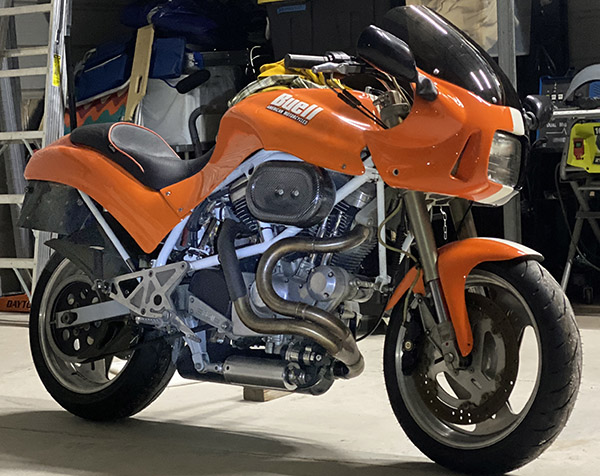
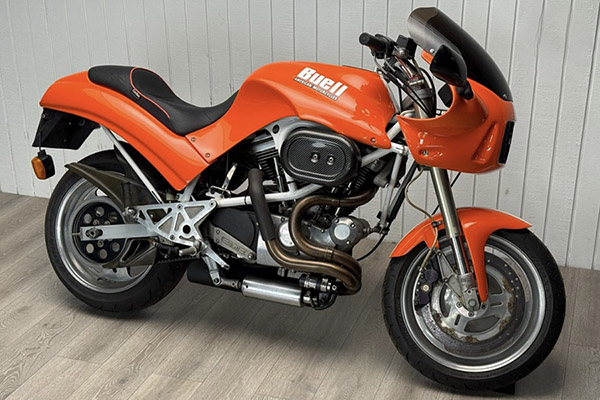
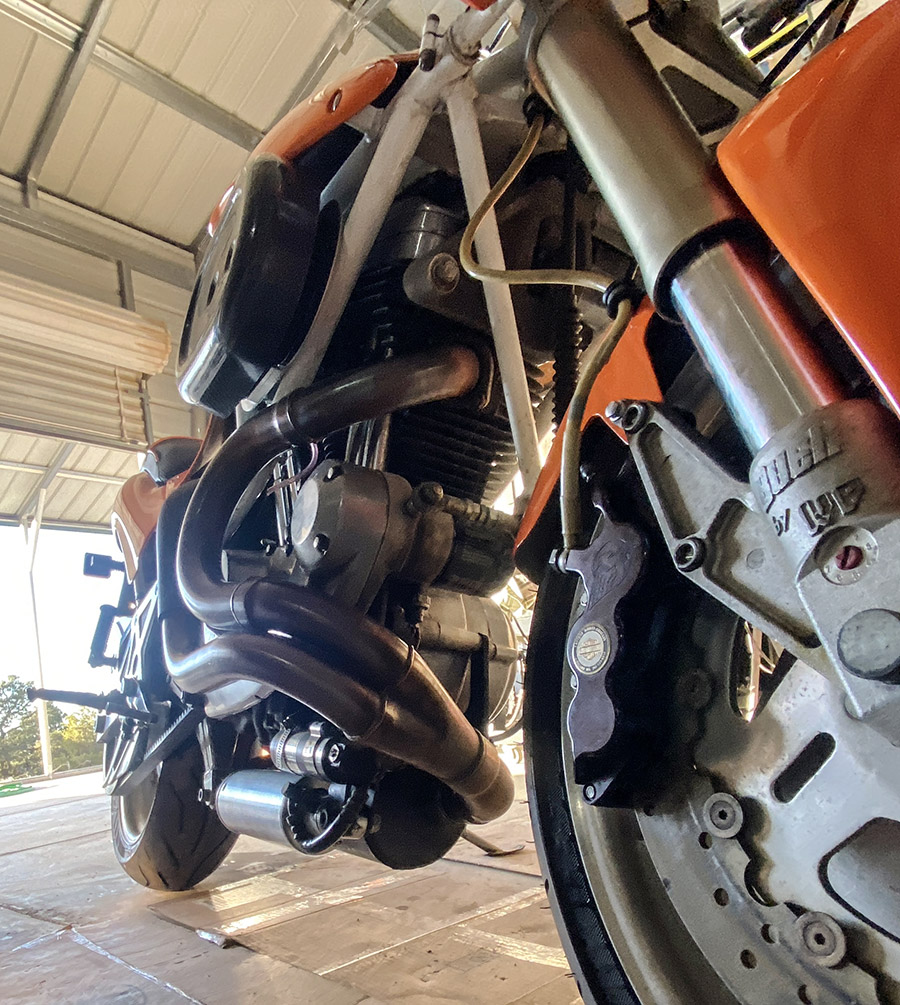
Buell built its Cyclone model from 1997 to 2002. As you know, Uncle Joe is resurrecting a 1995 Buell Thunderbolt, and as he puts it, it is mostly a Cyclone. It’s a fun process to follow along. You can get all the details here.
Joe Gresh’s Buell. It’s mostly a Cyclone.
The Original Joerns Cyclone
The Joerns Motor Manufacturing Company of St. Paul, Minnesota built the first motorcycles named Cyclones. These were board track racing and road-going motorcycles and they were fast (as in over 100 mph back in 1915). These bikes are also rare, with only about a dozen known to exist today. Joerns used a 1000cc V-twin overhead cam engine that produced about 45 horsepower. The one you see here sold at a 2025 Mecum auction for $1.32 million (with buyer’s premium), making it the most expensive motorcycle ever sold at auction. When I say “the one you see here” I don’t mean one like the one you see here. My photo above shows the actual motorcycle that went for that amount, and it’s the one on display in the Legends Motorcycle Museum. It was once owned by Bud Ekins, and if you don’t know who he was, here’s a bit of background.
At the end of the video, you can catch a glimpse of Rick Salisbury, the man who won the Cyclone auction and the owner of the Legends Motorcycle Museum.
The BSA Cyclone
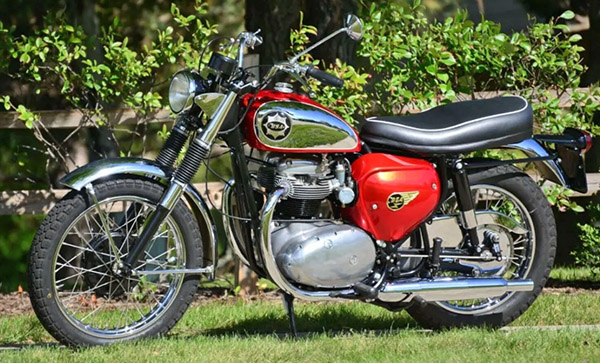
In the mid-1960s, Triumph and BSA dominated the U.S. big bore street scene. These were primarily 650cc vertical twins, but both Triumph and BSA offered 500cc twins as well. BSA’s 500cc twin was the Cyclone, and it is a rare animal. It was made for the U.S. and U.K. markets. The BSA Cyclone produced about 33 horsepower.
A 1965 BSA Cyclone. It was a competitor to Triumph’s 500cc Tiger.
BSA had other weather-related names for its models. There was the Cyclone you see here. They also had models named the Lightning, the Thunderbolt, the Golden Flash, and the Super Flash.
The Kawasaki Cyclone
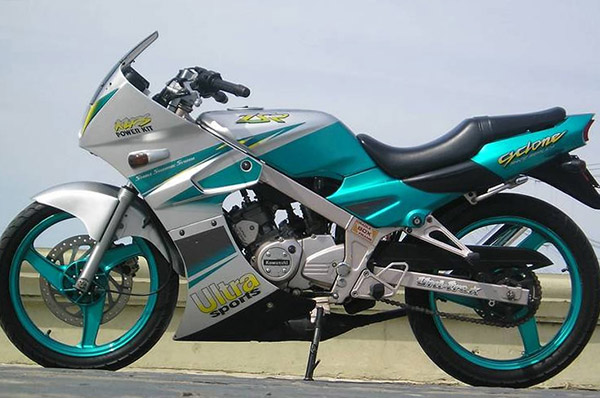
Kawasaki has a 148cc two-stroke sports bike they call the Cyclone. It’s not sold in the U.S.; it is instead sold in Southeast Asia (the Philippines, Thailand, Indonesia, and Malaysia) and occasionally Argentina. It’s a cool looking small bike, but I think Kawasaki made the right decision. I don’t think there would be much of a market for it here in America.
Kawasaki’s ZSR Cyclone. I like the colors.
The Ariel Cyclone
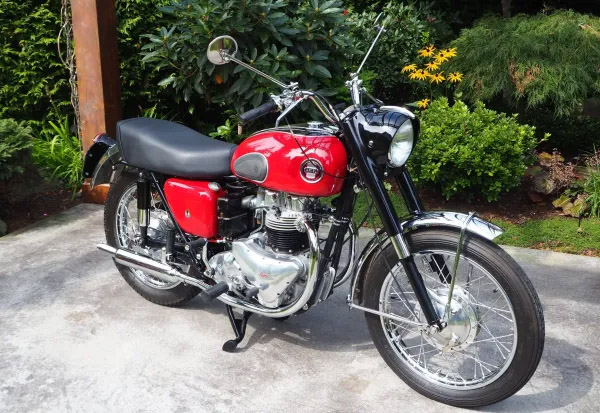
You may have heard of the British motorcycle manufacturer Ariel; you may not have known that Ariel was purchased by BSA in the 1940s and kept as a separate marque. Ariel offered a 650cc vertical twin they called the Cyclone in the late 1950s. Less than 300 (or 174, depending on which source you believe) Ariel Cyclones were manufactured during a three-year (or two-year run, again, depending on which source you believe) production run.
A 1956 Ariel Cyclone.
The Ariel Cyclone followed the period’s traditional British formula: A 650cc (actually, 646cc) vertical twin, with drum brakes and a non-unit-construction 4-speed transmission. It was a handsome bike, but it was not a serious competitor to either of the leading British bikes of the era (BSA and Triumph). I’ve never seen one and I never heard of this motorcycle until I researched the Cyclone name for this blog.
Subscribe to ExNotes for free!
We need your support! Do what you can to help ExNotes stay in the black!
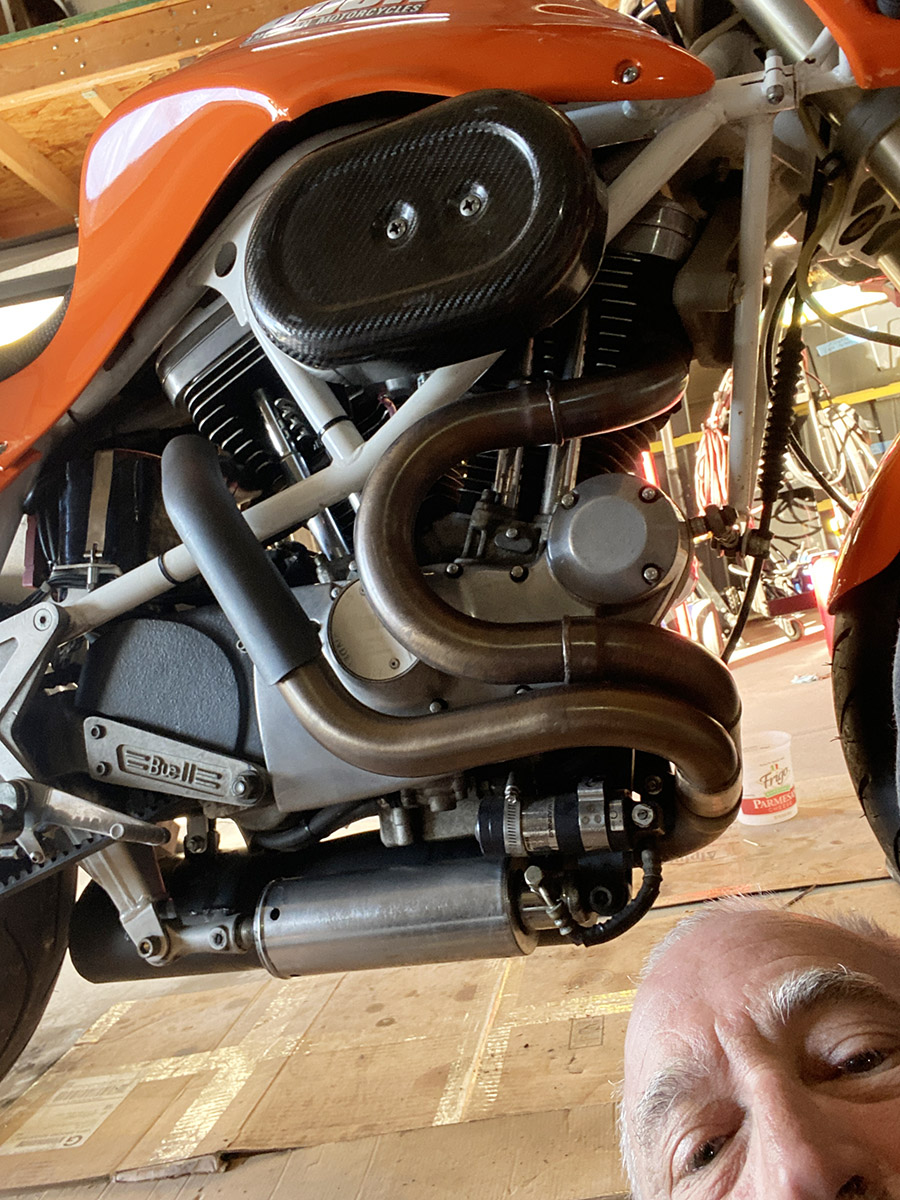
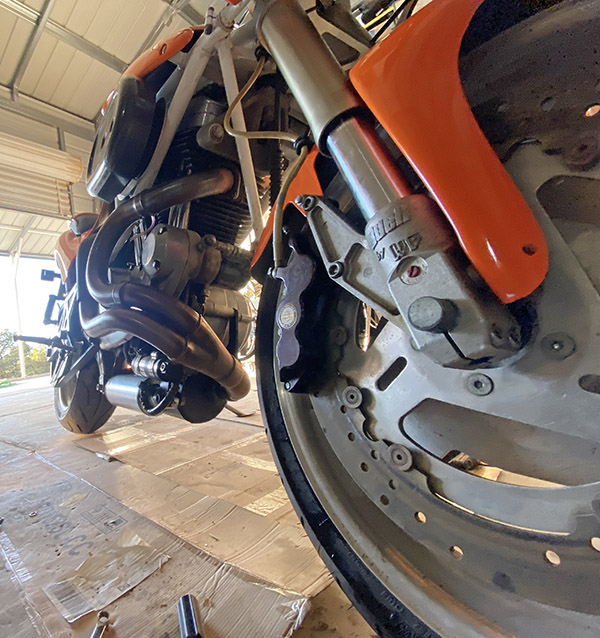
I’ve kind of lost count on which Buell installment dealt with the muffler falling off. The story was about how the muffler was held on by a T-bolt clamp on the header pipe (basically a heavy-duty hose clamp) and two vertical brackets that located the rear of the muffler. Those vertical brackets would come loose letting the muffler slide back into the wheel. In that previous story I welded the rear bracket so the muffler couldn’t slide back unless the bolt was removed. This setup no longer relied on the clamping force of fasteners alone.
I thought I had it fixed, a common misconception that I have frequently, and both the muffler bolts of my belt-and-suspenders repair vibrated out. The muffler fell off again. Most riders would write this off as a bad design on Buell’s part, but I look at it as a challenge. Just like Lucy always pulled the football away from Charlie Brown the Buell keeps snatching success away from me.
The Buell lives and dies in real time. No waiting around for Honda-like reliability to finally fail. Each individual Buell-ride has a beginning, a middle and an end. The end being something to fix. And sometimes fix it again.
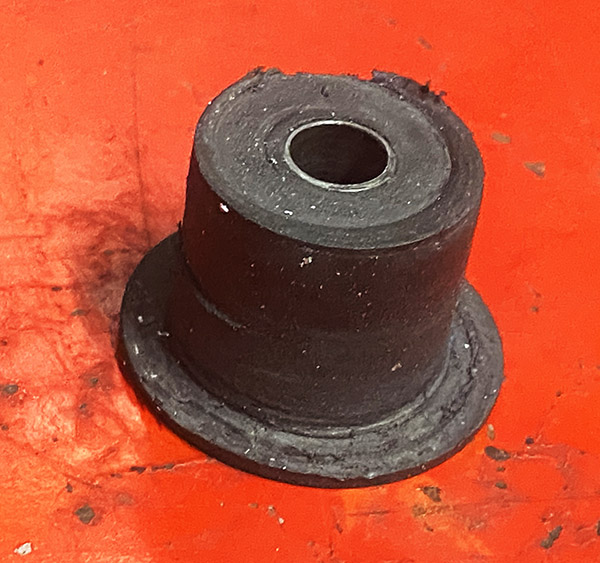
There were two of these. One is on the road a few miles ahead of the bolts that fell out.
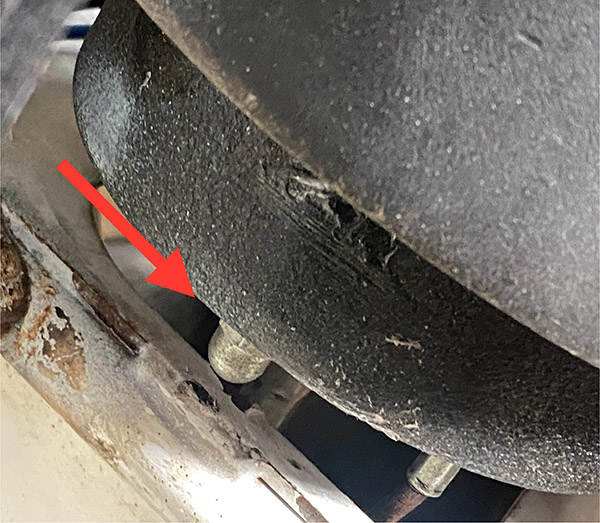
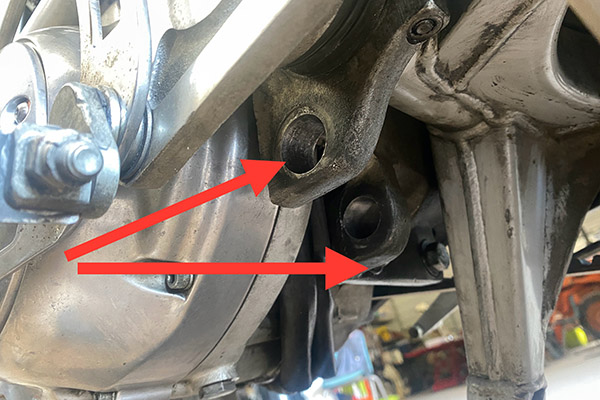
When the muffler bolts fell out one of the two rubber bushings fell out also. These bushings fit into two holes cast into the Buell’s engine crankcases. It was a good system and I should have used Loctite or safety-wired the bolts the first time.
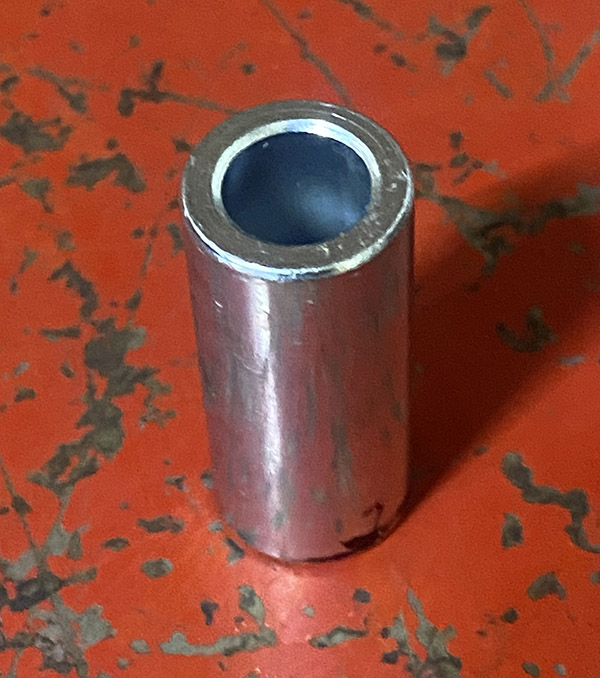
I wasn’t in the mood to hunt online for another bushing and the thin, molded-in tube preventing the rubber from crushing made me wary of really cranking down on the muffler bolts. I decided to take things into hand and make two new bushings since it’s as easy to make two as it is one.
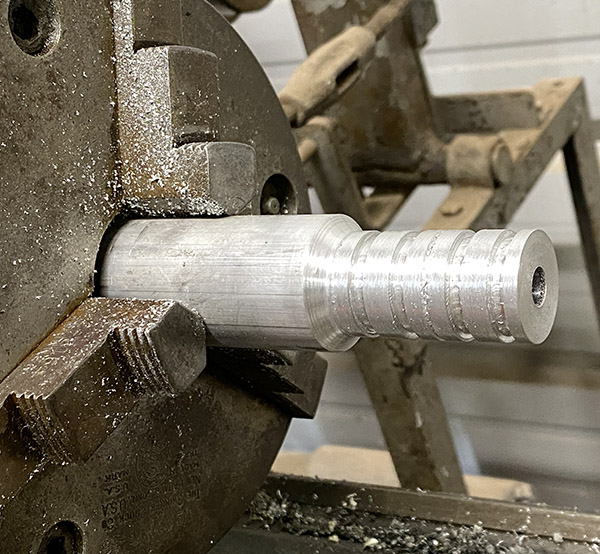
I’ll need a better cut-off tool but you can see, two is as easy as one.
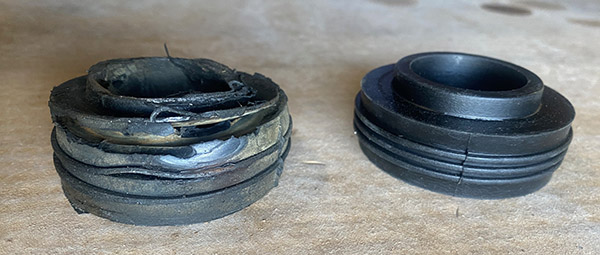
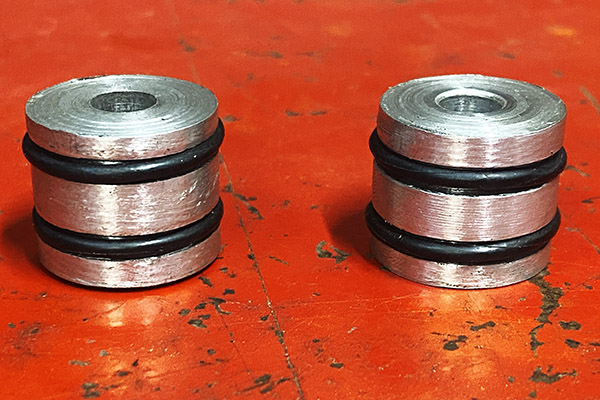
I have plenty of aluminum round stock and the crude bushings I spun out would shock a real toolmaker. I added a couple of grooves for o-rings to cushion the aluminum. Regardless, I now had something I could tighten a bolt against as much as I wanted. Putting the hangers back together I used nylon locknuts on fresh bolts hoping to slow down the rate of failure.
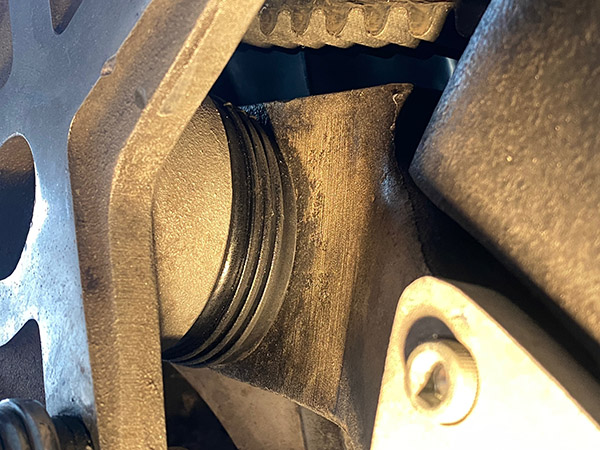
The finished bushings.Harley cast in a couple of sturdy mounting holes on the Sportster crankcase.The bushings are slightly longer than the mounting holes allowing for tight bolts with a bit of give for the shaky Sportster engine.
On yet another long test rides the bolts stayed tight and the muffler did not fall off. Lucy-1, Joe-1. I’m adding checking the muffler bolts to my pre-flight inspection list until this fix proves permanent.
After years of Kawasaki perfection, knowing every ride will be successful, I’m loving the Buell’s humanity. The Buell needs a steady handful of wrenches and ingenuity. Riding and tinkering with the thing brings me back to my youth of edger-powered minibikes roaring through the hot, humid Florida nights. Riding those old minibikes was a crash engineering course. You learned fast or you pushed the thing. So far, I haven’t needed to push the Buell.
I’ve said it before and I’ll say it again because it gets the word count up: when you leave town in New Mexico you are more out-of-town than other places. Traffic here is light, cell phone coverage is spotty, gas stations are fewer and far between-er. If you break down 10 miles from home, you might as well be 100 miles from home. It could be a few hours before a car comes along and are there any ax murderers out there?
Even though it annoys my internet buddy, Hacksaw, or maybe because it annoys him, I like to have a few tools, a patch kit, a rain suit, a tire inflator, some water and a few snacks. I even carry a tiny emergency tent and bivouac in case I need to spend the night doing a bit of unplanned camping.
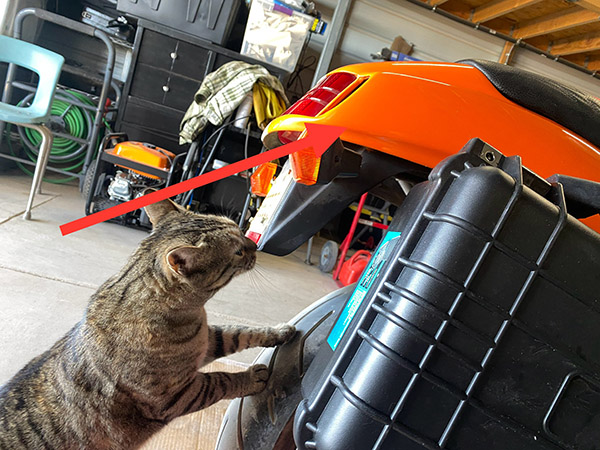
Arrow points to the small tail compartment. Who let the cat out of the bag?
The Buell has a small compartment in the tail section that will hold a few items, but that’s about it. Normally a tank bag holds most of my on-the-road junk and I may rig one on the Buell. I’d hate to mess up the cool paint job (which is what sold me on the Buell in the first place).
A rear rack is another option, I looked around the World Wide Web and didn’t see much for an S2. I didn’t feel like making one either. Which left saddle bags.
Erik did a neater job of it.
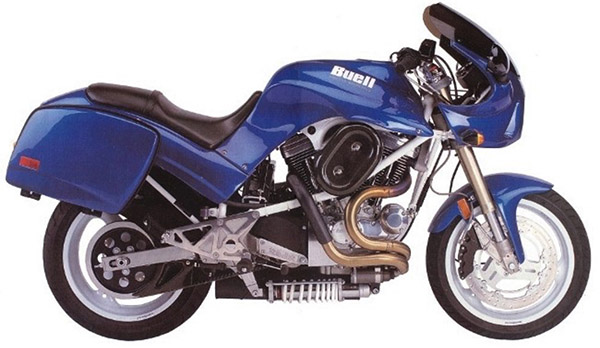
Buell made a touring version of the S2 called the S2T; that bike had nice looking bags that blended into the subsonic styling of the Thunderbolt. I didn’t see any of those for sale. I’m guessing people keep them if they have a set. After I started this project, I found a set for $1000, one-third the cost of the entire Buell.
Who knew Harbor Freight sold motorcycle gear?
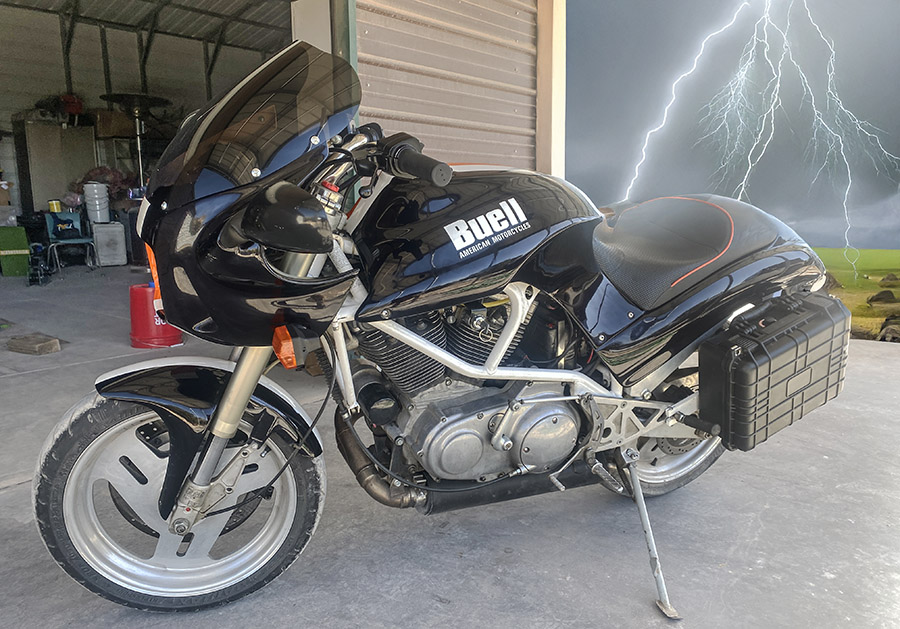
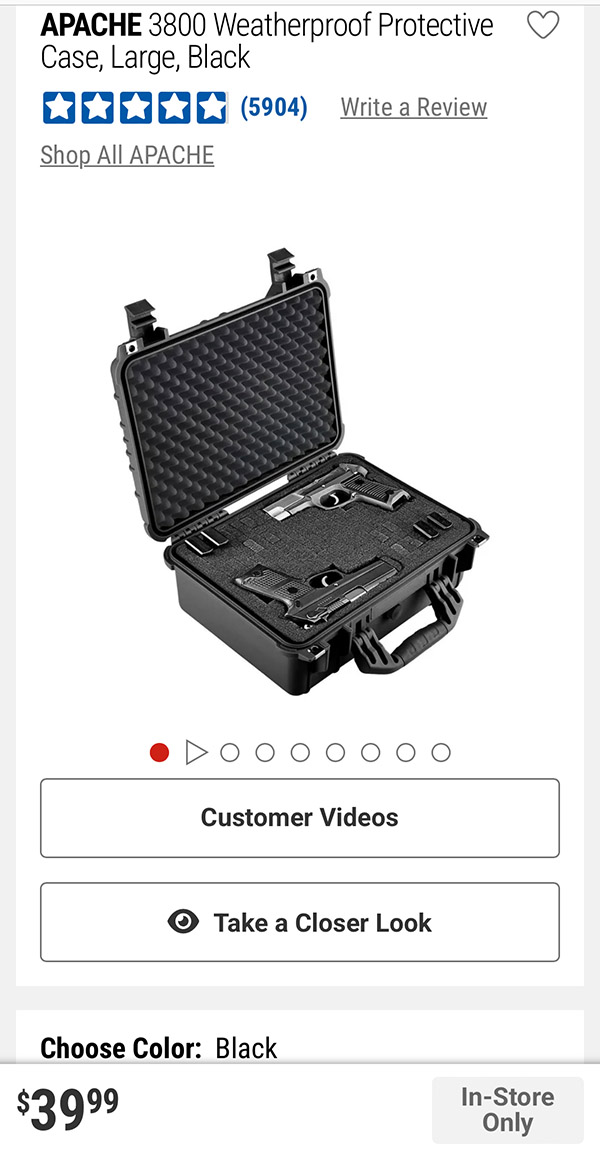
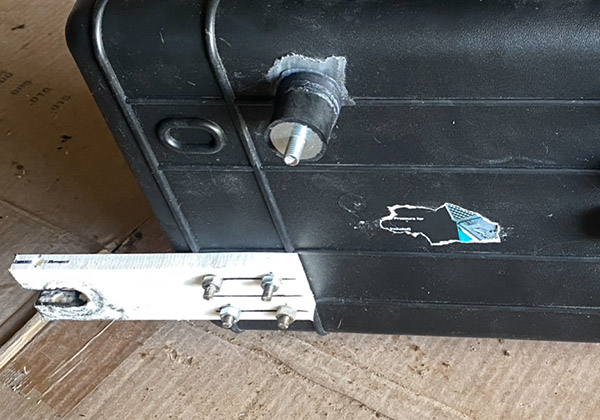
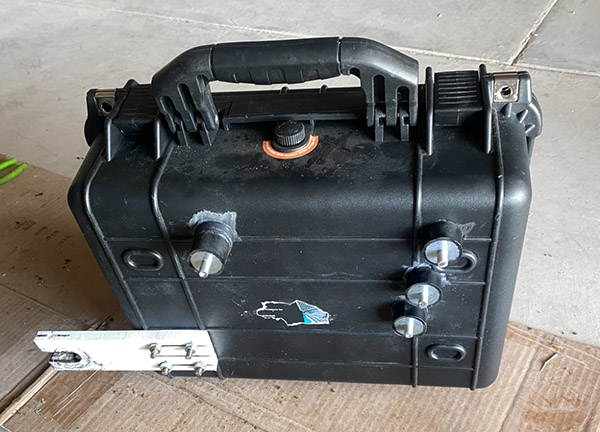
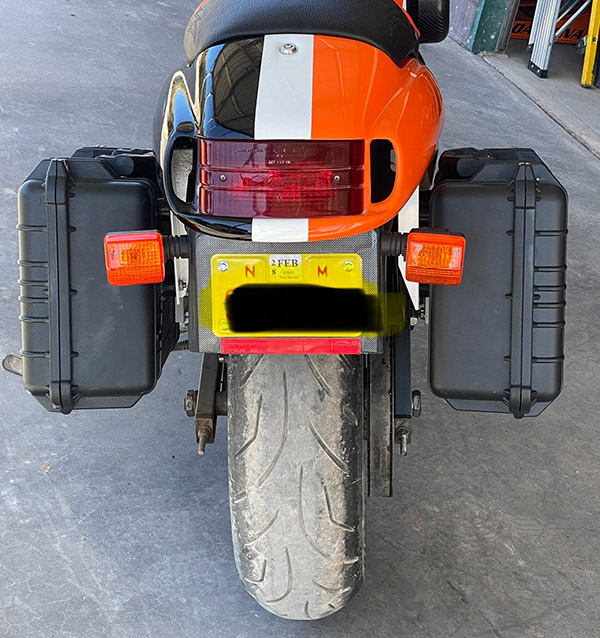
My favorite store, Harbor Freight, had a sale on pelican-style plastic cases. Branded Apache, they are fairly sturdy, weather tight boxes that even have a pressure relief valve for those high altitude runs. Normally these cases are used for cameras, test equipment or anything that needs protection from the bumps and bruises of life in these United States. The HF cases look like most of the bags attached to popular Adventure Barges except a bit smaller. I bought two of the 3800 series for $50 total. Attaching them to the Buell was a challenge. Being an underslung monoshock frame there’s not a lot of bolts on the back section to attach things to. One obvious spot is the passenger peg. It’s a big, strong bolt that you could lift the bike from. The first step was to make a bit of plastic (brand name: Starboard) to connect the bag to the footpeg. This gave me a starting point to work out the rest of the mounting system.
Mount slides over passenger peg and is secured with a pinch bolt in front.
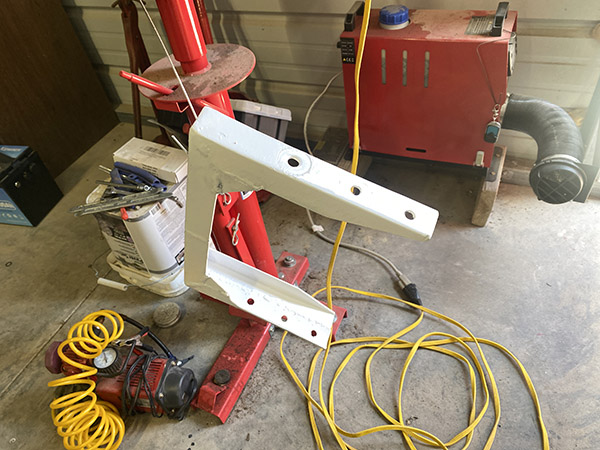
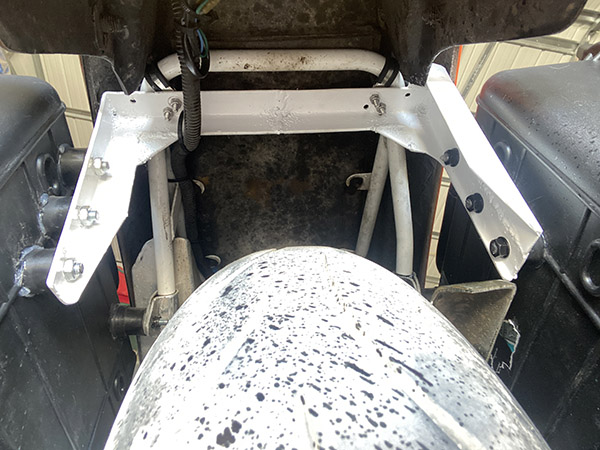
To keep the back part of the saddle out of the rear tire I made a U-shaped bracket that attaches under the seat with rubber covered Adel clamps. The right-hand side is tight due to the Buell’s wide belt drive pulley. After a few tries, I had an ugly brace welded up.
Not a thing of beauty. Hopefully it will keep the bad away from the tire.
For a mid-mount I bent a piece of aluminum to fit around the rear subframe tube. I probably didn’t need this, but more support is always more support.
I may not need this mount but I like it.
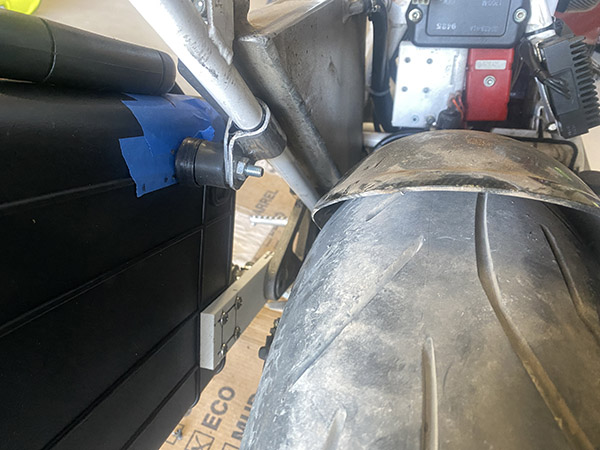
Anything mounted solidly to a Sportster-engined motorcycle usually has a short lifespan. Because of this, the bag-to-rear-bracket connections are those rubber isolator type deals (four on each side for a total of eight). If these isolators don’t survive, it will be easy to replace them with progressively larger isolators until the entire bag is all isolator, leaving little room for storage.
A total of four isolators and the flexible plastic peg mount should keep the bag on the Buell.
The HF bags have two snap-type latches that seem to hold ok but there are also two holes for a padlock or carabiner to ensure they don’t pop open. I’m going to add a small padlock for extra security. Not for theft, but instead for unplanned bag opening.
I seem to do a lot of test rides on the Buell. I’ve put 1500 miles of testing on the bike, and the bagger test ride took me on a 280-mile mountain loop out to Roswell then back on Highway 70 through Ruidoso and tacos at Los Agaves-east (the other Los Agaves is in Artesia). After eating delicious tacos, I noticed oil on the right saddle bag. It wasn’t coming from the tacos. In fact, there was oil all over the place.
I checked the rear cylinder, the source of a previous leak, but it was nice and dry. The Buell had been getting kind of bouncy, and the rear shock was dripping oil. By the time I got home there was no rebound damping at all. The Buell was wallowing like an overloaded Chevy station wagon complete with sticky brats in the way-back.
Do these bags make my butt look big?
I need to do a little work on the shock absorber (two steps back), but the bags turned out well. (One step forward) at speed I reached back to touch them, and they were mostly vibration-free. The rear bracket is not my finest hour and if these bags hold up, I may take a stab at a better-looking rear bracket.
Under side view of rear bracket. I may re-do this part later. Tubing would look better.
On the lonely western roads between Mayhill and Roswell it was comforting to have a few tools and water in case of breakdown. I like a more practical motorcycle, and the Bagger Buell is practical. I may add a refrigerator and a microwave to make my rides even more practical.
The stereotypical image of a Harley-Davidson motorcycle leaking oil has become a cultural icon. Dirty, unshaven and drunk riders astride seeping, smoking, rattling, home-built murdercycles were made popular in biker movies from the 1970’s and the image persists today.
How real is that image? I can’t say because my Buell was manufactured in 1995 but I hear new Harleys mostly don’t leak…much, if at all. My 30 year-old Buell leaked oil. Before we dive into the engine oil leak we have to get a few other leaks out of the way. .
You’ll remember all the trouble I had with the original Mikuni carburetor, the float needle leaked through various repair attempts and I thought I had the problem licked. The Buell ran good and got 50 miles to a gallon of gas. I took it out for a few rides and no carburetor leaks. Then I walked into the shed one day, straddled the Buell, hoisted it up straight and gas poured out the air cleaner. Like a lot of gas.
China, China, China.
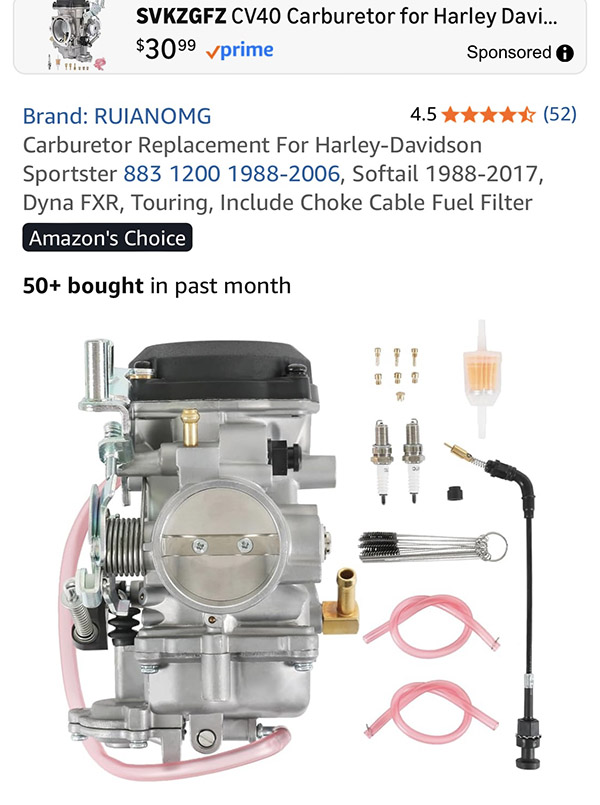
That was the final straw for the original Mikuni carburetor. I replaced the entire unit with a Chinese clone carb from Amazon and the bike has never run better and it doesn’t leak out of the carburetor or the air cleaner. Thanks, Global Trade!
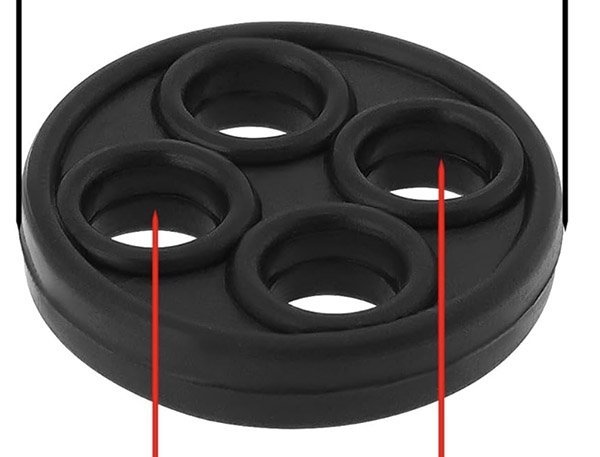
But here’s my question: why did the old carburetor overflow at all? I had the fuel petcock off, where did the gas running out of the carb come from, you may well ask? Turns out the petcock was not completely shutting off as a steady drip of gasoline wormed its way past the 4-hole rubber seal in the petcock. Thus, the fuel shut-off was never really shut-off.
This isn’t the actual petcock gasket but you get the idea.
I took the petcock apart and flipped the 4-hole rubber seal around. That cured the fuel leaking to the carburetor in the off position but it created a bigger problem in that gas leaked out of the body of the petcock in all positions.
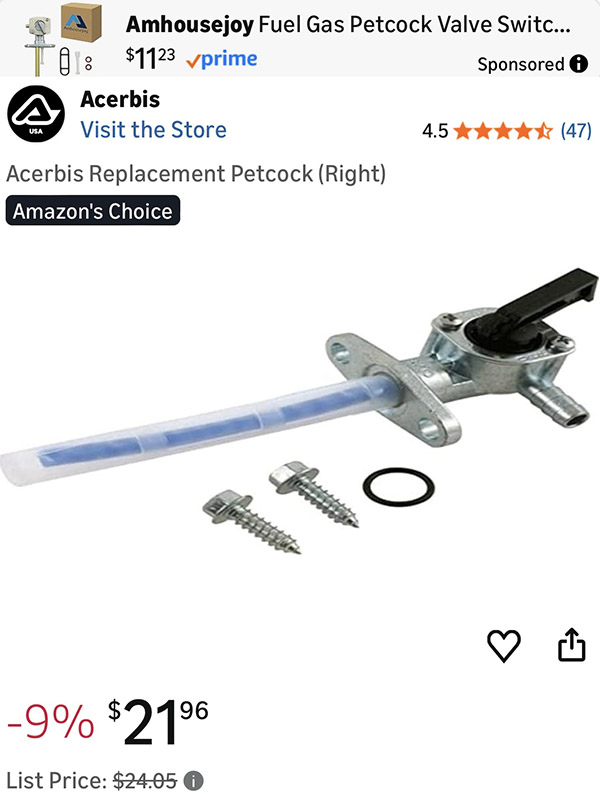
Finding a replacement rubber, 4-hole o-ring was uneventful as none were to be found. Instead, I bought a new petcock on Amazon and the new valve fixed the bypassing problem. But there was another gas leak.
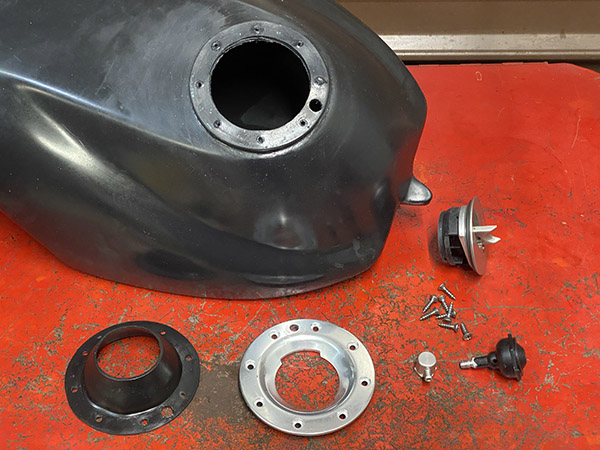
The Buell has a roto-cast plastic gas tank under that pretty, race-bike inspired, but heavy, fiberglass bodywork. An aluminum gas cap flange screws onto the tank with a rubber gasket. This joint weeped gas when riding the bike. Not a lot, but annoying and enough to leave streaks of fuel mungus down the side of the gas tank.
Not so many parts to the Buell tank but the few that are there may leak.
Dismantling the flange, I discovered a check valve under the tank vent that needed to be removed before the flange would come off.
I got rid of this check valve. I expect the bike to burst into flames any minute.
The valve must have something to do with emissions control as it only let air into the tank. I’m sure this added to the float needle issue as the tank was under slight pressure just sitting in the warm New Mexico sun.
Fixing the flange leak was as easy as cleaning off the gasket. Blasting it with a little Permatex high-tack and reassembling the mess. I omitted the check valve to equalize the pressure between the tank and the Earth’s atmosphere. Of course now when the bike falls over it will leak gas like every other old motorcycle I own.
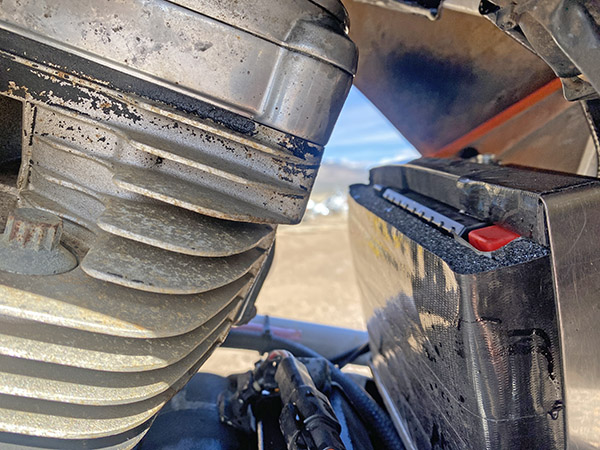
You can’t see it well in this photo but the rear cylinder is an oily mess.
With the gas leaks sorted I turned my attention to the oil leaks. The rear rocker cover was dribbling oil down the cylinder where turbulent air whisked it onto the battery and all points south. It wasn’t a huge leak but let’s just say the back of the Buell is not likely to rust anytime soon.
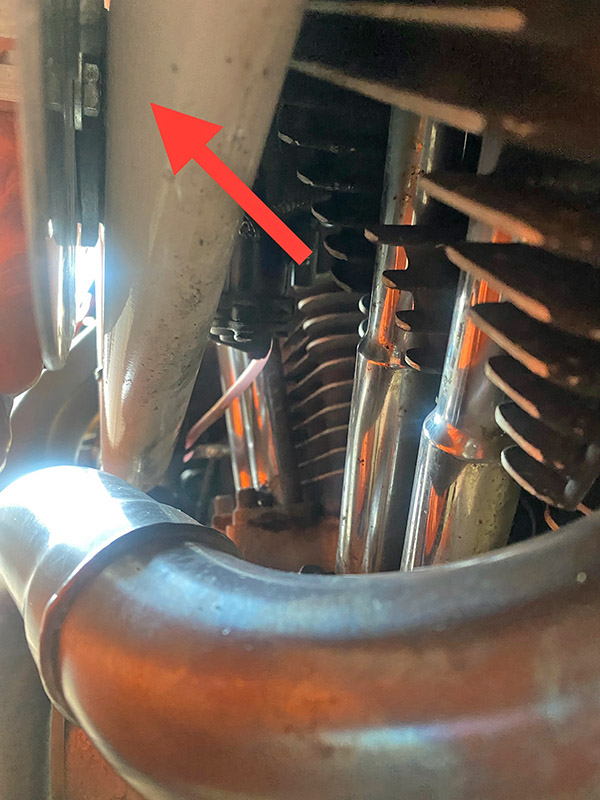
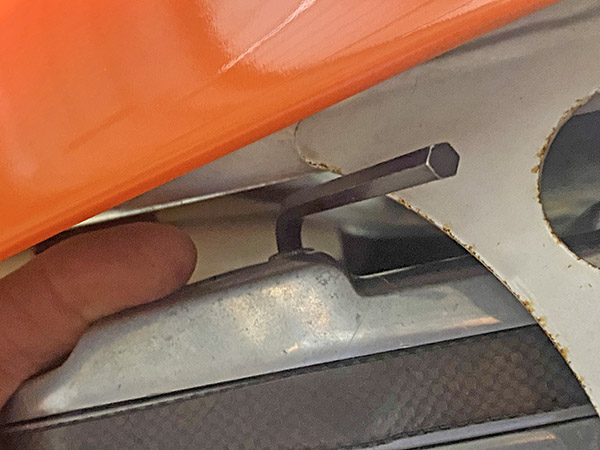
Luckily Erik built the S2 so that the rocker covers are removable without dropping the engine. I did have to cut an Allen wrench short to clear the frame tube, but it was an easy job all things considered.
It’s a snug fit but as long as you’re willing to chop your tools it’s do-able.
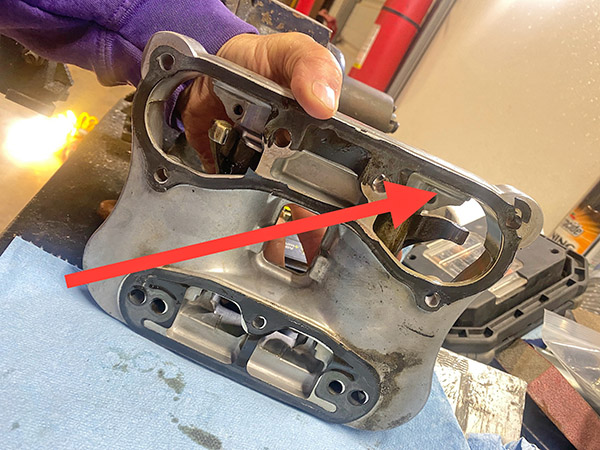
With the new rocker cover gaskets, I took the bike out for a spin and the rear cylinder puked oil as badly as ever. I figured the oil must be leaking from under the rocker box. I’m nothing if not persistent so I took the rocker covers back off and then the rocker boxes. (This year Sportster engine has 3-piece rocker assemblies)
The gaskets crumbled upon removal of the rocker boxes.
The paper gasket is under the rear rocker box was brittle and broken. I replaced both front and rear gaskets with a metal version of the paper gasket. I knew for sure I had the leak fixed.
On the test run the reassembled rear rocker leaked as bad as ever. Back to the shed and everything came apart again for the third time. I was pretty much out of ideas.
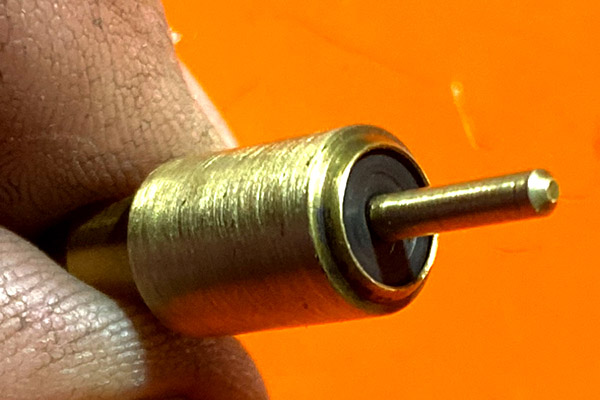
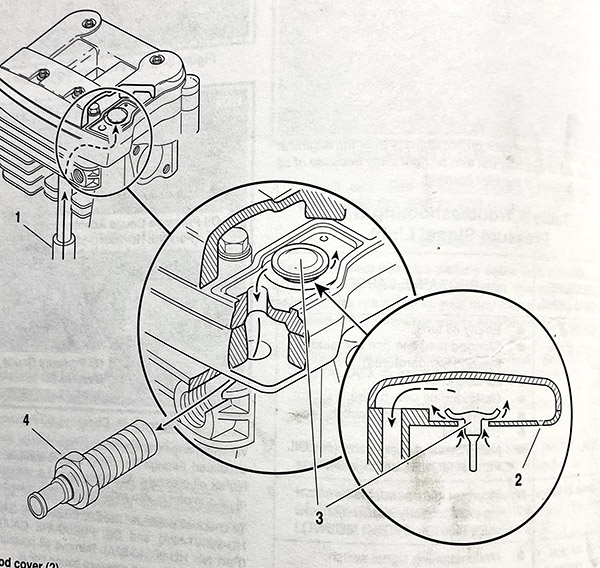
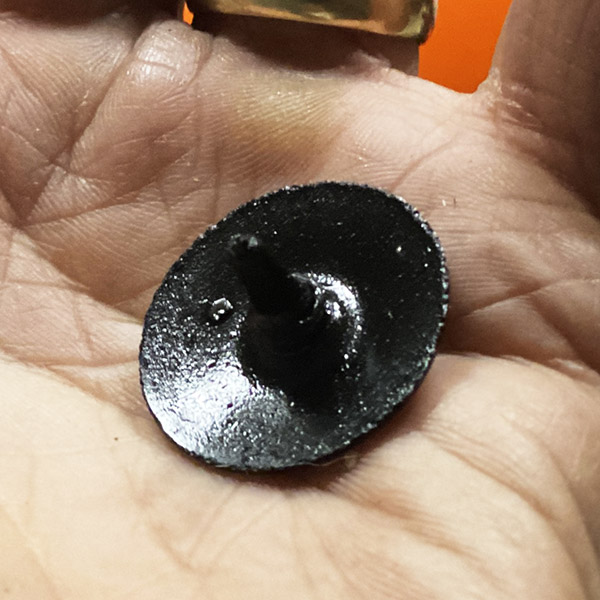
Studying the situation over the course of several days I observed the rear umbrella valve (a nickel-sized, round flapper-type deal in the rocker cover) was much harder than the front umbrella valve. Like hard plastic instead of soft rubber. I swapped both umbrella valves with new ones. Then assembled the mess thinking no way it could be those little valves.
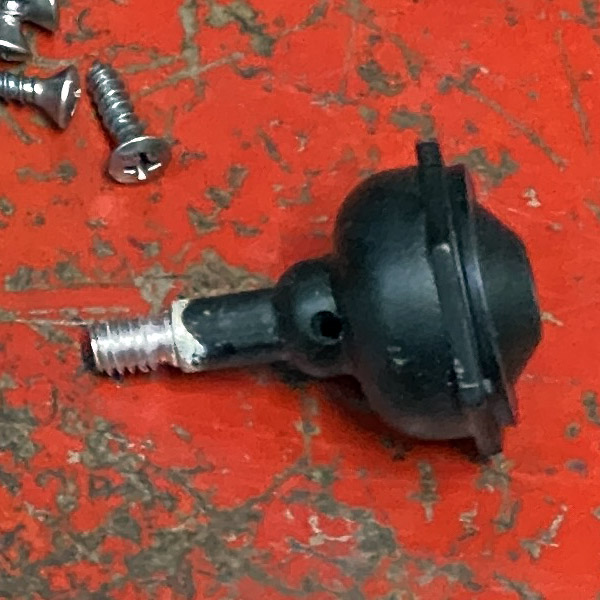
This little valve caused the rear cylinder rocker cover leak.
I test rode the Buell 200 miles and no oil leaked out the rear cylinder. The battery area and aft sections were dry. Look, I’m not complaining. I can’t pin this on Harley’s image. 30-year old motorcycles are going to leak oil. Seals harden, gaskets dry up and split, 0-rings lose their O-ness and umbrella valves aren’t going to bounce. Besides, I enjoy working on the Buell. It’s a weird, wonderful machine that fits no known stereotype.
Subscribe to ExNotes for free!
We need your support! Do what you can to help ExNotes stay in the black!
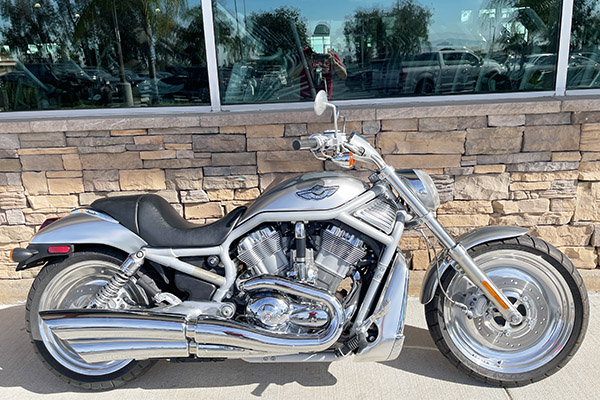
Don’t get excited; I don’t have that many friends. But lately two of them (Baja John and Uncle Joe Gresh) both bought Harleys. I guess I started thinking about it when I went to the gym yesterday morning. There was an early Harley V-Rod parked in front. It looked brand new. It’s too bad that bike didn’t make it with the beer bellies and tattoos bunch. Harley is on the skids now, struggling through a huge sales downturn and significant layoffs. I guess they don’t know what to do. I do (small bikes and even smaller prices; it ain’t rocket science, Milwaukee). Eh, what do I know?
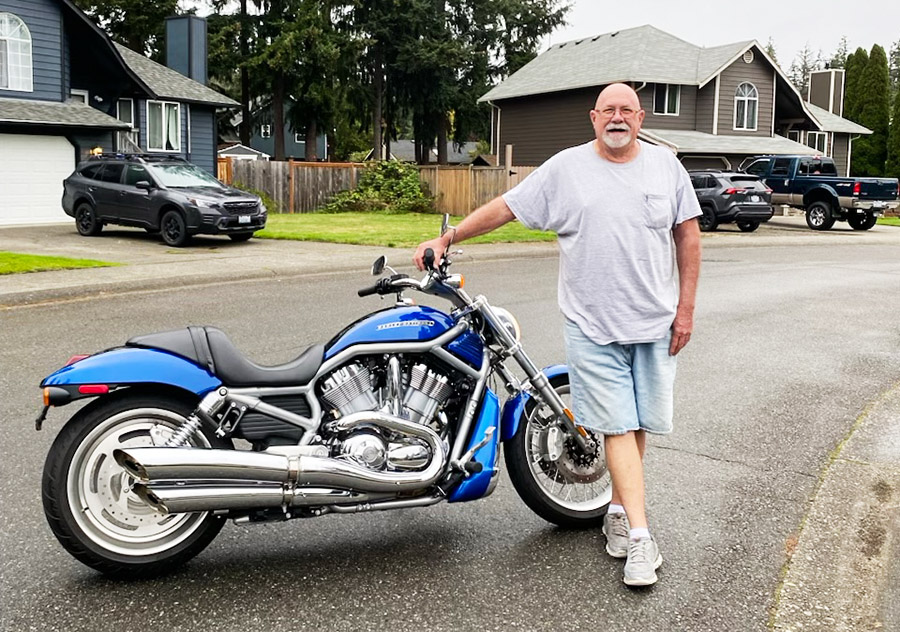
The V-Rod had me thinking about Baja John. He bought a V-Rod last year. I haven’t seen it yet, so I called John and asked him to send a photo. It’s the one you see at the top of this blog. I need to get out there to Arizona and visit with John again. Maybe on the next pig hunt. Maybe sooner.
And then there’s Gresh and his Buell. I knew more about that motorcycle, as Sue and I hosted Gresh out here in La La Land when he came out to pick it up. It’s a beautiful motorcycle, and it’s been fun watching Joe resurrect it. He’s having fun. It’s too bad Buell didn’t work out for Harley, either. I thought those bikes might have been the answer. Joe’s adventures have had me thinking maybe I need to find an older Buell to play with. It would be fun. But there aren’t too many Harley dealers around here anymore; they’ve been dropping like left wing loonies (sorry for the redundancy) at a MAGA rally. Seriously. Harley dealers are falling fast. It’s a shame, really.
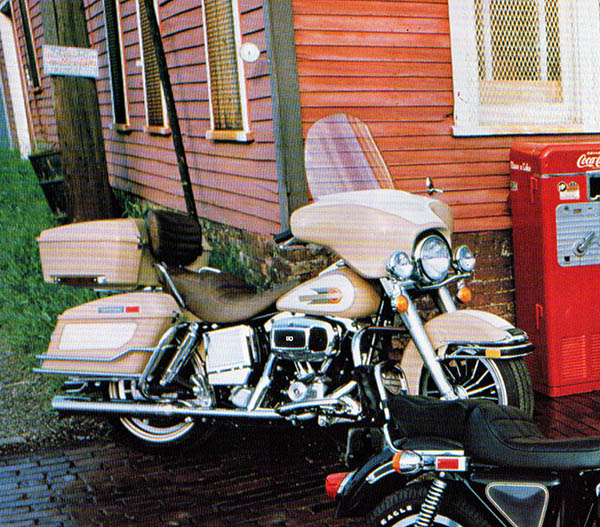
The upshot of the above, of course, is that if you are in the market for a Harley, this is probably a good time to buy. I’ve owned two Harleys; one was a turd and the other was awesome. They sure were beautiful, though. Even the ’79 Electra-Glide (the turd) that treated me worse than Kamala Harris at a Toastmasters meeting was drop dead gorgeous.
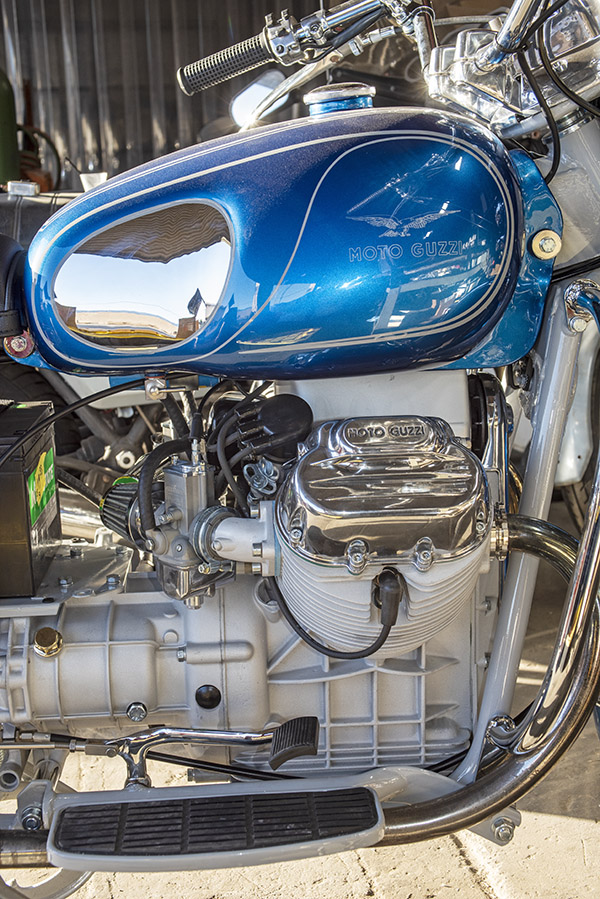
I think if I was going to buy another motorcycle, it would be a Moto Guzzi. The work I’ve been doing for Motorcycle Classics magazine with Cycle Garden in Indio cemented what I already felt: Guzzis are the world’s most beautiful motorcycles. I like the Ambassadors and El Dorados from the 1970s, and I also like the Griso. I’m keeping my eyes peeled. And there’s another plus on the Guzzis: They sure are easy to maintain.
How easy? Hey, buy a recent issue of Motorcycle Classics, turn to the “How To” section, and you’ll see. The upcoming issue has a feature on how to de-rust a gas tank, and it’s pretty interesting. I think you’ll like it.
Subscribe to ExNotes for free!
We need your support! Do what you can to help ExNotes stay in the black!
Tidying up where we left off in Part 6, the new front brake pads arrived and everything wheel-wise went together. Bleeding the front caliper was uneventful and the brake stopped the wheel which is all you can ask in today’s crazy world.
Stoppage by PM.
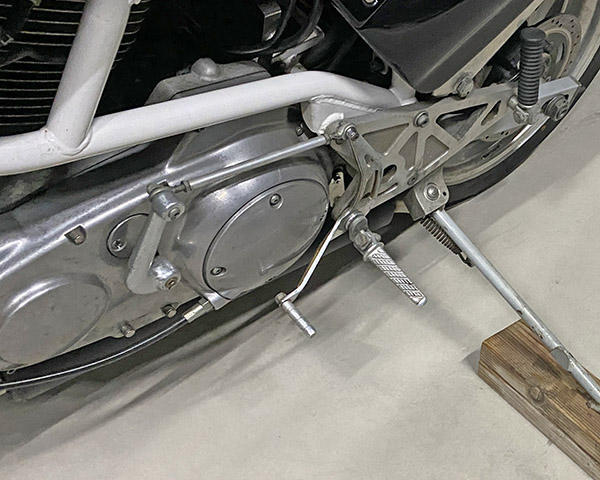
It was time to tackle the Buell’s kickstand issue. If you’re keeping count, that’s three motorcycles I have had to modify the kickstand on.
Kickstand things are precarious and resulted in a crash.
The Buell’s kick stand was an odd duck. It had the typical Harley locking style but where Harley used heavy, hard-wearing steel the Buell used soft, easy to consume aluminum.
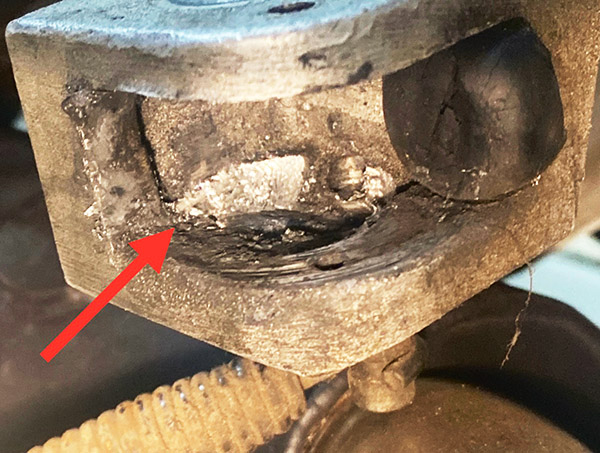
The material change is important because with only 13,000 miles my Buell kickstand locking groove was completely worn out. The notch the kickstand flopped into was gone and with the poor angles involved the bike was ready to fall over any minute. And it did.
The notch area, eaten away in the pursuit of light weight.
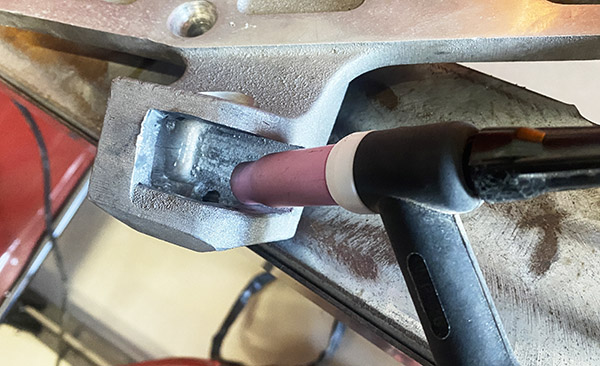
I was going to take a stab at welding a notch in place but I couldn’t get the TIG torch in the narrow kickstand mounting boss. This was a job better left to the pros at Roy’s Welding. I took the aluminum side plate down to Roy’s and dropped it off.
Access is limited, so I gave up and took the kickstand plate to a welder.
A few days later I called Roy’s to see how things were going and I guess they couldn’t get their torch in between the kickstand mount either. Back I went to retrieve the still-boogered kickstand mount. I searched online for a few days but a left-side mounting plate was not available when I needed it.
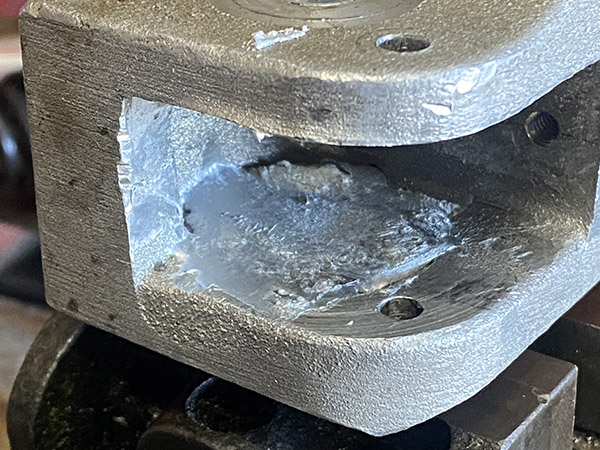
Left with no option I tried some of Harbor Freight’s ersatz aluminum welding rod. This material is kind of an aluminum solder. To weld with it you use an Oxy-acetylene torch and it kind of works.
A nice flood of ersatz aluminum filled the void.
You’ll need to clean the aluminum well and then using the torch to heat the work you sort of rub the rod into the metal. Take care not to overheat the work. It’s an easy process that you can stop anytime by removing the heat source.
I welded (if you can call it that) the original pivot holes closed then filled the worn spot inside the kickstand mount. It worked ok and I managed to get the filler pretty level inside the mount.
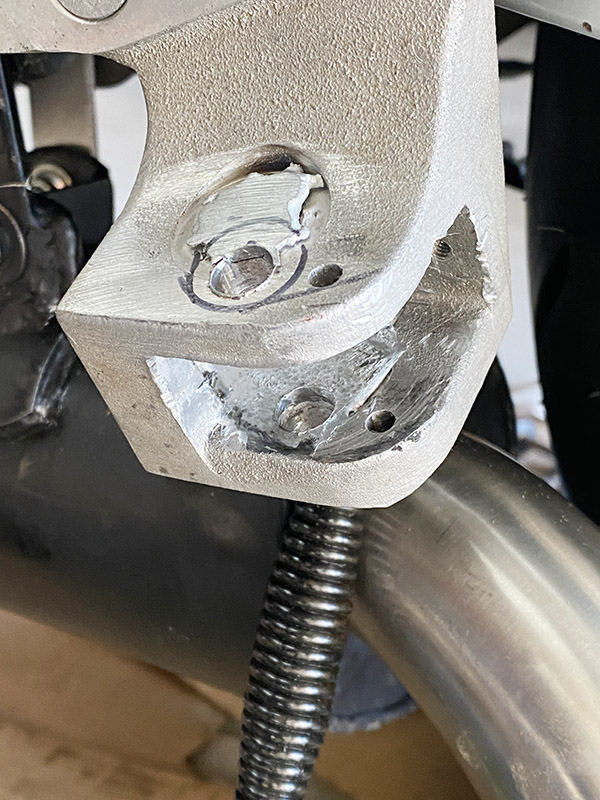
The original pivot holes stopped the stand at a 90-degree angle. This was fine and dandy when the stand had a notch to fall into. My new plan was to make the kickstand more like every other kickstand in the world instead of Harley style.
The relocated pivot hole allowed more stand arc.
I re-redrilled the holes and a position that allowed the stand to swing forward and over center the return spring. This set up is pretty normal even in later Buells. I ground the stand a bit thinner to make room for a steel washer in the hope of protecting the soft aluminum filler material.
It looks much worse than it is
To allow movement for the old stand design the hole in the kickstand was oval shaped. This made for quite a bit of lean when deployed. My new design didn’t need the oval hole so I drilled it out and fitted a steel bushing. Now things were snug.
Steel bushing to fill the wongo-wongo, pivoting angle.
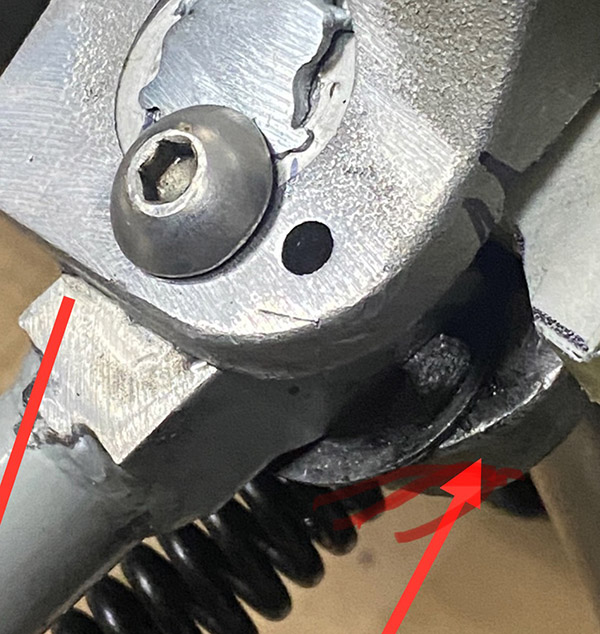
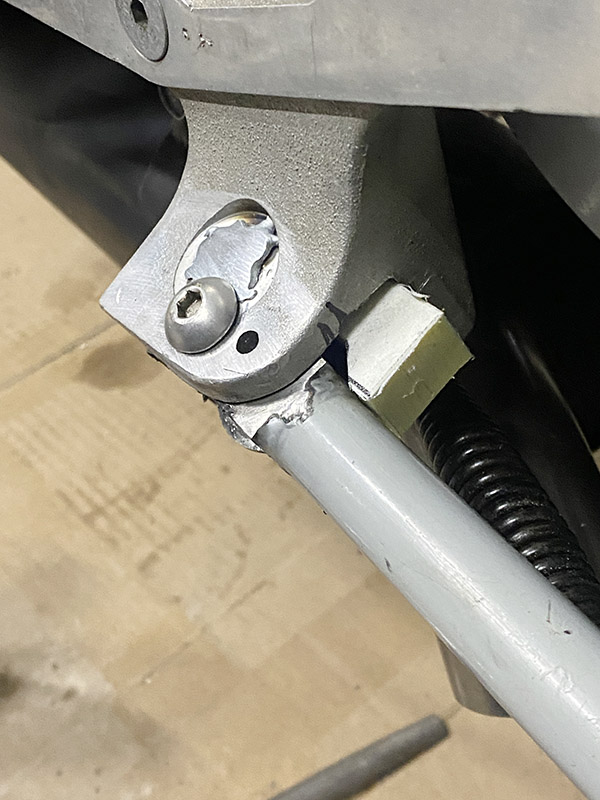
With the relocated pivot holes the end of the kickstand hit the swing arm in the up position. I used a piece of Starboard (plastic used in boat building) to make a new stop for the stand.
New stops keep the kickstand from hitting the swing arm.
It all worked. The Buell stand is still in an odd, dirt-bike like location but it operates normally and the bike doesn’t fall over. So that’s a good thing.
No more rolling off the stand and hitting the ground for me.
I have two motorcycles with upside down forks. Both of these motorcycles have leaking fork seals. Coincidence? I think not. I have no love for USD forks and one of the reasons I wanted a Buell Cyclone was the conventional forks those bikes came with.
I don’t care for upside down forks. They seem to leak more than conventional forks.
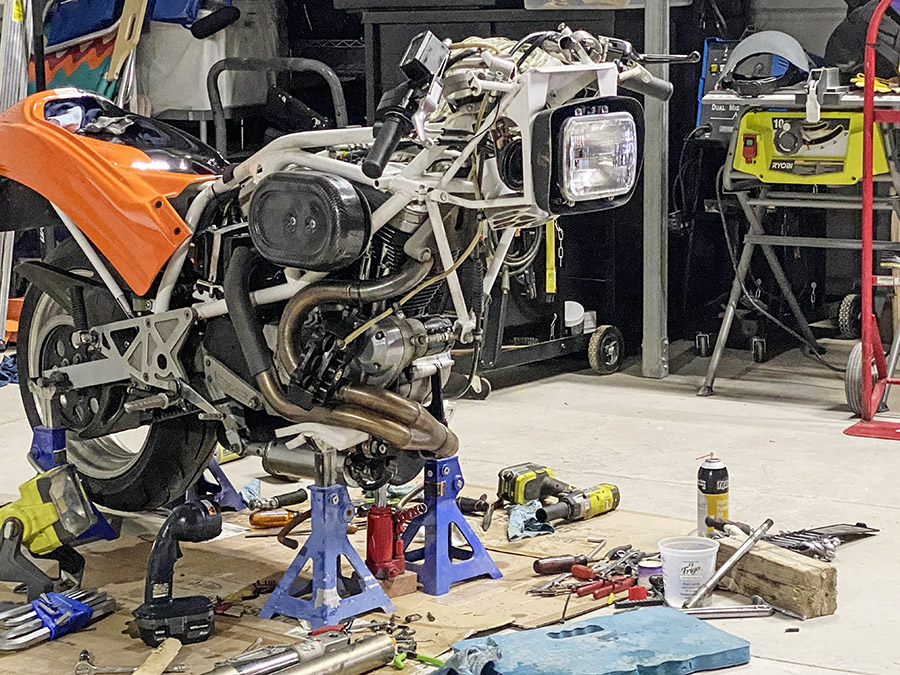
Alas, I ended up with a Thunderstorm, which is mostly the same as a Cyclone except for the forks. Mine were leaking, which is not unexpected for a 30-year-old motorcycle.
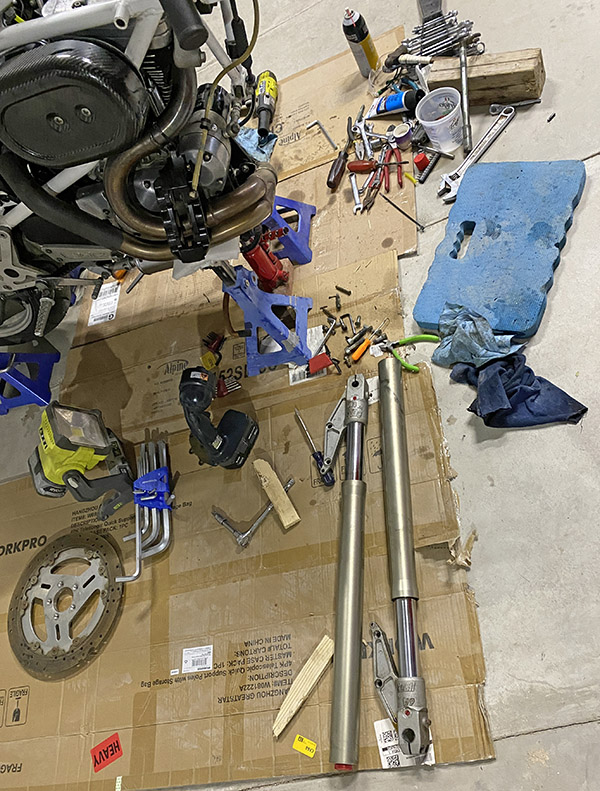
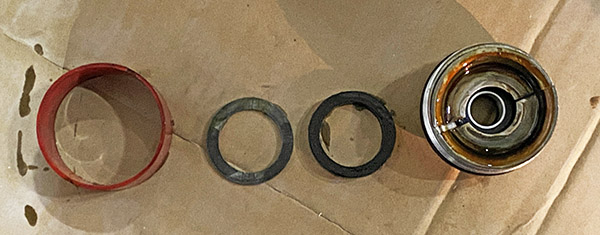
I try to lay out the parts in the order they are removed. Until I kick the cardboard and the bits scatter. This is the fork cap-retainer-plastic spacer-metal washer top of the tube parts.
New fork seals were kind of hard to find. I tried contacting the OEM manufacturer, White Power (that name didn’t age well), but I got no response. Through the wonder of the internet, I found a company in England that had the seals.
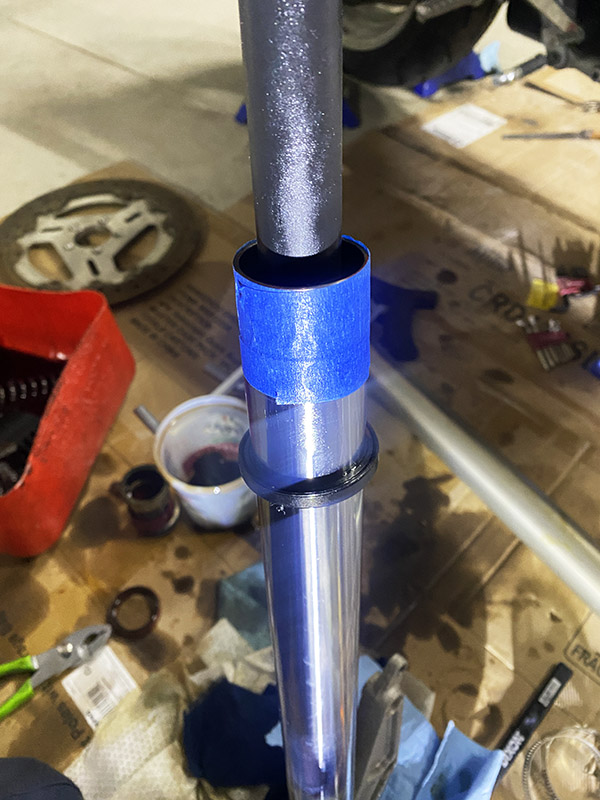
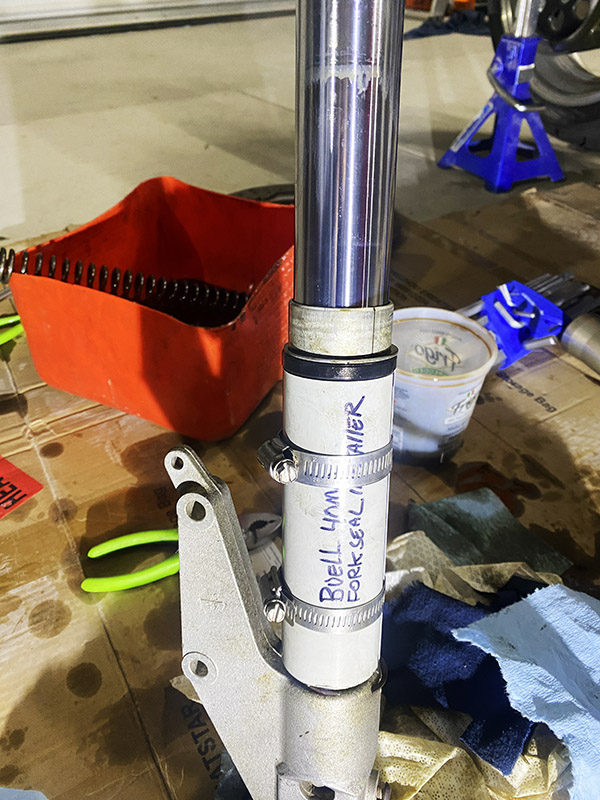
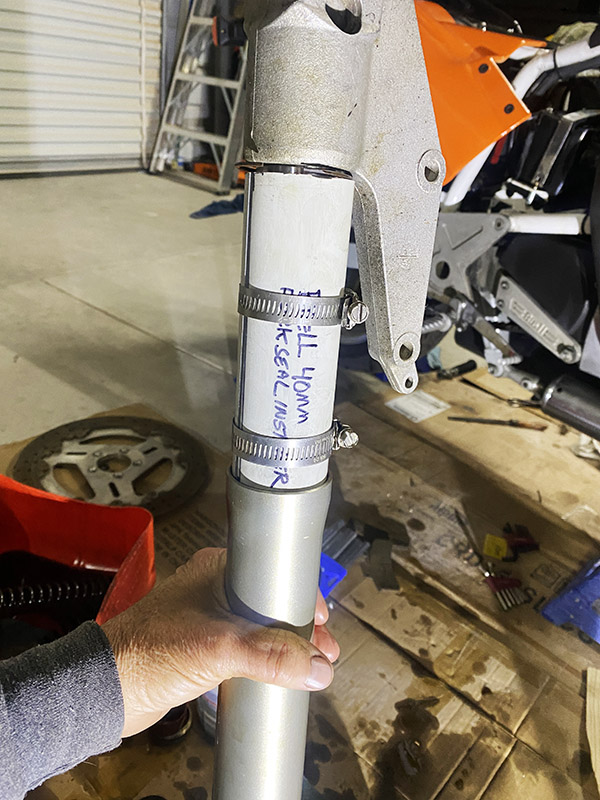
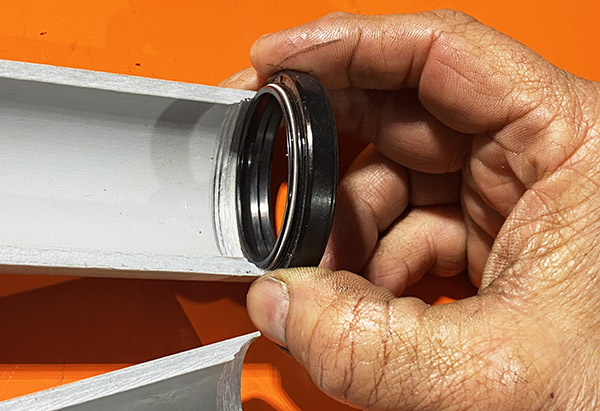
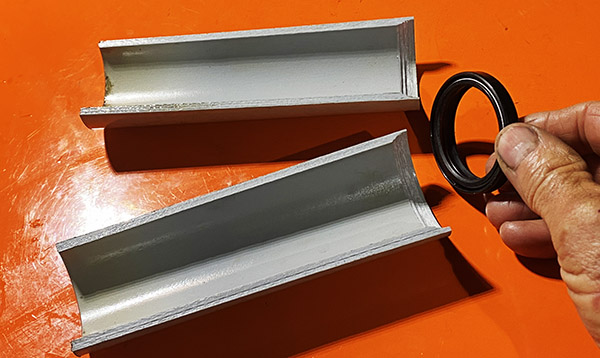
Always tape over ridges so the seal doesn’t get cut or damaged when sliding it into the tube.The seal installer in action. Sliding the fork tube presses in the fork bushing, a spacer and the seal in one motion.After pressing the two halves are removed. Next is the seal retaining clip (which is all that holds the forks together).
The seals were reasonably priced at $14 per set, but the shipping was expensive. I bought three sets since the shipping was the same. Now I have enough Buell S2 fork seals for the rest of my life. On a side note: a week after the seals were delivered FedEx sent me a $20 invoice for “fees.” I haven’t paid the fee yet; I’m not sure, it may be a scam. The fees may be re-named tariffs.
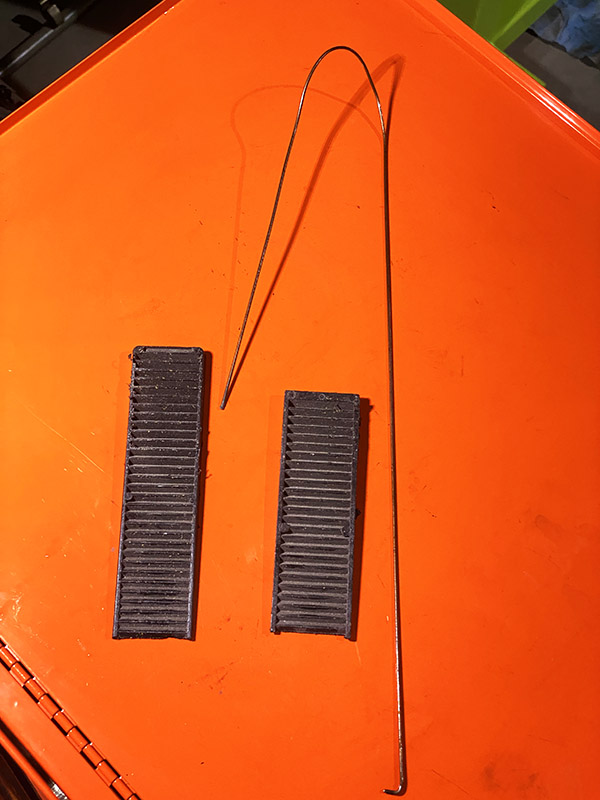
Without this relief cut the seal installer would smash the seal lip.Buell seal installer. PVC tube machined to fit seal lip then cut in half.
The Buell has a large front disc. To remove the wheel, you have to remove the brake caliper. To remove the brake caliper, you have to remove the brake pads and then retract all six of the caliper pistons back inside their respective bores.
The old Performance Machine brake caliper pistons were pretty crusty, and I didn’t want to push all that mess across the bore seals into the caliper. Removing the brake disc from the wheel allowed enough wiggle room to get things apart.
The WP forks were super tight in the triple clamps. I used a wedge to expand the fork tube bores and still it was a struggle to slide the forks out. Once out, disassembly was fairly straightforward (although oily) experience.
These triple clamps really grip the fork tubes. You almost don’t need pinch bolts.
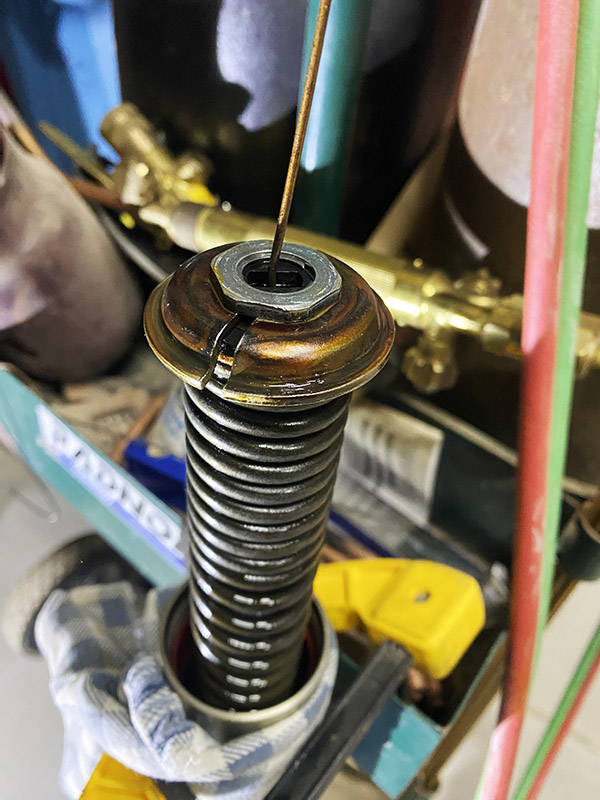
You’ll need to make a seal installer to press the new seals into the forks. I made mine from PVC tubing in the hope of avoiding scratching the sliders. The new seals fit well, and the hardest part was compressing the fork spring while holding the damper rod up with a bent wire and using a third hand fitting the damper rod spring keepers. My Buell shop manual describes this process as a two-man job. And it really is.
It took a couple days to figure out how to one-man a two-man job. I ended up employing an oxy-acetylene welding cart as a prop to hold the fork. The T-handle on the cart was in a convenient location and height to loop the damper-rod holding wire over and I still had two hands free to compress the spring and slip in the keepers.
After the seals are in place the fork spring retainer goes on. Note the wire holding the damper rod and the welding cart holding the fork. This setup leaves both hands free to compress the fork spring and fit the retainers.More Buell specialty tools. Wire to hold damper rod, wedges to spread triple clamps.
The Buell manual called for 7-1/2 weight fork oil. I should have ordered fork oil online, but I didn’t, so I called around and the local Honda shop had some. It’s a 20-mile drive to the Honda shop. The Honda fork oil bottles are confusingly labeled. What looks like 7 weight ended up being 5 weight, but I wanted to get the front end put back together. So I poured a pint of 5 weight into each fork leg. Stay tuned for a follow up report if I can feel any difference between 5 and 7 weight fork oil.
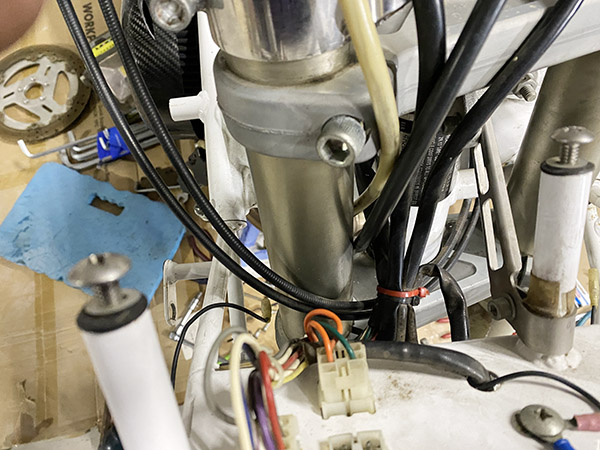
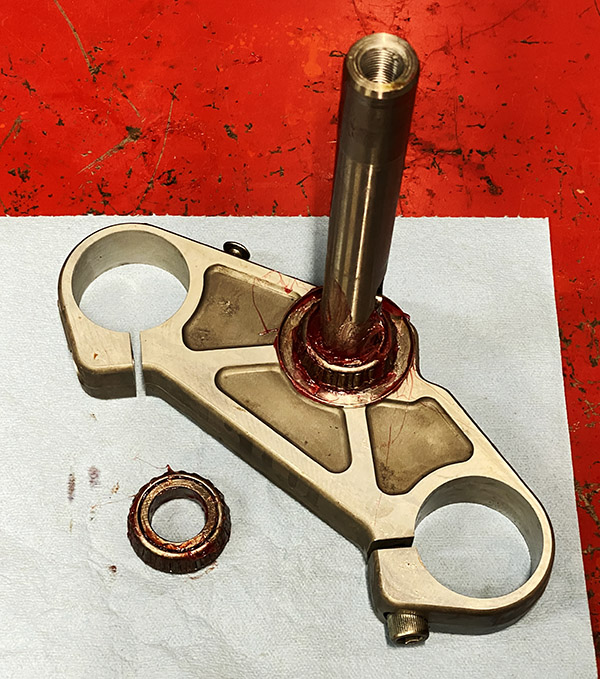
While the forks were off, I re-greased the steering head bearings. They still had a little grease remaining but thinly applied. I walked out the old stuff and smooshed in fresh grease. That left just the front caliper to clean up.
Re -greased steering head bearings. I don’t like the design of the cup under the bottom bearing. It seems like it would hold water. I might bend a drain channel into the low side.
The caliper came apart easily, but the pistons did not. I used to have a big pair of reverse pliers (the jaws expand rather than close when the handles are squeezed). I would use these pliers to grab inside the hollow pistons and pull them out of the caliper. I would, that is, if I could find them. I spent a few hours looking for the pliers and finally gave up.
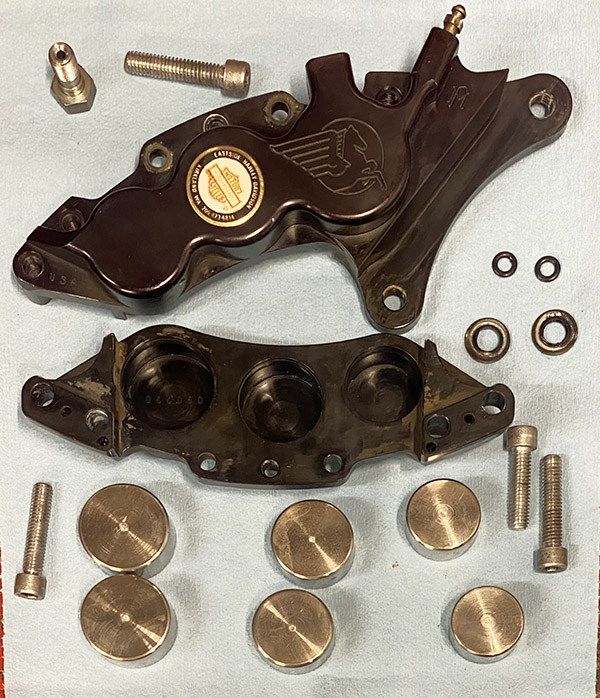
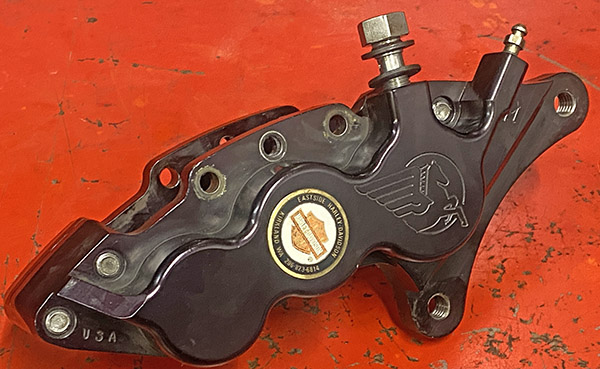
A snap ring Oliver was pressed into service and I managed to get all six pistons out. Performance Machine uses chromed steel pistons and the bit of piston that was exposed to the elements had corroded. Finding new pistons would be an impossible task and a new caliper would cost $600, so I polished the corroded pistons on the buffing wheel.
Except for the chromed pistons, the PM caliper is a nice looking unit. Note the piston diameter change to apply evenly distributed wear.Performance Machine caliper back together and waiting on brake pads
I’ve had good luck piston polishing. Yes, they re-corrode, but the section of piston covered with brake fluid doesn’t corrode. I look at it as an ongoing maintenance item rather than a bad part. You’ll have to wait for new brake pads to arrive to see if the caliper leaks in Buell Fever Part 7.
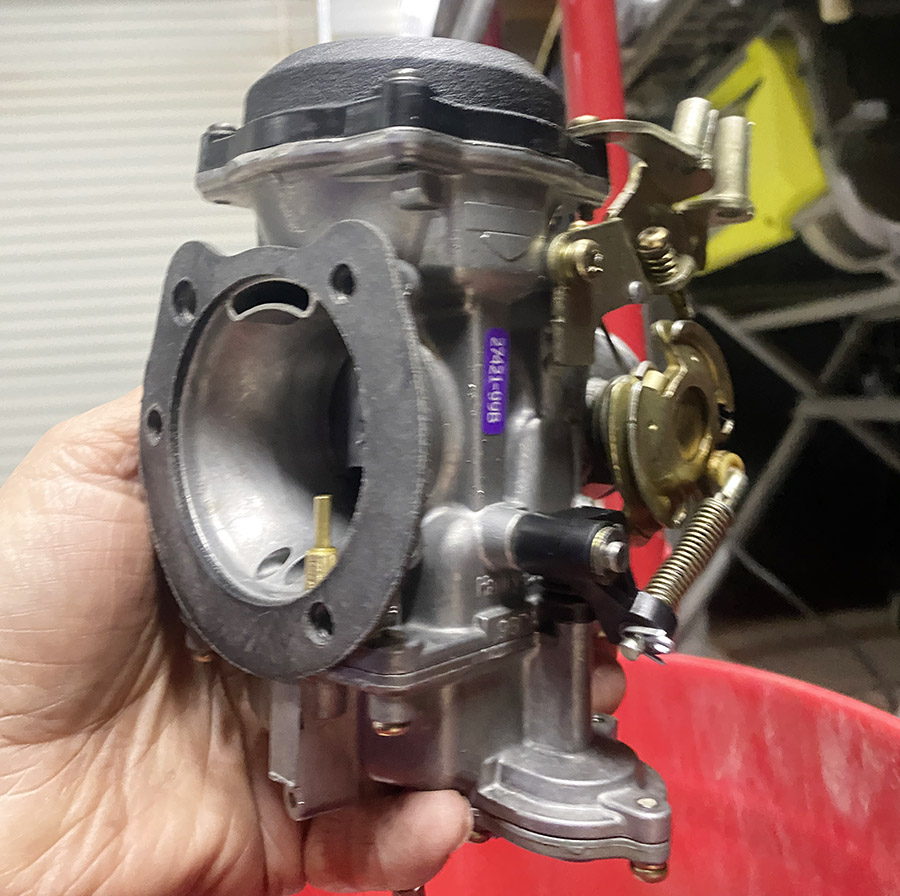
After years and years of tinkering with engines, my whole life really, I’ve come to the conclusion that I am not very good at fixing carburetors. The Buell’s multiple personality disorder carburetor has really illuminated my carb inadequacies.
Considering it sat for who knows how long the Buell carburetor was fairly clean inside. I blasted it out with spray carb cleaner and installed a few new parts just because it was apart. The bike started up easy and seemed to run ok. And then the oil tank blew all over the place. I got sidetracked cleaning up oil and it was a few days before I got around to starting the Buell again.
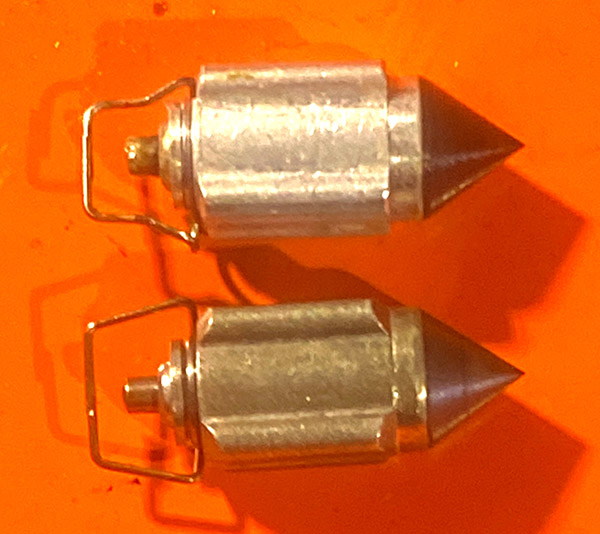
The aftermarket needles have slightly longer springs. I’m not sure this matters.
After a few moments of running, the bike started getting richer and richer. Black smoke poured out the muffler along with popping and farting sounds. I shut the engine off and fuel began leaking out the carburetor intake mouth. This was unfortunate because I installed a new needle and float earlier.
Off the carb came for the second time. I re-checked the float level, installed another new needle and bench tested the carb. No leaks. Plugging the carb back into the motorcycle and reconnecting all the bits, I turned on the fuel valve from the remote tank and gas poured out the carb. It was like there was no needle at all.
The seat didn’t look too bad to me but I could not get the thing to stop leaking.
Third time: I pulled the carb and put the old float and needle back into the carb, maybe the aftermarket stuff is junk, right? I re-installed the carb. No leaks. Good. Started the engine. Bike ran rich and the longer it ran the richer it got. Lots of backfiring and flames. Fuel started running out the carb.
At this point I gave up and ordered a new carb from Amazon. It was on sale for $38. I pulled the carb again and it sat on the bench for two days. You have to understand, there is no simpler carb than the one on this Buell. Despite appearances my pride can be hurt. If I can’t fix the Buell carb, then I can’t fix any carb. I decided to take one last shot.
For some reason, the float bowl o-ring enlarged from my ham-fisted ministrations. Stuffing the ring into the bowl groove became a Sisyphean task: push one side in and the other side popped out. I didn’t want to wait for an internet gasket, so I drove down to our friendly neighborhood Harley shop, Liberty Cycles on Highway 70.
Liberty is a real old school Harley shop. Independent, scruffy, populated by guys that might beat you up for mistaking the year Panheads were first manufactured. 99% of the bikes in the shop were big twins. Sportster riders are suspect. I asked Father Time, a grizzled, white-bearded mechanic for a bowl of-ring.
Father Time dug around in various drawers and came up with the o-ring, handed it to me and said “Just take it.” Maybe these guys aren’t so scary.
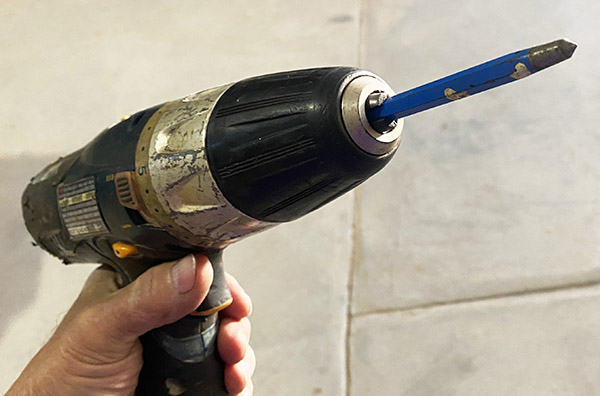
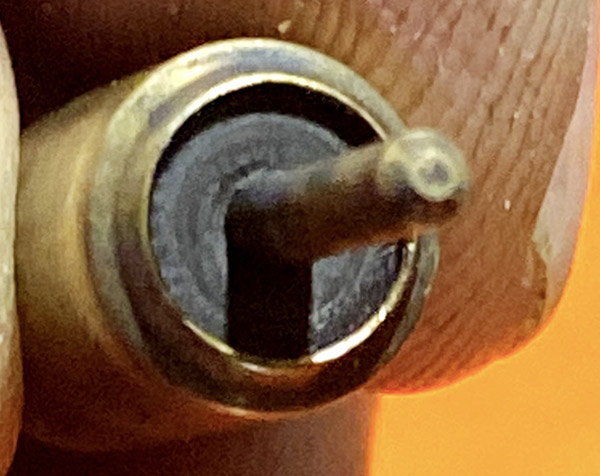
Harley needle-seat burnishing tool. A center punch on a Ryobi cordless.
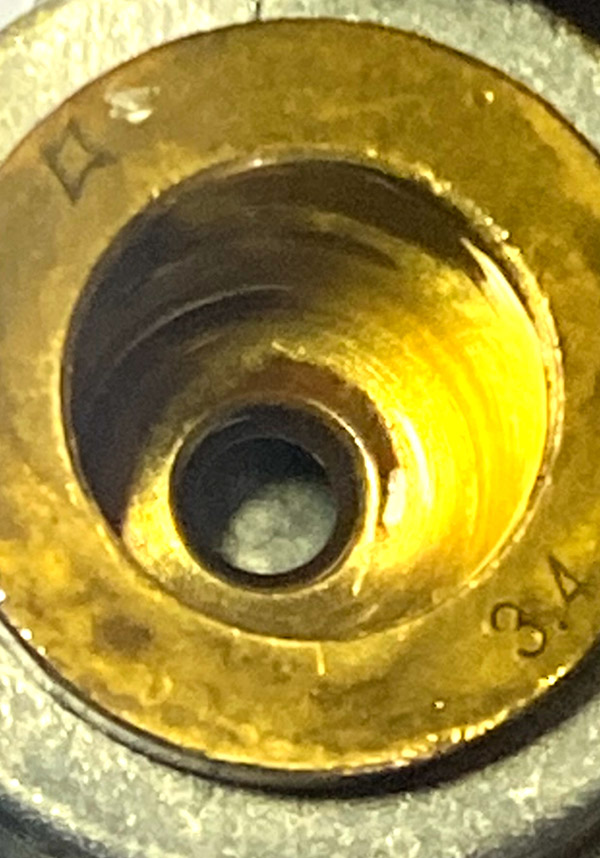
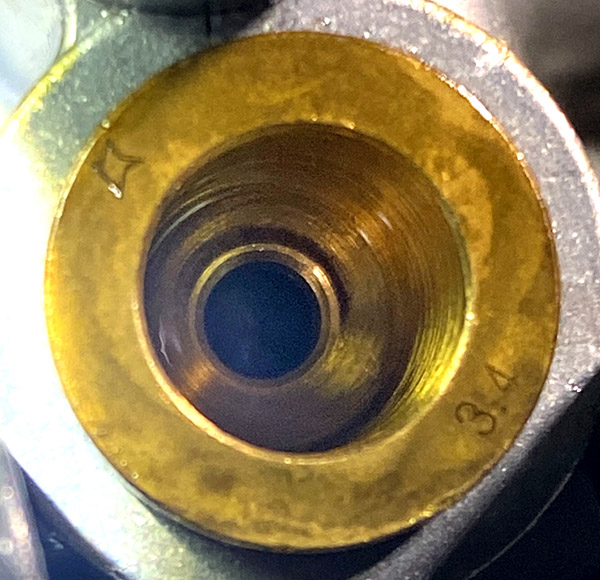
On the bench, the needle seat looked okay to me but I wanted a more polished look. Using a center punch on a drill motor I burnished the seat to make it smoother. Back go all the pieces after checking float level. No leaks. Start the bike and it runs good for a few moments then starts loading up on fuel again. It’s maddening but at least fuel is not leaking out of the carb. Progress.
After a steel-to-brass burnishing session the seat looked smoother. Most importantly the carb stopped flooding.
After a steel-to-brass burnishing session the seat looked smoother. Most importantly the carb stopped flooding.
The enrichener plunger was dingy but not terribly dingy. It was enough to cause problems.After cleaning the plunger sealed off the enrichener circuit, greatly reducing black smoke.
Fourth time pulling the carb. I removed the enrichment plunger; it looked a little dingy. Maybe the plunger is not seating? I used 800-grit wet-or-dry sandpaper to remove any deposits and cleaned the enrichener bore. Reassembled again and installed on the Buell. Bike starts up and runs well for a few minutes. Install the air cleaner, fire up the bike and after a minute or so the bike starts running rich, black smoke pours out the muffler.
Arrow points to the float bowl vent. This is the only vent as there is no bowl overflow tube.
Fifth time pulling the carb, thank goodness it’s easy to do on the Buell. I examine everything. My repair manual shows a float bowl overflow tube in the bowl. My float bowl has no overflow hose. My bowl has no tube. This is why fuel runs out of the carb throat when it floods. A normal carb would piss the fuel into the ground. Which got me thinking: How does the float chamber vent to atmospheric pressure?
The air cleaner back plate blocked the bowl vent. I didn’t grasp this until much later in the process.
Facing the intake side of the carb there is a hole at the 10-o’clock position. This is how the float chamber vents and this is the hole that is covered up when the air cleaner is installed. It sounds easy and logical reading this now, but it took hours of confused staring at the Buell to figure out what was happening.
Drilling a vent hole in the air cleaner back plate allows for atmospheric pressure in the float bowl.
I drilled a hole in the air cleaner where the vent exits the carb. Reassembled the entire mess yet again and started the bike. It ran better but was missing on one cylinder. With a single carb if you have one cylinder missing it pretty much has to be ignition, so I removed the spark plugs. They were covered in fluffy black soot. Chunks of soot nearly bridged the electrode gap on the front cylinder sparkplug.
A quick session with a wire wheel and douching the plugs with carb cleaner had them looking like new. I reinstalled the plugs and the bike started up easily, ran smooth, both cylinders ticking off nicely. It idled well, as well as any Harley idles. Maybe I have finally fixed the thing.
To recap, the carb had three issues:
The first was the needle seat. It must have had some microscopic flaws that prevented the rubber needle tip from sealing. The leaking needle caused a rich condition.
The next issue was the enrichener plunger. It was not seating completely. This allowed extra fuel into the intake, causing a rich condition.
The final issue, extra confusing because sometimes I had the air cleaner installed and sometimes I had it removed, was the blocked float bowl vent. Without a vent to atmospheric pressure the float chamber is under a vacuum. I’m not sure but I think the bike runs rich as extra fuel is sucked in. The vent on the fuel tank becomes the atmospheric pressure inlet.
The Buell seems to be running fine now but after pulling the carb so many times, I’m a bit gun shy. I’ll call it fixed with reservations.
I haven’t received the Amazon carb yet but if the thing has a bowl overflow and the parts interchange I’ll be swapping the bowl. The Buell leans left on the kickstand, the carb towards the (downhill) intake manifold. Without a float bowl overflow, a sticking needle could run gas into the engine. Not good.
A smarter man could have figured out the Buell carb in less steps. He would have analyzed the symptoms and made a logical plan to address them. I am not that man. I threw everything at that damn carburetor until something stuck. I had to grind through obvious processes until the correct answers were all the answers that remained.
In the trades we call this Buell Hand. It comes from adjusting the idle mixture screw between the hot exhaust headers.



 The V-Rod had me thinking about Baja John. He bought a V-Rod last year. I haven’t seen it yet, so I called John and asked him to send a photo. It’s the one you see at the top of this blog. I need to get out there to Arizona and visit with John again. Maybe on the next pig hunt. Maybe sooner.