Indian ExhaustNotes!

By Joe Berk

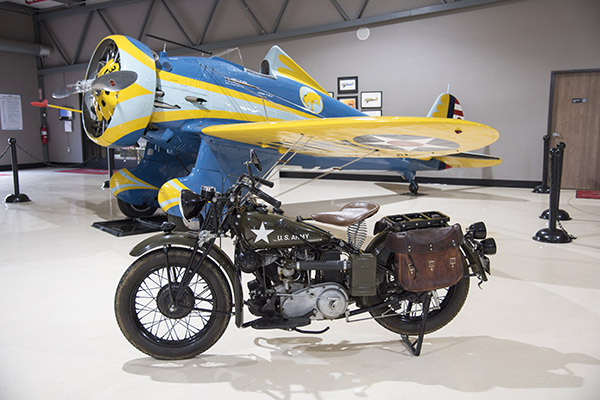
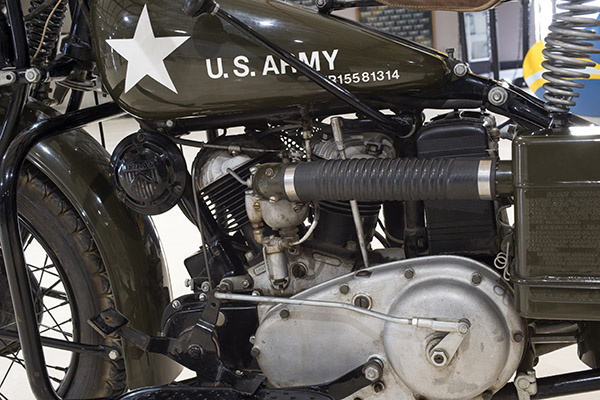
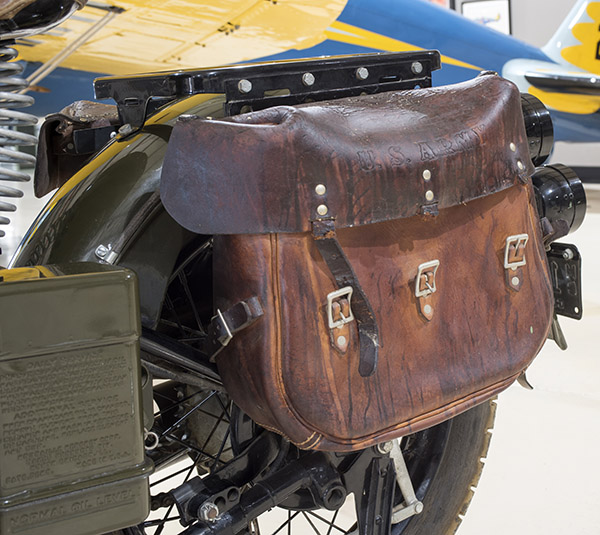
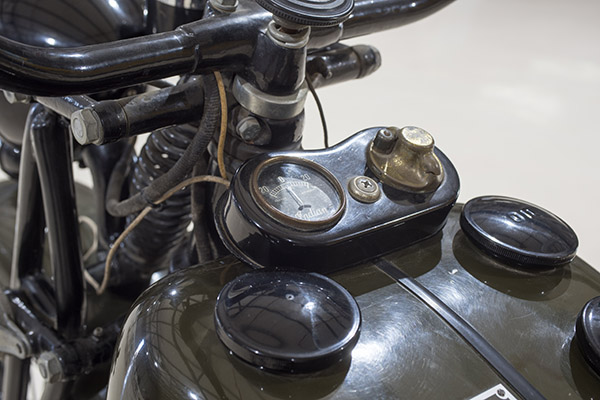
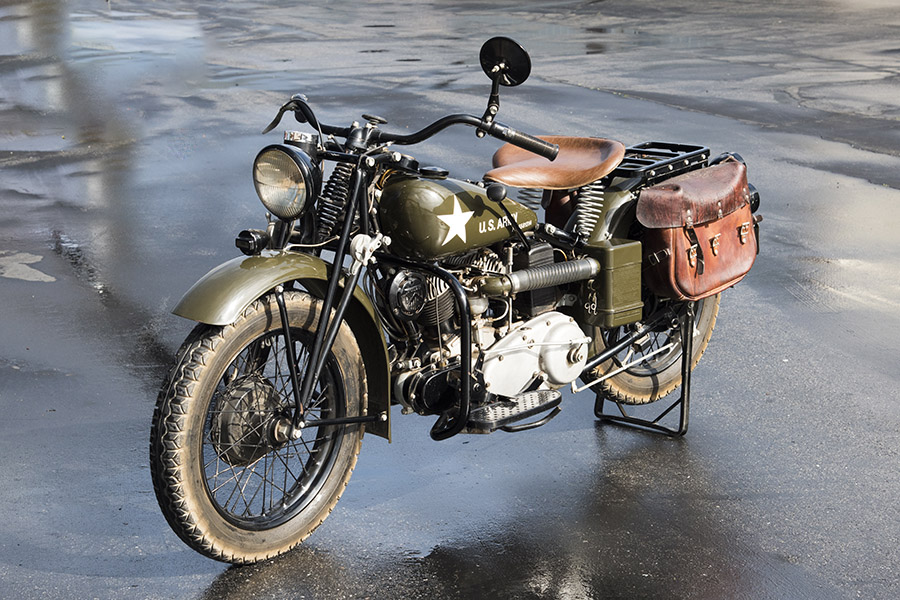
We were visiting the Planes of Fame last month when I spotted the US Army World War II motorcycle you see below…

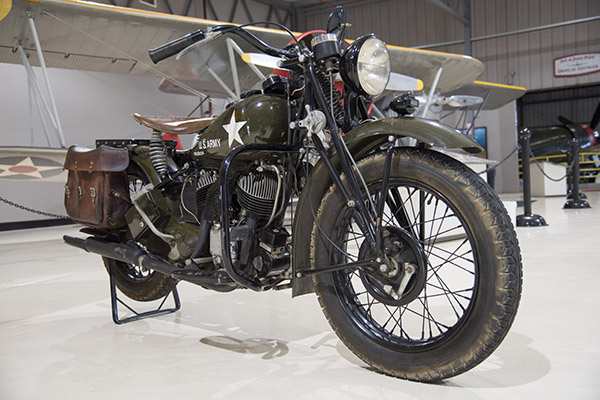
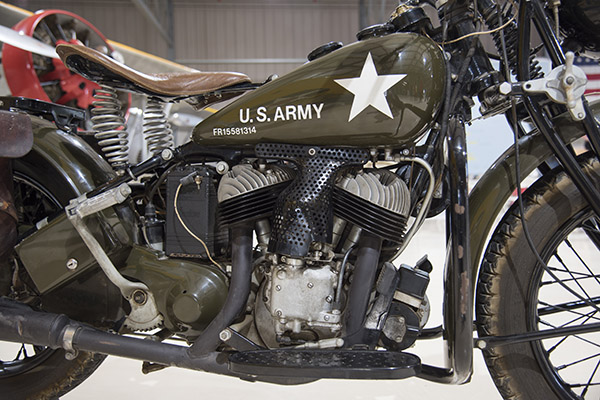
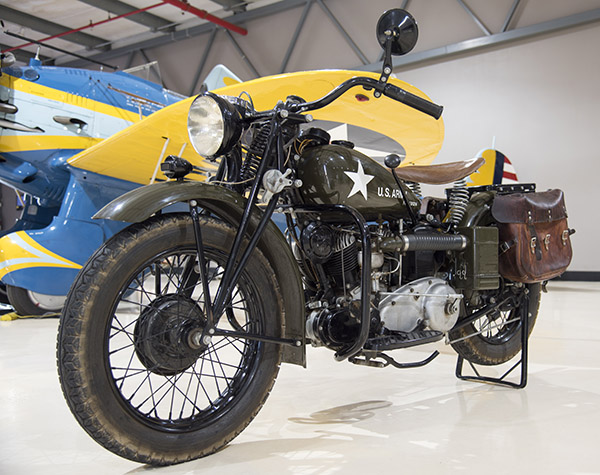
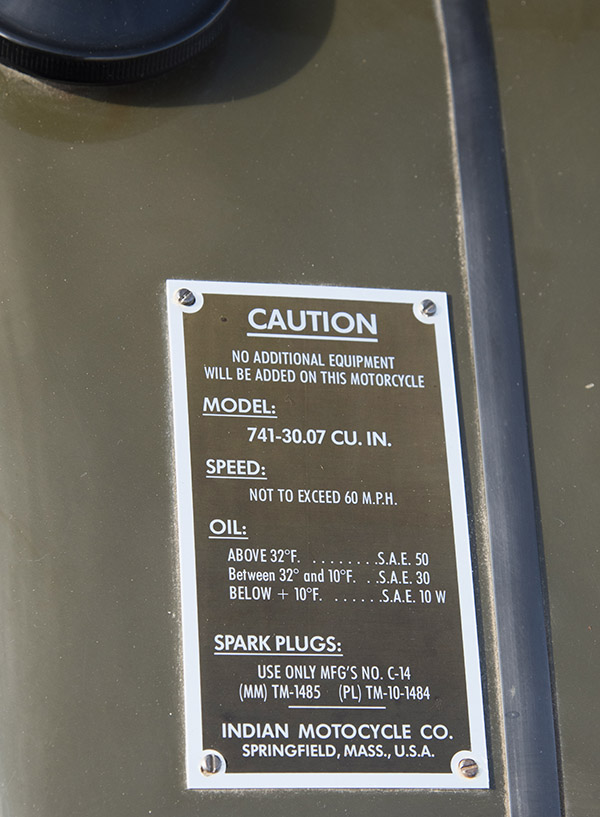
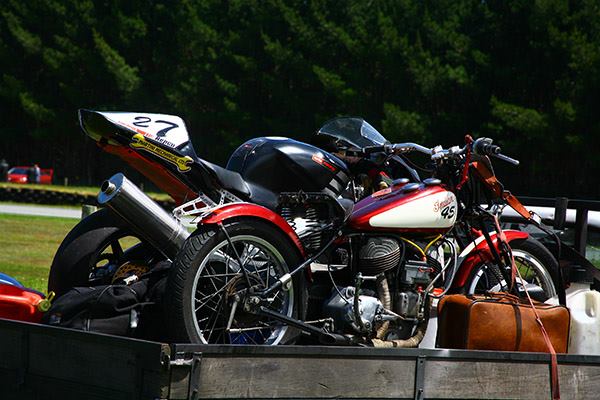
At first, I thought it was a Harley WLA 45, but nope, a nice young fellow named Paul was working on the motorcycle and he told me it was an Indian.  Wow, you don’t see too many WWII US Army Indians.  I was a bit embarrassed (after all, I wrote a book about police and military motorcycles), but the beauty of this motorcycle soon made me forget that.   Check out these photos, folks…

When I returned home, I had to look up what I had written two decades ago about the Indian 741 in The Complete Book of Police and Military Motorcycles…

INDIAN WORLD WAR II MOTORCYCLES

During the war, Indian produced about 40,000 motorcycles and essentially devoted its entire operation to military production. It produced few civilian motorcycles (the company did not even bother to print a catalog in 1942), although it maintained a small amount of its production capacity for police motorcycles. It sold its military motorcycles to the U.S. Army and to several other Allied nations, most notably England. Indian offered several models during World War II. These included the Model 741, the Chief, the Model 640B, the M1, and the Model 841.

The Model 741

The Model 741 was Indian’s main military motorcycle. It was the machine Indian had developed in response to the U.S. Army’s ill-advised initial requirement for a 500-cc military motorcycle. The Model 741’s engine actually displaced 30.5 cubic inches (or 500 cc), and for this reason it became known as the “30-50.”

The Model 741 was based on Indian’s Junior Scout. Its 500-cc, V-twin engine was the Junior Scout engine detuned for increased durability. It only produced about 15 horsepower. The Model 741 had a hand shift and a foot clutch like the Harley-Davidson WLA, but the Indian motorcycle put the shifter on the right side of the gas tank instead of on the left side as Harley-Davidson had done. The motorcycle’s throttle was in the left handgrip, in accordance with the army’s initial specification. As Harley-Davidson had done, Indian extended the front forks to give greater ground clearance. Indian also extended the rear frame for the same purpose. The Model 741 also used the much larger Indian Chief’s transmission for increased reliability. The Model 741 had a rifle scabbard on the right front fender and an ammunition container on the left front fender.

The Indian Model 741, like the Harley- Davidson WLA, was not a high-performance motorcycle. Both machines weighed over 500 pounds. Both machines had top speeds of approximately 65 mph. The army was more interested in durability than in top speed.

The U.S. Army used the Indian Model 741 during World War II, as did the armies of Great Britain, Canada, Poland, Australia, and Russia. Indian also sold Model 741s to the British Royal Air Force.

Here’s the best part of this story…The Complete Book of Police and Military Motorcycles is still in print, it’s just $12.95, and all you need to do to order it is click on the link you see here.

Oh, and one more thing.  If you live for the sound of exotic ExhaustNotes, I saved the best for last…


Join our Facebook ExNotes page!


Never miss an ExNotes blog:


Help us keep the lights on:


Don’t forget: Visit our advertisers!


The Munro Doctrine

Way south-er than you’ve ever been, on the south end of the south island of New Zealand, there lived a motorcyclist named Burt Munro. For a country with a total population less than half of the Los Angeles basin, New Zealanders have an uncanny habit of punching far above their weight (see: rugby, wool). Burt Munro was no different. A pre-digital version of John Britten, he singlehandedly modified an ancient Indian motorcycle into a Bonneville land-speed-record holder. Sir Anthony Hopkins played Burt in the movie, The World’s Fastest Indian. That movie, combined with Polaris industry’s Burt-centric re-launch of the frequently-owned Indian motorcycle brand, means that it’s all Burt Munro, all the time.
In Burt’s hometown of Invercargill the Antarctic Circumpolar gyre swirls offshore. Mottled clouds streak across the sky. Conditions are changeable, the near-earth climate oscillates between cold rain, hail and bright sunshine (sometimes all three at once). Strong westerly winds sweep November’s clean air over and around the stunted mountains of the Southland. It’s springtime in the southern hemisphere, movement is everywhere and Invercargill is holding a motorcycle rally: The Burt Munro Challenge.
Kiwis are nothing if not low-key. At Challenge headquarters, directly off Dunns Road, there’s no trinket vendor-crush, no motorcycle manufacturer reps touting their recent parts juggling as new models and no Hard-Men dragging motorcycle trailers behind giant RVs. Two circus-sized tents, one for rally food, one for rally bands dominate the large, grassy field adjacent to Teretonga Park road course and Oreti Park Speedway.

Bold-colored dome tents and maybe a thousand motorcycles huddle along the tree line to the west. Co-ed shower buildings are situated on the north-east corner near the registration tent. Reflecting the gender makeup of the rally participants, women have access to the shower one hour a day. Plenty of Rent-a-Stink plastic johns are scattered about the field. At the center of all this is a large, round, water tank with a single faucet attached. Beneath the faucet is a stainless-steel sink, which drains into one of the long, shallow trenches crossing the rally grounds.

A half-mile away, on Oreti Beach, huddled between tufts of tall grass on the dunes I’m sitting in a direct line with history. This beach is where Burt Munro conducted speed trials in the foggy mists of time. Today, competitors are riding everything down the long, smooth sand. Rudges run alongside Yamahas, Sportsters writhe, a man with one arm and one leg saws his handle bar through the churned corners. The wind freshens to a gale, the ocean creeps onto the sand. As the tide rises, the oval track narrows until orange cones and inches separate the two straights. Nobody backs off. Sand and salt spray blast into the dunes scouring spectator’s eye sockets and cameras. You’ve got to really like motorcycles to be here.
The sun is going down and they’re still racing on the beach but I’m walking back to Challenge HQ. Man, it’s windy. The circus tents are surging and buckling. Large sections tear loose and crackle but the cafeteria-style food is hot and fine. “Fill your plate, Love.” I do.

Inside the heaving white marquee the temperature drops into the 40s. The wind grows stronger. Green and blue dome tents uproot their pegs and salute the field. Even the bobble-drunk biker stumbling around is curtailing his harassment of diners in order to pay attention to The Roaring Forties. Of course, I’d stick it out but my wife books a hotel room tonight.

In the morning it’s chilly and overcast. The rain starts as soon as I arrive at Teretonga Park for the Burt Munro Challenge road race series. I don’t remove my rain gear and won’t for the remainder of the day. There’s a little drinks trailer parked to the left of the control tower. I need hot coffee, stat.

“I’ll make coffee if you can geet that generator started.” The chick inside the trailer points to a rusted, 3500 watt Yamaha standing in a puddle of rainwater. Frayed battery cables protrude from the side of the generator. “Do you have a battery?”

“It don’t need one, you jist pull the rope.” The key is broken off in the ignition switch. I start to fiddle with the switch, “Don’t miss with that, Love. It stays like that all the time.” The rain gains strength; I give a few exploratory tugs on the rope, pretty good compression. “Where’s the choke?”

She’s getting frustrated, “I don’t think it his a choke, jist pull the rope!” I pull the rope. Nothing, not a pop or sputter. Rainwater dribbles down the blue tank onto the alternator’s oxidized lamination stack. “Does it have gas?” I gasp, eyeglasses fogged by body-steam rising from my plastic suit. “Yis, I think so. It was running fine then it jist quit. It’s normally no trouble at all.” Hail begins to fall.
There’s an opportunity to cross the track. Track stewards open the barriers and the pack of motorcyclists sheltering in the lee of an ambulance sprint to their bikes. If you miss it, several hours go by until you can cross again. “I got to go, maybe when it dries out it will start.” The coffee chick looks at the generator then to the dark sky. “Check the oil too. Some of these have a low oil shutdown.” I run back to my bike and with ice bouncing all around, cross into the infield.

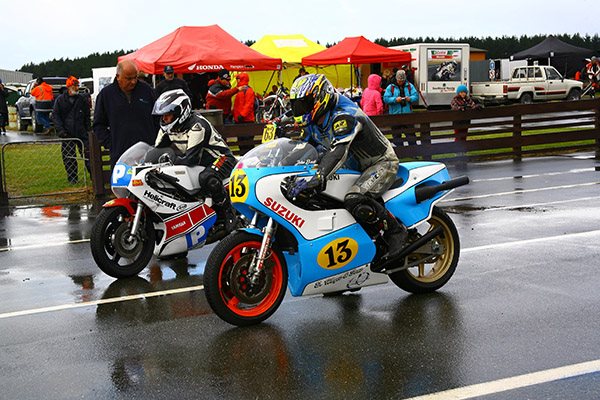
Burt Munro races run rain or shine. This close to the Antarctic there’re no do-overs. Spectators for the pavement stuff are sparse but entrants are plenty. Classes include several divisions each of modern motorcycles, Japanese vintage, vintage and supermotard. Heat races of each plus the finals makes for a full day of exposure. I’ve never felt so outside. Between downpours the sun shines and the wind blasts. Tire selection is critical: the track surface in a single lap can vary from damp to submerged.

They’re breaking for lunch. Two paved sections of road run through the infield, I’m guessing for different track configurations. Along one section food stalls are doing a brisk trade. A guy in a sleek, stainless steel trailer has bratwurst for $8. Bread is $2 extra. There’s a coffee chick selling $4.50 long blacks out of the back of a mini van. Further down, two old ladies and a husky young girl huddle under a canvas gazebo. Rain is blowing in on the paper towels, a bowl of chopped onions slowly fills with rainwater.

Extension cords run across the wet grass then under the tent. One cord has a splitter feeding three food-warming cases. “What are these?” I point to the severed arm of a baby set amidst a quantity of unidentifiable foodstuffs. Lady one; “Those are hot dogs, Love.” I open the glass door, remove the steaming object and hold the flakey crust up to the bored-looking girl. “What’s the stuff in the middle?” I ask. As she studies the object her lip curls in disgust then she asks, “What are these again, mum?” Mum says with a resigned sigh, “Lamb. You know they’re lamb, Love.” I should have known. In New Zealand even their salads are made from lamb.

We are racing again. Under a corrugated lean-to jutting out from a building marked “Office” I nurse the $2, toasted baby-arm. The rain has gotten stronger again. There’re so many races I’m losing track of which class is running and who is leading whom. One guy is out there wearing a translucent plastic rain poncho. Each time he passes my spot the poncho disintegrates by degrees. There he is again, a translucent bib fluttering around his neck.

Burt Munro puts on an entire racing season in a single day. Some of the guys seem like they’re parading, no sense in wrecking your bike on such a snotty day. When a brief sunny spell interrupts the rain, I run over and grab a couple bucks worth of baby-arm. They race until after 5:00 p.m., meaning I must supplement dinner before the next event.

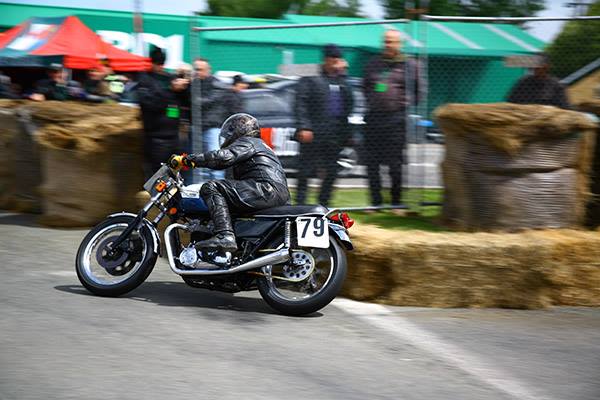
At Oreti Park speedway, the heat races start shortly after the Teretonga road races finishe. Oreti, a small dirt oval, contains The Burt’s best racing. Fast, handle-bar tangling and over quickly, the 4-lap heats are do-or-die. Sidecars, constructed with their wheels already leaned to the inside of the track, run clockwise: opposite the direction of the motorcycles but not simultaneously. By alternating the circulation pattern, management ensures spectators crowding the barriers will receive an even coat of sticky dirt. Nine hours of racing and I’m quitting. Battered by the wind and cold rain I reluctantly leave another racetrack with unfinished business. Burt would not be happy.

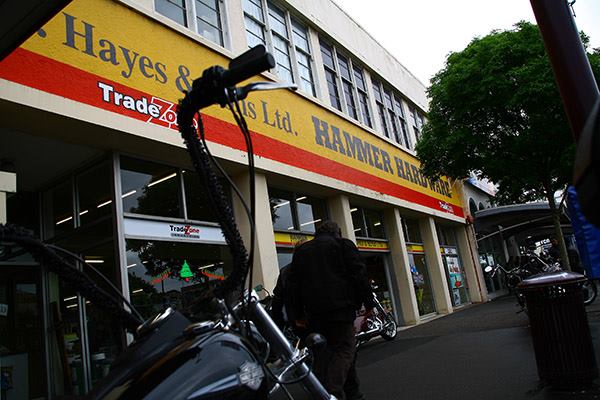
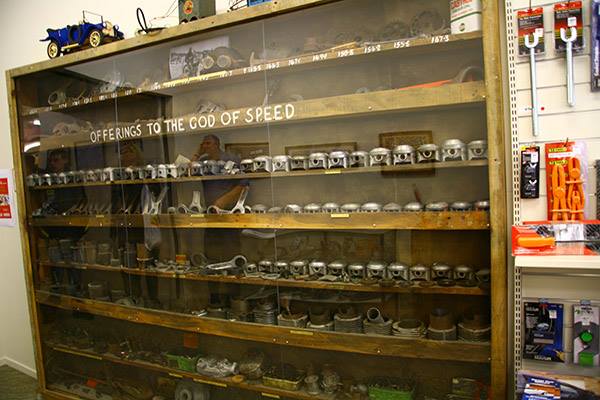
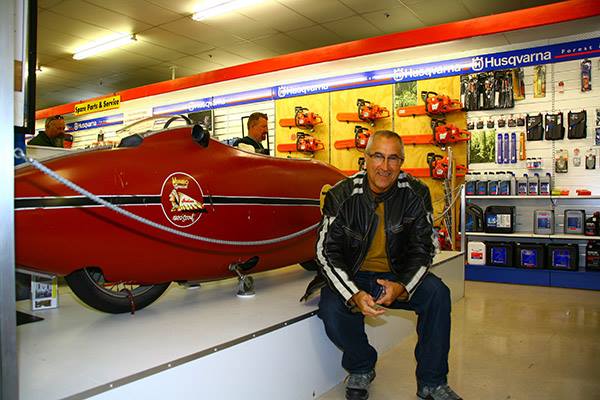
Motorcycles fill Dee Street in front of E.B. White’s hardware store. More motorcycles spill down the side streets. This is the final resting place of Burt’s offerings to the God of Speed. Over here is his record setting streamliner or maybe not: Burt’s liner was a work in progress, he messed with his Indian so much it’s hard to tell what is original. Add to that the existence of well-done movie-prop bikes, another original Munro Indian in The States, a one-lung-liner in a glass case that a local told me was The Real Bike, a bunch of fiberglass shells splashed from who knows what mold and the situation becomes a tad vague.

On a molecular level, everything is an original, even knock-offs churned out on an automated assembly line. This senseless quest for The Real Bike is a mug’s game and I’m not playing. All you need to know is that E.B. White’s is a fully functioning hardware store set within a classic motorcycle museum and you should go there once in your life.

It’s cold this morning but there’s no rain forecast. Motorcyclists straggle across the road from Challenge central. Ninety or so bikes have managed to make muster and at 9:30 a.m. we fire up for the Christmas toy run to Windham. Police block the intersections for us and within minutes we are in the rolling hills east of Invercargill.

Halfway to Windham, in the middle of nowhere, a VFR rolls to a stop. “What’s the problem?” The rider opens his gas cap and shakes the motorcycle back and forth, “I seem to be out of petrol.” Several other motorcyclists pull up to help. “Out of petrol? You can’t be serious, mate!” The jibes become more pointed. Luckily the sweep van stops and has a gallon of gas on board, sparing That Guy from any more abuse.

Windham is our final stop for The Challenge. The main streets of Windham are barricaded forming an intimate course. Another full slate of racing covering many, many classes is on tap. By golly, you get your money’s worth when you register for this rally. I try explaining to my wife how a 2013 motard differs from a 1937 Velocette, hence the many divisions but she sees only motorcycles.
The three-day, Burt Munro rally ends with a sigh. Some moto-pilgrims left before the Windham races, the others are dispersing by ones and twos throughout today’s final track sessions. Stealing a jump on real life, I guess. It’s been a great event, a real gathering of motorcyclists and one worth traveling halfway around the world to attend. The road east looks good and today’s fair weather is holding. We join the melancholy exodus. Out of town, we turn onto the quiet, post-rally highway and twist the throttle to the stop, traveling considerably slower than Mr. Munro.
Just when you thought it was safe to go back in the water…

No sooner had I written that blog a day or two ago about branding partnerships (in which I mentioned an earlier, expired linkup between Harley and Ford for a Harley-themed F-150 pickup), and a story popped up in Maxim magazine.  You can read the story here in Maxim magazine.   Harleys.  F-150s.   A marriage made in…where?  Milwaukee?  Dearborn?

Malls, Munro, Taj Mahals, and more…

An Indian in the cupboard? Not quite. Read on.

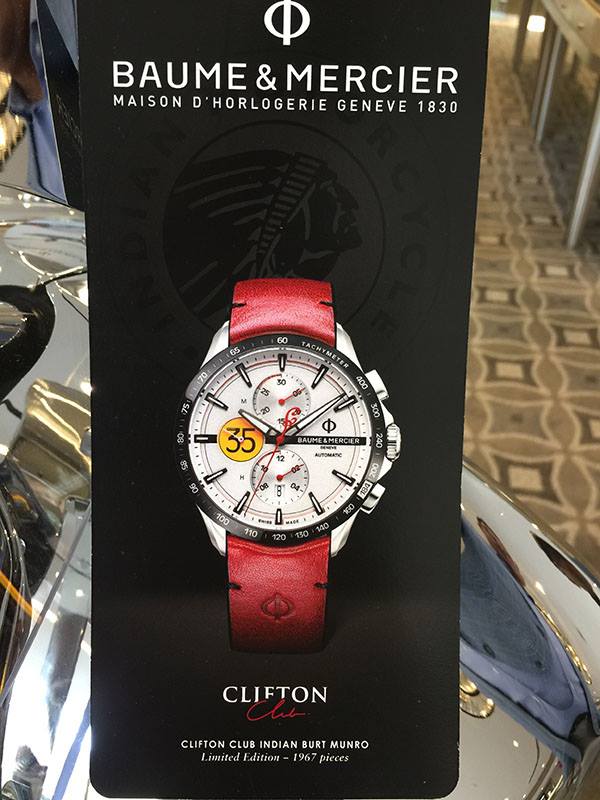
I guess I should start this piece by explaining I’m not even sure what the Clifton Club is. After spending several minutes on Google researching it, all I could find is that it’s either a wedding and Bar Mitzvah venue in Lakewood, Ohio, or a series of bling pieces from high-end watch maker Baume and Mercier. I’m going to go with Door No. 2 on this one. It’s the only explanation that makes sense in the context of what follows.

Let me back up a step. Yesterday I chauffeured the ladies to Fashion Island in Newport. It’s a very trendy shopping mall in a very trendy part of So Cal (think Neiman-Marcus, Nordstrom’s, French poodles, BMWs, and the like).  For me, a visit to any shopping mall is torture, but it keeps me in good graces with the rest of the clan and builds up goodwill points for the next collectible firearm purchase, so it all works out.

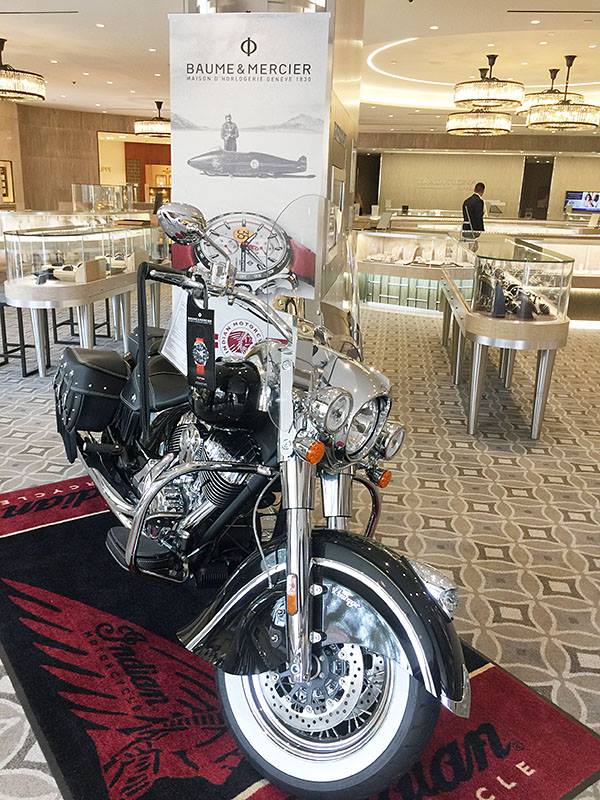
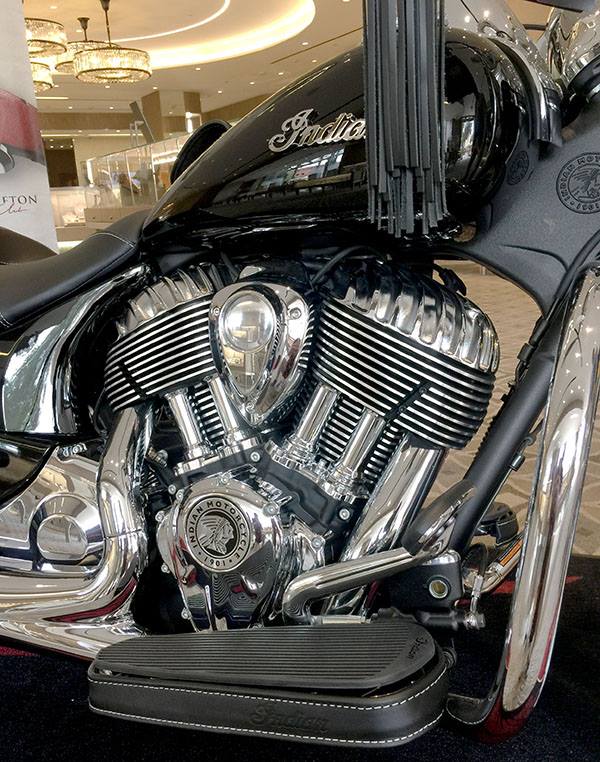
Anyway, while the girls were shopping I wandered into a high-end watch store (think Rolex and armed guards) and I noticed, of all things, a motorcycle. A new Indian, to be precise, in the middle of the store. I’ve never ridden an Indian (new or vintage), but I always thought they were beautiful motorcycles (again, both new and vintage).  I’m not a big cruiser guy, but if I was, I think I would buy an Indian. They are good-looking motorcycles, and my buddies Joe Gresh and Duane both hold them in high regard (and that’s a powerful endorsement).

While I was admiring the Indian, a sales guy approached me (my new good buddy Eduardo…Eduardo, I think, is a particularly elegant name).  Eduardo saw my confusion (a motorcycle in a jewelry store?), and he explained that Indian had a marketing partnership with Baume and Mercier, a high-end Swiss watchmaker.  It all centered on Burt Munro and his record-breaking land speed record activities.  Indian.  Baume and Mercier.  Burt Munro.   Ah, it all came together.

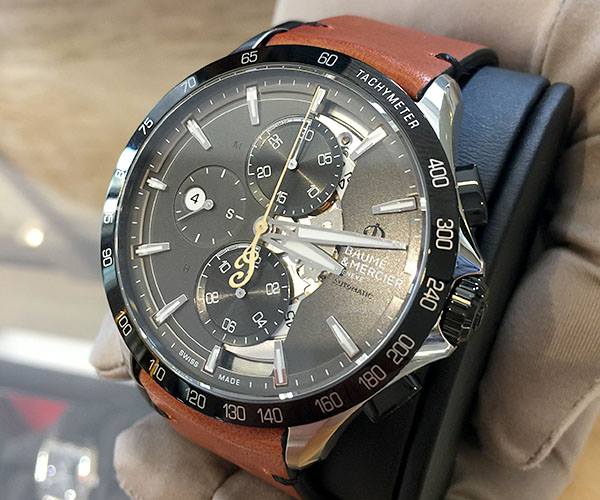
The Baume and Mercier Indian watch. $3900, and it could be yours. Motorcycle not included. It is a beautiful timepiece.  It’s part of their Clifton Club collection, and if you wear it, you could be a member, too.
Indian got it right.  It’s an OHV engine, but the valve covers are designed to emulate the flathead design of the original Indians.  It’s masterful, I think.
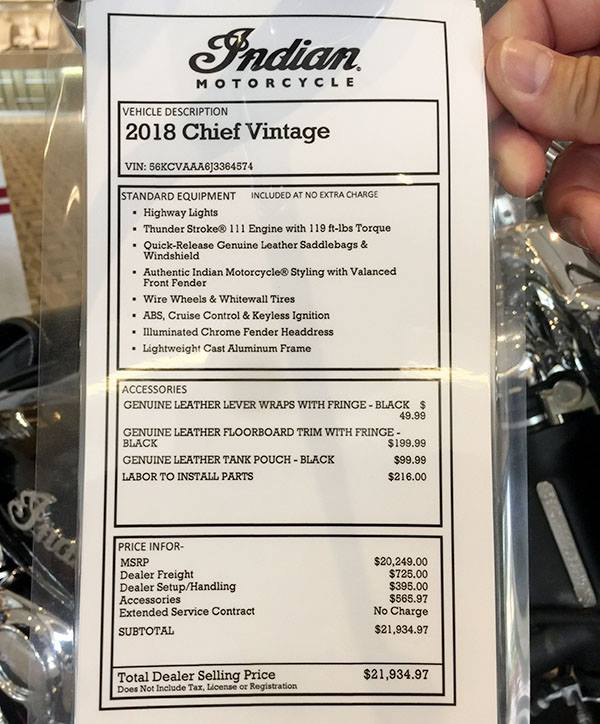
There’s a lot of room in those freight and setup fees.  Don’t ever pay what any dealer asks for in these two categories. Read 5000 Miles at 8000 RPM, available on Amazon.com, and you’ll see what I’m talking about.

Do these marketing partnerships work? I suppose they do. More than 20 years ago, Ford teamed with Harley to offer a special limited edition F-150 pickup with Harley decals.  As near as I could tell, the decals were the only thing special about that truck, and the only thing limiting the edition was how many they could sell. I had a lot of fun teasing a friend of mine who owned both a Harley Bad Boy (yep, they actually had a model with that name) and the limited edition truck. I drove a ginormous Tahoe and I rode a Suzuki TL1000 in those days.  I told my friend I was going to put Suzuki decals on the Chevy and call it a TL-Ho. Good times.

Anyway, the Baume and Mercier watch I saw yesterday was cool (at $3900, it should be), and the Indian was beautiful. I hope the deal works out for Baume and Mercier, and for Indian. I pondered the Harley and Ford partnership mentioned above; I’m guessing nothing came of that, as the two companies seemed to have parted ways.  Then I remembered that Bentley, the luxury British carmaker, has a partnership with Breitling (Breitling is another expensive Swiss watchmaker).

I wondered…what’s in it for the companies that strike up such partnerships, and what’s in it for their customers? I don’t think there’s any kind of pricing advantage or free gear package, so what would be the attraction?  Is it simply living a branded lifestyle (you know, for insecure rich folks who need something more in their lives)?   Or is it somehow making a statement about one’s wealth?   Look at me!  I drive a Bentley and wear a Breitling!

That got me to thinking…would a marketing partnership work for other brands, and in particular, would such a partnership work for less expensive motorcycles and watches?   You know, look at me!  I ride an RX3 and I wear a Timex!

What if you could sell a new motorcycle and give away a free watch with it? I’m thinking of China bikes, India bikes (not Indian Moto, but bikes actually made in India), and maybe Thai bikes.  It might work if you included a free watch with each new motorcycle, and it would cost essentially nothing. I visited the Canton Fair in Guangzhou last year and I’m on their email list now, so I get all kinds of offers from Chinese manufacturers.  You can buy new Chinese watches for $0.62 each (and if you’re thinking they are low quality, you need to think again and maybe research where what you’re currently wearing is actually manufactured).

The branding and theming opportunities might be fun.  KLRs are made in Thailand…suppose you got a free milk-crate-themed watch to match your KLR’s topcase?  The KTM 390 is made in India; perhaps you could include a Taj Mahal themed watch with each new 390 (isn’t that what the “TM” in KTM stands for, anyway?).  Think of all the marques with models, engines, or major components manufactured in Thailand, India, and China…Hawk, SWM, CSC, Royal Enfield, BMW, Harley-Davidson, Triumph, Honda, and more.  You can see the possibilities.

Yeah, this could work.

Tales from the Trail

Or maybe the title of this one should be:  Go West, Young Man!  That’s what Ernie did, and that’s what I did, too.

My good buddy Ernie and I go back.  Way back. As in kindergarten back.   Hell, that was 62 years ago.  That’s how long I’ve known Ernie.  Elementary school, junior high school, high school, and beyond.  Whoooeee!

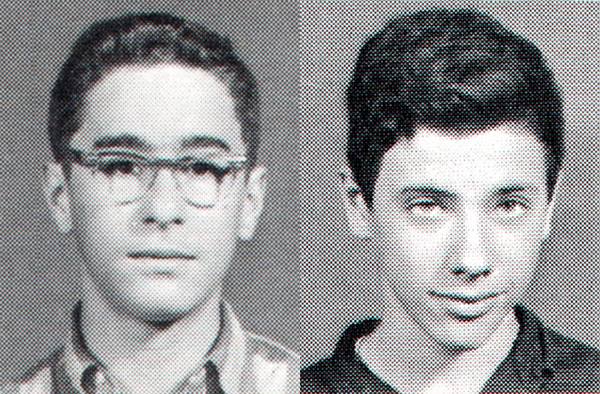
Ernie and yours truly in elementary school.

Anyway, we’re coming up on our 50th year high school reunion back in the Garden State, and Ernie has been posting stories (along with a few other folks) about what’s gone on his life over the last five decades.  Ernie’s stuff is good, and it sure hit home for me.  I asked Ernie if I could run one of his stories here on the blog, and he agreed.  You’ll like this…I know I sure did.

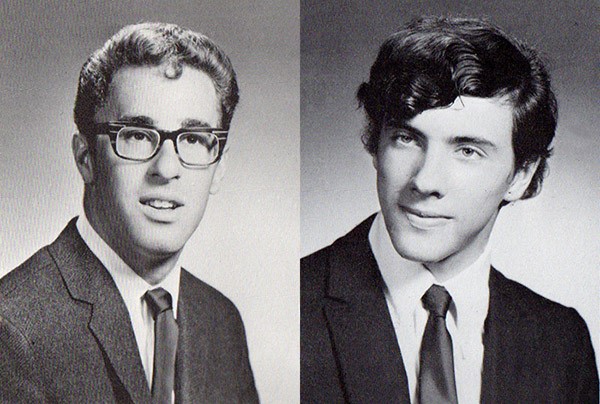
Fast forward 5 years, and it was 1969, and that meant high school graduation. Two boys from the Garden State. We both had a lot of hair back then. Ernie still does.

And those photos above?   They are, as you probably guessed, from our school yearbooks.  Yep, I still have them.

Ernie, over to you, my friend…

*************************************

Thanks, everybody, and especially you, Joe. I enjoy your tales on the trail. I have a few tales that you might enjoy, too.

In 1979 when our daughter Stephanie was born, we made one of our good friends Jim her Godfather. Jim was really cool. He and his brother were on a road trip with Jim’s wife Bonnie, and I was lucky enough to have met them and made friends with them, when I decided to get out of NJ and try my hand at the West.

I had been to Salt lake City about a half year before with two of my buddies. We had a few weeks where the 35-man shop was a bit slow due to the economy, so the three of us did a scouting expedition points West. We left in late October, and as luck would have it, we hit a bad snow storm in Pennsylvania.

After we made it through that, we pushed on across Ohio, Indiana and into Illinois. It was around midnight and as it has happened before to me since then, I-80 had construction and we made a wrong turn and were headed straight into the windy city. It was hell getting back on track and on 80 west again. We wasted a good hour. The highway around the area is a lot like the famed city. It blows, too.

Well, on we went. it was dark out when we were in western Nebraska and entering Wyoming. We stopped in a bar and my friend Paul, all he could talk about was Coors beer all the way from NJ, so we needed this break and to our delight guess what they had on tap. Well, it was pitcher time. All we heard was Paul’s mouth flapping happy about that ice-cold Coors.

When we got back on the road, and into Wyoming as luck would have it, a herd of mule deer were about to run out in front of us, but our headlights persuaded them not to. A while later we saw our first Western state’s snow. We stopped at a rest area and spent a good half hour throwing snowballs at one another. Finally, we rolled into Utah, and the sign said Port of Entry. The hell with the port, we wanted more Coors. Then we experienced our first big downhill run. Parley’s Canyon. 14 miles downhill at a 6% grade, winding through the Rockies.

We saw our first major “run-away truck lane.” If I was a semi, I would want to run away too. Then we saw a big opening and soon…ta dah…the Salt Lake Valley loomed in front of us. We intersected with I-15 and off to our left we spotted Dryer’s Harley Davidson. We decided that was going to be our first stop. Good thing too, because right next to it was a tavern. Well I can go on and on about this trip because we had some great experiences throughout Utah, which we circled, and some cool adventures on the way home with 25 cases of Coors beer. And we got stuck in a snowbank in Kansas, and a state trooper helped get us out. And, as luck again would have it, the exit we took led us to the hotel that they used in that movie Paper Moon. We stayed there. Yahoo!

So that scouting trip was the deciding factor that Chris and I were going to move to Salt Lake City. Months later my Dad and I took off in my Dodge van and drove across country to Salt Lake. I got the biggest kick out of my Dad, all the way across he was wide awake and thrilled at all the sights he saw. He stayed with me a few days till I found a good place to camp to look for an apartment. It was sad. It was the first and only time I saw my Dad tear up.

I camped out at the KOA on I-80. That’s where I met Jim, Bonnie, and Tom. They were on a bike road trip, and the cool thing about it was both Jim and Tom worked at the Harley-Davidson factory in Milwaukee. They both worked in engines and transmissions. Later Jim became a factory test rider. His job each night was to log in 250 miles on the test bikes (what a job, what a job!). They even sent him to Harley’s test track in Texas to race their bikes. We were at the big car show back in February and Harley had a big van there with all their new models. I entered a contest and got to talking to one of their staff. It turned out he knew Jim and Tom well. Jim still works there.

I went back to NJ to pick up my 1974 74 cubic inch dresser from my parents’ house. On the way out of NJ, I was pulled over by a state trooper who noticed my bike in the back of my van. I had shoulder length hair then and a beard and all, and I looked the part, I guess. Well ha, ha, ha. I whipped out my registration and bill of sale and foiled that trooper’s ideas.

I did lots and lots of riding while living in Utah with and without Chris. So, back to the main objective of the story, Joe. When our daughter was born we invited Jim and Bonnie to Stephanie’s christening. A few days later (this is now in Gresham, Oregon) I wanted to escort Jim and Bonnie out of town. It ended up I drove all the way to the California border with them, via the mountain pass at Eugene to Highway 101. Here is the part you may find fascinating, Joe. The Harley I had at the time was a stock 1965 Electra Glide. The problem was the front brake was out all the way down. The real issue was, the rear brake went out just when I started home from leaving Jim and Bonnie. I drove that bike up 101, through the hairy mountain pass and around that damn grooved circle they used to have in Eugene (you know how it makes your front tire wobble, Joe), then the 120 miles up I-5 in heavy traffic on the I-205 (which at the time was not completed) and on back roads to Gresham. It was challenging as hell, but a real thrill ride.

The other story is one of my best friends named John, who was a factory-sponsored, award-winning motorcycle racer for Harley-Davidson. He once rode a Harley from Seattle all the way to Portland on old highway 99 with tons of stop lights and through many small towns without a clutch, and never stopped or stalled the bike. He also hill climbed the widow maker between Salt Lake and Provo canyons, and get this, he took his Harley up to the top of Beacon Rock on Highway 14 (you know where it is, Joe), and he almost made it to the very top of Mt. Hood. The sun melted the snow and prevented him from making the last few yards.

Joe, this man was a legend. He built my 1947 Knucklehead from a basket case. The man knew every nut and bolt on just about anything that rolled sailed or flew. I was privileged to have known him.

******************************

Good stuff, Ernie, and thanks for allowing me to share it with our friends over here on the ExhaustNotes blog.  We’re looking forward to seeing you next summer, Dude…we have a lot of catching up to do!

And for our great blog followers, you may be wondering how well the last 50 years have treated us.

Well, wonder no more, my friends…

Life is good.  With lifelong friends like Ernie, it’s even better!

Never miss an ExhaustNotes blog…subscribe here for free!

Dream Bike: Harley XR1000

I liked that Dream Bike piece Gresh did over the weekend about his fantasy bike, the Kawasaki 350cc Avenger.  I like the concept: Articles on the ones that got away.

And as is always the case, if Gresh wrote it, I like it.

Can I say that on this blog?  You know, Gresh and I do most of the writing, so am I allowed to say that about his stuff?  Hey, I don’t care.

I’m guessing if you’re reading this, you have a dream bike.   You know, one you didn’t buy but wish you had.   We’d like to hear about it.   Do a short piece on it with a photo or two and we’ll publish it here.

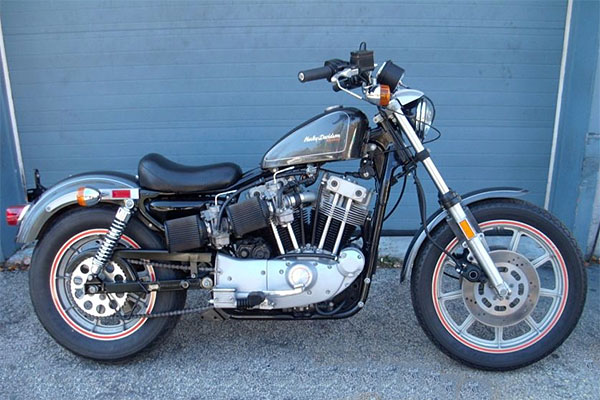
In the meantime, and because I like “the one that got away” concept so much, I’m going to do a short bit on my dream bike. One of them, anyway. It’s the 1983 Harley XR1000. Yeah, I know, I’m a guy who made his bones writing about small bikes (the CSC RX3, in particular), and the XR1000 is anything but small. But I like it.

The 1983 Harley XR1000. Check out the massive Dellortos and the K&N air filters. All business. I like it.
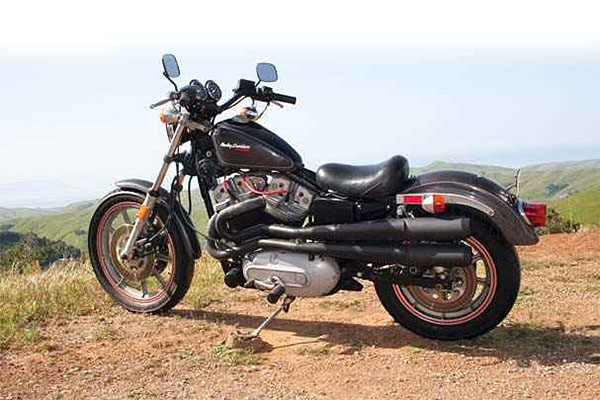
A view from the other side. I’m not a guy who normally leans left or listens to folks who do, but the XR1000’s asymmetry and leftist tendencies are oddly appealing.

The magazines of the era all panned the XR1000, and every once in a while one of them does a retrospective (and they still don’t like it). You know what? I don’t give a rat’s rear end about some magazine weenie’s opinion. I like the look, the concept, and the sound of the XR1000, and one of my few regrets in life is that I didn’t buy one new in ’83.

Not that I didn’t have good reason back then. I had bought a Harley Electra-Glide Classic, new, in 1979. It was the worst vehicle of any type I’d ever owned, and I swore I’d never buy another Harley. That was the principal thing that kept me from pulling the trigger on a new XR1000 in ’83 (I sold the Electra-Glide in ‘82, and the reliability reputation injuries it left hadn’t healed yet). But time heals all wounds (I wish I had that Electra-Glide now), and if I could find a clean XR1000 I’d be on it in a New York minute.

The magazines said the XR1000 vibrated (they actually paid folks to point that out on a Harley?), you could burn your left leg on the exhaust (duh), and the twin Dellortos hit your knee on the right side of the bike (seriously?). Not content with stating the obvious, one of the magazines actually wrote the bike had a predilection for turning left. A bike based on a flat tracker? A predilection for turning left? And folks wonder why the motorcycle magazine business fell on hard times.

Everything the magazines hated about the XR1000 made me want one more. It was a raw, muscular, asymmetric, no passenger, no compromises, in-your-face motorcycle. I still want one.


We spend a lot of time dreaming about motorcycles.   See our other Dream Bikes here!

An interesting NY Times video…

Here’s a video that popped up on my YouTube this morning…

I have mixed emotions on the topic…I’ve been to Sturgis a couple of times (once, on a Chinese motorcycle), I’ve been in Chinese factories, I’ve managed manufacturing facilities where I had to contend with labor costs, and I’ve owned a couple of Harley-Davidsons.   I guess if the answers were easy there wouldn’t be any discussion.

Wild Conjecture: The Harley-Davidson Livewire

I don’t want to hurt anyone’s feelings but us oldsters are through. Our time has passed. No one cares if we like electric motorcycles or have range anxiety or just don’t like the silence. They don’t care. Bemoan the new kids all you want but we are dead-generation walking and the future always bats last.
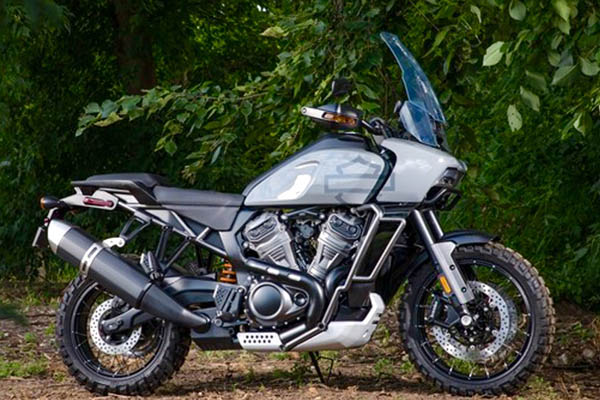
Harley-Davidson, having had their finger on the pulse of the American motorcyclist for more than 100 years, can feel that pulse weakening. They get that Easy Rider means a mobility chair to anyone under age 50. With the Livewire H-D is busting out of the leather-fringed, concho-ed cage they so carefully crafted for themselves and it’s about time.

Electric motorcycles just make more sense than electric cars: City-centric, short range, narrow and easy to park. E-bikes comfortably fit into the existing technology envelope as it stands today. While always appreciated there’s no need for advancements in battery technology. E-motorcycles work right now, man.

Generation X, Y, and Z are down with plugging in electronics equipment wherever they go. They grew up watching battery level indicators like we grew up watching fuel gauges. They don’t have the same history or values that we have and they’d be a pretty sorry generation if they couldn’t come up with their own idea of fun.

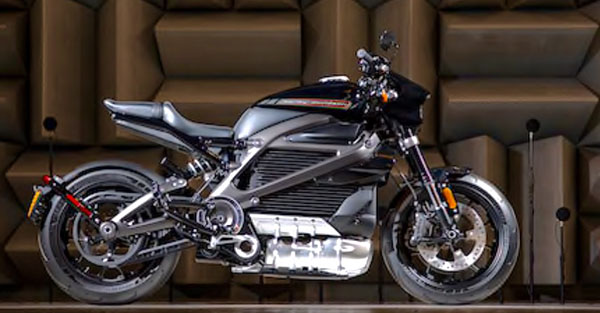
As usual on Wild Conjecture we have no factual information on the Livewire so the first thing I noticed is that the thing actually looks good. The heavily-finned battery compartment is kind of huge so maybe range will be decent (100-miles would do it for me).  Large diameter dual discs means this may be the hardest stopping H-D yet. More than likely the rear disc will be assisted by regenerative braking because it’s fairly easy to do and adds a few miles to the range.

The rear suspension resembles Yamaha’s Monoshock system from 40 years ago except with a much shorter shock absorber. The frame appears to be cast aluminum, a construction method that eliminates costly, complicated robot welding machines and messy human interaction. Forks appear standard and I don’t see any way for the front wheel to charge the battery under braking.

One of the problems I see with electric motorcycles is that they try to be like internal combustion motorcycles. They measure their range against gasoline mileage. They pit their performance against machines that have had 100 years of refinement. For the most part they stack up so-so. E-bikes should embrace a less costly approach; give up a few miles of range and a few miles per hour for a faster charge time. Maybe cheaper, quick-change batteries so commuters could keep one at home, one at the office and one in the motorcycle thereby eliminating the wait time for charging.

The Livewire is an even bigger leap of faith for H-D than their ADV bike (which breaks no new ground) and I’m not sure it will sell out of a traditional motorcycle dealership. Maybe sell them from kiosks at Red Bull events? The Livewire should appeal to a younger audience but it’ll have to be less expensive and carry less emotional baggage than Harley’s oil burners to do it.


You can read about our other Dream Bikes here.

Wild Conjecture: The Harley-Davidson Pan America


Much like when your old granny starts using Instagram or throws down internet slang terms like LOL, Harley-Davidson’s new, Pan America concept motorcycle is a sure sign that the out-sized ADV fad has played itself out. It can’t come a moment too soon for me because these giant dirt motorcycles are the worst idea to come down the pike since Thalidomide. I won’t list the moto-journos that have injured themselves on these bikes but it’s a who’s who of two-wheeled typists. Remember, these are the pros!

H-D has ignored the segment these last twenty years for good reason: It’s simply not their bag. Change comes slowly to The Motor Company. They’ve been very successful building and selling a cruiser lifestyle. People tattoo H-D logos onto their bodies! Who else but a Batdorf and Bronson coffee fanatic would do that?

Back on topic: The Pan America. Harley doesn’t keep me in the loop so I have nothing but a promotional photo to go by but the thing doesn’t look half bad. There’s just a hint of Royal Enfield Himalayan in the styling but that’s not a bad thing. The fairing is kind of goofy, a requirement for ADV bikes. It’s got a decent-looking skidpan and a nice flat seat that looks comfortable.

The engine looks like a restyled version of H-D’s 750cc liquid-cooled Street power plant but with displacement rumors swirling around 1200cc, maybe not. Maybe it’s a V-Rod engine. Anyway I can’t see Harley building a new engine just for the Pan America unless it’s the beta test of a wholly new Sportster power plant. There’s almost no way the thing will weigh less than 600 pounds, again, seemingly not a problem for the chuckleheads who plow these big bikes through the trails.

I haven’t heard of any major reliability issues on the 500cc-750cc Street models or the V-Rod so if it’s either engine the thing should be more reliable than the class-leading GS BMW’s. I’m hoping the thing is chain drive as toothed belts squeak like crazy in the dirt and shaft drives seem to snap in half with alarming frequency.

The rest of the cycle parts look really modern, Japanese even, and the Pan America shows that Harley can build a bike that rivals the Europeans and Asians anytime they feel like it.  They just haven’t felt like it.  Until now.


Check out our other Dream Bikes here!