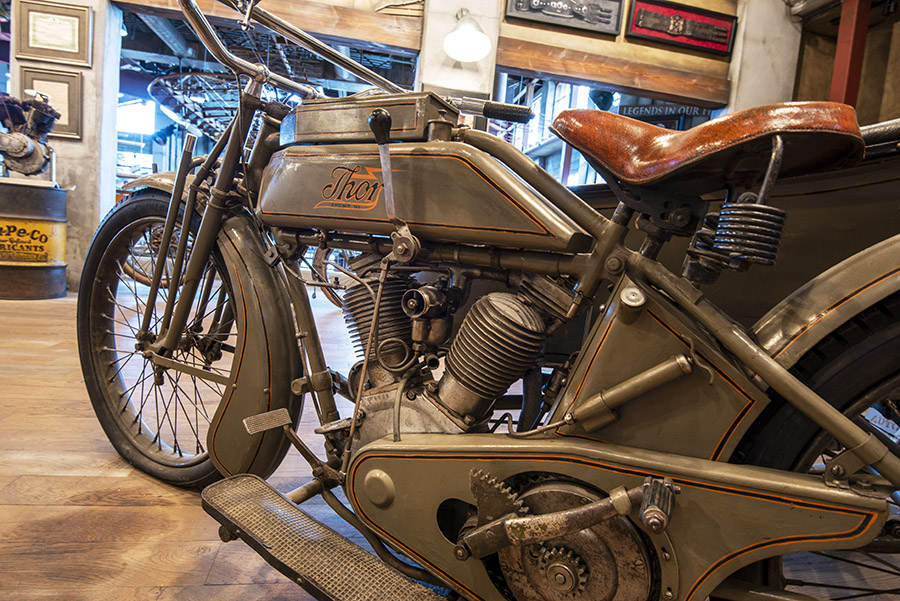
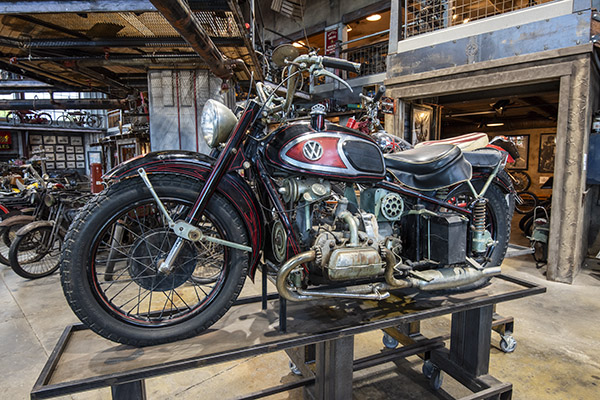
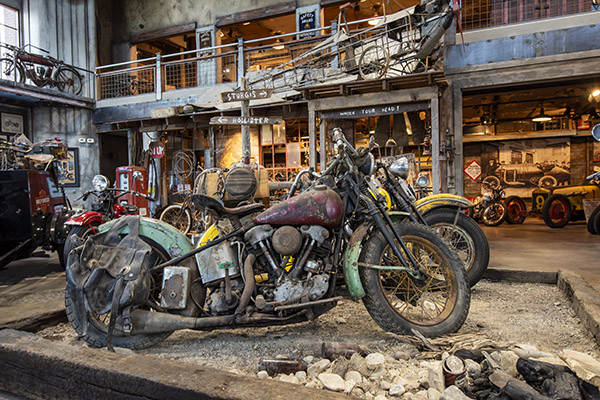
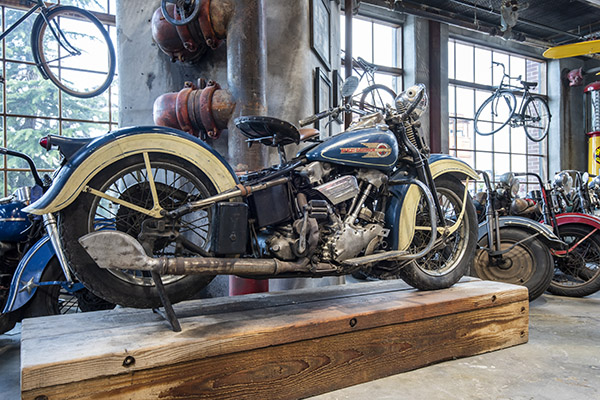
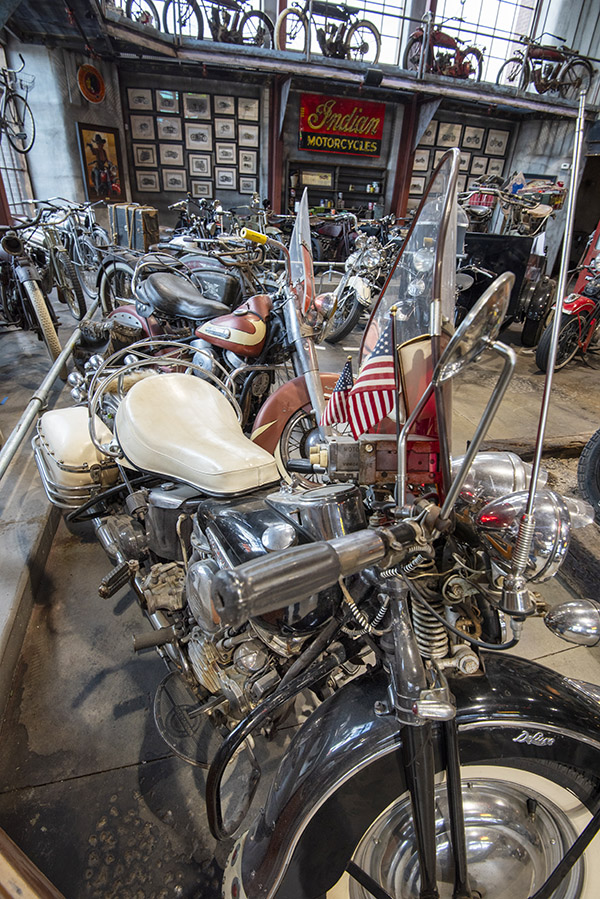
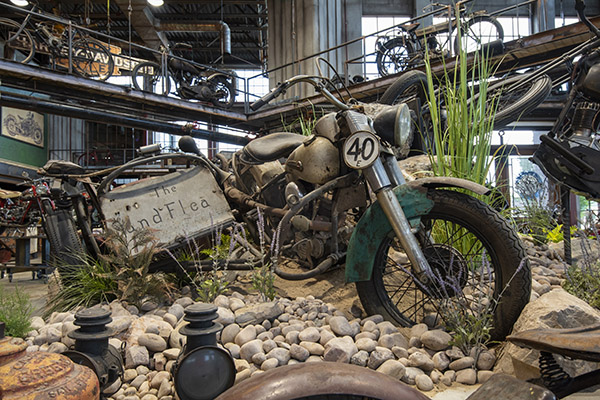
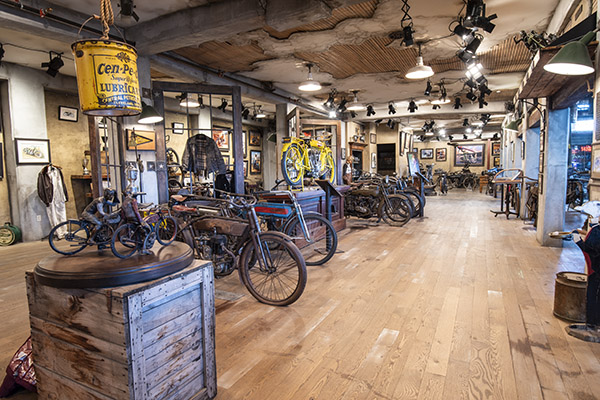
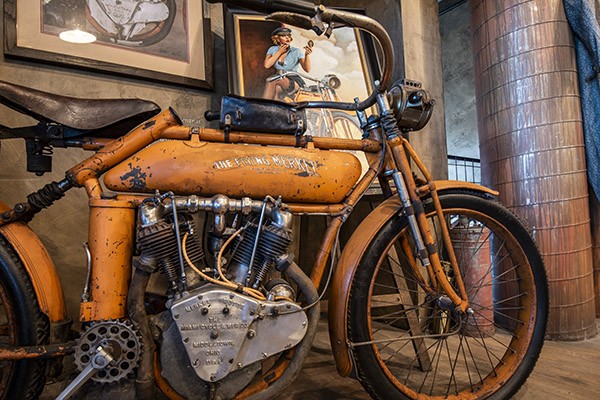
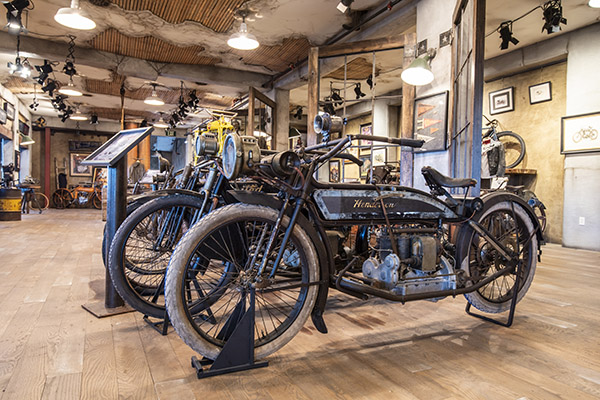
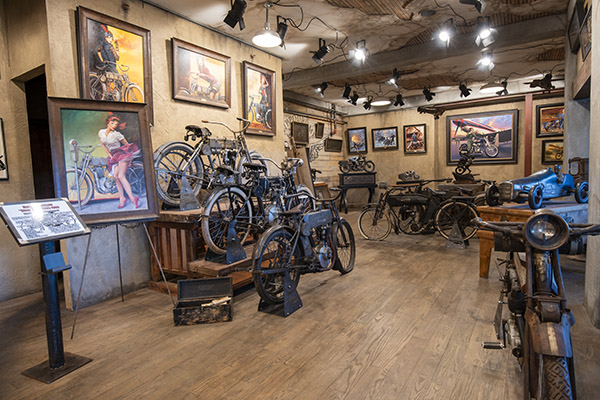
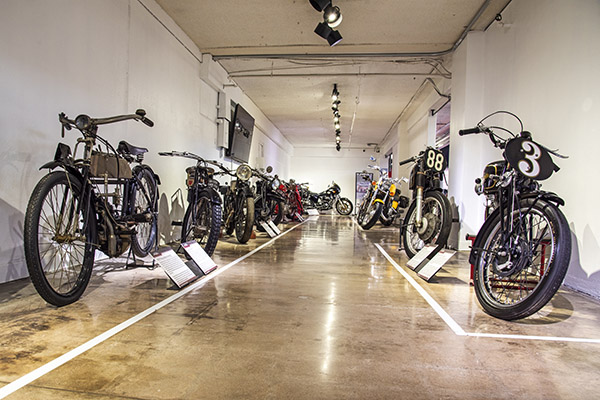
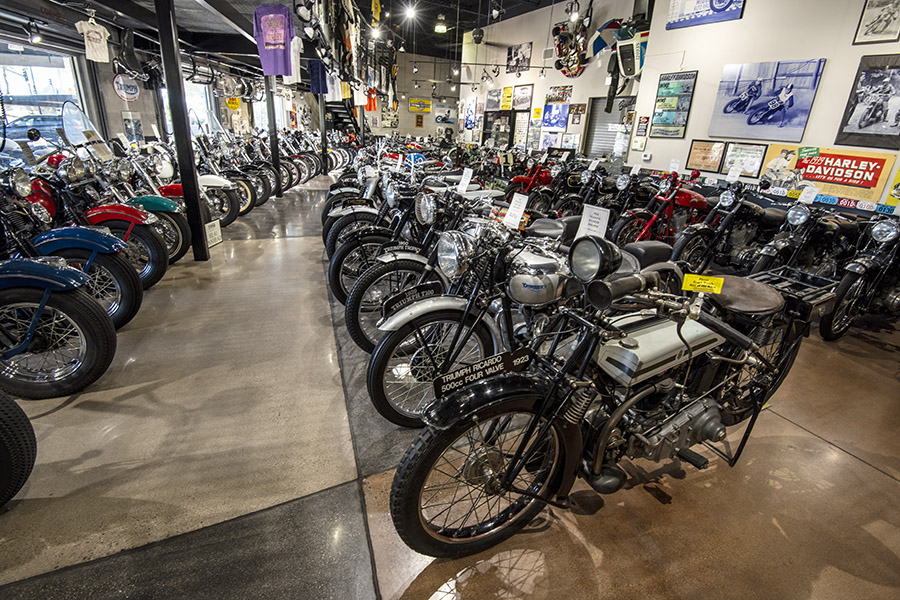
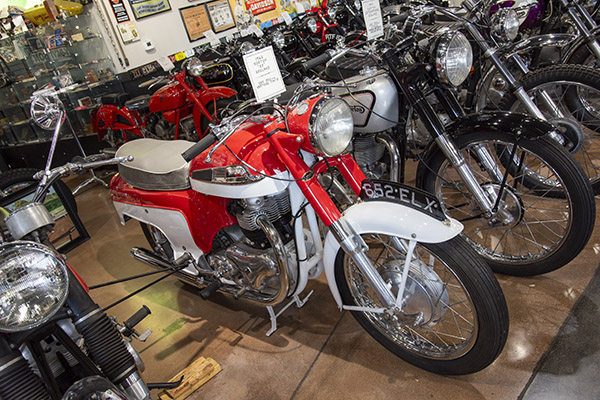
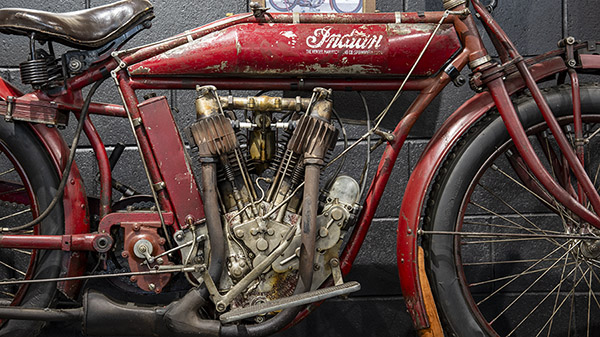
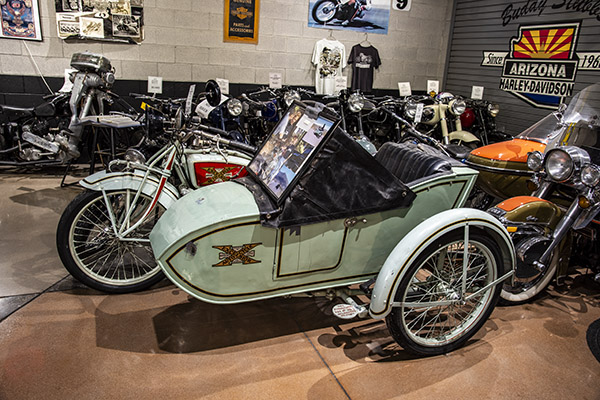
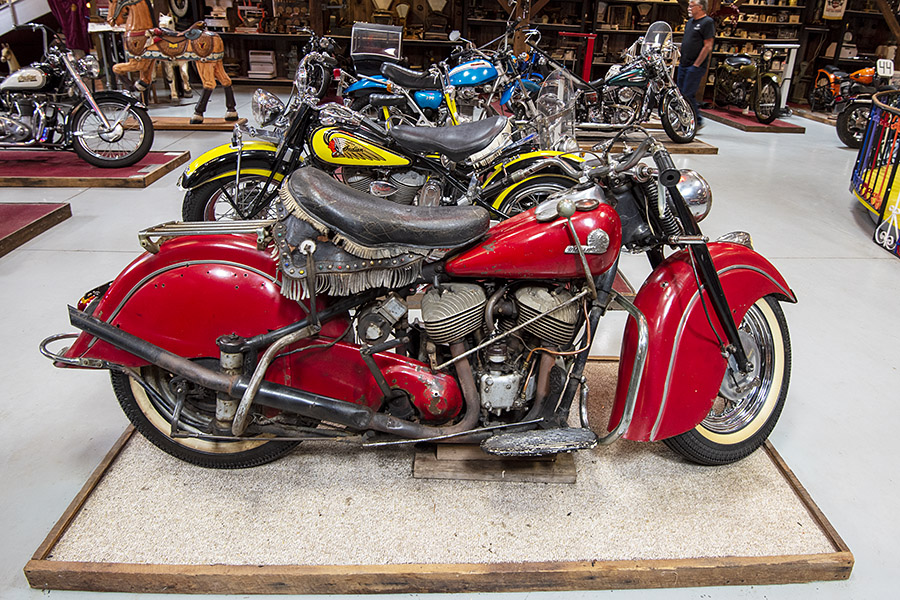
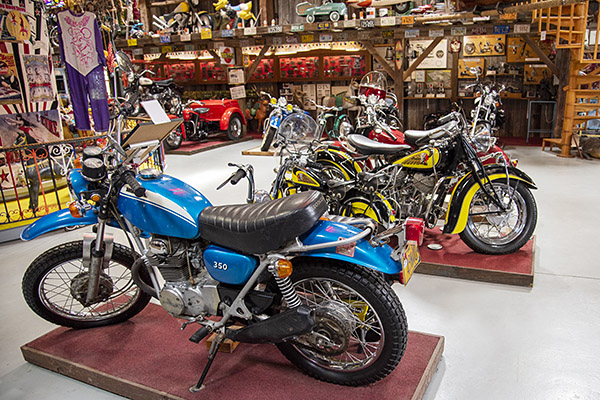
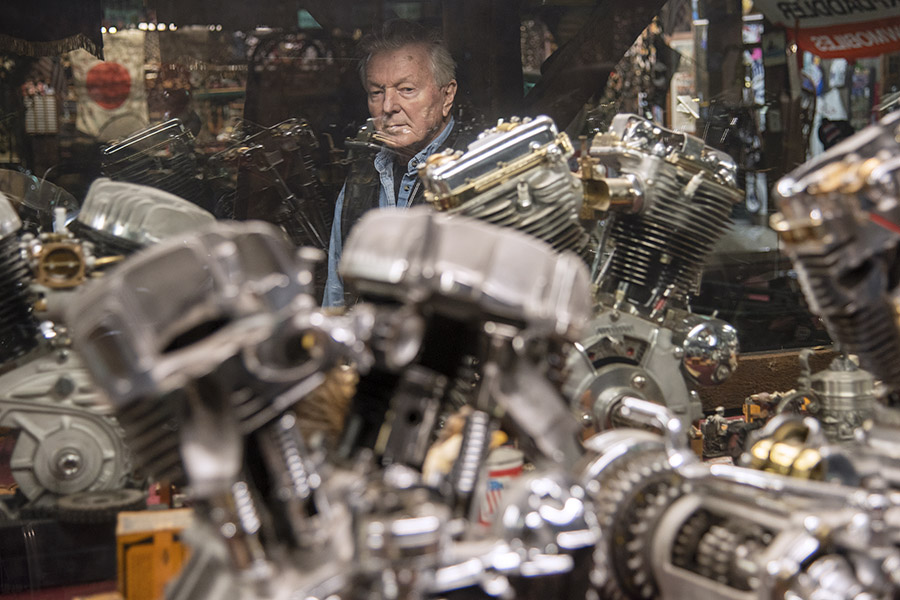
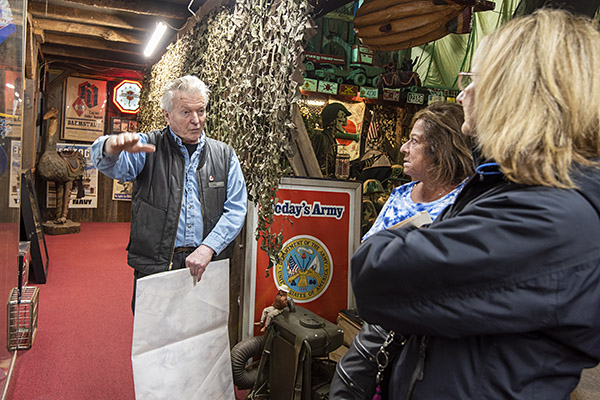
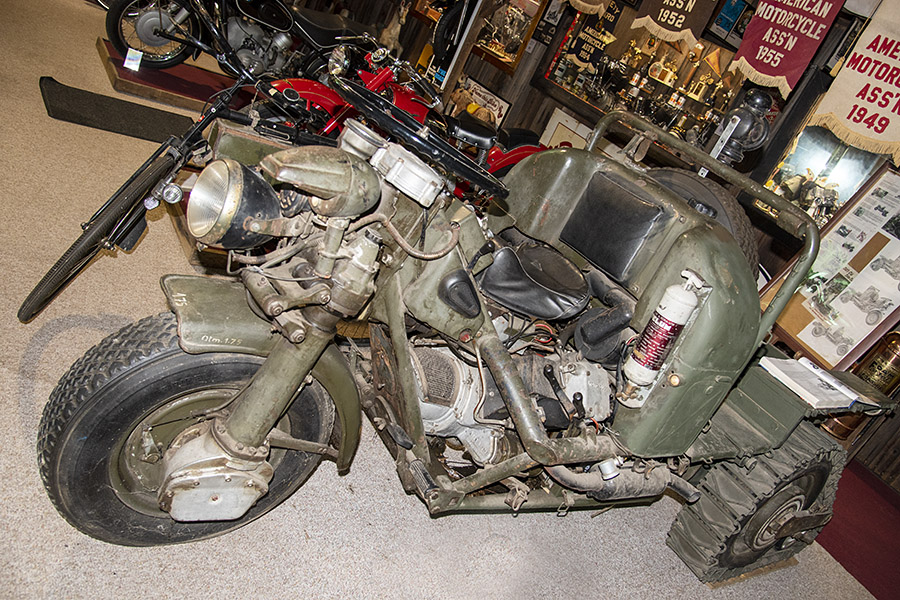
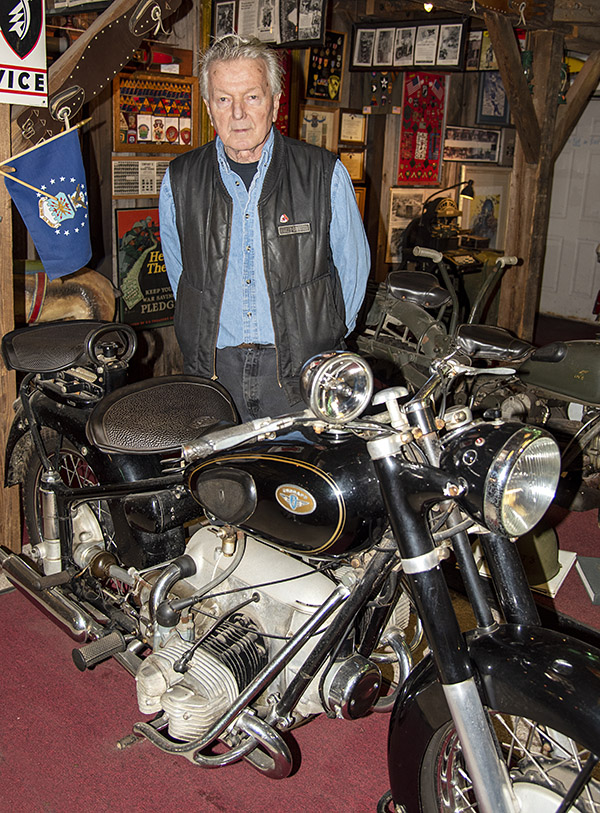
Legends Motorcycle Museum in Springville, Utah, is not just a museum; it is a compound, consisting of three retro-industrial-themed buildings and numerous motorcycle-related shops and eateries. And if that’s not enough good news, it’s located in one of the best riding locales on the planet: Magnificent Utah. Surprisingly, I had never heard of Legends. I only found it during a Google search after my good buddy Mark at Motorcycle Classics magazine asked me to focus on motorcycle museums.
I arranged to be at the Legends Museum early so that I could photograph the motorcycles without other guests getting in the way (both for the ExNotes blog and for Motorcycle Classics magazine). We entered through the Museum’s shop, which contains work bays and advanced CNC equipment where the place makes its own parts. The owner, Rick Salisbury, is also an automobile enthusiast; we saw a stunning restomod 1957 Cadillac convertible (with a crate Chevy LS2 engine) being assembled. A large and initially terrifying black pit bull welcomed us with a deep growl; when I froze, my new friend Winston approached cautiously, put his big paws on my shoulders (he stood taller than me), and gave me a friendly lick. I realized that coffee (served in the Museum’s adjacent Sidecar Café) would not be necessary. Thanks to Winston, I was now fully adrenalized and wide awake.
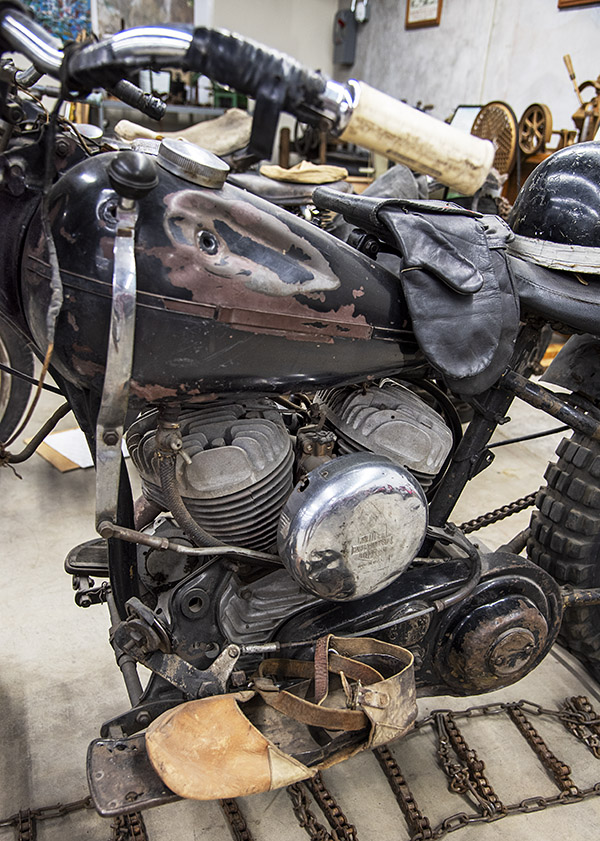
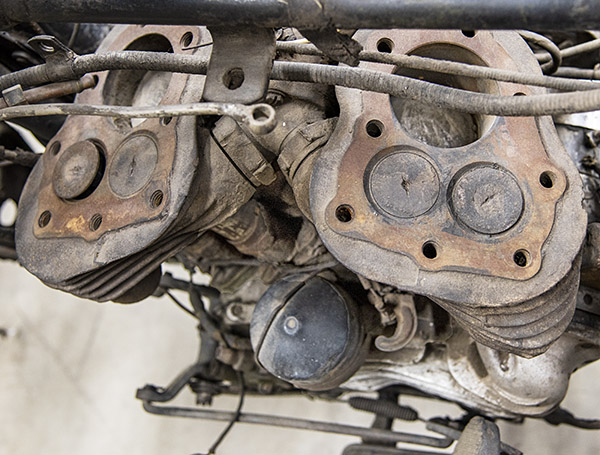
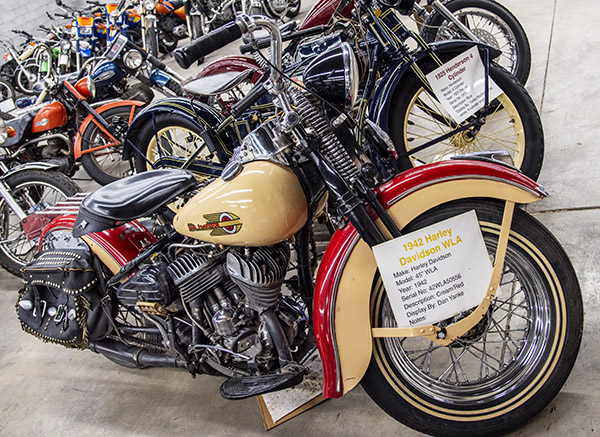
The view upon entering the Museum was visually arresting, starting with the famous Von Dutch VW-powered motorcycle (as seen in many print publications and in an episode of the American Pickers TV show). It stood proudly on a weathered steel pedestal. The Von Dutch motorcycle was surrounded by numerous Panheads, Knuckleheads, Indians, and other old motorcycles, machines that were built when guys like Roosevelt, Truman, Eisenhower, and Kennedy lived in the White House. None of the bikes were restored. I had entered barnfind Heaven. I’ve been in lots of museums that proudly display motorcycles that look better than the day they rolled off their assembly lines. Legends is different, and I’m here to tell you it is better.
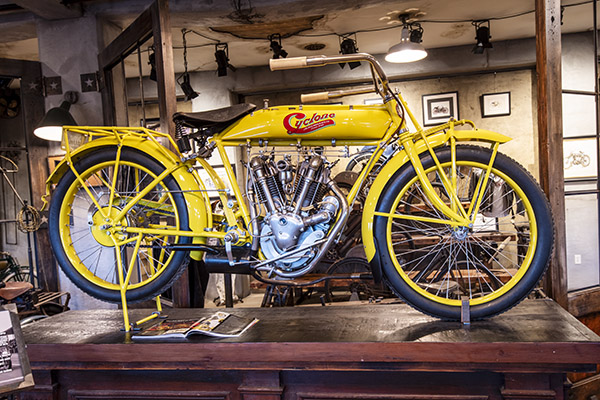
The Legends Museum second floor is comprised entirely of pre-1920 motorcycles. A Journs Cyclone, one of only 12 known to exist, dominates the display; the Museum’s owner paid a whopping (and record) $1.3 million for it at Mecum’s last year. There were many more exotic motorcycles. Thor. Henderson. Flying Merkel. I’ll let the photos do the talking here, folks.
One of the best things about the Legends Motorcycle Museum is its north central Utah location. Utah is one of our most beautiful states, and it figures prominently in our collection of previous Motorcycle Classics Destinations pieces (which include Zion National Park, Bryce Canyon National Park, Cedar Breaks National Park, Utah Highways 12 and 24, Arches Canyon National Park, Golden Spike National Historic Park, and Flaming Gorge National Park). If you’re headed to Utah, Legends should be part of your itinerary. And if you’re not headed to Utah, you should start thinking about a visit. It’s spectacular.
Subscribe to ExNotes for free!
We need your support! Do what you can to help ExNotes stay in the black!
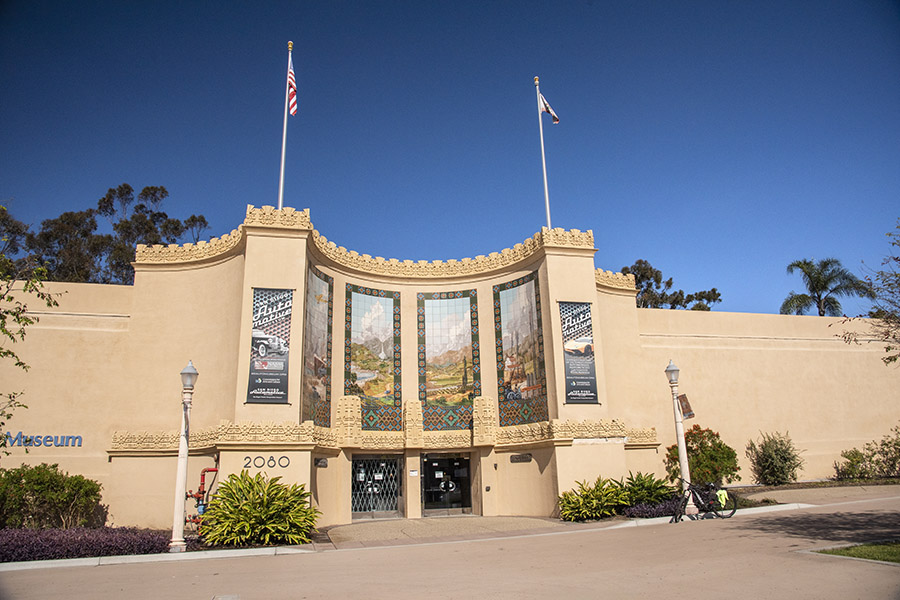
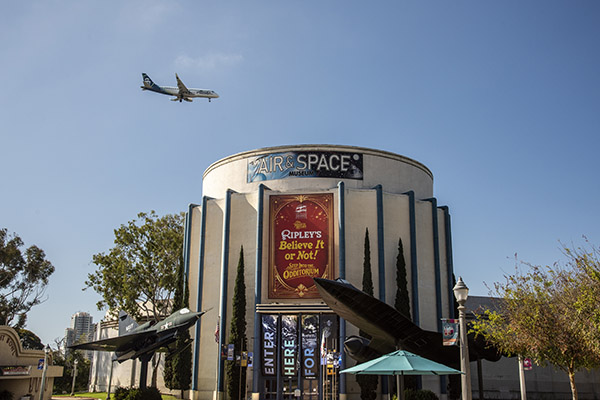
The building you see above is the San Diego Automotive Museum. Take a good look at it…the sculpted trim, the mosaic panels, and its architectural splendor. We’ll touch on those topics again at the end of this post.
Our travels this year have focused mainly on motorcycle museums. Why, then, you might ask, an automotive museum? The name (i.e., an automotive museum) suggests four-wheeled transport. But the San Diego Automotive Museum popped up when I Googled motorcycle museums, and when subsequently searching the definition of “automotive,” I learned that the word can be used to describe anything related to or concerned with motor vehicles, including motorcycles. In the case of the San Diego Automotive Museum, it does indeed relate to motorcycles. In fact, much to my surprise there are as many motorcycles in the San Diego Automotive Museum as there are cars.
The main motorcycle display area in the San Diego Automotive Museum. In addition to the dozen or so motorcycles in this hall, the Museum has other motorcycles displayed in other locations.
Some of the motorcycles in the display hall were ones I had never heard of, and as a guy who’s been fascinated with motorcycles since the early 1960s, that’s saying something. I’ve been doing some great things with Cycle Garden in Indio, California recently for Motorcycle Classics magazine, and I’ve always been interested in the V-twins from Mandello del Lario, so any day I see anything associated with that marque is a good day. Ever hear of the Dondolino? Yeah, me neither. It almost sounds like an Italian restaurant’s signature dish.
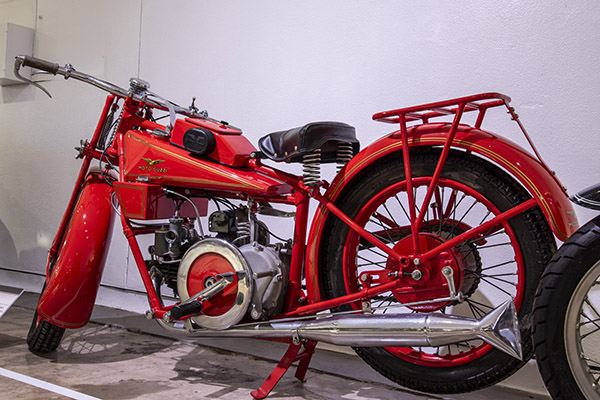
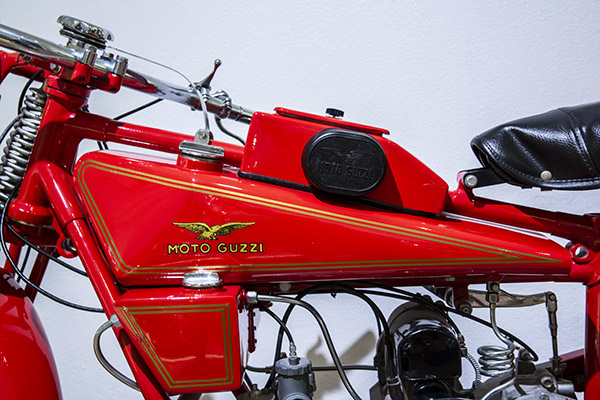
The Moto Guzzi Dondolino, and to be specific, this is a 1951 model. It means a small swing, as one would have for a child. The Dondolino…I like that. Check out the bologna slicer flywheel.Another shot of the Dondolino, this time a close of the fuel tank.
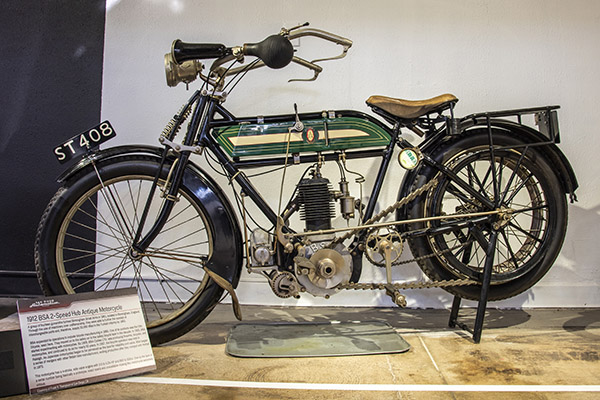
Another one that was fascinating for several reasons, not the least of which was its paint treatment, was a 1912 BSA single. Surprisingly, the Museum operations manager told me flash photography was okay (in most museums it is not). It was hard getting decent photos in the display hall, even though I shoot raw photos (not jpegs), as the raw photo format preserves all photo data (jpegs compress the data). The display hall was lit with tungsten lighting, which always make getting good color balance difficult. Even though the the raw photos allow for color temperature adjustments in Photoshop, it was tough getting these right.
The 1912 BSA single. Check out the bulb horn.
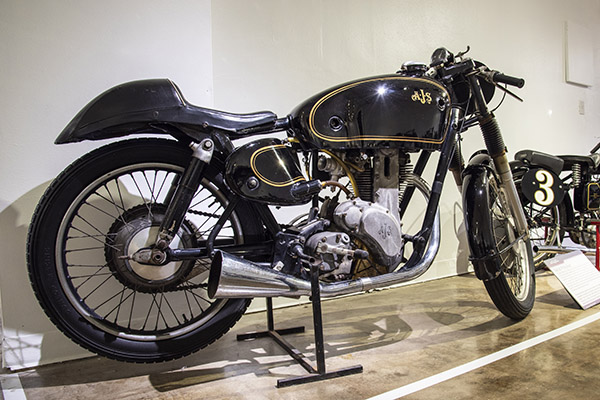
The Museum has a beautiful AJS motorcycle on display. Some of you older folks and more serious students of the motorcycle may know of the original A.J. Stevens and Company of Great Britain, which manufactured motorcycles from 1909 to 1931. AJS sold to Norton, and ultimately became part of Norton Villiers in 1966. That company went belly up a few years ago. Several organizations picked up the Norton name and tried to make a go of it; to my kn0wledge, none succeeded (although I haven’t checked in the last month or so, so maybe yet another Norton-named manufacturer snuck in). The AJS name has been revived as a small bike manufacturer, or rather, a name attached to 125cc motorcycles made in China by Jianshe.
A 1948 AJS 7R “Boy Racer.” The colors are classic. Note the megaphone exhaust.
You know, AJS is indirectly (and partly) responsible for the CSC name. When founded in 2010, today’s CSC was initially known as the California Scooter Company. The California Scooter Company manufactured Mustang replicas (the Mustang was a small American motorcycle made in the 1950s). The name, California Scooter Company, caused us no end of grief because people would look at the little Mustangs and ask, “is it a motorcycle or a scooter?” We always explained how “scooter” was a slang term for a motorcycle. I wanted to tell people they were too stupid to ride if they didn’t know the difference (but in an unusual display of politeness I never did). Ultimately, we shortened “California Scooter Company” to “CSC” based on the industry’s history of three-letter acronyms for company names. You know: BMW, BSA, KTM, AJS, etc. Then the questions changed to “What does CSC stand for?” I couldn’t resist that one and my answer was immediate: Chop Suey Cycles.
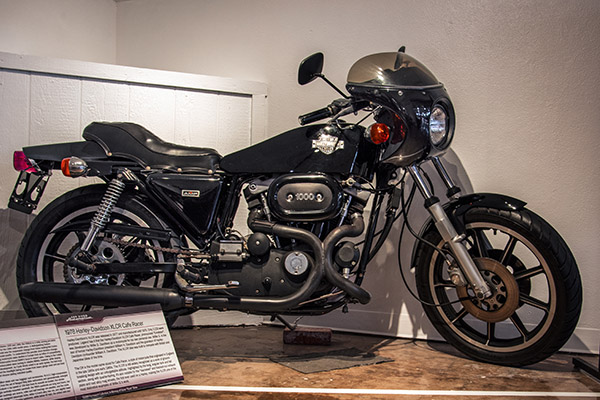
To get back to the main attraction (the San Diego Automotive Museum), both ends of the main motorcycle display hall are anchored by big American V-twins. One is a 1978 XLCR Harley Cafe Racer, which I think is one of the most beautiful motorcycles Harley ever made. The other end of the display hall has a garish chopper, one from a company appropriately named Big Dog. In an act of photographic mercy, I didn’t get a photo of it.
The Harley Cafe Racer. Always wanted one, never bought one. They were a shade over $3,000 in 1978 when new. I came close to buying one back then, but I didn’t pull the trigger.
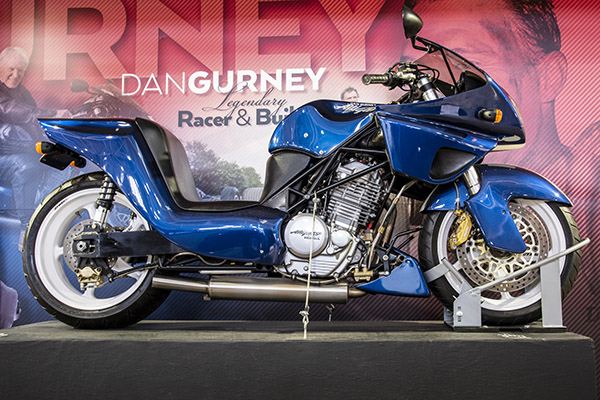
Moving outside the motorcycle exhibit hall and into the rest of the Museum, as mentioned earlier there are motorcycles displayed throughout the other displays. One of the first is a Dan Gurney Eagle. Dan Gurney was a famous automobile racer who formed a company that mounted Honda engines in a frame in a manner that positioned the rider low in the bike. The seating arrangement was said to improve handling. Maybe it does. To me, it just weird, and rider visibility has to be terrible. I think I would look weird (or weirder than usual) when stopped with my legs splayed out to the sides.
A Dan Gurney Eagle. Weird, huh? The concept never caught on.
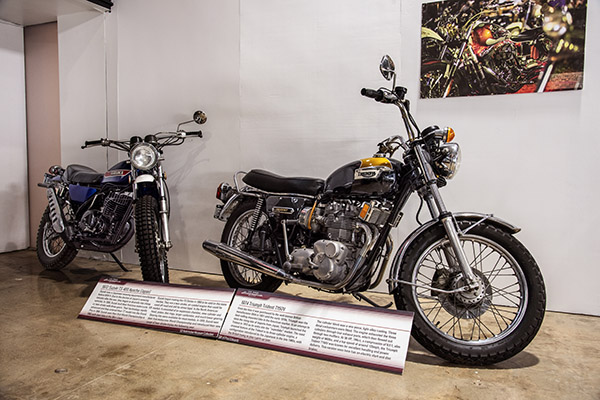
As soon as you enter the Museum, there’s a 1974 Triumph 750 T150V Triple on display (along with a two-stroke Suzuki 400cc dual sport). The Triumph Trident was supposed to be Triumph’s answer to the Honda 750 Four, but it was too little, too late. The Honda was far ahead of its competition. Triumph ultimately went out of business a few years later.
A 1972 Suzuki Apache and the Triumph Trident 750.
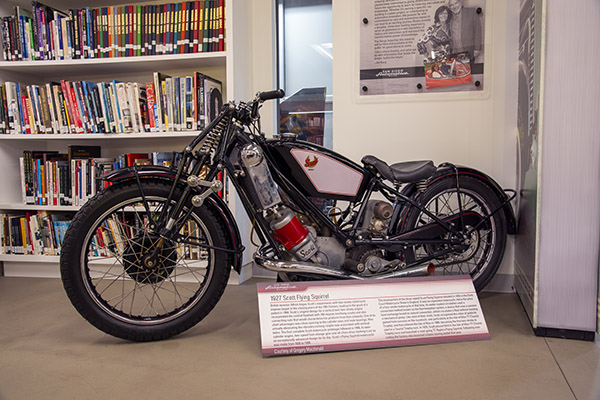
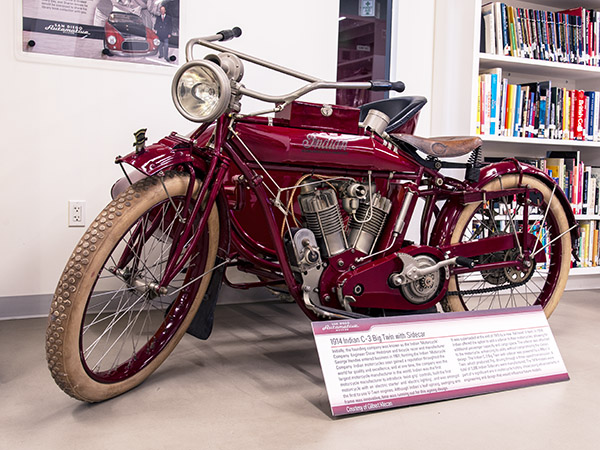
The San Diego Automotive Museum has a library, and our host explained to us that they are often visited by elementary school classes. Students use the library for homework assignments related to automotive topics. There are a couple of interesting motorcycles in the library. One is a Scott two-stroke (another motorcycle I had never seen before); the other is a 1914 Indian V-twin with a sidecar.
A 1927 Scott Flying Squirrel.A 1914 Indian C-3 with Sidecar.
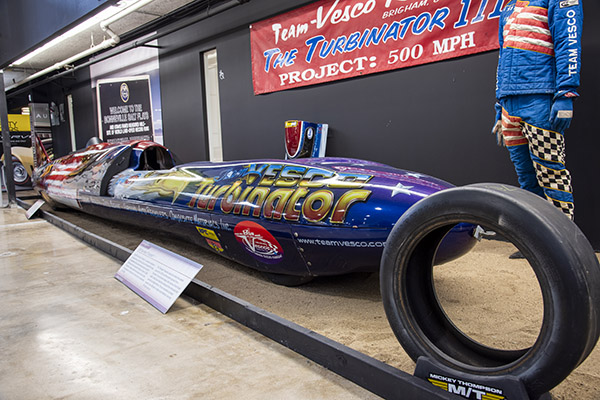
In the Museum’s main display area, there’s a land speed record streamliner that at first I thought was a motorcycle. You know, kind of like the land speed record Triumph that hit 247 mph back in the 1960s (Triumph included a “world’s fastest motorcycle” decal on every bike). But this vehicle wasn’t a motorcycle; it actually had four wheels beneath its narrow body work. The Vesco Turbinator is powered by a helicopter engine, and it set a world speed record for wheel-driven (as opposed to jet propelled) vehicles.
The Vesco Turbinator. It set a world speed record for wheel-driven vehicles, cracking the 500-mph barrier.
I poked around a bit on the Internet and found this very cool YouTube of the Turbinator’s Bonneville speed run:
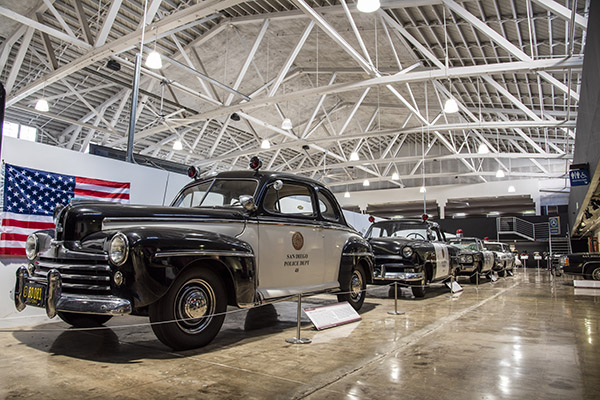
There were several kinds of cars on display, including an interesting collection showing the evolution of police cruisers.
The San Diego Automotive Museum has an impressive display of police cruisers.
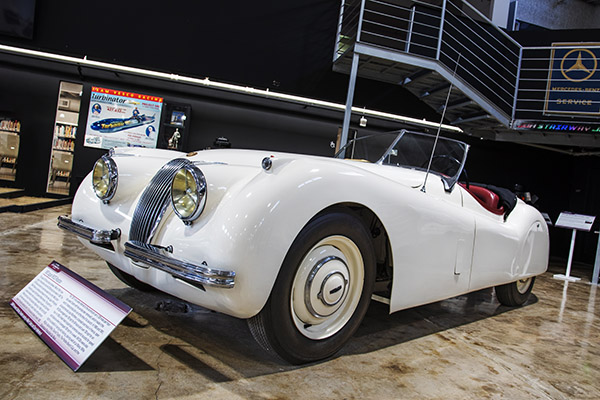
One of my dream cars has always been the XK-120 Jaguar, and the San Diego Automotive Museum had one on display.
This sure is a beautiful automobile.
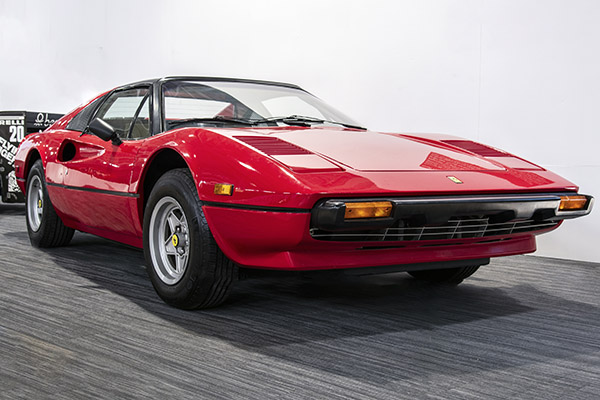
Do you remember Tom Selleck’s first television series, Magnum P.I.? The Museum’s displays include the Ferrari 308 from that show.
Thomas Magnum’s Ferrari. It was beautiful then and it’s beautiful now. I was surprised at its small size.
When I first moved to southern California nearly 50 years ago, we had traffic, but not like we do today. We read a lot of stories about billionaires leaving California, but as far as I can tell, it feels like a lot more people are here now. I think our population is increasing. High density housing and traffic are out of control. Back in the 1970s, it was no big deal to hop on my Electra Glide, head south, and arrive in San Diego two hours later. Today, that same trip is at least three hours, and that certainly was the case when Sue and I visited the Automotive Museum a few days ago. We have more freeways than we did 50 years ago, but the traffic is horrendous and it still takes longer to get anywhere. That said, our ride the other day was an easy hundred-mile stint south on Interstate 15 to California State Route 163, and then a right turn into Balboa State Park.
Although the drive down to San Diego was long, I didn’t mind. It had been at least 30 years since I’ve been to Balboa Park. It’s a national treasure. The Park covers 1200 acres, and it is one of the oldest parks in the U.S. The land was originally reserved in 1835. Balboa Park contains 17 museums and 18 botanical gardens. It also has theaters, restaurants, and the world-famous San Diego Zoo. The whole affair is managed by the San Diego Parks and Recreation Department.
As we chatted with our new friends in front of the San Diego Automotive Museum, they told us about the Air and Space Museum facility originally being built by the Ford Motor Company. It is directly under the flight path in to San Diego’s Airport. From the air, the Air and Space Museum looks like a Ford V-8.
After visiting the Automotive Museum, Sue and I wandered outside and shot a few photos of the building (including the one at the top of this blog). It was a glorious day, the kind that makes living in southern California a treat: 70 degrees, essentially no humidity, and not a cloud in the sky. As I wrestled with the big Nikon 810 and its 24-120 lens, we noticed two older gentlemen sitting at a table in front of the Museum. They watched me taking photos, and that led to a 45-minute conversation about life in general, getting old, being retired, enjoying days like the one we were enjoying, and Balboa Park. The two were both nearly 80 years old. One had been the architect for the Automotive Museum’s remodeling a few decades ago; the other had designed and built the ornate trim you see around the top of the Museum. They regaled us with stories about the Automotive Museum building, the Museum’s donors, and more. It was a pleasant morning, made all the more interesting with this conversation.
The way to take in Balboa Park (if you haven’t been here before) is not to do it the way we did (i.e., driving down for a half-day visit to the San Diego Automotive Museum). A better way to enjoy Balboa Park is to spend several days in San Diego. San Diego is one of the world’s great cities, and Balboa Park is its crown jewel.
You could spend a week just in Balboa Park, but there are many other fun things to do in and around San Diego, many of which we’ve written about before. The San Diego Zoo is one of the world’s great zoos, and it’s good for a full day (or two). There’s the USS Midway Museum, which can only be described as magnificent. The Deer Park Winery and Auto Museum is just a few miles up Interstate 15, with its magnificent collection of convertibles and wines. Mexico is just a few miles south, with Tijuana on the other side of the border, Tecate and its culinary delights an hour or so to the east, and all of Baja starting as soon as you cross the border. Baja is magnificent; it offers some of the best riding in the world. The restaurant scene in San Diego can only be described as spectacular, but don’t get waste time or money in the high-priced tourist eateries in San Diego’s Embarcadero area. If you want authentic Italian cuisine, navigate your way to Volare’s (it’s one of San Diego’s best kept secrets).
So there you have it: The San Diego Automotive Museum and a few other San Diego attractions. If you haven’t been to this magnificent city, San Diego is a destination that should be on your bucket list.
The alarm rang early last week, and Sue and I were on the road at 5:00 a.m., pointed east on the 210 for the 5 1/2 hour trek to Phoenix and the Buddy Stubbs Motorcycle Museum. It was worth the drive out there.
There are more than a few dealers who have a handful of bikes tucked into a corner of their showrooms they call a museum. Not so with the Buddy Stubbs Motorcycle Museum in Phoenix, Arizona. It’s the largest motorcycle museum in the American Southwest, and it’s one of the best motorcycle museums of the many I’ve visited over the last 30 or 40 years. I don’t say that lightly. This place is spectacular.
Many marques are well represented. This colors on this early ’60 Noron twin work for me.
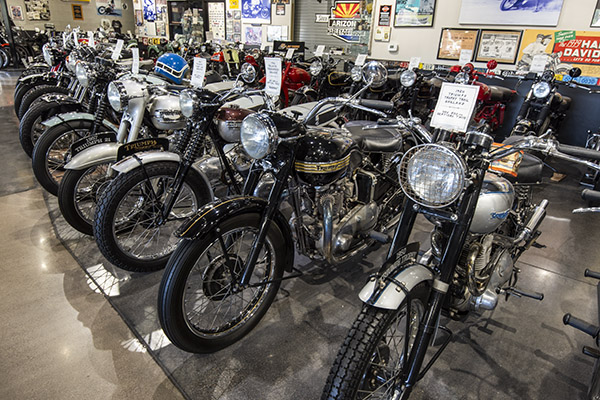
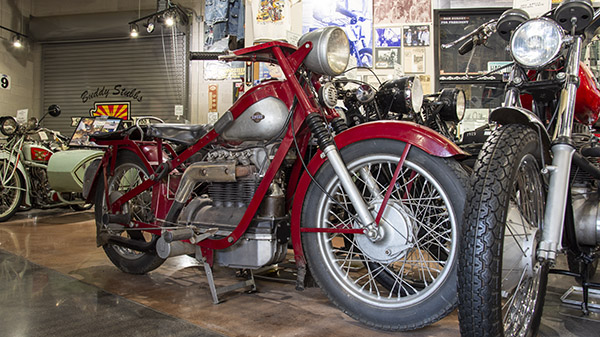
Sue and I visited the Buddy Stubbs Museum recently for an upcoming issue of Motorcycle Classics magazine, and I sure was glad we did. The Museum has 137 bikes (with 124 on display). You might think they’d all be Harleys, but you’d be wrong. All the cool stuff is there, and it’s all vintage. Harleys, Triumphs, BSAs, Vincents, BMWs, Excelsiors, Indians, and a bunch more. It seems like every motorcycle in the Museum has a story.
The 1913 Indian Buddy commuted on between dealership locations.
One of the stories is about the 1913 Indian in its original unrestored glory. You might recall that about 25 years ago Harley made their dealers build new and modern showrooms. Buddy Stubbs was one of those dealerships, and while the new location was under construction, Buddy rode between the old and new locations daily on that 1913 Indian. That’s cool.
Buddy’s Cannonball Excelsior. All the spares rode in the sidecar and there was no chase vehicle.
Another bike with a story is the 1915 Excelsior, with sidecar, that Buddy rode in the 2010 cross country Cannonball Run. Okay, you might be thinking a lot of guys did that. Yeah, but…and the “yeah, but” in his case is that a 70-year old Buddy Stubbs made the ride with no chase vehicle. He carried all the parts he thought he might need in the sidecar. Wow.
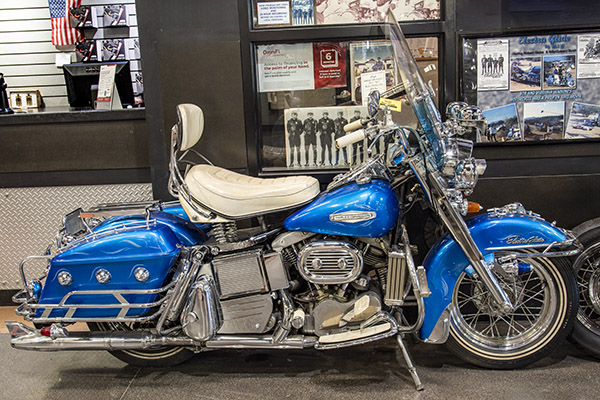
Yes, it’s the actual Electra-Glide in Blue. The real one that we all saw in the movie.
Remember the 1973 Electra-Glide in Blue movie? Buddy taught Robert Blake how to ride a motorcycle for that movie, and the motorcycle that Blake’s felonious motor officer buddy bought with stolen money (in the movie, not in real life) currently sits in the Buddy Stubbs showroom. Blake went on to a successful TV series (Baretta), and then he fell from grace when he murdered his wife (which he got away with in the criminal trial, although he was later found financially liable in a subsequent civil case). It’s tough to convict a movie star here in the Golden State.
The black T-Bird (second from right) was The Wild Ones backup bike.
Speaking of motorcycle movies, the grand-daddy of them all has to be Marlon Brando’s The Wild One. You will recall that Brando rode a Triumph Thunderbird in that movie. The producers kept a spare Triumph Thunderbird on set during the production. You know, just in case. That spare T-Bird is in the Buddy Stubbs Museum.
A four-cylinder Nimbus. It might have made it into our ¿Quantos Pistones? series had I seen it sooner.
There’s a whole section here on ExNotes focused on our dream bikes. Satisfyingly, several of those are in the Buddy Stubbs Museum, including lots of Triumph Bonnevilles, Harley Cafe Racers, and the Harley XR1000.
By any measure, Buddy Stubbs (who at age 85 is still with us) is an amazing man. You can even buy a book about Mr. Stubbs, which I did while visiting the dealership. I have a signed copy.
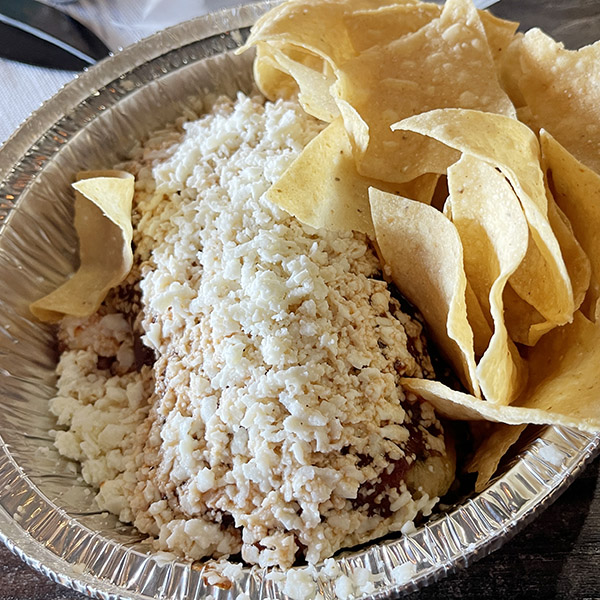
A chile relleno tamale. Muey bueno!
Hey, one more thing that I’d be remiss to not mention in this blog. Stop for lunch at the Tamale Factory, which is just 8/10ths of a mile up North Cave Creek Road from the dealership. I had the chile relleno tamale and Sue had the chicken version. Both were fantastic.
This is a blog we published about 6 years ago. It’s one of my favorites, and I’m hoping you will enjoy it, too.
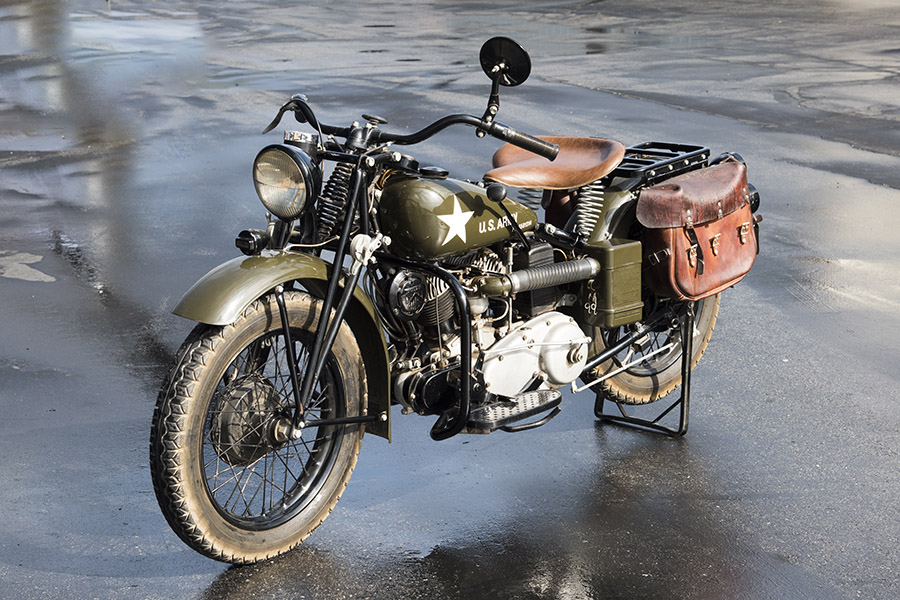
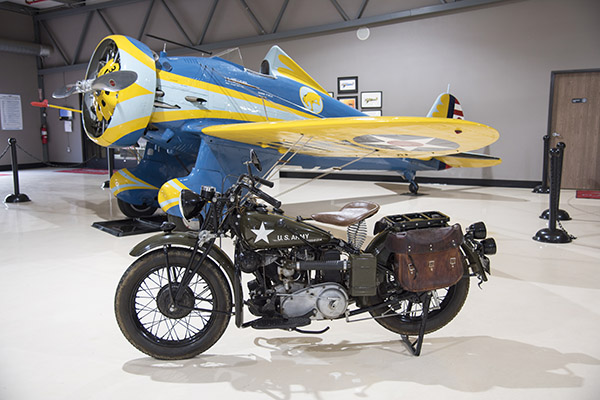
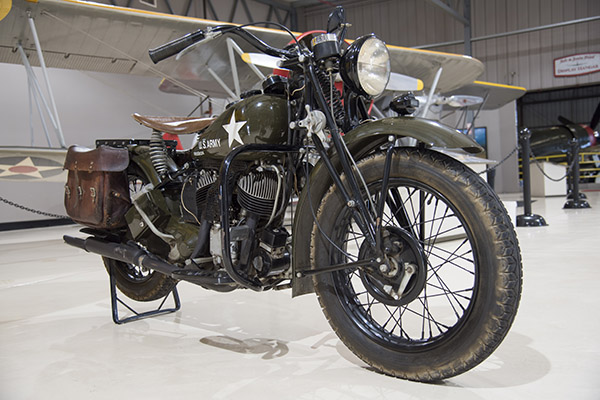
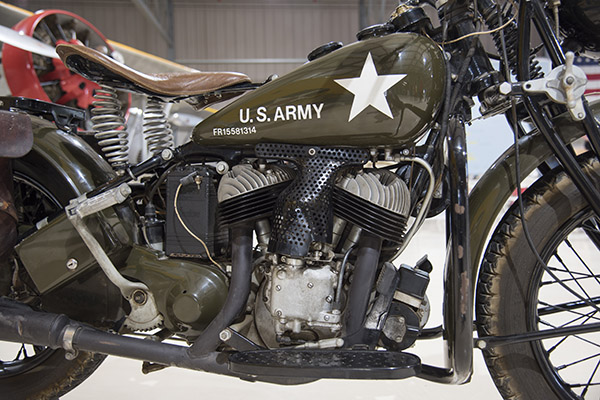
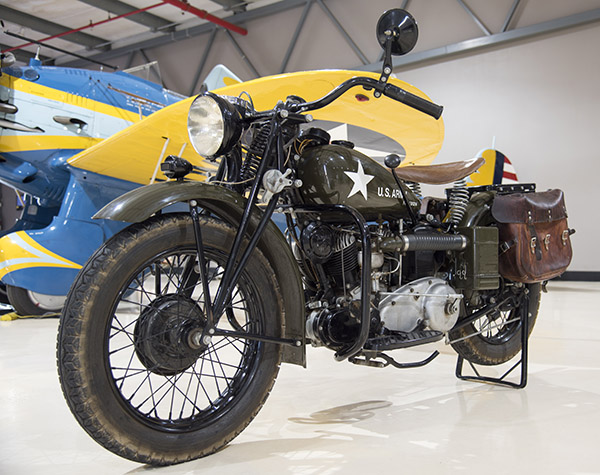
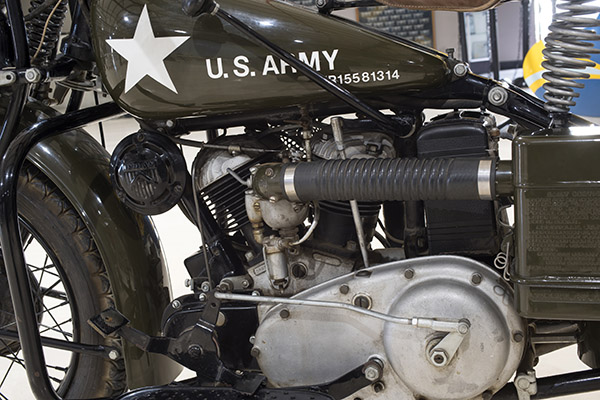
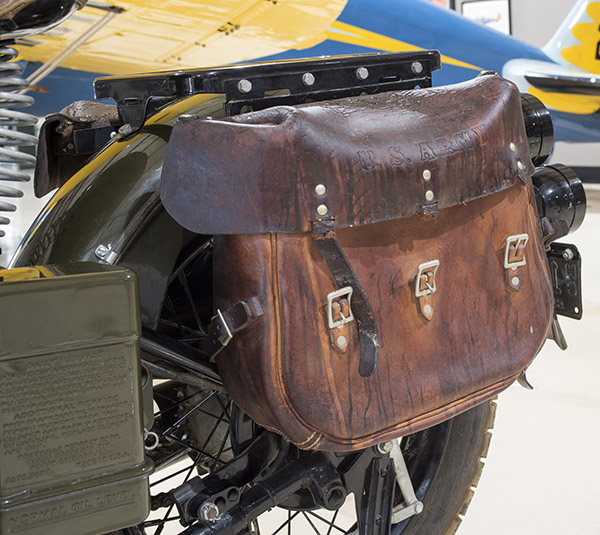
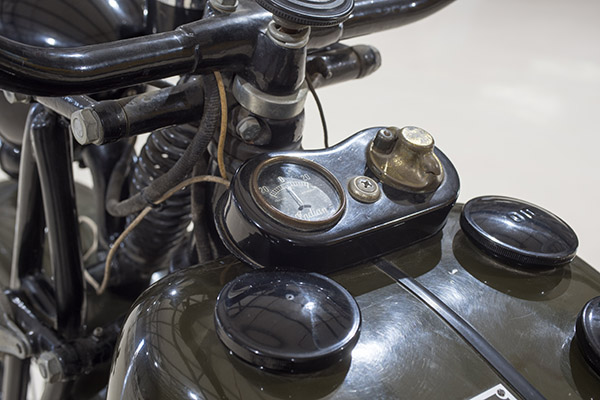
We were visiting the Planes of Fame last month when I spotted the US Army World War II motorcycle you see below…
At first, I thought it was a Harley WLA 45, but nope, a nice young fellow named Paul was working on the motorcycle and he told me it was an Indian. Wow, you don’t see too many WWII US Army Indians. I was a bit embarrassed (after all, I wrote a book about police and military motorcycles), but the beauty of this motorcycle soon made me forget that. Check out these photos, folks…
During the war, Indian produced about 40,000 motorcycles and essentially devoted its entire operation to military production. It produced few civilian motorcycles (the company did not even bother to print a catalog in 1942), although it maintained a small amount of its production capacity for police motorcycles. It sold its military motorcycles to the U.S. Army and to several other Allied nations, most notably England. Indian offered several models during World War II. These included the Model 741, the Chief, the Model 640B, the M1, and the Model 841.
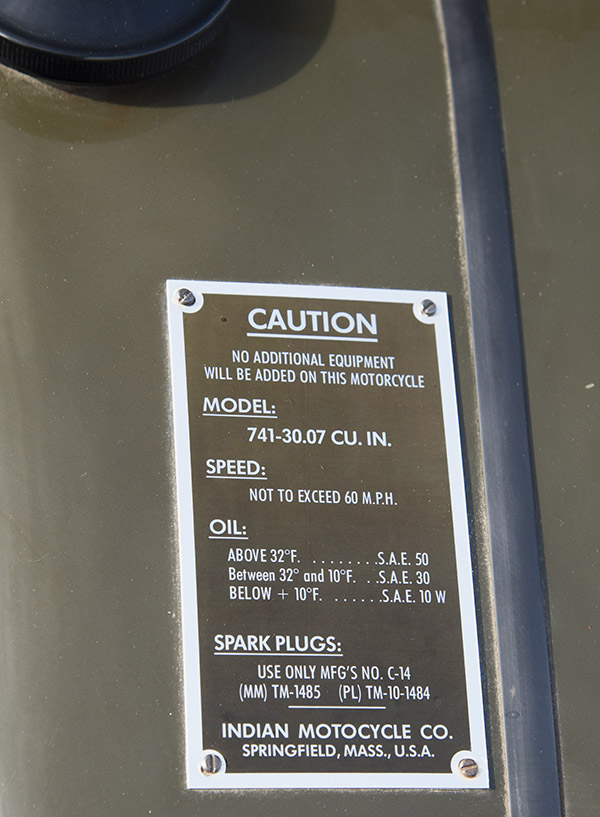
The Model 741
The Model 741 was Indian’s main military motorcycle. It was the machine Indian had developed in response to the U.S. Army’s ill-advised initial requirement for a 500-cc military motorcycle. The Model 741’s engine actually displaced 30.5 cubic inches (or 500 cc), and for this reason it became known as the “30-50.”
The Model 741 was based on Indian’s Junior Scout. Its 500-cc, V-twin engine was the Junior Scout engine detuned for increased durability. It only produced about 15 horsepower. The Model 741 had a hand shift and a foot clutch like the Harley-Davidson WLA, but the Indian motorcycle put the shifter on the right side of the gas tank instead of on the left side as Harley-Davidson had done. The motorcycle’s throttle was in the left handgrip, in accordance with the army’s initial specification. As Harley-Davidson had done, Indian extended the front forks to give greater ground clearance. Indian also extended the rear frame for the same purpose. The Model 741 also used the much larger Indian Chief’s transmission for increased reliability. The Model 741 had a rifle scabbard on the right front fender and an ammunition container on the left front fender.
The Indian Model 741, like the Harley- Davidson WLA, was not a high-performance motorcycle. Both machines weighed over 500 pounds. Both machines had top speeds of approximately 65 mph. The army was more interested in durability than in top speed.
The U.S. Army used the Indian Model 741 during World War II, as did the armies of Great Britain, Canada, Poland, Australia, and Russia. Indian also sold Model 741s to the British Royal Air Force.
Talk about a hidden gem and a great destination: The Yanke Motor Museum in Boise, Idaho is about as good as it gets. There’s precious little information on the Internet about it, but trust me, it’s worth seeing. It’s not widely publicized and you can’t just roll up and visit its treasures; admission is by appointment only. My advice is to make the run to Boise and make the effort to get an appointment. The Yanke Motor Museum contains a world class automobile, motorcycle, tractor, and musical instrument collection.
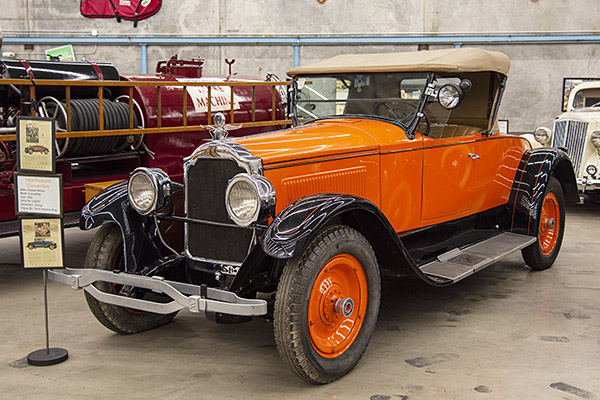
A 1924 Packard convertible is one of the first vintage cars you encounter upon entering the Yanke Motor Museum.
As you know from reading this blog, I’m a big fan of car and motorcycle museums, and I never heard of the Yanke Motor Museum. It’s the only automotive museum in Idaho, and it never appeared on my radar before. I only came across it because I Googled “motorcycle museums in Boise.” Some of the Internet services won’t tell you that it’s by appointment only, but that’s the deal. Further complicating things, some of the GPS programs get the directions wrong. We used Waze to find the address and it worked.
There is a lot to see at the Yanke Motor Museum. We were lucky: Sue and I had the place to ourselves. We made an appointment and new good buddy Tyler (one of the curators) pulled up just as we entered the parking lot. Tyler was in a silver Subaru WRX, so I liked him right away. He opened the place just for us, and then he had to walk around turning all the lights on (and he flipped a lot of switches to do that). The place is huge.
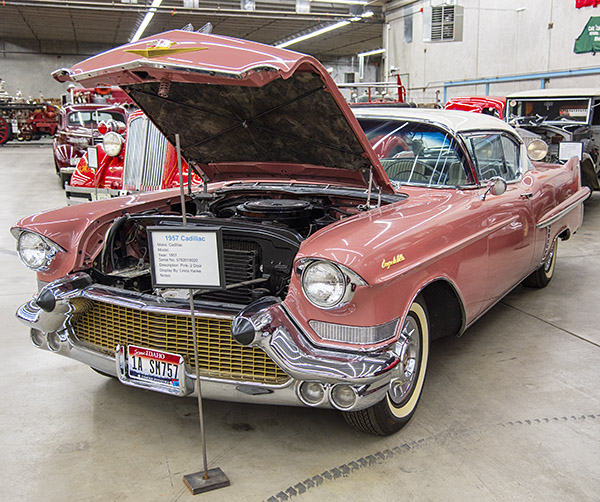
A 1957 Cadillac. This is a beautiful car. I was 6 years old when it rolled off the assembly line.
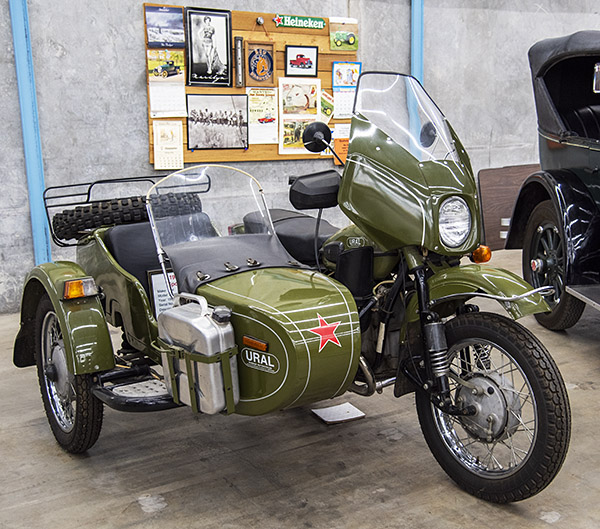
I didn’t quite know what to expect because when we entered the main display area (after walking through a collection of musical instruments), I at first saw mostly automobiles. They were impressive and they were plentiful (see the Packard and drop-dead-gorgeous pink Cadillac above), with the odd motorcycle parked here and there. There was a Ural and a couple of Harley dressers, so I asked Tyler if there were more motorcycles. He smiled and pointed me toward another hall. Wow, were there ever! In fact, my back started bothering me lugging my boat-anchor Nikon D810 and 24-120 lens around to get the photos you see here, but it was worth it.
A Ural with a sidecar. Good buddy Dan owns one of these.
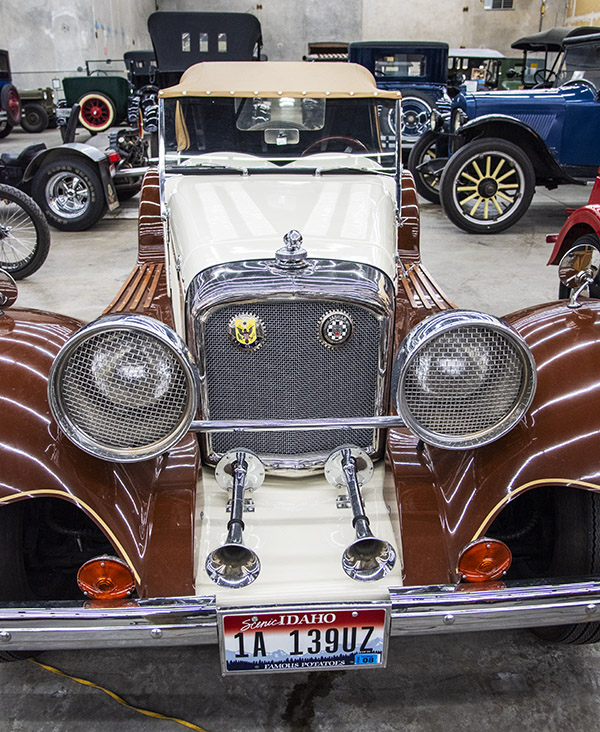
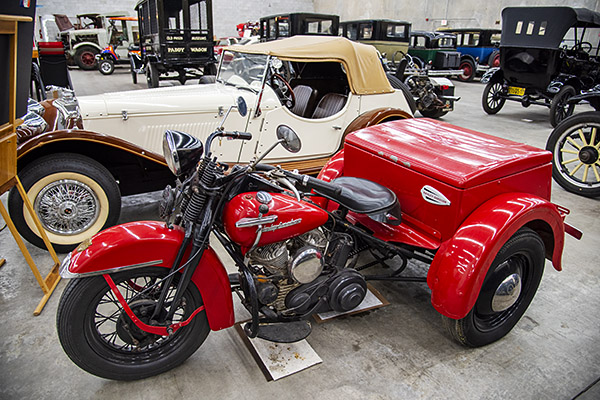
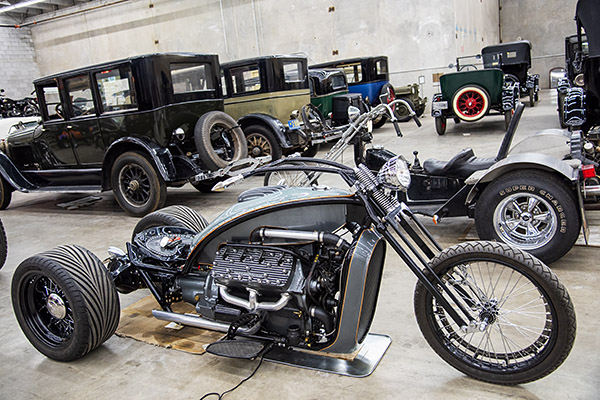
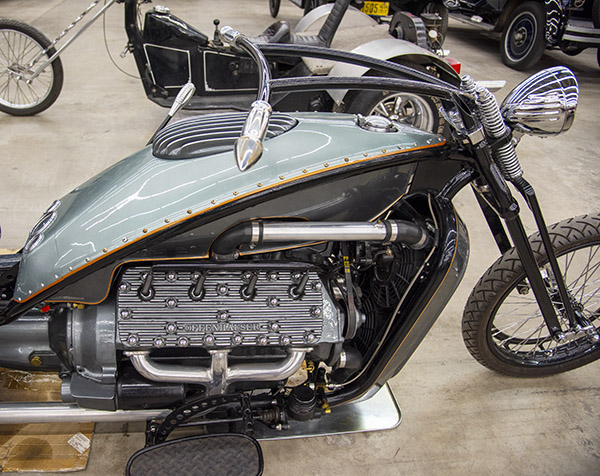
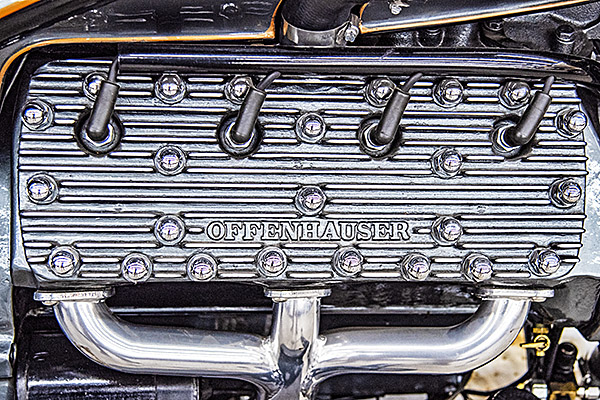
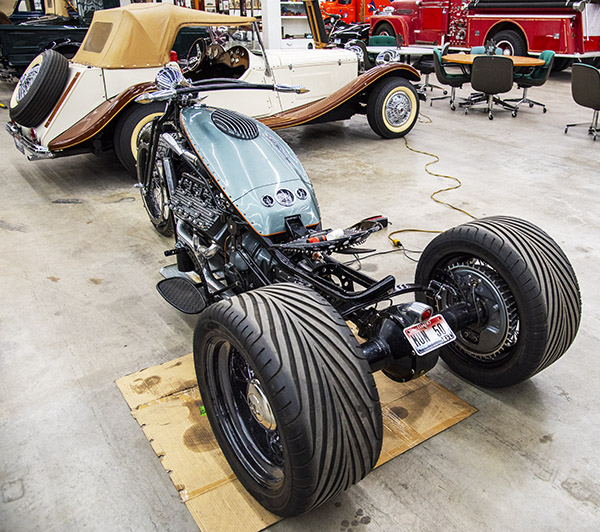
Before we got to the main motorcycle hall, we saw several more interesting motorcycles and the odd trike or two. There was a ’37 SS Jag replicar. It was flanked by a stunning cherry red Harley Servi-Car and a custom flathead Ford trike with Offenhauser heads.
Sweet!A fire engine red Harley Servi-Car.A flathead Ford trike. Check out the front brake.A custom in every sense of the word. The workmanship is stunning.Offenhauser heads. Offy also made complete 4-cylinder engines. Think decades of Indy 500 dominance.One last view of the flattie trike. Even the tires are beautiful.
Susie and I were blown away by the classic cars and the multiple motorcycles we encountered at the Yanke Motor Museum, and we hadn’t even made it to the motorcycle room yet. In the main hall, classic motocross and other bikes were scattered among the cars and other vehicles.
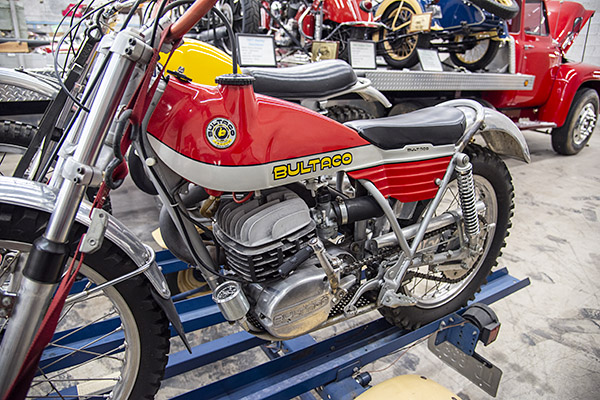
I once had a friend who thought a Bultaco was a Mexican food item. No kidding.
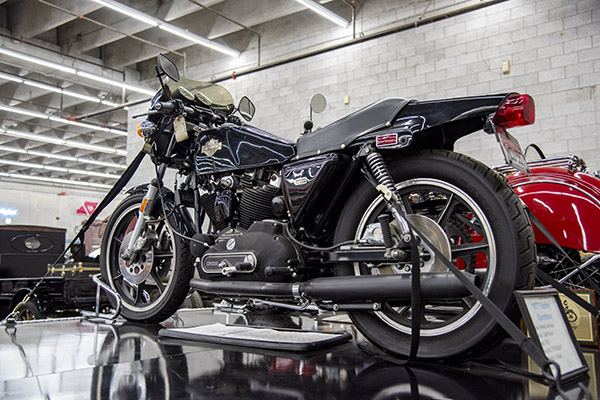
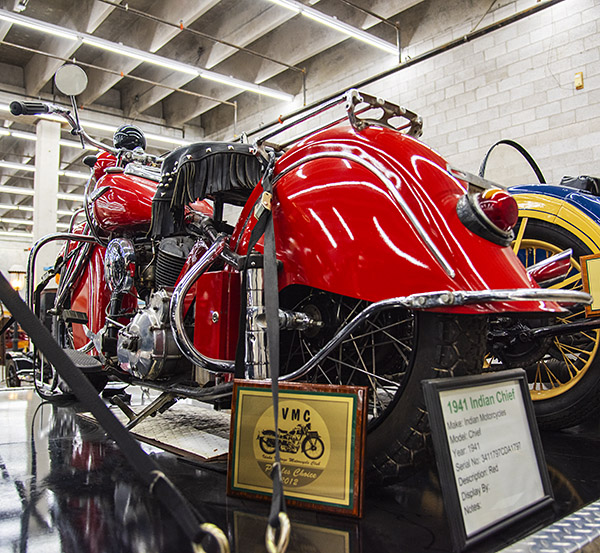
There was a flatbed truck with a Harley XLCR Cafe Racer, a vintage Indian Chief, and a vintage Harley.
I could have bought a new ’77 XLCR just like this one for $3,000, but I couldn’t justify spending $3,000 for a motorcycle back then. I don’t know who I thought I had to justify it to.A 1941 Indian Chief. Those fenders!
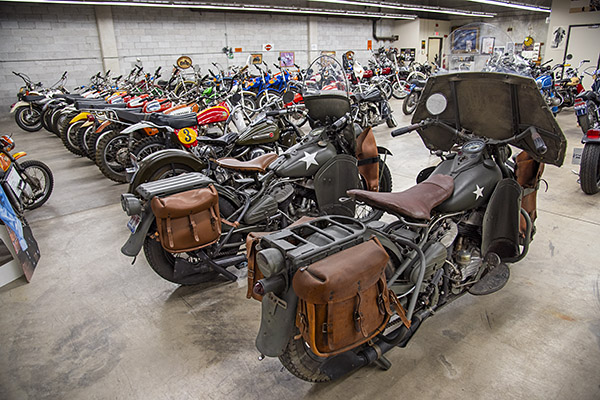
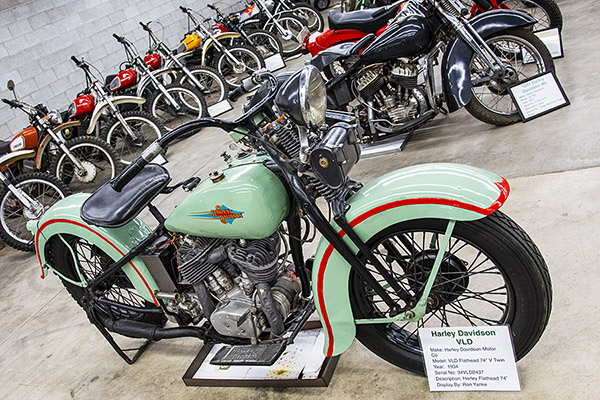
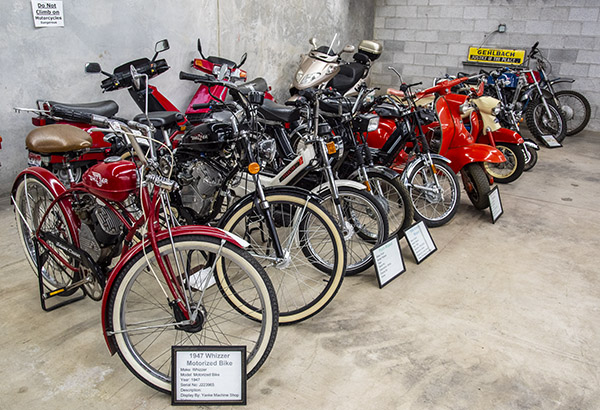
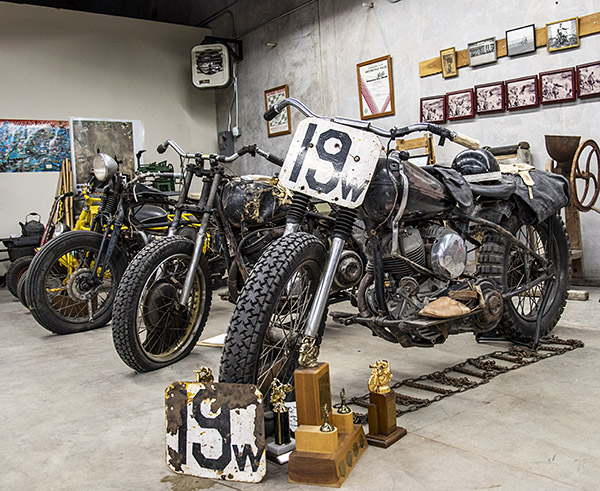
When we entered the motorcycle room, it was like being a kid in a candy shop. No, wait, I take that back. I used to be a kid in a candy shop six or seven decades ago. This was better. Just about everything imaginable was there if you are looking for cool motorcycles. Desert racers, WW II military Harley 45s, modern bikes, custom bikes, vintage Harleys, vintage Indians, scooters, Whizzers, vintage flat track and flathead Harley race bikes, and more. The Nikon was giving me fits weighing heavily on my lower back, and leaning over to get macro engine shots was getting downright painful, but I didn’t care. Susie had an Advil, I swallowed it, and the photo safari continued. I was on a mission. Anything and everything for our ExNotes readers…that’s our mantra.
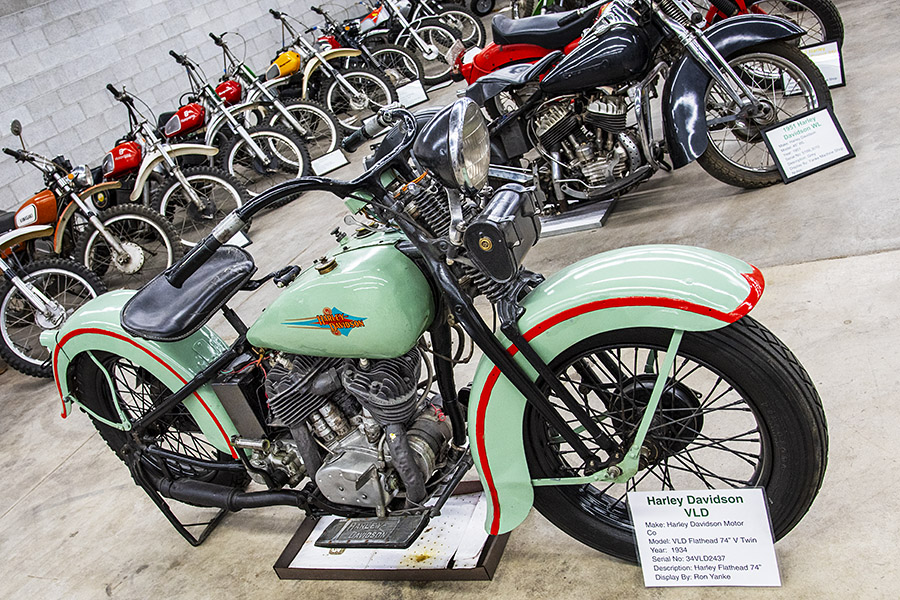
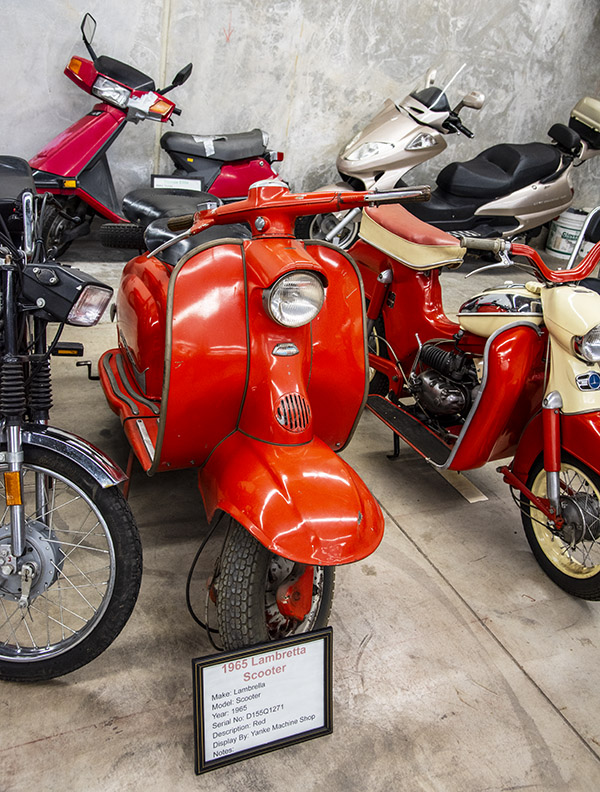
In the motorcycle room…check out the Army 45s.A 1934 74-cubic-inch Harley VLD flathead, another stunning motorcycle.A Lambretta!Whizzers! Carlos, take note!Harley-Davidson flathead flat track racing motorcycles.Ah, the patina! Check out the steel shoe!Flathead porn.An Army 45 in decidedly non-Army colors.
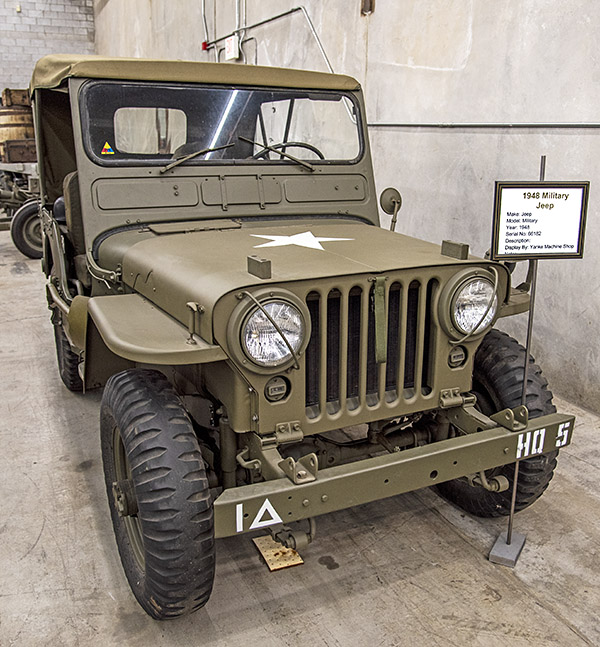
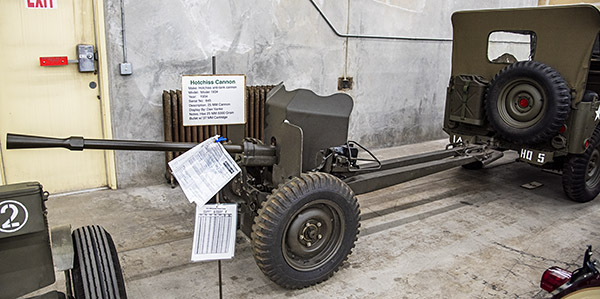
The Yanke Motor Museum also contained some cool military stuff, including Jeeps and a few cannons. Cannons!
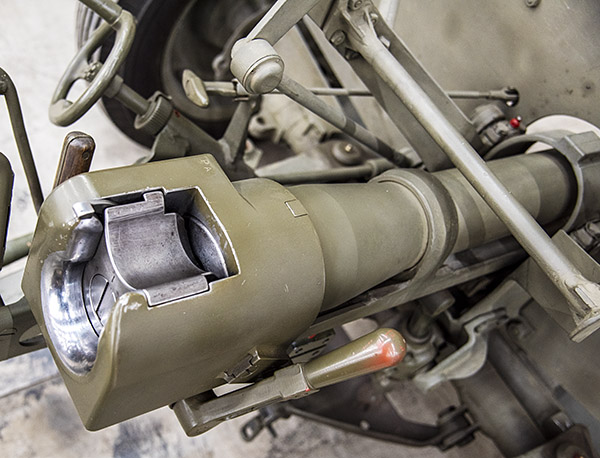
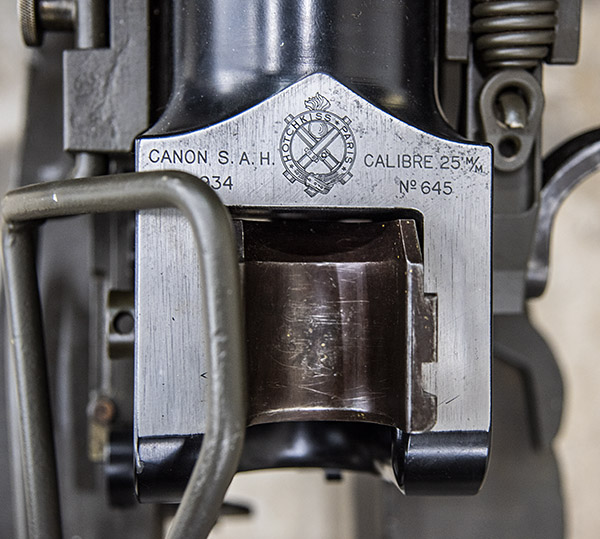
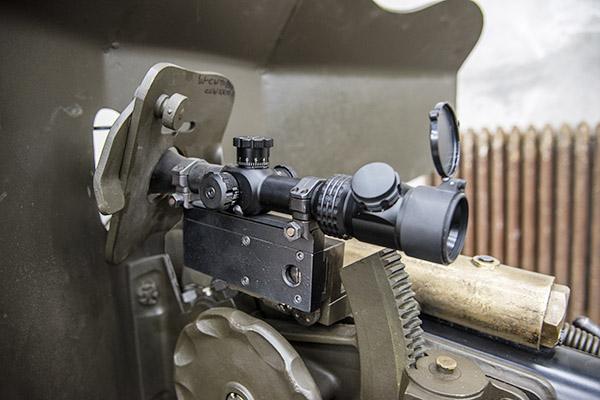
A 1948 US Army Jeep.A 25mm Hotchkiss cannon.The same action as a Ruger No. 1. A classic falling block concept.Another falling block artillery action.A custom scope mount for direct fire. This thing must be a hoot to shoot. Folks at the Museum reload for it.
I thought it couldn’t possibly get any better, but when I peeked into an adjoining room I spotted several 37mm and 25mm projectiles in various stages of the reloading process. Imagine that: Reloading for your own cannons! There’s no doubt about it: The folks who own and run the Yanke Motor Museum are our kind people.
Ron and Linda Yanke started the Museum. An extremely successful entrepreneur, Ron is unfortunately no longer with us. The Yanke family started the business empire with a machine shop. Ron Yanke expanded the business holdings to sawmills, an air charter service, a firefighting equipment manufacturer, extensive timberland holdings, several real estate companies, a mechanical contracting firm, a manufactured housing company, and a couple of banks. He was one of three original investors in Micron Technology, the world’s second-largest memory chip manufacturer.
People collect for different reasons. Some are completists…they collect to own every variation of an item ever made. Others have a theme…something guides their collecting and they can’t rest until they have acquired items that show all aspects of that theme. Still others are brand loyalists…they want everything associated with a particular marque. Others collect to rekindle memories…items in their collections bring back better times. And people collect different things. All kinds of things.
As I surveyed the expansive and overwhelming contents of Bill’s Old Bike Barn, I wondered: What made Bill tick? What fueled his desire to collect? I asked the question and Bill answered it, but I’ll wait until the end of this blog to share the answer. Hold that thought and we’ll return to it.
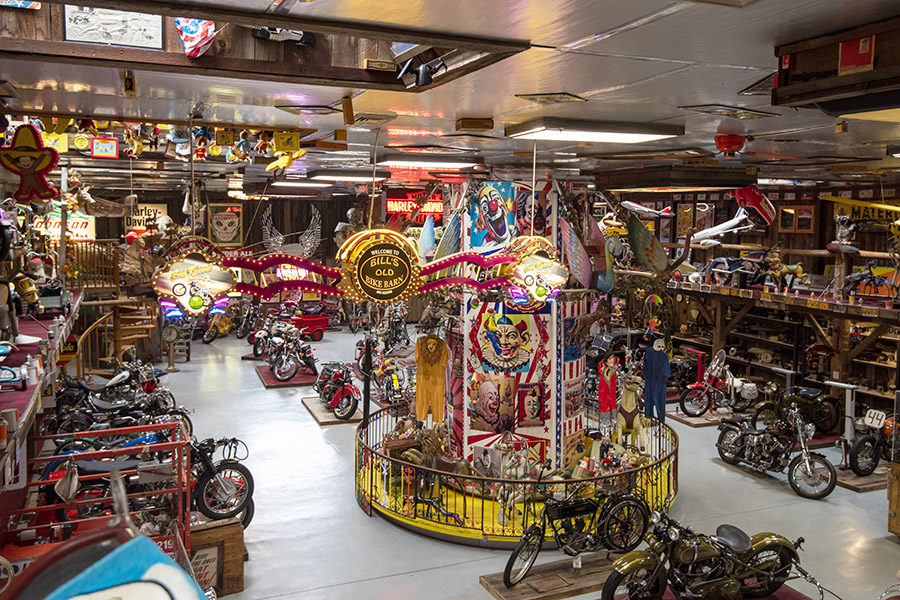
When I knew we were going to Pennsylvania and my wife Susie Googled motorcycle museums…well, silly me. I thought we would find a motorcycle museum if I was lucky and it might make a worthy topic for a blog or two. Maybe an article in a motorcycle magazine. Susie gets the credit for finding Bill’s Old Bike Barn. I didn’t realize we had hit the Mother Lode. We had stumbled into a more advanced collection than we had ever seen.
No, wait: I need to restate that. It would be unfair to call what I found in Bill’s Old Bike Barn a collection. I realized when assembling this story that what Bill created is not a mere collection. It is, instead, a collection of collections. Bill’s Old Bike Barn might have started as a motorcycle collection, but it goes beyond that.
Way beyond.
Anybody can collect and display motorcycles. Well, not anybody, but you get the point. In the course of curating a collection, advanced collectors, the guys who go exponential and become collectors of collections, amass collections of all kinds of things. Then the question becomes: How do you display your collections? What’s the right format?
Bill had the answer to that, too.
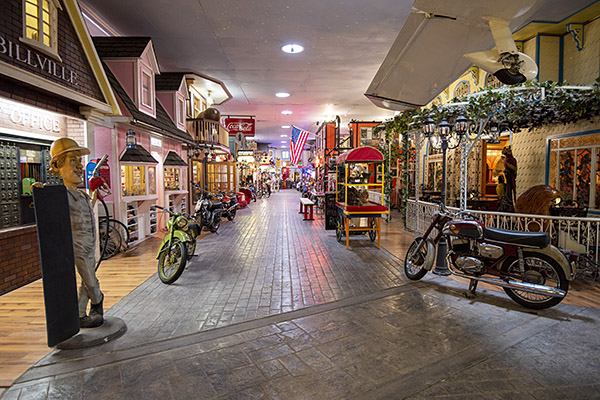
Billville.
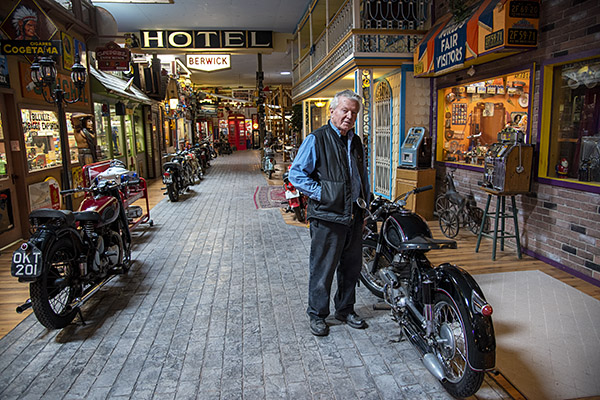
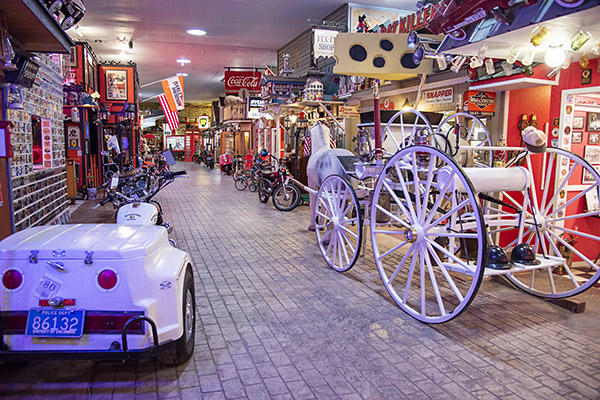
Hey, if your name is Bill, and you have a collection of collections, why not start your own town, and display each collection in different stores and businesses and government offices, all in a magical place called Billville. You see, if you have your own town, you will also have streets on which these shops are located. And you can park different cool motorcycles on the streets in front of the shops. The Billville concept solves several challenges simultaneously. The streets let you display the motorcycles and the shops. People see the shops and what’s in them and they want to add to the collection, so they bring in and contribute more things you can exhibit. The shops grow and the town of Billville thrives. Sense a pattern here?
Bill, at home on the streets of Billville.One of many streets in Billville. The streets in Billville are lined with something even better than gold: Vintage motorcycles and Bill’s collection of collections. Bill’s collections are hypnotic in their appeal.
Being a world-renown blogger and motojournalist, I had the grand tour of Billville, led by Bill himself. Bill led, I followed, and my jaw dropped with each turn and every stop in Billville. Billville. I get it. It’s brilliant.
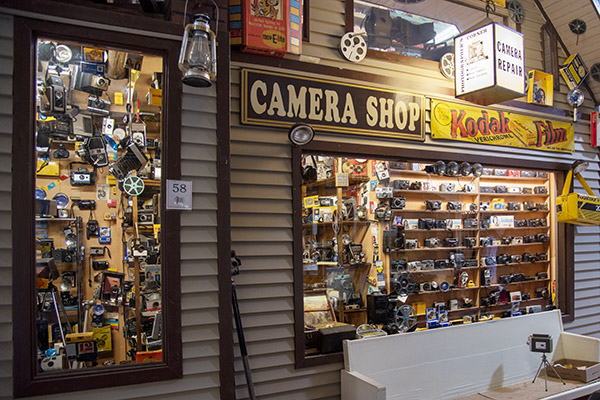
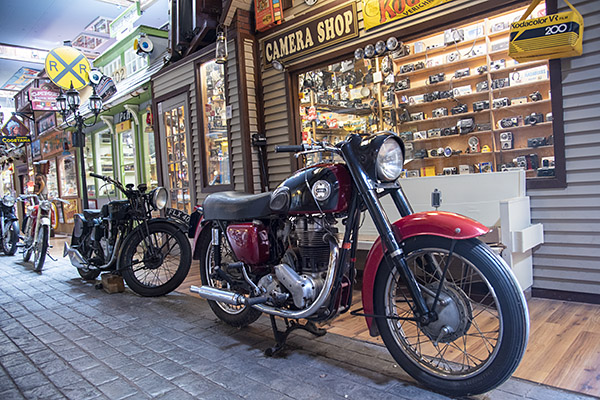
The Billville camera shop. Nothing is for sale, much is on display, and the inventory exceeds 6,000 pieces.
We started in front of the Billville camera shop. I had my Nikon D810 along for the shots you see here. I’ve been a photography enthusiast all my life. I asked Bill if he was into photography, too, when he mentioned the camera shop. “Nah, I just had a few cameras on display. Folks see that and they come back a week later with a bag of old cameras. There’s more than 6,000 cameras in the collection now.”
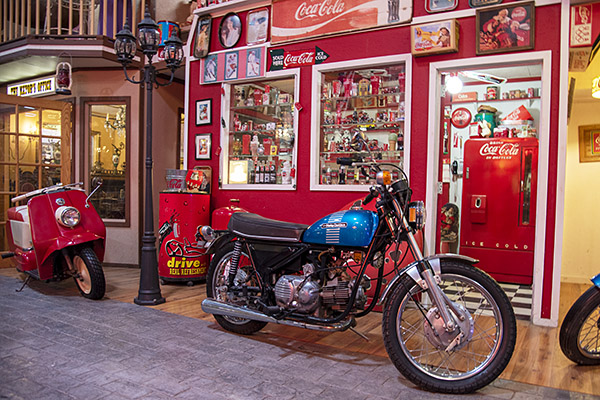
There’s a very cool Norton parked in front of the Billville Camera Shop. The bike behind it is a Velocette. Per capita motorcycle ownership in Billville is off the charts. Billville is huge, the streets are long, the shops are amazing, and the collections are dreamlike. Pick a collectible item, and there’s a Billville shop housing a collection for it. Into Coca-Cola memorabilia?
An Aermacchi Harley and Harley’s attempt to penetrate the scooter market, the Topper, parked in front of the Billville Coca-Cola shop.
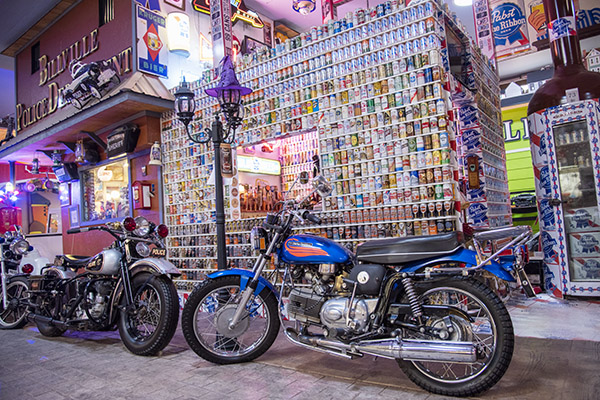
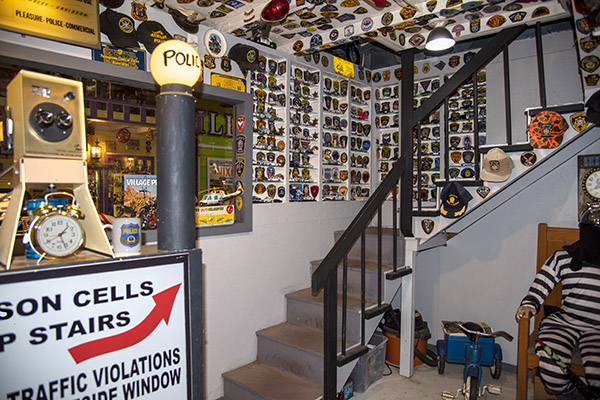
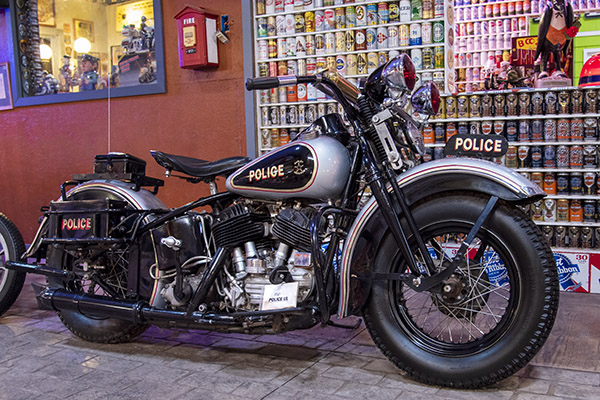
You can’t have a town without a police department, and police paraphernalia are collectible. Billville has its own PD, with a police stuff collection.
The Billville PD and its neighbor…a shop with walls constructed entirely of collectible beer cans.Every police officer who wanders through the Billville PD probably leaves a department patch.The Billville PD has, as you might imagine, its own contingent of motor officers.
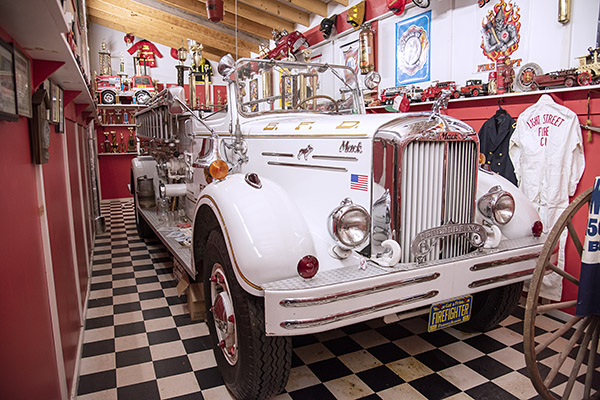
Bill told a funny story about visiting firemen. After seeing the collections, they asked Bill if Billville had a fire department. When they asked the question, Billville did not. So the visiting fireman offered to donate their vintage fire engine if Bill would build the Billville Fire Department around it.
A vintage Mack fire engine. A local fire department donated it.
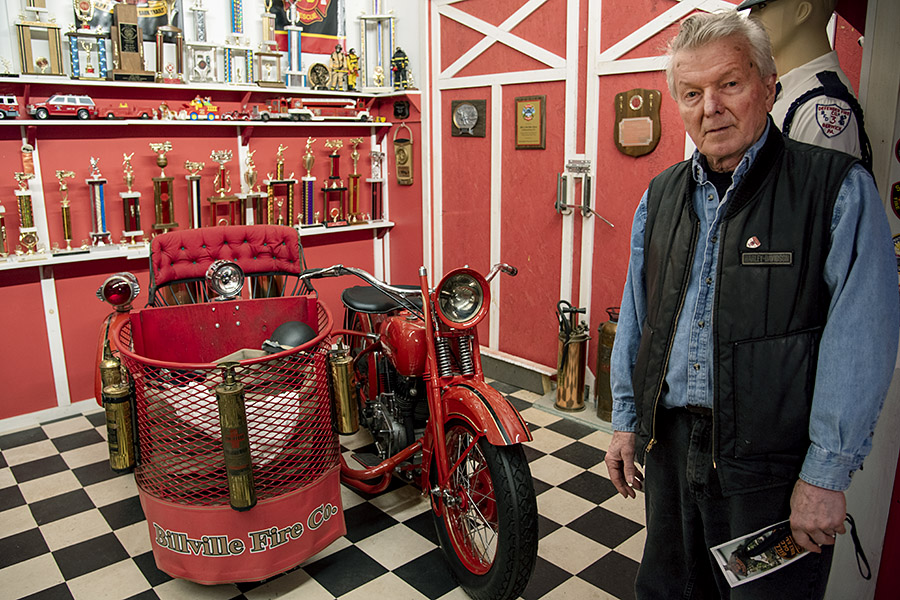
“Then I had to make a fire bike,” Bill said. After all, this is a motorcycle museum.
Bill and his personally-crafted fire bike. This is cool stuff.
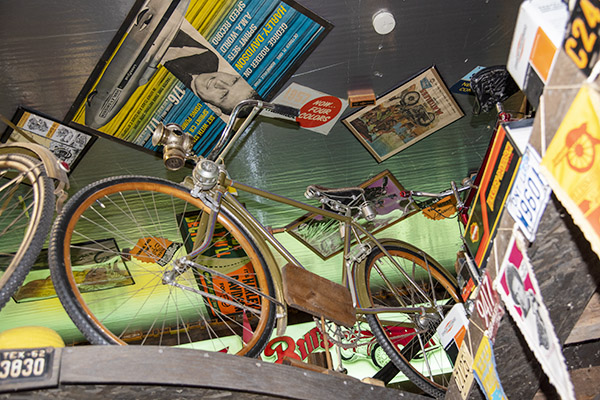
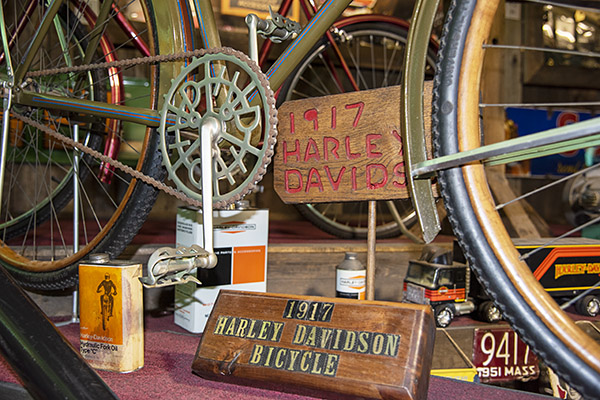
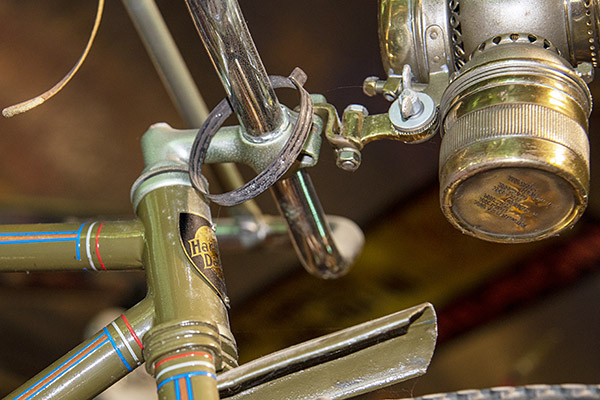
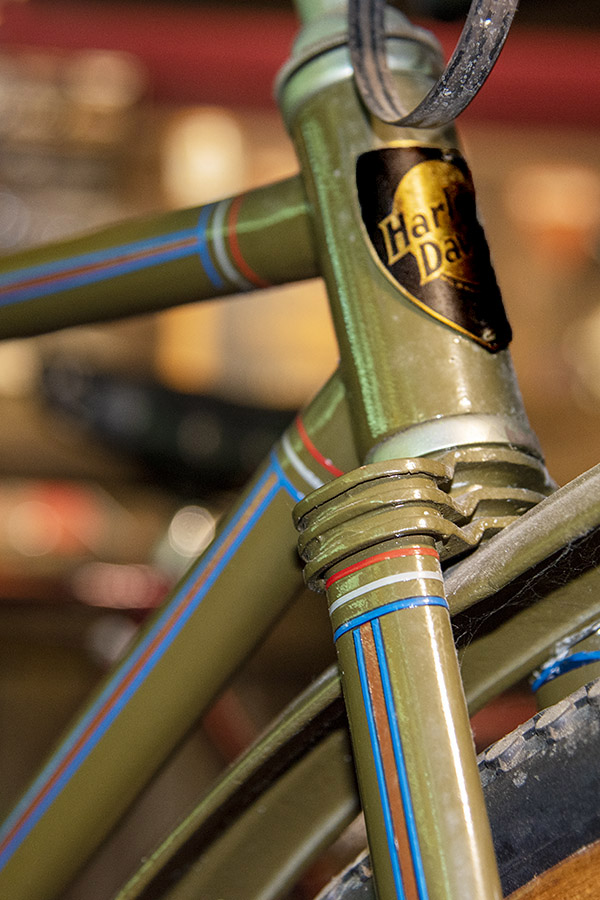
Bicycles? You bet. Billville has an interesting collection. Check out the badging on the one shown in these photos.
Want to guess who made this bicycle?Check out the chainring. HD. Cool.Harley-Davidson. I had never seen one of these before visiting Bill’s Old Bike Barn.My Nikon was earning its keep during my visit to Bill’s Old Bike Barn. If you make the trip, don’t forget your camera.
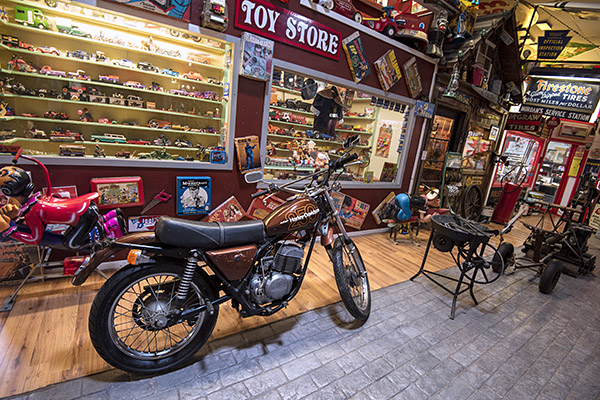
Some people collect toys. Bill is one of them. What would a town be without a toy store?
Another place to display one of Bill’s collections. That’s a cool two-stroke Harley parked on the street in front of it.
Billville has a post office and a restaurant. Take a look at the ornamental wrought iron surrounding the restaurant. Bill told me he purchased huge quantities of wrought iron when he was buying up motorcycle dealer inventories in Europe.
The Billville post office is on the left; the restaurant is on the right.A vintage bike in front of the finest dining in Billville.
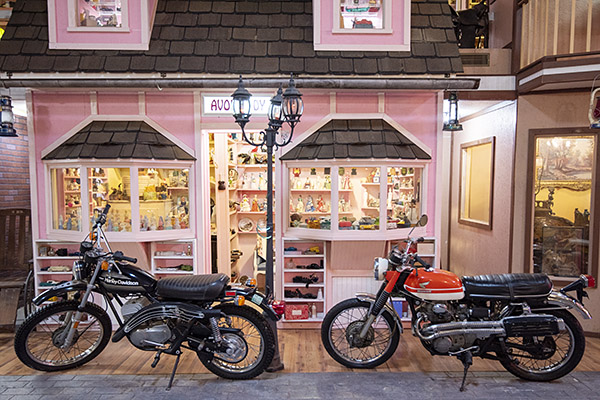
Are you into Avon collectables? Billville has you covered there, too.
A 1970s Harley two-stroke and a vintage CL Honda Scrambler. Bill’s collections are extensive and varied.
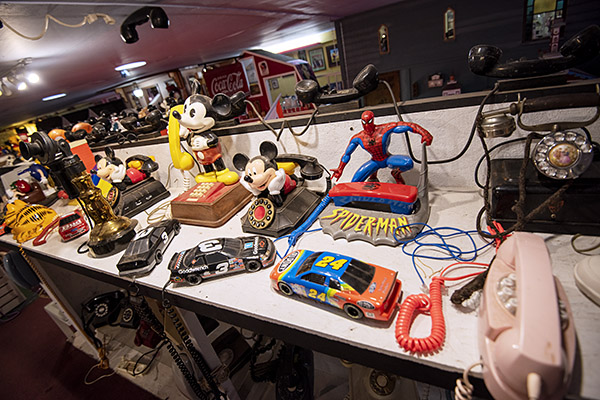
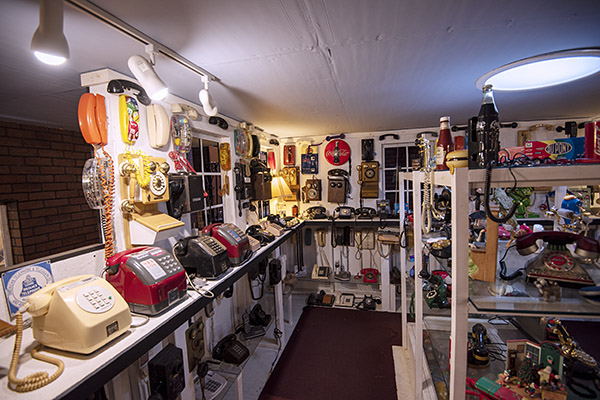
There are several spiral cases throughout Billville. I thought they were purely decorative. But there seemed to be more to see upstairs, so I climbed one. My reward was more collections. How about phones? Yep, those, too.
Some of the phones in the Bill’s Old Bike Barn phone collection……and more phones.
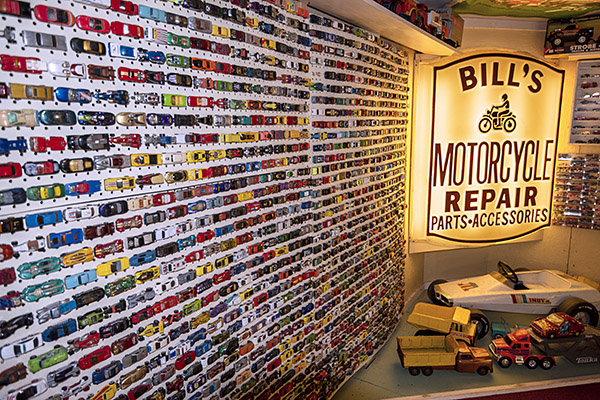
Bill told me again about people bringing things to him. Matchbox cars? Why not?
Matchbox cars line a wall. There’s something for everyone here. Dads, moms, and kids.
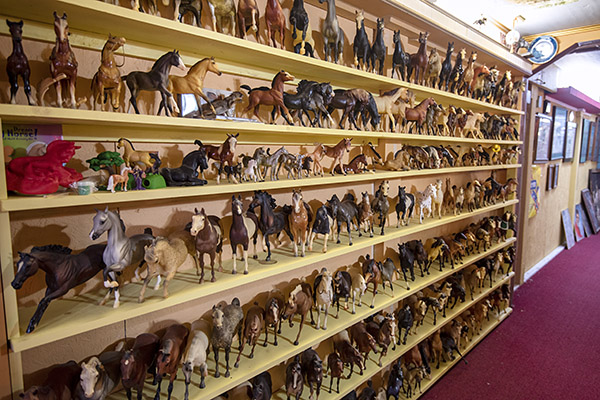
Into horse collectibles? You bet.
Horsepower. Lots of it.
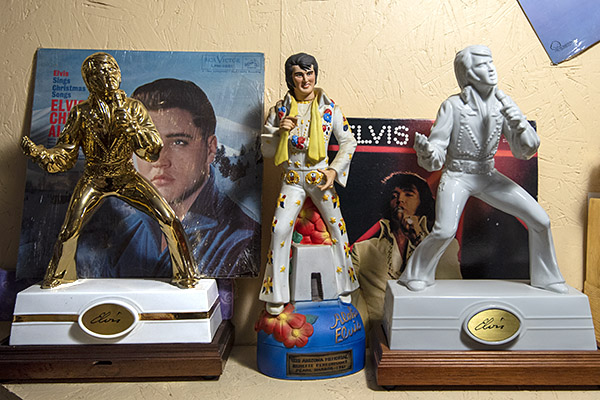
As you might guess, there was an area for Elvisabilia (or should that be Presleyana?).
The King.
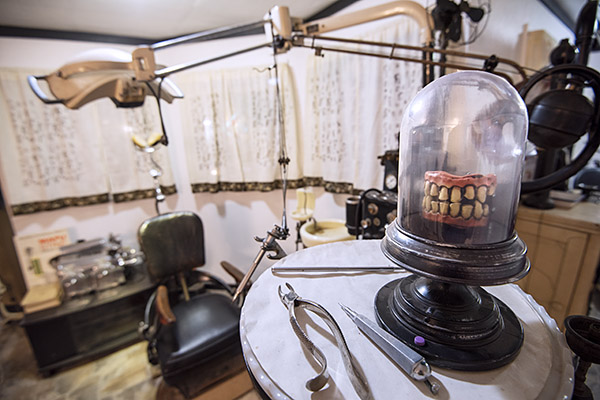
If you were wondering, Billville has a dentist’s office, too, complete with vintage dentistry equipment.
Vintage dental stuff. The photo ops in Bill’s Old Bike Barn were endless.
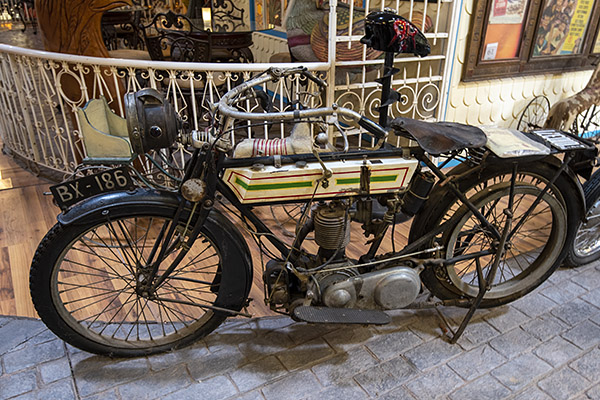
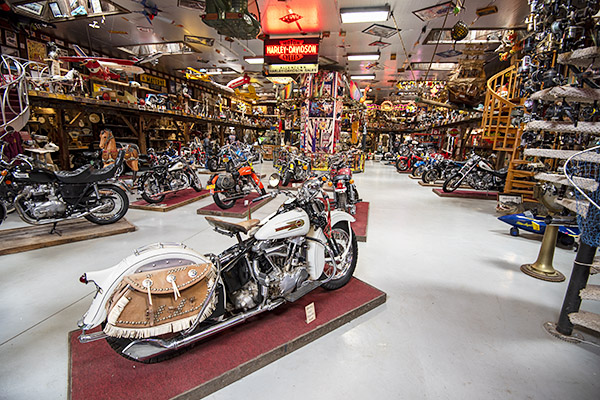
And, of course, Billville includes the motorcycles, motorcycle engines, and everything-associated-with-motorcycles collection. Bill’s collection doesn’t stick to only one marque. You’ll see Harley, Indian, Moto Guzzi, Triumph, Norton, Velocette, Honda, Yamaha, Zündapp, Peugeot, and many, many more motorcycles.
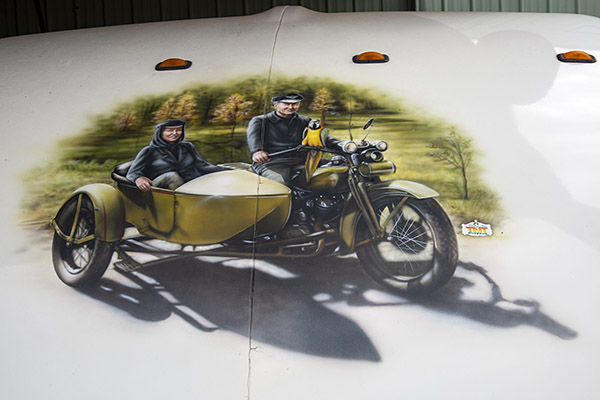
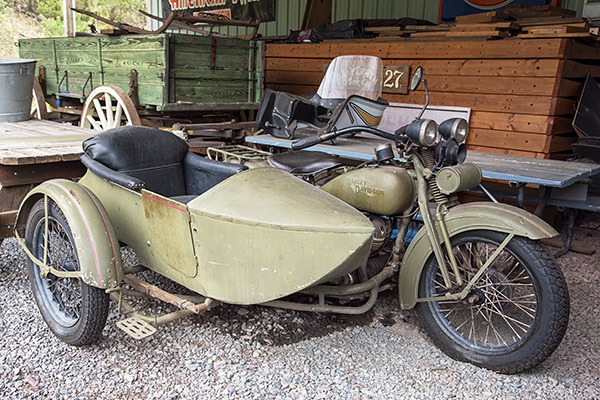
An airbrush painting on one of Bill’s trailers. Check out the vintage Harley and sidecar.Now, check out the actual vintage Harley and sidecar.A vintage Knucklehead in the main hall. Note the spiral staircases on the right. There’s more up there, folks. Lots more.Vintage Indians. Some are left unrestored; others are restored to better-than-new condition.
Bill’s collection is eclectic. The collections themselves are eclectic, and within the collection, the pieces Bill has exhibited vary widely. He’s not just a Harley guy or an Indian guy. He likes anything that’s interesting. You saw the prior blog about Bill’s favorite ride, a Zündapp. Other bikes pepper his collection, including one I always wanted…an early SL350 Honda twin. It’s the color I always wanted, too, and it’s in its 100% original, unrestored condition. I stared at the SL so hard I might have worn away some of its paint.
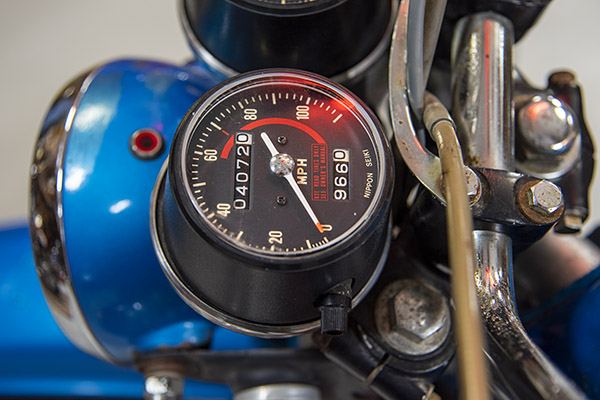
A stunning and unrestored SL350 Honda.Ah, the mileage on the SL350 Honda…the motorcycle is over half a century old, and it has but 4,000 miles on the clock. Wow.
So, back to that question I posed at the top of this blog: What makes a collector collect? Everyone has their reasons, and like I said at the beginning of this blog, I wanted to know Bill’s. I asked the question. Bill smiled, lowered his gaze, and answered softly. “I like to see peoples’ reactions when they see the collections,” he said. That being the case, I think Bill must have really enjoyed our visit. We sure did.
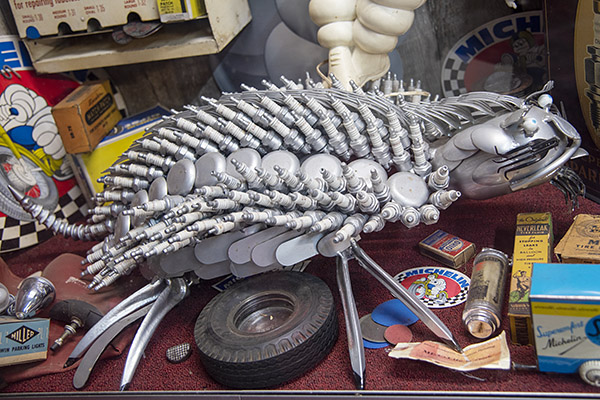
A sparkadillo. There’s a lot of folk art in Bill’s Old Bike Barn.
Our first blog on Bill’s Old Bike Barn? Hey, here it is:
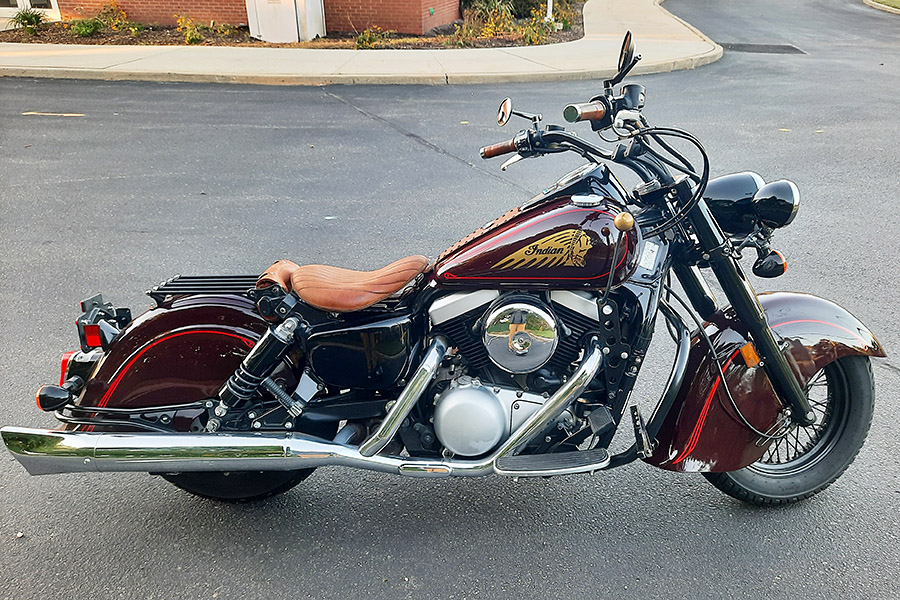
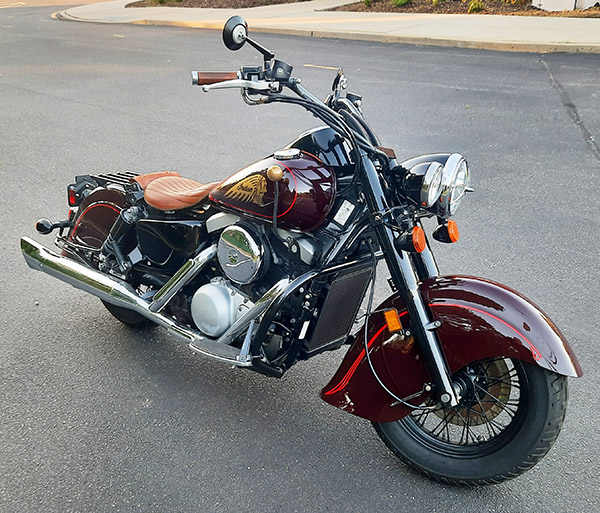
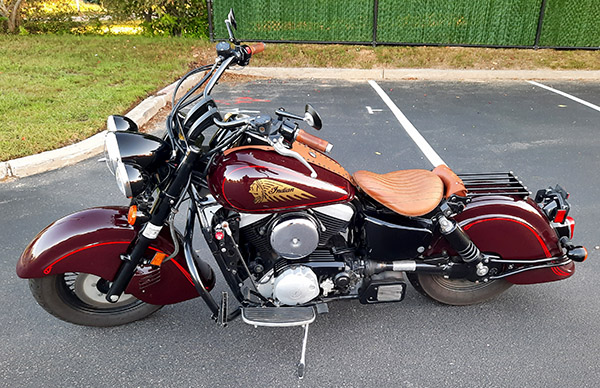
Good buddy Dan, a loyal ExNotes reader, enjoyed our recent blog on the Kawasaki Drifter. Dan wrote to tell us about his Drifter. Check this out, folks. It’s a beautiful motorcycle.
Joe:
My motorcycle is a 1999 Kawasaki Drifter 1500cc. Recently got it, love the combination of Japanese bike reliability that will go forever and the Indian style that is a real head turner. Changed up the seat, added some Indian badging including the tank decals and even an Indian VIN plate cover. Other adds on include the jockey shift that is actually linked to the heel toe shift, the book rack and the triple head lights. I couldn’t afford a 40s Indian and even if I could some of those you have to be a mechanic to operate, this is a great compromise that doesn’t feel like a compromise.
I think people who appreciate the bike for what it is might like the look of the seat and such. It’s funny as a tribute I was even on the fence about the Indian badging but at the end of the day I subscribe to “ride whatever, be safe, have fun.” I even had a rider of a current Indian tell me his was no more Indian than mine…they stopped making them in ’53 and as far as he was concerned anything after that was nothing more than a tribute.
Thanks and be well…I enjoy the blog.
Dan
Thank you, Dan. Your Drifter is a good-looking motorcycle and it’s one I’d be proud to ride. Great photos, too!
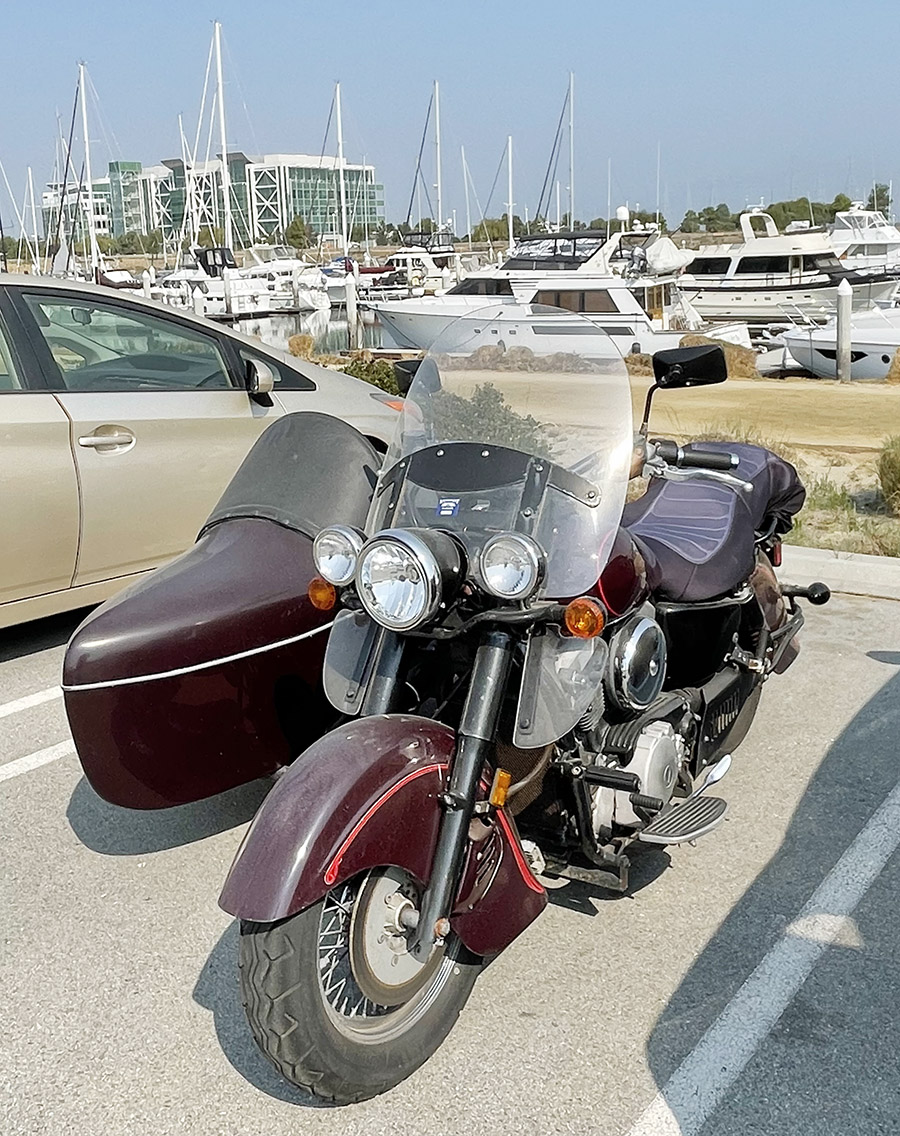
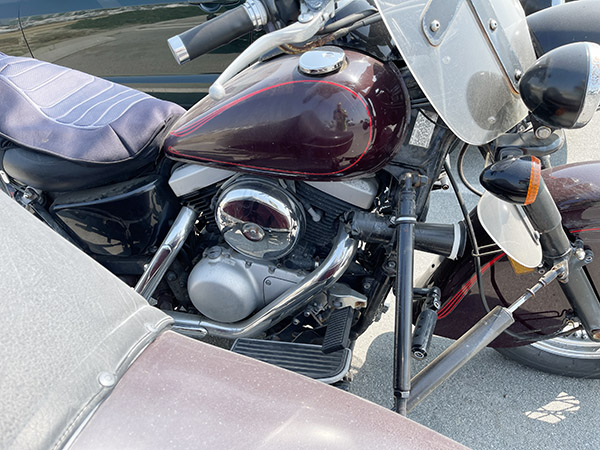
Fuel injected, shaft driven, water cooled, and startlingly reminiscent of a 1940 Indian Chief: The Kawasaki 1500cc Drifter is one of those bikes I always wanted. They were only made from 1999 to 2005, I think, and other than what I’ve read on the Internet, I have no idea if they were any good. The most common complaint seems to be that the plastic gear that drove the water pump was prone to failure (Kawasaki used a plastic gear on at least one other model that was also problematic; these guys were slow learners, I guess). But in my eyes, they hit a home run in the styling department. They just look cool.
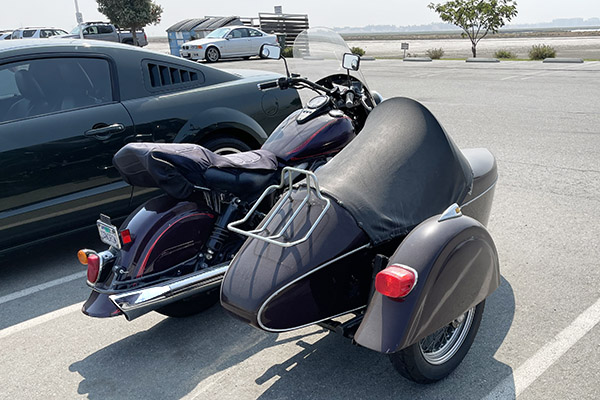
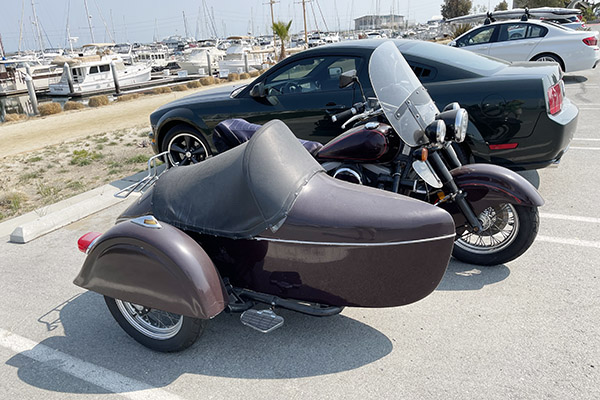
I spotted this one in a San Francisco Bay marina parking lot, and I instantly wanted it. Don’t get me wrong: Doug Bingham notwithstanding, I have absolutely zero desire to own a sidecar. If I had this bike, the first thing I’d do is lose the sidecar and sell it. But ah, that motorcycle. That I would keep. And ride, and ride, and ride.
The later years had different colors; the first year, I think, got it right with the deep burgundy, red pinstriping, and those beautifully valanced fenders. Kawasaki got a little weird from what I’ve read with the rear fender design; it pivots up and down with the rear suspension. Ah, what’s a little unsprung weight between friends, especially on a motorcycle that no one bought because of the handling. I also read that the fuel economy was abysmal on these bikes, but other folks said it was okay. Whatever. I wouldn’t buy this bike to save fuel. But I would buy it if the price was right, even though I could get a used Sportster for the same kind of money. I like it.
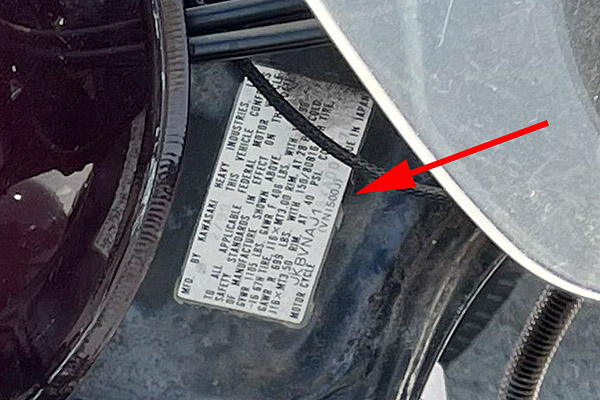
Kawasaki made both a 1500cc and an 800cc Drifters. The 800cc version came in a pastel blue that was stunning. When one of my friends first saw these photos, he asked if the bike was a 1500 or the smaller 800. I was pretty sure it was the 1500, but I wasn’t sure. Then I remembered one of my photos caught the VIN label and I was able to zoom in enough to know.
I shot these with my phone, and I guess that iPhone 12 does a good job. It’s a 1500cc Drifter, as you can see above.
If I owned this bike, I think the only thing I’d do (other than a regular service and a good detailing) is to maybe get the seat redone. It looks just perfect to me as is.
Hey, how about this supercool World War II US Navy Indian 30-50?
You can see the Indian 741 featured in the above video in person at the Chino Planes of Fame Museum, and you can read our feature story on it in Motorcycle Classics magazine.
When the phone rings and it’s good buddy Duane wanting to head into the San Bernardino Mountains for a motorcycle ride, I know it’s time to hop to. That’s what I did last week and it was an awesome ride. East on the 210, up Waterman to Hwy 18 into the mountains, and then down the 138 on the other side to ride home through the Cajon Pass. Good times, and this trip was made all the more special because of two more good friends we connected with on the ride.
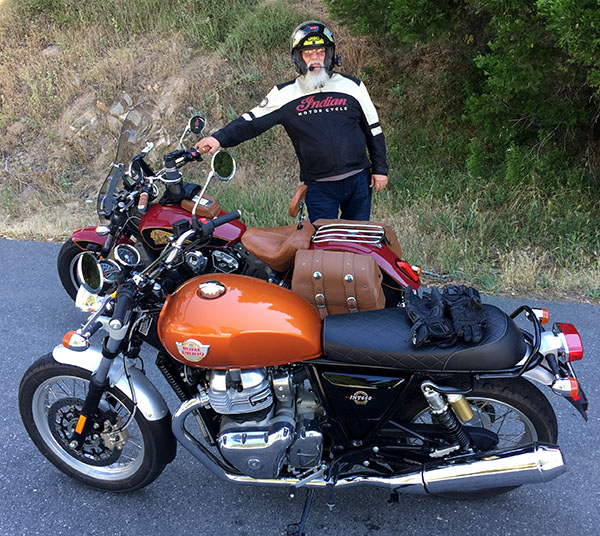
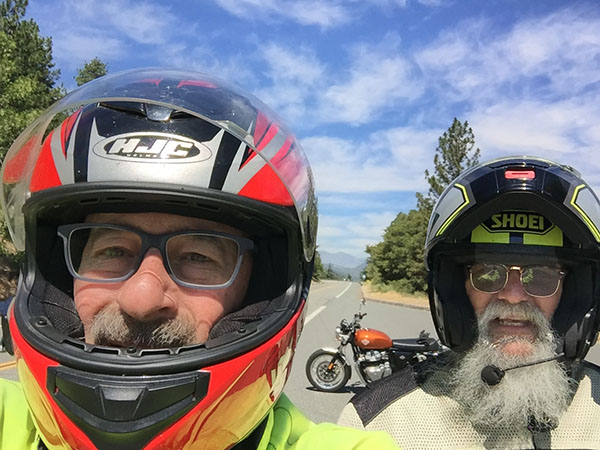
Duane and his magnificent Indian up in the San Bernardino Mountains. It was a glorious day.Geezers. Motorcycle geezers. CSC Mustang and RX3 geezers. Former Army motorcycle-riding geezers. Former Army motorcycle-riding gun nut geezers. Whatcha gonna do? Great minds work alike.
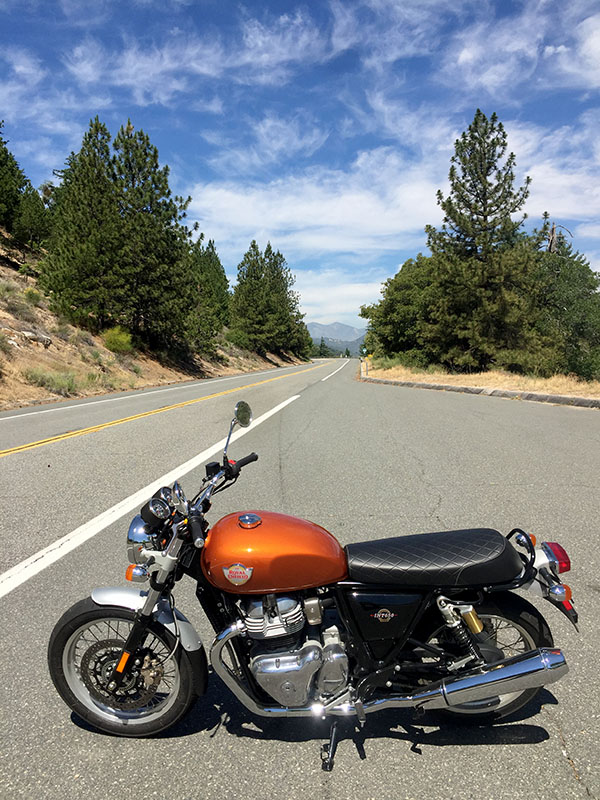
It was a grand ride through one of the greatest motorcycle playgrounds on the planet. The weather was perfect and the bikes were running like Chinese 250s (I was going to say like Swiss watches, but I have Swiss watches and I have Chinese 250s, and the Chinese 250s run better). Both the Indians were running great. My Indian is an Enfield made in India. Duane’s bike is an Indian made in America. It’s very confusing, I know.
A grand day for a grand ride. No polarizers or saturation sliders needed.
So we turned onto the 138 somewhere in one of the little mountaintop towns and we had a fun slalom down through the twisties. As we approached Silverwood Lake, I wanted to stop to get a photo of the bikes. There’s this huge parking lot and it was completely empty, so I thought we would park there and I could angle my shot for the best photo.
So we’re rolling to a stop and I noticed this silver SUV pulling in behind us, and wouldn’t you know it, the guy parks right next to us. I was thinking that would completely screw up my photo. You know the drill…a parking lot the size of Texas and the guy, this, this, this interloper parks right next to me. I was all set to dip into my not-such-a-nice-guy routine when Mr. Silver SUV stepped out of his car with a giant grin.
Twin Peaks Steve!
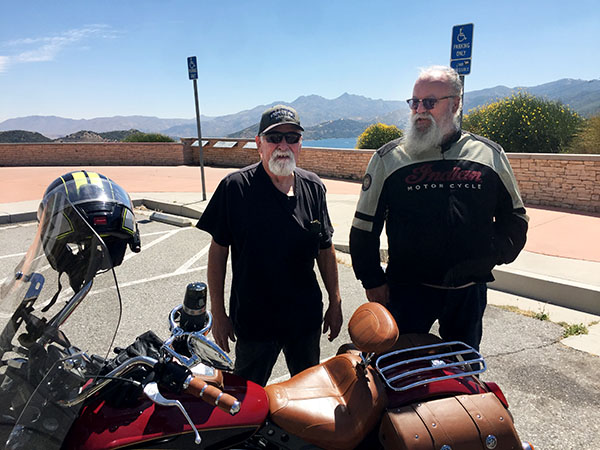
Twin Peaks Steve and Glendora Duane…two great guys!
Wow, we were ever surprised and happy. Duane and I have a lot in common, as alluded to in one of the photo captions above, and Twin Peaks Steve is right there with both of us in every regard.
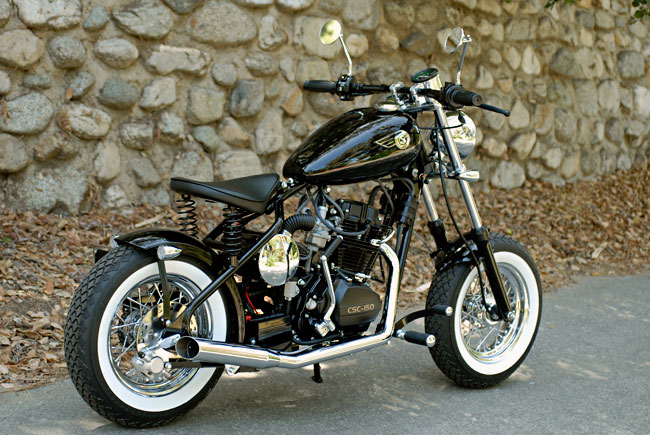
We had a real nice visit overlooking Silverwood Lake and caught up on things. Steve’s beautiful wife Rosemary was there, too, and we had a wonderful chat with her. I can’t tell you how great it was bumping into these two. Steve told me he recognized us when we rode by and he and Rosemary followed us down hoping to have a chance to connect. I’m glad he did. We all met back in the CSC Mustang days about 10 years ago, when Steve was the very first guy to order a custom CSC Bobber. It was one of the prettiest bikes we ever built at CSC.
Steve’s custom CSC 150 Bobber. It was a real show stopper…a visually arresting, gorgeous little jewel of a motorcycle.
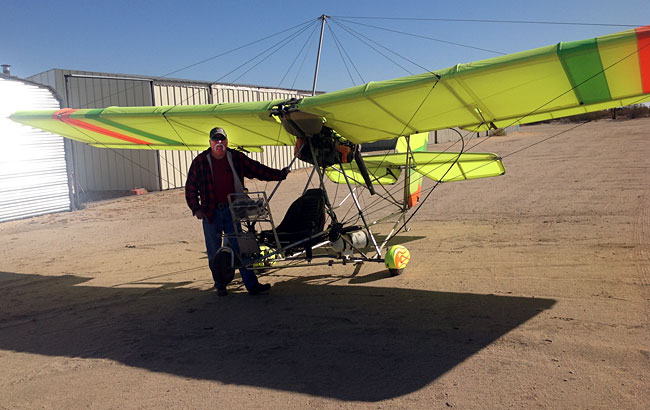
Twin Peaks Steve rode with Duane and me on a bunch of CSC rides, and the more we learned about him back in those days, the more impressed we were. How about ultra-lights as a hobby? Yep, Steve did that, too.
Ah, for the love of adventure. Twin Peaks Steve has done it all!
Then CSC went into the ADV motorcycle business by importing the RX3. Steve and Duane both bought bikes from the very first RX3 shipment to arrive in America, and we rode together (Duane, Twin Peaks Steve, and yours truly) on a bunch more rides.
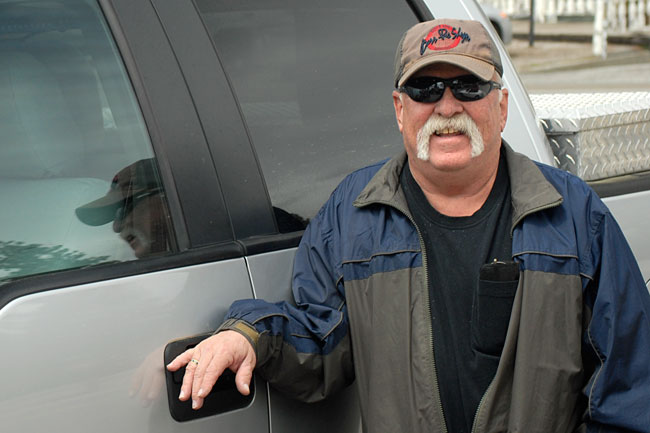
One of my favorite photos of Steve.
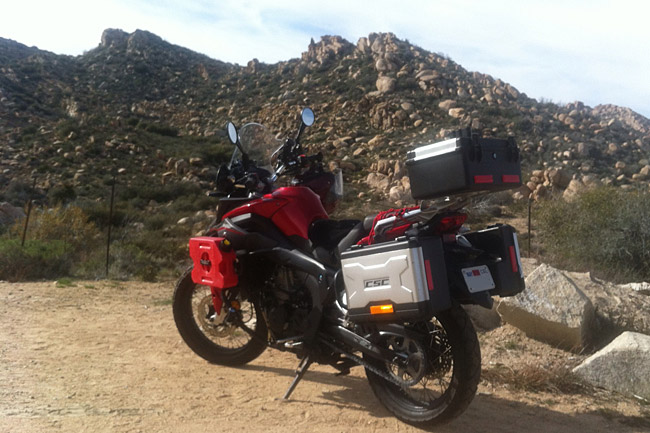
Steve is a serious rider and camper, and he outfitted his RX3 with all the good stuff for disappearing into the boonies. He did a lot of trips up and down the 395 (one of the prettiest highways in America), and the motormaestro even did a guest blog or two about his adventures when I was writing the CSC blog. If you poke around on the CSC blog and search on “Twin Peaks Steve” you’ll find he’s a regular there!
Steve’s RX3 somewhere up along Highway 395. Steve is the real deal; he’s done some amazing trips on his RX3.
What a ride and what a day!
So, how about you? Are you getting out on your motorcycle? Do me and yourself a favor and live large, like Steve, Duane, and the rest of us. Get off your computer, get your riding gear, and get on the road!
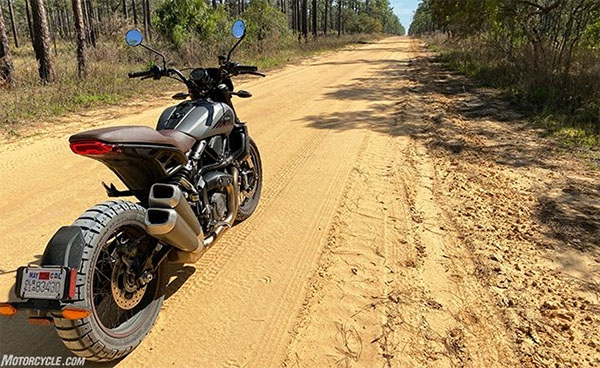
Our very own Joe Gresh was in Daytona last week, except the Daytona show did not go on. The formal show, anyway. What others do or don’t do would never put the binders on a Joe Gresh adventure, and he published the story of his visit and the mighty Indian FTR 1200 Rally on Motorcycle.com. It’s typical Joe G, which is to say it’s great, and you can read it here: