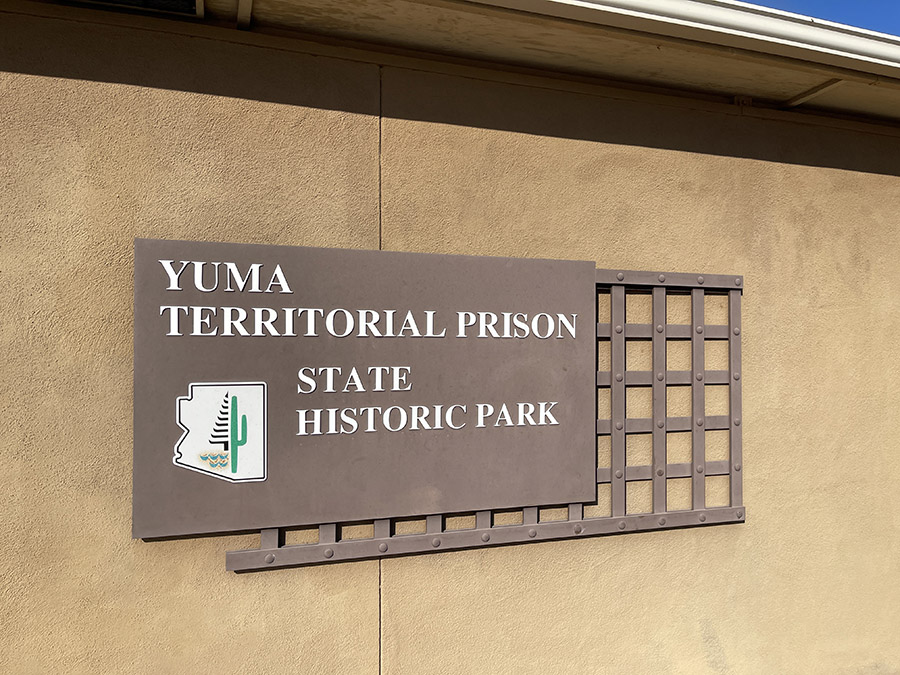
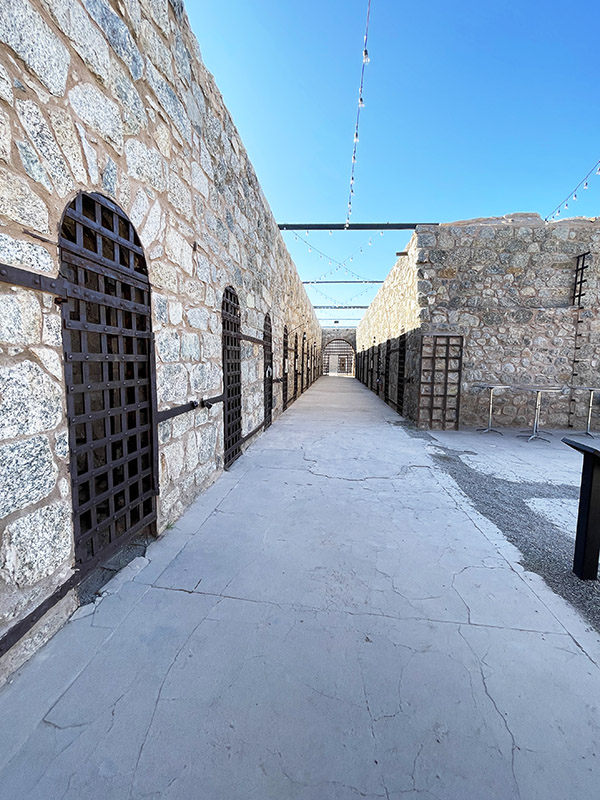
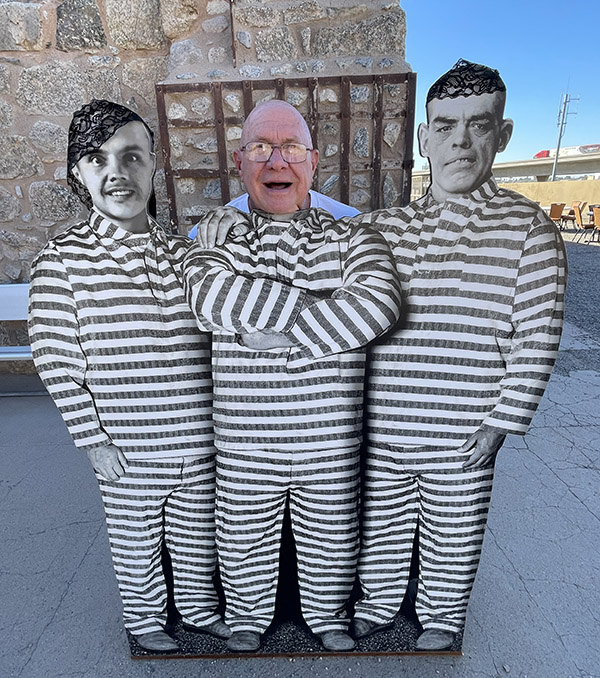
There were four territorial prisons in the early western United States: Wyoming, Montana, Idaho, and Yuma. I’ve been to two of them. Sue and I visited the Old Idaho State Penitentiary last year (it was awesome), and most recently, the Yuma Territorial Prison tucked away in the southwestern corner of Arizona. Years ago, I’d been to the Yuma Territorial Prison on a motorcycle ride with good buddy Dick Scott. It was way more primitive then; it wasn’t much more than a few remains of the original prison with not much identified. That’s not the case today.
After catching up with John at dinner over fish tacos the night before, we had a nice breakfast the next day at the Yuma Denny’s (don’t laugh, it’s my favorite place for breakfast when I’m on the road). After that, it was on to the Yuma prison.
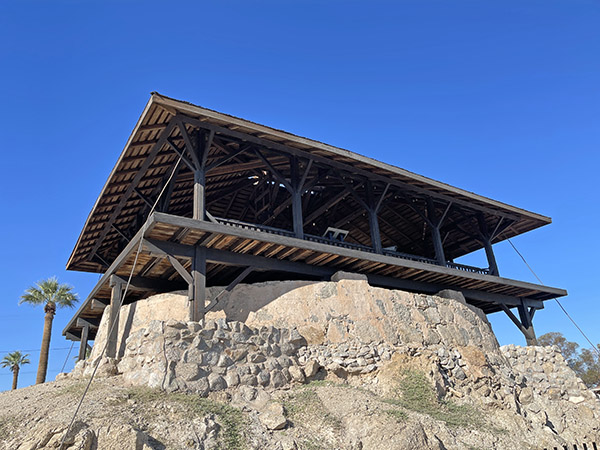
The Tower overlooking the Yuma Prison.
On this trip, Sue and I were on our way home after visiting the Buddy Stubbs Motorcycle Museum in Phoenix (it was awesome) and we decided to divert down to Yuma to visit with my motorcycle riding and hunting buddy, Baja John. It was a good visit.
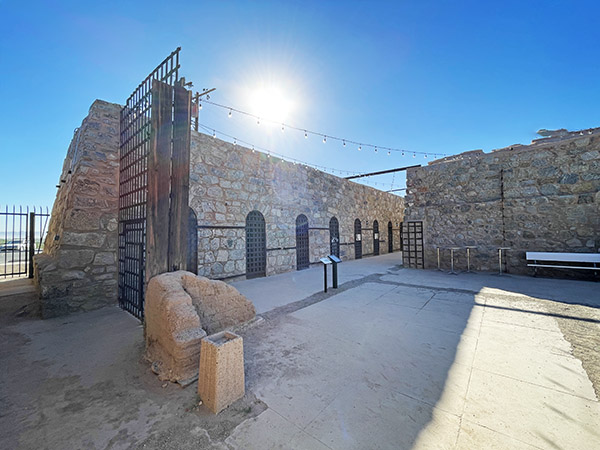
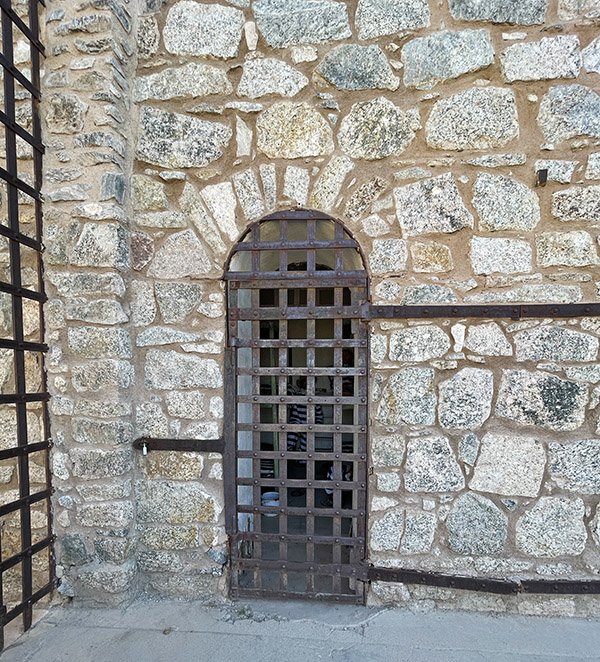
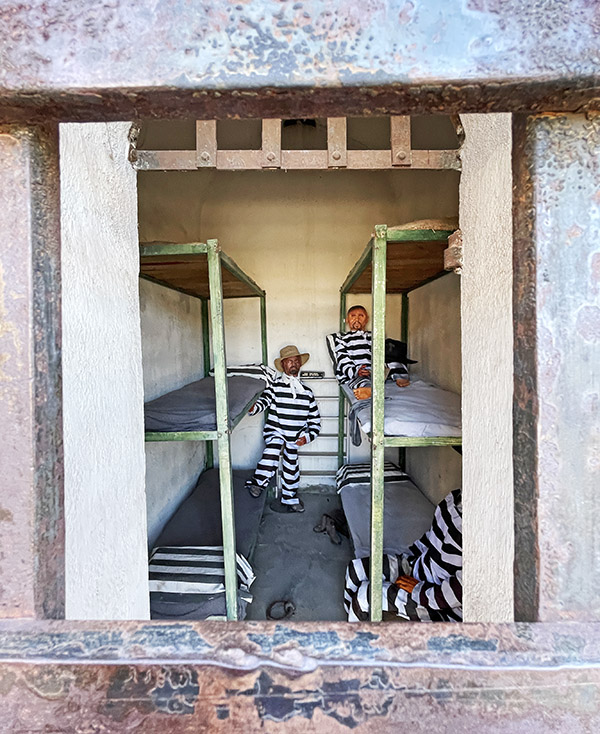
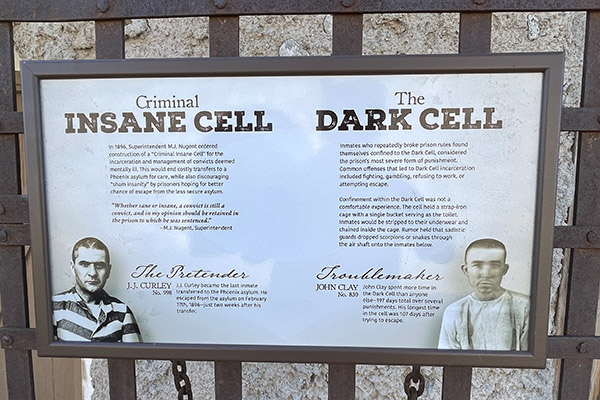
Yuma often sees temperatures over 110 degrees, and sometimes 120 degrees, during the summer months. It must have been brutal being incarcerated there.Bleak. Desolate. Dehumanizing. I see nothing wrong here.If you were an inmate, you’d be home now…Six to a cell. Impressive. High density housing.The Yuma Prison apparently had some interesting houseguests.
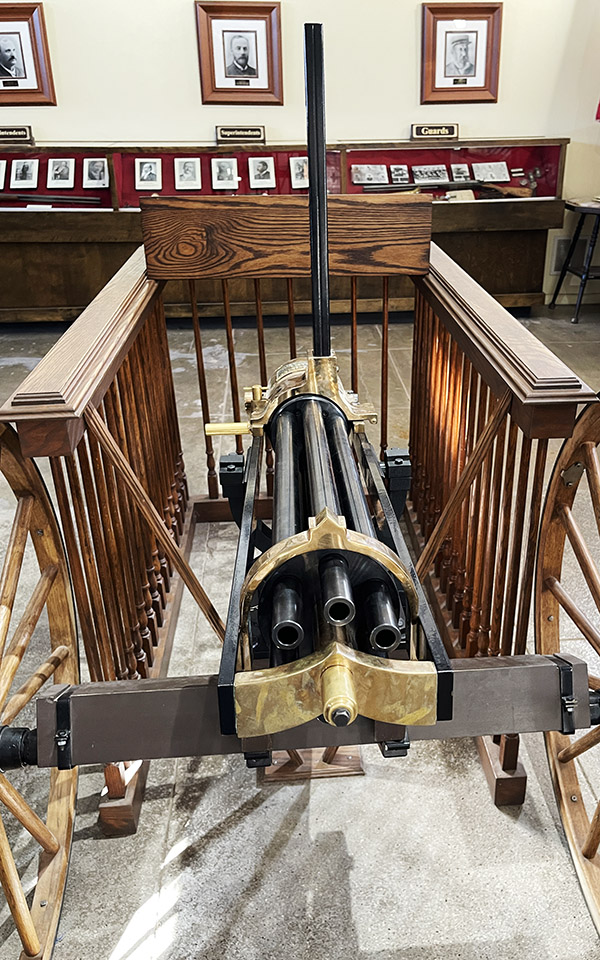
As soon as you enter the Yuma Territorial Prison State Park, there’s a very nice museum. One of the displays that immediately caught my eye was a Gatling Gun.
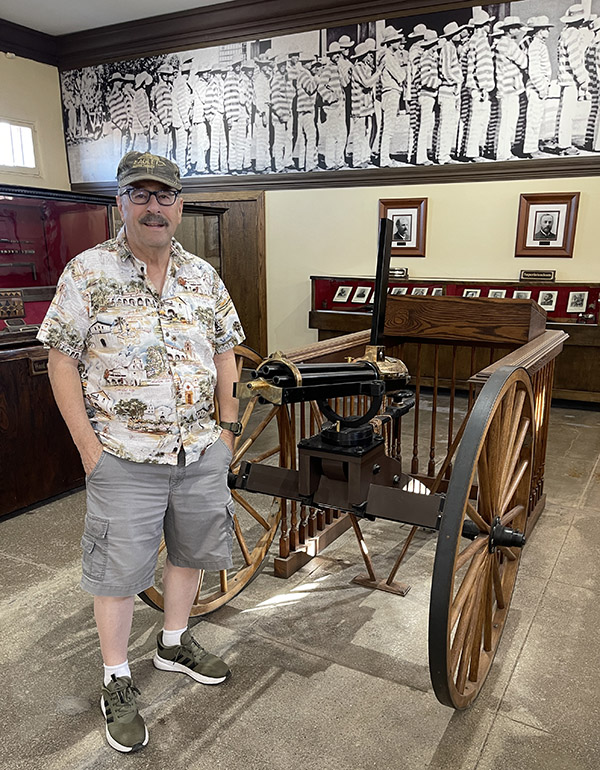
A Gatling in the Yuma Prison museum.The obligatory Gatling pose.
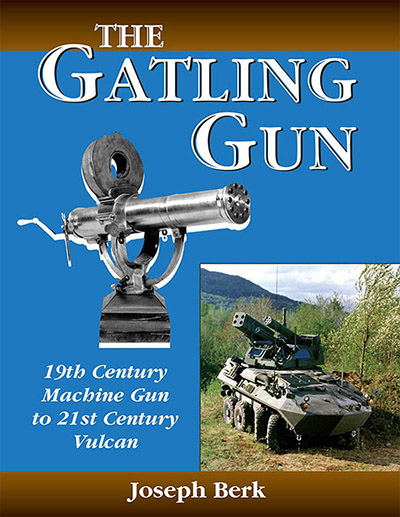
I like Gatling guns. You should, too, and as I always say, don’t way for the movie. Buy the book…
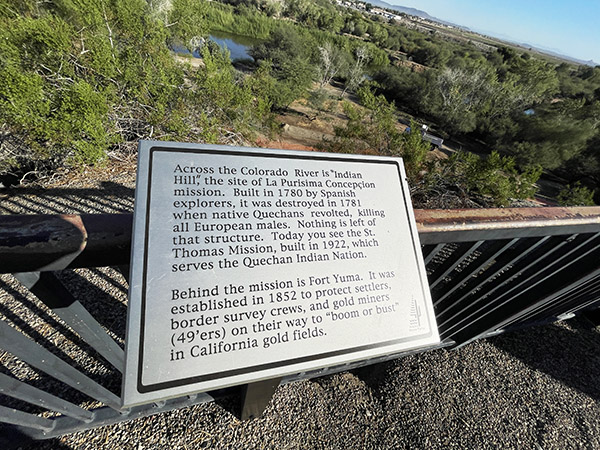
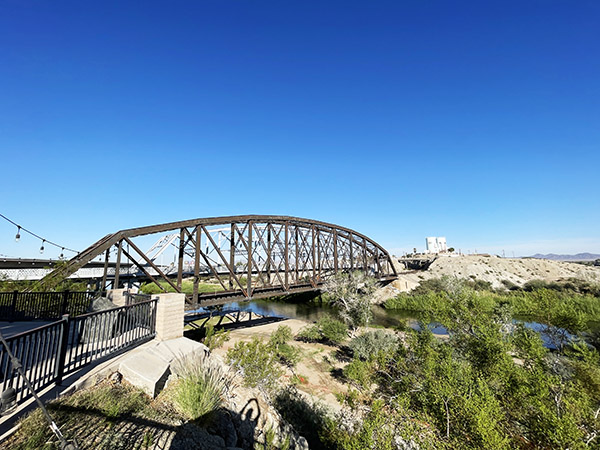
As mentioned above, Yuma is located in the southwestern corner of Arizona directly across the Colorado River from California. It was an interesting and vital stop for many ’49ers who entered California seeking gold. There are scenic overlooks that allow a clear Colorado River view.
That’s the Colorado River, and just across it lies California, the home of high gas prices and left-wing lunacy.A railroad bridge across Colorado.
We had a good time at the Yuma Prison State Park. John is still there, hoping to get out soon based on good behavior. We’ll see.
The alarm rang early last week, and Sue and I were on the road at 5:00 a.m., pointed east on the 210 for the 5 1/2 hour trek to Phoenix and the Buddy Stubbs Motorcycle Museum. It was worth the drive out there.
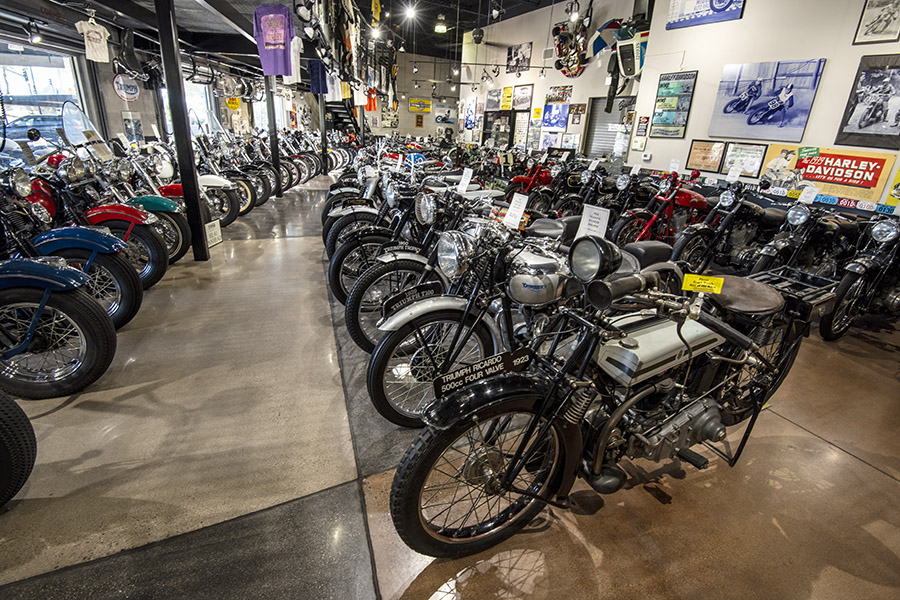
There are more than a few dealers who have a handful of bikes tucked into a corner of their showrooms they call a museum. Not so with the Buddy Stubbs Motorcycle Museum in Phoenix, Arizona. It’s the largest motorcycle museum in the American Southwest, and it’s one of the best motorcycle museums of the many I’ve visited over the last 30 or 40 years. I don’t say that lightly. This place is spectacular.
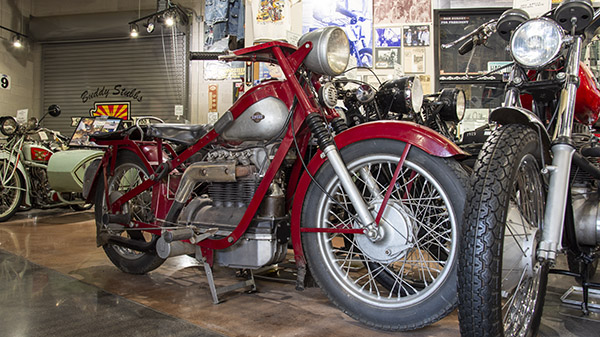
Many marques are well represented. This colors on this early ’60 Noron twin work for me.
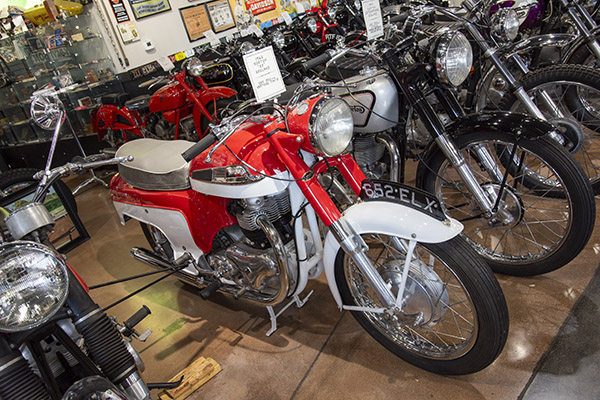
Sue and I visited the Buddy Stubbs Museum recently for an upcoming issue of Motorcycle Classics magazine, and I sure was glad we did. The Museum has 137 bikes (with 124 on display). You might think they’d all be Harleys, but you’d be wrong. All the cool stuff is there, and it’s all vintage. Harleys, Triumphs, BSAs, Vincents, BMWs, Excelsiors, Indians, and a bunch more. It seems like every motorcycle in the Museum has a story.
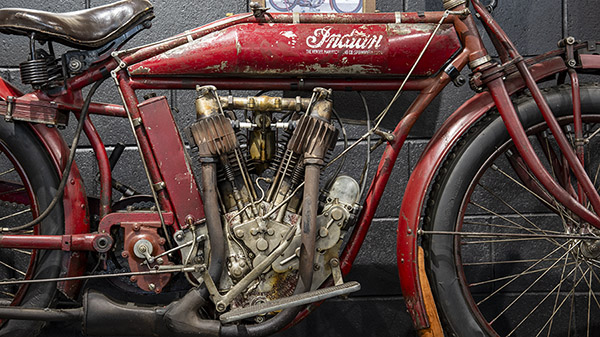
The 1913 Indian Buddy commuted on between dealership locations.
One of the stories is about the 1913 Indian in its original unrestored glory. You might recall that about 25 years ago Harley made their dealers build new and modern showrooms. Buddy Stubbs was one of those dealerships, and while the new location was under construction, Buddy rode between the old and new locations daily on that 1913 Indian. That’s cool.
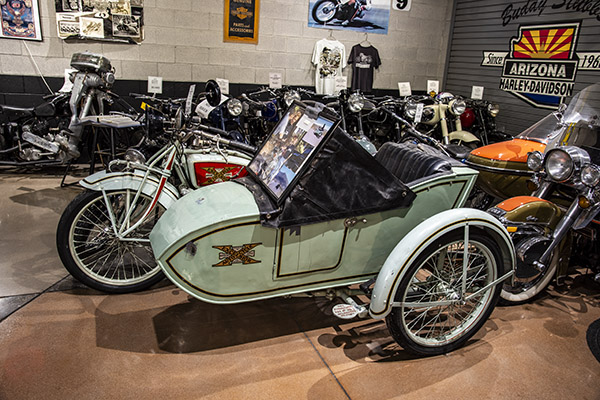
Buddy’s Cannonball Excelsior. All the spares rode in the sidecar and there was no chase vehicle.
Another bike with a story is the 1915 Excelsior, with sidecar, that Buddy rode in the 2010 cross country Cannonball Run. Okay, you might be thinking a lot of guys did that. Yeah, but…and the “yeah, but” in his case is that a 70-year old Buddy Stubbs made the ride with no chase vehicle. He carried all the parts he thought he might need in the sidecar. Wow.
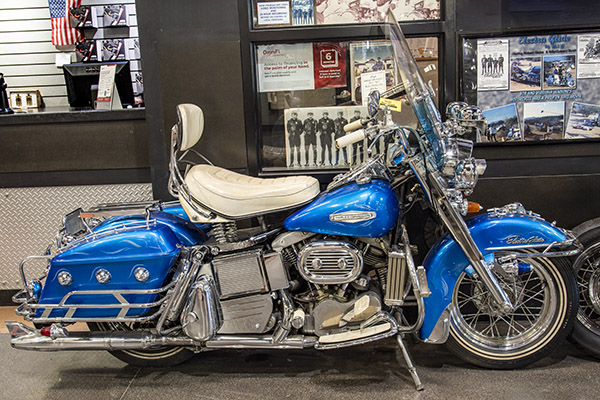
Yes, it’s the actual Electra-Glide in Blue. The real one that we all saw in the movie.
Remember the 1973 Electra-Glide in Blue movie? Buddy taught Robert Blake how to ride a motorcycle for that movie, and the motorcycle that Blake’s felonious motor officer buddy bought with stolen money (in the movie, not in real life) currently sits in the Buddy Stubbs showroom. Blake went on to a successful TV series (Baretta), and then he fell from grace when he murdered his wife (which he got away with in the criminal trial, although he was later found financially liable in a subsequent civil case). It’s tough to convict a movie star here in the Golden State.
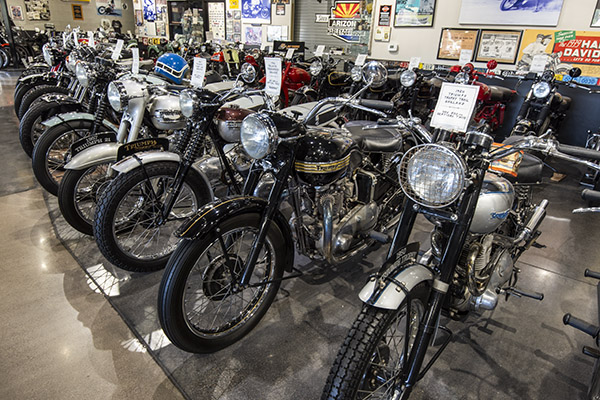
The black T-Bird (second from right) was The Wild Ones backup bike.
Speaking of motorcycle movies, the grand-daddy of them all has to be Marlon Brando’s The Wild One. You will recall that Brando rode a Triumph Thunderbird in that movie. The producers kept a spare Triumph Thunderbird on set during the production. You know, just in case. That spare T-Bird is in the Buddy Stubbs Museum.
A four-cylinder Nimbus. It might have made it into our ¿Quantos Pistones? series had I seen it sooner.
There’s a whole section here on ExNotes focused on our dream bikes. Satisfyingly, several of those are in the Buddy Stubbs Museum, including lots of Triumph Bonnevilles, Harley Cafe Racers, and the Harley XR1000.
By any measure, Buddy Stubbs (who at age 85 is still with us) is an amazing man. You can even buy a book about Mr. Stubbs, which I did while visiting the dealership. I have a signed copy.
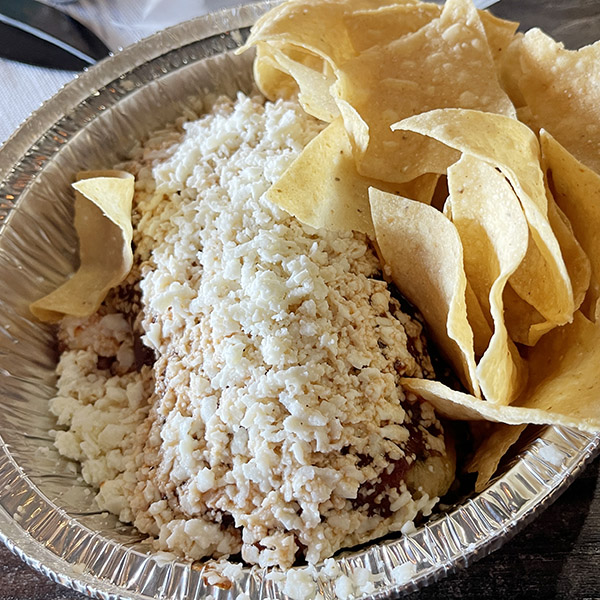
A chile relleno tamale. Muey bueno!
Hey, one more thing that I’d be remiss to not mention in this blog. Stop for lunch at the Tamale Factory, which is just 8/10ths of a mile up North Cave Creek Road from the dealership. I had the chile relleno tamale and Sue had the chicken version. Both were fantastic.
My sister Eileen is a time-share person, and she frequently swaps places to stay with other time-share owners. She recently landed a suite of rooms at the Lawrence Welk Resort in Escondido, so she and Susie and I stayed there for a week. I didn’t realize this before our visit, but there’s a very cool winery and museum literally next door to the Welk resort. The entrance to the Deer Park Winery and Auto Museum is only a few feet away from the Welk resort entrance, so on our first day there we stopped for a visit and a wine tasting.
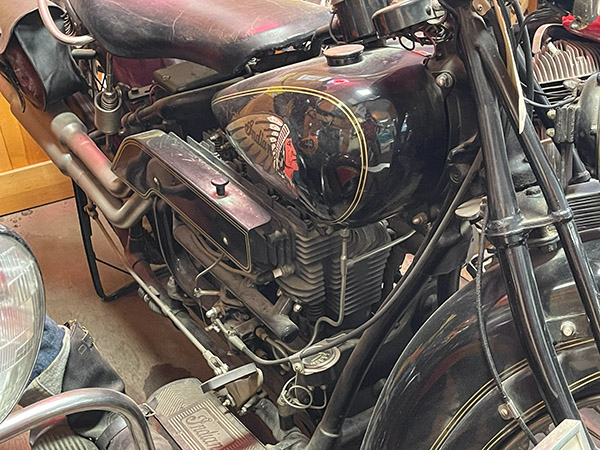
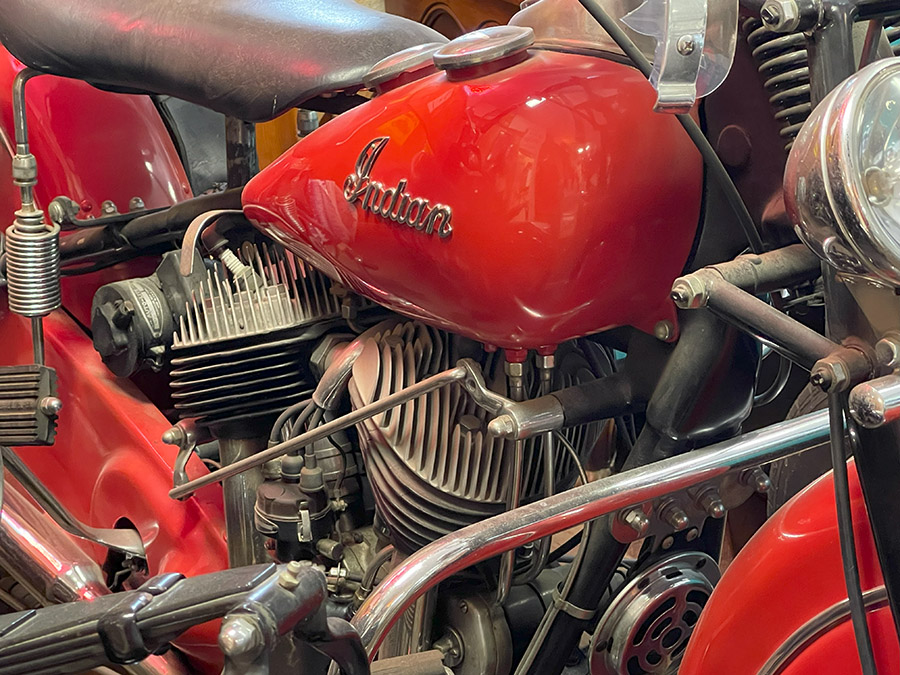
I was surprised. I had never heard of the Deer Park Winery and Auto Museum before, the collection was substantial, and there are even a few motorcycles (vintage Indians and a Harley, to be specific). Wow, this was going to be fun. I did not have my Nikon, so everything you see here I shot with my iPhone.
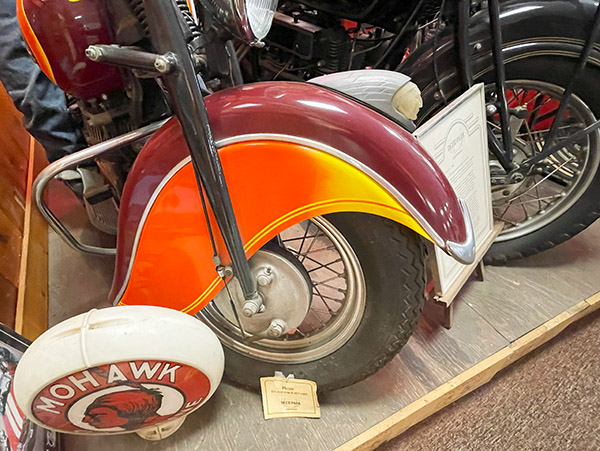
Vintage Indians. You gotta love those paint themes.An Indian Four.An Indian V-twin.
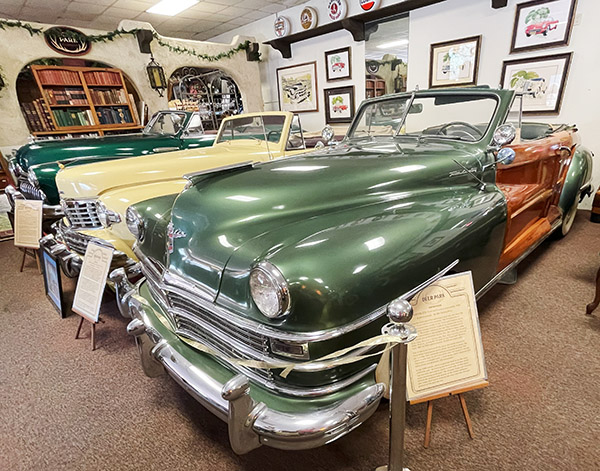
When we entered, I asked the guy at the counter if the Museum had a focus, and his answer was immediate: Convertibles. And boy oh boy, did they ever have an impressive collection.
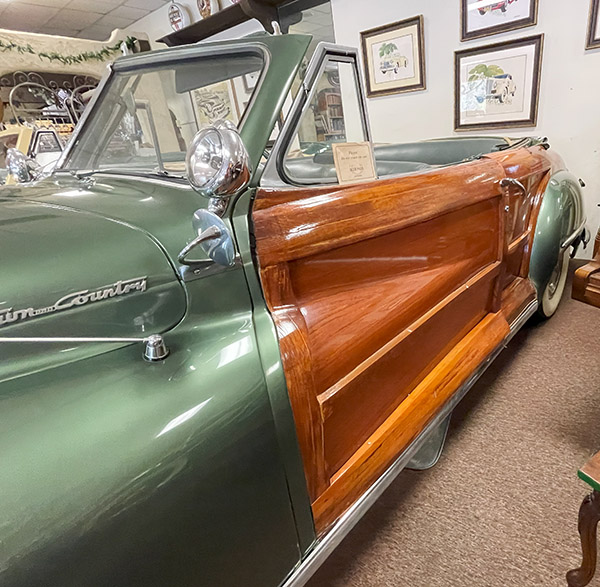
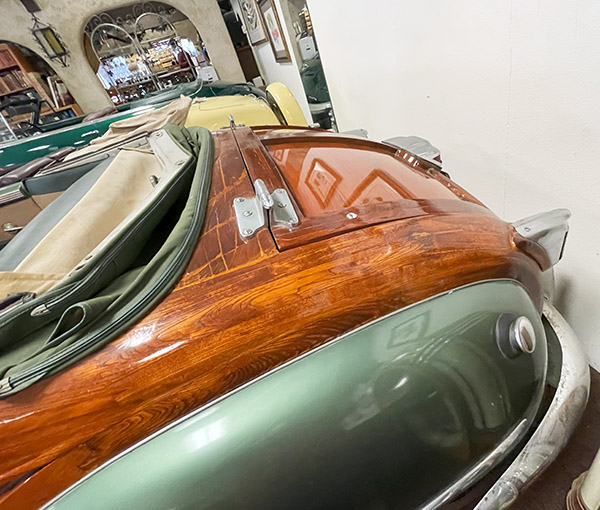
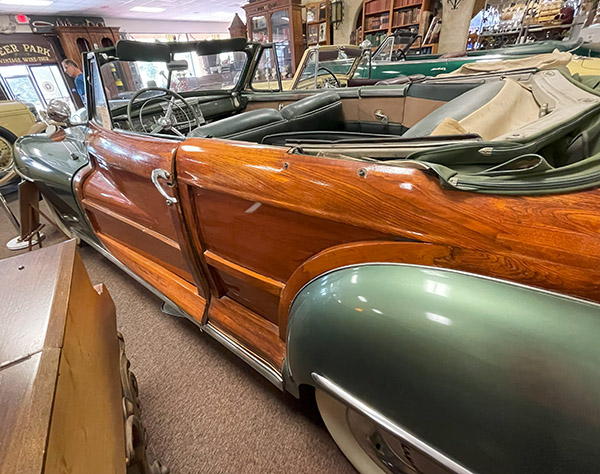
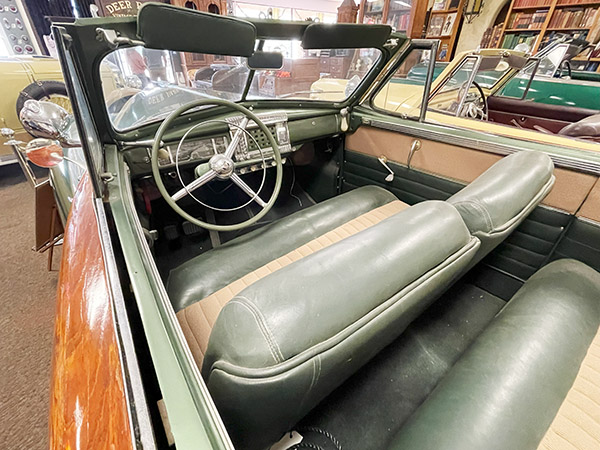
A Franklin convertible. These were a luxury American motorcar. They had air cooled engines. See our blog on the Franklin Automobile Museum in Tucson, Arizona.A beautiful 1948 Chrysler Town and Country convertible.Imagine that: A woody convertible! At $3,395 (a lot of money in 1948), Chrysler only sold 8,369 of these. Like the initial years of the Chevrolet Corvette, the Woody Town and Country convertible’s job was to get people into the showroom, where salesmen could convince to buy less-expensive models.There was real Arkansas white ash beneath what you see here; the wood grain is a decal over the real wood. Even back in 1948, wraps were an in thing.I like this car. I took a lot of photos of it.Nice. Very nice.
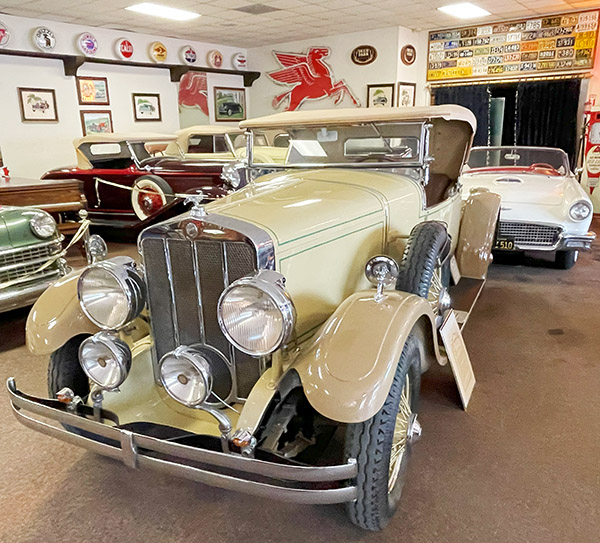
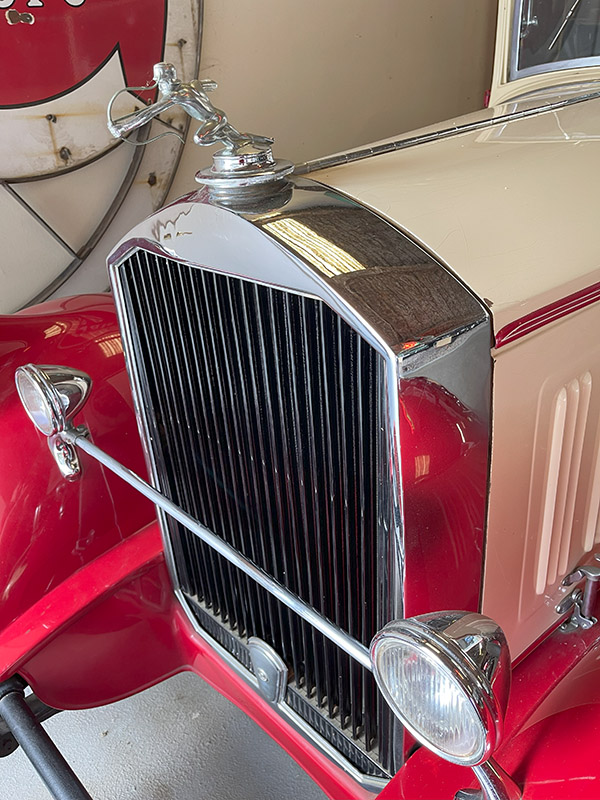
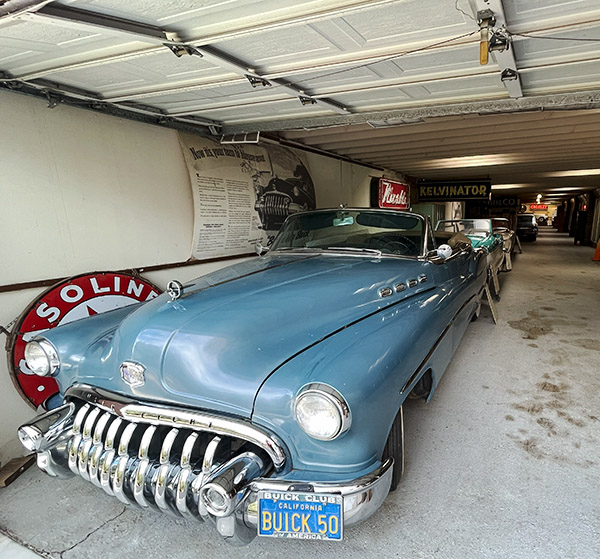
The Museum consists of three buildings that display over 100 cars. It starts with a collection in the main entrance building. After seeing it, walking a few feet down the sidewalk brought us to another display area, with a lot of cars parked side by side, crammed into sort of barn-like building. These were cars mostly from the 1950s and 1960s, and they were fun to take in. I think they are, for the most part, restored and repainted cars. I grew up in that era. Lincolns, Imperials, Buicks, and many more, and all were convertibles. A Pierce Arrow was just inside the entrance, parked in front of a 1950 Buick.
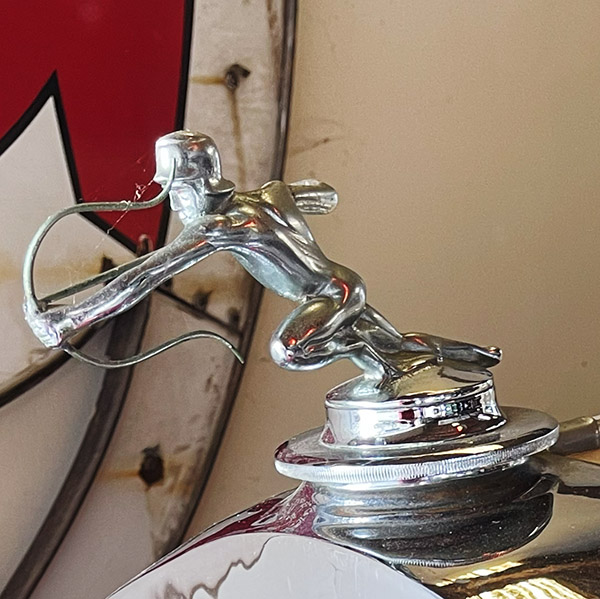
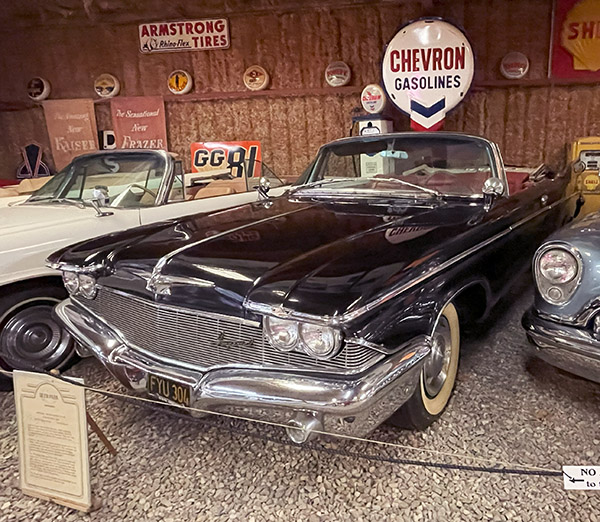
A Pierce Arrow convertible.A close up of the Pierce Arrow radiator cap. I can only imagine what such a radiator cap would cost today.A 1950 Buick convertible.A 1960 Imperial Crown convertible. Imperial produced 618 of these costs. MSRP in 1960 was $5,774. They had a 413-cubic-inch engine and a 129-inch wheelbase. Fuel economy was not a concern in 1960.
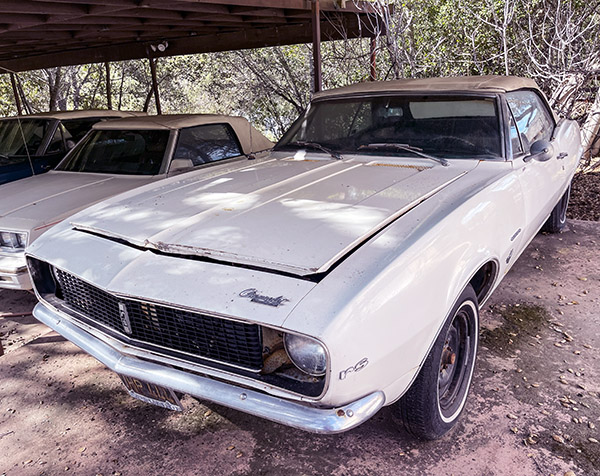
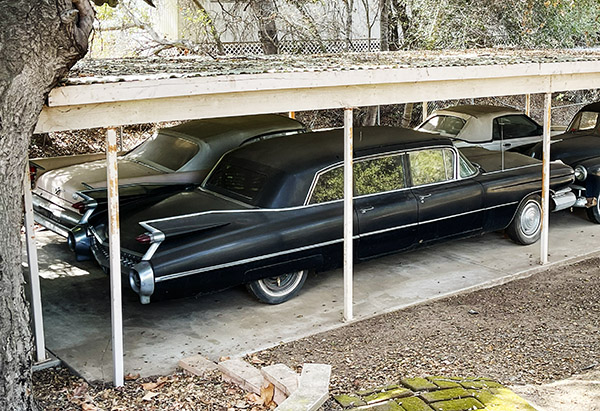
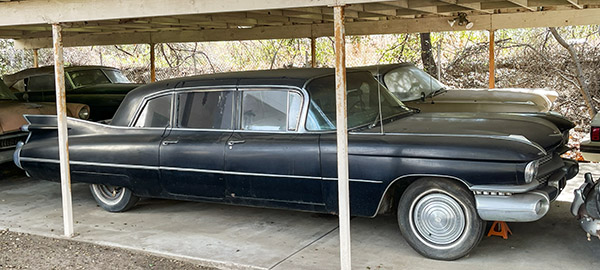
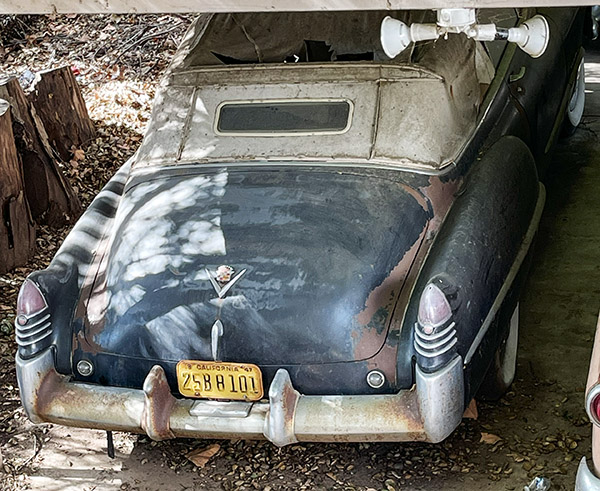
When walking from one building to the next, we saw other convertibles scattered around the grounds in unrestored condition. They were cool, too, wearing the patina you’d expect on cars that were new when guys like Eisenhower, Kennedy, and Johson were in the White House.
A late ’60s Camaro convertible awaiting resoration.A 1959 Cadillac limo. I’d kind of like to own one of these, too.Another view of the ’59 Caddy.An 1950’s Caddy convertible. It’s not on display yet. I spotted walking around the Deer Park grounds.
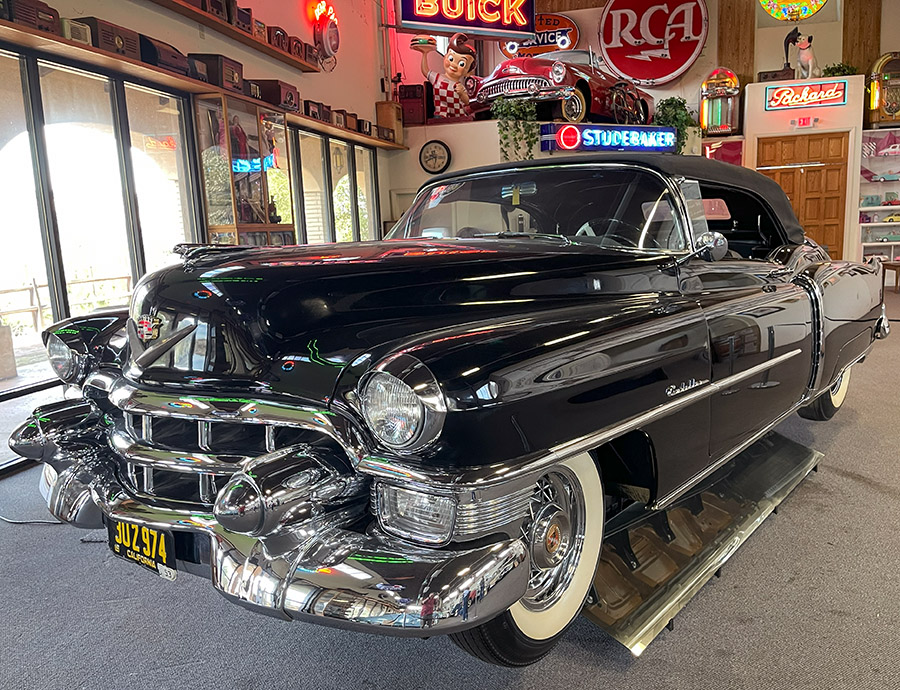
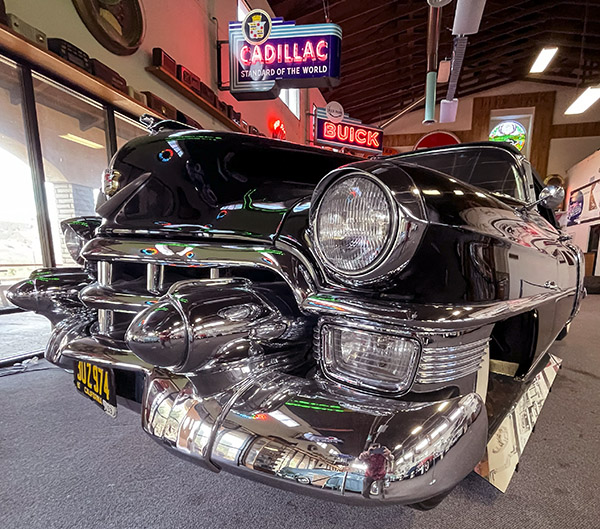
The entry building and the long barn-like building were interesting. The best part was yet to come, though. It was showroom on top of a hill. We made the trek up to that building, and I was blown away by an absolutely stunning 1953 Cadillac convertible in showroom condition. It’s the photo featured on top of this blog.
The Museum’s centerpiece: A 1953 Cadillac convertible.
The Cadillac you see above was recovered from a fire. The restoration process was essentially a manufacturing venture. The car was stripped down to the frame, and then rebuilt with all new, hand-formed, hand-painted, hand-rubbed body panels. It is stunning. I want it.
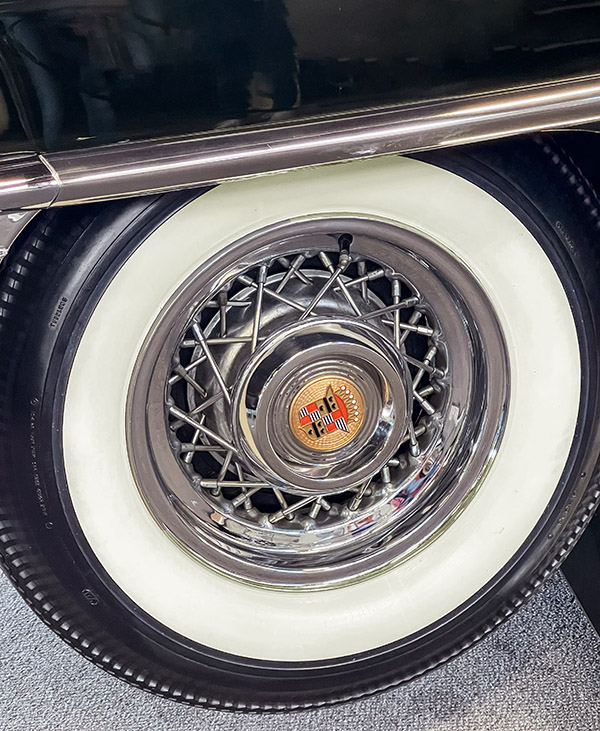
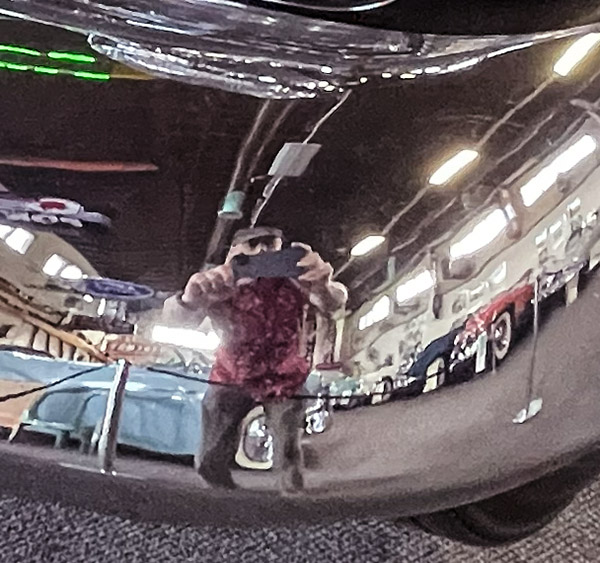
The ’53 Caddy convertible’s wire wheels.An obligatory selfie: Me in the ”53 Caddy’s bumper.
We enjoyed a leisurely walk down the steps to get back to the entrance building, where the Deer Park Winery and Museum offers wine tasting for a modest fee. The wine tastings include five varietals, which vary depending on the time of year (or, you can opt for six wines and select the ones you want). We went with the five wine option. They were all good and the tastings were not small. One was exceptional. That was a dessert wine that I believe would pair exceptionally will with a slice of carrot cake (I went to a sommelier presentation once many years ago, so I now consider myself an expert qualified to make such pairing suggestions).
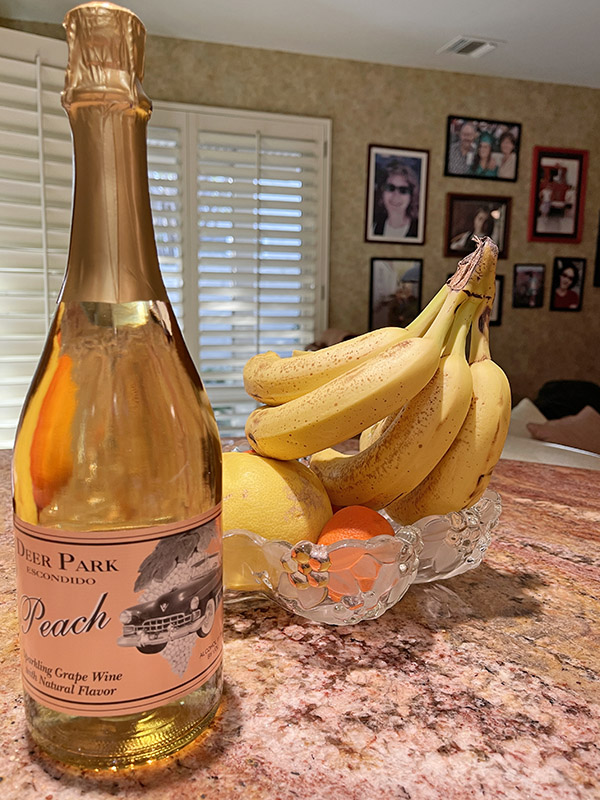
Deer Park Peach wine. It’s peach-flavored champagne, basically, and it’s good.
The Deer Park Winery and Auto Museum is located at 29013 Champagne Boulevard just north of Escondido, California (the phone number is (760) 749-1666. Tickets are reasonable at $14 (if you’re in the military or senior citizen you can get in for $12).
Folks my age love steam locomotives. I think it’s because they were still pulling trains and generating revenue when I was a kid. The Lionel thing probably figures into the equation, too. Most guys my age had a Lionel train set when they were boys. I did, and I loved it. Some guys are still into it, like good buddy Steve. Anyway, the point is when I’m traveling, I never miss an opportunity to visit a railroad museum.
A few months ago when we were back east, our travels allowed us to swing by Scranton, Pennsylvania, and visit the Steamtown National Historic Site. It’s part of the US National Park network, but if you don’t have the senior discount card, don’t worry about it. Admission is free.
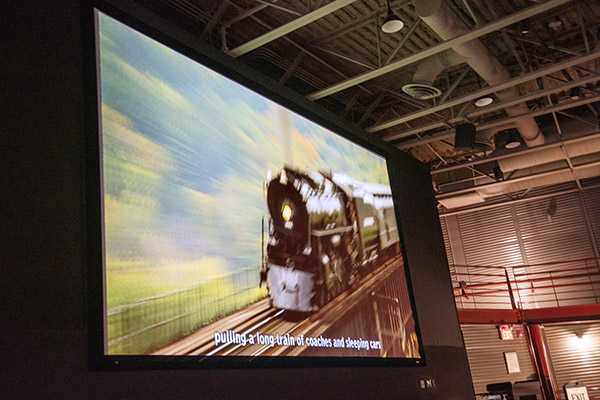
The tour started with a movie, and it was great. It told a lot about the early days of railroad travel in America, and it had an interesting section on mail cars. I’ll get to that in a second.
The free movie that starts every tour of the Steamtown National Historic Site.
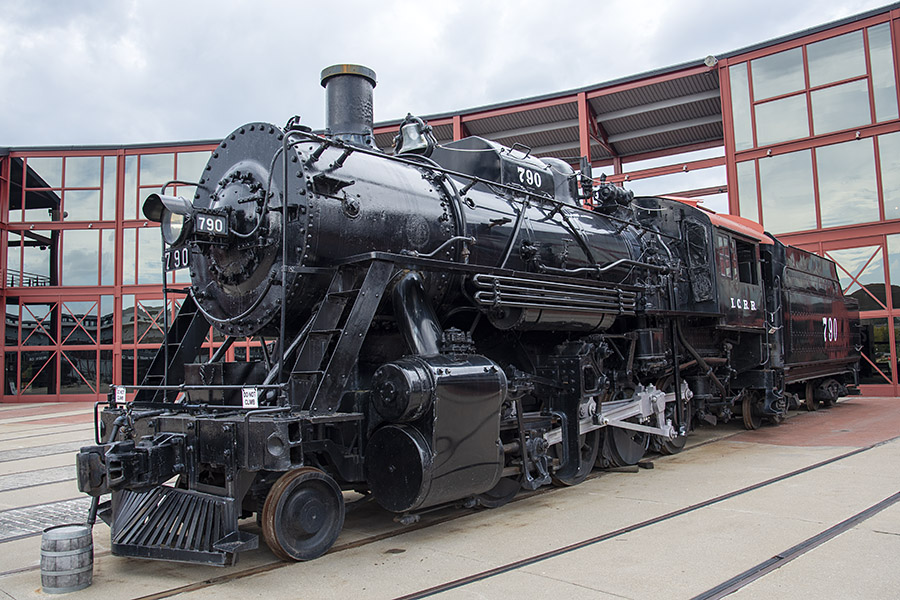
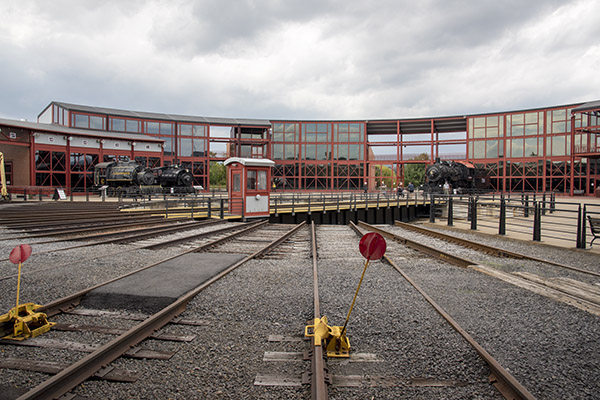
After the movie, you follow the marked path and see several locomotives and a mail car. Some of those photos are coming up (I used my Nikon D810 and the 24-120 Nikon lens for all the photos you see here). After that, the path takes you outside again to see the roundtable. That’s what locomotive repair facilities used to rotate locomotives and put them on the right tracks. Here’s a photo of the roundtable.
A locomotive maintenance yard roundtable.
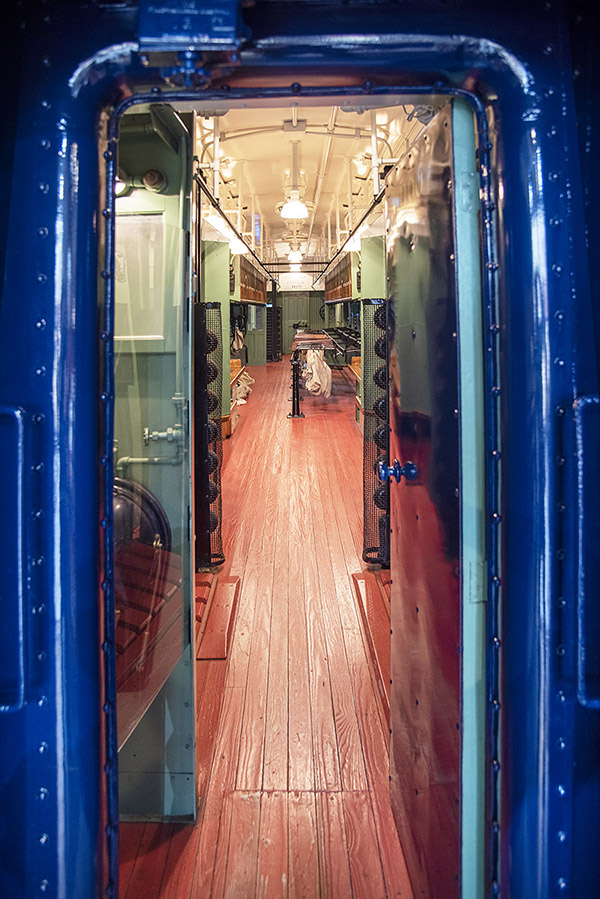
It might seem mundane, but the movie told an interesting story about this aspect of railroad history and seeing an actual mail car immediately after was a nice touch.
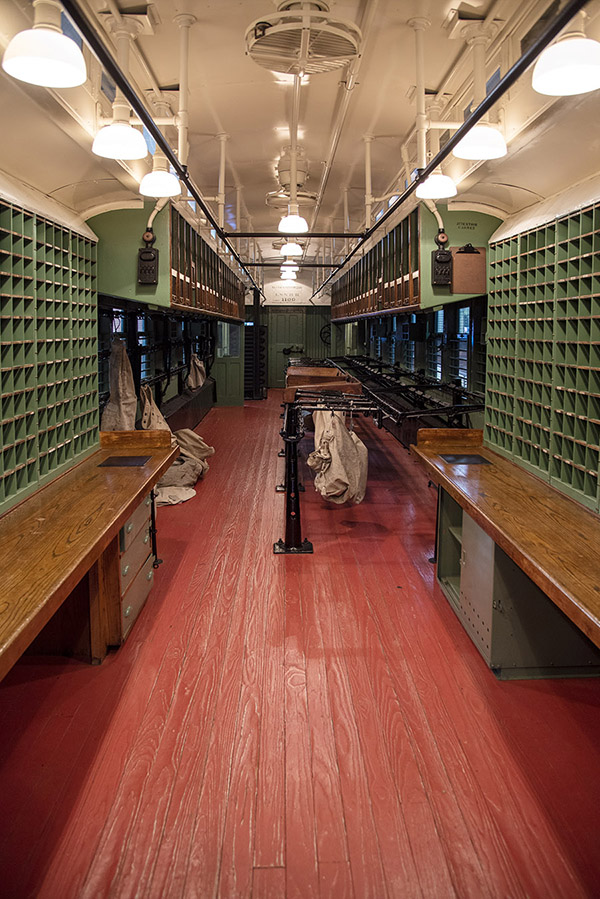
The mail car interior.Another mail car photo. The trains didn’t stop to pick up the mail. Mail bags were hung in each small town, and the mail cars snatched them as the train rolled across America. Interesting stuff.
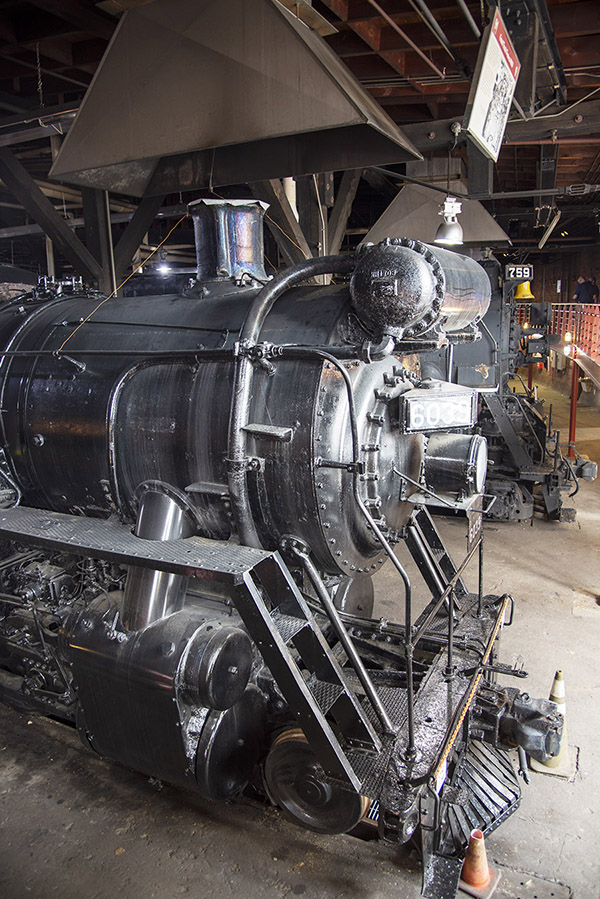
The locomotives in the maintenance shop were interesting. Photographing these would ordinarily be a challenge because of the dimly-lit buildings and the black locomotives, but the Nikon 810 and the 24-120 lens vibration reduction technology handled it well. That combo has superior low-light capabilities. All of these photos are hand-held shots with no flash.
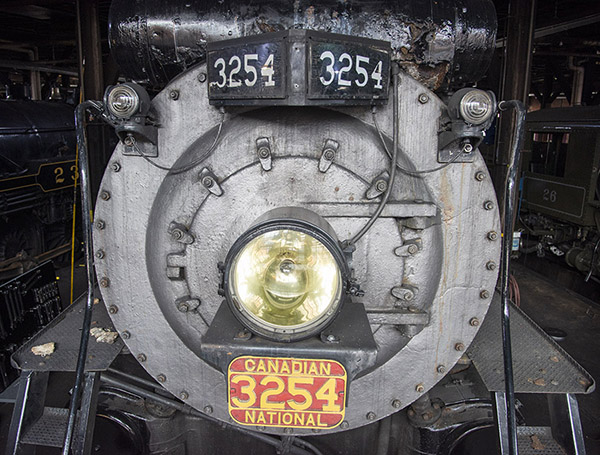
The locomotives were huge. As a mechanical engineer, it was a real treat to see what the state of the art was a century ago.Another interesting shot.
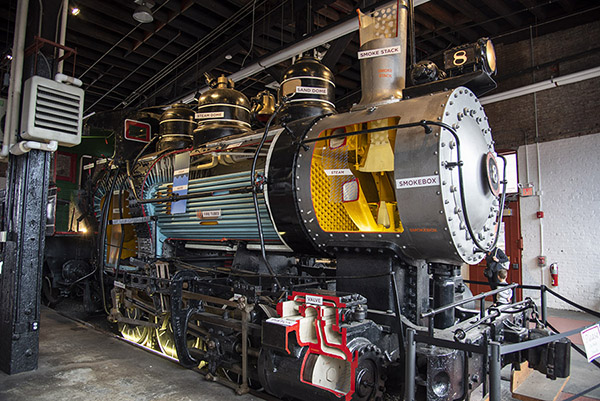
The displays included a cutaway locomotive that showed a steam locomotive’s innards. I had studied steam generation as an undergraduate engineering student and like I said, I was a Lionel guy when I was a kid, but I had no idea. This stuff is fascinating.
There was a lot going on inside these things.
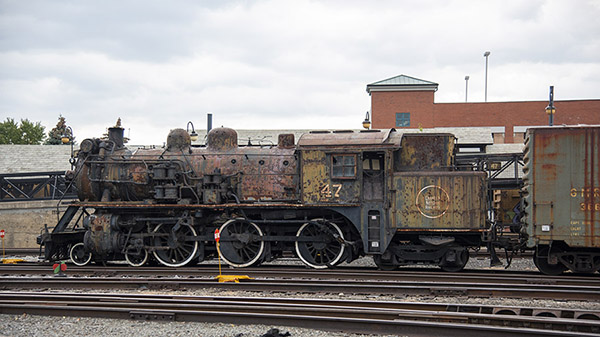
We walked around outside and I grabbed photos of some of the locomotives in the yard. This one was obviously unrestored. It was pretty cool.
It’s only original once.
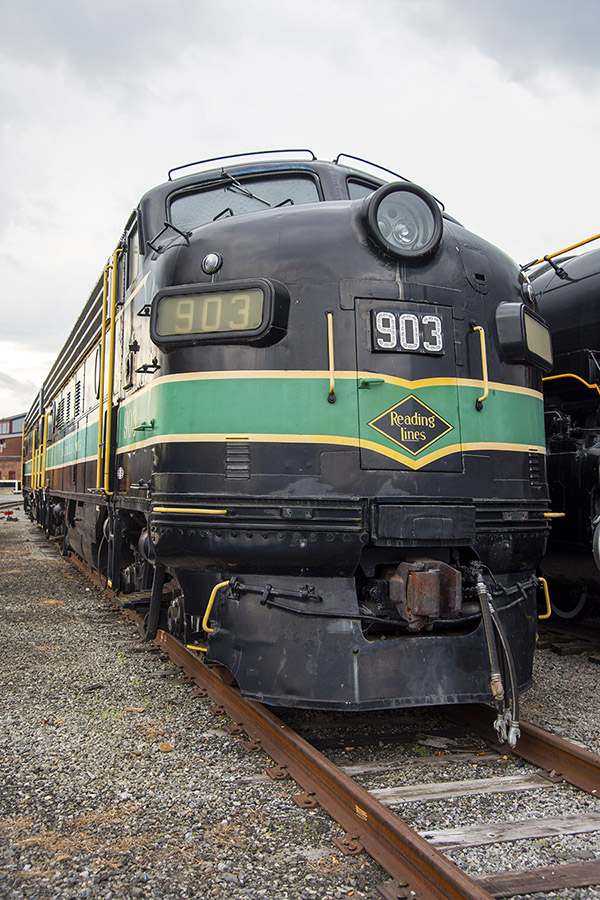
The rail yard had a Reading Lines diesel electric locomotive on display, too. Most folks just call these diesels, but propulsion was actually via electric motors in the trucks (a truck is the subchassis that carries the wheels, the axles, and the electric motors). The diesel engine is used to turn a generator that provides electricity to the motors. If this sounds suspiciously like a modern hybrid automobile, it’s because it is.
A diesel electric locomotive: The worlds’ first hybrid.
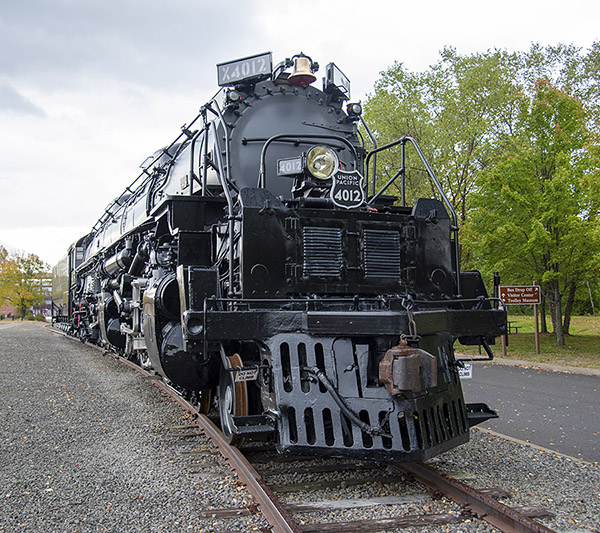
As we left, it was just starting to rain. It was overcast the entire time we visited Steamtown National Historic Site. I was okay with that, because overcast days are best for good photography. I stopped to grab a few photos of the Big Boy parked at the entrance to the site.
Big Boy 4012, one of only 25 ever built.
These Big Boy locomotives are a story all by themselves. They were the largest steam locomotives ever built, designed specifically for the the Union Pacific Railroad by the American Locomotive Works. They are articulated, which means their 4-8-8-4 wheel set (4 little wheels, 8 big drive wheels, 8 more big drive wheels, and then 4 more little wheels) are hinged underneath the locomotive so the thing can negotiate curves. The Big Boys were created for the specific purpose of pulling long trains up and over the Rocky Mountains. They only made 25 of them. We had one here in my neighborhood a few years ago and we wrote about it on the blog.
Which brings me to my next point. I started this blog by saying that folks my age love steam locomotives. I guess that pertains to Gresh and me, as it seems we’ve done a number of ExNotes blogs that include railroad stuff. Here you go, boys and girls.
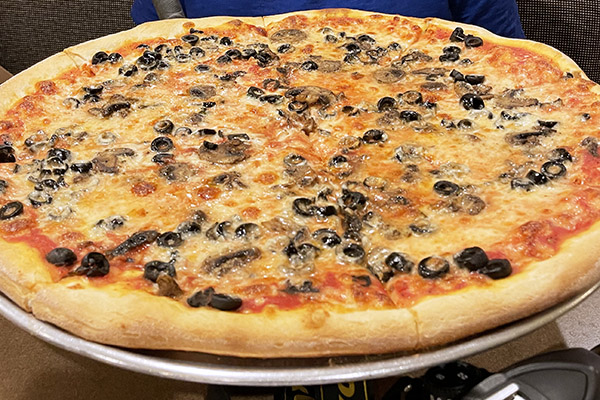
Pennsylvania is a beautiful state. I grew up one state over (in New Jersey), and a lot of the folks I knew in New Jersey relocated to Pennsylvania because of the more rational tax structure. There are beautiful motorcycle roads in Pennsylvania, too, once you get off the freeways and start exploring. If you make it to Scranton, the place has great restaurants, and like most east coast locales, the Italian food is the best in the world (even better than Italy, in my opinion). Try Vincenzo’s for pizza. It was awesome.
A Vincenzo’s delight. Thin crust, the right toppings, and wow, was it ever goood!