Cheap is good. In a world of $20K, $30K, $40K, and $50K motorcycles, it’s especially good.
The idea of flying to another continent, buying a cheap motorcycle, riding cross country, and then selling the bike and flying home is an appealing one. That’s why when good buddy Marty sent a link to this video, I knew I would watch it. I enjoyed it and I think you will, too.
I like single-cylinder inexpensive motorcycles, having toured the Americas and China on RX3/RS3 motorcycles (which are Zongshen 250cc singles). I like Enfields, too, and I wanted to learn more about the Himalayan. When Gresh and I tested Enfields down in Baja, I liked the Enfield Interceptor so much I bought one when we returned. We also had an Enfield Bullet on that Baja ride (it was their 500cc Bullet). Both Gresh and I really wanted to like the Bullet, but it was a bust. The Bullet had experienced several breakdowns (read my take on the Bullet here and here, and Gresh’s take on the same bike) and because we didn’t trust the bike, we turned around at Guerrero Negro instead of riding further south to Mulegé.
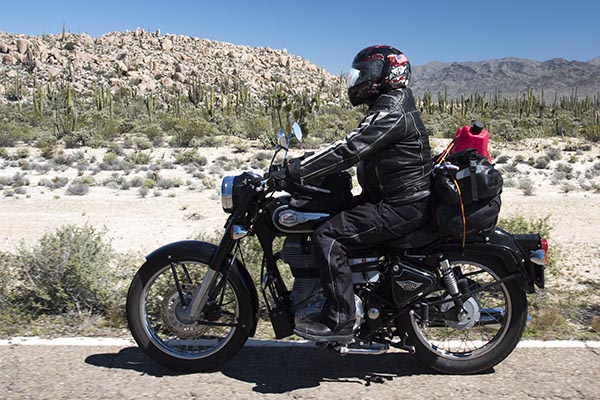
Gresh on a Bullet in Baja.
The Bullet was considerate, though. Its last breakdown occurred just as we arrived home (it was a stripped rear sprocket at just a few thousand miles; something I had never previously encountered on any motorcycle). In the above video, the single-cylinder Enfield Himalayans didn’t suffer that fate, so my assumption is the breed has improved.
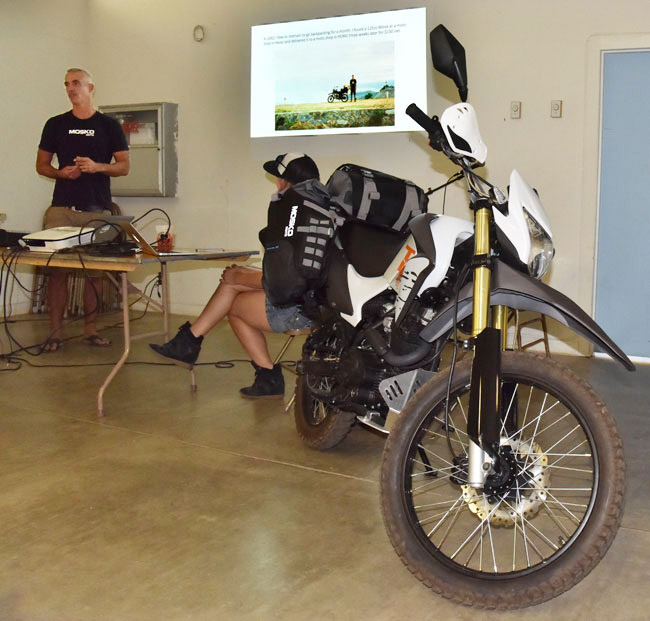
Peter Day of Mosko Moto presenting at an ADV event, with a CSC TT 250 as a prop.
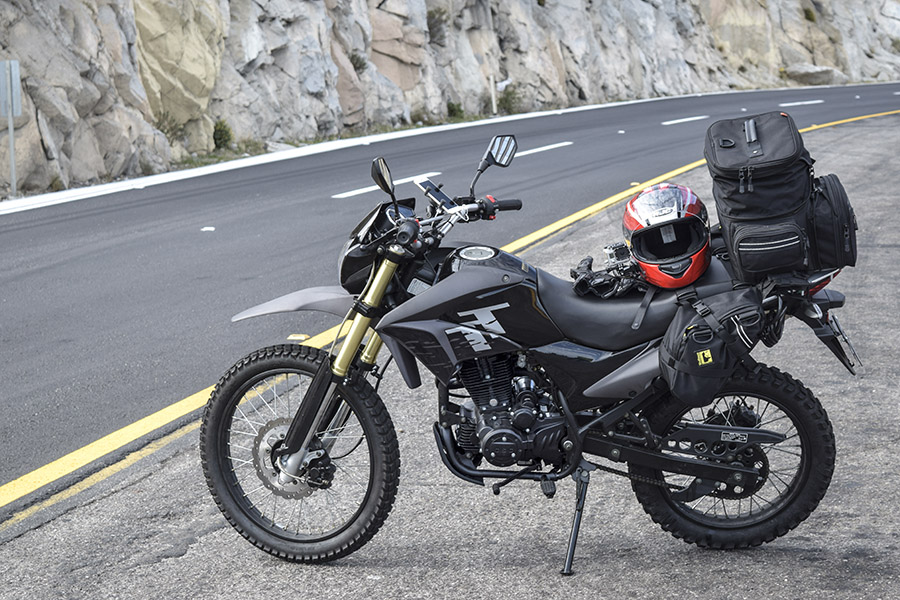
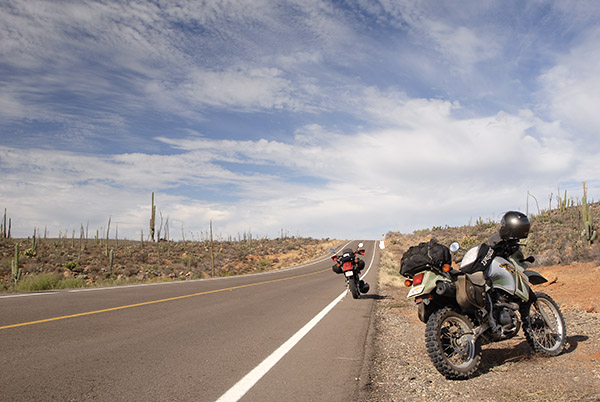
I met another guy who used the same approach for his touring. That guy is Peter Day, CEO of Mosko Moto luggage. I met Peter at an adventure touring event in Mariposa, California, several years ago. Peter flies into whatever third-world country he wants to tour with no motorcycle and no firm plans, he finds and buys a used Chinese motorcycle for a couple of hundred bucks or so wherever he goes (central America, Africa, you name it), he rides for a month or two or three, and then he sells the bike before getting on an airplane home. Peter especially likes Chinese bikes based on the Honda CG engine, like the CSC TT 250 I enjoyed owning and riding so much (the photo atop this blog is my TT 250 in Mexico). The bikes that copy the Honda CG engine are simple, reliable, inexpensive, and designed to survive. Flying someplace off the beaten path, buying a cheap bike, riding the wheels off it, selling it, and then flying home is a good approach.
Subscribe to ExNotes for free!
We need your support! Do what you can to help ExNotes stay in the black!
Motorcycle riding gives you a good excuse to go places and see things, not that you need an excuse. I like a steam train, I have a motorcycle, thus riding up to Ogden, Utah to see a big old steam train seemed like a sensible thing to do.
My Carrizozo Mudchuckers buddy, Mike, was all for the idea so we planned to meet Big Boy, the last of the steam locomotives, in Ogden, where the train would stop for two days. As we waited for the appointed day the normally beautiful New Mexico weather cooled and became cloudy with rising damp. Ogden, being 900 miles north of us, was experiencing the same weather degradation except much, much colder.
Just a few days before leaving there was snow and rain in Utah. A 75-car pile up in Denver, and rain and cold all along our route north, had us thinking “this ride will suck.” I kept watching the weather reports hoping for a better forecast, but it looked like miserable weather the entire trip north only starting to ease off a bit on the Monday we would start riding home from Ogden.
I have plenty of cold weather riding gear. Things like electric vests, heated grips and a plastic rain suit can keep you warm enough. I’ll use them if there is no other option. But there was another, simpler option: Don’t ride into the rain and cold.
One day before were planned to leave I called the Mudchucker and said: How about we go to Willow Springs for vintage motorcycle racing instead? Call me a fair weather rider but sunny California was an easy sell. We dumped Ogden and the Big Boy steam train faster than oil prices rose after we bombed Iran.
The Mudchucker taking a break from headwinds.
The plan worked. We left town a day later than the Big Boy run. That allowed some of the bad weather to move east. Our first day on the road was cool, cloudy but comfortable, the second day we had strong headwinds and 40-degree cold, but nothing nearly as painful as the stuff we would have experienced earlier and further north.
We mostly followed old Route 66 west jumping on and off Interstate 40 as required. It was an odd time of year I guess. The entire town of Seligman was closed: Gas stations, food markets, all shuttered. Further on we rolled into tiny reservation villages with nothing available to buy or rent. I admit, traffic was light on historic Route 66. If a guy set up a food truck he’d starve to death.
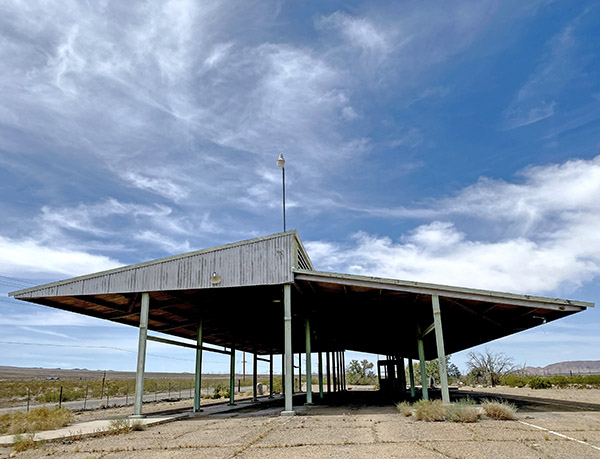
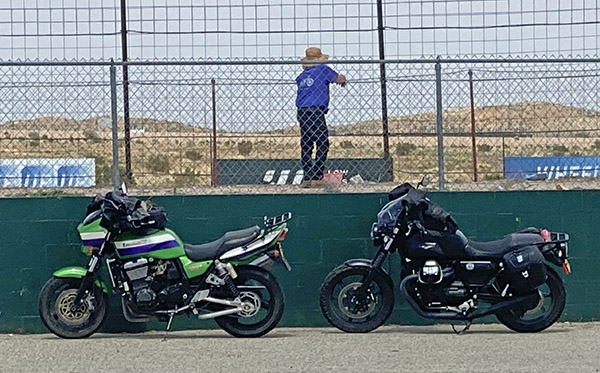
On westward we rode, through Kingman down to Oatman. Again, every store in the tourist-friendly little donkey-town of Oatman was closed. The day ran long, we needed ice cream, it was getting dark, I couldn’t see much through the dark face shield on my helmet, and we pulled into an abandoned gas station to check out the motel situation in Needles. The Mudchucker was tired. He stopped next to me and toppled over. I tried to hold us up but the combined weight of Mike, his Moto Guzzi V7 and my ZRX1100 Kawasaki was too much.
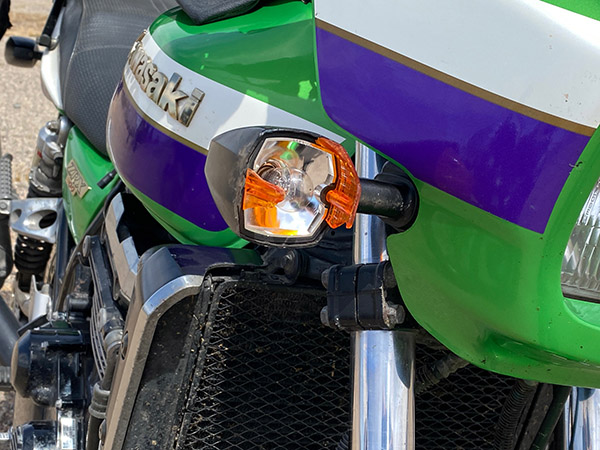
We went down like the stock market after we instituted tariffs. The bikes were stacked against each other much like the system is stacked against the common man. It took a bit of doing to untangle them and lift the bikes upright. Damage was light: a few dings in the right-side Guzzi jug, a busted turn signal, scratched gas tank, and bent brake levers on the ZRX1100. Amazingly, there were no dents or major issues.
Not a lot of damage for tossing one bike on top of another.
A homeless guy camped at the gas station saw the whole thing. He didn’t laugh or say anything. He must have thought we were total losers.
The tip over had us in a melancholy mood. In the motel that evening we talked about that inevitable day, our strength gone, our skeletons frail, the day when we could no longer ride. Mike felt a side car was the way to go. I favored a three cylinder, two stroke, Kawasaki-powered gurney.
But gurney-time isn’t here yet and by the third day we were riding along basking in the warm Mojave desert. Things were looking up and thoughts of our physical decay burned away. Or maybe we just forgot we were falling apart. I hear that happens but I can’t remember where I heard it. Route 66 to Amboy was closed so we had to stay on Interstate 40, only returning to Route 66 west after paying $7.50 per gallon of gas at Ludlow.
Some kind of inspection station east of Barstow on Route 66.
Out of Barstow we rode past Hinkley, the toxic-water town made famous by Julia Roberts and Erin Brockovich. We made it to Lancaster, our base camp for Willow Springs.
Lancaster is an interesting place. On the back roads we came in on there were piles of trash dumped everywhere. I guess the town doesn’t have a dump. Or maybe the dump fee is too high so people drive out of town a few miles and drop their load. It reminded me of the trash piles I used to pick through in the Florida Everglades. You can find some good metal in those piles.
I saw some nice chairs 5 miles from Lancaster. If I had the Toyota truck, I would have grabbed them. There was a lot of broken concrete that would make excellent fill back at the ranch. Drywall was another popular item on the side of the road. Once in town things cleaned up slightly, and Lancaster looked much the same as other generic, California desert towns: New chain stores along the highway, decomposing shops, homeless people and frequent stop lights in the old sections.
The Wyndham motel on Avenue I was new and along the highway. They have a pretty good breakfast setup. There were the usual sausage paddies, scrambled eggs and pour-your-own waffles. We waddled out to the bikes and rode the 20 miles to Willow Springs racetrack.
Vintage motorcycle racing is mostly a family affair. Spectators not directly involved with the racing or supporting the racers are rare and we had the grandstands to ourselves. Multitudes of classes meant non-stop action all day long.
Lots of races and classes to keep track of at an AHRMA event. You won’t leave the track unsatisfied.
AHRMA racing covers all eras with heavy emphasis on bikes that were never actually raced back in the day, at least compared to the races I saw as a youth. Honda 160s are a popular class and an example of bikes that were never raced where I grew up.
Sloper 160 Hondas are strangely popular. I had one as a teen. In stock form they would hit 75 MPH. In race trim a bit faster.
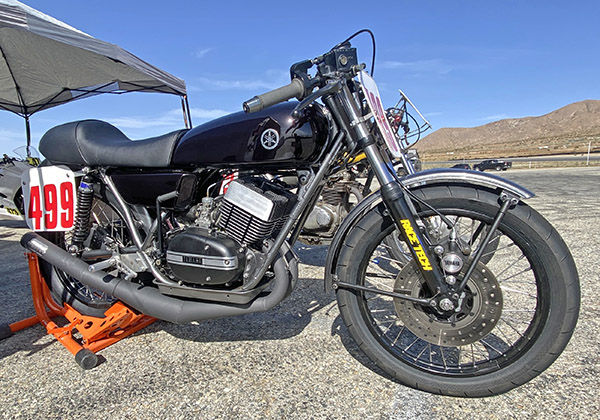
An unusual number of Moto Gizzards circulated the Big Willow track. Maybe because they were so popular, only a few Yamaha Twins survived to race AHRMA. Most of the race bikes were 4-strokes. In the 1970s that ratio would be flipped and 2-strokes ruled the track. I guess the point is to run what you want and have fun with it.
The RD350 went from a mainstay of road racing to a rare bird at historic events.
The Willow races were not as well attended as the Laguna Seca AHRMA events. Laguna Seca is set in soft, coastal hills and has space for vintage motocross along with a vintage trials section. The camping at Laguna Seca is better. I suppose you can camp at Willow but it’s more of a motor home type camping than a tent. I’m not sure what happened between AHRMA and Laguna Seca and it’s none of my business, but I wish they would get it sorted out and go back to Laguna.
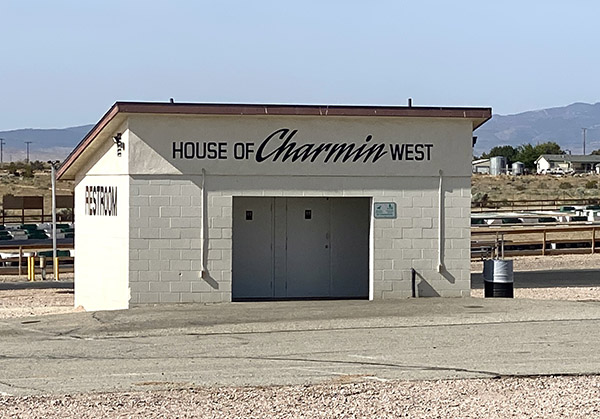
Nice, clean, crappers at Willow. A clean crapper makes the day just that much nicer.
Willow isn’t bad, mind you. The racetrack recently sold and the new owners are fixing it up a bit. There are several tracks and the food concession was better than Laguna. You can get a decent meal at Willow.
The last time I was at Willow Springs was in the 1970s. The pit looks the same and there are added buildings along the front straight. My memories are dimming and I can’t remember why I was there in the ’70s, but it was probably motorcycle racing of some sort.
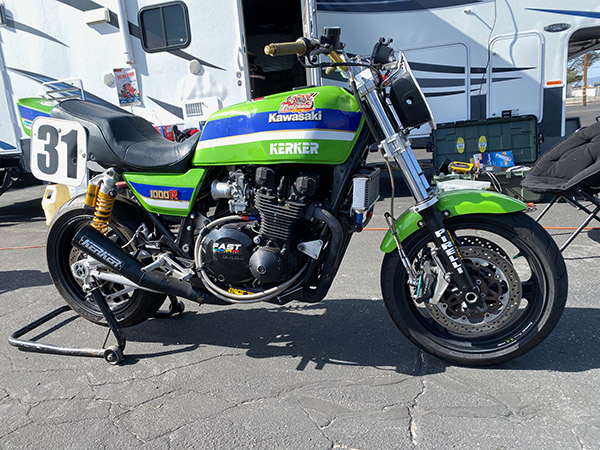
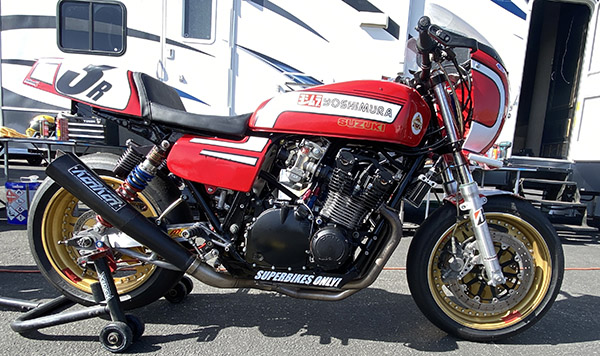
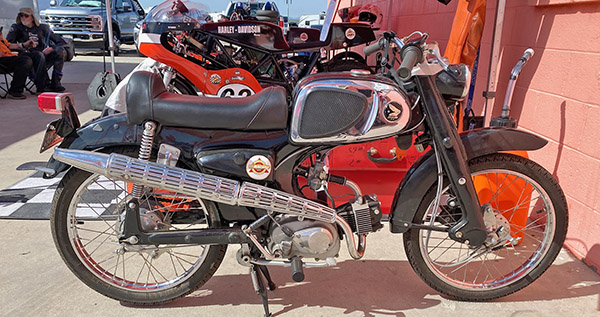
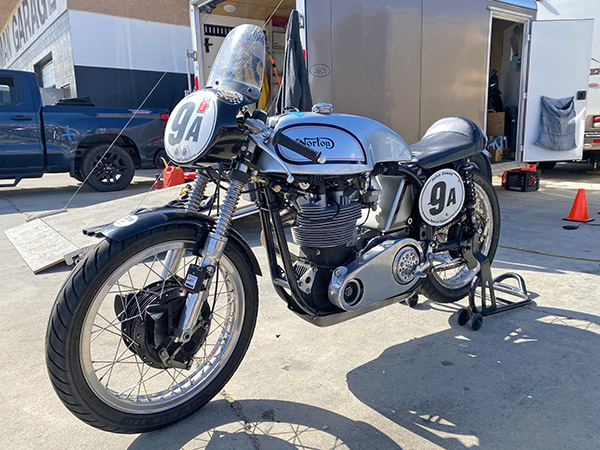
If you take away the little houses, pit row looks about the same as I remember from the 1970s.Kawasaki built a Superbike production racer called the S2. I don’t know if this is one but it looks like one.Suzuki big-block race bike. Although, it could be a 750. I didn’t look that close.SR500. Great bike from Yamaha unfortunately suffering from The Slows. My XL350 could stay with them through the gears and pull away at top end.Roper and Fulton on Italian Harley-Davidsons. About 100 years of racing experience in this photo. They are faster than you. Sorry about the cell phone photo.Zippy Yamaha 100cc twin. I might get a stocker one of these one day.CA110(?) I have one of these in pieces waiting for assembly. The engine is shot so I bought a clone 140cc overhead cam engine. It fits the gram and clears the front wheel by 1/4-inch.Manx Norton. For a while these 500cc singles ruled the road racing world. Still faster than a SR500.If you don’t like crowds you’ll love AHRMA racing.
Rosamond, the town closest to Willow has grown quite a bit and lots of housing developments are being thrown together. Eventually someone will build houses around Willow if the new owners don’t do it first.
The ride back to New Mexico was full-on warm. We took backroads from Lancaster to Victorville and sort of paralleled Interstate 10 along Yucca Valley and Twentynine Palms to Parker, Arizona. Our miles per day were shrinking and we were stopping more often. Temperatures reached 95 along the sparsely populated Highway 62.
I was smelling the barn, you know? I kind of lost it on the last day in Show Low. We woke up at 4:30 am to get an early start. I wanted to get home and the Mudchucker was leisurely watching TV and eating a bagel. By 8:30 a.m., I had been awake 4 hours and drank 16 cups of coffee waiting. I had a lot of pent-up nervous energy.
Maybe 7 days on the road rubbed my nerves raw. It doesn’t seem like an asset.
Finally underway, we burned up the highway into New Mexico, a slight frost between us, and I managed to get home at a decent time (before dark). I’m starting to wonder if 7 days on the road is too much for me. Riding motorcycles with a partner is a series of compromises strung together with miles and miles of pavement. Are the compromises worth the companionship? I’m sure I must annoy the Mudchucker at times.
Maybe I’m just getting old and cranky. At least, that’s the excuse I’m going to use.
Subscribe to ExNotes for free!
We need your support! Do what you can to help ExNotes stay in the black!
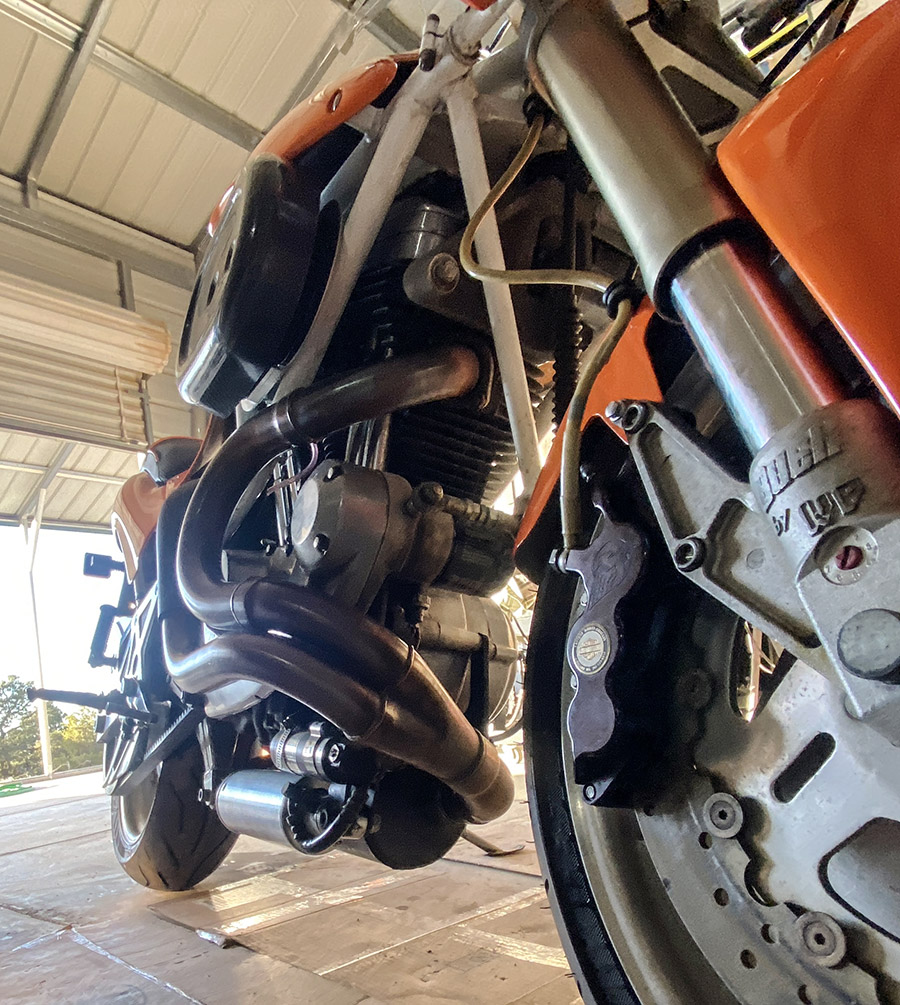
I’ve kind of lost count on which Buell installment dealt with the muffler falling off. The story was about how the muffler was held on by a T-bolt clamp on the header pipe (basically a heavy-duty hose clamp) and two vertical brackets that located the rear of the muffler. Those vertical brackets would come loose letting the muffler slide back into the wheel. In that previous story I welded the rear bracket so the muffler couldn’t slide back unless the bolt was removed. This setup no longer relied on the clamping force of fasteners alone.
I thought I had it fixed, a common misconception that I have frequently, and both the muffler bolts of my belt-and-suspenders repair vibrated out. The muffler fell off again. Most riders would write this off as a bad design on Buell’s part, but I look at it as a challenge. Just like Lucy always pulled the football away from Charlie Brown the Buell keeps snatching success away from me.
The Buell lives and dies in real time. No waiting around for Honda-like reliability to finally fail. Each individual Buell-ride has a beginning, a middle and an end. The end being something to fix. And sometimes fix it again.
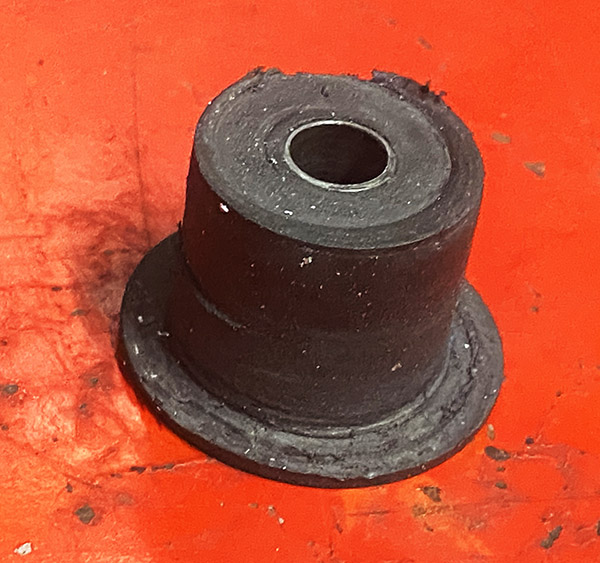
There were two of these. One is on the road a few miles ahead of the bolts that fell out.
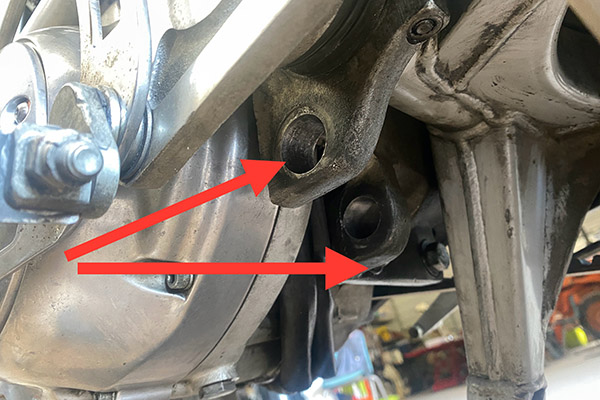
When the muffler bolts fell out one of the two rubber bushings fell out also. These bushings fit into two holes cast into the Buell’s engine crankcases. It was a good system and I should have used Loctite or safety-wired the bolts the first time.
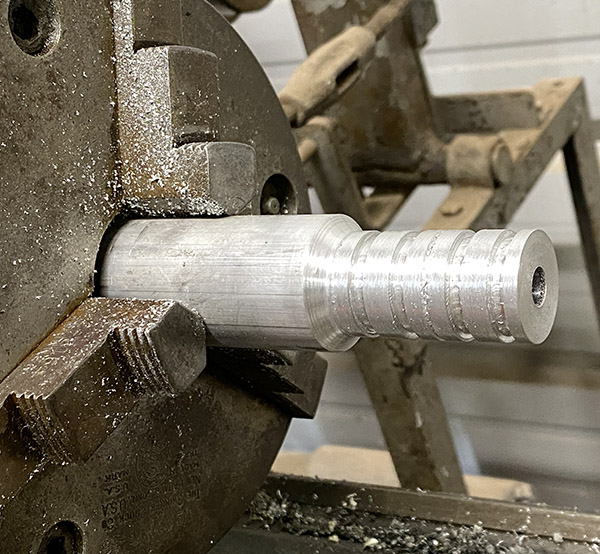
I wasn’t in the mood to hunt online for another bushing and the thin, molded-in tube preventing the rubber from crushing made me wary of really cranking down on the muffler bolts. I decided to take things into hand and make two new bushings since it’s as easy to make two as it is one.
I’ll need a better cut-off tool but you can see, two is as easy as one.
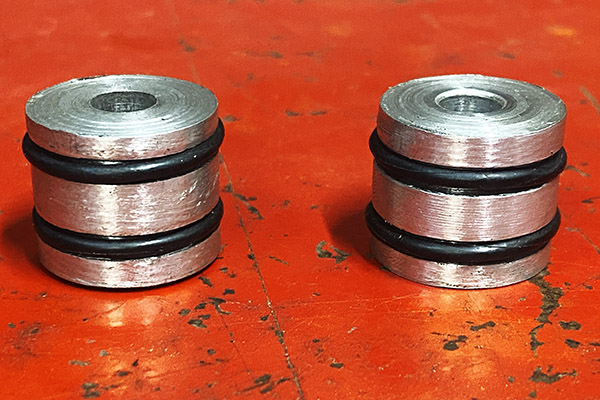
I have plenty of aluminum round stock and the crude bushings I spun out would shock a real toolmaker. I added a couple of grooves for o-rings to cushion the aluminum. Regardless, I now had something I could tighten a bolt against as much as I wanted. Putting the hangers back together I used nylon locknuts on fresh bolts hoping to slow down the rate of failure.
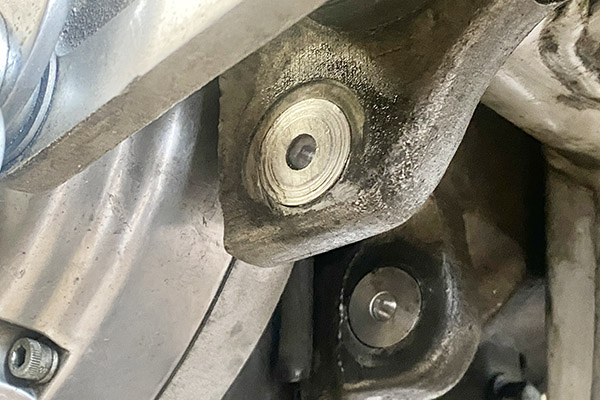
The finished bushings.Harley cast in a couple of sturdy mounting holes on the Sportster crankcase.The bushings are slightly longer than the mounting holes allowing for tight bolts with a bit of give for the shaky Sportster engine.
On yet another long test rides the bolts stayed tight and the muffler did not fall off. Lucy-1, Joe-1. I’m adding checking the muffler bolts to my pre-flight inspection list until this fix proves permanent.
After years of Kawasaki perfection, knowing every ride will be successful, I’m loving the Buell’s humanity. The Buell needs a steady handful of wrenches and ingenuity. Riding and tinkering with the thing brings me back to my youth of edger-powered minibikes roaring through the hot, humid Florida nights. Riding those old minibikes was a crash engineering course. You learned fast or you pushed the thing. So far, I haven’t needed to push the Buell.
The stereotypical image of a Harley-Davidson motorcycle leaking oil has become a cultural icon. Dirty, unshaven and drunk riders astride seeping, smoking, rattling, home-built murdercycles were made popular in biker movies from the 1970’s and the image persists today.
How real is that image? I can’t say because my Buell was manufactured in 1995 but I hear new Harleys mostly don’t leak…much, if at all. My 30 year-old Buell leaked oil. Before we dive into the engine oil leak we have to get a few other leaks out of the way. .
You’ll remember all the trouble I had with the original Mikuni carburetor, the float needle leaked through various repair attempts and I thought I had the problem licked. The Buell ran good and got 50 miles to a gallon of gas. I took it out for a few rides and no carburetor leaks. Then I walked into the shed one day, straddled the Buell, hoisted it up straight and gas poured out the air cleaner. Like a lot of gas.
China, China, China.
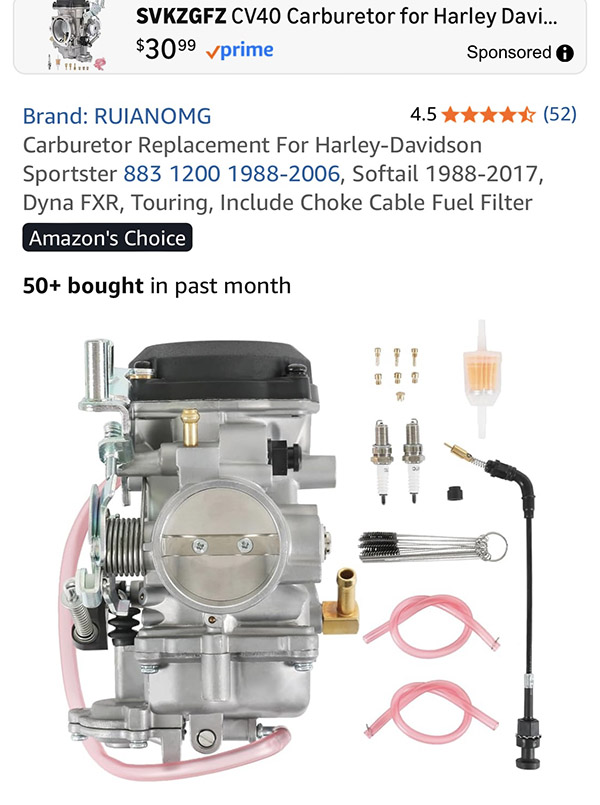
That was the final straw for the original Mikuni carburetor. I replaced the entire unit with a Chinese clone carb from Amazon and the bike has never run better and it doesn’t leak out of the carburetor or the air cleaner. Thanks, Global Trade!
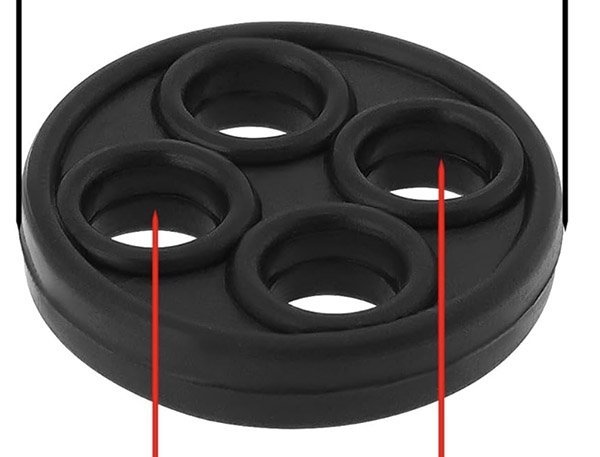
But here’s my question: why did the old carburetor overflow at all? I had the fuel petcock off, where did the gas running out of the carb come from, you may well ask? Turns out the petcock was not completely shutting off as a steady drip of gasoline wormed its way past the 4-hole rubber seal in the petcock. Thus, the fuel shut-off was never really shut-off.
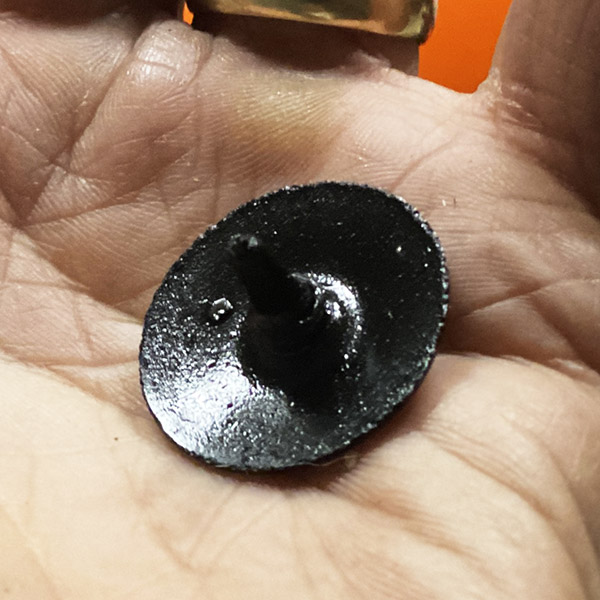
This isn’t the actual petcock gasket but you get the idea.
I took the petcock apart and flipped the 4-hole rubber seal around. That cured the fuel leaking to the carburetor in the off position but it created a bigger problem in that gas leaked out of the body of the petcock in all positions.
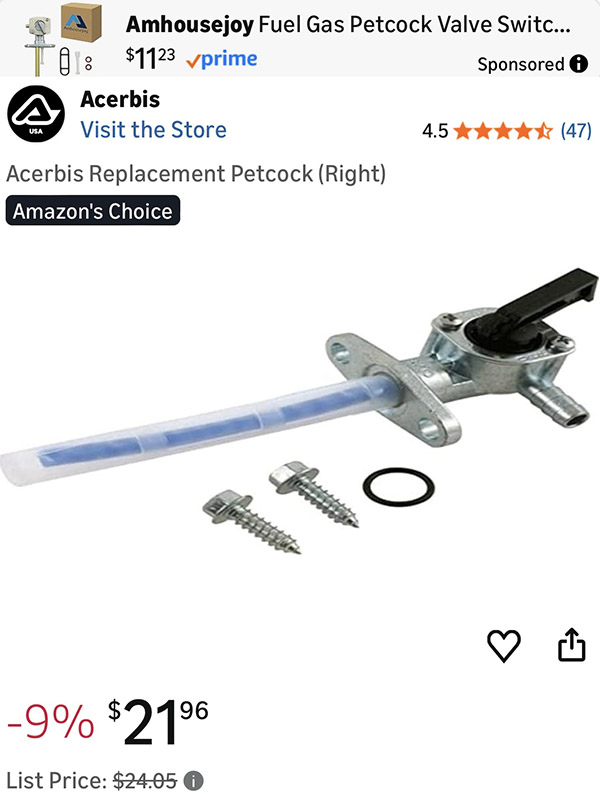
Finding a replacement rubber, 4-hole o-ring was uneventful as none were to be found. Instead, I bought a new petcock on Amazon and the new valve fixed the bypassing problem. But there was another gas leak.
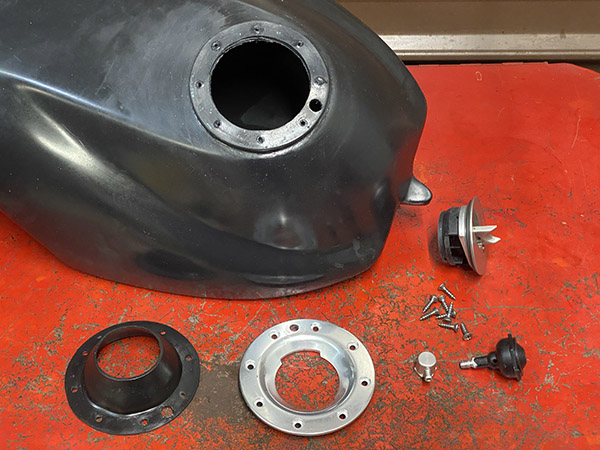
The Buell has a roto-cast plastic gas tank under that pretty, race-bike inspired, but heavy, fiberglass bodywork. An aluminum gas cap flange screws onto the tank with a rubber gasket. This joint weeped gas when riding the bike. Not a lot, but annoying and enough to leave streaks of fuel mungus down the side of the gas tank.
Not so many parts to the Buell tank but the few that are there may leak.
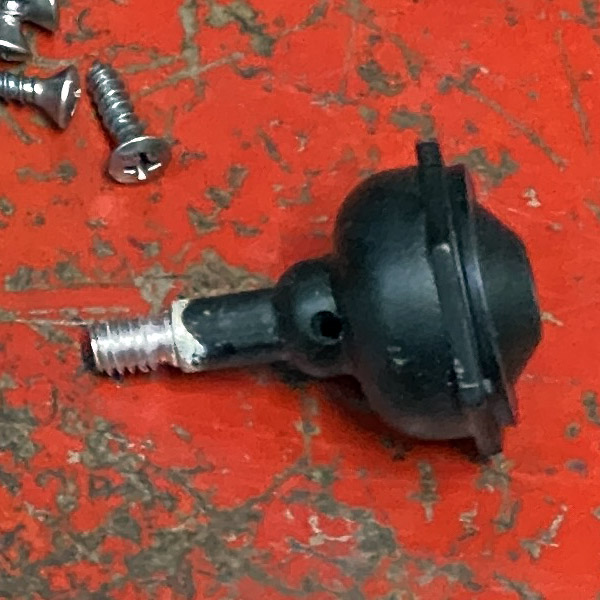
Dismantling the flange, I discovered a check valve under the tank vent that needed to be removed before the flange would come off.
I got rid of this check valve. I expect the bike to burst into flames any minute.
The valve must have something to do with emissions control as it only let air into the tank. I’m sure this added to the float needle issue as the tank was under slight pressure just sitting in the warm New Mexico sun.
Fixing the flange leak was as easy as cleaning off the gasket. Blasting it with a little Permatex high-tack and reassembling the mess. I omitted the check valve to equalize the pressure between the tank and the Earth’s atmosphere. Of course now when the bike falls over it will leak gas like every other old motorcycle I own.
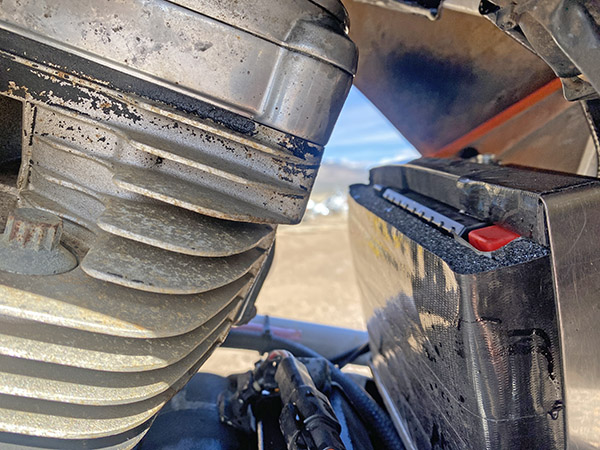
You can’t see it well in this photo but the rear cylinder is an oily mess.
With the gas leaks sorted I turned my attention to the oil leaks. The rear rocker cover was dribbling oil down the cylinder where turbulent air whisked it onto the battery and all points south. It wasn’t a huge leak but let’s just say the back of the Buell is not likely to rust anytime soon.
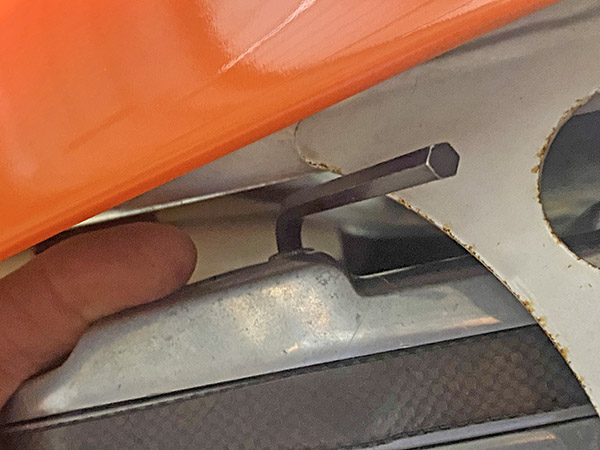
Luckily Erik built the S2 so that the rocker covers are removable without dropping the engine. I did have to cut an Allen wrench short to clear the frame tube, but it was an easy job all things considered.
It’s a snug fit but as long as you’re willing to chop your tools it’s do-able.
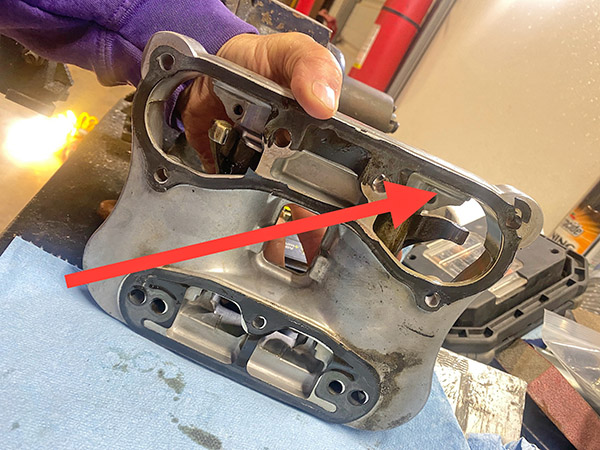
With the new rocker cover gaskets, I took the bike out for a spin and the rear cylinder puked oil as badly as ever. I figured the oil must be leaking from under the rocker box. I’m nothing if not persistent so I took the rocker covers back off and then the rocker boxes. (This year Sportster engine has 3-piece rocker assemblies)
The gaskets crumbled upon removal of the rocker boxes.
The paper gasket is under the rear rocker box was brittle and broken. I replaced both front and rear gaskets with a metal version of the paper gasket. I knew for sure I had the leak fixed.
On the test run the reassembled rear rocker leaked as bad as ever. Back to the shed and everything came apart again for the third time. I was pretty much out of ideas.
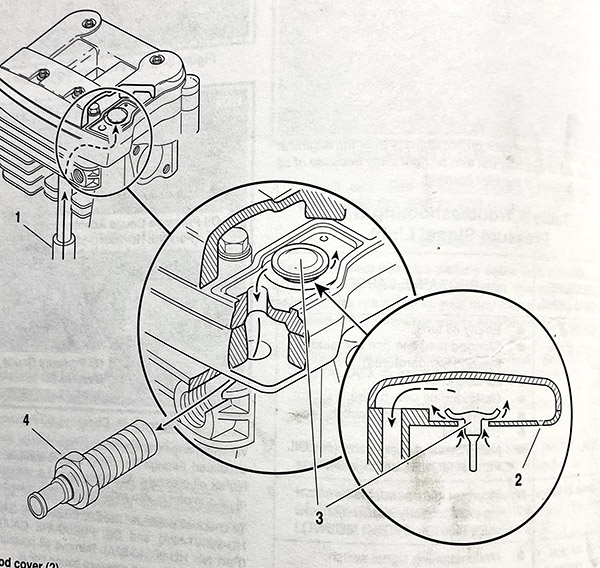
Studying the situation over the course of several days I observed the rear umbrella valve (a nickel-sized, round flapper-type deal in the rocker cover) was much harder than the front umbrella valve. Like hard plastic instead of soft rubber. I swapped both umbrella valves with new ones. Then assembled the mess thinking no way it could be those little valves.
This little valve caused the rear cylinder rocker cover leak.
I test rode the Buell 200 miles and no oil leaked out the rear cylinder. The battery area and aft sections were dry. Look, I’m not complaining. I can’t pin this on Harley’s image. 30-year old motorcycles are going to leak oil. Seals harden, gaskets dry up and split, 0-rings lose their O-ness and umbrella valves aren’t going to bounce. Besides, I enjoy working on the Buell. It’s a weird, wonderful machine that fits no known stereotype.
Subscribe to ExNotes for free!
We need your support! Do what you can to help ExNotes stay in the black!
I’m stealing the two-fer idea from Berk mostly because I haven’t had an original thought in 10 years. This Bowsers thing happened last week when I was changing the tire on the ZRX1100 for an upcoming trip to Utah.
The tire, a Bridgestone, was a bear to get on the rim, very stiff and it took lots of lube and struggle to get the thing fitted. One casualty of the battle was the little dot that is supposed to be near the valve stem ended up 180 degrees opposite. I don’t know how that happened, I started with it in the correct position.
The tire was so difficult I left the dot position where is was, figuring to cancel out any imbalance with wheel weights later.
Normally I don’t have much trouble airing up a tubeless motorcycle tire and use a little 12-volt pump for the task. The Bridgestone had other ideas. The damn beads would not seat. I needed more air pressure and more air volume.
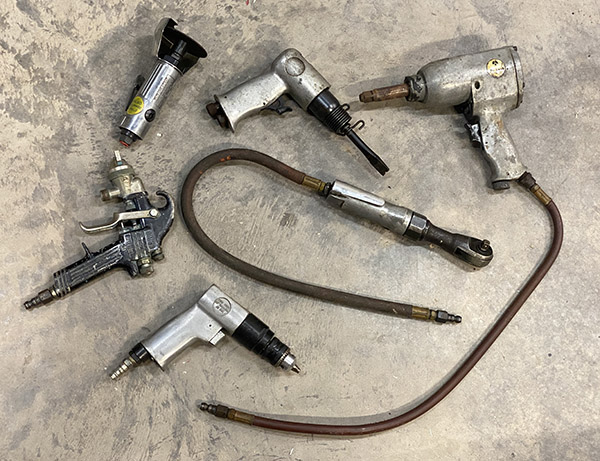
Tools of the trade for a cosplay mechanic.
Back in my youth I wanted to be an auto mechanic and I worked at a few shops mopping floors. In the 1970’s there were no cordless tools. Since all shops had a big compressor I needed an air impact, hammer, ratchet, drill to complete my cosplay mechanic’s kit.
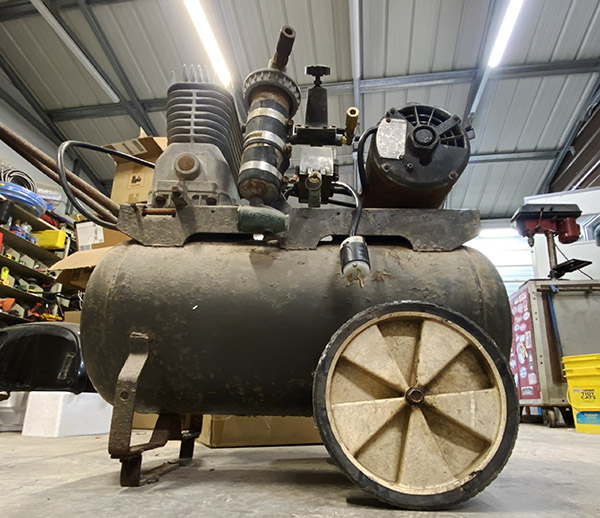
The old Craftsman, sporting an air/water separator filter. Lots of air has gone through this rig.
Once you have a bunch of air tools you’ll need a compressor to operate the tools at home so I bought a Sears compressor, I was around 15 years old at the time and since I fancied my self a custom painter in addition to being a mechanic the compressor was used most every day.
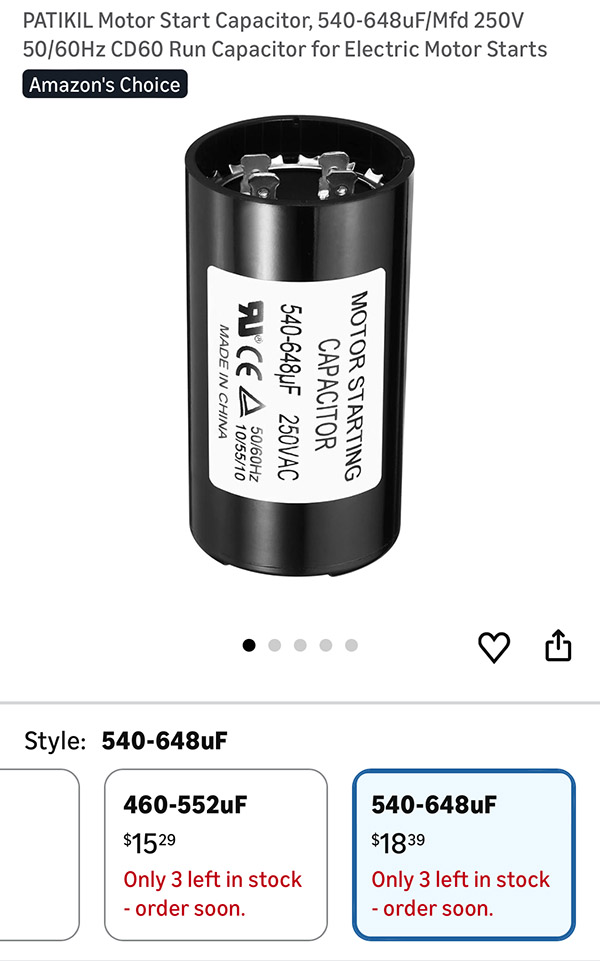
Fast forward 50 years and the Bridgestone tire: I flipped the switch on the Craftsman compressor and a loud buzzing sound was all I got. My first guess was a bad capacitor. I ordered one from Amazon as there was nowhere close to buy electrical bit. Still, I had no air. I needed a compressor right now.
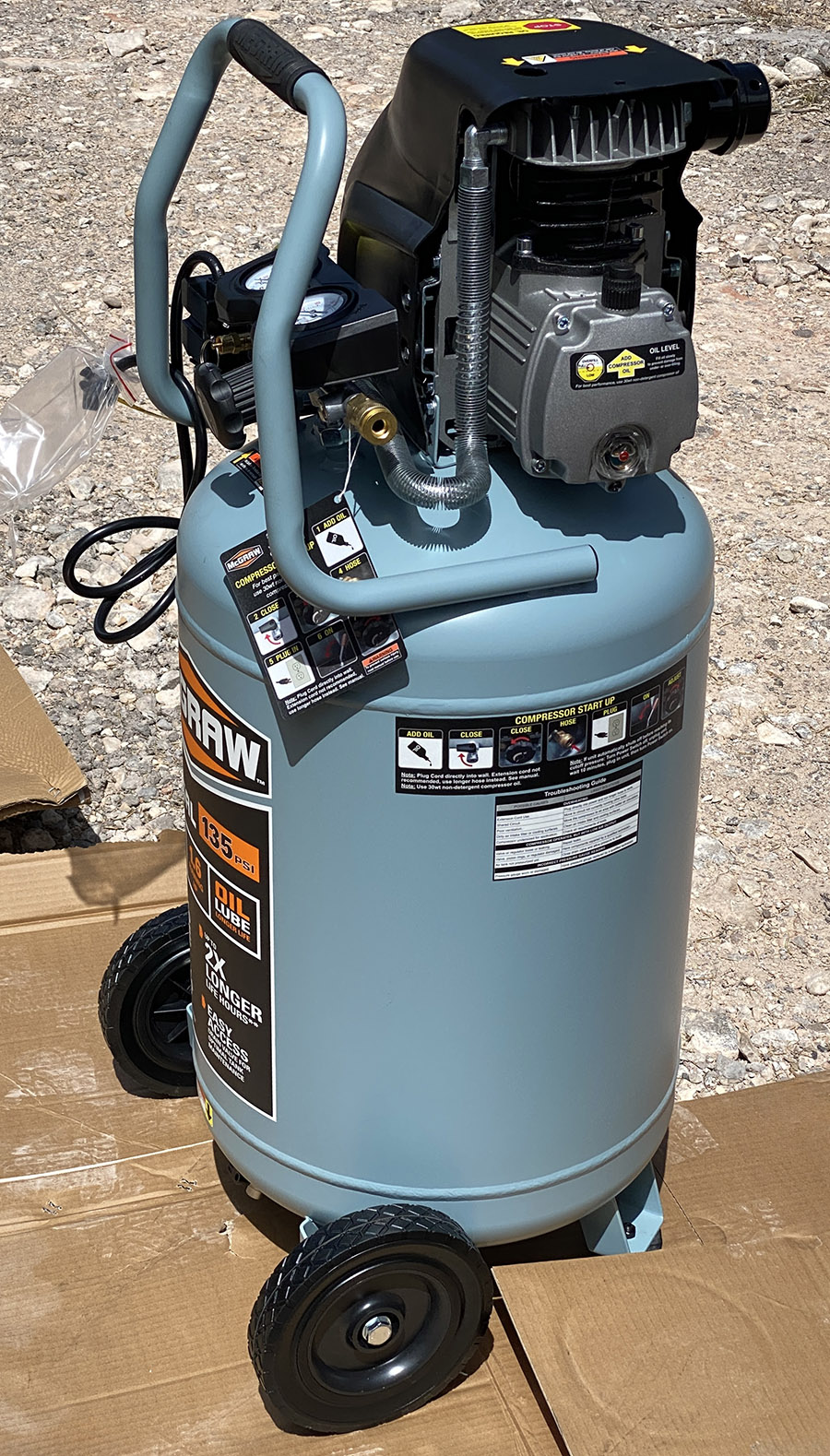
As luck would have it Harbor Freight (I get no commission, although I should) had a 20-gallon unit on sale for $200. I drove down the hill and picked up a copy.
The new compressor looks well made. It’s a vertical unit so the thing takes up slightly less floor space. A big difference between the direct-drive, single cylinder Harbor Freight and the belt-driven, two cylinder Craftsman is the noise: the HF is loud as hell.
With the new compressor’s 125 psi blast it was easy as pie to get the beads seated on the Bridgestone. The tire was well made and it only took 1/2 ounce to balance. Closing that chapter of my life I moved on to the old compressor.
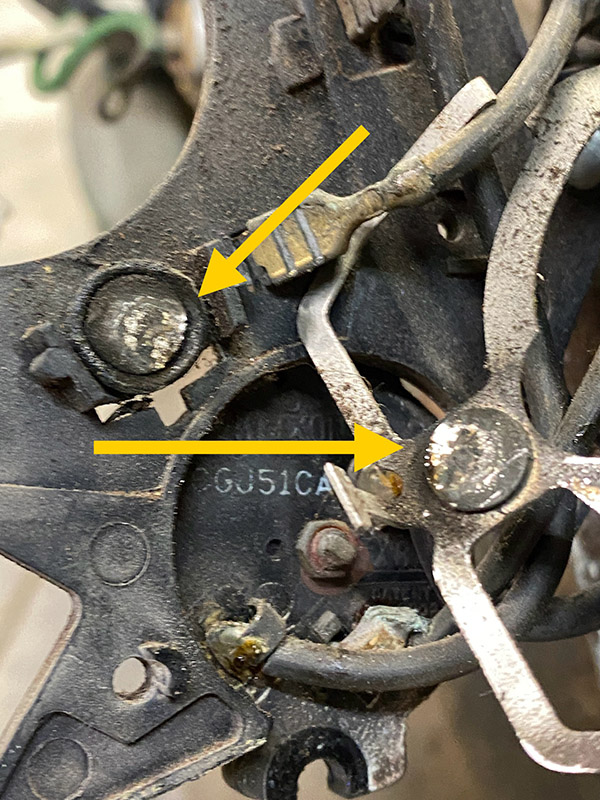
The new Amazon capacitor arrived and I swapped it into the Sears compressor. The result was the same: a loud buzzing sound. Having eliminated one variable I decided the motor start/run switch wasn’t working and the compressor was trying to start on the run circuit.
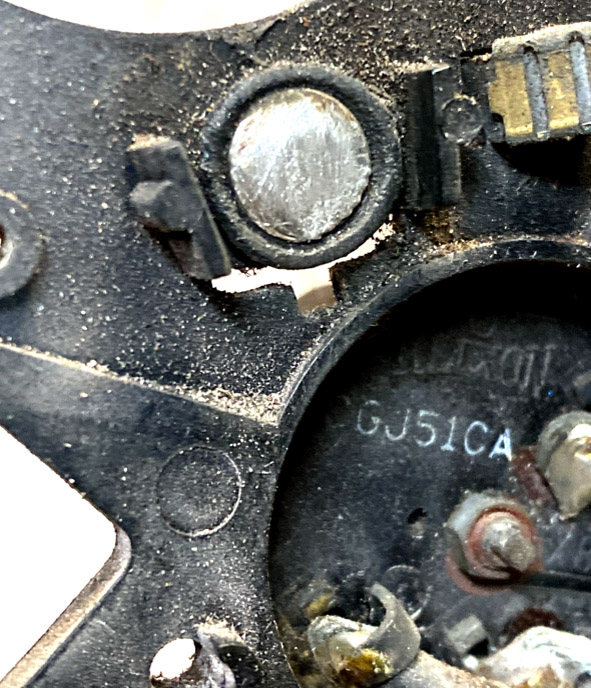
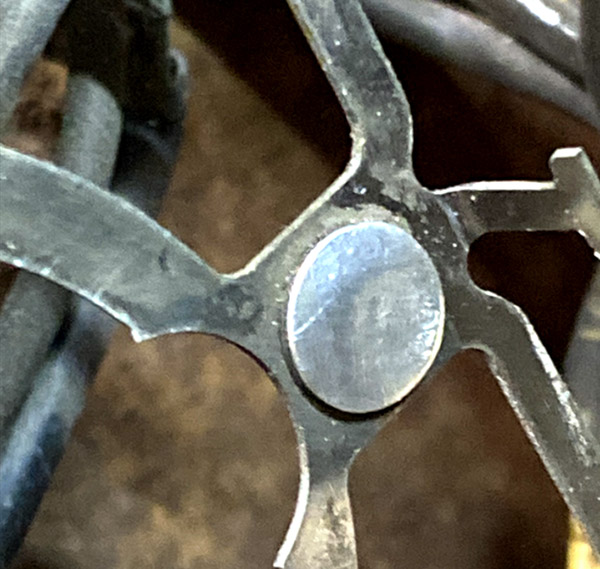
After 50 years and 3 states the contacts finally lost continuity.
Taking the motor apart was easy and the contacts for start/run were arced and corroded. I felt this was the problem and cleaned the contacts as best I could.
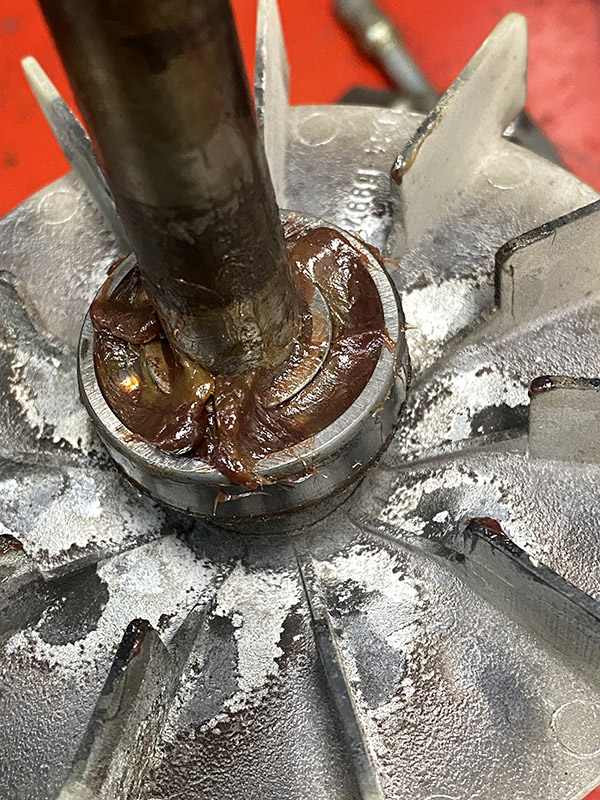
While I had the motor apart I greased the unsealed ball bearings for the first time in 50 years. I’ll be long dead before they need grease again. The pulley was well rusted onto the shaft, it took some heat, penetrating oil and lots of back and forthing to get it pulled off so that I could grease the output side bearing.
After 50 years the bearings were dry. Amazingly they still spun relatively smooth.
I reassembled the mess, crossed my fingers and plugged in the compressor. The smooth whir coming from the compressor belied its age. The Craftsman was back in business at 50 years old.
So now I have two compressors. The 220-volt Craftsman and the 110-volt Harbor Freight. Even though it’s lower voltage the HF starts with less amp surge which helps out the 6000-watt inverter but it’s loud. The HF also makes 45 pounds more pressure.
The 1-horse motor on the Craftsman packs a wallop on startup, even at the higher voltage, but you can carry on a conversation standing next to the thing. It struggles to get to 80 psi and that is probably due to needing new rings or reed valves.
I guess the big difference is I’m pretty sure the Harbor Freight won’t be working in 2075 but you never know. I wouldn’t bet against that old Craftsman still pumping air for another 50 years.
Last year I started a Facebook group focused on Uberti firearms (and that’s the name I gave it). I saw a note on Facebook that if you didn’t see a group you wanted, you could create your own group, and I did. I created the group because I’ll sometimes post firearms-related blogs there. It was trivially easy to do, and within weeks, membership had grown to 13,500 members. I like Uberti guns, I’ve written about them before here on ExNotes, and it just sort of seemed like a good thing to do.
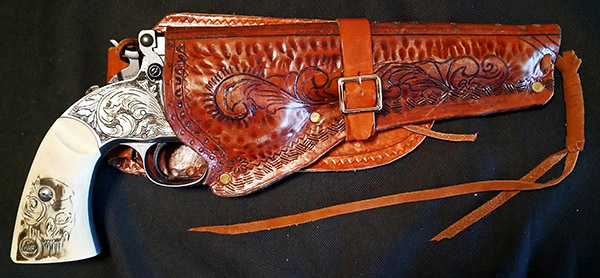
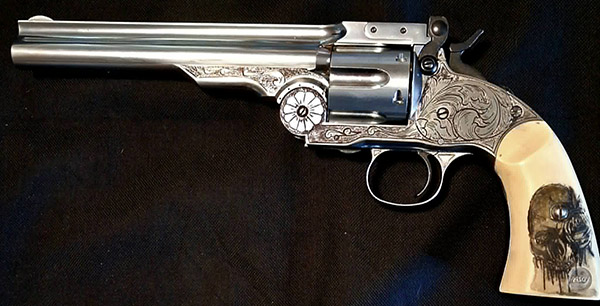
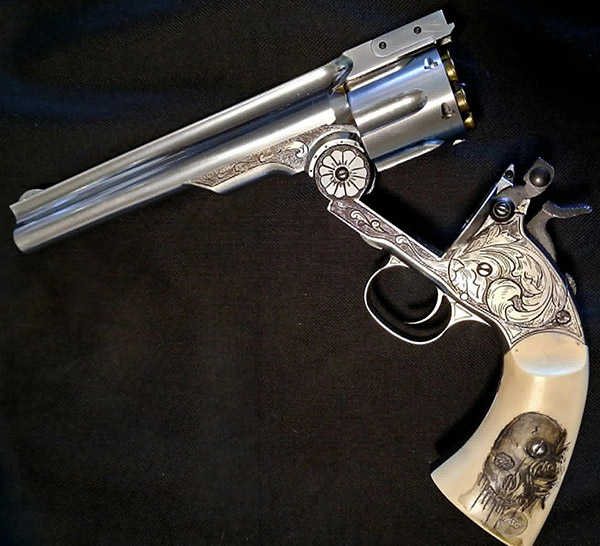
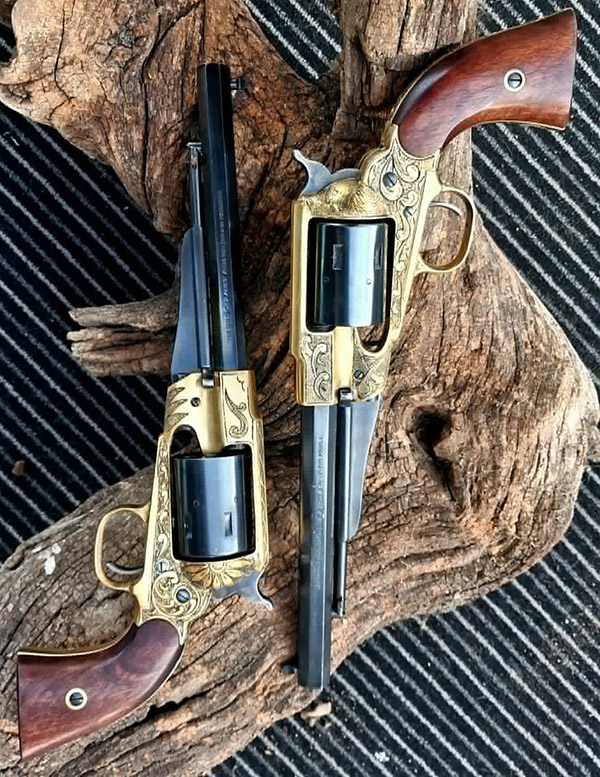
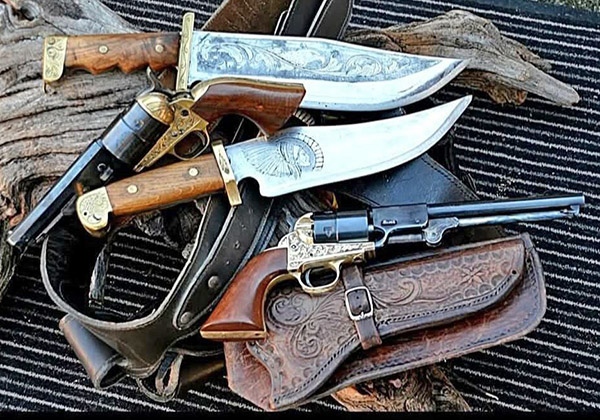
Last week, a fellow named Aldo Venturini posted some intriguing pictures of cap and ball revolvers he had engraved, along with a few knives he had made. One thing led to another, and with the help from Translate.Google.com we had an interesting conversation. Here’s what Aldo told me:
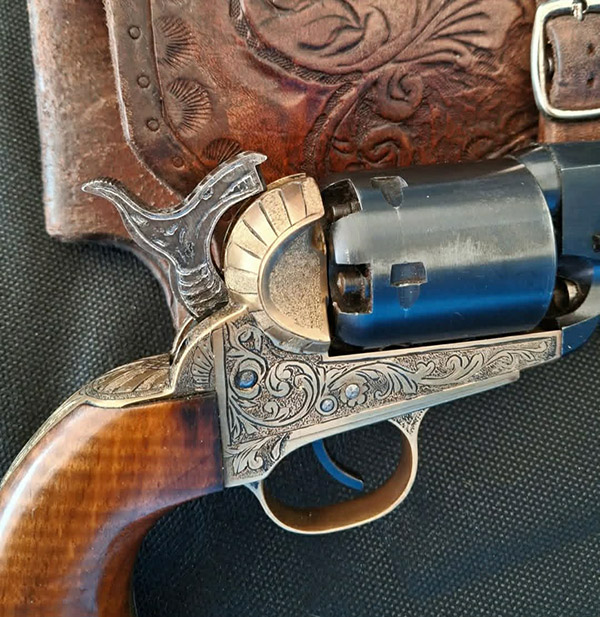
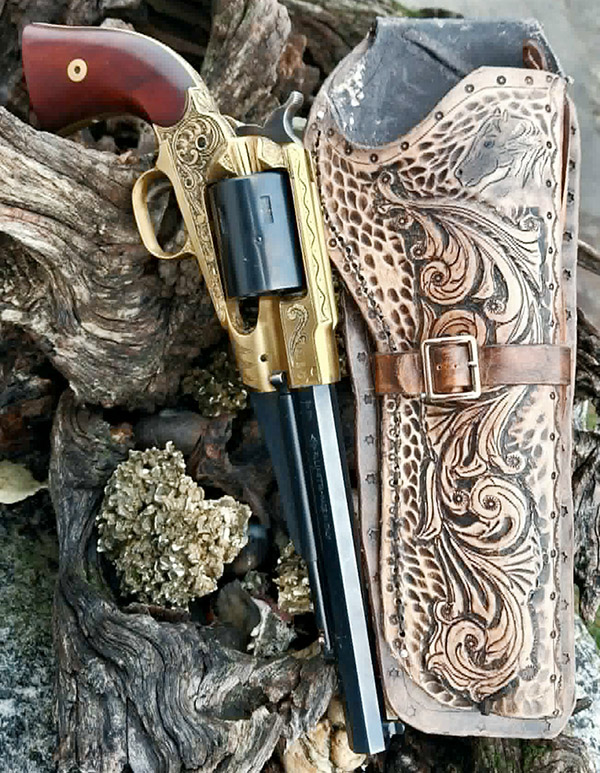
I’m a passionate engraver. I’ve been engraving for 15 years. I’m experienced in various engraving techniques. I also work with leather, which allows me to make sheaths for both the guns I engrave and the knives. With engraving, I do what inspires me…I don’t have any established subjects.
I’m a lover of weapons as objects and believe that weapons are the best canvas for engraving.
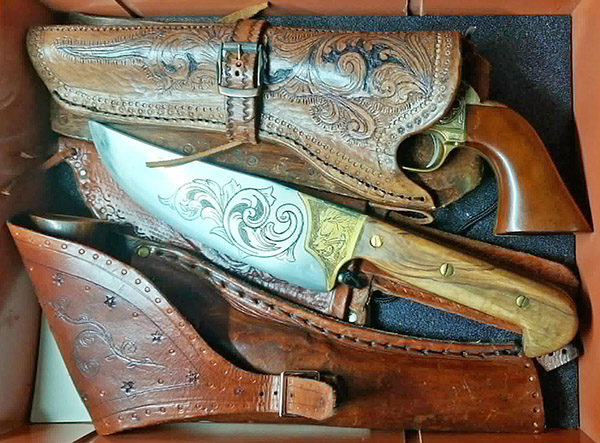
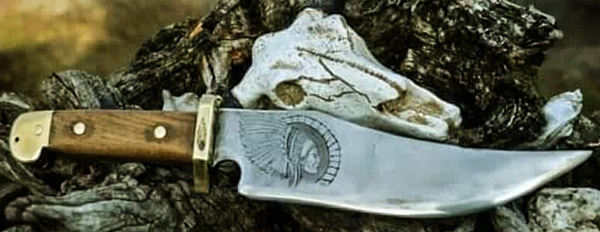
For variety, I make knives, mainly Bowie knives. I own a fair number of my own.
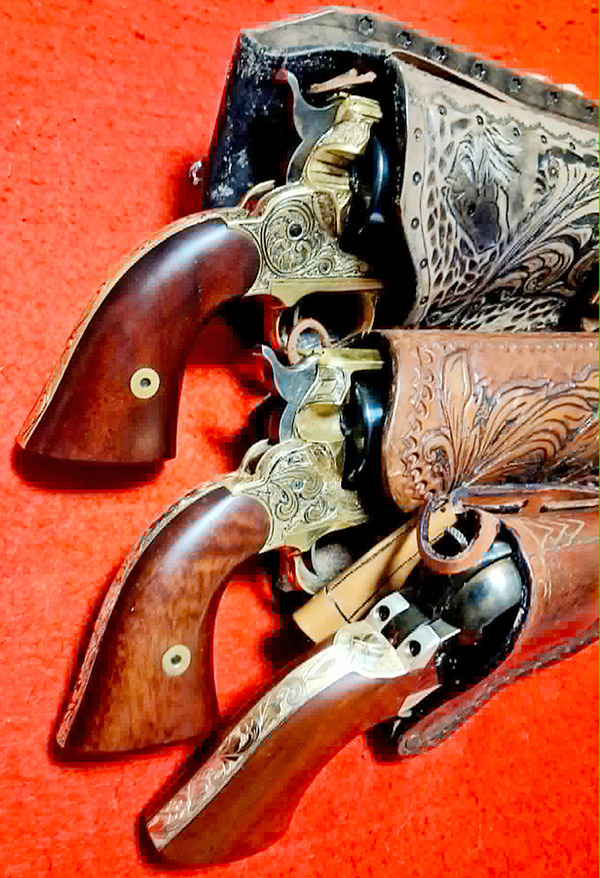
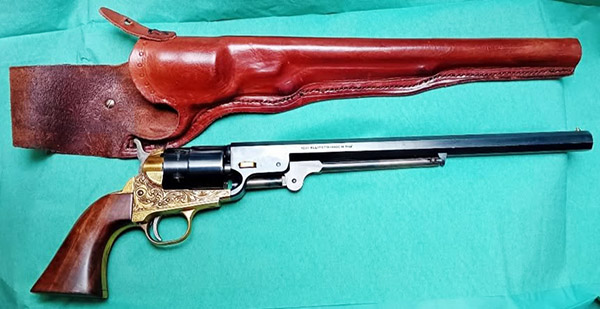
All work is done in-house by hand. The knives are made entirely, complete with sheaths. The Colt sheaths are also handmade. For my personal satisfaction…I do engravings upon request, after agreeing on the work and cost. I don’t do it for the money.
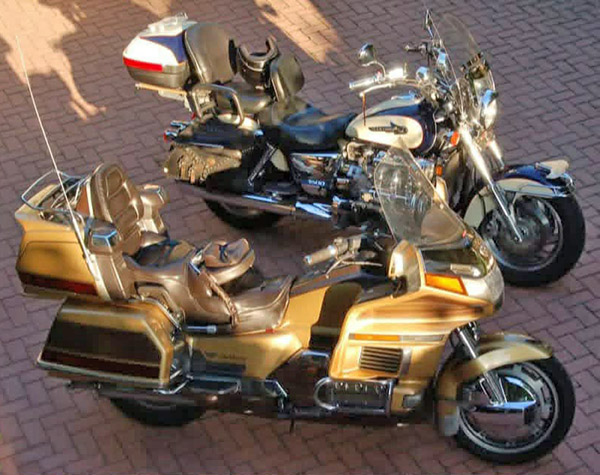
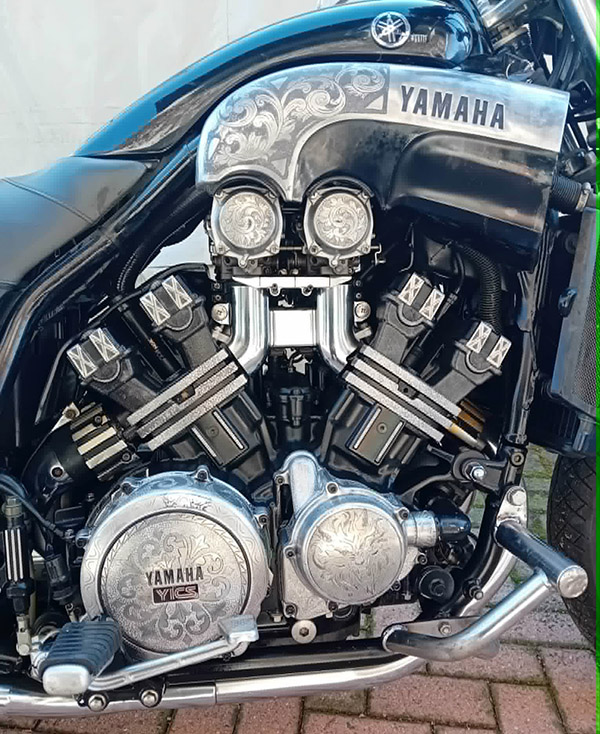
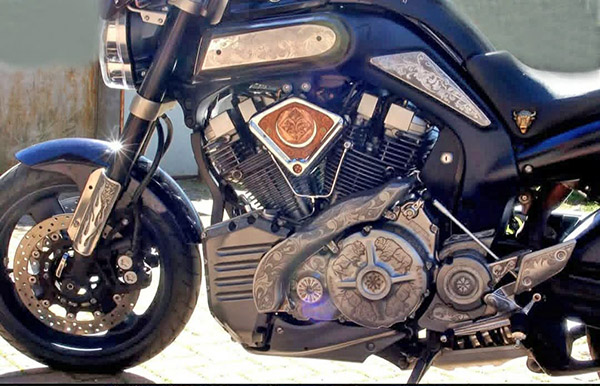
I’m self-taught, and I learned because I wanted to engrave my motorcycle the way I liked it. Then, once I finished, I continued with other engravings. I have 10 motorcycles….😄I’ll give you one that’s a bison…1700 cc twin-cylinder.
I’ll be 80 this year. I have no problems and can still afford to ride my 10 motorcycles (all large-displacement bikes). I’m also an inventor…with several patents filed, including one in the United States in the medical field. Check my name. Others are filed in the European Patent Office in Munich.
I asked Aldo if I could post some of his photos here on the ExNotes blog and he said okay. This is beautiful work and I’m happy to share it with you. First, a few of the guns and their holsters…
Next are a few of Aldo’s knives…
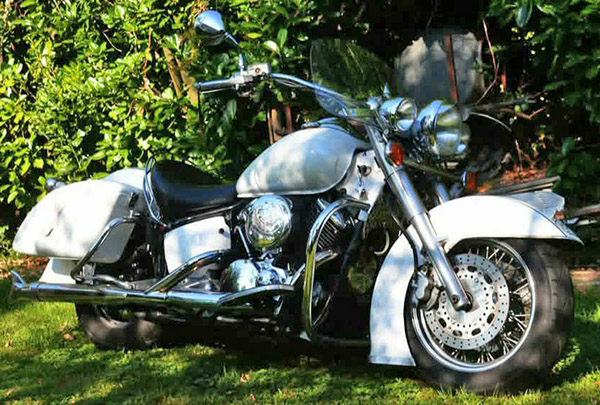
And here are photos of some of Aldo’s motorcycles…
Aldo is an interesting man. I wish he lived closer than Torino (in Italy). He’d fit right in with the ExhaustNotes crowd.
Aldo, grazie mille per aver condiviso la tua arte con noi. Guida con prudenza e restiamo in contatto, amico mio!
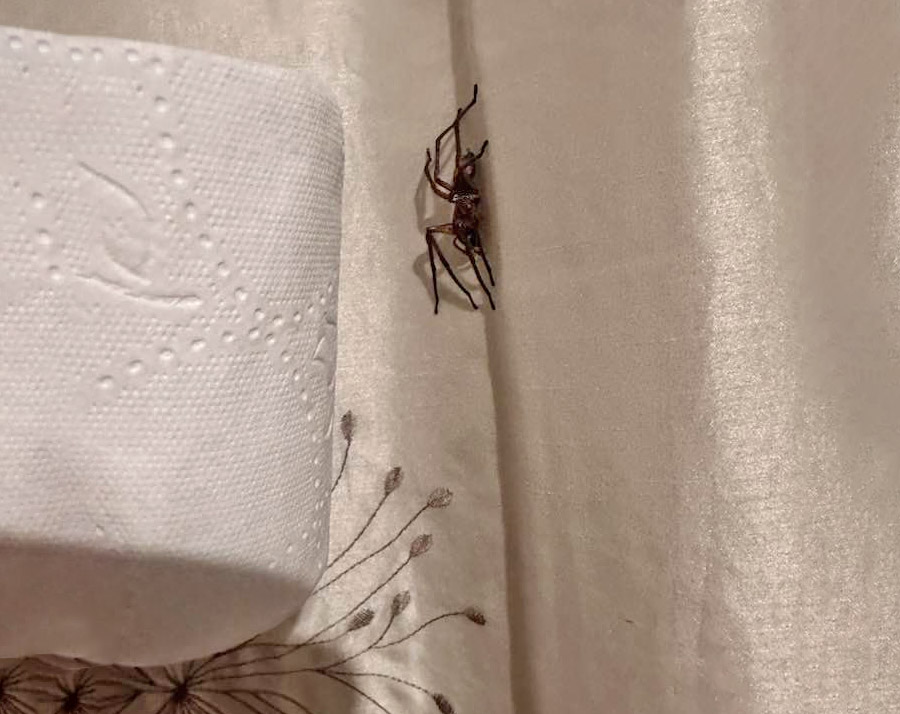
I’ve always been afraid of (and morbidly curious about) spiders, so when Bobbie Surber posted the photo you see above of a spider in her Ecuadorean hotel room’s bathroom, it had my attention. I don’t think I could stay in a hotel room where a spider like that put in an appearance. I know I’m a big tough guy who rides motorcycles and made it through jump school in a prior life, but spiders creep me out. I’m deathly afraid of the things.
Which doesn’t mean I’m going to pass up an opportunity to get a photo of one. Baja John and I were rolling through Baja a decade and a half ago on our KLRs (I loved that motorcycle; it was one of the best I ever owned). We were doing maybe doing 60 mph when I somehow spotted a tarantula creeping along the pavement’s edge. I had to turn around and get a photo (it’s the one that sometimes graces the scrolling photo collection you see at the top of every ExNotes blog). Baja John, being a curious sort, did a U-turn and parked his KLR by the side of the road, too. I had my old D200 Nikon with its first-gen 24-120 Nikon lens (not a good choice for a spider macro shot, but it did the job).
The KLRs of Baja John and yours truly stopped along the Transpeninsular Highway for an impromptu tarantula photo shoot. Those KLRs were great bikes.A Baja tarantula minding his (or her) own business.Cover and concealment, tarantula-style.
Before you knew it, I was snapping away while Baja John and I were crouched down in front of the hairy thing. The tarantula’s ostrich-like behavior was kind of funny. It hunkered down with a weed over its six or eight (or whatever the number is) eyes, thinking because the weed covered its eyes it was concealed. At least for a while. Then it realized we were still there and it charged. I’m not kidding. The thing charged at us with startling speed. Both of us did our best impersonation of Looney Tunes cartoon characters, our feet moving faster than we were, trying to run backwards from the crouched position, screaming like little girls. We made it, and the spider scurried off to wherever it thought was a better spot. Baja John and I, thoroughly adrenalized, laughed so hard I thought I was going to pee my pants.
I’m an old fart who really doesn’t give a rat’s ass about what anybody thinks of me anymore, so I’ll tell you that I am scared of spiders on some basic, fundamental, hardwired-into-my-psyche level. That said, I know that some of you younger guys who read ExNotes probably still worry about being perceived as tough macho men (you guys who haven’t achieved my level of self-awareness and acceptance yet). Because of that, I’ll share with you a technique I’ve used for decades. You know the deal…your significant other spots a spider, usually in the bathtub, and the job of sending it to the promised land naturally falls to you, the man. You’re as scared as she is, but your ego won’t let you admit it. There’s a spider there, and militant feminism be damned, it’s your job (as the man) to “get it.”
Here’s where the story turns to my other favorite topic: Guns. I’m helping you out here, guys. Here’s an excuse to pick up another firearm. You can thank me later.
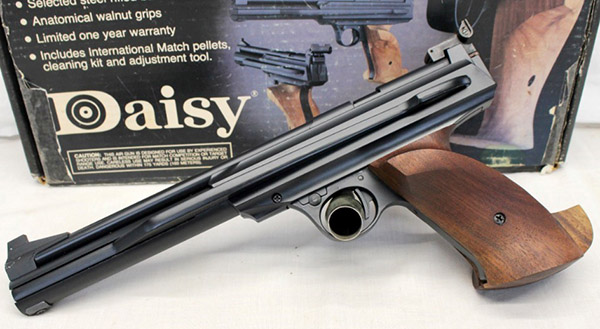
What you need is a pellet pistol. Preferably a manually-cocked model that doesn’t require a CO2 cartridge. My weapon of choice is the Daisy 777 air pistol. It’s a fantastic gun and it is quite accurate (I used to compete with one in bullseye air pistol competition, but I digress…back to the story at hand).
When your lovely significant other comes to you announcing a spider in the bathtub, choke down those feelings of fear, revulsion, and inadequacy. Here’s what you do: Grab your air pistol. Cock it, but (and this part is very important) do not put a pellet in the chamber. While maintaining a firm grip on the weapon, point it at the offending arachnid with the muzzle approximately one inch away from your target. Do not stand directly under the spider (for reasons that will become clear momentarily, this is also very important). Take a deep breath, let it halfway out, and while maintaining focus on the front sight and proper sight alignment, gently squeeze (do not jerk) the trigger. A high-speed jet of compressed air will exit the muzzle, strike the spider, and break it up into legs, thorax, abdomen, and other body parts. They will float to the ground and in most cases, the separate parts will continue twitching (adding to the excitement, the thrill of the hunt, and proof of your masculinity). Mission accomplished, as old George W liked to say. Your job (which was to “get it”) is done. You can now turn to your sweetheart, smile, and ask her to clean it up.
My buddy Paul is a serious Randall knife aficionado. Randalls are way out of my pay grade, but I admire them greatly. About a year ago, Paul sent a link to me for a YouTube video about a Marbles knife that approaches the look and quality of a Randall. The YouTube video may be lacking in quality, but it more than makes up for it in content. It sure grabbed my attention.
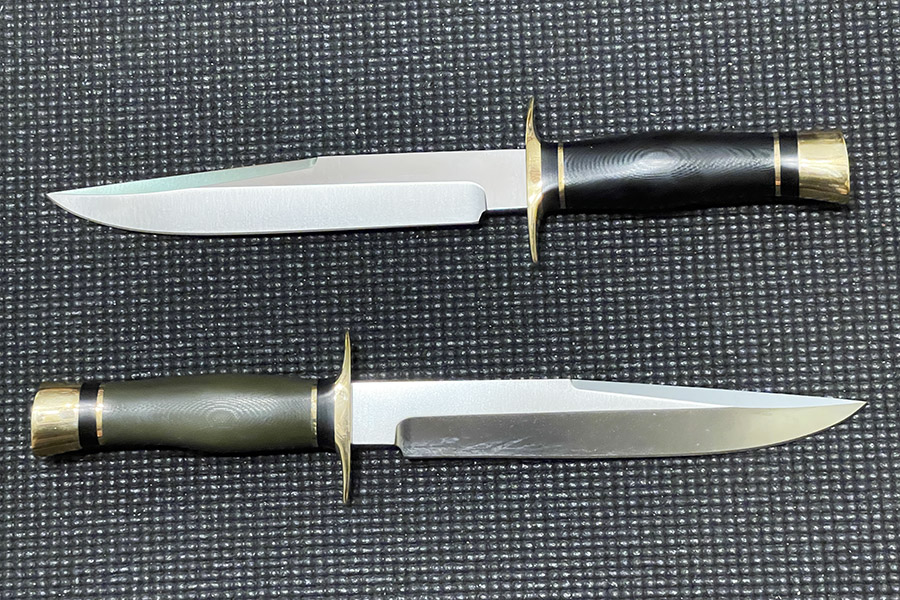
The price for (and the wait to get) a Randall knife make them a nonstarter for me, but the thought of a high-quality Bowie knife had my attention (as you probably already know from following the ExNotes blog). The Marbles MR 723 sure seemed appealing, and for a measly $55, I thought I would take a chance. It was money well spent. The knife is beautiful, it is substantial, and it has the look and feel of a high-quality item.
A week or two after I received the Marbles Bowie, I learned that they are also available with a green Micarta (instead of black Micarta) handle. At first, I was disappointed. I would have preferred the green Micarta version. Then I thought about it a minute. For another few dollars, I could have both, and that’s what I did.
The specifications for these Marbles knives are impressive. The knife has a blade length of 7 1/2 inches. The blade is D2 tool steel, which I’ve read is a good knife steel (it’s kind of a moot point for me, as I don’t intend to do anything with the Marbles Bowies other than look at them). The blade is substantive (it’s almost a quarter of an inch thick where it emerges from the guard), and it has a satin finish. It’s very sharp. I can’t tell you how long the edge will last, nor can I tell you how difficult it will be to sharpen it. The guard and pommel are polished brass. The handle material is, as mentioned above, Micarta, and it is available in either green or black (and both look good). The sheath is first class, being nicely finished leather with a sharpening stone included. Overall, these are very nice knives. I know some folks who read this will dismiss me as a knife neophyte who won’t really use these knives the way other folks might use a Randall, and hey, they’d be right. I’m not Davy Crockett, and I’m not going to try to kill a bear with either of these.
These Marbles are great looking knives, and they look good sitting amongst the other knives I’ve accumulated over the last year or two. I’m pleased with the purchase.
Greenwich Mean Time. In case you were wondering, that’s what GMT means, and I thought I would introduce this blog with a simple definition of what Greenwich Mean Time actually means, only it’s not that simple. Here’s the first part of a long explanation from Wikipedia:
Greenwich Mean Time (GMT) is the local mean time at the Royal Observatory in Greenwich, London, counted from midnight. At different times in the past, it has been calculated in different ways, including being calculated from noon; as a consequence, it cannot be used to specify a particular time unless a context is given. The term “GMT” is also used as one of the names for the time zone UTC+00:00 and, in UK law, is the basis for civil time in the United Kingdom.
It gets more complicated from there, with considerations given for the historical differences between the day starting at noon (versus midnight), variations in the time at which the sun crosses directly over London’s Greenwich Observatory (it can vary by 16 minutes either way), and other factors I’m not going to go into here. After reading through the Wikipedia definition, I’m going to settle on GMT standing for Greenwich Mean Time and leave it at that.
In my watch-centric context, GMT means a watch that can be used for showing the time in two time zones simultaneously. There’s a lot of ways to do this and the watchmaking world has numerous different approaches. It’s perhaps easiest with a digital watch that can switch between cities (Casio has a number of watches that can do this and we’ve blogged about them before). Within the analog world, there are also different approaches, and we’ve also written about those before (see our blogs on the Citizen Blue Angels and the Citizen Night Hawk).
The more conventional GMT approach in the analog watch world is to add a fourth hand and a separate 24-hour set of markings, with the fourth GMT hand or the hour hand used to designate the second time zone. Last year, I bought a two-tone Seiko GMT watch because I thought it was cool and it compared favorably to my Rolex GMT Master II (and that blog is here).
So where’s this story going?
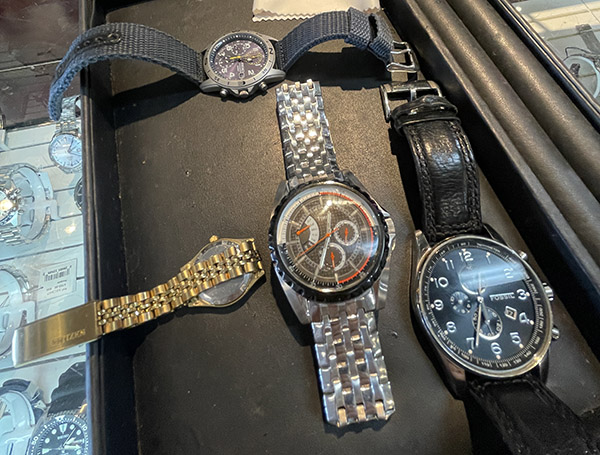
Several watches needed new batteries. The one at the top is a Seiko military-styled chrono in blue. The one at lower left is Sue’s Citizen. The one in the middle is a Timex flyback day-date I bought several years ago. I hardly ever wear that one, but I like it. The one in the lower right is a Fossil I admired when moto-buddy Joseph Lee wore it one day. To my surprise, he took it off and gave it to me.
A few days ago, I noticed several of my quartz watches had stopped running. One of Sue’s quartz watches had, too. Dead batteries. It happens on an irregular basis. But that’s okay, because it gives me an excuse to swing by my favorite watch shop, Golden Times Jewelry, in nearby Pomona. They’re nice people and they only charge $3.25 to install a new battery. And while I’m waiting, I can peruse their selection of new Citizen and Seiko watches.
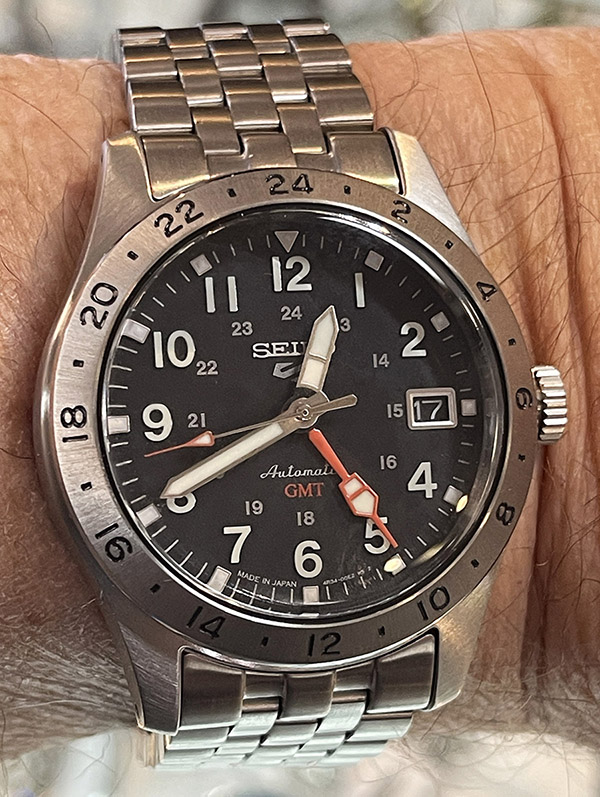
My new Seiko Field Series 5 GMT. This is a good-looking and accurate watch.
I was doing that when I noticed a Seiko I had not seen previously. It was the Seiko 5 Field Series GMT. It had all the features that appealed to me, including big numbers (my eyes aren’t what they used to be), a black face, strong contrast between the hands and the face, a stainless steel case and bracelet, it was not hideously huge (why do watchmakers make watches so unnecessarily big these days?), and an overall appearance that, to me, looked good. I asked to see it, and Stephanie (the nice lady who manages the shop) lopped 35% off Seiko’s suggested list price. That was a superb deal.
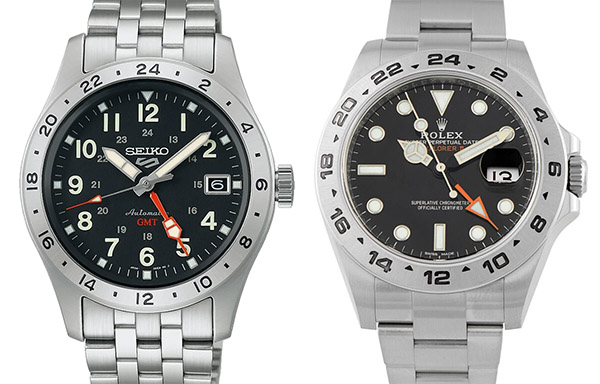
The Seiko 5 Field Series GMT and the Rolex Explorer II. The Rolex’s street price is around $11,000. The Seiko’s MSRP is about $450, but you can get it for less. I think the Seiko is better looking than the Rolex.
The new Seiko reminds me of Rolex’s Explorer II GMT. I tried it on and asked Stephanie if it made me look fat. She smiled. I pulled the trigger and I’m glad I did.
When I got home, I navigated to the official US time site (www.time.gov) and set the new Seiko to the exact time on it. I’ve been wearing the new Seiko for several days now and the watch is tracking to the official government time exactly. That’s awesome from a mechanical automatic (i.e., self-winding) watch. A new Rolex (or one that’s been appropriately serviced) is accurate to about 5 seconds per day. The Seiko is keeping better time.
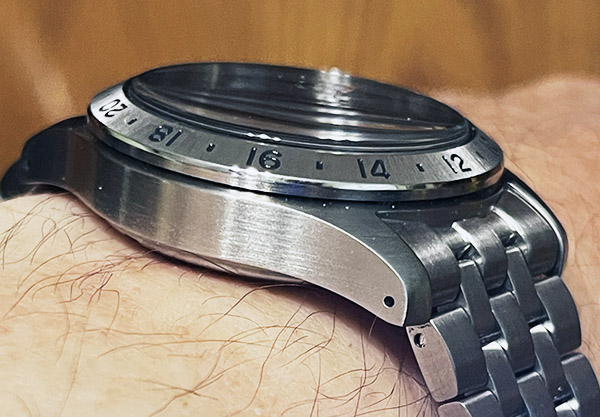
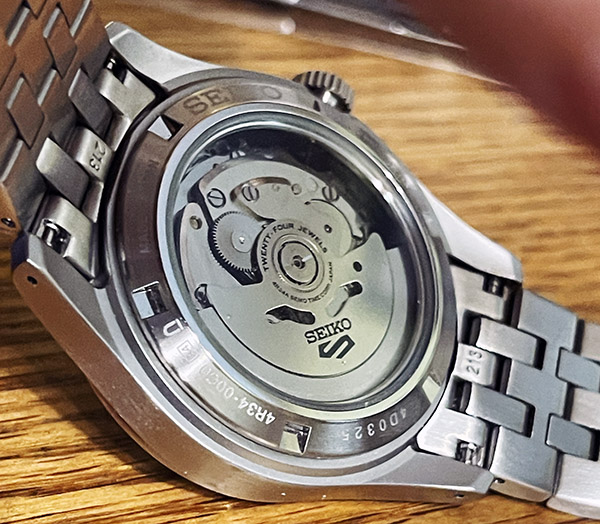
The new Seiko sits lower on the wrist than my other Seiko Series 5 watches.The Seiko 5 Field Series GMT window. I like it.
There are several things I like about this new Seiko. It sits lower on my wrist than most of my watches. That’s good. Like the other Seiko 5 watches, the watch has a window that allows you to see the movement and the self-winder. That’s a feature I like. The Seiko has a 41-hour reserve (if you take it off when it is fully wound, it will keep running for another 41 hours). That’s less than a Rolex’s 70-hour reserve, but in the real world, it’s kind of a pointless advantage (in my opinion). If I take the watch off, it’s only going to be for an hour or so. If I’m going to wear a different watch, it will usually be for a week or more (so neither a 41-hour reserve or a 70-hour reserve will keep it going).
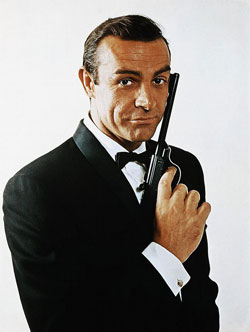
You know, you’d think the folks who produce James Bond movies would have their act (pardon the pun) together, but evidently that’s not so. I’ve already written about the iconic early James Bond movie flyer that shows Sean Connery standing provocatively with what appears to be a very menacing handgun. It wasn’t. It turns out that what old Bond, James Bond posed with was a .177-caliber pellet pistol (a BB gun, to use a looser term), and that was because they forgot to bring the real gun for the photo shoot. The photographer, a target shooter, just happened to have his BB gun in the trunk of his car. I wrote about my identical pellet pistol a few years ago.
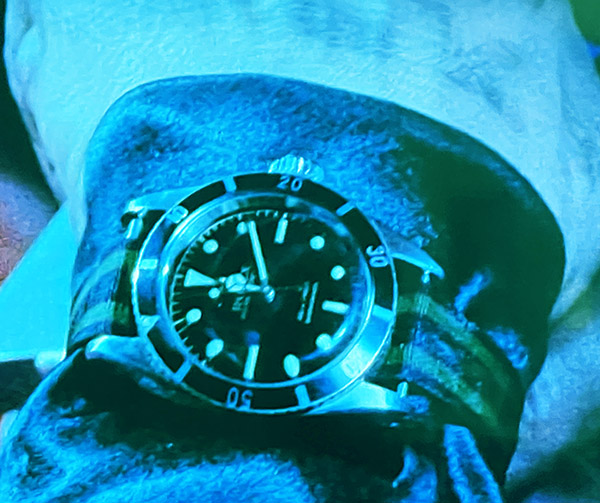
But all’s fair in love, war, and spy movies, and when I get a chance to watch a Bond movie (no matter how many times I’ve seen it), I’m in. That’s what happened the other day when I was channel surfing and Goldfinger popped up. I started the movie and in the opening scenes I noticed something I had previously missed. When Bond is doing his Navy Seal routine, getting ready to blow up a waterfront drug lab disguised as an oil tank, I caught a glimpse of his watch.
A poor image, taken from my TV screen with my iPhone.
I stopped the movie and went back a bit to get a better look at the watch. Wow, it was a Rolex dive watch (another topic we’ve covered here on ExNotes), and wow again, it had a military style band. The image quality you see above is awful, partly due to it being an evening scene and partly due to the above image being a cell phone capture of my television screen. It’s too bluish, I know. But that watch strap…wow! Was it a coincidence? I had just received an email from a company called BluShark offering an identical watch strap!
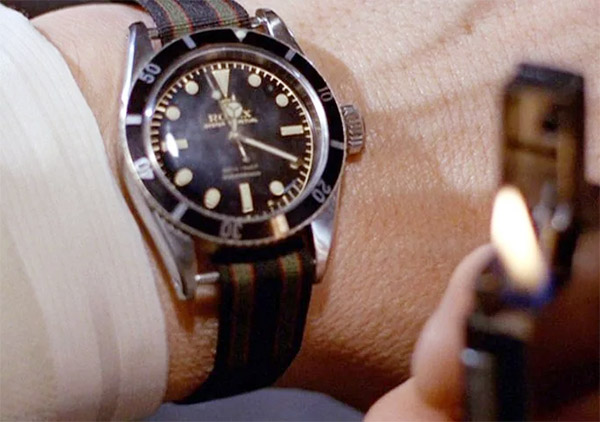
I went to Google and searched for a better image of the Goldfinger scene. Sure enough, I found it:
Note the watch strap’s colors (or should I say colours?) and poor fit on the Rolex Submariner.
Several thoughts emerged:
I’m not and never have been a military watch strap fan.
The above notwithstanding, I liked the colors in the Bond strap.
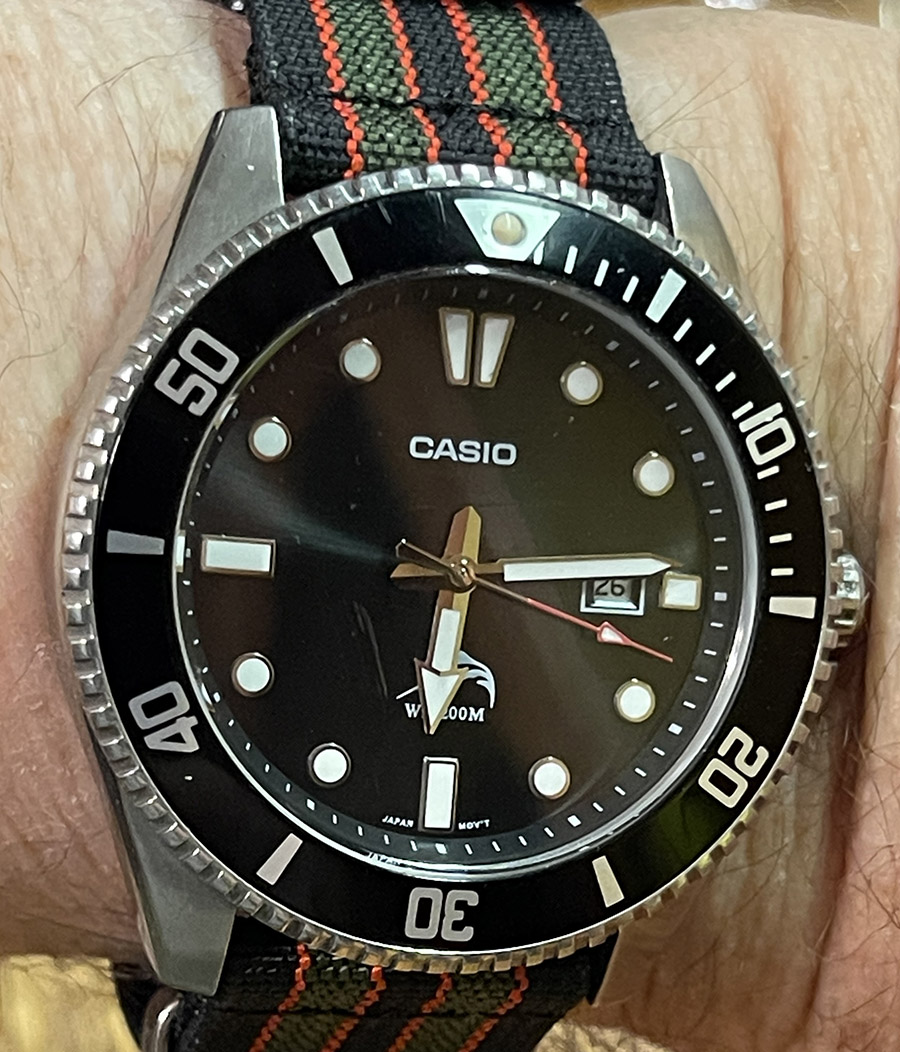
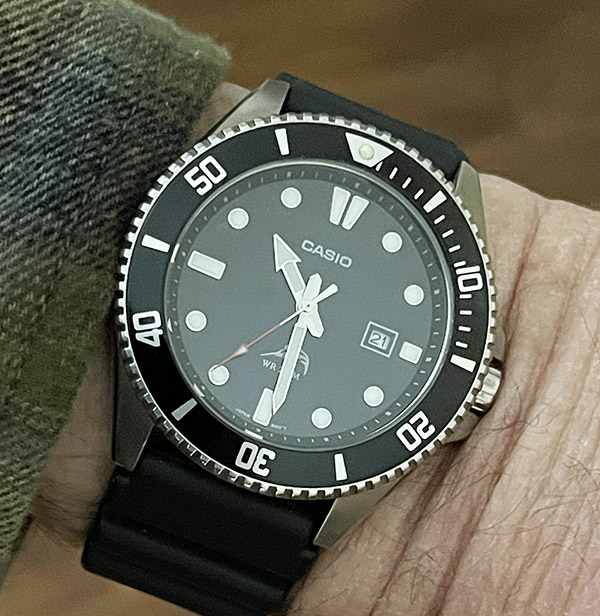
I have a Casio Marlin, which is kind of a poor man’s Rolex, and those Bond watch strap colors looked good against a black dive watch.
The watch strap in the Goldfinger scene didn’t fit the watch at all. It was a couple of sizes too narrow compared the Rolex’s lug width.
My Casio Marlin and its original watch strap. I’ve owned this watch for close to 20 years. It’s the best watch buy on the planet.
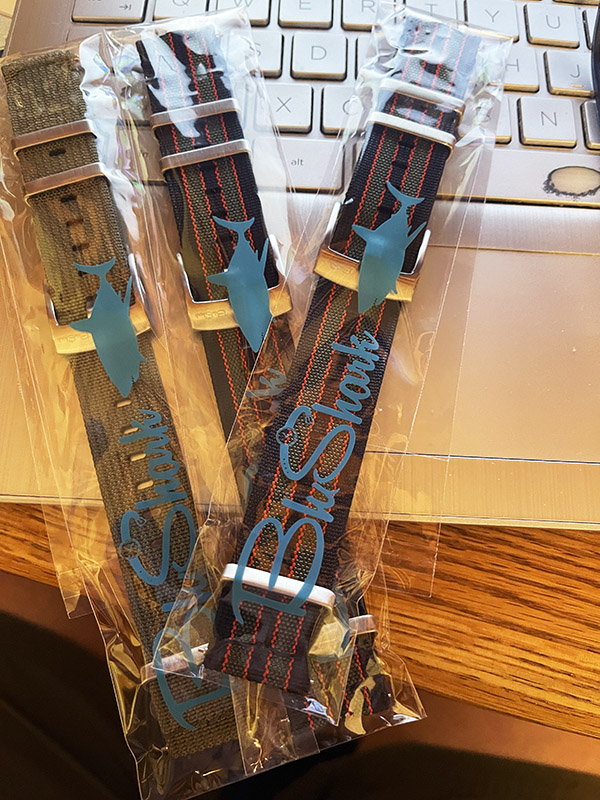
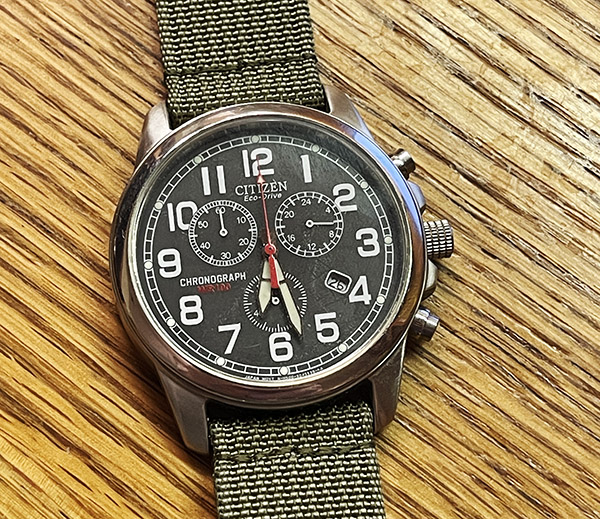
So I went back to the BluShark email. Buy two and get one free. They sent me a code for another 10% off my first order. Free shipping. How could I say no? I knew what I would order, too. I wanted two of the Bond watch straps in the appropriate size, one for my Casio and another identical one for good buddy Paul’s new Casio (he bought a Marlin, too; he’s always giving me free stuff, and it was time for me to reciprocate). And I wanted another military style strap in OD green for my Citizen Eco-Drive chronograph, a watch I’ve owned and enjoyed wearing for 30 years. The Citizen originally came with an OD green cloth strap, and a similar military strap for it would be perfect.
The BluShark watch straps.
A few days later the BluShark bands arrived. Wow. It took only minutes to fit my two to their respective watches, and as you can see from the photo atop this blog, the Casio looks great.
That had me wondering: What is the significance of the colors on the Bond watch strap, and in Goldfinger, why did the strap fit his Rolex so poorly?
As to the fit (and as much as you can trust anything you read on the Internet), Sean Connery didn’t own a Rolex. Albert Broccoli, the producer, did, and he leant his watch to Connery. But it didn’t fit Connery’s wrist. A crew member had the watch strap you see in Goldfinger, so it was quickly swapped onto Bond’s watch, and voilà, the Bond watch strap was born. Like I said near the beginning of this blog, you’d think a Bond movie prop department would be better organized, but there you have it.
As to the colors, well, that story is all over the map, too. The one I like is that the colors in the Bond strap are the British military intelligence regimental colors (red, green, and black). That leads to the next logical question: Do spies wear colors to advertise their spy backgrounds? I think the answer is probably no, but it makes for an interesting explanation and an intriguing story. I found more on this poking around a bit, including a blazer patch for members of the British Intelligence Corps (you know, just in case Boris and Natasha needed to confirm their suspicions).
Spy swag. Why hide it?
This is all interesting stuff and it makes for interesting conversation. If you’d like to see more about BluShark and their straps, you can do so here.
That Citizen Eco-Drive I mentioned above? I’m wearing it now and I love it. Here’s what it looks like:
The Citizen Eco-Drive watch mentioned above. It’s another favorite.