Imagine my surprise: I thought there would be but one 10-cylinder motorcycle. I thought this would be a quick blog. There’s the Dodge Viper-powered Tomahawk that was newsworthy maybe 10 years ago. But wait, there’s more (as my hero Billy Mays used to say). I found two more poking around on the Internet.
Two Dodge V10 Motorcycles
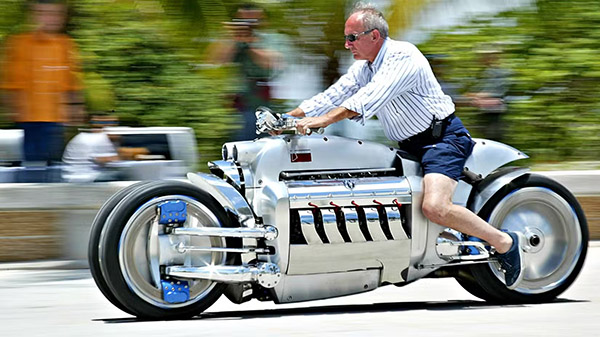
You may remember a Dodge Viper powered V-10 motorcycle a couple of decades ago. It was a weird one with two wheels upfront and two wheels in back. Between that feature and the weight, the handling must have been atrocious.
I thought Dodge had just built one as a showpiece, but according to online references they actually built and sold nine of the things (at a price of $550,000). The Dodge boys called it the Tomahawk. It has a theoretical top speed of 450 mph. Take a look:
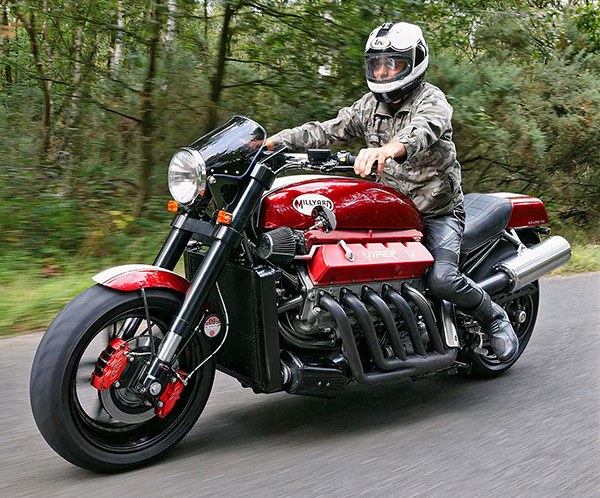
Allen Millyard, a builder who created a number of mega-cylinder motorcycles and who has been featured in a few of our previous ¿Quantos Pistones? blogs, also built a Dodge V-10 motorcycle. It is more conventional (if a 10-cylinder can be called conventional) wheel layout, with one at the front and one at the rear.
Here’s a YouTube about the Millyard V-10. It’s cool, as it shows a 172-mph, two-up run.
The Bistella
The Bistella is an unusual 10-cylinder, 500cc, supercharged two-stroke , Jawa-based motorcycle designed by Czech engineer Marek Foltis. It’s a weird one, and I guess Foltis is living proof that if you have the talent, nothing is impossible. The bike used the cylinders and pistons from ten 50cc Jawas. Wow. Just wow. Take a listen:
You might be wondering: Is there more to come in our ¿Quantos Pistones? series? Yep, there is. Stay tuned.
Missed any of the earlier ¿Quantos Pistones? blogs?
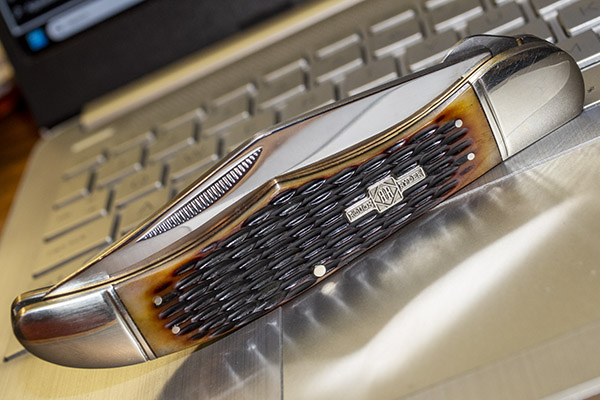
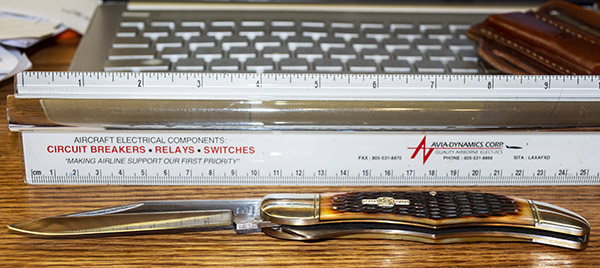
The knife du jour is the Rough Ryder 854, which is a gigondo folder that looked like something I couldn’t live without when I saw it on the Chicago Knife Works site. I’m hooked on the large folders, and at a price of $14, this thing seemed too good to ignore.
The Rough Ryder 854. No one has these in stock anymore. It’s a lot of knife at any price.Yessiree…a real pig sticker!
The problem, however, was that the design was defective, or the quality was terrible, or maybe it was both. It was a subtle defect, one that most folks wouldn’t notice until they stabbed themselves with the tip.
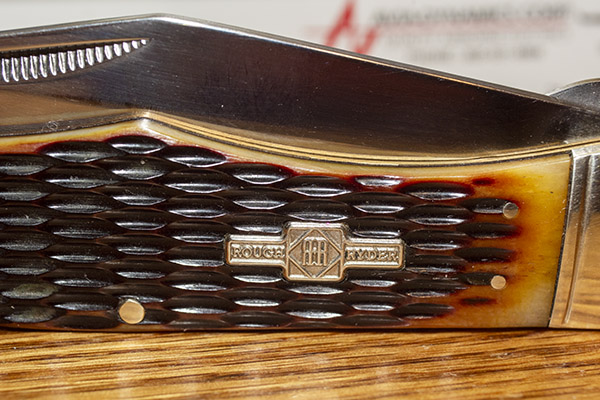
The Rough Ryder logo. I like it.
I first saw the knife online somewhere, and then I looked for it on Amazon. I hit paydirt and I used my Prime membership to skirt the shipping costs. Two days later it was at my front door. It looked beautiful, but the blade stopped a little bit short of the knife being fully closed. That’s not good, I realized. I tried squirting WD 40 and then adding oil to the knife’s pivot point, but the blade still stopped a bit short of being fully closed. Back it went to Amazon.
But I like the knife. It looked good and it felt good. So I called Chicago Knife Works and ordered the same knife from them. I called first, and asked if they would examine the knife before it shipped for the problem the first one had. Sure, they said. No problem. Chicago Knife Works is always slow in shipping, though, so I waited the obligatory four or five weeks before it arrived. But finally it did, and I was like a kid at Christmas time when it landed in my mailbox.
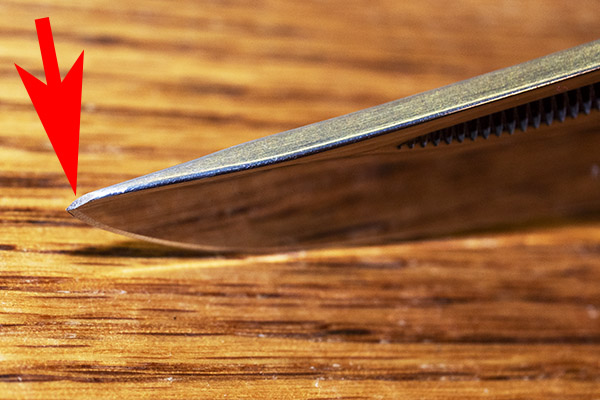
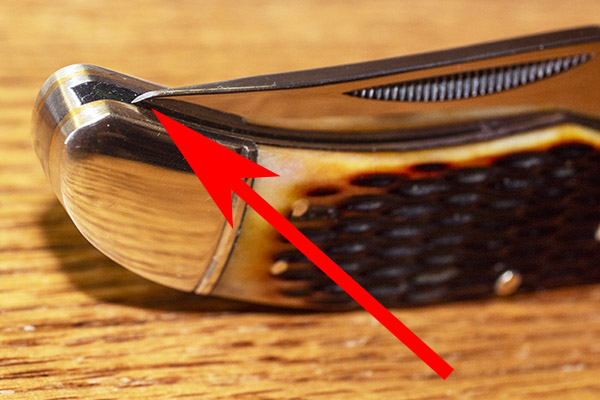
You can guess where this story is going. The new Rough Ryder had the same disease. It wasn’t as bad as the first knife, but the blade didn’t fully close. If I ran my finger along the knife handle’s edge, the blade tip still ran proud, and I still saw it could stab me if I wasn’t careful.
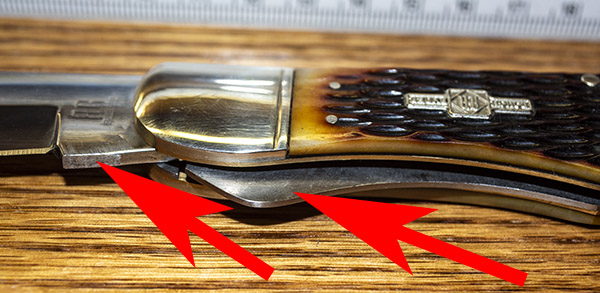
The red arrow on the left shows the area I relieved, thinking it would allow the blade to go further into the knife when folded. I was wrong. The red arrow on the right shows the knife’s liner lock, which prevents the blade from inadvertently closing after it has been opened.
The engineer in me took over. I examined the open blade profile and saw a bump stop. If I ground that down, I thought, the blade would more fully close. So I started grinding with my Dremel. That didn’t work. I ground some more of the blade stop off, and things didn’t improve. I examined the blade’s profile and the knife again, and I realized there was another stop of the blade (on the other side of its pivot point) that also controlled where the blade came to rest when the knife closed. But I couldn’t get to that one. Hmmm. Time for Plan B.
What’s weird (and what’s an ingrained character flaw) is that I was really stressing out over this $14 knife. I’ll do that sometimes, and this was one of those times. I’ve been a lot less annoyed at things that are a lot more expensive and aren’t perfect. I should have just returned the Rough Ryder. But I was fixated on fixing the thing. In the Diagnostic and Statistical Manual of Mental Disorders reference manual, it’s identified as Gresh’s Disease.
When thinking about potential fixes, I realized if I couldn’t get the blade to close any further, I could reprofile the blade to get rid of the tip, or, to be more accurate, to lower the blade’s profile so that the new tip would be below the knife’s scales when closed. So that’s what I did. The stone came out, I went to work, stroking the blade tip and checking how the blade closed every few strokes. Voilà, problem solved.
The blade tip lay above the scales when the knife was closed. I ground it down in the area indicated by the red arrow. Problem solved.A band aid fix, to be sure, but sometimes band aids work.
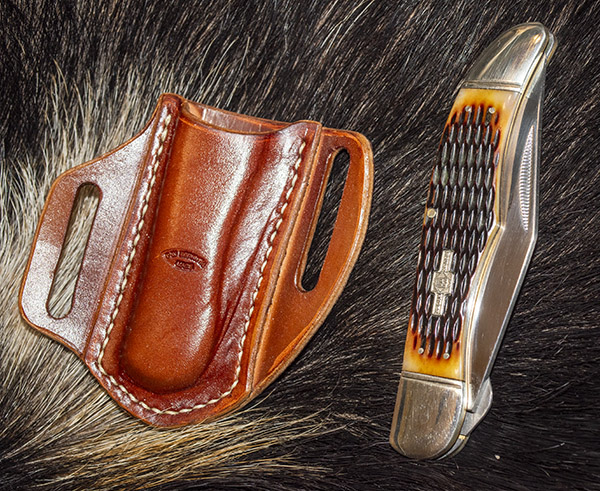
In the meantime, good buddy and craftsman extraordinaire Pauly bought the same knife. The guy is lucky; his Rough Ryder 854 closed the way God intended it to, and it did not have the same problem mine had. But he didn’t stop there. What the knives needed (both his and mine) was a holster.
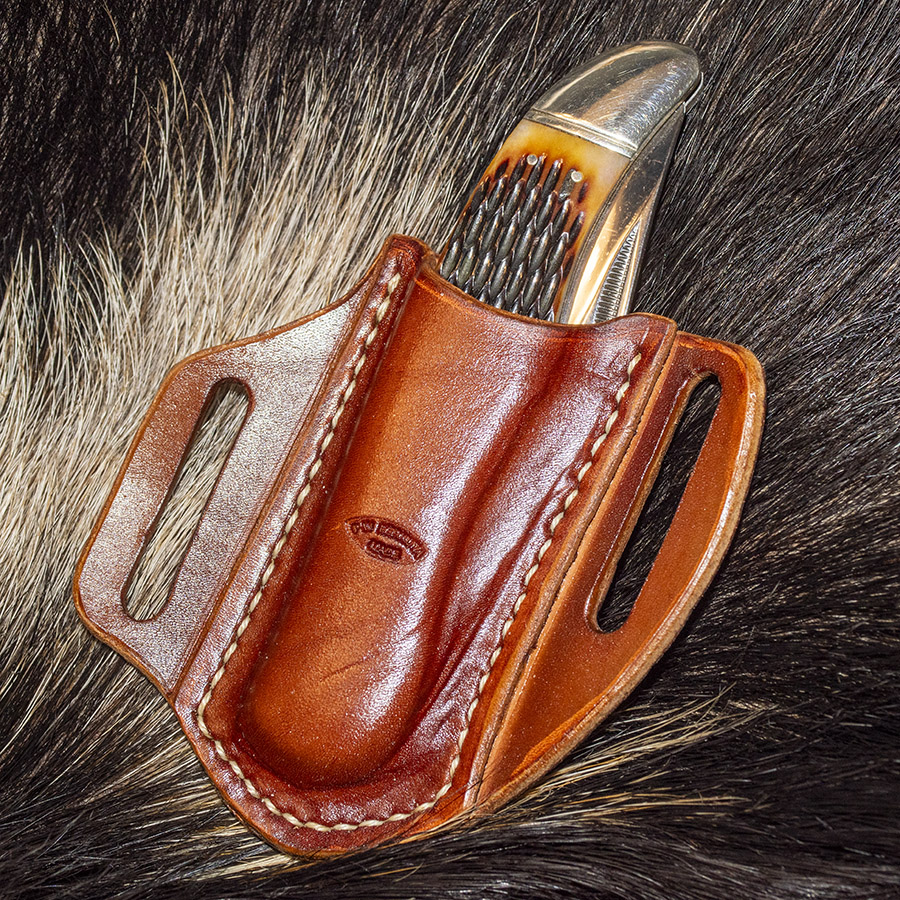
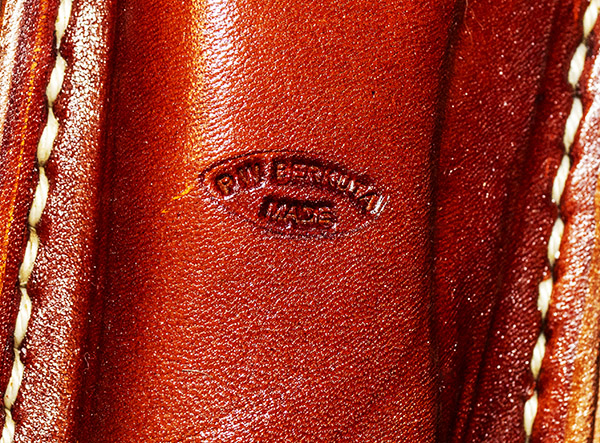
The Rough Ryder and the holster Paul made for me.P.W. Berkuta Made. It’s a cool stamp.
I’ve known Paul longer than I’ve known any living person on the planet. Literally. We were next door neighbors back in New Jersey when I was born. Paul has always been good at creating things, and it turns out that leatherworking is among his many talents. Paul created custom holsters for these knives, and they look and work as good as anything I’ve ever seen. What’s really cool is the holster takes advantage of the knife’s curves. The holster is formed to the knife’s coke bottle profile, which secures the large folder when it is in the holster. It’s a hell of a nice gift.
We need your support! Do what you can to help ExNotes stay in the black!
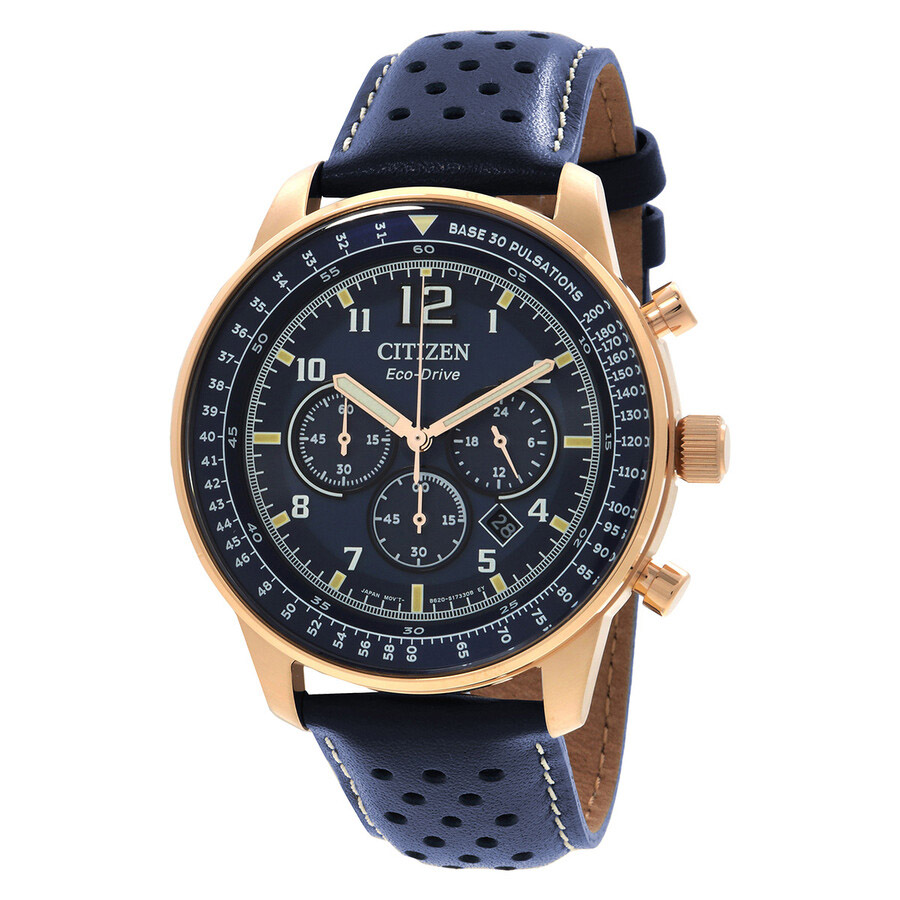
It was an impulse buy, the kind of purchase that folks who send out marketing emails hope to induce, and it my case, it worked spectacularly well. My new Citizen chronograph is rose gold (something I’m a sucker for), with a leather band (something else I’m a sucker for), and both the leather band and the watch face are Navy blue (something I’m…well, you know where this is going). As it was over $100, there was free shipping (something that always gets my attention). And finally, there was the sale price: $144, down from $395. I am a soft touch for great deals on wristwear, weapons, and other assorted toys that find their way into the ExNotes blog.
All that was cool, but after I clicked buy now and typed in my credit card info, I studied the chronograph bezel markings. I was intrigued by the notation “Base 30 Pulsations.” You can see it on the outer bezel between the 12:00 and 2:00 positions. As much as I like watches in general and chronometers in particular, I had never heard of such a thing before I bought the watch you see above.
It was off to Googleville, and like always, Google came through.
The Base 30 Pulsation system came about in the early days of watchdom as a tool for doctors to quickly measure a person’s pulse rate. The way it works is that you start the stopwatch (the chronometer) and count 30 heartbeats for whoever’s pulse you’re taking. When you hit 30 beats, you stop the chronometer. The chronometer’s second hand will point to the patient’s pulse rate. If the pulse rate is the normal 60 beats per minute, the second hand will point to 60 on the outer bezel, which makes sense because if you had 30 beats in 30 seconds, well, your pulse rate would be 6o beats per minute. This is cool stuff.
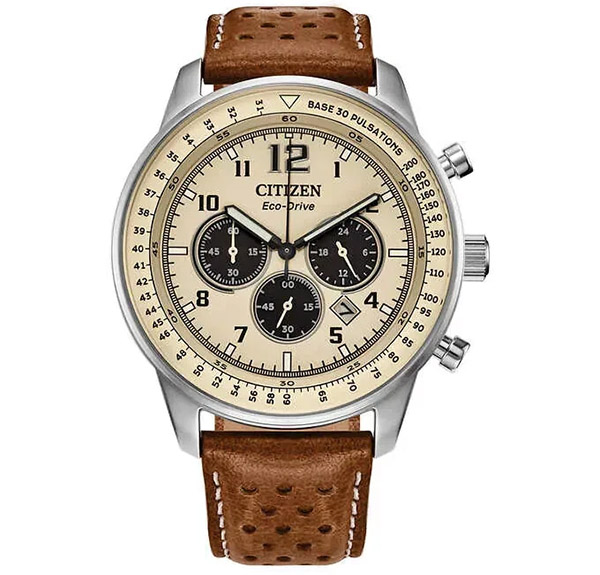
That got me to thinking: Are there other chronometers out there with bezels marked in the 30 Base system? Yep, and some are even by Citizen. They have an identical model to the one you see above in stainless steel with a brown leather band and an ivory face:
I’d seen the above watch (the ivory-faced one) in the display case at my local Costco, but I can’t remember what they were asking for it and I couldn’t find it on the Costco website. I’m pretty sure it’s still in the store. If you can’t find one at your local Costco, there are a bunch of retailers selling them on Ebay.
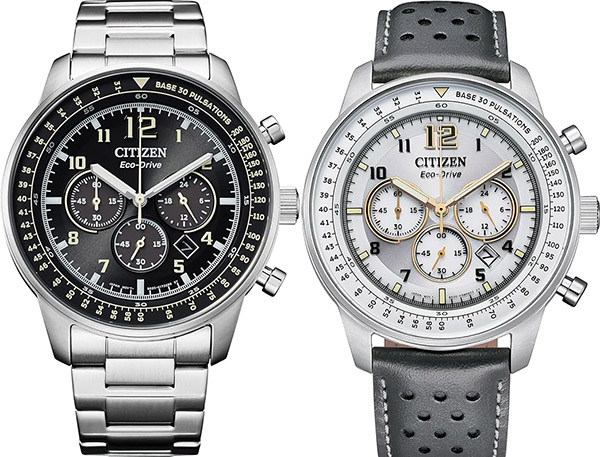
I also found a couple more stainless steel Base 30 versions of the Citizen in different colors on Amazon:
Amazon’s prices were in the $250 to $275 range for the above watches. Those might be decent prices, but Jomas (www.Jomashop.com) has them all beat at $144 (which is what I paid for mine).
A man with a watch knows what time it is. A man with two watches is never sure.
Part of the reason I bought a Buell was because my life has become too predictable. Except for the Husqvarna, you stand a good chance of getting where you’re going on my old bikes. And the Buell is not disappointing. Lots of fun stuff is happening as I work on getting the bike back on the road.
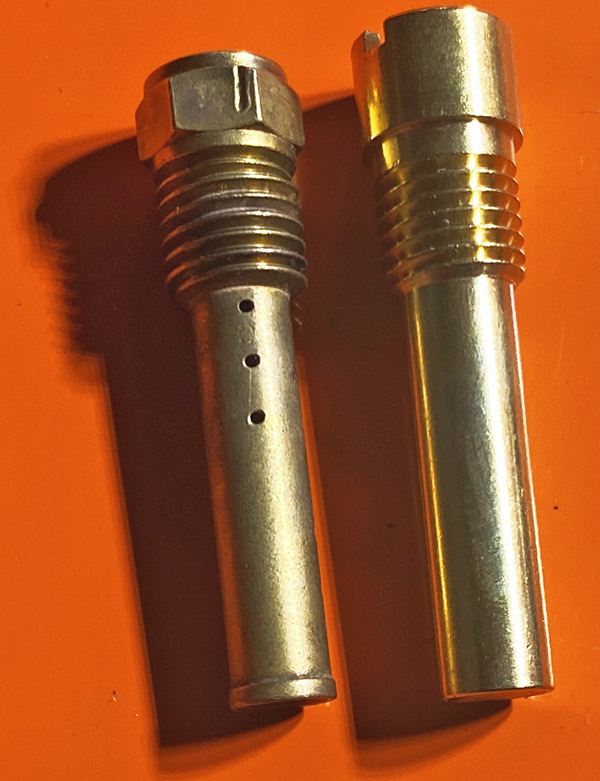
It’s such a joy to tinker on a single-carb motorcycle. There are no racks and synchronizing to deal with, you only have to do a thing once instead of four times, but watch out for those aftermarket parts. The kit I bought was okay, but the emulsion tube was not drilled properly. And then I managed to pinch the bowl o-ring. It was cheaper to buy another kit than a single bowl gasket, so I did that. Unfortunately, that kit’s bowl o-ring was too small. No matter how I stretched it, it kept popping out of the bowl groove. I ended up reinstalling the pinched o-ring. It was a futile effort to keep my mechanical standards up.
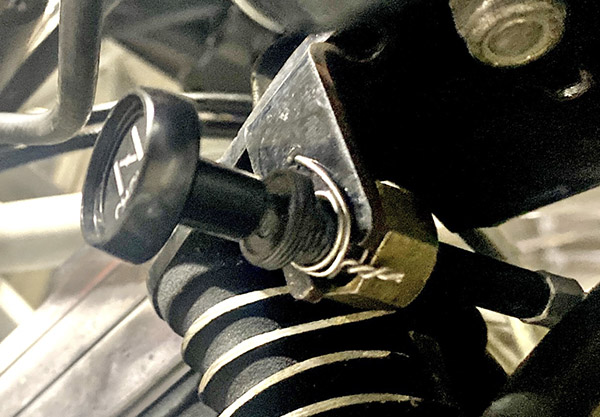
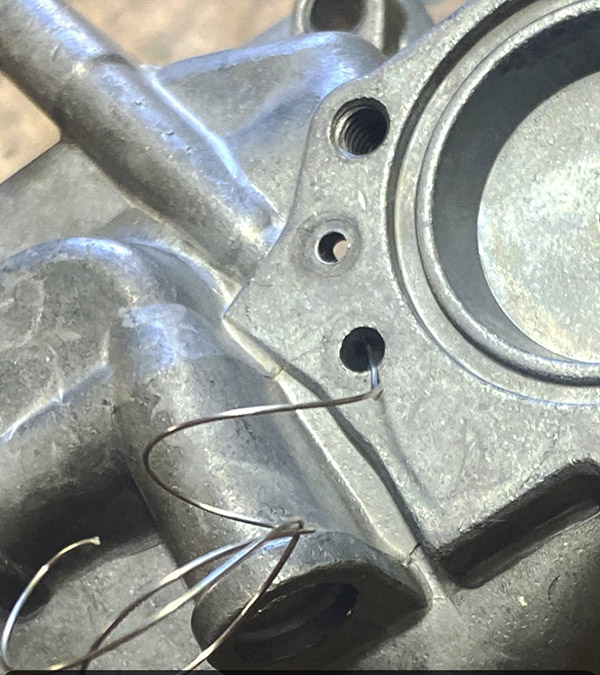
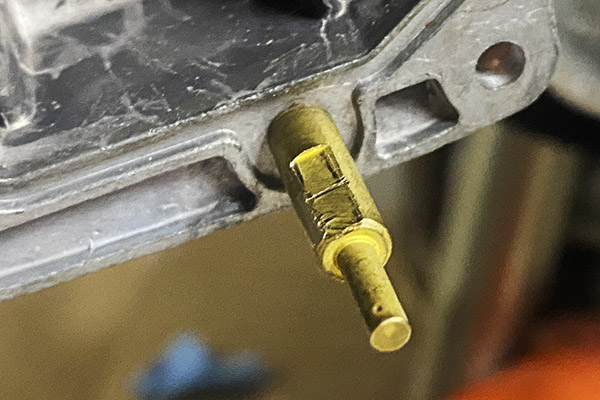
It wouldn’t be a Harley without baling wire. The choke tube is plastic and was fragile after all these years. The choke knob was falling out of its slot. I broke the tube finger tightening the thing. Wire to the rescue!The accelerator pump plumbing was clogged. I fished a small bit of wire through the passage to clear it.The carb kit emulsion tube (right side) was not drilled correctly. I try to use all the old stuff if possible. So this was no great loss.This brass nozzle sprays fuel from the accelerator pump. Supposedly the tube is removable for cleaning but it seems well stuck and I started to chew it up a bit so I stopped.
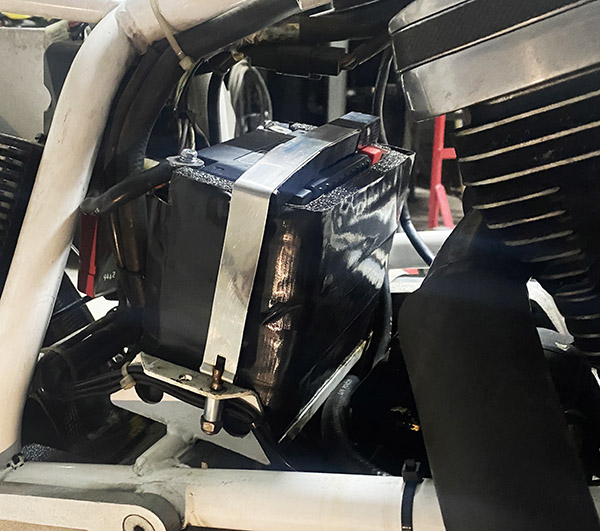
I’m a big fan of lithium batteries, so I bought a Vevor brand close in size to the original lead-acid battery. The Vevor was a bit small and the factory battery location is not far from the rear cylinder exhaust header. To help with the heat I wrapped the sides and front with foam, then wrapped gorilla tape around the mess to hold the foam insulation.
It looks a little rough but an insulated battery is a happy battery.
A neat feature on the Vevor is the dual posts (four total). There are positive and negative posts on both sides of the battery; if your cables are in the wrong place, just flip the battery around. I added a spacer on the hook side of the battery strap to keep it tight and a small tube spacer in the bolt side (less threading to do on the hold down bolt), which makes installation 12 seconds faster. When you ride a Buell every second counts. The battery seems secure; hopefully, it will stay put. With the Vevor battery (supposedly 400 cranking amps) in place and the carb back on, I needed to hear the Buell run. The oil tank level was between the high and low marks. The oil looked clean, like it had just been changed.
I removed the spark plugs, put the coke machine key in the ignition, and spun the engine over to clear any excess oil from my previous cylinder lubing. With the sparkplugs back in the cylinder heads I pulled the choke, hit the right turn indicator button, and nothing happened.
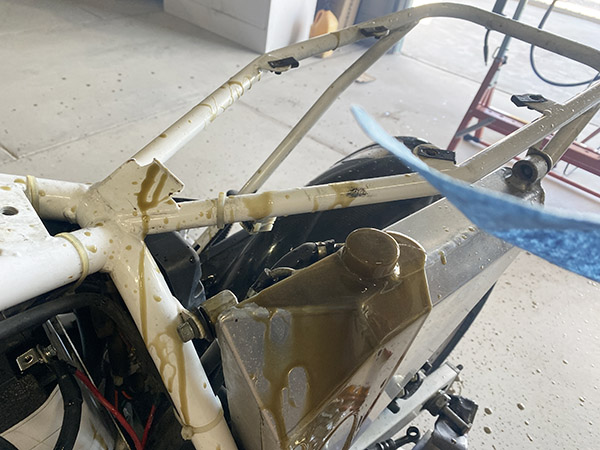
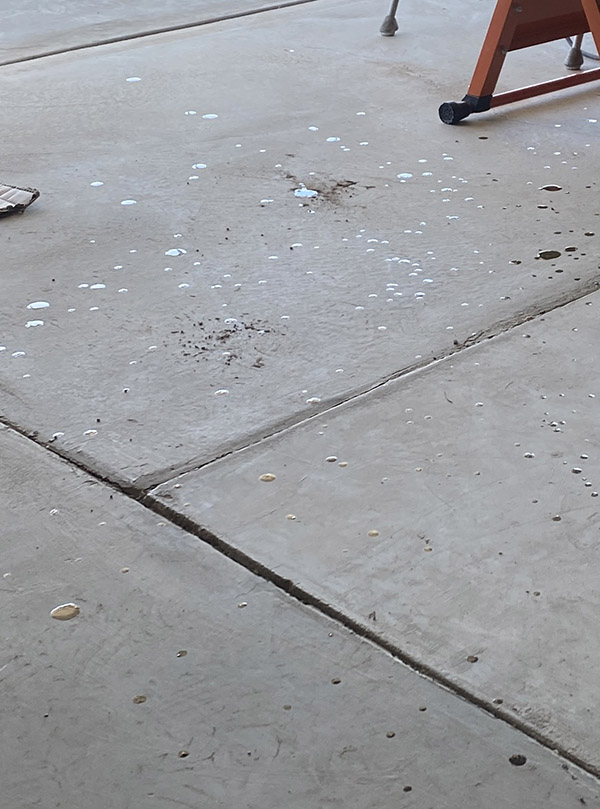
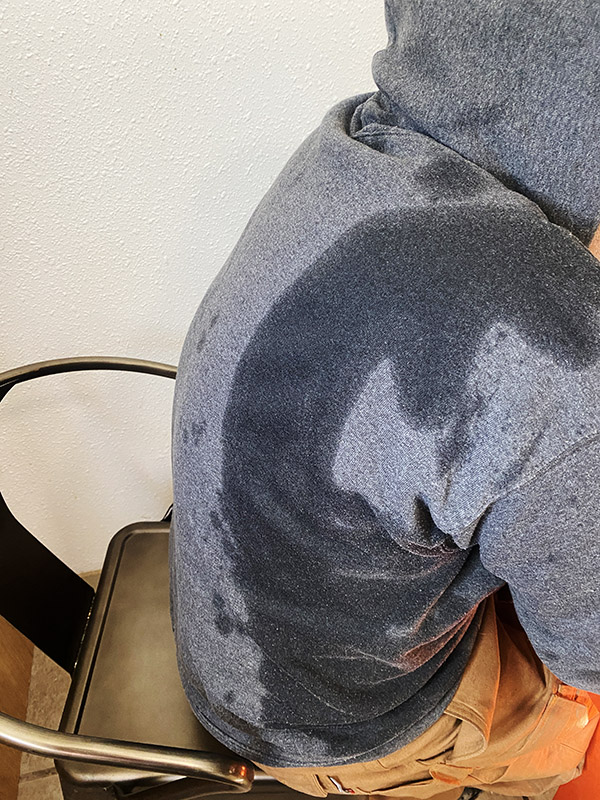
Harley handlebar switches are so weird. Pushing the starter button on the inside of the blinker switch worked better, and the Buell fired up in a couple revolutions. The engine popped and farted a few times. Lots of smoke came out the tail pipe but all things considered, it was running good. Then came a loud pop followed by a geyser of oil spewing from the oil tank. The oil broadcast in a 15-foot fan covering the general area with great dollops of thick oil. The spots were viscous, so they stood proud of my clean concrete floor. Except for the spot I was standing. I received a blast of spraying oil that covered my sweater and left a clean, Joe-shaped silhouette on the concrete floor.
My nice, clean floor got its first baptism-by-Harley.My nice, clean floor got its first baptism-by-Harley.My sweater took the brunt of the oil explosion.
What a mess. How long the Buell had been sitting was unknown, but the oil tank must have slowly drained into the crankcase. Some helpful person topped off the tank with fresh oil and I squirted the stuff all over the place. I drained the tank. There must have been a gallon in there if you include the oil on the ground. Once the oil level was correct, I fired the Buell and it settled down to the hit and miss syncopation Harley likes to call idle.
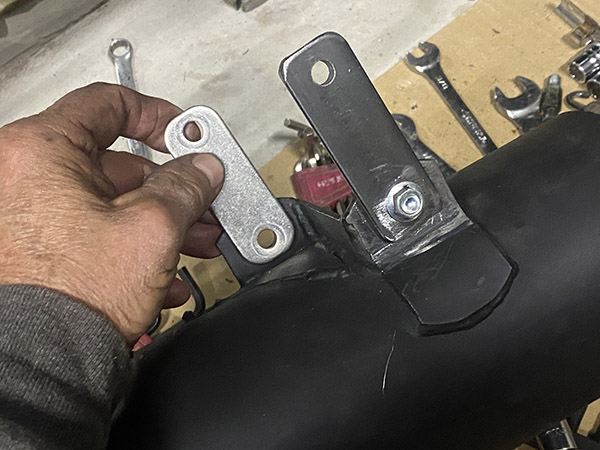
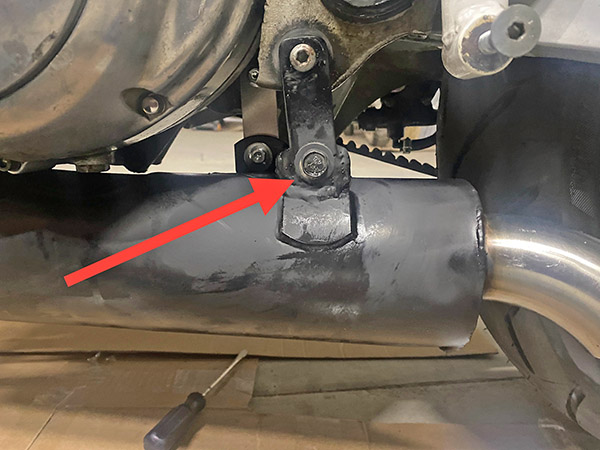
Back to other issues. I didn’t like the way the muffler was held into the bike. The setup relied on the front clamp combined with two rear brackets that bolted up in a parallelogram-like deal. The only thing that held the muffler in place was fastener tension. To achieve a more secure mounting I made a thicker bracket out of mild steel and welded it to the Muffler. Now in order for the muffler to slide back my crappy weld would have to break. Which it just might.
Since I don’t have the equipment to weld stainless steel I made a mild steel bracket for the muffler.The bracket welded to the muffler. Now the muffler can’t work loose and rub the tire.
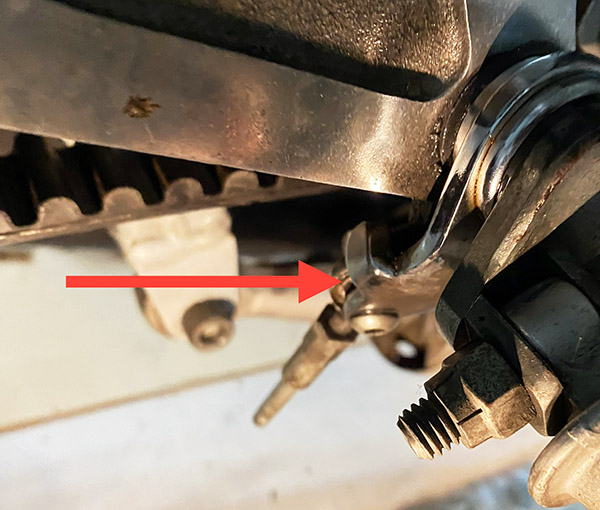
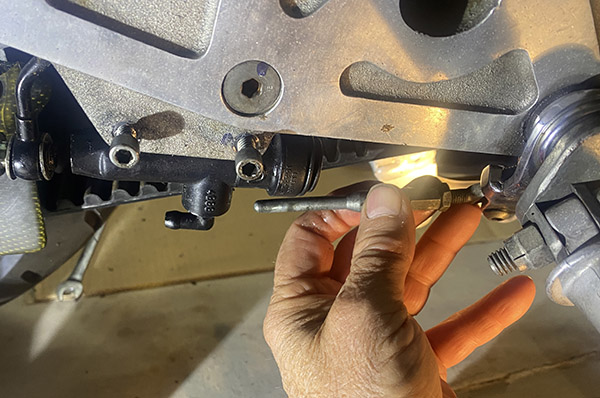
The rear brake on the Buell was stuck. There were several issues contributing to this problem. The first was the brake pedal. It was bent where the master cylinder pushrod attached in a way that made the rod move dramatically sideways when the brake was applied. I used Harley tool 0-U812 (a big crescent wrench) to adjust the brake pedal. Now the push rod moved in a straight line concentric with the master cylinder.
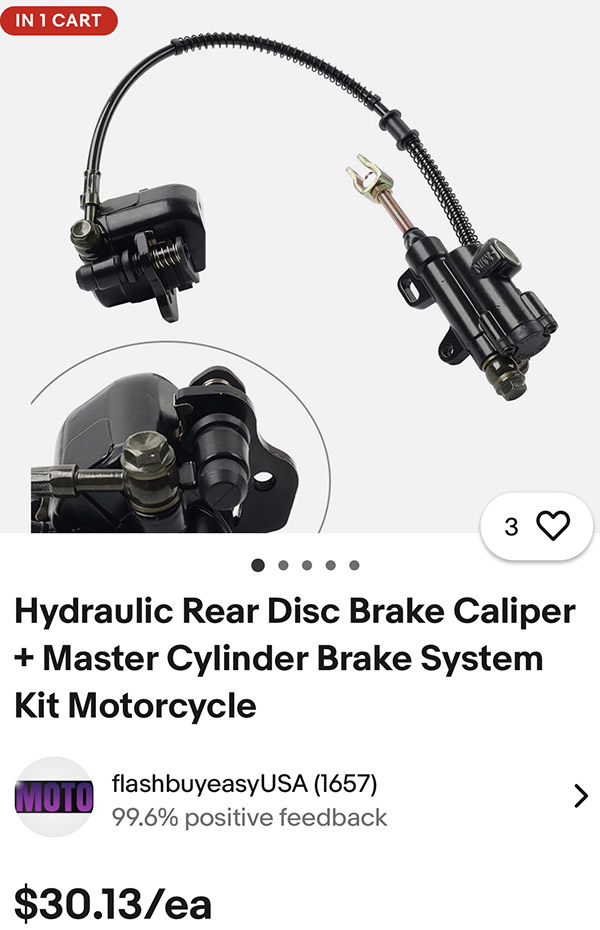
This replacement rear brake assembly was close but off in meaningful ways. The seller refunded my money and didn’t want me to ship it back.This part of the brake left was bent causing the master cylinder pushrod to go off course.It’s still a little bent but the pushrod articulates correctly now.
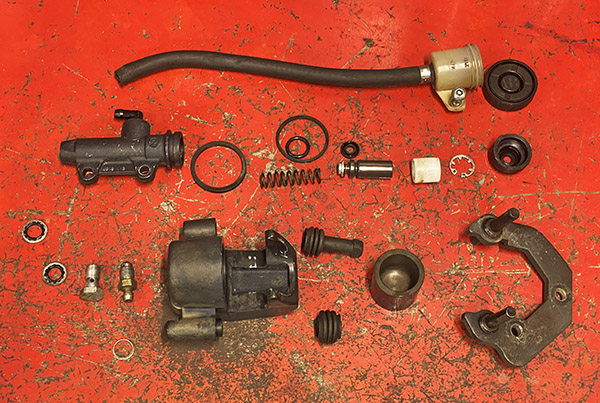
The clone master/slave kit I bought on Amazon that was supposed to fit was just off enough to be completely useless, so I decided to rebuild the original stuff.
All the original brake parts cleaned up well. So far no leaks.
The piston inside the master cylinder was stuck but a few raps with a hammer had the piston moving and I dismantled the master/slave. I was having trouble finding seals for the Brembo components, so I cleaned everything and reassembled the brakes.
Bleeding the brakes wasn’t going well. I could get pressure at the banjo bolt on the master cylinder but nothing at the slave. Shooting brake cleaner into the brake line did nothing. The hose was clogged. Out came the battery to access a hose clamp bolt, and I removed the brake line. Removing the brake light switch gave me a mid-point spot to shoot cleaner. The metal brake line was clear, the clog was in the rubber line. I soaked the line in an ultrasonic parts cleaner then worked a 0.30 flux core welding wire through the rubber line. It took a bit of finagling but the wire made it through. Then it was just a matter of soaking with brake cleaner and shuttling the 0.30 wire back and forth until the line was clear. Blowing the lines with compressed air got rid of any stragglers inside the hose. A quick reassembly and I had pressure to the slave. Bleeding the system was a straightforward proposition. The rear brake works.
Next on the list is fixing the kickstand and broken clutch lever.
As my age keeps creeping up and I slowly fall apart like Jeff Goldblum in the movie, The Fly, there is an urgency, a panic lying just below my normally placid exterior. Time is running short for all of us and if you have unfulfilled dreams, it’s best to get a move on.
The ill -fated VR1000, inspiration for my Buell’s paint.
Owning a tube frame Buell has been on my wish list since the S2 model came out in the mid 90’s. The combination of modern sport bike and 1957 lawnmower engine had a strange appeal to me and let’s face it: everyone should own a Sportster.
The dawn of 2026 found me frantically searching the internet for a 2000+ Buell Cyclone and I found a few. Several were pretty beat up all were reasonably priced but far away.
The deal I missed due to my inherent thriftiness.
I happened upon Iconic Motorbike Auctions and they had a pile of Buells from a private collection. The crown jewel was a Cyclone with only 6 total miles. It was a brand new, 25-year-old motorcycle. I bid on the bike and it made reserve at $4,000. What a deal! $4K was out of my self-imposed Buell budget so I stopped bidding. Someone got a hell of a deal.
Next up at Iconic was a clean, Buell Ulysses complete with Buell saddle bags. It was a gas-in-frame model. I prefer a tube-framed Buell but bid on the Ulysses anyway. It sold for $3,250! I didn’t bid anymore on it because it just wasn’t the bike I wanted. Although if I got it for $2K I would have learned to love it. After that, Iconic had an S3 with saddlebags that went for over $5,000. Now I was starting to freak out. I had Buell Fever bad-like. What if I was witnessing a Buell market correction in real time?
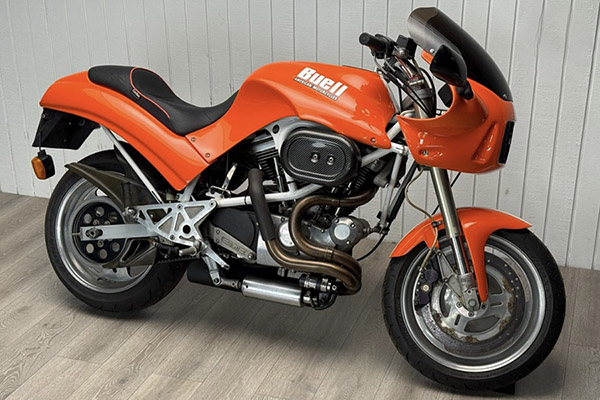
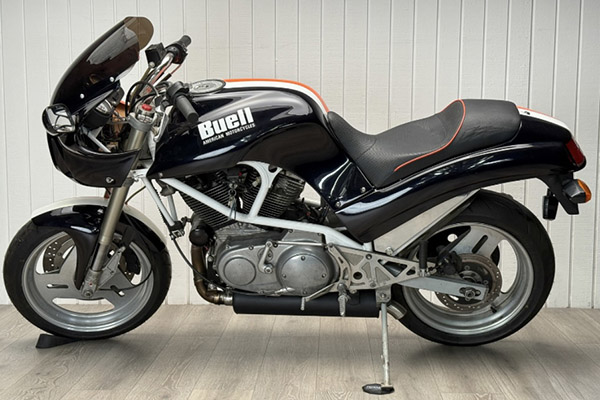
It’s like getting two bikes in one! Orange on the right.And black on the left.
Iconic has a buy-it-now section for motorcycles that don’t make their auction reserve. I plundered around in buy-it-now and found a beautiful 1995 Thunderbolt with only 13,000 miles for $3,000. It has a few minor issues to sort out like any 30-year-old motorcycle but what really got to me was the Harley VR1000-tribute paint scheme . It looked cool as hell. I loved the paint job. I pushed the button.
It’s not an actual Cyclone, but it mostly is a Cyclone. The main cosmetic difference is the front forks and faring. Also the 1995 Thunderbolt used a bone-stock Sportster engine that Cycle World dynoed at 65-ish horsepower. Later Buell’s were pumped up a lot with Buell-specific heads and other parts churning out 100 horsepower.
While I wouldn’t mind another 35 horsepower, the truth is I just putt around on bikes. My go-fast days are behind me much like the strange growth I had cut out of my back a few months ago (see The Fly with Jeff Goldblum).
One advantage to the Sportster engine is that parts availability should be excellent for the remainder of my life and beyond. If I truly need more oomph there are tons of Sportster hop-up parts and 60 years of institutional knowledge on the Internet. 75 horsepower is a pipe and cams away.
But I probably won’t do anything to the Thunderbolt except ride it and look at it. I’ll be fixing the minor issues right here on ExhaustNotes so you’ll be able to follow along with this Buellishness.
Got to go. Driving out to Panorama City in California to pick up my dream bike from Iconic motorbikes.
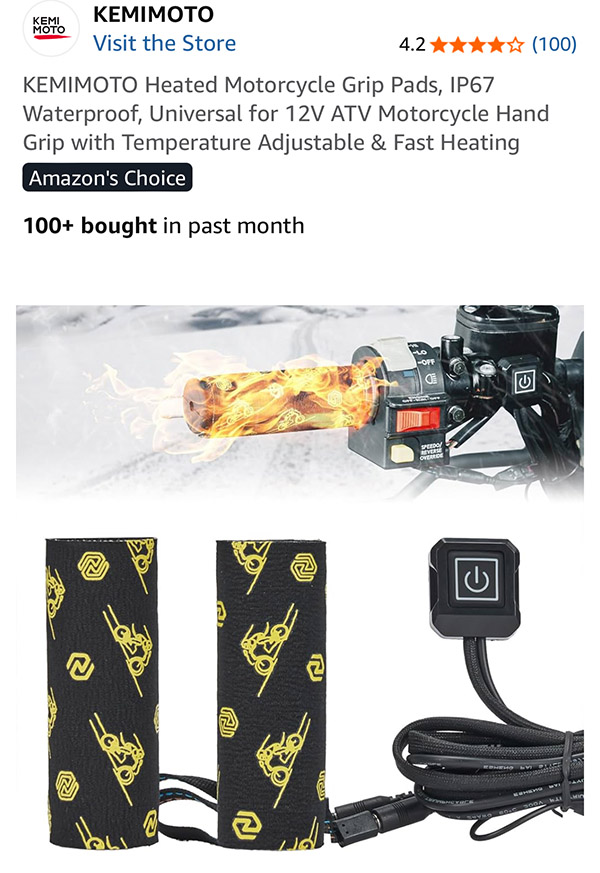
Old Man Winter is taking his sweet time here in New Mexico. It is late December, 70 degrees and the frozen old git still hasn’t made much of a dent. But he will arrive and I’ll be ready with my new Kemimoto heated grips.
I’ve set up the Kawasaki ZRX as my cold weather bike with a 12-volt receptacle for an Aerostitch heated vest and these grips will complete my preparations for the cold. If it ever gets here.
Installation would normally be simple as the wiring connects directly to the host bike’s battery. The main problem with this setup is if you accidentally leave the grips on and drain your battery. In the cold.
I couldn’t find an unused, switched power connection on the factory harness so I rigged a cube-type relay under the headlight faring that energizes from the instrument light circuit. This ensures the grips are off when the key is off. Power for the grips comes from the Areostitch vest power lead and runs up to the relay.
The heating elements just wrap around your existing grips and a 3-power level switch needs to go somewhere. I used a fairing mount bolt to secure the included switch bracket on the right side of the gauge cluster. It’s not a great location but it was easy.
Heat-wise these grips crank it out. On high you can feel the burn. This setting would be good for freezing weather. Low was still too hot during my 60-degree test ride so it should be good for average New Mexico winter conditions.
That wrap around heating element never really gets very tight on the grips so you’ll need to reset its position as it slowly creeps around the throttle. Or squeeze tighter.
The on-off switch is dimly lit so in sunlight it’s hard to tell what power level the thing is set at (red=high, blue=medium, green=low) I had to stop and cup my hand over the switch to see the illumination.
While I haven’t tested the grips in truly cold weather I’m sure they will help. It’s nice to pop the switch on when the elevation climbs over 7000 feet. Cuddly and warm best describes the feeling.
How long the grips will last is anyone’s guess but they’re easily unwrapped, unplugged and stored for the 10 months a year they are unnecessary in sunny, warm New Mexico. The harness, relay and switch remain on the bike full time.
I’m satisfied with the Kemimoto heated grips and give them a solid 3-star rating, a rating that could be improved if they fit the grips tighter and the switch was brighter. Maybe a section of elastic would help hold the grips better but what do I know. Now if Old Man Winter would get off his butt I could try them out in proper conditions.
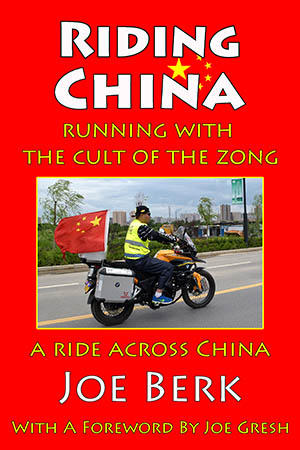
We’d been on the road for about a month, riding a big loop through most of China. It was the ride of a lifetime, Zongshen was picking up the cost, and we were having a ball. It was me, riding compadre Joe Gresh, and Sergeant Zuo, our fearless retired Chinese Army Sergeant Major. I’d be hard pressed to identify any other single month in which I’d so much fun. Great riding, great companions, great roads, great food, and great photo ops. My book , Riding China, is about that ride and it included a chapter on Luoyang; here’s a quote from it leading up to the photo above:
It was dark when we walked home, and I watched people riding by in the sultry summer night air on their motor scooters. I knew I had to capture at least some of it for the blog and for this book, so I went back to the room for my Nikon and the 24-120 lens. I cranked the ISO up to 3200 and let her rip. It was great.
The technique is called panning; you swing the camera to stay on a moving subject, which freezes the subject and blurs the background to convey a sense of motion. Not every photo turns out using this technique, but when one does, it’s spectacular.
We stayed in Luoyang for two nights, and it was a well-earned rest we all needed. Those were good times. I miss the guys we rode with.
The above photo is one of many included in Riding China. If you would like to read more about that ride, pick up a copy!
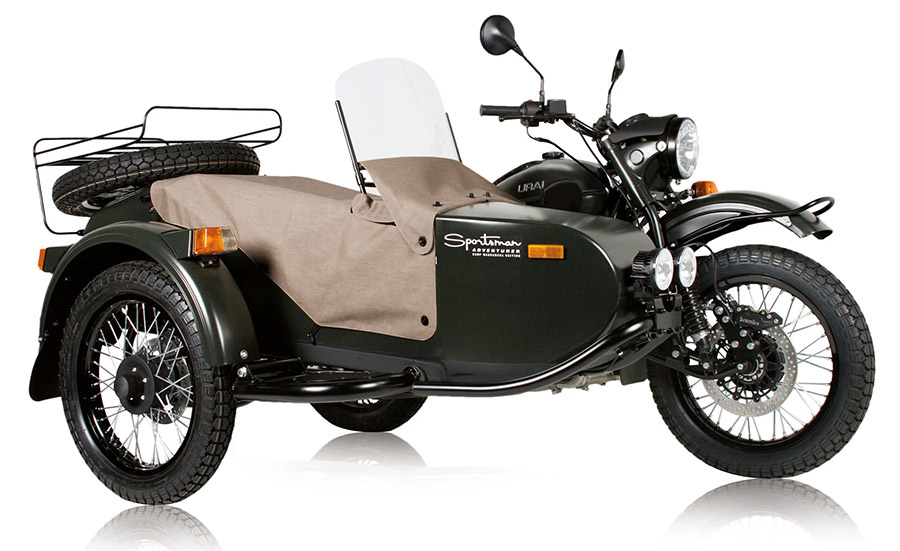
I don’t know much about Urals. I had a chapter devoted to the brand in the Police and Military Motorcycles book because their motorcycles kind of had a military flavor to them, I would see a Ural at the annual Griffith Park sidecar rally here in LA (it belonged to a guy who had swapped an 800cc BMW engine into it), and our good buddy Dan from Colorado had one (I knew Dan from the CSC rides into Baja). I guess the other thing I should mention is that we often sold CSC Mustang seats to Ural owners because the wait for a seat from Ural in Russia often took a year or more. On occasion when I’d hear the latest news about Putin’s military misadventure, I would sometimes wonder how that affected Ural Motorcycles. They were always a super-small niche marque; I reckoned that they probably weren’t selling anything since that stupid war began.
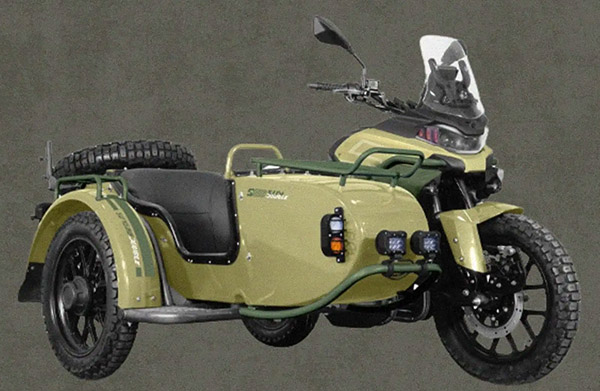
I guess I was right, as an email I recently received from Ural shows. Ural is taking a different tack: They’ve pretty much dropped the Russian-made WWII BMW clones (Ural moved to Kazakhstan, but to me, that’s still Russia), and now they’re hooking up with a Chinese manufacturer to make a smaller sidecar-equipped 500cc twin. They’re calling it the Ural Neo.
The 500cc Ural Neo. Projected list price is “under $15,000.”
Man, talk about stacking the marketing cards against you: A smaller displacement bike, a bike from a Russian (sort of) company, a bike made in China, and catering to the sidecar market (when was the last time you saw a bike in America with a sidecar?). I’m guessing they will be pricey, too, but hey, what do I know?
I have no idea how I made it onto a Ural email list, but here’s the letter from Ural:
Dear Friends,
If you know our history, you know this brand was never built in comfort. The challenges of the last five years and especially the move to Kazakhstan have made the legacy Urals impossible to produce sustainably. This led us to the decision to pause manufacturing of the new legacy models for export markets. It does not, however, mean that Ural is stopping. Instead, we are pulling (yet another) one-eighty in order to keep moving forward. Below is a letter from Ilya (a long read), that explains where we are, how we see the path forward, and the answers to some of your questions and concerns.
For new subscribers – welcome to the community! You caught us amid a big change. If your interest is solely in our legacy machines, please check inventory to find models that are still available at dealers in US, Canada and Australia. If you are interested in sidecars in general, feel free to subscribe to updates on Ural Neo.
For those of you who have followed the story for a while, our customers and supporters, we know this transition is not easy, and we don’t take your trust for granted. We want you to know that every decision we’re making right now is with your experience, your bikes, and your future support in mind.
Thank you for your patience and for sharing your stories, they keep us going every single day.
We wish you and your close ones a happy Thanksgiving and a happy upcoming holiday season!
Stay tuned for new developments.
The Team at Ural
A Letter From Ilya
“Dear Friends,
It’s been a while since our last update. Much of our time was spent on reorganizing the company and evaluating what is possible that would allow Ural to continue into the future. The complex challenges we faced required difficult decisions, sharp turns in direction, and more than a few leaps of faith.
Our recent post on our Facebook page – inviting riders to test-ride the new Ural Neo at one of our dealers – received a lot of attention. As with every mention of Neo, it brought out not only curiosity and support but also strong emotions, questions, and criticism.
We understand where those emotions come from. For most of you, Ural isn’t just a motorcycle – it’s a part of your personal story, the same way it’s a part of ours.
I still struggle to find the right words to describe what happened to Ural when the war began in 2022. The best way to describe it is this: it felt like our factory in Irbit had suddenly exploded. We had to make decision quickly. Some voices suggested stopping altogether, but this thought was dismissed almost immediately. Instead we moved final assembly to Kazakhstan.
This allowed us to continue building bikes. However, operating between two countries – one under sanctions and another with almost no infrastructure for a business like ours – proved to be extremely complicated. By late 2024, it was clear that this setup couldn’t last: we were losing money with every bike we built.
That’s when the idea of a lighter, street-oriented sidecar motorcycle in a different price segment began to take shape. Our original goal was to broaden our lineup and make better use of the infrastructure we still had. At the same time, we were searching for a longer-term solution for legacy bikes: exploring new suppliers, alternative assembly locations, and possible partnerships.
Then, in April 2025, the tariffs hit. Now not only was manufacturing inefficient – selling our motorcycles in our main market, the United States, had become nearly impossible.
Building in China and Staying Ural
When we started looking for ways to continue, we knew exactly what we didn’t want: to become a badge fixed on someone else’s product (and yes, we did have such offers). We wanted partners who understood sidecars and were willing to collaborate.
That search led us to Yingang, a family-owned motorcycle company with decades of experience making sidecar-equipped models for their local market. Their capabilities and willingness to work with us to refine the product made them the right fit.
Together, we began developing what would become the Ural Neo 500 – based on an existing platform, tested and refined with our input and oversight, built to our specifications and quality requirements.
What Ural Neo Is – And What It Isn’t
Ural Neo is not meant to replace our legendary 2WD sidecars. Legacy Urals gave generations of riders the kind of experience no other motorcycle could offer.
Neo is different. It’s modern, light and by far more approachable. It’s designed to bring new riders into the sidecar world, not to take anything away from those who already love it. If the 2WD models were still part of our lineup, Neo wouldn’t compete with them — it would complement them. Instead, it now continues Ural’s story in its own way.
Think of Neo as a bridge between Ural’s past and its future – a way to keep Ural’s name, spirit and know-how alive while we’re reinventing the company for the opportunities and challenges ahead.
Now let’s address some of the big questions.
Is production of classic Ural 2wd bikes stopped permanently?
We call it “put on pause”, which in plain English means we don’t know. What we can say with certainty is that we haven’t written it off entirely. The key for restoring the production, if it ever becomes possible, is to maintain documentation, equipment, tooling and, most importantly, our experienced engineers and skilled workers. We will be doing everything we can for as long as we can to support this infrastructure.
What’s going on at the factory in Irbit?
The Irbit factory is operational, although with a smaller team. Currently the factory is assembling a limited number of bikes for domestic market from existing stock of parts and components, and making spare parts for exports. The factory also performs contract assembly for a local vehicle manufacturer. The team in Irbit continues to work relentlessly to bring more business to the factory.
What’s going on with parts supply?
No sugarcoating here – the situation is tough. It’s hurting our reputation and the hard-earned trust of our dealers and customers. Parts are still coming to the country, but not in quantities or the regularity we need. Mainly it is caused by two factors: limited financing (especially when dealing with suppliers who require large minimum orders) and extremely complex logistics. We’re doing what we can to stabilize the supply chain, but realistically, it won’t improve overnight. The success of the Neo project will play a major role in helping us rebuild a reliable parts flow for all legacy bikes.
Why not move production to the U.S.?
We explored this and many other options, the numbers just don’t work. The replication of the manufacturing infrastructure would require multi-million-dollars investments. Even setting up an assembly in the U.S. is not feasible at this time, as logistical costs, wages and the costs of maintaining the facilities would drive retail prices out of reach for most riders.
Why in China?
China is the largest motorcycle manufacturing base in the world, with a vast ecosystem of specialized suppliers of parts and components. No other place in the world can manufacture sidecar bikes of comparable quality and as affordably priced.
The Neo 500 is built in China because it’s the right choice today, not because it’s the only choice we’ll ever make. As the project grows, we will continue to evaluate where and how future models should be built.
You shouldn’t put the Ural name on anything that isn’t original bike.
That’s exactly why this project is called Ural Neo. It’s a new chapter, and we fully acknowledge the difference. The alternative was losing Ural altogether. We’d rather see the name move forward than carved on a tombstone. We hope you would too.
The main appeal of Ural was its classic look. Without that vintage charm, who’s going to buy your new bike?
We know the Neo’s design and overall direction of the company don’t match what many of our long-time customers expected. But we don’t believe that appeal of the sidecar bikes begins and ends with nostalgia. A new generation of riders is discovering sidecars for different reasons – shared experience, practicality, and curiosity. Ural Neo is built for them – let’s give them a chance to decide if there’s something there.
How is Ural Neo financed? Why Ural is spending money on new project instead of supporting existing customers?
Ural Neo is structured, financed and operating independently from legacy business. A small group of long-term partners and investors – people who believe in the brand and in our team – provided the initial capital to develop, homologate and bring the new model to the market. We’re finalizing an additional funding round to ensure Ural Neo is set for successful launch.
When will we see Ural Neo at dealers?
The EPA/CARB certification unit is already in the country and we’re starting the certification tests in a couple of weeks. Additional demo units will arrive in the US late January – early February, and we’re planning demo-tour for February – April. The first production units are expected to start reaching dealer floors late May. We’ll share timelines and updates as we go.
***
We know the past few years have tested everyone’s patience and faith in Ural. But through all the challenges our goal hasn’t changed: to make sure Ural keeps going. Ural Neo doesn’t erase our history – it keeps our story, and yours, alive.”
— Ilya Khait
President, Ural Motorcycles
Will the above approach work for Ural? Hard to say. I think they’ll sail through the EPA/CARB certification process (China’s emissions requirements are tougher than ours). The cost and marketing challenges will the toughest hurdles, I think. Here are a few things they can do based on our success at CSC with the RX3:
Bring in enough spare parts to build the things. That was one of the biggest concerns RX3 buyers had, but it was non-issue. Steve brought in enough spares to cover any need. That quickly put the spare parts issues to bed.
Be enthusiasts, spend a lot of time on the bikes yourself, and blog the hell out of your rides and adventures. A lot of people followed the CSC blog, and that blog sold a lot of bikes.
Offer free online maintenance tutorials for your bikes. CSC did, and it became a strong selling point.
Sponsor a cool ride every year for your customers. We did that at CSC with the Baja rides, and people bought the RX3 bikes just to go on those rides. It was great, it built a real community, and it gained us a lot of coverage.
Keep the price low. People aren’t going to stand in line to pay a premium price to a Russian motorcycle company for a motorcycle made in China. I read that Ural is projecting a list price “under $15,000.” Good luck with that.
Probably the most significant factor and the best advice I can offer is to keep the price low. The second most significant one would be the company rides; they did a lot for us to prove our bikes’ reliability and to quickly build a community. Here’s one of my all-time favorite videos; it’s the one from our very first CSC Baja ride.
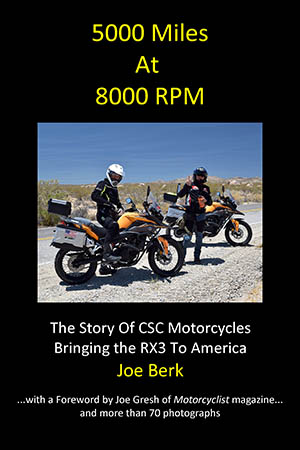
If you would like to read more about CSC’s marketing strategies in bringing the RX3 to America, and those sponsored motorcycle rides mentioned above, pick up a copy of 5000 Miles At 8000 RPM. Don’t wait for the movie.
I thought I could skip this one in our ¿Quantos Pistones? series. After all, who ever thought there could be a 7-cylinder motorcycle?
But I was wrong. Much to my surprise, there are actually at least a couple of 7-cylinder motorcycles out there. I’ve never seen one, but they exist. One is comparable to the 5-cylinder machine based on the Kawasaki two-stroke engines; the other is an aircraft radial-engined affair.
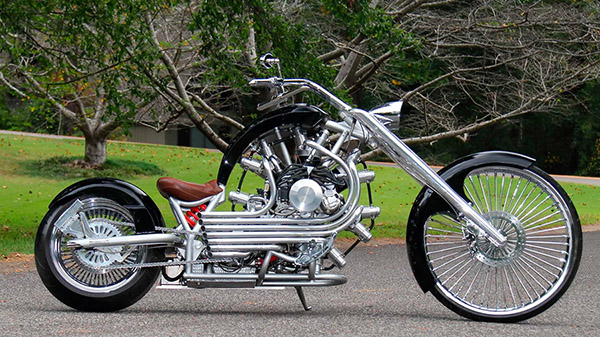
The JRL Cycles Lucky 7 used an engine originally intended to be a replacement engine for aircraft that used a radial engine. They only built four of these (one prototype and three production bikes). It’s an interesting footnote in any discussion of motorcycle powerplants, I guess. But the thing looks goofy to me, and its chopperesque ergonomics pretty much guarantee it would be unrideable. You can read more about it here: JRL Cycles Lucky 7 – A Radial Engined Production Motorcycle
The other motorcycle I found online with a 7-cylinder engine is the aforementioned Kawasaki. Here’s a video that does a good job describing it:
The real treat in the above video arrives in the last minute or two, when you can hear it run. It’s worth watching.
So what’s next? Have much milk is left in the cow? Have we exhausted all possible motorcycle engine configurations in our ¿Quantos Pistones? series? Nope. Stay tuned…the Eights are coming up!
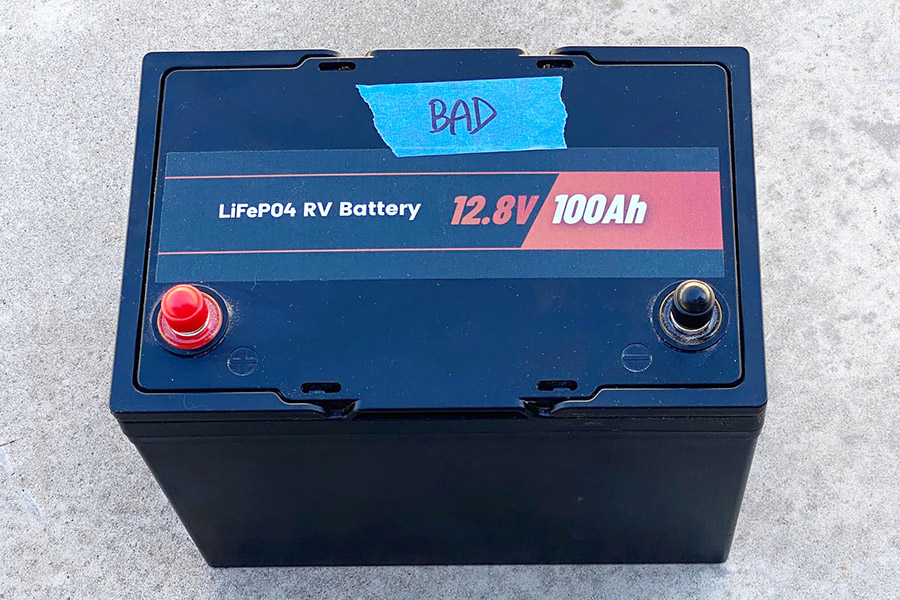
You’ve probably read the story of my new, solar, mondo lithium battery bank. It consists of 16, 12-volt, 100ah lithium batteries and so far is working well. What you don’t know is I actually have 17 lithium batteries.
This one was dead on arrival. Before tossing it, I decided to see what’s in the box.
When I ordered the batteries one of them was dead on arrival. Like zero volts. This is a huge red flag because the LiFePo battery is know for its ability to hold a charge for long periods of time. I tried connecting a battery charger to the thing but all I got were sparks.
CT contacted the seller and they said it’s normal and to jump the battery with another (good) battery. I tried that and got even bigger sparks. The thing was shorted internally. CT went back and forth with them, and they wouldn’t send another battery. They did give us a refund, though, so it was all good and I bought another battery of a different brand.
Once the new bank was online and operating well, I broke down all the shed-filling, cardboard packaging for 17 batteries and hauled it off to the La Luz dump (a very fine dump). This left me with a lone, dead lithium battery. I was going to toss it out anyway, so I decided to open it up and see what a lithium battery looks like inside.
The top part of the battery box snaps into the bottom but I didn’t know that, so I set the circular saw to about 1/16″ depth and (after taking the battery outside in case it burst into flames) cut the top off.
The top part was still attached. I didn’t want to cut any deeper because I had no idea what was inside. Wedging a flat-head screwdriver under the saw-cut lip and working it around the perimeter of box released the lid. Turns out I didn’t need the circular saw. After removing the lid, the internal parts easily slid out of the box, all in a nice, neat tray.
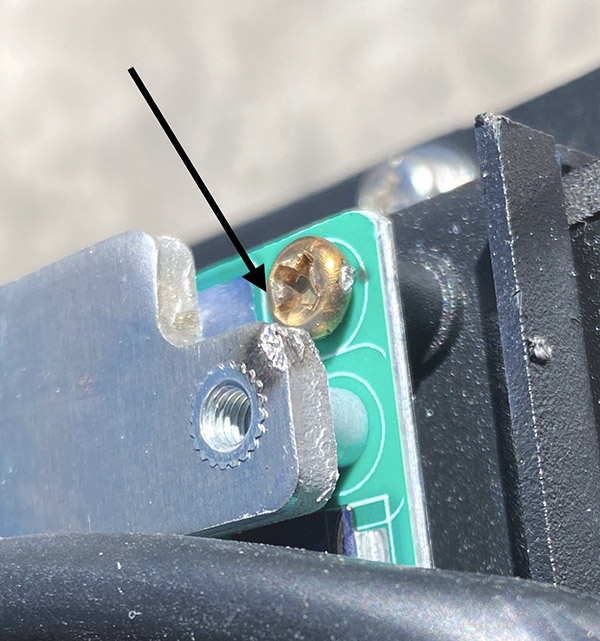
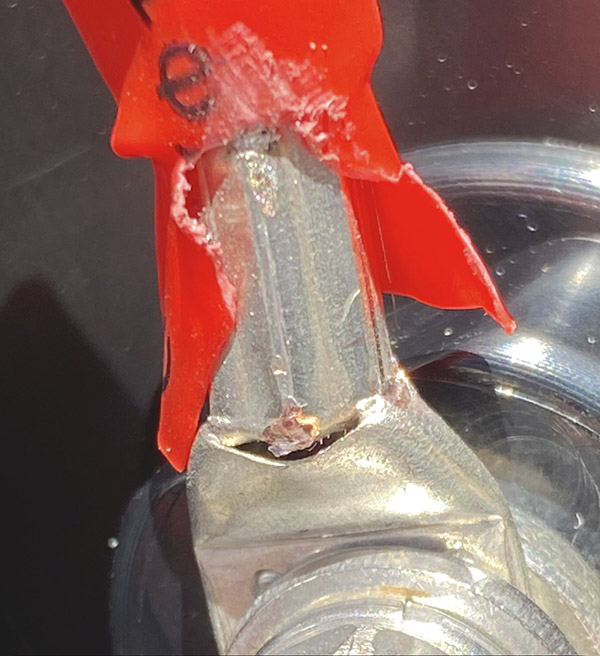
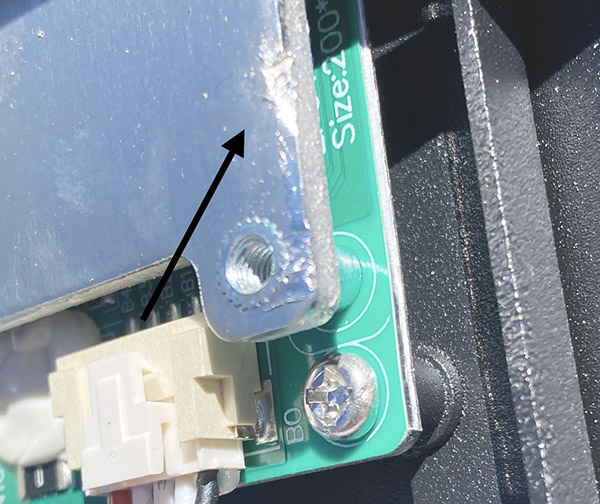
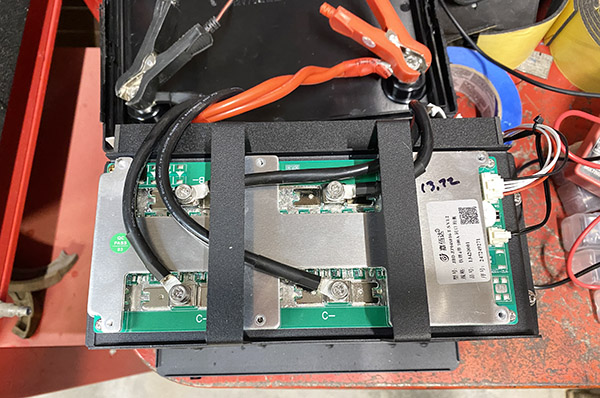
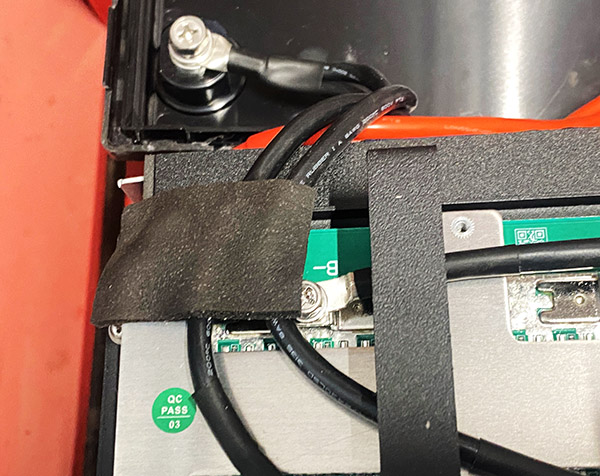
Once the thing was apart the problem was obvious. Both the positive and negative wiring to the output posts were shorted out on the big, metal plate. The shorted metal plate covers the battery monitor circuit board.
This is where the battery was shorted.Insulation chafing on the positive side.Another shorted area.
The negative switch is how the battery monitor connects the internal bits with the external world. Over charge the battery? The battery monitor switch switches it off. Short out the battery? The battery monitor switch switches it off. Drain the battery too low? The battery monitor switch switches it off. For all I know there’s a high/low temperature cut off in the thing.
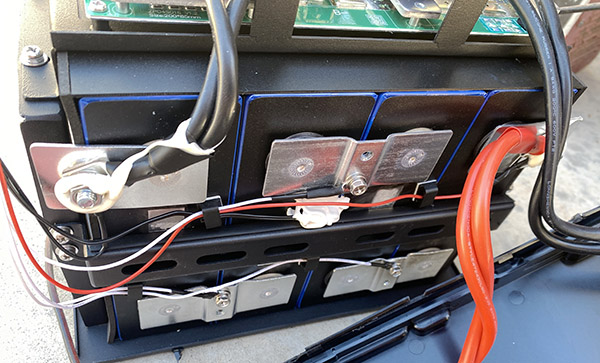
The heart and soul of the battery are these four big 3+volt, 100ah cells wired in series by those welded jumpers.
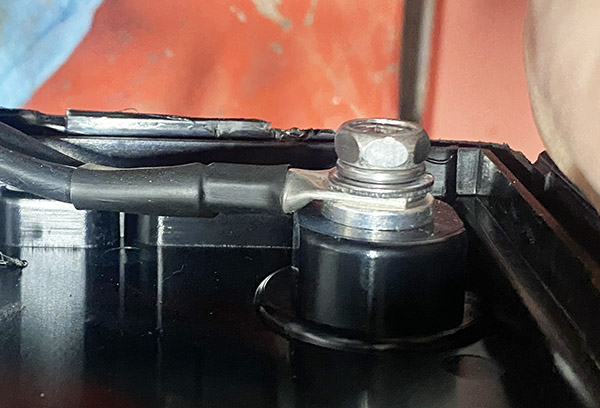
It turns out whoever built the battery put the terminals to the output posts on upside down. This moved the barrel/crimp part of the wire connection that much closer to the metal plate.
Under the metal plate sits the battery monitor system board. It connects to each individual cell and also saved the battery from bursting into flame from the short circuit.
All things considered, if you’re going to screw up the battery this was the least damaging way to do it. Since the + and – were directly shorted before it got to them, the electronics and lithium cells weren’t involved the short circuit. The battery monitor system kept the thing from burning up due to the short.
I added a bit of insulation to the burned areas that were shorted.
Once the lid was off and the source of the short removed, the battery showed voltage again. Pretty cool. I gave the battery a charge and all seemed normal. I load tested the thing at 100 amps and it held voltage fine. You know what this means.
The fix was as easy as flipping these connections 180 degrees. Photo shows the connection already flipped. The other way they contacted metal.
The fix was as simple as flipping the wire terminals over allowing that extra 3/16″ clearance. I reassembled the guts into the battery and snapped the lid back on and now I have an extra, good lithium battery. While technically it’s a free battery I have some time in the repair. Now I know what’s inside the black box. I’ll probably run some gorilla tape around the box so the iffy lid attachment stays put and call it a win.








 I’ve set up the Kawasaki ZRX as my cold weather bike with a 12-volt receptacle for an Aerostitch heated vest and these grips will complete my preparations for the cold. If it ever gets here.