By Joe Berk
Greenwich Mean Time. In case you were wondering, that’s what GMT means, and I thought I would introduce this blog with a simple definition of what Greenwich Mean Time actually means, only it’s not that simple. Here’s the first part of a long explanation from Wikipedia:
Greenwich Mean Time (GMT) is the local mean time at the Royal Observatory in Greenwich, London, counted from midnight. At different times in the past, it has been calculated in different ways, including being calculated from noon; as a consequence, it cannot be used to specify a particular time unless a context is given. The term “GMT” is also used as one of the names for the time zone UTC+00:00 and, in UK law, is the basis for civil time in the United Kingdom.
It gets more complicated from there, with considerations given for the historical differences between the day starting at noon (versus midnight), variations in the time at which the sun crosses directly over London’s Greenwich Observatory (it can vary by 16 minutes either way), and other factors I’m not going to go into here. After reading through the Wikipedia definition, I’m going to settle on GMT standing for Greenwich Mean Time and leave it at that.
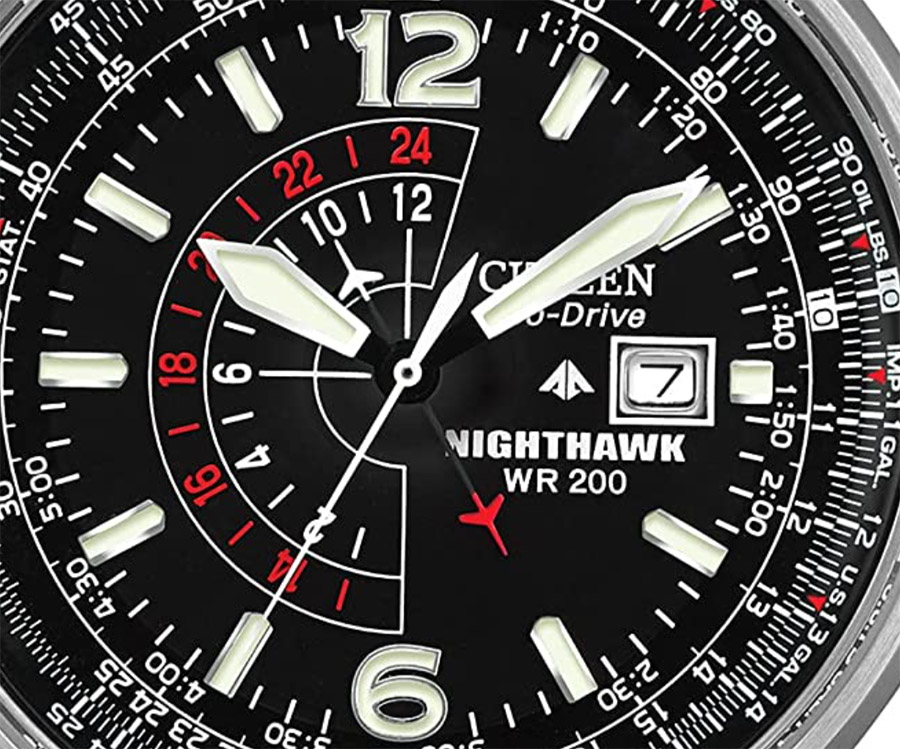
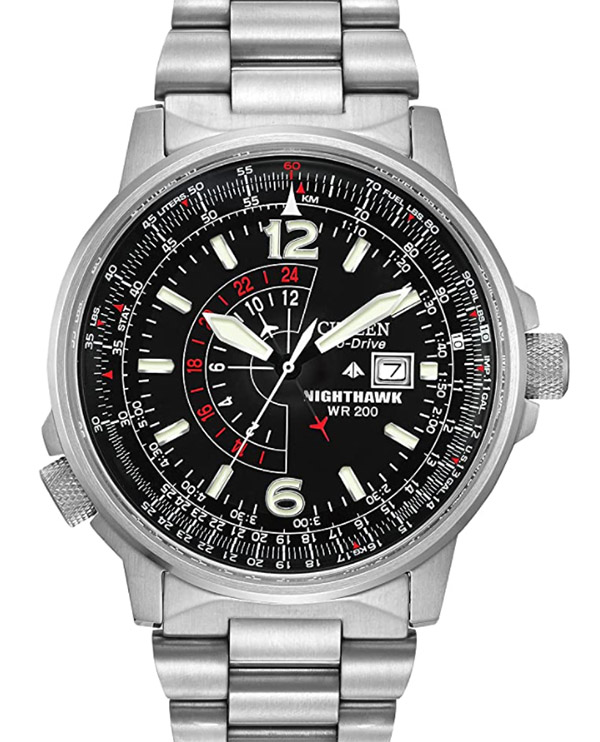
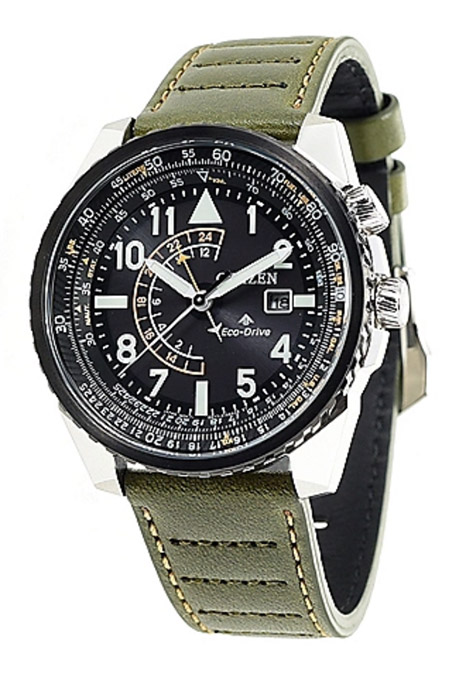
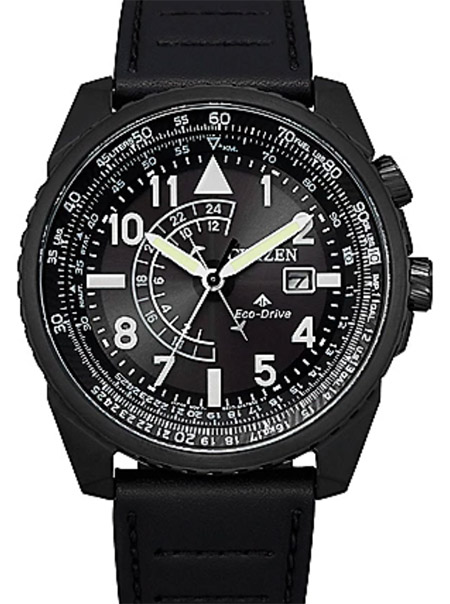
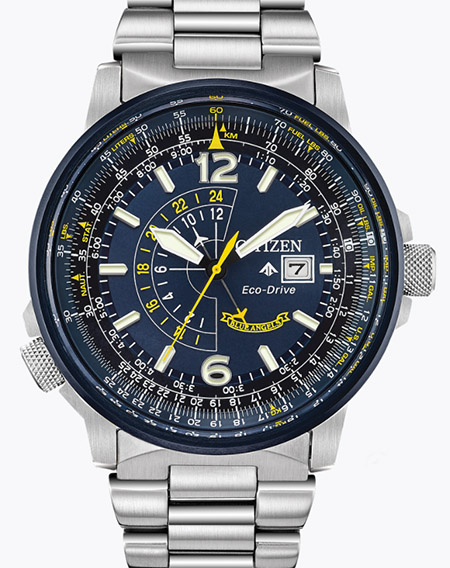
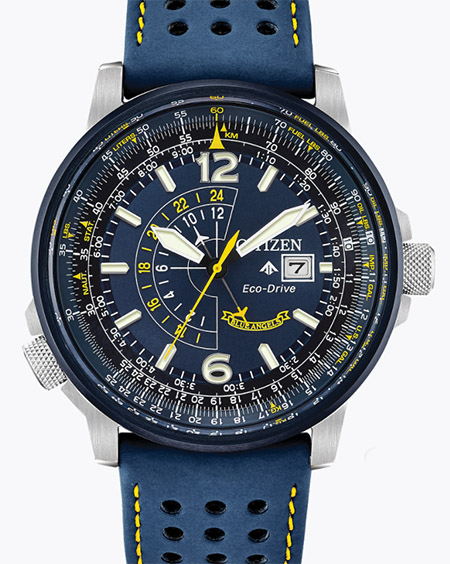
In my watch-centric context, GMT means a watch that can be used for showing the time in two time zones simultaneously. There’s a lot of ways to do this and the watchmaking world has numerous different approaches. It’s perhaps easiest with a digital watch that can switch between cities (Casio has a number of watches that can do this and we’ve blogged about them before). Within the analog world, there are also different approaches, and we’ve also written about those before (see our blogs on the Citizen Blue Angels and the Citizen Night Hawk).
The more conventional GMT approach in the analog watch world is to add a fourth hand and a separate 24-hour set of markings, with the fourth GMT hand or the hour hand used to designate the second time zone. Last year, I bought a two-tone Seiko GMT watch because I thought it was cool and it compared favorably to my Rolex GMT Master II (and that blog is here).
So where’s this story going?
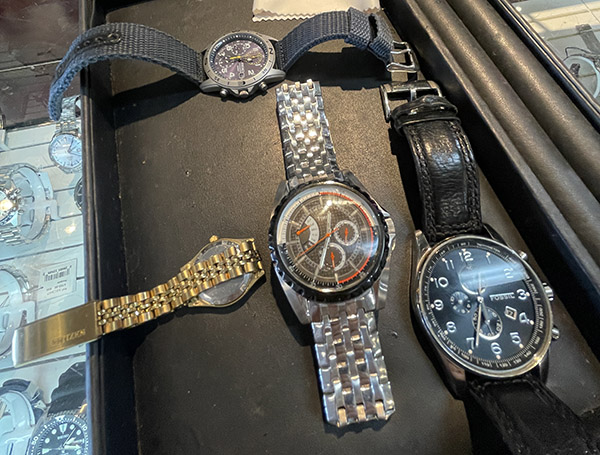
A few days ago, I noticed several of my quartz watches had stopped running. One of Sue’s quartz watches had, too. Dead batteries. It happens on an irregular basis. But that’s okay, because it gives me an excuse to swing by my favorite watch shop, Golden Times Jewelry, in nearby Pomona. They’re nice people and they only charge $3.25 to install a new battery. And while I’m waiting, I can peruse their selection of new Citizen and Seiko watches.
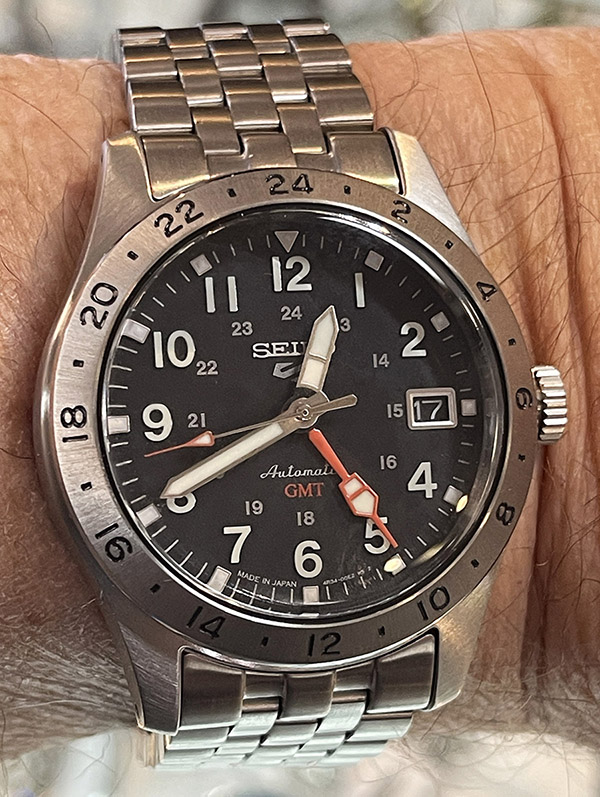
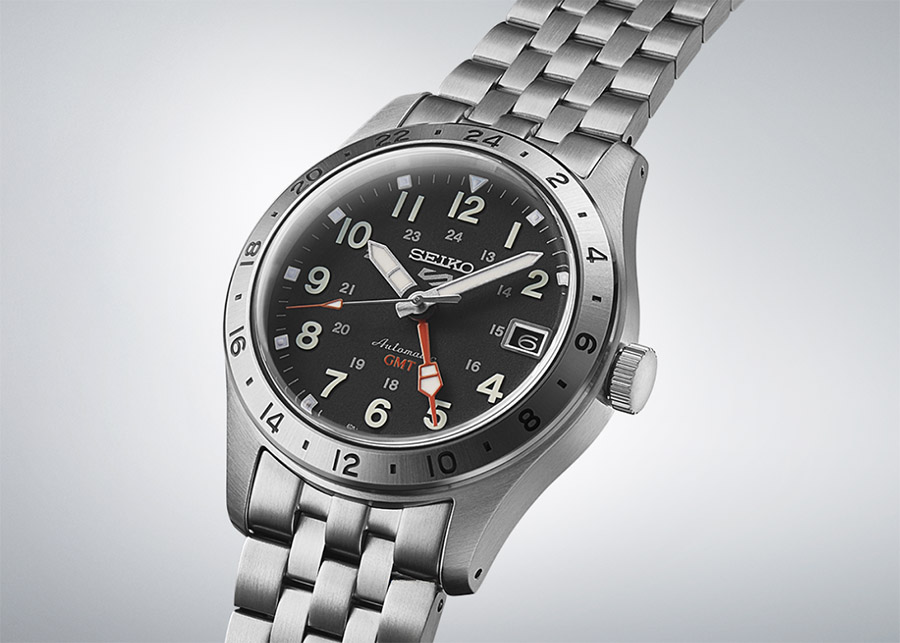
I was doing that when I noticed a Seiko I had not seen previously. It was the Seiko 5 Field Series GMT. It had all the features that appealed to me, including big numbers (my eyes aren’t what they used to be), a black face, strong contrast between the hands and the face, a stainless steel case and bracelet, it was not hideously huge (why do watchmakers make watches so unnecessarily big these days?), and an overall appearance that, to me, looked good. I asked to see it, and Stephanie (the nice lady who manages the shop) lopped 35% off Seiko’s suggested list price. That was a superb deal.
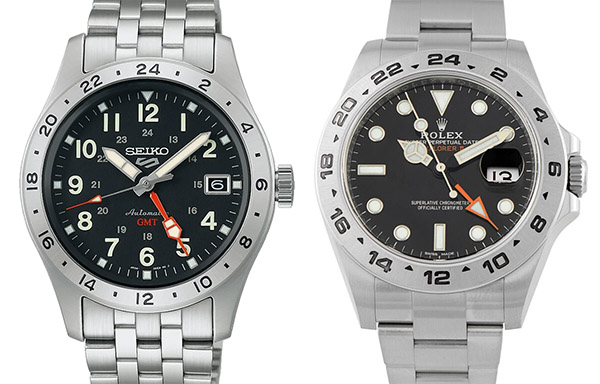
The new Seiko reminds me of Rolex’s Explorer II GMT. I tried it on and asked Stephanie if it made me look fat. She smiled. I pulled the trigger and I’m glad I did.
When I got home, I navigated to the official US time site (www.time.gov) and set the new Seiko to the exact time on it. I’ve been wearing the new Seiko for several days now and the watch is tracking to the official government time exactly. That’s awesome from a mechanical automatic (i.e., self-winding) watch. A new Rolex (or one that’s been appropriately serviced) is accurate to about 5 seconds per day. The Seiko is keeping better time.
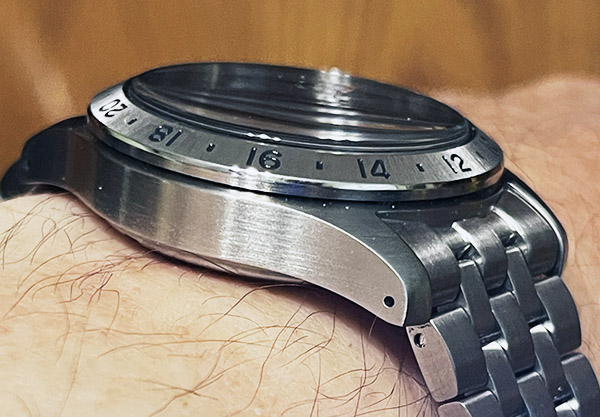
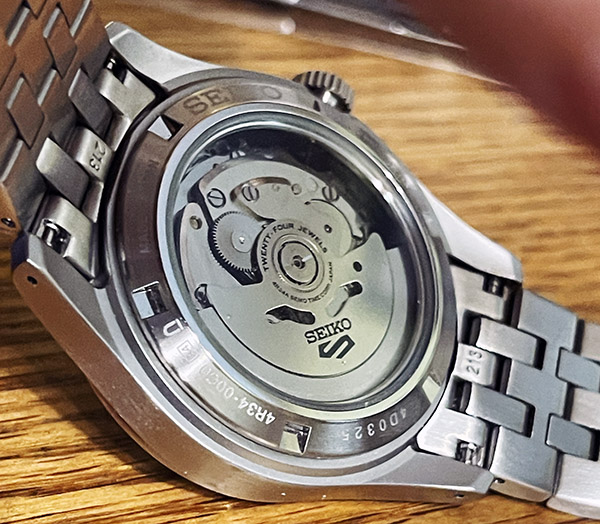
There are several things I like about this new Seiko. It sits lower on my wrist than most of my watches. That’s good. Like the other Seiko 5 watches, the watch has a window that allows you to see the movement and the self-winder. That’s a feature I like. The Seiko has a 41-hour reserve (if you take it off when it is fully wound, it will keep running for another 41 hours). That’s less than a Rolex’s 70-hour reserve, but in the real world, it’s kind of a pointless advantage (in my opinion). If I take the watch off, it’s only going to be for an hour or so. If I’m going to wear a different watch, it will usually be for a week or more (so neither a 41-hour reserve or a 70-hour reserve will keep it going).
The Seiko 5 Field Series GMT is an awesome watch. I like it a lot.
More watch reviews? They’re right here.
More gun stuff? You bet!
Join our Facebook ExNotes page!