I’m a big fan of GMT watches, and in that world, the Pepsi Rolex is perhaps the most desirable. This video (mentioned in my previous blog) tells the story better than I ever could, so I’ll let it do the talking:
The video is good from the perspective of the watch’s history and it is good in telling the story behind Rolex’s masterful control of supply and demand.
Back in the 1970s and 1980s, any Rolex was a status symbol. I know it sure was in the US defense industry. The most commonly-worn one was the Pepsi with an aluminum bezel (the ceramic bezel was still a few decades into the future). One of my fellow Yuppies in the Aerojet heirarchy explained to me that Pepsi with a worn aluminum bezel (like his, with a scratch or two, and faded colors) was even more of a status symbol, as the worn bezel implied that the wearer had been successful for a while. I don’t think that was true, but hey, it was his watch, he believed it, and it made him happy.
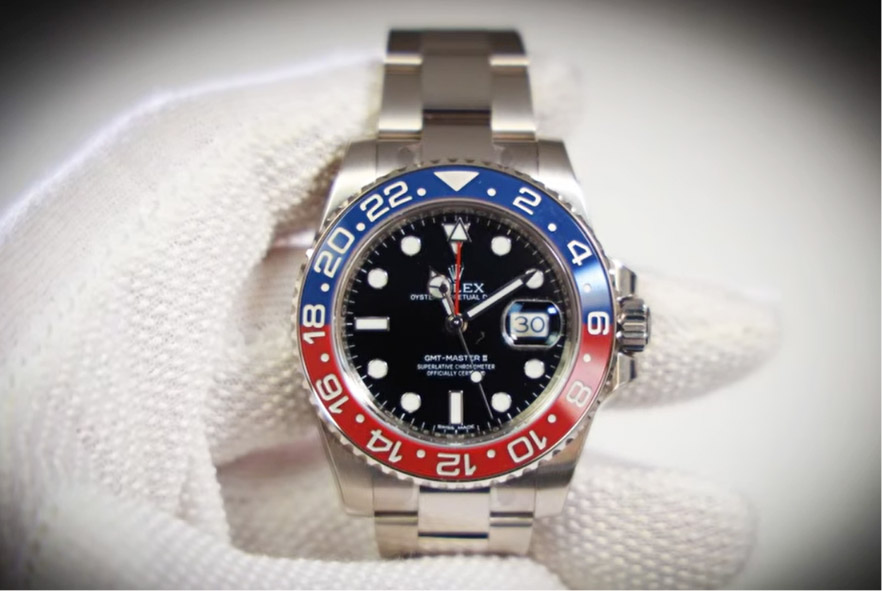
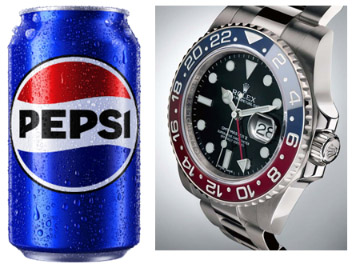
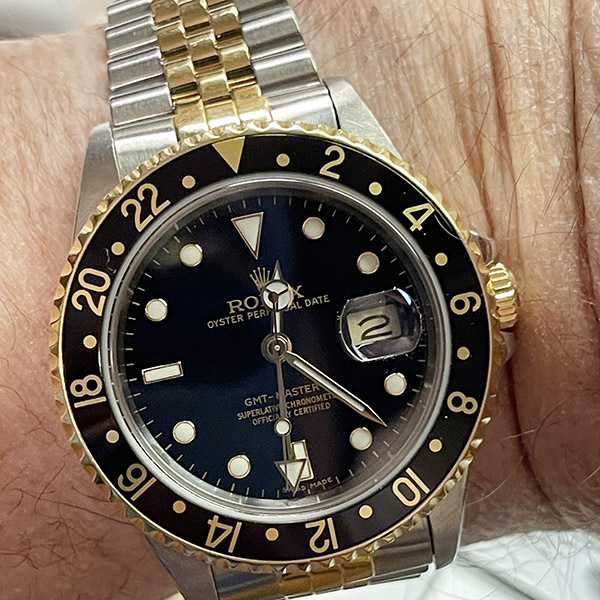
Most of the the Rolex GMT watches have bezels with two different colors, one for the a.m. hours and one for the p.m. hours. On the Rolex “Pepsi,” the p.m. bezel hours are blue, and the a.m. hours are red. The red and blue colors are similar to those on a can of Pepsi, hence the name. There’s also a Batman nickname, for bezels with blue and black, and a Coke nickname, for bezels in red and black. There are a few others, but I don’t know them all.
My Rolex is a two-tone watch (stainless steel and gold, as you see above). I just had mine serviced by the wizards at LA Watchworks in Pasadena and they did a great job. It wasn’t cheap, but hey, what is anymore?
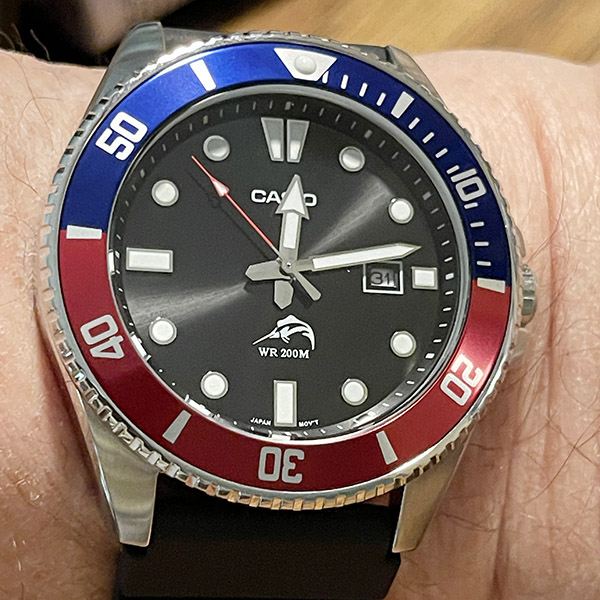
Well, that’s a good question. I thought it might be cool to own a Pepsi, but I didn’t feel like shelling out $40K for a Rolex Pepsi. So I did the next best thing.
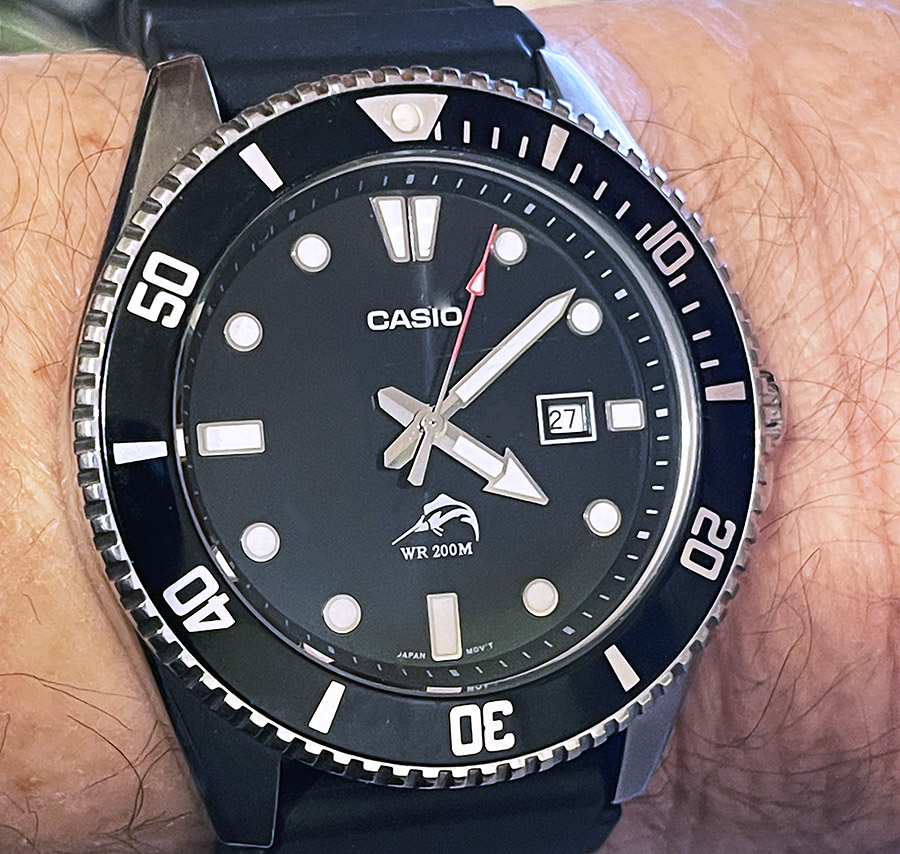
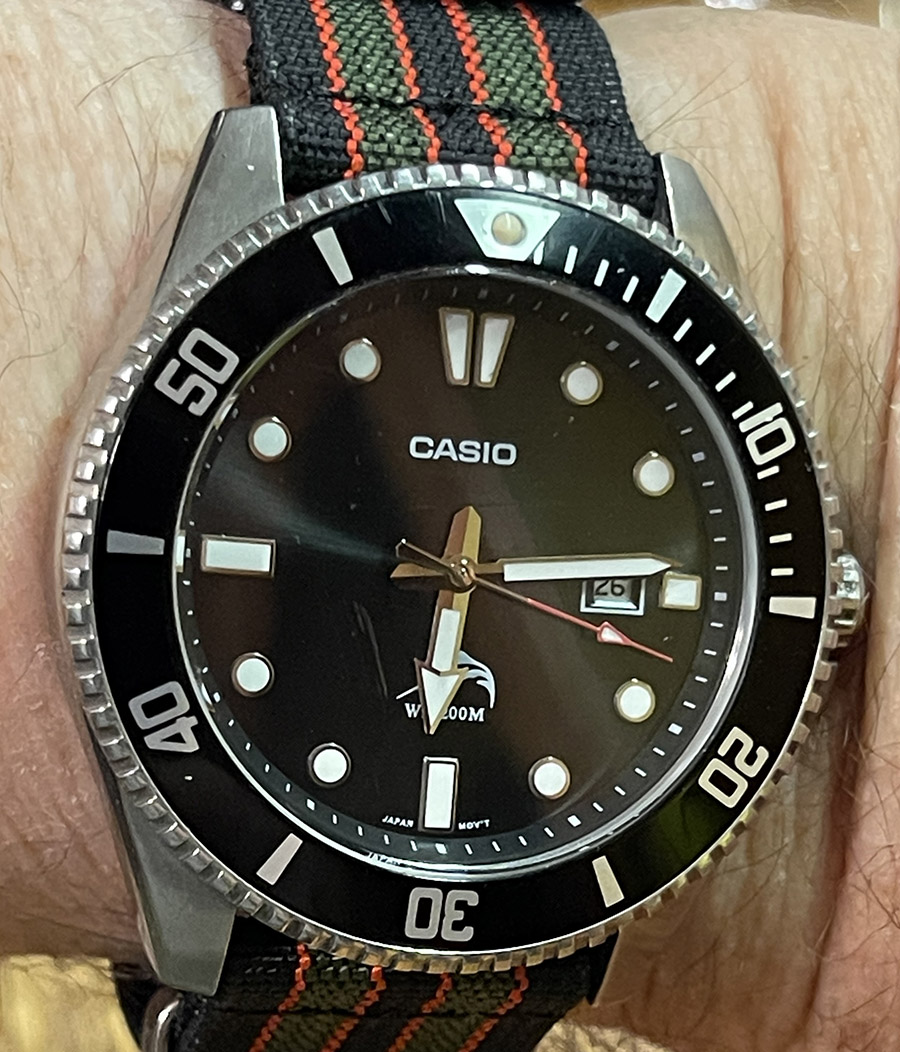
The Casio Pepsi dive watch above was on sale on Amazon for $53 a few weeks ago, and I couldn’t let that get away. And you know what? I am enjoying the Casio just as much. It actually keeps better time than the Rolex, too.
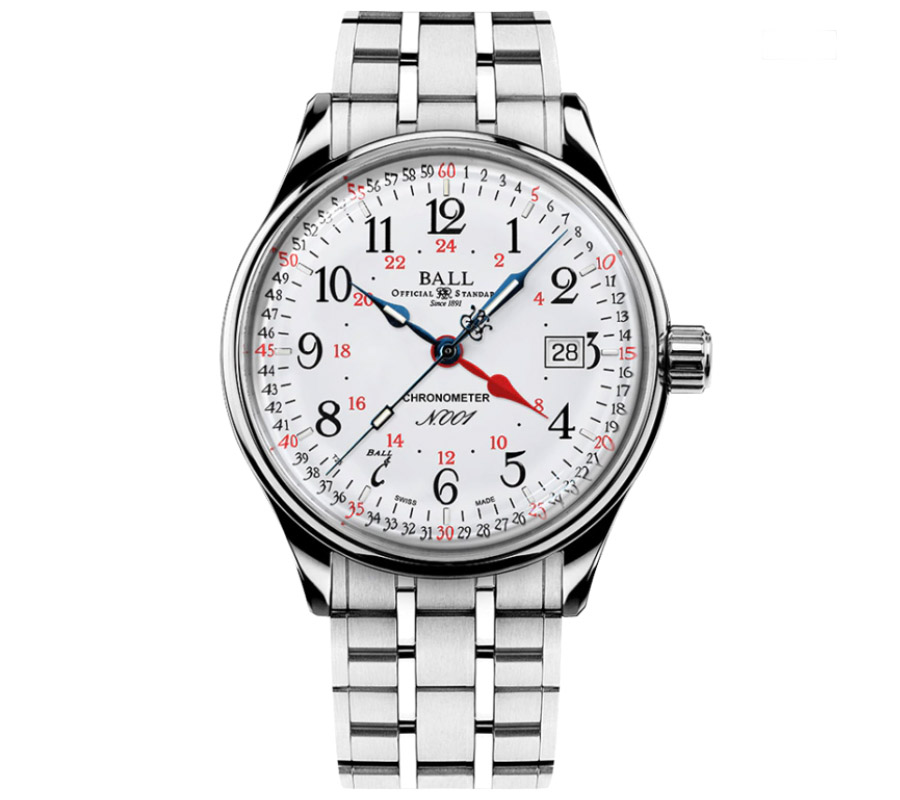
A disclaimer up front: I don’t own the Ball Watch Trainmaster GMT you see above, and I don’t actually have one to review. In fact, I’ve never seen one in person. But I sure want one. Sometimes it’s fun to think about buying something for a while without actually pulling the trigger. One such item for me is the Ball Trainmaster GMT watch, as seen in the photo above. Part of the desire is the watch’s design, and part of it is the Ball Watch heritage.
I like the Trainmaster’s bold face and big numbers. Some have criticized the watch’s wonky font, but I like it. If you look closely at the numeral 7, you’ll see the Ball designers did a cool thing there. The sharp contrast between the blue hands and the white face works well, and the GMT red hand stands out, too. It’s just a cool face; one I know I wouldn’t get tired of checking.
The appeal of a GMT is real for me. I used to need one when working for CSC and when I was in the defense industry. I’ve had projects in Chongqing, Kayseri, Tel Aviv, Haifa, Athens, Mexico, Glasgow, and Medellin, and knowing the local times instantly with a simple glance at my watch was a good thing. It kept me from waking people up in the middle of their night and it let me know when they should be at their workstations. These days I don’t have any overseas activities, but I still like the idea of a good GMT watch. They’re just cool.
About that name: The Trainmaster. Ball has a history rooted in the railroad industry. You’ll see it on every Ball watch with the letters RR (which stand for railroad). It started 135 years ago with Webb C. Ball and a deadly railroad disaster.
Back in the day, trains used to coordinate their travel such that one would pull off onto a siding (a parallel track) so another (going in the opposite direction) could pass. You can guess where this story was going. In the Great Tipton Train Wreck (as it came to be known), one of the conductor’s watches lost four minutes and it didn’t coordinate correctly with the train going in the opposite direction. Webb Ball, a Cleveland jeweler, investigated the two watches used by the conductors on the two trains and found a 4-minute discrepancy. After that, Ball became the go-to guy for all railroad time-keeping issues He started a watch company and Ball watches became the standard for all US rail activities. It’s where the expression “on the ball” comes from. If you were running on schedule, you were “on the Ball” (meaning you were on time).
Today’s Ball watches (including the Trainmaster) have a unique feature: Their illuminated hands and time indicators. The conventional luminosity approach other watches use is to incorporate photoluminescent pigments on the watch hands and numbers (or markers near the numbers). The luminescent pigments absorb photons from exterior light sources like the sun or other strong lights. The problem with this conventional lume approach is that it loses luminescence relatively quickly, and the lume doesn’t glow as brightly as the watch ages.
Ball’s approach is different. Instead of using conventional watch lume materials, Ball incorporates what they refer to as micro gas tubes that stay bright. These are tiny phosphor-coated glass tubes located in the watch hands and the numbers (or watch face markers) that contain tritium gas. The micro gas tubes stay bright with no intensity diminishment. They’re said to be good for 25 years. Different Ball watches place the micro gas tubes in different locations. On the Trainmaster, they are in the hour, minute, and second hands, and in markers by each number on the face. There’s no marker in the GMT hand (I guess Ball thinks you don’t need to know the time elsewhere in the world at night).
Ball offers a couple of relatively unique options on this watch. They will engrave your name for free. You can also select your own serial number that goes on the watch face (if someone else hasn’t already selected it). When Ball first announced these, I checked, and 007 was available. Today, though, it’s not. I guess James Bond already ordered his.
As I said at the start of this blog, I’d like to own a Trainmaster, but not badly enough to actually shell out the cash owning one would require. The Trainmaster retails for something north of $3,000. Poking around a bit on the Internet, I found places that sell the Trainmaster in the $2500 to $2600 range, but that’s still pretty rarefied air for a watch I don’t need.
Greenwich Mean Time. In case you were wondering, that’s what GMT means, and I thought I would introduce this blog with a simple definition of what Greenwich Mean Time actually means, only it’s not that simple. Here’s the first part of a long explanation from Wikipedia:
Greenwich Mean Time (GMT) is the local mean time at the Royal Observatory in Greenwich, London, counted from midnight. At different times in the past, it has been calculated in different ways, including being calculated from noon; as a consequence, it cannot be used to specify a particular time unless a context is given. The term “GMT” is also used as one of the names for the time zone UTC+00:00 and, in UK law, is the basis for civil time in the United Kingdom.
It gets more complicated from there, with considerations given for the historical differences between the day starting at noon (versus midnight), variations in the time at which the sun crosses directly over London’s Greenwich Observatory (it can vary by 16 minutes either way), and other factors I’m not going to go into here. After reading through the Wikipedia definition, I’m going to settle on GMT standing for Greenwich Mean Time and leave it at that.
In my watch-centric context, GMT means a watch that can be used for showing the time in two time zones simultaneously. There’s a lot of ways to do this and the watchmaking world has numerous different approaches. It’s perhaps easiest with a digital watch that can switch between cities (Casio has a number of watches that can do this and we’ve blogged about them before). Within the analog world, there are also different approaches, and we’ve also written about those before (see our blogs on the Citizen Blue Angels and the Citizen Night Hawk).
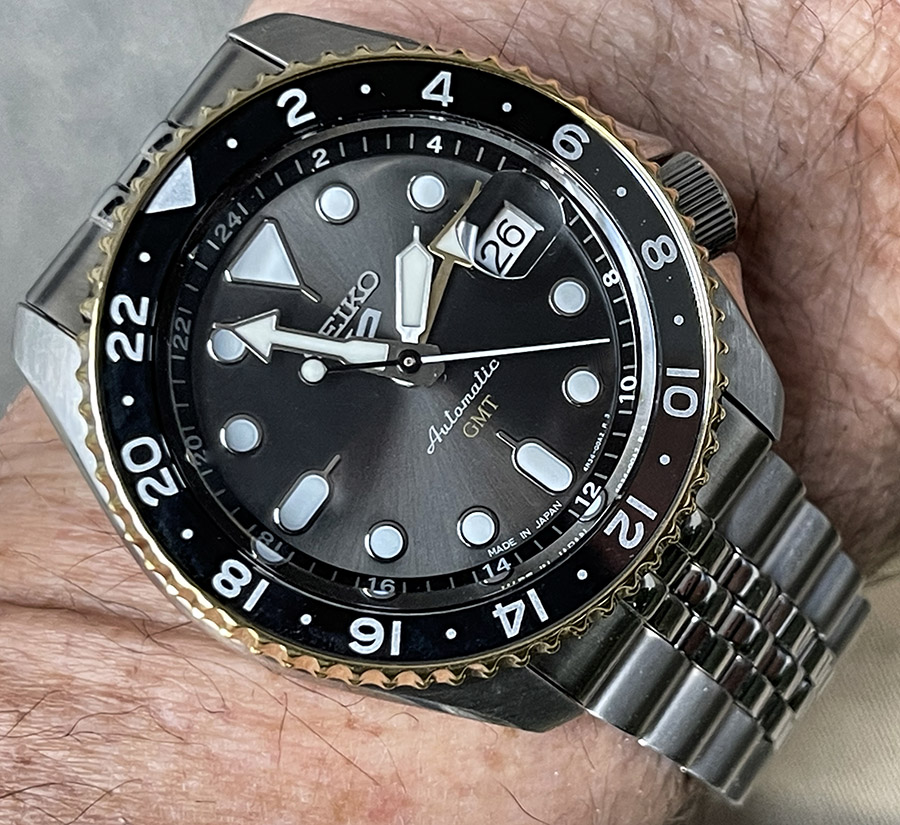
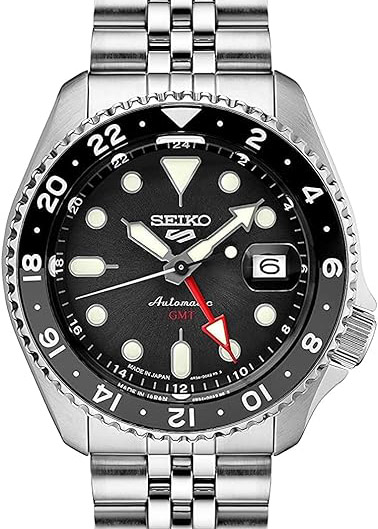
The more conventional GMT approach in the analog watch world is to add a fourth hand and a separate 24-hour set of markings, with the fourth GMT hand or the hour hand used to designate the second time zone. Last year, I bought a two-tone Seiko GMT watch because I thought it was cool and it compared favorably to my Rolex GMT Master II (and that blog is here).
So where’s this story going?
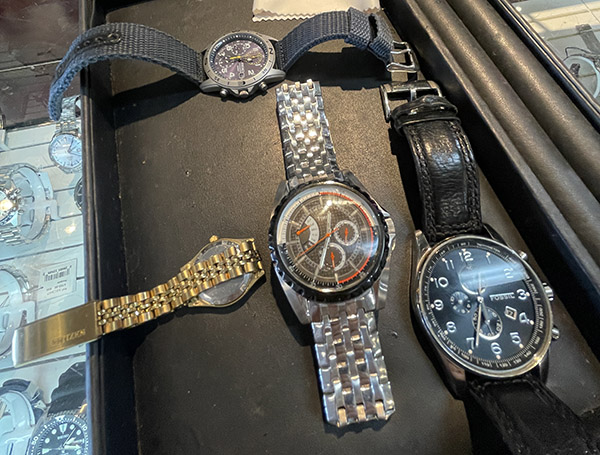
Several watches needed new batteries. The one at the top is a Seiko military-styled chrono in blue. The one at lower left is Sue’s Citizen. The one in the middle is a Timex flyback day-date I bought several years ago. I hardly ever wear that one, but I like it. The one in the lower right is a Fossil I admired when moto-buddy Joseph Lee wore it one day. To my surprise, he took it off and gave it to me.
A few days ago, I noticed several of my quartz watches had stopped running. One of Sue’s quartz watches had, too. Dead batteries. It happens on an irregular basis. But that’s okay, because it gives me an excuse to swing by my favorite watch shop, Golden Times Jewelry, in nearby Pomona. They’re nice people and they only charge $3.25 to install a new battery. And while I’m waiting, I can peruse their selection of new Citizen and Seiko watches.
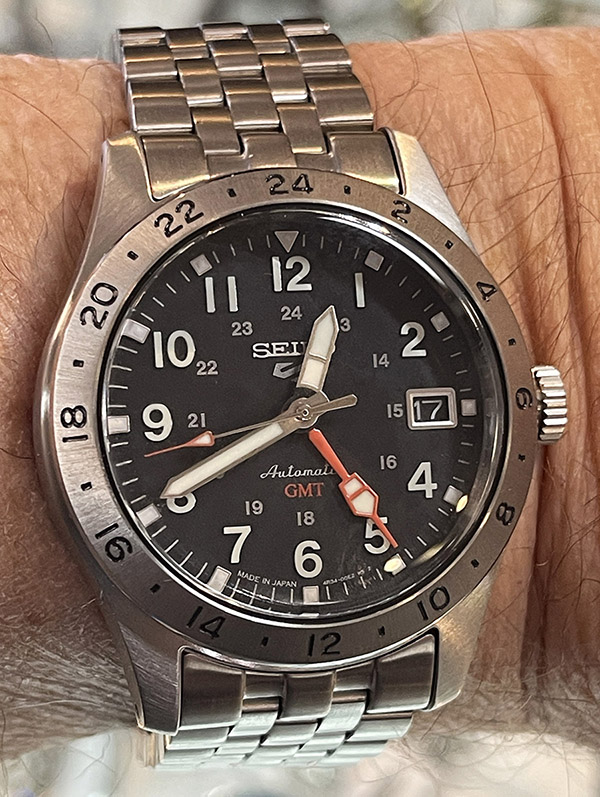
My new Seiko Field Series 5 GMT. This is a good-looking and accurate watch.
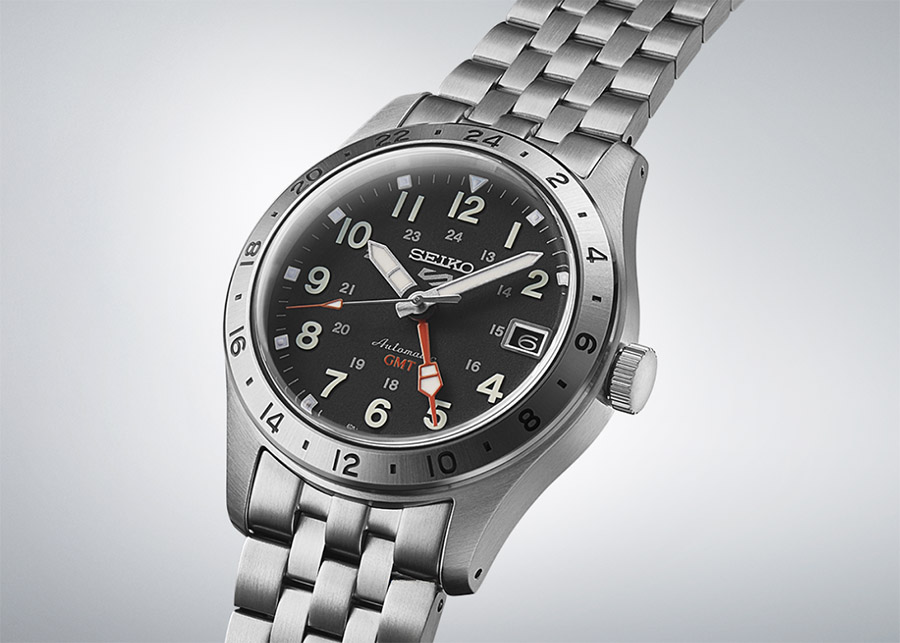
I was doing that when I noticed a Seiko I had not seen previously. It was the Seiko 5 Field Series GMT. It had all the features that appealed to me, including big numbers (my eyes aren’t what they used to be), a black face, strong contrast between the hands and the face, a stainless steel case and bracelet, it was not hideously huge (why do watchmakers make watches so unnecessarily big these days?), and an overall appearance that, to me, looked good. I asked to see it, and Stephanie (the nice lady who manages the shop) lopped 35% off Seiko’s suggested list price. That was a superb deal.
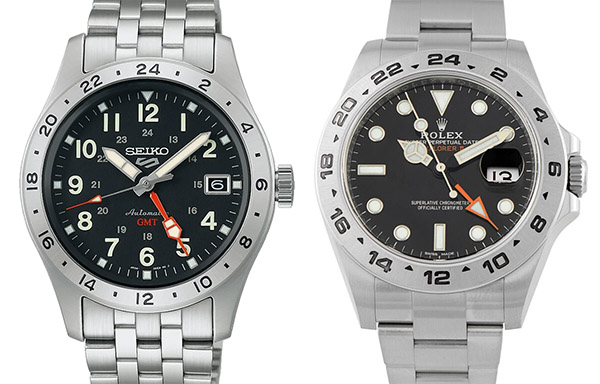
The Seiko 5 Field Series GMT and the Rolex Explorer II. The Rolex’s street price is around $11,000. The Seiko’s MSRP is about $450, but you can get it for less. I think the Seiko is better looking than the Rolex.
The new Seiko reminds me of Rolex’s Explorer II GMT. I tried it on and asked Stephanie if it made me look fat. She smiled. I pulled the trigger and I’m glad I did.
When I got home, I navigated to the official US time site (www.time.gov) and set the new Seiko to the exact time on it. I’ve been wearing the new Seiko for several days now and the watch is tracking to the official government time exactly. That’s awesome from a mechanical automatic (i.e., self-winding) watch. A new Rolex (or one that’s been appropriately serviced) is accurate to about 5 seconds per day. The Seiko is keeping better time.
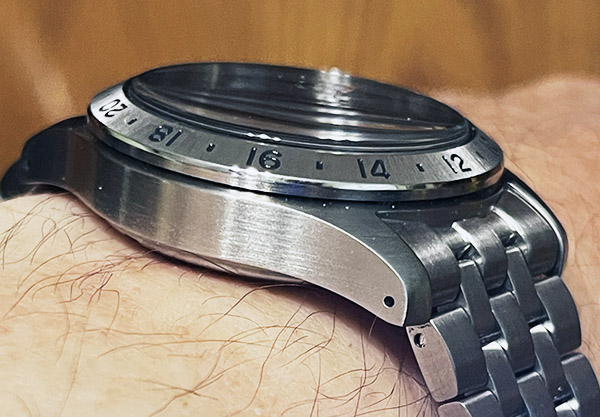
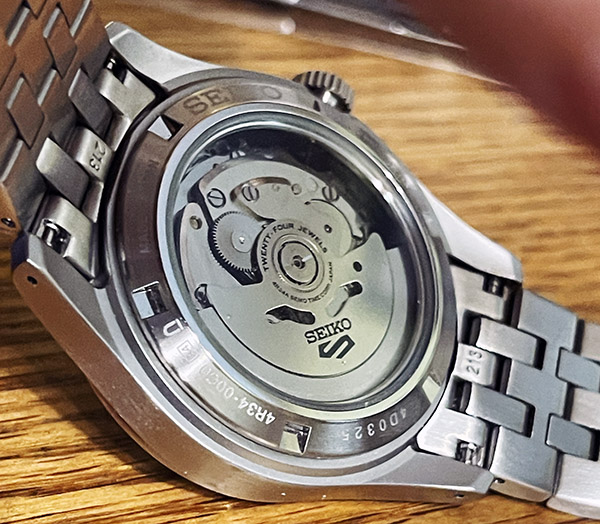
The new Seiko sits lower on the wrist than my other Seiko Series 5 watches.The Seiko 5 Field Series GMT window. I like it.
There are several things I like about this new Seiko. It sits lower on my wrist than most of my watches. That’s good. Like the other Seiko 5 watches, the watch has a window that allows you to see the movement and the self-winder. That’s a feature I like. The Seiko has a 41-hour reserve (if you take it off when it is fully wound, it will keep running for another 41 hours). That’s less than a Rolex’s 70-hour reserve, but in the real world, it’s kind of a pointless advantage (in my opinion). If I take the watch off, it’s only going to be for an hour or so. If I’m going to wear a different watch, it will usually be for a week or more (so neither a 41-hour reserve or a 70-hour reserve will keep it going).
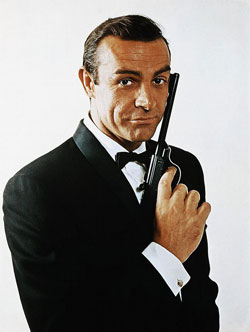
You know, you’d think the folks who produce James Bond movies would have their act (pardon the pun) together, but evidently that’s not so. I’ve already written about the iconic early James Bond movie flyer that shows Sean Connery standing provocatively with what appears to be a very menacing handgun. It wasn’t. It turns out that what old Bond, James Bond posed with was a .177-caliber pellet pistol (a BB gun, to use a looser term), and that was because they forgot to bring the real gun for the photo shoot. The photographer, a target shooter, just happened to have his BB gun in the trunk of his car. I wrote about my identical pellet pistol a few years ago.
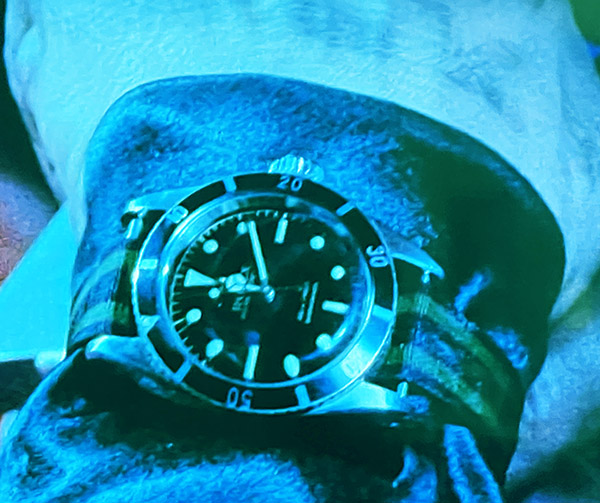
But all’s fair in love, war, and spy movies, and when I get a chance to watch a Bond movie (no matter how many times I’ve seen it), I’m in. That’s what happened the other day when I was channel surfing and Goldfinger popped up. I started the movie and in the opening scenes I noticed something I had previously missed. When Bond is doing his Navy Seal routine, getting ready to blow up a waterfront drug lab disguised as an oil tank, I caught a glimpse of his watch.
A poor image, taken from my TV screen with my iPhone.
I stopped the movie and went back a bit to get a better look at the watch. Wow, it was a Rolex dive watch (another topic we’ve covered here on ExNotes), and wow again, it had a military style band. The image quality you see above is awful, partly due to it being an evening scene and partly due to the above image being a cell phone capture of my television screen. It’s too bluish, I know. But that watch strap…wow! Was it a coincidence? I had just received an email from a company called BluShark offering an identical watch strap!
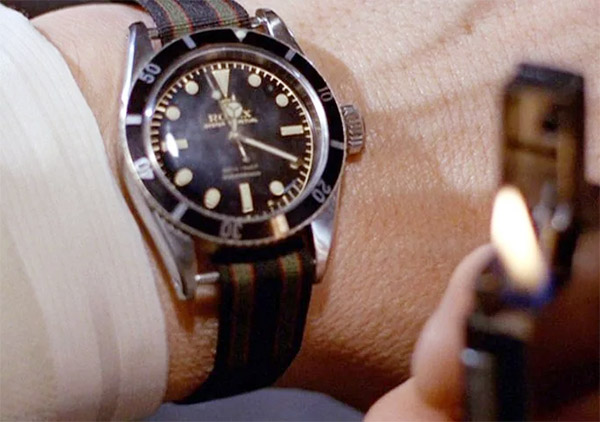
I went to Google and searched for a better image of the Goldfinger scene. Sure enough, I found it:
Note the watch strap’s colors (or should I say colours?) and poor fit on the Rolex Submariner.
Several thoughts emerged:
I’m not and never have been a military watch strap fan.
The above notwithstanding, I liked the colors in the Bond strap.
I have a Casio Marlin, which is kind of a poor man’s Rolex, and those Bond watch strap colors looked good against a black dive watch.
The watch strap in the Goldfinger scene didn’t fit the watch at all. It was a couple of sizes too narrow compared the Rolex’s lug width.
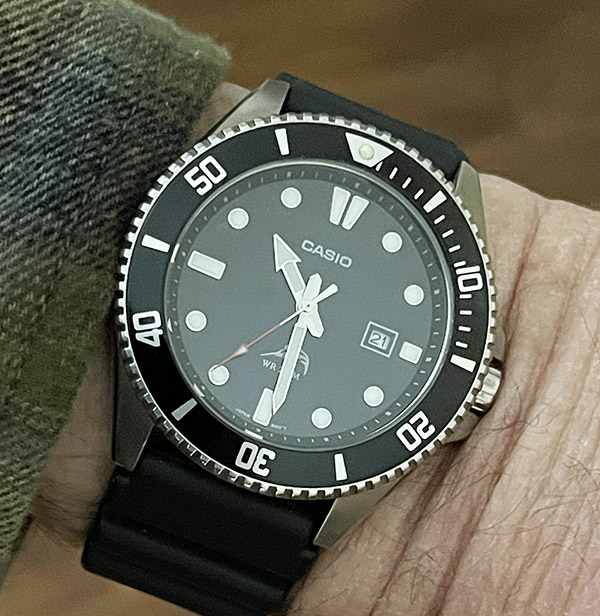
My Casio Marlin and its original watch strap. I’ve owned this watch for close to 20 years. It’s the best watch buy on the planet.
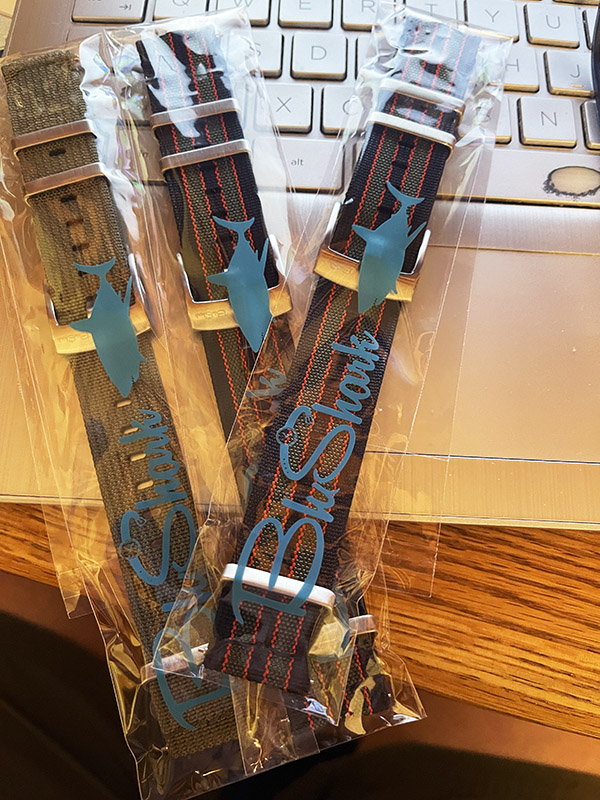
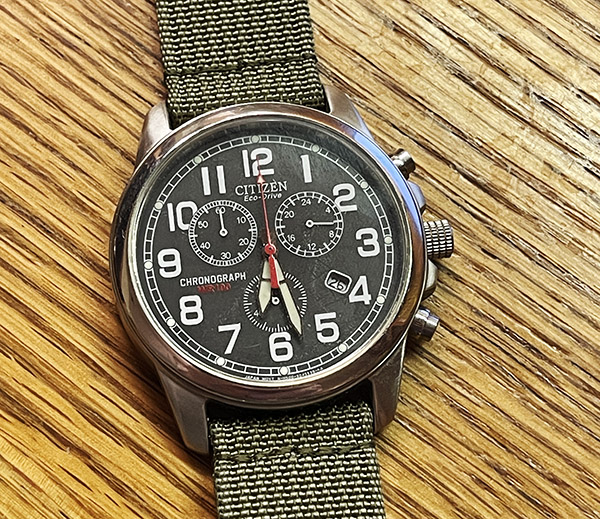
So I went back to the BluShark email. Buy two and get one free. They sent me a code for another 10% off my first order. Free shipping. How could I say no? I knew what I would order, too. I wanted two of the Bond watch straps in the appropriate size, one for my Casio and another identical one for good buddy Paul’s new Casio (he bought a Marlin, too; he’s always giving me free stuff, and it was time for me to reciprocate). And I wanted another military style strap in OD green for my Citizen Eco-Drive chronograph, a watch I’ve owned and enjoyed wearing for 30 years. The Citizen originally came with an OD green cloth strap, and a similar military strap for it would be perfect.
The BluShark watch straps.
A few days later the BluShark bands arrived. Wow. It took only minutes to fit my two to their respective watches, and as you can see from the photo atop this blog, the Casio looks great.
That had me wondering: What is the significance of the colors on the Bond watch strap, and in Goldfinger, why did the strap fit his Rolex so poorly?
As to the fit (and as much as you can trust anything you read on the Internet), Sean Connery didn’t own a Rolex. Albert Broccoli, the producer, did, and he leant his watch to Connery. But it didn’t fit Connery’s wrist. A crew member had the watch strap you see in Goldfinger, so it was quickly swapped onto Bond’s watch, and voilà, the Bond watch strap was born. Like I said near the beginning of this blog, you’d think a Bond movie prop department would be better organized, but there you have it.
As to the colors, well, that story is all over the map, too. The one I like is that the colors in the Bond strap are the British military intelligence regimental colors (red, green, and black). That leads to the next logical question: Do spies wear colors to advertise their spy backgrounds? I think the answer is probably no, but it makes for an interesting explanation and an intriguing story. I found more on this poking around a bit, including a blazer patch for members of the British Intelligence Corps (you know, just in case Boris and Natasha needed to confirm their suspicions).
Spy swag. Why hide it?
This is all interesting stuff and it makes for interesting conversation. If you’d like to see more about BluShark and their straps, you can do so here.
That Citizen Eco-Drive I mentioned above? I’m wearing it now and I love it. Here’s what it looks like:
The Citizen Eco-Drive watch mentioned above. It’s another favorite.
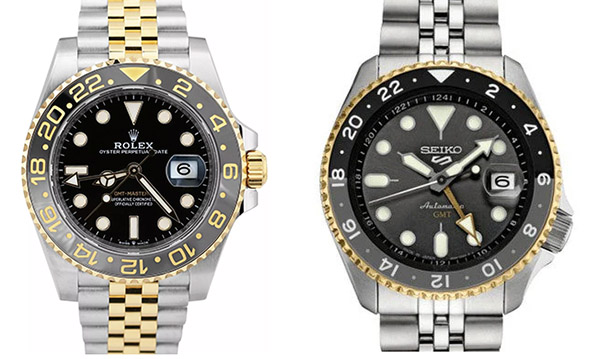
Some time ago, we wrote a blog comparing the Casio Marlin and Rolex Sea Dweller dive watches. This one is similar; it compares my nearly 40-year-old two-tone Rolex GMT II to a recently-released Seiko two-tone GMT.
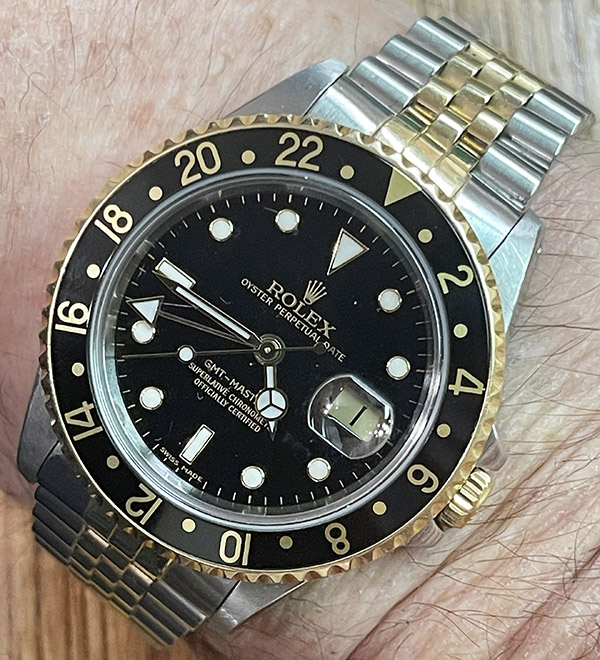
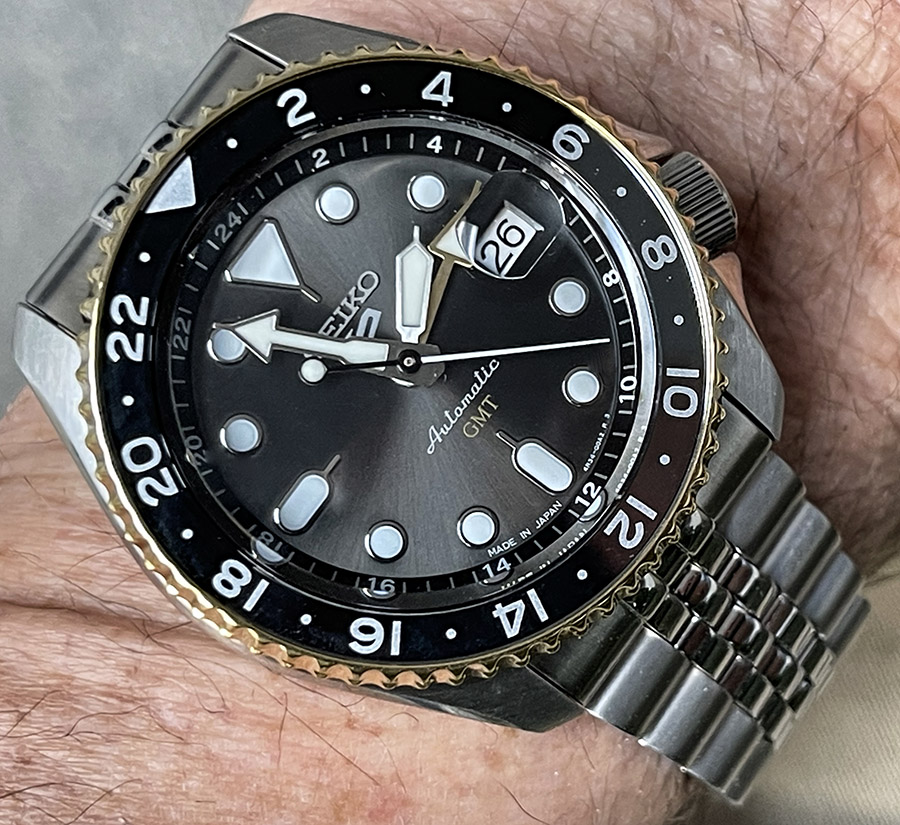
Two GMT watches: The Rolex GMT Master II (left) and the Seiko two-tone GMT (right). in the photos here, the Rolex has a much richer appearance; in real life, the Seiko looks just as good.A close up of my Rolex GMT Master II, purchased new in 1986 when I was still a yuppie. Note the cyclops lens over the date. It really works. The older I get, the better it works.The Seiko two-tone GMT, purchased a few days ago. The Seiko also has a cyclops lens over the date. It’s a cool and useful touch. This is a very nice watch.
I’m a sucker for a good-looking watch. Many of my retired friends take pride in not wearing a watch, and many young people don’t wear watches (they’re glued to their cell phones all day; they can get the time there). I always wear a watch.
The first watch I ever owned was a gift from my parents. It was an inexpensive Timex that was completely unexpected, I loved it, and I wore it for years. I first recognized watches as a status symbol and a cool thing to own when I was in the Army, and like all the other lieutenants overseas, I bought a Seiko chronograph at the Base Exchange. After the Army came the aerospace industry where a Rolex was the status symbol, and when I was back in D.C. lobbying Congress to buy Aerojet cluster bombs instead of Brand X (Honeywell was Brand X for us), a jewelry store had the Rolex GMT Master II you see here. I wore it full time for years after I first bought it, and then only intermittently after that. I felt the Rolex was pretentious around clients, and I was afraid it would reinforce a feeling that they were paying me too much (which they were). Now that I’m retired, the fear of being pretentious has been replaced by the fear of getting mugged, so I don’t wear it very often.
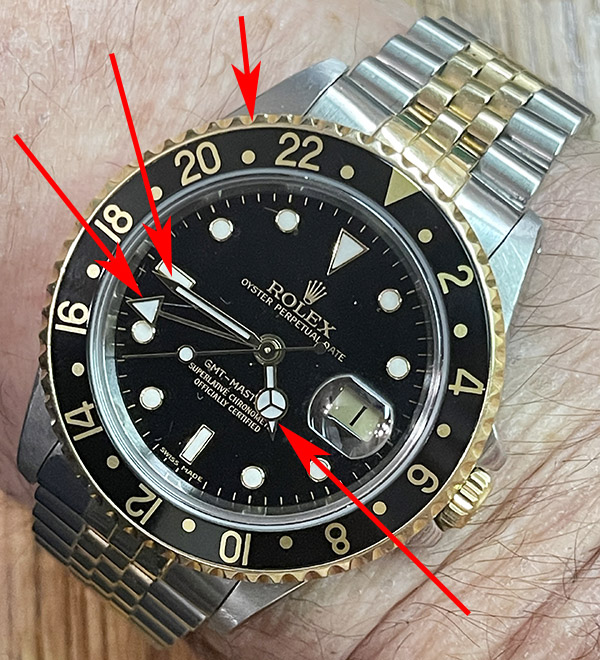
The hands of fate. The top arrow points to the bezel, which can be rotated in relation to the GMT hand (lower left arrow) to tell time on a 24-hour scale in a different time zone. The second-from-the-top red arrow points to the minute hand. The arrow on the right points to the conventional hour hand. If you look closely at the inverted diamond at 12:00, you can see the bezel is slightly off.
So what is a GMT watch? Basically, it is a watch that allows you to tell time in three time zones. If you wanted to, one of the time zones could be Greenwich Mean Time (GMT), which is the time at the Greenwich Observatory in England. Most of the time, I could care less what the time is in England, but that’s where the GMT descriptor originates.
Today, there are multiple approaches for time telling in different time zones, but the classic approach (and one followed by the Rolex and Seiko watches in this blog) is through the use of a third hand and a bezel with 24-hour numbering. The way it works is this:
The standard hour and minute hands tell the local time.
The third hand can be shifted to tell the time in a different time zone.
The bezel can be rotated to tell the time in a third time zone.
There are variations on the above (like switching local time with destination time, etc.). All of this may sound like a solution looking for a problem, but trust on this, when you travel to different time zones, it’s a very useful feature.
The Rolex GMT allows you to “step” the hour in one-hour increments by use of the winding knob when the knob is partially pulled out (some folks say this makes the Rolex a “true” GMT). On the Seiko, it doesn’t have the “step” function; use of the winding knob advances either the third hand or the conventional hour hand without the one-hour clicks (depending on which click you bring the stem out to). To me, either approach is acceptable.
The Rolex GMT Master II retails today for $14,050; the Seiko goes for $475. There’s a lot more to the pricing story, though. Prices on a Rolex are all over the map, and Rolexes sell for well above their suggested retail price. Some, even used, sell for three or four times their suggested retail price. I don’t know what my Rolex would sell for today as a used watch, and I’m not really interested because it’s not for sale. The Rolex will eventually go to one of my grandsons. I paid $3287 for it new in that Washington, D.C. jewelry store in 1986. I could easily get my money out of it if I wanted to, but like I said, that’s not going to happen.
Staying on pricing for a minute, the two-tone Seiko GMT is a relatively new model, so I couldn’t find it discounted on Amazon. If the two-tone coloring is not important to you, you can get the all-stainless version on Amazon for $317, which is a smoking deal (it’s $158 less expensive than the two-tone version).
My Seiko GMT was an impulse buy. Sue and I went out for lunch and there was a small watch shop a couple of doors down. They had the two-tone model, which I had not seen before other than in online watch forums and Seiko’s website (I was in Tokyo last year, and I didn’t even see it there). I asked the shop about a veteran’s discount, the guy said “you bet,” and mine set me back $402. I like supporting local businesses, I like doing business with shops that offer a veteran’s discount, and I liked being able to see the watch in person before I pulled the trigger.
My Rolex runs fast, gaining about a minute a week. That’s adjustable and would no doubt be corrected if I took the watch in for service, but I’m probably not going to do that. I’ve had the Rolex serviced twice. The last time was 25 years ago at the Rolex service center in Beverly Hills (where else could it possibly be?). Rolex clipped me $1000 for the service. I wasn’t happy at all. After the servicing, the numbers on the click-detented bezel were offset from where they should have been, and when I bitched about that, they remounted the bezel. It was better, but it is still offset a bit. Within six months of that service (which included replacing the crystal), I noticed a gouge on the crystal. I had worn the Rolex for 10 years before that and never had a scratch on the original crystal, so I have to wonder if I really received the sapphire crystal I paid for. A servicing today will probably be about $1500 if I get the crystal replaced and the bezel numbers remounted. It’s not likely I’ll spring for that. Maybe I will. I don’t know. It’s something I think about now and then, but then I think about getting out on the range with a milsurp rifle or riding my motorcycle and I forget about it. So far, the Seiko is keeping perfect time. I’ll let you know if that changes.
The Seiko is a new watch, so I haven’t had it serviced yet. Poking around a bit revealed that a typical mechanical watch servicing costs from $200 to $250. I think my local guy would probably be less than that. It’s quite a bit lower than what a Rolex service costs.
Both the Seiko and the Rolex are automatics. That means they are mechanical, selfwinding timepieces. The good news is there are no batteries, and it doesn’t matter if I stay out in the sun long enough to charge the solar power source. The bad news is that if I don’t wear an automatic watch for a few days, it stops. When that happens, prior to the next time I wear it I need to wind it and set the time. The Seiko, fully wound, has a 41-hour power reserve. The Rolex has a 70-hour power reserve. Rolex gets the nod here.
Regarding cosmetics, the “gold” bezel on the Seiko isn’t really gold; it’s plated. The accents on the Seiko hands and the watchface are similarly gold colored (i.e., they are not real gold). The Seiko’s jubilee bracelet links center areas are left a natural stainless steel finish. On the Rolex, they are gold. Another thing to note: On any Rolex, wherever you see something gold, it’s real gold. Nothing is plated on a Rolex. The bezel, the watchface accents, the hands, the winder, and the jubilee bracelet are all solid gold. Both watches look great, in my opinion. The real gold obviously drives the cost of Rolex higher than a Seiko, but not enough to explain the $14,000 (or more) difference. Most of the price difference is prestige pricing (Rolex gets away with it because some folks think they need such a thing). I used to be one of them. I’m not anymore.
About that jubilee bracelet: What they refers to are the smaller links in the watchband’s center section. Non-jubilee watches have bigger, single links instead of the jubilee bracelet’s three smaller links. To me, the jubilee bracelet makes a real comfort difference. The non-jubilee bracelet just doesn’t feel as good.
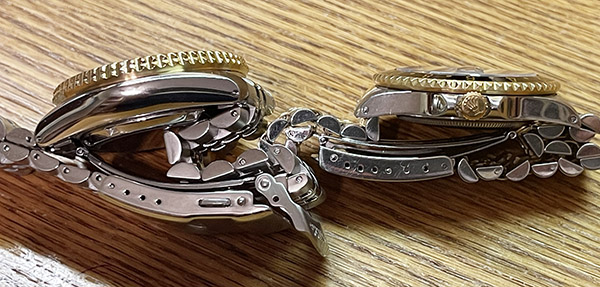
The Seiko is a much thicker case, and it sits higher on the wrist. It’s enough to be noticeable. The Rolex is thinner and I like the feel of it better for that reason.
Note the increased case thickness of the Seiko (on the right) compared to the downright thin Rolex. Rolex gets the nod here.
The Seiko’s stem winder is a push in/pull out affair. The Rolex stem winder unscrews, which theoretically makes it more waterproof. I don’t wear my watch in the shower any more (ever since I ruined a G-Shock by doing so), so the difference is meaningless to me.
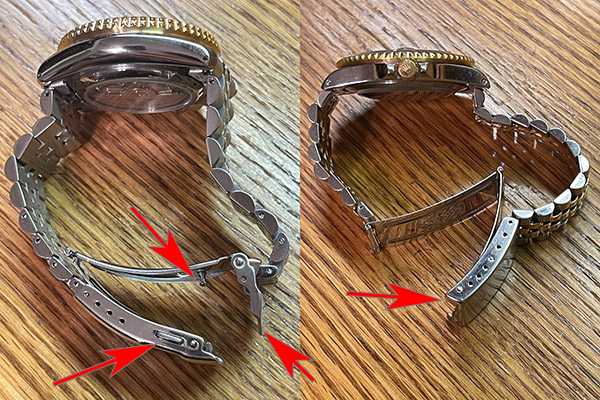
One last area I’ll touch on is the clasp design. Hands down (pardon the pun) the win here goes to Seiko. The Seiko’s clasp has three retaining features compared to the Rolex clasp. The fear, of course, is that the watch clasp comes undone and the watch slips off the wrist. It could be damaged by a fall onto, say, concrete, or worse, go unnoticed. The other fear is pickpockets. I don’t know how difficult it would be for a pickpocket to lift your watch. I once had a guy (a magician) remove a watch I was wearing without me noticing it. That watch had a leather band and I later learned there’s a trick to it. I don’t know if there’s a comparable trick for a metal bracelet, but if there is, I would think the Rolex would be more susceptible to such a thing.
The Seiko (on the left) clasp has three retaining features; the Rolex (on the right) has only one (which is a small dimensional difference between the outer clasp and the mating pin on the inner clasp). The Seiko design is better.
The bottom line to me is that the Seiko is a hell of a deal for under $500, and if you are looking for a watch that offers all the advantages of a GMT and is dressy, the Seiko is a good buy. I own both, and I think Seiko hit a home run here.
There are other approaches to a GMT watch. Citizen has a different dual time approach with their Nighthawk and Blue Angels models. Many digital watches (some identified as GMT watches and some not) can display the time in different time zones at the touch of a button. Casio has several cool models that do this. The Citizen and the Casio watches are reviewed on our Product Reviews page.
I’ve mentioned my Casio Marlin (also known as the Duro) a few times in previous blogs. I love this watch for any number of reasons: It’s accurate, it’s rugged, it’s waterproof, it’s comfortable, and it’s inexpensive. It’s a diver’s watch, but I’m not a diver. I just like the look of thing. I’ve worn it on a few big moto trips including the ride around the Andes Mountains in Colombia. It poured cats and dogs on that trip. The Marlin was unfazed.
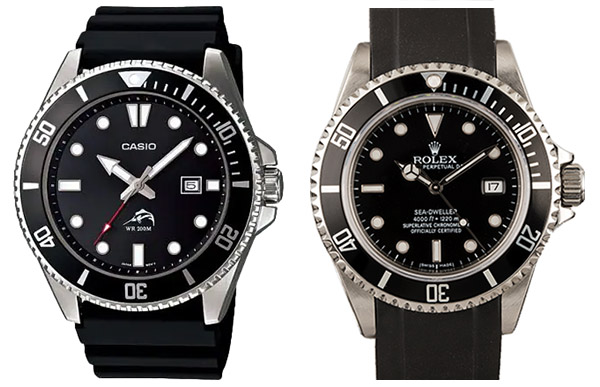
At about $50, this watch has to be the deal of the century. Just for grins I grabbed a picture of the Rolex Sea Dweller and put it along side the Casio. If you own a Rolex don’t get your shorts in a knot ((I own one, too). But the comparison has to make you wonder: Let’s see, $50 for the Casio and $16,500 (or whatever it is these days) for the Sea Dweller (if you can find one and in today’s market that’s not easy). As Aristotle would say….hmmmmm.
Yeah, you can go a little deeper with the Rolex (they say down to 3,900 meters). My Casio says it’s good for 200 meters. That’s over 600 feet down. It’s not likely I’ll ever visit those regions and if I ever do I can guarantee you the time of day is not what will be on my mind.
I’ve owned my Marlin for about 10 years now. I think I’ve had to replace the battery twice. My guy charges me $3.25 to install a new battery (parts and labor). The strap got stiff and cracked, so I’ve replaced that once (I think it was $10). I checked and the cost of a replacement resin Rolex band is close to $300. On the other hand, the Rolex is self-winding, so it never needs a battery. Again….hmmmm.
You know what to do…click on the popup ads!
On that comfort thing…the Casio Marlin is about the right size for a man’s watch and the resin band is very comfortable. I always forget I have it on and on more than a few occasions I’ve gone into the water wearing it (swimming, showering, and most recently, almost being swept away in my Subaru going to the gun club). It doesn’t matter to the Casio. I’d say it’s indestructable, but some Internet weenie would want to get into a urinating contest about that.
Boarding the ferry in Magangué on the Magdelena River. Even there, the Casio’s good looks and functionality appealed to an onlooker.
When I rode Colombia with Juan and Carlos, one time we had to wait a couple of hours on a hot and humid afternoon for the ferry to come in and carry us down the Magdalena River to Mompos. While we were waiting in what little shade we could find in Magangué, a young Colombian boy came over and touched the Casio, nodding his approval. If I had another watch with me I would have given it to him. I still think about that on occasion and wish I had given it to that kid. I think when I bought my Marlin, they were $39. That young fellow most likely would have cherished the Casio the rest of his life (as I will). Maybe I need another ride in Colombia. If I go again I’ll throw an extra Marlin in one of the panniers. You know, just to be prepared.
The Honda Cub is the most-produced motor vehicle of any kind in the history of the world. Not just motorcycles, but motor vehicles. Honda passed the 100 million Cub mark years ago; today they still offer a Cub in the form of the 125cc Super Cub. That 100 million figure doesn’t count all the knockoffs by Yamaha and the Chinese marques. It’s a staggering number for a staggering vehicular concept. So, if you’re a watch company and you want to produce a watch honoring a motorcycle…well, you know where this is going.
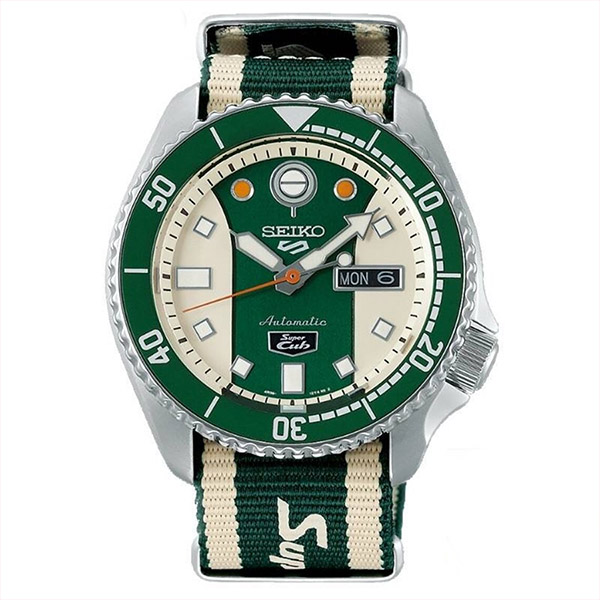
Seiko is the company, and this year they introduced a limited edition of the Honda Super Cub watch. These watches have been nearly impossible to get, so I was astounded when on Christmas photog duty at the mall I wandered into a watch store and what do you know, there it was. It was the only Seiko Super Cub watch I’ve seen and I knew I had to have it. It’s self-winding and to watch weirdos like me it doesn’t get any better than a mechanical self-winding watch. The ticket in was $400, I asked if there was any room in the price, the store manager said no, and I pulled the trigger anyway. I bought it for list price and that was still a good deal.
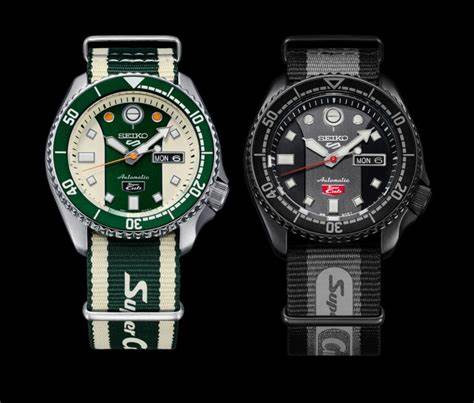
Seiko is offering a limited run of the Super Cub watch in two colors. I’ve not seen the black one in person, but that’s okay. I like the green and white one better.
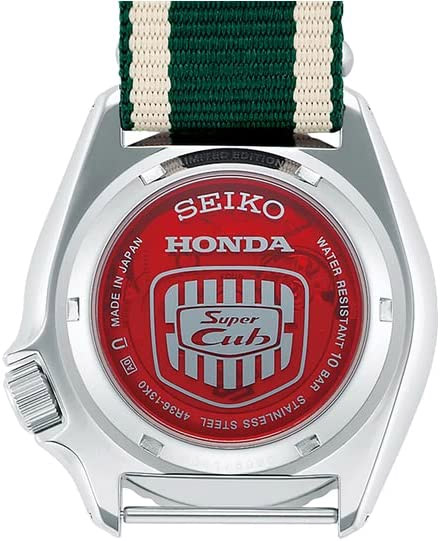
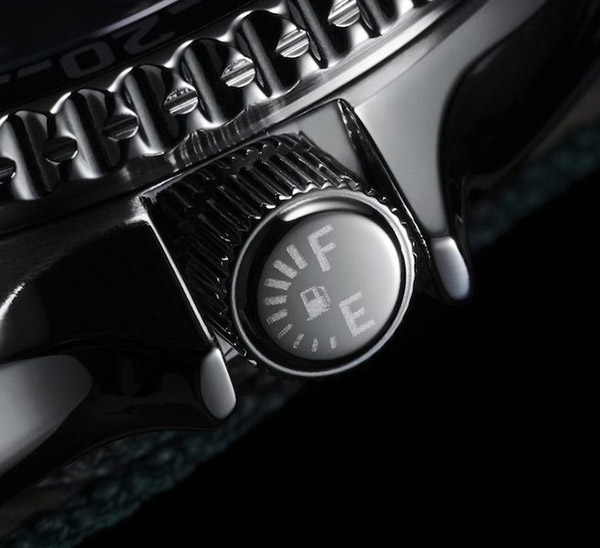
The Seiko Honda Super Cub watch has several cool details, including a NATO band, a rear cover intended to evoke a tail light, and a stem that looks like a Cub fuel gage.
Two of your blog boys (that would be Gresh and yours truly) both owned Honda Cubs back in the day (Huber didn’t, but he has an excuse…he wasn’t born yet). I guess that made Gresh and I two of the nicest people you’d ever meet.
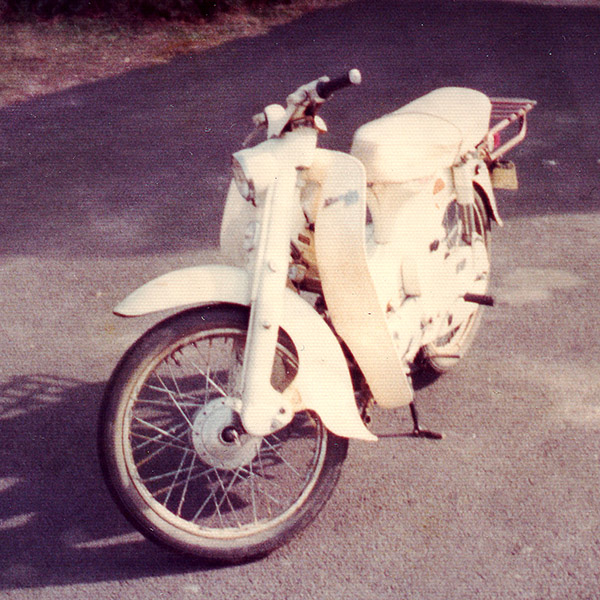
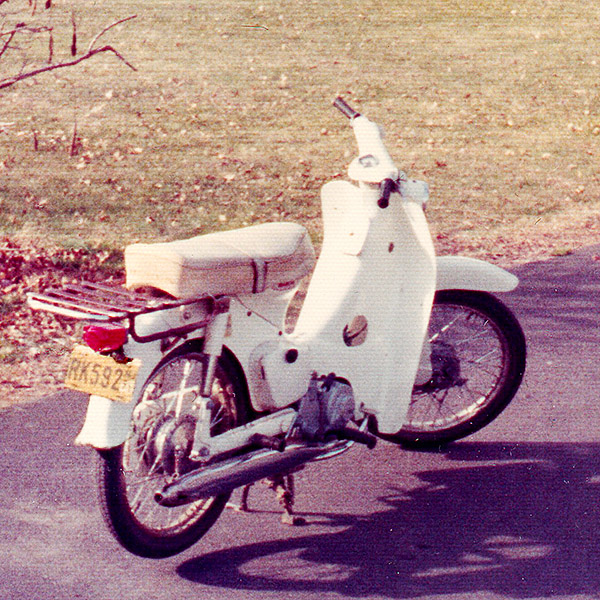
To my great surprise, I found a couple of photos of my Honda Cub buried in an old photo album. The image quality is not up to my current standards, but hey, I took these photos with a Minolta C110 camera in the 1960s. With those little 110 film cassettes, these 60-year-old pics ain’t half bad.
I bought the Cub for $50 (a dollar per cubic centimeter) from Zeb Moser (a buddy in New Jersey; RIP, Zeb), rode around on it a little bit, and then sold it for $70 thinking I’d done well. There’s no need to say it, but I will anyway: I wish I still had my Cub.
Help us bring more to you: Please click on the popup ads!
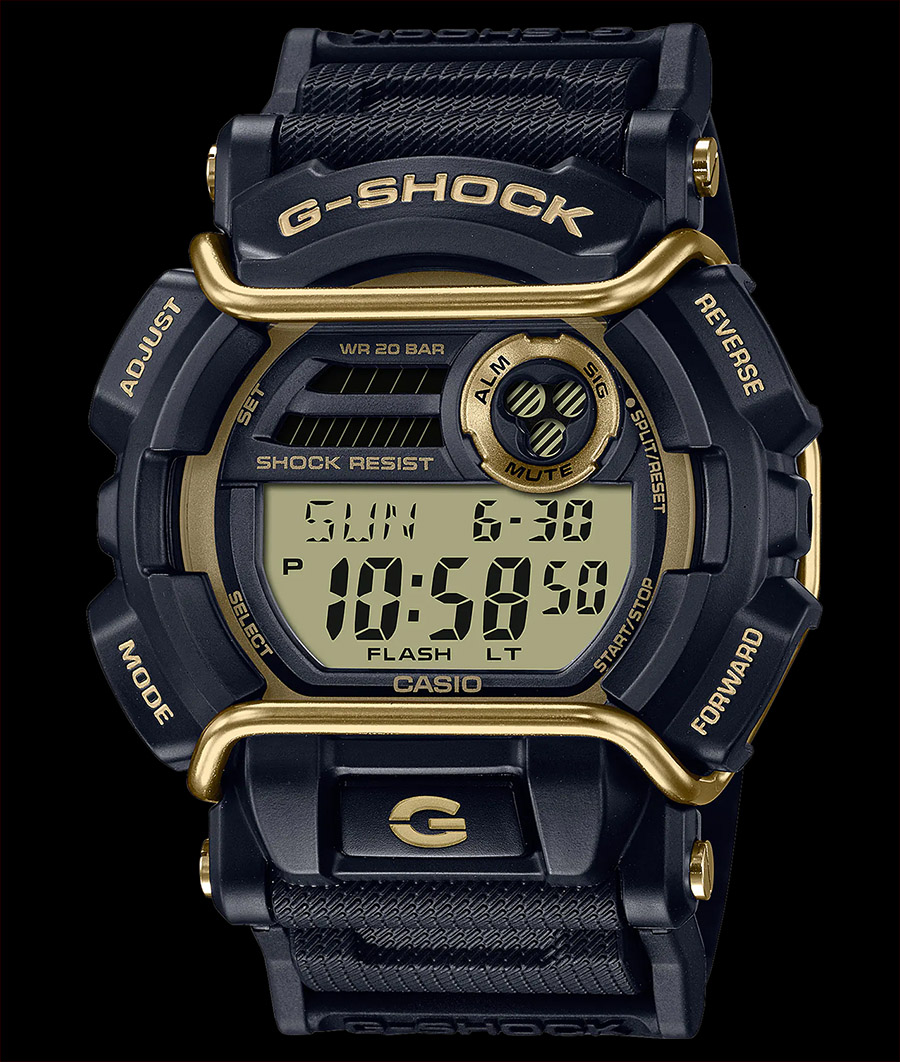
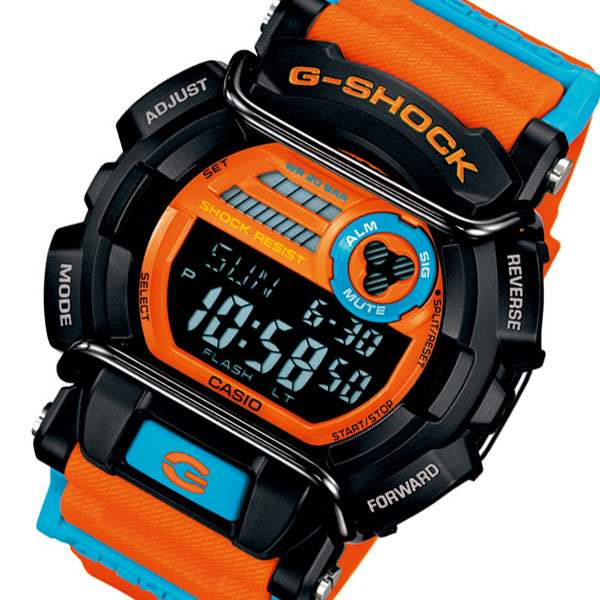
I follow a few motorcycle forums and one of them has a watch thread. One of the guys who posted recently alerted me to a Casio GD400 G-Shock watch in a new color scheme. Without intending to, I guess I became a G-Shock collector. My orange and turquoise GD400 conked out on a Baja trip (my fault, not the watch’s), and when I tried to buy another one, I was g-shocked (pardon the pun) by four facts: The orange and turquoise color was no longer available, prices on the orange and turquoise model were up about 400% on the secondary market, you couldn’t get replacement parts for that color, and G-Shock collecting/investing is a real thing.
My first Casio G-Shock watch. I still have it.
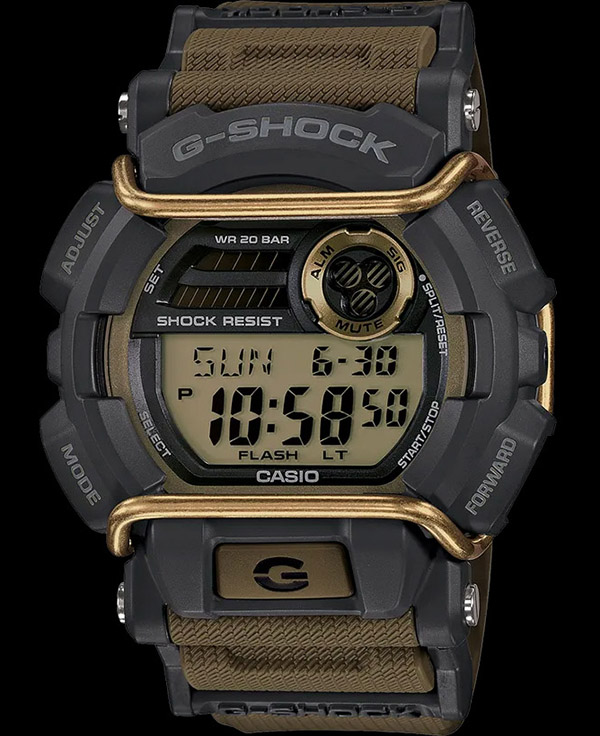
I liked the watch, though, and when I was in a watch shop on the east coast, I saw a new color theme Casio had released. I like the watch, so for me it was a no-brainer. I picked up a replacement in OD green and black. I’m wearing it right now.
My daily wear Casio GD400 G-Schock watch.
I took the inability to get replacement parts on the orange and turquoise model as a challenge, and I overcame it. My orange and turquoise model is digitally and happily tick tocking away on a shelf in my office.
Anyway, to circle back to the topic of this blog, Casio just introduced this new color scheme in black and gold, and I like it. It’s the one you see at the top of this blog. The deal is this: The new Casio is available now for $69.99, which is a good price. Casio is taking pre-orders on their website, and they will start shipping on 25 November. My order is in.
Want to see other Casio watches? Take a look at these G-Shock watches on Amazon.
More watch reviews (including several Casio watches and more) are here.
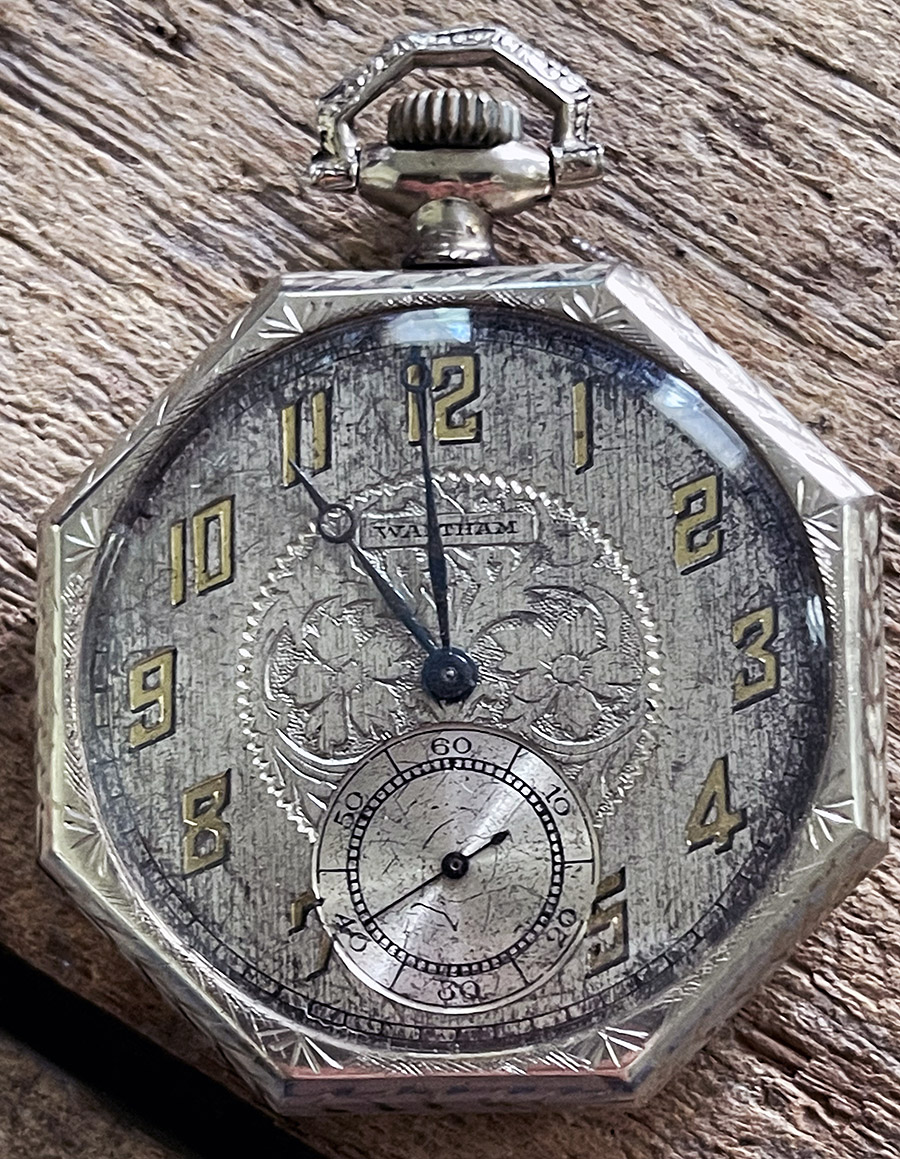
You probably didn’t know I was almost Italian. I’ll get to that in a second, and a little further along in this blog, I’ll get to that over-100-year-old beautiful Waltham pocket watch you see above.
Samuel Berkowitz, my father’s father, came to the United States through Ellis Island around 1911. Over two-thirds of the people in the US can trace their origins to an ancestor who entered the US through Ellis Island. That’s going to change at some point in the near future, I think, as the number of folks who come here across our southern border continues to grow, and that’s okay in my book. I’m a staunch conservative and I lean right, but I go against the grain of my Fox News compadres on immigration. I’m all for immigration and welcoming more people into the US (that’s a topic for another time). The message in this paragraph is Poppy (and I’ll get to that name in a second) processed in through Ellis Island. If you’ve never visited Ellis Island, you need to. It is a national treasure. The Ellis Island tour is something I will never forget.
Ellis Island. Two thirds of the US population can trace their ancestry to this one patch of real estate.
When Poppy came to the US, the person who processed him into America was a recent Italian immigrant. They did that at Ellis…they couldn’t find enough people to do all the work that needed doing (sound familiar?) and they used immigrants to fill the gaps. Grandpa Berk came from Rumania to escape the pogroms there and for the opportunity here. The Italian-now-American administrator asked his name and Grandpa told him: Samuel Berkowitz. “Berkowitz?” the man said. “I don’t know from Berkowitz…from now on, you Bercovici. Sam Bercovici.” And that’s how his name was entered into the logbook as he entered America. I know. I’ve seen it. Like I said, I was almost an Italian.
Bercovici, Berkowitz…it was all too confusing and it was all too European. Poppy changed it, probably informally, to just plain old Sam Berk. And that’s how we became Berks. People sometimes ask me what Berk is short for. I always tell them, “Berque…my grandfather changed it because he didn’t want people thinking we were French.”
Now, about the “Poppy” business. My Dad always called his father Pop. When we were little kids, for us he was Poppy. Grandma was always Grandma, but Grandpa was always Poppy. At least until I was 6. That’s when Poppy died. I was a wee one then, but I remember Poppy well. He was a good guy.
Last week, I was back in New Jersey on a secret mission, and while I was there I visited with my sister. We were chatting it up at her place and I was expounding on wristwatch accuracy when she suddenly asked: “Would you like Grandpa’s watch?”
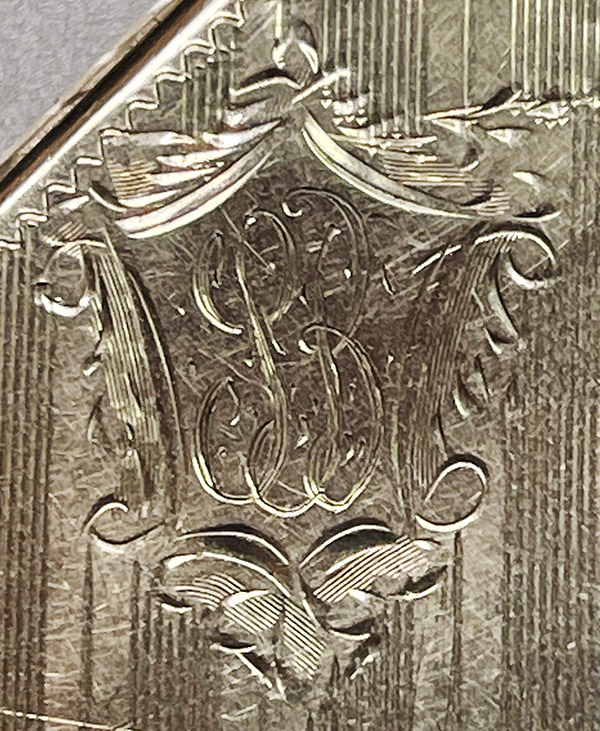
The question caught me off guard. I didn’t even know Poppy had a watch. I for sure didn’t know he had one and it somehow ended up in my sister’s possession. But I didn’t need to think about it. “Yes,” I said. I was shocked when I saw it. It’s beautiful, it’s engraved, and it has my grandfather’s initials on the back. I think it’s white gold (if it was silver, it would be tarnished). I wound it just a little and it started right up. Tik tik tik tik tik tik tik…it was cool. I listened to the same ticking Poppy heard a hundred years ago.
Poppy’s initials (SB) on the flip side of this centenarian Waltham.
Looking at the dial and its patina, my first thought was that the little black erratic lines I saw on it were mold. I had a polarizer go south on me on the motorcycle ride across China and the marks on it were eerily similar; the camera store guy told me the lines on that polarizer were mold. But in researching who to send the watch to for servicing, I found the place I am going to use up in Portland. It is WatchRepair.cc. The man there is Terry Nelson, who responded quickly when I sent an email and a photo (and this was on a Sunday). I asked if I was dealing with a mold problem, and Terry’s prompt reply was:
Its dial shows normal blemishing from a century of use and exposure to the environment and ultra-violet light. It was originally painted with a mixture of paint and finely powered silver and then coated with an early “clear coat.” The clear coat has slowly flaked away in certain areas allowing the underlying silver to tarnish, which may appear like mold. My in-house dial cleaning will assist in making the dial more uniform yet – be ready for only a moderate improvement.
I was impressed and pleased. No mold, a quick response from a craftsman who obviously knows his business, and no extravagant claims. Terry told me if I wanted a full restoration he could bring the dial back to its original condition, but I don’t. I want a little patina. Maybe I’ve been watching American Pickers too long. Like Mike Wolf always says, it’s only going to be original once. My watch is headed to Portland for Terry to work his magic next month, and it will be back the following month. I can’t wait.
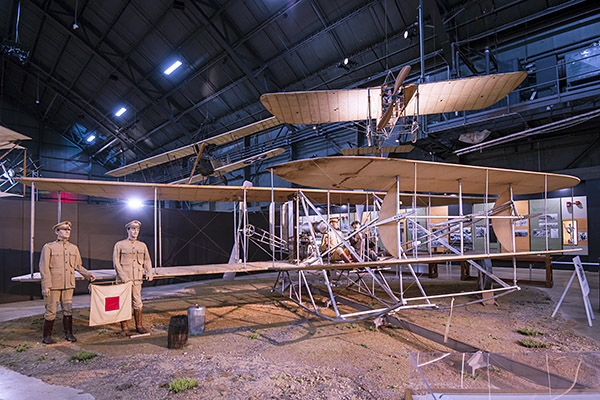
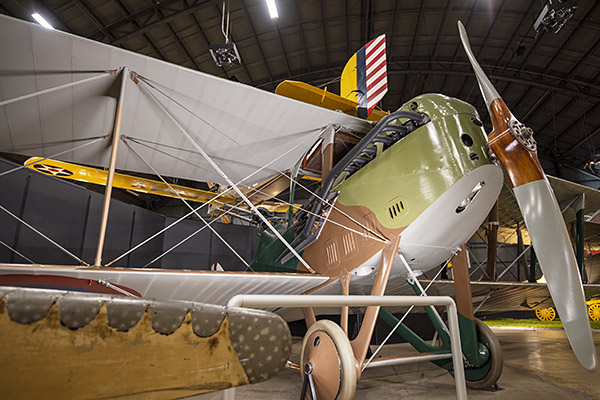
Ohio this time, folks, and today’s feature is the National Museum of the United States Air Force. We had been exploring Indiana, and Dayton was a just a short hop across the border. This was part of our great visit with good buddy Jeff, and wow, did we ever have a good time.
The official name, as denoted in the title of the blog, is a mouthful. I’ve heard of this place as the Wright-Patterson air force museum, and it’s been around for a long time. Dayton is a hop, skip, and a jump away from Vandalia, and my Dad visited the air museum decades ago when he competed in the Grand American Trapshoot in that city when I was a kid. I always meant to get here, and thanks to Jeff and my navigator’s travel planning (my navigator, of course, is Susie), I finally made it.
Dayton was also home to the world famous Wright brothers. I recently read a great book about The Wright Brothers by David McCullough, which added greatly to my understanding of their accomplishments.
There were many other early aircraft on display. I probably should have noted what they all were. But I was having too much fun taking available light photos with my Nikon. There’s no flash in any of the pictures in this blog.
There are four main halls in the museum, each dedicated to a specific aviation era. The first is focused on the early days (that’s what you see in the photos above), and the last is focused on more modern military aircraft. There are also exhibits of presidential aircraft, missiles, nuclear weapons, and more.
The missile hall was particularly cool. The photo immediately below shows a nuclear weapon.
The missiles made great photo subjects. I had two lenses with me: The Nikon 24-120 and the Nikon 16-35. Most of these shots are with the wide angle 16-35. Both of these lenses do a great job, the 16-35 even more so in these low light, tight locations.
Here’s another photo of a nuclear (in this case, thermonuclear) bomb. It’s hard to believe that much energy can be packed into such a small envelope.
The Wright-Patterson Museum also had several experimental aircraft. These make for cool photos.
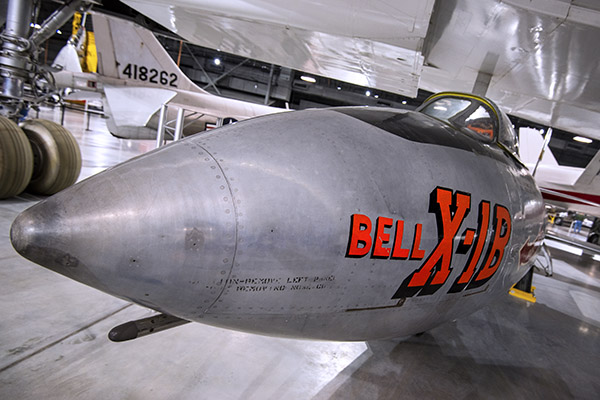
That’s Chuck Yeager’s airplane below…it’s the one he used for breaking the sound barrier (or it’s one just like it).
There was an Apollo display, including the actual Apollo 15 capsule.
Our tour guide told us something I didn’t know before. If the lunar landing module was damaged and couldn’t be repaired such that it could dock with the lunar orbiter, the plan was to leave the guys who landed on the moon there.
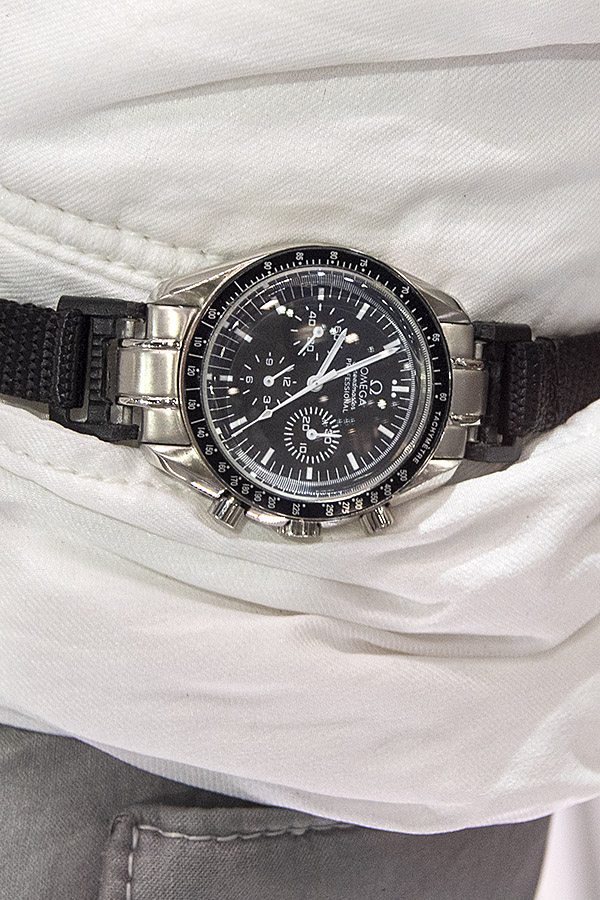
One of the displays showed an Apollo astronaut suited up for a moon walk. What caught my attention was the Omega Speedmaster in the display. There’s a very interesting story about that watch the Bulova chronograph worn when one of astronauts was replaced just prior to launch. You can read that story here. I wear one of the modern Bulova lunar pilot watches.
Here’s one of my favorite airplanes of all time: The Lockheed C-130 Hercules. It’s an airplane that first flew in 1954. Analysts believe it will still be flying in 2054. Imagine that: A military aircraft with a century of service.
A long time ago, I went through the Airborne School at Fort Benning, Georgia, and I made a few jumps from a C-130. My last jump was from the C-141 Starlifter jet, an aircraft that was retired from military service several decades ago (even though it was introduced way after the C-130). The C-141 jump was a lot more terrifying to me than was jumping from a C-130.
In a C-130 you have to jump up and out to break through the boundary layer of air that travels with the C-130. Because you jump up and out, it was like jumping off a diving board…you never really get a falling sensation (even though you drop more than a hundred feet before the parachute opens). On a C-141, though, you can’t do that. If you jump up and out, you’ll get into the jet exhaust and turn yourself to toast. The C-141 deploys a shield just forward of the door, so the drill is to face the door at a 45-degree angle and simply step out. When that happens, you fall the same distance as you do when exiting a C-130, but you feel every millimeter. It scared the hell out of me.
The Museum also has a section displaying prior presidential aircraft…different versions of Air Force One. That was also fascinating. One of the Air Force One planes is the 707 that was took President Kennedy to Dallas, and then returned with his body that afternoon.
Jackie Kennedy would not allow JFK’s coffin to be stowed in the freight compartment on the flight back to Washington. She wanted it to fly with her in the passenger compartment. An enterprising flight engineer obtained a hacksaw and cut away part of the bulkhead just ahead of the rear passenger door, which allowed the coffin to make the turn into the aircraft.
There were other presidential aircraft on display as well, including the one used by Franklin Roosevelt and Harry Truman.
Not everywhere a president flies can handle a large jet, so sometimes Presidents use small executive jets. One of the first of these bizjets used for Air Force One (any airplane carrying the President is designated Air Force One) was a small Lockheed. President Lyndon Johnson called the small Lockheed executive jet below “Air Force One Half.”
It was a good day, and a full day. Even spending a good chunk of our day at the Museum, we were only able to see two of the four halls. That made for a good day, but if you want to see the entire Museum, I think it would be wise to allow for a two-day visit.
Sign up for a free ExNotes subscription:
Are those pop up adds perturbing? Get even! Click on them and then they have to pay. And they pay us!
More reviews (museums, books, watches, cars, motorcycles, and more) are right here!


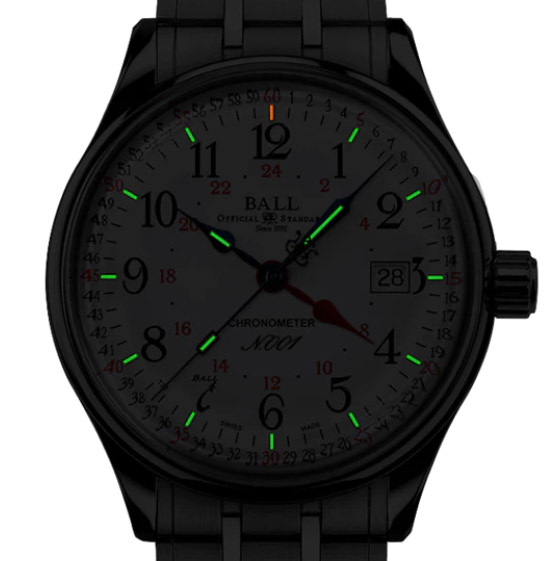
 hour, minute, and second hands, and in markers by each number on the face. There’s no marker in the GMT hand (I guess Ball thinks you don’t need to know the time elsewhere in the world at night).


 More Gresh and Berk? You bet! Check out