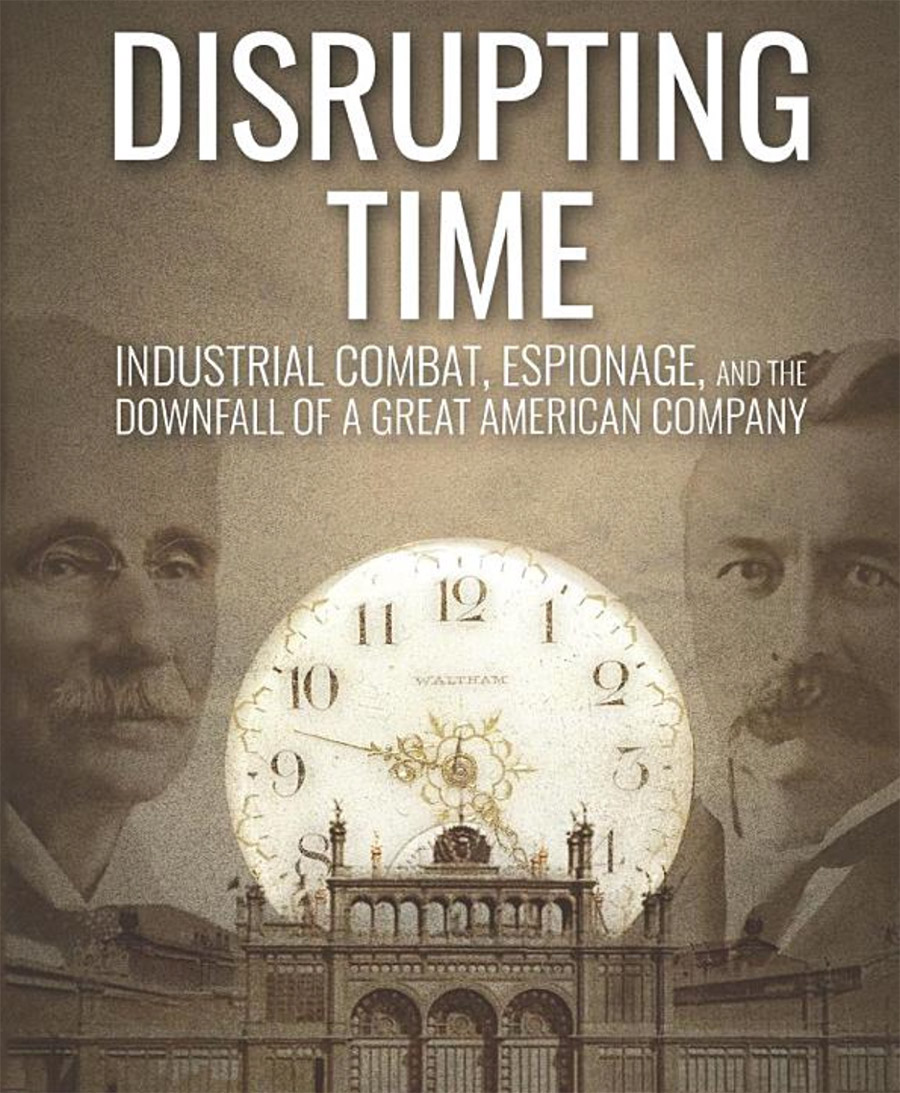
Disrupting Time, by Aaron Stark, is a great read. My daughter bought it for me for Father’s Day (it was one of several books she selected), and when I got to it, I read Disrupting Time in just a few days. You see, I’m a watch nut and sort of a management consultant, and this book checked all the boxes for me. Industrial espionage. Waltham (I have one). Rolex (I have one of those, too). Management set in its ways (wow, I’ve lived through a lot of that). And a great American company and its employees paying the price for lazy, intellectually sloppy, arrogant, and incompetent leaders (yeah, I’ve seen a bit of that in my day, too).
It’s the story of Waltham, the world’s premier watch company in 1876. The Waltham managers knew they were the best in the world, and the company (or rather, its management) couldn’t resist rubbing the world’s nose in Waltham’s preeminence at the 1876 Philadelphia Centennial Exposition. Although it’s counterintuitive today, the Swiss in those days were the world’s worst watchmakers, but the 1876 Philadelphia event made them sit up and take notice. One Swiss agent in particular, Jacques David, recognized Waltham’s supremacy and took every bit of info he could back to Europe. His industrial espionage remained a secret for the next century.
The Swiss were slow to pick up on the message David brought back, but they eventually did. Waltham chased low cost reliability; the Swiss had a better strategy and pursued exclusivity (doing do allowed significantly higher profit margins). Within a generation, the Swiss were in the driver’s seat with their superiority marketing strategy and by copying some of the concepts they stole from Waltham, and the Swiss dominance has continued to this day. Think Rolex, Patek, and more. Waltham? They are but a distant memory, but a memory I have no problem remembering, as you can see from my earlier blog on Poppy’s watch.
Disrupting Time is a fascinating story, and Stark tells it well. You should pick up a copy. You can thank me later.
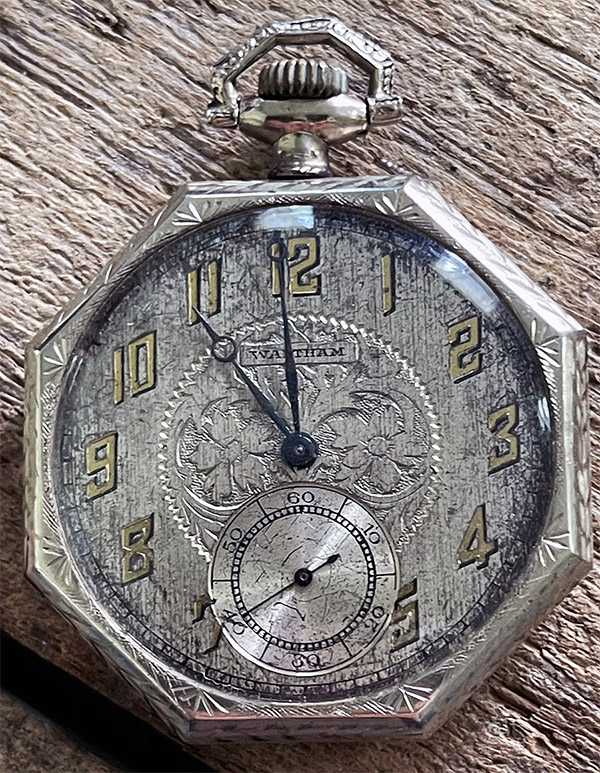
You probably didn’t know I was almost Italian. I’ll get to that in a second, and a little further along in this blog, I’ll get to that over-100-year-old beautiful Waltham pocket watch you see above.
Samuel Berkowitz, my father’s father, came to the United States through Ellis Island around 1911. Over two-thirds of the people in the US can trace their origins to an ancestor who entered the US through Ellis Island. That’s going to change at some point in the near future, I think, as the number of folks who come here across our southern border continues to grow, and that’s okay in my book. I’m a staunch conservative and I lean right, but I go against the grain of my Fox News compadres on immigration. I’m all for immigration and welcoming more people into the US (that’s a topic for another time). The message in this paragraph is Poppy (and I’ll get to that name in a second) processed in through Ellis Island. If you’ve never visited Ellis Island, you need to. It is a national treasure. The Ellis Island tour is something I will never forget.
Ellis Island. Two thirds of the US population can trace their ancestry to this one patch of real estate.
When Poppy came to the US, the person who processed him into America was a recent Italian immigrant. They did that at Ellis…they couldn’t find enough people to do all the work that needed doing (sound familiar?) and they used immigrants to fill the gaps. Grandpa Berk came from Rumania to escape the pogroms there and for the opportunity here. The Italian-now-American administrator asked his name and Grandpa told him: Samuel Berkowitz. “Berkowitz?” the man said. “I don’t know from Berkowitz…from now on, you Bercovici. Sam Bercovici.” And that’s how his name was entered into the logbook as he entered America. I know. I’ve seen it. Like I said, I was almost an Italian.
Bercovici, Berkowitz…it was all too confusing and it was all too European. Poppy changed it, probably informally, to just plain old Sam Berk. And that’s how we became Berks. People sometimes ask me what Berk is short for. I always tell them, “Berque…my grandfather changed it because he didn’t want people thinking we were French.”
Now, about the “Poppy” business. My Dad always called his father Pop. When we were little kids, for us he was Poppy. Grandma was always Grandma, but Grandpa was always Poppy. At least until I was 6. That’s when Poppy died. I was a wee one then, but I remember Poppy well. He was a good guy.
Last week, I was back in New Jersey on a secret mission, and while I was there I visited with my sister. We were chatting it up at her place and I was expounding on wristwatch accuracy when she suddenly asked: “Would you like Grandpa’s watch?”
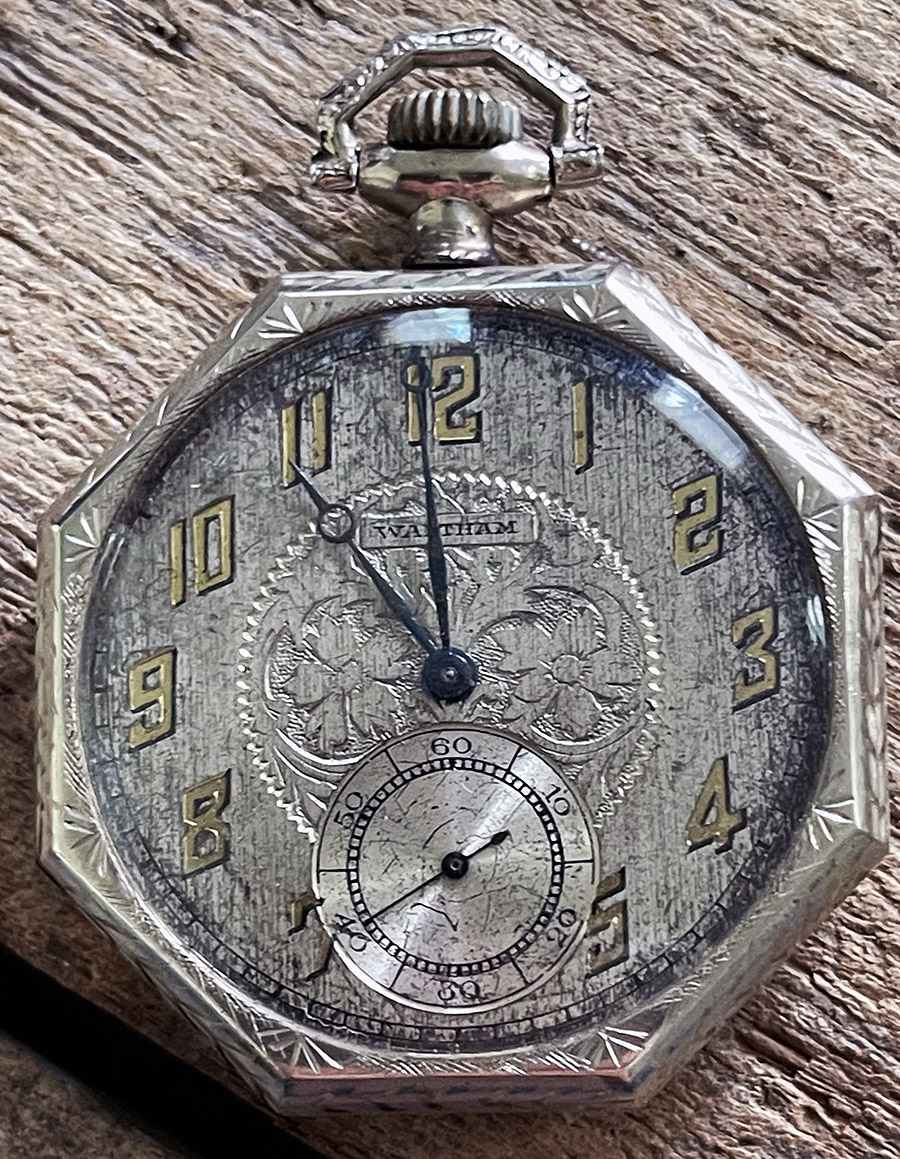
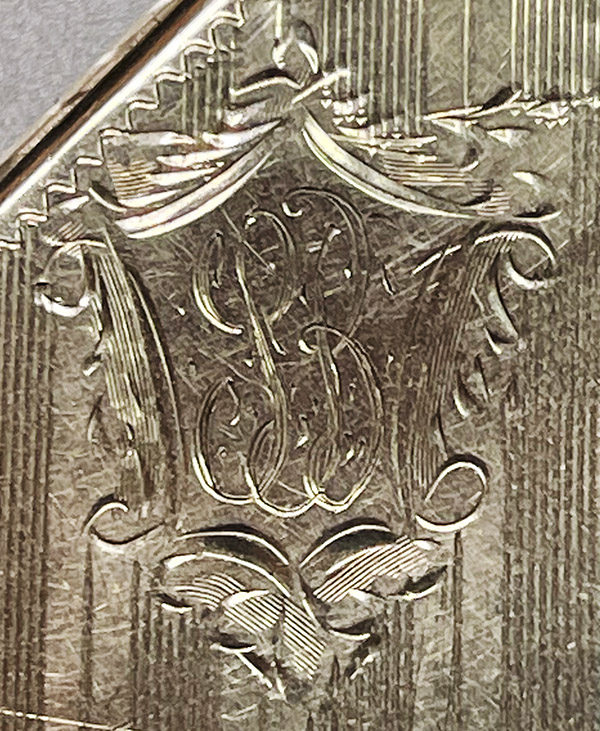
The question caught me off guard. I didn’t even know Poppy had a watch. I for sure didn’t know he had one and it somehow ended up in my sister’s possession. But I didn’t need to think about it. “Yes,” I said. I was shocked when I saw it. It’s beautiful, it’s engraved, and it has my grandfather’s initials on the back. I think it’s white gold (if it was silver, it would be tarnished). I wound it just a little and it started right up. Tik tik tik tik tik tik tik…it was cool. I listened to the same ticking Poppy heard a hundred years ago.
Poppy’s initials (SB) on the flip side of this centenarian Waltham.
Looking at the dial and its patina, my first thought was that the little black erratic lines I saw on it were mold. I had a polarizer go south on me on the motorcycle ride across China and the marks on it were eerily similar; the camera store guy told me the lines on that polarizer were mold. But in researching who to send the watch to for servicing, I found the place I am going to use up in Portland. It is WatchRepair.cc. The man there is Terry Nelson, who responded quickly when I sent an email and a photo (and this was on a Sunday). I asked if I was dealing with a mold problem, and Terry’s prompt reply was:
Its dial shows normal blemishing from a century of use and exposure to the environment and ultra-violet light. It was originally painted with a mixture of paint and finely powered silver and then coated with an early “clear coat.” The clear coat has slowly flaked away in certain areas allowing the underlying silver to tarnish, which may appear like mold. My in-house dial cleaning will assist in making the dial more uniform yet – be ready for only a moderate improvement.
I was impressed and pleased. No mold, a quick response from a craftsman who obviously knows his business, and no extravagant claims. Terry told me if I wanted a full restoration he could bring the dial back to its original condition, but I don’t. I want a little patina. Maybe I’ve been watching American Pickers too long. Like Mike Wolf always says, it’s only going to be original once. My watch is headed to Portland for Terry to work his magic next month, and it will be back the following month. I can’t wait.