Big Boy And The Mother Of Intentions

By Joe Gresh

Motorcycle riding gives you a good excuse to go places and see things, not that you need an excuse. I like a steam train, I have a motorcycle, thus riding up to Ogden, Utah to see a big old steam train seemed like a sensible thing to do.

My Carrizozo Mudchuckers buddy, Mike, was all for the idea so we planned to meet Big Boy, the last of the steam locomotives, in Ogden, where the train would stop for two days. As we waited for the appointed day the normally beautiful New Mexico weather cooled and became cloudy with rising damp. Ogden, being 900 miles north of us, was experiencing the same weather degradation except much, much colder.

Just a few days before leaving there was snow and rain in Utah. A 75-car pile up in Denver, and rain and cold all along our route north, had us thinking “this ride will suck.” I kept watching the weather reports hoping for a better forecast, but it looked like miserable weather the entire trip north only starting to ease off a bit on the Monday we would start riding home from Ogden.

I have plenty of cold weather riding gear. Things like electric vests, heated grips and a plastic rain suit can keep you warm enough. I’ll use them if there is no other option. But there was another, simpler option: Don’t ride into the rain and cold.

One day before were planned to leave I called the Mudchucker and said: How about we go to Willow Springs for vintage motorcycle racing instead? Call me a fair weather rider but sunny California was an easy sell. We dumped Ogden and the Big Boy steam train faster than oil prices rose after we bombed Iran.
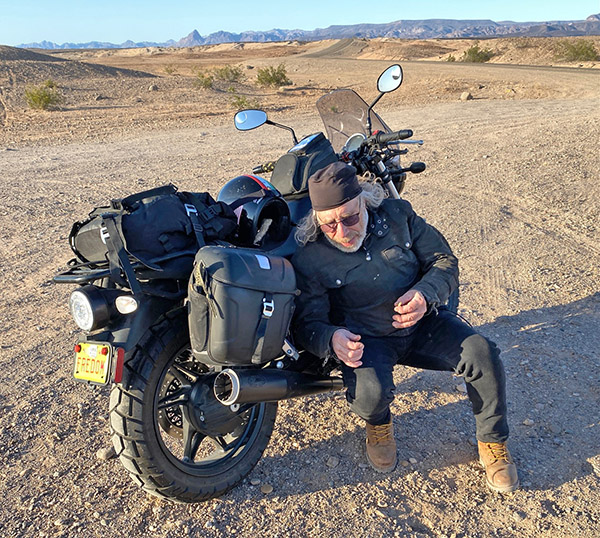
The Mudchucker taking a break from headwinds.

The plan worked. We left town a day later than the Big Boy run. That allowed some of the bad weather to move east. Our first day on the road was cool, cloudy but comfortable, the second day we had strong headwinds and 40-degree cold, but nothing nearly as painful as the stuff we would have experienced earlier and further north.

We mostly followed old Route 66 west jumping on and off Interstate 40 as required. It was an odd time of year I guess. The entire town of Seligman was closed: Gas stations, food markets, all shuttered. Further on we rolled into tiny reservation villages with nothing available to buy or rent. I admit, traffic was light on historic Route 66.  If a guy set up a food truck he’d starve to death.

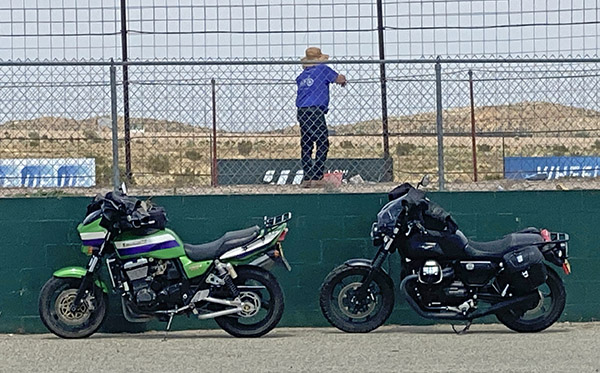
On westward we rode, through Kingman down to Oatman. Again, every store in the tourist-friendly little donkey-town of Oatman was closed. The day ran long, we needed ice cream, it was getting dark, I couldn’t see much through the dark face shield on my helmet, and we pulled into an abandoned gas station to check out the motel situation in Needles. The Mudchucker was tired. He stopped next to me and toppled over. I tried to hold us up but the combined weight of Mike, his Moto Guzzi V7 and my ZRX1100 Kawasaki was too much.

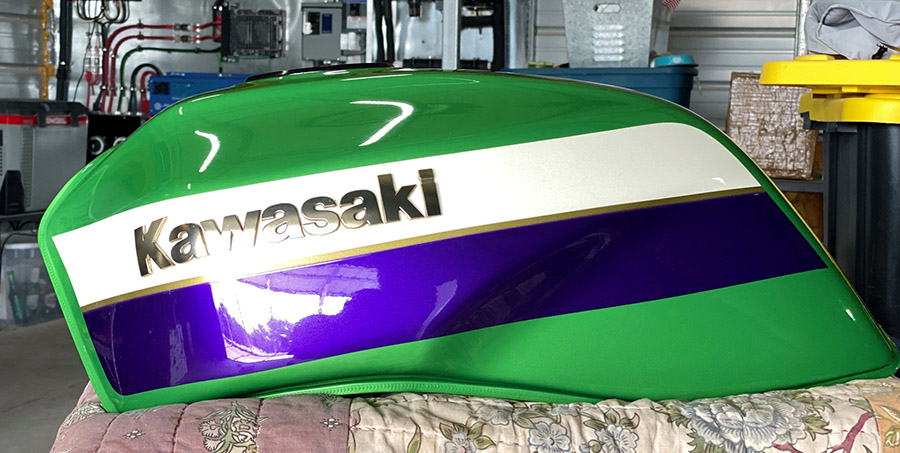
We went down like the stock market after we instituted tariffs.  The bikes were stacked against each other much like the system is stacked against the common man. It took a bit of doing to untangle them and lift the bikes upright. Damage was light: a few dings in the right-side Guzzi jug, a busted turn signal, scratched gas tank, and bent brake levers on the ZRX1100. Amazingly, there were no dents or major issues.
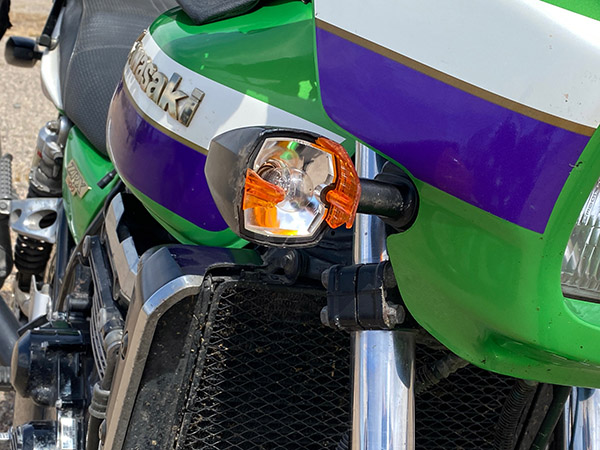
Not a lot of damage for tossing one bike on top of another.

A homeless guy camped at the gas station saw the whole thing. He didn’t laugh or say anything. He must have thought we were total losers.

The tip over had us in a melancholy mood. In the motel that evening we talked about that inevitable day, our strength gone, our skeletons frail, the day when we could no longer ride. Mike felt a side car was the way to go. I favored a three cylinder, two stroke, Kawasaki-powered gurney.

But gurney-time isn’t here yet and by the third day we were riding along basking in the warm Mojave desert. Things were looking up and thoughts of our physical decay burned away. Or maybe we just forgot we were falling apart. I hear that happens but I can’t remember where I heard it. Route 66 to Amboy was closed so we had to stay on Interstate 40, only returning to Route 66 west after paying $7.50 per gallon of gas at Ludlow.
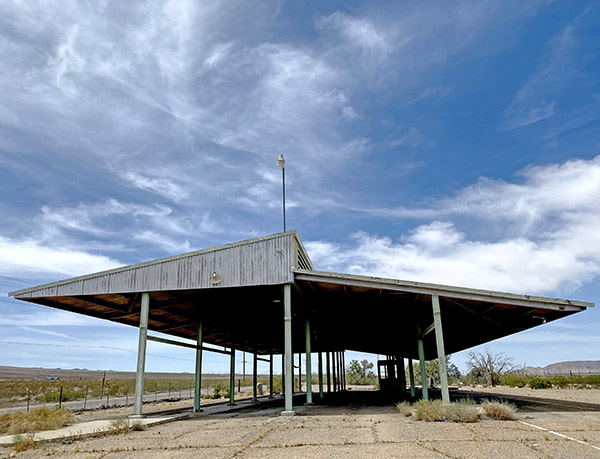
Some kind of inspection station east of Barstow on Route 66.

Out of Barstow we rode past Hinkley, the toxic-water town made famous by Julia Roberts and Erin Brockovich. We made it to Lancaster, our base camp for Willow Springs.

Lancaster is an interesting place. On the back roads we came in on there were piles of trash dumped everywhere. I guess the town doesn’t have a dump. Or maybe the dump fee is too high so people drive out of town a few miles and drop their load. It reminded me of the trash piles I used to pick through in the Florida Everglades. You can find some good metal in those piles.

I saw some nice chairs 5 miles from Lancaster.  If I had the Toyota truck, I would have grabbed them. There was a lot of broken concrete that would make excellent fill back at the ranch. Drywall was another popular item on the side of the road. Once in town things cleaned up slightly, and Lancaster looked much the same as other generic, California desert towns: New chain stores along the highway, decomposing shops, homeless people and frequent stop lights in the old sections.

The Wyndham motel on Avenue I was new and along the highway. They have a pretty good breakfast setup. There were the usual sausage paddies, scrambled eggs and pour-your-own waffles. We waddled out to the bikes and rode the 20 miles to Willow Springs racetrack.

Vintage motorcycle racing is mostly a family affair. Spectators not directly involved with the racing or supporting the racers are rare and we had the grandstands to ourselves. Multitudes of classes meant non-stop action all day long.
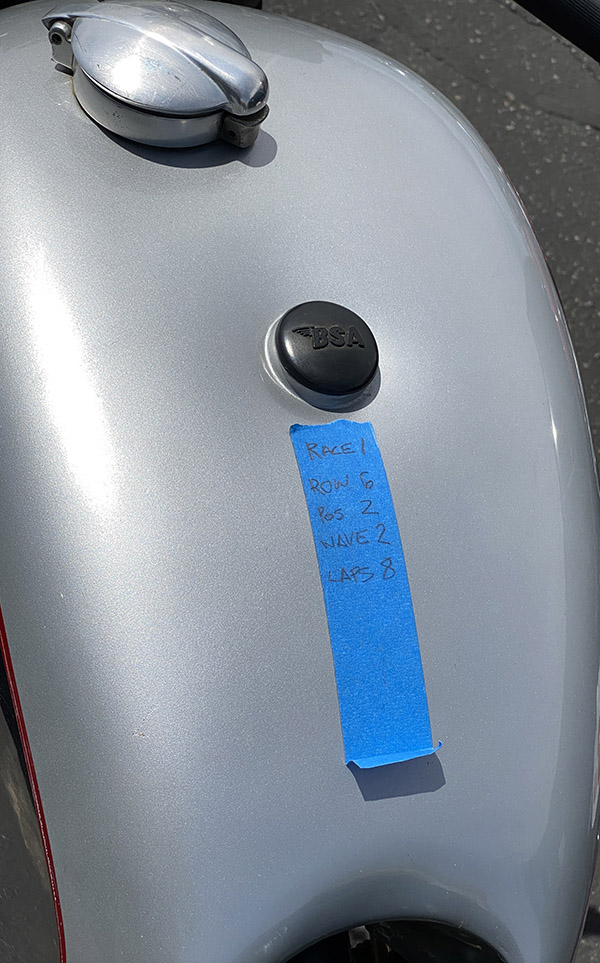
Lots of races and classes to keep track of at an AHRMA event. You won’t leave the track unsatisfied.

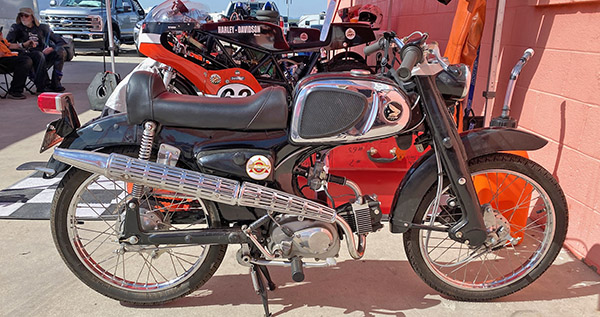
AHRMA racing covers all eras with heavy emphasis on bikes that were never actually raced back in the day, at least compared to the races I saw as a youth. Honda 160s are a popular class and an example of bikes that were never raced where I grew up.
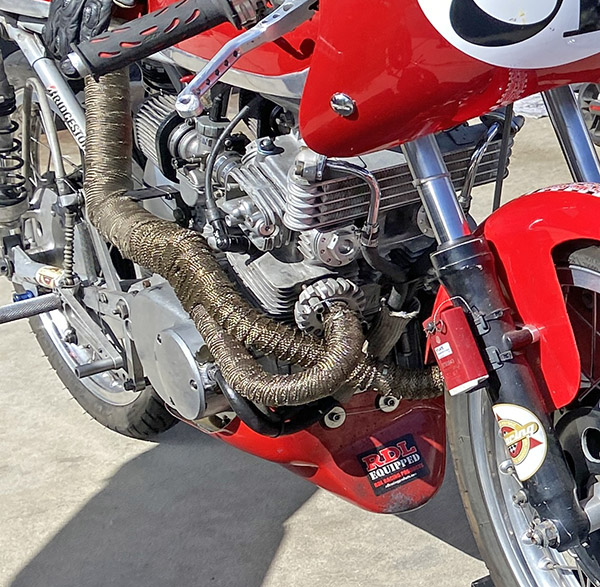
Sloper 160 Hondas are strangely popular. I had one as a teen. In stock form they would hit 75 MPH. In race trim a bit faster.

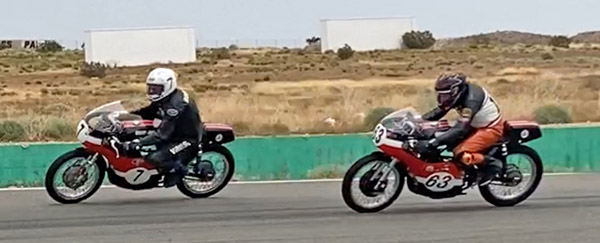
An unusual number of Moto Gizzards circulated the Big Willow track. Maybe because they were so popular, only a few Yamaha Twins survived to race AHRMA. Most of the race bikes were 4-strokes.  In the 1970s that ratio would be flipped and 2-strokes ruled the track. I guess the point is to run what you want and have fun with it.
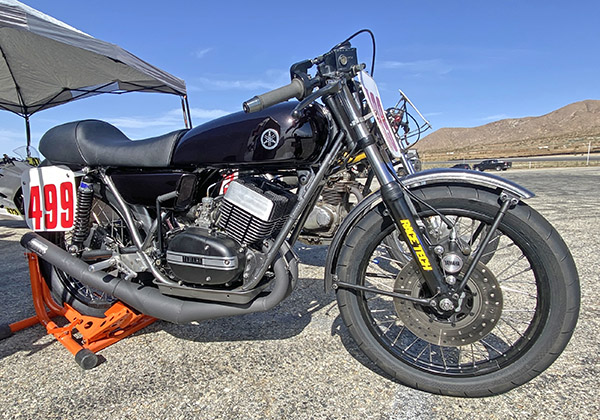
The RD350 went from a mainstay of road racing to a rare bird at historic events.

The Willow races were not as well attended as the Laguna Seca AHRMA events. Laguna Seca is set in soft, coastal hills and has space for vintage motocross along with a vintage trials section. The camping at Laguna Seca is better. I suppose you can camp at Willow but it’s more of a motor home type camping than a tent. I’m not sure what happened between AHRMA and Laguna Seca and it’s none of my business, but I wish they would get it sorted out and go back to Laguna.
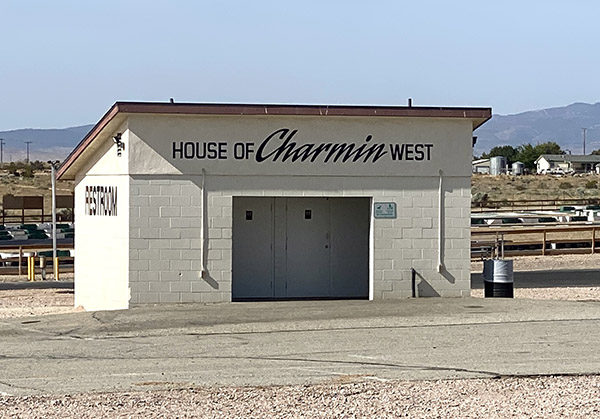
Nice, clean, crappers at Willow. A clean crapper makes the day just that much nicer.

Willow isn’t bad, mind you. The racetrack recently sold and the new owners are fixing it up a bit. There are several tracks and the food concession was better than Laguna. You can get a decent meal at Willow.

The last time I was at Willow Springs was in the 1970s. The pit looks the same and there are added buildings along the front straight. My memories are dimming and I can’t remember why I was there in the ’70s, but it was probably motorcycle racing of some sort.
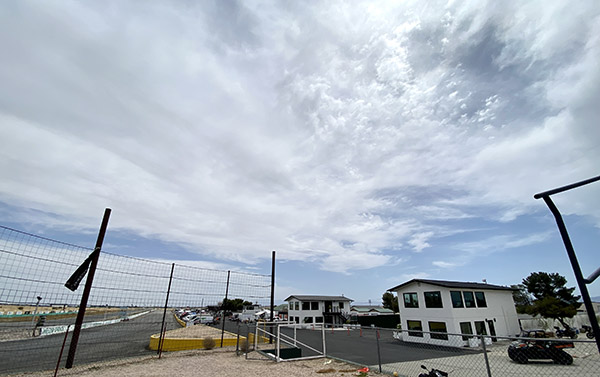
If you take away the little houses, pit row looks about the same as I remember from the 1970s.
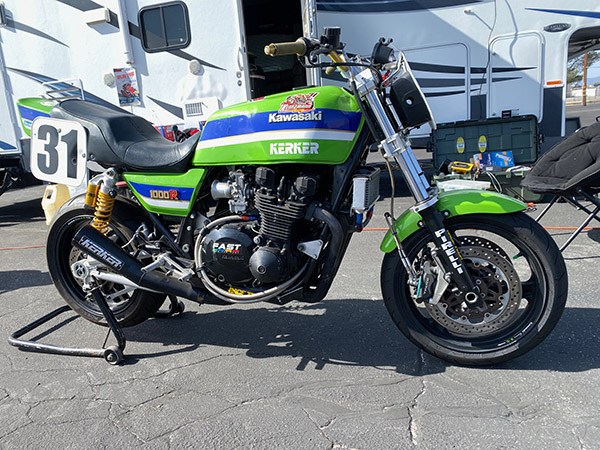
Kawasaki built a Superbike production racer called the S2. I don’t know if this is one but it looks like one.
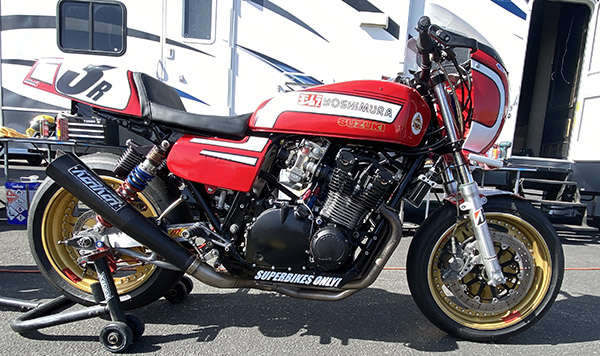
Suzuki big-block race bike. Although, it could be a 750. I didn’t look that close.
SR500. Great bike from Yamaha unfortunately suffering from The Slows. My XL350 could stay with them through the gears and pull away at top end.
Roper and Fulton on Italian Harley-Davidsons. About 100 years of racing experience in this photo. They are faster than you. Sorry about the cell phone photo.
Zippy Yamaha 100cc twin. I might get a stocker one of these one day.
CA110(?) I have one of these in pieces waiting for assembly. The engine is shot so I bought a clone 140cc overhead cam engine. It fits the gram and clears the front wheel by 1/4-inch.
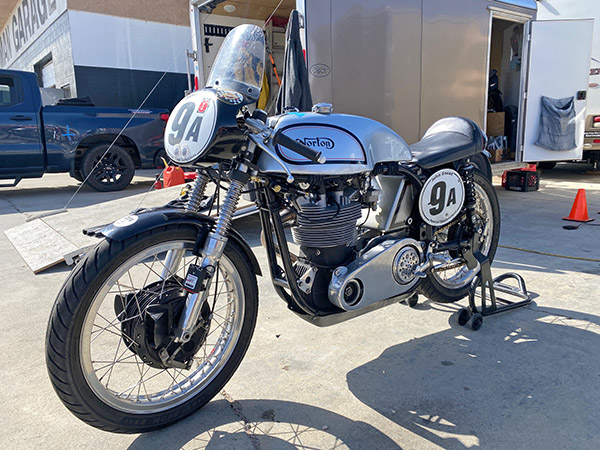
Manx Norton. For a while these 500cc singles ruled the road racing world. Still faster than a SR500.
If you don’t like crowds you’ll love AHRMA racing.

Rosamond, the town closest to Willow has grown quite a bit and lots of housing developments are being thrown together. Eventually someone will build houses around Willow if the new owners don’t do it first.

The ride back to New Mexico was full-on warm. We took backroads from Lancaster to Victorville and sort of paralleled Interstate 10 along Yucca Valley and Twentynine Palms to Parker, Arizona. Our miles per day were shrinking and we were stopping more often. Temperatures reached 95 along the sparsely populated Highway 62.

I was smelling the barn, you know? I kind of lost it on the last day in Show Low. We woke up at 4:30 am to get an early start. I wanted to get home and the Mudchucker was leisurely watching TV and eating a bagel. By 8:30 a.m., I had been awake 4 hours and drank 16 cups of coffee waiting. I had a lot of pent-up nervous energy.
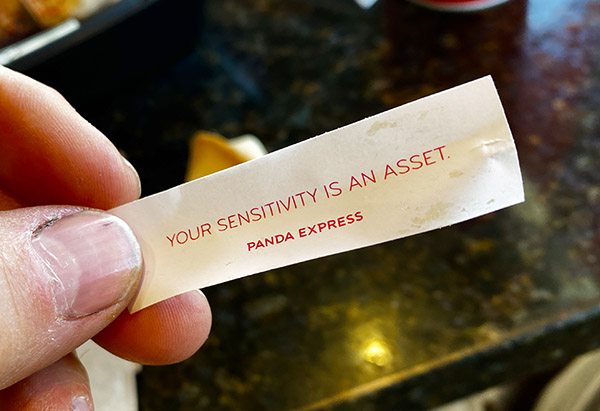
Maybe 7 days on the road rubbed my nerves raw. It doesn’t seem like an asset.

Finally underway, we burned up the highway into New Mexico, a slight frost between us, and I managed to get home at a decent time (before dark). I’m starting to wonder if 7 days on the road is too much for me. Riding motorcycles with a partner is a series of compromises strung together with miles and miles of pavement. Are the compromises worth the companionship? I’m sure I must annoy the Mudchucker at times.

Maybe I’m just getting old and cranky. At least, that’s the excuse I’m going to use.


Subscribe to ExNotes for free!


We need your support! Do what you can to help ExNotes stay in the black!


More Gresh? You bet! Check out A Cup O’ Joes!

Join our Facebook ExNotes page!
ZRX RX: An ExNotes Resurrextion, Part 5

By Joe Gresh

 The pressure of getting the ZRX1100 finished by July has eased off a bit. The Carrizozo Mud Chuckers may not be able to make July’s Laguna Seca races. I may have to go alone, which isn’t a bad thing, or skip the modern bikes and go to the vintage races held a week after. I’m leaning towards the vintage races as I really don’t have much interest in motorcycle road racing and the vintage bikes hold my attention just by existing. That doesn’t mean I’m backing off the ZRX1100 resurrexion project. I’m full speed ahead and will stay on the job until I am able to ride Rex again.

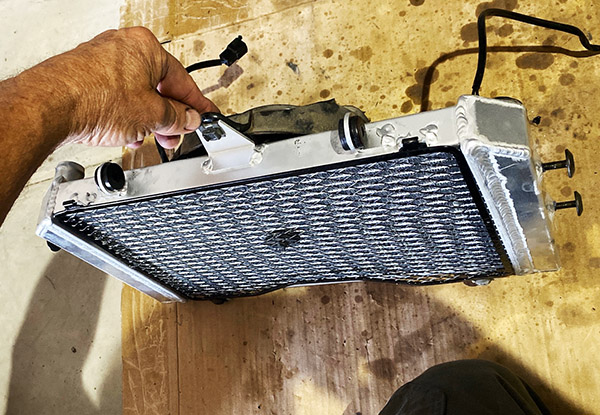
One of the things that worried me on the ZRX was the 24-year-old radiator. Kawasaki makes a quality motorcycle but how long can a radiator last? I found an aftermarket radiator on eBay for only $80 dollars with free shipping. You know how I like a deal. The radiator arrived securely packed and undamaged. It was welded aluminum and the workmanship looks excellent.

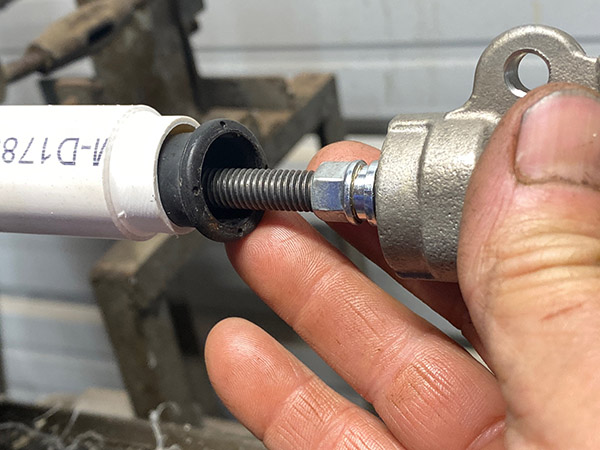
Unfortunately, there are a few problems with the fit of the aftermarket radiator. The top mounting ears are slightly too wide apart. When fitted with the original rubber isolator grommet the ears squeeze in as you tighten the bolts. It will need a thicker rubber isolator and that will require a longer spacer and bolt in order to avoid squeezing the rubber flat.

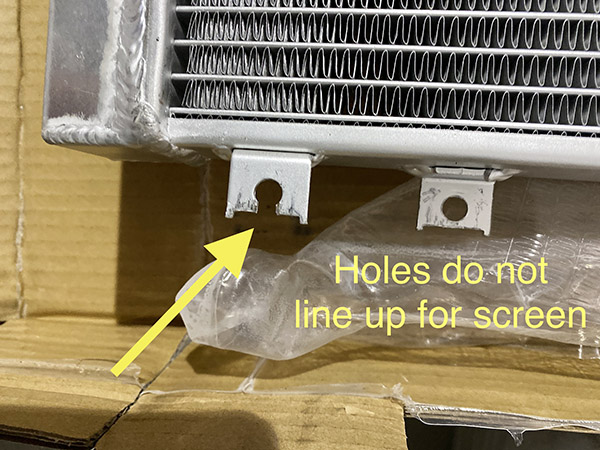
The next issue is the top tabs that hook into the expanded metal radiator bug screen are slightly too low. When the bottom screw holes are lined up the screen misses the top tabs completely; they hook into thin air. I slotted the screw holes to lower the screen on the radiator and it seemed to work although it looked like hell.

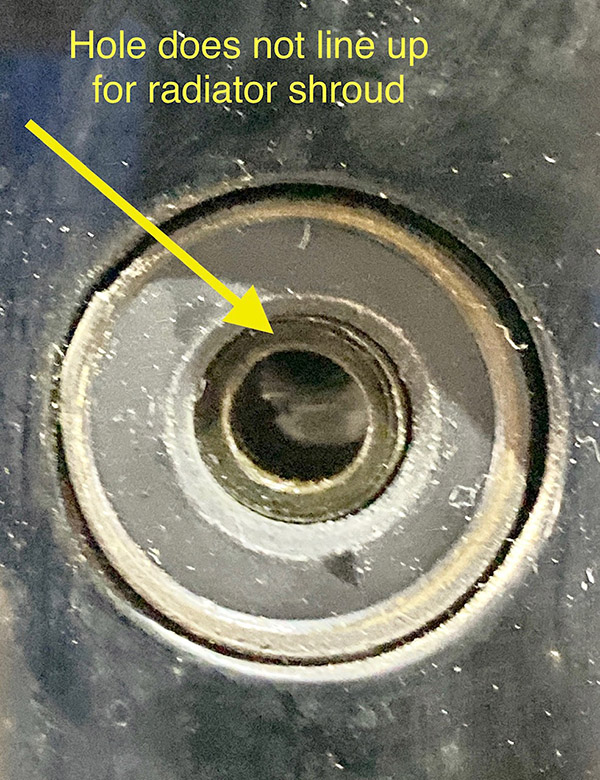
After those problems I found the blind holes in the side of the radiator that secure the radiator side covers were not centered correctly. You could get one bolt started or the other, but not both at once. This was fairly critical as the side covers also incorporate the bottom radiator mount and horn mounting bolts. To fix this I will need to fabricate new radiator side supports along with horn mounts. I decided to punt and cleaned up the original radiator and installed it. The aftermarket radiator might see future use but I’m not in the mood to do the fabrication right now.

The new Kawasaki water pump fit perfectly and I was able to install the hard plumbing pipes and hoses. This included the log manifolds located on the front and back of the cylinder block. I ordered a set of silicone hoses that fit fairly well except one hose was missing. Fortunately, it’s the easiest one to get to and it is straight, so I reused the old hose. I can fix it later if it springs a leak.

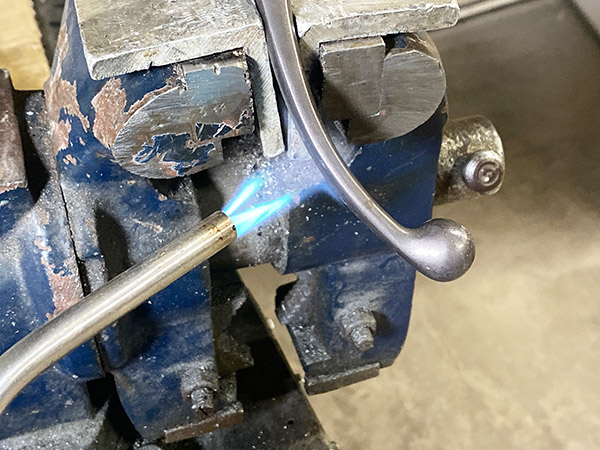
When I bought the ZRX used all those years ago the previous owner had dropped the bike moving it around. There is a small scuff on the headlight faring and the front brake lever was bent out at an awkward angle. I rode the bike like this for years. I decided that since I had the brakes apart I may as well straighten the lever. A little heat from a propane torch is all you need. Don’t go hog wild or you’ll melt the aluminum.

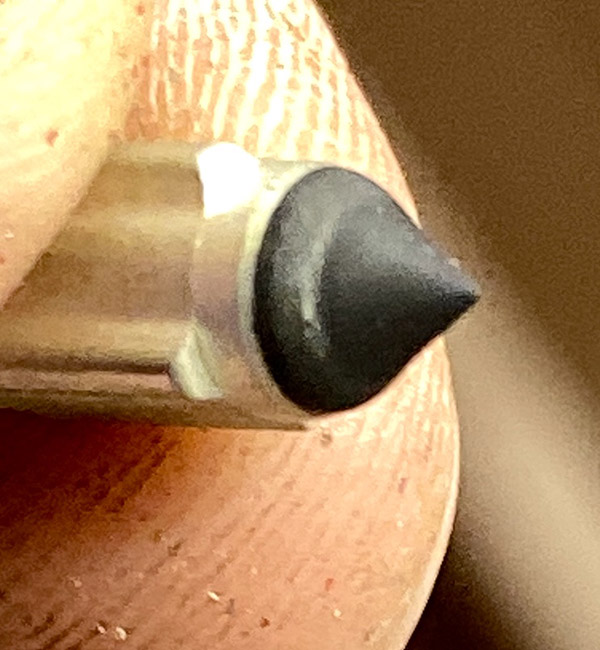
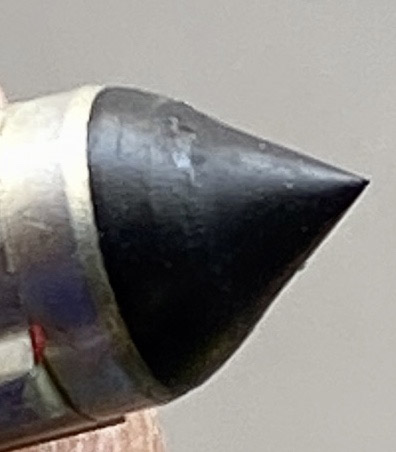
After closer examination I could see why the old float needles were leaking. There was a ridge worn into one and another had the rubber tip flaking apart. I ordered a new set of four needles for $28 (shipping included) from China but could not get an accurate delivery date. I was getting nervous about our trip so I went down to the local Kawasaki dealer. The dealer had Kawasaki-OEM needles for only $39 each. It killed me but I dropped $156 and bought the four needles.

With new needles in hand I checked the float levels. The range given in my book was 18.5mm ± 2mm from the float bowl flange to the bottom of the float. Mine were all sitting a bit high at 18mm. I readjusted them to 20mm anticipating needle wear and seating. After the carbs were back together I checked the floats on the bench and no fuel leaked out. I hope this status holds. Two days later my needles from China showed up. They look identical to the Kawasaki needles and even came with the tiny wire bail that fits over the float to pull the needle down when the float drops. My $156 needles required reusing the wire bail from the old needles.

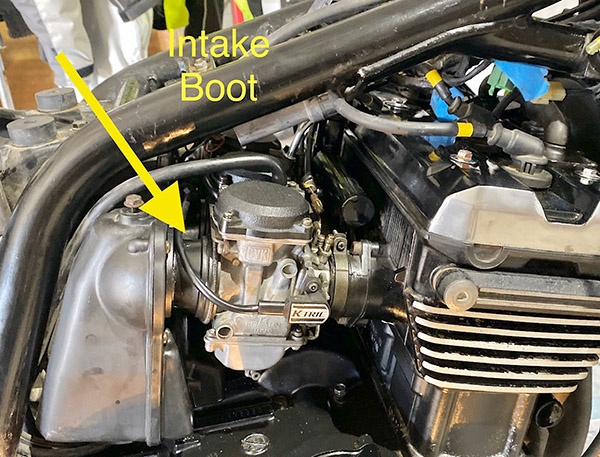
I can see why so many ZRX riders convert the original air box to pod-type filters. It’s a challenge getting the carbs back into position. You have to mount both throttle cables and the choke cable, then feed the cables through the frame as you battle to slide the carb assembly between the manifolds and the  air box rubbers. It took at least an hour fighting to get the things in.  Then, once you feel like you have succeeded, there’s the not-small matter of fitting the springs onto the air box rubber groove. None of this would be difficult if there were access. The two inside boots were out of reach and too crowded for my fingers. I managed to get the springs in place using a couple of screwdrivers and a lot of bad language.

While waiting on parts I tackled the fuel tank. Amazingly the inside of the gas tank was not rusted. It had stinky old yellow muck inside but was otherwise in good condition. This might be due to my diligent addition of fuel stabilizer several times over the course of the ZRX’s long slumber. I rinsed the tank using fresh gas and after 4 flushes the inside was pretty clean.

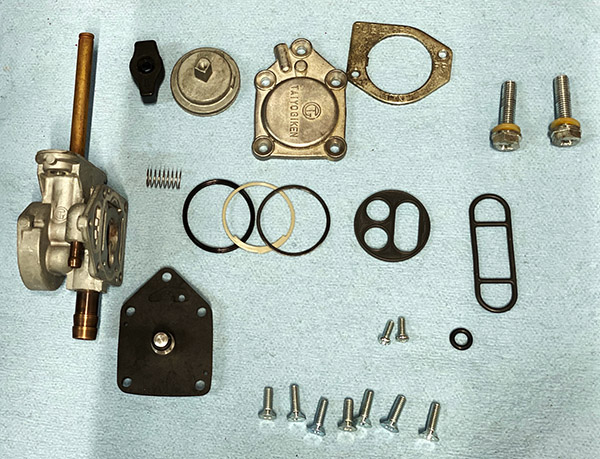
The fuel filter on the petcock was brittle with age (or fuel stabilizer) and crumbled to the touch.  The filter is not sold as a separate part so I bought an entire petcock for less than a few Kawasaki gaskets. Again, from China. I didn’t pay attention to the delivery date and the petcock was promised between June 7th and July 15th. This was a huge window, so I bought a rebuild kit and it didn’t show up, either. Panicking, I went to the local dealer and ordered the inner packing and the gas tank O-ring figuring I could at least make something work. As you can see, I’m using a shotgun approach to parts as time grows short.

The petcock rebuild kit showed up a day before the Kawasaki stuff did and I managed to get a petcock assembled. My main issue with this plan is that since there is no interior fuel filter I’ll have to fit an inline filter. This is not as easy as it sounds because the Kawasaki uses a large 3/8” fuel barb and the 3/8” inline filters I’ve found are too large to fit under the carbs or below the petcock. Maybe my new petcock will show up soon and solve the problem for me.

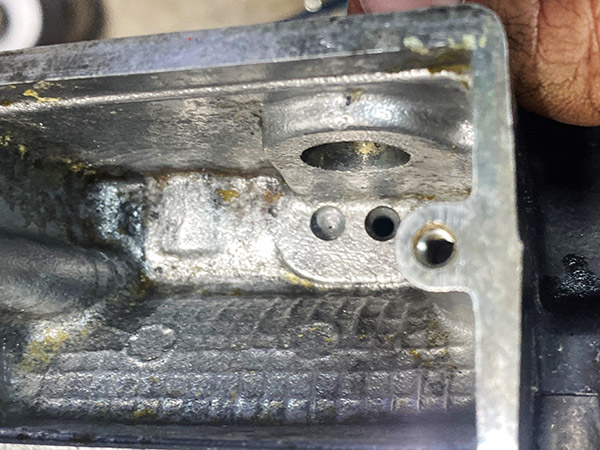
The big holdup now is the gaskets for the reed-valve pollution plumbing located on the valve cover. The law of unintended consequences says that I should have left the reed valves alone when I painted the valve cover. But I didn’t. They tore when I removed the reeds to paint. I ordered the gaskets weeks ago and they have not arrived.

The reed valves allow fresh air to be drawn into the exhaust ports when there is a vacuum pulse at the exhaust port. Kind of like a smog pump without the pump. The reeds connect to a carb-vacuum-actuated valve that is supplied via the air box. I’m guessing this is some sort of backfire control. I can eliminate all this junk and I might do just that but I will need to make a blank plate to replace the reeds and a blob of high heat silicone to replace the gaskets.  Then I’ll need to plug the hole in the air box. It would be faster to bolt the junk back on as the bike ran fine with it.

I also installed the new battery and tested the electrical system. I tested the lights and horn and they seemed to work then I bumped the engine over to see if the electric starter still functioned. Maybe in Part 6 this motorcycle will start.


Like what you see?  Please thank us by clicking on a few of the popup ads.


Never miss an ExNotes blog:


More Resurrections are here.

ZRX RX: An ExNotes Resurrextion, Part 3

By Joe Gresh

Labor rates at motorcycle shops are well over $100 an hour and that fact got me thinking about the value of old motorcycles. Take my 1999 ZRX1100: The basic bike is sound but there are many minor issues that add up to a lot more money than the motorcycle is worth. If you took the bike to a shop, that is.

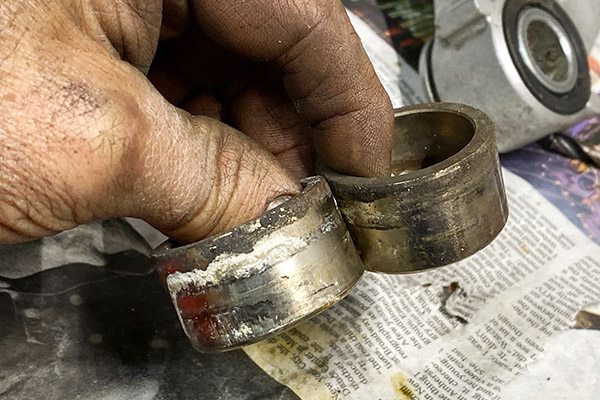
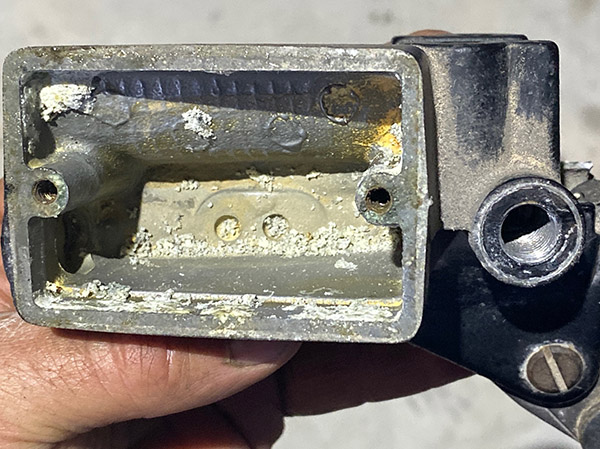
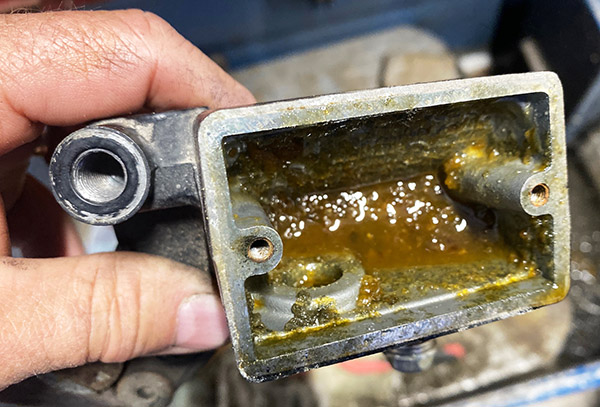
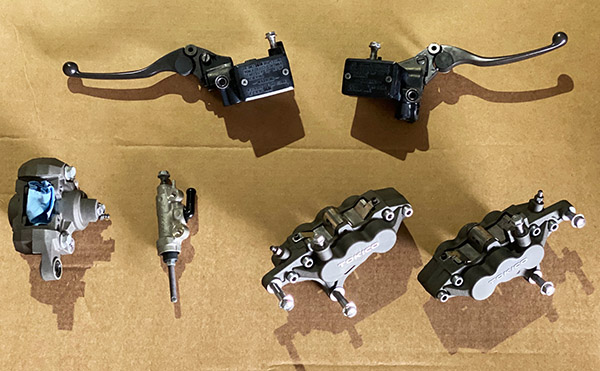
Fixing a bike yourself means you can take more risks. You can reuse iffy parts that a dealer mechanic cannot. The brake system on the Rex was in sad shape. All the calipers were stuck and the master cylinders were stuck, too. If I worked for a shop as a motorcycle mechanic I’d tell the customer they need all new parts. I couldn’t take the risk of my rebuilt caliper failing or coming back for a leak.

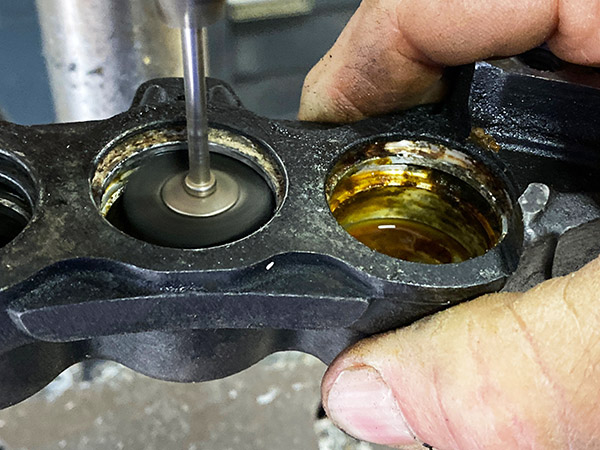
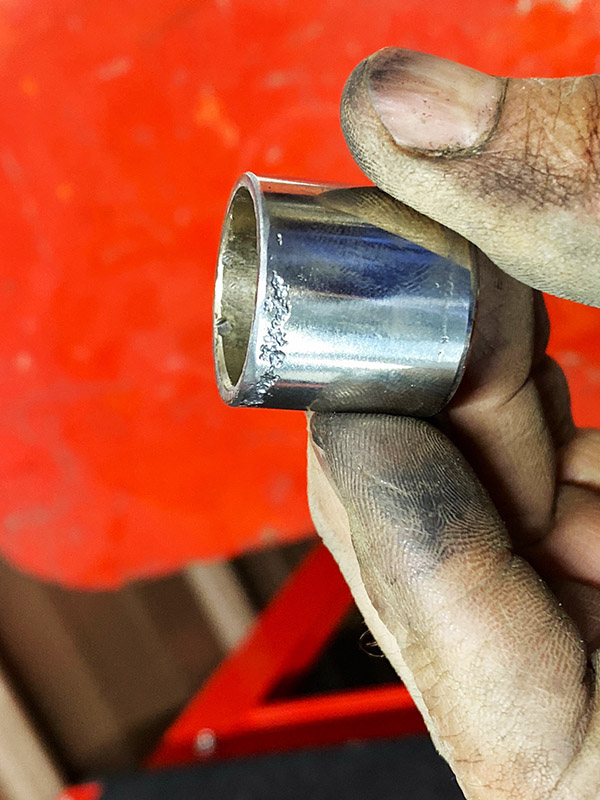
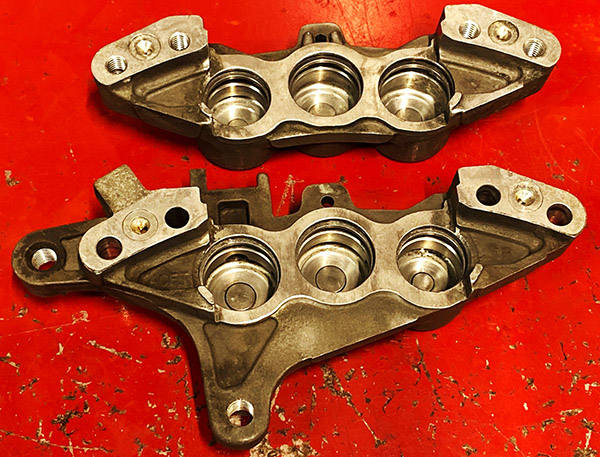
The bores in a brake caliper are not super critical as the sealing is done mostly on the piston walls. Unfortunately, my caliper pistons were not in great shape. I polished them as much as I could and cleaned up the bores. New o-rings and dust seals will hopefully keep them from leaking.

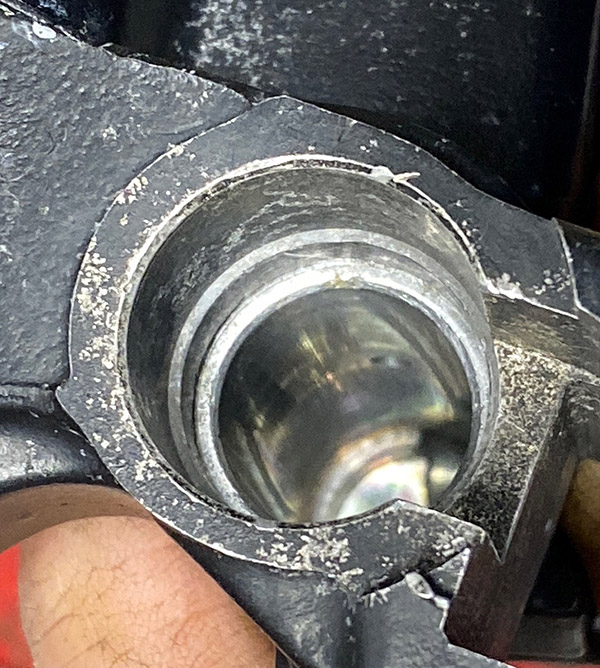
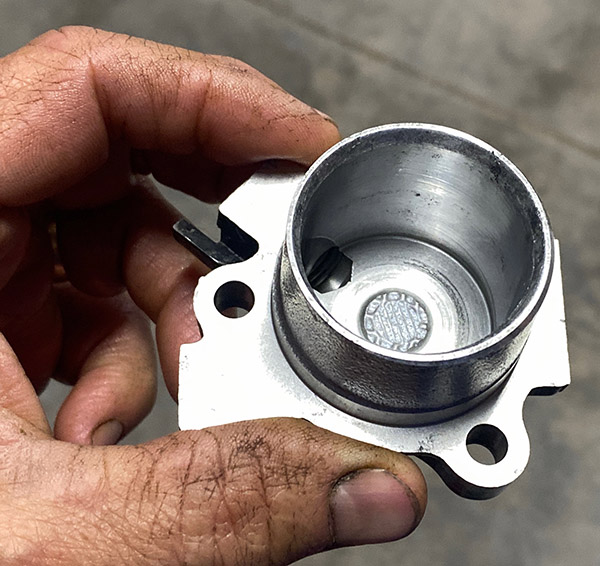
The master cylinder bore is much more critical because it forms the sealing surface for the piston and seals. Luckily the bores on the clutch and both brake caliper master cylinders were in good shape.

The rubber bits for the front and rear master cylinders looked ok-ish to me so I reused those parts. I’m to the point that I prefer old OEM bits to new aftermarket bits if I can get away with them.

The levers have a pressed in dust seal and I didn’t have a tube the correct size for the job so I turned out a short piece of PVC tubing to push the dust boot into place.

I ordered a new clutch master seal kit as I tore the original dust boot dismantling the thing. I also bought a clutch slave kit but the bore was so bad by the time I had it remotely smooth the piston was loose in the bore. I have ordered a new clutch slave cylinder.

All in, there were 18 hydraulic pistons in the ZRX that needed service. A shop mechanic would never re-use the stuff I did. It may come back to haunt me later.

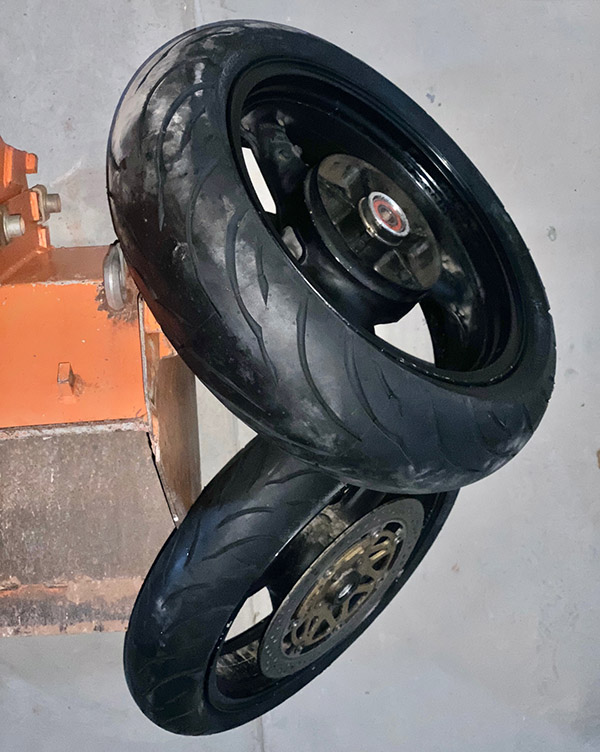
I bought two new, made in Malaysia Continental tires for the Rex as the ones on the bike were made in 2009. The old tire sidewalls had small weather checking. I would have run the old tires if I was just bopping around town but I have a few long trips planned so at $200 for the pair I figured I’d better bite. The Harbor Freight tire changer made the job tolerably easy. Still not as easy as having a shop do it.

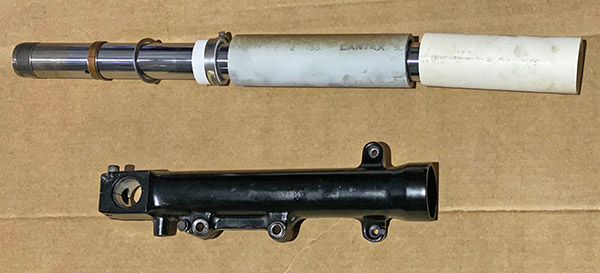
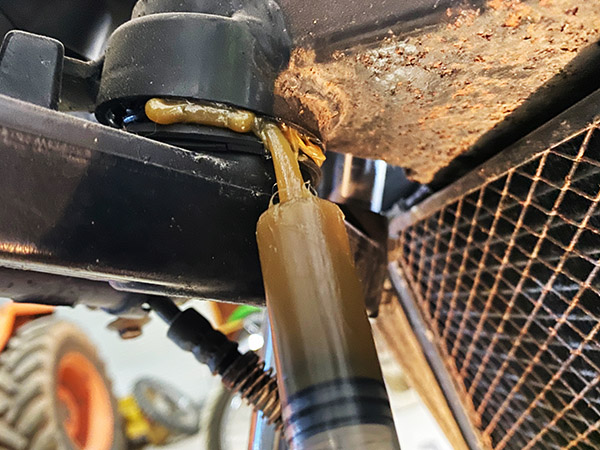
The fork seals were leaking so I popped in a new set of fork seals and replaced the fork oil and while I had the front end apart I dropped the lower triple clamp and pumped in some much needed grease to the steering head bearings.

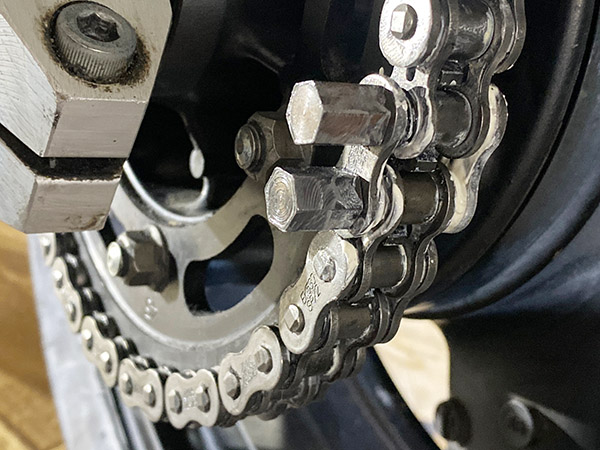
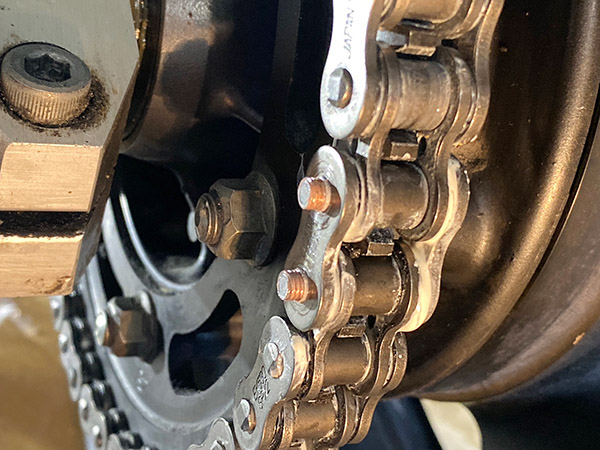
I also bought a new front sprocket and new X-ring chain for the Rex. The chain had a new style master link that worked by pressing the side plate on using small nuts then breaking off the studs that stick out. If it works it will be a good idea, if not I’ll probably break my engine cases when the chain lets go.

If I had taken the ZRX1100 to a shop by this point I would have already exceeded the value of the motorcycle. A shop would need to put in all new brake components to cover their butt. I’m willing to risk my life on shoddy equipment to save money and I’m nowhere near done with the bike or spending money, as you’ll see in future blogs.


Keep the hits coming:  Please click on the popup ads!


More Resurrections are here!

ZRX RX: An ExNotes Resurrection

By Joe Gresh

The Carrizozo Mudchuckers have too much disposable income. Just in the last few months they’ve bought a Husaberg 400, a gas-in-frame Buell, a KTM 890, and a Kawasaki Vulcan 750. The boys want to do some high speed touring, like going to the Sacramento mile in California, and they are talking 500-mile days in the saddle. As I look over my operational motorcycles I don’t see anything I’d like to sit on for 500 miles.  But if I include the non-ops there is one that is capable of reeling off 500 miles without breaking a sweat.

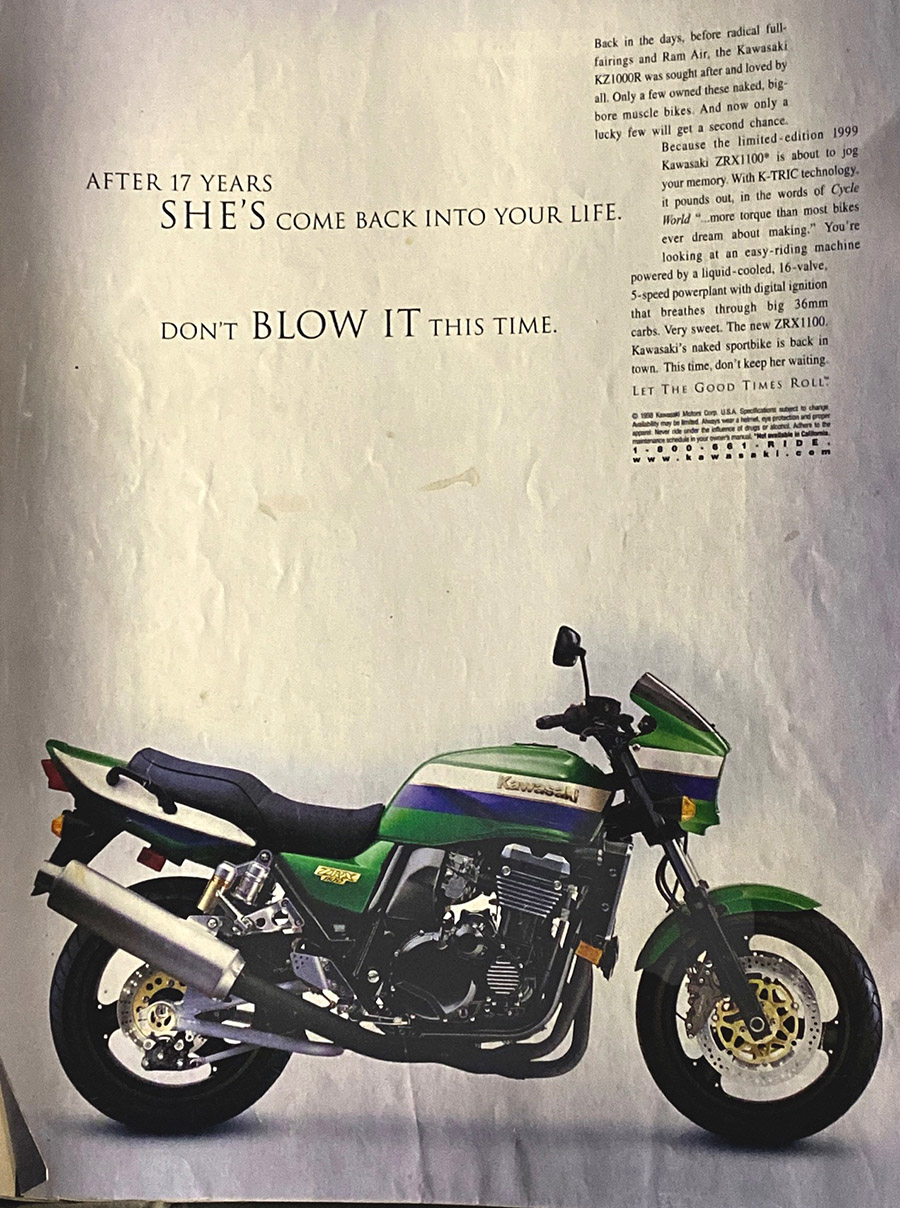
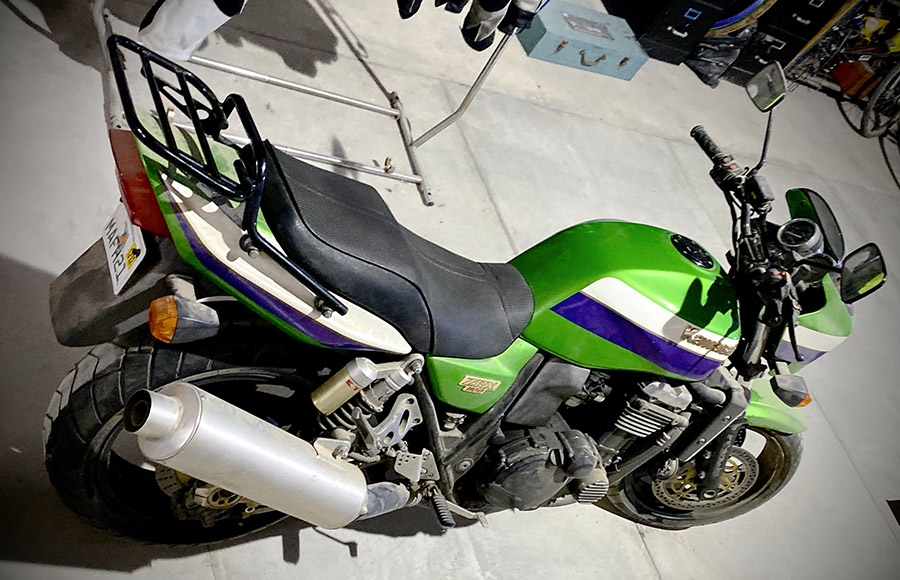
I’m talking about the long dormant Kawasaki ZRX1100. The bike is a road burner of the highest order and looks cool as hell to boot. The only problem is the ZRX has sat for 9 years as CT and I wandered the world. Nothing on the thing works.  The last time I rode the bike was on the Christmas toy run in the Florida Keys in 2014. It’s time I changed that.

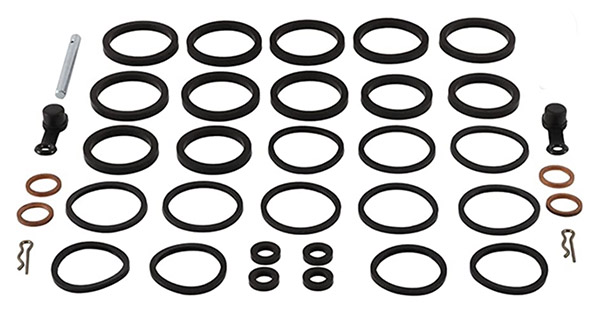
The ZRX front brake caliper kit, available on Amazon.

This resurrection might take a while because I’m knee deep in concrete projects but at least I can start ordering parts as my Social Security checks roll in.  I’m starting with the brake systems and forks. The front brakes on the Rex are 6-piston jobs and there are two calipers which means I have to deal with 12 pistons. The brakes are great on the Kawasaki but 12 pistons are a bit much.

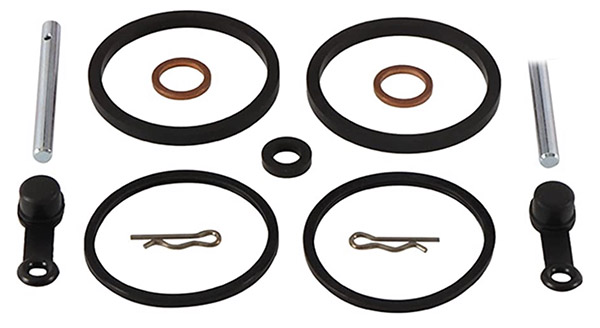
The rear brake caliper kit, also available on Amazon.

Both master cylinders are frozen, probably full of crystalized brake fluid. I’m going to try and get away with cleaning up the master cylinders as I have not been impressed with the quality of aftermarket junk and I don’t feel like looking up a bunch of part numbers on the Kawasaki sites. I mostly stop with the front brake anyway; hopefully that master will be in good shape. A failure of the rear brake won’t slow me down…that doesn’t sound right.

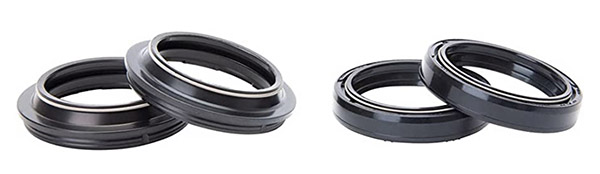
The ZRX fork seal kit.

I will rebuild the rear caliper using new seals. Don’t try to follow the logic. In addition, the fork seals need replacing and new fork oil dumped in. I might take a stab at greasing the steering head bearings while the front end is apart.

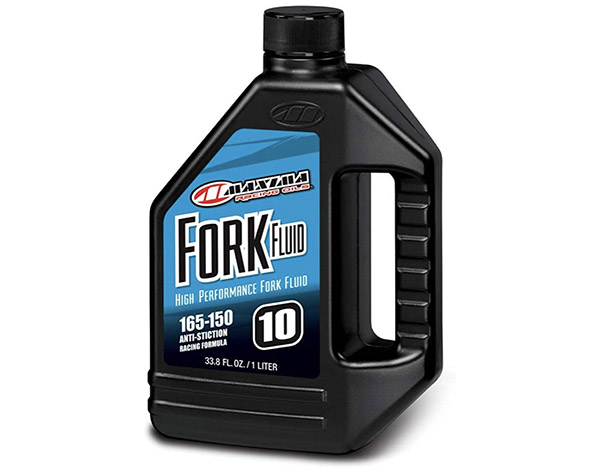
Maxima fork oil. It’s good stuff.

Due to its long slumber there are many, many issues with the ZRX, like:

      • Cooling system leaks, probably from the water pump
      • Broken throttle cable at twist grip housing
      • Chain is worn out
      • Carbs are gummed up
      • Gas tank is full of smelly, gooey gasoline
      • Clutch lever is frozen
      • Clutch slave cylinder is leaking
      • Battery is not there
      • Valves need adjusting

And I’m sure other things will crop up as I get into the project.

Barely broken in, my ZRX is.

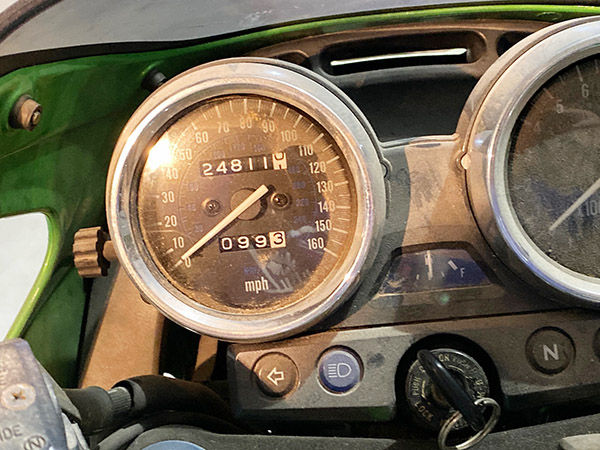
I’ve really let this bike down. Believe me, I feel bad about it. Nine years of neglect have taken a huge toll on anything rubber. The good thing is the Rex has relatively low miles (25,000) and has never gone under water so I’ve got good bones to work with. The paintwork is mostly perfect and there are no dents. The bike will clean up and be a stunner. I rode the ZRX from Florida to New Mexico years ago and it will be bookoo-maximus karma if New Mexico is the place where the ZRX1100 rises up to snarl across the rust-red landscape again. Watch this space for updates.

Never miss an ExNotes blog:


Help us help you:  Please click on the popup ads!


Click here for more ExNotes Resurrections!


More Gresh?  You bet!