I stopped by CSC Motorcycles last week to visit with my friend Steve and see the new TT250, San Gabriel, and RX3 colors. I and my camera will try to do justice to the new CSC paint themes, and hey, while we here, we’ll share a few videos.
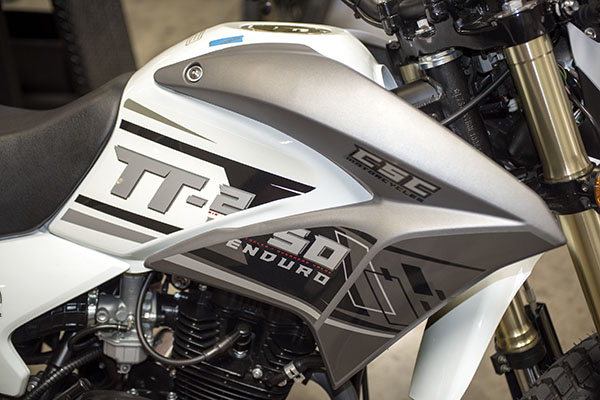
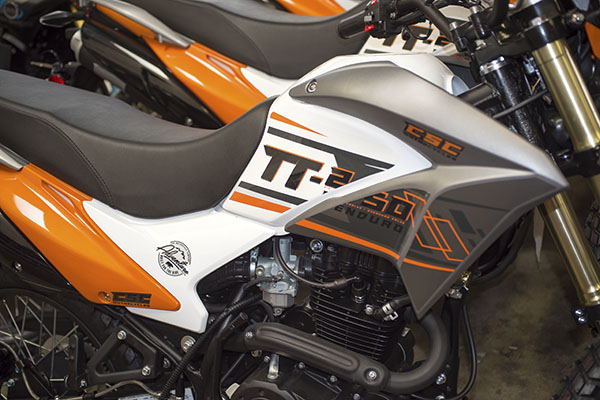
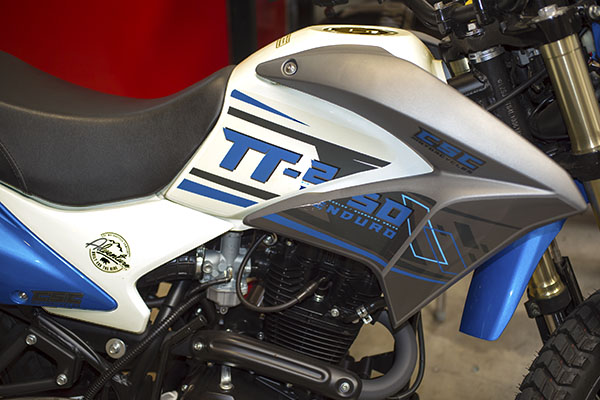
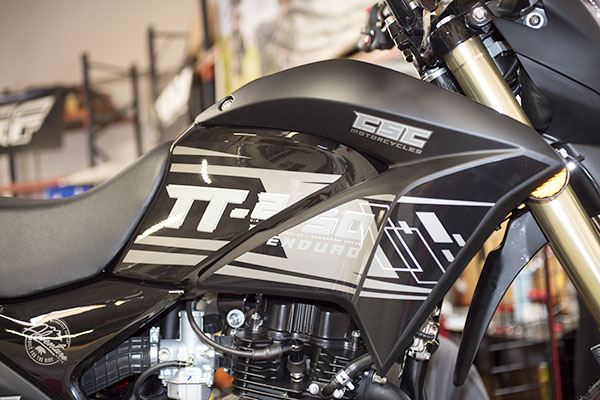
The TT250 line has an entirely new set of colors, and I like the new look.
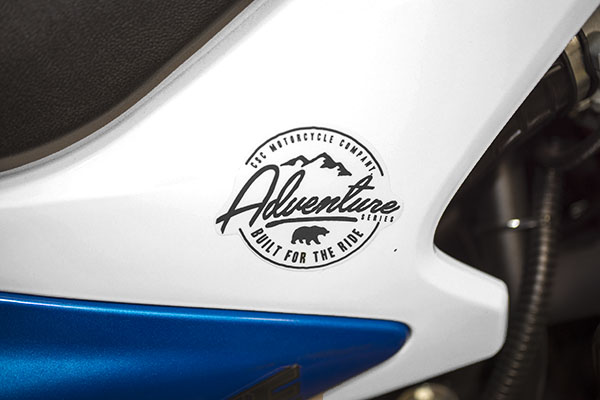
There’s a cool decal on the TT250 side panel, too, which i like a lot. It reminds me a bit of what new Triumphs had in the 1960s, when every one of their bikes had a “world’s fastest motorcycle” decal on the tank.
As you know, I have a TT250, and mine is from the very first shipment that came into CSC a few years ago. Mine is black with bold TT lettering on the tank and side panels. I like that bike, I’ve ridden it in Baja (the video below is taking it through the Rumarosa Grade in northern Baja), and I’m going to fire it up and ride it around a bit today.
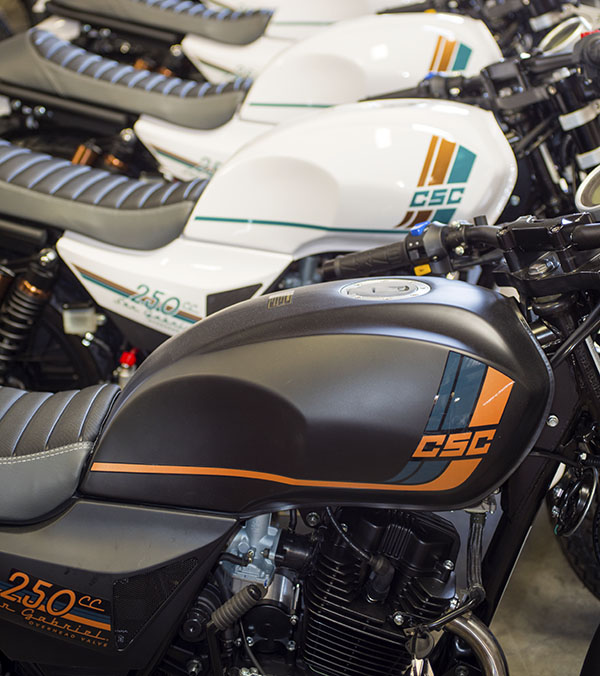
Next up is a photo of the San Gabriels. The new colors on the SG250 work well, too.
You know, I did one of the very first San Gabriel videos when those bikes first came to America. It, too, was a hoot.
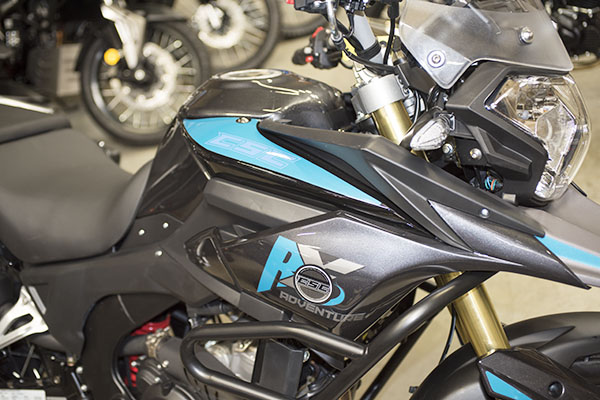
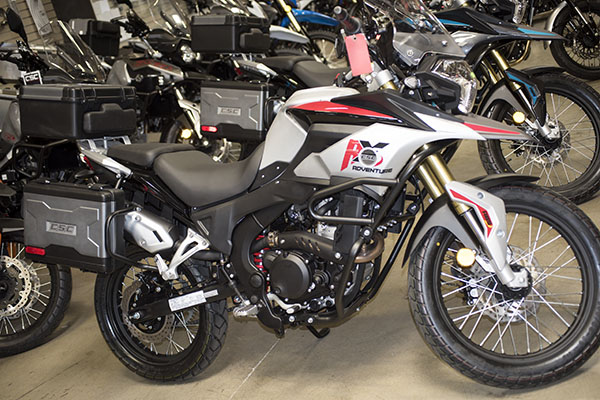
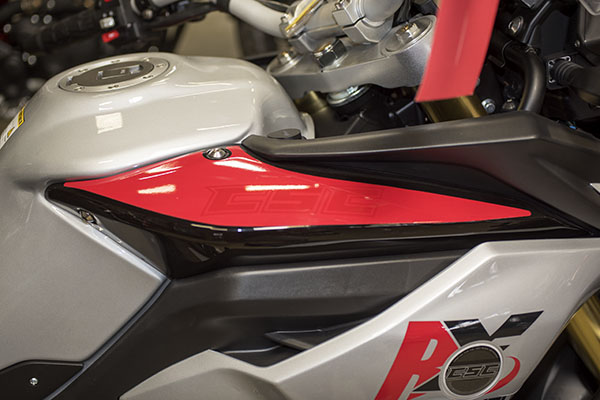
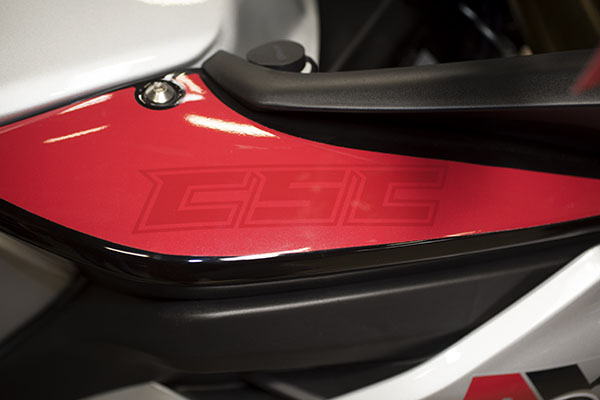
And here are a few photos of the CSC RX3, a bike that has generated lots of smiles and lots of miles since its introduction to the United States in 2015. The new colors are much more interesting and maybe a little more subtle than what we’ve seen on RX3 motorcycles in the past. There’s a gray and turquoise theme, and a silver and red alternative. They both look good.
I like the new RX3 paint themes, and I like the original ones, too. I ride an RX3. Mine’s a 2015 model and, like my TT250, it’s one from the very first shipment to the US. My RX3 is orange (the fastest color, as good buddy Orlando knows), and it’s one of the early ones that faded to a kind of subdued yellow (that’s before Zongshen started adding color stabilizers to the paint). I like that look and I’ve had a lot of great rides on RX3 motorcycles, starting with our initial CSC Baja run. That ride was a hoot and a half. Imagine that: A brand new shipment of RX3 motorcycles (the first in the US), and yours truly and 15 other intrepid CSC riders did 1700 miles in Baja on these bikes. Take a look:
Our next big RX3 ride was the Western America Adventure Ride…5000 miles across the Western US, from So Cal to Sturgis to Portland and then down the Pacific coast to home. I didn’t do a video on that ride, but good buddy Joe Gresh sure did!
We did several more CSC Baja rides, a bunch of rides in the US, and our absolutely amazing 6000-mile ride across the ancient kingdom on RX3 motorcycles:
Not enough? Hey, how about a ride through magical Colombia on RS3 motorcycles? The RS3 is the carbureted version of the RX3, and it, too, was an amazing adventure:
If you enjoy watching YouTube videos, we have quite a few more on our YouTubby page. Grab a cup of coffee, click on the YouTubby link, and have fun. I sure did.
Here’s Part II of our grand ride to the top of Volcan Nevado del Ruiz. Colombia was an awesome adventure, and my good buddies Juan and Carlos were great traveling companions. Here you go, folks….
As I mentioned earlier, our riding positions were Juan, me, and Carlos. Juan was just amazing. I was keeping up, but I was working hard to do it. And I knew Juan and Carlos had dialed it back for me.
Juan made it look so easy. He would sometimes ride through the curves standing on the pegs, almost as if he needed to give himself more of a challenge. At one point, we were taking a set of curves at speeds way above those at which I would normally ride, with the bikes leaned over at an unimaginable angle, when I looked ahead at Juan. He was standing on the pegs again, with his motorcycle leaned way over in a sweeping curve, and he was reaching back to check the latch on one of his panniers. He was doing this as if it was the most normal thing in the world. Both he and Carlos are incredible riders.
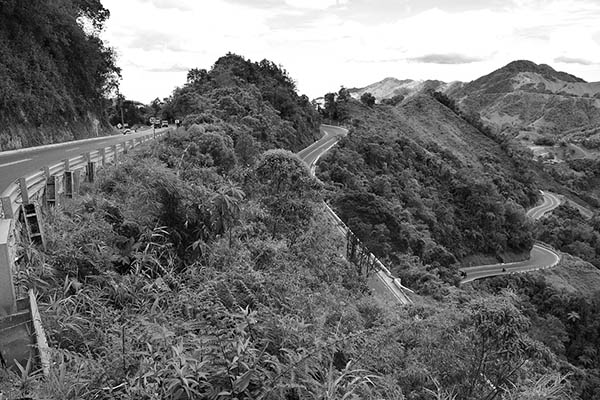
Colombian chicken-strip-reducing twisties on our climb to the top.
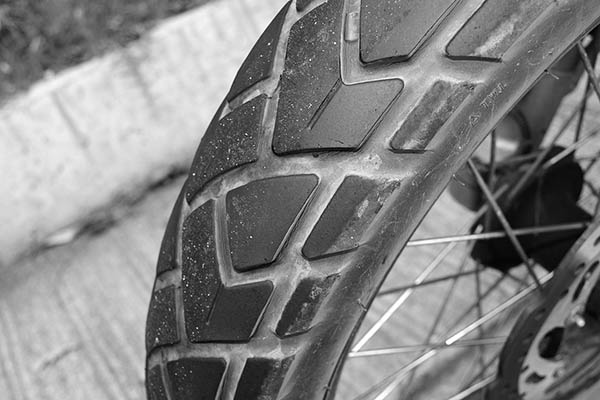
Juan knew another photo spot, and we stopped. He and Carlos took positions on the side of the road to take photos, but I zeroed in on my front tire. I wanted to check out my chicken strips.
Chicken strips are the edges of the tire tread that haven’t contacted the road surface. The harder you corner on a motorcycle, the more you lean the bike over, and the narrower your chicken strips become. Our ride during the last 30 miles or so had been aggressive, and my chicken strips showed it. They were about as narrow as any I have ever created on a motorcycle.
Juan and Carlos came over. They thought I had a problem with the motorcycle’s front tire until they saw me photographing it. Both guys laughed. They knew immediately what I was doing.
“I was watching you in the mirrors,” Juan said, “and you are riding more strongly. We will make you an honorary Colombian motorcyclist!”
The spot Juan had selected to stop was indeed a good one. The Nikon 18-55mm lens came off the camera I replaced it with the Tokina 12-24mm. I grabbed a shot that became one of my favorites (it’s the one you see above).
Chicken strips (the narrow unused tread area at the tire’s edge).
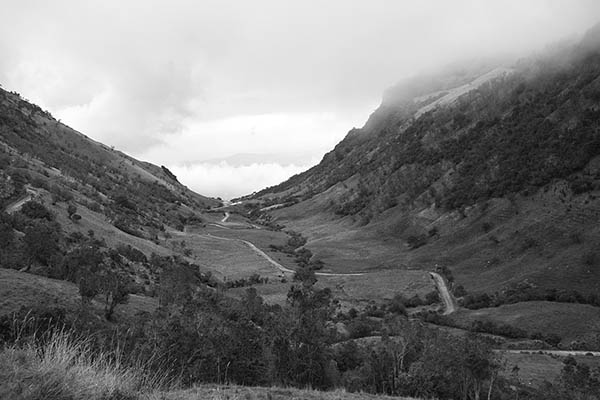
The climb continued, we turned left at an intersection, and then we made a right turn onto a dirt road. We were in the fog, but the fog had not descended to reach us. We had climbed into the clouds to reach it.
It was cold. I could barely see Juan through the fog and I thought it was because my visor had clouded over. I lifted the visor and I realized that it was indeed fogged over, but the visibility wasn’t any better with it up. We were in the soup, and it was thick.
I hit the toggle switch on the left handlebar to activate the RX3’s emergency flashers. I saw Carlos follow my example in my rear view mirrors, and then Juan did so, too. I fixated on Juan’s taillight and his flashers; it was really all I could see in that thick soup. I was glad I was wearing my contact lenses instead of glasses; I would not have been able to see anything if I had worn my glasses.
I could barely see the dirt road beneath my wheels (the fog was that thick). The road had not turned to mud (and for that I was grateful). I felt the moisture hitting my face. It was cold.
That dirt road and the fog we were riding through went on and on and on. I saw a sign that said we were at 3400 meters. Wow, I thought after doing a quick mental calculation. That’s over 11,000 feet! It was about as high as I’ve ever been on a motorcycle, but it was a record that would be broken just a few more miles up the road.
As we continued, the moisture continued to smack my face, but it was stinging more. I thought maybe it was freezing rain. It seemed to bother my eyes quite a bit more, too. I put my visor down and it fogged over immediately. I put it back up just as quickly as I had put it down. This was extreme riding.
13,000 feet and climbing!
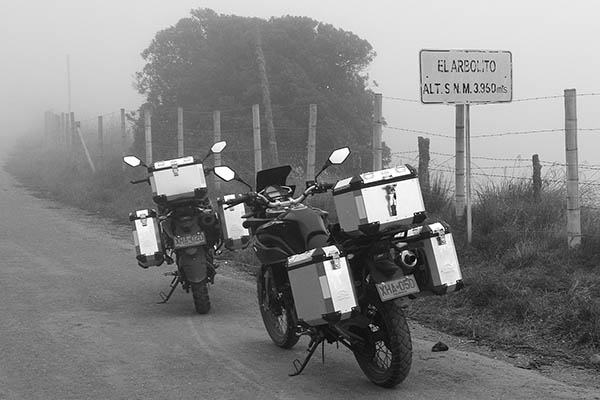
Juan stopped at another sign. We were now at 3,950 meters! That’s 13,000 feet. I was cold, but I knew I had to get the camera out for a photo of the bikes next to this sign. I told Juan the elevation was amazing, and he told me we would be climbing even higher.
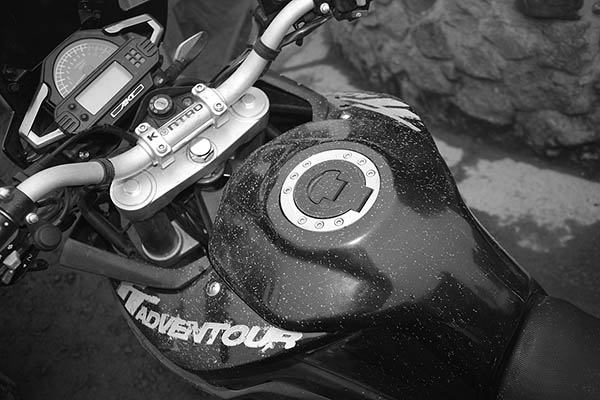
Then Juan noticed something on my jacket. He looked at my bike and he became very excited. My jacket and the bikes had little specks of dust on them. Those little specks were what I had felt hitting me in the face. They hadn’t been freezing rain droplets. They were volcanic dust! The volcano we were riding up to was belching its innards all over us!
Volcanic dust on my RX3 in Colombia.
Juan was excited. “I’ve been up here maybe 10 times,” he said, and I’ve never seen this. The volcano knows we are here, Joe, and it is talking to us.”
We rode another couple of miles and we arrived at the Colombian National Park headquarters for the volcano. The bikes were covered with volcanic dust. Our helmets were muddy because of it. My eyes itched, but I didn’t dare rub them. I now knew my eyes were irritated because they had cinders in them, and rubbing them would grind that dust into my eyeballs. Nope, it would be best to let the tears that were streaming down my face do what they were designed to do and wash this stuff out naturally.
The people manning the Colombian National Park told us they were sending people away, back down from the volcano because it was active. Imagine that!
A volcano!
And it was active!
Wowee!
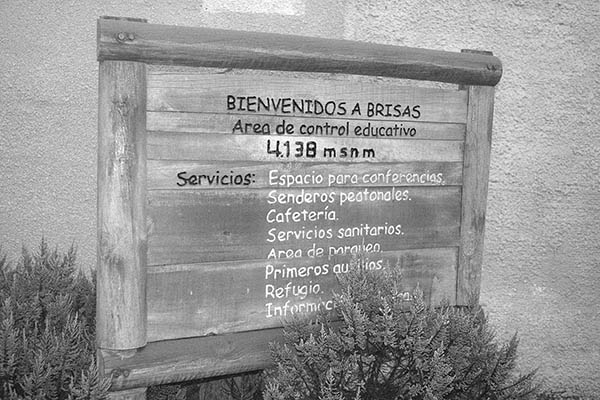
The sign at the top told us we were at 4,138 meters. That’s 13,562 feet, folks. And we rode up here on our 250cc motorcycles!
That’s 13,562 feet above sea level, just below the rim of an active volcano!
Juan told us there was a trail that went all the way up to the volcano’s rim, and that was above 15,000 feet. The Colombian government no longer allowed any kind of motorized traffic on that trail, so we couldn’t take the motorcycles. Juan told me he had done that ride while it was still legal to do so, and he had done it on a 100cc two-stroke Yamaha while riding two up! This guy is one hardcore biker, I thought.
We stayed for a bit, we had a cup of tea, we took a few photos, and we left. That would be one more checkmark on my bucket list. I didn’t even know riding up to an active volcano had been one of the things I wanted to do in my life. Having now done it, though, I can tell you what we accomplished that day deserved a spot on the list. It felt good knowing I could say I had done it.
We rode another 10 miles or so on dirt roads, downhill all the way, to a hotel that was about as far off the beaten path as I have ever been.
It was still bitter cold as we rode down the side of the volcano, but I was feeling good. I’ve said it in every chapter, and I’ll say it again: Juan was showing me one hell of a good time. This Colombian adventure tour was the most exciting motorcycle ride of my life.
Our destination that evening was the Hotel Termales, and it was at the end of a long dirt road. The Hotel Termales was interesting. As we rode in, there were springs emerging along the side of the road. The springs were small, but they gave off a lot of steam in the cold air. I could smell the sulfur. It was obvious we were in a very geologically active region.
The dirt road leading from Volcan Nevado del Ruiz to the Hotel Termales.
As we were unloading the bikes I realized just how cold it was. The sulfur smell was heavy, but it wasn’t too objectionable. The aroma reminded me of Yellowstone National Park in Wyoming or that stretch in Baja between Mexicali and San Felipe (two other geologically active regions I had ridden through on previous motorcycle adventures).
We checked in and a young guy carried my bags up to my room. It was a great room at the far end of the hotel. I had a huge window just above the bed with a commanding view of Manizales, the nearest town nestled in a valley perhaps 30 miles away. The lights of Manizales sparkled in the evening air. It would have made a good photograph, but truth be told, I was about photographed out that night. The ride up to the volcano had been demanding and I wanted to get in that hot pool.
The bellboy explained how to work the heater. To my surprise, it was an electrical heater that blew air through an electrically-heated grid. It was noisy and I thought it might keep me up, but I enjoyed the heat it threw as soon as the guy turned it on. I thought it was odd that with all the hot water coming out of the ground the hotel opted for electrical heating. That’s what happens when you’re an engineer, I guess. You look at things and wonder why.
I met Juan and Carlos in the lobby and we went outdoors to the hot springs pool. We were in our swimsuits and, wow, it was cold out there! Juan had warned us that he pool water was scalding hot and it was best to ease into it gradually, but it was so cold out there I wanted to get submerged as quickly as I could. It was a real shock going from the frigid air into that super-hot water, but I acclimated to it quickly. It was wonderful soaking up all that heat. I had been chilled to the bone, and now I was being boiled. The water had a strong sulfur odor, but I didn’t mind that at all. I was enjoying the heat.
I found that the water temperature, while hot throughout the pool, was much hotter where the water fed into the pool. I stayed close to the water inlets as very hot water cascaded over my shoulders and neck. These areas bothered me every night, no doubt due to the muscle tension associated with riding the Colombian twisties. Those hot springs helped enormously. It was better than being in a Jacuzzi.
That night we ate in the Hotel Termales restaurant. I strayed from my usual evening meal (nearly always chicken) and I tried the truche (that’s Spanish for trout). It was exquisite. Trout in the US is always a dicey proposition. Usually there’s only a small amount of meat on the fish (US trout all belong to Weight Watchers, I suppose). That was not the case here. Even though the truche was about the same length as a US trout, it easily had twice the meat on the bone. It was succulent, it had a pink hue to it, and it almost tasted like salmon. It so intrigued me that I looked up truche up on the Internet, and I learned that trout is actually in the salmon family. In Colombia, I guess the trout family relationship is much stronger than it is in the US.
I slept like a baby that night. The hot air heater didn’t keep me up at all. It was very cold outside, but my room was toasty.
So, back to what I mentioned at the beginning of this chapter…as I fell asleep that night, I thought about everything we did that day. Day 7, just like Days 1 through 6, had been a full day. Breakfast in Honda, exploring the town and the very first bridge to cross the Magdalena River, the river museum, Fresno, hard core cornering as we climbed into the clouds, bitter cold, fog more obscure than the US tax code, dirt roads, riding higher than I had ever ridden before (above 13,562 feet!), volcanic dust from a volcano that could have used some Pepto Bismol, a hot springs bath, and a delicious trout dinner. It had been another day in Paradise. I was loving it.
I thought about everything we had done during the day, and then I realized tomorrow was Day 8. I felt a strong twinge of regret when I realized it would be our last day on the road in Colombia.
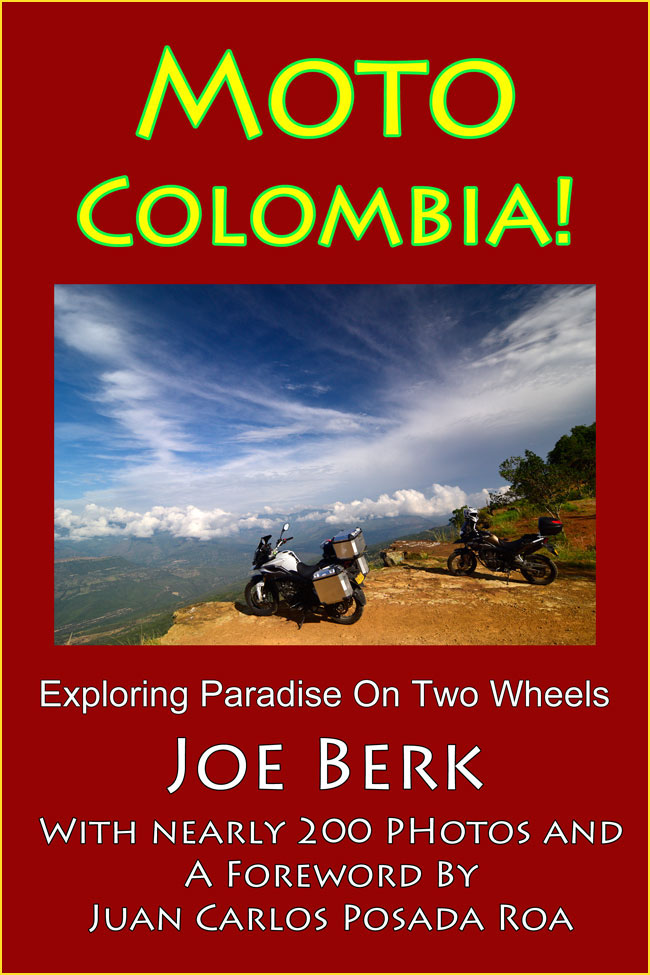
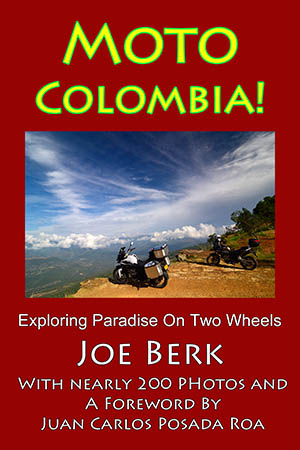
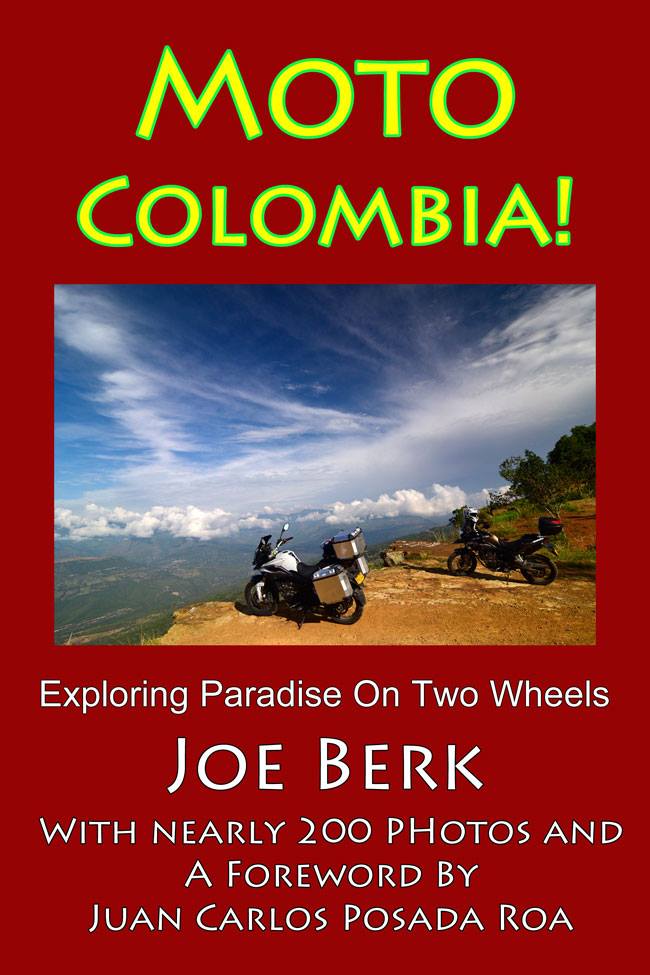
And there you have it! If you want to read the entire story, get yourself a copy of Moto Colombia!
I’ve enjoyed fantastic adventure rides on fantastic motorcycles in fantastic places. One of the best adventure touring motorcycles available at any price is the Zongshen RX3 (brought to the US by CSC Motorcycles), and one of my rides on this fantastic machine was in Colombia. Colombia was one of the greatest rides ever. Want a taste of that adventure? Hey, here’s one of the chapters from Moto Colombia on a ride at extreme elevation…a visit to an active volcano. We’re presenting it here in two blogs…one today and another tomorrow. Enjoy, my friends…
Day 7: Volcan Nevado del Ruiz
Breakfast in a delightful hotel, more mountain twisties, sweltering heat, freezing cold, fog that cut visibility down to 30 feet, dirt roads, riding at 13,576 feet, hot sulfur baths, a burbling volcano that killed 23,000 people in 1985, and volcanic dust in our eyes…it would all be in a day’s ride for us on this, our 7th day on the road in Colombia.
The Casa Belle Epoque was a great little boutique hotel in Honda. It was one of the coolest places (in one of the hottest cities) I’ve ever parked a motorcycle in front of (uh oh, I just ended a sentence with a preposition, but you get the idea). As always, I was up early, but the hotel staff was up even earlier and I enjoyed a cup of dark Colombian coffee after sleeping soundly through the night. My laundry was done, it was wrapped up nicely, and it was dry. That nice lady the night before was right; my laundry had dried. I was surprised and pleased.
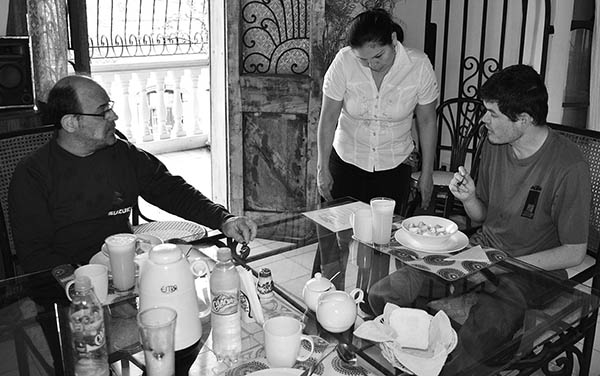
Carlos and Juan enjoying a magnificent morning meal in the Casa Belle Epoque.
I used the time before Juan and Carlos came down to breakfast to examine some of the antiques in the hotel’s dining room and lobby. Antiques are a big thing in Colombia, I guess. I remembered the restaurant from a few days ago similarly adorned with old things. I thought about writing to Mike and Frank…perhaps they could do a Colombian Pickers episode.
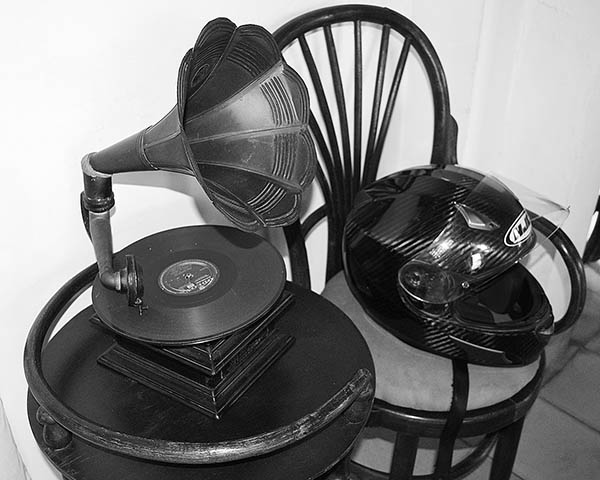
An antique record player in the Casa Belle Epoque.
After breakfast, Juan, Carlos, and I walked over to where the bikes had been secured for the evening. We rang the bell at another massive gate and waited for the groundskeeper to come unlock it. I half expected to see that fellow from Romancing the Stone stick his face through the window and say, “Joan? Joan Wilder?”
Juan had an exploration of Honda in mind, and as always, I followed him with Carlos riding behind me. That was our standard riding formation, and we would cover about 2600 kilometers riding Colombia in that formation. Those two guys took good care of me.
I thought the roads in Zipaquira were steep (and they were), but Honda’s cobblestone streets took things to the next level. I couldn’t believe the streets we were navigating. You might think I am exaggerating, but I am not. I didn’t quite have to slip the clutch to get up the hills, but I was pretty close to doing that. The hills in Honda were strictly first gear affairs. Someone once told me in situations like this, you just look where you want to go. That’s what I did. On these streets and on those cobblestones, I wondered if we would have had enough traction to get up the hills if the streets had been wet. The roads were that steep.
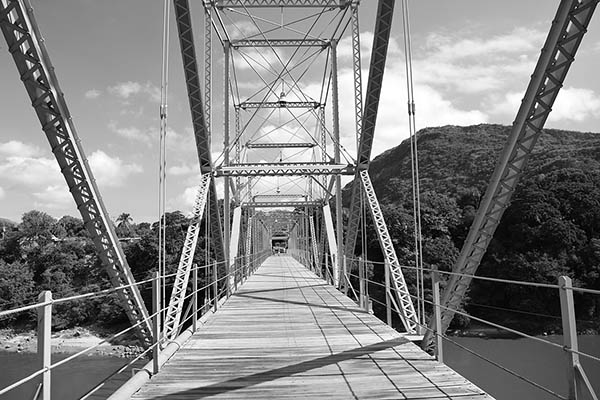
We rode up a mountainside and arrived at a most interesting bridge. It was painted bright yellow and it had wooden planks for the road surface (and they were a good 300 feet above the Magdalena). This was real Indiana Jones stuff. Juan and Carlos told me the bridge was built by the San Francisco Bridge Company in 1898 and it was the first bridge in Colombia to span the Magdalena River. The photo ops were incredible with the bright yellow bridge, the bright blue sky, the verdant green of the mountains, and the river below us.
The first bridge across the Magdalena River, built by the San Francisco Bridge Company in 1898.
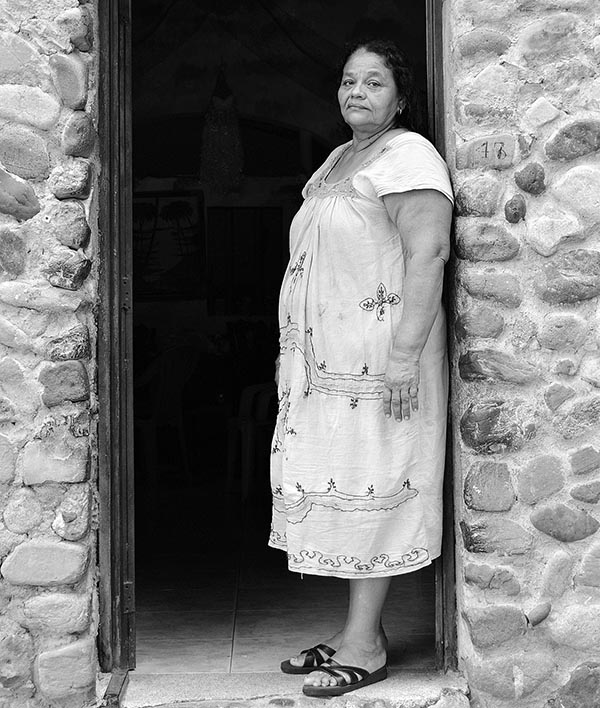
An older woman emerged from a stone house on our side of the bridge and she smiled when I pointed to my camera. She somehow reminded me of my grandmother. She was full of smiles until I put the camera up, and then I couldn’t get her to smile (my grandmother had the same uneasiness around a camera).
The bridgekeeper in Honda. This charming Colombian lady graciously consented to a photograph.
There were folks way below us digging in the banks of the Magdalena (I don’t know for what…perhaps some form of freshwater clams, or maybe gold or emeralds). I looked at those guys below the bridges, I thought of the Internet trolls who love to criticize the RX3 (you know, trolls hanging out under bridges), and I laughed. Those Internet morons would never experience the kind of riding we were doing. All they could do was criticize. We were out here living the adventure. I felt a brief tinge of pity for the Internet trolls, but it passed quickly.
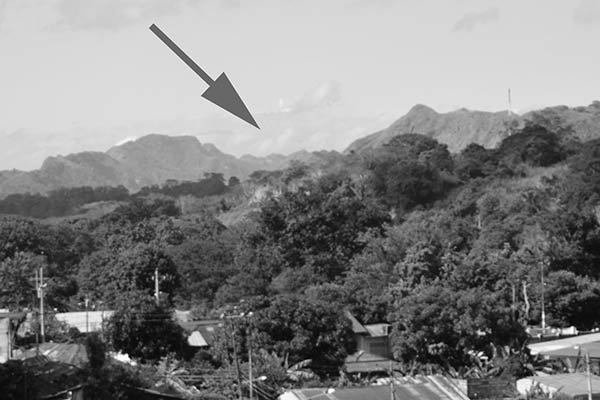
From that vantage point above the Magdalena River, we could see distant ridges in the Andes on the horizon. They were capped with snow and the clouds were just above the peaks. Juan pointed to one where the cloud seemed to emanate from the top of a mountain. It was a good 80 miles away.
Volcan Nevado del Ruiz, visible on the horizon. It erupted and killed 23,000 Colombians in 1985. It was our destination that evening.
“That is Volcan Nevado del Ruiz,” Juan said, pointing at the peak touching the clouds. I returned a blank look. “It is the volcano we are riding to today,” Juan explained.
“We’re riding to a volcano?” I asked.
“Yes,” Juan answered. “Volcan Nevado del Ruiz. It erupted in 1985 and killed many people.”
I checked out what Juan told me later that evening after I could get an Internet connection. “Many” was something north of 23,000 people. They were all killed deader than Julius Caesar, and it all happened just 30 years ago. And we were riding our motorcycles to it. I thought about the bikers I knew in California who thought they had something to brag about because they rode to the Laughlin River Run. Right.
I looked at the distant peak again and took a photo. I was really too far away to see anything, but with Juan’s explanation I knew that what had appeared to be a mountain reaching into the clouds was actually a volcano belching steam. I’ve been to a lot of places on a motorcycle, but I’ve never ridden a motorcycle (or anything else, for that matter) up to an active volcano!
We left the bridge, rode a less than a mile, and stopped at a museum dedicated to the Magdalena River’s history. As I mentioned earlier, the Magdalena River is Colombia’s version of the Mississippi. It’s huge, and Colombia developed around it. This museum in Honda was exclusively about the river.
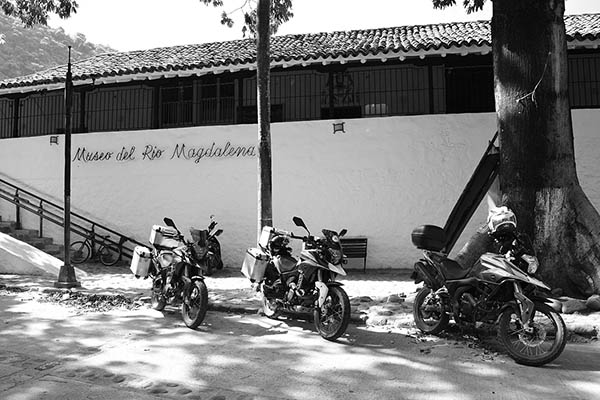
The Magdalena River Museum in Honda.
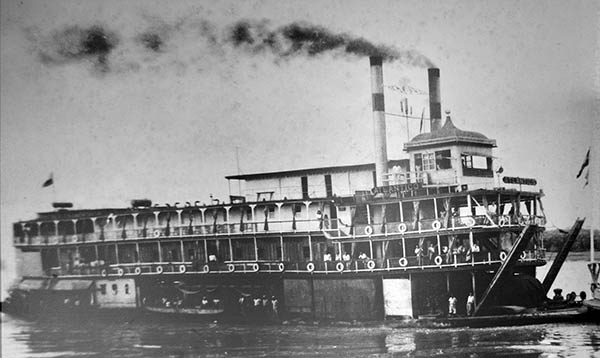
We spent an hour at the museum. We could have spent a day there. The Magdalena River and its surrounding areas were more like the Mississippi River and the United States than I would have imagined. The Magdalena flows through cotton and coffee plantations. It was Colombia’s primary trade route as the country developed. The Colombians used large steamboats of similar design to those used on our Mississippi River in the 1800s. It was another example of how Colombia’s history paralleled the history of the United States.
The Museo del Rio Magdalena had interesting displays about the river, the crops it transported, the steamboats, the indigenous populations along the river, the early explorers, and more. The museum also had an interesting photo exhibit consisting entirely of photos shot by students using pinhole cameras of their own construction. The photos were good and I enjoyed seeing them.
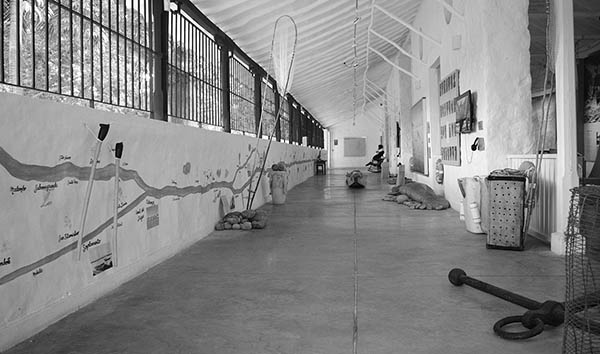
I especially liked a long painting along one wall depicting the Magdalena’s 1000-mile length, and notable things along the river. It gave me a much better feel for and appreciation of the magnificent country we had been riding through. Our museum visit was a very successful one. I enjoyed it. It was one of the high points of the trip for me.
One of the halls inside the Magdalena River Museum (note the mural on the left wall showing key points along the Magdalena’s 1000-mile length).
As I mentioned, we spent an hour at the museum, and when we left Honda was sweltering again. Juan looked at my clothes and laughed. I had been worried the previous night about my laundry having enough time to dry at the hotel. It was only 10:00 a.m. and I was already drenched in sweat. My clothes were soaked.
A pretty young lady, the museum curator, gave us a tour of the museum during our visit. She seemed cool and totally at ease with the heat and the humidity. I realized as I listened to her discuss the exhibits that she was used to living in the tropics, but I still wondered how she was able to get through the day without perspiring like me.
An old riverboat photo in the Magdalena River Museum.
I like history. I think I’m too old to go back to school now, but if ever went back to college for another degree, it would be for a degree in history. I like learning about how things developed, including countries, companies, and cultures. I thought that hour in the Museo del Rio Magdalena was one of the best hours I spent during my entire stay in Colombia.
The museum visit further reinforced a thought I had earlier when we visited Boyacá about the similarities between our US culture and the Colombian culture. Our American Revolution was for independence from the British. Colombia’s war of independence did the same with the Spanish. The British took our natural resources and taxed us without representation. The Spanish looted Colombia’s gold and emeralds. We in the US have a lot of things in common with the people of Colombia.
I don’t know if Juan planned our visit to the Museo del Rio Magdalena. He did a magnificent job planning our adventure tour, but I had the impression when we spotted this museum that he made an impromptu decision to visit it. Whether our stop was planned or accidental, if you ever get to Honda, you don’t want to miss this spot.
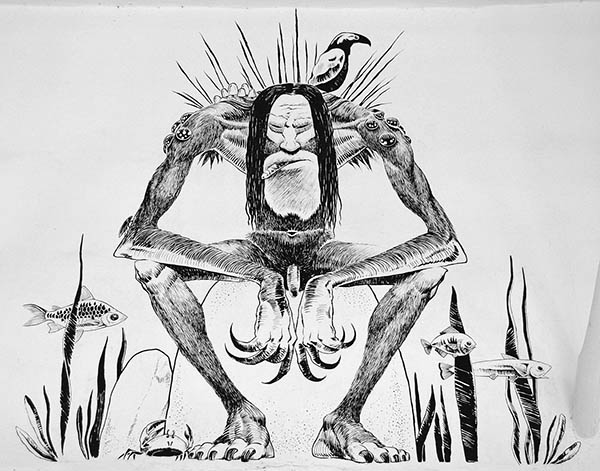
Colombian artwork in the Magdalena River Museum.
As we left the museum and pulled our gear on, the sweat was pouring off me and I was showing the effects of the heat. Carlos told me not to worry. We would be cool soon enough as we climbed back into the Andes’ higher altitudes.
I sure was more comfortable when we were on the bikes again. Let’s generate a breeze, I thought, and we did. Juan wanted to try a new way out of Honda, and it worked. Nobody needs a GPS as long as Juan is leading the pack.
Our next destination was to be Fresno (yep, Colombia has a Fresno, too). The road between Honda and Fresno was great. You must be thinking by now that I’ve said that about every road we had ridden in Colombia. Yep, I did. And they were.
My motorcycle in Fresno. As Juan said, the traffic rules “are like suggestions to us.”
We arrived in Fresno and stopped for a break. The town followed the standard Colombian Andes Mountains formula: Steep up and down streets and a magnificent square in front of a majestic church. And Carlos had been right about the temperature. Even though it was midday and sunny, it had cooled considerably as we climbed into the mountains. Fresno was comfortable.
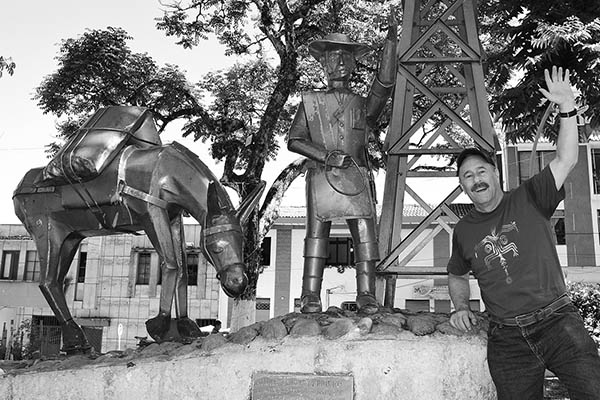
Fresno’s town square had an interesting exhibit with a statue of Juan Valdez and his mule, carrying only the finest Colombian coffee beans (as the commercials used to proclaim). Carlos took a photo of Mr. Valdez and me.
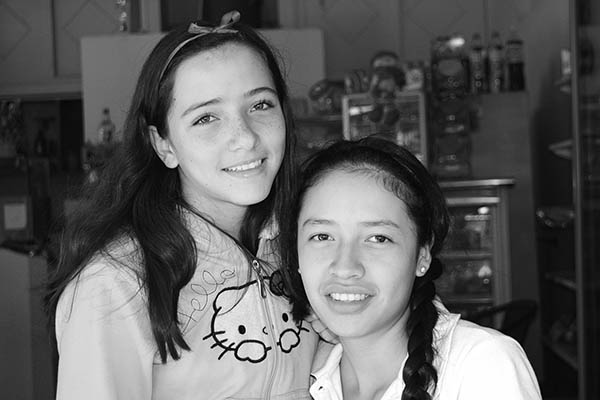
Juan Valdez and two jackasses in Fresno.Two young ladies in a Fresno corner store.
There were chairs and a table in front of a small store next to Fresno’s church. We bought soft drinks from two nice young ladies working there and we took seats at the table. It was relaxing sitting there, watching the good folks of Fresno go about their lives. A pretty girl pulled up on a motorcycle and parked on the sidewalk. I could get used to Fresno, I thought.
We left Fresno and stopped to refuel on the way out. The road continued to climb, the temperatures continued to drop, and the sun disappeared behind the clouds we were climbing into. It rained and little bit and then stopped. The roads dried, the sun remained hidden, and the twisties became even more glorious. I knew we were high up in the mountains. I didn’t know how high, but I knew we were way up there. I was surprised at how well the bikes were performing. Although the AKT version of the RX3 is carbureted, I couldn’t feel a drop in performance as the altitude increased (and our ride had taken us literally from sea level to over 13,000 feet).
There wasn’t any traffic (we had the road to ourselves) and Juan stepped up the pace. It was just a modest increase at first, and then he ratcheted it up. By this time I was comfortable on these twisting roads and comfortable with my heavily-laden RX3. I hung in there with Juan, with Carlos right on my tail. It just felt like the right thing to do, and it felt entirely natural.
To be continued…watch for tomorrow’s ExNotes blog. And if you want to read the entire story, get yourself a copy of Moto Colombia!
We hope you have a great Christmas, folks! Three years ago I was in Colombia for a motorcycle ride through the Andes Mountains, and one of the high points of that fabulous adventure was our visit to a little town called La Playa de Belem. It was a grand evening, as you can see here…
Enjoy the holidays…ride safe, shoot straight, and keep your powder dry!
Colombia has been one of the world’s major motorcycle markets for several years due to a combination of factors, but the primary ones were the end of their civil war and throttling the druggies. When I rode in Colombia, many of the places we traveled through had been inaccessible until recently. Colombia essentially opened up travel when the fighting and the drug running diminished. This occurred in a country where the roads are mostly in the mountains and where there is little public transport. People could suddenly travel freely and safely between communities, and that allowed the Colombian economy to boom.
The above led to a demand for cheap transportation, and motorcycles were the obvious answer. Folks in Colombia like smaller bikes, and wow, did things ever take off. Major motorcycle manufacturers from all over the world starting selling in Colombia, and the Colombian government saw an opportunity. Basically, if you import a completely built up (known as a CBU) motorcycle, there’s a 30% import tariff. But if you import a completely knocked down (CKD) bike in pieces, source something like 17% of the motorcycle’s content from Colombian manufacturers, and assemble the bike in Colombia, the tariff drops to around 3%. I love that approach and I think it’s a real win-win situation. Local jobs, lower tariffs, and great motorcycles made in the home country. I wish we had something like that here.
After our ride through Colombia, I had a tour of the AKT plant and their RS3 motorcycle assembly line, which essentially duplicates the Zongshen RX3 assembly line in Chongqing. Take a look…
The ride I took three years ago through Colombia with good buddies Carlos and Juan was one of the best I’ve ever done…a solid week of riding in one of the most beautiful and best riding destinations on the planet. Roughly 20% of our journey was on dirt roads through rural Colombia and that was a lot of fun.
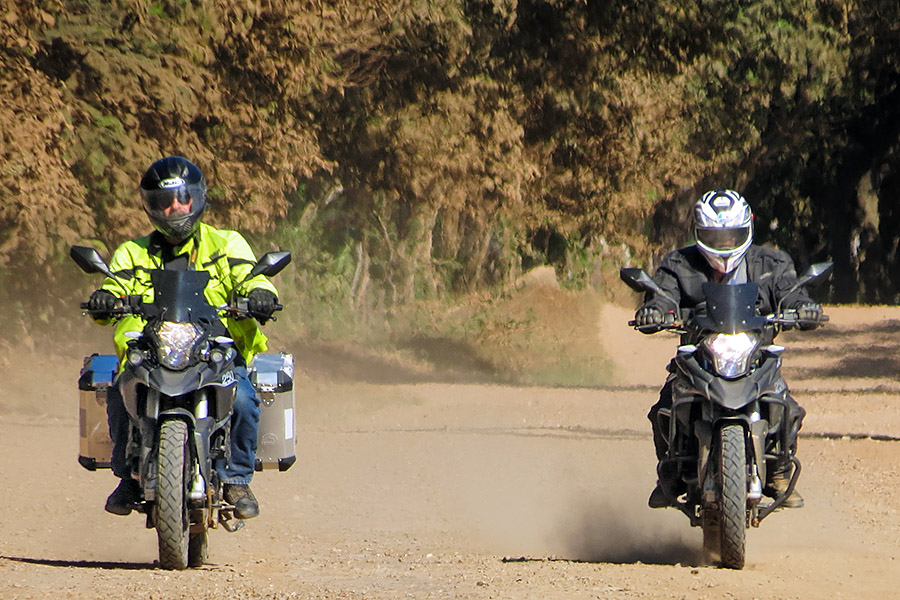
Juan shot the photo above, incredibly, while he was riding in front of us. We were mounted on AKT RS3 motorcycles, which is the same bike as the CSC RX3 except that it is carbureted instead of fuel injected. That’s me on the left in the above photo in the fluorescent green jacket; Carlos is on the right.
Those AKT 250s were great machines. What amazed me is that we rode from sea level up to 14,000 feet, and those carbureted bikes ran well at both elevations and everything in between.
Juan was amazing…he knew Colombia’s back roads well, and when he didn’t, he wasn’t afraid to use “Juan’s GPS.” That was his term for riding alongside somebody driving a tractor or riding a horse, flipping his visor up, and asking for directions (in Spanish, of course) while we were all still moving. The guy could turn around 180 degrees in his seat while he was riding and get things out of his tailbox or take photos (like the one above). I’m not anywhere near that limber.
One of the more interesting places we visited was a town called Barichara. It was amazing on many levels, not the least of which was an incredible cemetery. Bear in mind that I did this trip while I was writing the CSC blog (I think I wrote something like 2500 entries on that blog), so when you hear me say “This is Joe from CSC,” that was then and this is now.
I miss riding the exotic locales like Mexico, Canada, Colombia, China, and more. But when that happens, I hop into one of the moto adventure books and relive the adventure, and you can, too. You might get one of our books for free if you sign up for automatic email notifications on the ExNotes blog!
Hey, maybe you noticed, maybe you didn’t…but we’ve added a few new header images at the top of our blog. Gresh suggested we needed more motorcycle oriented pictures, and I agree with him. Gresh is smart that way. I never claimed to be the brains in this outfit; I’m just the good looks.
I’ll be adding more header images in the coming weeks, too. We’ve got tons of photos from our travels, and yeah, I like to show them off. The photos have to be ones that will crop to a 1200×280 pixel format, which eliminates most almost immediately. But I have a few that will work.
The way this header thing works is every time you visit the blog, one of six images randomly pops up. I could have set the header up so the images would scroll, but I did that when I wrote the CSC blog and I found it distracting (while you’re reading the blog, the header image keeps changing, drawing your attention away from the blog du jour). And I didn’t want to put a description directly on the image because I didn’t want it to take away from the photo, so I thought I would add a description here.
So, to get to the point, these are smaller versions of the header images, along with a brief explanation of each.
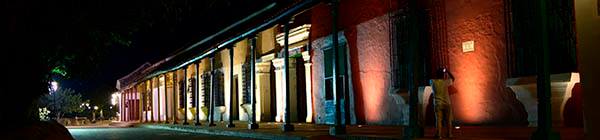
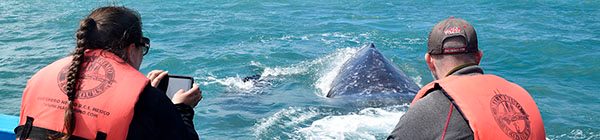
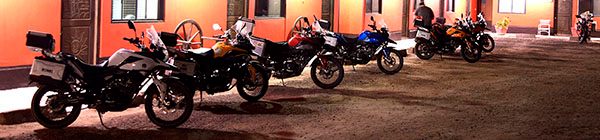
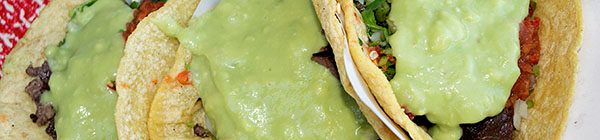
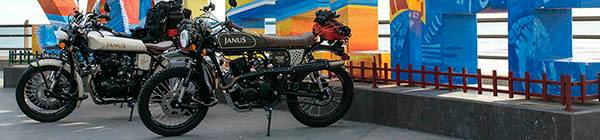
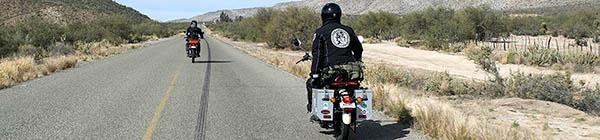
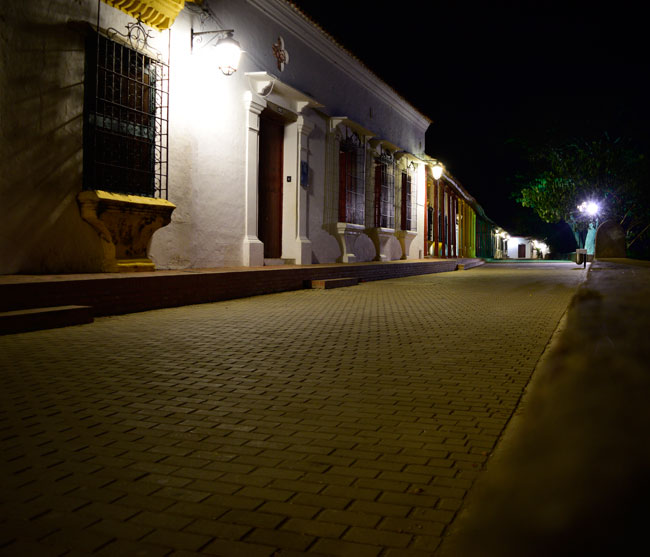
This is the original ExNotes blog header image, which will still pop up from time to time. I love this photo. I took it on the ride through Colombia in Mompox, a mystical town tucked away in a magic land. I’d like to invite you to read the blog I wrote on Mompox a few months ago. If you look real close, you’ll see my good buddy Juan, who I rode with in Colombia and on the CSC Western American Adventure Ride.Ah, the whales Scammon’s Lagoon, Guerrero Negro, Baja California Sur. Gresh and I are going to ride there in March. It’s one of life’s real treats. We’ll be blogging the entire trip, and we’ll be insured with BajaBound Insurance (the best there is).Wow, another Guerrero Negro photo, this time after the bikes had been put away for the evening at the Don Gus Hotel. I love the hotel and the restaurant (and the bar, too!) at the Don Gus Hotel. This was on one of the CSC Motorcycles Baja adventure rides.One of the best parts of any Baja adventure ride is the cuisine. These are tacos we enjoyed on the recent ride with Janus Motorcycles. The food down there is fantastic!Janus Motorcycles parked along the Malecon in San Felipe. This was a great Baja ride, and the Janus machines performed perfectly. It was a grand adventure. Hell, they all are!A photo of Jordan Swartzendruber (on the left, hugging the center line) and Devin Biek (on the right), both on Janus Motorcycles. We did about a thousand miles in 4 days on these 250cc motorcycles. It was one of the coldest rides I’ve ever done, but we had a grand time!
And there you have it. Like I said, we’ll be adding more header photos in the future, and we’ll tell you about each one as we do so. I shot all of these photos with my Nikon D3300 digital single lens reflex camera and its 18-55 lens, which is a very reasonably priced, entry-level DSLR outfit. I find the photos refresh my memory of the great times I’ve had on each of these rides. In fact, those pictures above are making me feel like getting out on an adventure ride again. Soon, folks, soon…
Good buddy Juan, who showed me a grand time riding in Colombia, recently posted this video. I don’t speak Spanish, but I didn’t need to. The riding scenes brought back fond memories of the Colombia adventure…
The video features a new AKT Motos bike. AKT is a fine company; one of the four big ones manufacturing motorcycles in Colombia. I know Enrique, the General Manager, and he was a most gracious host during our visit. Good times. I sure miss Colombia.
Another blog a few entries down (it was on my magical journey to Mompox, Colombia) told about the isolated and surreal nature of that beautiful town. We had to take a ferry ride down the Magdalena River to get there, and I mentioned in the blog that my ride leader, Juan Carlos, had told me they would soon be building a bridge to Mompox. Well, they are, and here’s a video Juan sent to me about it…
There’s an old saying that goes something along the lines of “bad roads bring good people, and good roads bring bad people…” I think Mompox is going to change with improved access. I’m glad I saw it when I did. It was a special place on a special ride.
The Colombia adventure continues. For those of you just joining us, this is a series of blogs I wrote four years ago for CSC Motorcycles when I was rode an AKT Moto RS3 (the carbureted Colombian version of the RX3) through the Andes Mountains. Day 2 of that ride was absolutely awesome, ending with a visit to an enchanted town after a ferry ride down the Magdalena River.
Our second day on the road in Colombia started in Coveñas, and the humidity was oppressive. It was going to get worse as the day went on. We’re in the tropics, not too far from the equator, and hot and humid is the normal way of things here. On the plus side, you don’t care if it rains because you’re already drenched. It actually helps because it’s cooling.
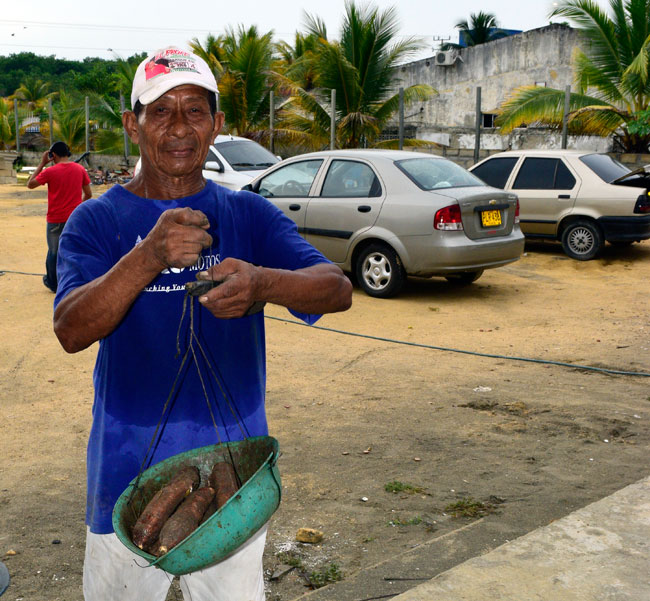
Anyway, back to the morning in Coveñas. We ate in the hotel, and while we were waiting for breakfast, this dude was selling some kind of yams or roots, and Juan Carlos pointed out the scale he was using. It’s about as crude a scale as I’ve ever seen, but it’s sound technically, and it sure makes for an interesting photo.
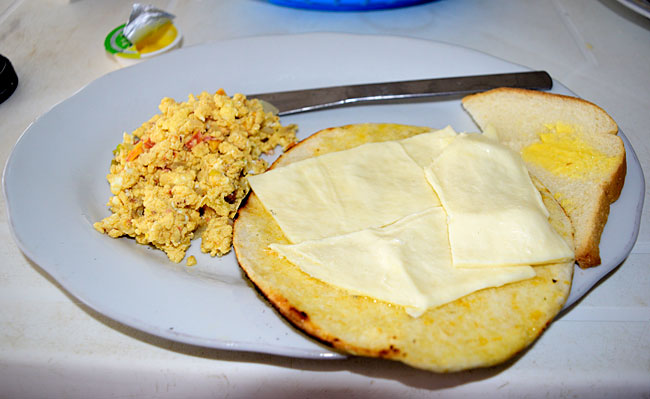
Here’s a typical Colombian breakfast: Scrambled eggs with tomatoes and onions, bread, and a corn or flour tortilla with cheese (that’s called arrepo). The Colombians are big on cheeses, with different regions producing unique cheeses. It’s quite good.
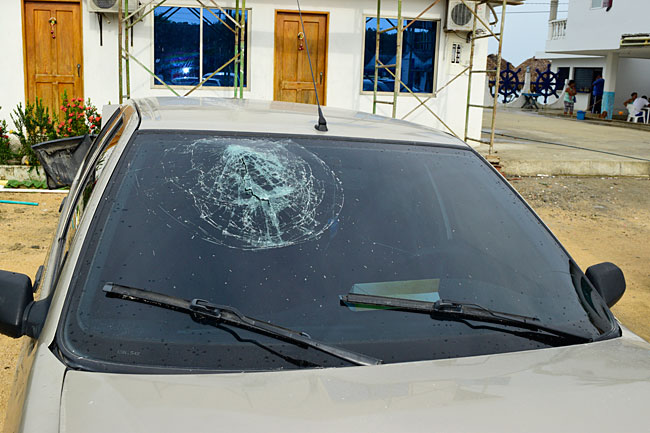
The guys pointed out this car as we packed the bikes. This probably didn’t end well for the passenger, who most likely was not wearing a seat belt. The riding in Colombia is glorious, but it is stressful. Juan and Carlos said when they ride anywhere else (other than Colombia), it makes them sleepy because there’s only scenery. In Colombia, there’s scenery, but you have to watch out for everyone else. It’s intense. In a country full of twisties, people pass on blind corners routinely. I guess the theory is you pray a lot. People think nothing of passing if the oncoming traffic has room to move over, or if the oncoming traffic is a motorcycle. It’s weird, but you kind of get used to it. But it is intense (just like the heat and the humidity).
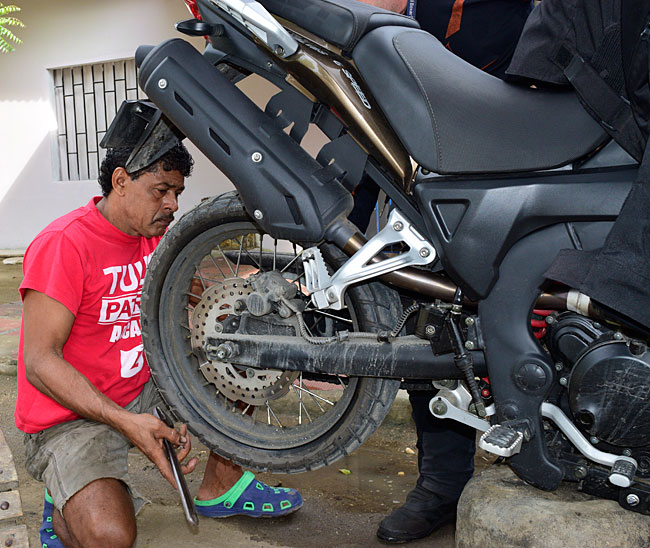
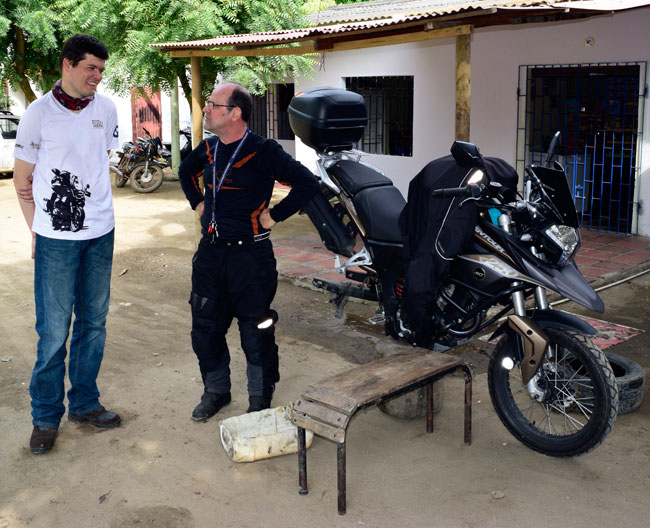
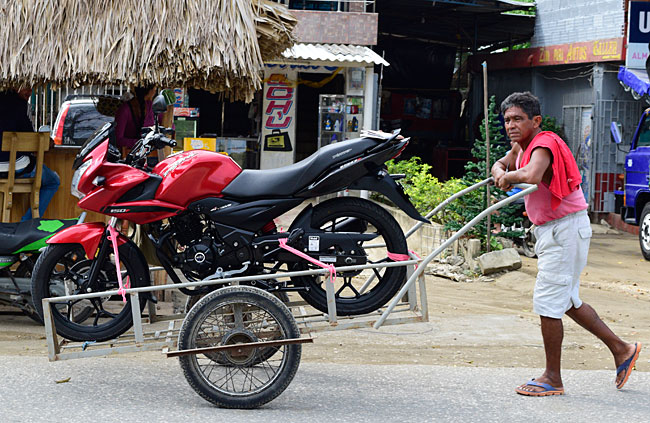
When we got on the road after breakfast, we only went maybe a mile when Carlos had a flat tire. Watching the guy repair it was interesting, and so was hanging out watching the world go by in Colombia.
And here are some of those watching the world go by in Colombia photos.
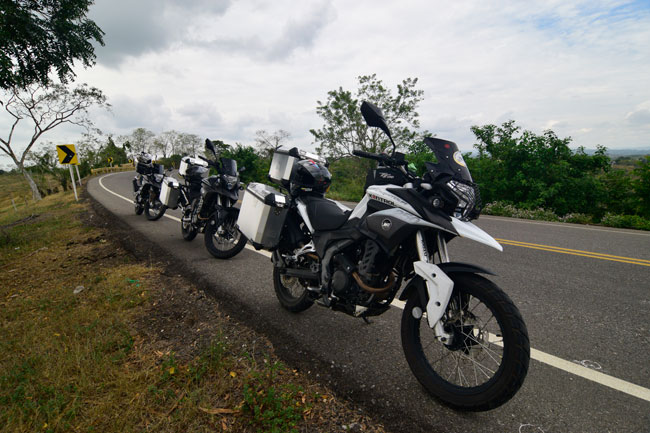
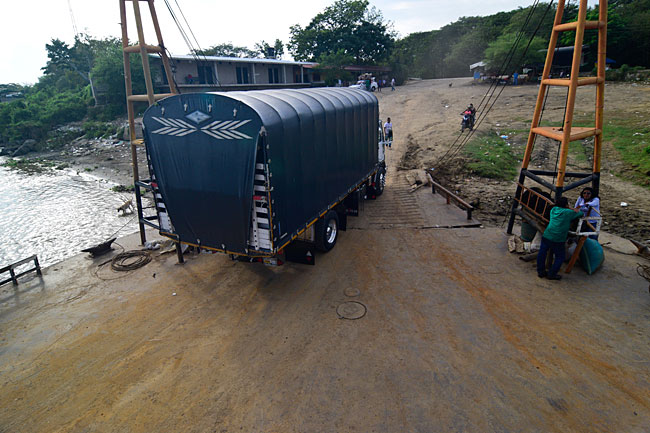
Here’s a photo of our RX3s somewhere on the road, headed to the ferry that would take us to Mompos, a remote town 45 minutes down the Magdalena River.
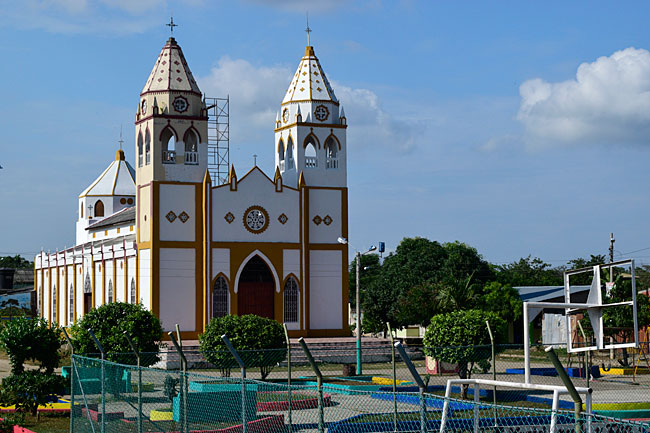
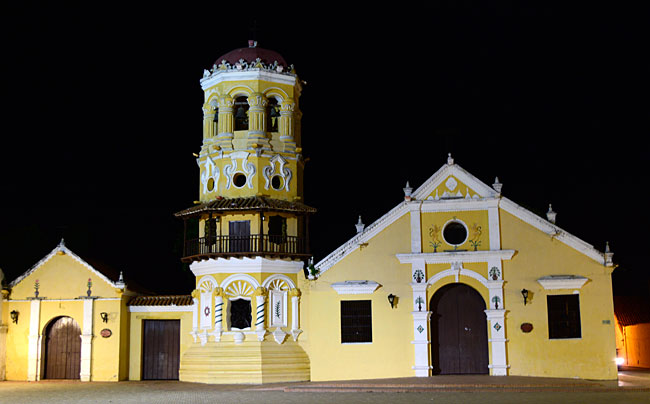
This church was across the street and just down the road from the ferry loading spot.
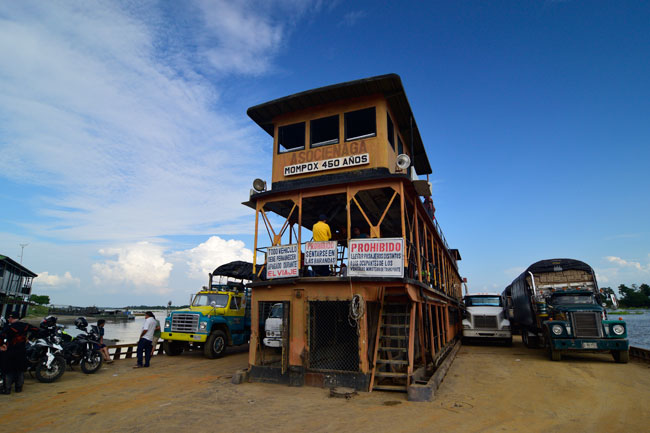
I only grabbed a few photos while we were boarding the ferry. The heat and humidity were getting to me at this point. It was about 4:00 in the in the afternoon, and it was sweltering.
Once we were underway, it got a little cooler on the river. You probably saw my video of that ride.
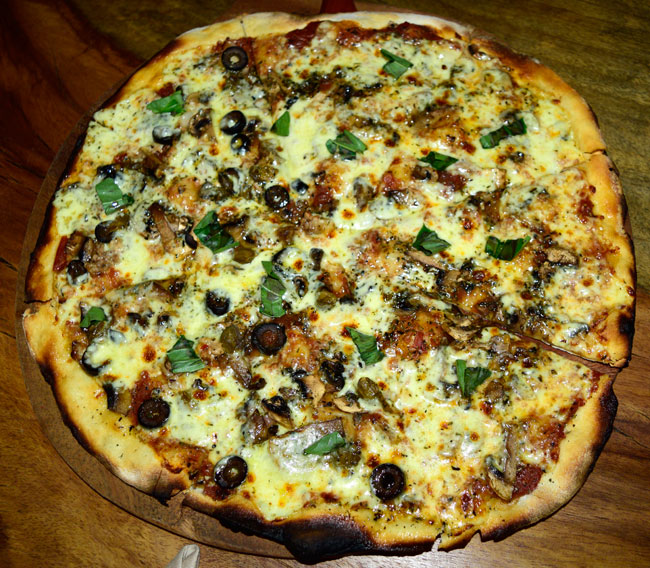
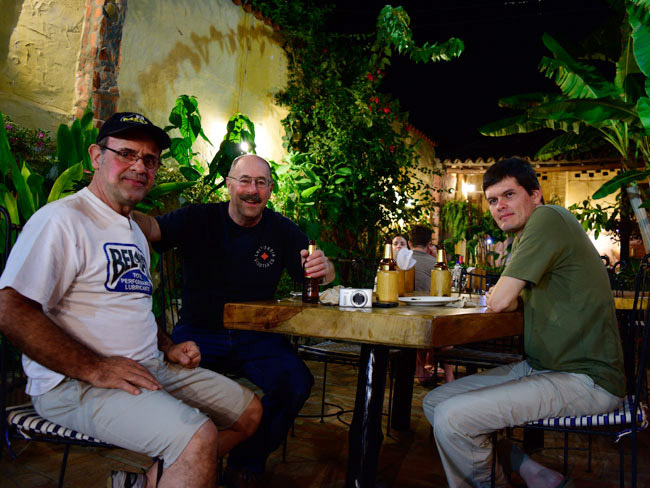
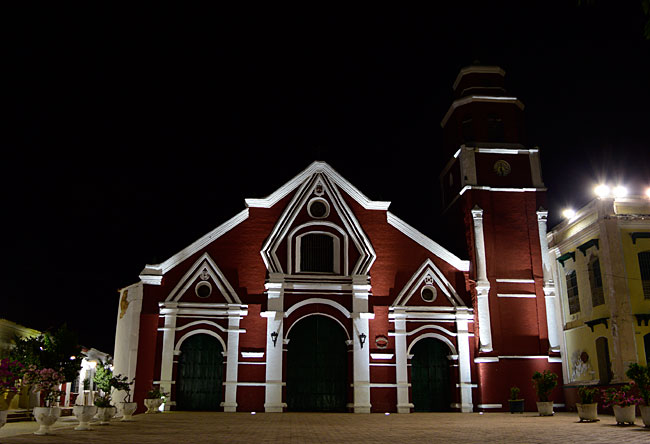
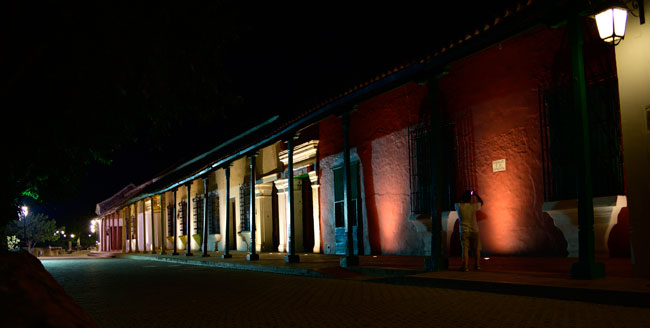
We arrived in Mompos and it was impressive. It’s the oldest town in Colombia, and to say it is off the beaten path would be an understatement. We had dinner in a restaurant run by an Austrian, where I had the best pizza I’ve ever had in my life.
After dinner, we chatted with the owner for a bit, and then we walked along the river front…I grabbed a bunch of photos there.
Folks, that’s about it for now. I’m a day behind in keeping you up to date on this trip, but Internet connectivity is dicey in these remote locations. As always, more to follow, if not today, then in a day or two (or three). Stay tuned.
If you’d like to see our earlier blogs in Colombia, please click here.
Did you enjoy reading the above? Hey, I wrote a book about that ride, and you can order it here. I think you’ll like reading it, and I know I sure had fun writing it!
 You know, I did one of the very first San Gabriel videos when those bikes first came to America. It, too, was a hoot.