
By Joe Berk
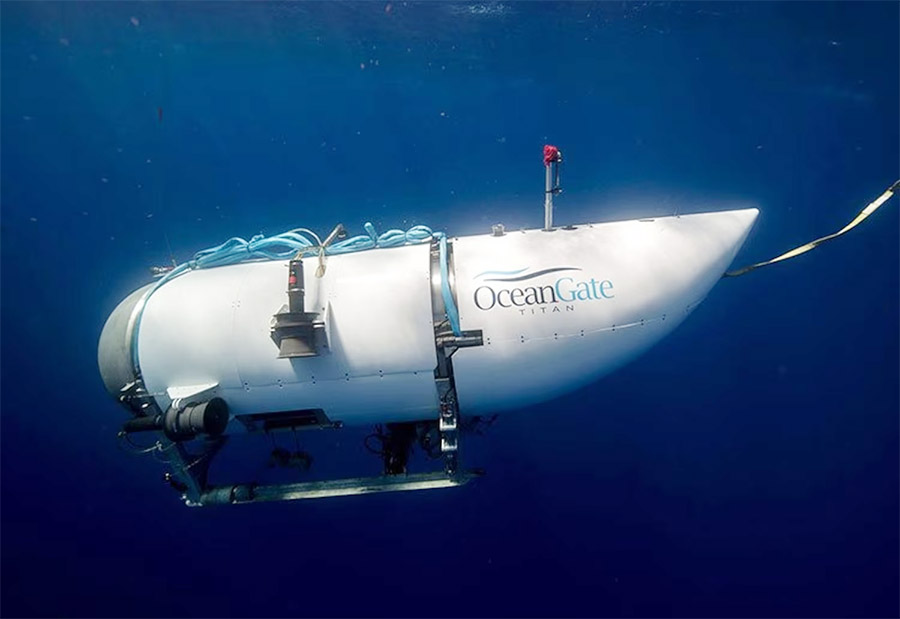
I recently watched two movies on the Titan submersible implosion and both were excellent. The first is Titan: The OceanGate Submersible Disaster, which is currently streaming on Netflix. The second is Implosion: The Titanic Sub Disaster, and that one is currently streaming on Max. The two movies offer different takes on how the events leading up to the disaster unfolded. Both are chilling in their depictions of the technical arrogance and unwillingness of the key guy, Stockton Rush, to recognize that Titan was moving toward failure.
I’ve spent a lot of my working days investigating product failures of all sorts, including serving as an expert witness on several cases and teaching engineering ethics in Cal Poly Pomona’s engineering school. Two factors are always present when fatalities occur: Engineering arrogance, and putting other factors ahead of safety.
Engineering arrogance refers to a misguided belief that a failure won’t occur (even though ample indications existed before a fatal event occurs) because we’re omnipotent, we’re smarter than everyone else, we’ve never experienced a failure of this nature before, or…well, you get the idea. On the space shuttle Challenger, NASA had experienced numerous o-ring failures prior to the one that killed the crew, but they ignored them because “we’re NASA and we’ve never lost a man in space” (that is an actual near-verbatim NASA management quote prior to the Challenger accident). Everyone knows the Takata airbag story; those folks experienced explosions during engineering development and product acceptance testing, yet they continued to sell these dangerous devices because they thought they would be okay. Takata airbags actually killed people in service and Takata continued to sell them. It’s surprising how often this feeling is present in the engineers who designed products that kill people unintentionally.
Incidentally, one time when I was giving a deposition the attorney representing a company whose product killed someone hit me with something I wasn’t expecting and he caught me off guard. He asked how I could criticize any one with my background in designing cluster bombs and other things that had, as their primary purpose, exactly that function: To kill people. I was floored and didn’t have a good answer. As sometimes happens, I had the perfect answer a few hours after the deposition had ended. My products, you see, had killing people as their purpose. Your products did not.
The other factor that is always present is putting other things in front of safety. Cost is a big one. Everyone knows about the Pinto and its propensity to burst into flame when rear-ended. Not everyone knows that the Ford Crown Victoria, Ford’s big sedan, had the same problem. The police knew about it, though, and they finally told Ford they wouldn’t buy any more Crown Vics unless Ford addressed the problem. Incredibly, Ford engineered a protective cage for the fuel tank and only sold it on the police automobiles. It was cheaper to keep paying out wrongful death lawsuits with the recipients signing nondisclosure agreements. There are lots of examples of this.
Both factors were present and both resulted in the Titan’s implosion. I’ll get off my safety soapbox now and leave you with a recommendation for watching both Titan: The OceanGate Submersible Disaster and Implosion: The Titanic Sub Disaster. They are both excellent documentaries.
Join our Facebook ExNotes page!
Never miss an ExNotes blog:
Help us keep the lights on:
Don’t forget: Visit our advertisers!

As has been stated many times this was a accident in the making and should never have happened. The question now is what Law’s can be legislated quickly and sensibly to prevent another disaster.
As somebody that is heavily involved in the design of underwater vehicles I am constantly thinking, safety, safety, safety even when the accounting vultures are circling.
As you should be; glad to hear this.
Damn joe!
I didn’t know about the Crown Vicky!
The Pinto received a lot of attention; the Crown Vic was mostly missed by the media. No idea why.