
By Joe Berk
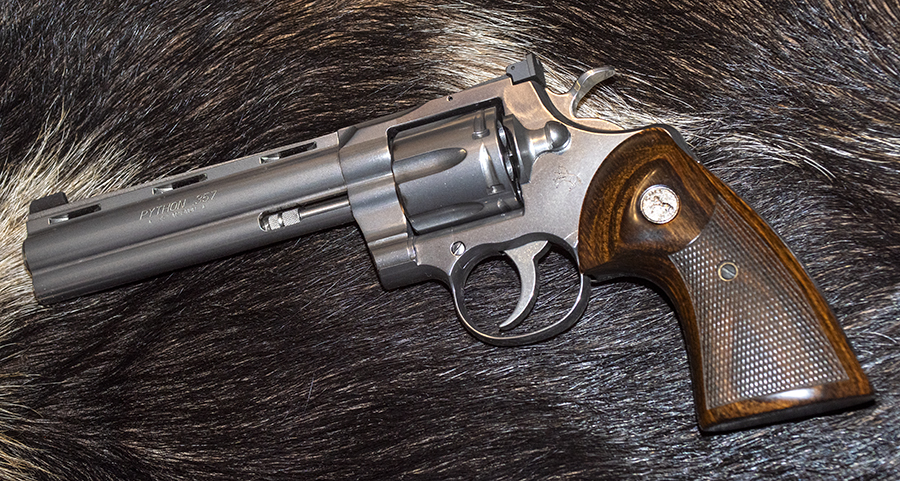
In two previous blogs, I wrote about adding the Wilson Combat rear sight (which caused the Python to shoot too high) and the Harrison Design front sight (which brought the Python back on target). This blog discusses two heavy Python loads, their ballistics, and the Python’s accuracy at 25 yards.

The two loads are:
-
-
- Hornady’s 180-grain jacketed XTP bullet with 13.6 grains of Winchester 296 propellant and a Winchester small pistol magnum primer, and
- Missouri Bullet Company’s 180-grain hard cast, truncated roundnose bullet with 14.0 grains of IMR 4227 propellant and a Winchester small pistol magnum primer.
-
Both are max loads.
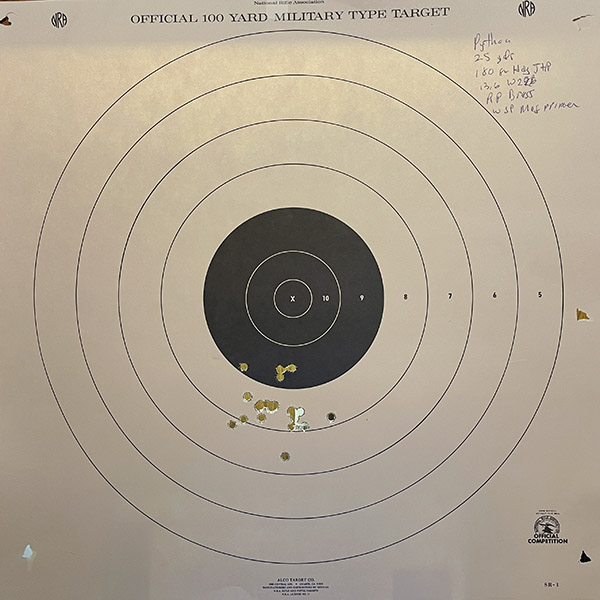
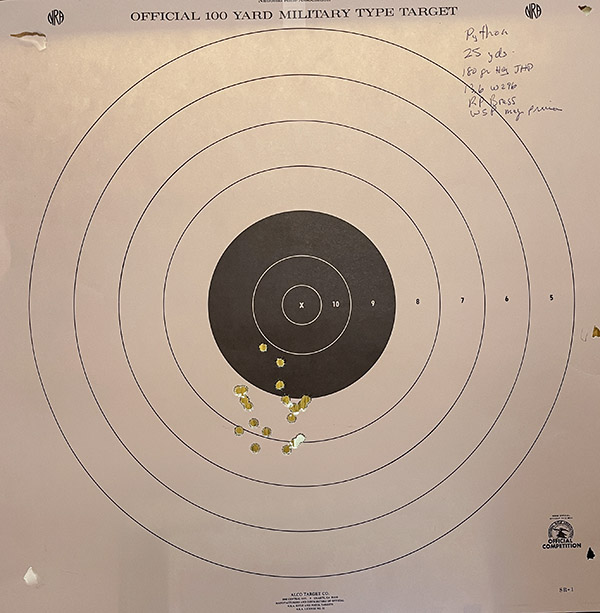
I first tried the Hornady bullet load at 25 yards, shooting from a bench, with a two-hand hold. My point of aim was at 6:00. I fired two groups of 20 shots each. The groups were a bit low, and very slightly to the left.
I next tried the Missouri cast bullet load at 25 yards, firing 20 rounds under the same conditions. Surprisingly, the group size and the group center were similar to the Hornady load, even though the velocity was higher and I was using different bullets and propellants.
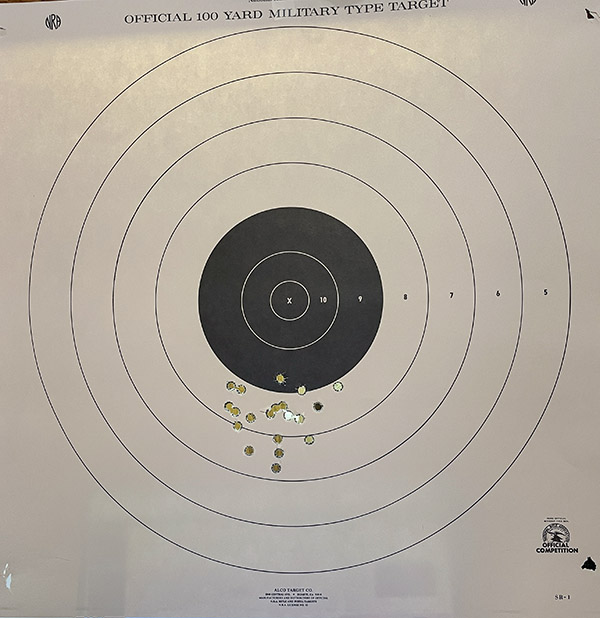
I felt the cast bullet load’s recoil was slightly lower than the jacketed bullet load, but the difference was miniscule. Both loads have significant recoil. The ballistics of both cartridges (fired from the Python) are summarized below:
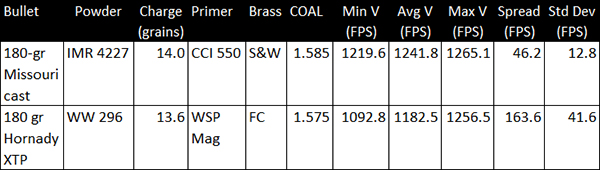
The above surprised me a bit. I always thought that Winchester’s 296 would provide the highest velocities and the smallest standard deviations. For me, an amateur ballistician, the Garmin chronograph was a good purchase. My reloading is frequently guided by the additional information it provides. I knew IMR 4227 was a good powder for magnum handgun cartridges; I just didn’t know how good. It’s very good.
After firing the first 20-round group with the Missouri Bullet Company load, I moved on to the next target. I adjusted the rear sight for elevation and windage, realizing while doing so that I had no idea how much each click of elevation and windage adjustment represented on the target, so I made a guess. I came up 6 clicks in elevation, and I moved the rear sight 6 clicks to the right.
I was disappointed that the three 20-shot groups I had shot thus far were larger than I thought they should be, so I tried harder. I poured everything I had into the next 5 shots on the second Missouri Bullet Company target, concentrating intensely, focusing on the front sight. The front sight. The front sight only. I willed myself to not think about anything except the front sight while slowly and gently increasing pressure on the trigger. The target disappeared as into fuzzy black blur. The big Python barked and bucked. I did it again four more times and then got up to check the target in my spotting scope.
Damn, that looked good! All 5 shots were in the 10-ring. This formed a dilemma. That was a nice target. Should I stop now and save the target for a photo, or should I fire the next 5-shot group, potentially ruining the target’s bragging rights?
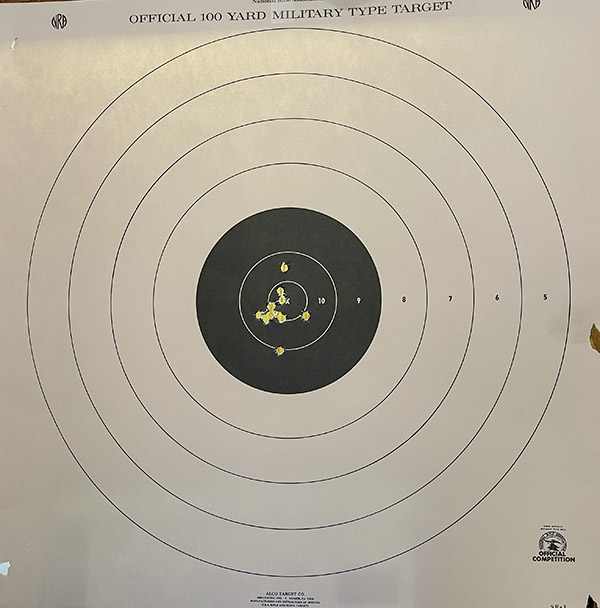
I went for Door No. 2, and sent 5 more 180-grain cast bullets downrange, concentrating so hard the rest of the world vanished. I checked the spotting scope. All 5 shots went into one ragged hole. This is good stuff; both the above loads are acceptably accurate and they are suitable for taking hogs. I think I’m going to go with the cast bullet load when I next hunt pigs in Arizona, which will occur later this year. When I do so, you’ll read about it here on the ExNotes blog.
Subscribe to ExNotes for free!
We need your support! Do what you can to help ExNotes stay in the black!

More Gresh and Berk? You bet! Check out A Cup O’ Joes!

Join our Facebook ExNotes page!