

Drinking our own bathwater…

By Joe Berk

A few months ago I wrote a blog about artificial intelligence and I promised we would never use it for the ExhaustNotes blog.

I lied.

Good friends Liz and Sebastian were over for dinner a few nights ago and Sebastian told me about Google’s Gemini AI program.  The next morning he sent an email in which he suggested trying it with this prompt: Joe Berk has written extensively about motorcycles, including motorcycle touring. Summarize his work in this area and summarize what else he has written or is known for.  So I did.  What came back in a second or two floored me.  Take a look…


Joe Berk is a prolific author and motorcycle enthusiast whose work is characterized by a blend of technical expertise and a “dry, tongue-in-cheek” narrative style. He is perhaps most recognized in the riding community for his adventures with CSC Motorcycles and his deep connection to long-distance touring in Mexico.

Motorcycle Touring and Writing

Berk’s motorcycle writing often focuses on the intersection of adventure, small-displacement bikes, and international travel.

Baja and Mexico Exploration: Berk is an authority on riding in Baja California. His book Moto Baja! chronicles his transition from riding a heavy Harley-Davidson Softail to exploring the peninsula on various smaller machines. He has led numerous tours for CSC Motorcycles, detailing routes through Ensenada, Cataviña, and Guerrero Negro.

The ExhaustNotes Blog: As a primary contributor to ExhaustNotes, Berk writes extensively about “resurrecting” vintage bikes (such as Buells and KLRs), gear reviews, and the technical nuances of reloading ammunition for sport.

Police and Military History: He authored The Complete Book of Police and Military Motorcycles, which serves as a definitive reference for the evolution of service bikes globally.

Small-Bike Advocacy: Much of his touring work highlights that you don’t need a massive touring rig to see the world; he frequently documents 2,000-mile journeys on 250cc machines, focusing on the scenery, local food (like Tony’s fish tacos in Baja), and the mechanical reliability of the bikes.

Professional and Technical Works

Outside of the motorcycle world, Joe Berk (often published as Joseph H. Berk) is a highly regarded expert in engineering and industrial management. His “day job” expertise frequently bleeds into his motorcycle writing through his meticulous attention to mechanical failure and process.

Engineering Management: He has written over ten books on technical subjects, including Systems Failure Analysis, Total Quality Management, and Cost Reduction and Optimization.

Defense and Munitions: Berk has a background in the defense industry and is known for pioneering the use of fault tree analysis in munitions manufacturing. This technical background informs his writing on ballistics and firearms reloading.

Creativity and Leadership: He has published works aimed at professionals, such as Unleashing Engineering Creativity and Managing Effectively: A Handbook for First-Time Managers.

History and Firearms: Beyond engineering, he wrote The Gatling Gun, a historical look at the weapon’s evolution from the 19th century to the modern Vulcan cannon.

Distinctive Style

Berk is known for a “military-style” brevity mixed with humor. Whether he is explaining the metallurgy of a .357 Magnum reload or describing a tarantula photo shoot on the Transpeninsular Highway, his writing remains grounded in a “straight-talk” philosophy that prioritizes authentic experience over marketing fluff.


Wow, that was not bad.  Aside from a few inaccuracies, I couldn’t have done better myself.  I had to try the same AI prompt for Huber and Gresh.  Here’s what came back for Uncle Joe…


Joe Gresh is an acclaimed motorcycle journalist and adventurer known for his self-deprecating humor, technical “backyard” mechanical skills, and a “ride what you have” philosophy. He is a frequent collaborator with Joe Berk, most notably through the ExhaustNotes blog and various high-profile projects for Motorcyclist magazine.

Motorcycle Touring and Writing

Gresh’s touring work is defined by a grit that eschews the luxury of modern adventure riding. He often chooses machines that are intentionally underpowered or aged for his journeys.

The Trans-America Trail (TAT): Gresh is famous for his multiple assaults on the Trans-America Trail—a grueling off-road route across the U.S. He famously attempted it on a Kawasaki KLR250 (nicknamed “The Widowmaker”) and a vintage two-stroke Yamaha DT400, documenting the mechanical failures and physical tolls with a trademark cynical wit.

The CSC Western America Adventure: He was a key figure in the “publicity stunt” ride where a group of riders took 250cc Zongshen (CSC) motorcycles on a 5,000-mile loop of the Western United States. His writing helped prove that small-displacement bikes could handle serious American touring.

“Toxic” Tours: Gresh has a penchant for “Toxic Tours,” such as flying to Washington to buy a 1971 Yamaha RT360 Enduro sight-unseen and attempting to ride it home to Florida, dealing with decades-old seals and “petroleum hairballs” along the way.

International Adventures: He participated in an epic 6,000-mile ride across China, which further solidified his partnership with Joe Berk and resulted in extensive digital and print chronicles of the culture and mechanical challenges of riding in Asia.

The “Backyard” Mechanic and Technical Style:  Beyond touring, Gresh is revered for his technical “how-to” (and sometimes “how-not-to”) articles. Unlike factory-service manuals, his writing focuses on the reality of the home garage.

Resurrection Projects: He is known for “resurrecting” neglected bikes, including Buells, Kawasaki ZRXs, and ancient Japanese two-strokes. His articles often involve ingenious, low-budget fixes for things like worn-out kickstands or leaking fork seals.

Streamlining and Efficiency: Gresh has a deep interest in motorcycle aerodynamics and fuel efficiency. He often writes about the “Vetter” era of streamlining, arguing that modern bikes are unnecessarily blocky and fuel-inefficient.

Industry Commentary: As a former columnist for Motorcyclist (specifically the “Cranked” column), he provided a counter-culture voice to the industry, often critiquing the high costs and complexity of modern motorcycles.

Other Work and Public Persona

ExhaustNotes Blog: Gresh is a co-founder and primary voice of ExhaustNotes.us, where he writes on everything from tool reviews (comparing Harbor Freight to Craftsman) to photography.

Firearms and Ballistics: Much like Joe Berk, Gresh is an enthusiast of firearms and reloading, frequently weaving technical ballistics data and shooting range stories into his blog posts.

Cultural Critique: His writing often touches on music (Australian cult classic movies like Stone), the “absurdity of the modern world,” and the decline of the traditional biker lifestyle.

In essence, if Joe Berk is the disciplined, engineering-focused half of the duo, Joe Gresh is the chaotic, grease-stained poet who proves that the best stories usually come from the most unreliable motorcycles.


Wow again.  And again, aside from a few inaccuracies, this was indeed Joe Gresh.   It is good stuff.   Next up?  Google Gemini’s take on Mike Huber…


Mike Huber is a motorcycle adventurer, author, and journalist whose work focuses on the philosophy of travel, the freedom of a nomadic lifestyle, and the technical realities of long-distance touring. Like Joe Berk and Joe Gresh, he is a significant contributor to the ExhaustNotes community.

Motorcycle Touring and Writing

Huber’s writing is often deeply personal, focusing on the mental and emotional shifts that occur during long-term travel.

Living Off a Motorcycle:  Huber is well-known for his “Year in America” project, where he sold his possessions, left a traditional life in Seattle, and spent over a year living entirely off his motorcycle. He used Airbnb and camping to maintain a remote career while traveling, proving the viability of the “digital nomad” lifestyle on two wheels.

A Trip Into The Moment: This is his primary literary work, a memoir that chronicles his motorcycle journeys. It emphasizes the concept of “The Moment”—the meditative state reached when the distractions of modern life are replaced by the immediate requirements of the road.

Small-Bike International Touring: While he is often associated with the BMW GS series (his “UberMoto”), Huber is a proponent of using small-displacement bikes for international travel. He has documented extensive tours through Japan, Thailand, and Mexico (specifically Baja), often arguing that smaller bikes offer better agility and a more authentic connection to local cultures.

The “Huber” Style: In the ExhaustNotes circle, a “Huber” has become a colloquialism for a specific type of travel—minimal planning, flipping coins to decide the next destination, and embracing the “beautiful uncertainty” of the road.

Military Background and “UberMoto:”

Huber’s perspective is heavily influenced by his service in the U.S. Army’s 82nd Airborne Division.

The Airborne Connection: His writing frequently references his background as a paratrooper (with 19 jumps to his credit). This “All-American” military discipline often contrasts with his otherwise free-spirited “motorcycle gypsy” persona, giving his work a unique groundedness.

The BMW GS (“UberMoto”): Much of his technical writing and gear reviews revolve around the BMW GS platform. He is known for pushing these heavy adventure bikes into challenging terrain, often adorned with his 82nd Airborne decals.

In the context of motorcycle journalism, Mike Huber is defined by the intersection of the veteran’s discipline and the nomad’s soul, making him a go-to voice for those looking to escape the “gray” of conventional life for the vibrant reality of the road.


Again, good stuff.  Gemini got Mike’s number of jumps wrong (actually, it’s 25, but Mike figures Google didn’t include his five during Jump School).

Overall, I’m impressed.  But not to worry…I’m not impressed enough to start using it for our regular blogging.  That will be us for real.


Subscribe to ExNotes for free!


We need your support! Do what you can to help ExNotes stay in the black!


More Huber? Check out A Trip Into The Moment.

More Gresh and Berk? You bet! Check out A Cup O’ Joes!


Join our Facebook ExNotes page!
Man, This Is Scary

By Joe Berk

Nvidia stock gains, artificial intelligence, updates to MSOffice…it all kind of came together for me in the last day or so.  I confess:  I’ve pretty much ignored all the hoopla about AI and I detest senseless change.  You know, the change that occurs when computer programs are updated.

I resisted upgrading to Windows 11 for more than a year until I had to, and now I have to relearn a bunch of stuff (including new layouts) that appear to serve no purpose.  My iPhone updated automatically last week and the email feature only showed incoming email by category (fortunately for me, I found a way to revert to the former layout that shows all email).  MSOffice did the auto-update thing, too, and in addition to learning more new layouts, it now shows a weird little symbol at the start of each new document:

I clicked on that symbol, and it asked for a description of what I wanted Word’s AI feature to generate a story about.  Folks, this is both amazing and scary.  I first told it to give me a story about collecting pocketknives, and I was blown away with what came back.  I opened a new Word document, and told it to generate a story about the 250-3000 Savage cartridge’s history, and I was similarly blown away.  I’m going to show both stories here, but before I do that, I’ll give you my pledge:  After these two examples, we’ll never run an AI-generated article on ExhaustNotes.   What you’ll see after these two examples will always be pure us, warts and all.


The Art and Joy of Collecting Pocketknives

A Journey into a Timeless Hobby

Collecting pocketknives is more than just a hobby; it is a journey into a world of craftsmanship, history, and personal satisfaction. As a collector, you not only savor the thrill of the hunt for unique pieces but also immerse yourself in the rich stories each knife tells. Whether you are an experienced collector or a newcomer to this fascinating pursuit, there is always something new to discover and appreciate in the realm of pocketknives.

The History of Pocketknives

Pocketknives have a long and storied history that dates back thousands of years. The earliest known examples of folding knives were discovered in ancient Rome, where they were used as everyday tools. These early pocketknives featured simple folding mechanisms, often with bone handles and iron blades. Over the centuries, pocketknives evolved in design and functionality, becoming indispensable tools for sailors, soldiers, and craftsmen.

By the 17th century, pocketknives had become popular throughout Europe. In England, the Sheffield region became renowned for its high-quality cutlery, including pocketknives. The craftsmanship and innovation of Sheffield knife makers set the standard for pocketknives around the world. In the United States, the 19th century saw the rise of iconic names like Case, Buck, and Remington, which contributed to the rich tapestry of American knife-making heritage.

Types of Pocketknives

One of the joys of collecting pocketknives is the incredible variety of designs and styles available. Here are some of the most popular types of pocketknives that collectors often seek:

Slip Joint Knives

Slip joint knives are characterized by their simple, non-locking mechanism. The blade is held open by a spring, and it can be closed with manual pressure. These knives often feature multiple blades, each designed for specific tasks. Popular examples include the traditional Swiss Army Knife and the classic Barlow knife.

Lockback Knives

Lockback knives have a locking mechanism that secures the blade in place when it is open. To close the blade, a lever on the spine of the handle must be pressed. This design provides added safety and strength, making lockback knives a favorite among outdoor enthusiasts and hunters.

Liner Lock Knives

Liner lock knives feature a metal liner inside the handle that locks the blade in place when opened. To close the blade, the liner must be pushed to the side. This type of knife is known for its ease of use and reliability, making it a popular choice for everyday carry.

Modern Folding Knives

Modern folding knives encompass a wide range of contemporary designs and materials. These knives often feature advanced locking mechanisms, ergonomic handles, and high-tech blade steels. Brands like Benchmade, Spyderco, and Zero Tolerance are renowned for their innovative approaches to knife design.

Building Your Collection

Embarking on the journey of collecting pocketknives can be both exciting and rewarding. Here are some tips to help you build a diverse and meaningful collection:

Set Your Goals

Before you start collecting, consider what aspects of pocketknives interest you the most. Are you drawn to historical pieces, modern designs, or specific brands? Setting clear goals will help you focus your collection and make informed decisions.

Research and Learn

Knowledge is key to becoming a successful collector. Take the time to learn about different knife makers, materials, and designs. Books, online forums, and knife shows are excellent resources for expanding your understanding of pocketknives.

Start Small

Begin your collection with a few carefully chosen pieces that align with your interests. As you gain experience and confidence, you can gradually expand your collection to include more diverse and valuable knives.

Care and Maintenance

Proper care and maintenance are essential to preserving the value and appearance of your pocketknives. Keep your knives clean, dry, and properly lubricated. Store them in a cool, dry place, and consider using display cases or storage rolls to protect them from damage.

The Community of Collectors

One of the most rewarding aspects of collecting pocketknives is the sense of community among fellow enthusiasts. Knife shows, forums, and social media groups provide opportunities to connect with other collectors, share knowledge, and trade or purchase knives. The camaraderie and shared passion within the collecting community can enhance your experience and open doors to new friendships and opportunities.

Conclusion

Collecting pocketknives is a timeless hobby that offers a unique blend of history, craftsmanship, and personal fulfillment. Whether you are captivated by the elegance of a vintage slip joint or the cutting-edge technology of a modern folder, there is a pocketknife out there waiting to become a cherished part of your collection. As you delve deeper into this fascinating world, you will discover that each knife is more than just a tool—it is a piece of art, a slice of history, and a testament to human ingenuity.


Okay, it’s me, Joe, back on the keyboard again.  Did you like that story above?  So I tried another one.  Check out this AI-generated story on the 250-3000 Savage cartridge’s history.


The History of the .250-3000 Savage Cartridge

A Revolution in Hunting and Shooting

In the annals of firearms history, few cartridges have had as profound an impact as the .250-3000 Savage. Developed in the early 20th century, this cartridge has become a legend among hunters and shooting enthusiasts for its remarkable performance and innovation. Let’s delve into the captivating history of the .250-3000 Savage, exploring its origins, development, and enduring legacy.

Origins and Development

The story of the .250-3000 Savage begins in the early 1900s, a time when the world of firearms was experiencing rapid advancements. In 1915, Charles Newton, a renowned firearms designer and ballistics expert, was approached by Arthur Savage, the founder of Savage Arms Company. Savage sought a new cartridge that could be fired from his revolutionary Model 99 lever-action rifle. Newton accepted the challenge with enthusiasm, and thus began the journey to create what would become a groundbreaking cartridge.

Newton’s goal was to design a high-velocity cartridge that would be suitable for hunting medium-sized game while also being compatible with Savage’s Model 99. The result of his efforts was the .250-3000 Savage cartridge, also known simply as the .250 Savage. This cartridge was officially introduced in 1915 and quickly gained popularity due to its unique characteristics. The name “250-3000” was derived from the bullet diameter of .250 inches and the remarkable muzzle velocity of 3000 feet per second (fps), an unprecedented speed for its time.

Technical Innovations

The .250-3000 Savage was a technological marvel that set new standards in the firearms industry. Its high muzzle velocity was achieved through the use of a lightweight 87-grain bullet, which allowed for flat trajectories and increased accuracy at longer ranges. This made the cartridge ideal for hunting a variety of game, including deer, antelope, and varmints. The combination of speed and accuracy made it a favorite among hunters who sought a versatile and effective round.

One of the key innovations of the .250-3000 Savage was its use of smokeless powder, which contributed to the cartridge’s high velocity and clean-burning characteristics. Smokeless powder had been introduced in the late 19th century, but the .250-3000 Savage was one of the first cartridges to fully capitalize on its advantages. This advancement marked a significant departure from the black powder cartridges that had dominated the firearms landscape for decades.

Impact on Hunting and Shooting

The introduction of the .250-3000 Savage had a profound impact on the world of hunting and shooting. Hunters quickly recognized the cartridge’s capabilities and began using it for a wide range of game. Its high velocity and flat trajectory allowed for precise shots at varying distances, making it a reliable choice for both seasoned hunters and newcomers to the sport. The .250-3000 Savage’s success also demonstrated the potential of high-velocity cartridges, paving the way for future developments in firearms technology.

In addition to its popularity among hunters, the .250-3000 Savage garnered attention from competitive shooters. Its accuracy and consistent performance made it a competitive choice in target shooting and varmint hunting. The cartridge’s reputation for delivering flat trajectories and minimal recoil further solidified its place in the shooting community.

Enduring Legacy

Though the .250-3000 Savage was introduced over a century ago, its legacy continues to endure. The cartridge’s design principles and innovations have left a lasting impact on the development of modern ammunition. Many of the advancements pioneered by the .250-3000 Savage, such as the use of smokeless powder and high-velocity bullets, have become standard features in contemporary cartridges.

The .250-3000 Savage also holds a special place in the hearts of firearm enthusiasts and collectors. Vintage rifles chambered for the cartridge are highly sought after, and reloading enthusiasts continue to experiment with different bullet weights and powder combinations to maximize its performance. The cartridge’s historical significance and enduring popularity ensure that it remains a beloved part of firearms lore.

Conclusion

In conclusion, the .250-3000 Savage cartridge stands as a testament to the ingenuity and innovation of early 20th-century firearms designers. Its high velocity, accuracy, and versatility revolutionized hunting and shooting, setting new standards for performance and reliability. As we look back on the history of this remarkable cartridge, we are reminded of the enduring impact that a single innovation can have on an entire industry. The .250-3000 Savage will forever be remembered as a pioneering force in the world of firearms, a true icon of its time.


Joe again, taking back the keyboard.  My head is swirling a bit.  Wow, a lot of thoughts here.

The AI-generated writing is generally good.   I used to teach engineers how to write.  I’d give both articles an A.  No spelling errors, no grammatical errors, no capitalization, good organization, just a little bit of semantic noise, and a good, logical sequencing of ideas organized into well-written paragraphs.  Students have to love this AI business.  Teachers have to hate it.  How can you know who wrote what?  The student, or Word’s AI feature?

I now understand why I am getting emails everyday about guest blogs on any topic I desire.  I delete all of them.  But hell, someone using AI could crank out stories all day long with essentially zero effort.

Print media is just about dead.  It looks like the writing profession may be heading that way, too.

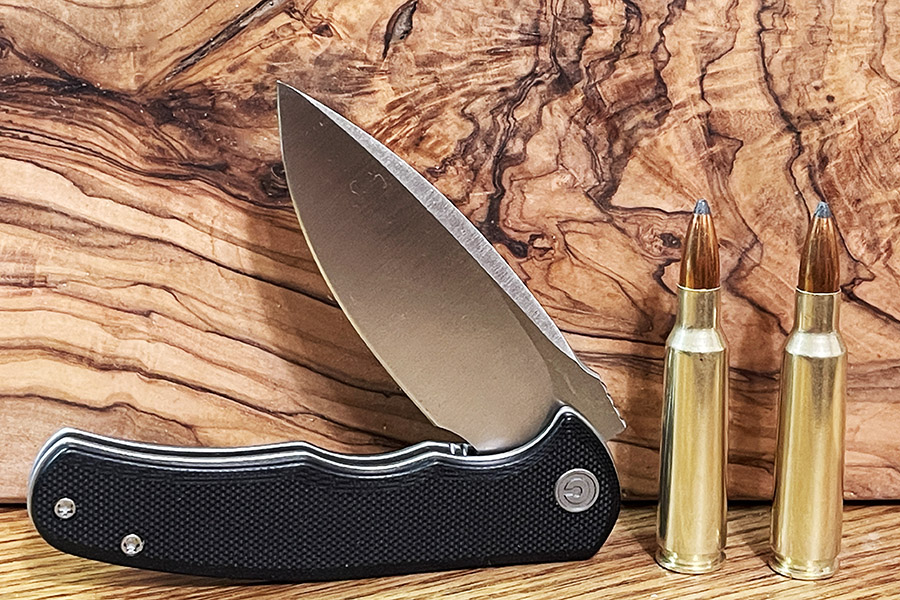
I asked the AI feature to include photographs, and it basically went belly up on that one.  But I suspect that either it won’t be long before it can do that, or I simply don’t know the right way to ask for it.  The photo you see at the top of this blog is mine.  It shows a very cool Civivi pocketknife good buddy Paul sent to me (thanks again, Paul!) and two 250-3000 cartridges I reloaded yesterday (and by the time you read this, their 87-grain Sierra bullets will have already gone downrange).

The movie Terminator keeps popping into my mind.  How long until Skynet becomes self-aware?

Again, my promise:  Other than what you read here today, our blogs will never be AI generated.  We’re the real deal, for better or for worse.


Join our Facebook ExNotes page!


Never miss an ExNotes blog:


Help us keep the lights on:


Don’t forget: Visit our advertisers!


AI Is Making Us Dumber

By Joe Berk

I’m all for intelligence (most folks would agree there’s too little of it), but I’m scared to death of artificial intelligence.

Turn the clock back 60 years.  I’m a kid working in a farm and garden center and the boss (John Bocchieri, who was a neighbor and a nice guy) put me on the cash register after I’d been there about a week.  The first time I rang up a sale the customer handed me a $5 bill and I had to make change.  Mr. Bocchieri saw my dilemma and he told me how to do it.  “You just take the amount, take money out of the drawer, and while doing so count up to what the customer gave you.  That will be the right amount.”  That little secret made life a lot easier for me.  It even worked if the customer gave you a little more in change (you know, so you could give them back only paper money).

Today, the electronic cash registers try to make it even easier, but all they did was just screw things up.  Kids will ring up a sale, the customer gives them, say, a $20 bill, the kid enters the $20, and the cash register tells them how much change to give back.  If that feature isn’t working, I’ve often had clerks mentally lock up when they have to determine how much they should return.  I first started seeing this during the Bush administration.  (Whenever it happens, the phrase “No Child Left Behind” pops into my mind.)  Relying on the cash register to determine how much change to return robbed clerks of their ability to think.  Give a clerk a little extra to get paper money back (you know, say the price is $11.79 so you give the cash register jockey $20 and 79 cents), and it really throws them into overload mode.

I ran into this same phenomenon of machines doing peoples’ thinking for them in my manufacturing days.  In the old days, production planning involved what the job title implied:  The ability to plan a production operation.  Production planners (or schedulers, as we sometimes called them) were people who knew the required manufacturing delivery dates, the manufacturing times, and the supplier component lead times.  With that information, they determined what we needed from suppliers and when we had to order it, and what had to happen (and when it had to happen) in the factory to deliver product on time.  We usually did just that: We delivered on time.  When things didn’t go as planned in one or more of the work centers (as often happens in the manufacturing world) or if a supplier was late (another common occurrence), the production planners could develop workarounds and our products still shipped on time.

Then an evil computer program called MRP (Manufacturing Requirements Planning) came on the scene.  It was software that required as inputs the info described above.  The idea was that it would simplify production planning.  But a funny thing happened.  Over the course of a few years, the skilled production planners who could actually plan workflows through a factory retired and they were replaced with folks who were essentially data entry clerks.  These folks were still called production planners, but they couldn’t plan a trip to the bathroom.  The really bad thing about MRP is that it assumed everything in the factory and our deliveries from suppliers happened on time (and as anyone knows who has ever worked in a factory, it never does).  When production hiccups occurred, MRP was useless and so were our so-called production planners.  I guess I shouldn’t complain.  I was a manufacturing consultant specializing in helping companies that couldn’t deliver on time.  I made a ton of money thanks to MRP’s inadequacies and the managers who thought it was the answer to all their problems.

Another form of this disease comes in the flavor of nav systems.  You know, the things driven by global positioning systems that ask for a destination and then tell you how to get there.

Don’t get me wrong:  I love these nav systems. But when I use them (which is nearly all the time anymore), I lose the sense of where I am, where I’m going, and how to get there.  I don’t have to think.  I just listen to what Waze (or whatever program I’m using) tells me to do and I do it.  I’ll tell you how bad it is:  I’ve almost driven through stop signs and red lights listening to my nav system.  And I secretly sort of know, deep down, that if I didn’t have the nav system, I would not know how to get to places I know that I know how to get to.   If that sentence gives you trouble, read it again; I wrote it and I know it’s tough to follow.  But it conveys what I’m trying to say.  Maybe AI would do a better job writing it, but I’ll be damned if I’m going to ask it to.  Writing is one of the few things I have left.

Ever been embarrassed by the autocorrect feature when you write something on your cell phone or your computer?  I find it highly annoying, and my experience is that it makes as many mistakes (by auto”correcting” to a word I didn’t want to use) as it fixes.  It’s a feature that’s teaching us it’s okay to not pay attention to our spelling.  Maybe some people need it.  Those people shouldn’t be posting comments.  We are already a nation bordering on illiteracy.  We don’t need help to speed us along.

Now the talk is all about artificial intelligence and where it can take us.  Self-driving cars.  Diagnostics software for medical doctors.  Social media algorithms.  Nuclear weapons control.  Chatbots.  Blog articles.  Think about what these programs will do.  They’ll degrade doctors’ ability to make diagnoses themselves.  They’ll eliminate the need for drivers to drive an automobile.  They’ll decide what violates “community standards” and take down posts (they are already doing this and no one likes it).  They’ll decide when to launch a nuclear attack.  Can you believe this is being seriously discussed?   What could go wrong?  Think about chatbots or the automated questions you get when trying to reach a human being on the phone.  Have you ever come away from one of these encounters thinking “gee, those folks really made it easy for me?” I don’t think so.

How about AI-generated writing?  I get three or four email inquiries a week from services that want to pay me to allow their blog content here on ExNotes.  When I asked to see what they could do (back before I realized what they were doing), the content was awful.  Thanks, but no thanks.

Nope, you can keep your AI.  What’s lacking in the world is not enough plain old real intelligence, and AI will only make that worse.  We need more intelligence.  The real kind, not the artificial kind.


Do you have a copy yet?


Never miss an ExNotes blog:


Don’t forget: Visit our advertisers!