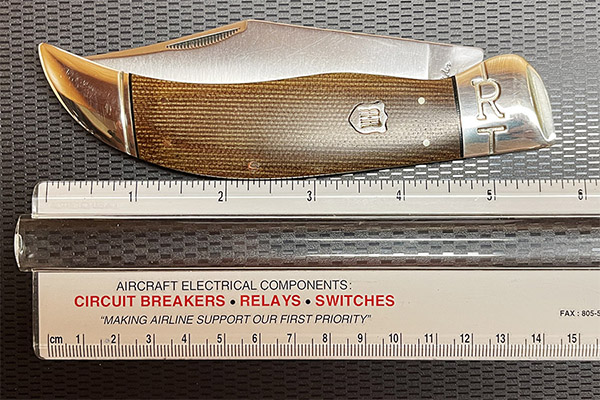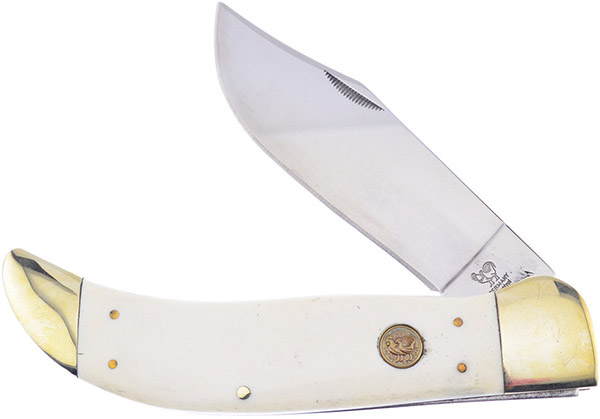
Hen and Rooster (China) versus Case (US)

By Joe Berk

I could have titled this blog “A Swing and a Miss.”  That’s how I feel about a Case folder I received a few days ago. It’s going back to the retailer.

Last year, I got on a white bone handled knife kick, and I ordered several.  They were all Chinese, and I even wrote a blog about a few.
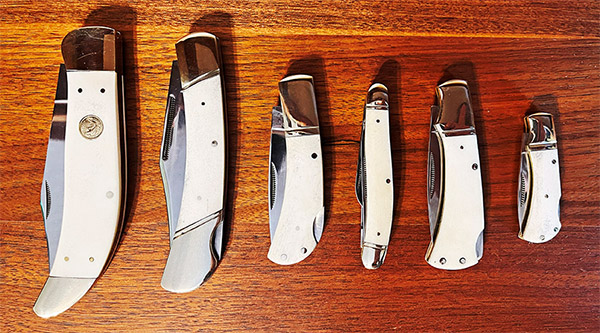
A few of my white-bone-handle pocketknives, with the Hen and Rooster on the left. All are from China. These are very high quality knives. The second one from the left is the same size as a Buck 110, it is very inexpensive, and it is a beautiful knife.

One of the ones I ordered in that buying binge was the Hen and Rooster HR1341, a large folder with white bone handles.  It arrived, it was perfect, and it was beautiful.  It has a mirror-polished blade.  I know Hen and Rooster is a weird name for a knife company, but I don’t care.  I loved that knife as soon as I saw it.

In the back of my mind, though, was the China thing, and the inevitable anti-China comments I knew any blog about things made there would attract.  I also knew I wanted what is the same basic design but from a U.S. manufacturer (in this “case,” pardon the literary redundancy, a Case knife).  The Case I wanted was out of stock everywhere I looked.  I went back to my preferred knife retailer, Smoky Mountain Knife Works, and clicked on their “Notify Me When In Stock” link.  And then I forgot about it.

Smoky Mountain didn’t forget, though.  A couple of weeks ago an email floated in telling me the Case white bone large folder was in stock.  It was three times the cost of the Hen and Rooster, but I had to have it.  Buy now, baby, and it was on its way.
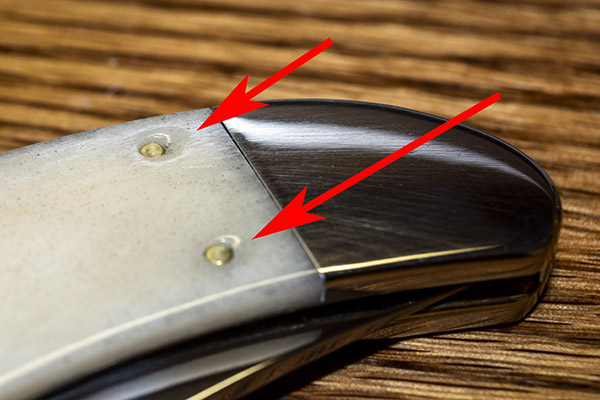
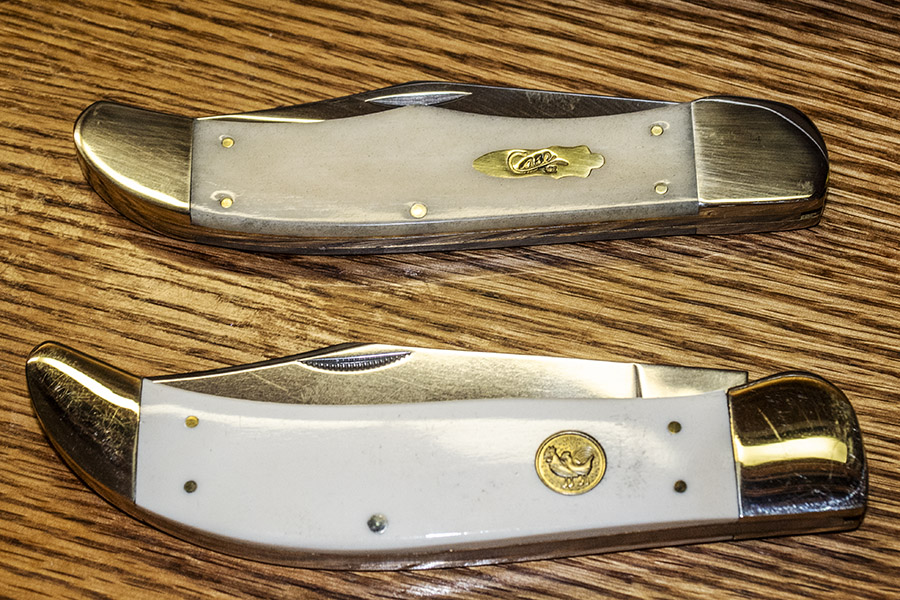
The bone handle around the rivets is very poorly done. For a $120 pocketknife, it’s not for me.

I was like a kid on Christmas morning when the Case arrived, but then I opened the box.  Big disappointment.  The Case knife, for all its vaunted “Made in America” quality, had rivets and scales that looked like a 6-year-old installed them.  What a letdown.
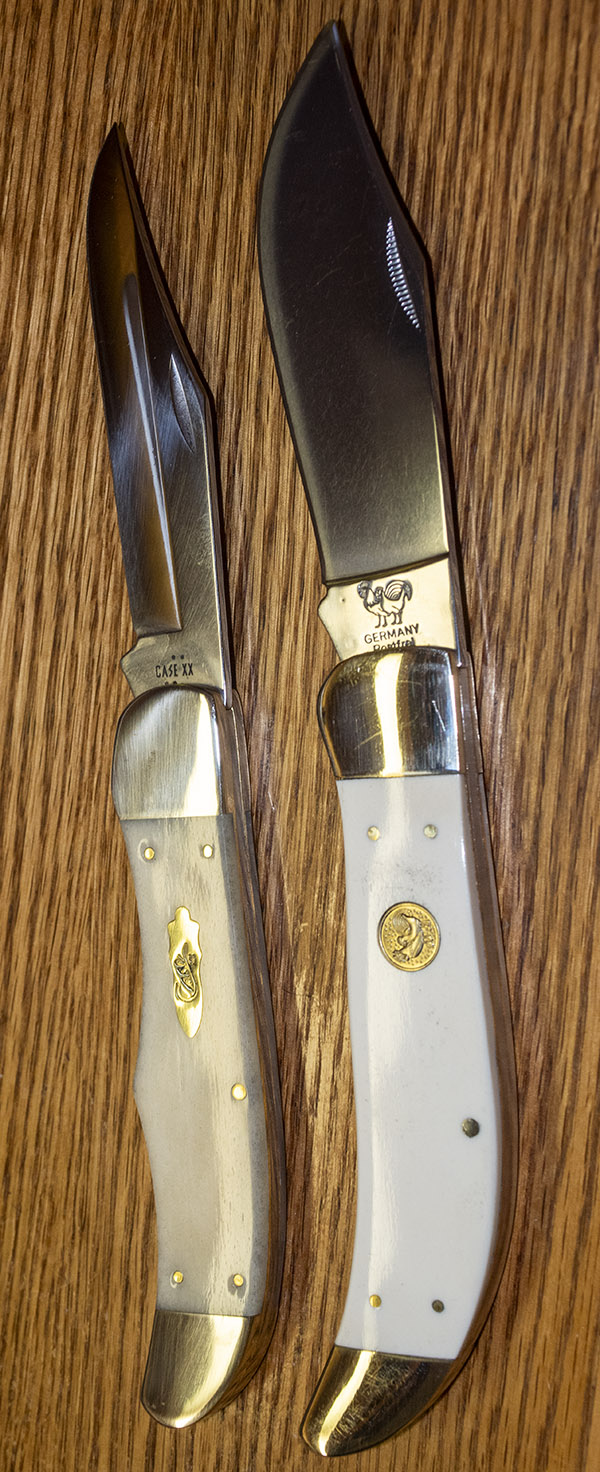
The US-made Case knife is on the left; the Chinese Hen and Rooster knife is on the right. Although the Hen and Rooster is from China, it uses German stainless steel (frequently specified as 1.4116 or similar high-quality Solingen stainless steel).

Some of you might wonder:  Isn’t the Case a better knife with better steel?  To answer your question, I don’t know.  But from a cosmetics perspective, this Case is not something I want.  And if they couldn’t get the cosmetics right, who’s to say they got the heat treat right?  Nope.  Not for me.  I’ll stick with my Chinese version.

The Bone Folders

By Joe Berk

I haven’t done a knife story in awhile,  but that doesn’t mean I haven’t been buying.  Some of these online knife stores’ websites are addictive, and the Chicago Knife Works site certainly falls into that category.  It’s fun just perusing their offerings.  Sometimes, I’ll see something that piques my interest and then I’ll search on a feature that a particular knife has.  That occurred recently when I saw a folder I likes with bone handles (or scales, to use knife aficionado terminology).

Bone as a scale material is intriguing to me, partly because I like the way it looks, partly because it looks like ivory, and partly because of a recent visit to the fabled Colt Custom Shop in West Hartford, Connecticut.  When I saw an artist crafting custom grips on a Colt 1873 Single Action Army, I asked about the material (knowing that ivory was no longer available).  The answer, as good friend and Colt factory guide Tim told me, was bone.  Giraffe bone, to be specific.  I would never have imagined.

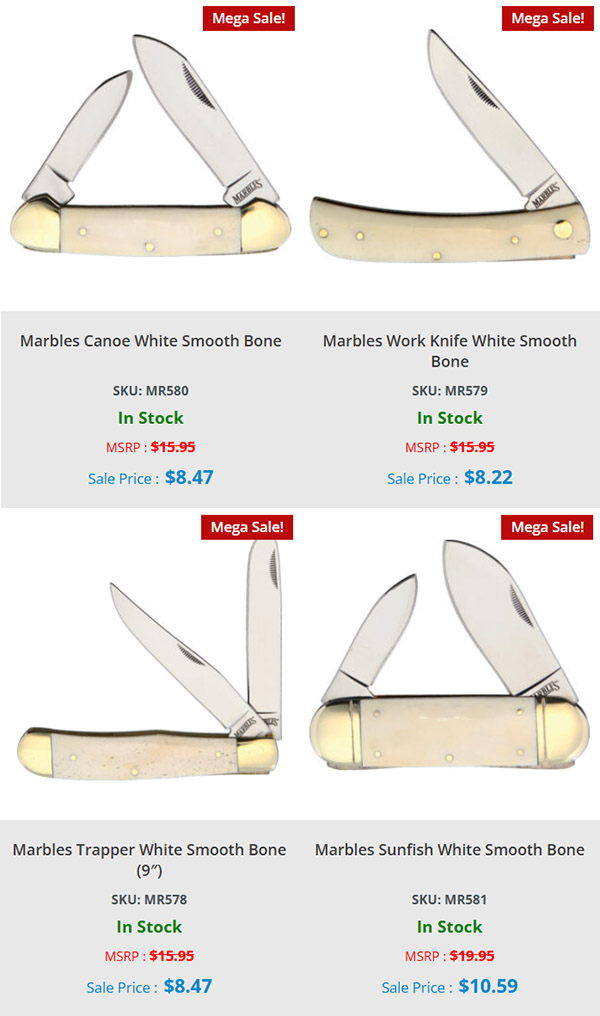
Anyway, to get back to the main attraction, I saw a Marbles folding knife with white bone scales on the Chicago Knife Works site and I liked it, so I searched on all Marbles folders with bone scales.  What the site’s search returned was intriguing.

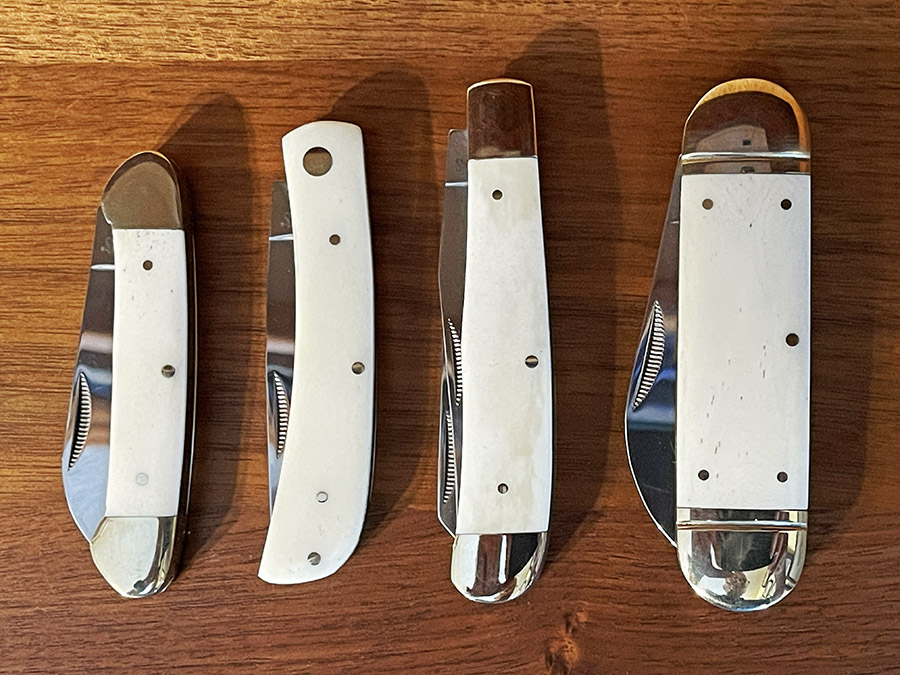
I liked every one of the knives I saw, and Chicago Knife Works‘ prices are so reasonable I pulled the trigger on all of them.  Cheap fun, and they looked good on the Chicago Knife Works site.  They arrived a few days later (all the above, with shipping, was only about $50), and I can tell you they look even better in person.

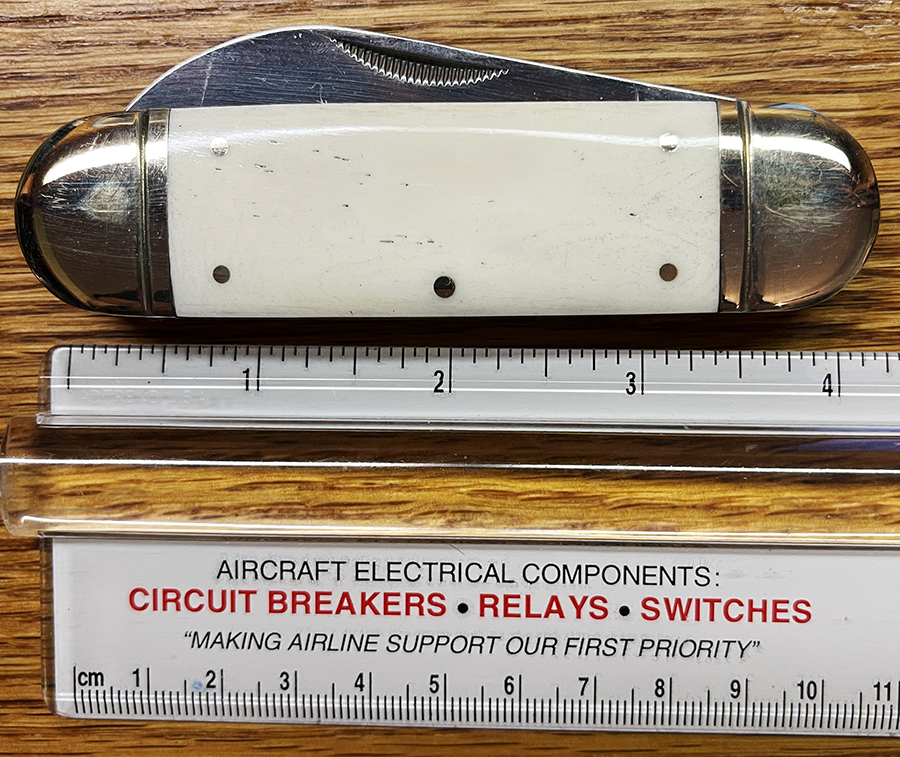
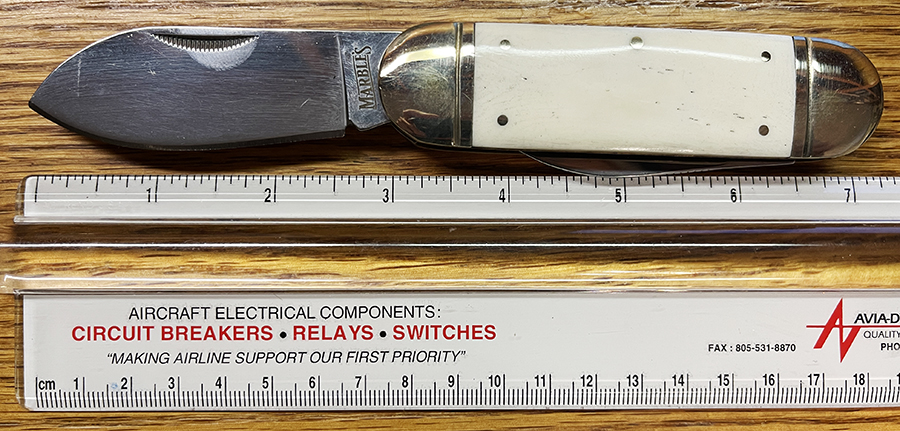
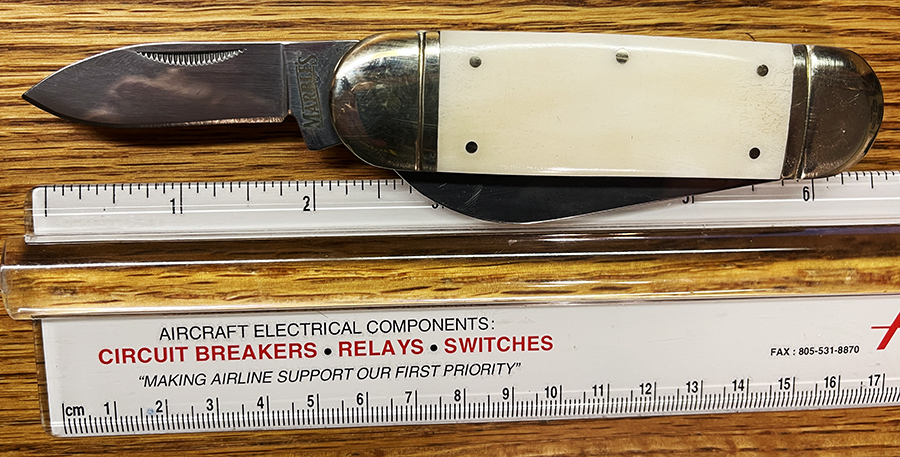
All the knives are appealing, and I like the white bone appearance.  The canoe style is one I’ve written about before, and in my opinion, it is about the perfect-sized pocketknife for pocket carry.  It has two blades and both are razor sharp.  The work knife (also known as a sodbuster) is a single-bladed knife and its name comes from the fact that it is designed to be used by a working man (like a farmer).  The trapper knife (as you might have guessed) is the design preferred by trappers.  It has two blades:  One with a clip point and the other with a spey blade (we’ve mentioned those before; my Case Stockman knife also has a spey blade).  And finally, there’s that gorgeous two-bladed sunfish knife, which is a big knife.  It gets its name from its sunfish-like shape.

The Sunfish is a physically big knife, as the following photos show:

I can’t say which of the above knives I like the best, so I’ll cut to the chase and tell you that I like them all.  So much so, I continued the quest for knives with white bone scales.

Most recently, I purchased a large folder (the Rough Ryder Deer Slayer) from another knife supplier only because Chicago Knife Works didn’t have it in stock.  I’ve written about it before.

I like the look and size of the Deer Slayer so much that I started poking around to see if that knife was available with white bone scales.  It was.  The manufacturer this time is Hen and Rooster, and I was able to order it from Chicago Knife Works.

I guess I should say the importer, not the manufacturer, as I suspect the same manufacturer makes knives for several importers with slight differences to meet the importers’ marketing strategies.  I don’t have the Hen and Rooster knife yet, but when I get it, I’ll post a few photos in a future blog.


Join our Facebook ExNotes page!


Never miss an ExNotes blog:


Help us keep the lights on:


Don’t forget: Visit our advertisers!