By Bobbie Surber
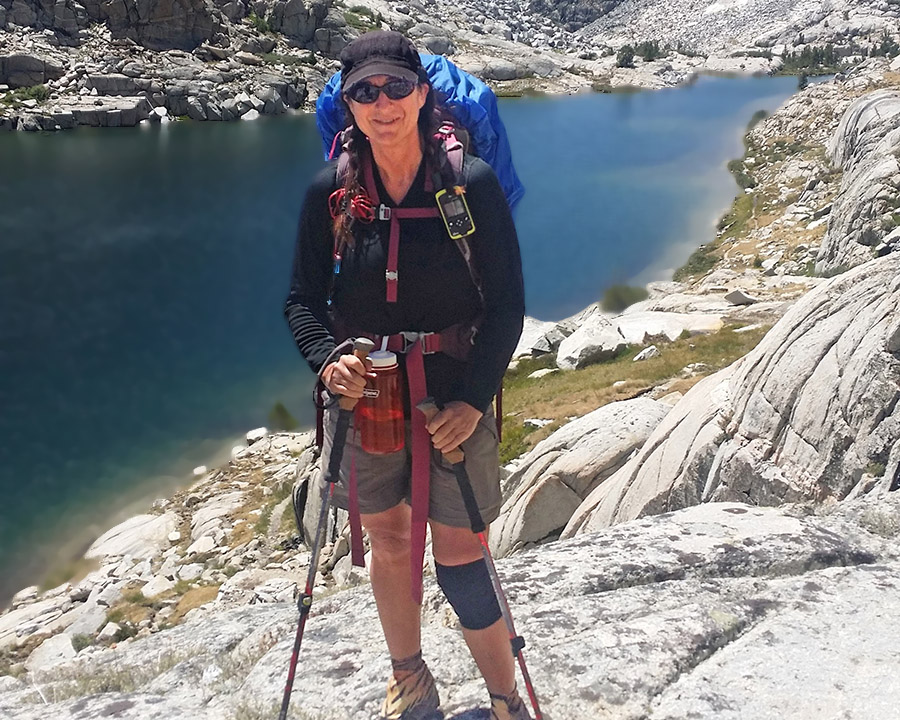
Six days into the John Muir Trail, solo from Yosemite to Whitney, the sun finally came out.
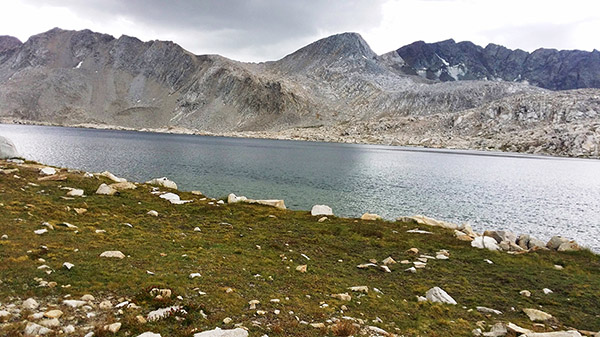
After days of cold rain, wet gear, and afternoon storms, Marie Lake at 10,551 feet felt like permission to stop. People were swimming, drying gear on the granite, stretched out in the sun like nobody wanted to move again.
I swam. Then I fell asleep on the rocks.
While I slept, the Sierra changed its mind.
When I woke up, everyone was gone.
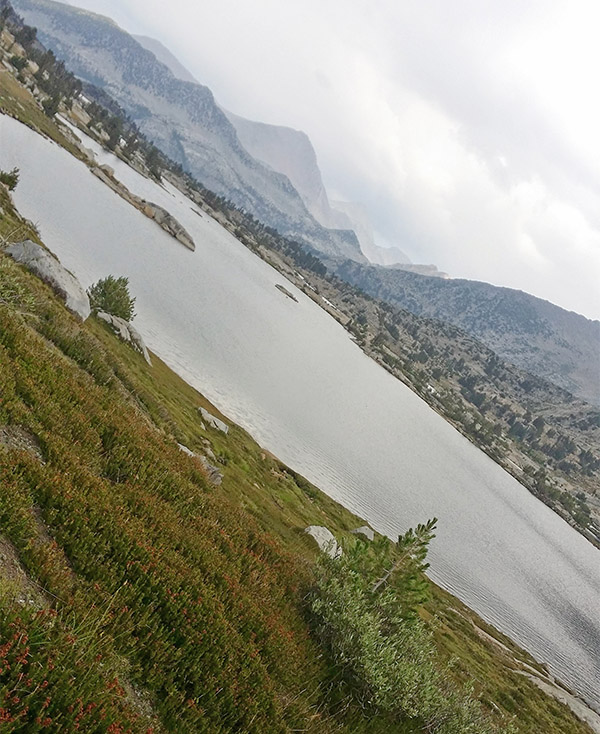
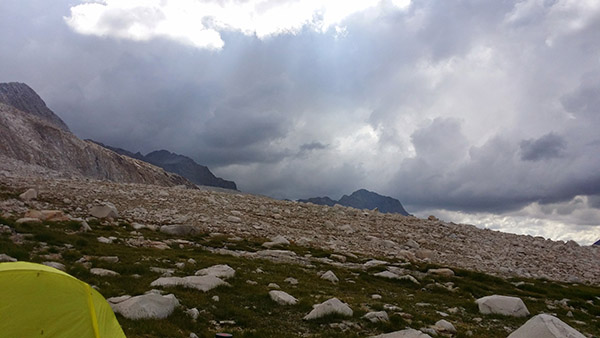
The granite still held the afternoon warmth, but the sky had changed. The harmless white clouds over Selden Pass had darkened and lowered, moving fast across the ridge. I sat up too quickly, disoriented, alone at 10,551 feet with my boots still off and my gear scattered around me.
I knew better than to cross a Sierra pass in the afternoon in August. I had done it anyway.
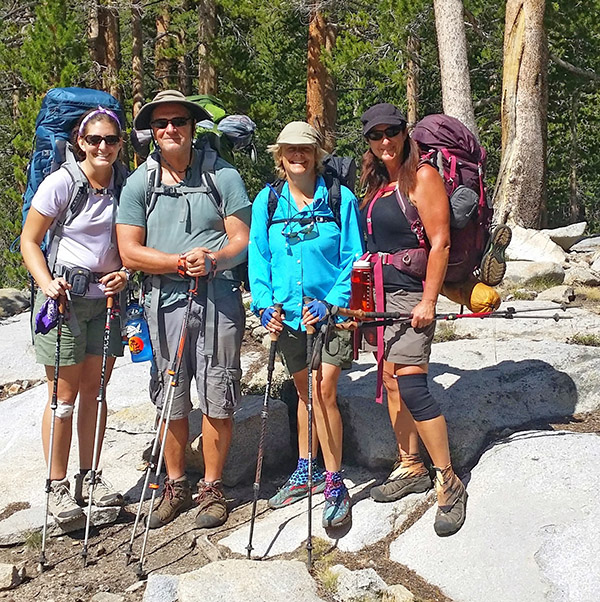
The people I had been walking with that day were already gone. Two siblings and a father-daughter team. I still chuckle at the memory of them giving up their camp stove for camp chairs, living off bars and no-cook food the whole way. The daughter longing for a hot meal. You meet people like that on long trails. When you are lucky, they become part of your trail family.
But they were gone now.
I packed up quickly and started up Selden Pass.
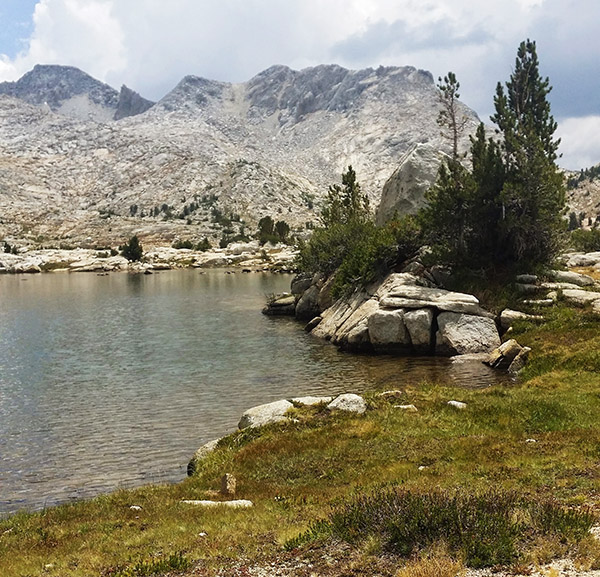
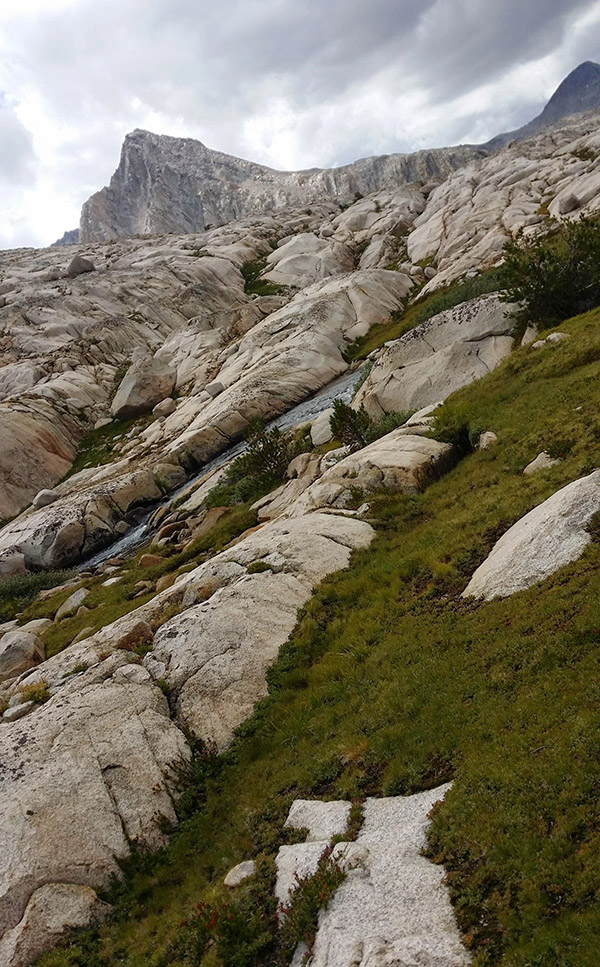
The last of the small trees gave way to open granite as the storm hit full force. Hail came first, then lightning, the kind that doesn’t stay in the sky.
Hiking poles went aside; metal in a lightning storm above tree line is an invitation. Crouching on top of my pack in lightning position, making myself as small as possible as hail drove into my shoulders and arms. Tank top and shorts. Nothing else.
There was nowhere to hide.
Terrified of the lightning and praying to angels or whatever was listening: just get me over the pass. Just get me through this.
Somehow, I made it to the top. The storm was still building.
I ran four to five miles down toward the tree line, alone, above 10,000 feet, with hail and lightning, barely dressed against the storm. I don’t remember most of it, only the granite slick under my feet. Moving and not stopping because stopping was not an option.
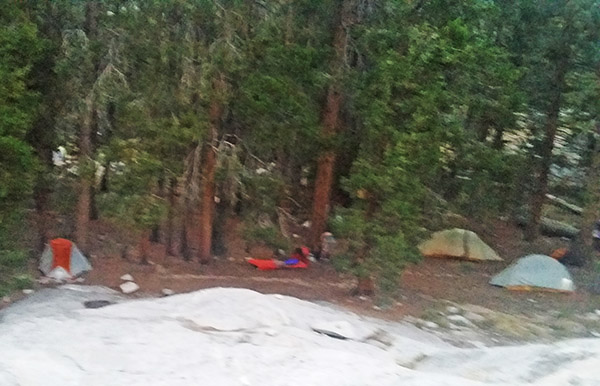
Orange through the trees pulled me toward it. A group of men camped just inside the tree line. They saw me come in, and one of them took charge immediately.
He tried to help me take off my backpack. I fought him. I was being difficult, argumentative, insisting I could do it myself. What I didn’t know was that hypothermia had already taken my hands. My coordination. My judgment. I didn’t understand why the buckles wouldn’t work. I didn’t understand why I couldn’t make my fingers do what I was telling them to do.
He knew. He stopped asking and just did it, manhandled the pack off me, got me into a tent, and used his own body heat to warm me while the others set up my tent and got my gear inside.
I don’t remember his name. I never saw any of them again on the trail.
I slept.
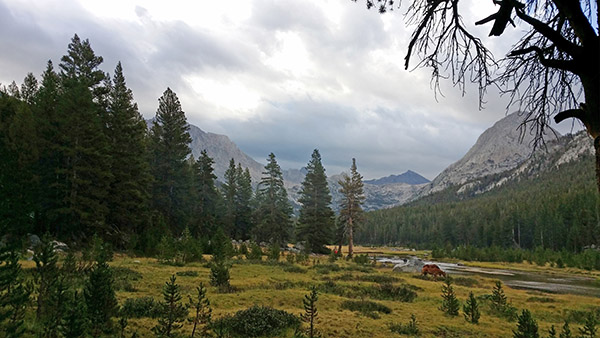
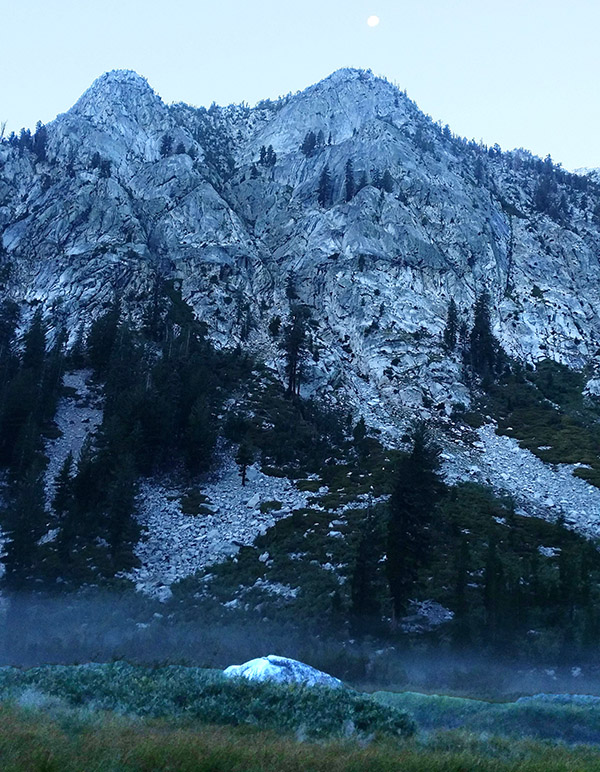
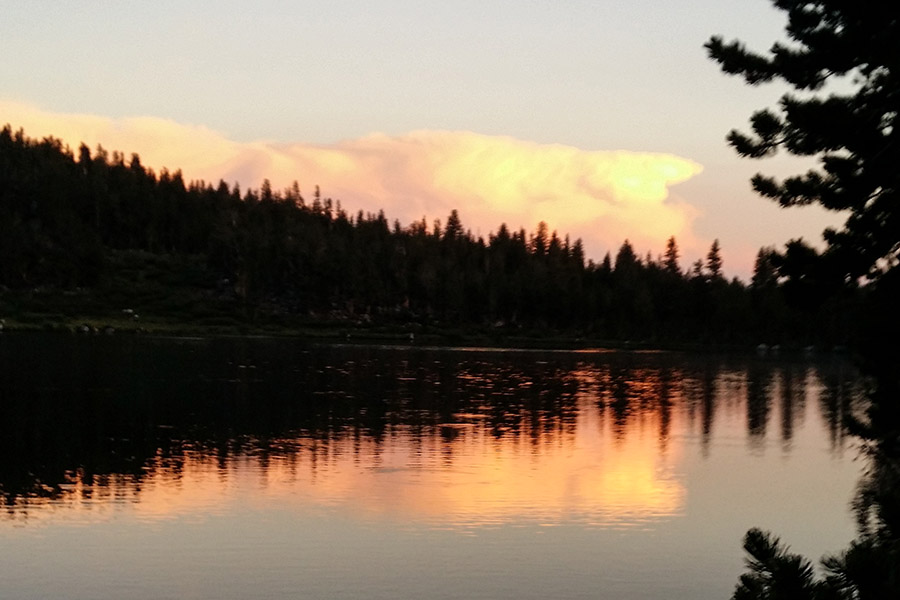
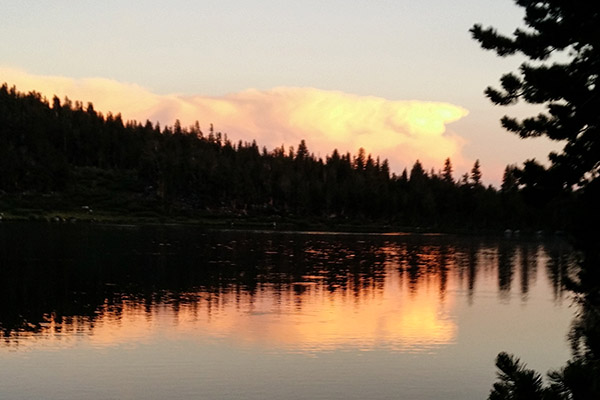
When I woke up, the light was going gold through the trees. I walked down to Sallie Keyes Lake and watched the sun set. The sky was doing what Sierra skies do after a storm, going pink and soft over the water.
As I sat in the lake’s peace, I felt a growing frustration with my own stupidity for getting into that situation. Then gratitude so large I didn’t know what to do with it. And then, quietly, as the last light went off the water, I came apart. I cried for a long time. Not the kind that passes quickly. I genuinely believed I didn’t have what it took to finish the trail alone.
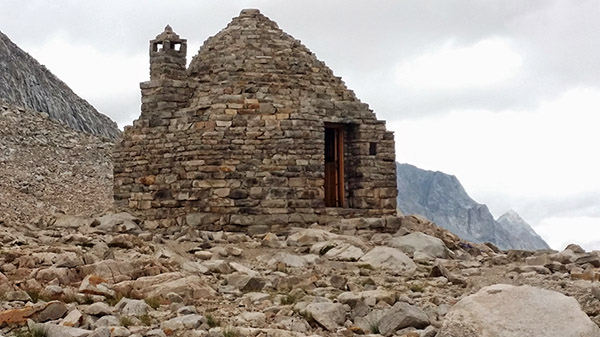
The next morning, the trail was still there. And so was I. The same thing that would carry me over Muir Pass three days later was already at work. Not courage. Just an inability to stop.
I have thought about that afternoon many times since. About what fear actually does when it settles into your chest at 10,000 feet, in hail and lightning, with no one coming.
Fear wasn’t something I overcame.
I moved through it, because stopping was never an option.
Subscribe to ExNotes for free!
We need your support! Do what you can to help ExNotes stay in the black!

Join our Facebook ExNotes page!