We promised a series on police motorcycles, and this is the first installment. It’s an article that appeared in Rider magazine in January 2010, and the research for it was a lot of fun. Police officers love to tell stories, and I think motor officers have the best ones. With apologies in advance for the fine print, here you go, folks…
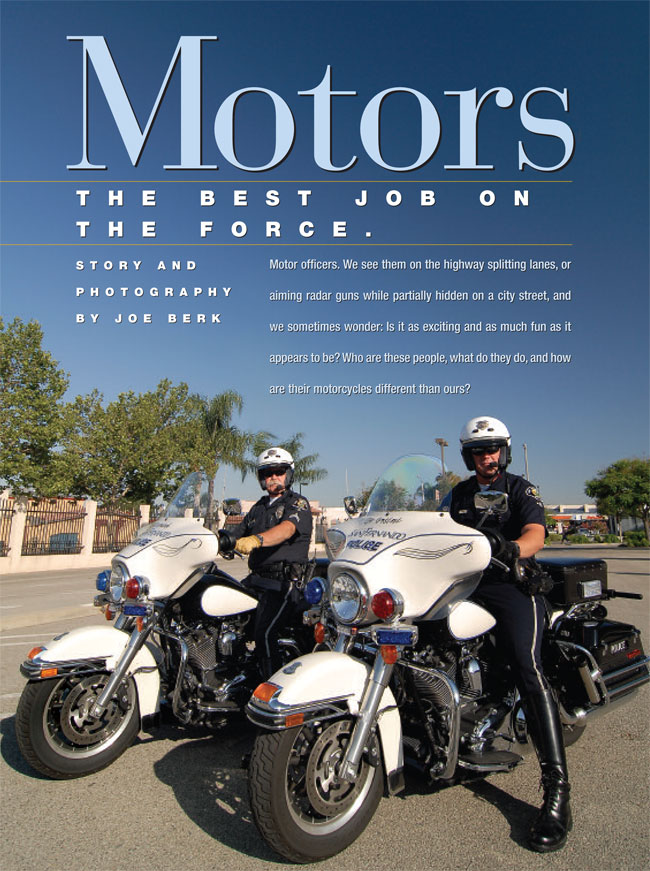
I staged one of the photos above to show a couple of San Fernando Valley police officers stopping me on my Triumph Tiger. That was one of the most interesting parts of the research. I interviewed the two SFV officers in the police station and they were regular guys. Joking, telling stories, you know the drill. I was having fun listening to them and trying to capture it all in my notes. One of the officers suggested going outside for more photos, and with that, both of them put on their helmets and sunglasses. The transformation was dramatic. With their helmets off, they were two regular (and different) guys. When the helmets and shades went on, they became RoboCop. They were indistinguishable, all business, no room for nonsense. Serious. Emotionless. No more smoking and joking. The real deal.
We parked the bikes like you see in that photo above, and one of the motor officers asked for my license, registration, and proof of insurance. All the fun and games disappeared. This was a traffic stop, and I was the object of it. Like I said above, it was serious. I knew we were doing this just to get a photo, but the tension was real. I felt like I’d somehow been caught committing a felony. Hell, had I remembered to bring my registration and insurance card with me? I couldn’t remember. I thought it might be in one of my saddlebags and I started to open it. Both officers’ hands instantly went to their sidearms. “Step away from the vehicle, sir!” Damn, this was scary business.
After the above story ran, a series of letters to the editor appeared in the subsequent edition of Rider magazine from several motor officers…
Fun times, to be sure. I really enjoyed doing that story, and before we wrap up this blog, here’s another bit of trivia: I first saw “Motors” in print while recovering from a motorcycle accident (I got busted up pretty good and I had a lot of time to catch up on my reading). The first responder on that one was Jim Royal, a La Verne, California, motor officer. Just a few weeks before my crash I shot photos of Jim for this very story. One had Jim holding a radar gun; it’s the photo you see in the article above.
In the 1960s and 70s, you couldn’t turn on a TV and flip through the channels without encountering a cop show. Hawaii Five O, Kojak, and more. TV series had shifted from westerns to police drama, and TV was what many of us did in the evening. Basically, we watched what the entertainment industry brainwashed us into watching. It’s no small wonder a lot of guys my age wanted to be cops when they grew up. Rick Rosner (a TV producer and one of the certifiably-smartest guys on the planet…Google him and you’ll see) was also an LA County Reserve Sheriff’s deputy. One night while on duty during a coffee break (a donut may have been involved), he saw two CHP motor officers roll by. That’s how and where the idea for CHiPs was born: Motorcycles. Southern California. Police. All the right pieces fell into place.
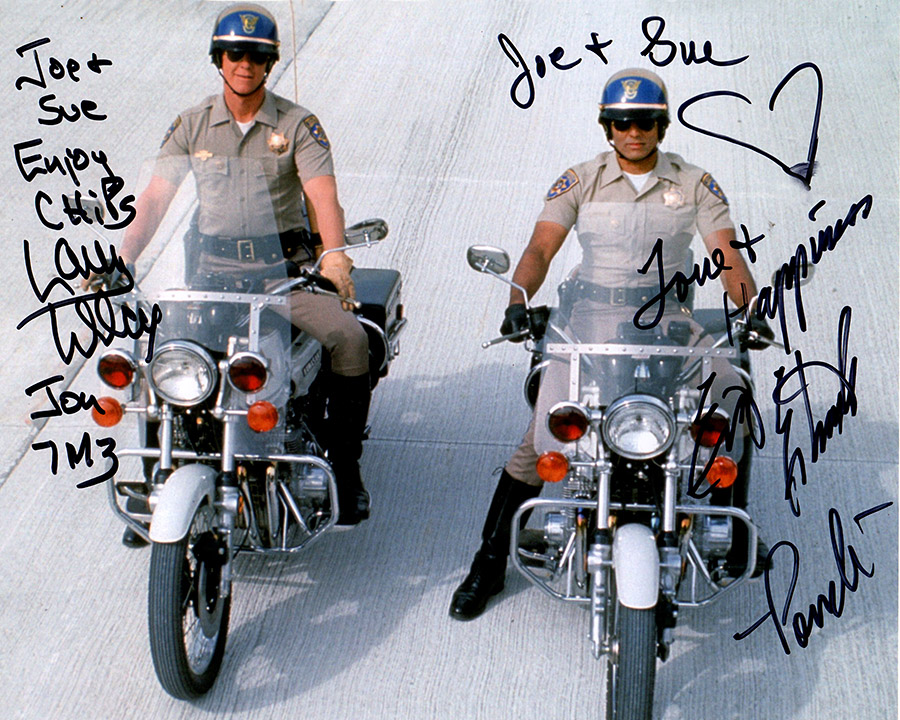
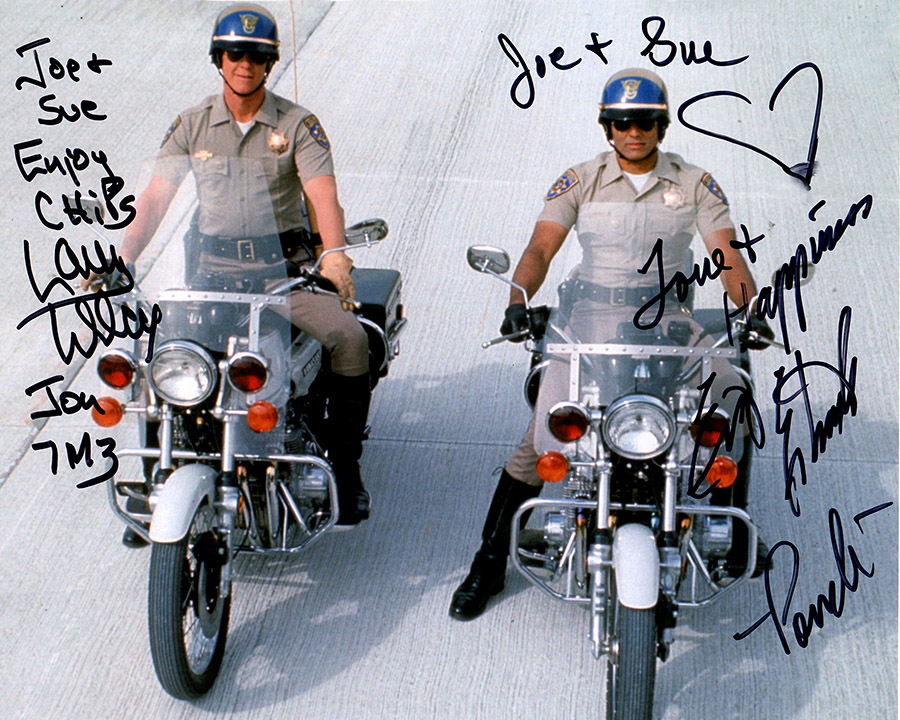
I had just returned from a year overseas (where I enjoyed nonstop good times during a 13-month party, courtesy of Uncle Sam) when CHiPs first aired in 1977. It was hokey…the music, the scenes, the premise of nearly every episode, but it was motorcycles, and I never missed an episode. The series ran for five or six years, and it featured two main characters: Ponch Poncharello (played by Eric Estrada) and Jon (played by Larry Wilcox). Their sergeant, Joe Getraer (played by Robert Pine) was also a regular on the show.
Guys like Gresh and me know that running a Z-1 Kawasaki through soft sand, up and down stairs, and other motoshenanigans doesn’t make a lot of sense (EDIT: Maybe I’m wrong about this…see the video at the end of this blog). But we’re mere mortals. Ponch and Jon made the big Kawis behave in every episode. It was all part of the story, and it was all set in and around Los Angeles. That’s one of the reasons, I think, many of my early experiences in So Cal were like deja vu all over again when I moved here. I’d seen all these places in CHiPs before I left Texas and came to California: Angeles Crest Highway, Malibu, downtown LA, the Pacific Coast Highway…the locations and the motorcycle scenes were burned into my brain.
Susie was putzing around on Facebook the other day when she found a local community bulletin board that said the CHiPs stars would be here for autographs and photos. Did I want to go? Hell, yeah!
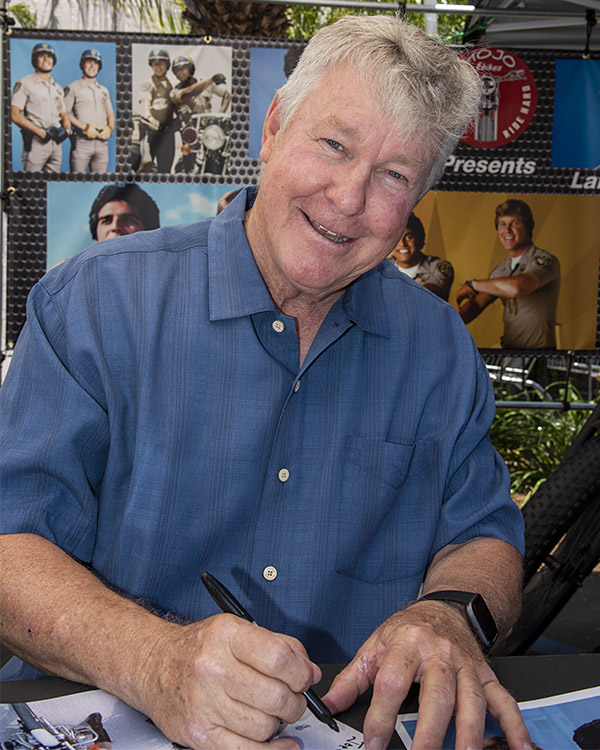
Larry Wilcox, aka Jon Baker, signing a photo for me. He seemed like a genuine nice guy. In real life, Wilcox was a Marine in Vietnam who served in an artillery unit. Wilcox is a year or two older than me.
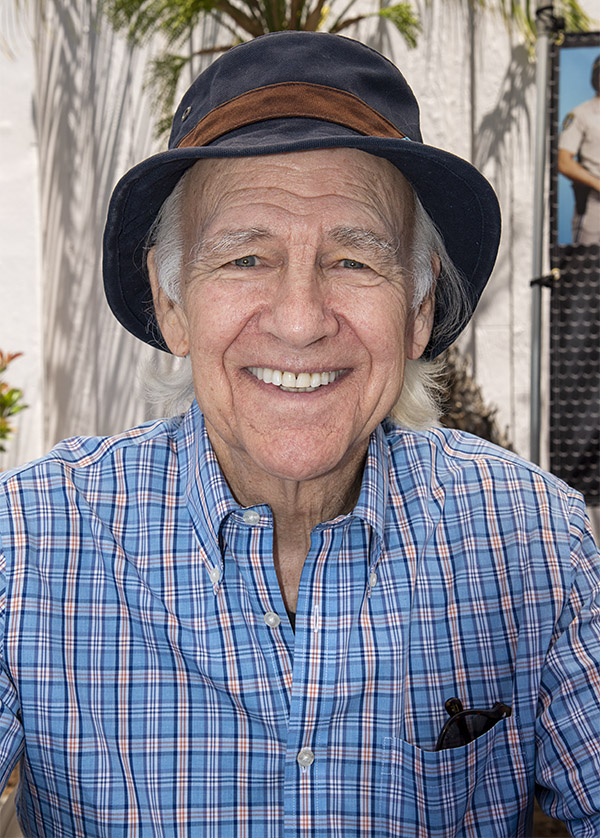
The CHiPs show had a motor sergeant (Sergeant Joe Getraer) who was played by Robert Pine. Pine was there as well, and he was happy to pose for a photograph. Mr. Pine is 80 years old now.
Sergeant Joe Getraer, played by Robert Pine, who had a full time job keeping Ponch and Jon in line. Pine, like Estrada and Wilcox, had a welcoming personality. It was a fun day.
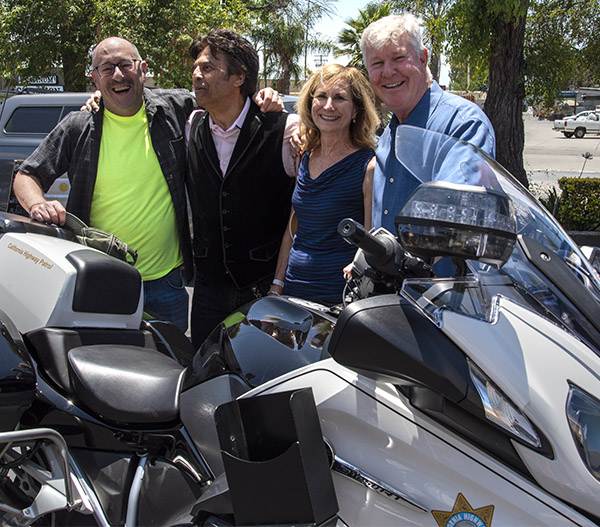
Erik Estrada was a central character in the show, the one who was always in some kind of trouble with Sergeant Getraer. Ponch (his nickname, as in Ponch Poncharello) and Jon no doubt influenced a lot of guys to apply for jobs in the real California Highway Patrol. The real California Highway Patrol had a real motor officer and a real CHP BMW at this event, along with a couple of patrol cars.
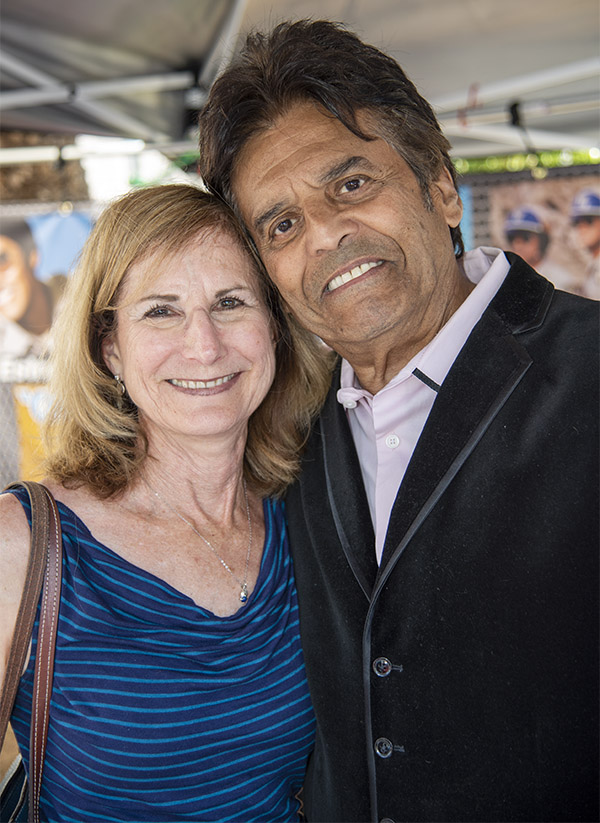
Susie and Erik Estrada. All three of the CHiPs stars allowed everyone to take as many photos as they wanted. There’s nothing pretentious about these guys.
There were a lot of things I enjoyed about this event. We had to wait in line to get up to the table for autographs, but the wait wasn’t too bad and the event wasn’t rushed at all. The weather was nice and it was a fun way to spend a Saturday morning. Pine, Wilcox, and Estrada chatted with everybody, and Mr. Estrada walked the length of the line several times apologizing for the wait and telling us they were going as fast as they could. There were a few people in line who were disabled, and Ponch helped them maneuver up to the picture-posing area (he was very friendly). All three of the TV CHiPs seemed to have the same personalities as the characters they played 50 years ago, with Estrada being the most mischievous (and, where the ladies were involved, the most flirtatious).
I asked Estrada if he still rode and what kind of motorcycle he had. It was a topic he wanted to talk about. “Ponch” told me he sold his Harley Softail 20 years ago, and that he now owned one of the six Kawasaki police motors used on the show. “The Teamsters gave it to me,” he said. I thought that was pretty cool.
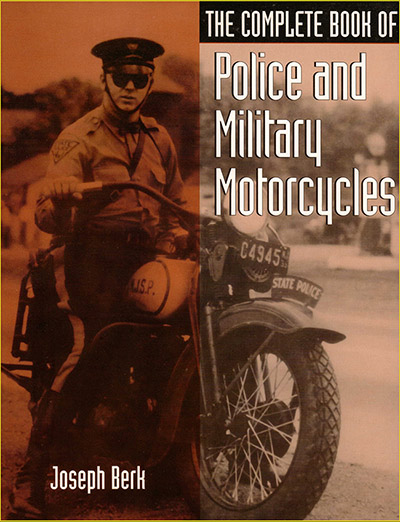
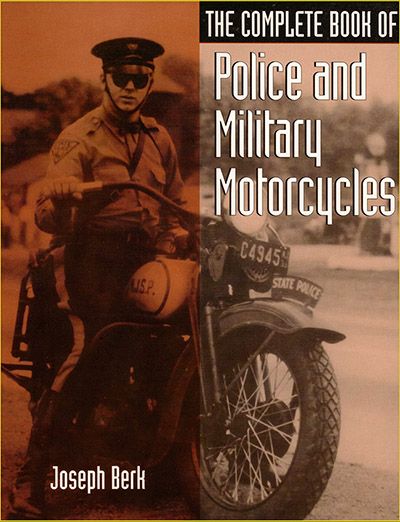
The other stars in the show were southern California, the California Highway Patrol, and the Kawasaki Police 1000 motorcycle. I imagine CHiPs did a lot for CHP recruitment, and the Kawasaki police motorcycles did a lot for Kawasaki (in both the police and civilian markets). It was a brilliant bit of product placement before product placement became a thing, and it led to a nearly complete bifurcation of the police motorcycle market. Departments east of the Mississippi River stuck with Harley-Davidson, and departments west of the Mississippi went with Kawasaki (although that has changed in recent years). If you are wondering how I know that, I did a fair amount of research for The Complete Book of Police and Military Motorcycles when I wrote it 20 years ago.
Whoa…check this out…it just happened yesterday right here in LA. Who’d a thought? The CHP on full dress Harleys chasing down a guy on a Kawasaki KLR 650, and staying with him on the freeways, splitting lanes, on surface streets, and off road. These are CHiPs legends being created as this blog was being written!
Whatever the two CHP officers’ names are, you can bet they’re being called Ponch and Jon now!
Don’t forget to click on those pop up ads!
Keep us going!
Never miss an ExNotes blog…sign up here for a free subscription:
At this point in my life, I realize it’s an itch I’ll probably never get to scratch: The need to own a Moto Guzzi. It started back in the early 1970s, when I was exploring rural northern New Jersey on my ’71 CB 750 Honda (yes, there were and still are rural parts of New Jersey). I had stopped for gas at a sort of combination general store and gas station when a pair of full dress Moto Guzzis rumbled by. I heard them first, before I saw them, and from the sound I thought it would be a couple of Harleys. Moto Guzzis sound a lot like Harley-Davidsons. Moto Guzzis were new in America, and these were the first I had ever seen. They burbled on by, leaving a lasting image and their captivating ExhaustNotes in my mind.
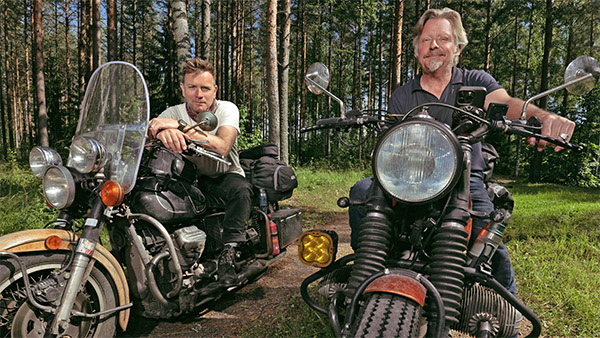
Ewan and Charlie, at it again. The Long Way Home is a good show. It somehow felt much more real watching these guys on older bikes battling the weather and old bike breakdowns. I enjoyed this one much more than the other McGregor and Boorman series.
So, about this sign from God business: A few days ago while channel surfing on Apple TV+, I saw another “Long Way” series from Ewan McGregor and Charlie Boorman. I had seen the other series from Ewan and Charlie and thought they were silly, almost an affront to real adventurers, guys like Dave Barr who had ridden around the world. You know, two dilletantes with more money than talent cashing in on the adventure motorcycle craze, versus Dave Barr, the real deal, a guy who rode around the world on his own dime on a trashed-out old Super Glide, one of the most unreliable motorcycles ever. Not finding anything more interesting as I brainlessly surfed through Apple’s offerings, The Long Way Home got a click from me. This time, the boys were on old bikes, an old BMW boxer and an old Moto Guzzi. It was the Guzzi that got my attention. I’m watching (and enjoying) the series. I’ll have a review of it posted here on ExNotes in the near future.
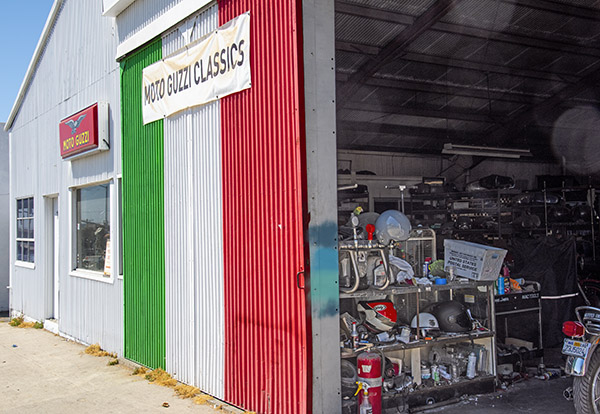
There can be no doubt about this shop’s focus on Moto Guzzis.
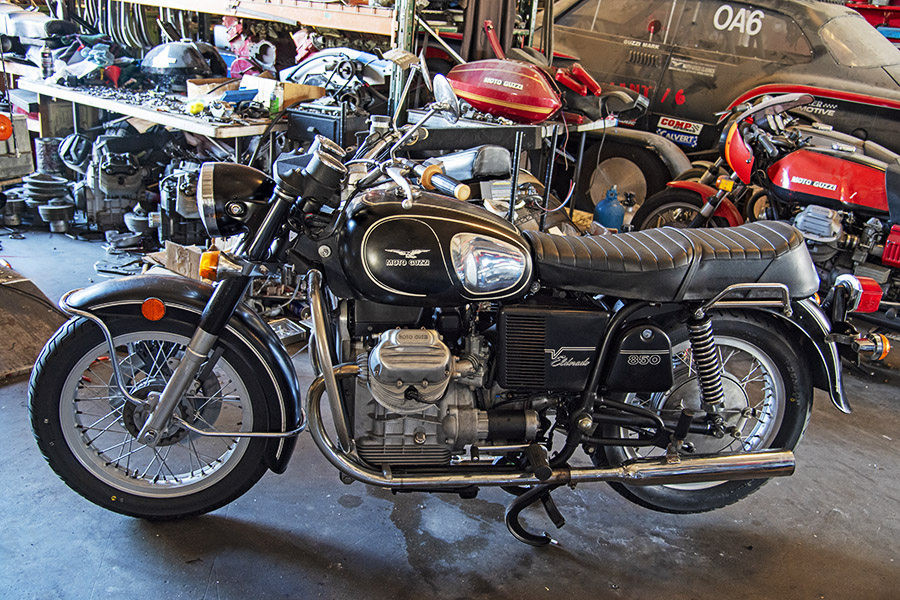
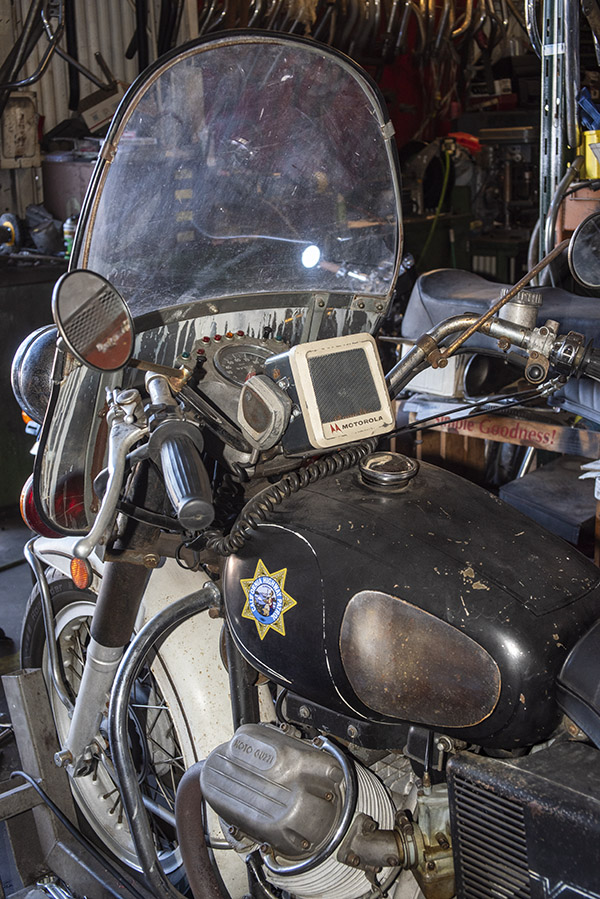
Then another thing happened. I visited Moto Guzzi Classics in Signal Hill and found myself in a sea of old Guzzis, like the stunning El Dorado you see at the top of this blog. Several of the old Guzzis were former police bikes, and I’ve always had a fascination for police motorcycles (I wrote a book about police bikes a few years ago).
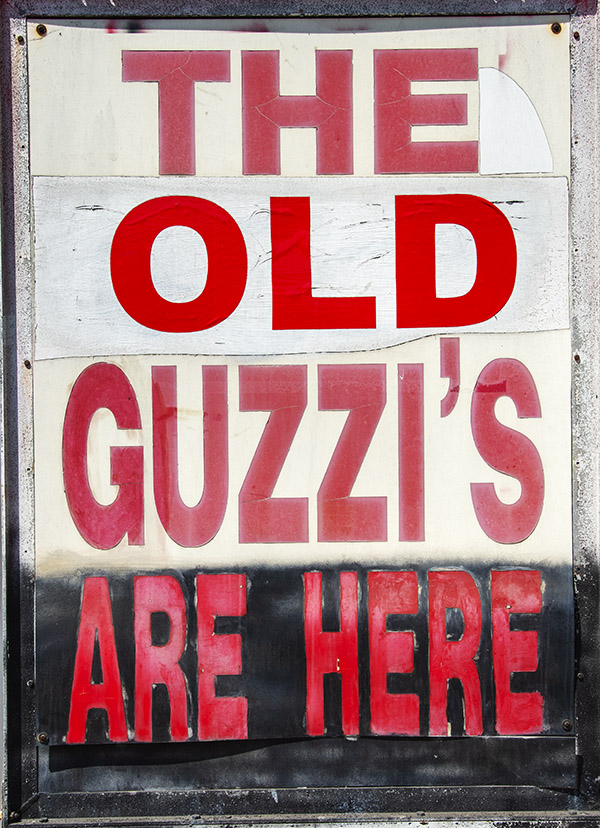
Indeed they are.
Mark, the proprietor, specializes in bringing old Guzzis back to life. Mark doesn’t usually do 100-point restorations; Moto Guzzi Classics’ forte is in resurrections. You know, finding old bikes and getting them running again, kind of like Joe Gresh has done on his Zed and is currently doing on his Honda Dreams.
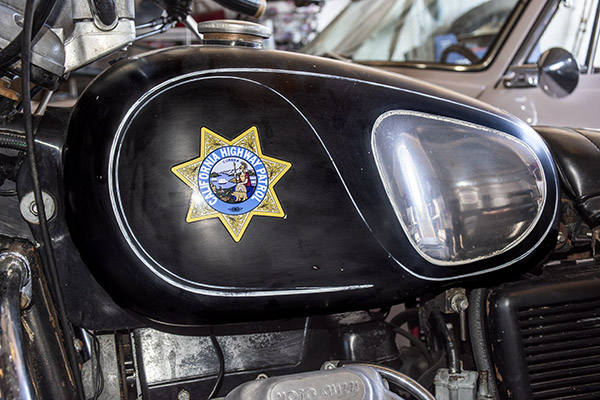
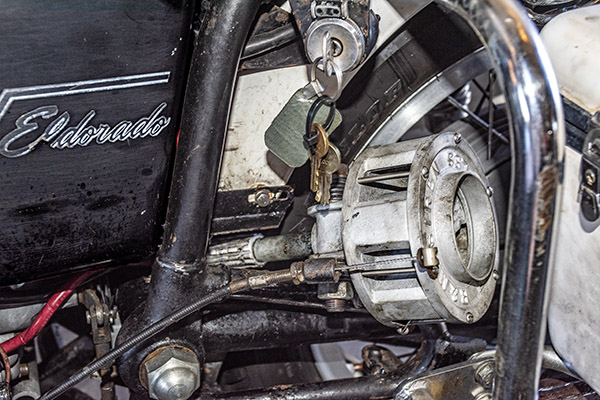
Mark let me snap a few photos of the 850 El Dorado and a former CHP police bike in his shop when I visited recently. It sure was fun.
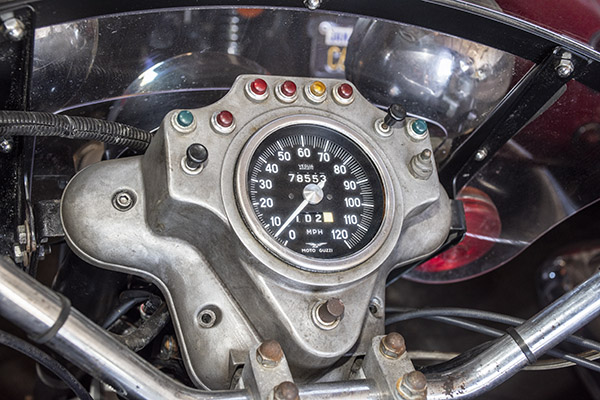
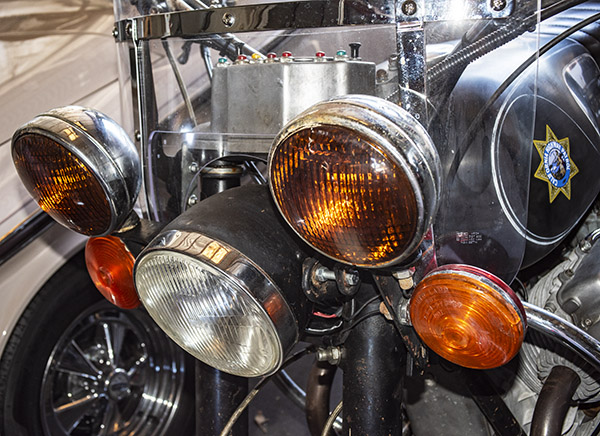
Patina to an exponent. Mike Wolf and Joe Gresh would love this place.This is a good portrait-oriented moto photo. I like getting pictures framed this way, capturing both the engine and the gas tank.Another photo of the CHP Moto Guzzi. It’s strange, realizing that that guys who rode these bikes are all retired now.An old-school siren. It was powered by the rear tire. When the officer actuated the cable, the siren’s drive rotated into the rear tire. I used to have bicycle siren on my Schwinn when I was a kid that worked the same way (at least until the neighbors told me to knock it off).The El Dorado’s certified speedometer. These were calibrated at regular intervals in case an offender challenged the ticketing officer’s accuracy in court.The amber spotlights shown here were red when this bike was on active duty. Mere civilians can’t run police lights on their bikes.
So, about this sign from God business: I had to think that with all the Guzzi inputs occurring lately (The Long Way Home and the visit to Moto Guzzi Classics in Signal Hill), maybe it was a sign. Maybe there’s a Guzzi in my future? I thought so, until I realized there just aren’t any dealers around me to work on them. I think there’s one in Glendale, but Gresh and I had a bad experience with the Enfield provided by that dealer for our Baja adventure a few years ago. I think the next closest one is 120 miles away in San Diego. That was enough to sour me on the idea of a new Guzzi. But maybe a used one? Hey, who knows?
In the 1960s and 70s, you couldn’t turn on a TV and flip through the channels without encountering a cop show. Hawaii Five O, Kojak, and more. TV series had shifted from westerns to police drama, and TV was what many of us did in the evening. Basically, we watched what the entertainment industry brainwashed us into watching. It’s no small wonder a lot of guys my age wanted to be cops when they grew up. Rick Rosner (a TV producer and one of the certifiably-smartest guys on the planet…Google him and you’ll see) was also an LA County Reserve Sheriff’s deputy. One night while on duty during a coffee break (a donut may have been involved), he saw two CHP motor officers roll by. That’s how and where the idea for CHiPs was born: Motorcycles. Southern California. Police. All the right pieces fell into place.
I had just returned from a year overseas (where I enjoyed nonstop good times during a 13-month party, courtesy of Uncle Sam) when CHiPs first aired in 1977. It was hokey…the music, the scenes, the premise of nearly every episode, but it was motorcycles, and I never missed an episode. The series ran for five or six years, and it featured two main characters: Ponch Poncharello (played by Eric Estrada) and Jon (played by Larry Wilcox). Their sergeant, Joe Getraer (played by Robert Pine) was also a regular on the show.
Guys like Gresh and me know that running a Z-1 Kawasaki through soft sand, up and down stairs, and other motoshenanigans doesn’t make a lot of sense (EDIT: Maybe I’m wrong about this…see the video at the end of this blog). But we’re mere mortals. Ponch and Jon made the big Kawis behave in every episode. It was all part of the story, and it was all set in and around Los Angeles. That’s one of the reasons, I think, many of my early experiences in So Cal were like deja vu all over again when I moved here. I’d seen all these places in CHiPs before I left Texas and came to California: Angeles Crest Highway, Malibu, downtown LA, the Pacific Coast Highway…the locations and the motorcycle scenes were burned into my brain.
Susie was putzing around on Facebook the other day when she found a local community bulletin board that said the CHiPs stars would be here for autographs and photos. Did I want to go? Hell, yeah!
Larry Wilcox, aka Jon Baker, signing a photo for me. He seemed like a genuine nice guy. In real life, Wilcox was a Marine in Vietnam who served in an artillery unit. Wilcox is a year or two older than me.
The CHiPs show had a motor sergeant (Sergeant Joe Getraer) who was played by Robert Pine. Pine was there as well, and he was happy to pose for a photograph. Mr. Pine is 80 years old now.
Sergeant Joe Getraer, played by Robert Pine, who had a full time job keeping Ponch and Jon in line. Pine, like Estrada and Wilcox, had a welcoming personality. It was a fun day.
Erik Estrada was a central character in the show, the one who was always in some kind of trouble with Sergeant Getraer. Ponch (his nickname, as in Ponch Poncharello) and Jon no doubt influenced a lot of guys to apply for jobs in the real California Highway Patrol. The real California Highway Patrol had a real motor officer and a real CHP BMW at this event, along with a couple of patrol cars.
Susie and Erik Estrada. All three of the CHiPs stars allowed everyone to take as many photos as they wanted. There’s nothing pretentious about these guys.
There were a lot of things I enjoyed about this event. We had to wait in line to get up to the table for autographs, but the wait wasn’t too bad and the event wasn’t rushed at all. The weather was nice and it was a fun way to spend a Saturday morning. Pine, Wilcox, and Estrada chatted with everybody, and Mr. Estrada walked the length of the line several times apologizing for the wait and telling us they were going as fast as they could. There were a few people in line who were disabled, and Ponch helped them maneuver up to the picture-posing area (he was very friendly). All three of the TV CHiPs seemed to have the same personalities as the characters they played 50 years ago, with Estrada being the most mischievous (and, where the ladies were involved, the most flirtatious).
I asked Estrada if he still rode and what kind of motorcycle he had. It was a topic he wanted to talk about. “Ponch” told me he sold his Harley Softail 20 years ago, and that he now owned one of the six Kawasaki police motors used on the show. “The Teamsters gave it to me,” he said. I thought that was pretty cool.
The other stars in the show were southern California, the California Highway Patrol, and the Kawasaki Police 1000 motorcycle. I imagine CHiPs did a lot for CHP recruitment, and the Kawasaki police motorcycles did a lot for Kawasaki (in both the police and civilian markets). It was a brilliant bit of product placement before product placement became a thing, and it led to a nearly complete bifurcation of the police motorcycle market. Departments east of the Mississippi River stuck with Harley-Davidson, and departments west of the Mississippi went with Kawasaki (although that has changed in recent years). If you are wondering how I know that, I did a fair amount of research for The Complete Book of Police and Military Motorcycles when I wrote it 20 years ago.
Whoa…check this out…it just happened yesterday right here in LA. Who’d a thought? The CHP on full dress Harleys chasing down a guy on a Kawasaki KLR 650, and staying with him on the freeways, splitting lanes, on surface streets, and off road. These are CHiPs legends being created as this blog was being written!
Whatever the two CHP officers’ names are, you can bet they’re being called Ponch and Jon now!
Don’t forget to click on those pop up ads!
Keep us going!
Never miss an ExNotes blog…sign up here for a free subscription:
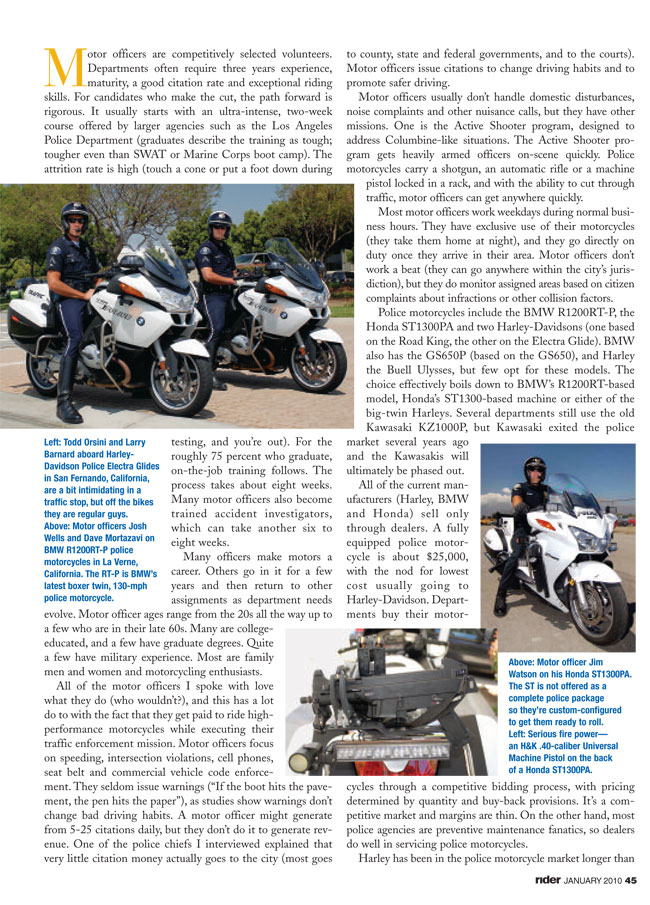
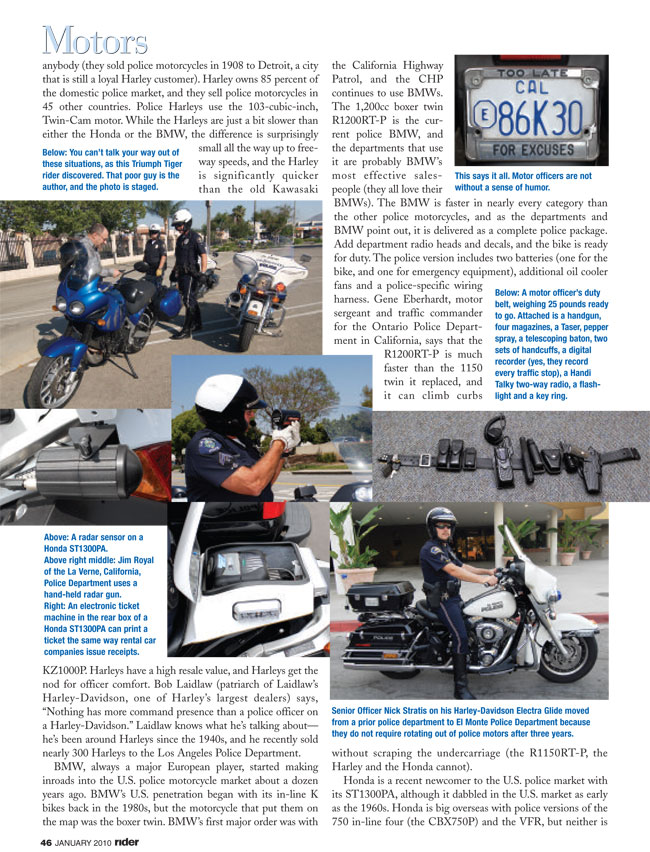
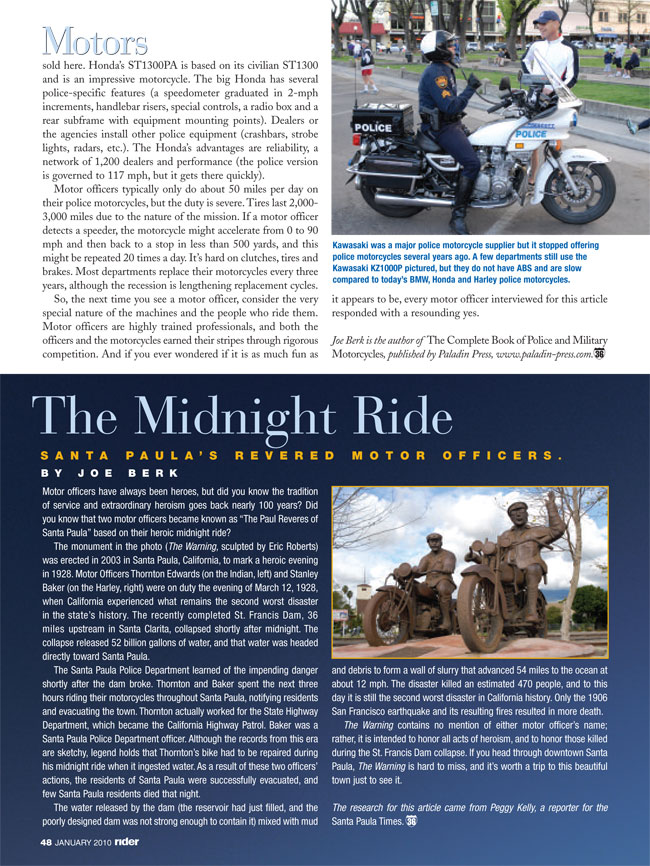 I staged one of the photos above to show a couple of San Fernando Valley police officers stopping me on my Triumph Tiger. That was one of the most interesting parts of the research. I interviewed the two SFV officers in the police station and they were regular guys. Joking, telling stories, you know the drill. I was having fun listening to them and trying to capture it all in my notes. One of the officers suggested going outside for more photos, and with that, both of them put on their helmets and sunglasses. The transformation was dramatic. With their helmets off, they were two regular (and different) guys. When the helmets and shades went on, they became RoboCop. They were indistinguishable, all business, no room for nonsense. Serious. Emotionless. No more smoking and joking. The real deal.
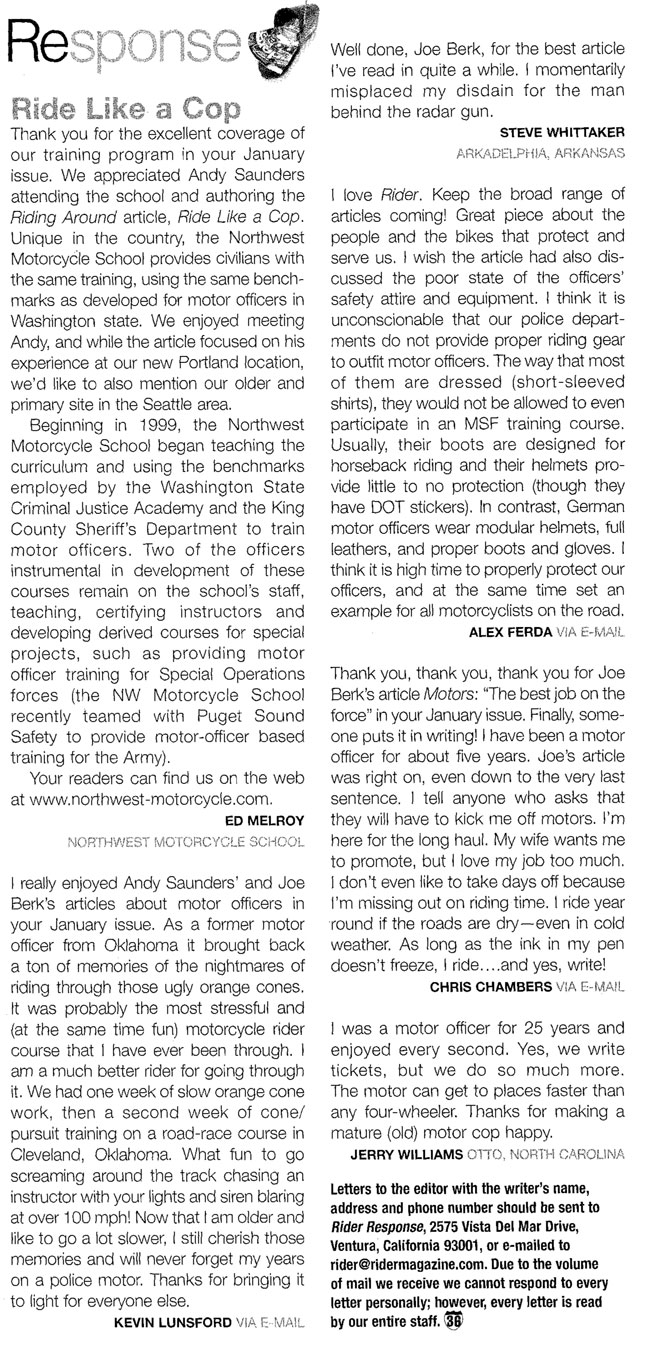 Fun times, to be sure. I really enjoyed doing that story, and before we wrap up this blog, here’s another bit of trivia: I first saw “Motors” in print while recovering from a motorcycle accident (I got busted up pretty good and I had a lot of time to catch up on my reading). The first responder on that one was Jim Royal, a La Verne, California, motor officer. Just a few weeks before my crash I shot photos of Jim for this very story. One had Jim holding a radar gun; it’s the photo you see in the article above.