
By Joe Berk
When I was a kid, we didn’t have garbage collection. Like everyone else in our corner of rural New Jersey, we had an open-top 55-gallon drum in our backyard into which we put the garbage, and once a week, Dad would light it up. Bear in mind, this was just 40 miles outside of Manhattan. Things were different in the 1950s. Sometime in the 1960s, though, New Jersey outlawed burning your own trash and we started having to pay for garbage collection. I’m sure Tony Soprano’s forebears figured into that transition somehow, but it was what it was.
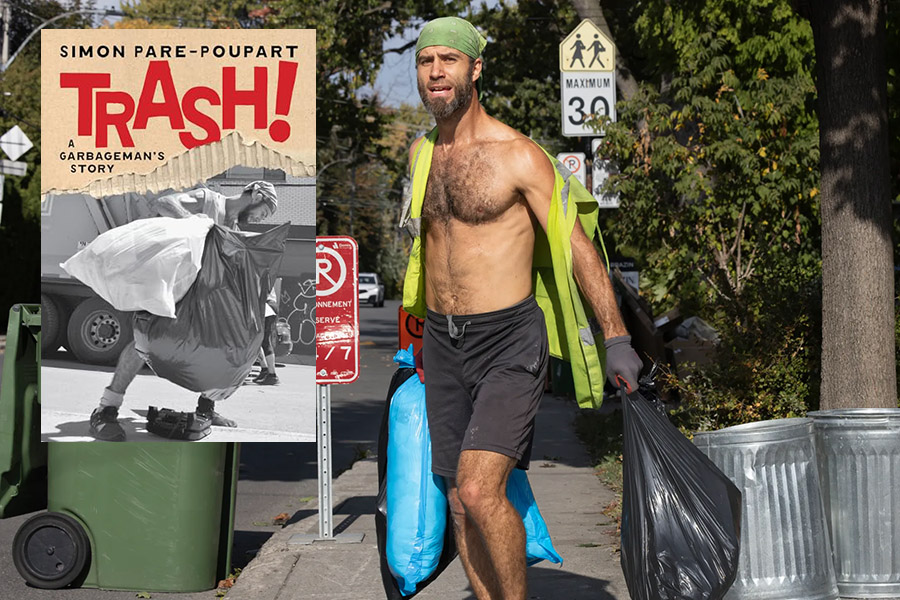
Fast forward another 50+ years, and I was lucky enough to be blessed with my first grandson. It is fun watching him grow and observing the phases kids today pass through. One of the most interesting ones has been his fascination with garbage trucks and the guys who man them. For that reason, when I read a brief review in The Wall Street Journal on Trash!, I had to order a copy. It’s an easy but fascinating read, and I read it in a day. The author, Simon Paré-Poupart, writes quoteworthy paragraphs throughout. The most poignant one, which exactly describes the phase my grandson passed through, hit me on Page 36:
When kids see the garbageman, sometimes even their garbageman, they fall in love. He’s their idol. They’re so impressed by the truck that they worship the man who seems to tame its force, unafraid of its growling engine and its iron maw. Children are entranced by the garbagemen in the same way we have always admired heroic lumberjacks like Paul Bunyan in the United States or Jos Montferrand in Canada, strongmen from Heracles to Louis Cyr, the fearless log drivers that once plied our rivers…Kids just can’t get enough of us. They’re the only ones who can look beyond the dirt and the smell to love us.
Paré-Poupart is a well-educated garbage collector, and despite his credentials and by personal choice, he stayed on the lowest rung of the trash collector hierarchy. He was one of the guys who ran behind the truck and hefted the bags and cans into the hopper. The writing is so good that you could almost feel yourself there. His central premise is that being a trash collector completely eliminates and of the anxieties most folks would ordinarily feel. You’re already at the lowest position you could possibly occupy in society. There’s no going any lower. And, being a trash collector is tremendously strenuous, and as such, it provided all the endorphins and the natural rush that accompanies other athletic endeavors.
Paré-Poupart wrote quite a bit about the disdain of the communities trash collectors serve, and the reasons why such disdain is misplaced. It made for interesting reading.
Paré-Poupart wrote about the enormous amount of waste modern societies generate, and that the world cannot continue to generate trash at its current rate. I believe there’s a lot of truth in that. When I was a Cal Poly Pomona faculty member, we taught that same concept in the engineering curriculum. It’s interesting: Paré-Poupart occupied what he and many others might regard as one of society’s lowest rungs, and faculty members in an engineering college occupy what many might consider one of society’s highest (i.e., an engineering professor), yet both espouse the same thoughts on waste generation (an issue not generally recognized by society).
Back to my grandson’s fascination with garbage trucks and garbage collectors: My son-in-law discovered that there are numerous YouTube videos on that very topic. My grandson, my son-in-law, and I found them mesmerizing. Here’s an example:
Trash! is a good read. My guess is that it will be a movie before too long, and I’ll watch it, too. But don’t wait for the movie. Trash!, at $18.99, is money well spent. I enjoyed it and I think you will, too.