By Joe Cota
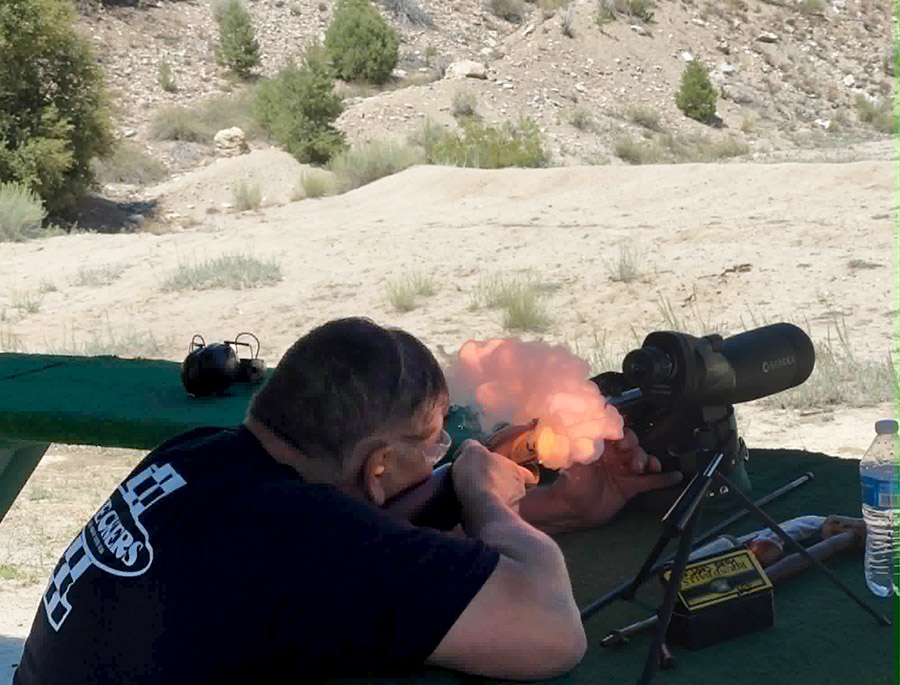
The photo above shows the first of two explosions that occur when you fire a flintlock blackpowder rifle. A Boy Scout captured this image of me shooting a few years ago. He had a pretty good camera setup that took time lapse images.
On to the topic of today’s blog: Joe Berk asked me about our blackpowder match rules and why they don’t allow competing with a cap and ball revolver. It’s an interesting question. About 12 years ago I found out about the Big Bear Valley Charcoal Burners by accident because I went to test some handloads at the range on the second Saturday of the month. We had the range from 9:00 AM till noon.
I watched the blackpowder match and it looked like fun. I showed up the following month with my Remington 1858 New Army .44 revolver, and they politely told me the rules. I’ve written about it here on ExNotes before. My six gun was just too new for them.
I watched what they were all shooting and went home and did my homework. All of them shoot percussion.
I decided to be on the safe side and take it to an even older technology. On the third month, I showed up with a .54-caliber flintlock rifle. Some of the other folks rolled their eyes. I had a bandana sitting on the bench on the fire side of the gun, and on the first shot it caught fire!
That earned me the nickname Smokin’ Joe and a permanent spot at the very far right end of the firing line! You don’t want to be to the right of a flintlock shooter. To this day, I’m still the only flintlock shooter in the club and sometimes I win.
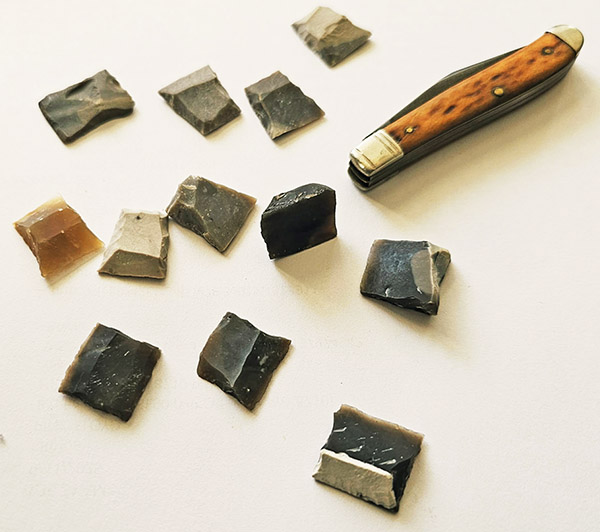
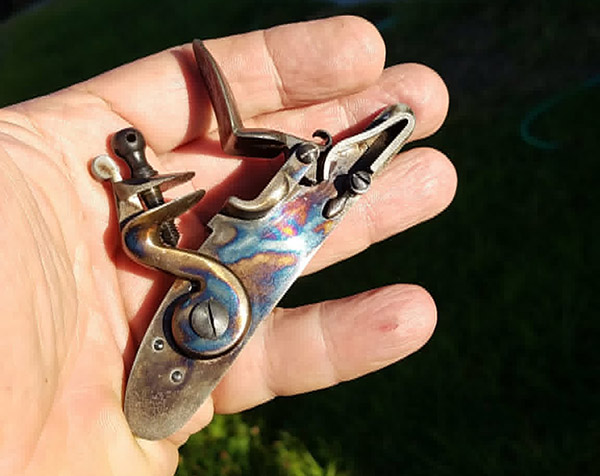
If you haven’t shot a flintlock before, it’s a very steep learning curve. First get your sight picture. Then you squeeze the trigger. The cock falls and a sharp flint strikes the hardened steel frizzen causing sparks, or tiny pieces of metal to fall into the pan. You must keep the sights on target through all this motion while the gun does try to move on you.
And then it happens…the first explosion, right in your face! Unlike smokeless propellants which have burn rates, blackpowder is a true explosive. The sparks ignite the powder in the pan, exploding in front of your face. No flinching, keep those sights on target! The flashpan explosion travels to the right… and to the left and into the touch hole and then comes the second explosion – and recoil – as the 75 grains of blackpowder in the barrel sends the big lead ball sailing downrange to the target at about 1700 feet per second. No flinching allowed!
So, it may all look to be pretty fast like normal rifle shooting to the casual observer, but to the shooter it’s very slow as you experience the click of the cock, the first flash explosion, the delay, and then whammo, the rifle fires! It seems like an eternity to keep that wild beast on target throughout the flintlock firing ordeal. One thing is certain, though: shooting flintlock improves one’s cartridge rifle shooting by leaps and bounds. It’s an incredible step up in the shooting sports…to step back!