Flintlocks

By Joe Cota

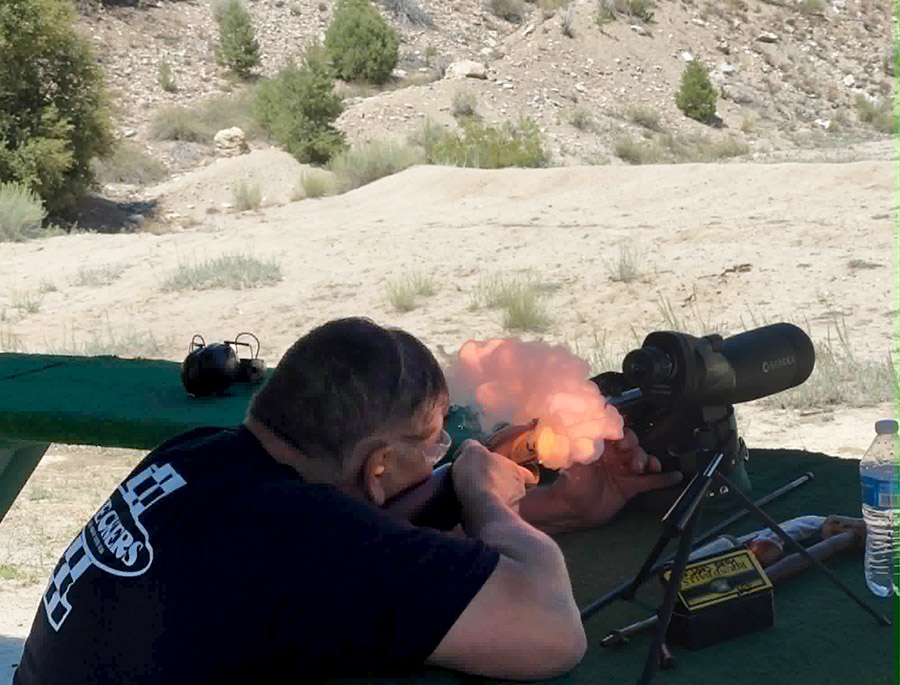
The photo above shows the first of two explosions that occur when you fire a flintlock blackpowder rifle. A Boy Scout captured this image of me shooting a few years ago. He had a pretty good camera setup that took time lapse images.

On to the topic of today’s blog:  Joe Berk asked me about our blackpowder match rules and why they don’t allow competing with a cap and ball revolver.  It’s an interesting question. About 12 years ago I found out about the Big Bear Valley Charcoal Burners by accident because I went to test some handloads at the range on the second Saturday of the month. We had the range from 9:00 AM till noon.

I watched the blackpowder match and it looked like fun. I showed up the following month with my Remington 1858 New Army .44 revolver, and they politely told me the rules.  I’ve written about it here on ExNotes before.  My six gun was just too new for them.

I watched what they were all shooting and went home and did my homework. All of them shoot percussion.

I decided to be on the safe side and take it to an even older technology. On the third month, I showed up with a .54-caliber flintlock rifle. Some of the other folks rolled their eyes. I had a bandana sitting on the bench on the fire side of the gun, and on the first shot it caught fire!

That earned me the nickname Smokin’ Joe and a permanent spot at the very far right end of the firing line!  You don’t want to be to the right of a flintlock shooter. To this day, I’m still the only flintlock shooter in the club and sometimes I win.
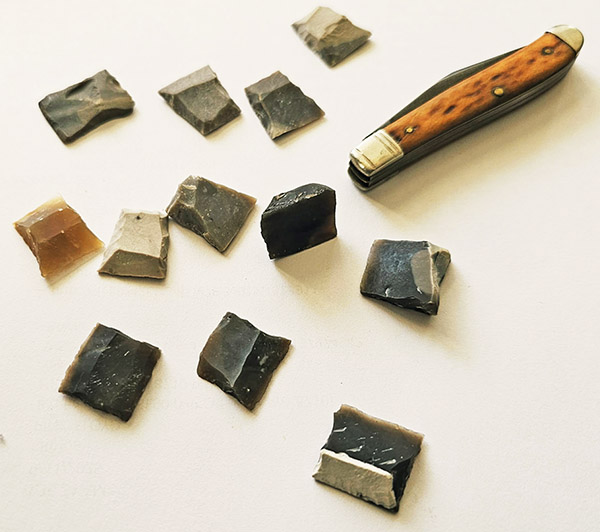
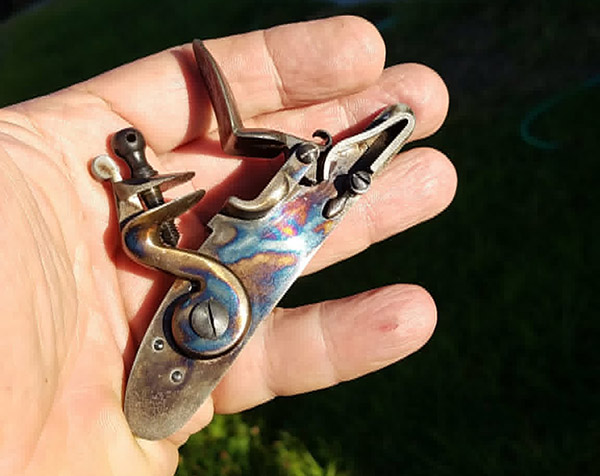
If you haven’t shot a flintlock before, it’s a very steep learning curve. First get your sight picture. Then you squeeze the trigger. The cock falls and a sharp flint strikes the hardened steel frizzen causing sparks, or tiny pieces of metal to fall into the pan. You must keep the sights on target through all this motion while the gun does try to move on you.

And then it happens…the first explosion, right in your face! Unlike smokeless propellants which have burn rates, blackpowder is a true explosive. The sparks ignite the powder in the pan, exploding in front of your face. No flinching, keep those sights on target! The flashpan explosion travels to the right… and to the left and into the touch hole and then comes the second explosion – and recoil – as the 75 grains of blackpowder in the barrel sends the big lead ball sailing downrange to the target at about 1700 feet per second. No flinching allowed!

So, it may all look to be pretty fast like normal rifle shooting to the casual observer, but to the shooter it’s very slow as you experience the click of the cock, the first flash explosion, the delay, and then whammo, the rifle fires! It seems like an eternity to keep that wild beast on target throughout the flintlock firing ordeal. One thing is certain, though:  shooting flintlock improves one’s cartridge rifle shooting by leaps and bounds. It’s an incredible step up in the shooting sports…to step back!
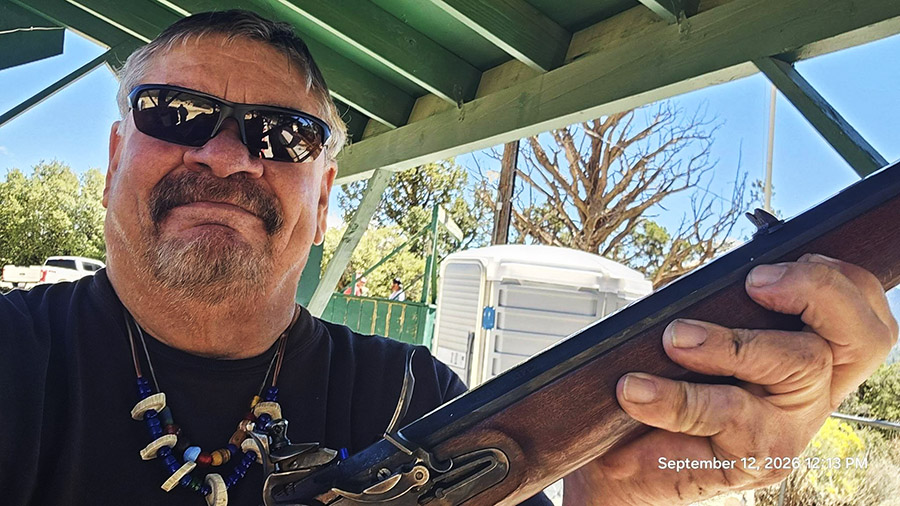
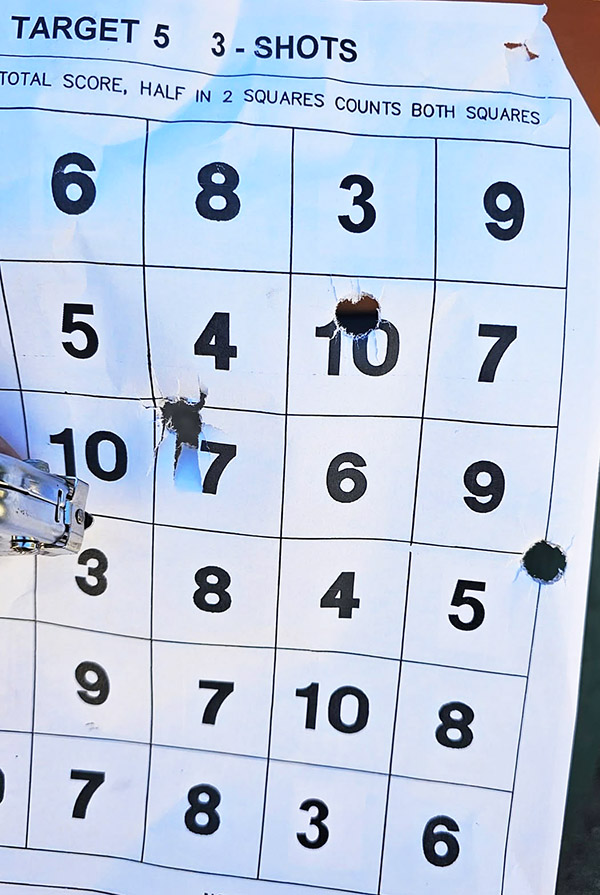
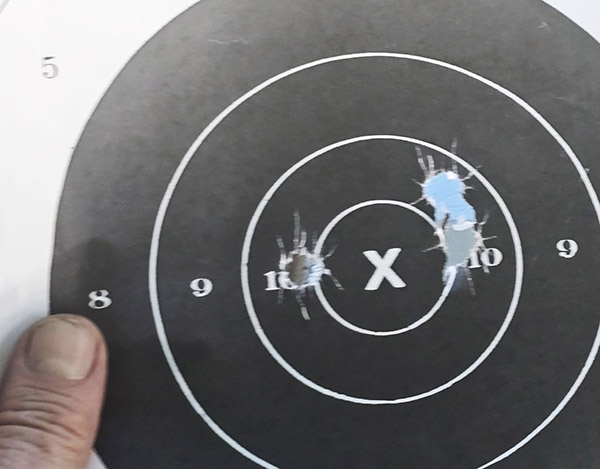
 

I won!

By Joe Cota

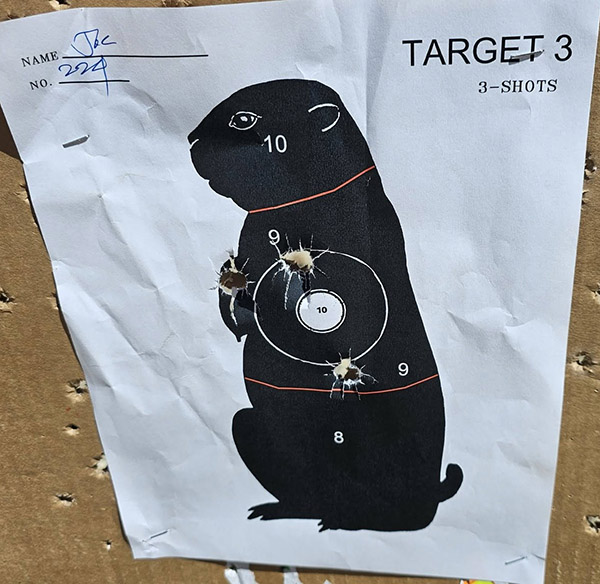
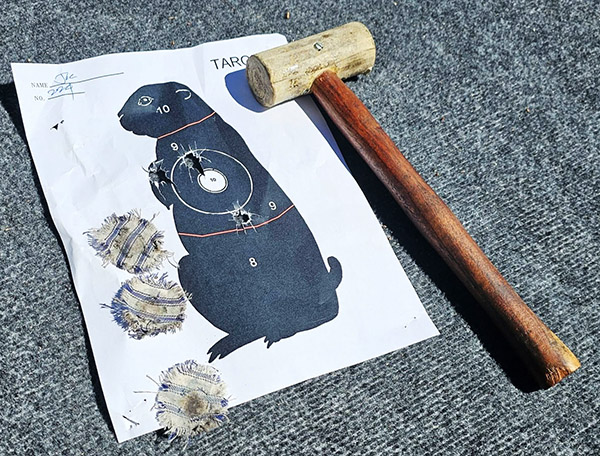
So, about that black powder match I wrote about recently:  I won!  The ‘ol .54-caliber flintlock shot steady and true.

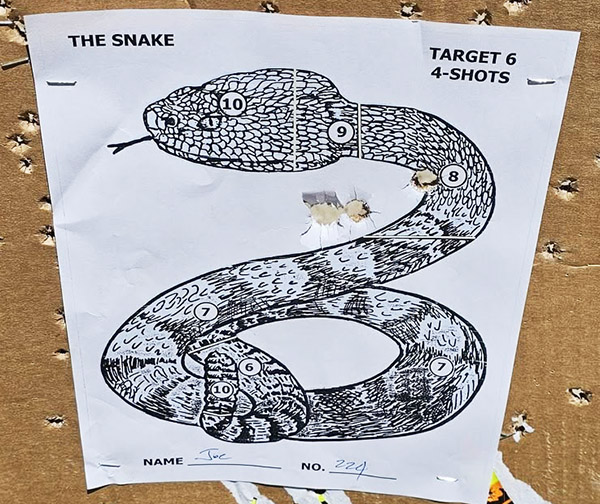
Although the Target 6 group wasn’t too bad for offhand shooting with a rock sparkin’ flintlock rifle, the snake got away from me and lived to see another day! I had to change the flint during Round 6 and only got three shots off out of four, but a good group isn’t enough if it misses the target!

But in the end the old .54-caliber flintlock made enough hits on target overall to make it happen. Flintlock isn’t easy and that’s the best part about it.

We had a fun day in the mountains with good friends burnin’ charcoal. And that’s what it’s all about, isn’t it?


Paul’s New .40 Caliber Flintlock

By Joe Berk

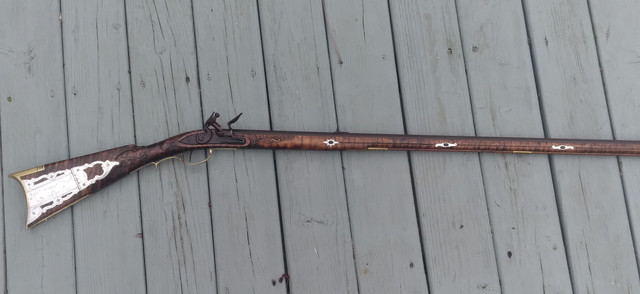
Good buddy Paul recently told me about a custom crafted flintlock rifle he bought from rifle maker Tom Caster at a steep discount because the stock had been broken.  A stock break sounds like a major defect, but actually it is not that uncommon and repairing the broken stock, if done correctly, makes the stock stronger than new.  Paul is a serious black powder shooter and he builds custom rifles, so he knows what he is doing here.  Both Paul and Tom gave me permission to share this story.

Here’s what Paul wrote to me about this rifle:

When I first saw it I had the same reaction as you. It ticked off all my boxes for a rifle of this style and caliber as I did not have a .40 caliber muzzle loading rifle. They are supposedly an accurate target rifle. He sent me a target that he shot at 25 yards and seven of the ten shots were around a 2-1/2″ cluster which is not bad for the first time the rifle was shot.

I asked Paul about the accuracy.  Here’s what he said:

That flintlock target is good for the first outing of the rifle. From there you will test out different powder amounts, different patch thickness and ball diameters if you want better groupings. The .40 caliber is mostly a 50-to-75-yard gun so you would be hunting squirrels or small game up to small deer. A lot of states only allow .45 caliber and bigger for deer hunting, so the .40 caliber is used for varmints and target work.

Here’s the story on this rifle from Tom Caster:

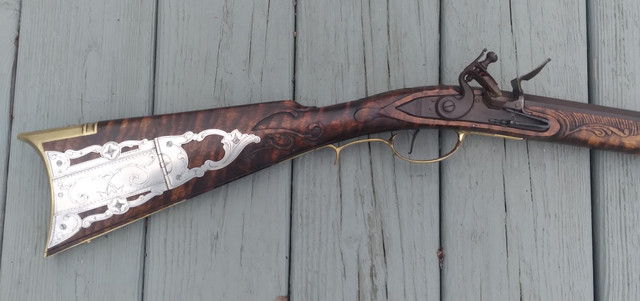
I finished up this pretty little .40 cal Armstrong rifle last week and was putting a coat of wax on the stock when it slipped off my table and broke in two at the wrist!

Scrapping was never really considered (too much work into it) because I have always been about fixing things that happen on the job or in the shop. It was a pretty clean break, so I set it up in my two vices and glued it back together with Tite-Bond II. After that set up, I drilled a 3/8″ hole from the breech down thru the wrist 8″ deep and glued in a 3/8″ hickory RR in place. After drilling out the holes in the rod for lock screws and the sear area, I sealed the inside up with epoxy.

The crack barely shows now but it is there when you look close. The stock should be fine to use now.

Some guys would use a steel threaded rod instead of wood dowel, but I didn’t want to add any more weight to a 7.6 lb. rifle.

I plan to sell it after the first of the year at a discounted price if anyone is interested.

After another inquiry about the rifle, Tom added the following:

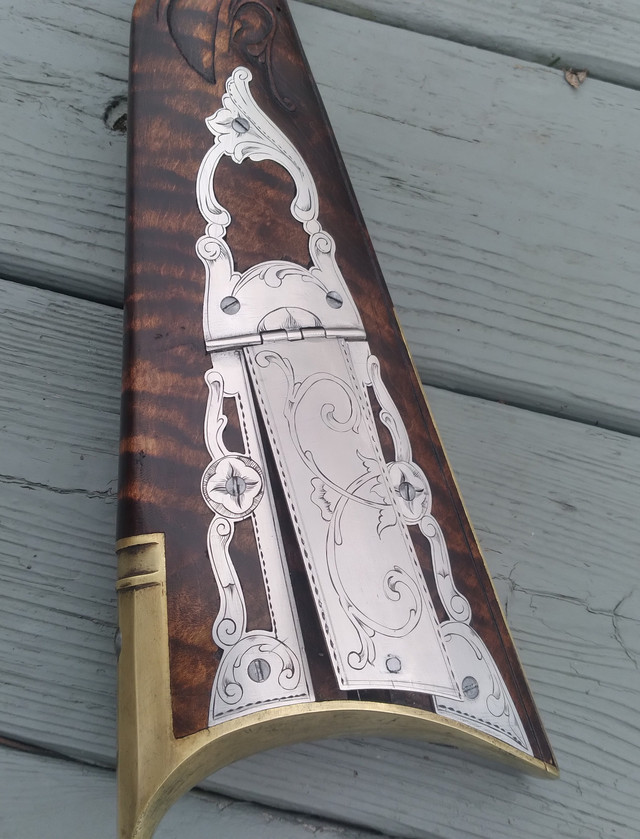
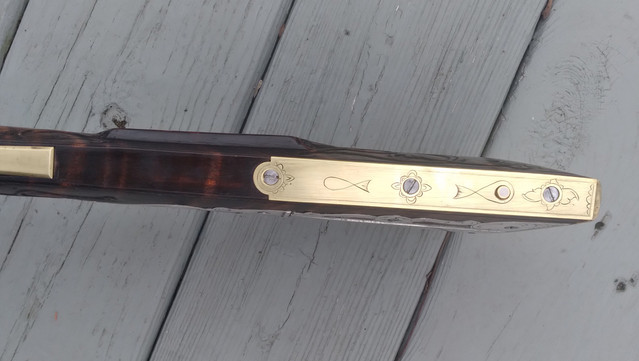
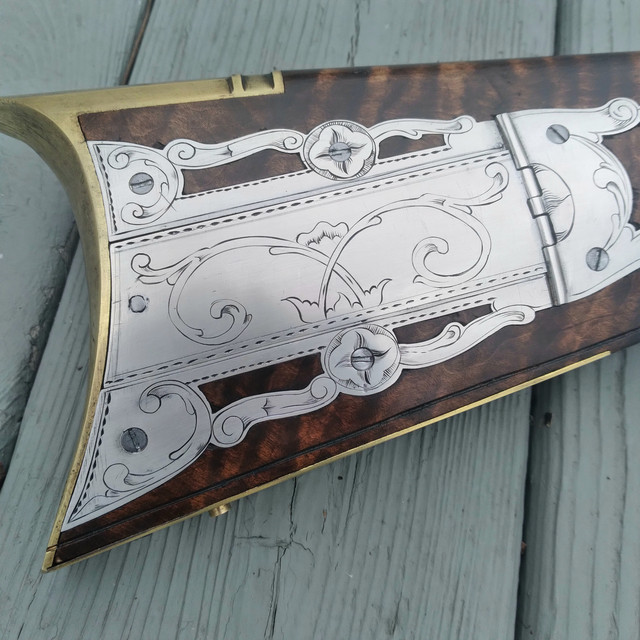
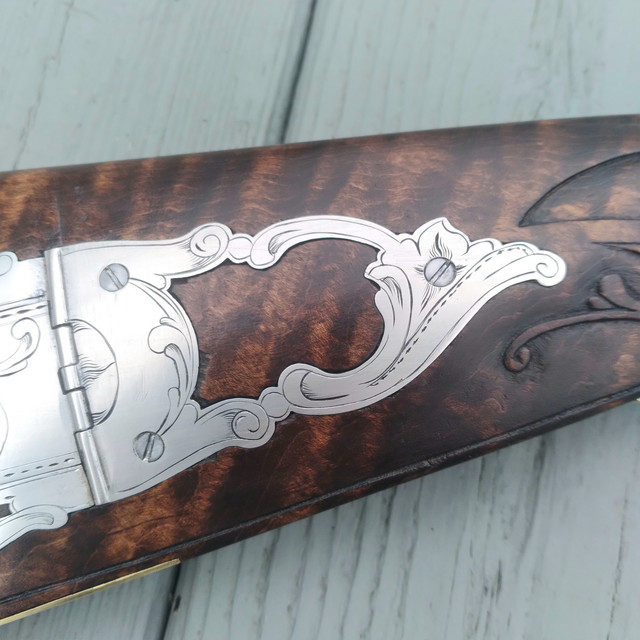
As far as the wood choice goes, I purchased this “in the white” from the estate of my old friend Fred Schelter. He purchased the Getz barrel and had Fred Miller (I believe) inlet it and pre-shape the stock in 2000-2001. Whether it was his wood or Miller’s, I don’t know. He had two Armstrong stocks done this way at the same time, one was a .50 cal (sold) and this .40 cal, rifle. Fred S. did the carving and inlay of the patchbox, butt, toe plate, nose cap, and trigger and guard. He had made the forend escutcheons for the barrel keys but didn’t inlay them.

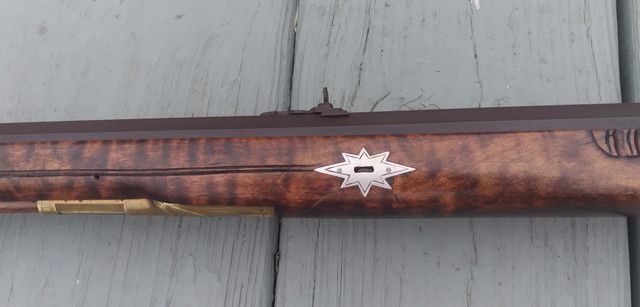
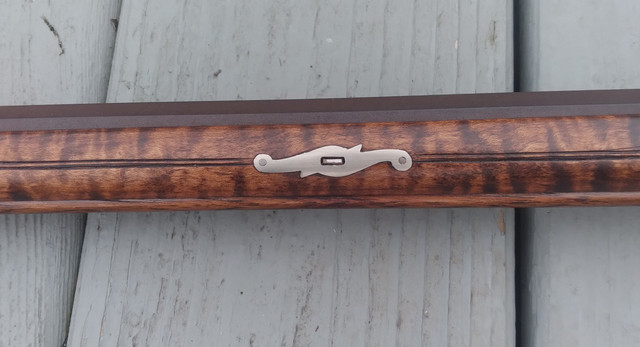
Both stocks were inletted and drilled for a large Dlx. Siler Flintlock, but only one lock existed and it was curiously interchangeable. So I had to buy a second lock to complete this one. I fashioned a new trigger for a lighter pull and made a patchbox release, side plate and sights. Then I did the engraving and finish work.

…so, now you know…the rest of the story!

Tom Caster

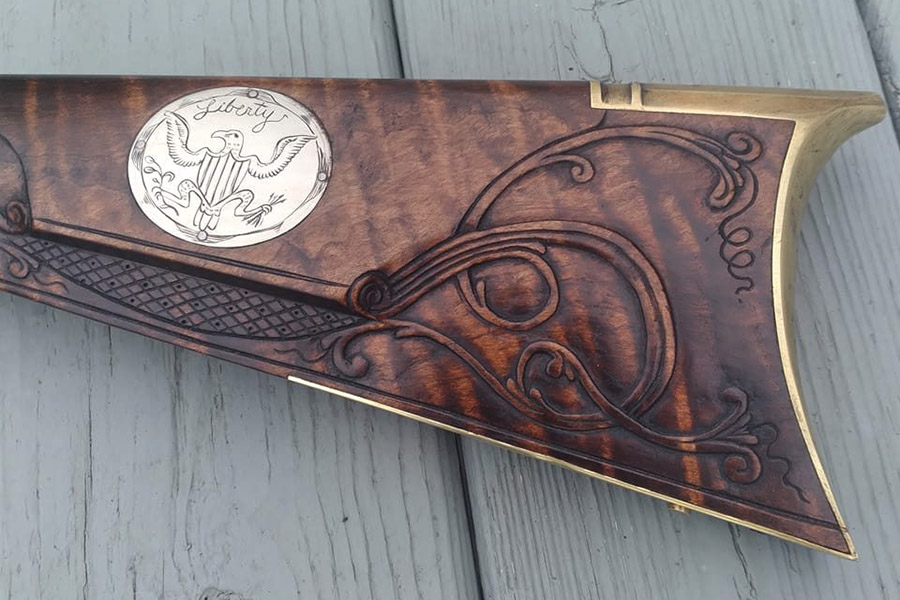
In his email to me, Paul included several photos from Tom. As the photos show, the detail and workmanship on this rifle are stunning.  Take a look:

It will be interesting to see if Paul shoots this one.  I’m going to visit with him again (hopefully in the not too distant future) for a trip to the range.  I’ve never fired my Colt Walker (it is a black powder revolver) and I know very little about shooting these weapons.   Paul knows a lot, and I hope to get educated.


As I mentioned at the start of this blog, repaired stocks are not that big a deal.  I had an experience where a seller did a poor job packaging a Ruger No. 3 he sent to me.  I had the repair accomplished and the stock refinished by a competent shop, the rifle looks better than new, and it is now one of my favorites.  It is exceptionally accurate, too.  You can read that story here.


More Tales of the Gun stories are here.


Never miss an ExNotes blog:


Don’t forget: Visit our advertisers!