
By Joe Berk
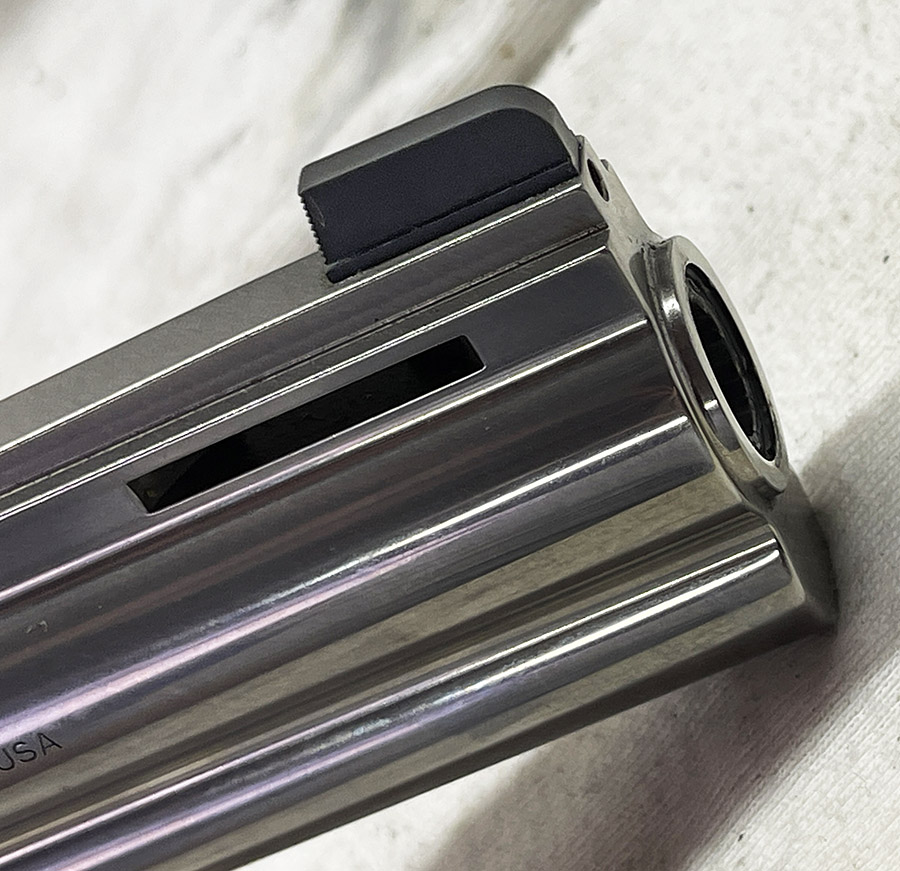
I am enjoying my Colt Python more and more every time I shoot it. The latest improvement is the Harrison Design front sight, as seen in the photo above. Just prior to installing it, I had installed the Wilson Combat rear sight, as seen in the photo below. I covered the Wilson Combat rear sight in my previous blog.
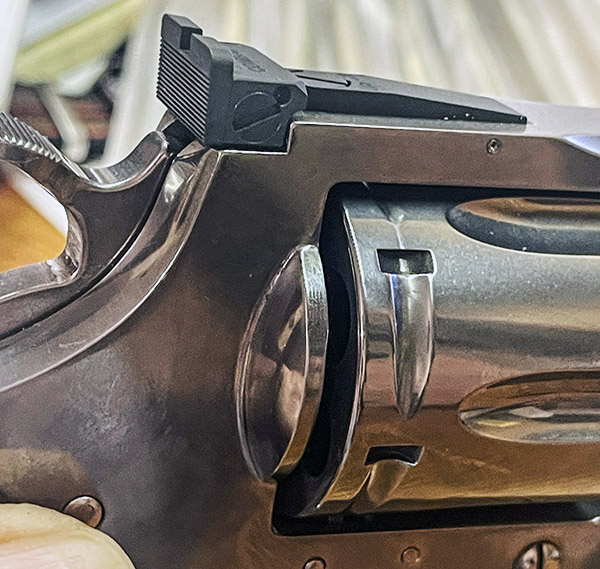
The Wilson Combat rear sight is a solidly built affair, but it sits higher than the stock Python rear sight. That caused my shots to hit high.
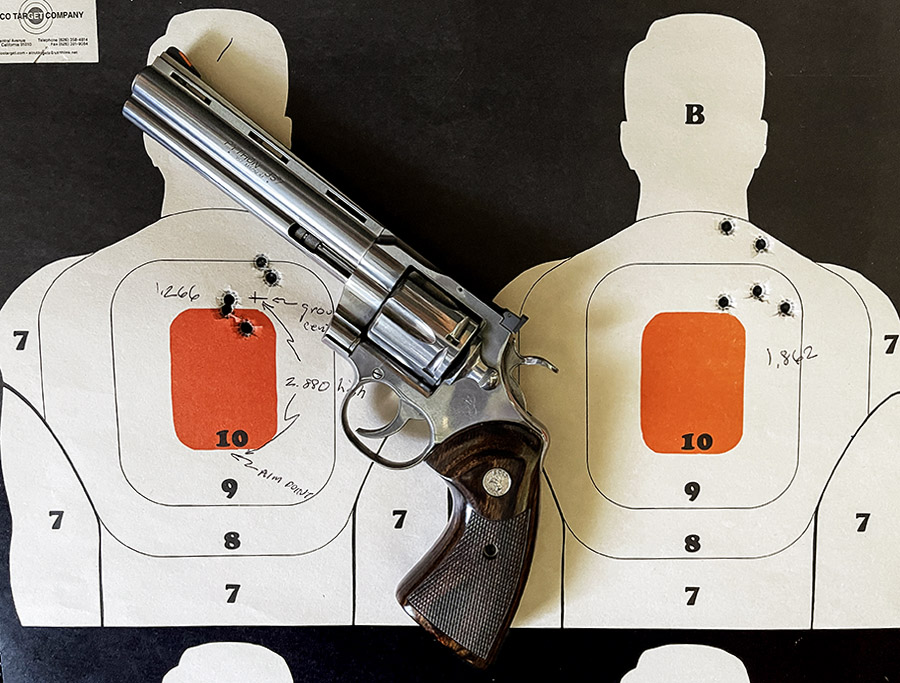
I needed a taller front sight to work with the Wilson Combat rear sight. I researched this issue, and apparently I was not alone. Numerous comments appear on various forums identifying the Python shooting high issue with the Wilson Combat rear sight. Harrison Design did something to address it: They offer taller Python front sights.
Turning to my junior high school geometry, I calculated the required front sight height based on where my shots were hitting, and the following formula:
The stock Python front sight height is 0.180 inches, the distance to the target is 45 feet, and the distance from the front sight to the rear sight (the sight radius) is 7.875 inches. Plugging those values into an Excel table based on the above formula, I found the front sight height increase I needed.
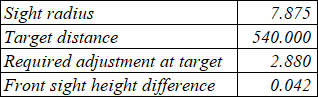
To go up 2.88 inches at 45 feet, I needed a 0.042-inch taller front sight (the front sight would have to be 0.222 inches high, which is obtained by adding the 0.042-inch additional required front sight height to the stock 0.180-inch stock front sight height). Harrison Design offers taller Python front sight heights of 0.200 inches and 0.230 inches. I chose the 0.230 Harrison Design front sight, as it was closer to the calculated front sight height I needed. I knew I could account for the small difference between the calculated required front sight height increase by simply raising the rear sight.
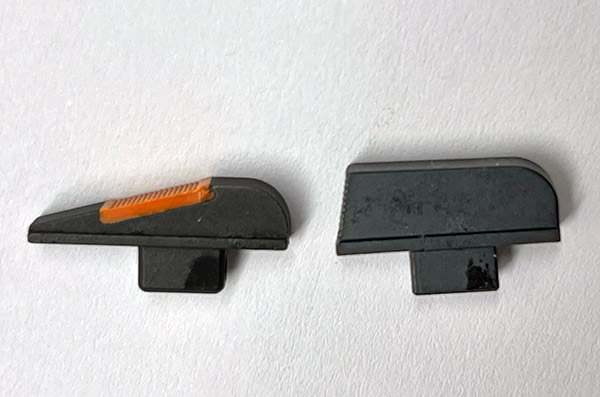
I opted for a plain post front sight, as seen in the above photo on the right. Harrison Design offers high visibility front sights (ones with a translucent plastic cord within the sight), gold dot front sights, and perhaps others. For precision work, I’m old school. I greatly prefer a plain post. For me, it’s harder to focus on the top of a red ramp (like the original Colt front sight, shown on the left) or on a gold dot front sight. The gold dots have another issue for me: My point of impact on the target moves around when the lighting changes. I’m not a fan of “gee whiz” front sights. I learned from a master (Sergeant Major Emory Hickman) and I learned on a plain black post front sight. Your mileage may vary.
Harrison Design does a nice job in what they include. In addition to the taller front sight, they provided a separate set screw (not necessary, as I could reuse the original one), a tiny Allen wrench for the set screw (also not necessary, as I already had one), and a set of installation instructions (not necessary for me, as how it all goes together is obvious). But I thought it was nice Harrison Design included all these things. The new front sight slipped right into place. Replacing the original Colt front sight with the taller Harrison Design front sight took less than a minute.
So how did it all work on the range? Pretty much just like the numbers said it should.
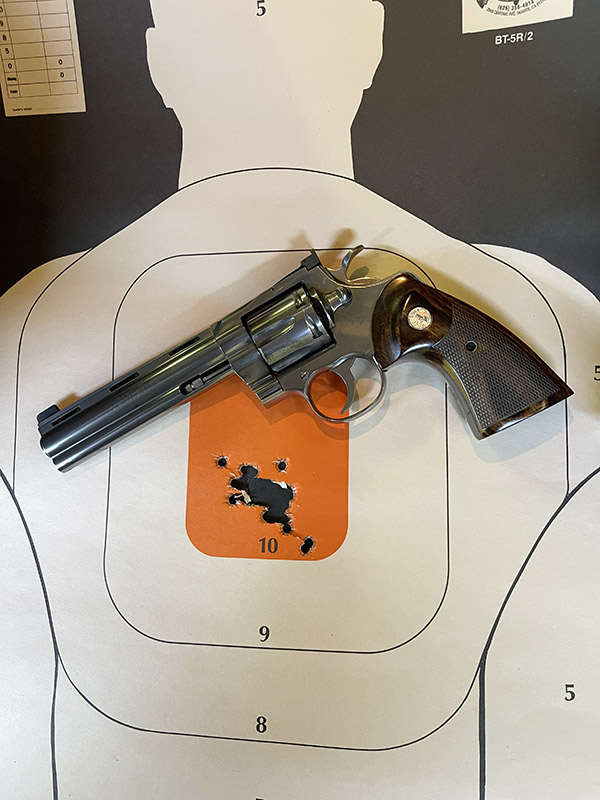
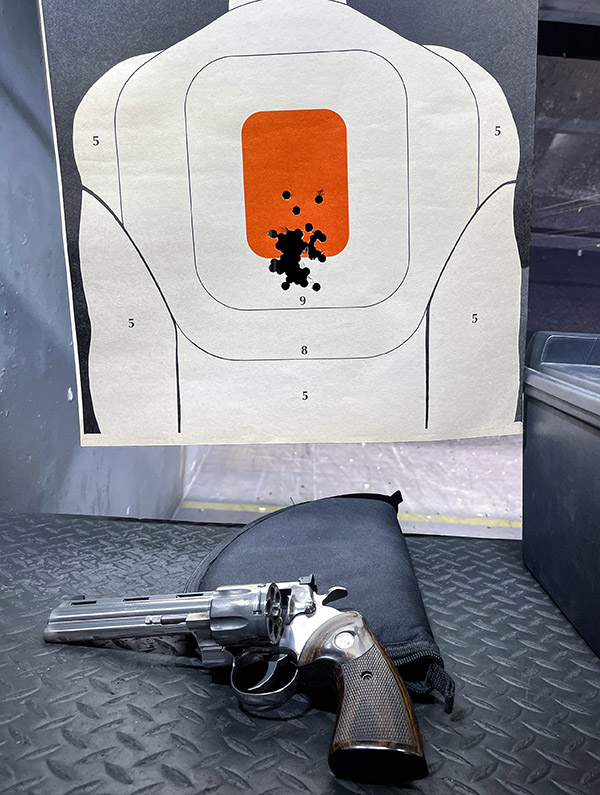
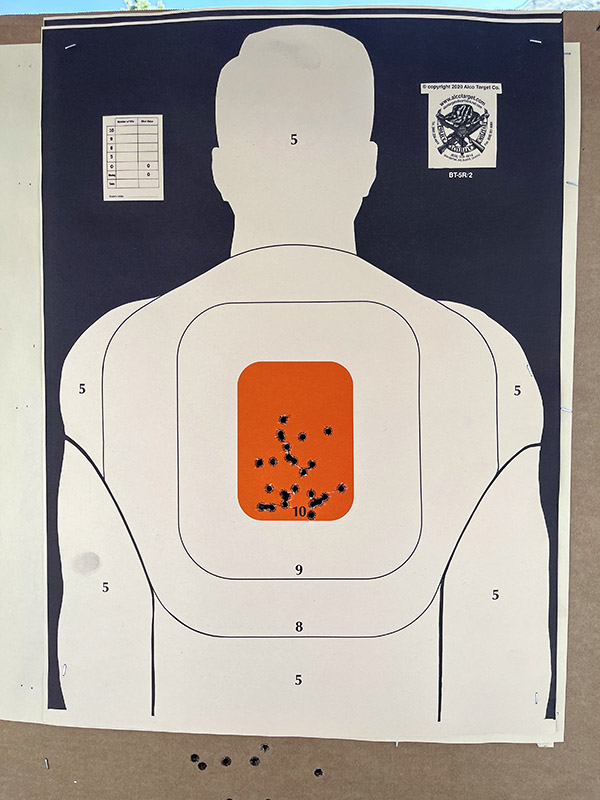
The bottom line is I am a satisfied customer. Harrison Design makes a good product.
Coming up? I’m going to run another set of Python tests assessing cast bullet base imperfections and their effect on accuracy, and then yet another assessing accuracy at 25, 50, and 100 yards. Then I’m going pig hunting with the Python.
Stay tuned.
Subscribe to ExNotes for free!
We need your support! Do what you can to help ExNotes stay in the black!

More Huber? Check out A Trip Into The Moment.

More Gresh and Berk? You bet! Check out A Cup O’ Joes!

Join our Facebook ExNotes page!