
By Joe Berk
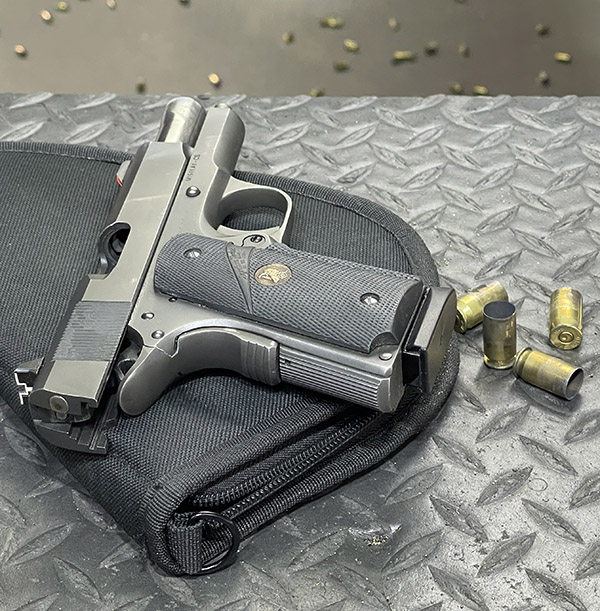
Did you ever love a thing that stopped deserving your love, but you keep on loving it? That’s how I feel about my Rock Island Compact 1911. Man, I want to love this pistol, but it’s fighting me. The latest development? The reverse recoil plug on my Compact 1911 failed again.
You may recall that this part failed once before in my Rock Compact. I wrote about that as well as a host of other Rock Island Compact 1911 issues in a previous blog.
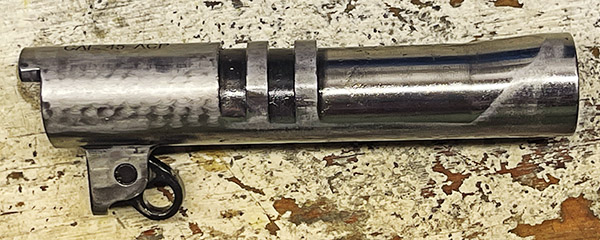
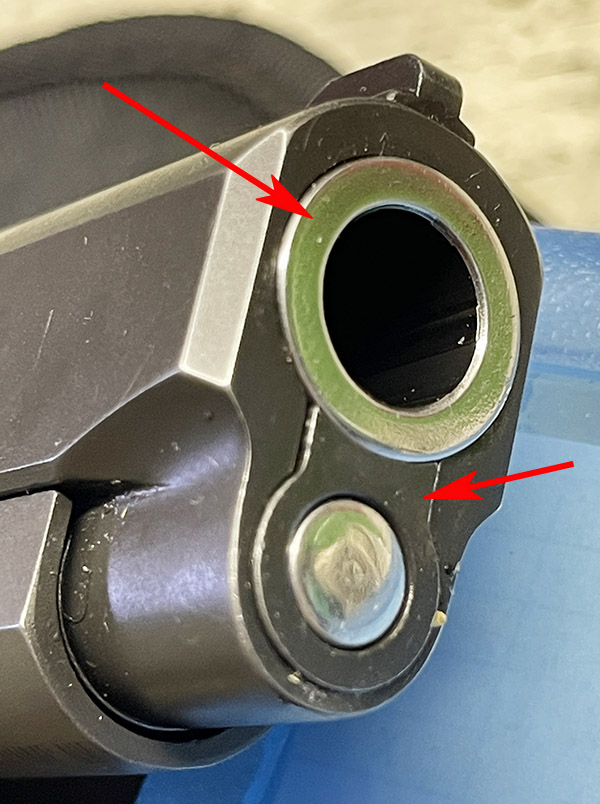
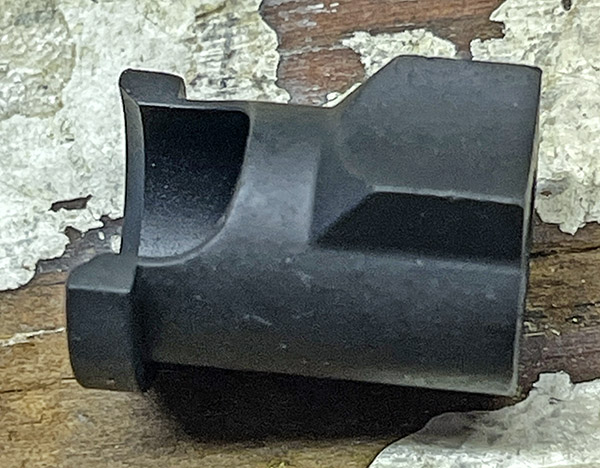
In a conventional, full-sized 1911, the guide rod spring fits into a barrel-like plug that captures the end of the spring, and that plug engages the handgun’s barrel bushing. There’s not enough room for that arrangement in a compact 1911, so the various companies producing compact 1911s incorporate different designs to address this. Rock Island’s Compact 1911 has no barrel bushing (the barrel itself has a larger diameter and it acts as the bushing). And there’s no conventional recoil spring plug, either. Instead, the Rock Island Compact uses what they call a reverse plug. The Rock Island part is made of steel, as it should be (I initially suspected it was made of aluminum, but my magnet doesn’t work on aluminum). Even though it’s made of steel, it just doesn’t hold up.
What happened this time is the gun became extremely stiff (I could barely rack the slide), the trigger pull became increasingly heavy, and the gun doubled on me (it fired two shots with a single trigger pull). When that happened, it was time to call it a day and tear the gun down.

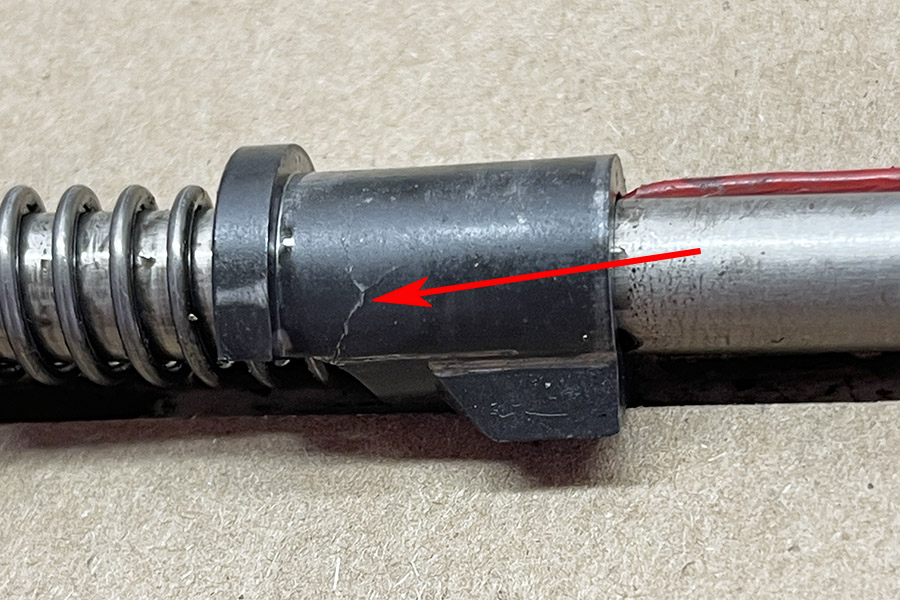
The interior of the 1911 was funky. It had been working well so I just kept shooting it, but now it was time for a good cleaning. When I disassembled the 1911 and pulled guide rod, spring, and reverse plug from the slide, I noticed two hairline cracks on either side (that’s the photo you see at the top of this blog and below). Wow. I hadn’t fired more than a thousand rounds since I had replaced the recoil plug when it previously failed.
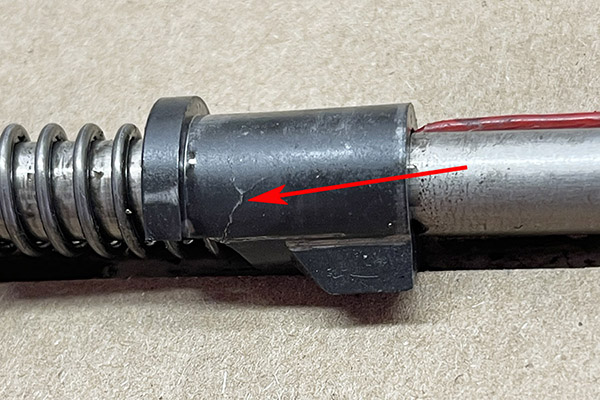
I called Armscor/Advanced Tactical/Rock Island three times (these guys have more names than a character in a Russian novel) and left messages. I filled out their website’s customer service form. That was a couple of months ago and I’ve still not had a response. The Rock Island 1911s are supposed to have a lifetime warranty.
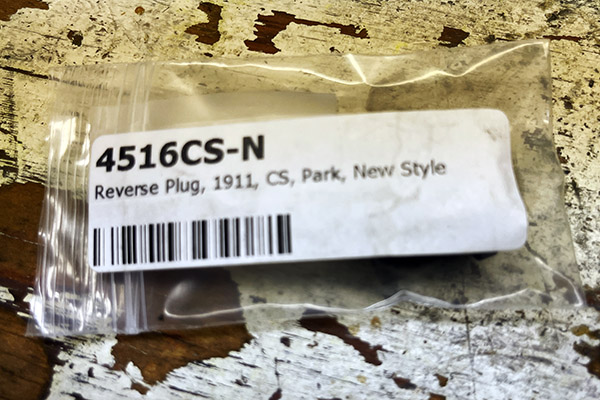
After not receiving a response, and based on the reverse plug’s flimsy design, I ordered three new ones. I suppose I could have continued to sit around and feel sorry for myself, but I wanted to shoot my 1911, and I’m not going to take these guys to small claims court for $30 and change. The reason I ordered three parts is that I don’t know how long the Rock Island parts aren’t going to last (I suspect it won’t be long), so I wanted to have spares on hand the next time this occurs. To Armscor/Advanced Tactical/Rock Island’s credit, the parts shipped the same day, so I knew they have people monitoring their website. They just didn’t respond to my complaint about the part. Maybe it’s because of my previous blogs on their Compact 1911.
Edit: Several weeks later, I received an email from Advanced Tactical. Here’s the text of their email:
From: Advanced Tactical Sales
Sent: Friday, July 25, 2025 7:03 AM
To: Joseph Berk
Subject: Re: Compact 1911 Recoil Spring Plug Persistent Failures
Good morning Joseph,
Thank you for your patience and understanding. Our call center is currently experiencing a major transition, leading to a high volume of customer requests for information, replacement parts, repairs, and other inquiries. We are working hard to address these issues promptly and professionally, even though we are short-staffed.
Please provide the serial number of the gun, it is required for our records.
Thank you!
Pedro
I responded to my new buddy Pedro to let him know that I threw in the towel waiting for them, and I had already purchased three replacement parts (three, because I knew they wouldn’t last). I suggested that they reimburse me for the three parts. I have yet to get a response.
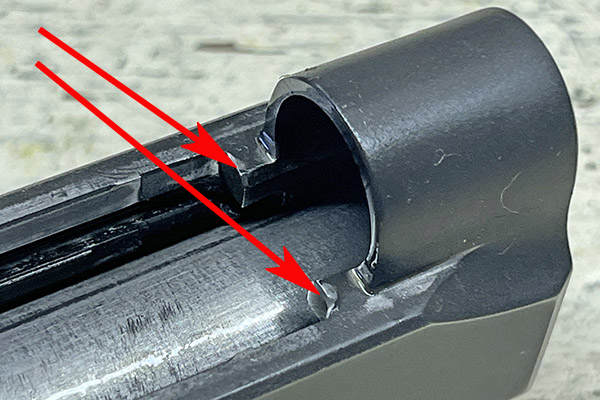
Rock Island states on their website that the reverse plug needs to be fitted by a competent gunsmith. For good buddy TJ (of TJ’s Custom Gunworks) doing so would be a slam dunk, but we were having riots in Los Angeles again and I didn’t want to drive through town. (There are gunsmiths closer to me, but I know from hard-won experience that none of them meet that “competent” qualifying adjective). So I did what Joe Gresh would do: I did the work myself.
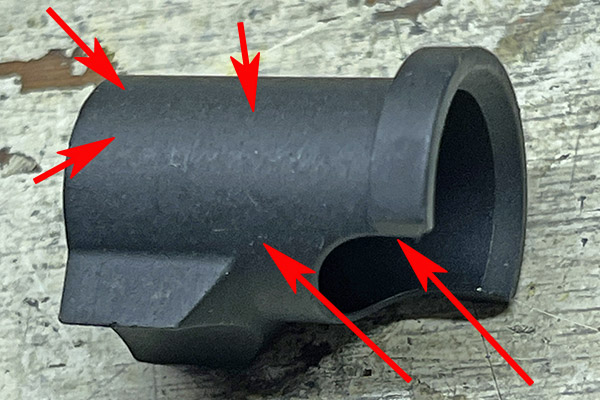
Fitting the reverse recoil plug involved sanding its body until it would enter the slide’s bore. There are a couple of tabs on the slide, and the reverse plug’s rib needs to be relieved to clear these. I think not relieving the rib would accelerate the reverse plug’s failure (the plug would slam into the slide’s tabs with each shot). if that occurs, the reverse plug would be torqued in a downward direction. Looking at the failed plug and its fractures, I believe this is what occurred on both of my reverse plugs’ failures.
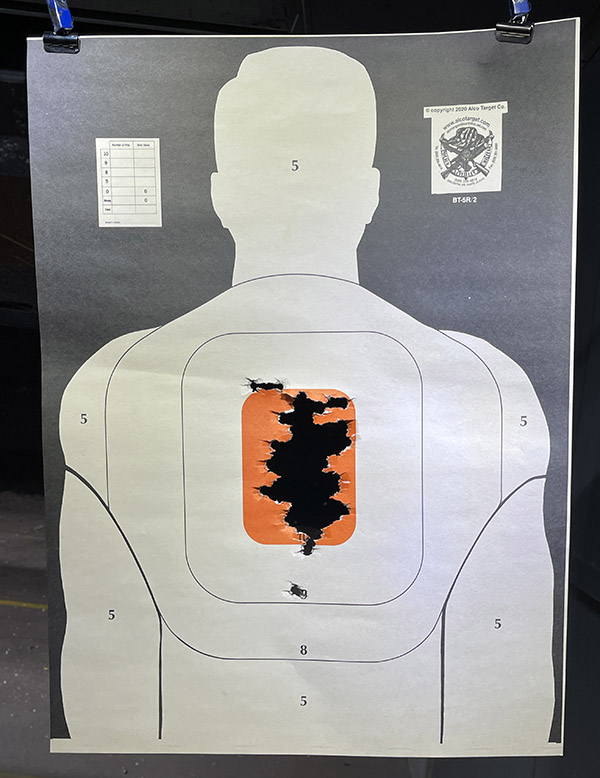
After working on the reverse plug for about an hour (such that it slid easily into its cavity in the slide and the plug’s rib cleared the slide tabs), I reassembled the 1911 and took it to an indoor range near where I live. It functioned flawlessly, except for one shot that dropped a little below the orange bullseye. I think maybe a gnat landed on my front sight for that one.
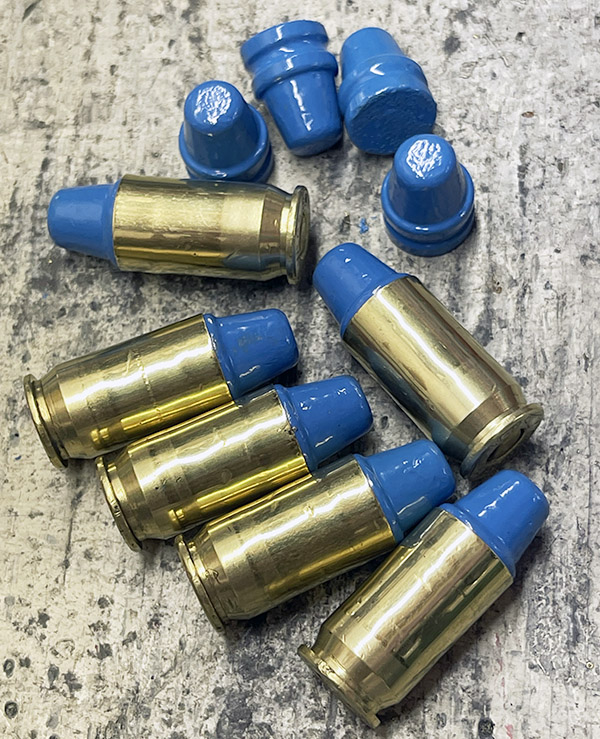
My load for the Compact 1911 is the 185-grain powder-coated Gardner semi-wadcutter bullet seated to an overall length of 1.250 inches, 5.0 grains of Bullseye powder, and the Winchester large pistol primer. For this particular box of ammo, I used Winchester brass that had previously experienced multiple reloadings (you almost can’t wear .45 ACP brass out). This same load also works well in my full size 1911.
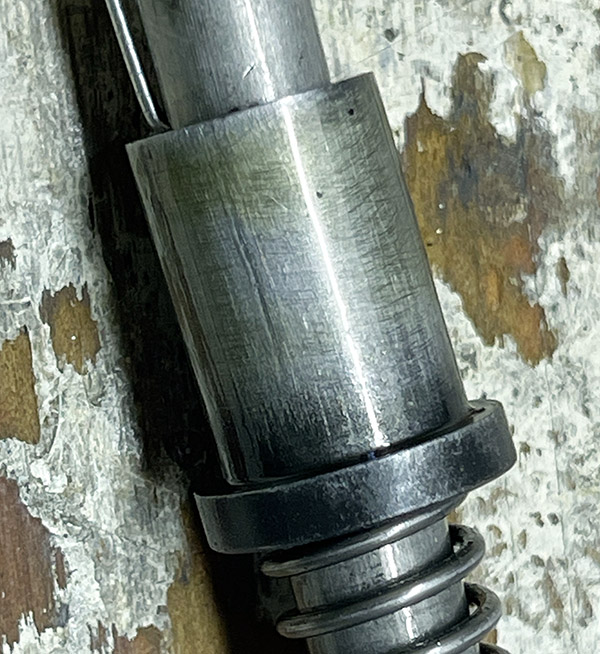
When I returned home, I examined the new reverse recoil plug and it had no cracks. I’m keeping my fingers crossed. I’ll inspect the reverse recoil plug every time I disassemble the Rock Compact for cleaning. I know what to look for now, and I know how to fix it.
Join our Facebook ExNotes page!
Never miss an ExNotes blog:
Help us keep the lights on:
Don’t forget: Visit our advertisers!