
By Joe Berk
I reloaded one box of 9mm ammo yesterday in the garage and it was HOT. I had to stop because I was soaked and I was getting a little woozy out there. The heat this summer has been worse than usual, I think.
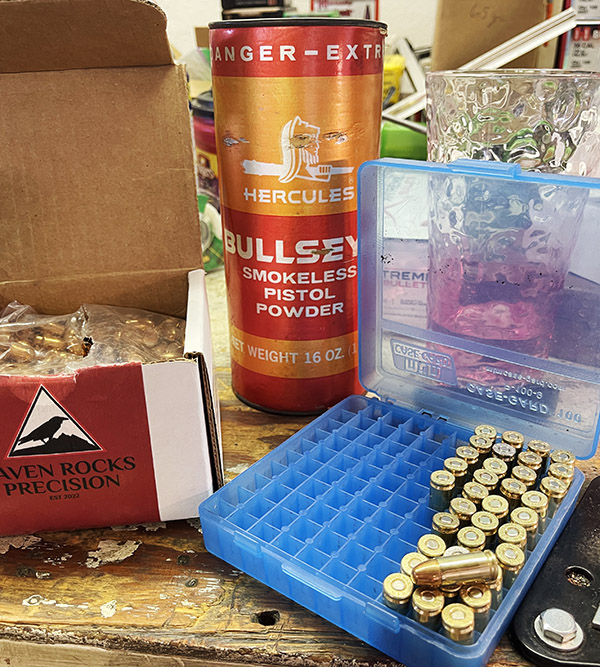
The load was 4.2 grains of Bullseye from an old bottle I got from a friend, the 125- grain Raven Rocks full metal jacket truncated roundnose bullet (seated to an overall length of 1.080 inches), and no-name factory second primers. I never used factory second primers before, but they were cheap and I can’t pass up a deal. The Raven Rocks bullets were cheap, too, but in measuring a few, the diameters varied from 3.54 inches to 3.55 inches (which is not very good). File that under “you get what you pay for.” Sometimes. I loaded with mixed brass, mostly because I had some readily available and I didn’t want to go to the bother of sorting headstamps. I didn’t load this ammo to nail a woodchuck at 500 yards or make “major” in the action pistol world (running around with a loaded handgun and shooting it as fast as you can makes that game a nonstarter for me). It’s 9mm ammo and I’m a guy who likes to go the range. If it feeds, chambers, and goes bang, I’m a happy camper.
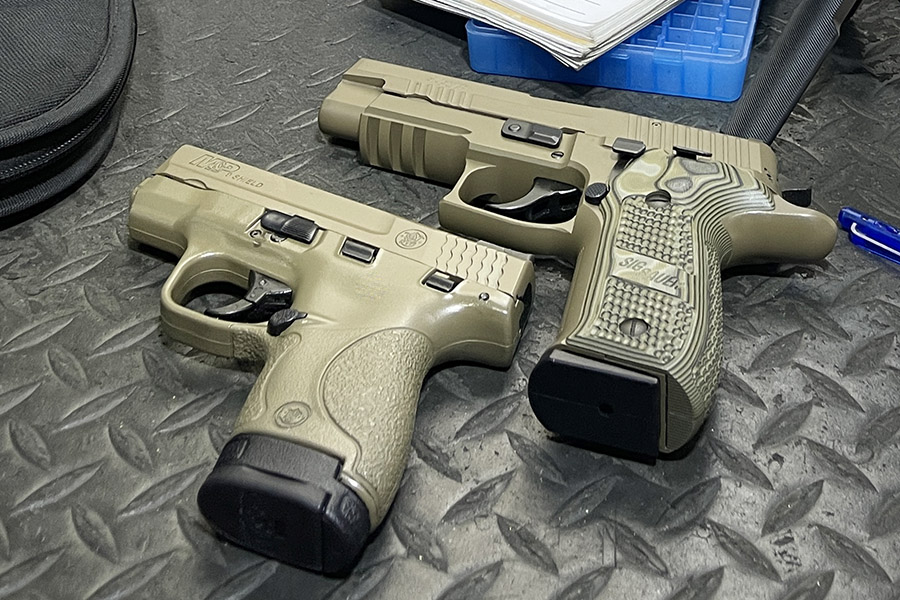
This morning, I took the box of 9mm ammo and two 9mm pistols to my indoor range. The handguns were the S&W Shield and the SIG P226 (they are two pistols I shoot a lot). They are the two you see in the photo at the top of this blog. I’ve written about them before. They are both great guns.
At the range, I ran the targets out to 10 yards. I wasn’t really going for accuracy; I mostly wanted to get the chrono data for this load.
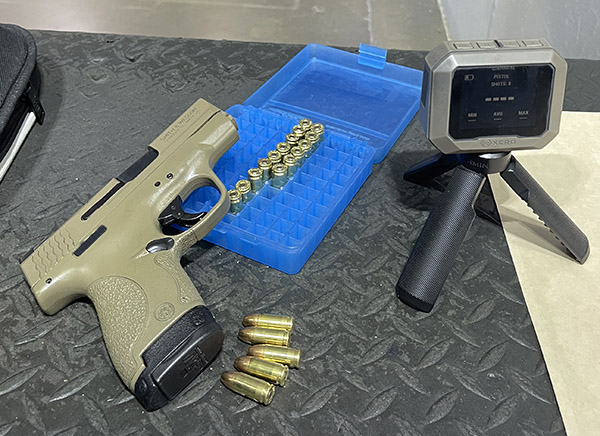
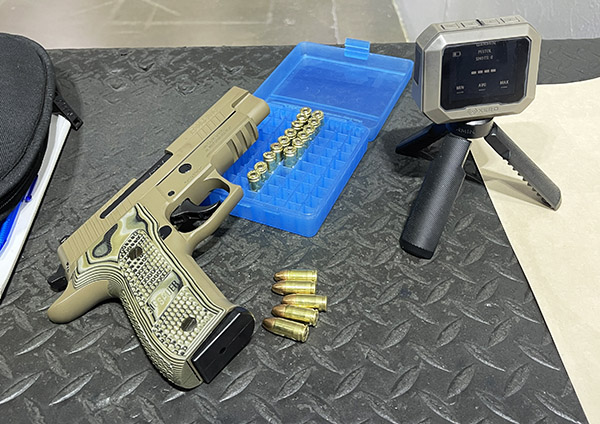
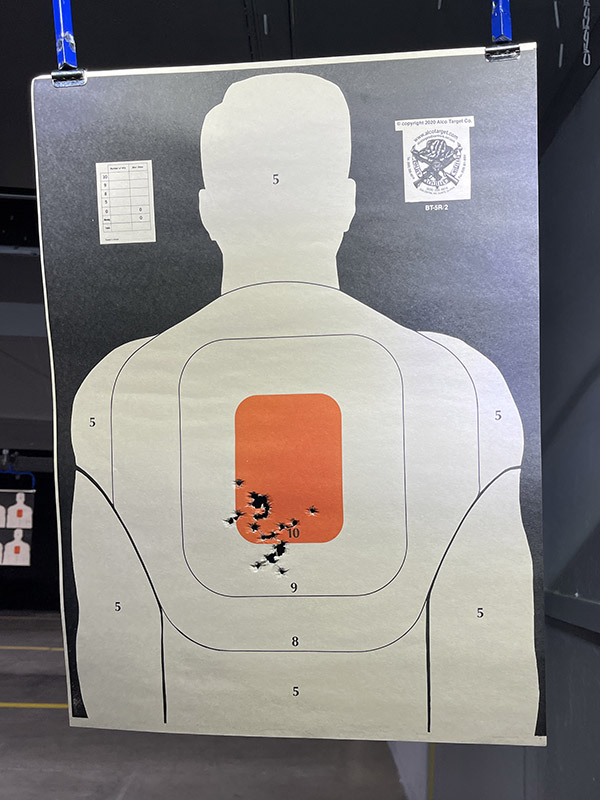
I shot 25 rounds in each pistol, and here’s the chrono data.

Note the relatively low extreme spreads and the tight standard deviations. Bullseye showed me once again that it is a great handgun powder.
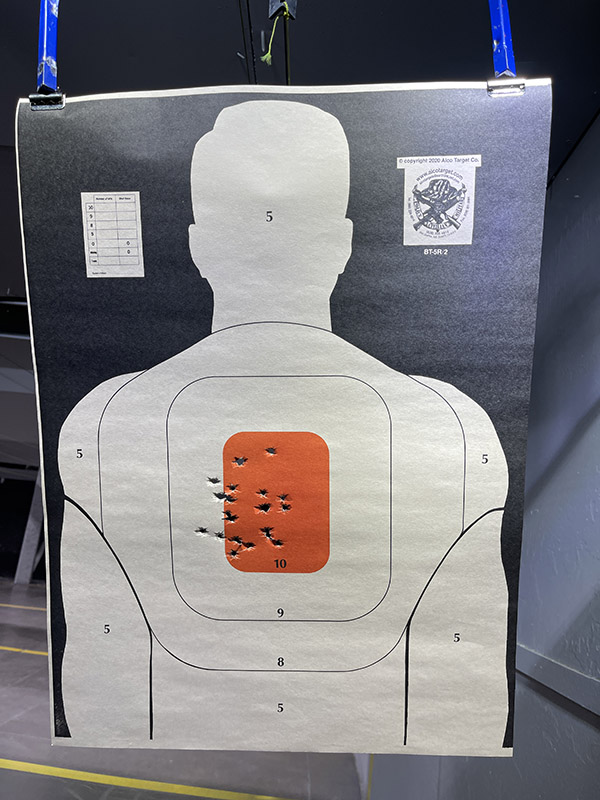
As you can see from the above targets, the SIG does a little better for both accuracy and velocity, mostly because of its longer barrel and longer sight radius.
I had one misfire in the SIG, but that was probably due to a primer that wasn’t fully seated. Was that a function of the primers being factory seconds, was it the result of my Lee Turret Press not fully seating the primer, or was it just me? Who knows. When I cocked the pistol and released the hammer a second time, it fired. That’s a classic symptom of a primer not being fully seated. The first firing pin strike seats the primer all the way into the case, and the second lights it.
The Bottom Line
I like this load a lot. I haven’t really done a lot of work with Bullseye in 9mm before (mostly it’s been Unique, Accurate Arms No. 5, and Red Dot in the past). 4.2 grains of Bullseye was a moderate recoil and velocity load and I think it is accurate enough. At around 1000 fps average velocity in both pistols, it’s good enough for me. Like I said, I wasn’t going for accuracy, but I think if I shot from a rest this load would do better in both pistols.
One final note: Bullseye propellant has been hard to get. My local reloading components store and most of the online outlets don’t show it in stock. Natchez does appear to have 8-lb bottles in stock, priced at about $355 (a sum that would have been unheard of in earlier days). What’s nice about Bullseye is most loads only need a little bit of the stuff. I have enough to last for a while.