Bobbie’s Solo Baja Ride: Part 2

By Bobbie Surber

In Part 1 I shared with you my adventure from Sedona, AZ, crossing the border for the first time on a bike, and heading down Mexico’s Transpeninsular Highway to Guerrero Negro.   This blog continues the adventure.


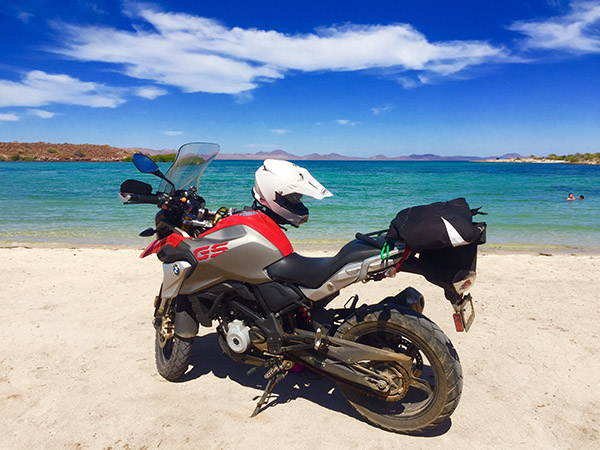
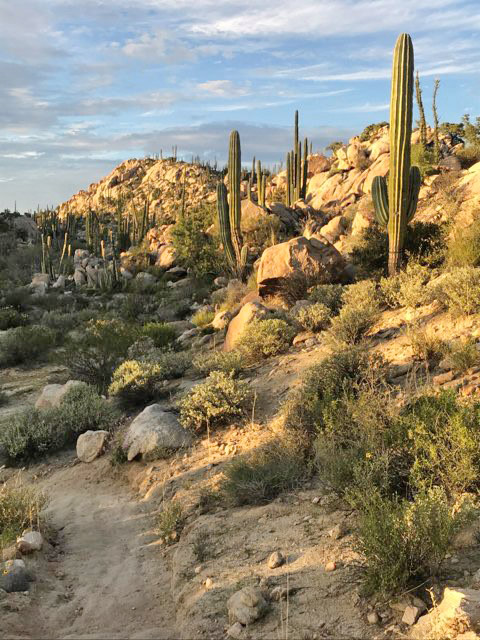
After an early morning departure leaving behind the comforts of the Hotel Mision Cataviña, I continued on Highway 1, enjoying a quiet morning and the rare good luck of an empty road. Settling into the ride with a deep breath that allowed me to loosen my tight muscles after two long days of riding, I felt the joy start to creep in as I took in the vastness and emptiness of the Sonoran Desert. The fierceness of the summer sun had already begun turning the winter greenness to a light wheat color. This did not diminish the stark beauty of her desert, with the surrounding hills in the distance with their deep purple shadows demanding a second look. My bike was doing great; her little single-cylinder engine was a gem off-road and could manage up to 80 miles an hour, more than enough in Baja. She was a perfect bike for the moment, made for Baja.

The desert south of Cataviña.

Rolling down into Villa Jesus Maria I was more than ready for a break, something cold to drink and some much-needed gasoline. I did well with the drink and break, but as can happen in Baja, the Pemex had no gas. It was another 40 kilometers to Guerrero Negro; as I emptied my MSR liter of gas into my tank, I said a little prayer to both Jesus and Maria to extend my range to Guerrero Negro.

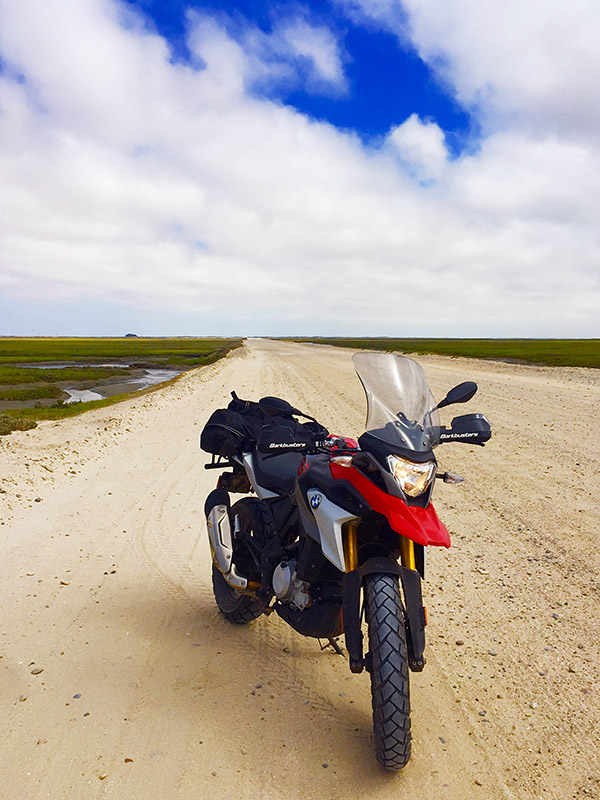
In the Guerrero Negro salt flats.
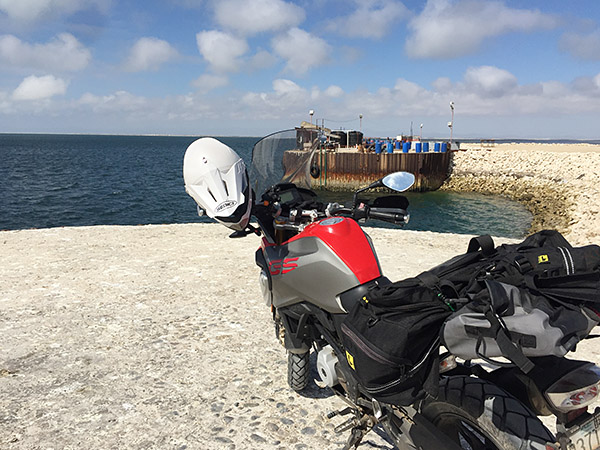
At Scammon’s Lagoon in Guerrero Negro.

Prayers answered, by perhaps both Jesus and Maria, I arrived with a smidgin of gas fumes left in my tank. Reaching Hotel Don Gus, which several riders had recommended as both affordable and bike safe, I pulled into the dirt parking lot to check in. This is a typical motel-style lodging with comfortable rooms and a simple restaurant serving hearty portions. My room settled, I headed for a taco truck that every rider raves about, Tony’s Fish Tacos. Let me tell you, I often dream of Tony’s fish and shrimp tacos with the perfect batter and lime crema!


Keep us going…please click on the popup ads!


Fully satisfied and with still enough daylight left, I went to explore the salt flats famous in this area. A short ride from town, the salt flats looked like a mirage at times, fooling the eye into believing it was a vast lake. This soon gave way to the commercial operation with magnificent mounds of salt with trucks and bulldozers on the top of the salt hill so high that the trucks looked like toys. Soon I was passing the small boat dock and positioned my bike for a good pic. The sun was warm but blissfully not hot with the Pacific breeze. I set up my small camp chair, pulled out a flask filled with an excellent local Vino Tinto, and gave a silent toast to a perfect Baja day.

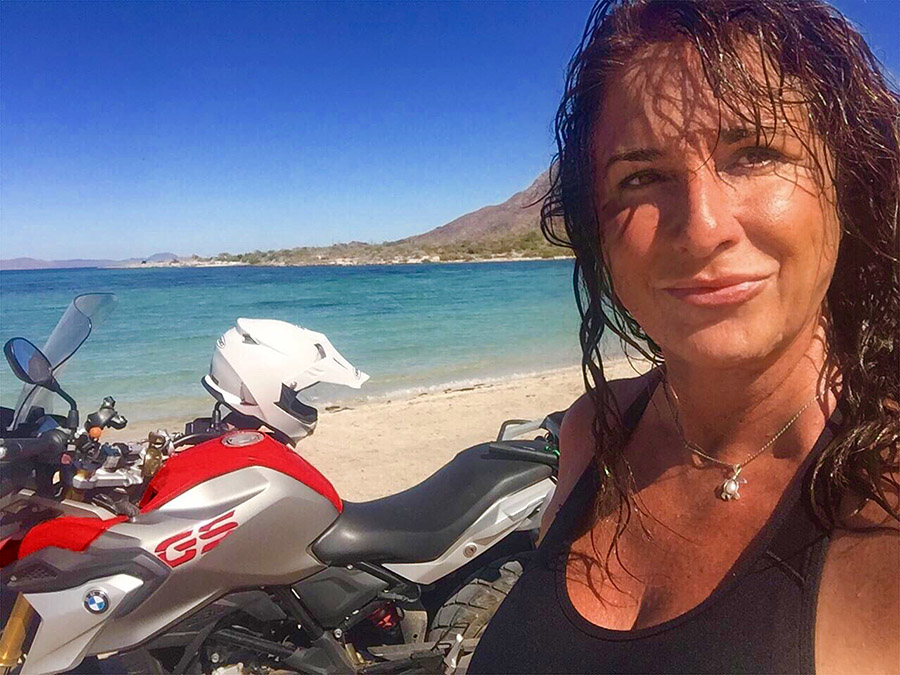
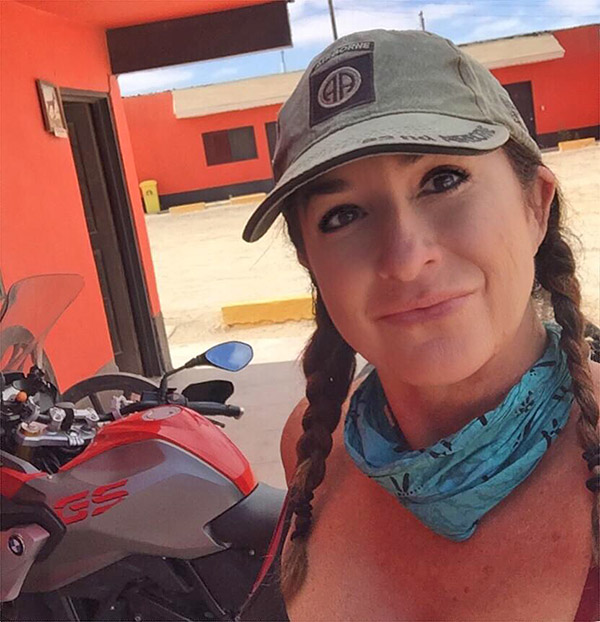
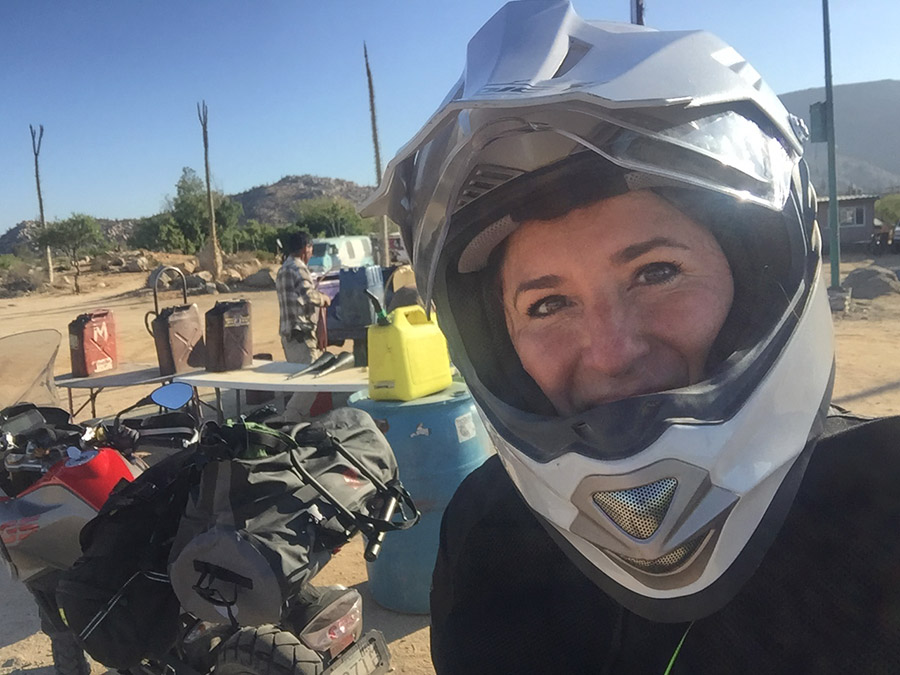
A Don Gus Hotel selfie.

I woke the following day with growing excitement, and unable to wait for daybreak I loaded my bike impatiently, waiting for the restaurant to open for a much-needed cup of joe. You will often find that opening and closing times in Baja are more of a suggestion than a hard rule. A half-hour later, I was in my room, firing up my rocket pocket stove and making do with a Starbucks instant coffee and some leftover tortillas. Bike ready and stomach full, I headed to the gas station to fill up Red, only to find I had caused a stir and was noticed by a few locals who wanted to meet the female American solo rider. A few of the younger ones asked what seemed like endless questions, wanting to know where I had been and where I was going. This completed, I was on the road heading to the part of Baja I had been waiting for, Mulege and the famous Bahia Conception.

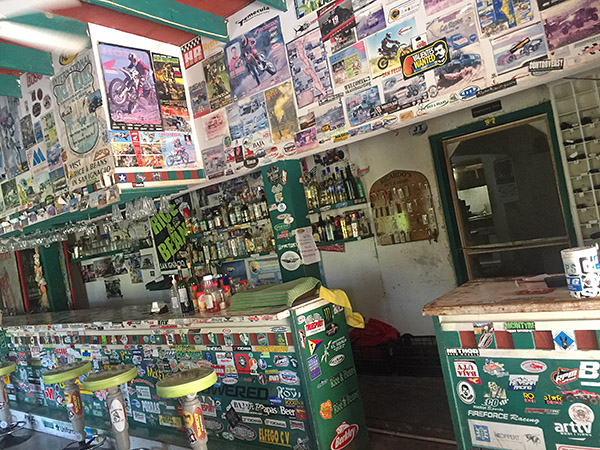
The road out of town was uneventful, an endlessly flat straight that challenged me to stay awake and focused. About an hour later, I passed the midsize town of Villa Alberto with plenty of gas, shopping, and lodging. I stopped long enough for gas and was back on the road. My interest in the highway picked up as I neared San Ignacio. A few kilometers before San Ignacio there was another military stop, which was uneventful other than the guard looking at me, my bike, and a long look down the road with was becoming the norm question and answer: Solo? Si Solo! With an astonished look, he waved me on, wishing me a safe ride. My next stop was a visit to the Baja 1000 popular pit stop, Rice and Beans, a restaurant and hotel just off the highway with good food and cold beer. I left satisfied and headed to the main square of San Ignacio.

Inside the Rice and Beans Restaurant in San Ignacio.

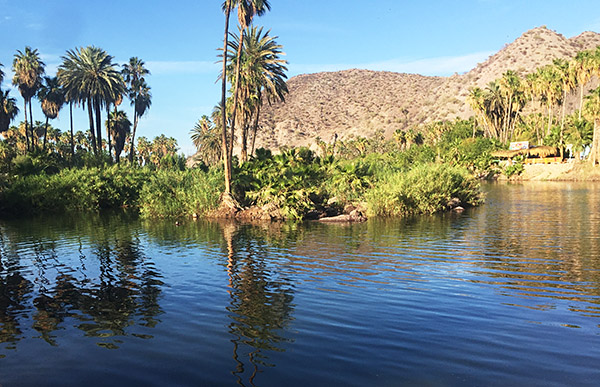
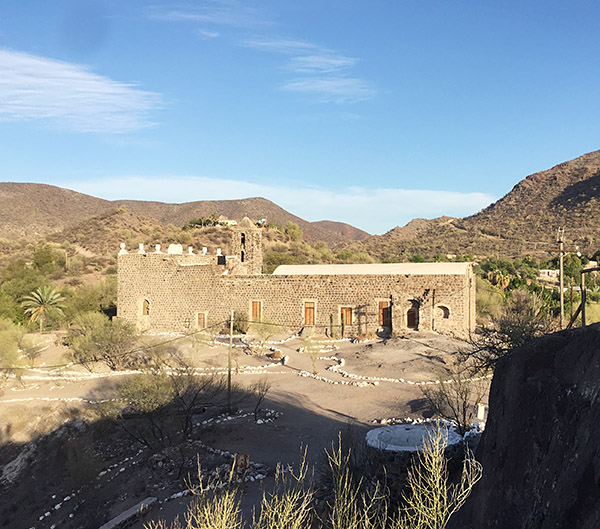
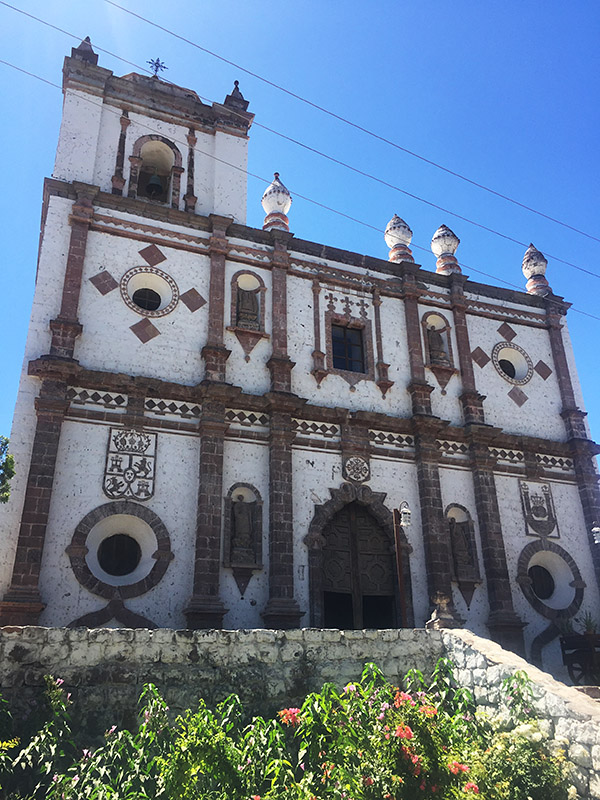
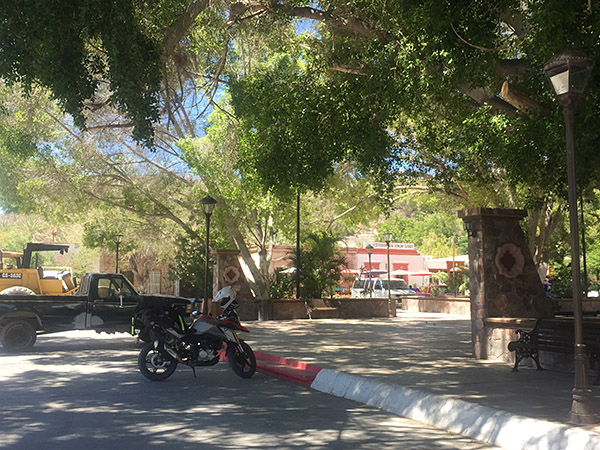
The town of San Ignacio is a true desert oasis with more palm trees than you could count and a river running through the town. San Ignacio seems caught in a time warp as elderly men sit in the shade of the massive trees that frame the small-town square, reading and playing cards as they eye me parking my bike. Curious about this gem, I found just enough cell coverage to look up her history. San Ignacio was founded in 1706 by the Cochimi tribe. In 1728, missionary Juan Bautista de Luyando discovered San Ignacio and committed to building Misión San Ignacio Kadakaamán. The building is made of volcanic rock from the nearby mountains. Her mission sits quietly, waiting for the next visitor, and I was lucky to find her open and welcoming.

The San Ignacio Mission.
San Ignacio’s town square.
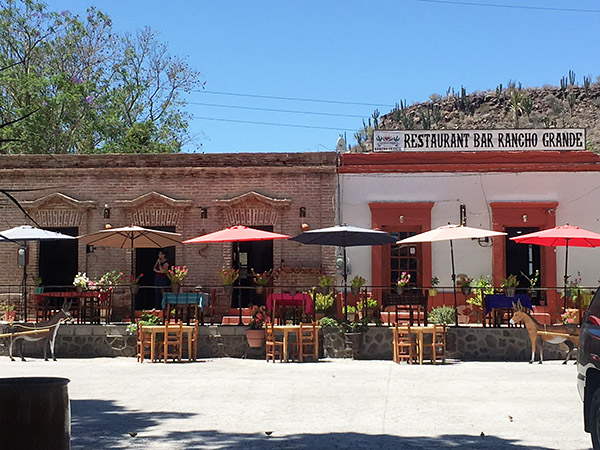
A restaurant in San Ignacio.

I reluctantly got back on my bike, heading back to the highway with a promise that I would return to San Ignacio for further exploration and to enjoy her peaceful river and nearby lagoon. With one more top off of gas, I headed down the road finding the excitement of endless twisties and, on the horizon to my left, the peaks of Tres Virgenes. One last climb took me to another peak, with soon a sweeping view of the Sea of Cortez. Massive winds kept me alert. The heat was near overwhelming, and the wind only accelerated my dehydration. I was physically spent with still another hour to my destination. Pulling into Santa Rosalia, I sadly passed her mission for another time. I stopped just long enough to douse myself with water at the gas station, drink as much water as possible, and get back on the road.

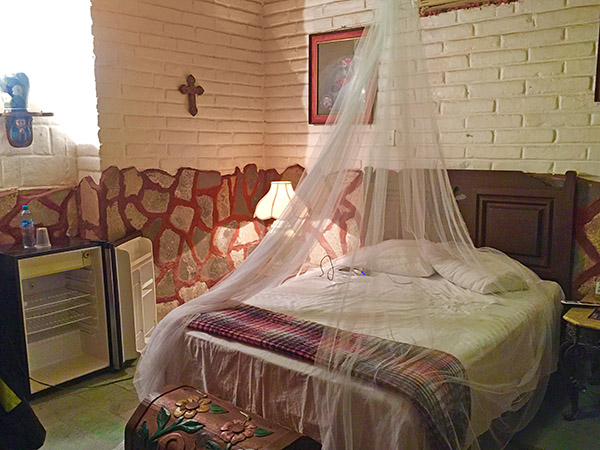
Soon I was riding through the arches that welcome you to the proper start of the town of Mulege. My destination was Historico Las Casitas. After several attempts to find the hotel cursing my Google Maps, I finally arrived. I walked in, took off my riding gear, and as if they were waiting for me to arrive, a young man said not a single word; instead, he handed me a glass of lemonade, a drink from heaven made with fresh limes, lemon, and cane sugar. I emptied my glass in two long swings. Gratefully finding an ounce of composure, I asked about a room for the night. I soon settled into my volcano rock room with mosquito netting; it took me no time to pass out with cold air soothing my heat-exhausted body.

The Hotel Las Casitas courtyard.
My room in the Las Casitas.

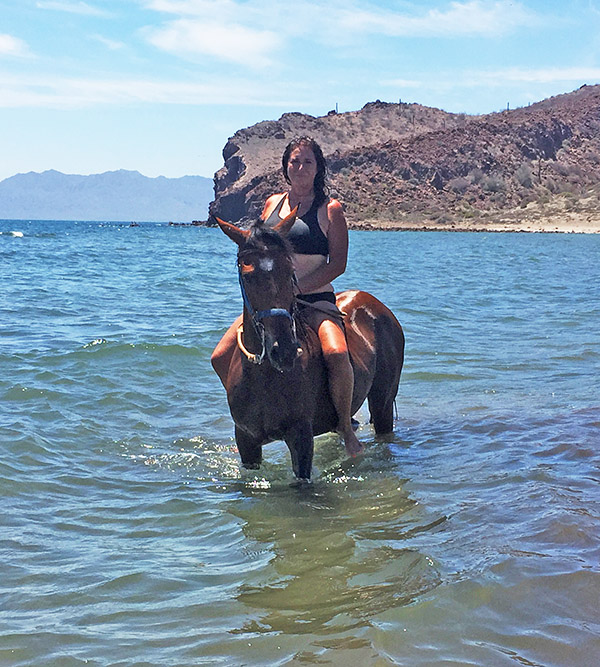
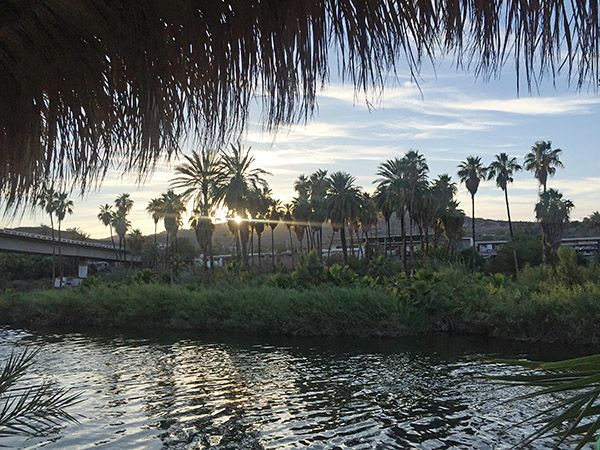
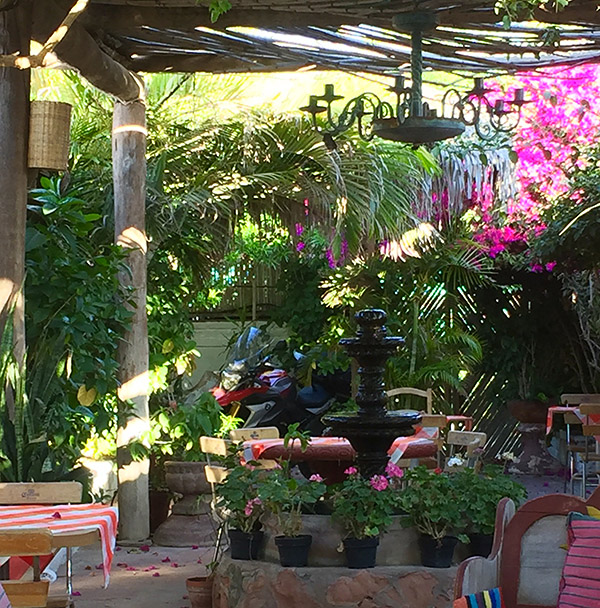
Waking in the late afternoon, I discovered the L-shaped courtyard covered in vines and trees, allowing for continual shade against the heat of the June sun. My bike was safely parked in the courtyard; I made my way to the bar to the young man who had saved me with his magical lemon concoction and ordered another (with tequila this time). Sufficiently recovered, I headed out to discover the town and look for another perfect taco. Mulege, another mission town founded in the early 1700s and known for the beauty of the river that runs her length ending at the Sea of Cortez, her proud mission sets up on a hill overlooking the palm trees and river. Sadly not open, I wandered around the grounds taking in the softness of the sunset overlooking the river. I headed back to the town square, and with a food stand next to the market, I had a satisfying plate of carne asada tacos with the best beans I’ve had in Baja. Heading back to the hotel, I found the courtyard packed with locals and visitors enjoying the evening coolness. I was lucky to be greeted by the owner, I learned more about the hotel’s history, and I met a friend of his who could take me horseback riding the following morning. With plans set for the next day I gratefully slipped between the crisp white sheets, pulled my mosquito netting around me, and drifted off to sleep dreaming of the adventures ahead.


Part 1 of my Baja adventure is here.


Never miss an ExNotes blog:

Venturing into Baja?  Insure with the best:  BajaBound.  It’s what we use.


Want more Baja info? It’s right here!


Want to read more stories about riding in Baja? Pick up a copy of Moto Baja!

Bobbie’s Solo Baja Ride: Part 1

By Bobbie Surber

Discovering motorcycles came late in life for me.  My first ride was in 2014 on the back of a KTM.  From the first ride I knew I was hooked, and I knew being on the back was not for me.  By January 2015, I purchased my first bike, a 2006 Yamaha 225 XT. I drove from Sedona, AZ, to Denver, CO, to pick her up. On the drive home, I kept looking at her in my rearview mirror and dreaming of my future adventures.  That is, once I learned to ride!

A day later I was on a quiet street teaching myself how to clutch and ride. The clutching came easy, and I had no fear as a newbie. Soon I was competent enough to go down the block, then to the store and friends’ houses, and soon off-road. Boy, I fell a lot at first, but I was surrounded by a group of guys who encouraged and taught me the basics. Many remain mentors to this day. I still have that little 225 XT and would never sell her or give her away. She will be with me till the end.

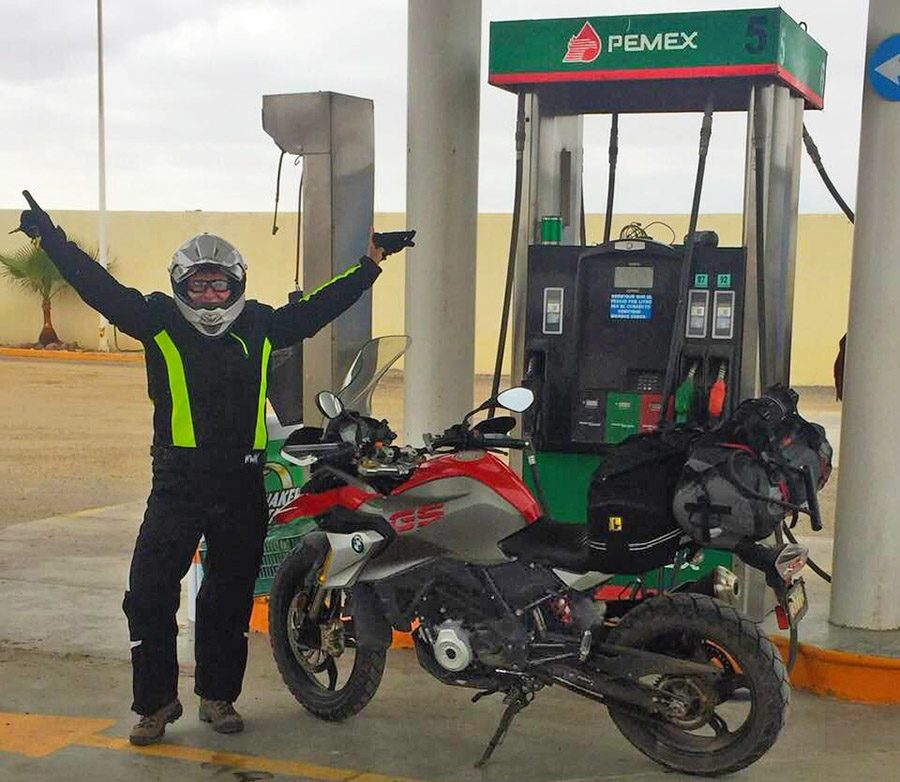
I soon added a Honda 750 Shadow to my new addiction and split my time between dirt and road adventures. It seemed a perfect balance as I gained more skills off-road with the 225 XT and could now venture further without trailering as I rode the Shadow. This led me to my third bike, new to the USA:  A BMW 310 (a single cylinder in hot demand in Europe and Asia). She was a red bike far faster than my little goat, the Yamaha.

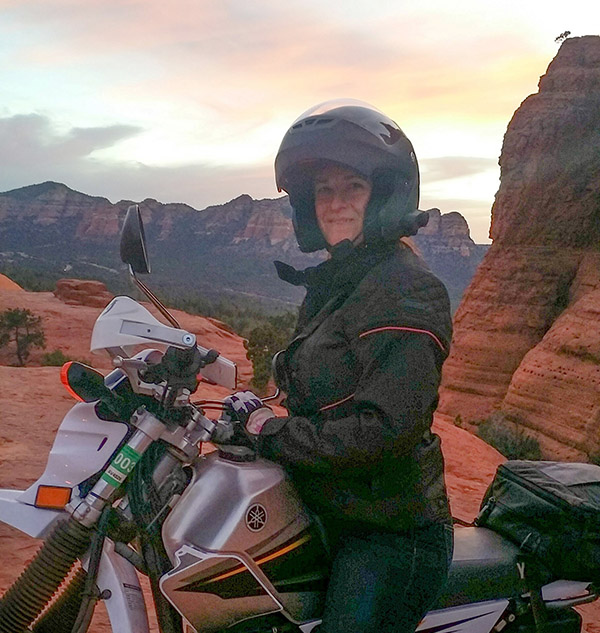
Broken Arrow Trail, Sedona, AZ.

With a bike that was great off-road while still able to handle the open roads, I set my sights on several bucket list trips, including the Pacific Coast Highway (Highway 1 up the California coast) and the Sierra Nevadas. These two trips in 2018 gave me the confidence to plan another solo ride.  This time I would ride Baja, the peninsula in northwestern Mexico bounded to the north by the United States, to the east by the Sea of Cortez, and to the south and west by the Pacific Ocean.  I set my plans for a Spring ride, but a trip to Hawaii and paddling the Colorado River got in the way in May, delaying my departure to June.


Want more stories?   Help us bring them to you by clicking on the popup ads!


Adding a new 40-liter Wolfman tail bag, I departed Sedona, AZ, heading for a small town south of Tijuana, Alisito, known to the gringos as La Fonda. This was my first time crossing the US border on a bike, challenging my skills while negotiating what seemed like 100 lanes with traffic darting between the lanes.  It was soon my turn to cross at San Ysidro south of San Diego. I had done this several times in a car, but what a whole new ball game on a bike!

Turning hard to the right, I made my way to Mexico Highway 1, following the Pacific coast out of Tijuana. The air was crisp even on a June morning as I pulled into the left lane to pass a line of trucks and a group of protesters, soon finding my groove, indulging in music through my helmet speaker and enjoying the sights along the way.  An hour later, I pulled into the parking lot at Dmytri’s Restaurant, well-known by locals and visiting gringos alike. It was a time to meet friends and show off my new girl (BMW, to clarify!). The margaritas and conversations flowed as I assured all of my friends that I was utterly competent to ride Baja solo in the growing heat of June.

Bravada got me thru till the morning of my departure, then a massive wall of apprehension flooded me.  WTH, I was not competent enough to take on this challenge solo in Mexico! A repeated flaw as I once again found myself vacillating between the urge to push myself and my endless fear of failure and the unknown. I did what I do best, shoved the fear down, and got on my bike heading south on Highway 1 while enjoying the ocean breeze and the endless views of the Pacific Ocean.   All the while, I negotiated traffic and the epic potholes that ranged from minor to “might swallow my bike” in one epic plunge.

With the efficiency of the toll road, I was soon in the traffic and mayhem of Ensenada, a port city that is a frequent stop for cruise ships. The smell of exhaust and burning trash contrasted against the street stalls grilling fresh fish and carne asada. I could not resist and soon found a place to pull over for a cold Tecate and a plate full of tacos. The local girls working the roadside restaurant were enthralled with my bike, asking for photos on it it with the sultry hotness that only a Latina could pull off while wearing an apron. I accommodated their requests for pictures and answered a soon-to-be-frequent question of “Solo?” with “Si, Solo,” followed by “No, no, where is your man?” Ha, I didn’t even have a man at home, let alone on this trip, but I had someone I was thinking about a lot on this trip (a story I will tell in another post).

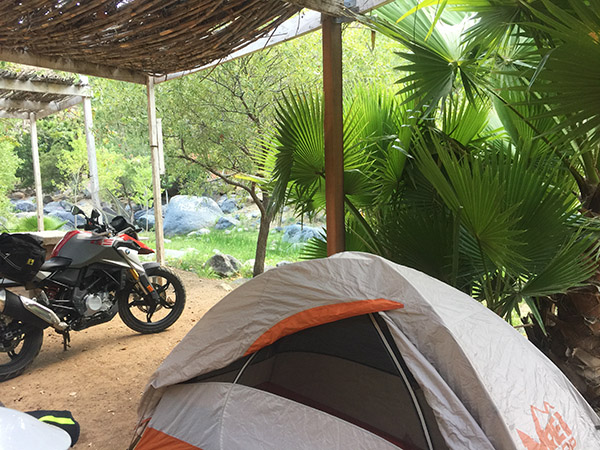
A Baja Campground.

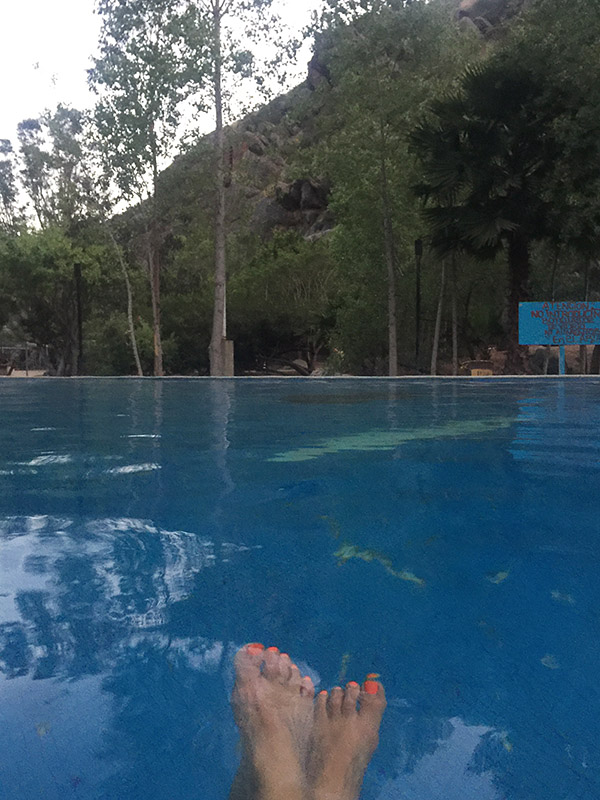
With Ensenada’s noise and challenges behind me, I headed out of town to a campground with hot springs and soaking pools. The ride getting there was all dirt, rocky as hell, with several water crossings.  These were my first water crossings on my own.  I was both thrilled and nervous as I gave the throttle a firm twist and flew through creating a satisfying rooster tail. It was a short day full of first-time accomplishments that felt right and bolstered my confidence for the adventure ahead.   I paid my entrance fee of 200 pesos, about $10, and proceeded to enjoy the hot tubs, complete with little cabanas and a hot shower.

Relaxing in the hot springs.

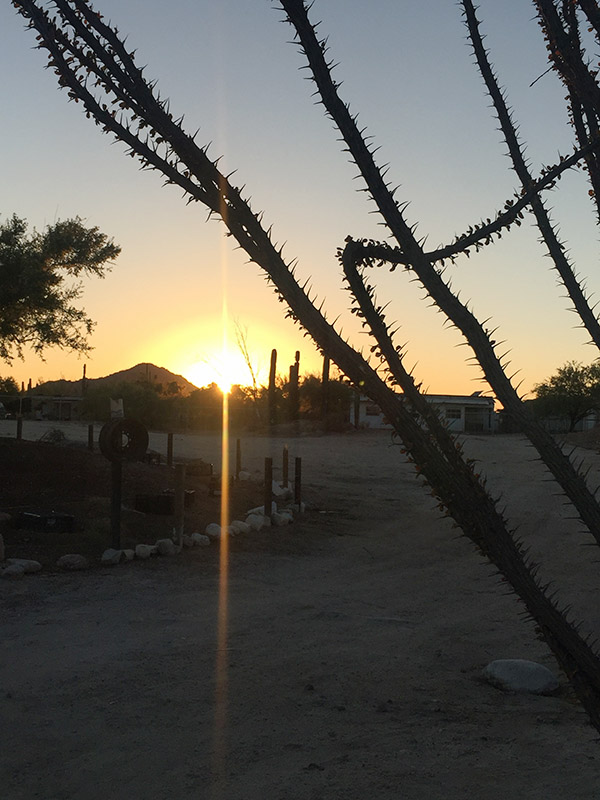
The next day I found myself back on the road.   My destination would be the tiny town of Cataviña, a community of fewer than 200 residents.  Cataviña is known for cave paintings, colossal rocks mixed with desert vegetation, and epic sunsets.  This place could be on Mars with its endless boulders stacked at impossible angles and the stark beauty of the high desert plateau.

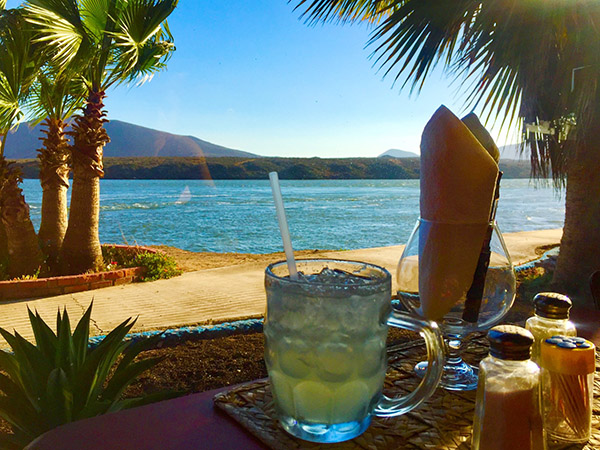
The day called for 380 kilometers, about a six-hour ride without stops.  The morning started slow and easy as I retraced my ride back down the mountain and through the water crossings of the day before. After a quick stop at the OXXO convenience store for a burrito and coffee, I was on the road heading down Highway 1.  The road went into the interior, passing through several tiny dusty towns and a few newfound favorites, including San Vicente and San Quintin. One of my favorite finds is Don Eddie’s Landing Hotel and Restaurant, an oasis with comfortable rooms, sports fishing, and even a few camping spots. I settled in at their patio, enjoying the views of the Pacific and Eddie’s legendary hospitality. This place is an ideal rest spot for enjoying a perfect plate of shrimp ceviche with just the right intensity of lime and chilis, complete with Don Eddie’s legendary hand-crafted margaritas, the likes of which I’ve never found in the USA.

A Don Eddie’s Margarita.

Reluctantly leaving Eddie’s, I continued south on Highway 1, turning inland at El Rosario de Arriba, climbing up from sea level to 1841 feet. The elevation change did little to abate the day’s growing heat. I arrived intending to camp, but the reality of a 98-degree afternoon soon had me sapped. I pulled into the only commercial enterprise besides a little store across the street and a few tiny restaurants.

The Hotel Misíon Santa María – Cataviña looked like she was built in the colonial era; in reality, I learned she was built by the Mexican government as part of their tourism outreach. With a courtyard full of flowers and mature trees, I found a haven and counted my good fortunes to stay in such opulent digs (opulent compared to my humble tent). After securing my room for the night, I quickly dumped my gear, splashed some cold water on my face, and confirmed that I looked like I had ridden in the heat all day. I landed outside in the shade near the little bar enjoying my margarita. The bartender generously gave me endless glasses of water while we chatted about the heat, my bike, and his childhood in Arizona. Soon it was time to head to bed. I reached down to grab my bag and Delorme. A momentary shock as my Delorme was nowhere to be found. The little safety device would allow me to signal for help if needed and text my friends and family when off the beaten path and far out of cell coverage. The bartender and manager helped me search the grounds to no avail. I gave up and went to bed, cursing myself for my carelessness.

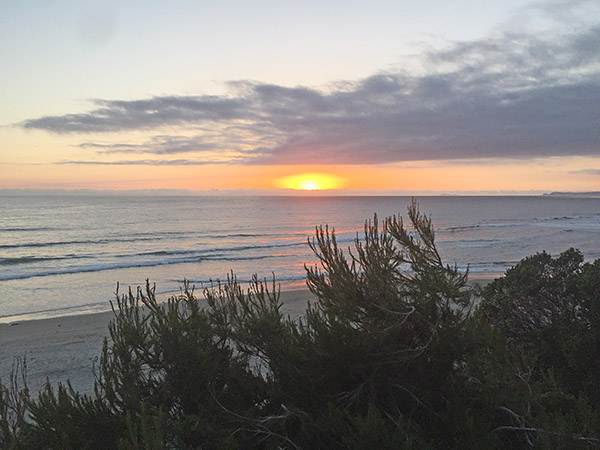
Catavina Sunset.

The following day bright and early I rode across the street to purchase the only available gas in this remote region from locals selling gas in plastic drums and liter-size soda bottles. Saying a prayer for the safety of my engine, I had them fill up my tank and MSR fuel bottle I always carry for the just-in-case moments.

Soon I was on the road headed to Guerrero Negro. The wind brushed over me gently with no hint of the high wind advisory posted for later that day. I left the unpleasantness of my Delorme loss behind and leaned into the joy of the ride. As it was a Sunday, I had the road to myself, with the added blessing of many commercial vehicles being home for the day. This was precisely what I had been dreaming of.  As the starkness of the desert unfolded in front of my bike, I knew how lucky I was to be on this adventure! I was once again reminded to grab my dreams, ignore the naysayers, and embrace the adventure ahead.


Never miss an ExNotes blog:


Venturing into Baja?  Insure with the best:  BajaBound.  It’s what we use.


Want more Baja info? It’s right here!


Want to read more stories about riding in Baja? Pick up a copy of Moto Baja!

Camino de Santiago Part 1: A Walk Across Spain

By Bobbie Surber

The Camino de Santiago, also known as the Way of St. James, is a network of pilgrimage routes that lead to the shrine of the apostle Saint James the Great in the cathedral of Santiago de Compostela in Galicia, Spain. The Camino has been a popular destination for Christian pilgrims for more than a thousand years, and it is now visited by people of all faiths and backgrounds from around the world.

There are several routes of the Camino de Santiago, including the Camino Frances (French Way), which is the most popular, and the Camino Portugués (Portuguese Way), which starts in Lisbon or begins in Porto for a two-week shorter Camino. The Camino de Santiago is a long-distance walk or hike that typically takes 30-40 days to complete, depending on the route and the pace of the individual pilgrim.
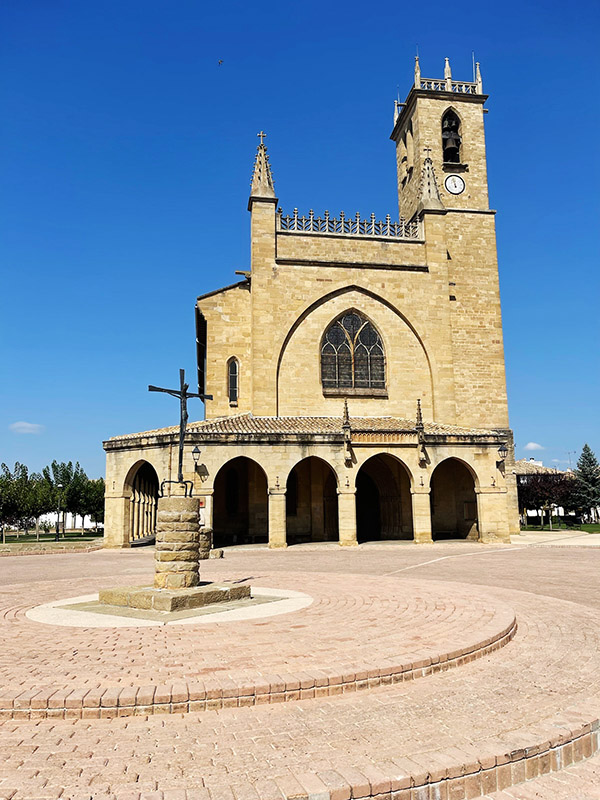
Along the way, pilgrims stay in Albergues (pilgrim hostels) or other types of accommodation and follow the yellow arrows and shells which mark the way. The Camino de Santiago offers a unique opportunity to experience the beauty of the Spanish landscape and culture and to challenge oneself physically and spiritually.


Please click on the popup ads!


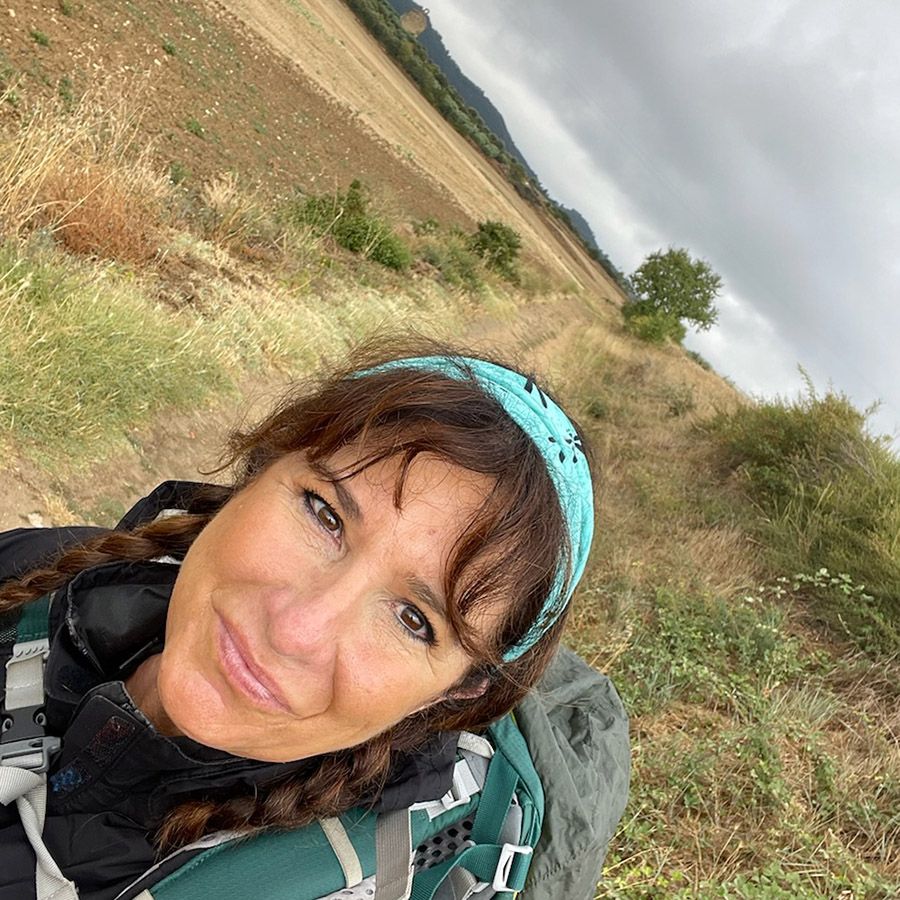
I walked seven different Camino Routes with my first Camino in 2012 and the last in September 2021. My last walk found me starting in Pamplona, Spain, a vibrant city never lacking a reason for a fiesta, a city known worldwide for the Running of the Bulls every July.  I ended my journey in Leon, Spain. With my added side trips, I walked over 300 miles, experiencing high desert plateaus, the Rioja wine region, the blissful Logrono’s tapas, the magnificent Burgos Cathedral, the Meseta’s emptiness, and the joy of Leon.

I was on a multi-month motorcycle/camping trip through Arizona, Utah, Colorado, Wyoming, and Montana. When riding, there are times when every part of your brain is laser-focused on the road ahead of you and who might try to run you over from the back or side, but every now and then, the ride is so peaceful that you have time to turn a portion of your brain to the gift of “I wonder.” This led me to reminisce over my six prior walks along different Camino routes in Spain, Portugal, and France. Once released, an avalanche of memories and images flowed to the point that I knew I would be booking my flight to Europe as soon as I stopped my ride for the day.

A quick Google Flights search gave me what I needed, and I soon had a ticket. This was another solo walk, my favorite way for most hikes. My arrival in Pamplona was early enough that I decided to start my Camino right from the Pamplona Airport, bypassing one of my favorite cities in Spain.

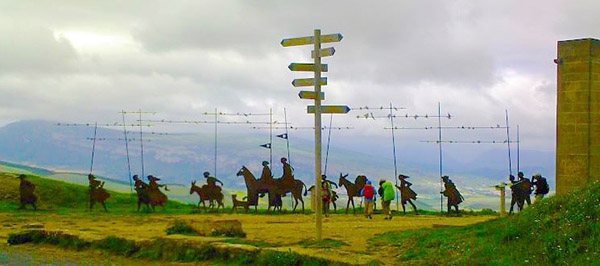
The morning had the hope of the fall weather yet to come as I headed slowly up the first of several foothills with the goal of a 10-mile walk for my first day. The gravel crunched satisfactorily underfoot as I quickly adjusted my backstraps to climb up to an iconic ridge that all pilgrims look forward to, the Alto del Perdón, a mountain pass in the province of Navarra in northern Spain, about 12 miles outside of Pamplona. I had returned to the Camino Frances trail after nine-year of absence, taking in beautiful views of the surrounding landscape and a chance to rest and recharge. The mountain pass is named after a sculpture of the Virgin Mary and the phrases “Señora del Camino” (Lady of the Way) and “Perdón” (Forgiveness), which are inscribed on the base of the sculpture. The windswept ridge and the massive wind turbines in the background contrast the sculptures that represent a pilgrimage from the Middle Ages. I took my first full breath after 18 hours of travel and an excellent 8-mile walk to this point. I thought about my intentions for this walk, what I hoped to gain and whom I would miss in the coming weeks of a long walk across most of Spain.

Reluctantly leaving the ridge late afternoon, I knew it would be challenging to reach my Albergue for the night. The steep loose gravel trail reminds me that my knees are not what they used to be, and motorcycle riding for the prior months did little to prepare me for the rigors of this walk. Soon the village of Uterga appeared with another climb up to her main street. My arrival timed perfectly to watch the evening stroll of the locals begin, kids running in the square, little old ladies with perfectly quaffed hair and well-put-together outfits ambling in deep conversations. Adults were sitting in outdoor cafes having a drink, visiting each other, and enjoying the last dregs of daylight. I wanted to plop my disheveled self within their mist and order my first long-awaited glass of Vino Tinto, but I pulled myself together and made the last of my walk to my Albergue in short order.

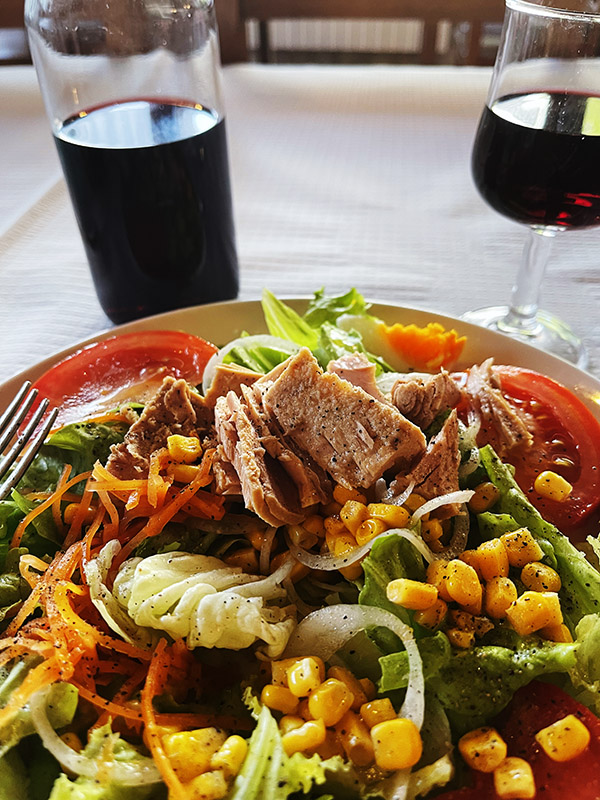
This first night’s stay found me in a dorm room in a private Albergue with its small restaurant and bar. After showing my pilgrims pass (issued to show you are walking the Camino) and paying 12 Euros for my place in the dorm room, I quickly dumped my backpack on my bed, looked in the mirror, confirmed I looked like a wreck, dashed for the bar, and ordered my first of many good Rioja wines. Settling in, I met my first group of fellow pilgrims. A portly German fellow in his mid-fifties that I would painfully learn would serenade us throughout the night with his epic snoring. Also, a group of Italian bicycle riders. They were loud, and all were talking at once with what would become the usual question:  Why is an American woman walking the Camino alone?  Well, that’s a question for another day! I order my second glass of wine and move into the restaurant for the start of the evening’s Pilgrim meal, an inexpensive three-course meal with portions that could feed a small family, and your choice of bottled water or a bottle of wine, Good God, man, why would you order the water?  I certainly did not.

I had equal feelings of contentment and joy seeping in as German, Italian, and Spanish conversations swirled around me—fellow pilgrims sharing their day’s success and physical hardships. Many of the pilgrims had started 60 miles back on the French side of the Pyrenees, had survived the celebrations of Pamplona, and were still in high spirits so early in their walk. I listened to their stories and their countless toasts made in several languages. I left the room while the wave of conversation and laughter reminded me of how lucky I was to be on this walk for a 7th time. This surely was the beginning of an epic adventure and the hope of what Spain had in store for me.


Never miss an ExNotes blog: