By Joe Berk
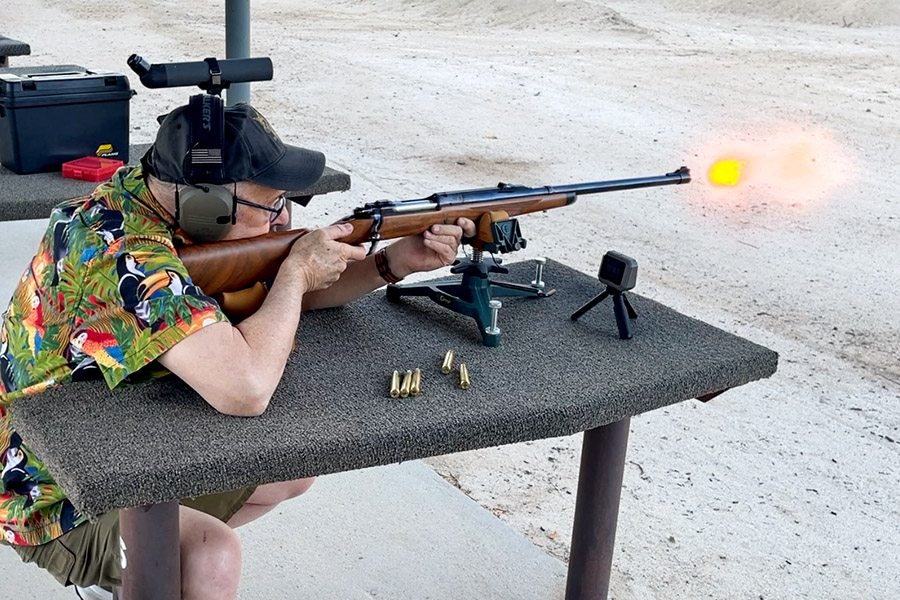
You have to be quick on the trigger, and Kevin was when he grabbed that shot above capturing the muzzle flash from my .416 Rigby. It’s a good shot by a good shot. Me? I’m just the male model in the photo above.
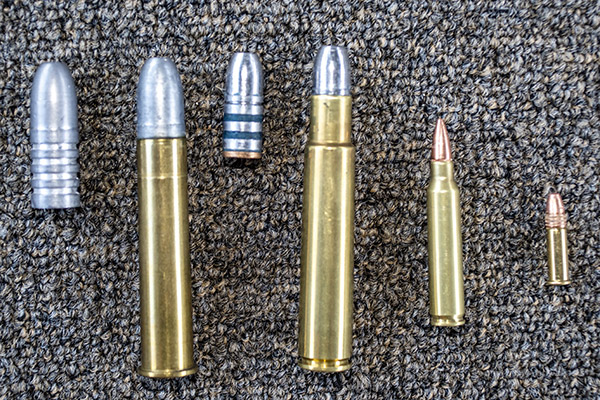
We’ve done blogs on ExNotes before about big bore rifles (.45 70, .458 Win Mag, .416 Rigby, .375 Ruger, and .375 H&H, to name but a few). These are all what I would consider big. But they’re pipsqueaks to a toy good buddy Kevin has been playing with lately: A custom .50-90 1896 Winchester High Wall. By any measure, that rifle and its cartridge is a monster. Originally designed as a buffalo gun, it is a real thumper. The .50-90 almost needs to be a crew-served weapon.
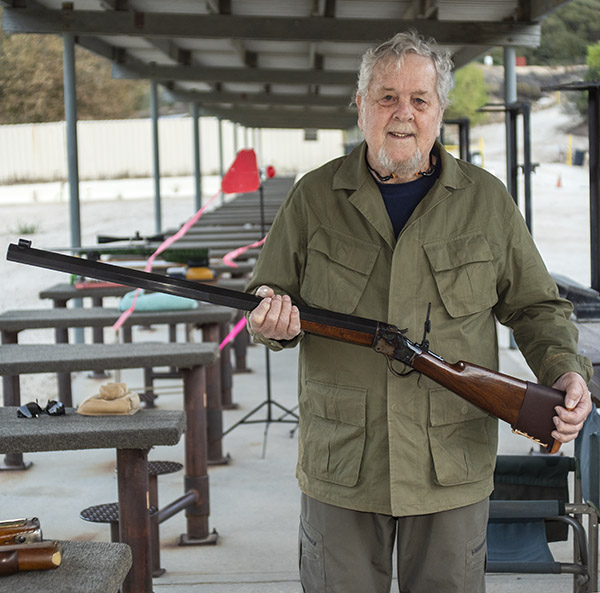
Kevin and I play around shooting for group size when we both bring guns of the same type to the West End Gun Club. We’ve done it with handguns, small bore rifles, and more…sort of the thing I wrote about a few days ago in the Tale of Two Mini 14s. This time, though, the bore diameters would be doubled. Big stuff. Guns designed to eradicate buffalo herds in America and dangerous game in Africa. Or maybe prehistoric beasts in Jurassic Park. The stuff of dreams, these guns are.
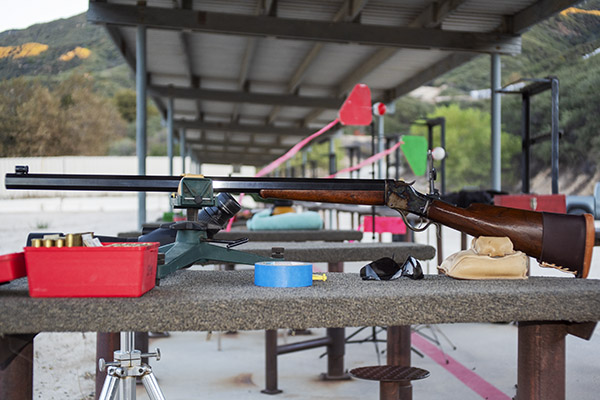
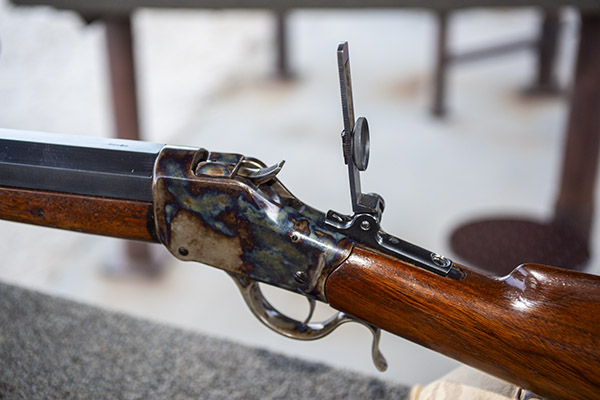
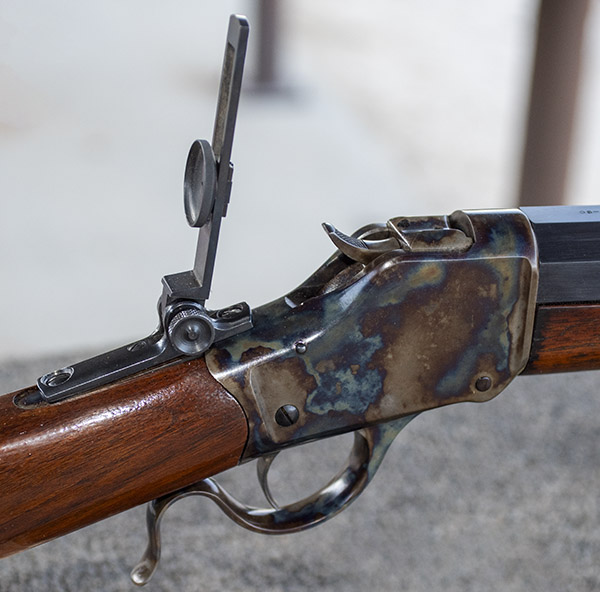
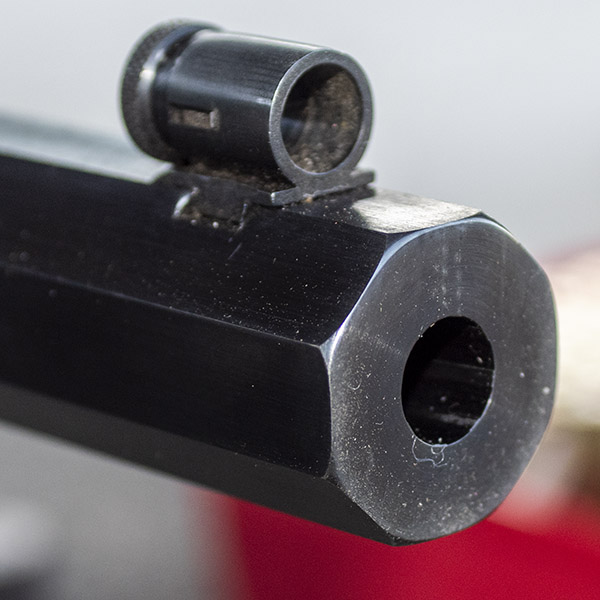
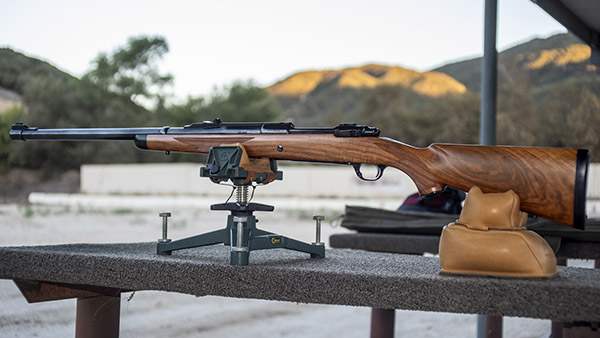
Kevin and I thought it might be interesting to do the same (you know, an informal shootoff) with two of the grownup rifles: My .416 Rigby (affectionately named Eleanor) and Kevin’s .50-90. Ordinarily, in these informal matches, we’d shoot 20 rounds and look at group size. I made a comment about 20 rounds from my .416 Rigby being a lot. Kevin told me he didn’t know if he’d survive 20 rounds from the .50-90, and suggested 10 rounds instead. When we got to the range early that morning (before sunup, actually), after further thought we both settled on a more sensible (and shoulder friendly) 5 rounds.
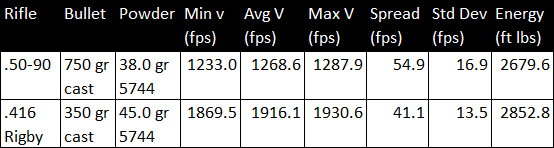
While we were shooting (and during the videoing of our shooting session), my Garmin chronograph was doing its thing. Here’s how the velocities of the two cartridges shook out:
We also calculated the energy for each rifle based on the average velocity listed above for each cartridge. The formula is:

Using the above formula, my .416 Rigby load had 2852.8 ft lbs of energy; Kevin’s .50-90 load had 2679.6 ft lbs of energy. (I think the Garmin will calculate energy automatically, but being engineers, Kevin and I had to use the formula and calculate it ourselves). It’s interesting. My bullet weight in the .416 Rigby was just under half of Kevin’s in his .50-90 Winchester, but the .416 had higher energy than the .50-90. Because energy increases as the square of velocity, the .416’s weight deficit (if the phrase “weight deficit” can even be used when referring to a 350-grain bullet) is overcome by its velocity.
The .416 Rigby had more muzzle energy than Kevin’s .50-90 Winchester, but the .50-90 Winchester’s recoil is absolutely horrendous compared to the Rigby. You’ll see that in the video below.
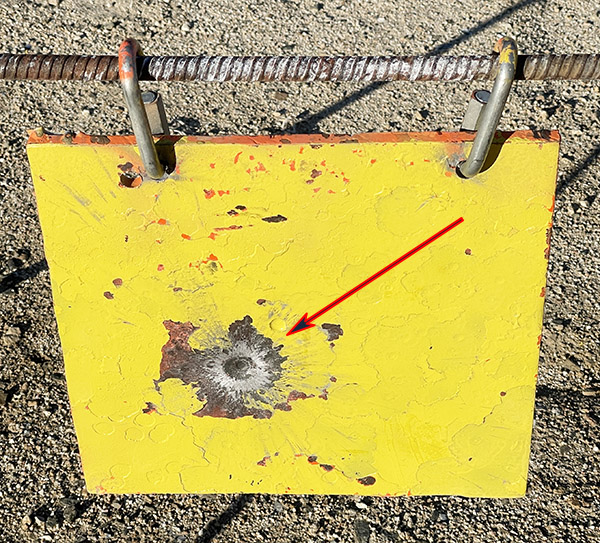
So who did better on our 50-yard targets? Kevin. He shot a tighter group, and then, just for grins, he lobbed a round at a metal plate on his improvised target stand. The first shot knocked the stand down like it was hit by a freight train. That .50-90 is a powerful proposition.