
By Joe Berk
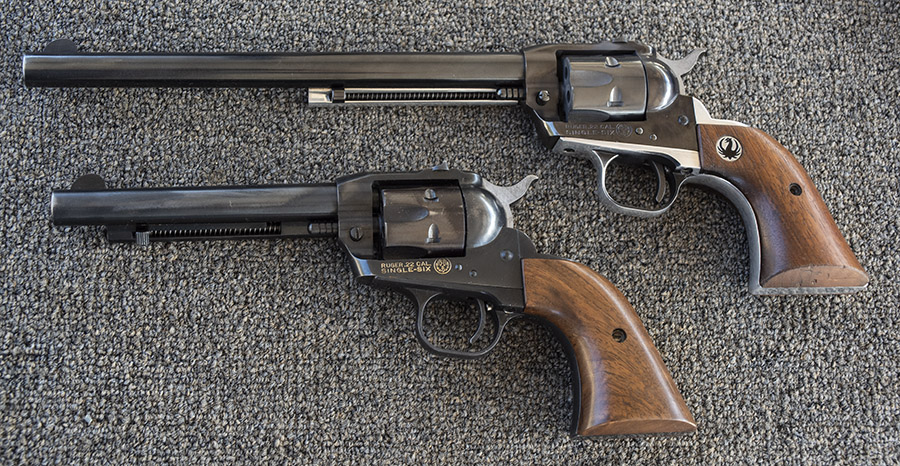
A few weeks ago, I posted a blog about a new-to-me Old Model Ruger Single Six with a 9 1/2-inch barrel, a firearm I recently acquired. It’s a beautiful handgun. In that blog, I mentioned that I planned to test the 9 1/2-inch Single Six and compare it to my Dad’s first-year-of-production 5 1/2-inch Single Six. I recently did so, capturing the velocities from each handgun and assessing the accuracy of each.
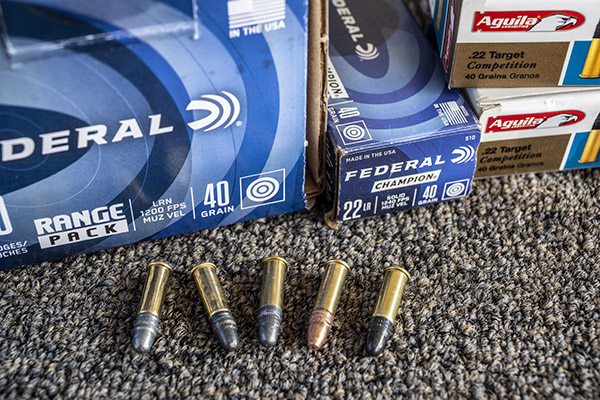
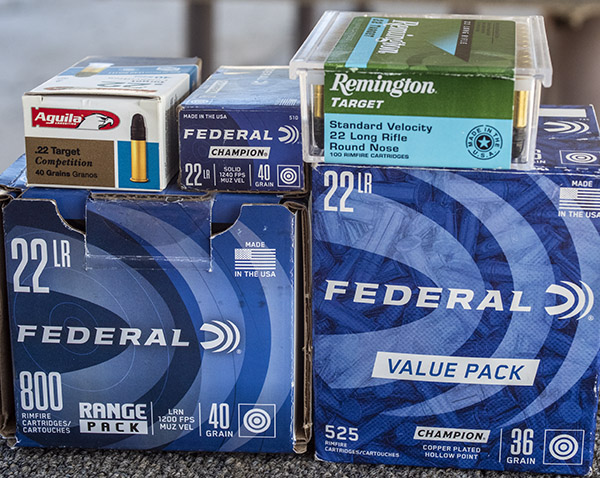
All my testing was done firing from the sitting position with two hands (resting my hands on the bench), shooting at targets 25 yards away. Here’s a summary of each of the .22 ammunition types fired in this test series:
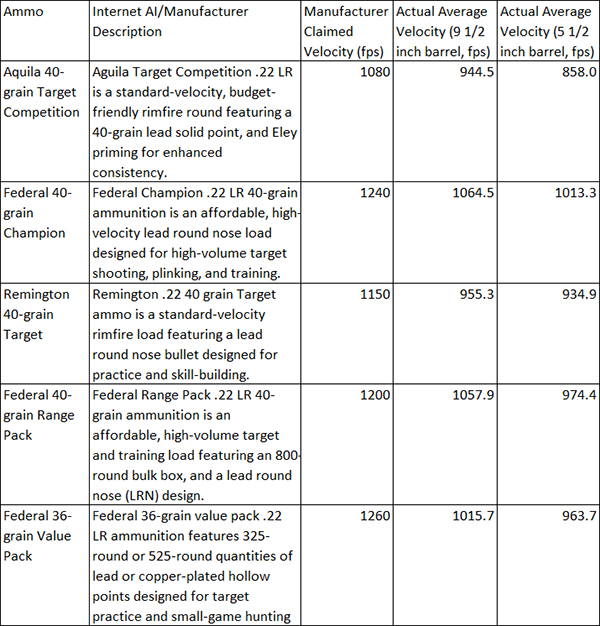
The manufacturers did not specify whether their velocities were for a handgun or for a rifle, so it’s not too surprising that my testing showed lower average velocities. I’m assuming the manufacturers’ figures are intended to show velocities from a rifle. There’s more velocity information for each of the ammo types in both handguns below.
A caveat or two up front: I only fired six rounds of each of the five different ammo types, and I only shot one 6-shot group from each of the two Single Six Rugers. This was to be a “quick look” accuracy assessment; ordinarily, to assess accuracy I would fire several groups for each load, but I didn’t do that for this test. Also, I include the velocity standard deviation for each 6-shot string, so take those results with a very large grain of sand. From a statistics perspective, 25 or more data points are normally used to get a population’s standard deviation. Again, this test series was intended to provide a quick look.
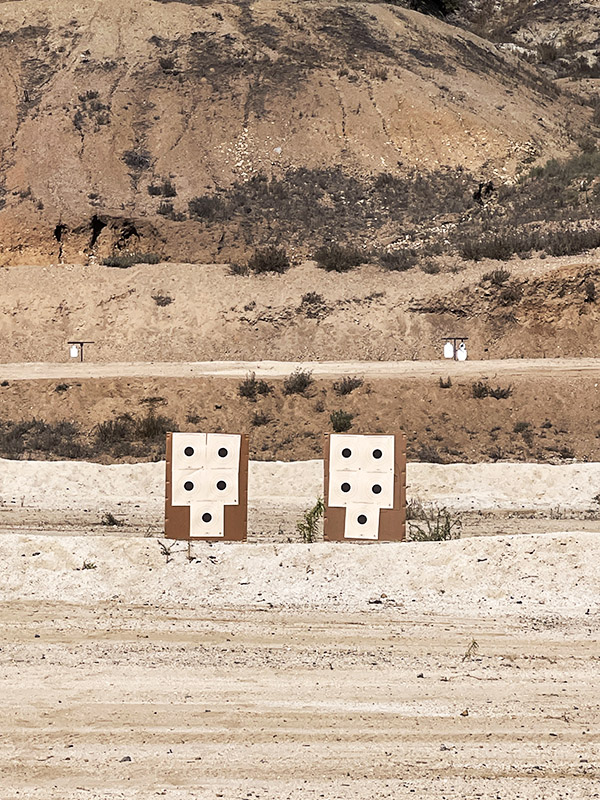
After setting up my targets, I fired five 6-shot groups with the 9 1/2-inch Single Six at the targets on the left first, and then I fired five 6-shot groups from the 5 1/2-inch Single Six. The targets are shown below.
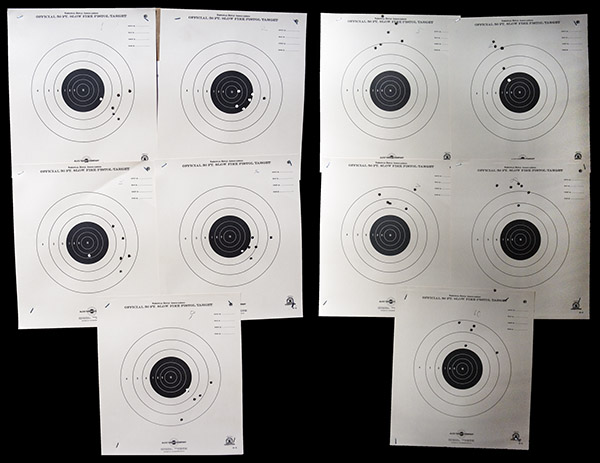
I didn’t measure group sizes because (as mentioned above) this was intended to be a quick look. That notwithstanding, a few things are apparent:
-
- The 9 1/2 inch Single Six shoots a little bit to the right with all loads (I held at 6:00 on all targets).
- The 5 1/2 inch Single Six shoots a little bit high with all loads.
- The groups shot with the Federal Range Pack ammo (which was cheap stuff, not intended to be target-grade ammo) appear to be the best. That could change with more groups fired, but in both handguns, this ammo grouped well. It’s good ammo.
Both the Single Six Rugers featured in this article have fixed sights, so the point of impact bias described above cannot be addressed with a simple screwdriver sight adjustment. That’s okay by me. I’m not going to bother drifting the rear sight in its dovetail base on the 9 1/2-inch revolver, nor am I going to file the rear sight on the 5 1/2 inch Ruger. I know where to hold on the target for each revolver now, and that’s what I’ll do.
Here’s the chrono data for the different loads, first for the 5 1/2-inch Single Six, and then for the 9 1/2-inch Single Six.
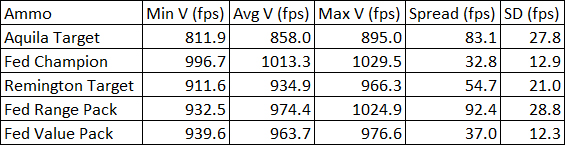
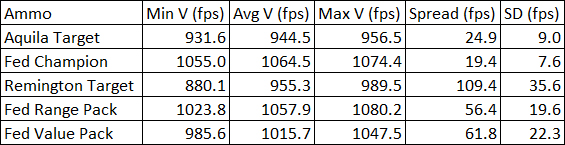
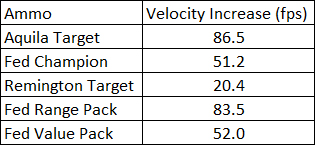
As expected, the 9 1/2-inch Single Six had higher velocities than the 5 1/2-inch barrel Single Six for every ammo type I tested. The table below shows the average velocity increase for the 9 1/2-inch Single Six (over the 5 1/2 -inch Single Six) for each load.
Both Rugers are very high quality handguns. The old saying (“they don’t make them like they used to”) certainly applies here. The 5 1/2-Single Six featured here was manufactured in 1954 (the first full year of production); the 9 1/2-inch Single Six was manufactured in 1968. Throughout this test series, there were no failures to fire. The 9 1/2-inch Single Six ejector rod actuation felt a bit gritty at first, but after a good cleaning (I bought this gun used), it is as buttery smooth as the ejector on the 5 1/2-inch Ruger. The 5 1/2-inch gun’s oil-finished grips feel much better than do the 9 1/2-inch gun’s stock Ruger grips. The fact that the shorter-barreled Ruger’s grips were custom made by my Dad influenced my opinion, but they actually do. feel better. They are fuller and they fit me well.
Ruger still manufactures the Single Six in their New Model configuration, along with a much cheaper Wrangler .22 handgun. I don’t feel a need to own either; I’m more than happy with my Old Model Single Six Rugers.
For more info on the 9 1/2-inch Ruger, my previous blog is here.
The blog on the 1954 Ruger (the 5 1/2-inch revolver) is here.
An index showing all our Tales of the Gun features is here.