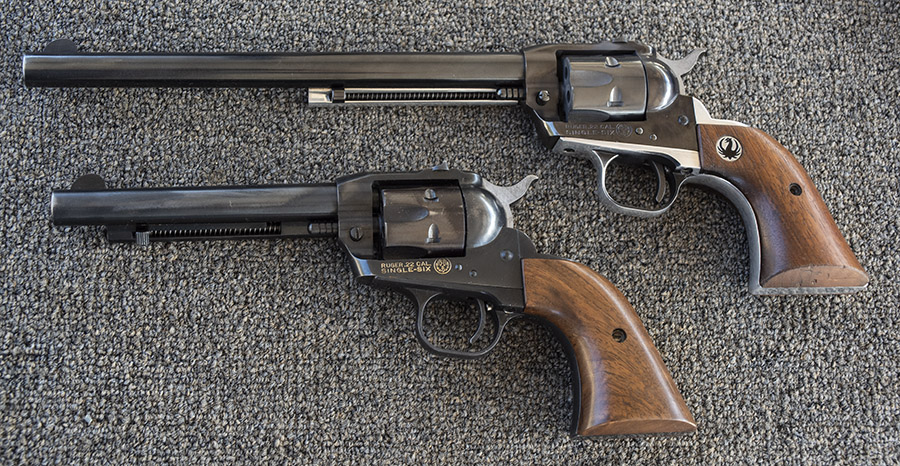
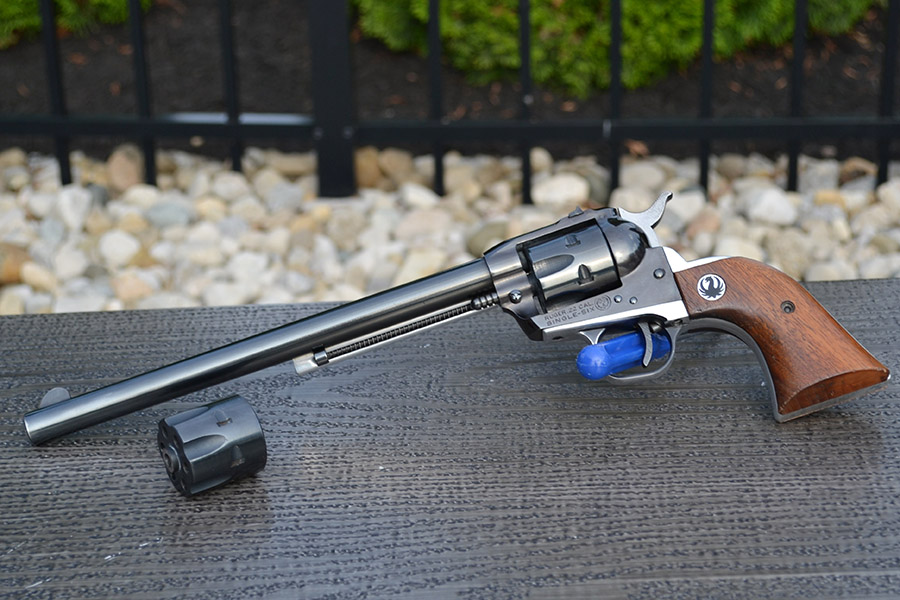
A few weeks ago, I posted a blog about a new-to-me Old Model Ruger Single Six with a 9 1/2-inch barrel, a firearm I recently acquired. It’s a beautiful handgun. In that blog, I mentioned that I planned to test the 9 1/2-inch Single Six and compare it to my Dad’s first-year-of-production 5 1/2-inch Single Six. I recently did so, capturing the velocities from each handgun and assessing the accuracy of each.
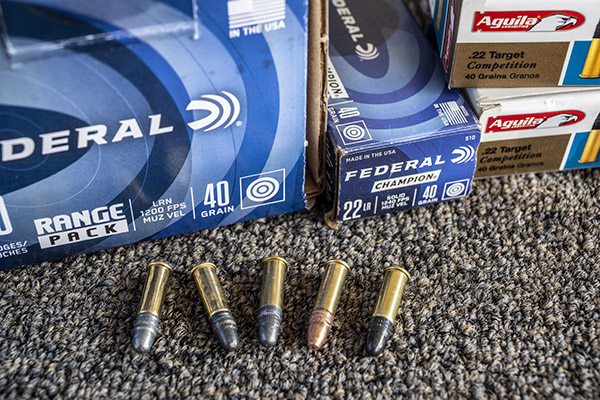
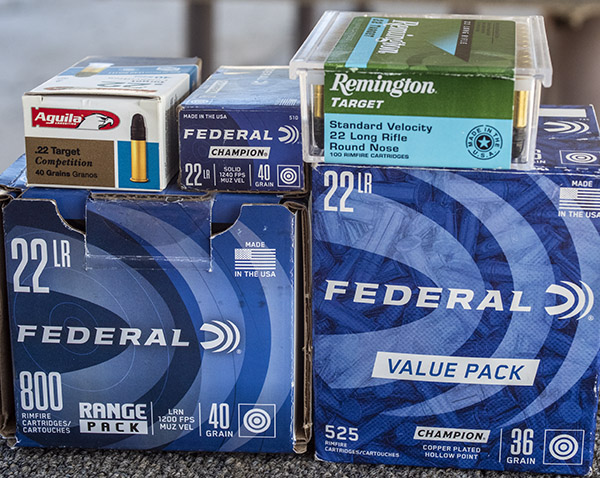
The five different .22 ammunition types used in this testing (shown from left to right): Aquila’s 40-grain Target Competition load, Federal’s 40-grain Champion load, Remington’s 40-grain Target load, Federal’s 40-grain Range Pack load, and Federal’s 36-grain Value Pack load.A few years ago, a federal court overturned California’s unconstitutional requirement that we could only buy ammunition from an FFL dealer, with the FFL running a criminal background check for each purchase (for which we as consumers have to pay). The reprieve only lasted a week or two before the tyrants in Sacramento appealed the federal court decision, but during that week, I ordered a bunch of .22 ammo. The California appeal is still working its way through the courts. In the meantime, we can only buy from an FFL or an approved vendor. Make no mistake: The real criminals are the California legislators and our governor.
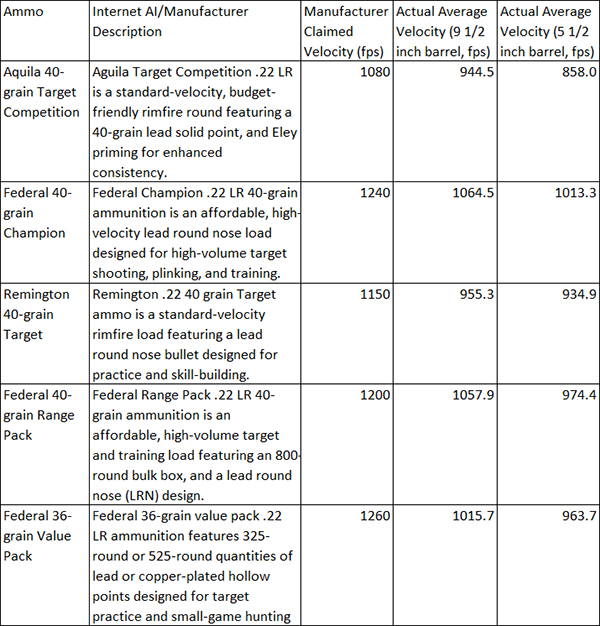
All my testing was done firing from the sitting position with two hands (resting my hands on the bench), shooting at targets 25 yards away. Here’s a summary of each of the .22 ammunition types fired in this test series:
A summary of the five different ammunition types used in this test program.
The manufacturers did not specify whether their velocities were for a handgun or for a rifle, so it’s not too surprising that my testing showed lower average velocities. I’m assuming the manufacturers’ figures are intended to show velocities from a rifle. There’s more velocity information for each of the ammo types in both handguns below.
A caveat or two up front: I only fired six rounds of each of the five different ammo types, and I only shot one 6-shot group from each of the two Single Six Rugers. This was to be a “quick look” accuracy assessment; ordinarily, to assess accuracy I would fire several groups for each load, but I didn’t do that for this test. Also, I include the velocity standard deviation for each 6-shot string, so take those results with a very large grain of sand. From a statistics perspective, 25 or more data points are normally used to get a population’s standard deviation. Again, this test series was intended to provide a quick look.
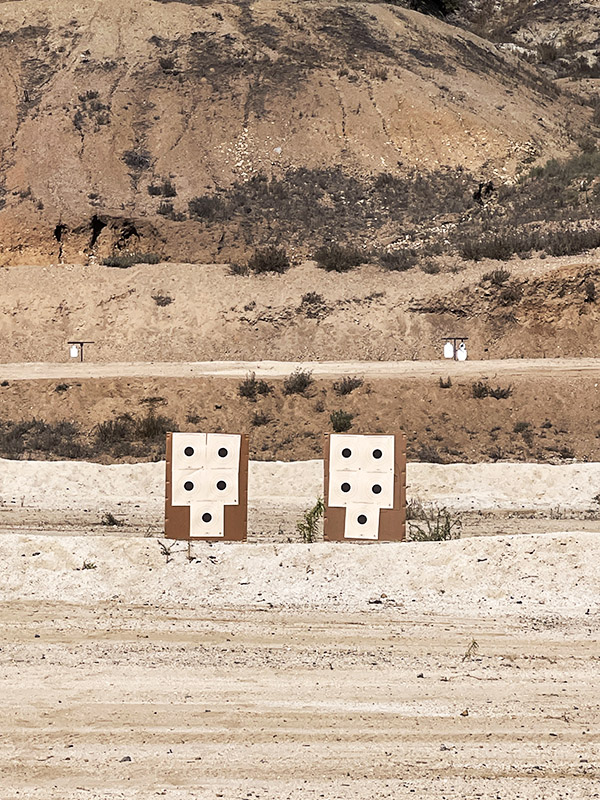
My targets at 25 yards. The targets in the background are out at 100 yards. I did my shooting at the West End Gun Club.
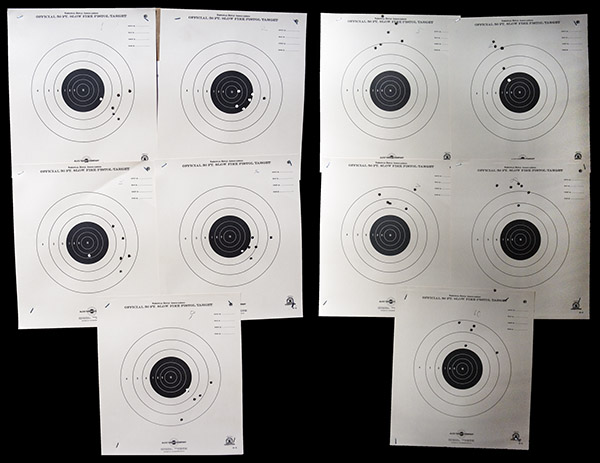
After setting up my targets, I fired five 6-shot groups with the 9 1/2-inch Single Six at the targets on the left first, and then I fired five 6-shot groups from the 5 1/2-inch Single Six. The targets are shown below.
9 1/2-inch Single Six targets (left), and 5 1/2-inch Single Six targets (right). The targets run from left to right, and then top to bottom, with each of the five different .22 loads fired in the order listed above. Each top left target was fired with Aquila ammo, each top right target was fired with Federal Champion ammo, the second row left target was fired with Remington Target ammo, the second row right target was fired with Federal Range Pack ammo, and the bottom target was fired with Federal Value Pack ammo.
I didn’t measure group sizes because (as mentioned above) this was intended to be a quick look. That notwithstanding, a few things are apparent:
The 9 1/2 inch Single Six shoots a little bit to the right with all loads (I held at 6:00 on all targets).
The 5 1/2 inch Single Six shoots a little bit high with all loads.
The groups shot with the Federal Range Pack ammo (which was cheap stuff, not intended to be target-grade ammo) appear to be the best. That could change with more groups fired, but in both handguns, this ammo grouped well. It’s good ammo.
Both the Single Six Rugers featured in this article have fixed sights, so the point of impact bias described above cannot be addressed with a simple screwdriver sight adjustment. That’s okay by me. I’m not going to bother drifting the rear sight in its dovetail base on the 9 1/2-inch revolver, nor am I going to file the rear sight on the 5 1/2 inch Ruger. I know where to hold on the target for each revolver now, and that’s what I’ll do.
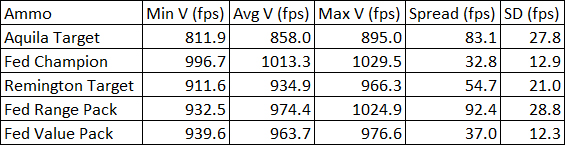
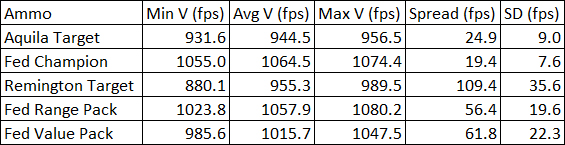
Here’s the chrono data for the different loads, first for the 5 1/2-inch Single Six, and then for the 9 1/2-inch Single Six.
5 1/2-inch Single Six Velocity Data.9 1/2-inch Single Six Velocity Data.
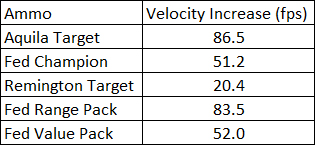
As expected, the 9 1/2-inch Single Six had higher velocities than the 5 1/2-inch barrel Single Six for every ammo type I tested. The table below shows the average velocity increase for the 9 1/2-inch Single Six (over the 5 1/2 -inch Single Six) for each load.
Velocity Increase (9 1/2-inch Single Six compared to 5 1/2-inch Single Six).
Both Rugers are very high quality handguns. The old saying (“they don’t make them like they used to”) certainly applies here. The 5 1/2-Single Six featured here was manufactured in 1954 (the first full year of production); the 9 1/2-inch Single Six was manufactured in 1968. Throughout this test series, there were no failures to fire. The 9 1/2-inch Single Six ejector rod actuation felt a bit gritty at first, but after a good cleaning (I bought this gun used), it is as buttery smooth as the ejector on the 5 1/2-inch Ruger. The 5 1/2-inch gun’s oil-finished grips feel much better than do the 9 1/2-inch gun’s stock Ruger grips. The fact that the shorter-barreled Ruger’s grips were custom made by my Dad influenced my opinion, but they actually do. feel better. They are fuller and they fit me well.
Ruger still manufactures the Single Six in their New Model configuration, along with a much cheaper Wrangler .22 handgun. I don’t feel a need to own either; I’m more than happy with my Old Model Single Six Rugers.
First, a bit of background info: I had back surgery just over a week ago. Some of you asked for updates, and I’m responding to those requests. I’m progressing well. The surgery helped enormously, and after a decade and a half of pain, I’m feeling a lot better. My endurance isn’t where it needs to be yet, but with short walks (growing longer each day), I’m getting there.
So where’s this story going? I don’t mind sharing that before the surgery, I was apprehensive. I’d heard all kinds of ominous things about back surgery. My biggest fear was that I’d be worse after the surgery than I was before, or that the surgery would make no difference. None of that came to pass. I made a good decision, my surgeon was a gifted doctor, and I’m improving every day. But in the days leading up to it, I was feeling down. So I did what I normally do to feel better: I bought a gun.
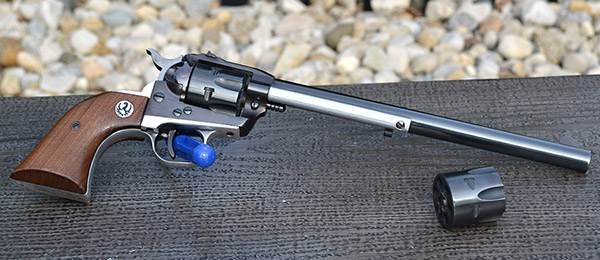
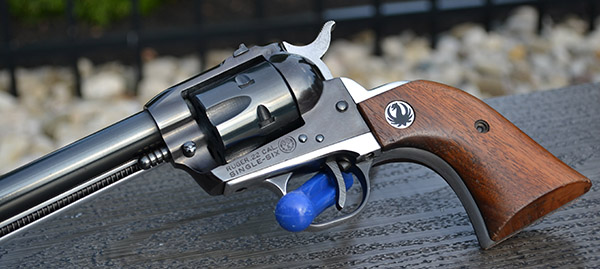
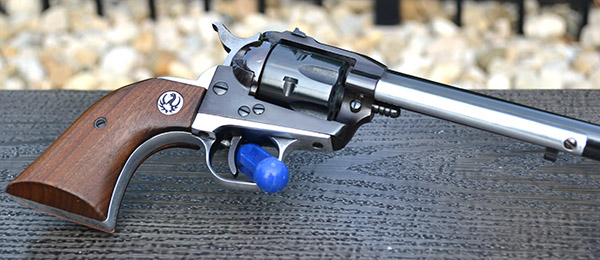
Not just any gun. It’s a Ruger Old Model Single-Six with 9 1/2-inch barrel. It had been lightly customized (the grip frame and ejector tube were polished instead of the standard anodized aluminum). The price was more than right (at a scant $395, the gun was way below what it would normally bring). Old Model 9 1/2-inch Single Sixes are not very common and they command a premium in the collector market. This one even included the optional .22 Mag cylinder. I follow several online gun forums, and when I saw the post advertising this Single Six, I pounced (it was a no-brainer for me). The online post had been up for exactly 28 minutes before I responded with “I’ll take it.” And I’m glad I did.
When the gun arrived at my local FFL, I was ecstatic. It looks even better in person than it does in these photos. That $395 price was a good thing, but boy oh boy, does California and the federal government ever screw you on the sin taxes they levy on guns. I don’t know this for a fact, but I’d be amazed if any of the hoops California makes a gun buyer jump through ever prevented a crime anywhere. Fortunately, the U.S. Supreme Court is starting to dial back some of these outrageous cash grabs and ridiculous laws (the latest being the Supreme Court decision on Hawaii’s nutty concealed carry restrictions). That effort needs to be accelerated. I’m for nationwide recognition of any state’s concealed carry permit, doing away completely with any state’s approved gun roster, and the elimination of any special taxes on gun purchases. Our state and federal governments have better things to do. But I digress. Back to the Single Six.
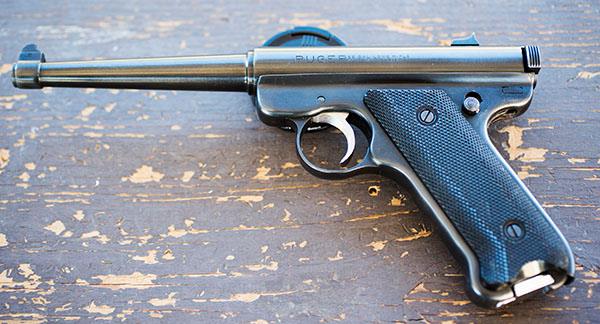
The story behind the Ruger Single-Six is tied to our 1950s/1960s obsession with the American West. Ruger was a new company back in the 1950s. They had already hit a home run with their .22 autoloader handgun (the Ruger Standard Model) when they decided to emulate the Colt Single Action Army in a .22 revolver, and the new Ruger sixgun has been in production ever since.
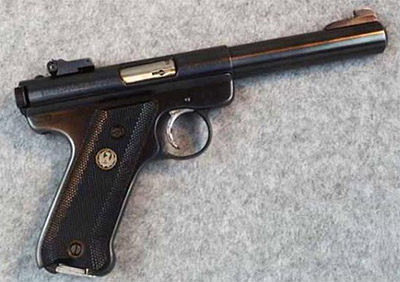
Ruger’s .22 Autoloader. This particular one resides in my gun safe.
The Ruger Single Six entered the marketplace in 1953. With it, Ruger created a new market niche, and Ruger sold every one of these guns as fast as they could make them. The 9 1/2-inch version was introduced in 1959, and it appealed to collectors, target shooters, small-game hunters, and folks who just liked that it was something different. I’m in the collector/target shooter category. The Single Six you see above was manufactured in 1968. That makes it 58 years old. A youngster, in gun years.
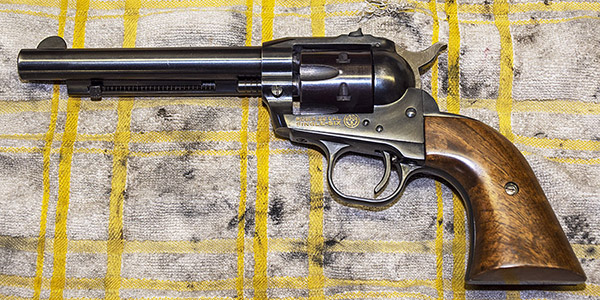
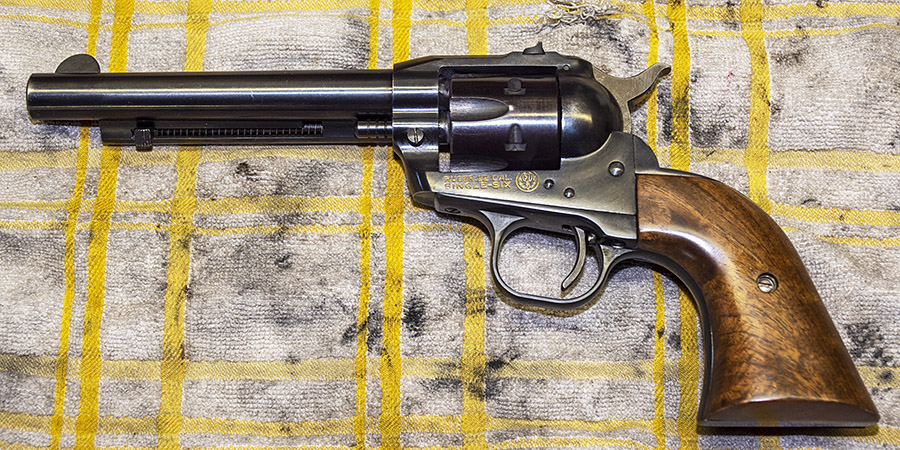
This is not my first Single Six, and it’s not the first time we’ve written about the Ruger Single Six. My Dad owned one from the first full year of production, and it became mine when he passed. It’s the revolver you see below, and you can read about it here.
It will be a few more days before I can drive again, and I have some restrictions on lifting anything above a certain weight (don’t tell Sue, but I’m milking these restrictions for all they are worth). The bottom line is that I haven’t shot the new Single Six yet. Once I’m able to get around a little better, I’ll shoot both Single Sixes in a side-by-side comparo, maybe with a few different ammo types. Stay tuned.
This is my tale about restoring a very ugly and broken vintage 1968 Ruger Blackhawk that had the safety conversion done by the Ruger factory. I think Skeeter Skelton would have approved! (Skeeter Skelton was an American lawman and prolific gunwriter well known to firearm enthusiasts.)
First, a little background on the single action revolver, or “sixgun” as they are called. In 1872 the US government was looking for a new service revolver to replace its older Colt and Remington cap-and-ball revolvers used in the Civil War. Colt developed a sixgun that utilized the then new technology metallic cartridge. Colt was the successful contractor and their cartridge gun was adopted by the government in 1873 as the 1873 Colt Single Action Army. The 1873 Colt SAA was shortly thereafter offered to the civilian market and became very popular with ranchers, lawmen, cowboys and bad guys alike. The “Peacemaker” (as Colt’s SAA became known) was priced around $15, which was most of a drover’s wages for a month.
After WWII a new-fangled gizmo called television started to become affordable. In 1948 about 1% of American households owned a television, and by 1955, 75% of American households owned at least one television set (black and white with “rabbit ears” antenna, of course). The TV set became the center of the living room, and the entire family would gather around the “set” after dinner. Hollywood’s golden age of TV westerns from the mid-1950’s through the 1960’s produced an astounding number of instant hits with shows like Have Gun Will Travel, Rawhide, Wanted Dead or Alive, and The Rifleman. All of them featured the Colt SAA and Winchester repeating rifles, or the “lever gun.” Every red-blooded American boy and his father and his uncles and even some moms wanted to own and shoot their very own Peacemaker. But there was a problem: The Colt sixguns were expensive and often not available.
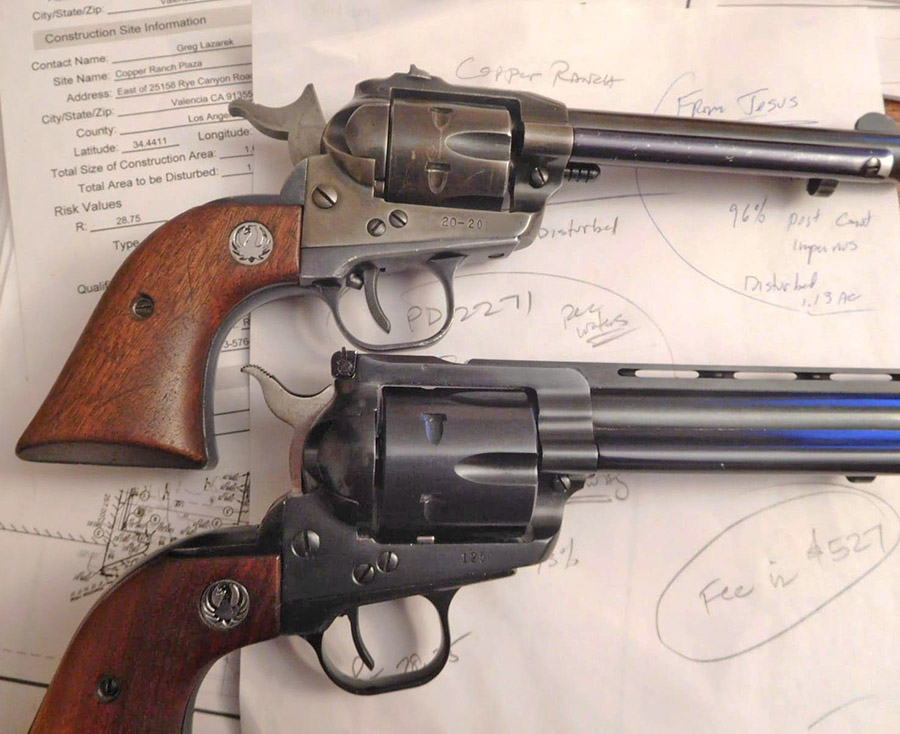
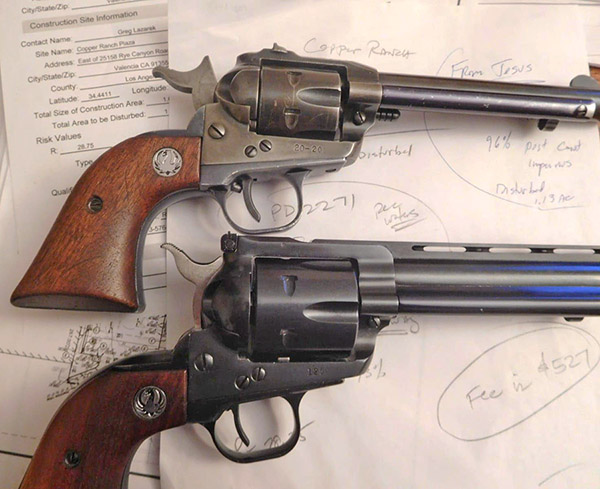
My beautiful all original 1969 Ruger Single Six (top), the ugly vent ribbed 1968 Ruger Blackhawk “parts gun” (bottom). The Single Six is Ruger’s .22 Long Rifle sixgun; the Blackhawk is the larger centerfire cartridge sixgun. Note the three screws on both sixguns and the square-faced, non-notched hammer on the Single Six in the half-cocked position. This Single Six was my first handgun given to me by Mom & Dad brand new for Christmas as a young man 13 years of age. It has a fair amount of holster wear from hunting, backpacking, camping, etc. over many years of honest use. I own up to evey scratch and ding on this well-used sixgun, and I’d never want to refinish or change a thing. When Ruger’s free retrofit advertising campaign first appeared in 1975 issues of Guns & Ammo magazine, I was tempted to send mine in to make it like the New Model but didn’t want to part with the gun for a few weeks. In hindsight, I’m sure glad that I didn’t fall for it.
That’s when Bill Ruger decided to give the public what they wanted. In 1953 Ruger introduced the Single Six revolver chambered in .22 Long Rifle. It was a sixgun for every boy! Two years later in 1955 Ruger introduced its Blackhawk in .357 Magnum. This was a sixgun for every man! They were and still are wildly popular. About 700,000 of the pre-1973 Ruger Single Six .22 revolvers were made, and well over a million New Model Single Six .22 revolvers were made after 1973. I’ll defer the exact number manufactured to the Ruger historians.
Ruger’s Single Six and the original Blackhawk single action revolvers were patterned after Colt’s SAA. The Ruger has a similar shape, size, look and feel as the Colt on the outside. But on the inside Ruger made some improvements. Ruger’s guns used modern high-strength carbon steel. Colt’s action ran on leaf springs prone to breakage. Ruger replaced the brittle leaf springs with much tougher coil springs made from piano wire. The Ruger guns are much tougher than the Colt.
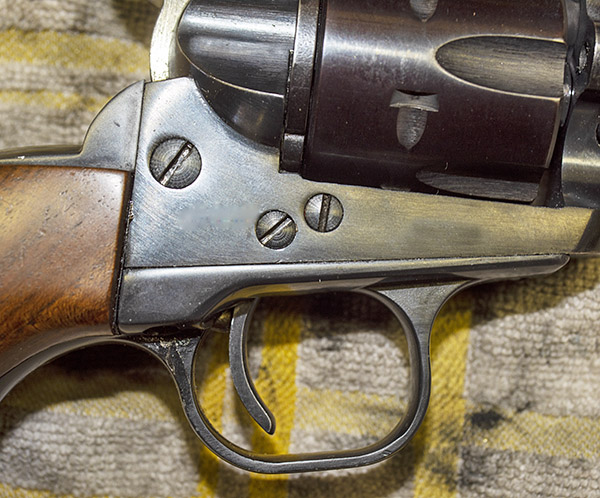
One of the infamous traits both Ruger’s initial guns and the Colts share is the first small hammer cock position called the “safety” is not safe. A gun with all six cylinders loaded, if accidently dropped, is prone to the safety failing (resulting in a negligent discharge). Therefore both the Colt and pre-1973 Rugers should only be carried with five rounds loaded and the hammer down over an empty chamber. These pre-1973 Ruger sixguns are known as the “three-screw” Rugers, as identified by the three plainly visible screws on the left side of the frame, just as the Colts have three screws. The original Rugers are also called Old Models, for reasons that become clear in a minute.
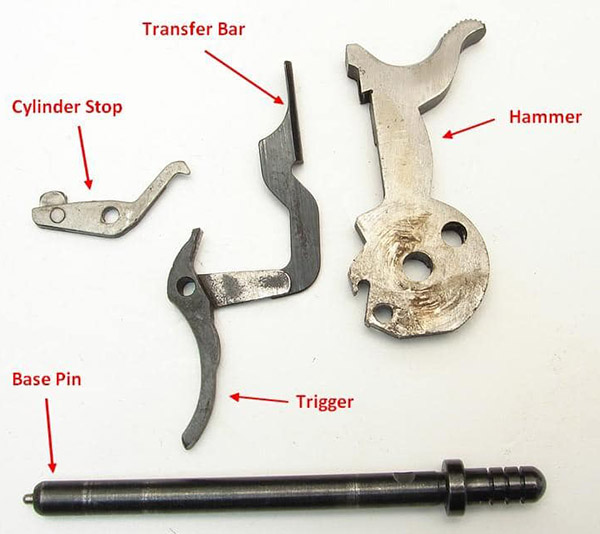
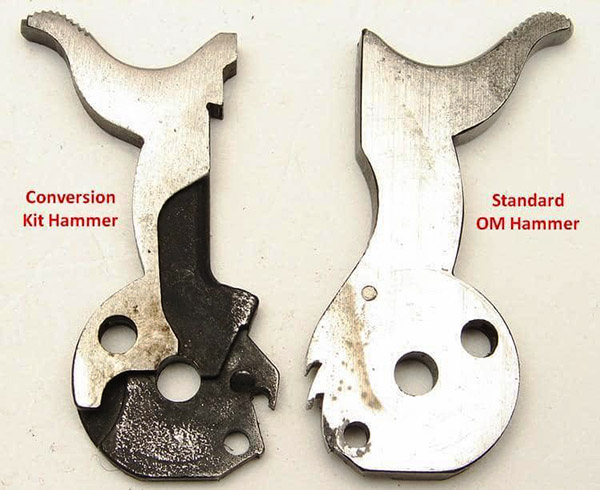
As the story goes, someone who didn’t follow what is clearly stated in Ruger’s owner manual to carry only with the hammer over an empty chamber, dropped their Old Model Ruger, fully loaded with six rounds, and shot himself in the leg. Apparently, there were other negligent discharges and expensive lawsuits. This prompted Ruger’s engineers to develop a safer design Ruger sixgun. This newer design is called the New Model Blackhawk. New Model Rugers can safely be carried with all six chambers loaded. Beginning in 1973 all the New Model Rugers have what’s called the “transfer bar safety.” It basically works by making a mill cut in the front (or face) of the hammer so that in the down position the hammer face can’t possibly touch the frame-mounted firing pin. When cocked back in the shooting position, a steel bar (the transfer bar) attached to the trigger mechanism is raised. When the trigger is depressed, the transfer bar fills the gap between the milled cutout on the hammer face and the firing pin, effectively “transferring” the hammer’s impact to the firing pin.
The 1973 and later New Model Rugers are easily identified because they do not have the three screws. They have instead two pins. Another difference is that there is no “half cock” position for loading the gun. The cylinder freely rotates for loading simply by opening the loading gate. The New Model Rugers work well enough but do not have the distinctive feel and clicking sound while cocking the hammer as do the Colts and old three screw Rugers. The New Model trigger is not quite as smooth as the older designs because of increased drag and the friction of the transfer bar as it moves into position. Some shooters claim they don’t notice the differences between the two, but I own both and I can feel the difference.
In 1975, Ruger engineers devised a method of retrofitting all of the “unsafe” pre-1973 sixguns with a makeshift transfer bar. They ran a campaign in the gun periodicals that prompted owners to ship their old guns to Ruger and they would “upgrade” the older guns to make them safe to carry with all six chambers loaded.
It remains unknown how many owners sent their guns back to Ruger, but apparently there were thousands because we see many of these retrofitted guns on the used gun market today. They are three screw guns that function similar to the New Model two pin guns, but unfortunately the trigger pull on the converted guns is absolutely terrible. The retrofit-style transfer bar scrapes up along the back side of the frame causing an awful, gritty, jerky feel. To make matters worse, the retrofit cylinder base pin is fitted with a small spring-loaded pin that also drags against the transfer bar to push it out and over the firing pin on its upward travel. If the retracting pin gets stuck, the transfer bar pushes into the firing pin, locking up the gun. The retrofitted three screw Rugers are pretty bad, taking all the smoothness from the action.
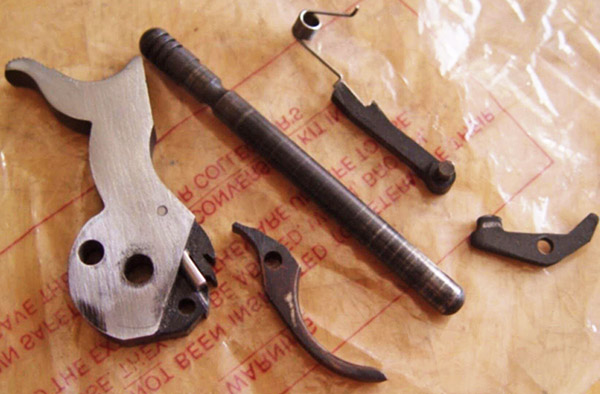
Ruger reportedly returned the retrofitted guns back to their owners with the original parts sealed a small plastic bag. Many of these plastic parts bags have been separated from the converted guns (they were either lost or thrown away). Ruger doesn’t offer any of these old parts for sale to the public, as they consider them unsafe. If an old unconverted three screw is sent in Ruger for any type of repair, they will return it to its owner with the transfer bar conversion installed, whether the owner asks for it or not. In fact, Ruger will not work on an unconverted old model gun without doing the conversion.
Unconverted three screw models (i.e., unaltered Old Model Rugers) today command premium prices among collectors. Even with the parts bag, the converted Old Models will never realize their true collector value because Ruger has permanently marked the converted guns with an “R” on the frame. The stamp is concealed underneath the grip frame to prove that the factory had done the conversion even if an owner wished to restore it back to its unaltered condition. Ruger will install the Old Model conversions but only if the owner sends the gun to them for installation, and Ruger will stamp the frame showing that they did the conversion.
Converted Old Model Rugers having the afterthought safety conversion are generally not very good shooters. However, restored back to original, these guns make very nice non-collectible shooters for those able to locate the original parts. The Old Model unconverted guns handle much better than the New Model guns, provided a most important safety rule is strictly adhered to. That rule is to never carry the restored-to-original Old Model Ruger with the hammer over a loaded cylinder. This brings us to the point of this story.
Six years ago I stumbled upon an Old Model 1968 three-screw Blackhawk being sold as a parts gun at the Ventura Crossroads gun show. The cylinder was totally locked up due to the transfer bar conversion (as described above). However, the asking price was so low that I won’t tell you the cost because you wouldn’t believe me. Besides being broken it had a ventilated rib that I had never seen before on any Blackhawk. It was truly an ugly duckling Ruger Old Model Blackhawk! But it had a great finish and the original factory grips, so I went for it without haggling over the price. Man, I’m not kidding. This gun’s price was so low it was almost free.
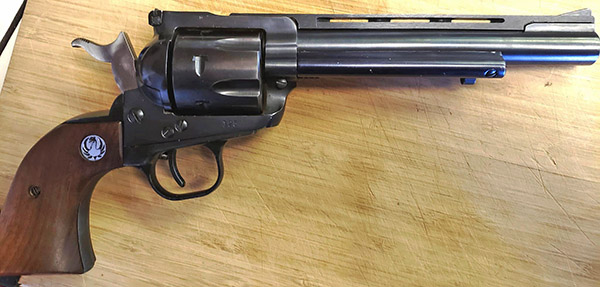
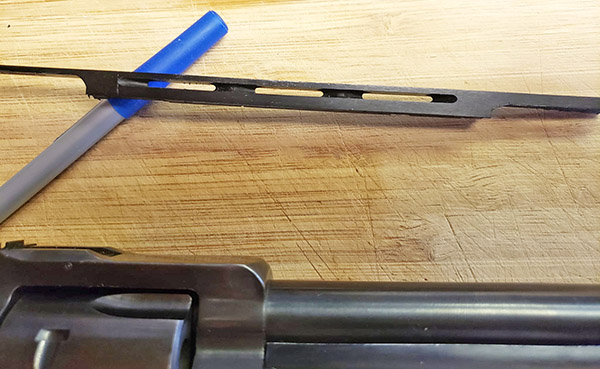
The Poly Choke fake ventilated rib glued onto a Blackhawk barrel is just about the ugliest thing somebody could do to a Ruger. Trying to make it look like a Colt Python? Well, you failed!Close up of the Poly Choke fake rib. It does absolutely NOTHING to improve the gun
After the 10-day cooling off period, I brought the ugly little Old Model sixgun home, along with a brand-new, high-quality gunsmith screwdriver set. After disassembling the Ruger, I found that the cylinder was frozen because of the factory safety conversion. After cleaning it up and freeing the cylinder, the gun had the absolute worst sandy, gritty, heavy sticky trigger I’ve ever experienced. It now worked but it had a terrible action, and it was still the ugliest Blackhawk I had ever seen.
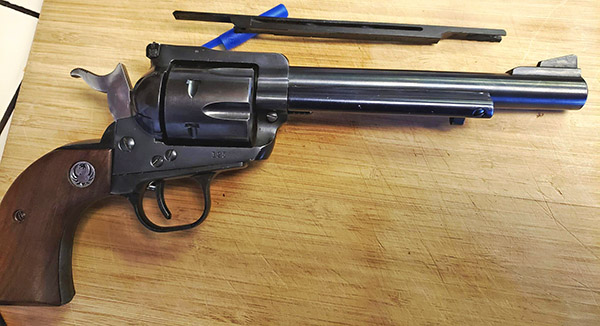
After more research I found that Ruger never made a Blackhawk with a ventilated rib. This gun had a phony aftermarket glued-on rib made by the Poly Choke company. I guess the owner wanted something that looked like a Colt Python and decided to dress up the Ruger for Halloween. I managed to pull the fake ventilated rib off without causing any damage to the barrel, but it wasn’t easy. The Poly Choke adhesive was pretty tough. After pulling the rib off, the remaining glue was removed using brake cleaner spray. By now the gun was looking pretty good again, but the action still sucked.
With the Poly Choke rib removed, the “parts gun” is beginning to look like a Blackhawk again. Note the flat hammer face. This photo was taken after the transfer bar conversion had been removed and factory original parts installed.
To smooth up the action, I removed the transfer bar conversion and replaced it with factory original parts to restore it to the original, classic “5-shooter” configuration. Unfortunately, the gun didn’t come with the old parts bag but I was determined to restore it. Now before any of the do-gooder Ralph Nader safety types out there proclaim “how irresponsible of you,” allow me to ask if you’ve ever seen an original Colt SAA with a safety conversion? Well, no, you have not because Colt had the good sense to not ruin their guns with an ill-designed stopgap transfer bar safety.
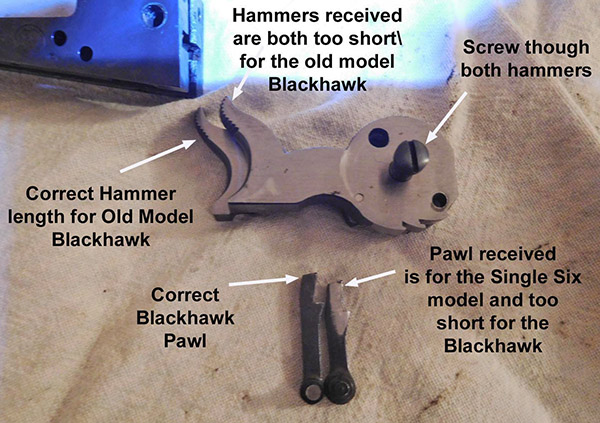
Finding the original parts for an Old Model Ruger is very difficult. Each part had to be purchased separately. It took several months to find all the parts and there were some hiccups along the way. Upon receiving some parts advertised as original Blackhawk parts, such as the hammer, I found that they were original parts for a Single Six model and were not compatible with the Blackhawk. Eventually all the original parts were acquired. The parts included a new hammer, trigger, base pin, cylinder stop, spring, screw, and pawl. The photos and captions tell the story about what it takes to restore converted guns and illustrates the differences between the original and retrofit parts.
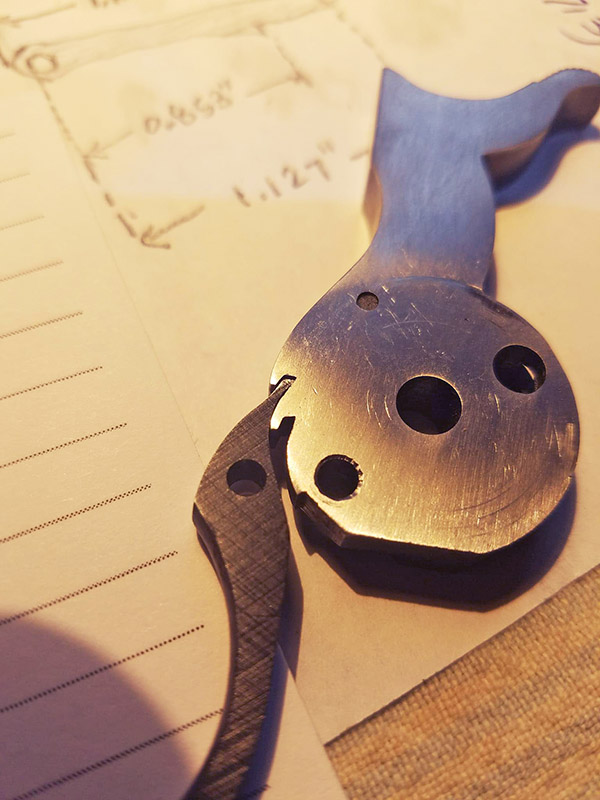
Factory transfer bar safety conversion parts. Note that this is not the same parts set as the transfer bar parts that come installed with New Model Blackhawks. These transfer bar safety conversion parts were specially designed to fit on the old three screw models and are not interchangeable with the two pin new models. In this photo the transfer bar appears to be connected to the trigger, but that’s not the case. The transfer bar has a hole that aligns with the trigger pivot bolt.Original Old Model unconverted parts. This is an image that shows the contents of a returned parts bag that was offered for sale on the internet many years ago. Unfortunately, it was not available when I restored by Blackhawk and I had to locate the parts individually.Comparison of the original flat-faced hammer (right) and the conversion hammer (left). Note that the conversion hammer has been milled on the face to create a space between the frame-mounted firing pin and hammer while the hammer is down and the transfer bar retracted. The side of the conversion hammer is also recessed for clearance of the long arm of the transfer bar. The transfer bar has friction along this part of the hammer. The front face of the transfer bar also rubs against the back of the frame. All of this creates unwanted friction that gives the converted gun a gritty feel. Also note the three notches on the original hammer for the safe, half-cock, and full-cock trigger positions. The conversion hammer lacks the three clicks that give the Old Model Ruger and Colt SAA their classic feel and sound.When mixing and matching parts as you can find them, the trigger is not likely to be the same as the one that came with the hammer as a matched set and will likely need minor honing of the sear and hammer notches for proper fit. This is an opportunity to make the trigger pull better.One of the pitfalls of buying used gun parts on the internet is that the seller doesn’t always know what he is selling. The Ruger Single Six and Blackhawk trigger groups are not the same. Here’s an example of some of the Single Six parts that were sold to me as Blackhawk parts. The Single Six’s hammer and pawl are both shorter than those of the Blackhawk.
To make a long story short, all the original parts cost more than what I paid for the gun. But it was worth it. This is the smoothest Blackhawk trigger ever, and the accuracy is awesome. Only hand loaded, home cast Elmer Keith style bullets have been fired through it since acquired by me.
This Old Model Ruger has become one of my favorite .357 Magnum sixguns and I think that Skeeter would have approved of how this “parts gun” was salvaged.
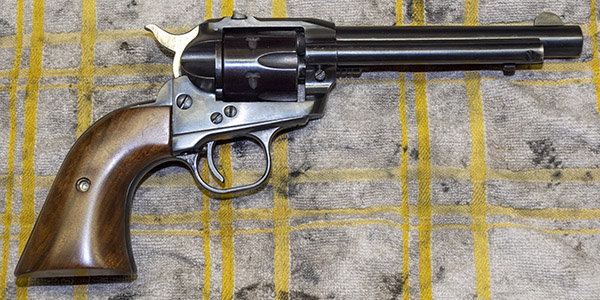
If you like old guns and family heirlooms, you’ll enjoy this blog. The Ruger Single-Six you see here was my Dad’s gun. This revolver’s 4-digit, no-prefix serial number puts its date of manufacture at 1954, which means it is just a little bit younger than me. Ruger introduced the Single-Six in 1953 and they only made 49 of these revolvers that year, so mine is a first year of production revolver. That’s cool.
Dad kept the Single-Six loaded in a drawer near his bed. I don’t remember him ever shooting it. He kept it there just in case. Storing any gun in a holster is not a good idea (the leather retains moisture) and it had a light coating of surface rust in a few spots when Dad passed. A bit of 0000 steel wool and oil took the rust off and the gun is in remarkable condition.
Don’t forget to take care of us: Please click on the popup ads!
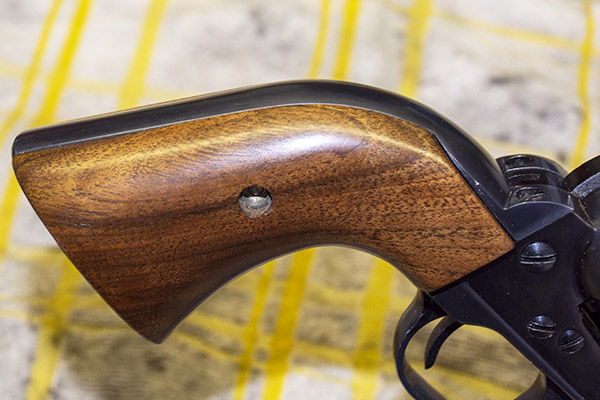
You probably noticed the custom walnut grips on this vintage Ruger. Dad was an excellent stockmaker (his work was on high end shotguns), but the stocks on his personal trap guns were usually kluged-up affairs with adhesive padding on the comb and glued-on spacers to get the fit he wanted. Dad didn’t care about appearance on his competition guns; all he wanted was a good fit so he could smoke clay pigeons. The work he did on his friends’ shotguns…that was another story. Those were stunning. Those other guys weren’t great shots; they cared more about looks. Dad was all about breaking pigeons on his guns, bringing home trophies, and bringing home cash (the monetary awards, especially for live pigeon shoots, were significant). We always had walnut blanks and remnants in Dad’s workshop, and one day when he didn’t have anything else to do he crafted the custom grips you see here. The wood-to-metal fit and the oil finish is perfect on these.
The right side of my 1954 Ruger Single-Six.A perfect wood-to-metal finish. They don’t come from Ruger like this.
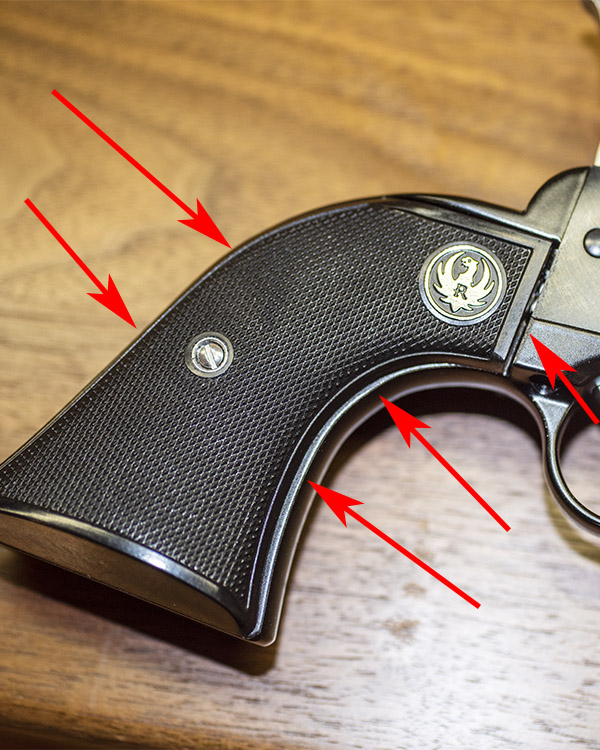
I wish new Rugers had grips that looked and fit like that. They don’t. You may recall the blog I did last year about a new Ruger .357 Magnum Blackhawk. It’s grip-to-frame fit was atrocious.
A current production Ruger Blackhawk. Somewhere along the line, Ruger lost its attention to detail. These ugly gaps can’t be unseen.
As an original Single-Six, this Ruger is what is referred to as an Old Model. It doesn’t have the transfer bar safety, and what that means is that if you drop it with the hammer over a loaded chamber, it can fire. Call me old fashioned; I’ve got my own safety approach to this problem: Don’t drop the gun. But that’s just me.
The Old Model Ruger revolvers are elegant. They are also referred to as three screw Rugers (because they have three screws on the right side; the newer model has two pins instead). The hammer cocking in the Old Model Rugers is similar to a Colt Single Action Army. There are four clicks, and that’s cool, too (especially for old guys like me).
The old three-screw configuration.
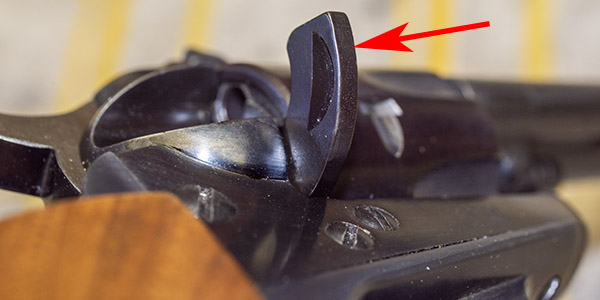
These old Ruger six shooters are also called flat gates because of the flat gate that opens for loading. The flat gate feature that didn’t stay on Rugers long. Ruger went to a contoured loading gate early in their history. It’s just something that sets this revolver apart.
The flat gate on my Ruger Single-Six.A better view of the Ruger’s flat loading gate.
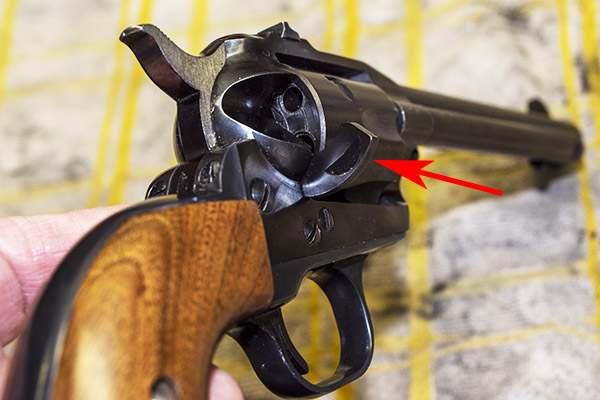
The early Rugers had recessed chambers. I haven’t owned a new Single-Six in decades and I don’t remember if the newer ones do or not. It’s a classy feature.
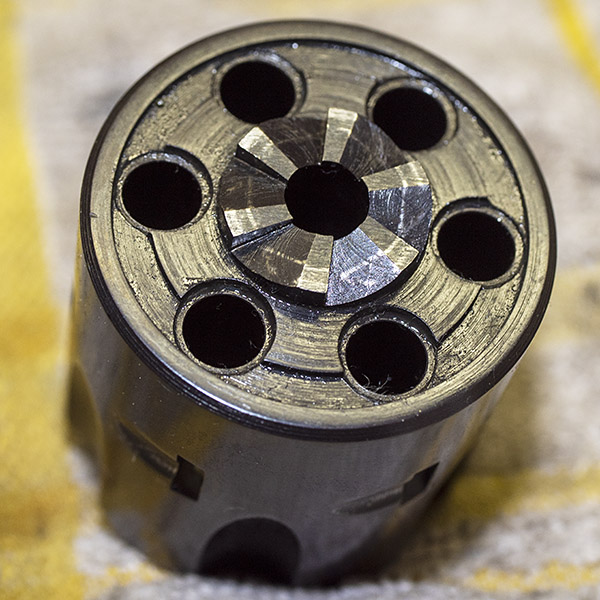
Recessed chambers. Back in the day, everything was better. I know it’s dirty; I took this photo after the range session and before I cleaned it.
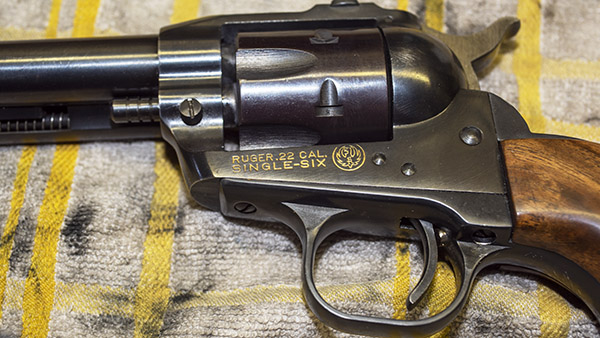
You probably noticed the gold inlay in this Ruger’s lettering. Back in the day, kits to do this at home were popular. I guess it holds up well; this was done quite a few years ago. You can still get these gold inlay kits from MidwayUSA.com.
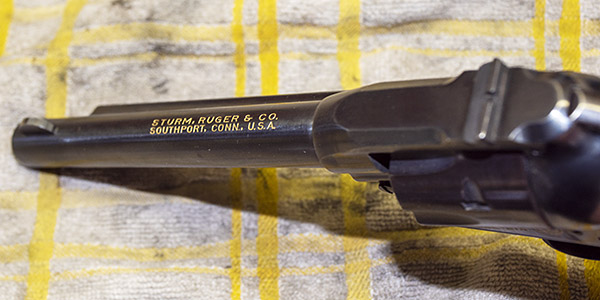
Look for the Forster gold inlay kit on Midwayusa.com.Fixed sights and gold inlay. These old guns are awesome.
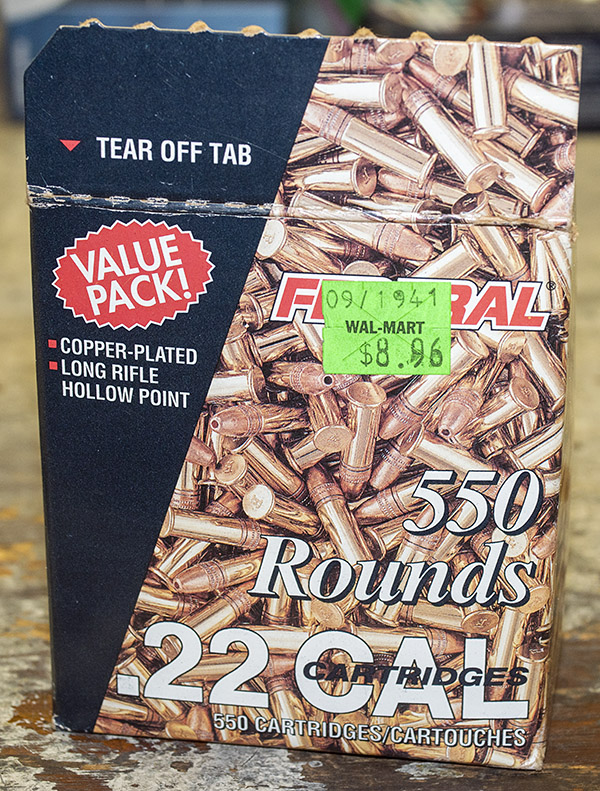
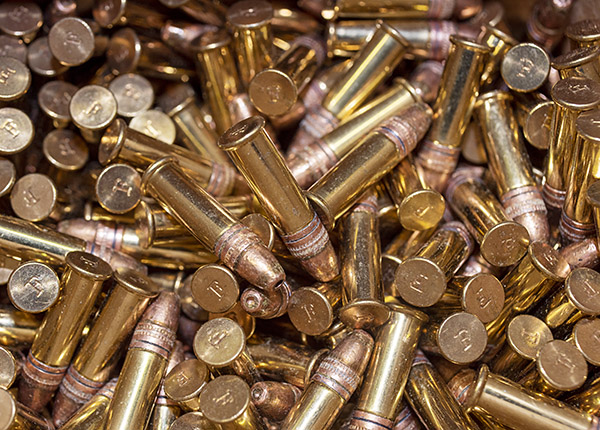
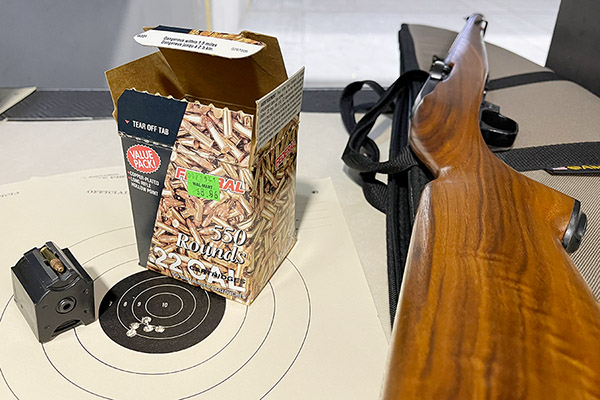
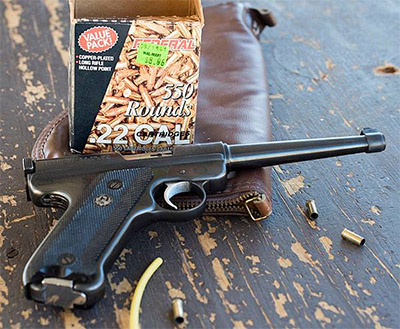
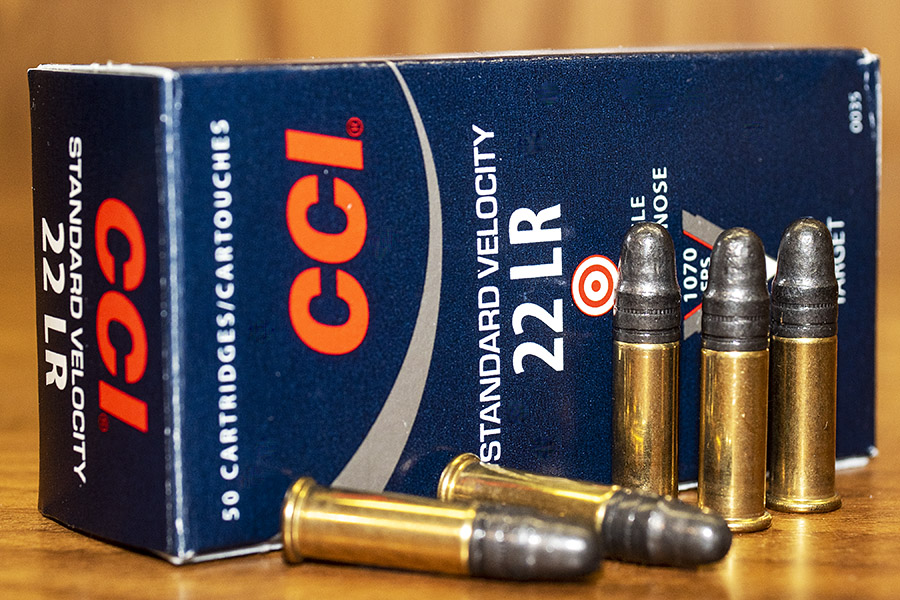
I grabbed an old box of .22 Long Rifle ammo and headed to the range a few days ago.
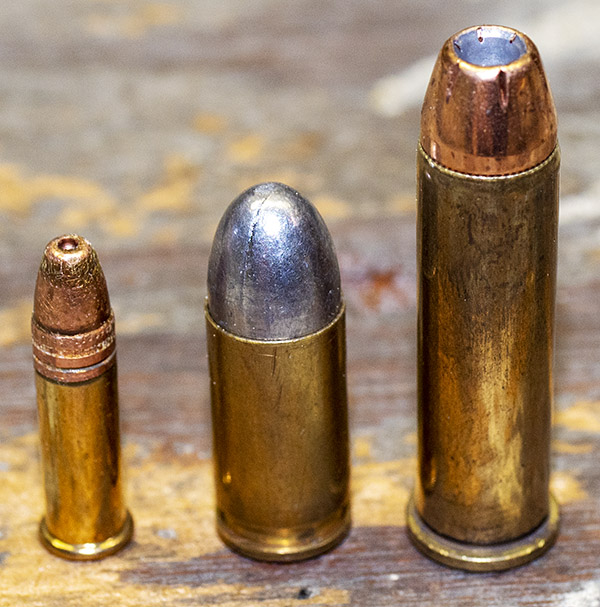
$8.96 for 550 rounds. We didn’t know how good we had it.Federal hollow point ammo. You can’t have these in New Jersey or San Francisco (they outlawed hollow point ammo). Sarcasm alert: That’s why their crime rates are so low.An ammo comparison. From left to right, it’s the Federal .22 Long Rifle hollow points featured in this article, one of my 9mm reloads, and a .357 Magnum hollowpoint.
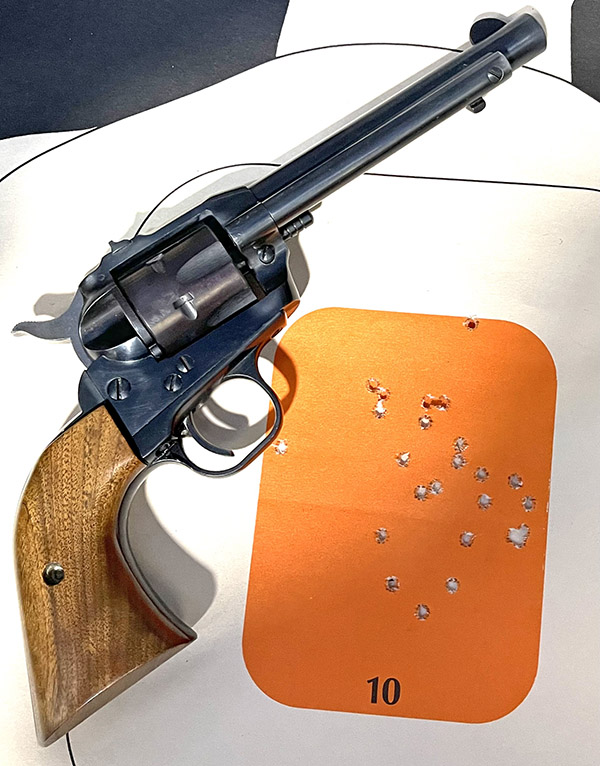
I ran my targets out to 50 feet at my indoor range and had at it, shooting off hand with a two-hand hold. As always, the Single-Six did not disappoint. It has fixed sights, but they are spot on.
I held at 6:00 on the orange bullseye. If I had used a rest, the group would have been much smaller. For an offhand group, I’m happy.
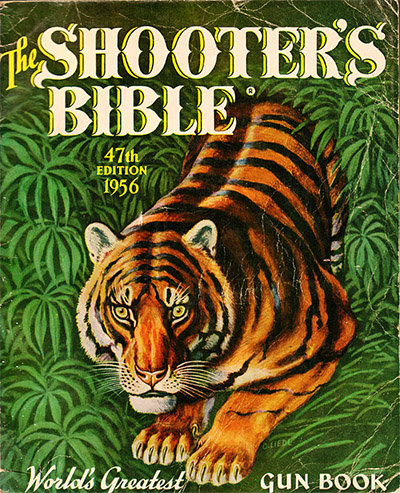
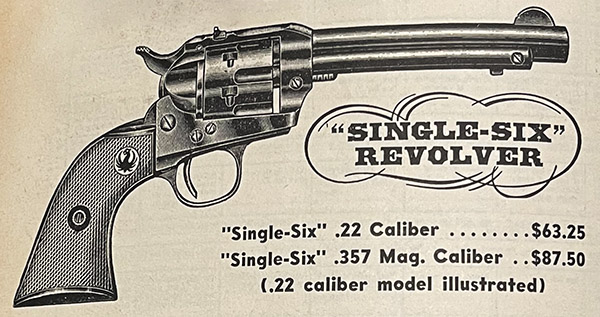
When first introduced in 1953, the cost of the Single-Six was $57.50. I grabbed this photo from my old 1956 edition of the Stoeger Shooter’s Bible. The Single-Six had gone up to $63.25 by 1956.
They don’t do covers like this today: The 1956 Shooter’s Bible.The ad for Ruger’s Single-Six in 1956. Ruger’s Standard .22 automatic pistol was only $37.50 back then. The Single-Six was a more expensive handgun.
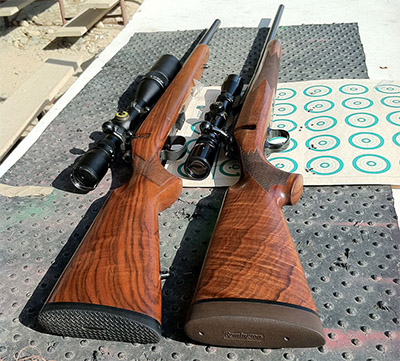
If you enjoyed this Rimfire Series story, keep an eye on us. Our next Rimfire Series story will be on a very cool Ruger 10/22 Mannlicher rifle from 1974, one with exceptional walnut.
The same ammo and an old Mannlicher 10/22. Watch ExNotes for the story. It will be the next featured in our Rimfire Series.
If you want to make sure you don’t miss the upcoming 10/22 story, please subscribe to the ExNotes blog:
If you would like to see our earlier blogs on .22 rifles and handguns, here’s a set of links.
I liked good buddy Jose’s blog about his Marlin Glenfield .22 rifle, and we thought it would be a good idea to include a Rimfire Series category here on ExNotes. When the idea first surfaced, I thought we might have done a blog or two on .22 rimfire firearms. When I searched through our blogs, I found that we’ve already posted six .22 blogs. For your quick reference, here they are:
We’ll be including a category for these on our Tales of the Gun page, too.
Please click on the popup ads!
Watch for upcoming rimfire stories in this series, including a blog or two on the GSG .22 1911, the Ruger Single Six, the Smith and Wesson Model 41, a Mannlicher CZ Model 455, a Trainer CZ Model 452 , a Winchester Model, a Remington Custom Shop Model 504, a Ruger Mannlicher 10/22, a 200th year Ruger 10/22, a target grade Ruger Mark III, a vintage Winchester Model 62, and more. Yep, we like our rimfires. Big time. Stay tuned, Amigos!