An Old Model Single Six Comparo

By Joe Berk

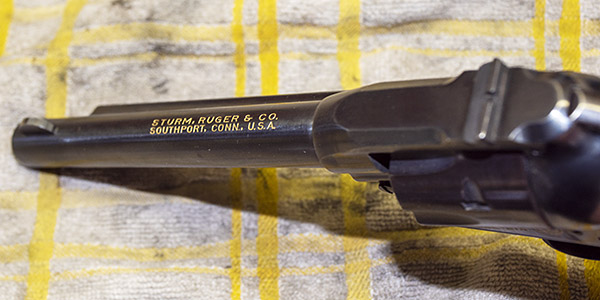
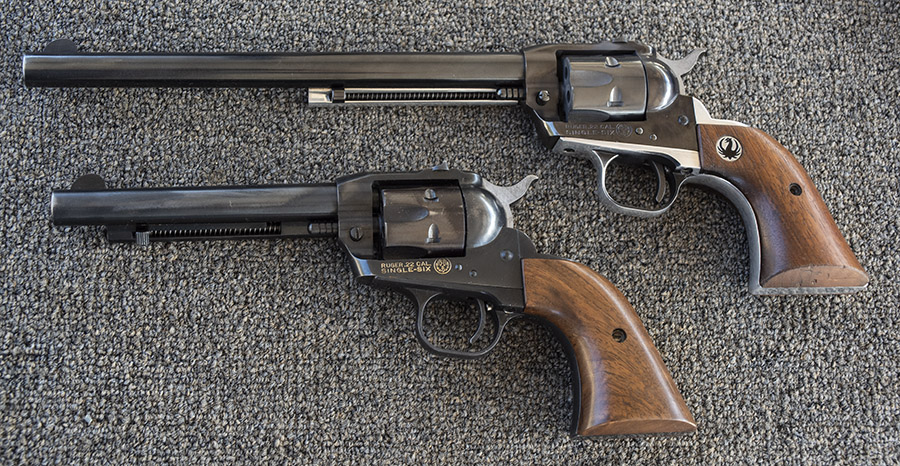
A few weeks ago, I posted a blog about a new-to-me Old Model Ruger Single Six with a 9 1/2-inch barrel, a firearm I recently acquired.  It’s a beautiful handgun.  In that blog, I mentioned that I planned to test the 9 1/2-inch Single Six and compare it to my Dad’s first-year-of-production 5 1/2-inch Single Six.  I recently did so, capturing the velocities from each handgun and assessing the accuracy of each.
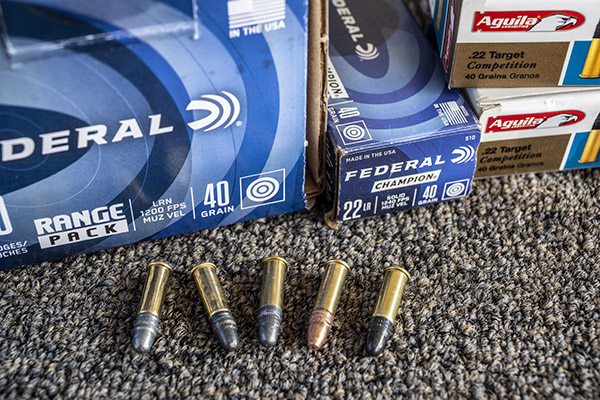
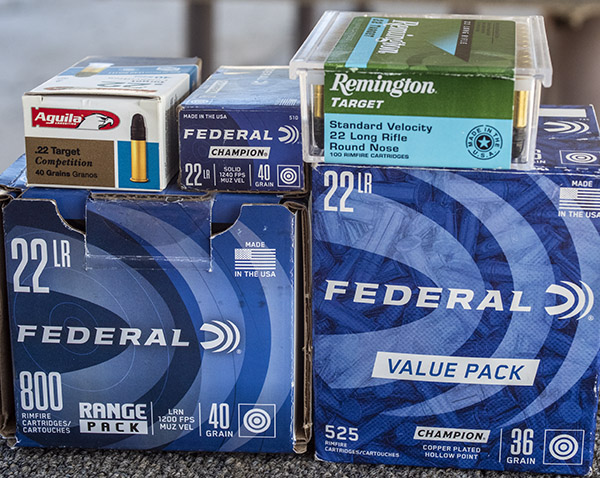
The five different .22 ammunition types used in this testing (shown from left to right): Aquila’s 40-grain Target Competition load, Federal’s 40-grain Champion load, Remington’s 40-grain Target load, Federal’s 40-grain Range Pack load, and Federal’s 36-grain Value Pack load.
A few years ago, a federal court overturned California’s unconstitutional requirement that we could only buy ammunition from an FFL dealer, with the FFL running a criminal background check for each purchase (for which we as consumers have to pay).  The reprieve only lasted a week or two before the tyrants in Sacramento appealed the federal court decision, but during that week, I ordered a bunch of .22 ammo. The California appeal is still working its way through the courts.  In the meantime, we can only buy from an FFL or an approved vendor.  Make no mistake:  The real criminals are the California legislators and our governor.

All my testing was done firing from the sitting position with two hands (resting my hands on the bench), shooting at targets 25 yards away. Here’s a summary of each of the .22 ammunition types fired in this test series:
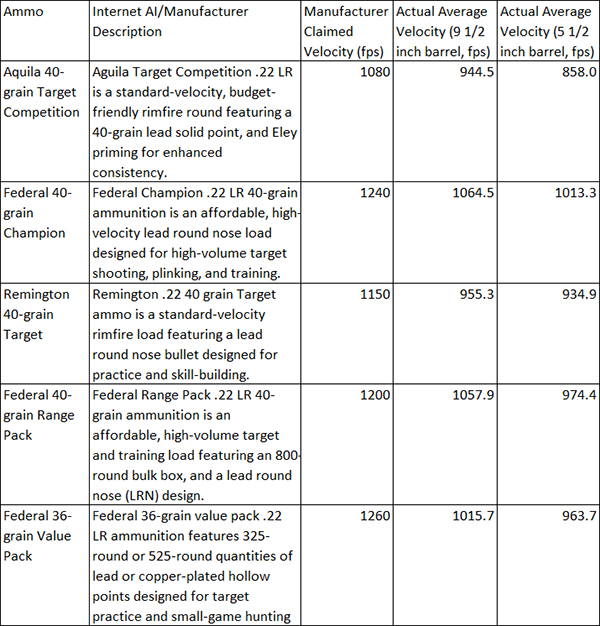
A summary of the five different ammunition types used in this test program.

The manufacturers did not specify whether their velocities were for a handgun or for a rifle, so it’s not too surprising that my testing showed lower average velocities.  I’m assuming the manufacturers’ figures are intended to show velocities from a rifle.   There’s more velocity information for each of the ammo types in both handguns below.

A caveat or two up front:  I only fired six rounds of each of the five different ammo types, and I only shot one 6-shot group from each of the two Single Six Rugers.   This was to be a “quick look” accuracy assessment; ordinarily, to assess accuracy I would fire several groups for each load, but I didn’t do that for this test.  Also, I include the velocity standard deviation for each 6-shot string, so take those results with a very large grain of sand.  From a statistics perspective, 25 or more data points are normally used to get a population’s standard deviation.  Again, this test series was intended to provide a quick look.
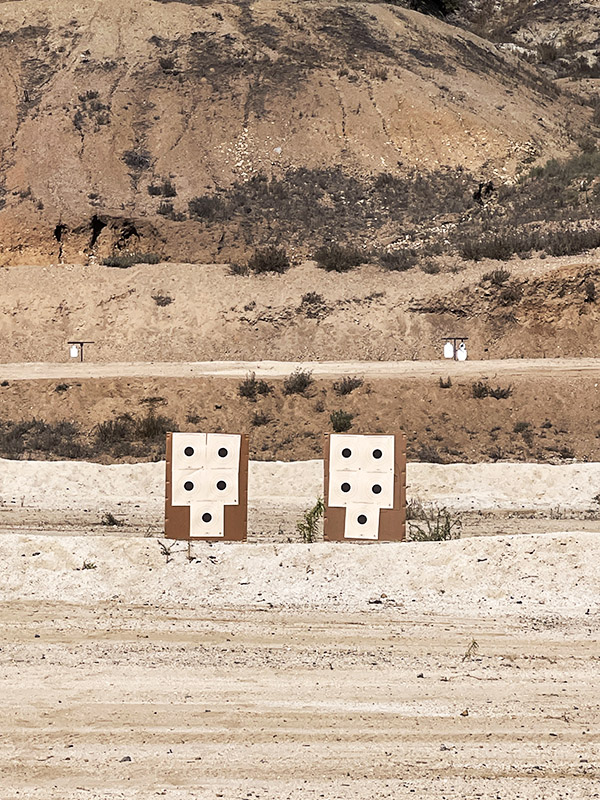
My targets at 25 yards. The targets in the background are out at 100 yards. I did my shooting at the West End Gun Club.

After setting up my targets, I fired five 6-shot groups with the 9 1/2-inch Single Six at the targets on the left first, and then I fired five 6-shot groups from the 5 1/2-inch Single Six.  The targets are shown below.
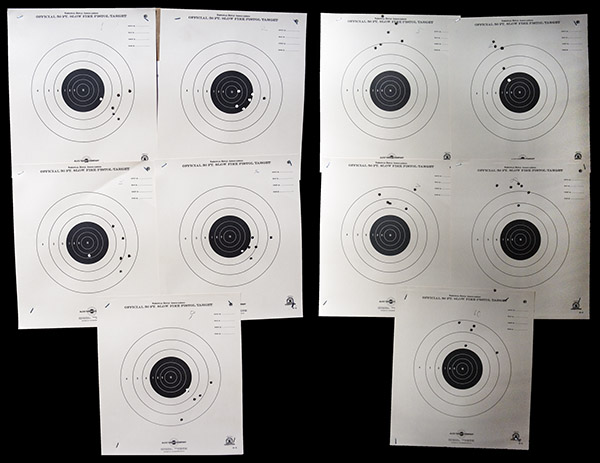
9 1/2-inch Single Six targets (left), and 5 1/2-inch Single Six targets (right). The targets run from left to right, and then top to bottom, with each of the five different .22 loads fired in the order listed above. Each top left target was fired with Aquila ammo, each top right target was fired with Federal Champion ammo, the second row left target was fired with Remington Target ammo, the second row right target was fired with Federal Range Pack ammo, and the bottom target was fired with Federal Value Pack ammo.

I didn’t measure group sizes because (as mentioned above) this was intended to be a quick look.  That notwithstanding, a few things are apparent:

    • The 9 1/2 inch Single Six shoots a little bit to the right with all loads (I held at 6:00 on all targets).
    • The 5 1/2 inch Single Six shoots a little bit high with all loads.
    • The groups shot with the Federal Range Pack ammo (which was cheap stuff, not intended to be target-grade ammo) appear to be the best.  That could change with more groups fired, but in both handguns, this ammo grouped well.   It’s good ammo.

Both the Single Six Rugers featured in this article have fixed sights, so the point of impact bias described above cannot be addressed with a simple screwdriver sight adjustment.  That’s okay by me.  I’m not going to bother drifting the rear sight in its dovetail base on the 9 1/2-inch revolver, nor am I going to file the rear sight on the 5 1/2 inch Ruger.  I know where to hold on the target for each revolver now, and that’s what I’ll do.

Here’s the chrono data for the different loads, first for the 5 1/2-inch Single Six, and then for the 9 1/2-inch Single Six.
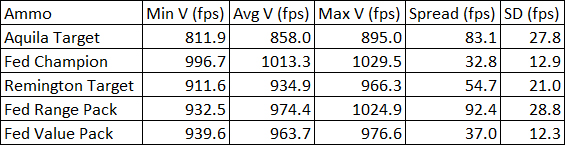
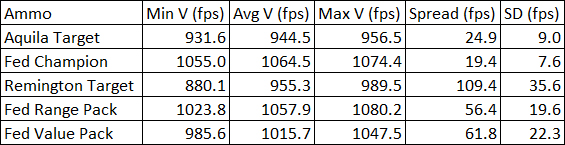
5 1/2-inch Single Six Velocity Data.
9 1/2-inch Single Six Velocity Data.

As expected, the 9 1/2-inch Single Six had higher velocities than the 5 1/2-inch barrel Single Six for every ammo type I tested.  The table below shows the average velocity increase for the 9 1/2-inch Single Six (over the 5 1/2 -inch Single Six) for each load.
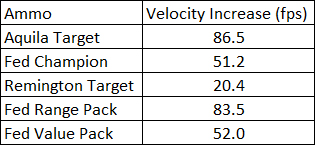
Velocity Increase (9 1/2-inch Single Six compared to 5 1/2-inch Single Six).

Both Rugers are very high quality handguns.  The old saying (“they don’t make them like they used to”) certainly applies here.  The 5 1/2-Single Six featured here was manufactured in 1954 (the first full year of production); the 9 1/2-inch Single Six was manufactured in 1968.  Throughout this test series, there were no failures to fire.  The 9 1/2-inch Single Six ejector rod actuation felt a bit gritty at first, but after a good cleaning (I bought this gun used), it is as buttery smooth as the ejector on the 5 1/2-inch Ruger.  The 5 1/2-inch gun’s oil-finished grips feel much better than do the 9 1/2-inch gun’s stock Ruger grips.  The fact that the shorter-barreled Ruger’s grips were custom made by my Dad influenced my opinion, but they actually do. feel better.  They are fuller and they fit me well.

Ruger still manufactures the Single Six in their New Model configuration, along with a much cheaper Wrangler .22 handgun.  I don’t feel a need to own either; I’m more than happy with my Old Model Single Six Rugers.


For more info on the 9 1/2-inch Ruger, my previous blog is here.

The blog on the 1954 Ruger (the 5 1/2-inch revolver) is here.

An index showing all our Tales of the Gun features is here.

The Rimfire Series: An Early Ruger Single-Six

By Joe Berk

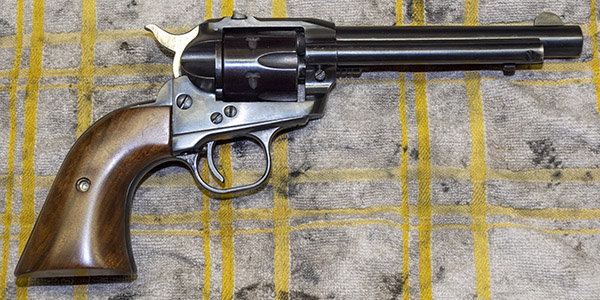
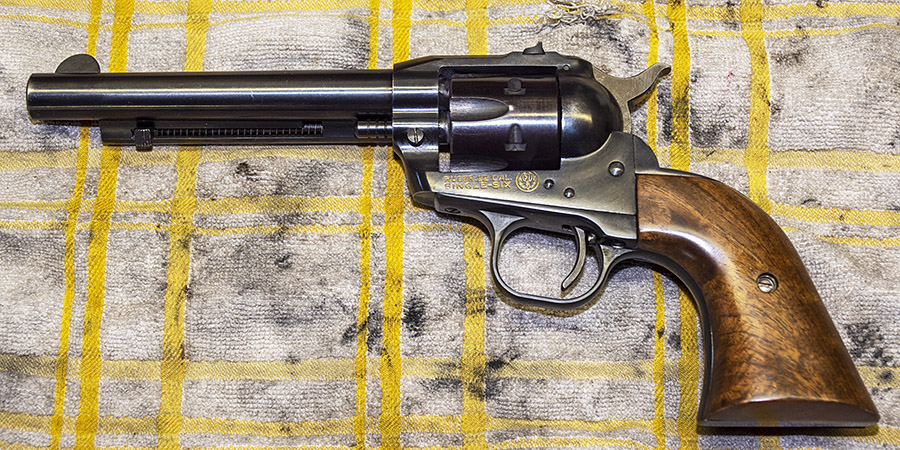
If you like old guns and family heirlooms, you’ll enjoy this blog.  The Ruger Single-Six you see here was my Dad’s gun.  This revolver’s 4-digit, no-prefix serial number puts its date of manufacture at 1954, which means it is just a little bit younger than me.  Ruger introduced the Single-Six in 1953 and they only made 49 of these revolvers that year, so mine is a first year of production revolver.  That’s cool.

Dad kept the Single-Six loaded in a drawer near his bed.  I don’t remember him ever shooting it.  He kept it there just in case.  Storing any gun in a holster is not a good idea (the leather retains moisture) and it had a light coating of surface rust in a few spots when Dad passed.  A bit of 0000 steel wool and oil took the rust off and the gun is in remarkable condition.


Don’t forget to take care of us:  Please click on the popup ads!


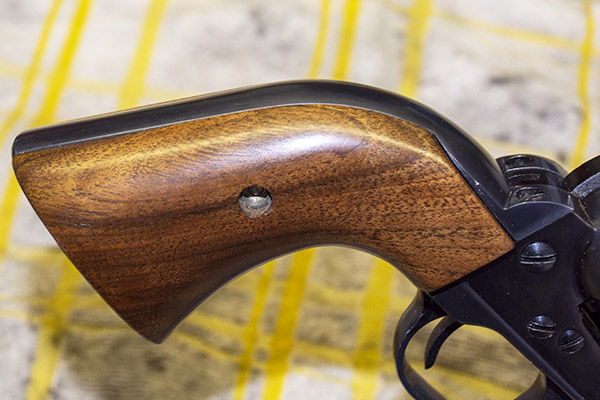
You probably noticed the custom walnut grips on this vintage Ruger.  Dad was an excellent stockmaker (his work was on high end shotguns), but the stocks on his personal trap guns were usually kluged-up affairs with adhesive padding on the comb and glued-on spacers to get the fit he wanted.  Dad didn’t care about appearance on his competition guns; all he wanted was a good fit so he could smoke clay pigeons.  The work he did on his friends’ shotguns…that was another story.  Those were stunning.  Those other guys weren’t great shots; they cared more about looks.  Dad was all about breaking pigeons on his guns, bringing home trophies, and bringing home cash (the monetary awards, especially for live pigeon shoots, were significant).   We always had walnut blanks and remnants in Dad’s workshop, and one day when he didn’t have anything else to do he crafted the custom grips you see here.  The wood-to-metal fit and the oil finish is perfect on these.

The right side of my 1954 Ruger Single-Six.
A perfect wood-to-metal finish. They don’t come from Ruger like this.

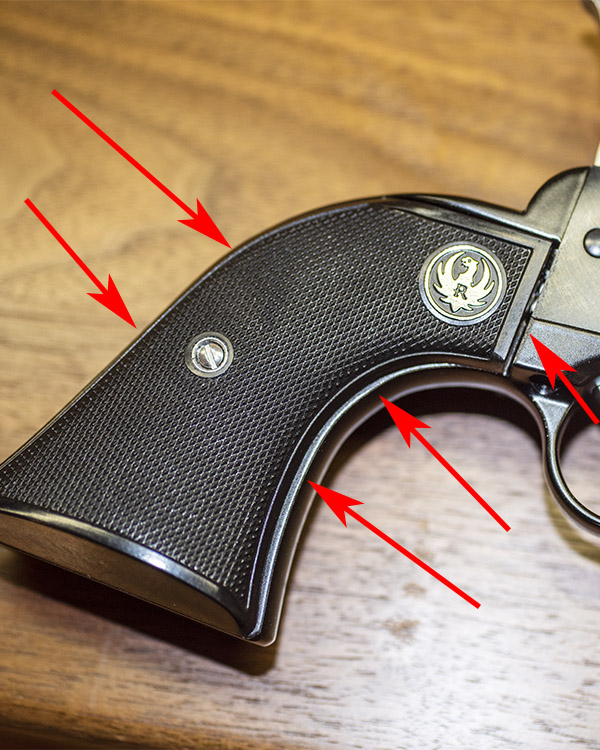
I wish new Rugers had grips that looked and fit like that.  They don’t.  You may recall the blog I did last year about a new Ruger .357 Magnum Blackhawk.  It’s grip-to-frame fit was atrocious.

A current production Ruger Blackhawk. Somewhere along the line, Ruger lost its attention to detail. These ugly gaps can’t be unseen.

As an original Single-Six, this Ruger is what is referred to as an Old Model.  It doesn’t have the transfer bar safety, and what that means is that if you drop it with the hammer over a loaded chamber, it can fire.  Call me old fashioned; I’ve got my own safety approach to this problem:  Don’t drop the gun.   But that’s just me.

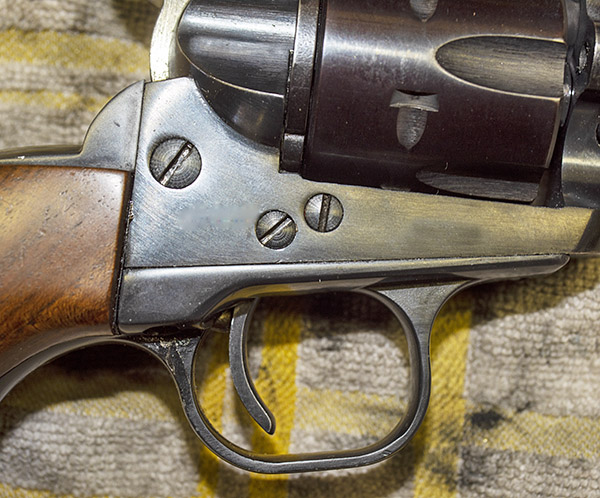
The Old Model Ruger revolvers are elegant.  They are also referred to as three screw Rugers (because they have three screws on the right side; the newer model has two pins instead).  The hammer cocking in the Old Model Rugers is similar to a Colt Single Action Army.  There are four clicks, and that’s cool, too (especially for old guys like me).

The old three-screw configuration.

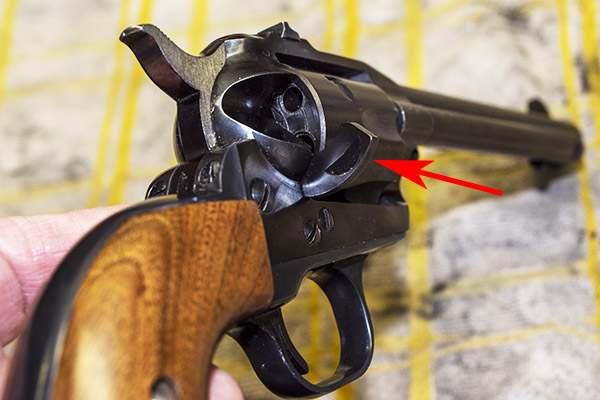
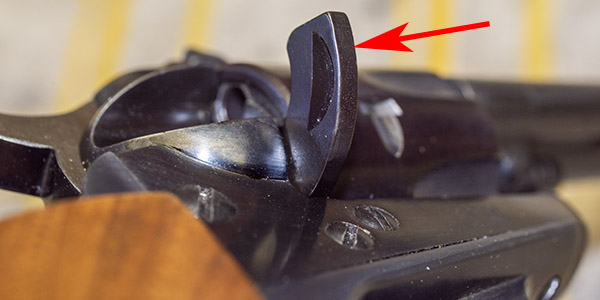
These old Ruger six shooters are also called flat gates because of the flat gate that opens for loading.  The flat gate feature that didn’t stay on Rugers long.  Ruger went to a contoured loading gate early in their history.  It’s just something that sets this revolver apart.

The flat gate on my Ruger Single-Six.
A better view of the Ruger’s flat loading gate.

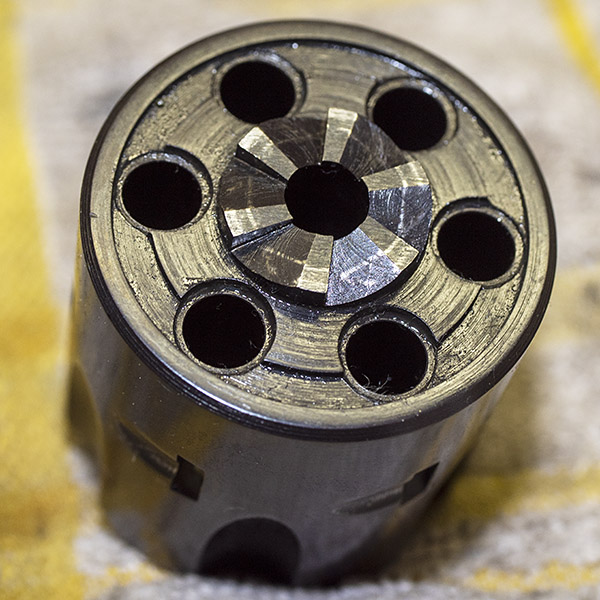
The early Rugers had recessed chambers.  I haven’t owned a new Single-Six in decades and I don’t remember if the newer ones do or not.  It’s a classy feature.

Recessed chambers. Back in the day, everything was better.  I know it’s dirty; I took this photo after the range session and before I cleaned it.

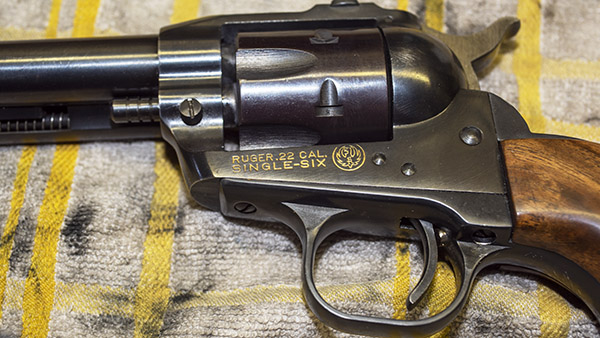
You probably noticed the gold inlay in this Ruger’s lettering.  Back in the day, kits to do this at home were popular.  I guess it holds up well; this was done quite a few years ago.  You can still get these gold inlay kits from MidwayUSA.com.

Look for the Forster gold inlay kit on Midwayusa.com.
Fixed sights and gold inlay. These old guns are awesome.

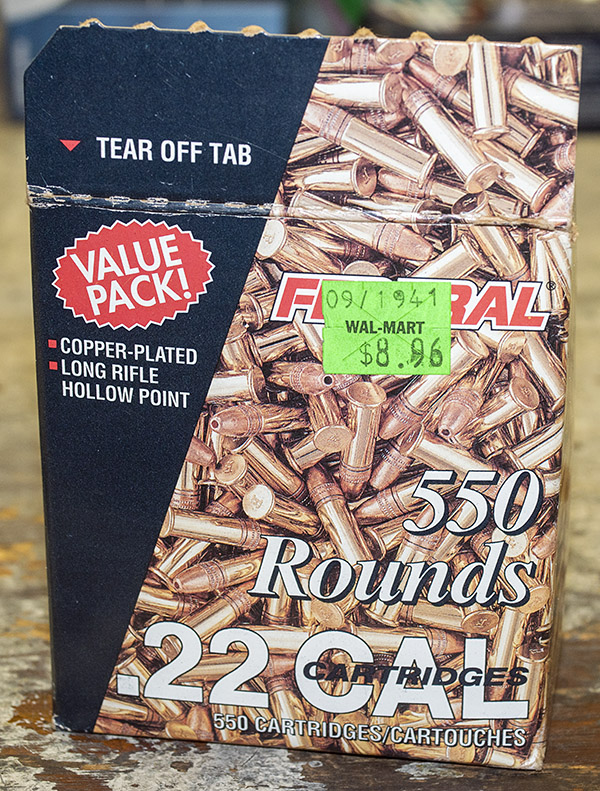
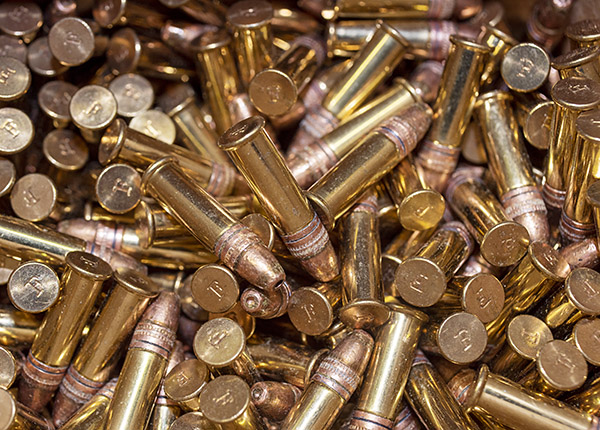
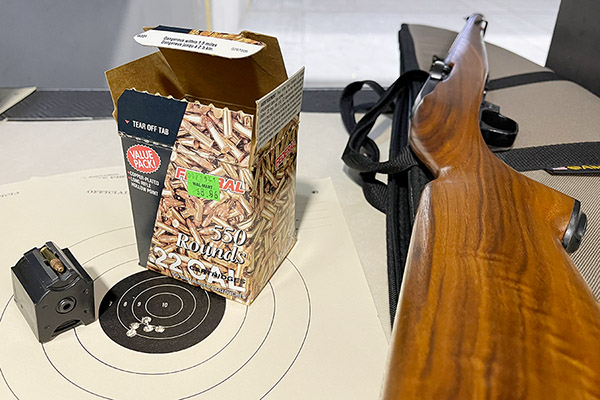
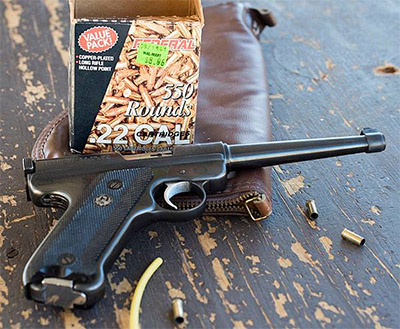
I grabbed an old box of .22 Long Rifle ammo and headed to the range a few days ago.

$8.96 for 550 rounds. We didn’t know how good we had it.
Federal hollow point ammo. You can’t have these in New Jersey or San Francisco (they outlawed hollow point ammo). Sarcasm alert: That’s why their crime rates are so low.
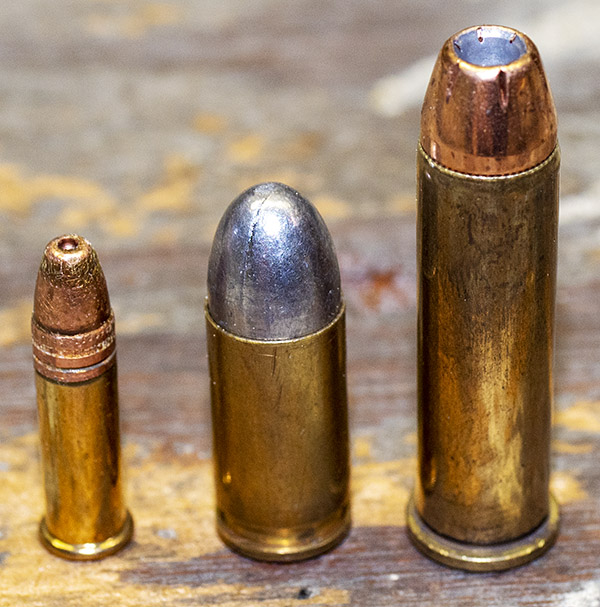
An ammo comparison. From left to right, it’s the Federal .22 Long Rifle hollow points featured in this article, one of my 9mm reloads, and a .357 Magnum hollowpoint.

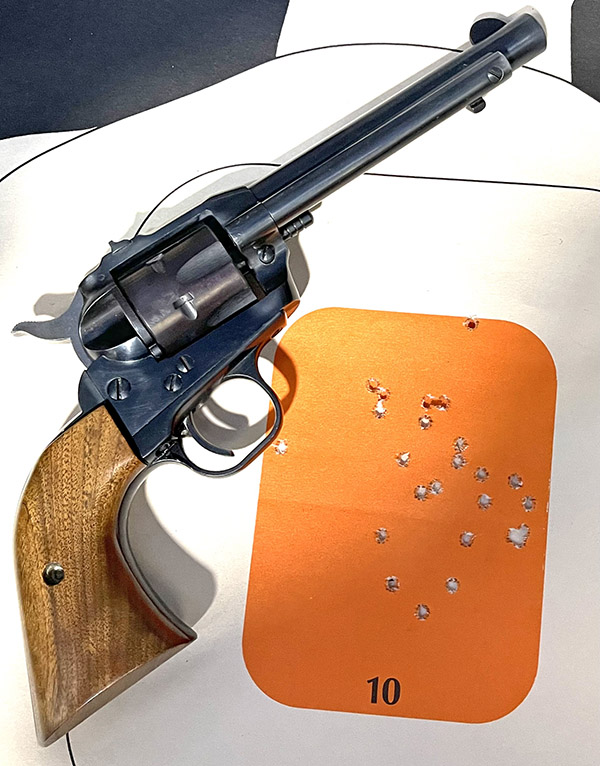
I ran my targets out to 50 feet at my indoor range and had at it, shooting off hand with a two-hand hold.  As always, the Single-Six did not disappoint.  It has fixed sights, but they are spot on.

I held at 6:00 on the orange bullseye. If I had used a rest, the group would have been much smaller.  For an offhand group, I’m happy.

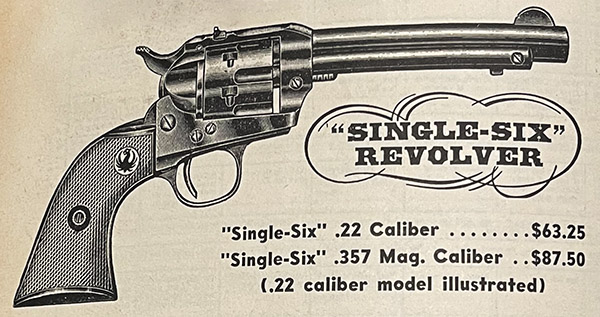
When first introduced in 1953, the cost of the Single-Six was $57.50.  I grabbed this photo from my old 1956 edition of the Stoeger Shooter’s Bible.  The Single-Six had gone up to $63.25 by 1956.

They don’t do covers like this today: The 1956 Shooter’s Bible.
The ad for Ruger’s Single-Six in 1956. Ruger’s Standard .22 automatic pistol was only $37.50 back then.  The Single-Six was a more expensive handgun.

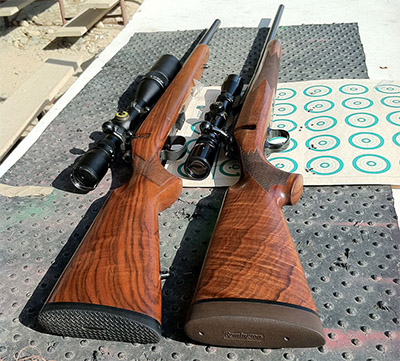
If you enjoyed this Rimfire Series story, keep an eye on us.  Our next Rimfire Series story will be on a very cool Ruger 10/22 Mannlicher rifle from 1974, one with exceptional walnut.

The same ammo and an old Mannlicher 10/22. Watch ExNotes for the story. It will be the next featured in our Rimfire Series.

If you want to make sure you don’t miss the upcoming 10/22 story, please subscribe to the ExNotes blog:


If you would like to see our earlier blogs on .22 rifles and handguns, here’s a set of links.

A Tale of Two .22s (a CZ Model 452 and a Remington Model 504)

A .22 Colt Trooper Mk III

¡Siluetas Metálicas!

First Person Shooter

A 200th Year Ruger .22

A Tale of Two Springfields