A Tale of Three .30 Carbine Blackhawks

By Joe Berk

We’ve written a lot about .30 Carbine Ruger Blackhawks here on ExhaustNotes, and with some justification:  I’ve owned three of the things.  I still have two; one went back to Ruger and stayed there, a victim of my own stupidity.  I’ll get to that a few paragraphs down.

.30 Carbine Blackhawk No. 1

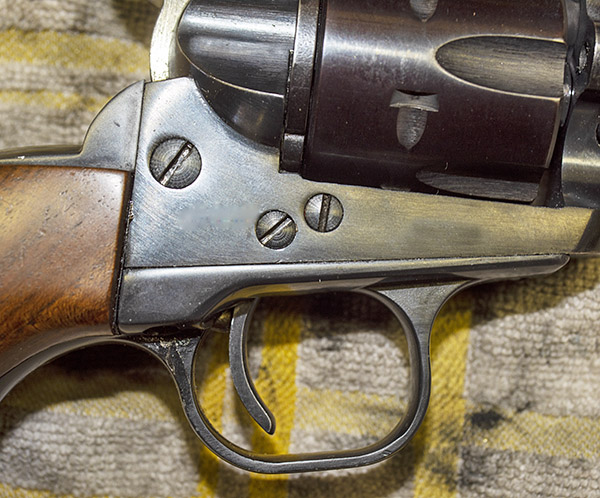
My first .30 Carbine Blackhawk is one of the earliest ones ever made; a three digit, three screw Old Model.  It is unfired (other than test firing at the factory), it has a very low non-prefix three-digit serial number, and it has the original box and all of the original paperwork. It’s one of the coolest Rugers I’ve ever owned.  It will be one of the guns my heirs will have to sell (or keep; it will be their call) when I go to that big server in the sky and my blogging days are over.  I spotted this one on Gunbroker, I bought it, and I’ve had no regrets.
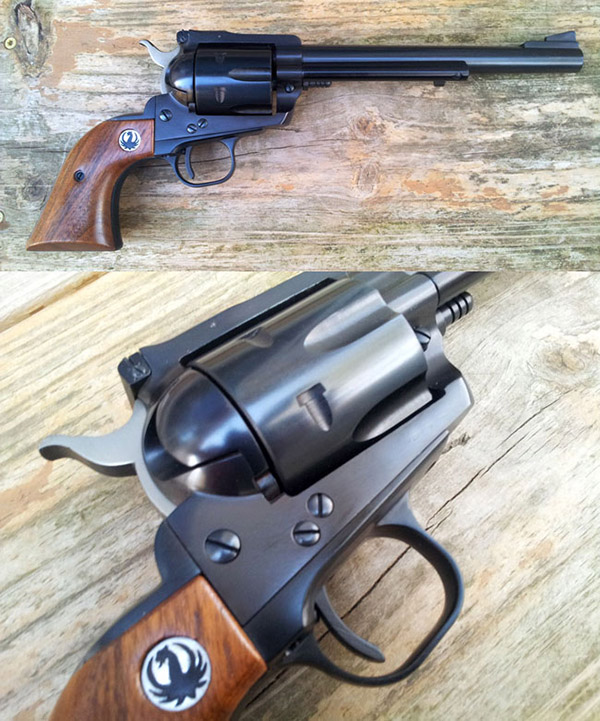
Unfired. 3-screw Old Model. Low 3-digit serial number (cloned over in these photos). Complete with the original box and all the paperwork. No, it’s not for sale.

Well, almost no regrets.  When I bought that first .30 Carbine I had it shipped to my FFL buddy Bryan, and when he saw it, he spoke at length at how cool it was and how much fun it was to shoot a .30 Carbine revolver.  I had never done so, and this one will remain in its unfired condition for as long as I own it.

.30 Carbine Blackhawk No. 2

Bryan’s comments got me thinking that I needed another .30 Carbine Blackhawk I could shoot, and a week or two later, .30 Carbine Blackhawk No. 2 (also an Old Model), came floating in from another Gunbroker ad.  The thought was a good one, but the reality was not.  That second .30 Carbine Blackhawk was anything but fun to shoot.  Every cartridge case stuck in the cylinder (they were extremely difficult to eject), and the cases of my reloaded ammo dragged on the revolver’s backplate.
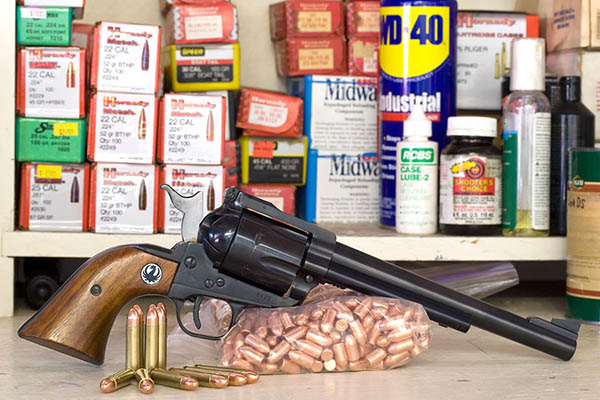
Ruger Blackhawk .30 Carbine No. 2.  It was the original design, informally referred to as the Old Model. It was a beautiful handgun, but it had problems.

I doped out the cylinder drag issue fairly quickly.  I had to trim the brass after nearly ever firing, and I had to make absolutely certain the primer was below flush after seating.  .30 Carbine cases shrink in length when fired, and they grow in length when resized.   The cartridge headspaces on the case mouth, so case length is critical.

To address the extraction issue, I tried polishing the chambers and I swabbed them with alcohol to remove any traces of oil, but I still had the problem.  So I tried lighter loads with Trail Boss (a powder known for working well with lighter loads), and that’s how I got in trouble.  The Trail Boss guidance is to load to the base of the bullet for a max load, and not less than 70% of that amount as a minimum load.  I loaded at just under the max load and I thought I was doing well when I fired the first Trail Boss load.  The case extracted easily.  This is progress, I remember thinking, and I fired four more rounds.  They all felt okay, with essentially no recoil (that should have been a clue).

I had stuck a bullet in the bore with that first shot and I didn’t realize it.  Then I had fired another, and another, and another, and another.  I felt even worse when I ran my fingers along the length of the barrel.  I could feel the swells along the barrel from each bullet.  I didn’t recognize what was happening.  Stupid is as stupid does (Forrest Gump, 1994).

.30 Carbine Blackhawk No. 3

After the above debacle, I called Ruger.  I told them my story and the nice lady on the other end told me I wasn’t the first one to call with stuck bullets.  I asked if they could re-barrel my Blackhawk.  Sure, she said, and off the revolver went, on its way back to the mothership.
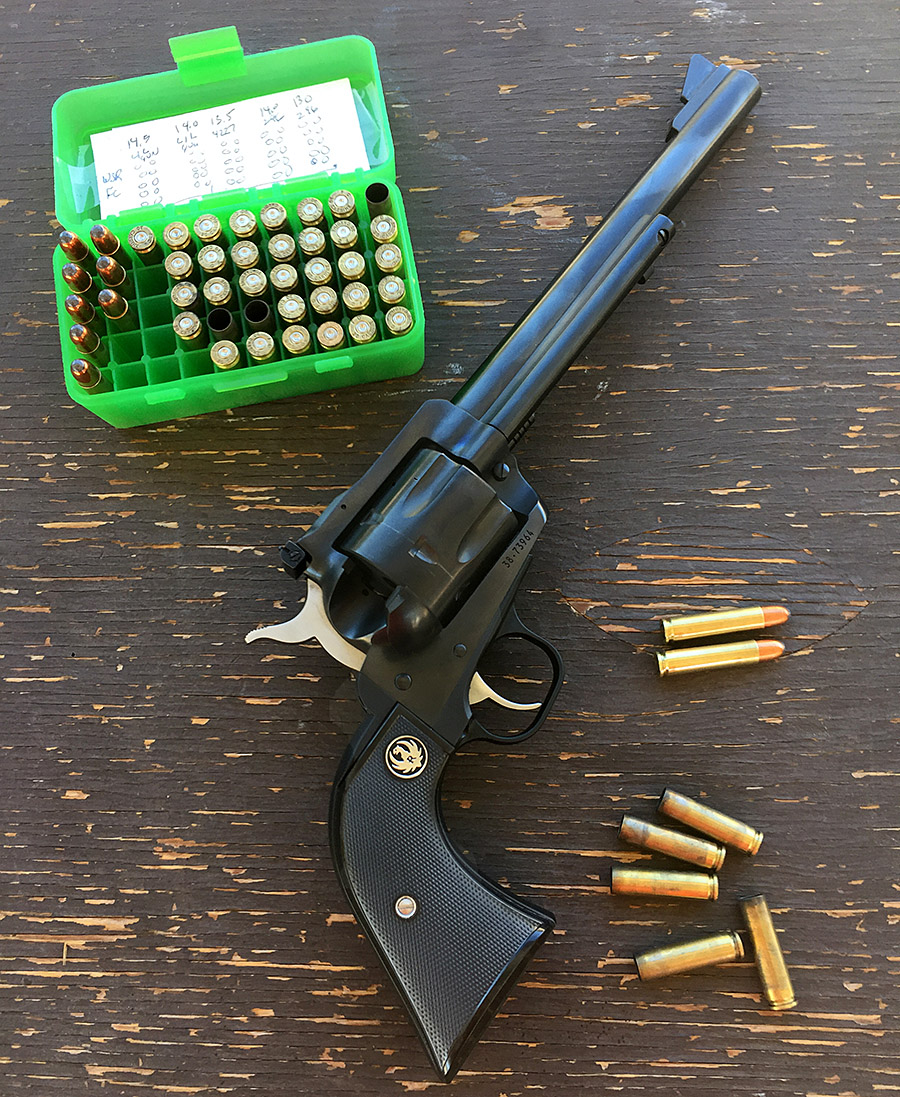
The third time’s a charm: .30 Carbine Blackhawk No. 3. This revolver is awesome.

A few days later Ruger called.  A new barrel would be $400.48, they told me, but they weren’t too sure about the gun’s structural integrity.  Or, they could sell me a new Blackhawk.  How much would that be, I asked.  $400.48, she said.  Ah, I understood.  What they were really telling me is to buy the new gun at the steeply-discounted price (MSRP on a new .30 Carbine Blackhawk at the time was $669; it’s more today).  I was in.  It wouldn’t be an Old Model, but by that time I didn’t care.

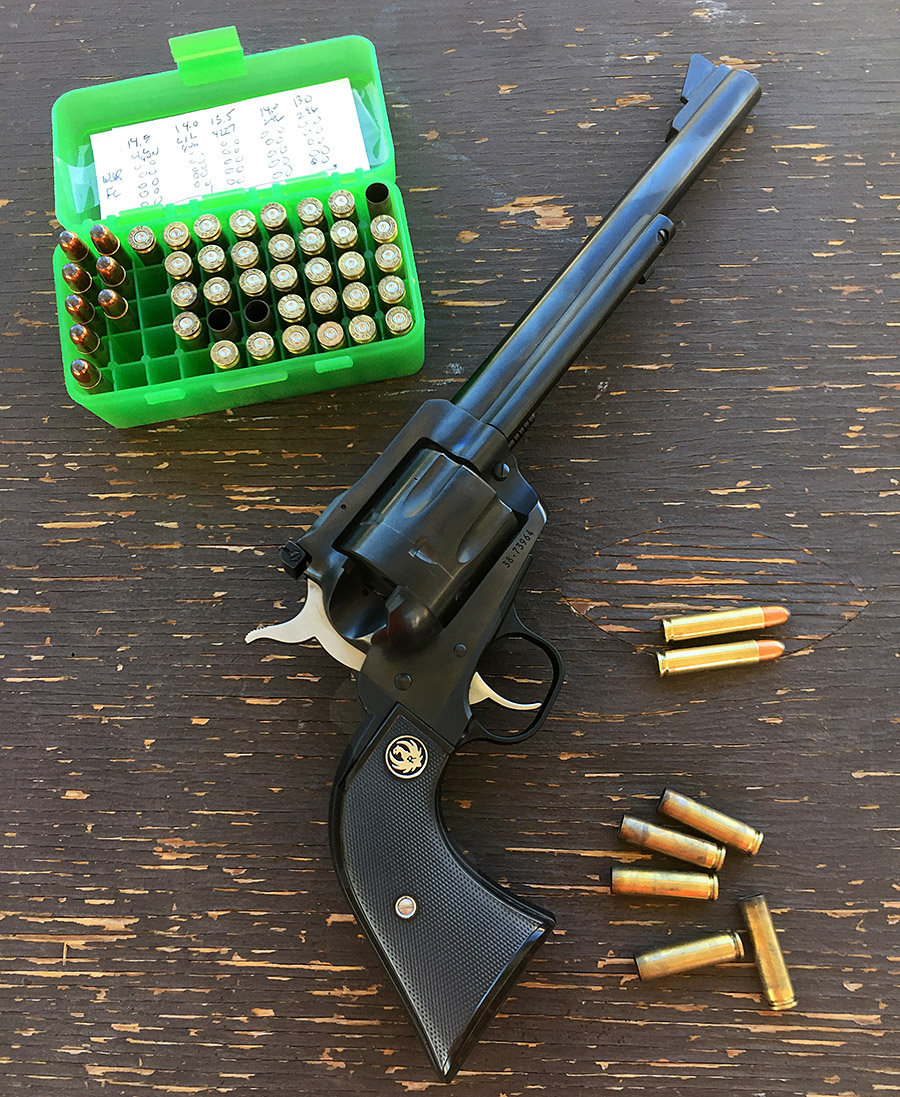
When I received the new Blackhawk, I loaded ammo in different flavors to test what worked best.  How did it go?  In a word, the new .30 Carbine Blackhawk is awesome.  Take a look:
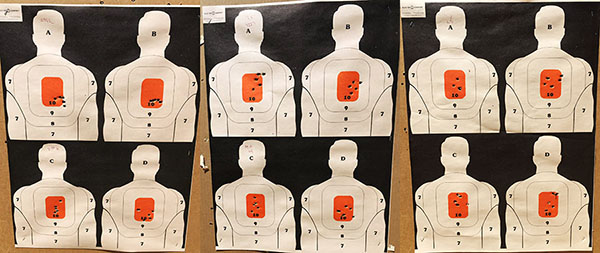
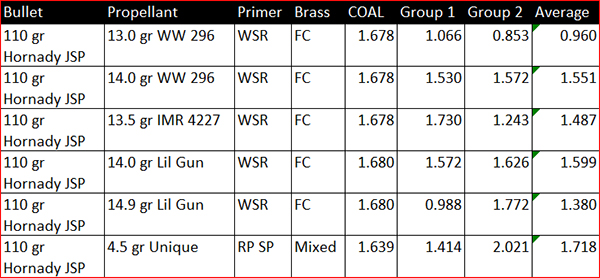
Six different loads tested on two targets each. All groups are 5 shots, and all are at 15 yards.
The loads.  My .30 Carbine New Model Blackhawk seems to like everything.

This new .30 Carbine Ruger Blackhawk revolver liked every load I tested.  One was exceptional:
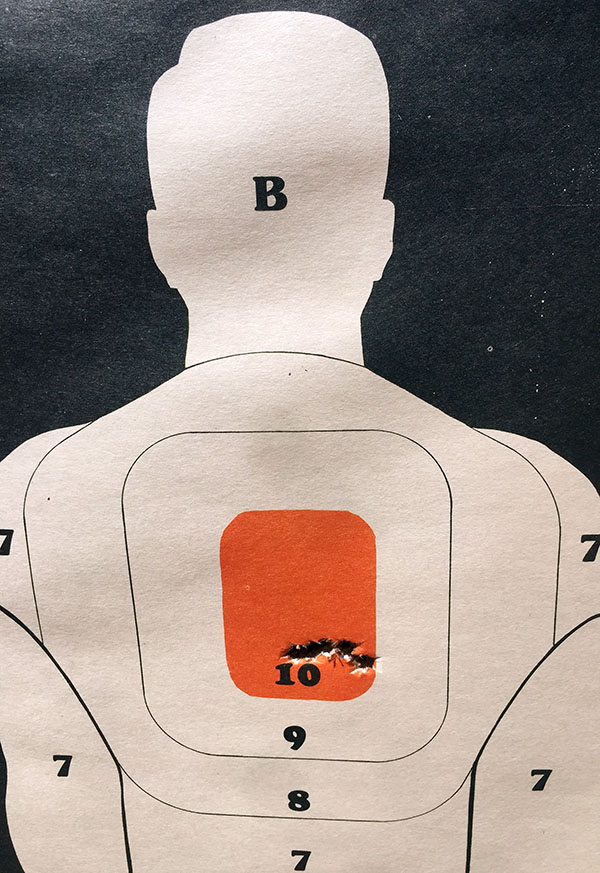
The secret sauce: 13.0 grains of 296 and the 110-grain Hornady jacketed soft point bullet. It’s consistent, too.

Shooting a .30 Carbine Blackhawk is fun.  It’s 7 1/2-inch barrel and long sight radius make for great accuracy. There’s massive muzzle blast, a huge muzzle flash, and major noise (hey, 40,000 psi is 40,000 psi), but little recoil.  As mentioned above, it’s accurate.  The spent brass practically fell out of the cylinder.  This New Model Blackhawk is a honey.


A bit about the gear I use in my .30 Carbine reloading activities.  I use Lee dies, although just about .30 Carbine reloading dies will do the trick.  I normally stick with RCBS reloading gear, but I could get the Lee dies quicker so that’s what I bought.   I like them.  Most of my other reloading gear is RCBS, including the RCBS powder dispenser, the RCBS Rockchucker press, and the scale.  Again, any brand will work.  In looking at the prices for RCBS gear, I notice that it has become fairly expensive.  If you want to get into reloading for a lot less, you might take a look at this LEE PRECISION Anniversary Challenger Kit.  It contains most of what you need except for the dies.  Knowing what I know after having been a reloader for 50 years, it’s what I would buy if I was starting out all over again.


Keep us in components!


More Tales of the Gun?  You bet!
The Rimfire Series: An Early Ruger Single-Six

By Joe Berk

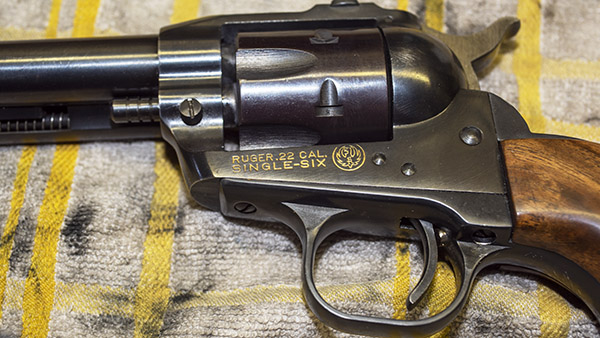
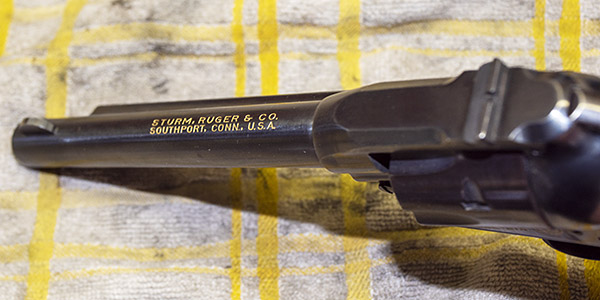
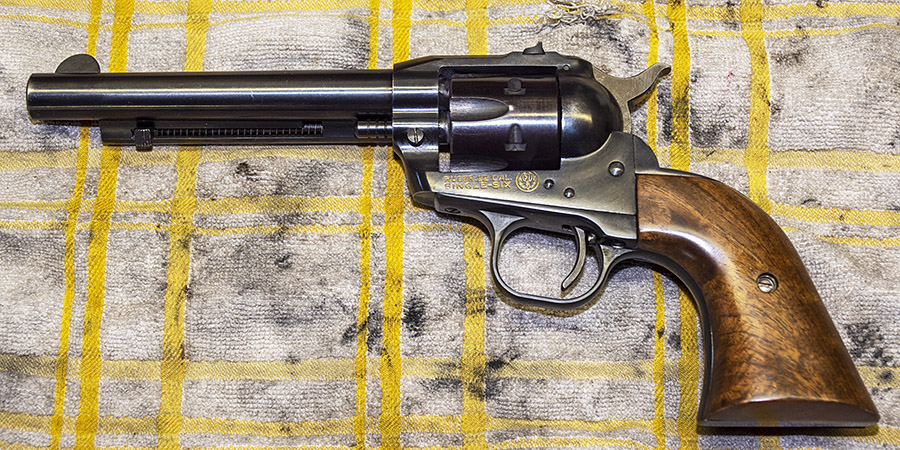
If you like old guns and family heirlooms, you’ll enjoy this blog.  The Ruger Single-Six you see here was my Dad’s gun.  This revolver’s 4-digit, no-prefix serial number puts its date of manufacture at 1954, which means it is just a little bit younger than me.  Ruger introduced the Single-Six in 1953 and they only made 49 of these revolvers that year, so mine is a first year of production revolver.  That’s cool.

Dad kept the Single-Six loaded in a drawer near his bed.  I don’t remember him ever shooting it.  He kept it there just in case.  Storing any gun in a holster is not a good idea (the leather retains moisture) and it had a light coating of surface rust in a few spots when Dad passed.  A bit of 0000 steel wool and oil took the rust off and the gun is in remarkable condition.


Don’t forget to take care of us:  Please click on the popup ads!


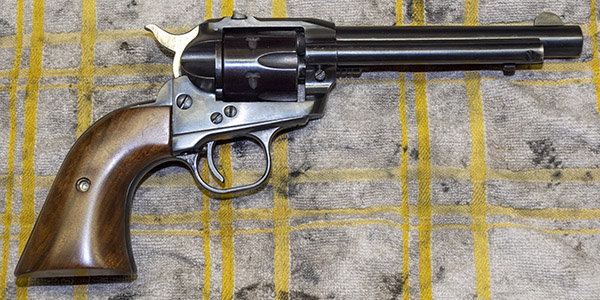
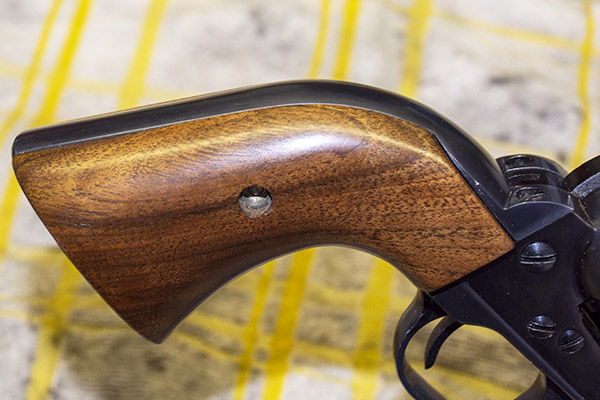
You probably noticed the custom walnut grips on this vintage Ruger.  Dad was an excellent stockmaker (his work was on high end shotguns), but the stocks on his personal trap guns were usually kluged-up affairs with adhesive padding on the comb and glued-on spacers to get the fit he wanted.  Dad didn’t care about appearance on his competition guns; all he wanted was a good fit so he could smoke clay pigeons.  The work he did on his friends’ shotguns…that was another story.  Those were stunning.  Those other guys weren’t great shots; they cared more about looks.  Dad was all about breaking pigeons on his guns, bringing home trophies, and bringing home cash (the monetary awards, especially for live pigeon shoots, were significant).   We always had walnut blanks and remnants in Dad’s workshop, and one day when he didn’t have anything else to do he crafted the custom grips you see here.  The wood-to-metal fit and the oil finish is perfect on these.

The right side of my 1954 Ruger Single-Six.
A perfect wood-to-metal finish. They don’t come from Ruger like this.

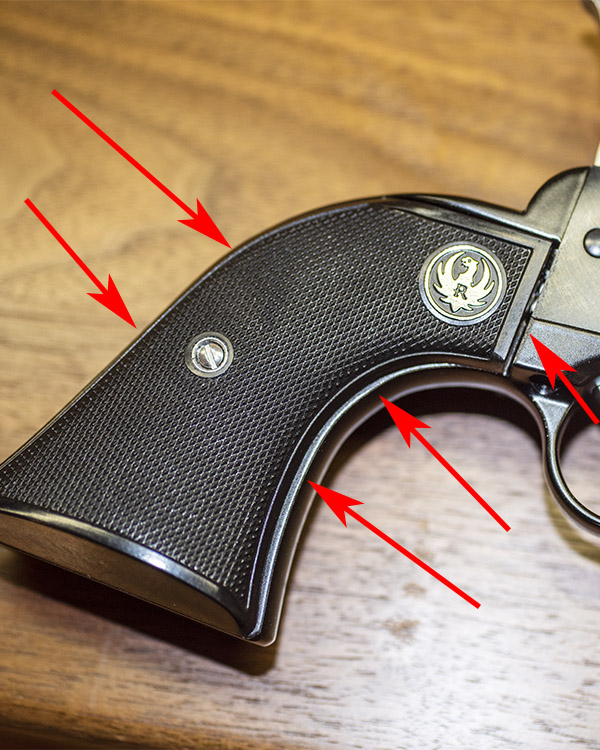
I wish new Rugers had grips that looked and fit like that.  They don’t.  You may recall the blog I did last year about a new Ruger .357 Magnum Blackhawk.  It’s grip-to-frame fit was atrocious.

A current production Ruger Blackhawk. Somewhere along the line, Ruger lost its attention to detail. These ugly gaps can’t be unseen.

As an original Single-Six, this Ruger is what is referred to as an Old Model.  It doesn’t have the transfer bar safety, and what that means is that if you drop it with the hammer over a loaded chamber, it can fire.  Call me old fashioned; I’ve got my own safety approach to this problem:  Don’t drop the gun.   But that’s just me.

The Old Model Ruger revolvers are elegant.  They are also referred to as three screw Rugers (because they have three screws on the right side; the newer model has two pins instead).  The hammer cocking in the Old Model Rugers is similar to a Colt Single Action Army.  There are four clicks, and that’s cool, too (especially for old guys like me).

The old three-screw configuration.

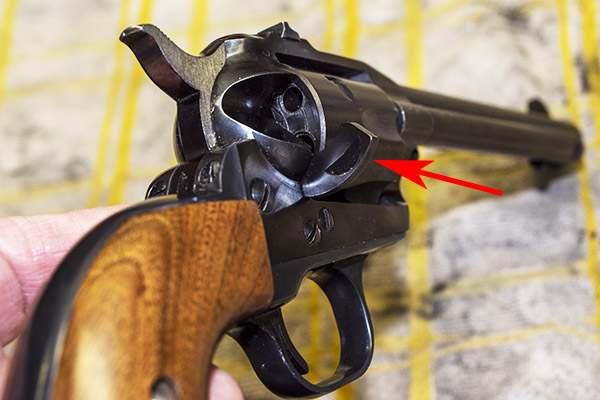
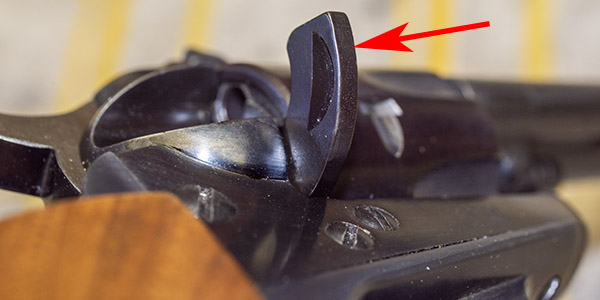
These old Ruger six shooters are also called flat gates because of the flat gate that opens for loading.  The flat gate feature that didn’t stay on Rugers long.  Ruger went to a contoured loading gate early in their history.  It’s just something that sets this revolver apart.

The flat gate on my Ruger Single-Six.
A better view of the Ruger’s flat loading gate.

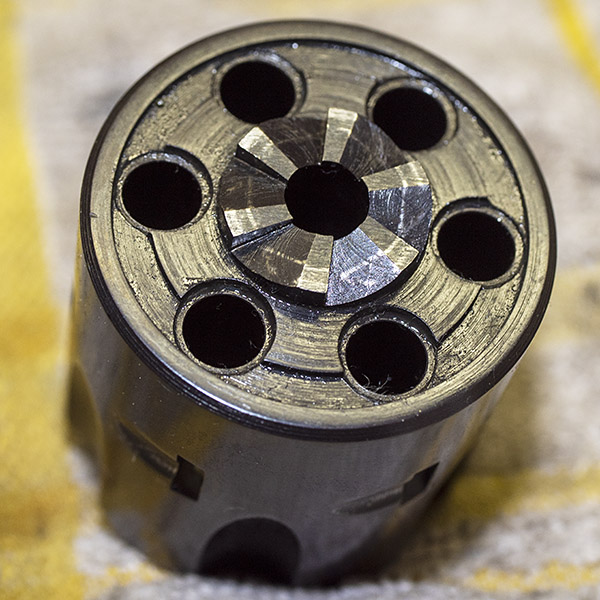
The early Rugers had recessed chambers.  I haven’t owned a new Single-Six in decades and I don’t remember if the newer ones do or not.  It’s a classy feature.

Recessed chambers. Back in the day, everything was better.  I know it’s dirty; I took this photo after the range session and before I cleaned it.

You probably noticed the gold inlay in this Ruger’s lettering.  Back in the day, kits to do this at home were popular.  I guess it holds up well; this was done quite a few years ago.  You can still get these gold inlay kits from MidwayUSA.com.

Look for the Forster gold inlay kit on Midwayusa.com.
Fixed sights and gold inlay. These old guns are awesome.

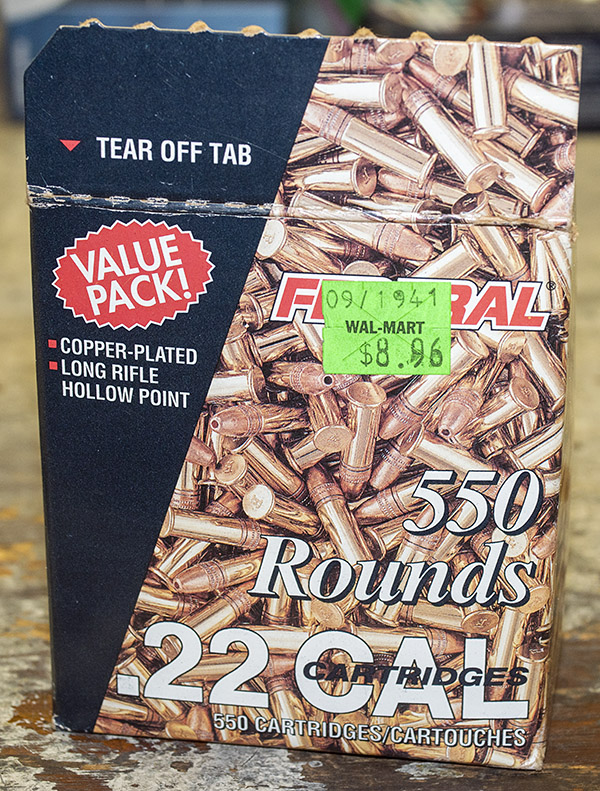
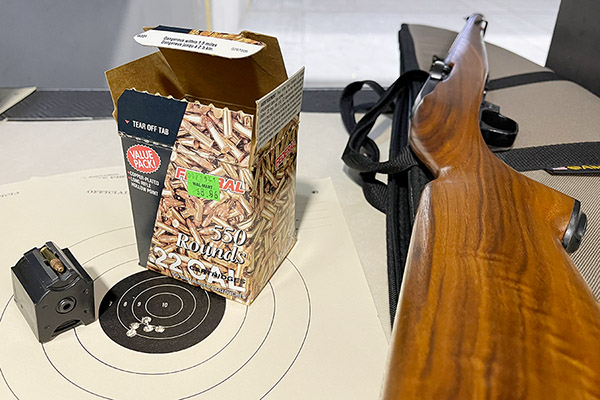
I grabbed an old box of .22 Long Rifle ammo and headed to the range a few days ago.

$8.96 for 550 rounds. We didn’t know how good we had it.
Federal hollow point ammo. You can’t have these in New Jersey or San Francisco (they outlawed hollow point ammo). Sarcasm alert: That’s why their crime rates are so low.
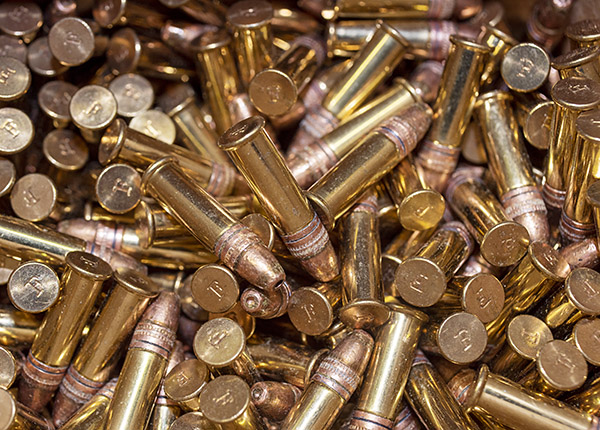
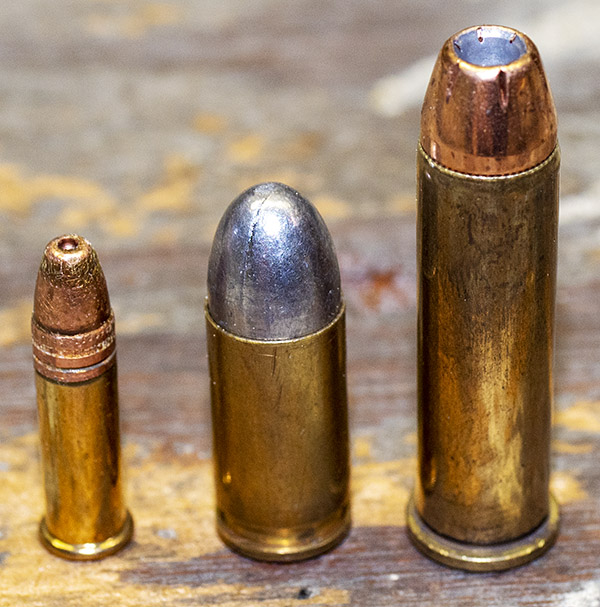
An ammo comparison. From left to right, it’s the Federal .22 Long Rifle hollow points featured in this article, one of my 9mm reloads, and a .357 Magnum hollowpoint.

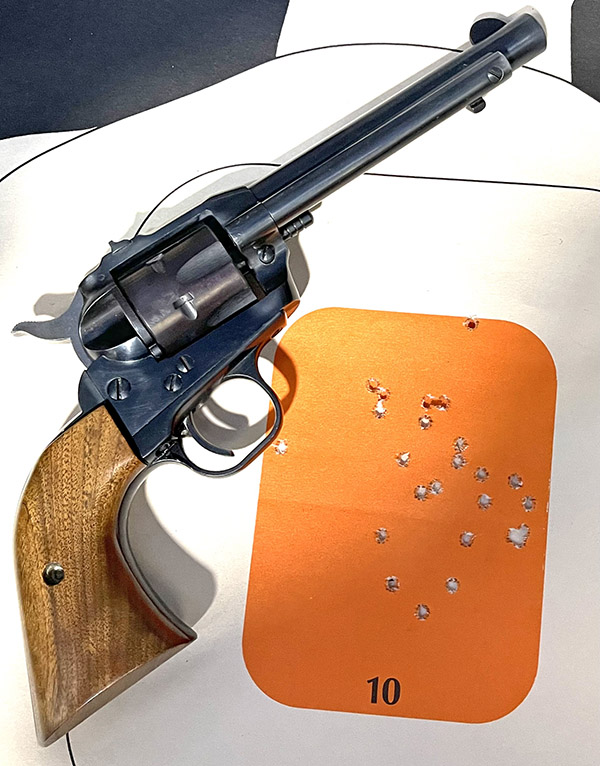
I ran my targets out to 50 feet at my indoor range and had at it, shooting off hand with a two-hand hold.  As always, the Single-Six did not disappoint.  It has fixed sights, but they are spot on.

I held at 6:00 on the orange bullseye. If I had used a rest, the group would have been much smaller.  For an offhand group, I’m happy.

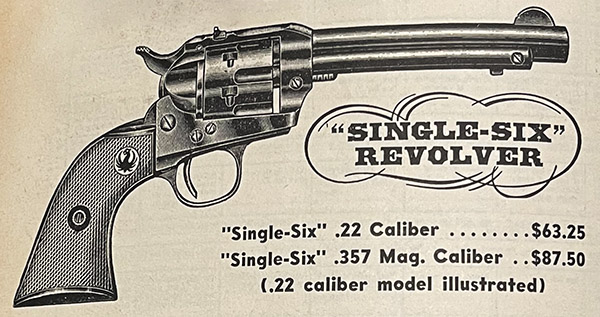
When first introduced in 1953, the cost of the Single-Six was $57.50.  I grabbed this photo from my old 1956 edition of the Stoeger Shooter’s Bible.  The Single-Six had gone up to $63.25 by 1956.

They don’t do covers like this today: The 1956 Shooter’s Bible.
The ad for Ruger’s Single-Six in 1956. Ruger’s Standard .22 automatic pistol was only $37.50 back then.  The Single-Six was a more expensive handgun.

If you enjoyed this Rimfire Series story, keep an eye on us.  Our next Rimfire Series story will be on a very cool Ruger 10/22 Mannlicher rifle from 1974, one with exceptional walnut.

The same ammo and an old Mannlicher 10/22. Watch ExNotes for the story. It will be the next featured in our Rimfire Series.

If you want to make sure you don’t miss the upcoming 10/22 story, please subscribe to the ExNotes blog:


If you would like to see our earlier blogs on .22 rifles and handguns, here’s a set of links.

A Tale of Two .22s (a CZ Model 452 and a Remington Model 504)

A .22 Colt Trooper Mk III

¡Siluetas Metálicas!

First Person Shooter

A 200th Year Ruger .22

A Tale of Two Springfields