A Frank Lloyd Wright Gas Station

By Joe Berk

Sue and I recently flew to Minnesota as part of Sue’s quest to visit all 50 states. I’d been there a few years ago for a business trip when I worked in the bomb business. We were having problems with a booster for one of munitions, and I visited the factory in Edina to seek assistance in finding the root cause. The factory was underground in an old Nike Hercules missile command center. It was a bit scary, being around all those explosives and the intermittent hisses from the air moisturizers (if the humidity dropped below a certain level, electrostatic discharges could induce inadvertent ignitions, hence the moisturizers).

This trip would involve no such scary bomb factory visits. In fact, there were a lot of cool things we saw in Minnesota. One was a Frank Lloyd Wright gas station.

Without setting out to do so, we’ve become a bit of a Frank Lloyd Wright website. We featured his architecture a couple of times already, once with an article by yours truly about the Fallingwater home in western Pennsylvania, and more recently with Joe Gresh’s recent piece on Taliesen West, the Frank Lloyd Wright desert home in Arizona. Architectural Digest magazine is not looking over its shoulder at ExhaustNotes, but it’s interesting that Mr. Wright’s genius has found its way into a motorcycle and gun blog.
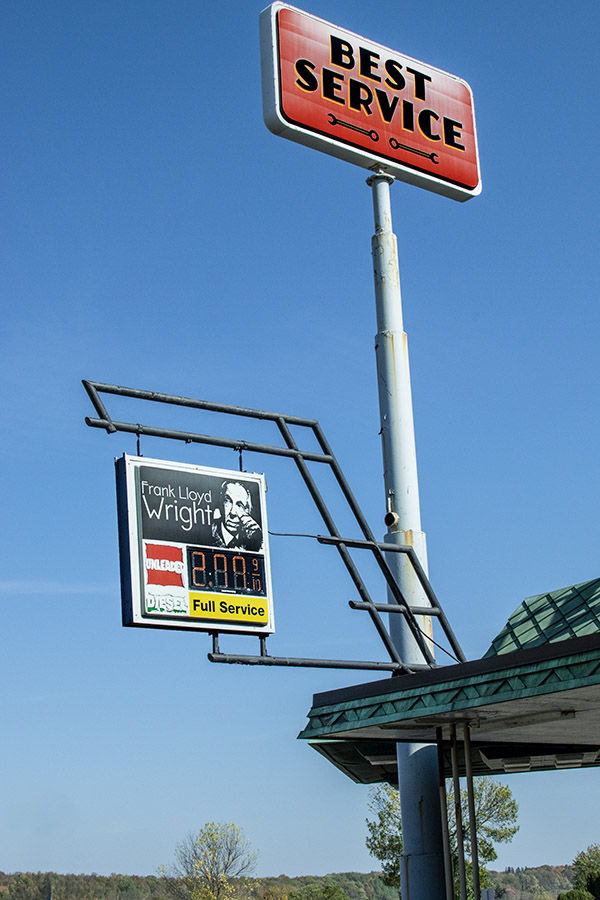
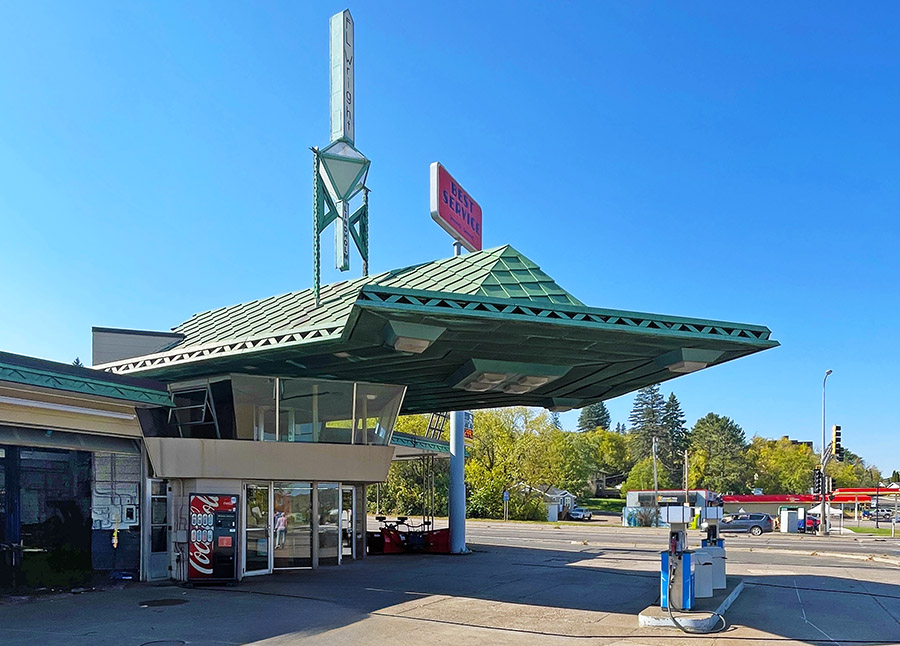
So, about that Frank Lloyd Wright gas station: Sue found it while researching cool things to see in Minnesota. It’s a little out of character for Mr. Wright, you know, designing a gas station. It’s located in the small town of Cloquet. It came about when a guy who worked in the oil biz (a guy with evidently lots of money), one R.W. Lindholm, had Wright design a home in 1952. Lindholm liked it. In fact, he liked it so much that when Wright approached him about designing a gas station, Lindholm agreed. Lindholm wanted to beautify gas station design; Wright wanted to create a gas station that could be used as a community center and gathering place.

If that sounds goofy to you (and it did to me when I first read about it), think again. When I was a teenager with a GTO (a decidedly dangerous combination), I and all of my gearhead buddies used to hang out at Herbie Eckert’s gas station.  Herbie was a kid in my high school class who’s Dad owned an Empire gas station in New Jersey.  I hung out there most of the time with my GTO, Ralph Voorhees was there with his GTO, Bobby O’Connell was there with his Hemi Road Runner, Vernie Frantz was there with his 409 Chevy, and, well, you get the idea. It sort of seemed natural back then in the late 1960s. Yeah, the concept works: A gas station as a community center.  Especially if you’re a community of gearheads.  I don’t think that’s quite what Frank Lloyd Wright or Mr. Lindholm had in mind, but hey, it worked for us.
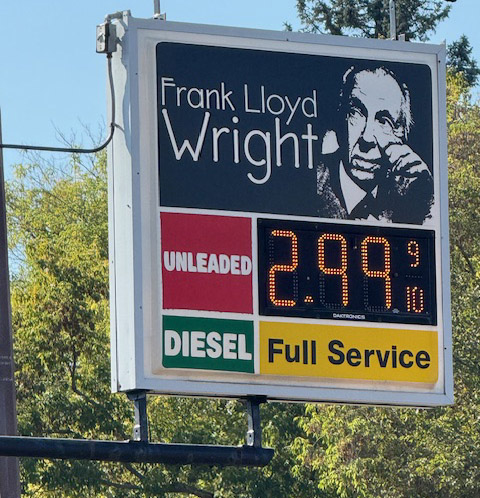
Wright’s gas station design was built in 1958. It was the only gas station ever designed by Frank Lloyd Wright, and it’s still in use today. It’s listed on the National Register of Historic Places. When we visited, the gas station was open, but the place was pretty much empty other than one other car that had stopped for the same reason we did: To take pictures. Frank Lloyd Wright’s design was a success in that his $20,000 gas station (four times the cost of a typical gas station in 1958), came into being, but it never realized Wright’s vision in becoming a community center. Maybe it’s because there were too many people like me, Vernie, Bobby, and Ralph hanging around the place.  We must have scared them all away.


Join our Facebook ExNotes page!


Never miss an ExNotes blog:


Help us keep the lights on:


Don’t forget: Visit our advertisers!


ExNotes Architectural Review: Taliesin West, Arizona

By Joe Gresh

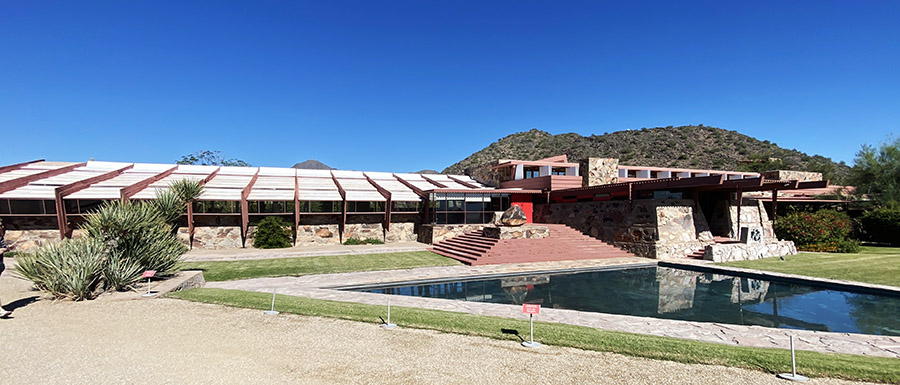
East of Scottsdale, Arizona, is a Frank Lloyd Wright house he named Taliesin West. The word “house” is being kind; it’s a mashup of tent and stone. The place is built using local rock and concrete, so you know I’m predisposed to like Taliesin.

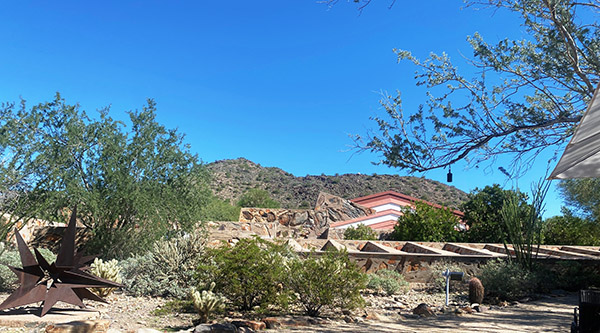
Front view from the visitors entrance. The rocks blend in because they are from the site. We didn’t get to see the borrow pit.

I’m usually not a fan of Wright’s designs. They pointlessly stretch the function of materials and the idea of space in directions I dislike. Wright pushed the boundary of possibilities: A structure didn’t have to provide structure, it could exist simply as an idea. Take Falling Water.  It barges in on the environment lording itself over the river and unnecessarily cantilevering all over the place. It’s a rude work. Not to mention his stuff leaks.

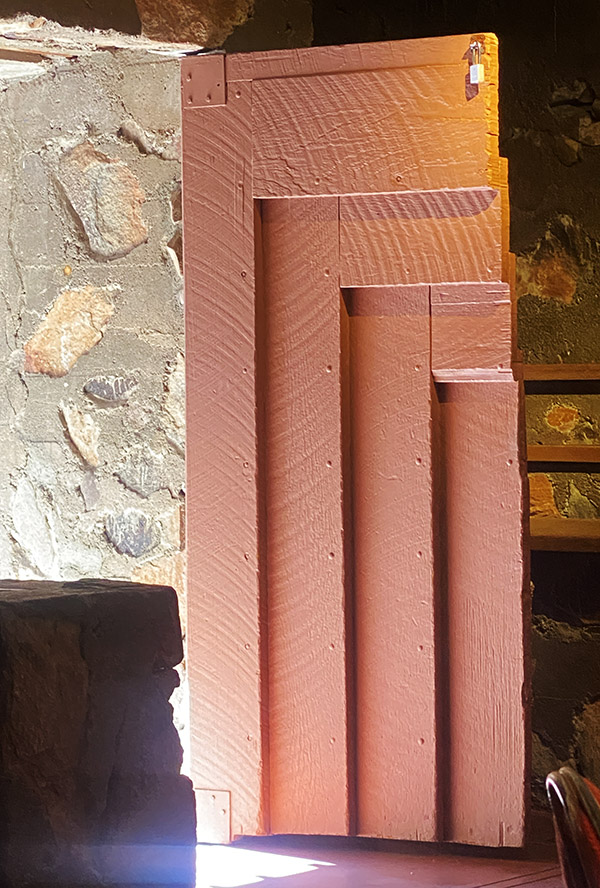
Door into the Kiva room. Kivas in my neck of the woods are round inside and partially underground. Wright got the feel with a square room.
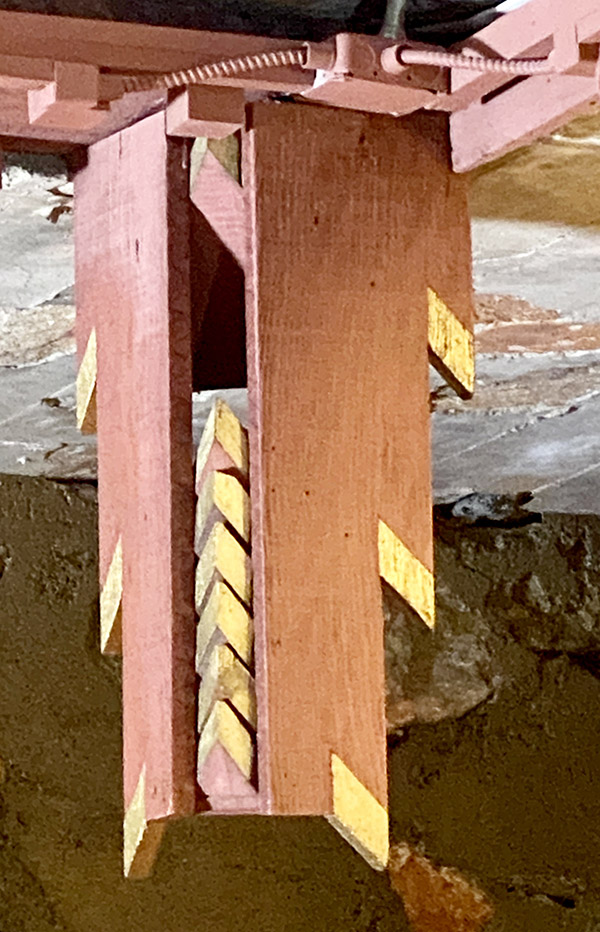
Detail of a plywood embellishment in the Kiva.

Taliesin West follows Wright’s usual distain for practicality and water tightness. Many roofs are canvas. Shutters open backwards so rain can blow in instead of shielding the windows. Painted plywood, probably the miracle material of the 1940s, is used extensively and today lends a cheap feel to the building. Not to mention the constant painting and replacement plywood requires. Odd little squares line the eaves requiring constant upkeep. Shallow reflecting pools breed slime and need cleaning frequently.

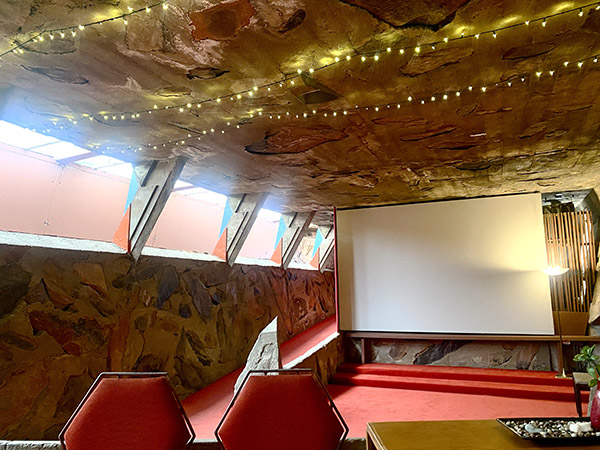
The entertainment room. Its low, heavy ceiling gives a crypt-like feel. Lots of windows to let dust and air inside.
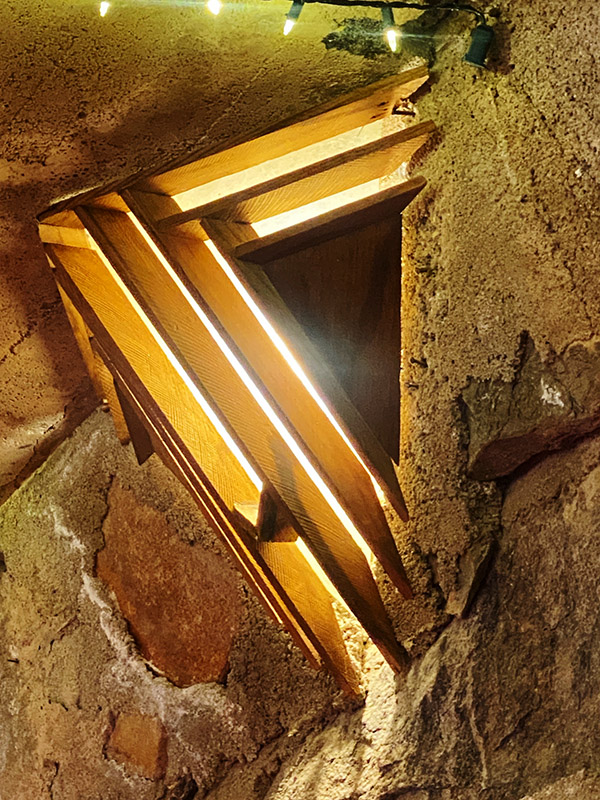
Interior wall lamps. Painted wood. Taliesin uses cheap materials, easy to replace.

Over the entertainment area the roof is a series of angled concrete and stone boxes that look like ideal water traps. Ceilings are low most everywhere and typically large Americans had to duck to get inside rooms. There’s a reason we all live in boxes.  Boxes work.

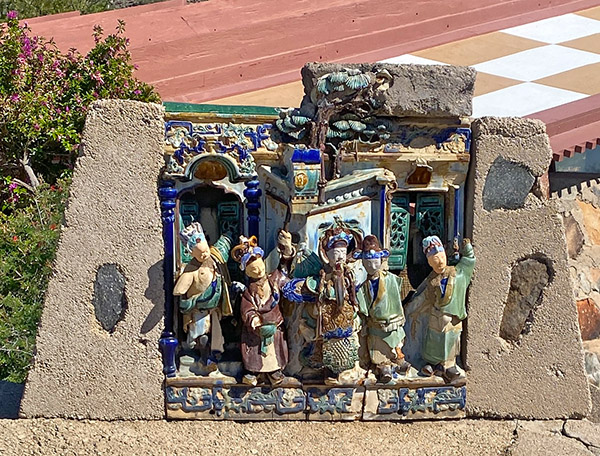
Wright liked Chinese ceramics and design. Taliesin West looks sort of Oriental.

Having said all that, I loved Taliesin. Wandering around, my inability to think outside the box kept me shocked at the unsuitable designs Wright employed. I’ll never be as free as him. Things like moving a window because he didn’t want to move a vase amaze me. My values always default to sensible. I’m going to move the vase no matter how much I like it there. Wright doesn’t do sensible.

Sitting in the Garden Room, looking out the low, western wall, gave a feeling of it being a special place. None of the boxes I build feel special. The density of the walls with their large rocks strangled in concrete felt safe. My dry-stack rock walls can tumble down at any moment. Corrugated metal buildings feel anything but safe.

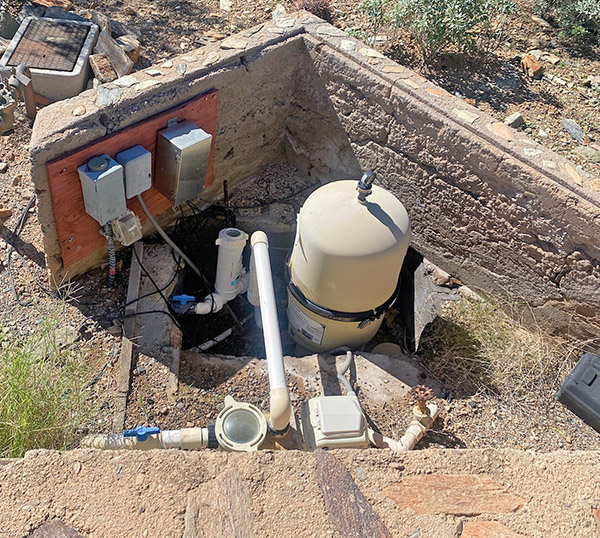
Water pump and surge tank. I’m not sure if this is for the house or the landscaping.

Taliesin started out as a 500-ace campsite and when Wright left for the summer the canvas roofs were removed and the buildings were left to the elements. Returning for winter the place would be reassembled and a crowd of designers worked there. Taliesin has a magical, Disney-theme-park feel. You expect a gnome to pop out and spin a hex around every corner.

My takeaway is this: I’m never going to build something that is doomed to fail, but I might be able to loosen up a bit and do some dumb things just because I want to. At least I’m going to try and stretch my thinking. Wright showed us that we don’t always have to follow the rules.


Join our Facebook ExNotes page!


Never miss an ExNotes blog:


Help us keep the lights on:


Don’t forget: Visit our advertisers!

Fallingwater, Pennsylvania

By Joe Berk

Fallingwater, a famous Frank Lloyd Wright structure in southwestern Pennsylvania, is a place we have long wanted to visit.   We finally checked that box late last year and it was well worth the trip.  It’s one of Frank Lloyd Wright’s most famous architectural accomplishments, designed in 1935 and completed in 1939 for the wealthy Kaufman family.   The Kaufmans owned a large department store empire in nearby Pittsburgh, and Fallingwater was their vacation home.   The Kaufman family turned the estate over to the Western Pennsylvania Conservancy and it now operates as an area open to the public.

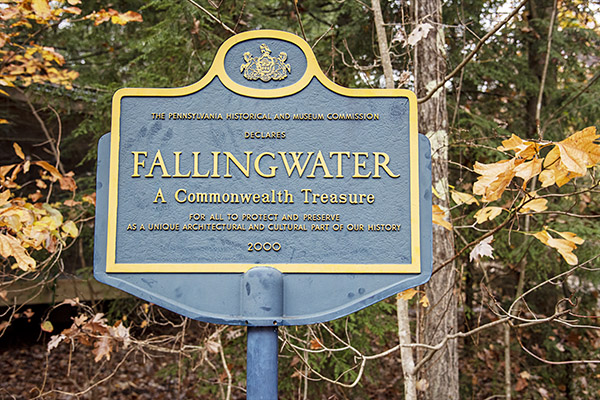
A Commonwealth Treasure indeed!

The Kaufman family’s request to Wright was straightforward:  They wanted something unique, something that merged the mountains’ natural beauty with the architecture, and they wanted the local stream to run through the home.  The resulting home became one of Wright’s best known accomplishments.    Frank Lloyd Wright had a distinguished career and he is arguably one of the most famous architects who ever lived.  Fallingwater is the only Wright home open to the public.

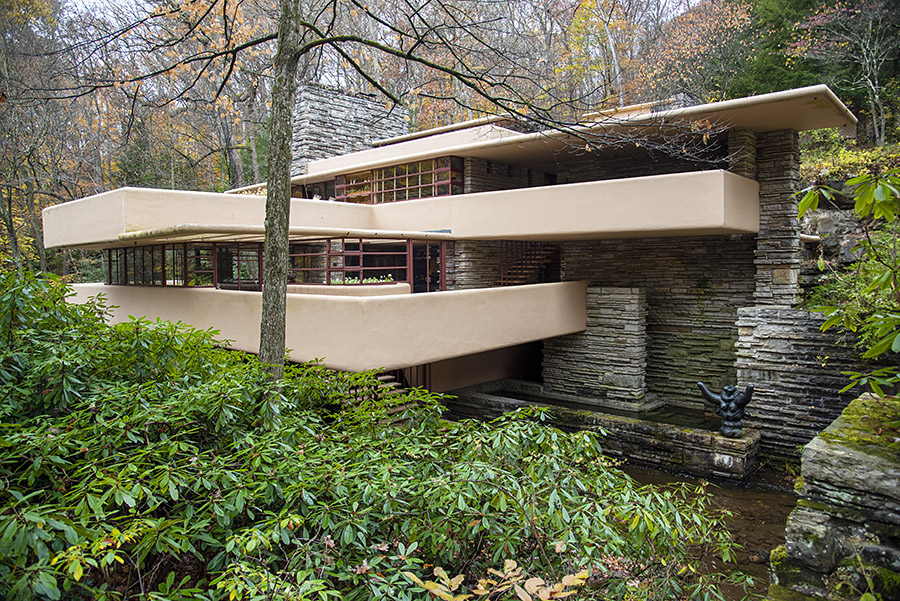
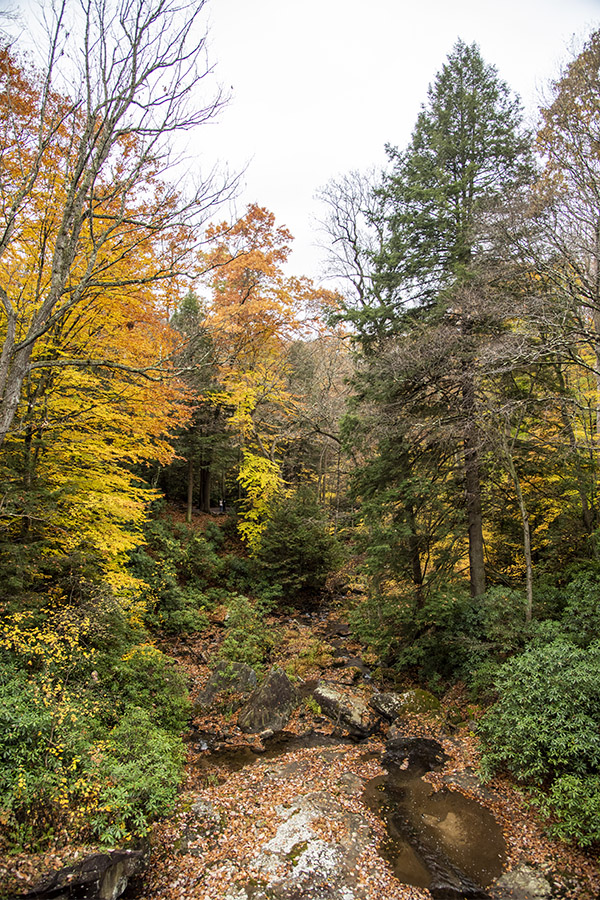
A river runs through it…the view from one of the balconies at Fallingwater.  Check out the leaves turning color.
Note the layered sandstone construction.

The Kaufmans asked Wright to use natural materials from the area and he did.  Much of the home is constructed of local sandstone.  They also asked Wright to design the interior furnishings and decor.  It all works well together.

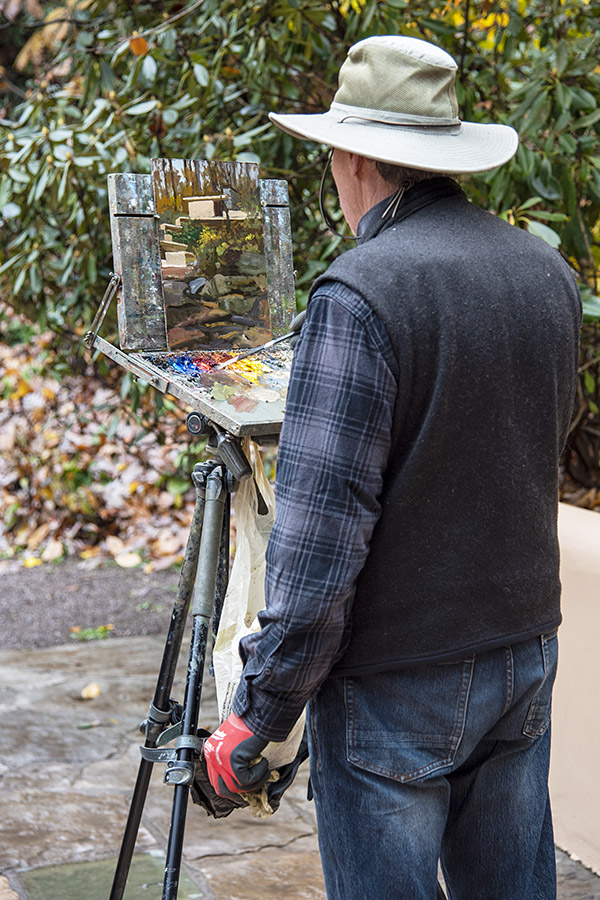
A local artist taking it all in.
Wright also designed the interior and its furnishings.
The family room.
Wright chotchkas.
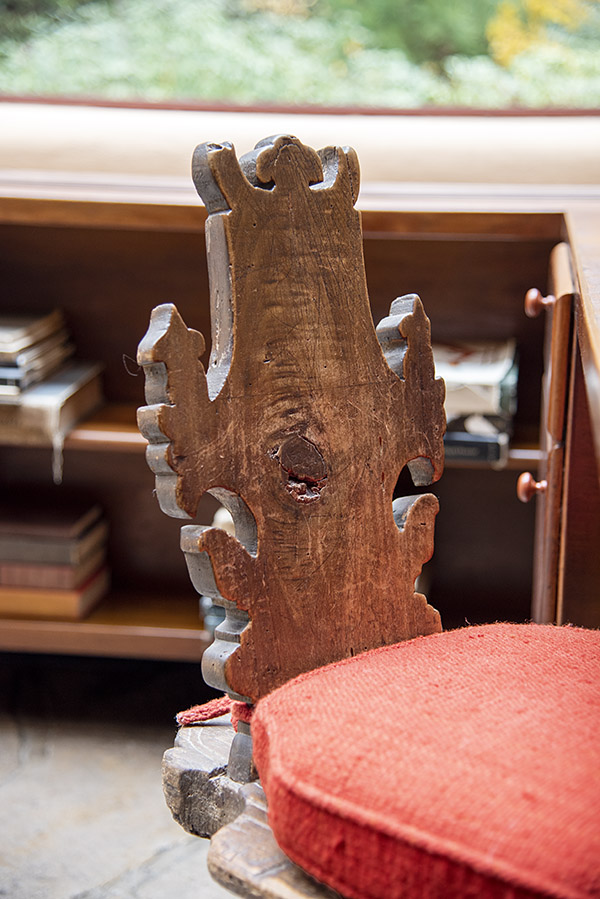
Furniture crafted from local trees.
More interior pieces.
This looks southwestern, but it works with the sandstone walls.

In 2019, Fallingwater was added to the UNESCO World Heritage List.  It is also a National Historic Landmark, it is a Commonwealth of Pennsylvania Treasure, the American Institute of Architects named it the best all time work of American Architecture.  All that’s great, but take it from us, the ride and the place are awesome.  As a destination, Fallingwater is tough to beat.

A photo from the exterior, showing the balconies and the surrounding woodlands.

Fallingwater is in the Laurel Highlands area about 70 miles outside of Pittsburgh.  It’s a mountainous area, and because of that, the roads are perfect for great riding.  The scenery, the roads, and the riding in this area are pretty much what good motorcycle riding is all about in all but the winter months.  Fall is one of the best times to take it in as the leave turning colors add a further visual treat to what is already a delight to the senses.  The trick is to do it late enough in the year that the leaves are turning, but not so late that the temps are too low or the roads are too icy.  We were lucky; our timing was perfect.

You can’t just show up at Fallingwater.  You have to make a reservation and pay for your tickets online.  Trust me on this:  The tour is money well spent.


Never miss an ExNotes blog: