A Laminated Mosin

By Joe Berk

One of the best gun deals ever were the surplus Mosin-Nagant rifles that were everywhere until Obama was in office; now, you hardly see them anywhere, and when you do, they go for big bucks.  You used to be able to buy a Mosin for $79 at Big 5.  I started playing around with them about 15 years ago.  Today, when you see one, it’s not unusual for the store to have them marked at $500 (or more).
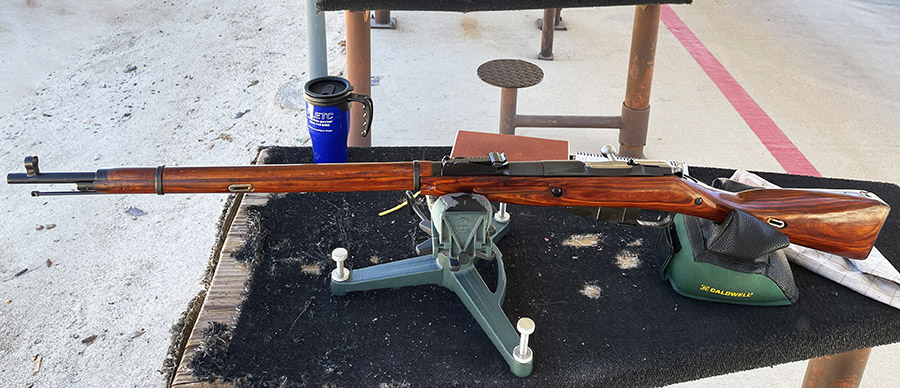
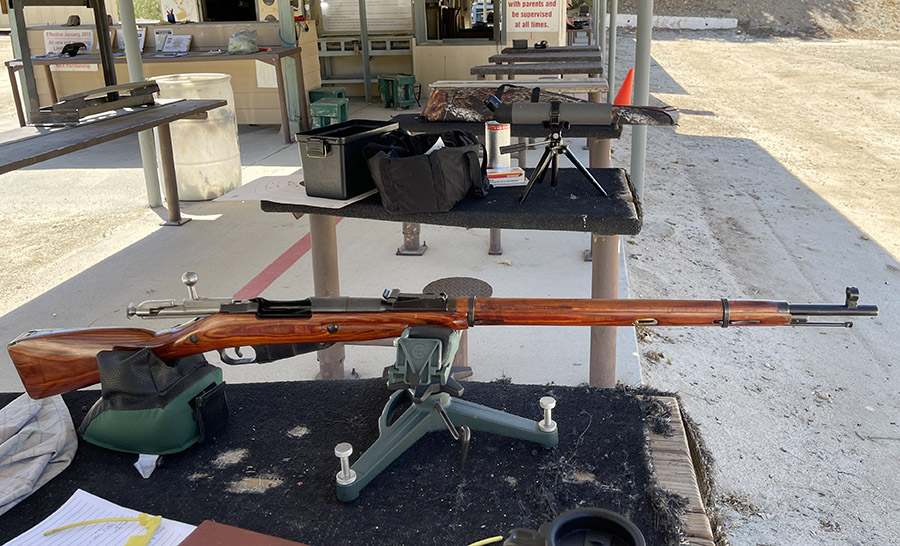
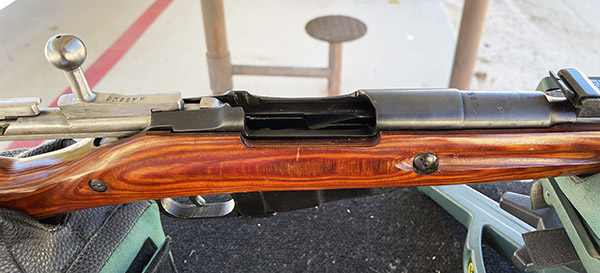
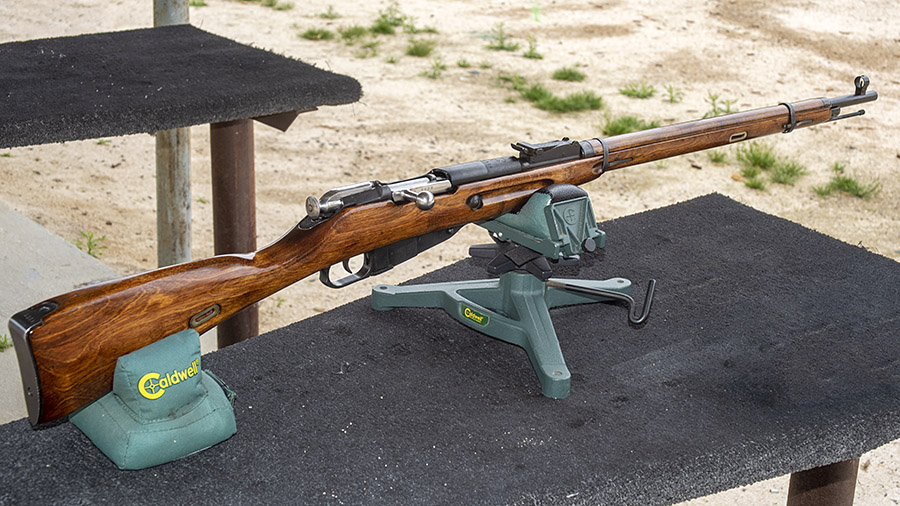
One of mine is a laminated stock Mosin 91/30, which is not seen too often.  I bought it about 10 years ago from Gunrunner’s in Duarte for $239 and stuck it in the safe.  Until today, I had not fired it.  It’s a Tula (there were two makers; Tula was one) with a round receiver.  It was made originally in 1939.  After the war, the Soviets refurbed most of them and a very few were fitted with laminated stocks.  I’ve never seen another one on the range.  It’s a pretty rifle, and I like the look of it.  Laminated wood stocks are usually much more stable than a standard stock, so I think that’s helping this rifle’s accuracy.
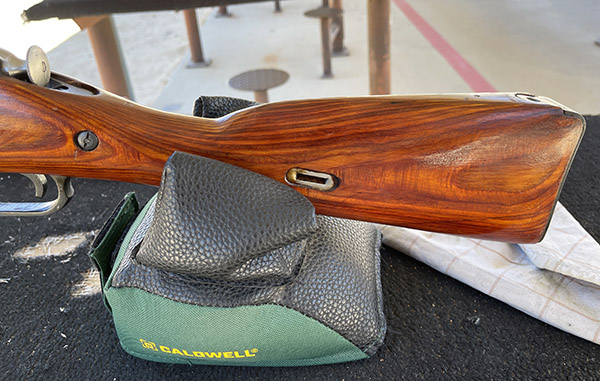
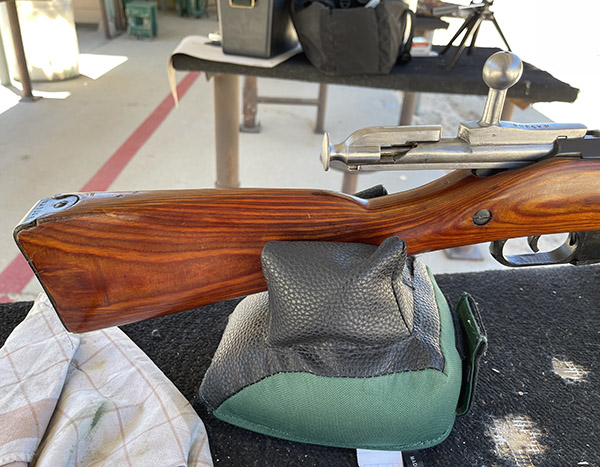
My laminated Mosin has the usual nicks and dings.  The serial numbers all match (stock, magazine, bolt, receiver, and bayonet).  The trigger is heavy, gritty, and just God-awful.  For the groups you see here, I used my new favorite Mosin load (42.0 grains of IMR 3031 and the PRVI PPU 150-grain jacketed softpoint boattail bullet).
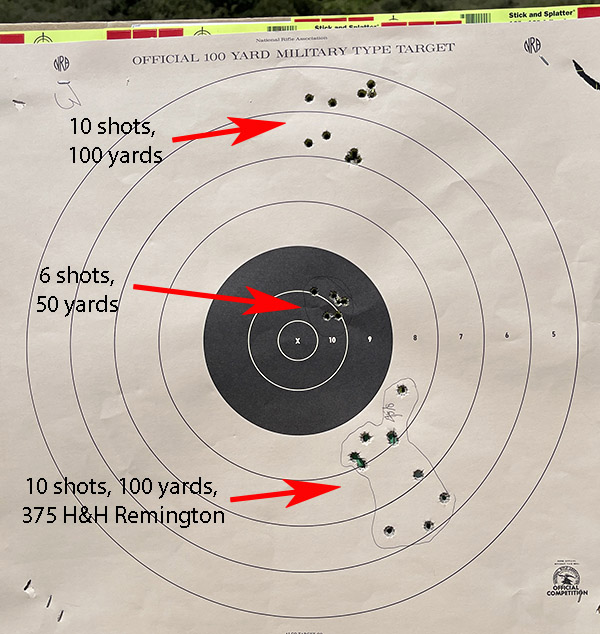
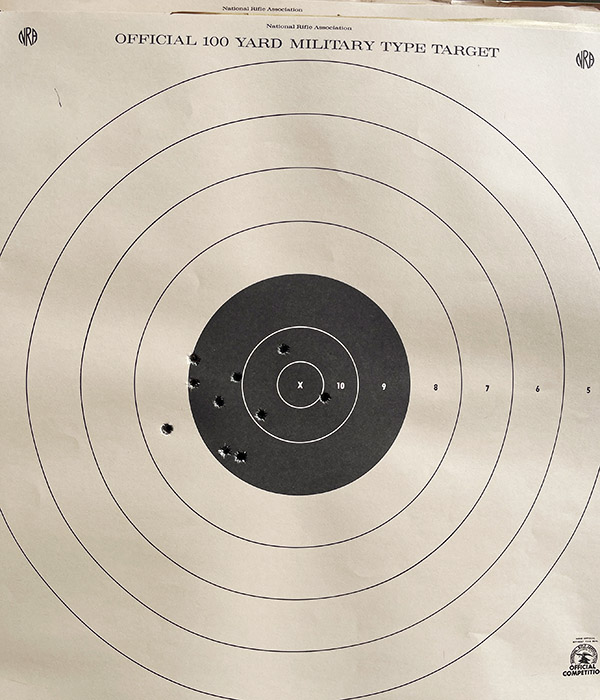
The rifle, I think, shoots well (even with its terrible trigger, and it was pretty windy out there the day I shot the groups you see above).  Because I am a cheap SOB, I reused a target from a previous range session with my .375 H&H, so you can ignore the group to low right of the bullseye.  With my laminated-stock Mosin, I first shot 6 rounds at 50 yards to see where the rifle was printing (my aim point was at 6:00 on the bullseye).  Then I moved the target out to 100 yards and fired another 10 rounds using the same aimpoint.  The 50-yard group measures 1 1/8 inch; the 100-yard group measures 2 13/16 inch.  That’s not too bad for the first time out, and not too bad for an old guy using iron sights.

My rear sight is already all the way down.  I am going to look for a front sight with a taller post (if you know who might offer these, please let me know). The rifle probably has a 500-meter battlesight zero (or whatever the Russians used), and it was probably set up with the bayonet installed (which makes the rifle shoot to the right without the bayonet).   I can adjust the windage by drifting the front sight; I can’t lower the elevation without getting a taller front post.

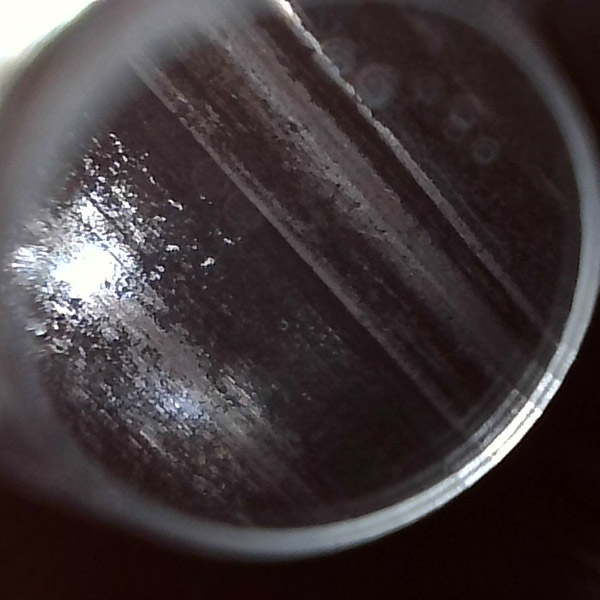
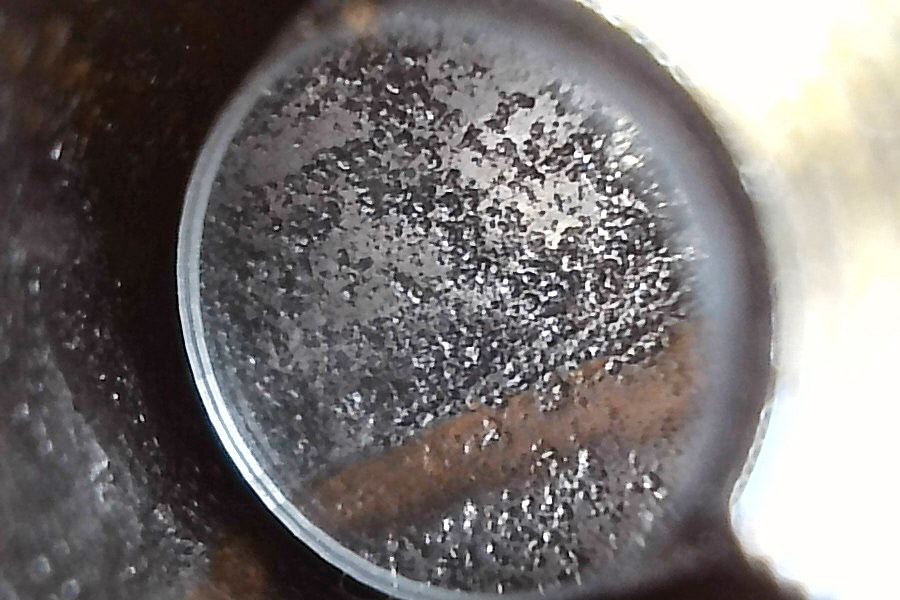
You might be wondering what the bore looks like on this rifle.  I can show you:
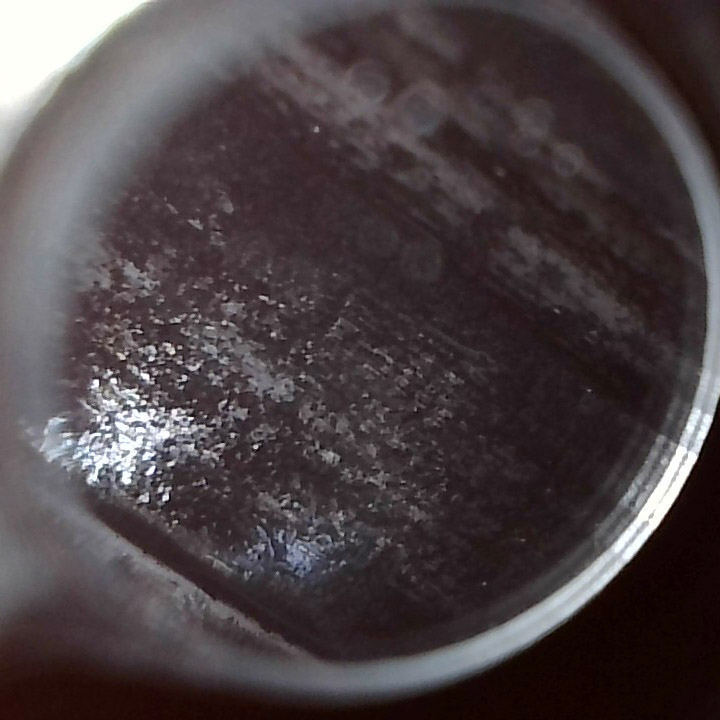
There are some takeaways from the above photos:

      • The bore is better in some spots than in others.
      • When these rifles saw action in World War II (as this one probably did), the ammo used had corrosive primers.  The effects of that are visible.
      • Even Mosin-Nagant rifles with funky bores can shoot well.
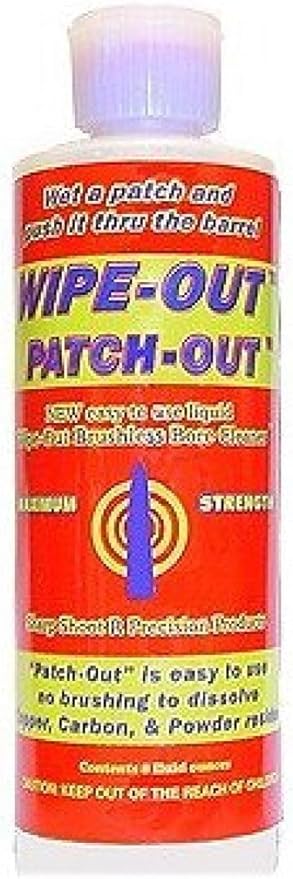
      • The bore cleaning copper fouling solvent I use, Patch-Out, does a good job.  It works a lot better than Hoppes No. 9.  You don’t see any copper in the photos above.

Incidentally, if you’ve never seen the movie Enemy at the Gates, it’s one of the best movies ever (in my opinion).  The Mosin-Nagant rifle plays a starring role.  The opening scenes are really well done.  Take a look:

I’ve written a lot about the Mosin-Nagant 91/30 rifle.  I love these old rifles. Here are my earlier posts:

Three Mosin-Nagant Loads
Mosins, Sewer Pipes, and Lunar Landscapes
A Tale of Two Mosins
More Mosin Loads
Cast Bullet Mosin Loads
Mosins, and Enemy at the Gates
NJ State Police Museum
A Tale of Two Old Warhorses
Home on the Range
Stupid Hot 7.62x54R Ammo
Lee Ermey’s Guns Go To Auction
Revisiting World War II
Sniper!
Motorcycles and Milsurps

If you would like to learn more about the Mosin-Nagant rifle, the Lapin book is the definitive source:
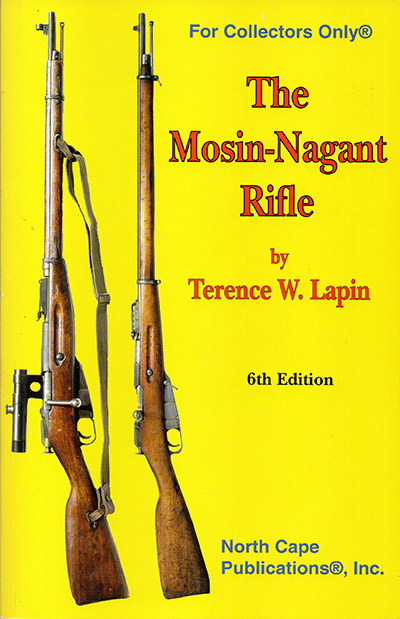
The Mosin-Nagant Rifle is an easy and fascinating read.   I enjoyed it and I think you will, too.


Join our Facebook ExNotes page!


Never miss an ExNotes blog:


Help us keep the lights on:


Don’t forget: Visit our advertisers!


IMR 3031 Mosin Loads

By Joe Berk

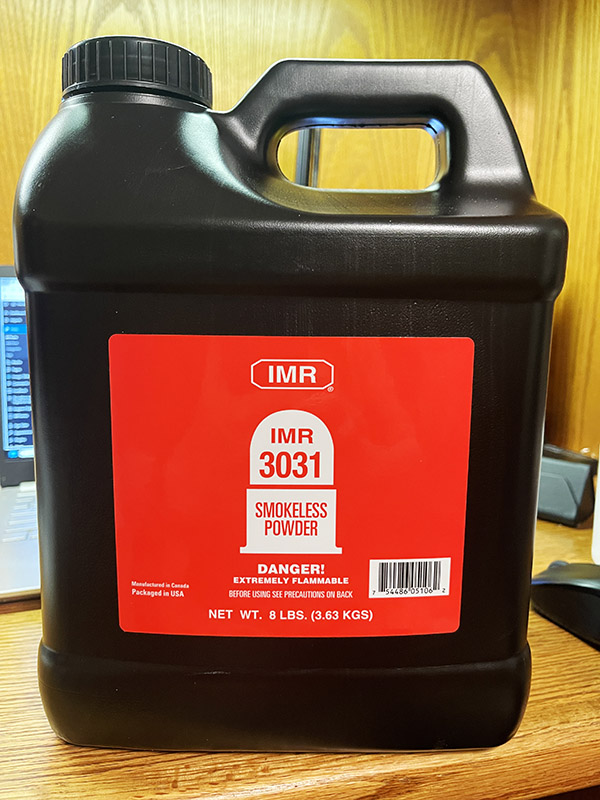
I recently bought an 8-lb container of IMR 3031 on the theory that the time to buy something is when you see it, and I’ve been researching loads for various cartridges using that powder.

IMR 3031, and lots of it.

IMR 3031 doesn’t appear too often in modern reloading manuals, which struck me as odd because when I first started playing with things that go bang it seemed like 3031 was an almost universal propellant, good for whatever ails you.  So I dug out some reloading manuals from the 1970s, and as I expected, 3031 showed up for a bunch of different cartridges.  One of them is 7.62x54R, and I wanted to see if I could develop a decent load for my Mosin-Nagant.  I should point out at this point that there’s nothing special about my 1940 Tula Mosin (other than the fact that it’s one of my favorite rifles).  In fact, the barrel looks more like a sewer pipe than a precision shooting instrument.

My Mosin-Nagant’s bore. It ain’t pretty.

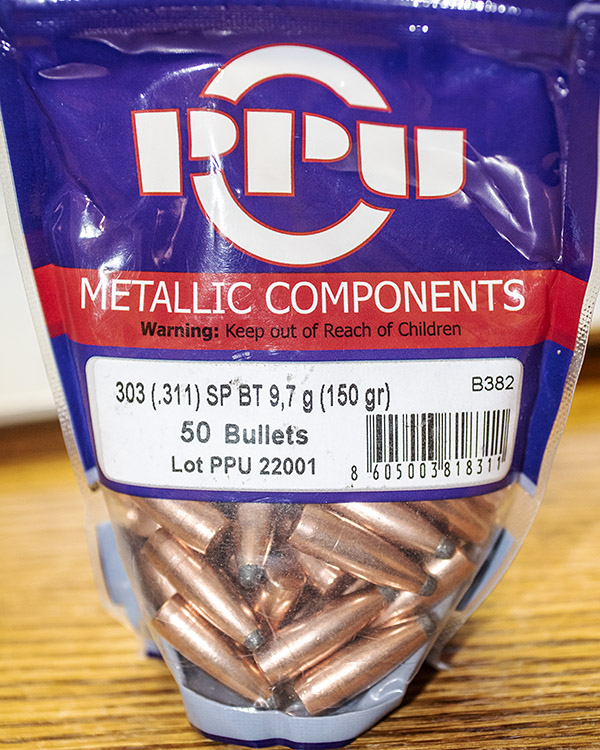
I loaded the ammo for this test series with the PPU Partizan 150-grain,  0.311-inch diameter, jacketed softpoint boattail bullet.  These are relatively inexpensive bullets (they go for around $.30 each from Graf’s, which I guess is cheap by today’s standards).  These bullets pop up for sale occasionally, and a while back I bought 500 of them.

PPU bullets. They are relatively inexpensive. Sometimes they go on sale.
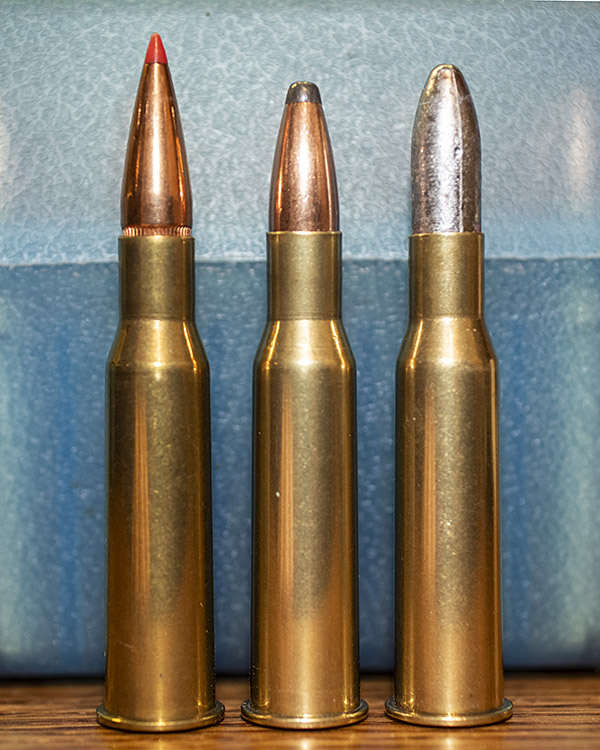
Three different 7.62x54R reloads. From left to right, it’s the Hornady V-Max bullet, the PPU jacketed softpoint bullet, and a cast lead bullet. I shot only the PPU bullets for this blog.

My testing consisted of five different IMR 3031 loads to see how they performed at 100 yards.  The drill was to fire 10 rounds each at charges of 39.0, 40.0, 41.0, 42.0, and 43.0 grains.   I used PRVI Partizan brass and Winchester primers, and I seated the bullets for an overall cartridge length of 2.790 inches with no crimp.  Here’s what I found:

The chrono and accuracry results. 42.0 grains of IMR 3031 seems to be the sweet spot.
A 100-yard target group with the 42.0 grain IMR 3031 load.

The sweet spot appears to be right about 41.0 to 42.0 grains of IMR 3031 (the target above is with 42.0 grains).   The standard deviation is smaller for the 42.0-grain load with the same group size, so that’s what I’m going with.  Recoil was moderate with all loads; none of the loads showed any pressure signs.  None of the above were compressed charges. The 43.0-grain load had a smaller standard deviation, but the group opened up and shifted to the left, so I’m going to call the 42.0-grain load good.  It’s as good as the groups I was getting with IMR 4320, which had previously been my Mosin accuracy load.

Before any of you out there in the blogosphere get your shorts in a knot about using older reloading manuals, I realize the manual companies (and others who parrot them) advise against doing so.  The theory is that the propellant formulations have changed and what the old manuals show as a safe load may not necessarily be so today.  I get it.  That’s why I start testing at the bottom of the range and work up, looking for pressure signs along the way.  The current and the 2007 Hornady manuals do not list IMR 3031 for the 7.62x54R.  The 1973 Hornady manual (the first one I ever bought when I was just getting started in this game) shows a max of 44.4 grains with a 150-grain bullet, which is why I stopped my initial testing at 43.0 grains.  None of the loads I tested showed any pressure signs and recoil was moderate with all loads.  I think the new manuals feature new powders because the powder companies pay for the manuals to include their newest stuff.  I don’t think they do it because the powders are necessarily better.  Maybe I’m wrong.  I’m a cynical old fart.

I should point out that my findings are not rigorous for two reasons:

    • I’m not that good a shot, and
    • My eyes are not what they used to be.  It’s getting increasingly more difficult to get the front sight in sharp focus (ah, to be 72 again…).  I do the best I can.

But I’m still out there having fun, and that’s what important.


I’ve written a lot about the Mosin-Nagant 91/30 rifle.  Here are my earlier posts:

Three Mosin-Nagant Loads
Mosins, Sewer Pipes, and Lunar Landscapes
A Tale of Two Mosins
More Mosin Loads
Cast Bullet Mosin Loads
Mosins, and Enemy at the Gates
NJ State Police Museum
A Tale of Two Old Warhorses
Home on the Range
Stupid Hot 7.62x54R Ammo
Lee Ermey’s Guns Go To Auction
Revisiting World War II
Sniper!
Motorcycles and Milsurps

If you would like to learn more about the Mosin-Nagant rifle, the Lapin book is the definitive source:

The Mosin-Nagant Rifle is an easy and fascinating read.


Join our Facebook ExNotes page!


Never miss an ExNotes blog:


Help us keep the lights on:


Don’t forget: Visit our advertisers!