IMR 3031 Mosin Loads

By Joe Berk

I recently bought an 8-lb container of IMR 3031 on the theory that the time to buy something is when you see it, and I’ve been researching loads for various cartridges using that powder.
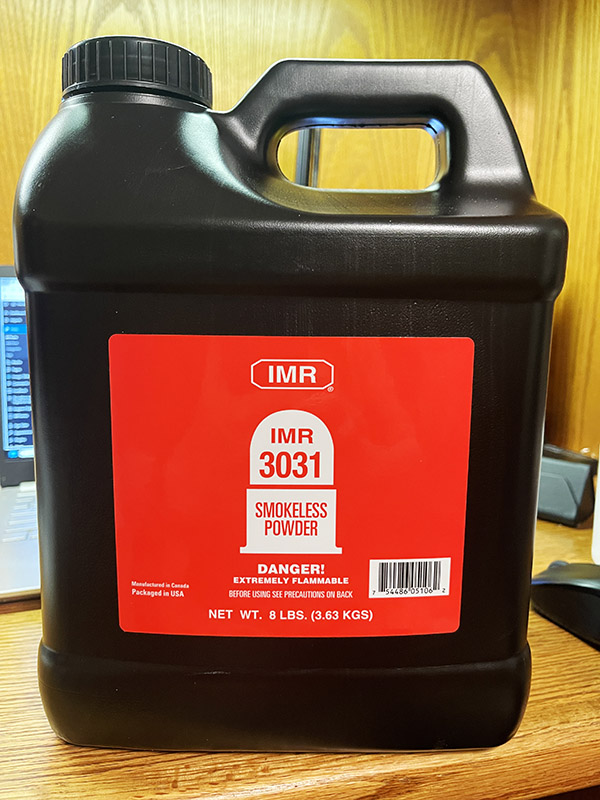
IMR 3031, and lots of it.

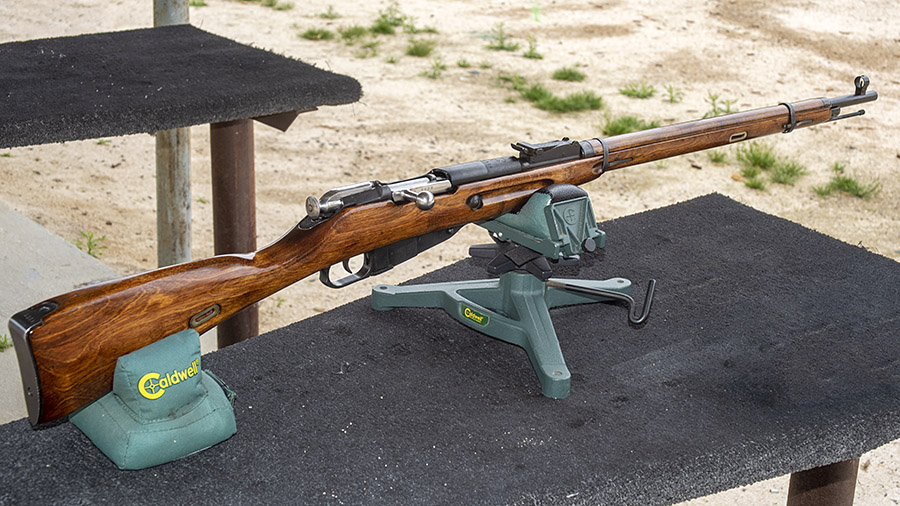
IMR 3031 doesn’t appear too often in modern reloading manuals, which struck me as odd because when I first started playing with things that go bang it seemed like 3031 was an almost universal propellant, good for whatever ails you.  So I dug out some reloading manuals from the 1970s, and as I expected, 3031 showed up for a bunch of different cartridges.  One of them is 7.62x54R, and I wanted to see if I could develop a decent load for my Mosin-Nagant.  I should point out at this point that there’s nothing special about my 1940 Tula Mosin (other than the fact that it’s one of my favorite rifles).  In fact, the barrel looks more like a sewer pipe than a precision shooting instrument.
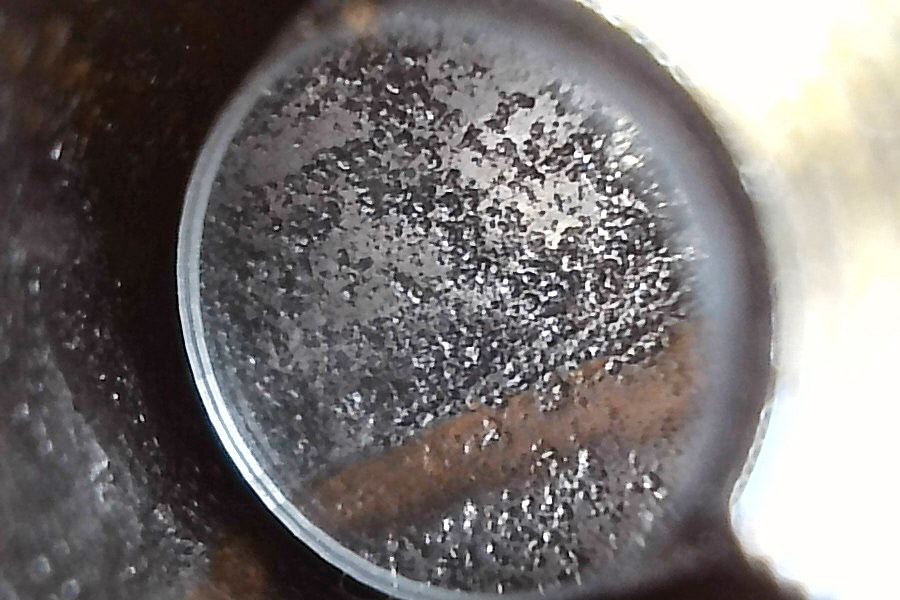
My Mosin-Nagant’s bore. It ain’t pretty.

I loaded the ammo for this test series with the PPU Partizan 150-grain,  0.311-inch diameter, jacketed softpoint boattail bullet.  These are relatively inexpensive bullets (they go for around $.30 each from Graf’s, which I guess is cheap by today’s standards).  These bullets pop up for sale occasionally, and a while back I bought 500 of them.
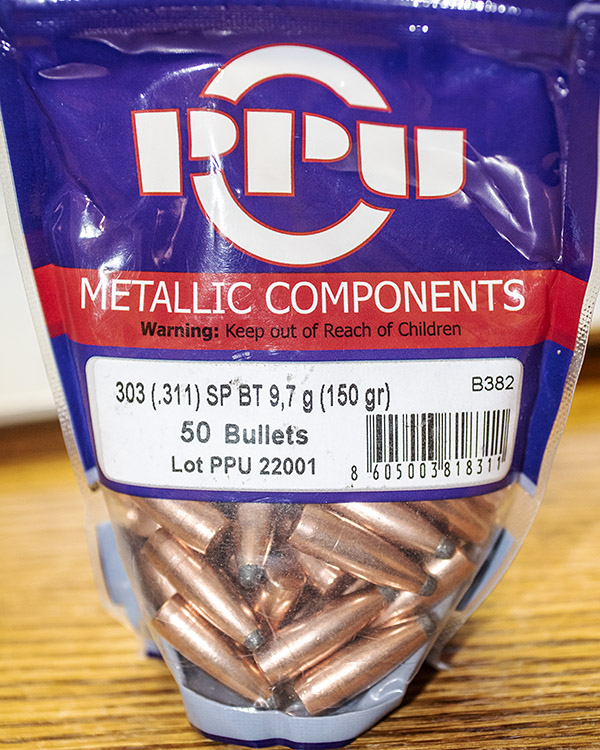
PPU bullets. They are relatively inexpensive. Sometimes they go on sale.
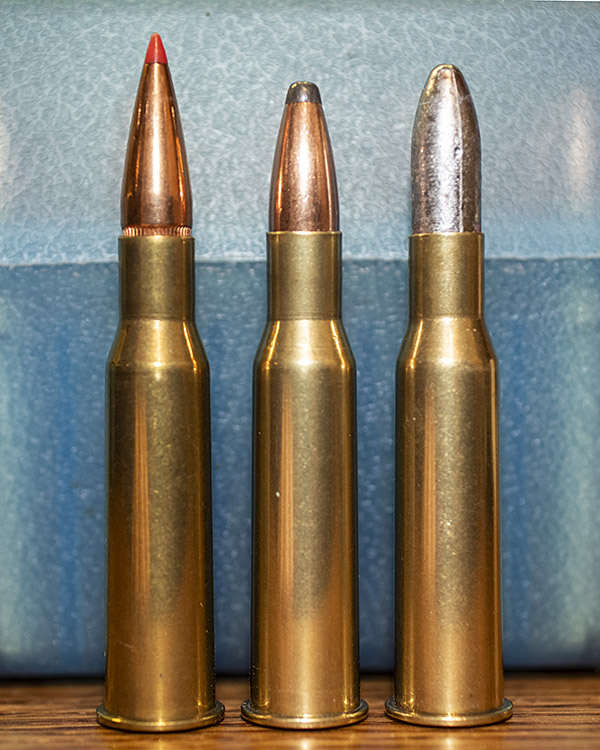
Three different 7.62x54R reloads. From left to right, it’s the Hornady V-Max bullet, the PPU jacketed softpoint bullet, and a cast lead bullet. I shot only the PPU bullets for this blog.

My testing consisted of five different IMR 3031 loads to see how they performed at 100 yards.  The drill was to fire 10 rounds each at charges of 39.0, 40.0, 41.0, 42.0, and 43.0 grains.   I used PRVI Partizan brass and Winchester primers, and I seated the bullets for an overall cartridge length of 2.790 inches with no crimp.  Here’s what I found:

The chrono and accuracry results. 42.0 grains of IMR 3031 seems to be the sweet spot.
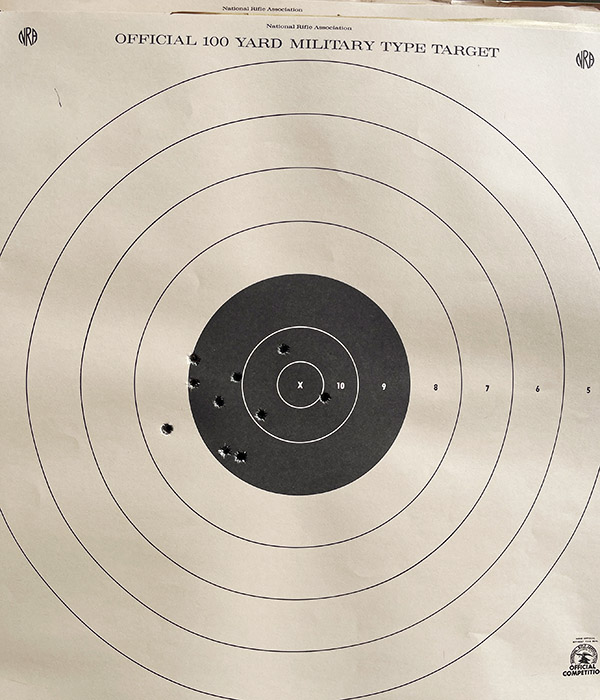
A 100-yard target group with the 42.0 grain IMR 3031 load.

The sweet spot appears to be right about 41.0 to 42.0 grains of IMR 3031 (the target above is with 42.0 grains).   The standard deviation is smaller for the 42.0-grain load with the same group size, so that’s what I’m going with.  Recoil was moderate with all loads; none of the loads showed any pressure signs.  None of the above were compressed charges. The 43.0-grain load had a smaller standard deviation, but the group opened up and shifted to the left, so I’m going to call the 42.0-grain load good.  It’s as good as the groups I was getting with IMR 4320, which had previously been my Mosin accuracy load.

Before any of you out there in the blogosphere get your shorts in a knot about using older reloading manuals, I realize the manual companies (and others who parrot them) advise against doing so.  The theory is that the propellant formulations have changed and what the old manuals show as a safe load may not necessarily be so today.  I get it.  That’s why I start testing at the bottom of the range and work up, looking for pressure signs along the way.  The current and the 2007 Hornady manuals do not list IMR 3031 for the 7.62x54R.  The 1973 Hornady manual (the first one I ever bought when I was just getting started in this game) shows a max of 44.4 grains with a 150-grain bullet, which is why I stopped my initial testing at 43.0 grains.  None of the loads I tested showed any pressure signs and recoil was moderate with all loads.  I think the new manuals feature new powders because the powder companies pay for the manuals to include their newest stuff.  I don’t think they do it because the powders are necessarily better.  Maybe I’m wrong.  I’m a cynical old fart.

I should point out that my findings are not rigorous for two reasons:

    • I’m not that good a shot, and
    • My eyes are not what they used to be.  It’s getting increasingly more difficult to get the front sight in sharp focus (ah, to be 72 again…).  I do the best I can.

But I’m still out there having fun, and that’s what important.


I’ve written a lot about the Mosin-Nagant 91/30 rifle.  Here are my earlier posts:

Three Mosin-Nagant Loads
Mosins, Sewer Pipes, and Lunar Landscapes
A Tale of Two Mosins
More Mosin Loads
Cast Bullet Mosin Loads
Mosins, and Enemy at the Gates
NJ State Police Museum
A Tale of Two Old Warhorses
Home on the Range
Stupid Hot 7.62x54R Ammo
Lee Ermey’s Guns Go To Auction
Revisiting World War II
Sniper!
Motorcycles and Milsurps

If you would like to learn more about the Mosin-Nagant rifle, the Lapin book is the definitive source:
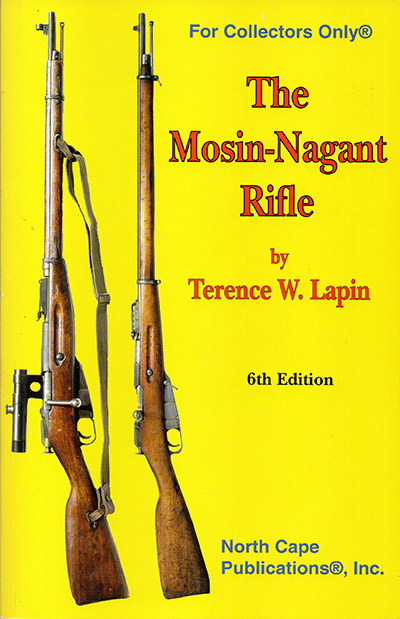
The Mosin-Nagant Rifle is an easy and fascinating read.


Join our Facebook ExNotes page!


Never miss an ExNotes blog:


Help us keep the lights on:


Don’t forget: Visit our advertisers!


Iron Sights and a .45 70 No. 1

By Joe Berk

There are more than a few .45 70 stories here on the ExNotes blog.  This is another one.  I like the .45 70, and I make no excuses for that. I’ll share a few links on our other .45 70 stories at the end of this blog.

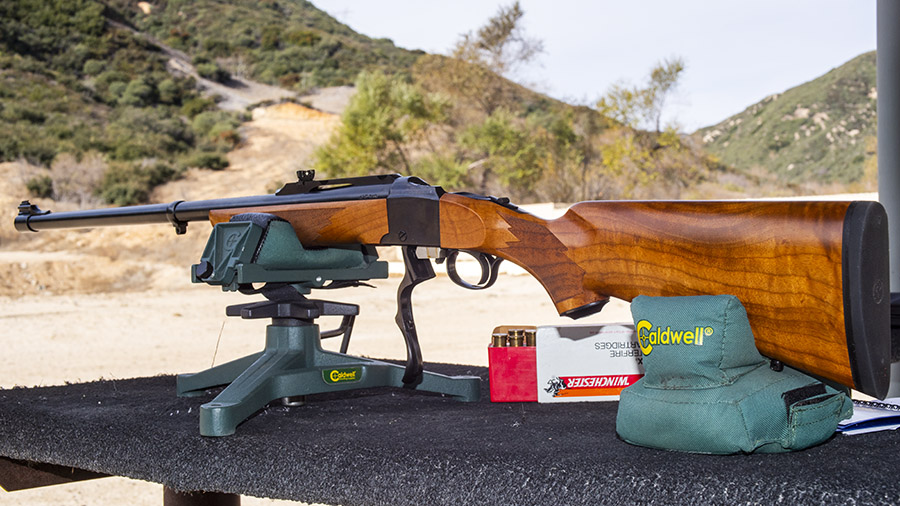
A few years ago Ruger offered a special No. 1 Single Shot rifle in .45 70 with a 26-inch barrel and a Circassian walnut stock.  Most had very plain wood.  Then I found an almost new one in Duarte for cheap. Ruger rifles usually have long throats, but this run of No. 1 rifles had short ones, and conventional 405 grain bullets wouldn’t chamber if the bullet was crimped in the crimping groove (or so the whining on the Internet went).  I’m guessing the original owner either bought or reloaded ammo for my rifle (the one you see above) and it wouldn’t chamber, so he put the rifle up for sale.

Then another stroke of good luck:  A guy at the range had some Winchester 300-grain .45 70 ammo, and it chambered in the No. 1.

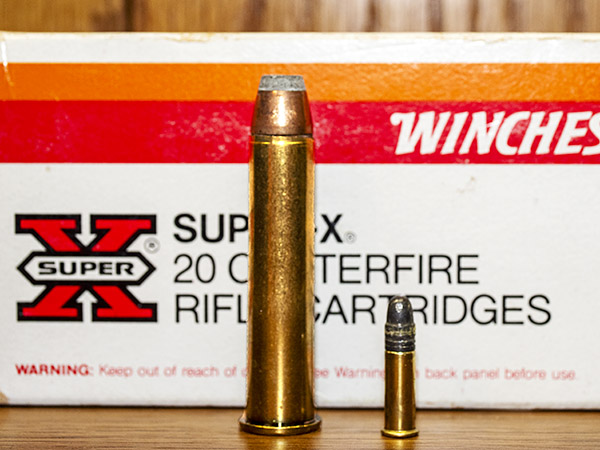
A Winchester .45 70 cartridge with a .22 Long Rifle cartridge.

That Winchester ammo was noteworthy for two reasons: It chambered, and it was relatively accurate at 100 yards.  I wrote about that before (you’ll see the link below).

The story gets more interesting.  Hornady makes a jacketed 300-grain hollow point bullet, and I picked up a bunch of those years ago.  When I loaded them, they wouldn’t chamber in the Circassian .45 70.  Then I noticed a Hornady illustration of their current 300-grain bullet design, and the bullet profile had changed.  It looked like it might work based on the illustration, so I bought a box of the Hornady bullets and they worked.  I could crimp in the cannelure and they chambered in my Circassian Ruger.

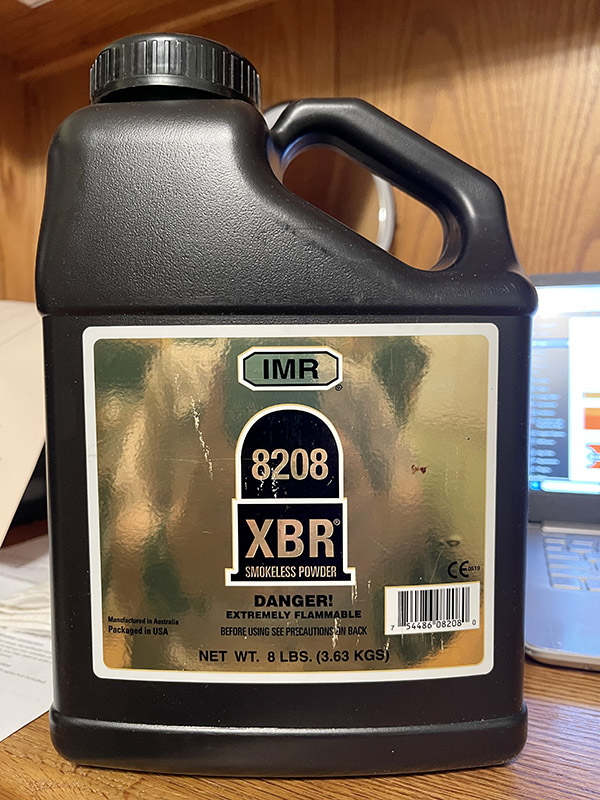
XBR 8208 Propellant. This is good stuff.

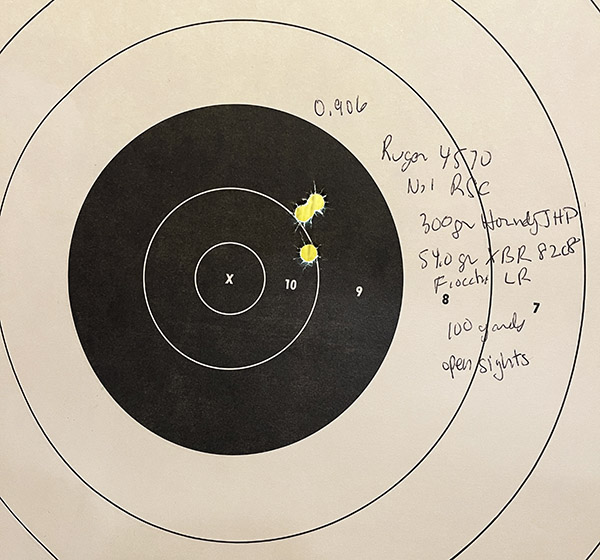
Like I said above, I knew from an earlier range session that the Winchester ammo was relatively accurate in my Circassian No. 1, so my objective was to duplicate that load.  I found online that Winchester listed their ammo’s velocity at 1880 feet per second.  I didn’t know what propellant Winchester used, but I had a bottle of XBR 8208 and it was proving to be very accurate in other cartridges (more on that later).  Interpolating from the Hodgdon’s XBR 8208 load data, it looked like what I needed was 54.0 grains, and that’s how I loaded.

It was an overcast Wednesday morning out at the West End Gun Club when I tried the load at 100 yards.  I fired three rounds and took a peek through my spotting scope.  I couldn’t spot the hits in the scope, so either they all went in the black (which would be good), or I missed the target completely (which would be bad).  Good buddies Duane and Walt were on the range that day, and when we walked out to check our targets, it was time for a collective “Whoa!”  I was more than pleased with the results.   Hell, a 0.906-inch group would be good with a scoped rifle.  For a guy like me and open sights at 100 yards, it was spectacular.  I’m really pleased with the load, the rifle, and myself.  I’m even more pleased I had a couple of witnesses out there to see it!

Phenomenal results (at least for me) at 100 yards with open sights.

Those other cartridges I mentioned that work well with XBR 8208?  In my .22 250 rifles, this propellant works very, very well with Hornady’s 52-grain match bullet.  In the .243 No. 1, it pairs very well with Nosler’s 55-grain  bullet, Hornady’s 58-grain V-Max bullet, and Speer’s 75-grain jacketed hollow point bullet.  In 6.5 Creedmoor Browning X-Bolt rifle, XBR 8208 is the cat’s meow with the 123-grain Nosler jacketed hollow point boattail bullet and the 140-grain Hornady jacketed hollow point boattail bullet.  With that last load, you could shoot flies at 100 yards if you could find them in the scope.


More .45 70 stories?  We’ve got a bunch of them!

Ruger No. 3 45 70 Loads
Ruger .45 70 Circassian No. 1
Buffalo Guns
A Wind  River Marlin .45 70 Rifle
A .45 70 Remlin 1895
The 1886 Winchester
Turnbull Guns
Marlin Cowboy Front Sight Installation
Marlin 1895 Cowboy Revisited
Henry Rifles
The Henry Is In California
Developing a Henry .45 70 Load: Part 1
Developing a Henry .45 70 Load: Part 2
Henry’s Home and an Interview with Dan
Henry Accuracy Loads


More shooting fun?  You bet!  Check out Tales of the Gun


Join our Facebook ExNotes page!


Never miss an ExNotes blog:


Help us keep the lights on:


Don’t forget: Visit our advertisers!

A Model 625 load…

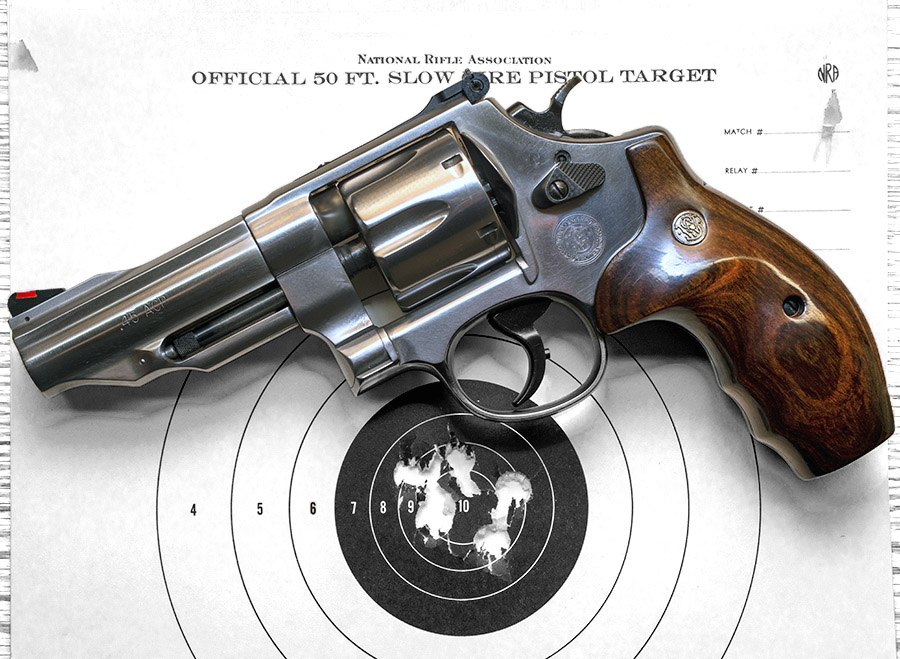
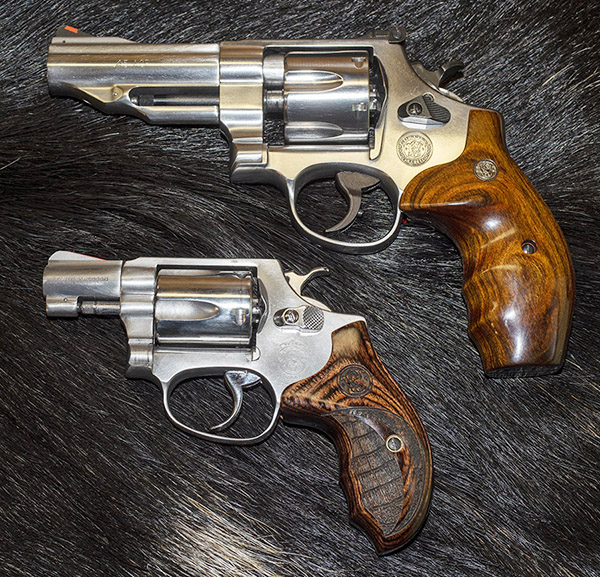
When I first posted about the Model 60 load development plan and the Altamont grips I bought from good buddy Paul, the cover photo showed my recently-acquired Model 60 snubbie and a Smith and Wesson Performance Center Model 625 I’ve owned for years.

The Model 625 and the Model 60.

I like that photo because the two stainless steel Smiths look great on the wild boar skin.  That skin is from a pig hunt Paul and I did in Arizona a few years ago.

The earlier blog was about finding an accuracy load for the Model 60, but a few people wrote to ask if I had a favorite load for the Model 625.  I do: My usual accuracy load for the 625 is a cast 200-grain cast semiwadcutter bullet (sized to .452 inches) over 4.2 grains of Bullseye.

When I went to the range to run a few rounds through the 625 I picked a box of ammo I had reloaded in 2014.  It was different than my usual accuracy load.  I used the same bullet (a 200-grain cast semi-wadcutter), but instead of Bullseye I had loaded these over 6.0 grains of Unique.  And instead of .45 ACP brass in star clips, I used AutoRim brass.  This is the load I fired that 6-shot group you see in the cover photo above for this blog, and it’s a honey.  The group, that is…not the photo (it’s hard to get true colors when using an iPhone in the shade).  I shot at 50 feet while standing…there’s no rest for the Model 625 or the weary.

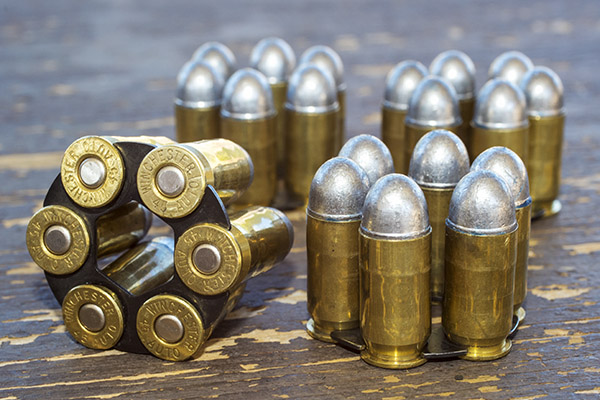
.45 ACP cartridges in star clips for the Model 625. These are loaded with 230-grain cast roundnose Missouri bullets.
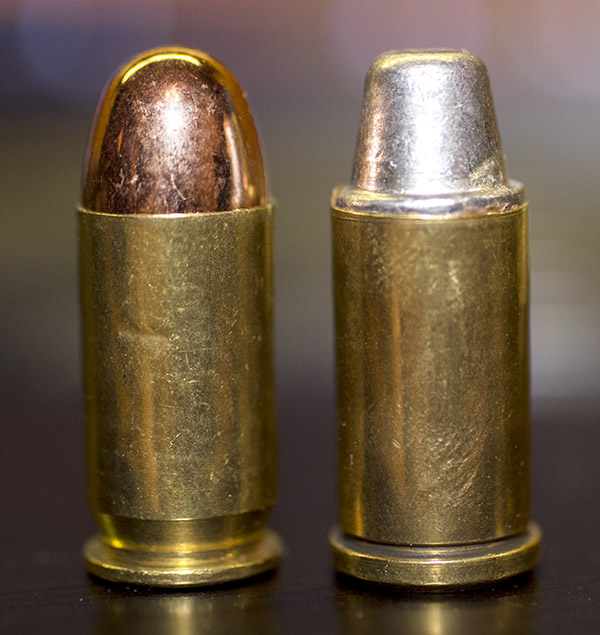
The .45 ACP cartridge (left) and the .45 AutoRim cartridge (right). The AutoRim cartridge is designed for use in the Model 625 without star clips. The ACP cartridge has a 230-grain roundnose Xtreme bullet; the AutoRim cartridge has Missouri’s 200-grain semi-wadcutter.

The AutoRim brass is in the tumbler as I write this and when I reload it I’m going to go with the same load: The 200-grain cast semi-wadcutter over 6.0 grains of Unique.  It seems to be working for me.


Help keep us afloat:  Please click on the popup ads!

Never miss an ExNotes blog:  Sign up here for free!


More Tales of the Gun stories are here: