There are more than a few .45 70 stories here on the ExNotes blog. This is another one. I like the .45 70, and I make no excuses for that. I’ll share a few links on our other .45 70 stories at the end of this blog.
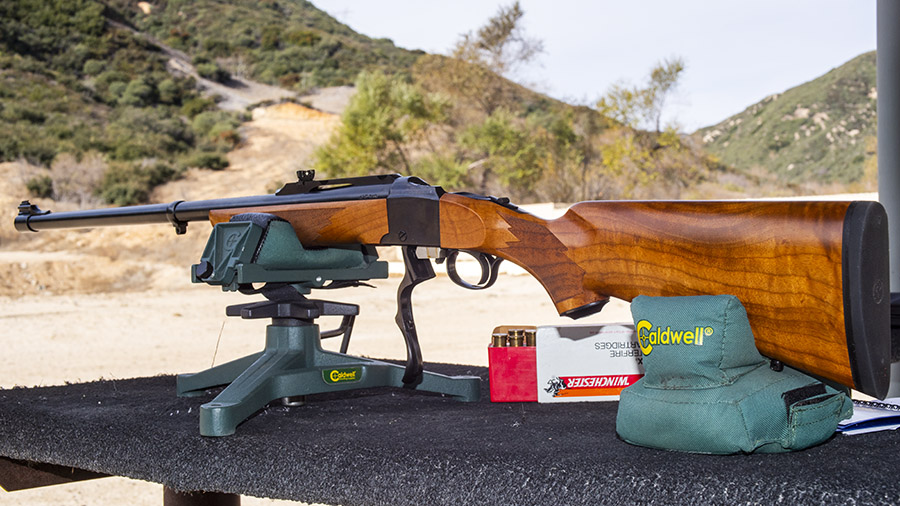
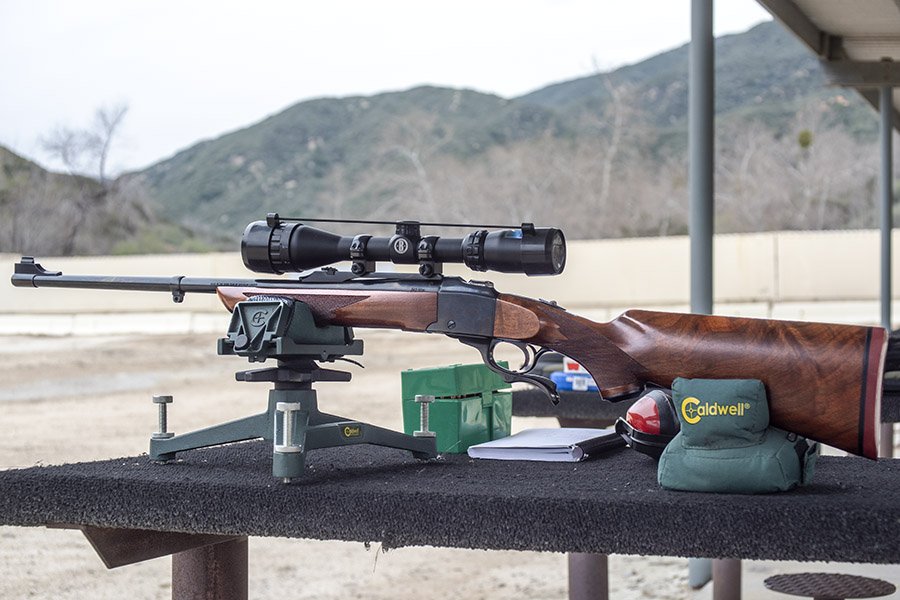
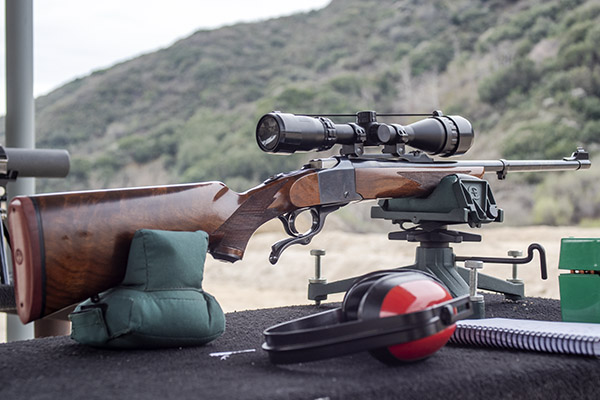
A few years ago Ruger offered a special No. 1 Single Shot rifle in .45 70 with a 26-inch barrel and a Circassian walnut stock. Most had very plain wood. Then I found an almost new one in Duarte for cheap. Ruger rifles usually have long throats, but this run of No. 1 rifles had short ones, and conventional 405 grain bullets wouldn’t chamber if the bullet was crimped in the crimping groove (or so the whining on the Internet went). I’m guessing the original owner either bought or reloaded ammo for my rifle (the one you see above) and it wouldn’t chamber, so he put the rifle up for sale.
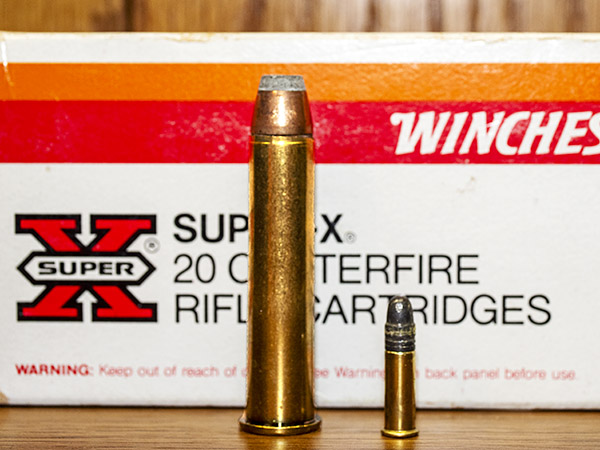
Then another stroke of good luck: A guy at the range had some Winchester 300-grain .45 70 ammo, and it chambered in the No. 1.
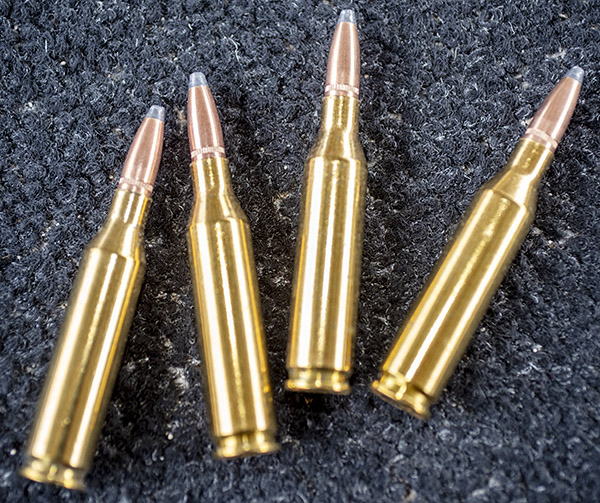
A Winchester .45 70 cartridge with a .22 Long Rifle cartridge.
That Winchester ammo was noteworthy for two reasons: It chambered, and it was relatively accurate at 100 yards. I wrote about that before (you’ll see the link below).
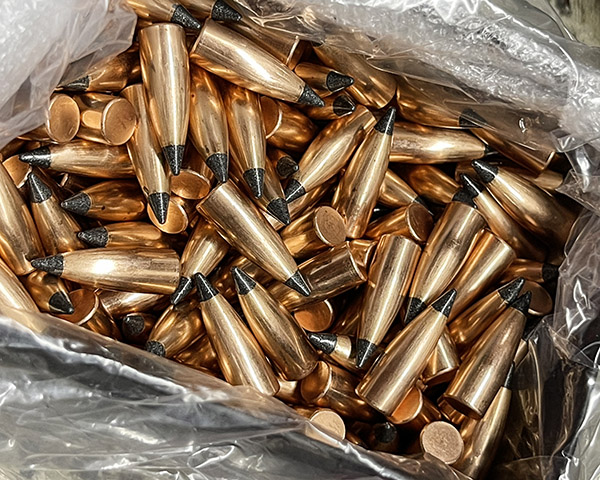
The story gets more interesting. Hornady makes a jacketed 300-grain hollow point bullet, and I picked up a bunch of those years ago. When I loaded them, they wouldn’t chamber in the Circassian .45 70. Then I noticed a Hornady illustration of their current 300-grain bullet design, and the bullet profile had changed. It looked like it might work based on the illustration, so I bought a box of the Hornady bullets and they worked. I could crimp in the cannelure and they chambered in my Circassian Ruger.
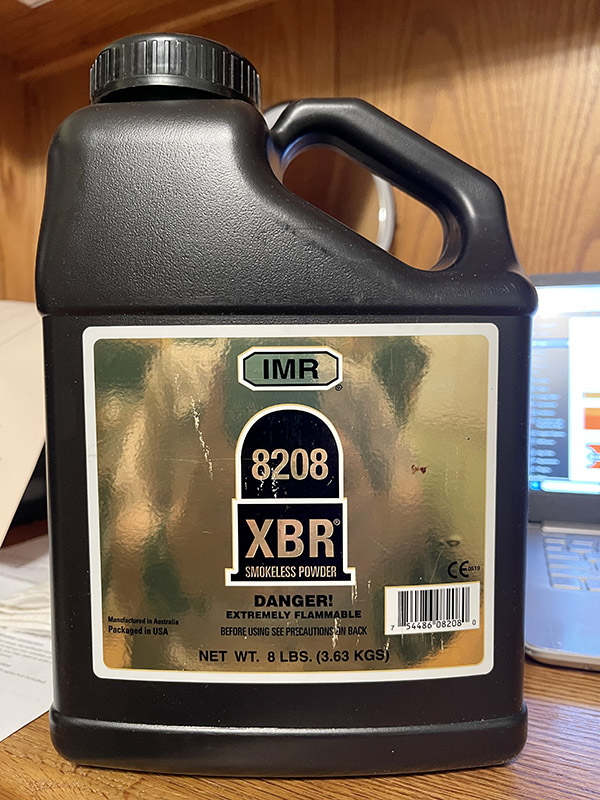
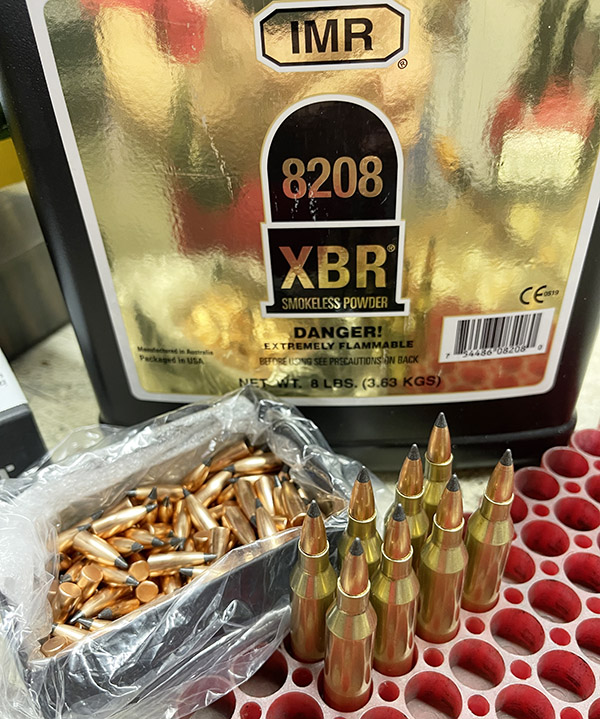
XBR 8208 Propellant. This is good stuff.
Like I said above, I knew from an earlier range session that the Winchester ammo was relatively accurate in my Circassian No. 1, so my objective was to duplicate that load. I found online that Winchester listed their ammo’s velocity at 1880 feet per second. I didn’t know what propellant Winchester used, but I had a bottle of XBR 8208 and it was proving to be very accurate in other cartridges (more on that later). Interpolating from the Hodgdon’s XBR 8208 load data, it looked like what I needed was 54.0 grains, and that’s how I loaded.
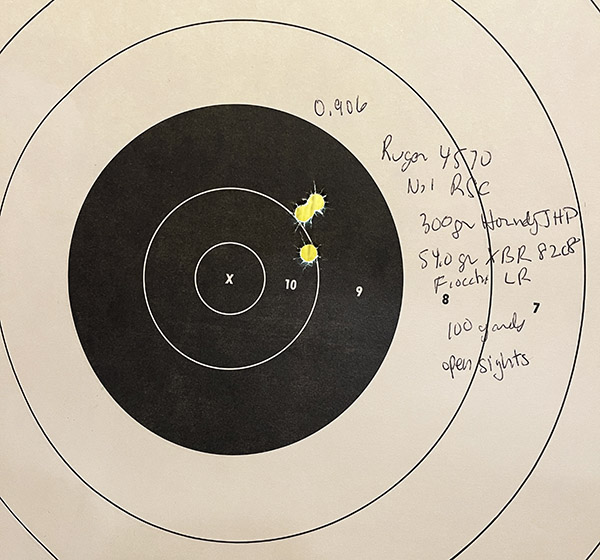
It was an overcast Wednesday morning out at the West End Gun Club when I tried the load at 100 yards. I fired three rounds and took a peek through my spotting scope. I couldn’t spot the hits in the scope, so either they all went in the black (which would be good), or I missed the target completely (which would be bad). Good buddies Duane and Walt were on the range that day, and when we walked out to check our targets, it was time for a collective “Whoa!” I was more than pleased with the results. Hell, a 0.906-inch group would be good with a scoped rifle. For a guy like me and open sights at 100 yards, it was spectacular. I’m really pleased with the load, the rifle, and myself. I’m even more pleased I had a couple of witnesses out there to see it!
Phenomenal results (at least for me) at 100 yards with open sights.
Those other cartridges I mentioned that work well with XBR 8208? In my .22 250 rifles, this propellant works very, very well with Hornady’s 52-grain match bullet. In the .243 No. 1, it pairs very well with Nosler’s 55-grain bullet, Hornady’s 58-grain V-Max bullet, and Speer’s 75-grain jacketed hollow point bullet. In 6.5 Creedmoor Browning X-Bolt rifle, XBR 8208 is the cat’s meow with the 123-grain Nosler jacketed hollow point boattail bullet and the 140-grain Hornady jacketed hollow point boattail bullet. With that last load, you could shoot flies at 100 yards if you could find them in the scope.
This story is about finding a decent load for my .243 200th Year Ruger No. 1 rifle. The rifle is 48 years old now, but the old girl can still get it on. I didn’t think my Ruger was particularly accurate at first, but wow, it’s a shooter.
Good wood, a good looking 200th Year Ruger No.1A, and a day on the range. Life is good.
I’ve tried a lot of loads in this rifle and I probably would have given up except for what I saw happen with another shooter. He had a .243 No. 1 in the 1B configuration (that’s the one with no iron sights, a 26-inch barrel, and a beavertail forearm), and he didn’t like it at all. To me, not liking a Ruger No. 1 is a crime against nature, but that guy was frustrated with his .243 and he had given up on it. He spent good money (Ruger No. 1 rifles sell for around $2,000 today) and it just seemed like a shame. When I first tried my .243 No. 1 it wasn’t very accurate, but I decided I wasn’t going to be that other guy. I was confident I could find a good load. Actually, I found three, and they are listed below by bullet weight. They are all of comparable accuracy in my rifle.
Accuracy Load No. 1
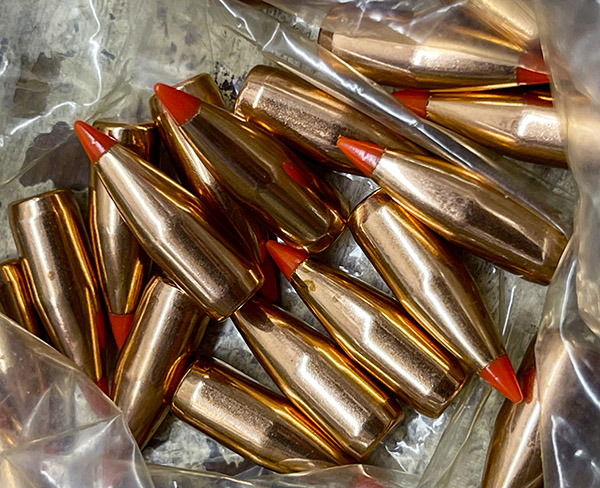
Nosler 55-grain .243 bullets. It’s the lightest bullet available for the .243.Bullets, loaded ammo, and XBR 8208 propellant.
My first accuracy load for this rifle is the 55-grain Nosler Varmegeddon flat base bullet with 40.0 grains of XBR 8208 propellant. I seated the bullets to a cartridge overall length of 2.606 inches without a crimp, but I haven’t experimented with bullet seating depth or crimping. I used Fiocchi large rifle primers because at the time, primers were scarce and I bought 1500 of the Fiocchis when I could.
Accuracy Load No. 2
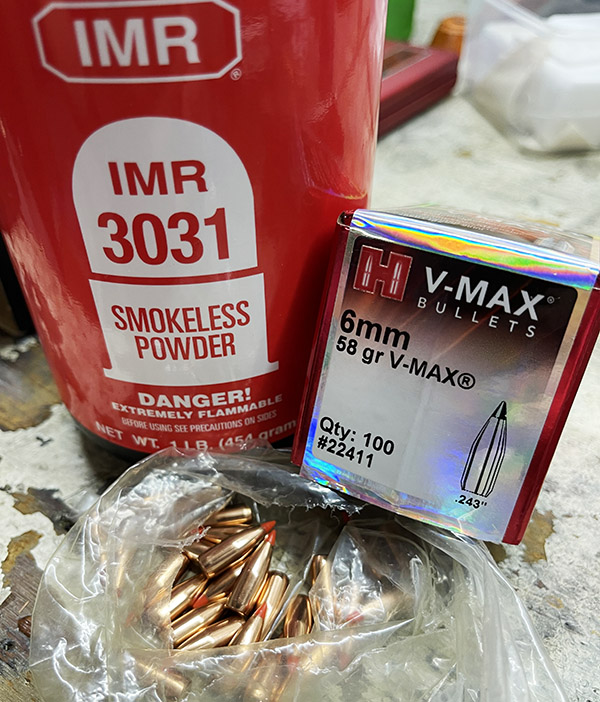
Hornady 58-grain VMax bullets. Hornady makes a good-looking bullet.I shot all the rounds I loaded with this bullet, so this picture will have to do.
Another excellent load is the 58-grain Hornady VMax bullet with 42.0 grains of IMR 3031 propellant. I ordinarily wouldn’t use IMR 3031 in the .243, but I had a tiny bit of it left from some development work on another cartridge and good buddy Kevin told me IMR 3031 was his powder of choice for the .243. It was a good recommendation. I set these rounds up with a cartridge overall length of 2.620 inches. Like the load above, I have not tried different seating depths or crimping.
Accuracy Load No. 3
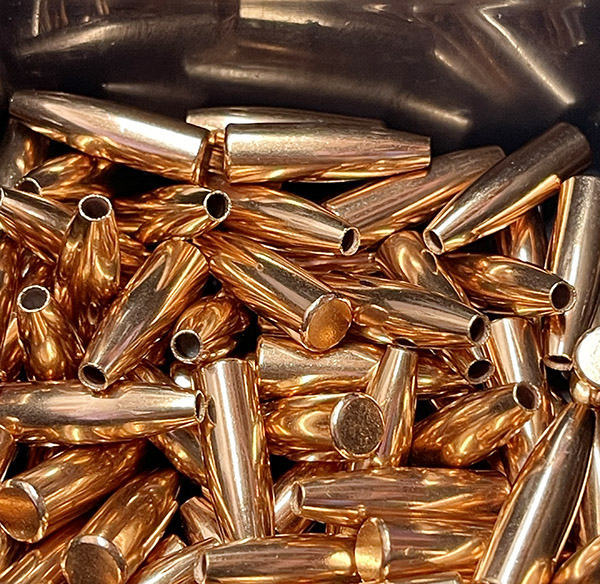
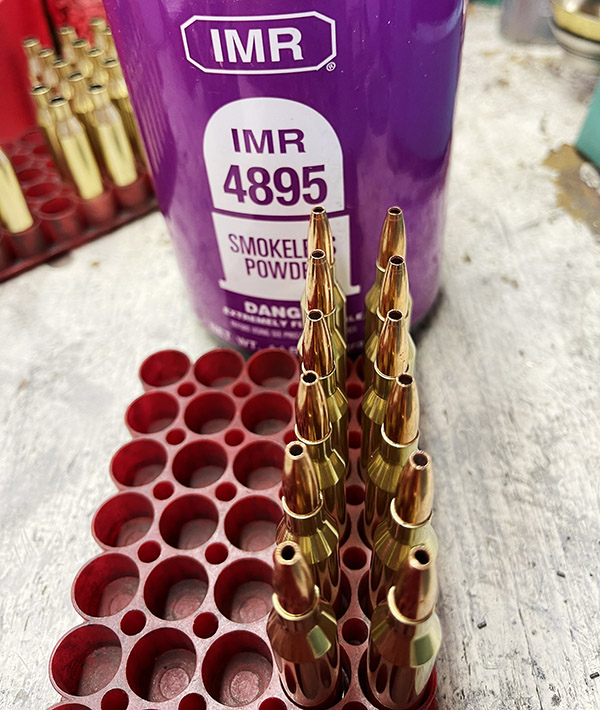
Cavernous hollowpoints in the 75-grain Speer varmint bullets. These shoot exceptionally well.I found IMR 4895 works well with the Speer 75-grain bullets.
My third accuracy load is the 75-grain Speer Varmint hollowpoint bullet with 39.0 grains of IMR 4895 propellant. I loaded this round to an overall length of 2.620 inches, and like the others above, I have not experimented with overall length or crimping.
What I Haven’t Tried and What Didn’t Work (for me)
I have a couple of boxes of 65-grain Hornady V-Max bullets and I’ve only tried them with a few powders. So far, nothing gave me acceptable accuracy with these bullets.
.243 ammo loaded with PRVI 100-grain bullets. I couldn’t find the secret sauce to make this bullet accurate. Hornady 100-grain bullets weren’t any better.
I also have a bunch of 100-grain bullets (from Hornady and PRVI). Neither of these 100-grain bullets grouped well. They stabilized (no target key holing), but the groups just weren’t very good. That’s okay; I’m not going to use the .243 on pigs or deer. But if I ever took it varmint hunting, the accuracy loads listed above would get the job done.
The Bottom Line
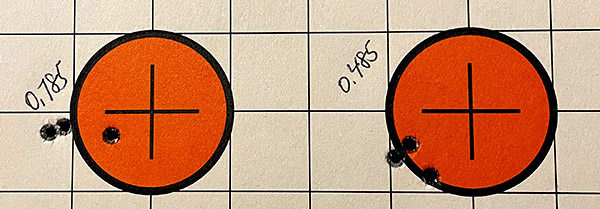
Typical results with the accuracy loads listed above.
Any of the above loads will shoot a three-shot group at or below 0.75 inches at 100 yards. The groups would be tighter with a more skilled rifleman. For me, getting the old .243 to group into three quarters of an inch is good enough. I’ll call it a day with load development on this rifle and stick with the loads above. On to the next rifle. Stay tuned.
Rifles, that is…two Ruger rifles. I’ve written about them before, but it’s been a while since I shot either one and with the stream crossing to the West End Gun Club almost manageable these days (more on that later), I thought I would take them out to the 100-yard range. I shoot handguns regularly (at least a couple of times a week) on the indoor 50-foot pistol range closer to home, but there are times when the high-powered-rifle-on-a-football-field-length-range itch needs to be scratched.
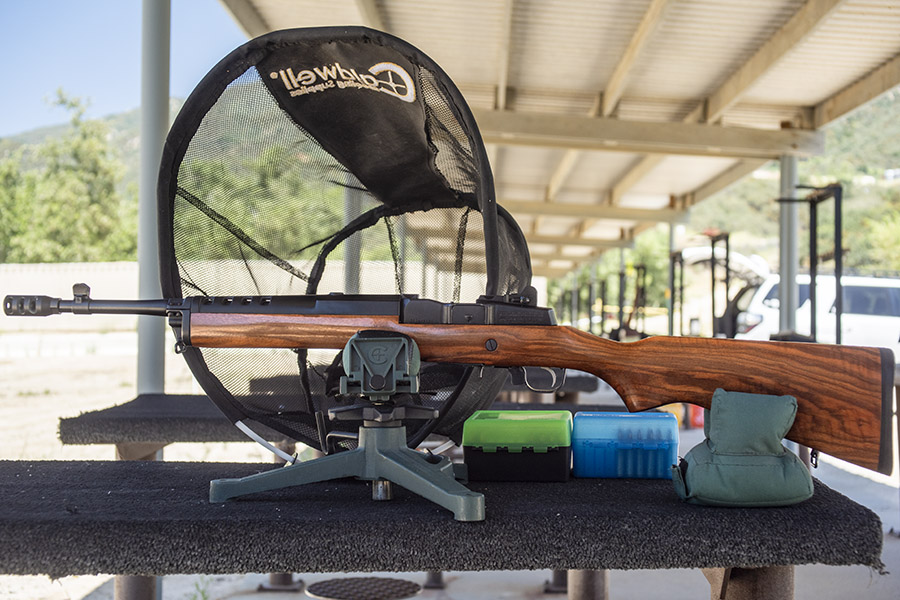
The two Ruger rifles in this article are two of my favorites: A Davidson’s Circassian-stocked Mini 14 (the one in the photo above) and the Ruger GSR (GSR stands for Gunsite Scout Rifle). The Davidson’s Mini 14 1was a 2009 offering with (as the name implies) a Circassian walnut stock. Back then the Circassian Mini’s $700 price seemed high, but I’ve been at this for a while and I know that when a gun’s price seems high it only means I’m buying too soon. The price will always catch up with the calendar, and that’s certainly been the case with this rifle. It originally came with two 30-round mags and a flash suppressor. California being what it is meant I couldn’t own the rifle as Ruger built it. I had to leave the 30-round mags with the out-of-state dealer, and because of the flash suppressor, it had to ship to the Class III dealer here in La La Land.
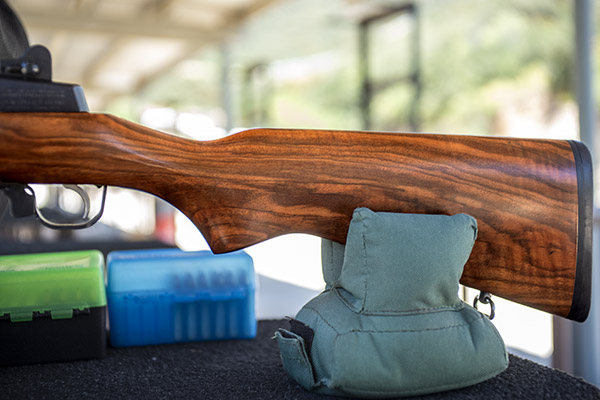
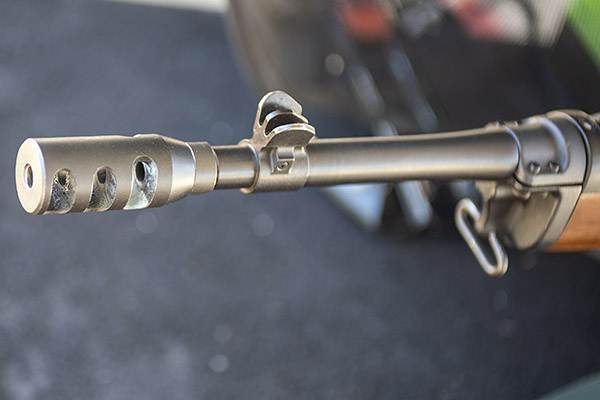
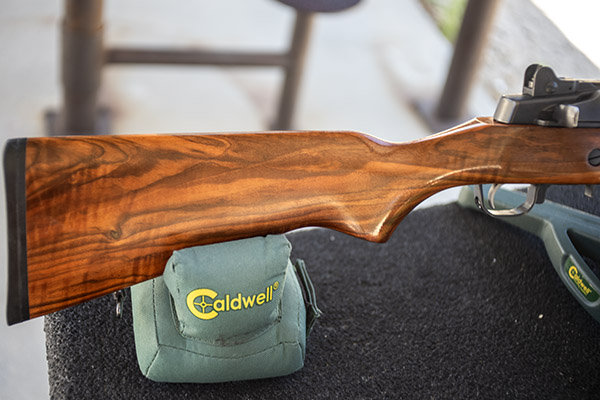
Circassian walnut from the port side. It sure looks good.The California-legal muzzle brake. I wonder what the California legislators were smoking when they passed that law.
The California Class III dealer replaced the flash suppressor with a muzzle brake (which I think looks even more intimidating and I had to buy a 10-round La-La-Land-legal magazine for my Mini.
Circassian walnut from starboard side. This is the fanciest Mini 14 I’ve ever seen.
You might be wondering: Where can I get a Mini with a stock like this one?
The short answer is: You can’t. I watched the gun sale websites for months looking for a Davidson’s Circassian Mini 14 until I found one with nice wood (most had straight-grained, broomstick grade wood). When I saw the one you see here, I pounded (and I’m glad I did). You just don’t see Mini 14 rifles with wood like this one. It’s all mostly black plastic stuff on the range these days, which is almost a crime against nature.
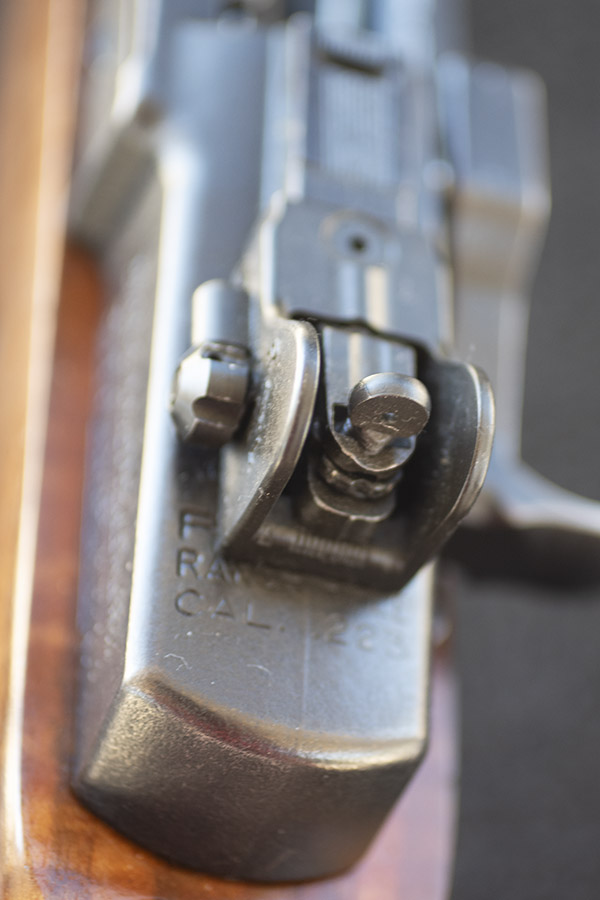
The Techsites rear sight on my Mini 14. It has a slightly smaller aperture and better adjustability than the stock Mini 14 rear site.
I’ve done a few mods to my Mini 14 to improve its accuracy, and I’ve detailed this in prior blogs (I’ve provide a link at the end of this article). The Reader’s Digest version is I’ve added a Techsites rear aperture sight to replace the Ruger sight, I’ve glass-bedded the action, and I’ve done a fair amount of experimentation to find the right load.
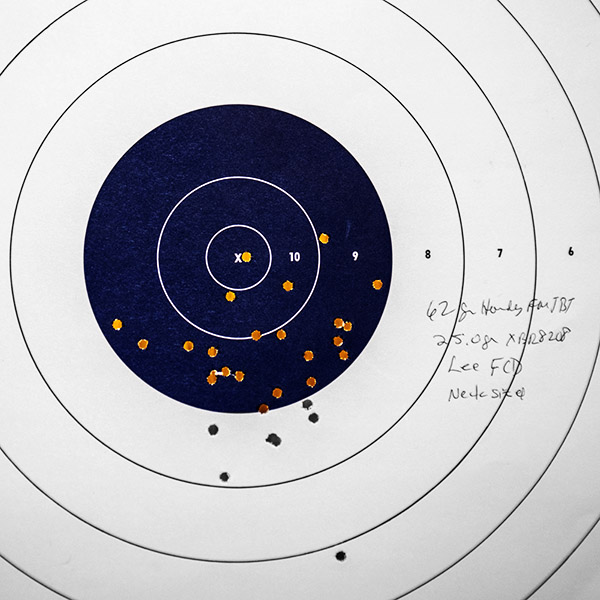
So how does the Circassian Mini 14 shoot? It does very well. I grabbed two loads: A full metal jacketed load with Hornady’s 62-grain bullet, and another with Hornady’s 55-grain V-Max bullets. You can see the results below.
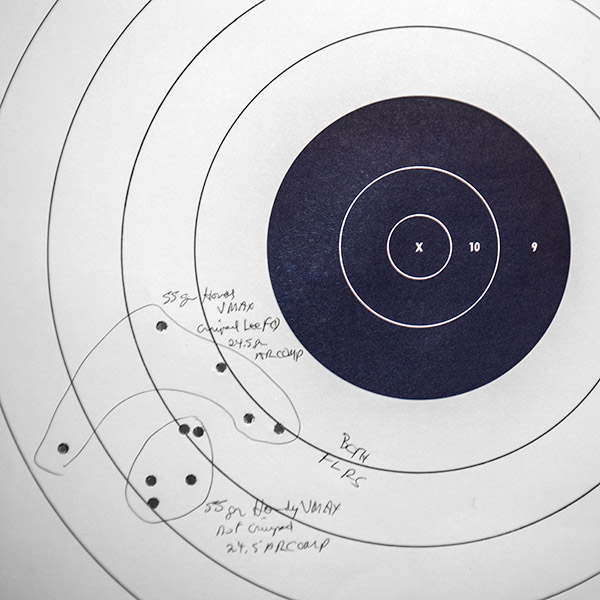
A bunch of shots at 100 yards with one of my favorite loads: The 62-grain Hornady full metal jacket boattail bullet and 25.0 grains of XBR 8208 propellant. This ammo was necked sized only, which usually is more accurate in my Mini 14. I held at 6:00 on all targets shown here.Another 100-yard Mini 14 target with two different loads, both using the 55-grain Hornady VMax bullet and 24.5 grains of ARComp propellant. The very tight 5-shot group was shot with bullets that were not crimped. The larger group was the same load, but the bullets were crimped. Surprisingly, both loads were full length resized. As mentioned in the photo above, neck-sizing usually provides better accuracy in this rifle.
The second rifle in this Tale of Two Rugers story is the Ruger GSR in .308 Winchester. This is an amazing (and amazingly accurate) rifle, but it didn’t start out that way.
How I purchased this rifle is kind of a funny story. I had oral surgery to start the process of installing two fake teeth, and the doc knocked me out with anesthetics. They warned me I would be in no shape to drive home, so good buddy Jim Wile volunteered to do the driving. Jim’s gone on to his reward (RIP, Jim). On the ride home, in a drugged but conscious state, I told Jim about this new GSR rifle Ruger had introduced, and we somehow managed to convince ourselves we each needed one. They say you should not buy guns when you’re under the influence. Like Hunter Biden, though, I didn’t heed that advice and Jim followed my lead.
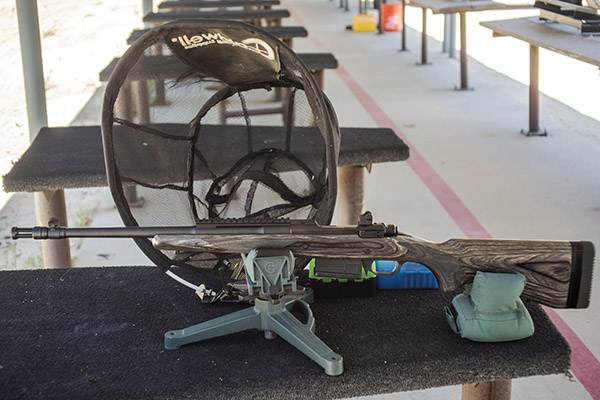
The Ruger GSR on the range at the West End Gun Club.
The GSR is Ruger’s interpretation of the Scout rifle concept first put forth by a gun writer named Jeff Cooper. Cooper’s concept was a short-barreled rifle that would hold a scope in a forward location and make for a sort of do-anything long gun. Steyr built the first commercially available Cooper-inspired Scout rifle, and then about a decade later Ruger followed suit. Mossberg has one now, too (good buddy Johnny G has one). The Steyr is crazy expensive, the Ruger started out at a reasonable price but has since gone kind of crazy (along with everything else), and (in my opinion) the Mossberg is the best value (it’s a fine rifle and one I’ll probably own some day).
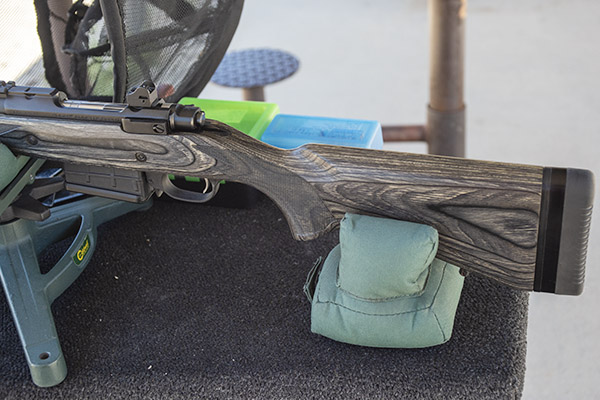
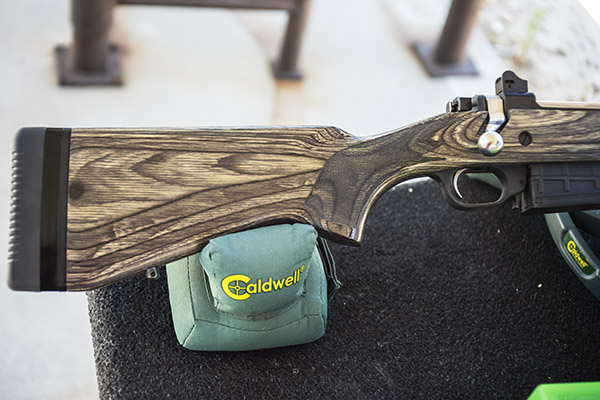
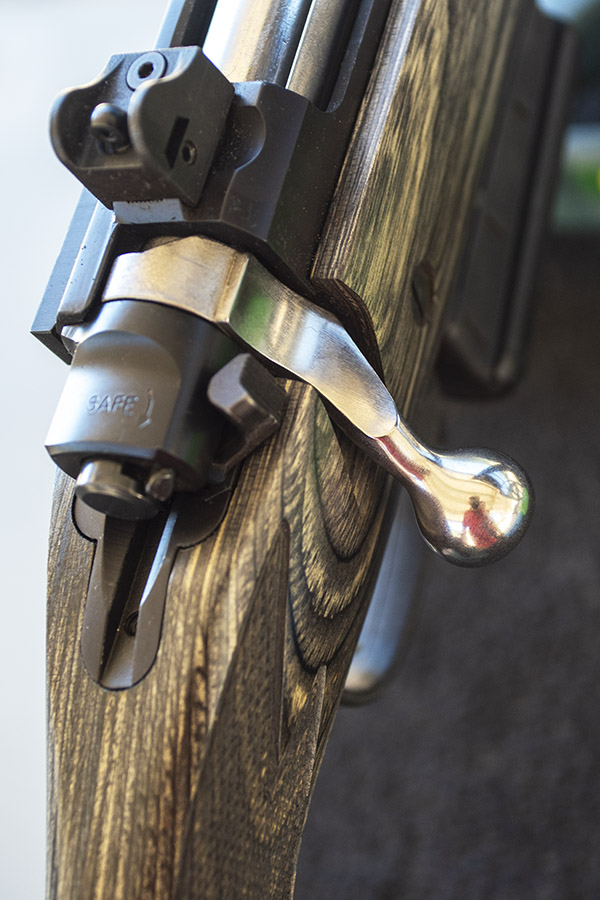
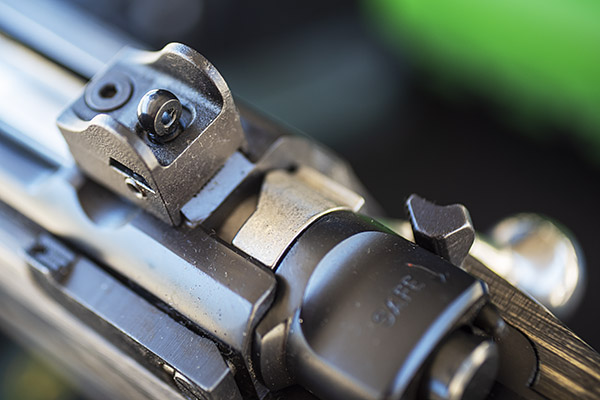
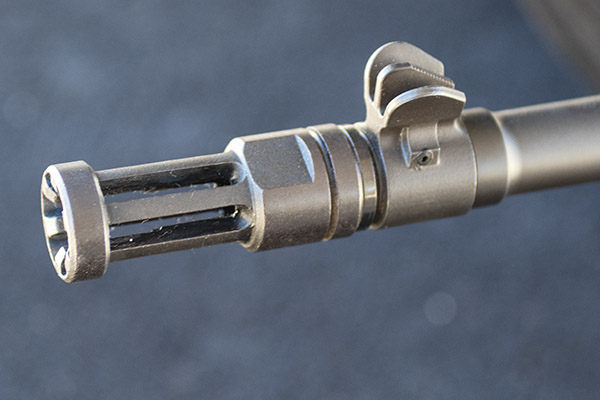
The left side of the Ruger GSR. Note the laminated stock, which provides a very stable bed for the barreled action.The GSR as seen from the right.A Ruger .308 selfie.The Ruger’s aperture rear sight. It’s similar to the original Mini 14 site. Techsites doesn’t offer a replacement rear site for the GSR; if they did, I would have a Techsites rear sight on this rifle.The Ruger GSR flash suppressor. It’s the same type that originally came on the Mini 14. On a bolt action rifle, it’s legal in Calilornia; on a semi-auto, it is not.
When I first took delivery of the GSR, it was a real disappointment. As had been the case with half the guns I bought in the last couple of decades, it had to go back to the manufacturer. The problem was that the rifle printed way to the right, and there wasn’t enough adjustment in the rear aperture to get it back to the point of aim. I returned it to Ruger, they greatly relieved the stock around the barrel, and I had it back in about a week. When I took it out to the range the same week it was returned, I was astonished by its accuracy.
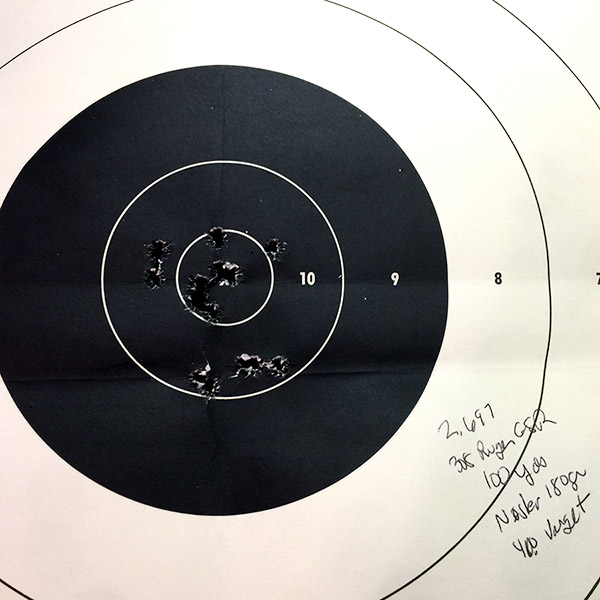
A target I shot a few years ago. The GSR can be amazingly accurate. The difference between the two groups is probably due to how I held the rifle. The upper group is one of the best I’ve ever shot with open sights.
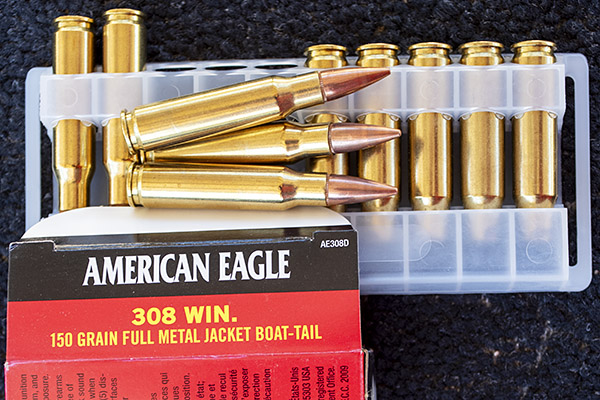
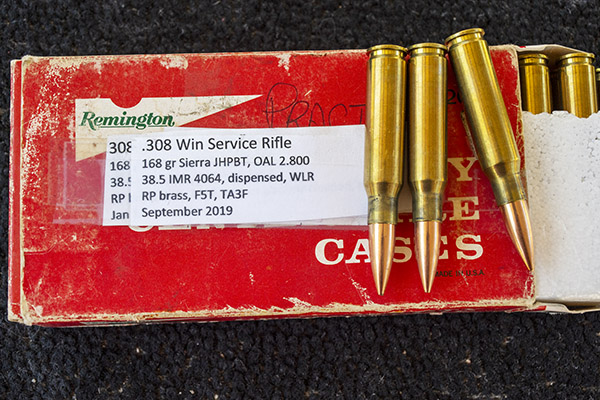
But that group above was then and this is now. I had not fired the GSR in a few years. I grabbed two loads for this rifle (a load I had developed for my M1A Springfield, and a box of Federal factory ammo with full metal jacket 150-grain bullets).
Federal American Eagle .308 ammo. I bought a bunch of this a few years ago for the brass; this ammo was about the same price as .308 brass.My reloaded ammo. This load shoots extremely well in my Springfield Armory M1A.
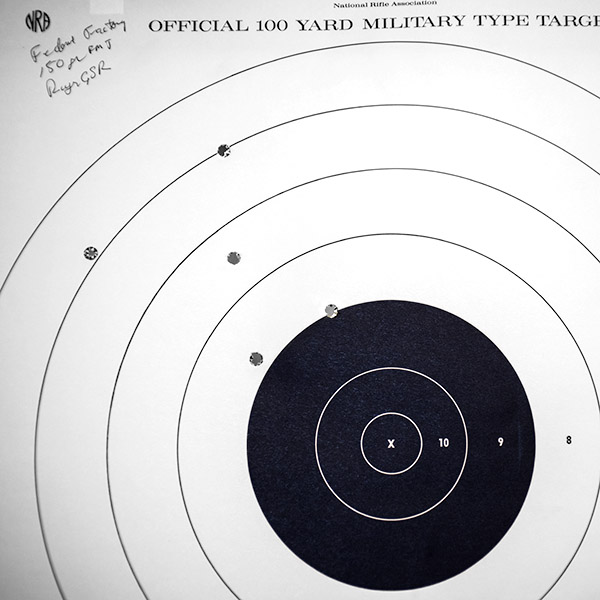
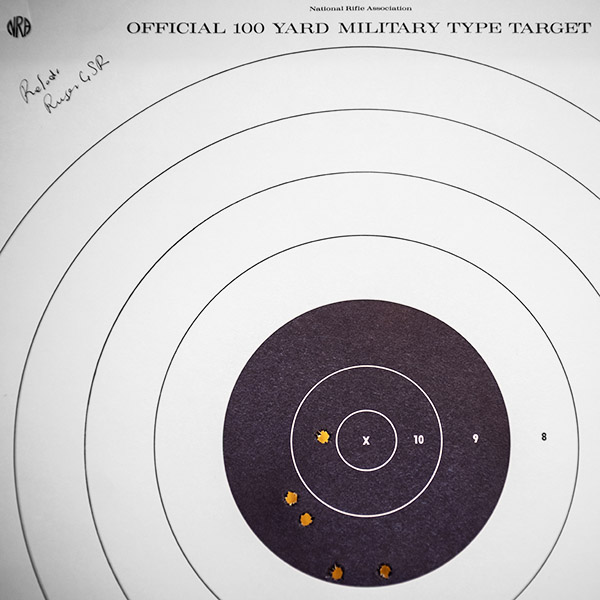
I only fired a couple of 5-shot groups at 100 yards with the GSR. It was getting late in the day, I was getting tired, I had not fired the rifle in a long time (shooting is a perishable skill), and I realized I wasn’t giving the rifle a fair shake.
With the same rear sight adjustment used for the previous GSR target shown a couple of paragraphs above, the Federal factory 150 grain load shot high and to the left. The group is considerably larger than the load with 180-grain Noslers and Varget propellant.Another 5-shot group, this time with 168-grain Sierra hollowpoint bullets and IMR 4064 propellant (the accuracy load for my Springfield M1A). The load doesn’t perform as well in my GSR as it does in the M1A, but it’s still substantially better than the Federal factory ammo. It’s why I reload.
That stream crossing I mentioned at the start of this blog? Lytle Creek flows across the dirt road going into Meyers Canyon, and it can be a real challenge at times. With all the rain and snow we’ve had this past winter, the reservoirs are full and the snow up in the San Gabriels is still melting. You may remember the blog I wrote about the time I high sided my Subie attempting a crossing. The stream is down a scosh since then, but it’s still not an easy crossing. Here’s a video I made on the way out on this trip after visiting the range with the Mini 14 and the Ruger GSR.
I’ll be shooting the GSR more in the coming weeks now that I’m back into the swing of shooting a .308 off the bench, so watch for more stories on it. I think I can do better than the groups you see above.