By Joe Berk
This was an interesting blog to write (and it was interesting on many levels). As you know, I’m writing a series of blogs on motorcycles I’ve owned with the machines organized by cylinder count. The idea is to consider all of them from my ownership perspective, rack up a bunch of (hopefully) fun-to-read blogs, and then wrap up with my opinion on which engine configuration is the best. I’ve already done the first one on the singles I’ve owned.
A word on the photos: I was surprised I had photographs of every bike I’ve ever owned. In recent decades, after I had become a half-assed amateur photographer, the photo quality is generally good. In earlier years, I was not a very good photographer, nor was my equipment very good. Some of the photos are in black and white, and most of the earlier ones were taken with a dinky little Minolta C-110 camera. Hey, you go to war with the army you have.
Between that first ¿Quantos Pistones? post and this one, something self-updated on my computer and my laptop went from simply taking my orders to predicting what words I’m going to type next and then filling them in, which I found to be wildly annoying. I thought it was in the WordPress software, but it wasn’t. It was in my Edge browser. Google helped me; I found the offending “feature” in the Edge settings and switched it off. I think these software weenies are changing things just to give themselves something to do. I wish they would stop. The folks who keep doing this sort of thing are going to have a hard time explaining themselves when they’re standing in front of the pearly gates. I’ll be there, too, as a witness for the prosecution.
Rant over; let’s get back to the main attraction.
As was the case in the blog on singles, I am again discovering this: Just when I think I’ve listed all of the twins I’ve owned, I remember another one. That sure has been the case here. I suppose I had better hit the Publish button before I remember another one.
Alrighty then: With the above as a backdrop, here we go.
1965 Honda CB 160
Okay, I’m cheating a little. This wasn’t my bike at all. It was my Dad’s. But I rode it in the fields behind our house quite a bit and I sort of considered it to be mine, and that’s why it’s on this list.
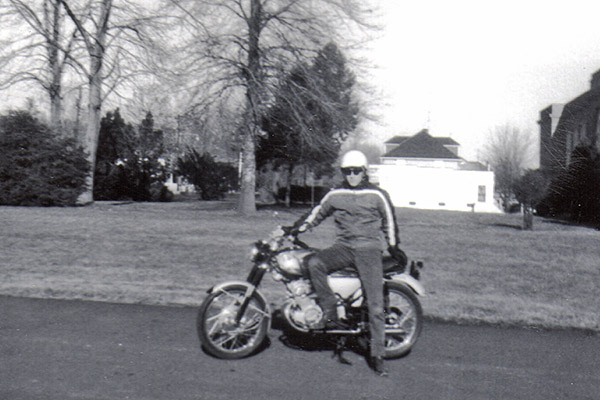
The little 160 was nice. It was the first motorcycle I ever rode and I had a lot of fun on it. Honda was making big inroads in the United States in the mid-1960s and they changed nearly everything in the motorcycle world. It was a fun time for a 14-year-old kid.
The CB 160 only stayed with us for a couple of months. Dad had been bitten by the bug. He wanted something bigger.
1965 Honda Super Hawk
As was the case with the CB 160, the Super Hawk was Dad’s motorcycle. But the same modifier applied: I used to ride it in the fields behind our house in New Jersey, so I’m including it here.
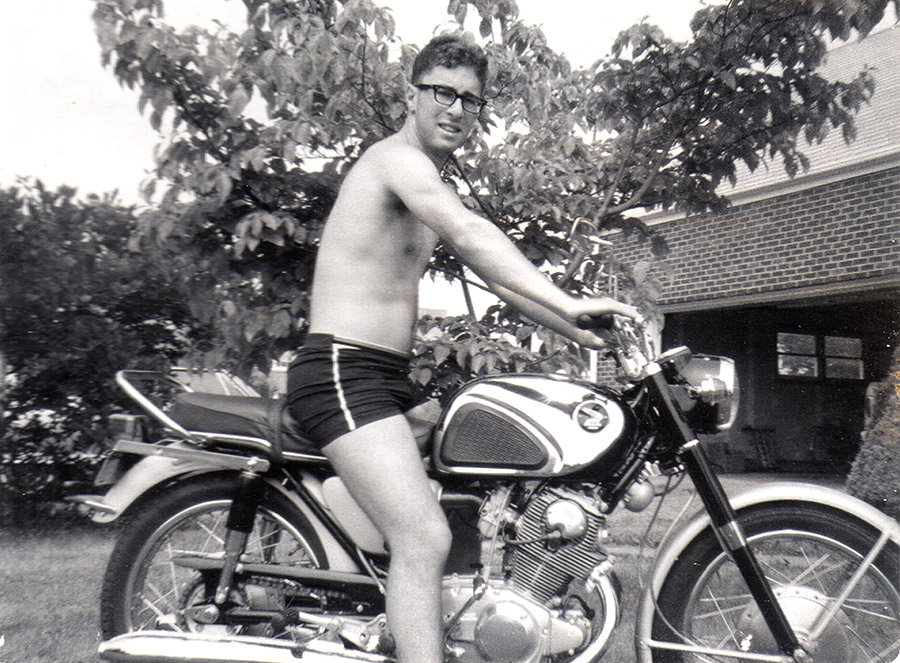
The Super Hawk, with its 305 cubic centimeters, seemed infinitely more powerful than the CB 160 (especially riding it in the fields behind our house). Dad had the bug, though. The Super Hawk would only last for a couple of months, too.
1966 Triumph Bonneville
Ah, this was a motorcycle. A Triumph Bonneville. I couldn’t believe it. It had been my dream machine for at least a couple of years, and now there was one in the garage. And you know what? Dad let me ride it in those same fields behind our house. I can’t imagine what he was thinking or why he let me do that. I never dropped it, though. God Almighty, it was powerful. And the sound….it was awesome.
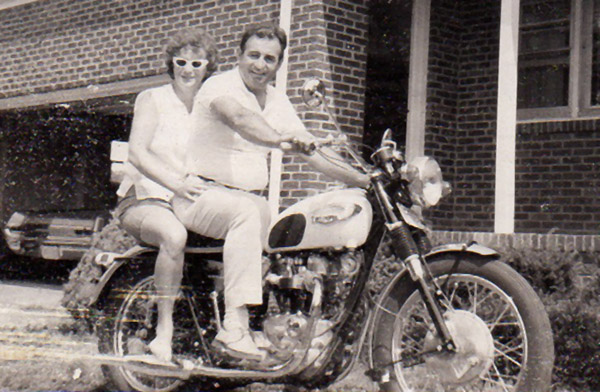
The Bonneville was an amazing motorcycle. Dad and I had a lot of good rides on it. I wish we had kept it. On that sound comment above: Nothing, and I mean nothing, has a a more soul-satisfying exhaust note than a Triumph.
1978 Triumph Bonneville
I was living in Fort Worth, Texas, I was single, and I was an engineer at General Dynamics on the F-16 program. When I passed by the Triumph dealer I realized I hadn’t ridden a Triumph Bonneville since I was 16 years old, so I thought I’d stop by. An hour later I signed on the dotted line, and I owned a Bonneville again.
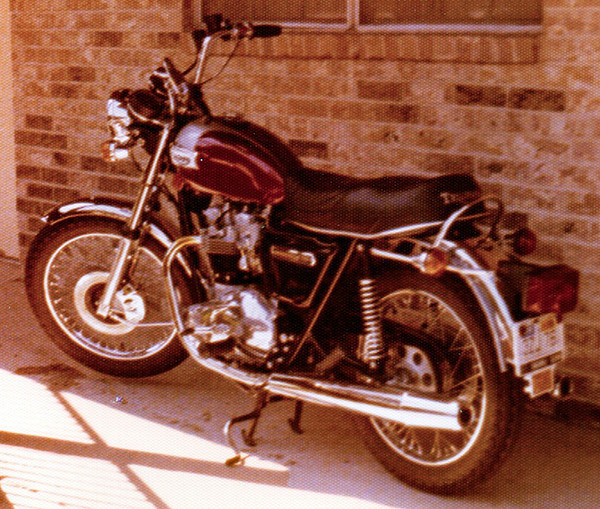
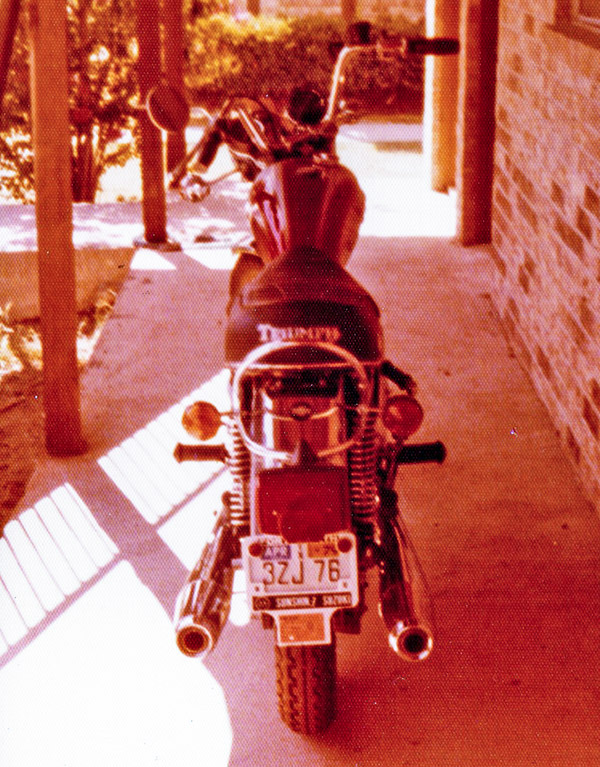
It was a great motorcycle. There was an older guy who owned a Yamaha TT 500 at General Dynamics (his name was Sam), and we road all the farm roads in the areas around Fort Worth. We both had hay fever and Texas had terrible pollen, but the riding was great. My Bonneville would top out at exactly 109mph (the earlier T120 and then T140 designations notwithstanding), and that was enough. The bike was kick start only (which made it an anachronism in 1978), but I was okay with that, too. For awhile, anyway.
I sold the Bonneville. I’m can’t remember why; I did a lot of dumb things when I was young. Shortly after I sold the Bonneville, I realized I needed a motorcycle again. You know, to be a complete person. That led to my next acquisition. But to this day, I wish I had kept the Bonneville.
1979 Harley Electra-Glide Classic
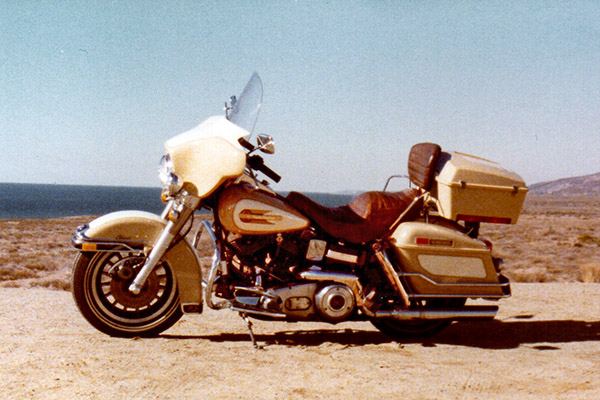
I used to spend a lot of time at the Fort Worth Harley dealer drooling over their new bikes. The late ’70s were, in my opinion, the height of the Willie G styling years at Harley. It was also the absolute bottom for them from a quality perspectives, as I would soon find out when I finally bit the bullet and bought the bike I thought was the most beautiful motorcycle I’d ever seen: The 1979 Electra-Glide Classic.
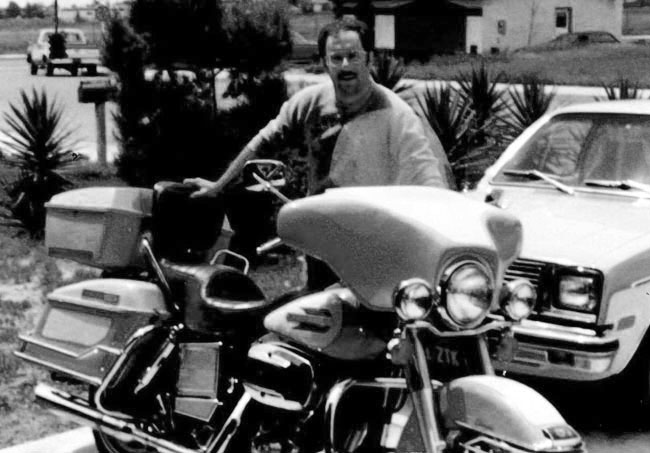
The Electra-Glide was beautiful, but to call it a piece of crap would be insult to turds the world over. The bike couldn’t go a hundred miles without something breaking on it. It needed three top end jobs in the 12,000 miles I owned it (the first two were on the warranty, the last one was on me). I’d finally had it with that bike and what some folks like to call “The Motor Company.” Hell, the motor was the worst thing on that bike. And the brakes. And the clutch. And the starter. And the handling. And the….well, you get the idea. It was one of the last years Harley was owned by AMF, and when a Harley mechanic told me what that stood for, I finally got it. I smiled inwardly when I sold the bike, thinking to myself, “Adios, MF.”
After that awkward ownership experience, I swore I’d never buy another Harley. I didn’t keep that promise, though.
Even considering all the above, I wish I still had that ’79 Electra-Glide. It would be worth a small fortune today. It sure was a pretty motorcycle.
1976 Triumph TR6
Somewhere in the succession of events described above, I moved from Fort Worth to southern California. General Dynamics transferred me to the Pomona facility. I loved southern California and I hated GD/Pomona. Actually, that’s not entirely accurate. The company was okay, but my boss was a dickhead. So I did what I normally do in that situation: I quit and went to work for another defense contractor. While there, I worked with yet another defense company, and one of the guys there had a 1976 Triumph TR6 he offered to sell to me for $500. It was running, it was registered, and minutes later it was mine.
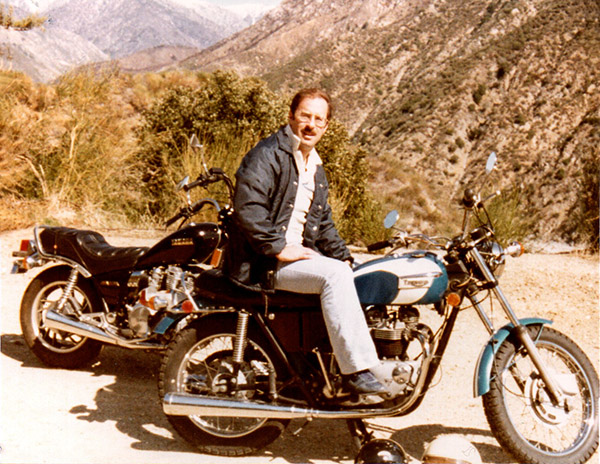
The TR6 was a wonderful motorcycle. If there was a performance difference between it and a Bonneville, I didn’t have the asspitude to feel it. The single-carb TR6 actually felt stronger at low rpm than the Bonneville did. I loved that bike, too.
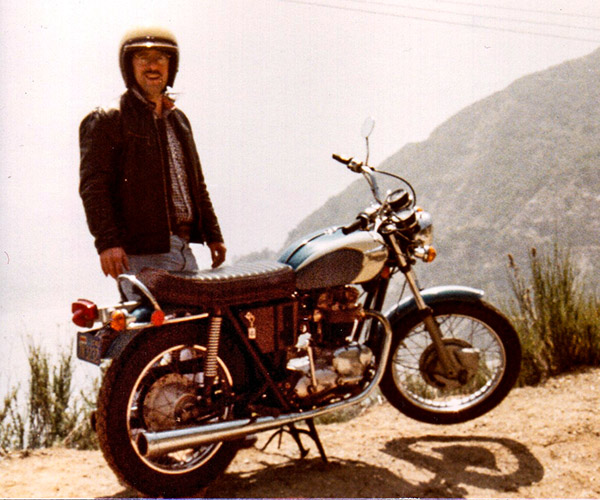
The paint on the TR6 had oxidized pretty badly (the former owner kept it outside). I had this idea I would restore it (see above regarding my propensity to do dumb things when I was younger). I did a pretty good job turning the great-running TR6 into a basket case (again, see the preceding comments regarding my youthful decisions). The paint job I paid for on the fuel tank was a disaster, and then I lost interest in resurrecting the bike. I sold the basket of bits and pieces for what I had paid for the bike. I wish I still had that one.
1972 Triumph Daytona
The first motorcycle I ever went gaga over was a 1964 Triumph Tiger that a kid named Walt Skok rode to high school. In those days, the Tiger was a 500cc twin that looked a lot like a Bonneville. God, that thing was beautiful.
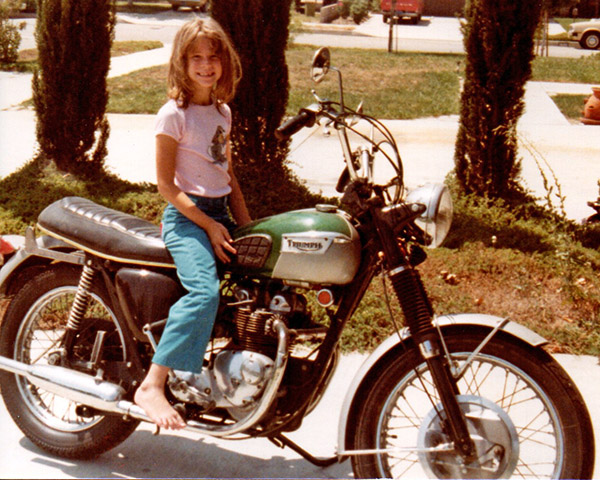
Triumph kept that 500cc twin in their line for years, ultimately adding a second carb and rechristening the bike as the Daytona. When the 650 line went to the oil-frame-configuration in the early 1970s, the Daytona (also known as the Baby Bonneville) did not; it kept the classic Triumph separate oil tank and peashooter mufflers.
I can’t remember who I bought the Daytona from (I bought it used), but I sure remember its looks. It was a deep candy metallic green with silver accents. It was bone stock and it was a wonderful ride. The handing was almost thought-directed…I could just think what I wanted the motorcycle to do and it would do it. One day, for no particular reason, I took it to the top of one of our streets that ran up into the mountains, turned it around, turned off the ignition, and started coasting downhill. I wanted to see how fast it would go with zero power (see my previous decision-making comments); the answer was exactly 70mph.
I never registered the Daytona over the three years I owned it; I just rode the snot out of it. I never got stopped or and I never had a citation for the expired plates. I can’t remember why I sold it, or who I sold it to. The Daytona was a wonderful motorcycle. I wish I still had it.
1992 Harley Heritage Softail
I didn’t keep my promise to never buy another Harley. A fried let me ride his ’89 Electra-Glide. It was a big, fat porker (the bike, not my friend), but Harley was getting a lot of press about their improved quality. I saw a blue Heritage Softail on the road one day, and I decided I need one. It was that simple.
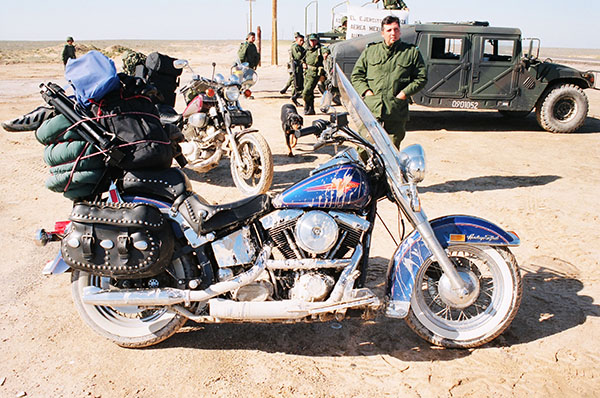
I put a lot of miles on my ’92 Softail, and while it lasted, it was a great motorcycle. Good buddy Baja John and I rode our bikes to Cabo, we took the ferry across the Sea of Cortez, and we rode down to Guadalajara and then back up through mainland Mexico to Nogales (you can read about that adventure here).
The Harley died on me down in Mexico on another trip, and although I had regained a tiny bit of trust in Milwaukee, the dealers were still (in my opinion) basically incompetent. When my ’92 went belly up, the dealer wouldn’t touch it because it was more than 10 years old (I can’t make this stuff up, folks), so I took it to an unencumbered independent repair shop and had it rebuilt as a real motorcycle (you can read that story here).
What kind of killed the Harley dream was me forgetting to pick up milk one day when coming home from a ride on the Harley. My wife asked about the milk. I realized I had forgot it, so I went back out to run to the store. For whatever reason, I took my KLR, and it was as if I had been set free. The KLR was just so much better, I put an ad in the local Cycle Trader the next day and sold the Harley the day after that.
While I am on this subject of Harley twins, I will tell you that I always wanted a Sportster. One day the Harley dealer had to keep my bike overnight and he lent a Sportster to me. That changed my mind in a hurry. It was gutless. I know some of my readers ride Sportsters and others ride Big Twins. Mea culpa in advance. If you’d like to tell me how great your bikes are and how I have my head up my fourth point of contact, please leave a comment, or send in a draft blog (info@exhaustnotes.us) with pics and I’ll publish your rebuttal.
1982 Yamaha XS 650
This was a lucky find, or rather, it sort of found me. I was teaching a failure analysis class at McDonnell Douglas about thirty years ago, and the first evening when I connected my laptop to the projector, a photo of the Triumph Daytona (the one described above) briefly appeared in front of the class.
“Hey, I have one of those,” one of the older engineers in the class said. I asked if he was a Triumph fanboy (as I was). He told me that he didn’t have a Triumph; he had the Yamaha that was based on it. He offered to sell it to me in front of the entire class. I hadn’t even introduced myself yet.
“Let’s talk after class,” I said.
I turns out this guy had purchased the XS 650 new, rode it very little, and it had sat in his garage for several years. I bought it for $900. I think it was a 1982 model, but I can’t say that for sure. Being a Triumph rider, I always thought it would be cool to own one of the Japanese 650 twins. You know…better reliability, no oil leaks, smoother running engines, better fit and finish, and all that.
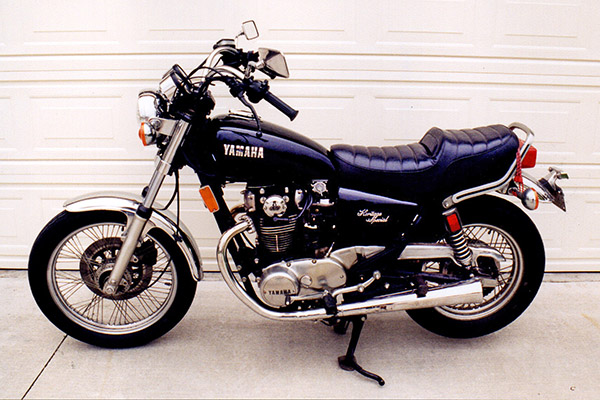
I didn’t keep the XS 650 long enough to assess its reliability. I did keep it and ride it long enough to find out that it had absolutely no personality, it didn’t have the bottom end torque that a Triumph did, it sounded more like George Jetson’s car than a real motorcycle (let’s see how many of you know who he was), its Phillips head screws reacted to a screw driver the same way butter reacted to a hot butterknife, and the “cruiser style” handlebars were the most uncomfortable I’d ever experienced. As you can guess, the XS 650 didn’t hang around long. I traded it in to lower the cash outlay on my TL1000S Suzuki.
1997 Suzuki TL1000S
Ducati was setting the world on fire with its L-twin performance bikes, and predictably, it was only a matter of time before the Japanese attempted to do the same. Two L-Twin Japanese motorcycles emerged in 1997: Suzuki’s TL1000S and Honda’s Super Hawk (not to be confused with their Super Hawk of the mid-1960s, as shown above in this Twins story). I opted for the Suzuki variant in red. I just liked the looks of it; I felt it was a prettier motorcycle than the Honda.
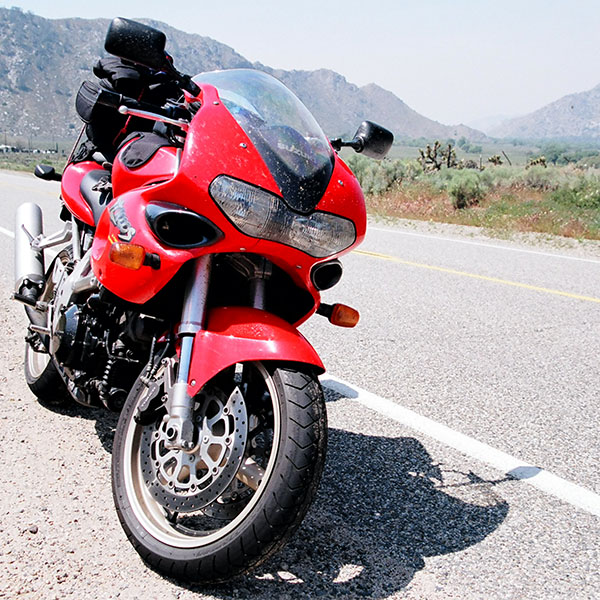
The Suzuki was the fastest and hardest accelerating motorcycle I ever owned. It would lift the front wheel when shifting from second to third at over 100 mph. I dropped it twice getting in over my head, but I never really damaged the bike or myself. I used the TL as a touring bike, and I covered large parts of Baja with it. It was a fabulous machine and I wish I still had it.
2020 Royal Enfield INT
My most recent twin is the Royal Enfield 650 INT. Enfield called it the Interceptor initially (which is a much better name), but they quickly changed it to the INT (my guess is because Honda threatened to sue them, as they already had a model called the Interceptor).
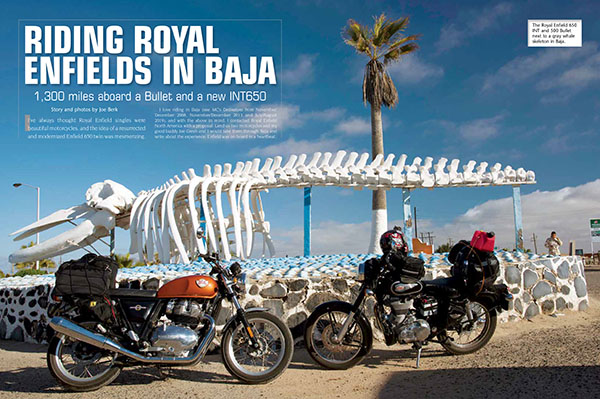
Gresh and I conned Enfield North America into loaning us two bikes (a 500cc Bullet and the new twin INT) for a comparo ride in Baja. We had a great trip, trading bikes off each day and blogging extensively about our impressions. I liked the INT so much I bought one shortly after we returned. It’s a great bike at a great price and it has all the performance I’ll ever need, both as a street bike and as a touring bike.
So there you go. I’ve owned a lot of twins. To me, a well-engineered twin makes a great street bike.
You know what? In searching for photos of my old twins, I found another single I’d forgotten all about. It was my Triumph Cub.
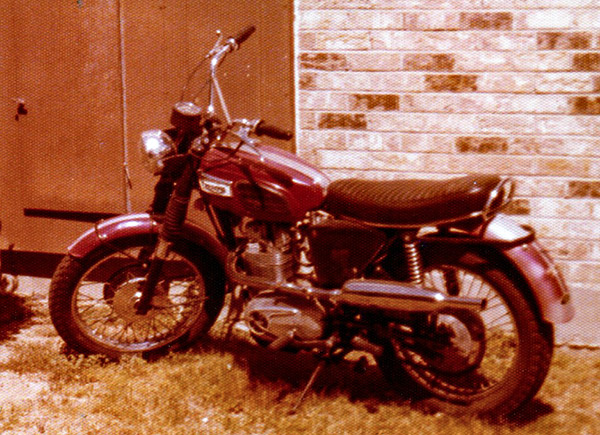
I never put the Cub on the street. I just rode it a bit in the fields behind my apartment building and then sold it. It was crude compared to other bikes of the era, but it was nice. It would be worth way more today than what I paid for it or what I got when I sold it.
Join our Facebook ExNotes page!
Never miss an ExNotes blog:
Help us keep the lights on:
Don’t forget: Visit our advertisers!