Wow, things are hopping here! After a brief hiatus, we’ve got a series of great stories coming from Bobbie Surber and Joe Gresh. Bobbie’s been hopping around down there in Patagonia and Joe’s got a pair of Dreamy Honda resurrections in his shop. Mike Huber’s been busy, too. He’s hopping around Southeast Asia, currently playing mayor in Thailand, and he’s been working an exciting new project that we’ll announce shortly. The ¿Quantos Pistones? series is progressing nicely, and I’m discovering more photos of bikes gone by I didn’t know I had. I’ve got a blog or two coming up on testing bolt shims from good buddy Lance over at TriggerShims. These upcoming blogs are going to be good and it’s sure been fun.
But…
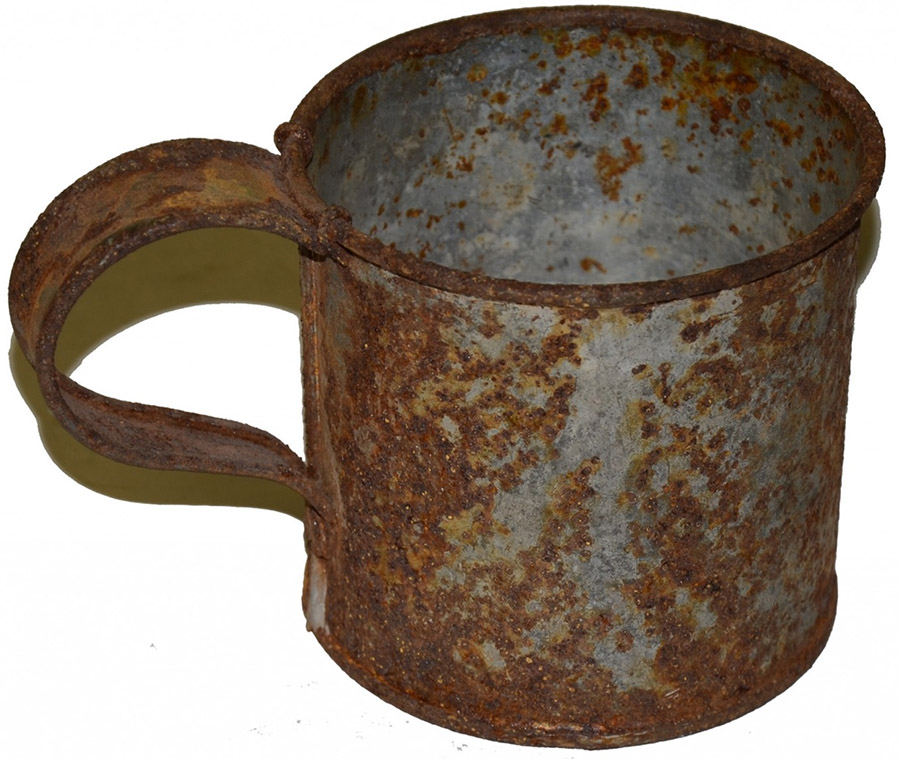
It’s time for me to hold out my tin cup again. With DOGE, the Big Beautiful Bill, and all that, our income has gone from bad to worse (pardon my brief foray into politics). You know that your subscription is free. We get all our money from your donations and Google ads. So do us a solid…click on those popup ads, and if you can, hit the Donate button below. We’d sure appreciate it.
Thanks, folks. Keep the shiny side up, and keep your powder dry.
Everyone has their kink. It may be guns, it may be watches, it may be old two-stroke motorcycles. I have a sweet spot for tire inflators. I must have 10 of the things, some are big and run off 240volt AC, some are so tiny they would fit inside a pack of cigarettes (if you smoked large cigarettes). Each inflator serves a specific need for me called “feeding my ego.”
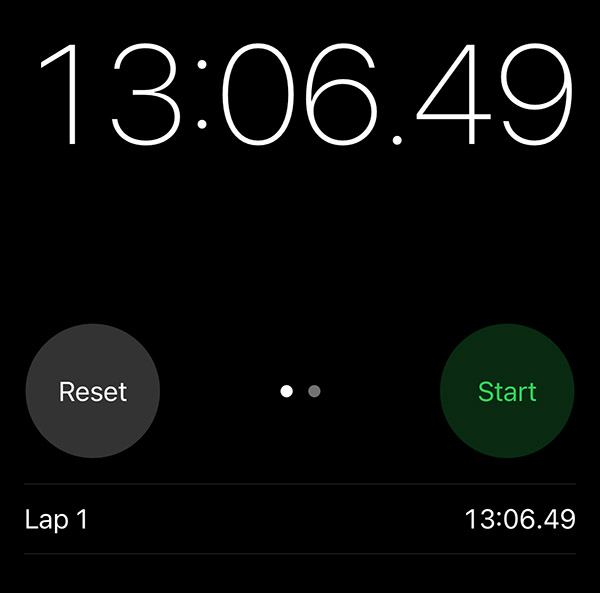
13 minutes from flat to driving. That’s fast for these type of pumps.
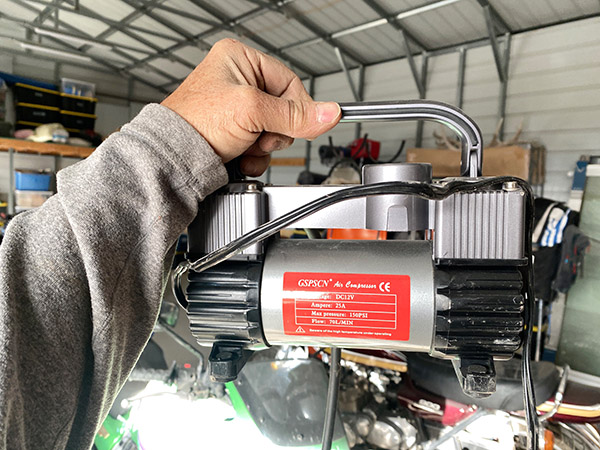
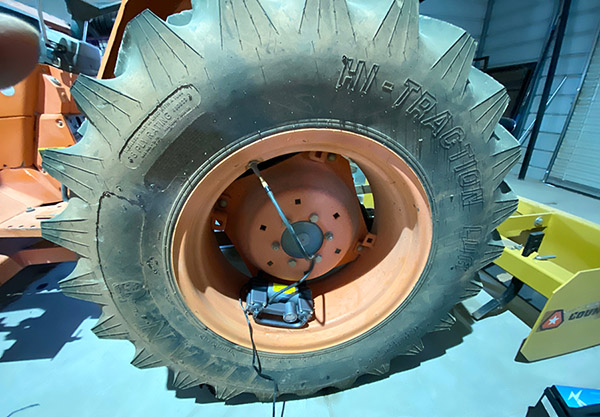
My latest inflator, the GSPSCN, is a real beast. Sporting dual heads (I wonder if one might be a dummy head?) this little unit moves some air. Connected to a car battery, the GSPSCN can inflate a giant tractor tire from zero to 20 psi in 13 minutes 6 seconds. And that’s not the impressive part. The impressive part is the pump stays cool over that long stretch. All, and I mean all, of my other 12-volt inflators get hot as hell filling up a standard car tire.
a nice, tidy little unit that moves lots of air.
Until the GSPSCN I figured that heating up was the nature of small compressors. I haven’t dismantled the pump because I don’t want to break anything but I suspect there are diaphragms instead of pistons used in the two, shallow-finned cylinders.
I’ve filled this tire dozens of times and the pump has not even gotten warm. The hose is a different matter.
I’ve used the GSPSCN a bunch because the tractor has a not-so-slow leak in the left rear tire. Overnight it leaks down to zero, only the stiffness of the sidewall keeps the tractor sitting somewhat level.
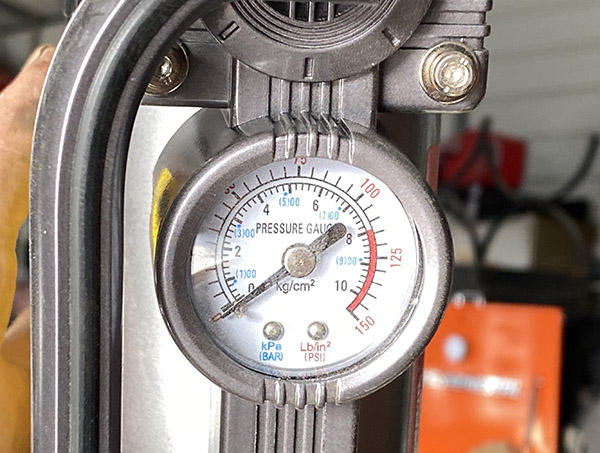
A more useless gauge I’ve never seen. I’ll index it one day when I run out of things to do.
Of course this wouldn’t be an ExNotes review if we didn’t find something to complain about. The biggest issue is the pressure gauge. The thing is way, way off: like 9-10 psi. It’s useless as delivered. That means you have to have a regular tire gauge to know the tire pressure. It’s a small thing but annoying. Now I need two tools to fill a tire. One day I’ll sit down and mark the dial with a few numbers: 20-30-40-50 psi. Why didn’t the manufacturer do that for me?
The power cord could be 5-6 feet longer. I can reach from the battery to all the tires on a Jeep but Jeeps are short. If you have a car, it would be OK. If you drive one of those big-ass, compensation trucks you’ll come up short yet again. The pump came with a coiled hose extension, but I would rather have a longer cord. Again, the extension is another thing to carry.
The air chuck is a screw type, like all these small compressors I would prefer a 90-degree quick connect style. On a motorcycle with two big disc brakes, it’s hard to get your hand in there to screw on the chuck.
Despite the above listed flaws. the GSP has become the pump I grab first for cars, trucks and tractors. The thing runs so cool I suspect it will last a while, unlike the hot ones that fail filling one tractor tire.
I give the GSP a 4-star rating. If the gauge worked, I’d bump it to 5-stars. Go to Amazon and search the brand name if you’d like one.
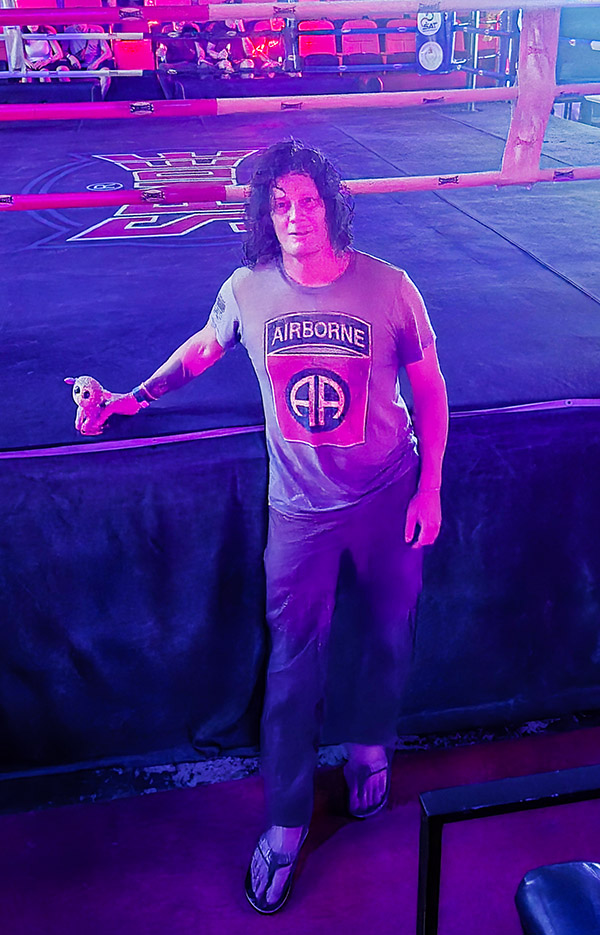
Having spent over four months in Thailand I was well overdue to experience a live Muy Thai fight event in a local stadium. Last Saturday with no real plans I decided I would do just that. Rather than purchasing online I went to the local stadium, and with the help of a friend, I chatted up the stadium owner (who loved Americans). Within a few minutes we had two ringside tickets for under half the price. This was probably the only time where I received an actual “American Discount.” In all my past travels the “American Discount” resulted in a 20% price increase. Either way, I was excited to witness one of these events live.
On the way to the stadium that evening my plan was to get dinner somewhere along the way. I noticed a nice Irish Pub. I’m not one to pass up an Irish Pub, especially in Thailand where I was well overdue for a change in cuisine. Corned beef, potatoes, and a couple Chang beers was a perfect change indeed. The pub would also be a great place to hang out, eat, and talk with some locals who were also attending the event. To add even more perfection to this scene they had Moto GP on the TVs in the bar. It was the perfect environment and just a short walk to the stadium for the fights after.
As we entered the stadium and sat in our seats I began chatting up the people to my left. They were from Australia, a country I was very fond of and had traveled extensively. It didn’t take long before we were engrossed in conversations of travel, Muy Thai (which I really knew nothing about), motorcycles, and pretty much everything under the sun. I made a comment to one of the Aussies wearing a NY Yankees hat (I hate the Yankees, obviously). I gave him a hard time about the hat as we continued to joke back and forth. It turned out the Aussie with the Yankee hat was fighting that evening so it’s probably good I didn’t go too far with the berating of the stupid Yankees.
As the fights were about to begin everyone stood for the Thailand National Anthem. Instinctively I faced towards the Flag of Thailand with my hands clasped in front of me in a respectful manner. It was at this moment I noticed everyone was facing towards me and not the Flag. I quickly turned 90 degrees to face the same way as the others when I noticed why this was. In Thailand you face the giant portrait of the King during the Anthem and not the Flag. The Aussies knew this and had a good laugh as they made the same mistake during their first attendance of one of these events.
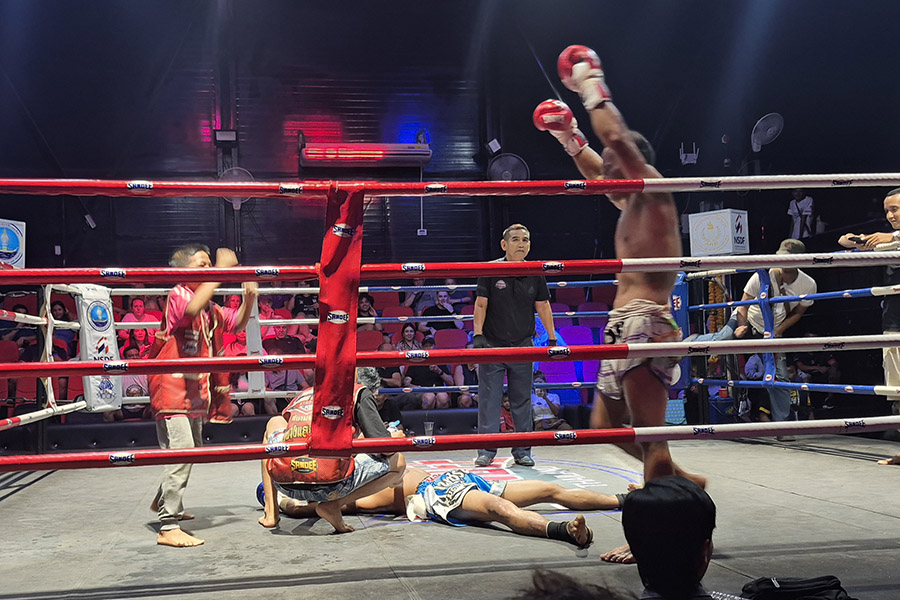
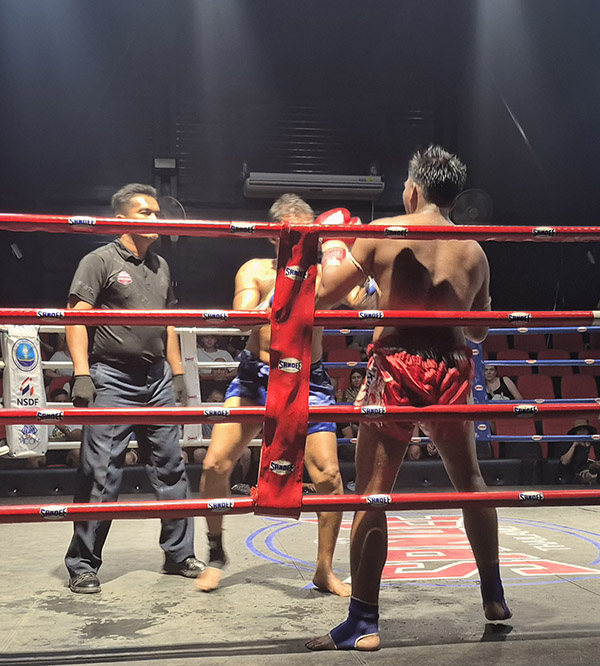
The fights were a blast to watch. The fighters were very respectful of each other and the customs of their country. We watched maybe 15 fights or so throughout the evening. Sadly, our new friend didn’t win his match, but it was cool to hear the word “Australia” mentioned over the loudspeaker amongst all the other words in Thai which I couldn’t understand. It was a pretty solid Saturday evening and I was able to check seeing a Muy Thai fight off my Thailand to do list.
The question du jour (and for several upcoming blogs) is as stated above: How many pistons?
A thought occurred to me the other day: I’ve owed singles, twins, triples, fours, and even a six (a Honda CBX, which was a wonderful motorcycle). There have even been (and are) companies that offer 8-cylinder bikes. 1, 2, 3, 4, 6, 8: What’s should be the right number of pistons for the perfect motorcycle?
Man, I don’t know. I’ve owned a lot of motorcycles of varying engine configurations. This blog focuses on the singles. There will be future blogs on other engine configurations. What I’ll describe are my experiences with singles, and (spoiler alert) they’ve all been good. Your mileage may vary.
Honda Super 90
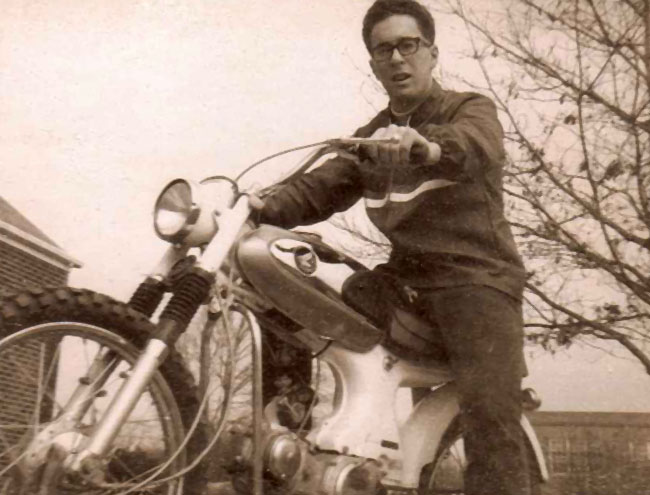
My first motorcycle ever was a Honda Super 90 previously owned by Sherm Cooper of Cooper’s Cycle Ranch in New Jersey. Sherm was a famous flat track and ISDT racer in the 1950s and 1960s. Mr. Cooper had customized the Super 90 I bought from him with an upswept pipe, a skid plate, and knobby tires.
On my Super 90 in the 1960s. It was a fun bike. I wasn’t old enough to have a driver’s license yet, but that didn’t slow me down at all.
I owned the Super 90 before I had a driver’s license, and I rode my Honda all over. It would hit 65mph given enough time and road. I had a lot of fun on that bike.
BSA Bantam
Somewhere in my misspent youth as a goofy teenager, I owned a 125cc two-stroke BSA that actually ran, but not well enough that I was willing to venture very far from the house on it. I rode it in the fields behind our place for a couple of weeks and then parked it on the front lawn with a for sale sign. My first and only Beezer sold quicky.
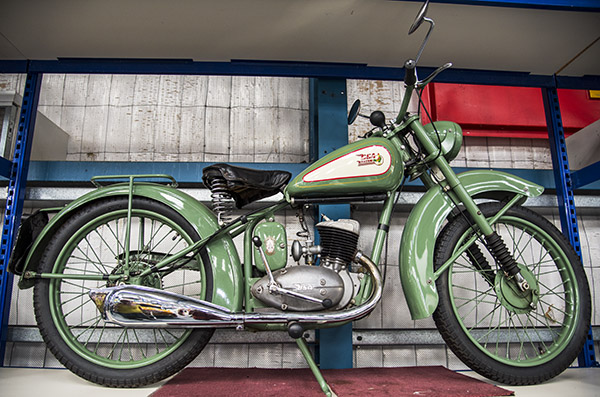
A BSA Bantam on display in Australia. This one was way nicer than mine.
My Bantam was all black (I don’t know if that was its original colors), it had a lot of power for a small bike, and then it was gone. I didn’t own it long enough to get a photo, but decades later when visiting a motorcycle museum in Australia, I did manage to get a photo of a concours condition Bantam.
Honda SL90
I sold the Super 90 and the BSA Bantam you read about above, and I was a working kid, so I was pretty flush with cash but I didn’t have a motorcycle. I didn’t have a driver’s license, either, but that didn’t slow me down. I bought a new Honda SL90, a model Honda had just released, and I loved it.
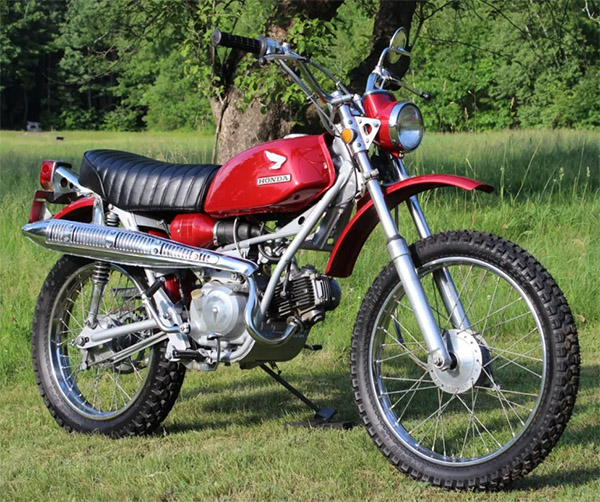
A Honda SL90 just like mine (I never took a photo of my SL90). This one sold for about $3500 five years ago.
The SL90 wasn’t any faster than the Super 90, but it had that SL look. Honda had a series of SL bikes back in those days, including an SL175 and an SL350. I’d really like to own an SL350 today, but the prices on those bikes are in the stratosphere. I rode the wheels off my SL90, and I kept it immaculate the entire time I owned it. You know, it’s funny: I can’t remember selling it. But I guess I did. I just checked my garage and it’s not out there.
Honda Cub
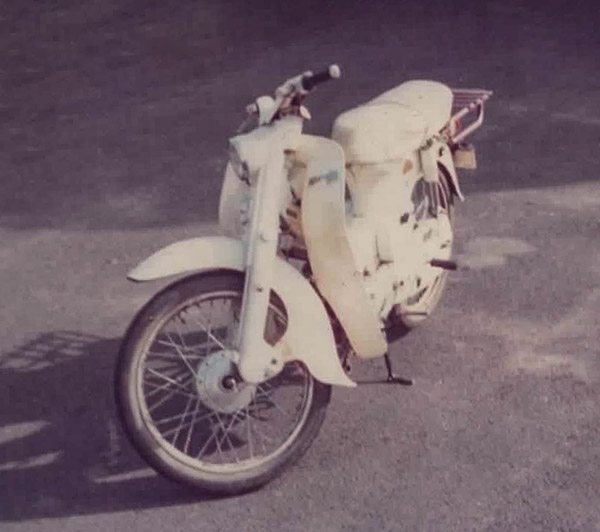
One of the families in our neighborhood had a welding business (I guess their welding business was good; they bought new Cadillacs every year). The guy who owned that business somehow acquired a 50cc Honda Cub. You know, the little ones with a step-through frame. I offered him $50 for the Cub. Suddenly, I owned a 50cc Honda Cub.
My 50cc Honda Cub. I only owned it for a short period.
The Cub had three speeds and a centrifugal clutch. I sold it a month or two later for $75 and considered myself a wheeler dealer. Seiko recently came out with series of watches commemorating the Honda Cub. I’m wearing that watch as I type this blog.
Honda Cubs are still in production (new ones MSRP for $3,899.00, not including transportation to the dealer, California emission equipment, government fees, taxes, finance charges, dealer document preparation, electronic filing fees, tire tax, and, well, you get the idea). As I understand it, more Honda Cubs have been built than any other motor vehicle of any type. I’ve traveled a bit in my life, and I can tell you that Honda Cubs are everywhere. The people who keep track of such things stopped counting when the total number of Cubs went over a hundred million. Soichiro outsold Henry Ford. Imagine that.
KLR 650
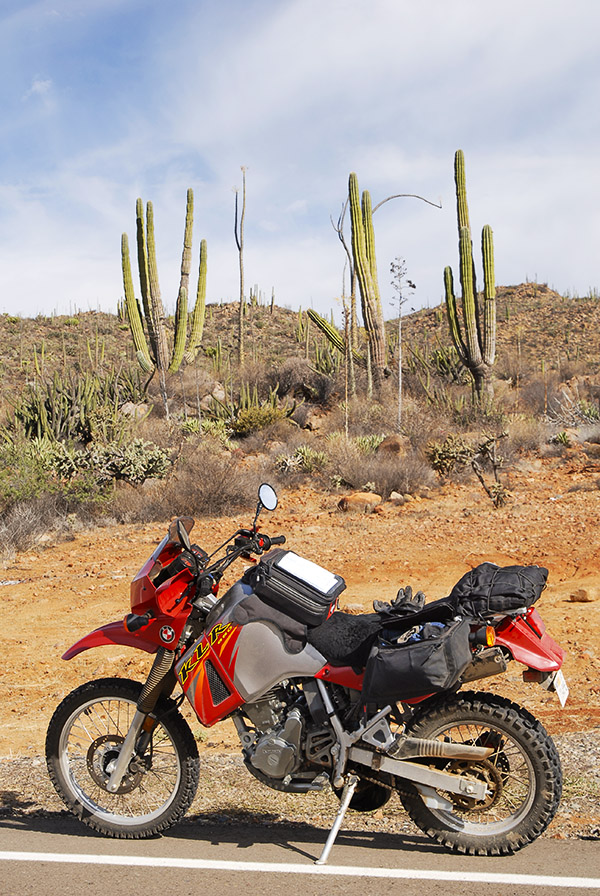
I had always wanted a Kawasaki KLR 650, and in 2006, I scratched that itch. It was one of my all time favorite motorcycles. I used mine as a touring bike, and that touring sometimes included offroad excursions here and in Mexico. I had fabulous rides in Baja with the KLR.
I covered a lot of miles in Mexico on my KLR. It never let me down. It was the perfect motorcycle for Baja.
I sold the KLR just because I was busy riding other machines. Looking back on that, I wish I’d kept it. The KLR was a fabulous motorcycle. I think it made less than 40 horsepower, and that was all I needed. I could touch 100mph on mine. The ergonomics on it were perfect for me. I loved that bike.
CSC 150
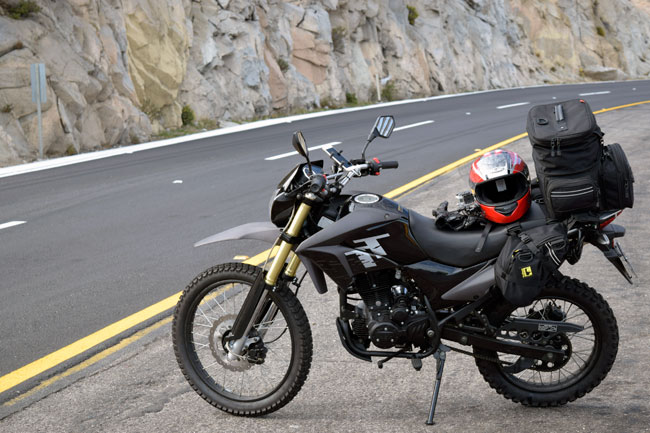
My CSC 150 Mustang replica was kind of my comeback bike after I crashed big time on a Triumph Speed Triple (that’s a story I’ll tell in a subsequent blog).
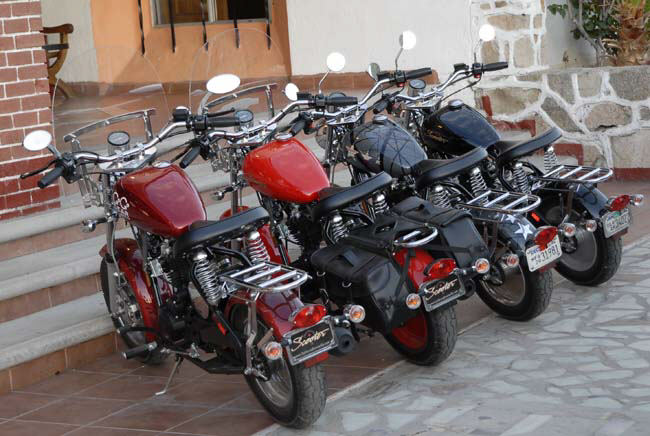
My new buddy Umberto upgrading a preproduction muffler tab to the production configuration, while simultaneously demonstrating proper personal protective equipment use. Welker is pulling fire guard duty.Our CSC 150s parked in front of the Desert Inn in Catavina, Baja California Sur, about 330 miles south of the border. My bike is the fire engine red one, second from the left.
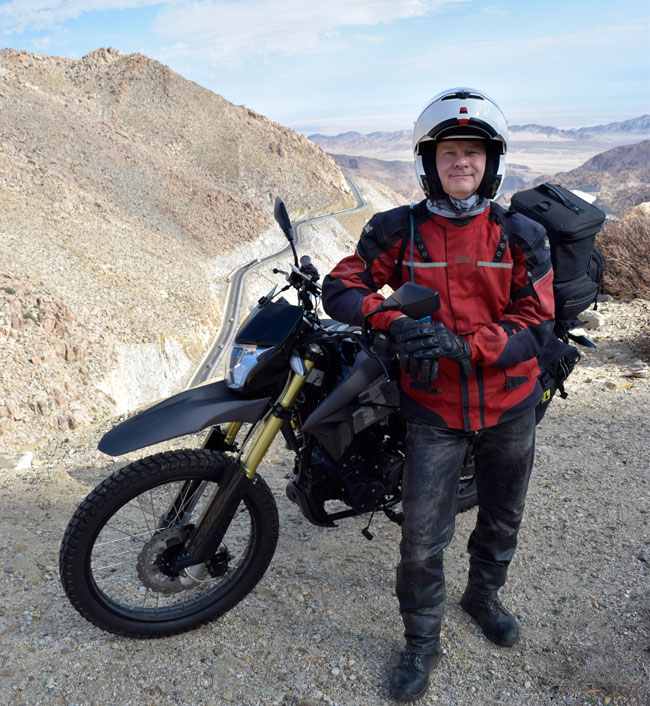
I caught a lucky break after the above-mentioned motorcycle crash: My buddy Joseph Lee told me about a new venture, the California Scooter Company, that was resurrecting the Mustang motorcycle. I consulted for CSC for the next 6 or 7 years, and one of my brilliant ideas was to ride the little 150cc Mustang to Cabo San Lucas and back. I and three of my friends did so. You can read about it here.
Janus Gryffin
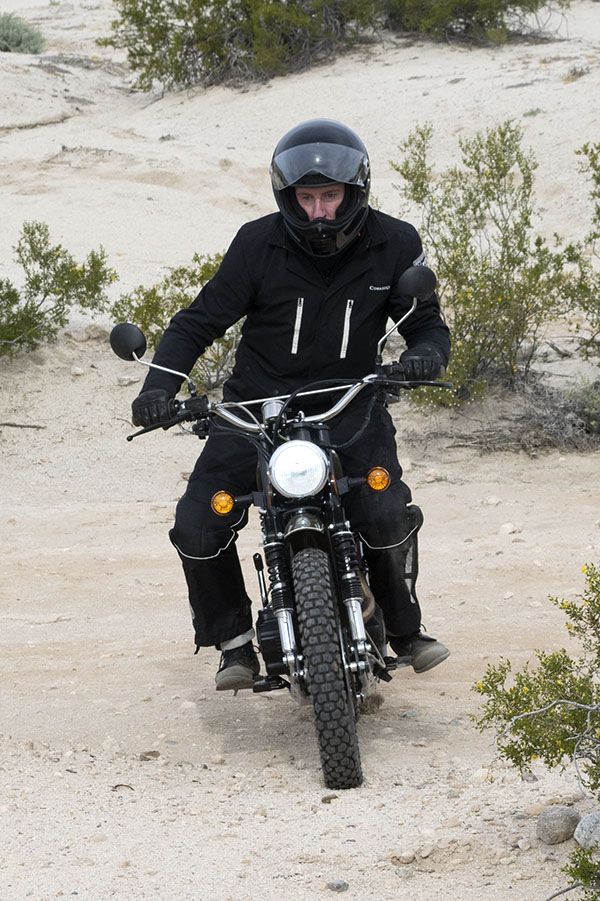
I never owned a Janus, but I spent a four day weekend riding one through southern California and northern Baja with the Janus CEO and his videographer (you can read about that ride here). It was a Janus promotional ride that I talked them into doing, it was a lot of fun, it resulted in a couple of magazine articles for me, and I had a hoot doing it.
The Janus CEO taking the Gryffin offroad in northern Baja.
The Janus Gryffin uses a CG-250 Honda clone engine (the same one used in the CSC TT 250: see below). I had a good time on that ride. Hell, I’ve had a good time on all of my rides through Baja.
CSC TT 250
I talked CSC into bringing the TT 250 to America. On one of my many visits to Zongshen (in Chongqing, China), I noticed a 150cc motorcycle on a platform in their marketing department. It was a sharp bike, I knew that the CG 150 engine has the same exterior dimensions as the 250cc engine, and I asked the Zong wizards if they would make that bike for us (us being CSC) with the larger engine. The answer was yes, and the CSC TT 250 was born.
My TT250 On Mexico Highway 2 at the Rumarosa Grade. it was a fun trip.Dangerous Dan with his TT250 in Baja.
The bike was wonderful, and they initially retailed for $1895. They sold like hotcakes, and to this day, they still comprise the bulk of CSC’s motorcycle sales. I had a blast on mine. Many of the folks who owned CSC RX3 motorcycles also purchased the TT 250, and we ended up doing a ride through Baja on those bikes. They were awesome.
CSC RX3
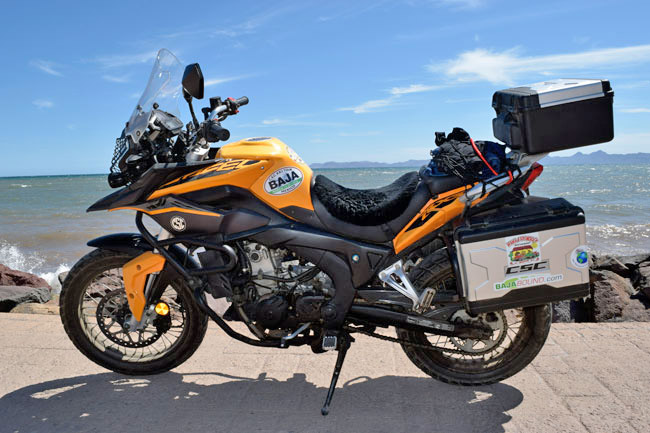
My last single-cylinder motorcycle was a 250cc RX3, imported to the US by CSC Motorcycles in Azusa, California. The RX3 is a Chinese motorcycle that looks a lot like a slightly scaled down GS1200 BMW.
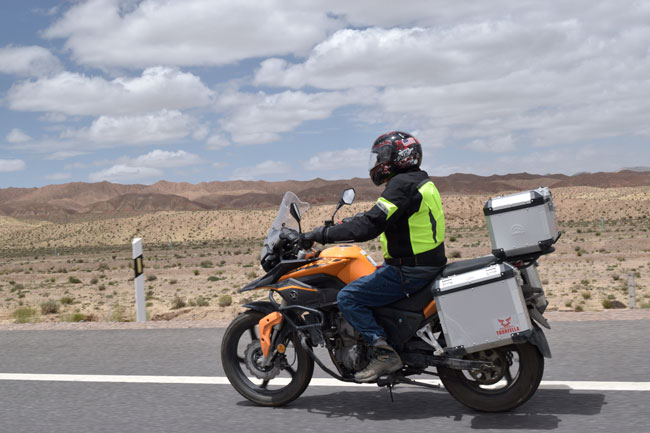
My RX3 along the malecon in Loreto, Baja California. That’s the Sea of Cortez in the background. I covered a lot of miles on this motorcycle. It was one of the two best bikes I ever owned (the other was my KLR 650).Joe Gresh (shown here in the Gobi Desert) and I rode RX3 motorcycles across China. It was the ride of a lifetime.
A lot of the China haters claimed that Zongshen copied the styling from BMW (hey, nearly everyone else did, too, on their adventure touring bikes in those days). There sure was a big cost difference, though. BMWs were going for $25K; the RX3 sold for $2895 when it first came to America.
The RX3 proved to be a remarkably reliable motorcycle. We took a dozen Chinese riders on a 5000-mile tour through the American west, Gresh and I rode a 6000-mile loop through China, I rode around the Andes Mountains in Colombia, and we did numerous Baja rides with groups of CSC riders in Baja, all without a single mechanical breakdown (well, we had one guy break his gearbox in Baja, but he was a guy who liked to shift without using his clutch, so I’m not counting that one). The RX3 is a wonderful machine.
I was one of the key guys involved in bringing the RX3 to America, and I’m proud of that. It was one of the high points of my professional life and my riding life. I wrote a lot of blogs for CSC and several books about my adventures on the RX3. I think the RX3 is one of the best motorcycles in the world. I wish the bike was still in production.
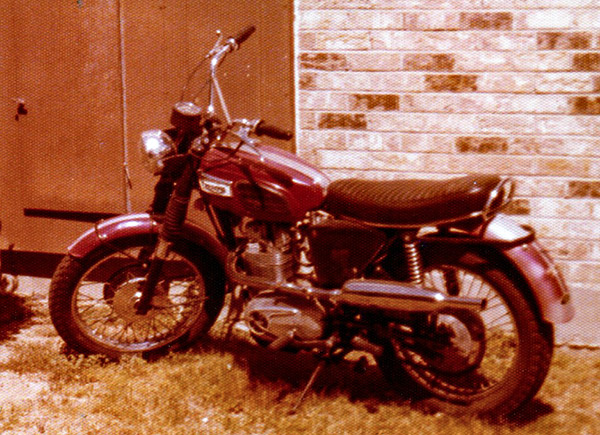
You know what? In searching for photos of my old twins, I found another single I’d forgotten all about. It was my Triumph Cub.
I never put the Cub on the street. I just rode it a bit in the fields behind my apartment building and then sold it. It was crude compared to other bikes of the era, but it was nice. It would be worth way more today than what I paid for it or what I got when I sold it.
Next up in our Quantos Pistones series? The Twins, of course. Stay tuned.