

By Joe Berk
I tested four different .45 Colt loads in three different six shooters yesterday. The revolvers were an 1873 Taylor-tuned Uberti SAA with a 5½ inch barrel, a stainless steel Ruger 4 5/8 inch Blackhawk, and a 200th Year Ruger 7½ inch Blackhawk. Conditions were way less than ideal: It was windy and I was there in the afternoon, which meant I was shooting into the sun on the West End Gun Club’s 50-foot handgun range.

Every time I shoot the Uberti, I’m reminded how elegant the 1873 design is. The Ruger Blackhawks look good and shoot well, but they are a bit “clunky” compared to the old Colt design. The 1873 SAA just feels graceful. It’s a delight to hold and to shoot.


As I was unlocking the gate to get into the range, a low-rent-gangbanger-looking, dirty, tattooed guy pulled up behind me in a beat up old white Honda. He obviously had been waiting to follow me in. Even though I’m armed, I’m always a little nervous when I get out of the car to unlock the gate because it’s desolate out there and it’s a good ambush spot. The guy sure didn’t look like a Republican to me. I asked him to show his membership card and he went into his “no habla” routine. I told him I wouldn’t leave the gate open without seeing his membership card, and he suddenly had enough “habla” to understand that. He turned around and left. A recent WEGC email explained that these guys steal brass and other stuff from the range, so I’m guessing that’s what this dirtball wanted.
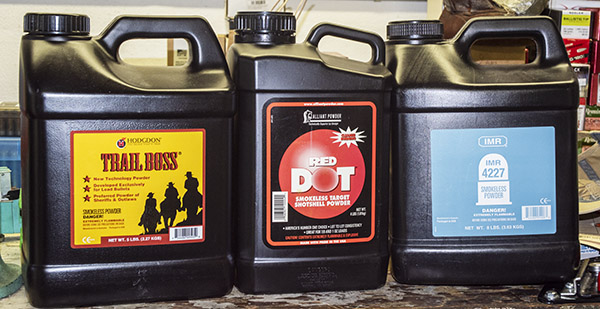
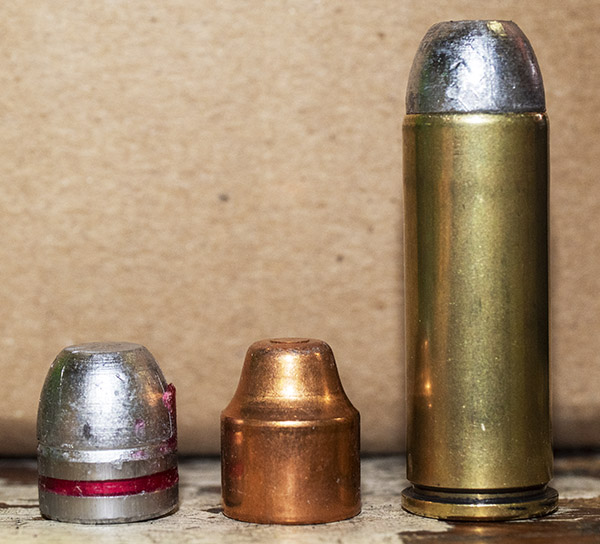
The loads used Trail Boss, IMR 4227, and Red Dot powder. I had been loading .45 Colt with Trail Boss because it is what the Cowboy Action Shooters use and it was presumably a low velocity load. To my surprise, the Trail Boss velocities were only very slightly below the other powders’ velocities. I loaded with two different bullets (Winchester’s 185-grain jacketed semiwadcutter and a 200-grain cast roundness bullet with a truncated ogive).
The results of my testing are in the table below. The table’s font (as it appears in the blog) is tiny, but if you click on it, the table will open with a larger and more readable display.
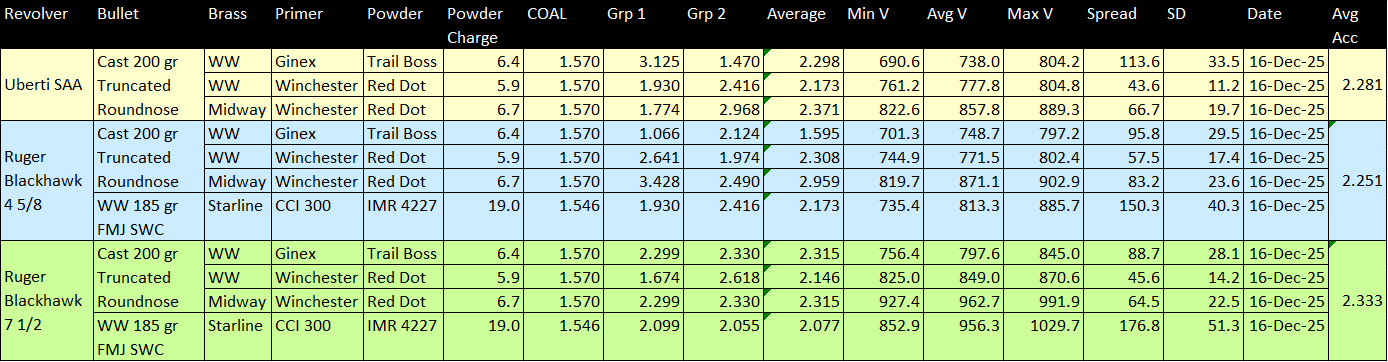
Here are the inferences I make from the above data:
There are some large groups sprinkled in the above data (above 3 inches); that’s probably due to the poor shooting conditions and me. My first group was one of the worst; I attribute that to me settling down for subsequent groups.
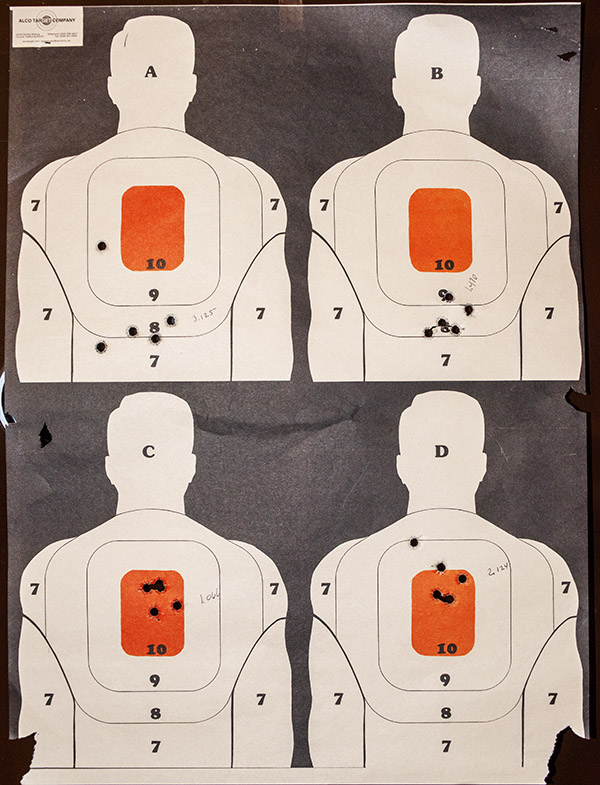
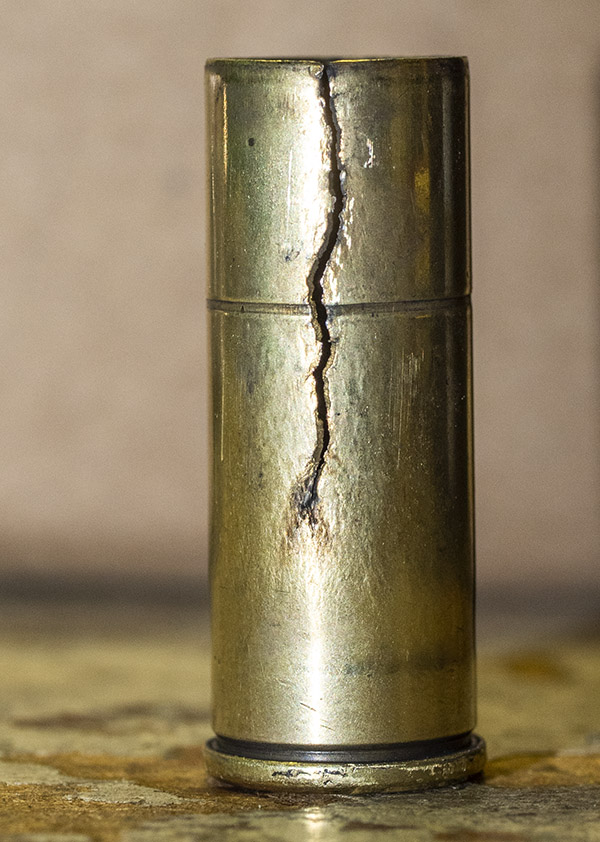
I also noticed that one of the cases had split, and the bullet from that case would have been a flyer. With the exception of the one case that split, none of the cartridges exhibited any pressure signs. All cases extracted easily (other than the one that split) and none had flattened primers.
The Lee cast bullet reloading manual shows the 200-grain truncated roundnose bullet accuracy load to be 5.6 grains of Red Dot, which is at the very bottom end of the range. I went with 5.9 grains because the Red Dot loads don’t occupy much of the case volume and I felt uncomfortable with that. I might try the lower load of Red Dot (i.e., 5.6 grains) next time I’m reloading, but I think I’m going to just stick with 5.9 grains. It works well enough in all three revolvers.
The Trail Boss spreads and standard deviations were large, which surprised me. I’ve had good accuracy at 50 feet with this powder, but the large standard deviations mean that at longer ranges the accuracy will be poor. I could feel the difference in recoil with the Trail Boss load; one round would give a sharp crack back, and the next might be much lighter. The Trail Boss chronograph data supports that subjective assessment.
I have a lot of Red Dot propellant, so I wanted to evaluate it in the .45 Colt. It did well. In general, the Red Dot velocity spreads and standard deviations were lower than those with Trail Boss or IMR 4227. That was a surprise, too.
Overall average group size (all guns, all loads) with the cast 200-grain bullets was 2.275 inches. Overall average group size (all guns, all loads) with the full metal jacket semi-wadcutter Winchester bullets was 2.125 inches. That’s not much of a difference.
You might be wondering why I didn’t try the IMR 4227 loads in the Uberti SAA. I thought these would be a lot hotter loads because the load data was for Ruger revolvers. Turns out the velocities were in line with the Trail Boss and Red Dot loads. I could have shot the IMR 4227 in the Uberti, but I didn’t realize that when I was on the range. I was very surprised at the huge velocity spreads and standard deviations with IMR 4227.
Recoil for all the loads listed in the table above was not oppressive. But I wouldn’t characterize the recoil as light, either. The .45 Colt is a big cartridge.
As expected, the 7 ½ inch Blackhawk velocities were slightly higher than were those for the other two shorter-barreled revolvers. The longer sight radius on the 7 ½ Ruger didn’t make much difference in accuracy. That’s counterintuitive. It may just be that the wind and shooting into the sun masked any advantage the longer sight radius offered.
Overall accuracy for the revolvers with all loads was essentially the same (see the last column in the above table). I could repeat this evaluation under better range conditions, but I think I have enough information to select a good load. While the groups were not stellar (they were in the 2-inch+ range), the above convinces me that Red Dot is a good powder in .45 Colt. I’ll probably standardize at 5.9 grains of Red Dot with the 200-grain cast bullet. The velocity is high enough for my purposes and I love that low standard deviation.
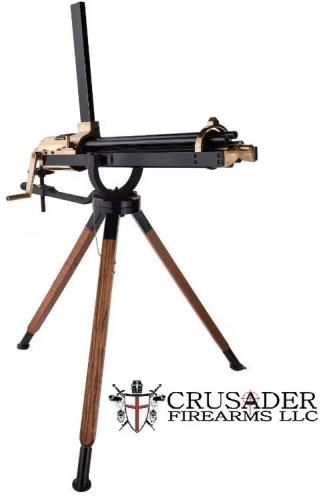
I’m a student of the Gatling gun and as you tell from reading this piece, I’m a big fan of the .45 Colt cartridge. After finishing this blog, I briefly wondered: Were any of the original Gatlings chambered in .45 Colt? The short answer is no. Even though the .45 Colt was a prevalent cartridge during the era of the original Gatlings, none were built for this cartridge (they instead used the much more powerful .45 70 rifle cartridge). That was then, though, and this is now. You can buy a current reproduction of the Gatling chambered in .45 Colt. That would be cool, but it would be expensive to keep such a beast fed.
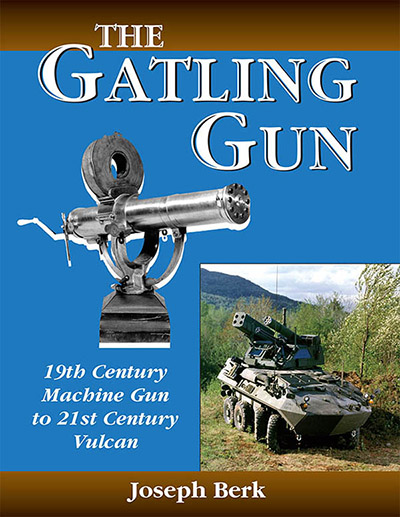
If you want to know more about Gatling guns (including their early history, the transition to modern weapon systems, and their current applications), pick up your copy of The Gatling Gun.
Join our Facebook ExNotes page!
Help us keep the lights on:
Don’t forget: Visit our advertisers!

I love the Urberti with the 5.5″ barrel, I am thinking of getting one along with a western rig, cowboy hat and boots. Although in NJ I might look out of place. On a different note, I am shocked you have not purchased a Gatling Gun.
Happy New Year my friend!
I was alerted to how good the Uberti is by my good friend Paul B. I am really pleased with it. I didn’t expect the fixed sights to be spot on, but they are. It is a very elegant six gun.
Thanks for commenting, Mike.
Nice read Joe, Ive always wanted to build one of those kit 22 Gatling guns but now in Washington state it’s probably illegal to do so.
Thanks, Rob. Happy New Year.