Revisiting the 375 H&H Safari Rifle

By Joe Berk

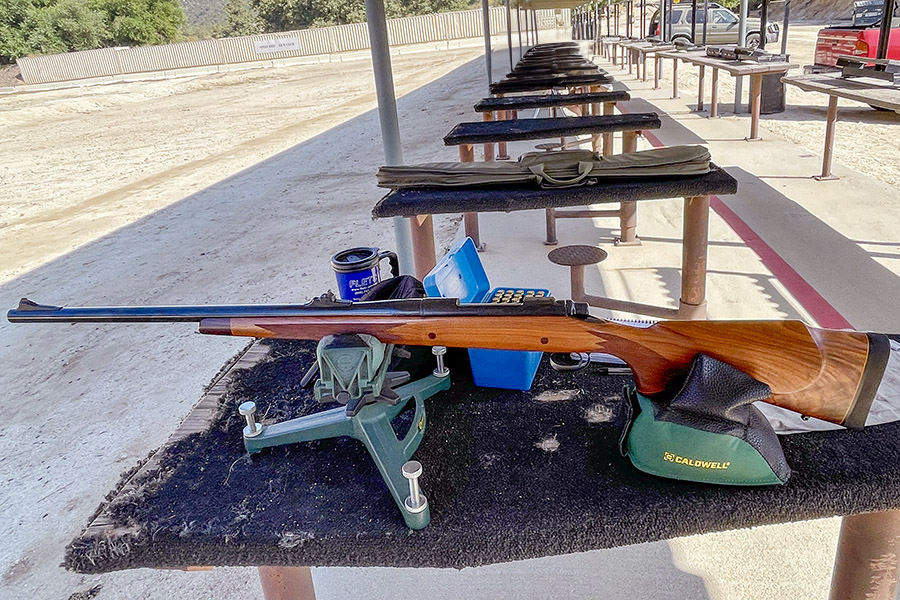
I’m not as good as I used to be.  That point was brought home during a recent session with my Remington .375 H&H Safari Grade rifle.  I can tell by reviewing a few blogs I did earlier on this rifle.  The groups were better. Way better.  I just don’t have the visual acuity I used to. I’ve written about this rifle before, and I’ll give you the links for those earlier blogs at the end of this one.
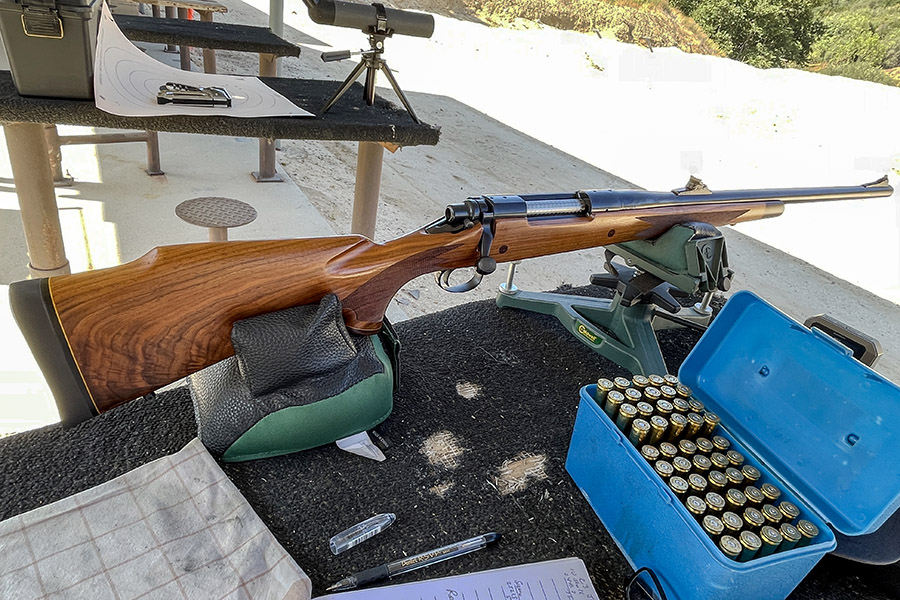
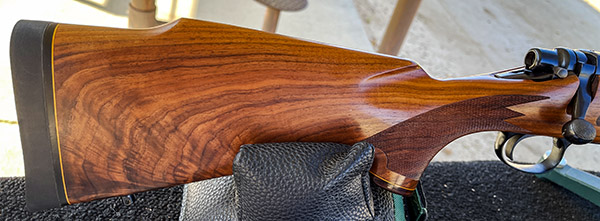
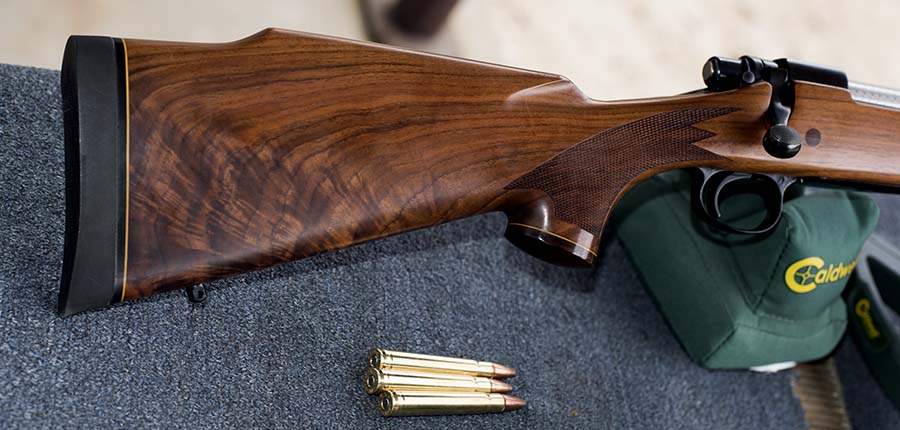
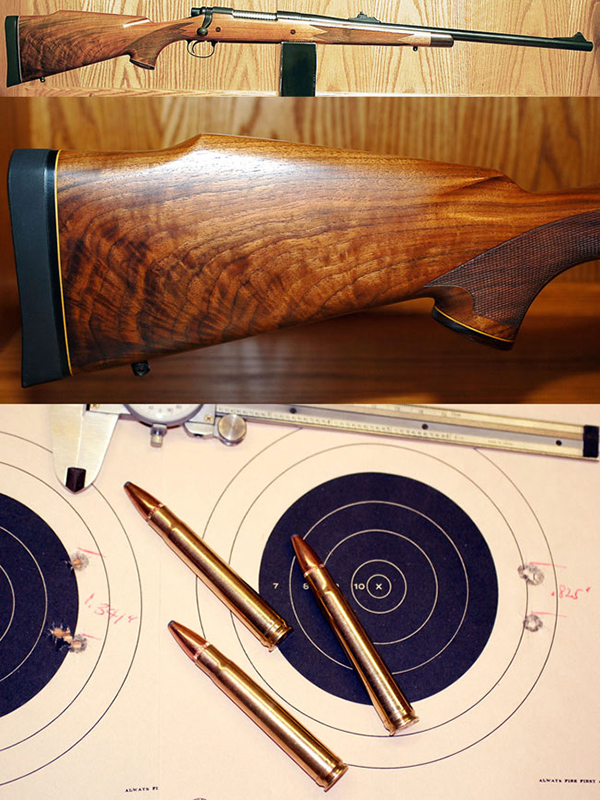
The walnut is what drew me to this rifle. That, and the fact that it is a .375 H&H.
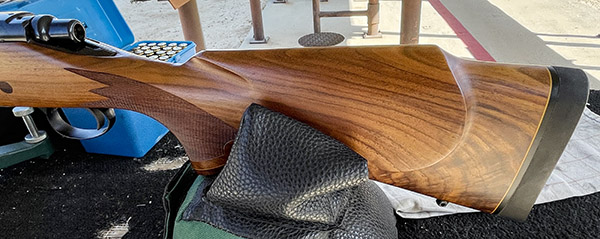
The lumber is straight grained through the length of the stock, and then it explodes in a feather pattern near the butt. This is good stuff.
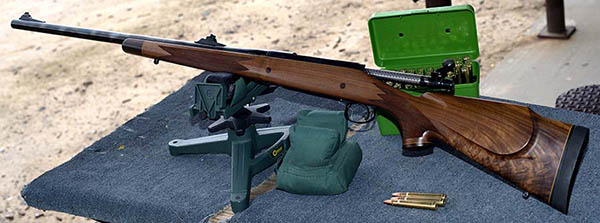
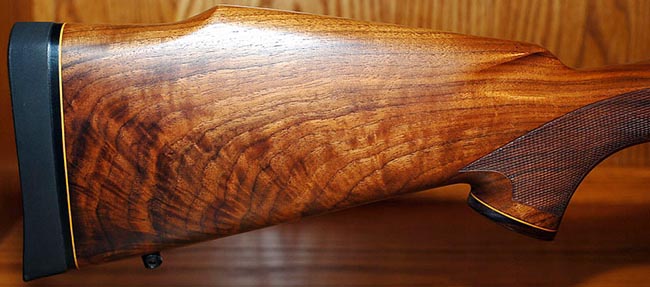
The view from the starboard side, where the contrasty grain is even better. Life is too short for plain walnut. You can quote me on that.

I’ve owned the Safari rifle for five decades now.  I’ve never been on a safari with it, and at this point in my life, I probably never will be.  But I can still dream.  Capstick, Corbett, Bell, and other professional hunters wrote about their adventures going after things that could gore, stomp, or bite you to death.   I like reading those stories.  Like I said, I can still dream.
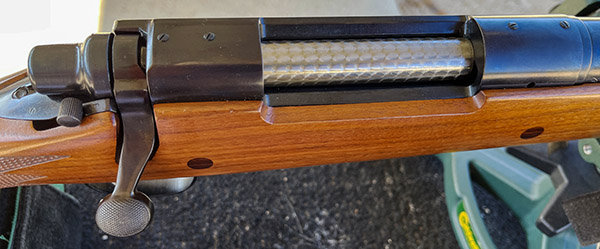
Back in the 1970s, the Safari Grade Model 700 Remington rifles were only offered in two chamberings: .458 Magnum and .375 H&H. Check out the jeweled bolt.
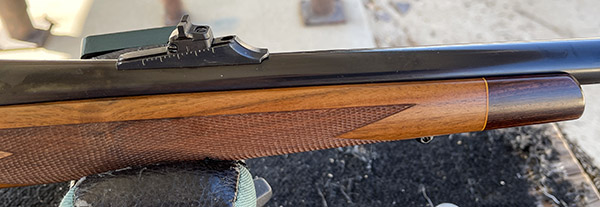
The Safari Grade rifles had a rosewood fore end tip and matching pistol grip accents, with light maple spaces. Classy stuff. Check out the rear sight.
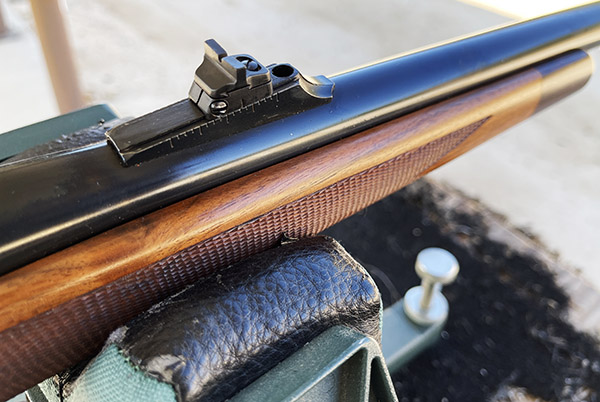
Another view of the rear sight.  The Safari Grade rifles had cut checkering, too (no pressed-in or fuzzy laser cut checkering on these rifles).
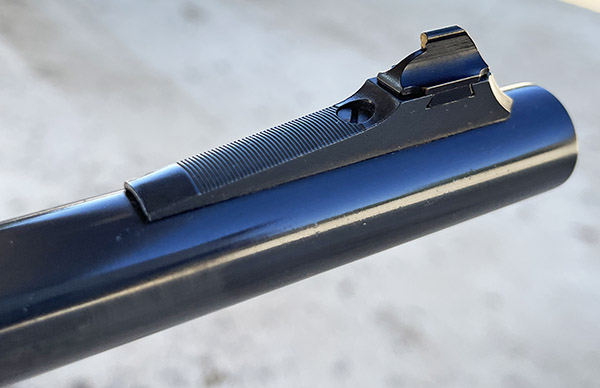
The front sight on my Model 700. That little bead is a lot harder to see these days than it was 40 or 50 years ago.

I first became interested in big bore rifles when a group of guys I hung around with in El Paso 50 years ago cooked up a cast bullet bench rest competition.  They all bought big bore rifles, with the understanding that minor casting imperfections wouldn’t affect the bigger .458 or .375 cast bullets very much.  I never lost interest in that concept, although the bullets I’ll write about here are of the jacketed variety.
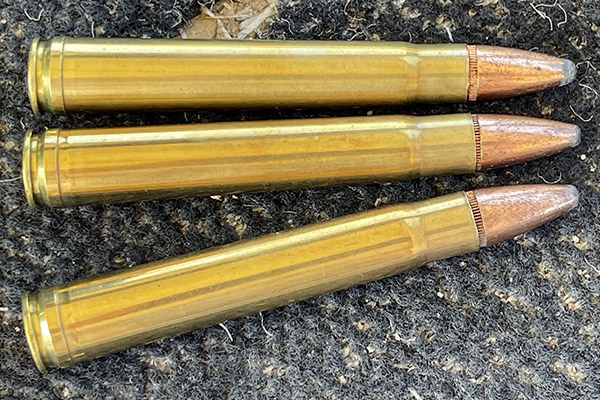
.375 H&H reloads with 270-grain Hornady jacketed softpoint bullets. The bullets are factory seconds.

The weather at the West End Gun Club was perfect:  No wind, moderate temperatures, and the horseflies weren’t out.  I set up my gear, put my targets out during a line break, and chatted with my geezer buddies for a bit (being retired is fun).  Then I pulled the big Remington from its case, placed it in the rifle rest, set up my Garmin chronograph, chambered a round, and searched diligently for the front sight as I settled in behind the rifle.  As the front sight danced in and out of focus, I did my best to hold it at the base of the bullseye (barely visible 100 yards away), and gently put pressure on the trigger.  I did the same nine more times, each time remembering the marksmanship fundamentals I learned in the Army.
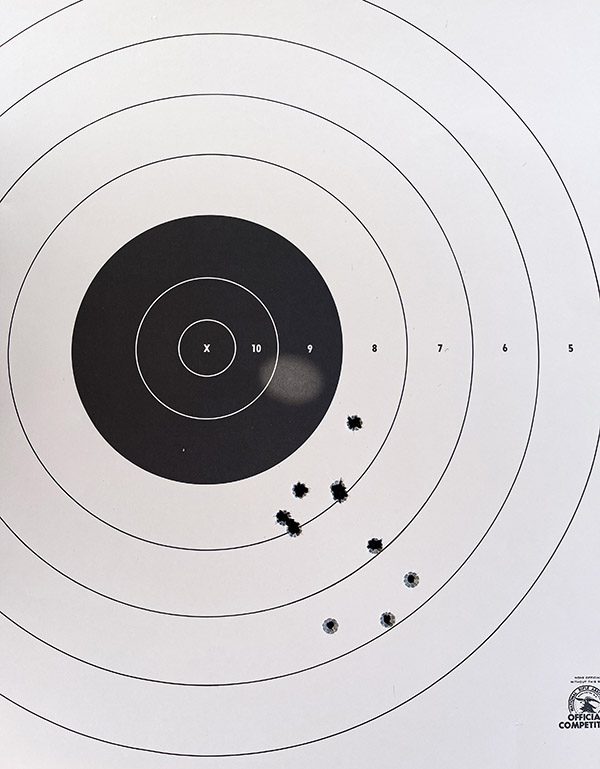
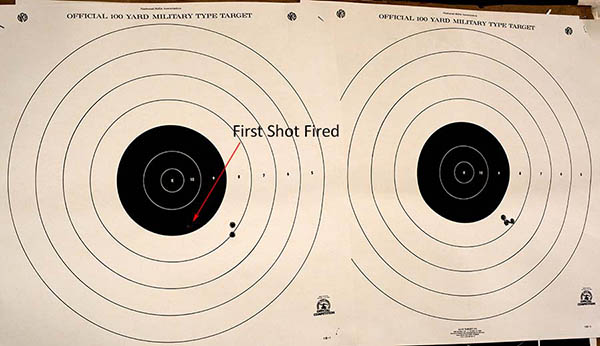
My first target of the day. Low and to the right. The group was just okay. I’ve done better.

I shot at 100 yards from the bench, and as has been the case in prior outings, the rifle printed a little low and a little to the right (I had to use my spotting scope to see it; there’s no way those little .375 holes would be visible to the naked eye).  I thought I would adjust the rear sight to compensate for this, but I had my contact lenses in on this outing and I couldn’t see the screws that lock the rear sight in position well enough to take a chance on loosening them and moving the sight.  I’ll do that when I get home.  I had my contacts in because I thought I might be able to see the front sight a bit better.  Hope springs eternal, but it wasn’t in the cards for me.  I shoot open sights pretty much the same whether I’m wearing my glasses or my contacts.

On the next target, I threw in a little Kentucky windage, doing my best to hold the front sight at 9:00 on the black bullseye.  It worked.  The next 10 shots were mostly in the bullseye, but I had to struggle even more to see the front sight with it partially over the black bullseye.  Normally I would hold at 6:00, where the front sight is still tough to see but the contrast against the white background surrounding the bullseye is better.  Trying to hold it at 9:00, with the front sight’s little bead half in and half out of the bullseye, was like trying to have a discussion with a left winger.  But when I looked through the spotting scope, I could see that I did okay.
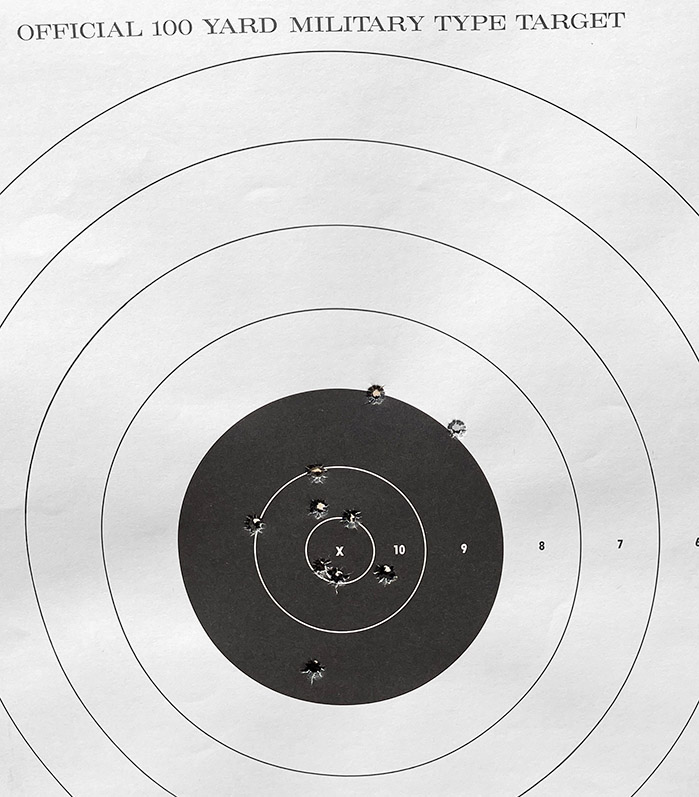
A 9:00 o’clock hold and a little luck resulted in this group. I do love shooting my .375 H&H.

My load is mild compared to where you can go with this cartridge.  I shoot a reduced load using Hornady 270-grain jacketed softpoint factory second bullets, 33.0 grains of SR 4759 propellant, Remington brass, a CCI 200 primer, an overall cartridge length of 3.570 inches, and no crimp.  Recoil is mild for a .375 H&H.

The group size and chrono results, along with those from a single group fired a week or so earlier, are provided below.
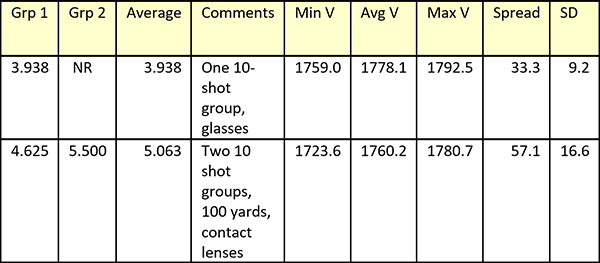
It looks like I did a little better wearing glasses than I did with my contact lenses.  I think I see better with my contacts, but I guess the results don’t lie.  It was a little bit cooler on this second outing than it was on the day I shot previously, and that shows up in the velocity results.

One of my buddies chided me about the Remington needing a scope.  I would do better with a scope, but I like the challenge of hitting a distant target with iron sights.

You might be wondering about the factory second bullets.  They are usually available from MidwayUSA.  I don’t know what makes them factory seconds.  It might be the cannelure location on the bullet shank, it might be slight tarnishing, or it might be something else.  The factory second bullets are about half the price of the standard (presumably higher quality) Hornady bullets.  For my purposes, these are good enough.  Maybe I’d get smaller groups with first quality bullets.  Maybe not.  Someday maybe I’ll test to see if there’s an accuracy difference.

As promised, here’s a set of links for my earlier .375 H&H blogs:

The 375 H&H at 100 Yards
375 H&H Loads
The Remington 375 H&H Safari Grade Rifle

You might recall that we also wrote a few blogs on a cartridge that improves upon the .375 H&H (and that would be the .375 Ruger).  Those blogs are here:

A Custom 375 Ruger
A Day at the Range

And to wrap up this blog, while I was on the Midway site I came across a Youtube video about the .375 H&H by my good buddy Larry Potterfield.  I enjoyed it and I thought you might, too.


Join our Facebook ExNotes page!


Never miss an ExNotes blog:


Help us keep the lights on:


Don’t forget: Visit our advertisers!


The 375 H&H at 100 yards…

Here’s a quick update on the .375 H&H that I promised a few posts ago.  In that post, I mentioned that I had been shooting the Remington Model 700 Safari Grade at 50 yards for my load development work, and I mentioned that I wanted to try it at 100 yards.

The Remington Safari Grade Model 700, chambered in .375 H&H Magnum.

I did, and the bottom line is that I shot the tightest groups I’ve ever shot at 100 yards using iron sights (i.e., not a scope).   Take a look.

Two 3-shot groups fired at 100 yards, with iron sights, off the bench. The first round fired through a cold and lubricated barrel hit almost exactly to point of aim (it’s a little hard to see in the photo). Once the bore was fouled, the rifle grouped very tightly a couple of inches to the right.

My point of aim was at 6:00 on the bullseye, and the groups I shot were worthy of a scoped rifle.   I may need to adjust the rear sight to bring the group over to the left a couple of inches or so (which is a bit funny, because at 50 yards the windage seemed perfect).  The elevation is perfect; the point of impact is even with the point of aim for elevation.  When I shot those groups it was overcast, and that could account for the rifle printing a bit to the right.  Our range is aligned such that in the morning the sun is to the left, and that makes the left side of the front site a bit brighter than the right side.   Because it was overcast the day I shot the target you see above, the sunlight-induced bias wasn’t present.  That could account for the groups offset to the right.  I’ll wait and shoot it again when the sun’s out to see where the rifle hits.

I am enjoying this rifle more and more.  It’s got it all…good looks, power, and it groups like a target grade rifle.


Check out our other Tales of the Gun stories!


Hit those popup ads!


Never miss an ExNotes blog:

375 H&H Loads…

A couple of folks wrote to me asking about the loads I used for the recent blog about the Model 375 H&H Model 700.  Say what you will, but most folks are fascinated by these big bore rifles (including me), and I figure if a couple of guys took the time to write, there are probably a bunch more out there with the same question.

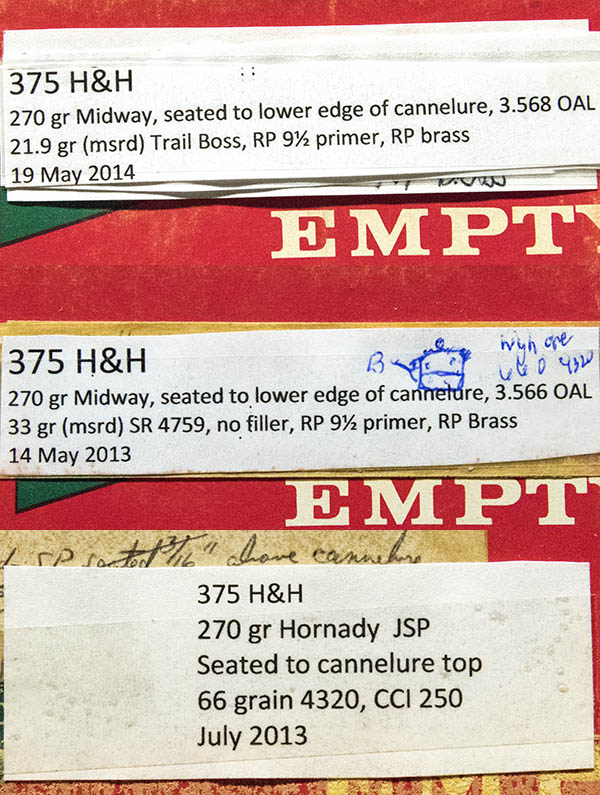
When I shot the 375 H&H Model 700 last weekend, I wanted to work up some loads for it but I ran out of time. I grabbed what I had in the ammo locker, but I couldn’t find a record of having developed specific loads for this rifle earlier. Maybe I did and the loads were ones I had tested already (you’ll see from the dates on the load labels that I preppred this ammo a few years ago), or maybe I loaded them and just never got around to trying them.  In any event, these were the loads that went to the range with me last weekend.

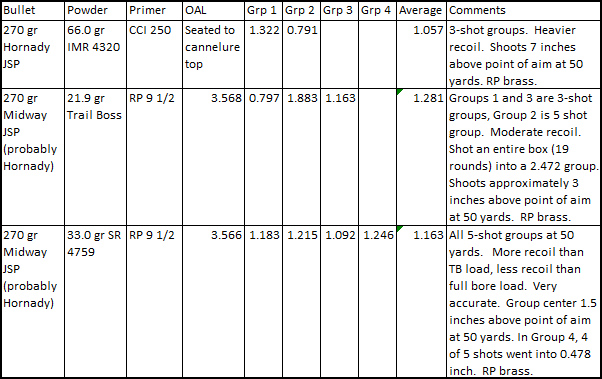
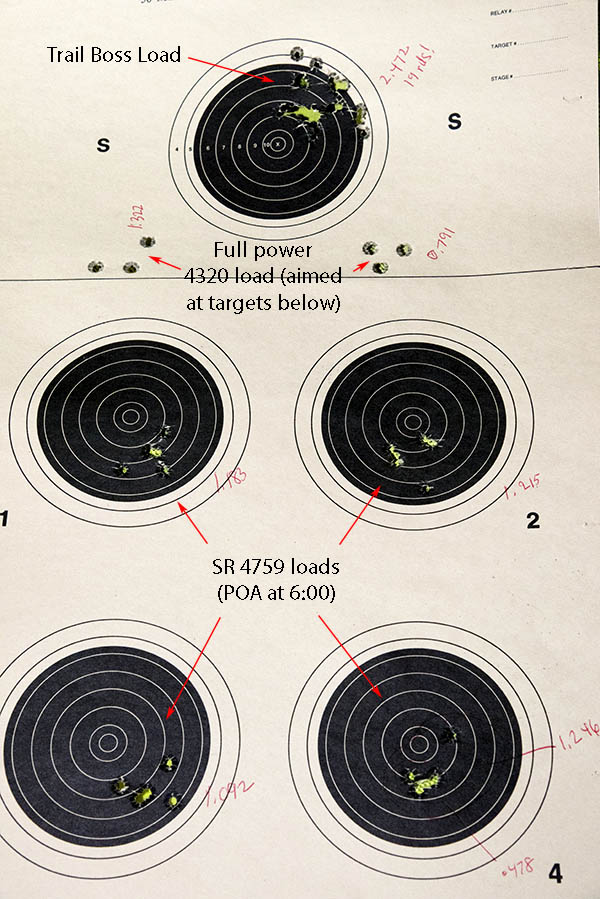
I did all my shooting off the bench at 50 yards, and here are the results…

I used a 6:00 hold on all the targets.   All of the loads were accurate.  The recoil on the Trail Boss loads was light, about like shooting a .223.  The full power loads (the ones with 66.0 grains of IMR 4320 propellant) was accurate, but recoil was significant.  It’s probably okay as a hunting load (no one notices recoil when hunting), but shooting off the bench with this load didn’t quite move the needle into the fun range.  The 33.0 grains of SR4759 was potent, but recoil was manageable, and it was very accurate.  It’s the one I’m going to use.

These .375 H&H rifles are normally big ticket items, but Weatherby recently introduced their synthetic-stocked Vanguards (with iron sights) in a .375 H&H chambering.  You can pick these up for around $600, and that’s a phenomenal deal.


See our other Tales of the Gun stories here.

The Remington Safari Grade .375 H&H

Two of the all time greats…a Safari Grade Model 700 Remington, and the .375 Holland and Holland cartridge.   Check out the walnut on this magnificent rifle!

I started playing with guns when I was a youngster and the disease progressed as I aged.  I almost said “matured” instead of “aged,” but that would be stretching things, especially when it comes to shelling out good money for fancy guns.  When I see a rifle I want, I haven’t matured at all.  I sure have aged, though.

So anyway, when I was a young guy, I read everything I could about all kinds of guns, and I especially enjoyed reading about big game rifles. Really big game, as in Peter Hathaway Capstick chasing cape buffalo, Jim Corbett chasing man-eating tigers in India, and Colonel John Henry Patterson chasing the man-eating lions of Tsavo.  It was all books and magazines back in those days. Al Gore was still a youngster and he had not invented the Internet yet, and if you wanted to read about cool things you went to a place called the library. One of the cool things to read about there, for me, was the .375 Holland and Holland cartridge, along with the rifles that chambered its Panatela of a cartridge.  The descriptions were delicious…a magnum rifle firing a 300-grain bullet 3/8ths of an inch in diameter at 2700+ fps with the trajectory of a .30 06.

The .375 H&H goes all the way back to 1912, when it was developed by the great English firm of Holland and Holland. It’s still one of the best cartridges ever for hunting big beasts that snarl, roar, bite, stomp, and gore those who would do them harm.   It was the first belted magnum cartridge. The idea is that cartridge headspaces on the belt (a stepped belt around the base), a feature that wasn’t really necessary for proper function, but from a marketing perspective it was a home run.  Nearly all dangerous game cartridges that followed the mighty .375 H&H, especially those with “magnum” aspirations, were similarly belted.   Like I said, it was a marketing home run.

As a young guy, I was convinced my life wouldn’t be complete without a .375 H&H rifle.  You see, I had more money than brains back in those days.  I spent my young working life on the F-16 development team, and my young non-working life playing with motorcycles and guns.  I was either on a motorcycle tearing up Texas, or on the range, or hanging around various gun shops between El Paso and Dallas.   In Texas, some of the shops had their own rifle range.  People in Texas get things right, I think.

One of the shops I frequented was the Alpine Range in Fort Worth, Texas. The fellow behind the counter knew that I was a sucker for any rifle with fancy walnut, and when I stopped in one Saturday he told me I had to take a look at a rifle he had ordered for a customer going to Africa. He had my interest immediately, and when he opened that bright green Remington box, what I saw took my breath away.  It was a Safari Grade Model 700 in .375 H&H. In those days, the Safari Grade designation meant the rifle had been assembled by the Remington Custom Shop, and that was about as good as it could possibly get.

The Model 700 was beautiful.  Up to that point, I’d never even seen a .375 H&H rifle other than in books and magazines. This one was perfect. In addition to being in chambered in that most mystical of magnums (the .375 H&H), the wood was stunning.  It had rosewood pistol grip and fore end accents, a low-sheen oil finish, the grain was straight from the front of the rifle through the pistol grip, and then the figure fanned, flared, flamed, and exploded as the walnut approached the recoil pad. I knew I had to own it, and I’m pretty sure the guy behind the counter knew it, too. Did I mention that the rifle was beautiful?

“How much?” I asked, trying to appear nonchalant.

“I can order you another one,” the counter guy countered, “but this one is sold. I ordered it for a guy going to Africa.  I’ll order another one for you. They all come with wood this nice.”

“Has he seen this one yet?” I asked, not believing that any rifle could be as stunning.  I knew that rifles varied considerably, and finding one with wood this nice would be a major score, Remington Custom Shop assembly or not.

“No,” the sales guy answered, “he hasn’t been in yet, but I can get another for you in a couple of days. Don’t worry; they’re all this nice.”

His advice to the contrary notwithstanding, I worried.  This was the one I had to own. “How much?” I asked again.

“$342,” he answered.

Mind you, this was in 1978. That was a lot of money then. It seems an almost trivial amount now.   The rifle you see in the photo above, especially with its fancy walnut, would sell for something more like $2,000 today.  Maybe more.

“Get another one for Bwana,” I said. “This one is mine.”

“But this is the other guy’s.”

“Not anymore it’s not. Not if you ever want to see me in here again,” I said.  Like to told you earlier, I was a young guy back then in 1978.  I thought I knew how to negotiate.  My only negotiating tool in those days was a hammer, and to me, every negotiation was a nail. You know how it is to be young and dumb, all the while believing you know everything.

“Let me see what I can do,” the sales guy said, with a knowing smile. When the phone range at 10:00 a.m. the following Monday, I knew it was the Alpine Range, and I knew the Model 700 was going to be mine. I told my boss I wasn’t feeling well.

“Another rifle?” he asked.  He didn’t need to ask.  He knew.  We were in Texas.  He had the disease, too.

In less than an hour, the rifle you see in that photograph above was mine. The guy behind the counter at the Alpine Range was good. He had already received a second Safari Grade Model 700, in .375 H&H, so the safari dude was covered. I asked to see the replacement rifle and the walnut on it was bland, straight grained, and dull…nothing at all like the exhibition grade walnut on mine.  It made me feel even better.

I’ve owned my Model 700 .375 H&H Remington for more than four decades now.  I’ve never been on safari with it and I have zero desire to shoot a cape buffalo, a lion, a tiger, or anything else, but I do love owning and shooting my .375 H&H.  I’ve never seen another with wood anywhere near as nice as mine, and that makes owning it all the more special.


Like reading about guns?  See all our Tales of the Gun stories!