A Day At The Range

By Joe Berk

Yesterday was about a perfect day at the West End Gun Club. I didn’t even have to unlock and open the gate (it was already open because the weed abatement guys were doing some work there).  The skies were overcast, the temperature was comfortable, there was no wind, and there were no bugs. I shot four rifles (which is more than usual and I probably overdid it, especially with the big bores). My neuropathy was kicking my ass last night and it still is a little bit today. Ah, to be 72 again…
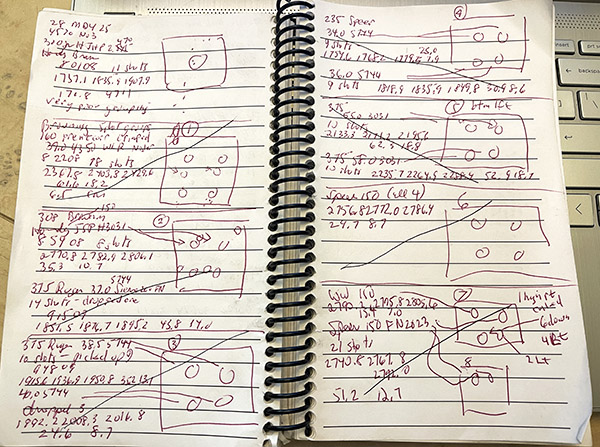
Lots of data to record. The Garmin chronograph captures everything, but I also write it in my logbook to keep a record. If I don’t do this, I can get confused about what I shot on each target.

Ruger No. 3 .45 70

First up was the .45 70 No. 3, a rifle I posted about recently here on ExNotes.. I had 11 rounds left with a hot XBR 8208 load in Hornady short brass originally loaded for a 26-inch barreled Ruger No. 1.  For some reason Hornady’s .45 70 brass is about a tenth of an inch shorter than industry standard.   I suppose it facilitates loading longer bullets in some lever guns.  For me, the shorter brass is not as accurate as the standard-length cases. But one of my buddies has a custom Martini chambered in .45 70, and he needs the shorter brass to be able to load the cartridges in his rifle.  I wanted to use up my shorter case ammo so I could give the brass to my friend.
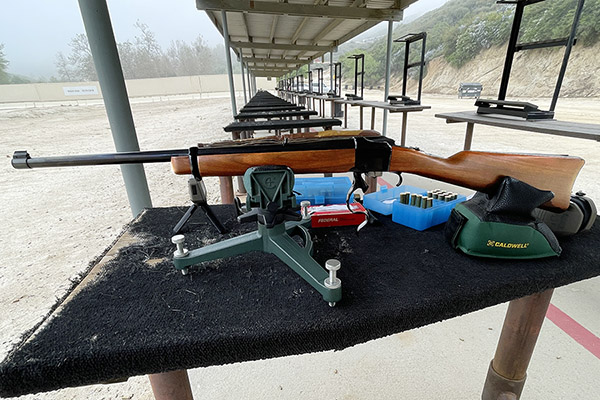
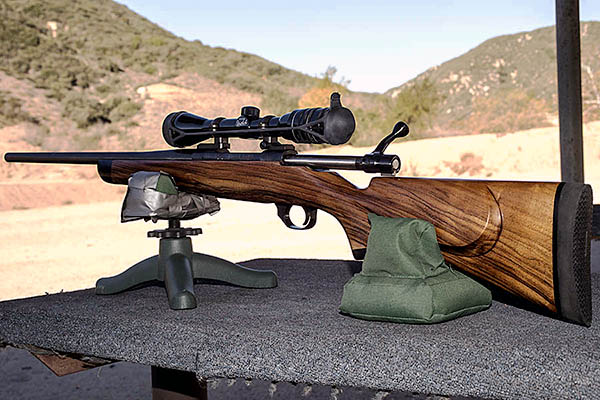
A .45 70 Ruger No. 3 on the line at the West End Gun Club. I’m usually out there early, which explains the vacant shooting benches. I like being retired.

The hot XBR 8208 load (in regular brass) is incredibly accurate in my 26-inch No. 1, but it proved to be just awful at 100 yards in the No. 3.  It’s a hot load and it kicked like hell, pounding my shoulder and my cheek.  To compound the felony, the bullets were tumbling by the time they reached the target.  In my No. 3, the vertical stringing was terrible.  The average velocity with this load’s 300-grain Hornady jacketed hollowpoint bullets was a smoking 1839 feet per second, but it had a huge velocity spread (which explains the vertical stringing).  Although the load worked well in the longer-barreled No. 1, it is definitely not a No. 3 load.   But I learned a little more, and I had the brass ready to give to my friend.

6.5 Creedmoor Browning X-Bolt

I recently wrote about developing a hunting load for my 6.5 Creedmoor Browning X-Bolt.  I fell in love with the 160-grain Hornady jacketed roundnose bullet and when working up the IMR 4350 load for it, I found that my resizing die’s expander ball was too large (I wrote about that here).  I had a box of ammo I had already loaded before I discovered the expander ball issue and I wanted to use it up.
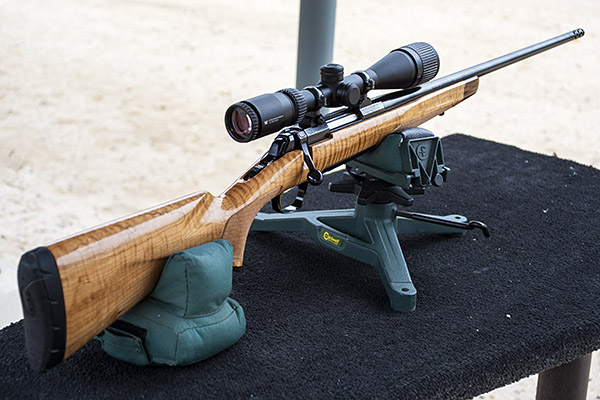
A Browning X-Bolt in 6.5 Creedmoor. The rifle’s performance matches its looks; both are superb.
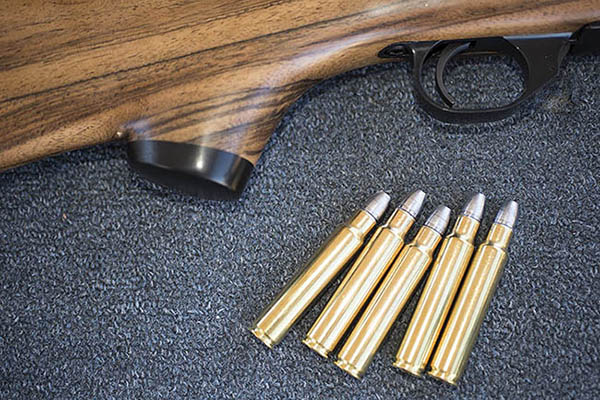
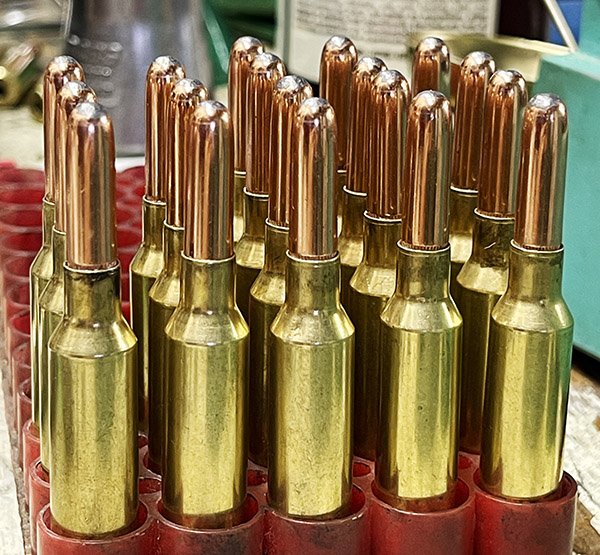
6.5mm bullets originally developed for the 6.5 Swedish Mauser. The look both weird and cool in the 6.5 Creedmoor. I didn’t think they would chamber in my rifle, but they do.

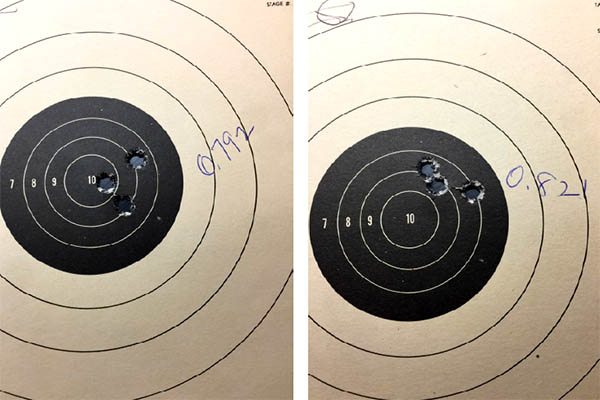
Even with the oversized expander ball, the 6.5 Creedmoor still shot well. The 160-grain Hornady jacketed roundnose bullet with 39.0 grains of IMR 4350 is accurate. I shot a 0.890-inch 5-shot group and a 0.651-inch 3-shot group.  With my Browning, the average velocity was 2404 feet per second and the velocity standard deviation was a low 6.5 feet per second (coincidentally matching the caliber designation…I guess there’s something magic about “6.5”).  This is a great rifle and a great load.

A lot old timers (guys my age) badmouth the 6.5 Creedmoor as an unnecessary cartridge.  When we get old we get funny, and I suspect a lot of these geezers would complain if you hung them with a new rope.  Not me.  I am a 6.5 Creedmoor believer. It is a superb cartridge.

You might have noticed that the Browning has a muzzle brake.  It’s cool.  A split second after each shot, you feel a breezy puff on your face, almost like the rifle is blowing you a kiss.  One of my friends asked if the muzzle brake affected accuracy or if there were any other disadvantages.  Truth be told, I don’t know about the accuracy issue (I’ve never shot the rifle without the muzzle brake).  The only downside I can think of is that the muzzle blast and report from the rifle feels like it’s a little louder with a muzzle brake.  Another downside is that with big bore, high-powered rifles, guys on the benches to the left and right feel the increased blast.  I remember a guy shooting a .50-caliber Barrett rifle a couple of stations down several years ago and the blast was so severe I moved away to escape it.   One more potential disadvantage is the muzzle brake makes the rifle longer. That might be an inconvenience in the field.  It hasn’t bothered me.

.308 Browning A-Bolt Gold Medallion

I’ve been working on developing loads for this rifle. Baja John got me turned on to these rifles about ten years ago. I loaded several different 150-grain bullets, all with 47.0 grains of BallC2. Groups ranged from mediocre to decent. The best load so far has been the same one I’ve used for the M1A, which is 44.0 grains of BallC2 and a 168-grain Speer match boat tail bullet. That’s not a hunting bullet, though, and for that, the Speer jacketed flatnose bullet grouped best (with 47.0 grains of BallC2).
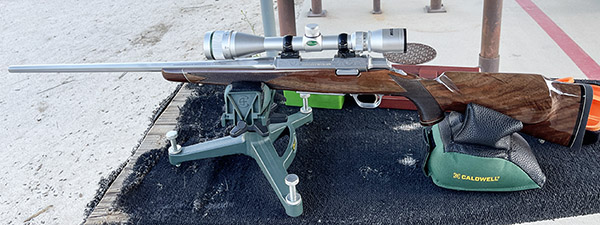
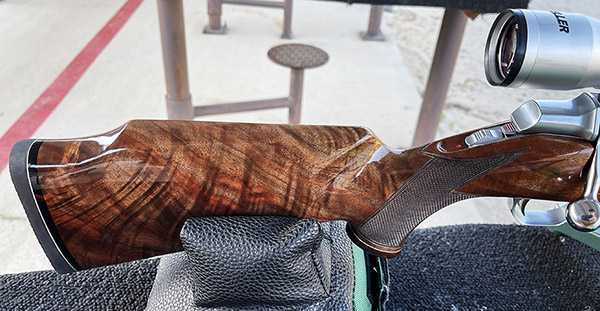
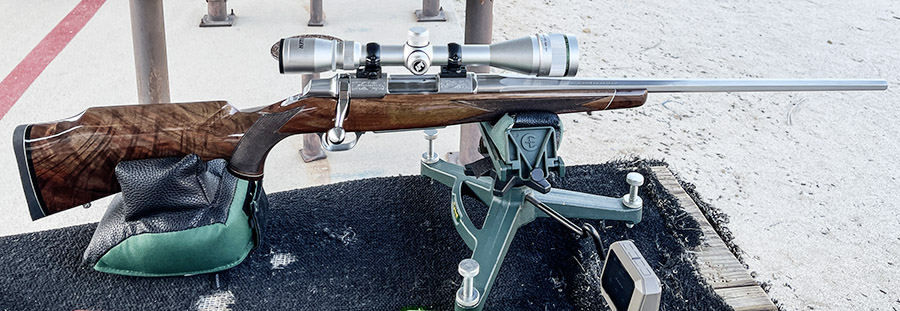
The .308 Browning A-Bolt rifle. It is a good looking firearm.
Highly-figured walnut stands out. This rifle was a Browning show gun at one of the SHOT shows.

The silver Mueller scope I put on the rifle is okay, but the optics are not in the same league as a Leupold (and they shouldn’t be, as the Mueller is a $145 scope). Compared to the 6.5 Creedmoor, the Browning .308 kicks big time. It’s tolerable and certainly not anywhere near the .375 Ruger (see below), but the 6.5 Creedmoor is much more pleasant to shoot.  Like I said, I’m a believer in the Creedmoor.  That said, I plan to hunt with the .308 Browning on my next pig hunt, and I’ve been working up different loads for it.  You’ll read about that in an upcoming blog.

.375 Ruger/Howa 1500

I shot 90 rounds in the mighty .375 Ruger yesterday, and I’m feeling it today. I wanted to evaluate 5744 and IMR 3031 in this cartridge using lighter 200-grain and 235-grain jacketed bullets.
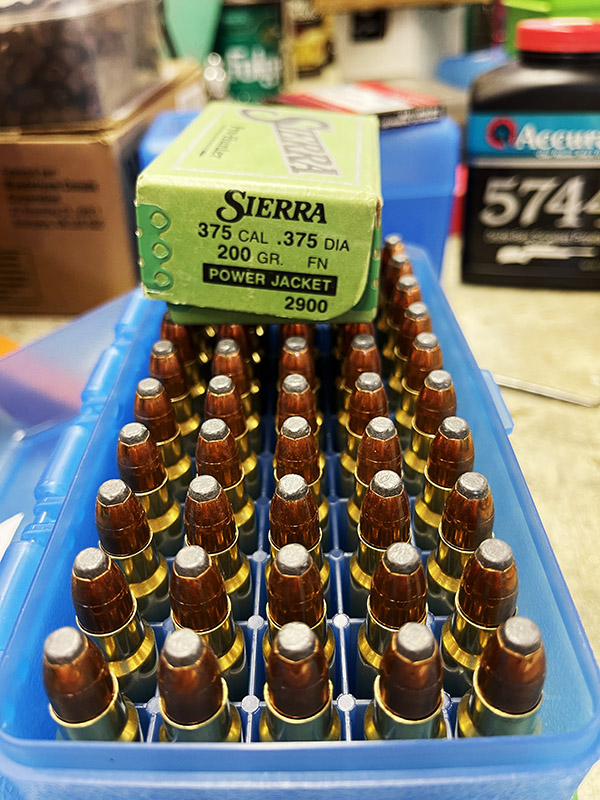
.375 Ruger ammo loaded with the Sierra 200-grain jacketed flatpoint bullet.

The bottom line is this rifle likes everything, and several loads would put 5 shots into a 1.5-inch cluster (which is pretty cool with a 4X scope and an elephant gun). The best load is 38.5 grains of 5744 and the Sierra 200-grain jacketed flatnose bullets one of my friends gave to me (those shot a 1.330-inch 5-shot group at 100 yards). The rifle fed both bullets well from the magazine.  The action on this rifle is super slick.  Howa makes a good rifle. The IMR 3031 loads (at 55.0 and 58.0 grains) shot well, too, but the recoil is more than I care to subject myself to (the loads were below the recommended minimum with the Speer 235-grain bullets; the max loads must be brutal).
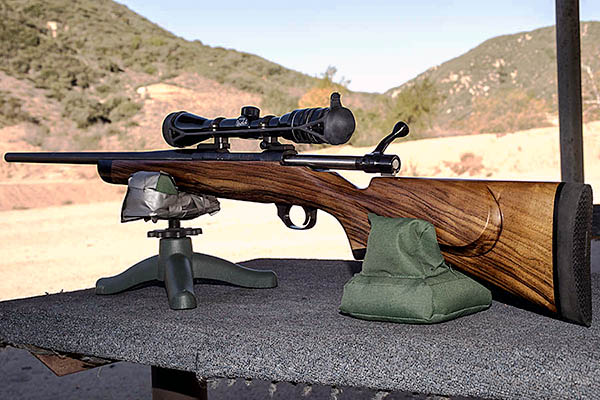
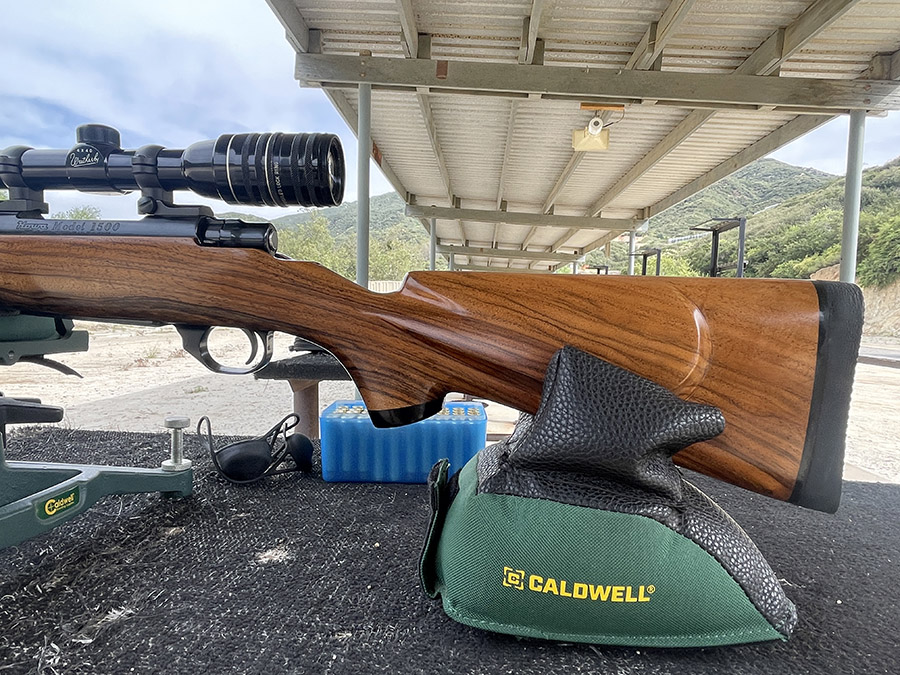
The .375 Ruger Howa 1500 in an English walnut stock.

While we were there, an old timer named Marcus stopped by with a custom Mauser .25 06, also stocked in English walnut like my .375 Ruger. I enjoyed meeting and chatting with him, and I enjoyed seeing that Mauser.


Join our Facebook ExNotes page!


Never miss an ExNotes blog:


Help us keep the lights on:


Don’t forget: Visit our advertisers!


A custom .375 Ruger…

About six years ago I had an urge to build a custom rifle. Some folks consider a custom rifle to be one you build from the ground up.  For others, a custom rifle is one you buy off-the-shelf and then modify.  My idea of a custom rifle starts with a barreled action (the metal parts) and an unfinished, semi-inletted stock (I’ll explain that “semi-inletted” descriptor a few paragraphs down). I had built rifles like this a couple of times in the distant past and I had the urge to do it again.

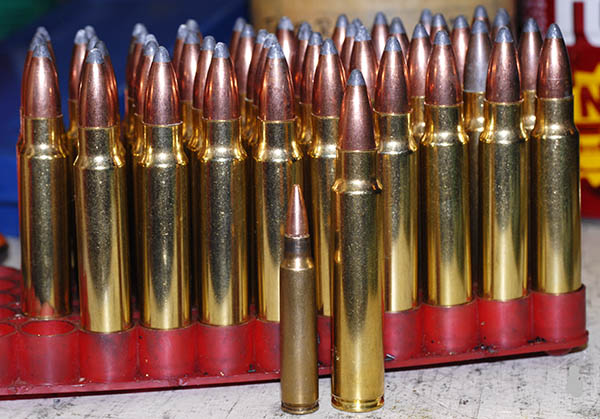
A tray full of .375 Ruger cartridges. I included a .223 Remington in the foreground (it’s the one on the left) for comparison. The .375 Ruger is a powerful round!

My objective was to build a rifle chambered for the .375 Ruger cartridge. The .375 Ruger was a joint project between Hornady and Ruger. The idea was a cartridge faster than the .375 Holland and Holland (a classic African big game cartridge), but shorter so it could cycle through a standard-length rifle action. When the .375 Ruger came out 10 years ago, everyone who tested it said it hit both marks. That was enough for me; I needed a .375 Ruger rifle in my life.

It had been a long time since I tackled a project like this, and I was surprised when I looked for a stock. Three or four decades ago several outfits offered semi-inletted stocks.  Most of them were in Missouri (I guess that’s where all the good walnut is).  The stock companies I knew decades ago (Fajen, Bishop, and others) are gone. The demand isn’t there. Millenials don’t shoot much, gun laws are more restrictive, and shooters today go for black plastic (there’s no accounting for some folks’ taste, I guess).

A semi-inletted stock is one that 95% inletted (that’s what the stock companies say); what is euphemistically implied is that you need to do just a bit more to fit your barreled action to the stock.  That 95% inletting claim always brings a laugh, because final fitting of the action to the stock takes a ton of work…something way more than the implied final 5%.

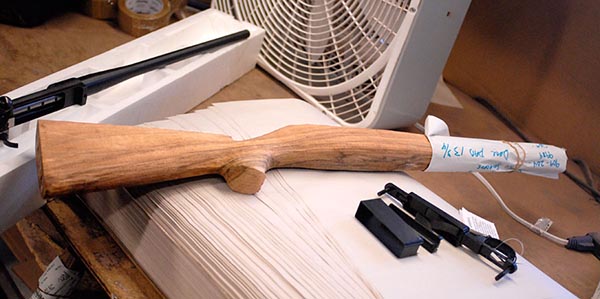
The English walnut blank I selected and the barreled action that would go into it.

Richard’s Microfit is an old-line gunstock company right here in So Cal. I called Richard’s to ask if I could visit and personally select the piece of walnut I wanted, the answer was yes, and it was time for a ride out to the Valley.

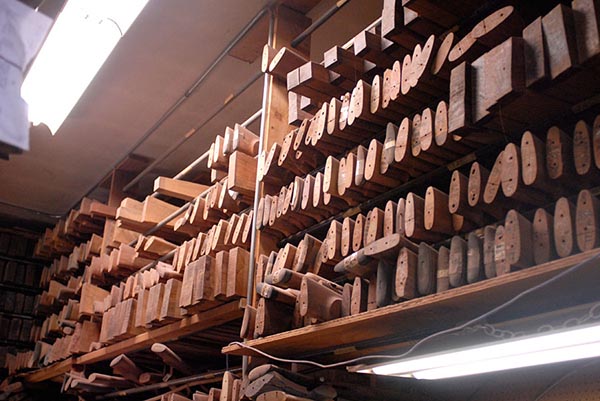
Stock blanks at Richard’s Microfit. There were these and many, many more. Visiting the factory and selecting the one I wanted was a lot of fun.

Richard’s had a lot of lumber and I selected a piece of English walnut with lots of figure and grain that ran lengthwise (what you want in a magnum rifle, as it makes the stock stronger). The contrasty grain was a difficult to see in the blank, but the Richard’s people knew how to mist it with water and that made the walnut come alive. I specified a solid black rubber recoil pad, an ebony pistol grip cap, and a matching ebony fore end tip. The price went up, but I don’t do this sort of thing very often and the heart wants what the heart wants.  My heart wanted ebony accents.

Few rifle manufacturers sell barreled actions today (they all used to), but Howa still does and they had one in .375 Ruger. It is a stout thing with a stubby 20-inch heavy barrel. Howa makes complete rifles under their own name and they also sell to other manufacturers (the Weatherby Vanguard, one of the world’s great rifles, is made by Howa).  A custom rifle I built 40 years ago (a .30 06) had a Howa barreled action and I knew from that project they were good.

I took a good 80 hours to fit the barreled action to the stock, but I was in no hurry (it’s easy to take wood away; it’s a lot harder to add it back on), and I glass bedded the action with AcraGlas for added accuracy. That involved coating the barreled action with a release agent, mixing epoxy and glass fibers and slathering the mix in the stock, placing the barreled action in the wet epoxy, and then clamping it all together while the epoxy cured. A day later, I pried the barreled action out of the stock and oila, the action now had an exact fit to its glass bed.
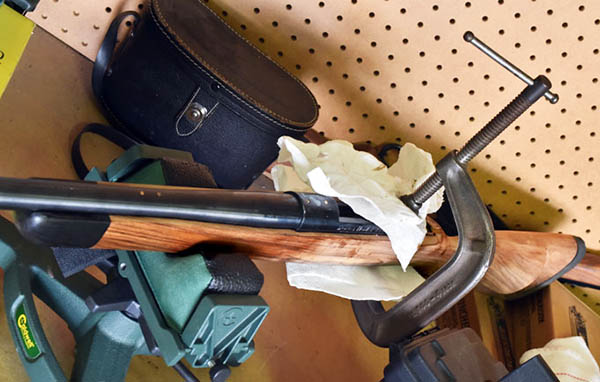
Glass bedding the .375 Howa barreled action in the stock.

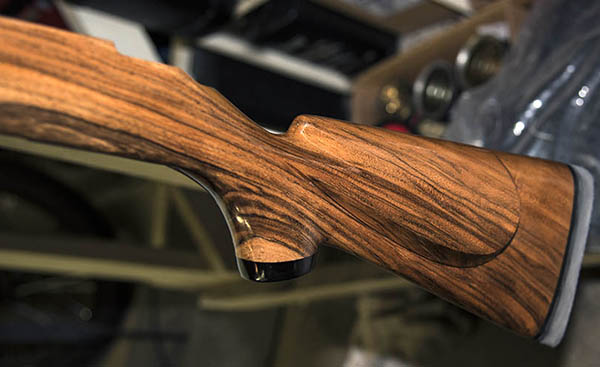
The next steps involved shaping the stock exterior and the ebony accents to my tastes, and then sanding everything with 100, 200, 400, and then 600 grit sandpaper. That required another 60 hours.  Then it was on to applying the finish.  I like TruOil. The drill is to apply the first coat of TruOil heavily (to allow it to fill the wood pores and soak into the walnut), wait a week, and then use 0000 steel wool to remove the excess. Then came TruOil Coat No. 2, a 24-hour  cure, and more steel wool. Then another coat and another 24-hour cure. It would be 10 coats total in this manner. With each coat of TruOil the inner beauty of the walnut emerged further.  This is one of the best parts of building a custom rifle…finishing the stock and watching the walnut wake up.  It becomes a living thing, changing colors and character as the light hits it from different angles.

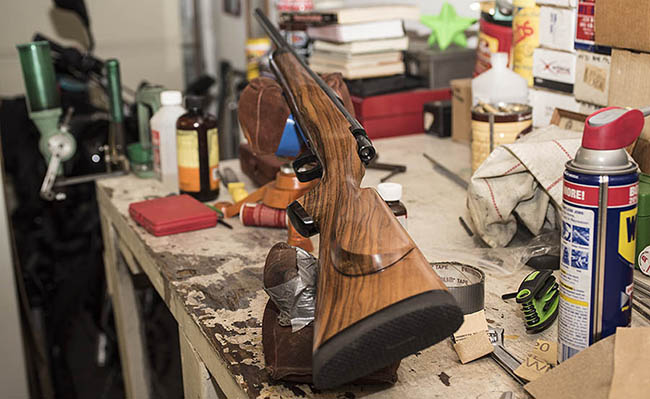
My workbench could be a little neater.
Somewhere around Coat No. 8 or 9. It’s starting to come together. This was way too glossy for a hunting rifle, but a final steel wool scrub would knock it down to a more subdued and refined appearance.

The feeling of satisfaction that comes from fitting, bedding, shaping, and then finishing a custom gun stock is profound and difficult to describe.  Applying an oil finish is the best part.  You get a high gloss finish, which can be left that way, or you can knock it down with the steel wool again for a sublime satin low gloss finish. That’s what I did. Shiny looks good but it is reflective and that’s bad for a hunting rifle. And that’s what this .375 is: A hunting rifle. For pigs, to be specific.

On the range with my custom Howa rifle and its 4X Weatherby scope.

While all of the above was going on, I found a used 4X Weatherby scope in a local gun shop’s parts bin.  Old Weatherby scopes are stunningly clear and they generally go for something north of $200 when you find them (which isn’t often because they stopped making them more than 30 years ago).  I prefer a simple 4X scope even though few manufacturers offer them (it’s mostly variable-powered contraptions today, something I view as a solution to a problem that doesn’t exist).  The gunshop guy told me I could have the old Weatherby scope for $25.  I couldn’t pay him quickly enough. I mounted the scope that night.

How does the rifle shoot?  I’m happy to tell you that the answer is very, very well, and it does so with nearly every load.

The Howa and my cast bullet loads. These are accurate and hard hitting. The jacketed bullets are even more accurate, but the cast bullets are close enough for government work.
Not too shabby for cast bullets. Everything came together on this one…the English walnut stock, the glass bedding, the Weatherby scope, and the load development effort.  These groups were shot at 50 yards.

I built the .375 rifle to shoot cast bullets. They’re less expensive, they’re cool, and I have a local caster who makes good ones.  For my cast 275-grain bullets, I use 30.0 grains of SR 4759 propellant, a load that consistently delivers tight groups at both 50 and 100 yards. I use the same powder and charge weight with 270-grain jacketed soft point Hornady bullets, a load that is scary accurate (as in one-hole, 5-shot groups at the 50-yard mark).

The plan is to hunt pigs with cast bullets, but the rifle is accurate enough to go after grasshoppers with the jacketed load.  I haven’t shot the jacketed bullets at 100 yards yet, but I will the next time I’m at the rifle range. Both loads, according to the reloading manuals, are pushing the bullets at about 1800 feet per second. Recoil at those velocities is just shy of being unbearable (it’s stout, but manageable). This rig is a shooter, it’s a powerhouse, it groups well, and it’s fun!


Hey, check out our other Tales of the Gun stories, and for another take on building a modern sporting custom rifle, take a look at this Tavor X95 project!


Never miss another ExhaustNotes blog!   Sign up here for a free subscription: