A Day At The Range

By Joe Berk

Yesterday was about a perfect day at the West End Gun Club. I didn’t even have to unlock and open the gate (it was already open because the weed abatement guys were doing some work there).  The skies were overcast, the temperature was comfortable, there was no wind, and there were no bugs. I shot four rifles (which is more than usual and I probably overdid it, especially with the big bores). My neuropathy was kicking my ass last night and it still is a little bit today. Ah, to be 72 again…
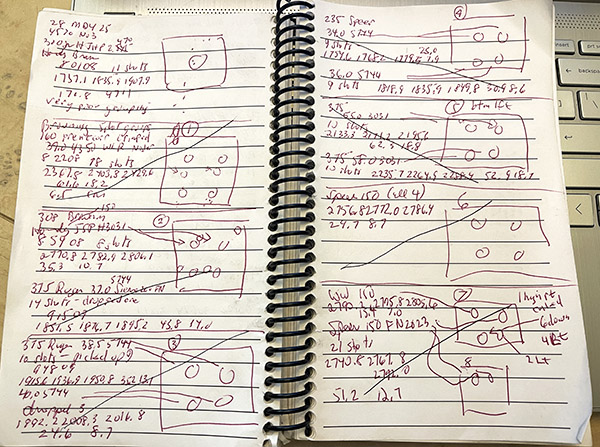
Lots of data to record. The Garmin chronograph captures everything, but I also write it in my logbook to keep a record. If I don’t do this, I can get confused about what I shot on each target.

Ruger No. 3 .45 70

First up was the .45 70 No. 3, a rifle I posted about recently here on ExNotes.. I had 11 rounds left with a hot XBR 8208 load in Hornady short brass originally loaded for a 26-inch barreled Ruger No. 1.  For some reason Hornady’s .45 70 brass is about a tenth of an inch shorter than industry standard.   I suppose it facilitates loading longer bullets in some lever guns.  For me, the shorter brass is not as accurate as the standard-length cases. But one of my buddies has a custom Martini chambered in .45 70, and he needs the shorter brass to be able to load the cartridges in his rifle.  I wanted to use up my shorter case ammo so I could give the brass to my friend.
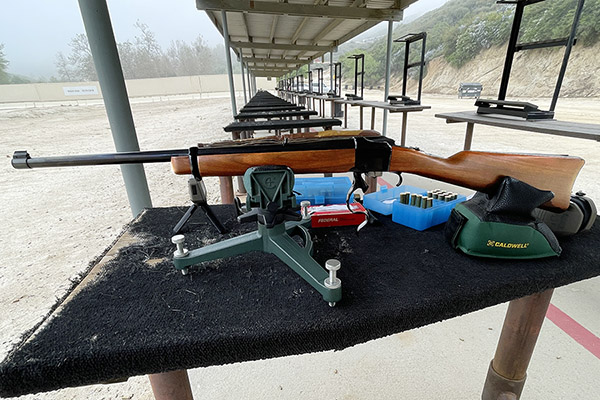
A .45 70 Ruger No. 3 on the line at the West End Gun Club. I’m usually out there early, which explains the vacant shooting benches. I like being retired.

The hot XBR 8208 load (in regular brass) is incredibly accurate in my 26-inch No. 1, but it proved to be just awful at 100 yards in the No. 3.  It’s a hot load and it kicked like hell, pounding my shoulder and my cheek.  To compound the felony, the bullets were tumbling by the time they reached the target.  In my No. 3, the vertical stringing was terrible.  The average velocity with this load’s 300-grain Hornady jacketed hollowpoint bullets was a smoking 1839 feet per second, but it had a huge velocity spread (which explains the vertical stringing).  Although the load worked well in the longer-barreled No. 1, it is definitely not a No. 3 load.   But I learned a little more, and I had the brass ready to give to my friend.

6.5 Creedmoor Browning X-Bolt

I recently wrote about developing a hunting load for my 6.5 Creedmoor Browning X-Bolt.  I fell in love with the 160-grain Hornady jacketed roundnose bullet and when working up the IMR 4350 load for it, I found that my resizing die’s expander ball was too large (I wrote about that here).  I had a box of ammo I had already loaded before I discovered the expander ball issue and I wanted to use it up.
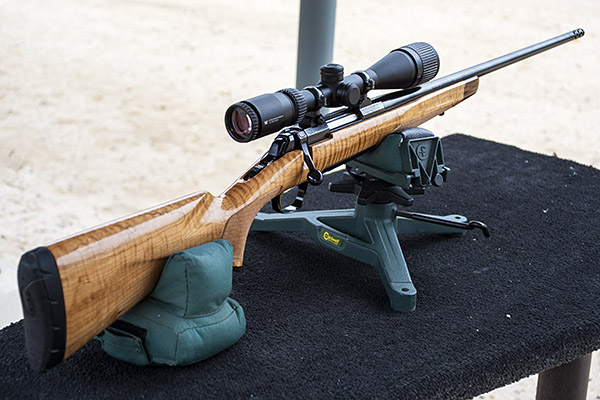
A Browning X-Bolt in 6.5 Creedmoor. The rifle’s performance matches its looks; both are superb.
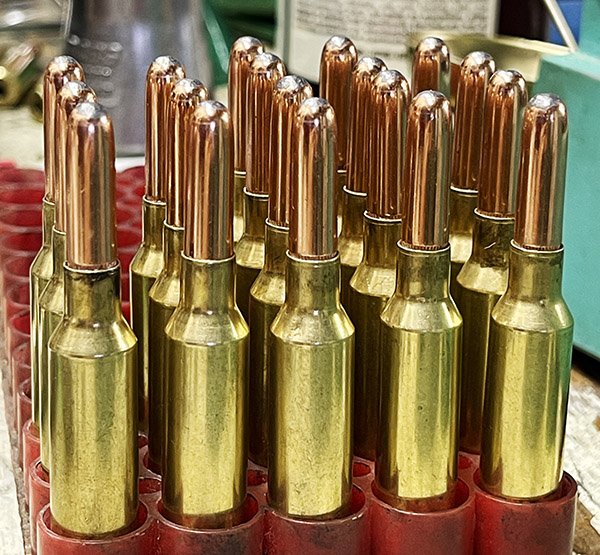
6.5mm bullets originally developed for the 6.5 Swedish Mauser. The look both weird and cool in the 6.5 Creedmoor. I didn’t think they would chamber in my rifle, but they do.

Even with the oversized expander ball, the 6.5 Creedmoor still shot well. The 160-grain Hornady jacketed roundnose bullet with 39.0 grains of IMR 4350 is accurate. I shot a 0.890-inch 5-shot group and a 0.651-inch 3-shot group.  With my Browning, the average velocity was 2404 feet per second and the velocity standard deviation was a low 6.5 feet per second (coincidentally matching the caliber designation…I guess there’s something magic about “6.5”).  This is a great rifle and a great load.

A lot old timers (guys my age) badmouth the 6.5 Creedmoor as an unnecessary cartridge.  When we get old we get funny, and I suspect a lot of these geezers would complain if you hung them with a new rope.  Not me.  I am a 6.5 Creedmoor believer. It is a superb cartridge.

You might have noticed that the Browning has a muzzle brake.  It’s cool.  A split second after each shot, you feel a breezy puff on your face, almost like the rifle is blowing you a kiss.  One of my friends asked if the muzzle brake affected accuracy or if there were any other disadvantages.  Truth be told, I don’t know about the accuracy issue (I’ve never shot the rifle without the muzzle brake).  The only downside I can think of is that the muzzle blast and report from the rifle feels like it’s a little louder with a muzzle brake.  Another downside is that with big bore, high-powered rifles, guys on the benches to the left and right feel the increased blast.  I remember a guy shooting a .50-caliber Barrett rifle a couple of stations down several years ago and the blast was so severe I moved away to escape it.   One more potential disadvantage is the muzzle brake makes the rifle longer. That might be an inconvenience in the field.  It hasn’t bothered me.

.308 Browning A-Bolt Gold Medallion

I’ve been working on developing loads for this rifle. Baja John got me turned on to these rifles about ten years ago. I loaded several different 150-grain bullets, all with 47.0 grains of BallC2. Groups ranged from mediocre to decent. The best load so far has been the same one I’ve used for the M1A, which is 44.0 grains of BallC2 and a 168-grain Speer match boat tail bullet. That’s not a hunting bullet, though, and for that, the Speer jacketed flatnose bullet grouped best (with 47.0 grains of BallC2).
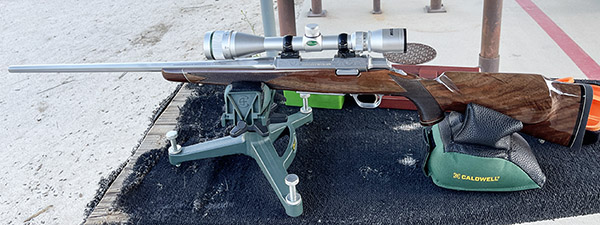
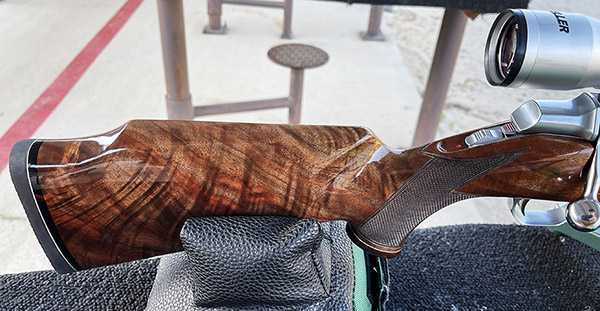
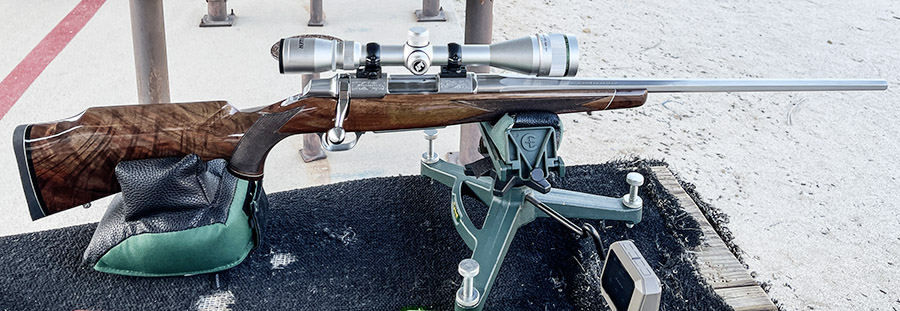
The .308 Browning A-Bolt rifle. It is a good looking firearm.
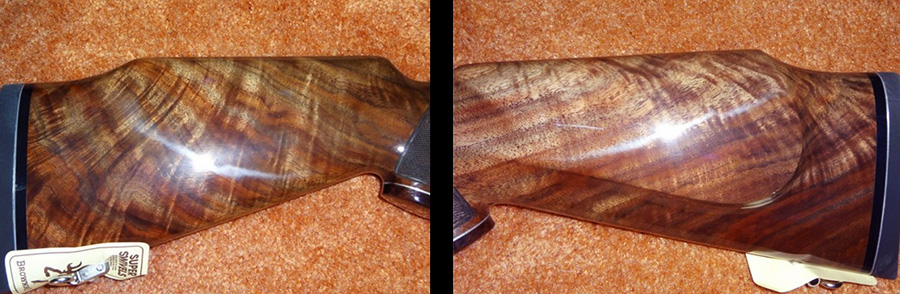
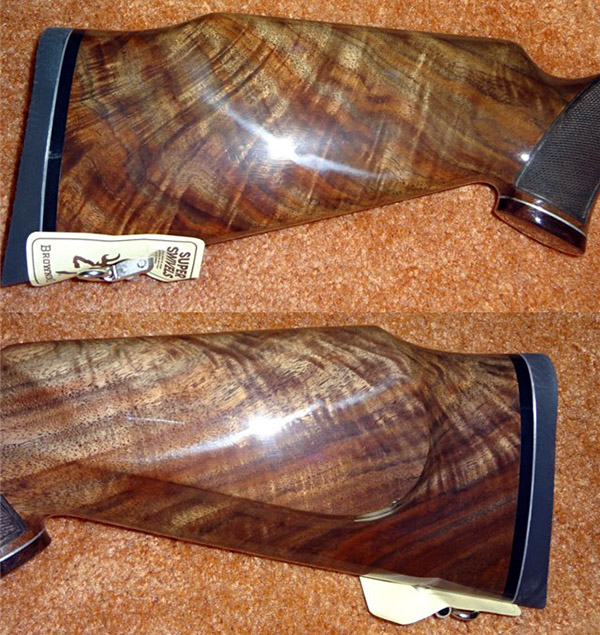
Highly-figured walnut stands out. This rifle was a Browning show gun at one of the SHOT shows.

The silver Mueller scope I put on the rifle is okay, but the optics are not in the same league as a Leupold (and they shouldn’t be, as the Mueller is a $145 scope). Compared to the 6.5 Creedmoor, the Browning .308 kicks big time. It’s tolerable and certainly not anywhere near the .375 Ruger (see below), but the 6.5 Creedmoor is much more pleasant to shoot.  Like I said, I’m a believer in the Creedmoor.  That said, I plan to hunt with the .308 Browning on my next pig hunt, and I’ve been working up different loads for it.  You’ll read about that in an upcoming blog.

.375 Ruger/Howa 1500

I shot 90 rounds in the mighty .375 Ruger yesterday, and I’m feeling it today. I wanted to evaluate 5744 and IMR 3031 in this cartridge using lighter 200-grain and 235-grain jacketed bullets.
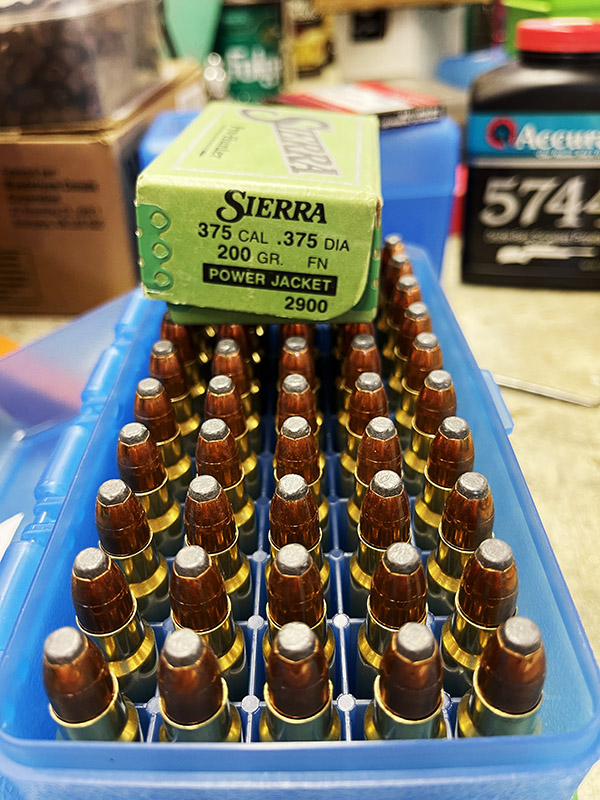
.375 Ruger ammo loaded with the Sierra 200-grain jacketed flatpoint bullet.

The bottom line is this rifle likes everything, and several loads would put 5 shots into a 1.5-inch cluster (which is pretty cool with a 4X scope and an elephant gun). The best load is 38.5 grains of 5744 and the Sierra 200-grain jacketed flatnose bullets one of my friends gave to me (those shot a 1.330-inch 5-shot group at 100 yards). The rifle fed both bullets well from the magazine.  The action on this rifle is super slick.  Howa makes a good rifle. The IMR 3031 loads (at 55.0 and 58.0 grains) shot well, too, but the recoil is more than I care to subject myself to (the loads were below the recommended minimum with the Speer 235-grain bullets; the max loads must be brutal).
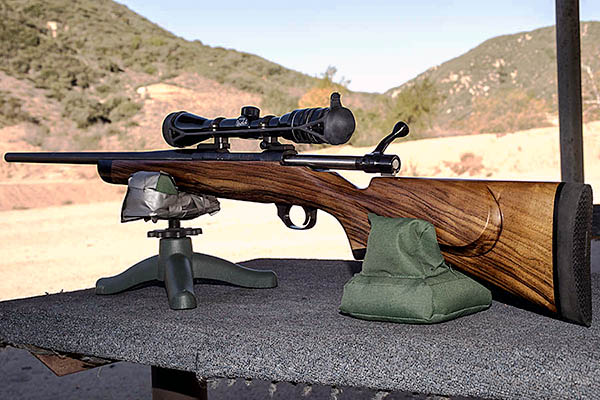
The .375 Ruger Howa 1500 in an English walnut stock.

While we were there, an old timer named Marcus stopped by with a custom Mauser .25 06, also stocked in English walnut like my .375 Ruger. I enjoyed meeting and chatting with him, and I enjoyed seeing that Mauser.


Join our Facebook ExNotes page!


Never miss an ExNotes blog:


Help us keep the lights on:


Don’t forget: Visit our advertisers!


A Browning Show Rifle

By Joe Berk

This is the fourth (and at least for now, the last) in a series of blogs on Browning bolt action rifles (the other three articles were on a .223 A-Bolt Micro Medallion, a maple-stocked 6.5 Creedmoor X-Bolt), and a .22 Long Rifle A-Bolt I used in metallic silhouette competition).  The .223 A-Bolt and the 6.5 Creedmoor X-Bolt are very accurate.  The .22 Long Rifle A-Bolt was pretty, but its accuracy was less than I thought it should be so after trying several different brands of .22 ammo I sold it.

This .308 Browning A-Bolt caught my eye for several reasons:

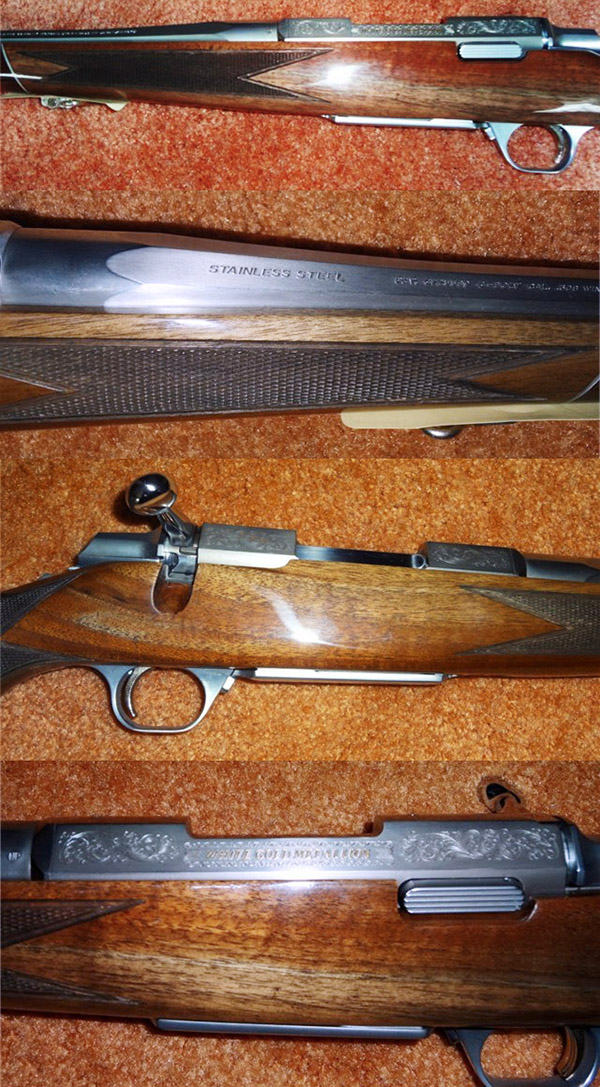
    • It is a stainless steel Gold Medallion A-Bolt in .308 Winchester with an octagonal barrel.  At the time, stainless steel rifles were popular, and I always thought octagonal barrels were cool.
    • I like the .308 cartridge.  It’s one of those cartridges that are inherently accurate, and I never owned a .308 that didn’t shoot well.  I already had the dies and plenty of brass.
    • I like the Browning centerfire bolt action rifles.  I knew from my experience with the .223 Micro Medallion that they are accurate.
    • My buddy Baja John and I spent a day at the range with his stainless steel octagonal .25 06 Browning.  I liked it and I knew I wanted one.
    • The walnut is exceptional.  The photos speak for themselves.  I’m a sucker for pretty walnut.

The photos below are the ones that appeared in the Gunbroker.com ad.

As an aside, Browning rifles and shotguns are manufactured in Japan by Miroku.  Miroku is an interesting firearms manufacturer for several reasons, one of which is that they did not make guns for the Japanese military during World War II (at least not that I could find any reference to).  The other modern Japanese gun manufacturer is Howa; that company made rifles for the Japanese during the war (the Arisaka rifle).  I own several modern Howas; they are excellent rifles (as are the Brownings made by Miroku).  Miroku got its start making hunting guns in 1893, and then in 1934, they started manufacturing whaling harpoon guns.  Today, Miroku manufactures rifles and shotguns under their own name and for other companies (including Winchester).  Based on my experience and observation, the Miroku Brownings are high quality firearms.

I know, I’m getting off track with the above info on Miroku and Howa. Back to the Browning .308, the topic of this blog.  Here’s the description of my .308 as it appeared in the Gunbroker.com auction:

You are bidding on a brand new Browning White Gold Octagon Medallion in 308 Winchester, this is absolutely New In The Box. These rifles were shot show specials from several years back. They feature octagon barrels, gold accents on the receiver, stunning wood and highly polished bolt handles. These are very stunning rifles and very rare. * I am thinning the herd, selling those items I just never get around to shooting. As I am again beginning to sell a lot of items I will take them to my gunsmith 1x per week for shipment, usually Saturday morning. My gunsmith is a farmer so it may then take a day or 2 to process and ship them. All guns are shipped to an FFL dealer only. It is your responsibility to send your funds and a copy of your dealer’s FFL (e-mailed legible copy is ok). I will NOT call, fax or spend time chasing down your dealer’s FFL. I will hold shipment until you send an FFL. If sending an FFL is a problem for your dealer either find another dealer or please don’t bid. * Any damage in shipping will be the responsibility of the shipping company. All products are shipped fully insured and will ship by FEDEX. Items paid for by Postal MO will ship right away. Those who pay with a bank check or personal check will wait up to 10 days to clear. I only ship to FFL dealers. I do not end auctions early so please don’t ask. I will also not take less than the minimum bid price!! * I am looking for one rifle for which I would consider working out a trade, it is a SAKO Mannlicher in .375 H&H. Otherwise I do not have an interest in trading. * All auctions need to be paid within 7 days of the end of the auction to avoid negative feedback. Once the firearm is received I would appreciate your feedback. I will always leave feedback for those who do the same. Thank you for looking at my auction, good luck!

[Information added 5/9/2012 6:59:47 AM]  I want to comment on a couple pictures; First, there is NO scratch in the stock it is just the flash creating that impression. Secondly, there is a slight reddish cast in the finish but the flash distorts the look in the one picture. The gun looks like the more brownish pictures in real life. It is a very highly figured stock.

Based on the above, it appeared the seller was firm on his price (he used two exclamation points in his admonition regarding lower offers).  I would have paid the $1399, but I come from a long line of people who believe you should never pay the asking price, at least not immediately.  Disregarding his warning, I wrote to ask if he would consider a lower price, and the answer came back in seconds:  No.  Well, that was quick, I thought, impressed with his resolve.  I was getting ready to respond with an “okay, I’ll pay the $1399” when a minute or two later another email floated in.  He would take $1275.  Done, I typed, and I hit the send button.

You might be wondering how this rifle shoots.   That would be something you and I have in common.  I’ve never fired it.  I’m considering doing so, however, and that would require adding a scope, rings, and mounts.  I may get around to doing that sometime in the near future.

What do you think?  Should I mount a scope and shoot this beauty?


Never miss an ExNotes blog:


Please click on the popup ads and visit the folks who advertise with us.