A 6.5 Creedmoor Hunting Load

By Joe Berk

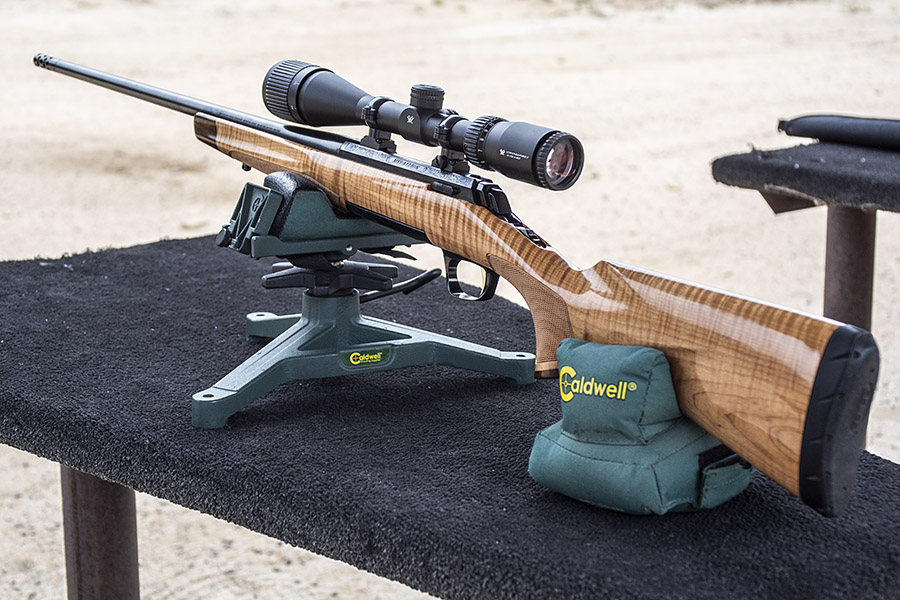
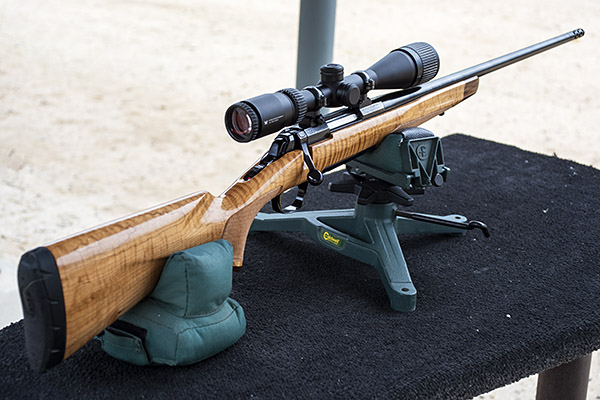
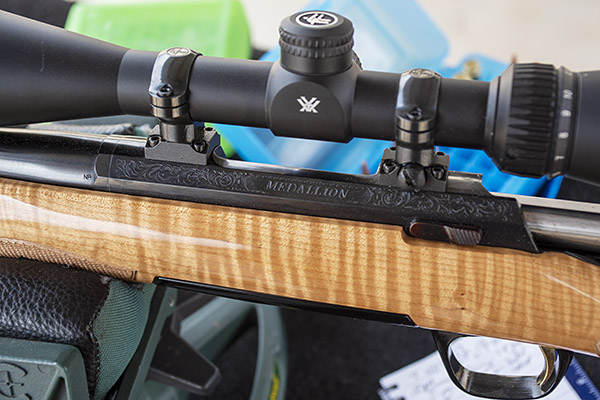
Prior to pointing the Subaru toward Arizona for my recent pig hunting expedition, I briefly thought about taking my 6.5 Creedmoor Browning X-Bolt rifle (it’s the one you see above).  Then I realized: All the load development I had done with that rifle had been with target bullets (none had been with hunting bullets).  I didn’t have time to buy bullets and develop a hunting load before the trip to the Dunton Ranch, so I defaulted to Old Faithful (my .30 06 Ruger No. 1).  That worked out just fine.  The .30 06 did what it was designed to do (as it always has), and I got my pig with one clean shot.
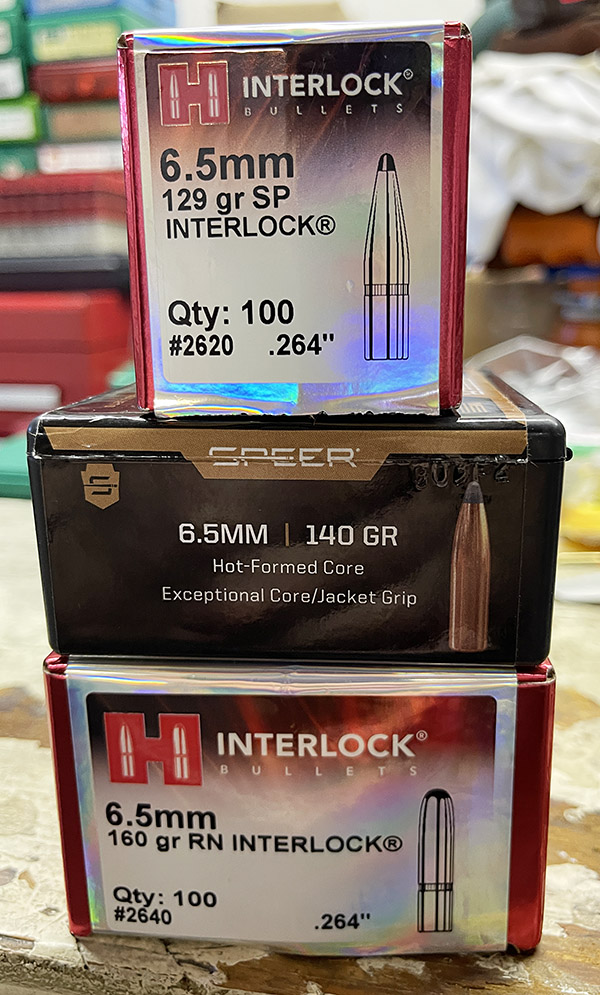
Hunting bullets ordered for a 6.5 Creedmoor hunting load development effort.

But the above adventure got me to thinking about hunting with the Browning 6.5 Creedmoor.   I bought that rifle from a shop in Colorado after seeing Baja John’s .25 06 maple Browning several years ago.  Browning makes a nice rifle.  I knew they could be very accurate.

John wants to do another hunting expedition and so do I.  It would be cool to be armed with a Browning rifle like John.  So I checked on the hunting bullets available for the 6.5 Creedmoor, and I ordered three different types:

    • The 129-grain jacketed soft point Hornady.
    • The 140-grain jacketed soft point Speer.
    • The 160-grain jacketed roundnose Hornady.

It was that 160-grain Hornady roundnose bullet that made things interesting for me.  I checked all the reloading manuals in my library and none of them had loads for the 160-grain Hornady in the 6.5 Creedmoor (or so I thought; more on that in a second).  That’s because Hornady originally developed that bullet for use in the 6.5 Swedish Mauser (which has been around forever) and other .264-caliber cartridges.  I remember thinking I probably should have checked the reloading manuals before I ordered the bullets.
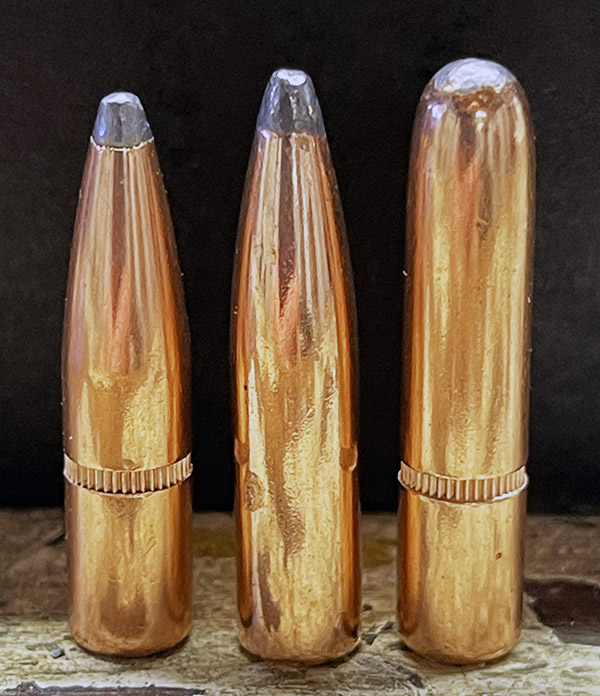
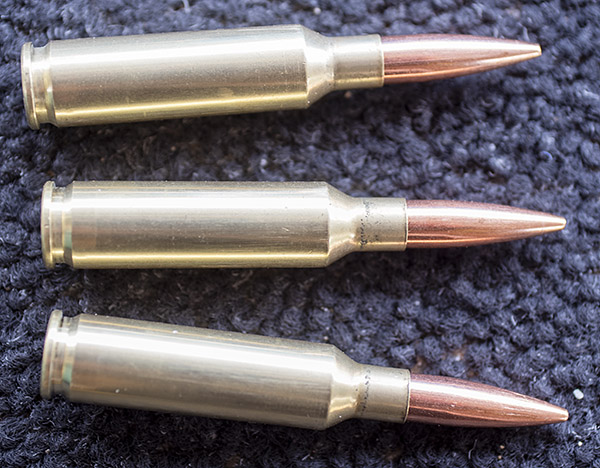
6.5mm hunting bullets (they are 0.264 inch in diameter). From left to right, it’s the Hornady 129-grain jacketed softpoint, the Speer 140-grain jacketed softpoint, and the Hornady 160-grain jacketed roundnose.

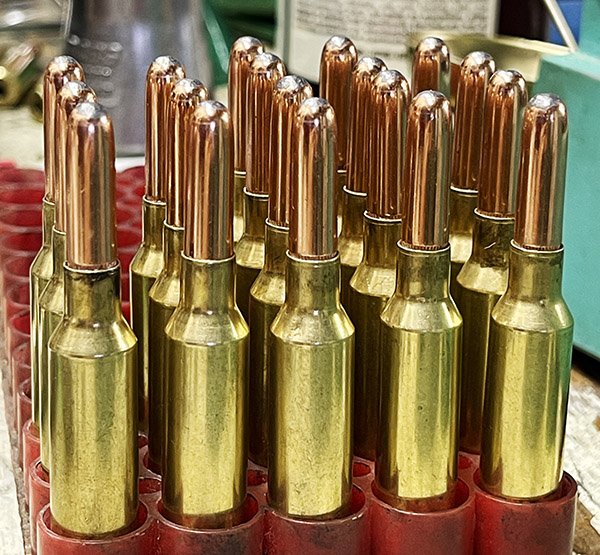
The 160-grain bullet has a radical appearance.  It’s not gently ogived like all the other bullets I’ve shot.  It looks like a copper billy club:  Long, blunt on both ends, and mean.  It’s an old-fashioned bullet design, and to me, it looks cool.  When I reloaded the ammo, it had a radical appearance, kind of like a syringe with a dull tip.  I think it looks awesome.  So did my friends when I showed the 6.5 ammo to them at the range.
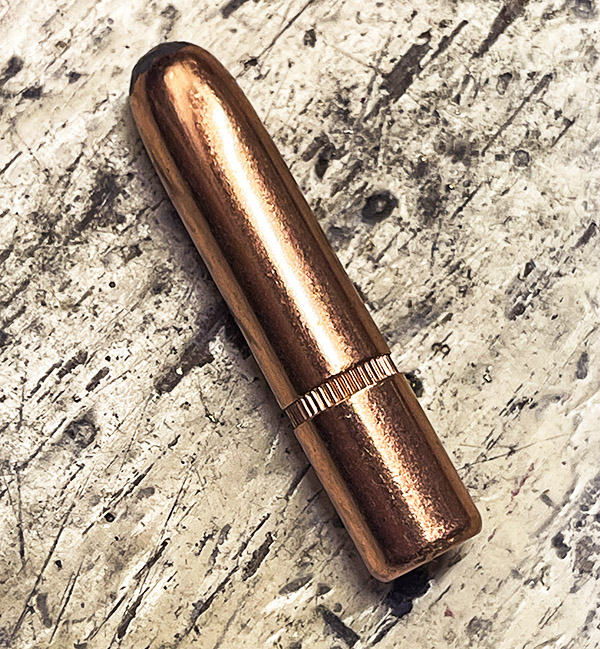
The 160-grain Hornady jacketed roundnose bullet is a long projectile.
6.5 Creedmoor loaded ammo with the Hornady 160-grain jacketed roundnose bullet. This is good stuff.

While I was reloading these cartridges, a funny thing happened.  When I was adjusting the bullet seating die and measuring the cartridge overall length, I inadvertently pushed the bullet further into the case with just finger pressure.  That’s not supposed to happen, I realized.  Hmmm.

You know, when you resize a case during the reloading process, there’s a lot of things happening:

    • The cartridge case pushed into the die, and the case is resized to its original dimensions (it expanded during the previous firing, when propellant pressure forced it out against the chamber walls).
    • The old primer is pushed out of the case.
    • The case is withdrawn from the die, and the expander ball opens the cartridge case mouth to a diameter that should be 0.001 less than the bullet diameter.
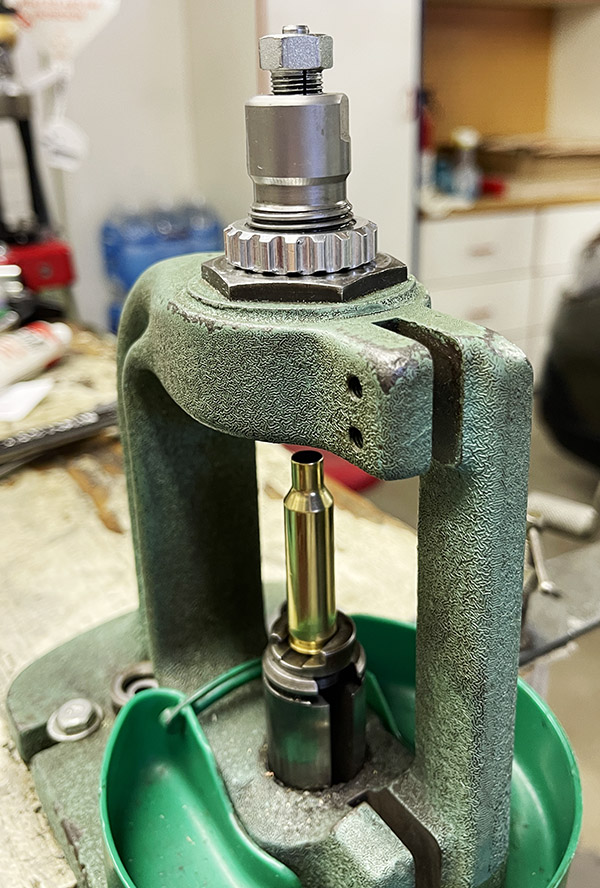
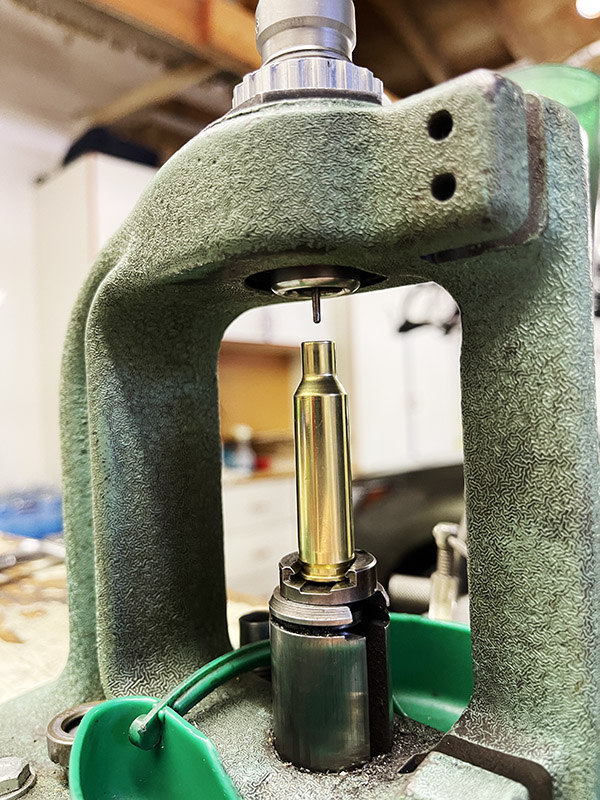
The Lee 6.5 Creedmoor full length resizing die in my RCBS Rockchucker press. This die proved to be problematic. The first one scratched the cases, and Lee replaced it. The replacement had an oversized expander ball.
A 65. Creedmoor case going into the full length resizing die. The pin you see beneath the die pushes the old primer out of the cartridge case.

It’s that last action that’s critical (just like all the others, I guess), and it’s that last one that I realized was not right.  The expander ball on the decapping pin was too big.  I wanted the case mouth to be expanded to 0.263 inches to securely grip the 0.264-inch diameter 6.5 Creedmoor bullet.  The reason the case mouth should be smaller than the bullet diameter is the bullet needs an interference fit to give the case mouth the right tension on the bullet.  If the case neck tension is too low or if it is inconsistent, the propellant won’t burn consistently from shot to shot and accuracy will suffer.   If you don’t believe me, get a little lube on your bullets when you seat them in the cases and you’ll see: Accuracy will be terrible.
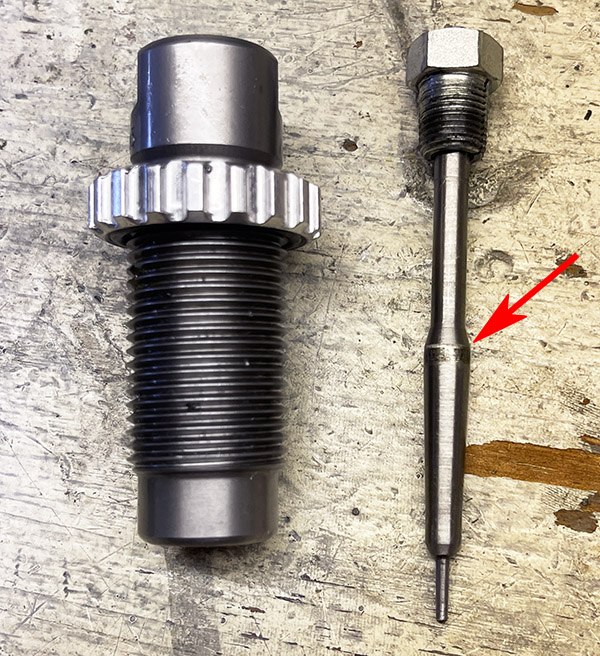
The resizing die’s decapping pin and expander ball removed from the die body. The red arrow points to the area on the decapping pin (the expander ball) that opens the case mouth to its resized dimension. It was this area that was machined from 0.264 inches to 0.263 inches. That little 0.001-inch difference made a huge impact on accuracy.

The fix was easy enough after I finished beating up on myself for not recognizing the problem sooner.  I pulled the decapping pin out of the die, chucked it up in my hand drill, and spun the expander ball in a small piece of 220-grit sandpaper.  I did this a few seconds at time until the expander ball went from 0.264 inch to 0.263 inch.  Then I reinstalled it in the die and loaded more 6.5 Creedmoor ammo.

Somewhere in the middle of all the above, I found another Hornady reloading manual that I already owned.  It was a later version than the one I mentioned above.  I turned to the 6.5 Creedmoor section, and what do you know, Hornady had loads listed for their 160-grain bullet.  I was a kid on Christmas morning.  I looked over all of the suggested Hornady recipes, and then checked the propellants I had on hand.  IMR 4350 got the nod.

The results downrange told the story better than I ever could for both the 140-grain Speer jacketed softpoint bullets and the 160-grain Hornady jacketed roundnose bullets.  Average group sizes immediately tightened up, as did the extreme spreads and the standard deviations.   Take a look:
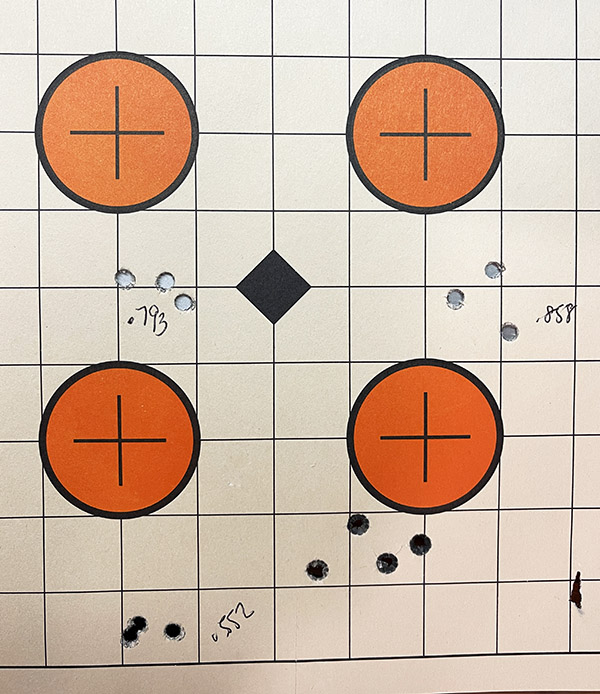
The top and lower left targets show hits with my 6.5 Creedmoor Browning X-Bolt with the 160-grain Hornady jacketed roundnose bullet at 100 yards. The 160-grain load shoots lower than then 140=grain load (I’ll bring the Browning’s Vortex scope up 8 clicks to compensate for that). Ignore the lower right target; I shot it with a .308 rifle that will be the subject of a subsequent blog.

The heavier 160-grain bullets hit the 100-yard target about two inches lower than do the 140-grain bullets.  That’s okay; it’s why the scope has an elevation adjustment.
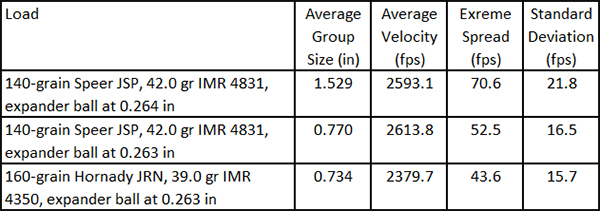
Knocking the expander ball down to 0.263 cut the group size in half with the 140-grain Speer bullet. The 160-grain Hornady grouped even tighter.

I like the 160-grain Hornady jacketed roundnose bullet. It’s way more accurate than it needs to be for hunting pigs.  I like the way it looks.  The recoil is modest.  In fact, I like it so much I ordered another five boxes.  How will it perform on pigs?  I don’t know the answer to that yet, but I’m going to find out, and you’ll read about right here on ExNotes.


Join our Facebook ExNotes page!


Never miss an ExNotes blog:


Help us keep the lights on:


Don’t forget: Visit our advertisers!


Two Browning 6.5 Creedmoor Loads

By Joe Berk

The creek is dry and getting to the West End Gun Club is a lot easier these days, so I reloaded some 6.5 Creedmoor ammo in the brass good buddy Johnnie G sent to me.  I wanted to try a couple of new loads in my maple-stocked X-Bolt.

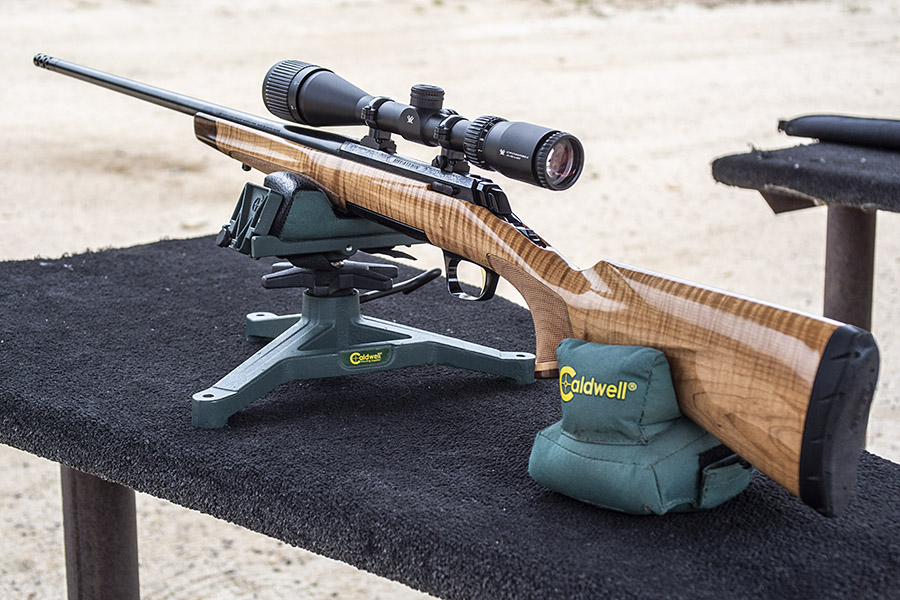
A right side view of the Browning 6.5 Creedmoor rifle.  Note the muzzle brake on the end of the barrel.

I bought the X-bolt when I saw the wood, and it had a cross-country ride and a half to get to me.  I saw it in a shop in Lamar, Colorado, and I knew I had to own the Browning as soon as I saw it.   You don’t see many rifles with wood of this caliber.

There was a problem, though.  The Colorado shop owner wouldn’t ship it to California.  There’s an extra hoop or two a dealer has to jump through to ship a gun to California and I guess folks in Colorado aren’t basketball players.  Here’s where capitalism came to the rescue.  There’s a guy in Virginia who makes a living off of these kinds of situations, so I had the Colorado dealer ship it to the Virginia dealer, who then shipped it to my dealer in California.  None of these dealers did so for free (going to Colorado-to-Virginia-to-California route wrapped the Browning in another $100 bill, and you can guess who had to pay up).  But that’s okay.  I wanted the rifle and now I have it.  It really is an exquisite firearm.  And it is exquisitely accurate.  I’ll get to that in a minute.

I mounted a 4×12 Vortex scope on the Browning 6.5 Creedmoor.  Check out the roll engraving on the receiver.
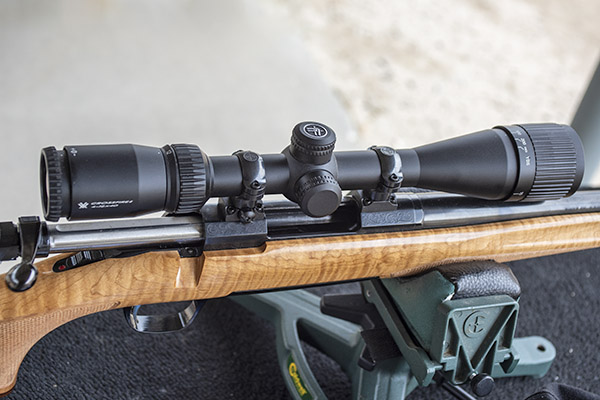
Another view of the 6.5 Creedmoor Vortex scope. The scope includes a parallax adjustment on the objective lens.
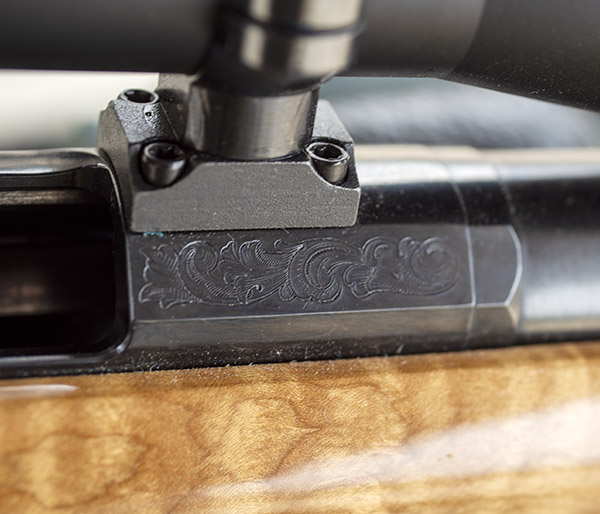
A macro shot of the receiver’s roll engraving. It’s a nice touch.
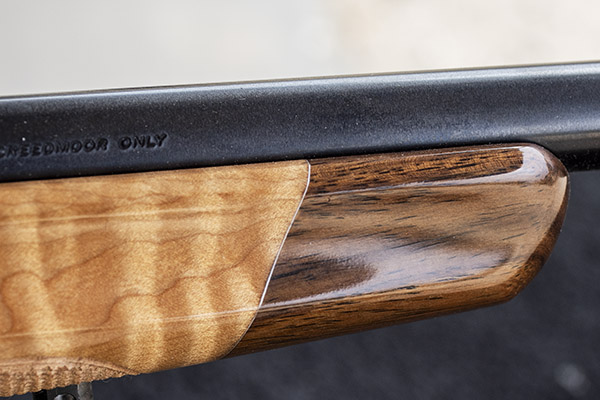
The stock has a darker wood fore end tip. It’s a classy rifle.  The action is glass bedded from the factory.
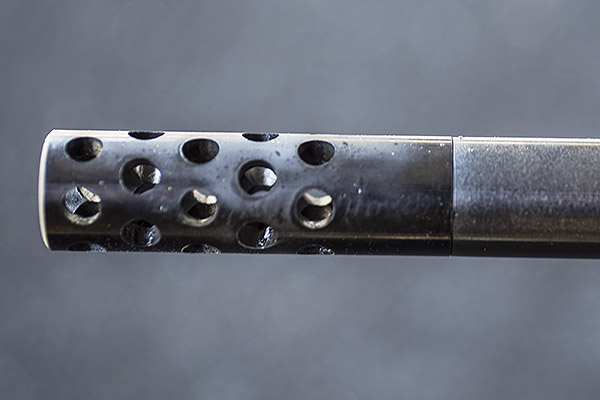
The X-Bolt has a muzzle brake. The bluing is fine; that’s powder residue you see on it.  I can feel a light puff a fraction of a second after the bullet leaves the barrel.

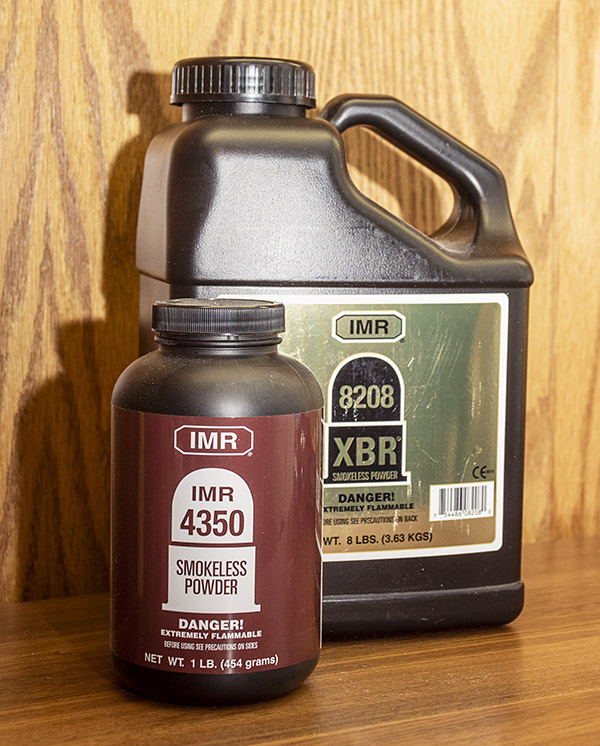
I used the Hornady 140-grain full metal jacket boat tail bullet for two loads I wanted to test; one with IMR 4350 propellant and the other with XBR 8208 propellant.

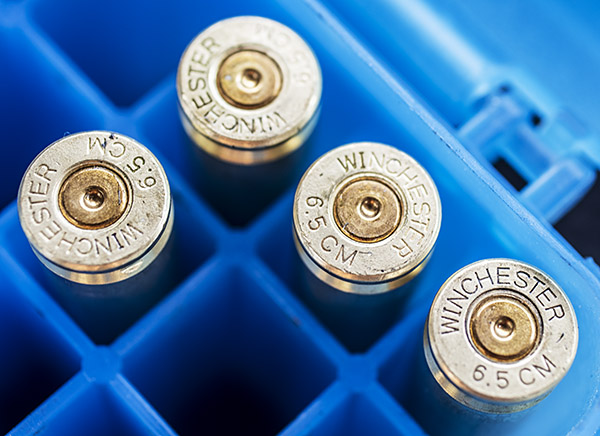
Reloaded 6.5 Creedmoor ammo with Winchester brass and the 140-grain jacketed hollow point boat tail bullet. It’s good looking ammo.
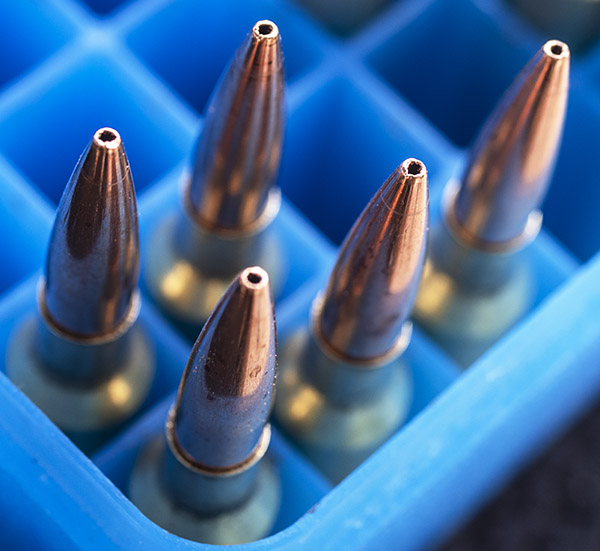
The business end of the 140-grain Hornady bullets.

The loads showed no signs of excess pressure after firing.  The bolt opened easily and the primers were not flattened.

Winchester brass, and unflattened Winchester large rifle primers.

I full length resized the 6.5 Creedmoor brass because I have two rifles chambered in 6.5 Creedmoor (see our earlier story, A Tale of Two Creedmoors).   The alternative approach is to neck size the brass only (which can theoretically offer improved accuracy), but when you neck size the brass the reloaded ammo will only fit into the rifle in which the brass was previously fired.  I didn’t want to try to keep my ammo segregated by rifle, and as it turns out, I don’t need to.  The full length resized 6.5 Creedmoor brass provided great 100-yard results in the Browning X-Bolt rifle with both the XBR 8208 and IMR 4350 loads.

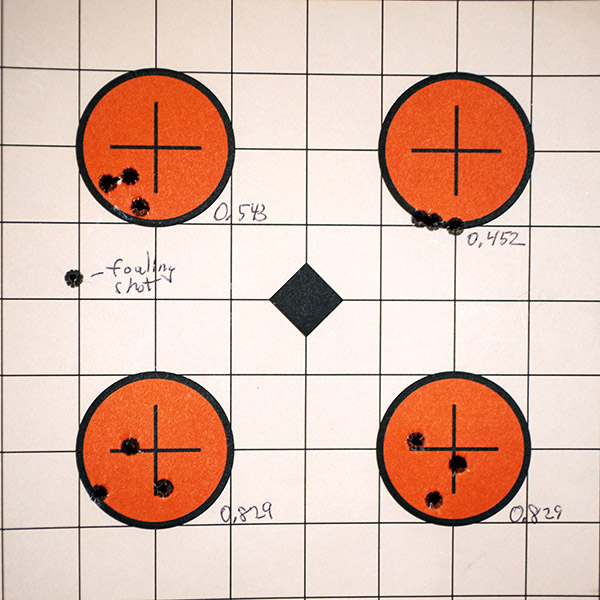
The first shot of the day at the upper left target was low and to the left, which is a common occurrence when shooting from a clean and lightly oiled barrel.  The next three grouped tightly into the orange target (I could see the bullet holes with the rifle’s 12X scope).  I let the barrel cool for a few minutes, and then I fired another three rounds at the upper right target.  I was pleased; the load returned an even tighter three shot group in about the same spot as the first group.  Both groups, when measured later, were a satisfyingly tight half minute of angle.

I let the barrel cool again, and then I moved on to the IMR 4350 loads.  Wow, talk about consistent.  Both shot to the same part of the target, and both were exactly the same group size:  0.829 inches.

Two great 6.5 Creedmoor powders: IMR 4350 and XBR 8208.
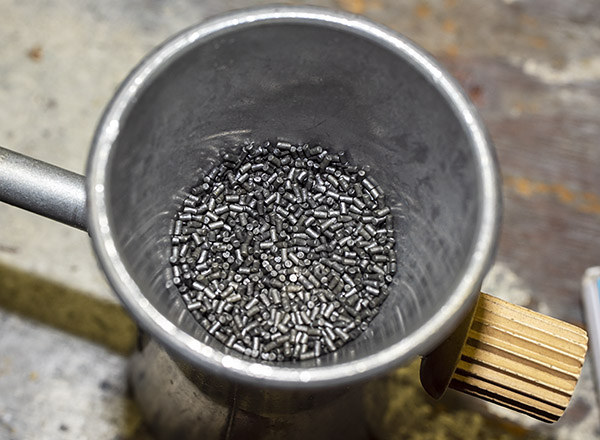
My old RCBS powder trickler still works well.

I had read that IMR 4350 was a “go to” powder for 6.5 Creedmoor accuracy, and my results confirmed that.  I had not found much information about XBR 8208 accuracy in this chambering, but it sure seemed to get the job done for me.   As the above target shows, the XBR 8208 performed even better than the IMR 4350 loads.  Here’s a bit more on info on these two loads:

    • Both had the Hornady 140-grain bullets seated to an overall cartridge length of 2.800 inches.
    • I did not crimp the bullets in place.
    • I did not trim the brass for either load.
    • The powder charges for both loads were weighed for every cartridge.  I used my powder dispenser to drop a little bit lower charge, and then trickled in the last few grains.
    • I used 31.5 grains of XBR 8208.
    • I used 39.0 grains of IMR 4350.
    • I used Winchester brass with Winchester large rifle primers.

So there you have it:  Two great 6.5 Creedmoor loads for the Browning maple Medallion.


Never miss an ExNotes blog:


Don’t forget:  Visit our advertisers!