Cast Bullets in a 7mm Magnum Ruger No. 1

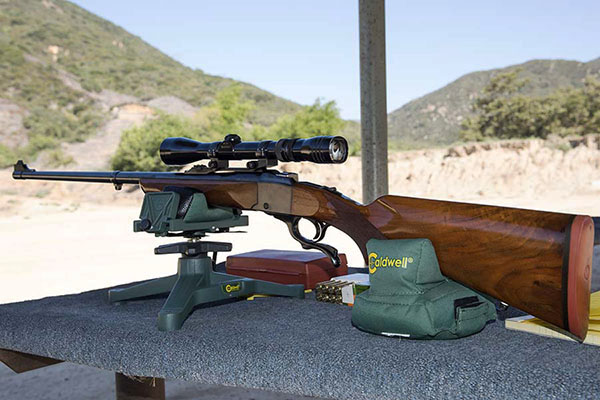
A 200th Year Ruger No. 1S in 7mm Remington Magnum. With factory-level jacketed bullet loads, recoil is attention-getting.  With cast bullets, this magnum is a lot easier to shoot.  I shot cast bullets for the first time in this rifle this week.

When I was younger, I made my own bullets by casting them out of molten lead.  I cast bullets until I decided there wasn’t enough time to do everything I want to do.   Shooting can be a full time hobby, reloading can be a full time hobby, and casting can be a full time hobby.  There’s a little motorcycle riding and some writing thrown in there, too.  Something had to give, so a few years ago I sold all my bullet casting gear.

I still enjoy reloading and shooting cast bullets, though, for a lot of reasons.  Lighter recoil, cheaper bullets (usually), less barrel wear, and the big factor:  It’s fun and it’s challenging.  This fascination with cast bullets, for me, started when I ran with a bunch of gunsels in El Paso and one of the guys decided it would be fun if we had a cast bullet rifle bullseye competition.  Being mostly engineers, we reckoned that big bore rifles would be the way to go, as the larger bullet diameters and weights would tend to make bullet weight differences and imperfections negligible.  The first rifle I ever shot a cast bullet in was a .458 Win Mag.  I was hooked after the first shot, mostly because there was far less recoil than shooting jacketed factory ammo and the experience was much more enjoyable.  Then I fired four more shots and when I saw the 1-inch group at 100 yards (from a .458 Win Mag!) I was hooked.  We all shot big bores in those days:  .458s, .45 70s, .375 H&H Magnums, and such.  Cast bullets in these big calibers can be amazingly accurate.

Anyway, I fell in love with cast bullets and I’ve been shooting them ever since, but these days I buy my cast bullets.  I have a local source for cast bullets, and I have a few I like that I order online or pick up at my dealer (that’s Phillips Wholesale in Covina, California). I also poke around a bit on the Internet and a few weeks ago I found Gardner’s Cache, another commercial bullet casting operation.  What had my attention immediately is that Jim Gardner’s prices are relatively low, he’s a veteran, and he had something I had not been able to find elsewhere at a decent price:  7mm cast rifle bullets.  I wanted to try cast bullets in a couple of 7mm rifles (one being the Ruger No. 1 that you see at the top of this blog), so I ordered a box of 250.  Then USPS lost the shipment.  I filled out an online lost shipment report, the boys in blue located my bullets, and a few days later they arrived.   The Gardner bullets look great.
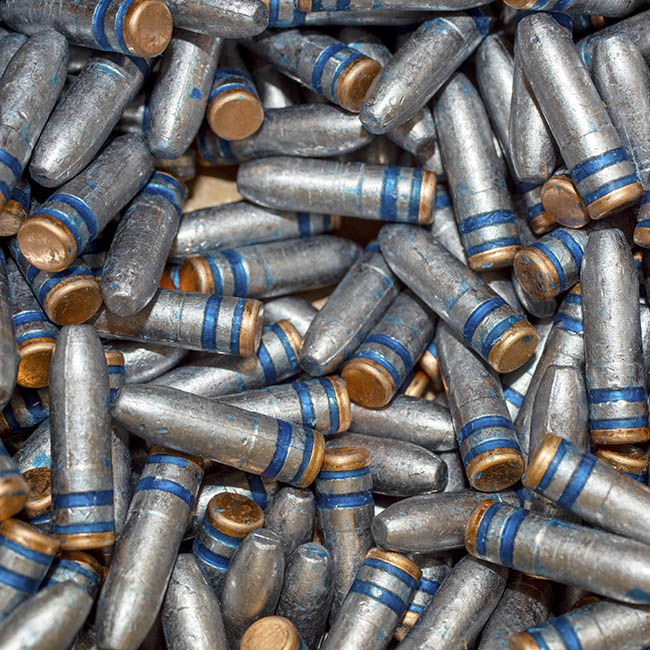
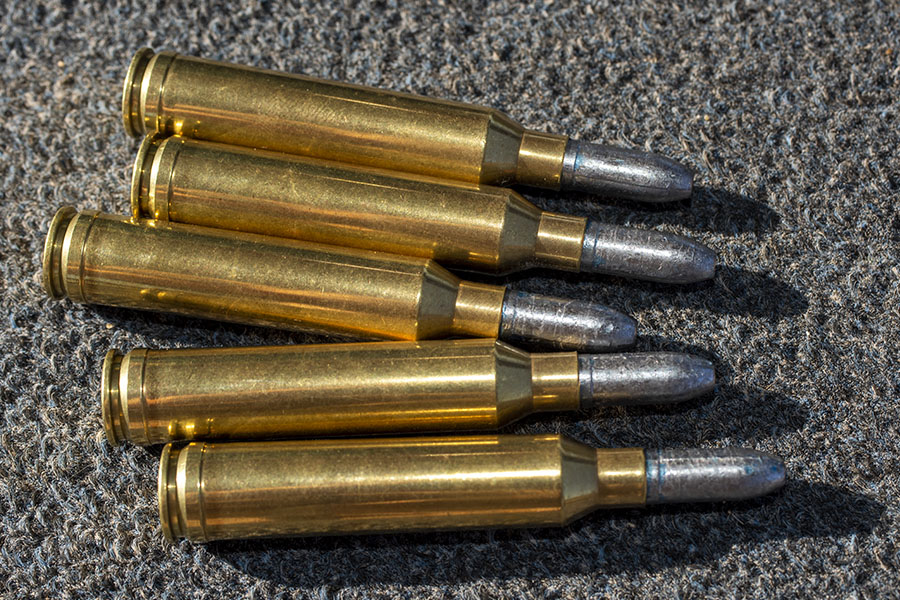
Beautiful cast Gardner 7mm bullets. Casting quality is high, and I was hoping accuracy would match. It did. I’m a happy camper.

I could see that the casting quality was high, so just for grins I measured 30 projectiles to get a feel for the variability.
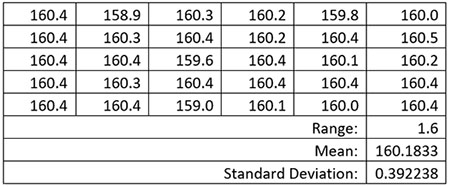
In 30 bullets, the range of weights did not exceed 1.6 grains. The mean is the average weight, and the standard deviation is a measure of the variability around the average value.

It was good.   You ordinarily get a lot more variability with cast bullets then you do with jacketed bullets, but the Gardner bullets were more consistent than other cast bullets I’ve used.  As I reviewed the data, it suddenly hit me that these  were supposed to be 145-grain bullets.  I could see from the bullets’ configuration that they matched the RCBS No. 82150 bullet mold, but what the mold maker tells you the bullet is supposed to weigh and what they actually weigh seldom line up.  I had seen this before with other cast bullets.
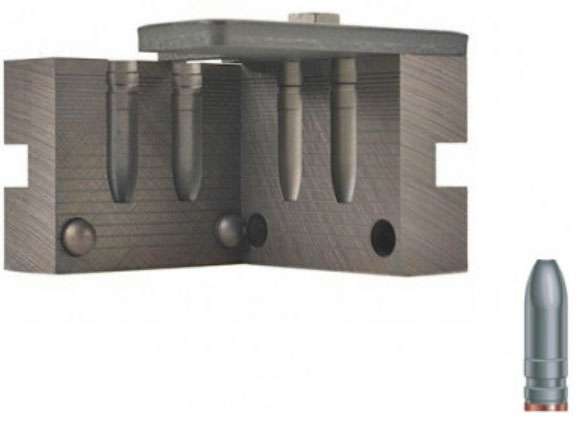
The RCBS No. 82150 bullet mold.  It’s not uncommon for the specified bullet weight to be different than what the mold actually throws, and that was the case here.
I like these bullets so much I had to grab another photo of them. The copper cap at the bullet’s base is called a gas check. It protects the back of the bullet from hot propellant gases and reduces barrel leading. The blue stuff is bullet lubricant, which eases the bullet’s passage through the bore and also helps to reduce leading.

I loaded several configurations with my new Gardner cast bullets in virgin Remington brass I had on the shelf, and the cartridges looked good.
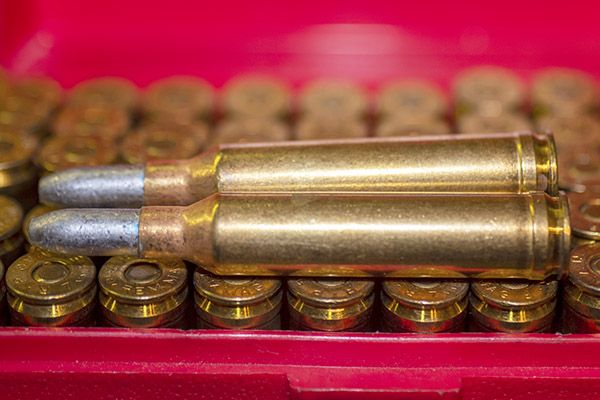
Loaded 7mm Remington Magnum ammo, waiting to be range tested. You can’t buy this kind of ammunition; you have to reload your own.

I went to the range the next day with the 7mm Remington Magnum Ruger No. 1 and my new cast bullet load, and after getting set up I fired the first load (with Unique propellant) at a single pistol target at 50 yards.  The rifle had been zeroed for a factory equivalent jacketed load, and the results were very predictable.  Whenever I’ve taken a centerfire rifle zeroed for factory ammo and shot cast bullets in it, the load is always about 10 inches low at 50 yards.
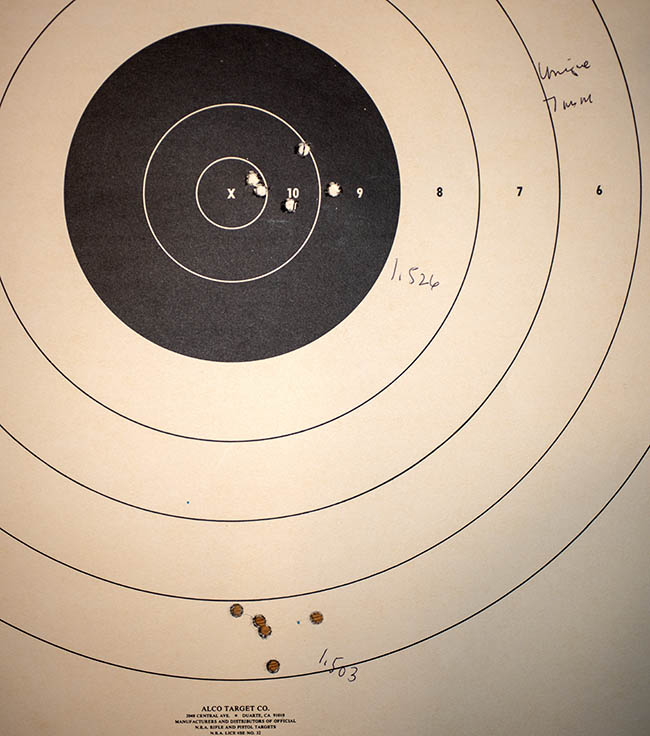
Two good groups (both around 1.5 inches) at 50 yards. The low group was fired with the scope still adjusted for jacketed ammo, and it was predictably 10 inches low. 80 clicks up on the Weaver and we’re in the money.

The required telescopic sight adjustment in going from jacketed to cast is something I know by heart:  80 clicks up.  You can see the first five-shot group at 6:00 in the 5-ring on the above target.  Windage looked about right, so I went 80 clicks up on the Ruger’s Weaver 3×9 scope.  Each click is 1/4-inch at a hundred yards so that means a click is 1/8-inch at 50 yards, and I had to go up 10 inches.  10 inches is 80 clicks.  I made that adjustment and oila, the second group was right where I wanted it.  It was exactly the same as the amount of elevation I had to crank into my .30 06 Browning B78 when going from jacketed to cast bullets.

Then I moved over to the other targets I had set up at 50 yards.  I’d like to tell you that all groups were tight, but hey, you do this to find out what works and what doesn’t.  My best group of the day was with 18.0 grains of Trail Boss propellant, but it wasn’t as consistent as the Unique load was.
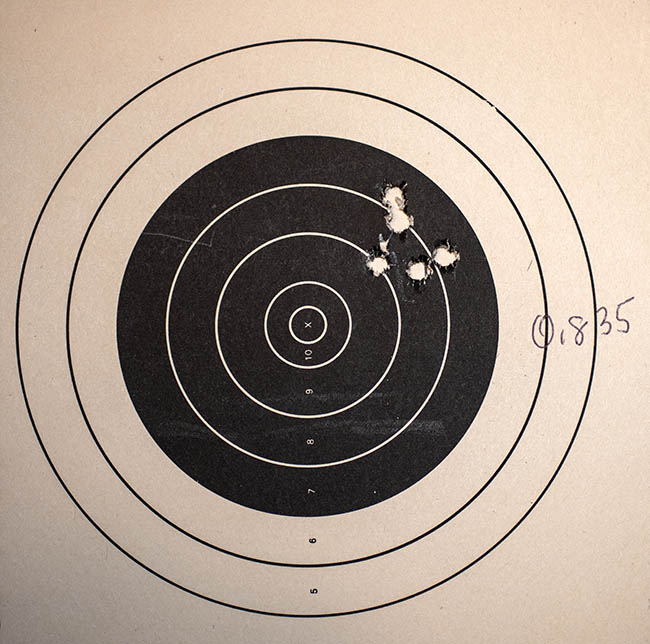
Not bad, but not consistent. The next group with this same load was 3.140 inches. Was it me, was it the rifle, was it the bullet, or was it the load? We’ll find out on the next outing.  This might have been a 1.6-inch group at 100 yards, and that ain’t bad.

Here’s what I experienced with the first six loads I’ve tried with these bullets.   Yep, there’s a lot of variability on some, but I’m encouraged.
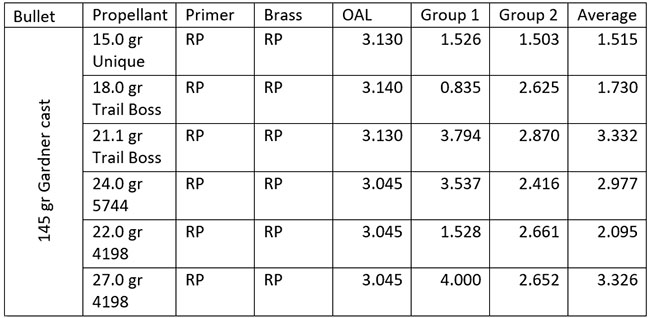
Accuracy results from the first six loads I tried with my 7mm Remington Magnum cast loads. I’ll focus primarily on Unique and Trail Boss, and seat the bullets out a little further for a longer overall cartridge length on the next set of loads.

I’ve already loaded more 7mm ammo with the Unique and Trail Boss loads, and I’m also going to try IMR 4227.  I don’t think that 4227 will do as well as the first two loads, though.  We’ll see.  After that, I’m moving the targets out to 100 yards.   That will be interesting, and when I do, you’ll see the results here on the ExNotes blog.

I already used about half of the 250 Gardner bullets that came in the first box.  The results in my Ruger No. 1 made me a happy camper and I ordered another 1000 7mm rifle bullets a few days ago.  If you want good cast bullets at a great price, you might take a look at Jim’s website.


More Tales of the Gun are waiting for you here!


Never miss an ExNotes blog!


Hit those pop up ads!
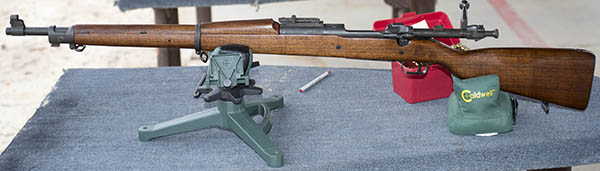
Cast Bullets in a 1903A1 Springfield

Yep, by popular demand, it’s another Tales of the Gun piece, this time focused on shooting cast bullets in my 1903A1 Springfield. I like shooting cast bullets in a rifle, and my intent is to use the Springfield with cast bullets only.   I have two good buddies who also own ’03 Springfields, and we’ve all been playing with different loads to see what works best.  I think I’m out in front here.  I’ve been sharing my results with ’03 buddies, and I thought I’d share what I’ve found with you, too.

My Springfield is one that was built up from parts as an ’03, but with the scant stock, so it is sort of a wannabe 1903A1 in essentially as new condition. I bought it from a guy who had it built up but hadn’t fired it.  I’ve written about the Springfield before here on the ExNotes blog, but I had not gone into any detail on the loads I am developing for it.  The intent today is to talk a bit about some of the cast loads I’m playing with for this rifle.

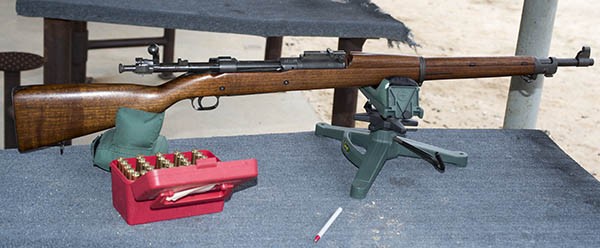
But first, here’s a look at my rifle.  It’s a magnificent old warhorse…

Sweet, huh?
The right side of my Springfield. Folks who know what they’re seeing have stopped to admire this rifle each time I’ve been to the range with it.
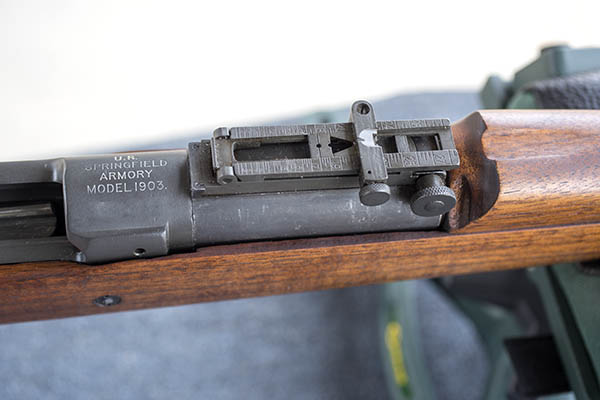
The 1903A1’s rear sight. It is a complicated little arrangement, which the government simplified dramatically on the 1903A3 version.
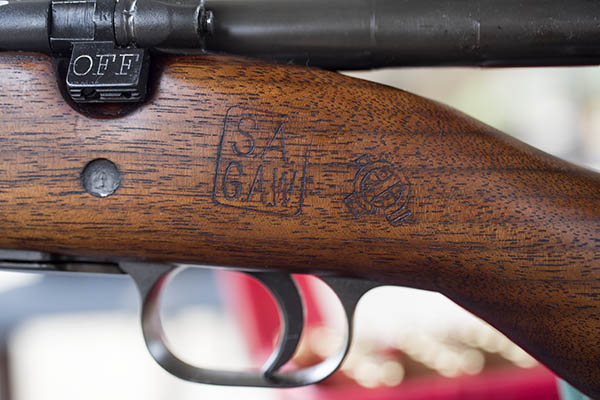
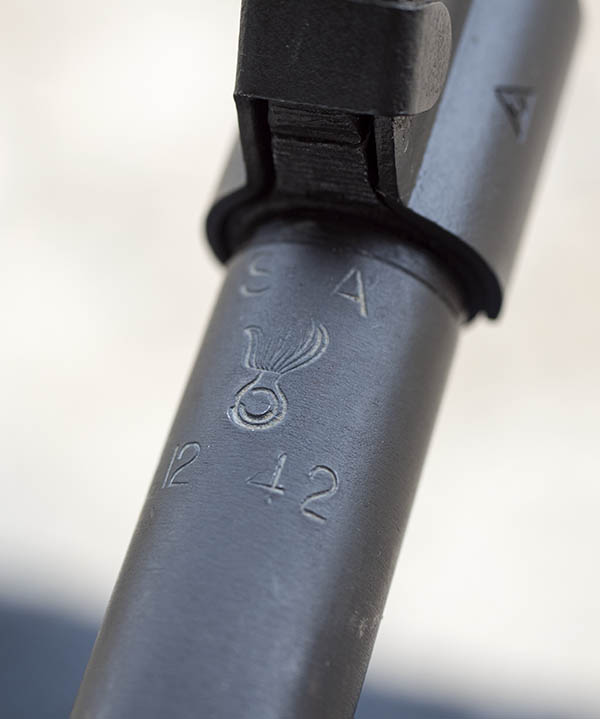
The man who built this rifle from parts knew what he was doing. Check out the cartouche.
The barrel on this rifle was a new old stock 1942 Springfield barrel.

I had reasonably good results in an initial range session with this rifle using 190-grain gas-checked bullets sized to 0.309.  I have a local guy who casts these bullets for me.  The idea behind using a gas check is to prevent leading the bore.

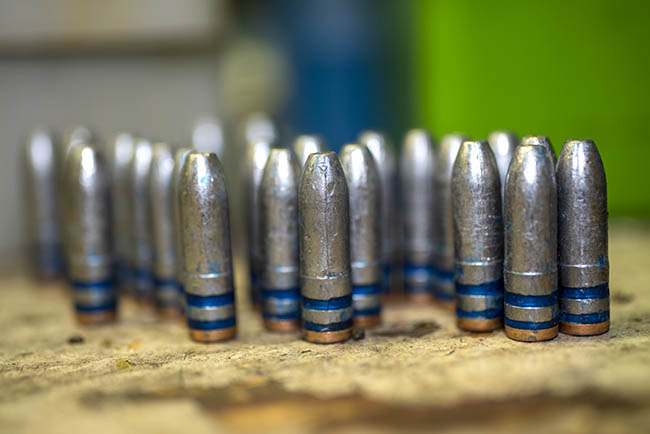
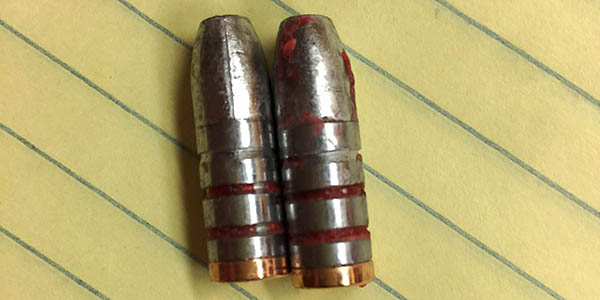
190-grain cast bullets. I like shooting cast bullets. There’s a story behind that, but it’s one for another blog.  The copper thingamabobber on the aft end of these bullets is the gas check.  The red stuff is bullet lube, designed to ease the passage of the bullet down the bore.  Both the bullet lube and the gas checks serve to prevent leaving deposits of lead in the rifle’s bore.

For the initial range session mentioned above, I had prepared loads ranging from 21.0 grains to 24.0 grains of SR 4759 propellant, and I had the best results (just eyeballing the results) at 24.0 grains.  In the first outing with the Springfield I wasn’t being too rigorous in my accuracy and test protocols; I just wanted to get an idea of what worked and what didn’t.

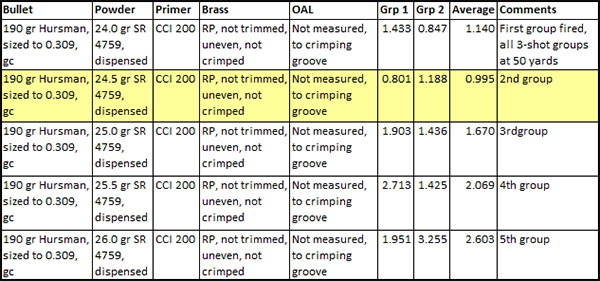
For my next set of accuracy tests, I went from 24.0 grains to 26.0 grains of SR 4759 in half-grain increments.  Here are the results…

Test results for SR 4759 propellant and 190-grain cast bullets in the Springfield 1903A1. The yellow-shaded row highlights the best accuracy.  24.5 grains of SR 4759 is the secret sauce here.

The risk in assessing accuracy from any of these tests is that a lot of the variation is my aiming error, and the resulting group sizes may not truly represent how the different loads perform in the rifle.  Based on the above data, though, it looks like my Springfield wants to be at 24.5 grains of SR 4759.  My Lyman manual says the muzzle velocity at that charge is somewhere around 1750-1800 fps. That’s hotter than I normally would want to be with cast bullets, but the above loads didn’t  lead the barrel too badly.  Recoil was moderate.  For these loads, I did not trim the brass cartridge cases and they were uneven, and because of that, I did not crimp the bullets. I’m pretty sure I can get better accuracy if I trim the brass to a uniform length, weigh each charge, and crimp (I’ve always found cast bullets do better when crimped).

The above results were encouraging.  The accuracy with cast bullets was good, but not quite as good as my Mosin or my 1909 Argentine Mauser.  The Springfield shot just under an inch at 50 yards, which would be just under two inches at 100 yards, and with cast bullets and iron sights, that ain’t half bad.  My Mosin and my Argentine Mauser will sometimes shoot into a half-inch at 50 yards.  The Springfield might do that, too, if I trimmed the brass and employed all of the other accuracy tricks mentioned above.   The good news is that I’m getting there.  It took a while to get everything right for the Mosin and the Mauser.  Rome wasn’t built in a day, as they say.

Encouraged by the above results, I reloaded more ammo with the 190-grain cast bullets to confirm the SR 4759 propellant results and to evaluate a few additional powders, including IMR 3031, IMR 4227, IMR 4198, 5744, Trail Boss, and Unique.  The reason I wanted to explore using other propellants is that SR 4759 is a discontinued powder.  I have a stash of it, but my two Springfield buddies do not, and someday I’ll run out of 4759.

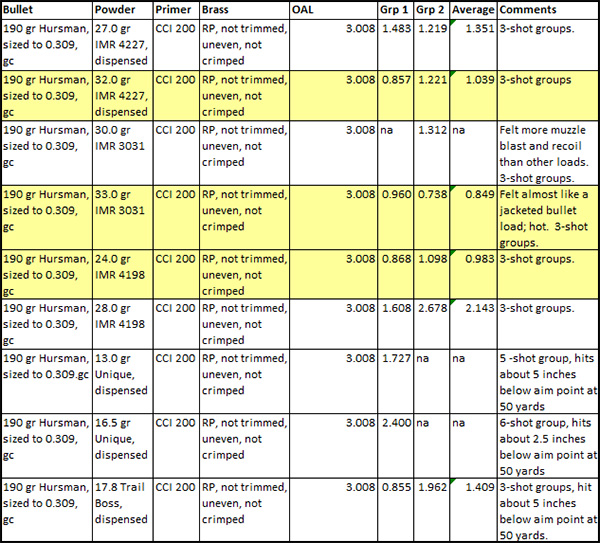
I was able to repeat the 4759 results (it’s a good propellant for cast bullets), and I found the other propellants show potential for great accuracy, too.  Here are the results (all at 50 yards) with the other powders…

IMR 3031 and IMR 4198 are looking good. IMR 4227 is good, too.

It was raining when I shot the above loads and I got my targets and loads mixed up a bit (eh, it happens). I got enough out of the range session, though, to form some general impressions. The loads generally seem to fall into two categories:

Hotter loads.   These loads were roughly 70%-80% of what jacketed loads would be (with recoil nearly like a jacketed load). Surprisingly, these had very little leading with the cast bullets. In particular, IMR 3031 worked well and it nearly had the recoil of a regular 30 06 jacketed load.

Milder loads.  These were in the 1500 fps range. These have lighter recoil and were moderately accurate, but they drop significantly at 50 yards compared to the hotter loads.  These are easy on the shoulder, but the drop put them off the target and they would require flipping the elevated ladder sight up on the ’03 to get back on target. For that reason, I’m not doing any more work with these. In this group, though, 13.0 gr of Unique gave decent (not great, but decent) groups. Trail Boss did okay, too. The Trail Boss loads were super light. Recoil was about like a .22.

The good news is that IMR 4227 works well in the 30 06 Springfield with the 190 grain bullets.  (The reason it’s good news is that one of my Springfield buddies has a lot of  4227 on hand.) The bad news is that 4227 is not in the current Lyman reloading manual. I have older manuals from the 1970s that list 4227, and that’s where the load data came from.

In cleaning the Springfield after the above range sessions, I checked the action screws (the two that secure the barreled action in the stock) and while they were snug, they were not fully tightened. I tightened them and it’s likely accuracy will improve.  Next time, folks.  A properly-secured action, trimmed brass, crimped bullets, and good weather with no wind at the range…those half-inch Springfield groups are out there.  I just need to find them.


Like what you’re reading here?  Check out our other Tales of the Gun stories, and please sign up for our automatic email blog updates!

Reloading and Shooting Cast Bullets in the Mosin-Nagant Rifle

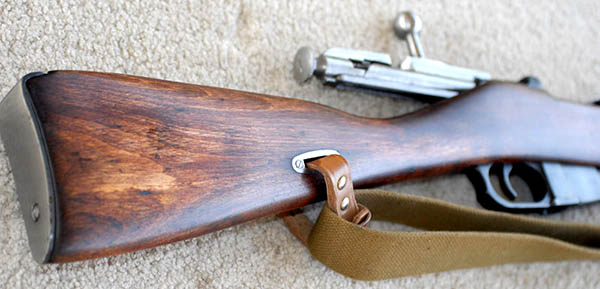
The Mosin-Nagant 91/30. These rifles are extremely accurate.  This one is 84 years old.

I’m a Mosin-Nagant fan, as you know from reading our prior posts on these fine old Russian warhorses.  I’ve got two, one I use with jacketed bullets and one I use exclusively with cast bullets.  Today’s blog focuses on reloading and using cast bullets in a Mosin.

So what’s the deal on cast bullets?   If you reload, you can use either factory-produced, copper-jacketed bullets, or you can use cast bullets.  Cast bullets are cast of lead, lubricated with an appropriate grease, and sometimes fitted with a gas check (a small copper cap on the back of the bullet).

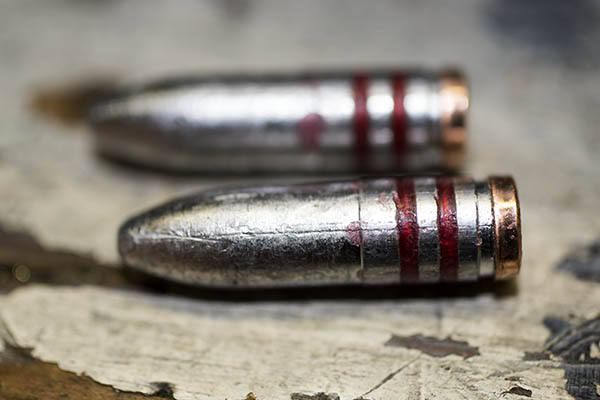
The cast bullets I’ve settled on as best for my Mosin.  These are 200-grain, gas-checked bullets made by a local caster. The gas check is the little copper cap at the base of the bullet. It prevents the propellant gases from melting the bullet’s base and minimizes barrel leading.

Folks who shoot cast bullets either buy the bullets or they cast them themselves.  I used to cast bullets 40 years ago, but I found it easier just to buy them from folks who know what they are doing and avoid the hassles of melting lead, breathing the fumes, etc.

Cast bullets are a lot easier on both the rifle and the shooter.  The softer metal (lead versus a copper jacket) is easier on the rifling and the lower velocities reduce recoil.   The downsides are that the trajectory is more pronounced due to the lower velocities associated with cast bullets, and generally speaking, cast bullets are not as accurate as jacketed bullets.  But that last bit sure isn’t the case here.   My cast loads in the Mosin are every bit as accurate as jacketed loads, and the Mosin I use for cast bullets is another one of my all-time favorite rifles.  It’s the rifle you see in the first photo of this blog, and in the photos below.

My Mosin-Nagant has been worked on a bit.  I stripped and refinished the stock, I glass bedded the action, and I did a trigger job to lighten the pull and eliminate trigger creep.   It’s a great shooter.
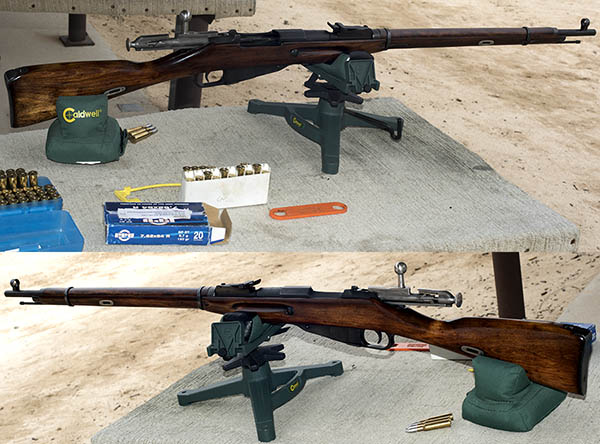
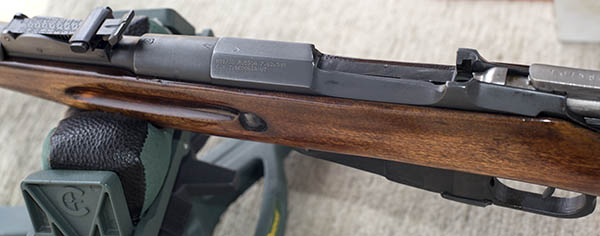
The desirable hex receiver Mosin.   The Mosin-Nagant is an extremely accurate milsurp rifle.

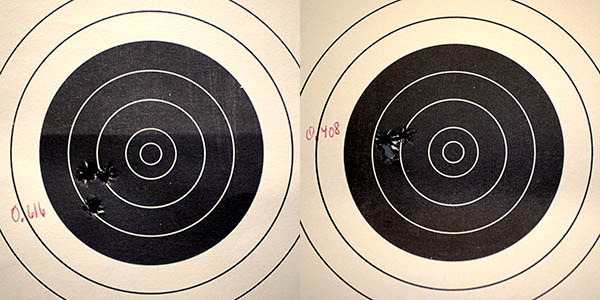
My cast bullet Mosin is just flat amazing.  It regularly cloverleafs at 50 yards, and when I do my part, I’ll get groups under 2 inches at 100 yards.  Yeah, I know, other folks talk about sub-minute-of-angle shooting at that distance, but we’re talking about iron sights and cast bullets here, folks, and it’s all being done with a rifle manufactured in 1935.   And wow, can that 84-year-old puppy shoot…

Open sights, 50 yards, shooting from a benchrest at the West End Gun Club.

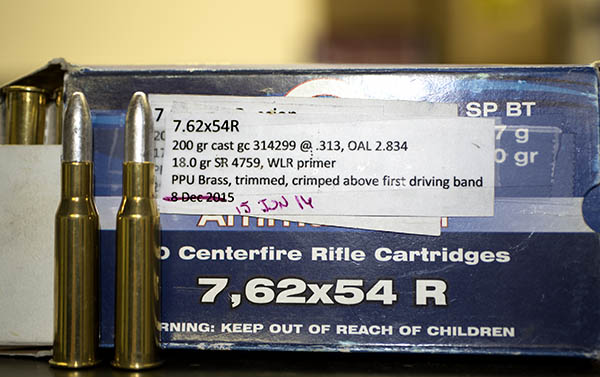
This kind of accuracy doesn’t just happen and it’s usually not attainable with factory ammunition.  This is what you can get when you tailor the load to a particular rifle, and you can only do that if you reload.  I developed the load used to shoot the targets you see above trying different propellants and propellant charges, different cartridge cases, and different cast bullets.  The secret sauce?  It’s this recipe right here…

My Mosin load. SR4759 is a powder that works well for reduced velocity and cast bullet loads. It’s no longer in production, but I have a stash.  When I run out of SR4759, I’ll turn to a current production powder and start the development process all over again.

Good buddy Gresh suggested I do a piece on reloading, and I actually had done that already in the form of a video some time ago.   What you’ll see in the video below is the reloading process.   When you reload a cartridge, you lube the brass, resize it to its original dimensions, prime it, flare the case mouth (to accept the cast bullet), add the propellant, and seat the bullet.  With a little bit of music taken directly from Enemy at the Gates (a movie in which the Mosin-Nagant rifle was the real star), take a look at what’s involved in reloading 7.62x54R ammo with cast bullets…

Shooting cast bullets in a rifle is a lot of fun.  A good reference if you want to try loading with cast bullets is the Lyman Cast Bullet Handbook (it’s the one I use).  If you never tried reloading you might think about getting into it, and if you’re already reloading, you might think about giving cast bullets a go.


Check out our other Tales of the Gun stories!


Sign up for our Milsurp Facebook group!