By Joe Berk
I’ve been a motorcycle guy nearly all my life and I’ve owned several motorcycles. Only two of them were Harleys; the first was beautiful but terrible in many ways (a ’79 Electra Glide Classic). The second was beautiful and it was a great machine (a ’92 Heritage Softail). I think Harley’s styling on past models has been awesome. Bottom line? I’m not a Harley fanatic and I’m not a hater. It’s not likely I’d ever buy another Harley, unless I came across a cheap XR-1000 (and that’s probably not in the cards). All that said, I can tell you that the Harley-Davidson Museum is the best motorcycle museum (and maybe the best anything museum) I’ve ever visited (and I’ve visited a lot of them).
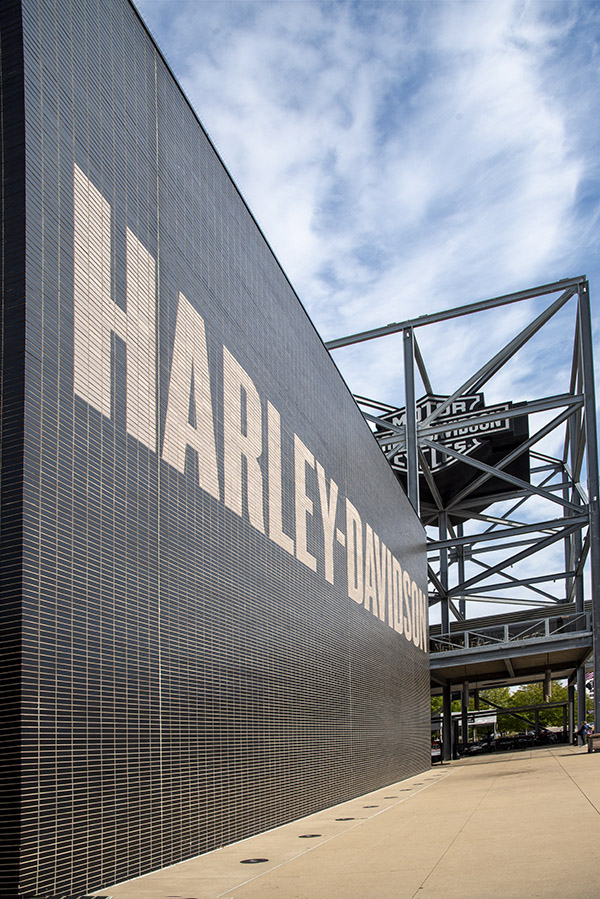
First, a bit of logistics about the Museum and our upcoming blogs. We were in Milwaukee specifically to visit the Museum along with a few other Milwaukee highlights. The Harley Museum is too much to take in with just a single visit, and it is definitely too much to cover in a single blog. Our Milwaukee schedule allowed only one Harley Museum visit, but I’ll cover it in three or four blogs. This is the first.
Sticking to the logistics for a moment, the Museum is easy to get to. Plug it into Waze and you’ll drive right up to their front door. There’s plenty of parking, and we snagged a handicap parking spot right at their front door (my handicap tag is the silver lining to a 2009 motorcycle accident). We visited the Museum on a weekday, so it was not too crowded. I’m guessing that’s not the case on the weekends.
Admission is reasonable at $24 per person; for us it was a little less because we qualify for the geezer discount (that knocks it down to $20 per person). Knowing Harley’s customer base, I think a lot of folks get in for $20.
The interior lighting was subdued. Flash photography is allowed, but it’s hard to get decent photos with flash. Nearly everything you see here is with ambient lighting. I had to crank up the Nikon’s ISO, so you may see some graininess in my photos. Mea culpa.
The Museum has three floors, and the building is huge. There are several permanent exhibits and a few special exhibits (ones that change from time to time). The exhibits (both permanent and special) include:
-
-
- Motorcycle Galleries.
- Mama Tried.
- Mi Papi.
- The Engine Room.
- The Archives.
- Military Motorcycles.
- Clubs and Competition.
- The Tank Wall.
- Art and Engineering.
Motorcycle Galleries
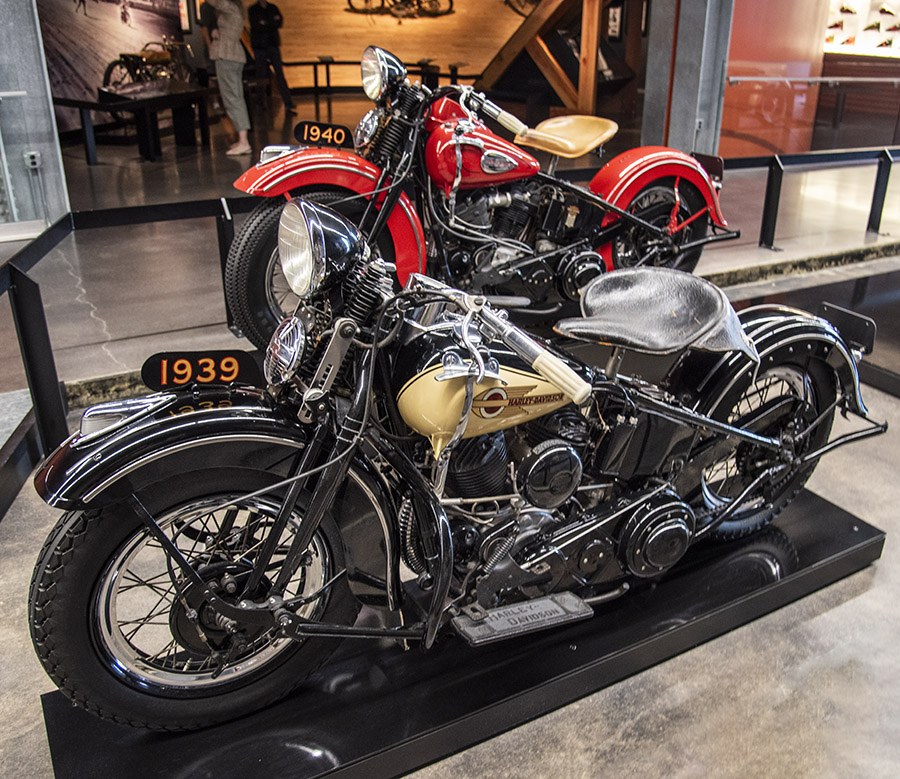
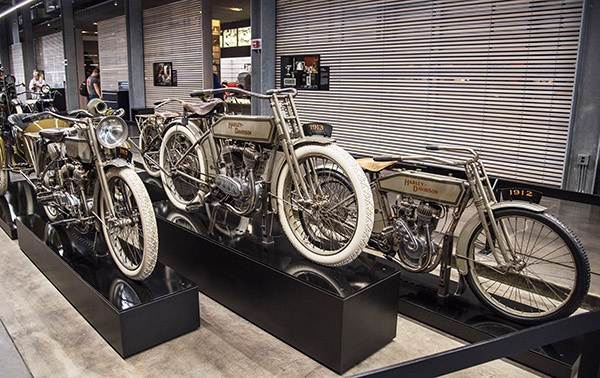
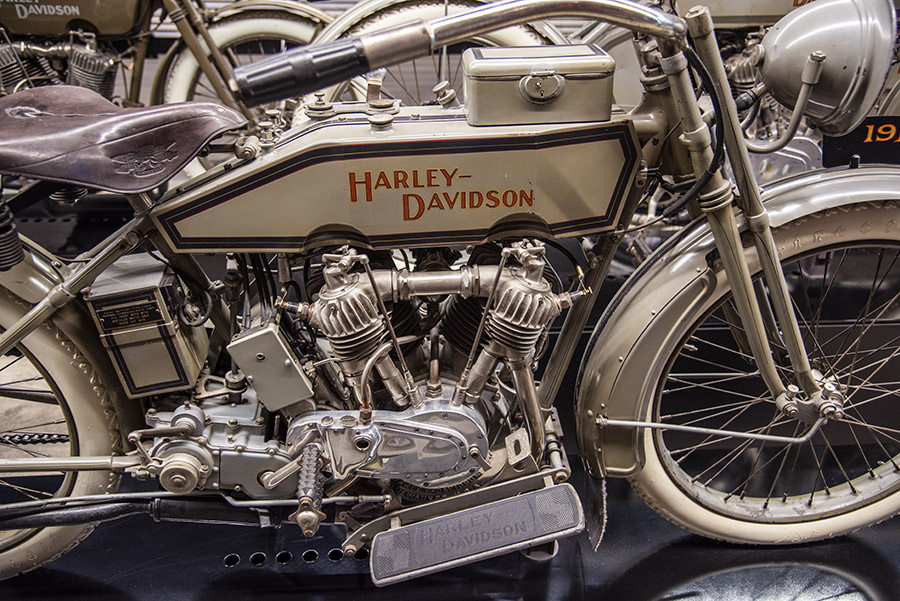
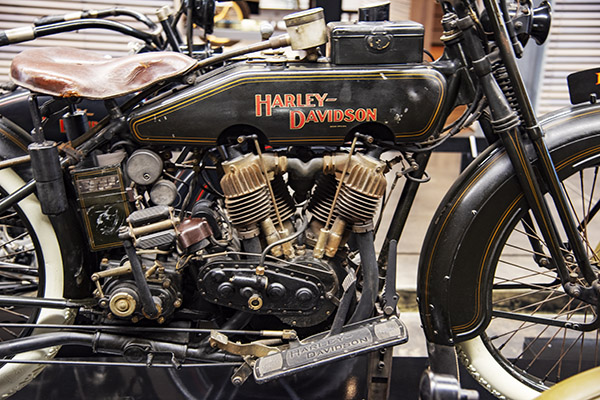
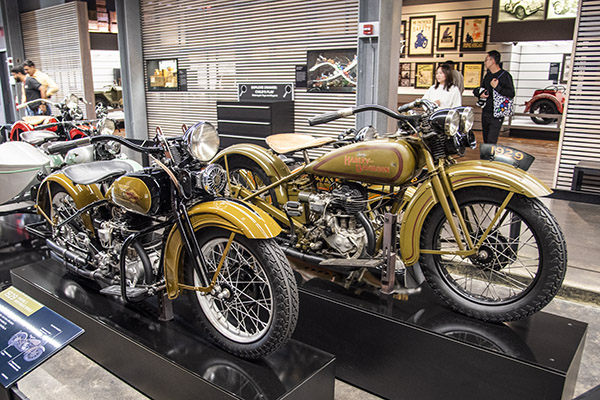
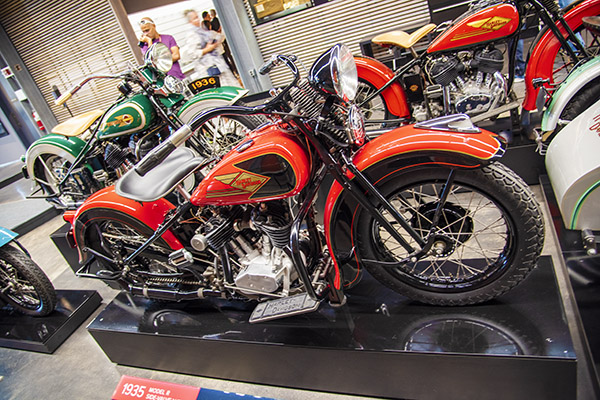
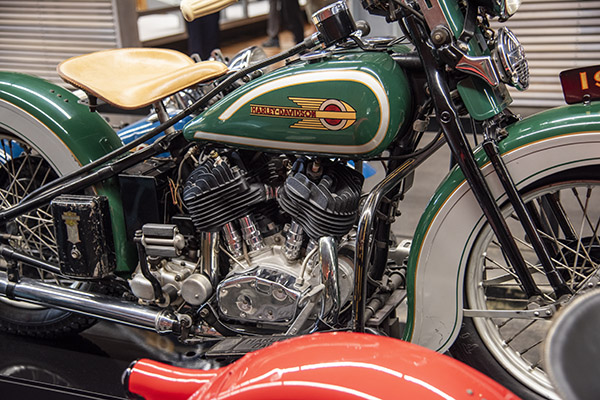
The Motorcycle Galleries are on the first and second floors, and they dominate the Museum. The Motorcycle Galleries is an appropriate name. The first part is a 180-foot, three-motorcycle-wide display of motorcycles from Harley’s first 50 years, starting with their very first model. The second part features later Harleys.
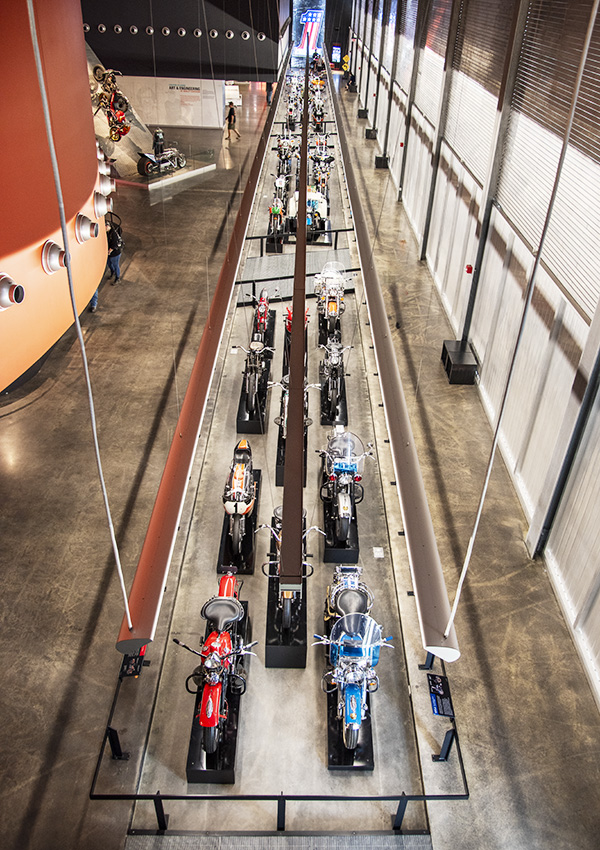
It was a well assembled exhibit and the motorcycles are beautiful. As I walked the line and took in the motorcycles, I realized I had seen more than a few of these bikes in books. Seeing them in person was special.
Mama Tried
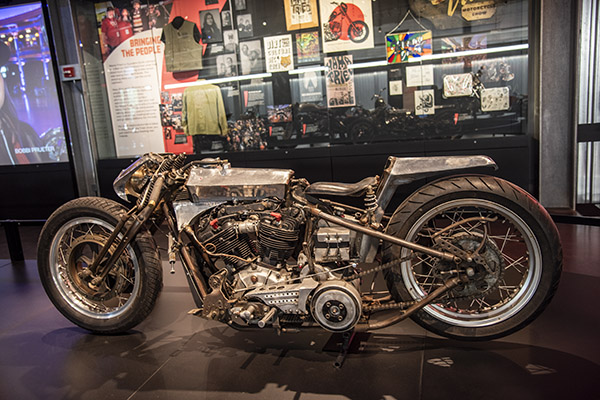
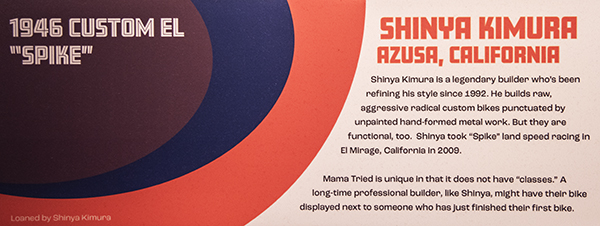
Mama Tried was a custom bike exhibit, containing all sorts of custom Harleys (not the wigged-out choppers you see at the motorcycle shows). I’m not sure what the name (Mama Tried) is supposed to mean, but I thought the exhibit was good. I was liked seeing the Knucklehead customized by Shinya Kimura, whom we’ve written about before.

Mi Papi Has A Motorcycle
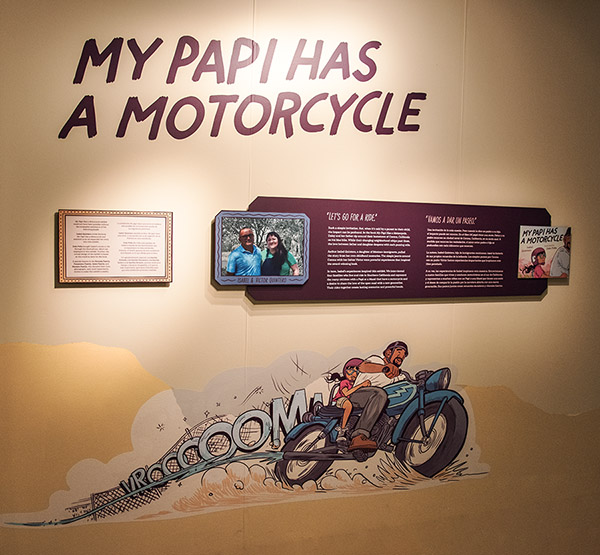
You may remember that Joe Gresh wrote an ExNotes review a few years ago about the Spanish language kid’s book, Mi Papi Has A Motorcycle. The book impressed Gresh; apparently, it had the same effect on the Museum staff. There’s an entire hall with large storyboards taken from the book.
The Engine Room
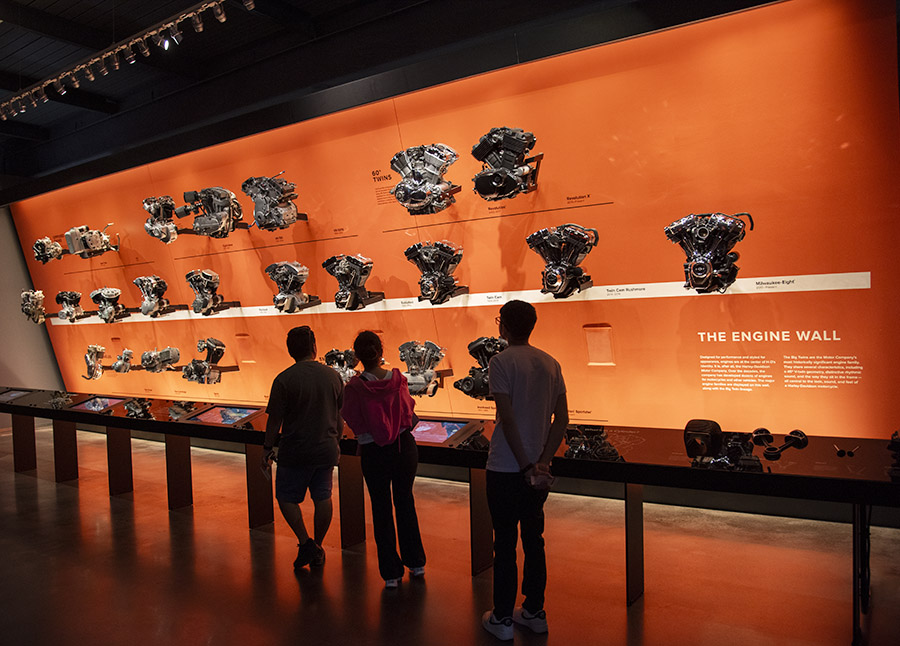
The Engine Room was enlightening. I always found the history and names of Harley engines confusing. VL, UL, flatheads, you know…what do all those designations actually mean? I’m a mechanical engineer and I never could follow it all. The Engine Room made it all clear. We’ll have a future blog on it. This was one of the best parts of the Harley Museum.
The Archives
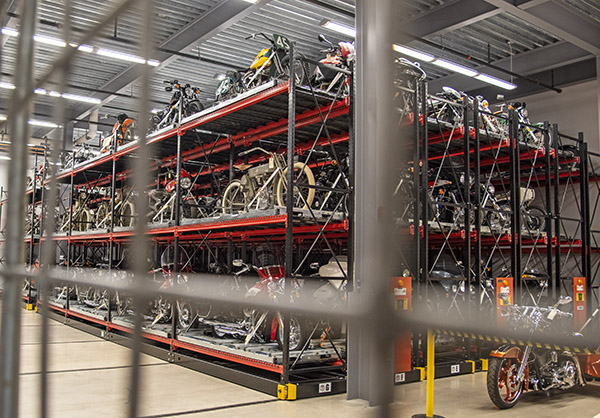
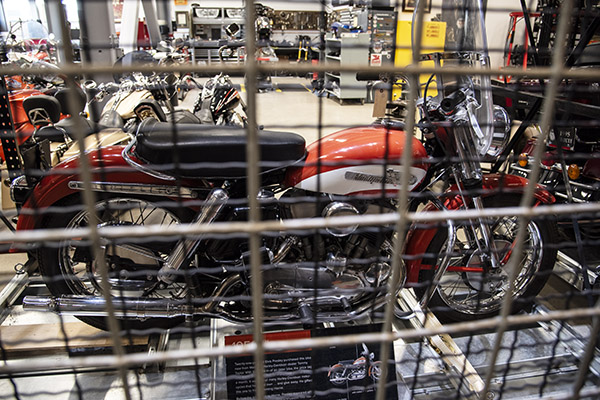
The Archives were something I’d read about before. An elevator takes you to the third floor. The archives are not open to the public, but you can peer in through a double wire fence. One of Elvis Presley’s motorcycles was near the fence.
Military Motorcycles
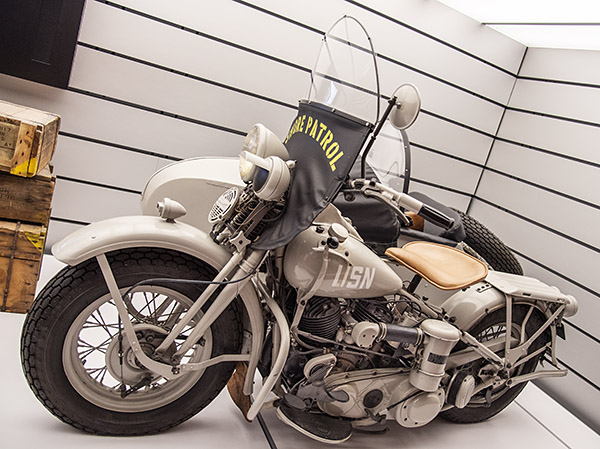
The Military Motorcycles exhibit features the Harleys used in World War II and it was the best exhibit of its type I’ve ever seen. This is a topic I’ve been interested in for a l0ng time, going back to before I wrote The Complete Book of Police and Military Motorcycles. There will be a separate blog on this exhibit. It was awesome.
Clubs and Competition
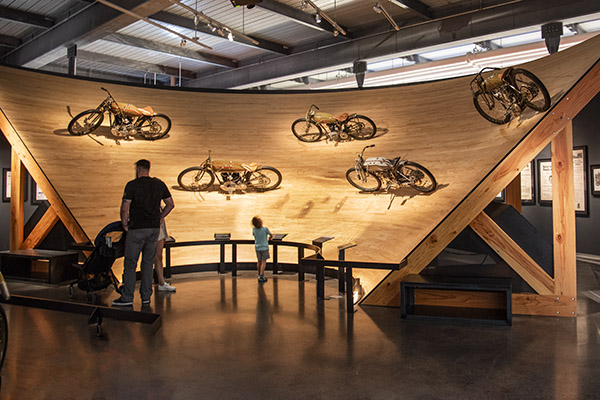
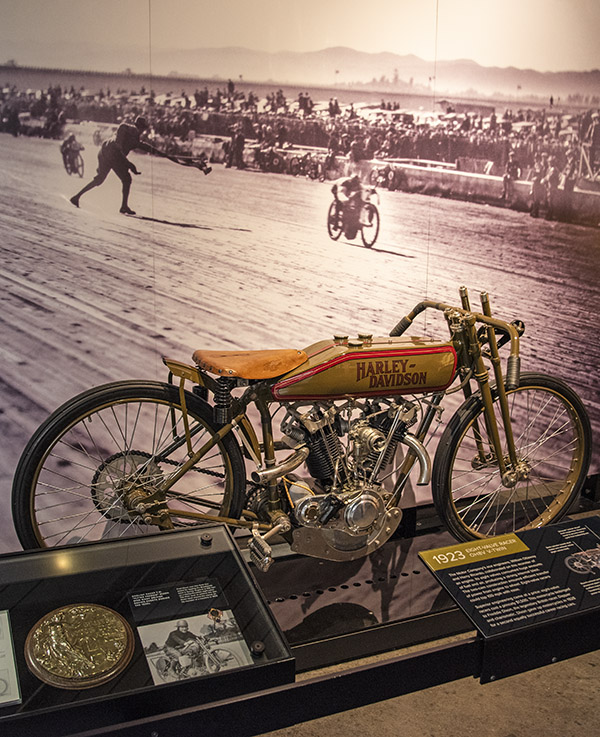
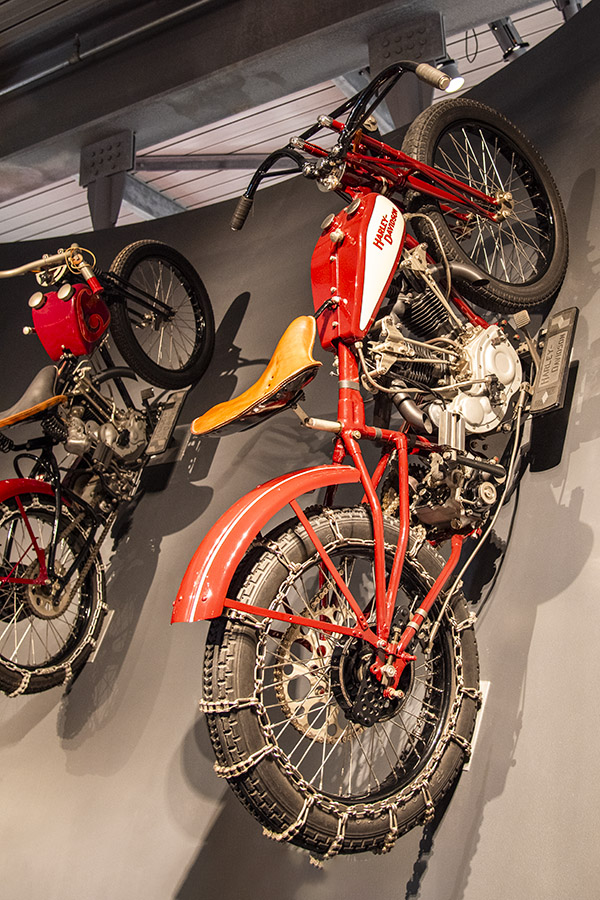
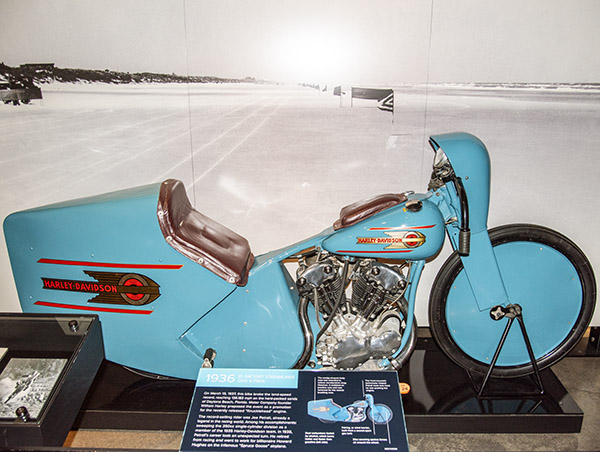
The Clubs and Competition exhibit features a board track with vintage race bikes and projected images of motorcycle racers (and accompanying engine sounds), vintage Harley hill climbers, and Joe Petrali’s land speed record Knucklehead. The Petrali streamliner was awesome.
The Tank Wall
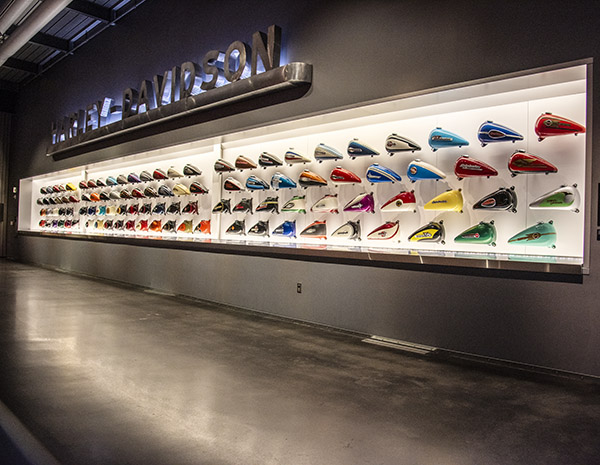
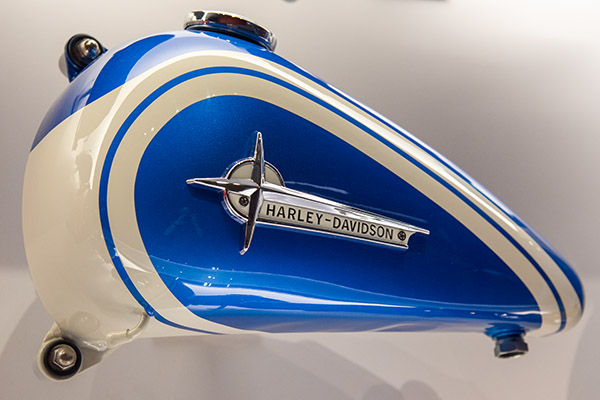
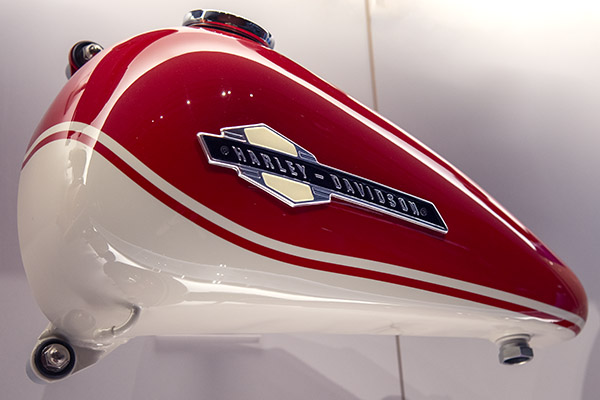
The Tank Wall and the tank exhibits were intriguing. I’ve seen photos of it many times, but to see it in person had more of an impact. To me, the tanks and the engine are what make a Harley. It’s well done. I felt like a kid in a candy store more in this part of the Museum than anywhere else.
Art and Engineering
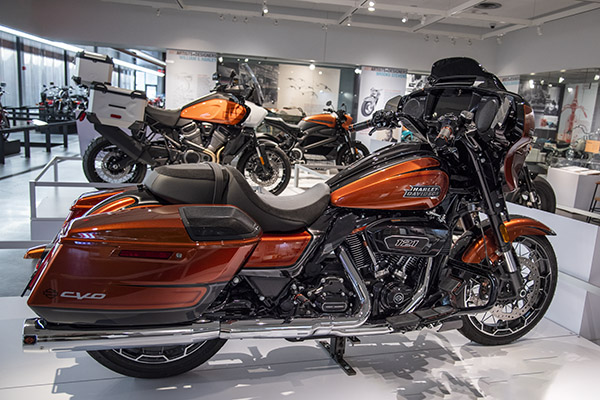
The Museum has a relatively new Art and Engineering exhibit, which is intended to show how art combines with engineering at Harley-Davidson. I was disappointed, especially because it was one of the main reasons I visited. I felt it was superficial and that it was basically a Harley-Davidson commercial, with almost nothing beyond a very light explanation of how Harley engineering is influenced by art. I get it; they go from sketches to clay mockups to metal, and they select colors along the way. Got it. They use CAD. Got it. Willie G is a wonderful human being, and so was an earlier designer/stylist named Brooks Stevens. Got it. I kind of knew all of that before I got on the airplane to go to Milwaukee (except for the part about Brooks Stevens; that was new to me).
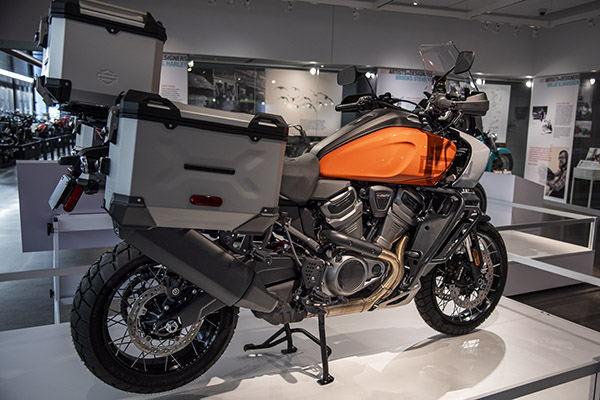
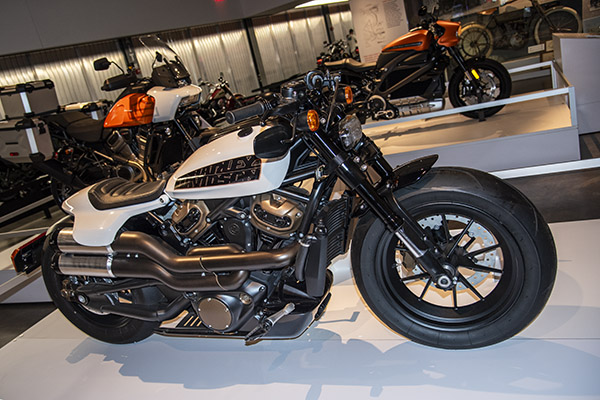
When the motorcycling world discovered Willie G 50 years ago (in the days of the Super Glide, the XLCR Cafe Racer, the Electra Glide Classic, the Low Rider, etc.) there were lots of stories about how Harley went to motorcycle events and studied how riders customized their motorcycles. That was good stuff and those were good creativity inputs, but there was none of that in this exhibit. I was hoping to understand how Harley selected the style and the performance parameters for the new Sportster (a nice-looking motorcycle) and the Pan America (an ugly motorcycle, but all ADV bikes are), and maybe gain some insights into where Harley might go in the future. There was none of that.
I’m probably not a fair judge in this area. I taught engineering for 27 years at Cal Poly Pomona, I’ve had motorcycle engineering assignments related to Harley and other companies, and I wrote a book about engineering creativity. To be fair to Harley, they weren’t targeting retired engineering professors when they created the Art and Engineering exhibit. The exhibit had nice visuals, but for me it was devoid of any meaningful content. That said, we took in nine exhibits at the Harley Museum and only this one didn’t measure up to what I expected. The rest were all outstanding, and 8 out of 9 wins is a pretty good score in anybody’s book.
So there you have it: My Harley-Davidson Museum impressions. Sue and I had a good time. We were there for about three hours, but it would have been easy to spend the entire day. My disappointment in the Art and Engineering exhibit notwithstanding, I strongly recommend that anyone who rides or has even a passing interest in the American icon that is Harley-Davidson visit the Museum. It’s a bucket list destination. I’m glad I went.
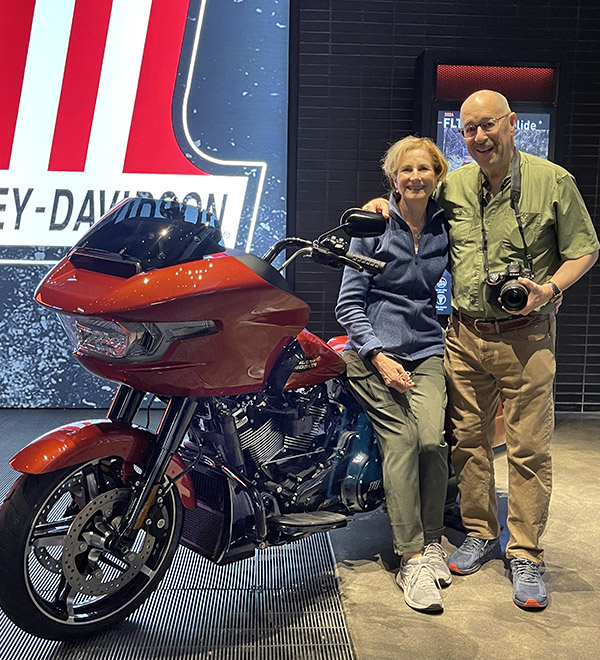
At the tail end of our path through the Harley Museum, there’s an area with current model Harleys where you can sit on the bikes and take pictures. A nice guy from the Czech Republic offered to take a picture of Susie and me with my cell phone. It looks good. Our smiles are real.
Never miss an ExNotes blog:
Join our Facebook ExNotes page!
Don’t forget: Visit our advertisers!


Check out these offerings from Viking Bags!
Motorcycle Saddlebags
Harley Davidson Saddlebags
Motorcycle Luggage Bags
Motorcycle Sissy Bar Bags
Motorcycle Sissy Bars
Motorcycle Backpacks