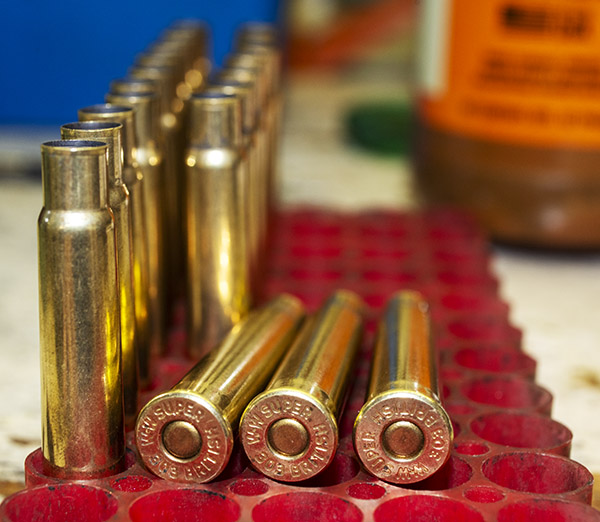
Lee’s .303 British Ultimate 4-Die Set: Part 3 of 3

By Joe Berk

Part 1 of this series took us through brass preparation, Part 2 took us through priming, and here we are at Part 3, which discusses powder charging, bullet seating, and case mouth flare removal.
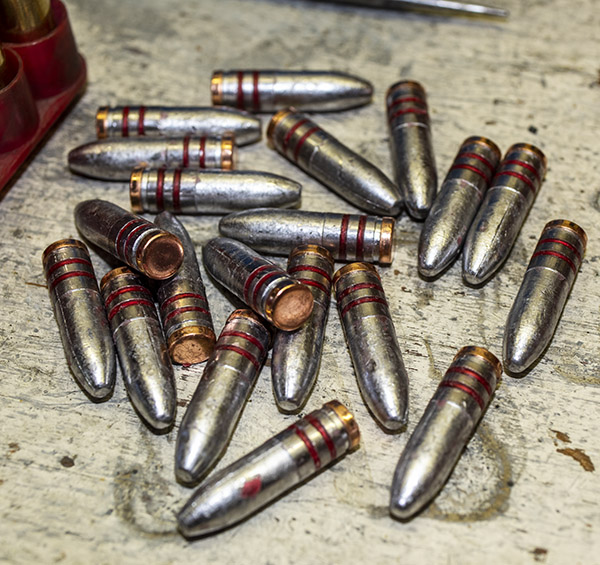
Cast 200-grain bullets, lubed, sized, and gas checked.  These are from the Lyman 314299 mold.

I had previously mentioned that I shoot cast bullets in my military surplus rifles, and in particular, I like a gas-checked 200-grain cast bullet.  Good buddy Roy Hursman cast these for me.  Roy retired and sold his bullet casting gear.  I hope I’m able to find somebody that does as good a job as Roy.
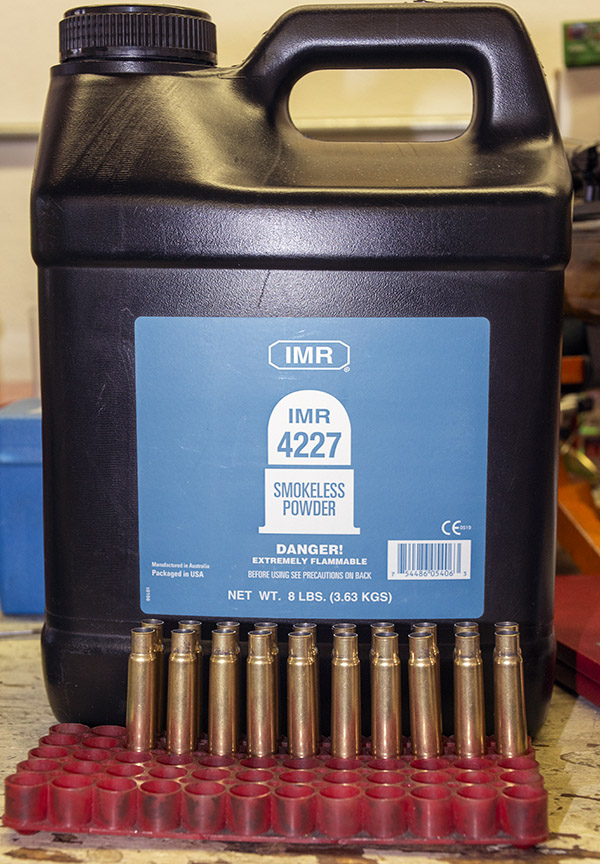
This 8-lb bottle of IMR 4227 propellant is good for nearly 2,700 rounds of .303 British ammo.

I use different powders in my rifle cast bullet loads.  A good one is IMR 4227, which is what I used for this .303 British load.  The secret sauce recipe is 21.0 grains of IMR 4227 with no fillers.  I’d like to tell you that I developed this load after extensive testing, but I can’t.  It was next to what the Lyman cast bullet manual said was the accuracy load with this bullet and IMR 4227 was in my ammo components locker, so it got the nod, and it worked.  I felt no need to experiment any further; the load worked well and was very accurate.  This 21.0-grain IMR 4227 load is near the lower end of the loads listed in the Lyman manual.  The bullets exited the muzzle at about 1600 feet per second (as tested with my Garmin chronograph), and that’s good enough for me.

I use an RCBS powder dispenser, and once I had it set up to throw 21.0 grains of IMR 4227 propellant, there was no need to weigh the charge for each cartridge because the powder meters so well.  I loaded the 20 rounds like it was pistol ammo, placing each empty brass case beneath the dispenser, charging the case, and moving on.  After I had charged all 20 cases, I threw another charge into my scale’s powder cup and weighed it again to make sure the dispenser was still on the money.  It was (the powder dispenser released exactly 21.0 grains).

It was time to turn to the Lee Ultimate 4-Die set’s bulleting seating die.   The first step was to install the bullet seating die in the press and screw it partially in.
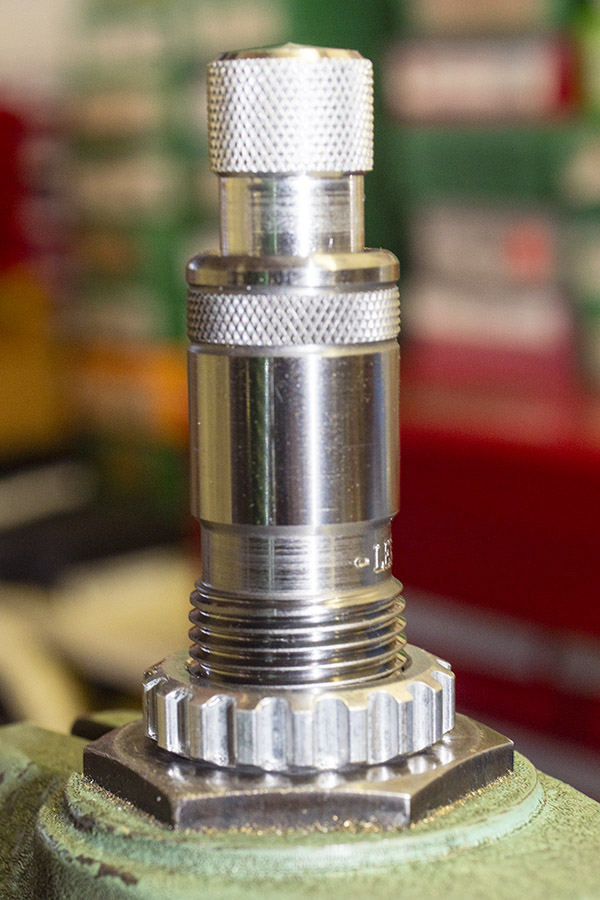
The Lee .303 British bullet seating die. It includes a feature for a roll crimp if so desired. The knob on top adjusts the bullet seating depth.

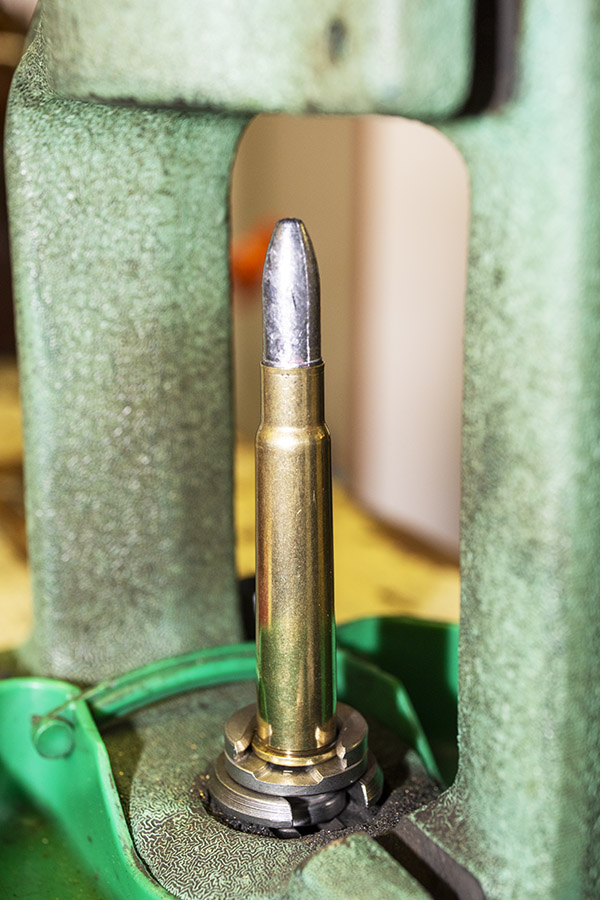
I placed the first bullet over a charged .303 British case (charged with IMR 4227, that is) and raised the ram in the press.  Observing where the bullet went (i.e., how deeply it seated in the case), I lowered the die in the press a bit more, repeating the process until I attained the desired bullet seating depth.  I wanted the bullets to be seated such that the cartridge mouth was just behind the bullet’s first driving band.
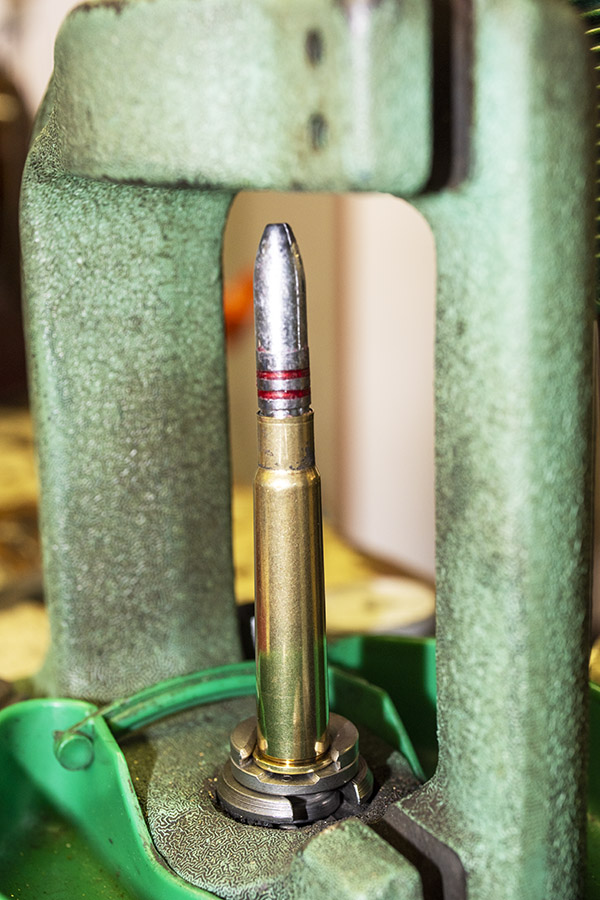
A cast bullet about to be seated in the cartridge case.
A seated bullet, positioned exactly where I wanted it.

After seating all 20 bullets in the 20 charged .303 British cases, it was now time to remove the case mouth flare we induced in Part 1 of this series. I probably could have skipped doing so, because I did as I advised in Part 1 (I flared the case mouth just enough to allow the bullet to enter).  Even without removing the flare, the cartridges would chamber because the flare was so small.  But I like to go for the extra step of removing it just to make sure.
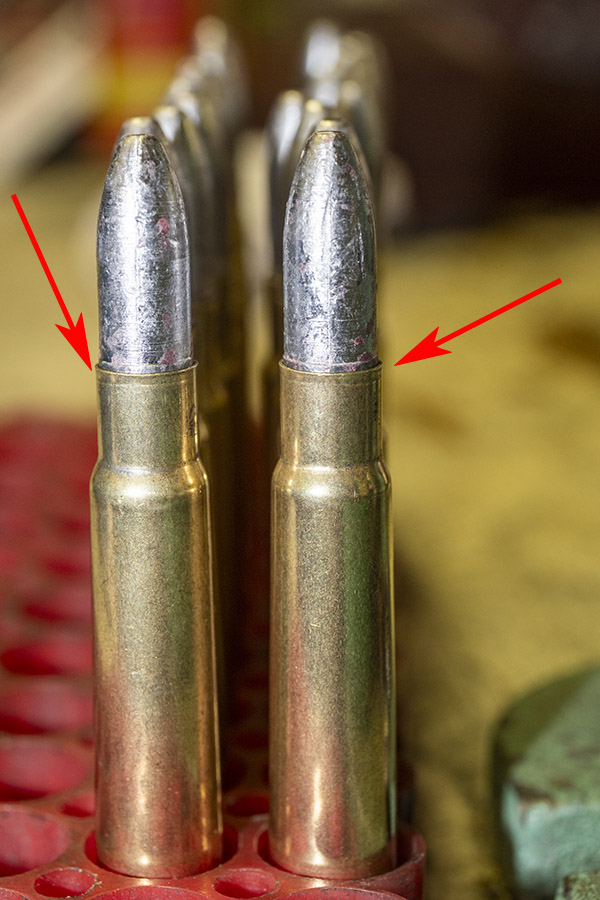
The red arrows point to the remaining flare after seating the bullets. This will be removed with the Lee factory crimp die in the next step.

Lee’s factory crimp die (the fourth die provided in their Ultimate 4-Die set) is what I use for removing the flare.  It can also be used (as the name implies)  for crimping the case mouth on the bullet.
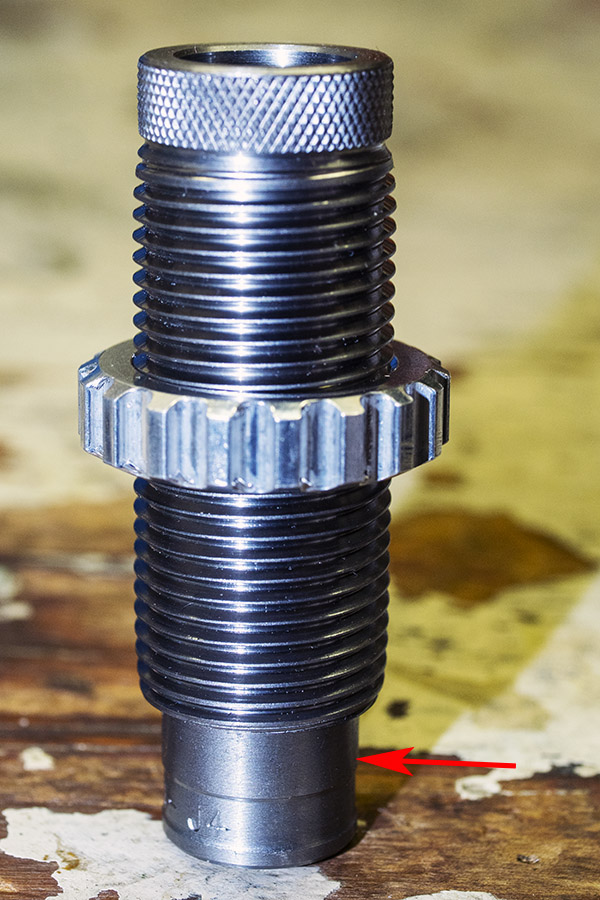
Lee’s factory crimp die. The arrow points to the cylinder that is pushed up into the die body by the shell holder when the press is fully raised. By adjusting how far the die body is screwed into the reloading press, you can adjust how much crimp is applied.
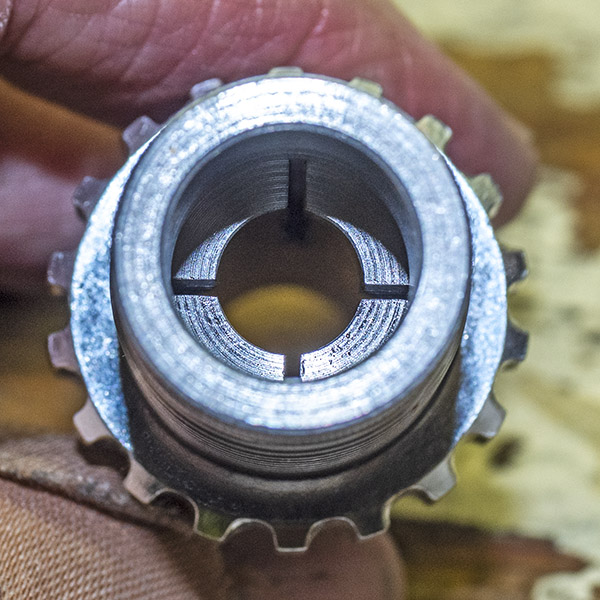
The view from above the Lee factory crimp die. The cylinder shown in the photo above (see red arrow) cams into the four circumferential collets shown in this photo. These four collets apply force to the cartridge case. You can adjust the die to apply no force, just a small amount of force to remove case mouth flare (as I did to my .303 British cases), or to apply a crimp.

By adjusting how far the die is screwed into the press, you can control how much force is applied to the case mouth.  You can screw it in just enough to remove the case mouth flare (as I did), or you can screw it further into the press to apply as firm a crimp as you want around the case mouth.

The Lee factory crimp die does not apply a roll crimp; it applies a concentric circular flat crimp around the case mouth periphery.  Some folks think this makes the Lee factory crimp independent of case length.  I don’t agree with that.  On longer cases, the Lee factory crimp will press more case material radially inward than it would on a shorter case (theoretically, if the case were trimmed too short, the Lee factory crimp would apply no crimp).  But it’s still more controllable than a roll crimp, and the amount of roll crimp applied is far more sensitive to case length than is the Lee factory crimp.  And if you wish to apply a roll crimp instead of the Lee factory crimp, you can still do so with Lee bullet seating die.  Just screw the die body in further (while backing off on the bullet seater on top of the die) until the reduced diameter step inside the die body contacts the case mouth enough to provide a roll crimp.

I ran all 20 cases through the Lee factory crimp die after adjusting the die.  I adjusted the die to apply just enough radially-inward force to remove any remnants of flare from the case mouth.

After completing all 20 .303 British neck-sized cartridges, I put them in a box and applied a label, as I do with all my reloaded cartridges.
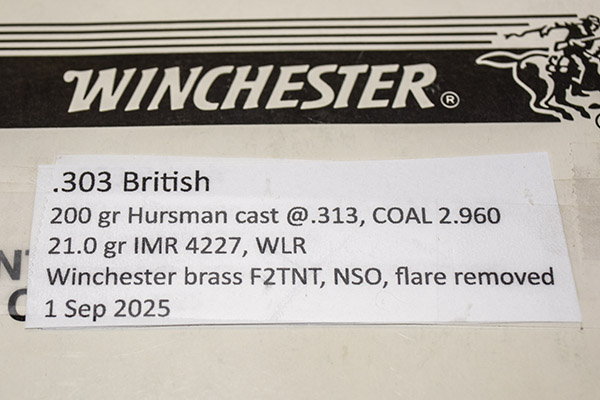
Reloaded, boxed, and labeled. “F2TNT” is my code for fired two times, not trimmed. “NSO” means neck sized only.

How did this ammo shoot?  It did well, as the target below shows.  I can’t show that my neck-sized-only reloads are dramatically better than full-length resized ammo, but I know I have the other advantages offered by neck sizing (not having to lube the cases, a quicker reloading process, and longer brass life).  I am quite pleased with my Lee .303 British die set.
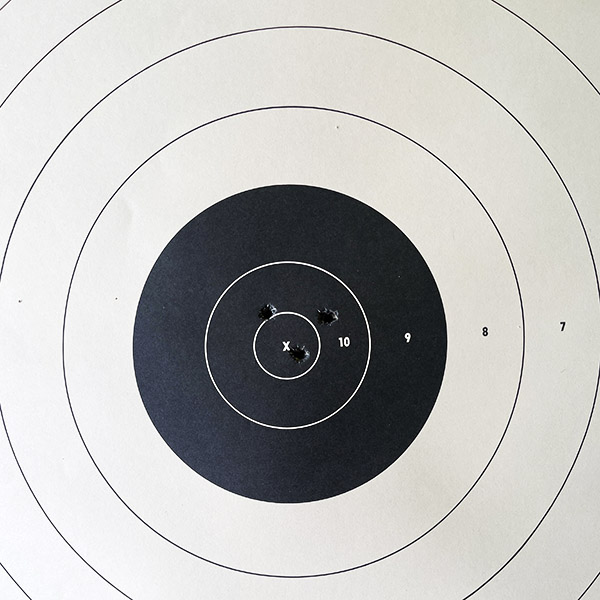
A perfectly centered, tight, 3-shot group at 50 yards, with light recoil and good accuracy. The Lee Ultimate 4-Die set does what it is supposed to.

More reloading, hunting, and shooting stories are here!


Join our Facebook ExNotes page!


Never miss an ExNotes blog:


Help us keep the lights on:


Don’t forget: Visit our advertisers!


Lee’s .303 British Ultimate 4-Die Set: Part 2 of 3

By Joe Berk

In Part 1 of this three-part series on using Lee Precision dies to reload the .303 British cartridge, we covered resizing, decapping, full-length resizing, neck sizing, and flaring the case mouth.  Part 2 continues the reloading process.

The next step for me (after the brass is resized and flared) is case cleaning.  I use a Frankford Arsenal vibratory polisher.  I’ll drop the brass in it and do other things for an hour or so as the brass is polished.

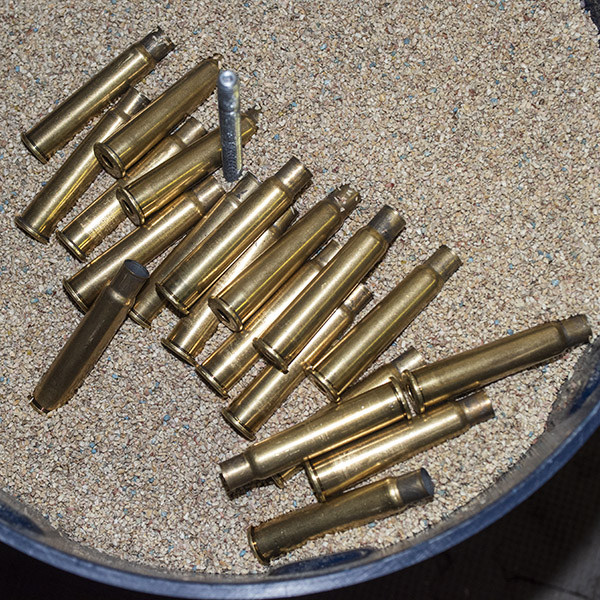
Resized cases in the Frankford Arsenal vibratory polisher. The media is made from corn cobs. I add Dillon’s polishing liquid to it prior to starting the polisher.
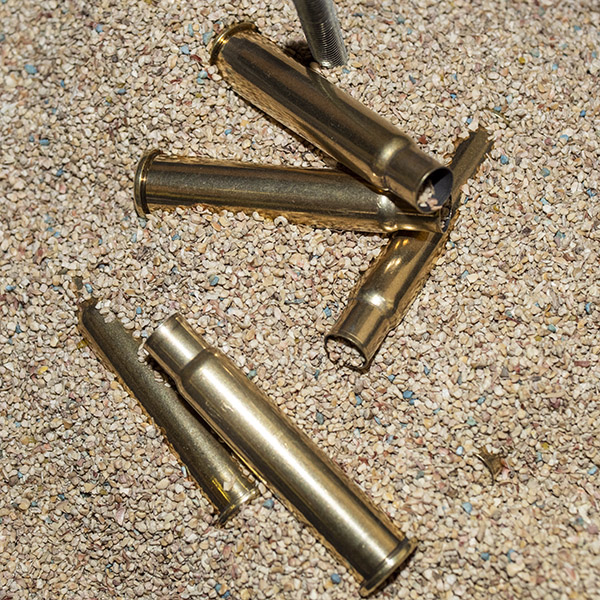
Finished brass. I like it to be clean and well polished both for aesthetics and for accuracy. When the inside of the case neck is polished, it is free of any lubricant from the resizing operation, and case neck grip (or tension) will be consistent from round to round. Case neck tension variability will increase group size.

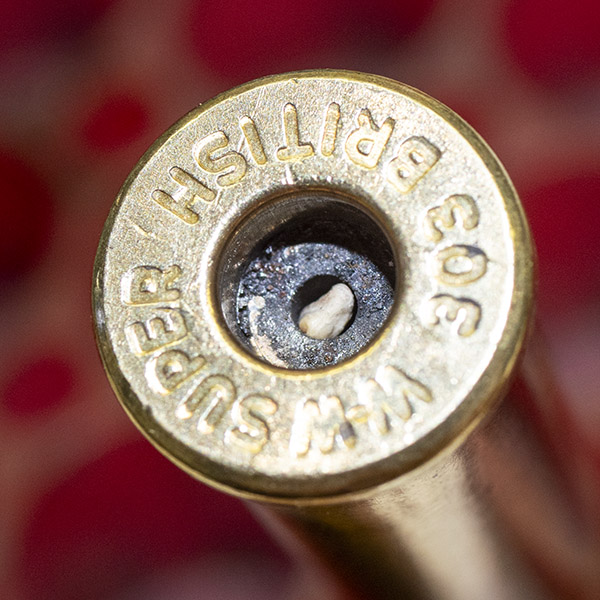
After the brass comes out of the polisher, I inspect each one to make sure there are not bits of the polishing media stuck in the primer hole.  I’ve never tested to determine if this would interfere with the round firing or if it would cause a flyer, but it’s not the sort of thing that would help.

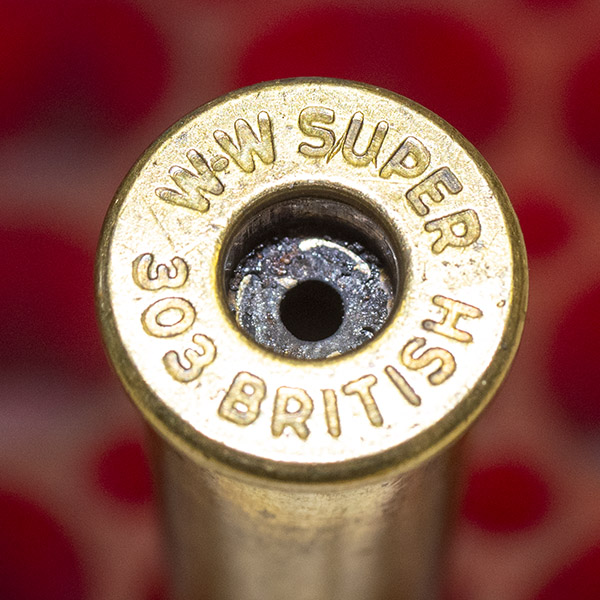
A primer hole with a bit of media stuck in it. Usually about 10% of the cases have media stuck in the primer hole after polishing. I push it out with a dental pick.
A cartridge case with a clean primer hole (i.e., with no media stuck in the primer hole).

When all the cases are completely free of media and all the primer holes are clear, I’ll set them in a reloading tray, as you see below.

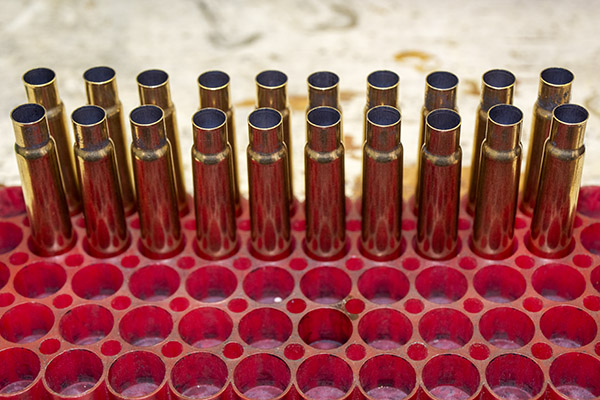
Twenty polished cases ready to be primed.

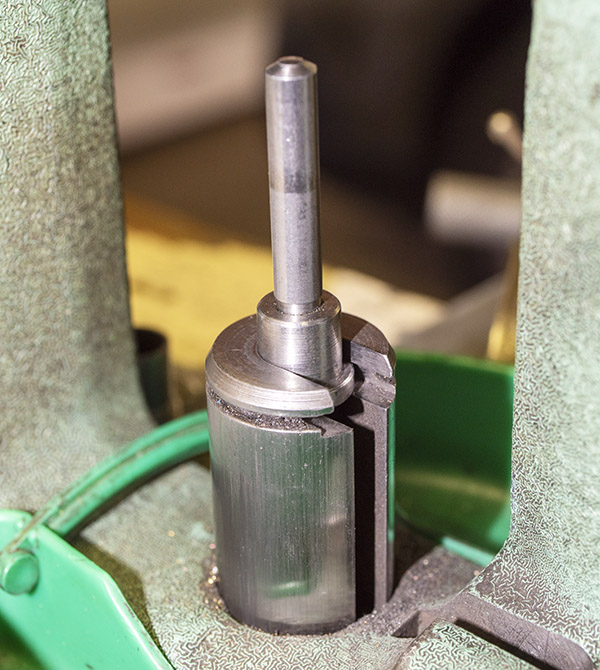
Next, I’ll prime the brass.  There are a lot of tools available to do this.  I use a Lee Auto Prime, an item that I bought a good 50 years ago.  Remember that I mentioned that Lee gear is good?  Lee no longer makes this item (I can’t tell you why) but they do have other priming devices available today.  For me, this one just keeps on working, and I like how it works.  It consists of three groups of parts:  The primer tray and feed system, the case holder/primer seater assembly (it installs above the reloading press), and the ram that installs on the press ram.

An old Lee Auto Prime, still in its original box. The two feed chutes on either side of the primer tray are used for either large or small primers. The primer seating assembly components are in the plastic container at the photo’s bottom.
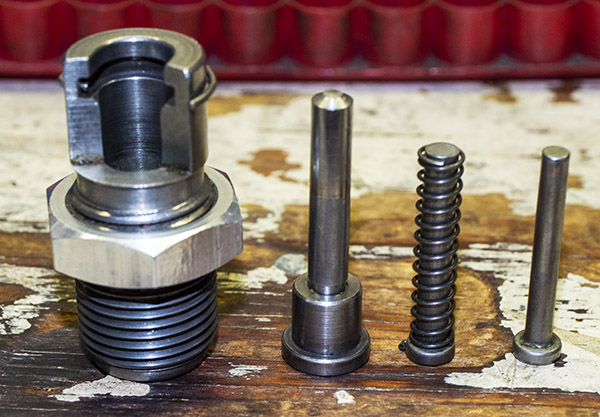
Lee Auto Prime components. From left to right: The die body, the priming ram, the two primer rods (one for small primers, the other for large primers), and the spring. The spring goes over priming rod selected for use (as shown here, the large primer rod). The priming ram is installed on the reloading press’s ram where the shell holder would normally be. One of the priming rods, with a spring over it, goes into the die body (see photo below).

I install the case holder/primer seater assembly on top of the ram, then I remove the shell holder on the reloading press ram and install the primer ram on top of the ram, and then I load the primer tray and feed chute.

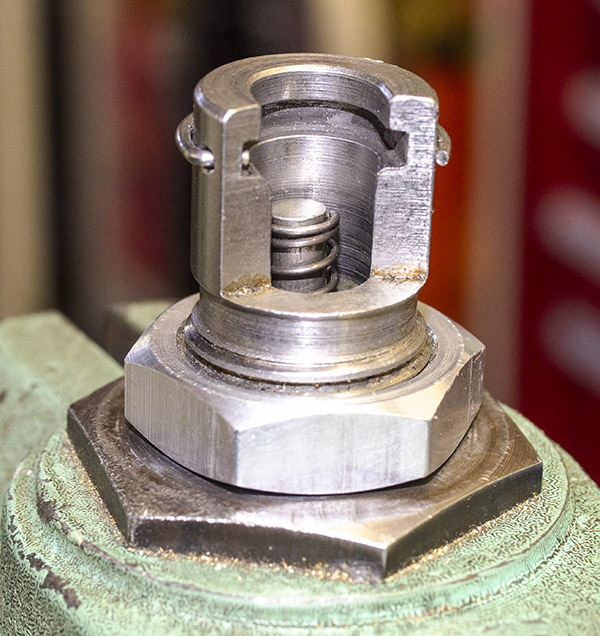
The Lee Auto Prime die body installed in the reloading press, with the priming rod and spring in place. The primer chute will go over the priming rod and spring, and the shell holder snaps into the die body over the priming rod and spring.
The Auto Prime ram installed on the reloading press ram. It fits into the ram where the shell holder is normally installed.
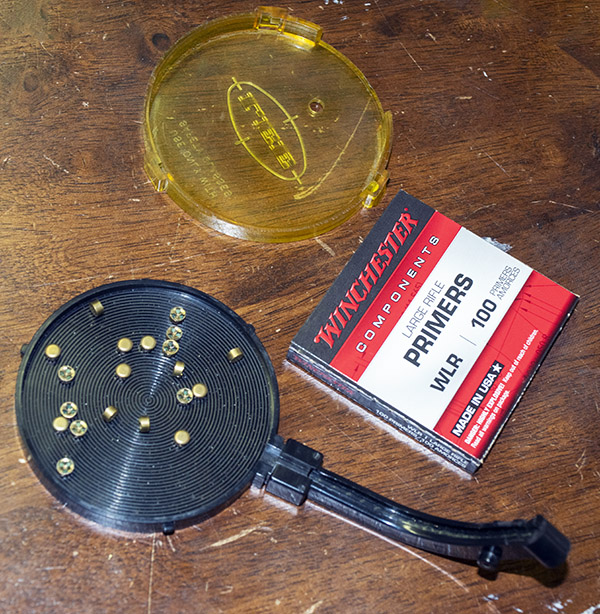
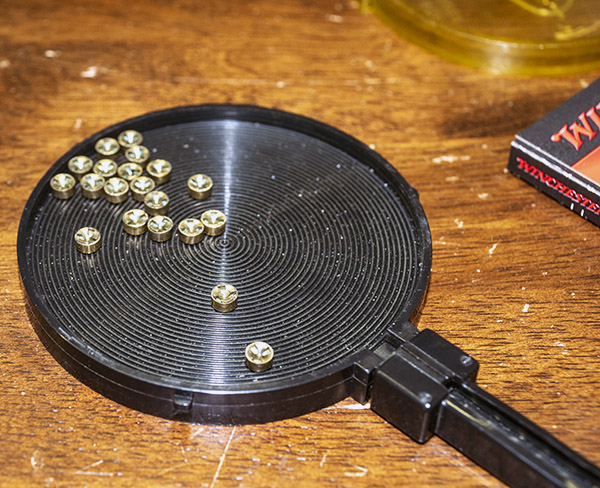
The primer chute installed on the primer tray, with 20 primers dropped onto the tray. Note that some primers are facing up, some are facing down, and some are on their sides.
The tiny concentric ridges in the primer tray help to flip all primers such that they face up. By gently shaking the tray from side to side, all primers orient themselves to face up. If you shake too aggressively, you’ll drop some of the primers out of the tray. It sounds more complicated than it actually is, and after doing it once, you’ll get a feel for how much “shake” is needed.
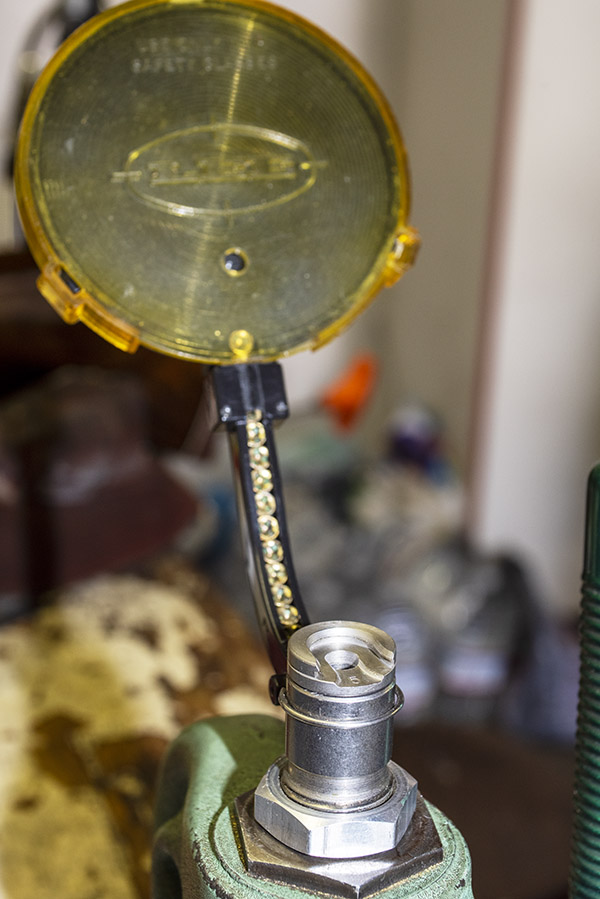
After getting all the primers into a face up orientation, I put the primer tray cover on the primer tray, and then use a toothpick or the previously-mentioned dental pick to obstruct the primer chute at the primer tray. Then, I’ll place the bottom end of the primer chute in the die body.  Finally, I’ll slide the shell holder into the die body and remove the obstruction from the primer tray. The primers will slide down into the chute and the first primer will be in position over the priming rod.

Once the above is complete, I prime each case.  I insert each case into the shell holder, and then gently run the press’s ram up.  Doing so seats the primer.  The beauty of this approach is you can feel each primer being seated, and the power of the ram makes sure each primer is fully seated.  When the case is primed, I remove it and the primers in the chute slide down, forcing a new primer into position above the priming rod. I’ll repeat the process until all the cases have their primers seated.

Primed cases, ready to continue the reloading process.

After the above is complete, I’ll have a tray full of cases ready to be charged with propellant.  We’ll cover that in Part 3.


More Lee Precision products for the .303 British cartridge are here.


Join our Facebook ExNotes page!


Never miss an ExNotes blog:


Help us keep the lights on:


Don’t forget: Visit our advertisers!