

By Joe Berk
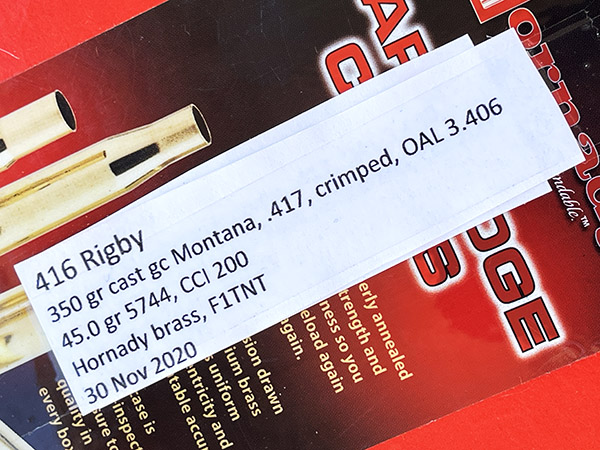
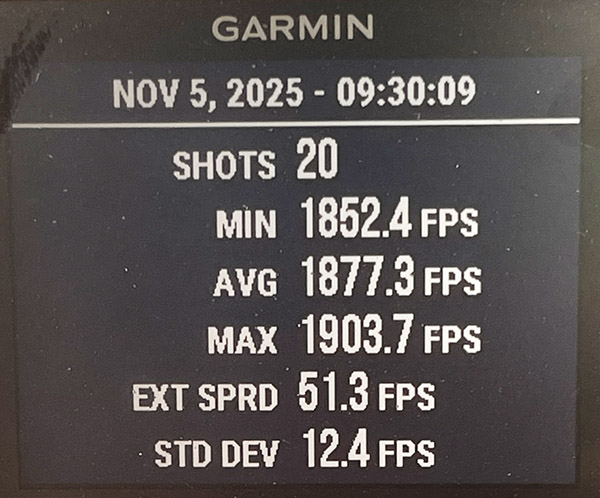
Make no mistake: Even a reduced load in the mighty .416 Rigby is a high-energy proposition. I use 350-grain cast bullets from the Montana Bullet Company, and my Lyman cast bullet reloading manual shows the accuracy load to be 45.0 grains of 5744 propellant. The reloading manual says that’s the lightest 5744 load with the 350-grain cast bullet, and that same manual says the load is good for 1779 fps. In my rifle, it was a full 100 fps faster, with a very tight standard deviation. A 350-grain bullet at 1877 fps is going to settle most discussions pretty quickly, I think.
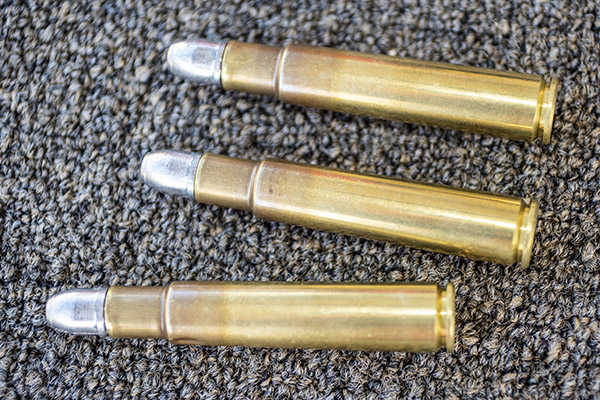
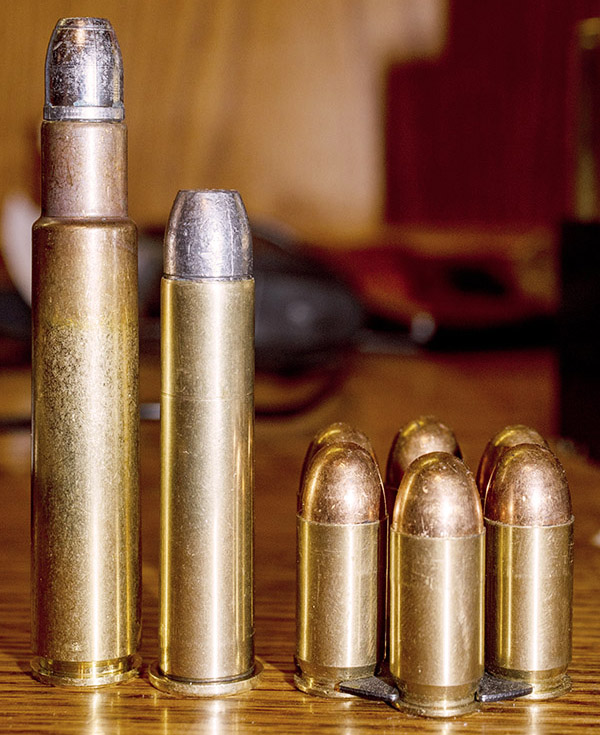
The .416 Rigby was originally developed in 1911 by John Rigby and Sons, a British rifle manufacturer, as a cartridge designed for hunting dangerous game (you know, like cape buffalo, elephants, and other stray critters not likely to be encountered on this continent). But the cartridge is a cool one, and that was enough for me to buy the rifle. The factory load is a 400-jacketed bullet at 2,370 fps (with prices ranging from $170 to $270 per box of 20 rounds), and that’s good for anything that walks, breathes, or grows, probably including more than a few dinosaurs. Those are steep prices, working out to about $8.50 to $13.50 every time you pull the trigger. Me? I reload with cast bullets. It’s still not cheap to send lead downrange, but it’s way cheaper than shooting the factory stuff.
The Lyman manual is right; this is an accurate load. At least it was for me at 50 yards.
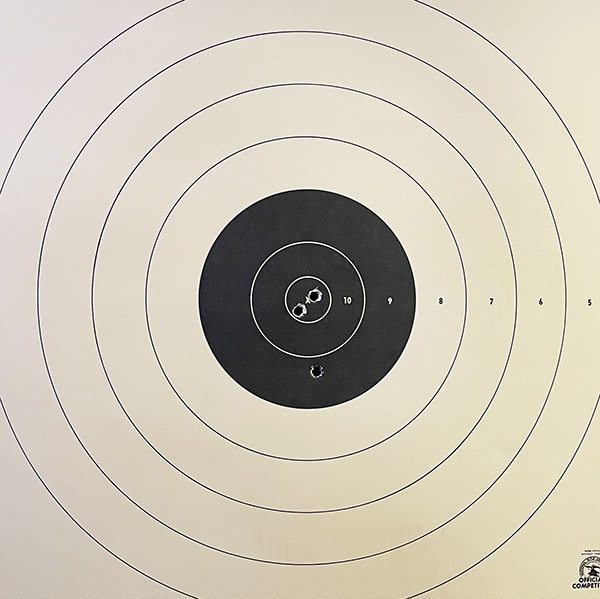
I then tried the Rigby at 100 yards. At 100 yards, my accuracy was poor, but that was me (not the rifle or the ammo). I had a difficult time finding and focusing on the front sight. It’s a function of age and the little front sight brass dot, and a pair of new glasses. I had a tough time seeing the front sight with my new specs; it kept blurring together with the black bullseye. The easy answer would be a scope, but the rifle is already heavy and maybe I’m too much of a purist; a scope on an elephant gun seems kind of silly. I have a scope on my .458 Ruger Model 77 and I like it, but the Rigby wearing a scope doesn’t go down well for me.
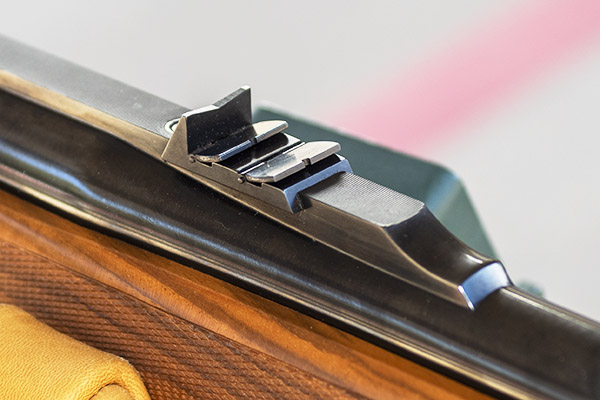
When I returned home I reloaded my spent .416 Rigby brass, grabbed my old glasses, and headed out to the West End Gun Club again. Things at 100 yards improved immediately. I fired the first three shots you see below using the lowest rear sight (the V, with no U-notch; it is fixed in the up position). I couldn’t see the bullet holes at 100 yards with the naked eye (hell, I could barely see the target), so I took a peek through my spotting scope and was pleasantly surprised.
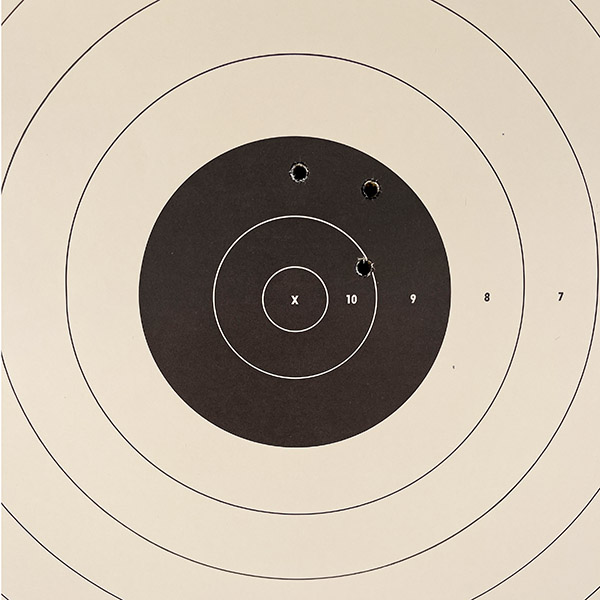
That target looked good to me (and knowing I was going to photograph it for the blog I didn’t want to ruin it with additional shots). For those first three shots, though, I struggled to keep the front sight in focus and seated above the rear sight’s fixed V-notch. I decided to fold up the first blade, which is a little taller than the fixed V-notch. Seeing the front sight (and staying focused on it) in that first foldup blade’s U-notch is much easier, but the rear sight was taller. I expected the next shots to go high (which they did in a surprisingly big way…they were a good six inches above the bullseye). Two can play this game, I thought, so I walked downrange and put up a third target. I fired my remaining rounds while holding the top of the front sight about one bullseye diameter below my normal aim point (which is 6:00 on the bullseye). I guess you could call that Kentucky elevation.
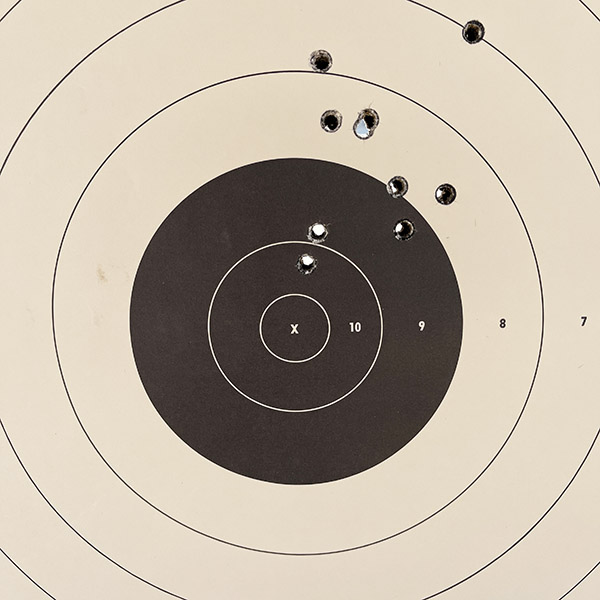
The results were not bad. What I really need (maybe) is a taller front sight, and I’m casting about to try to find one of those. I have a call into the Williams Gun Sight company; maybe they will have something that will work. The reason I said maybe, though, is that several years ago with this rifle and the same load, the sights were spot on for me at both 50 and 100 yards. It could be that I was simply a better shot several years ago. I’ll try it again before I replace the front sight.
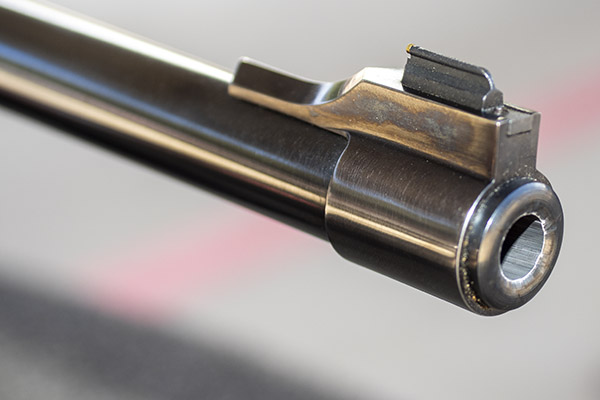
Here are two more photos of the Rigby, showing its beautiful and highly-figured Circassian walnut stock. This rifle was a real find. It’s one I’ll never sell.
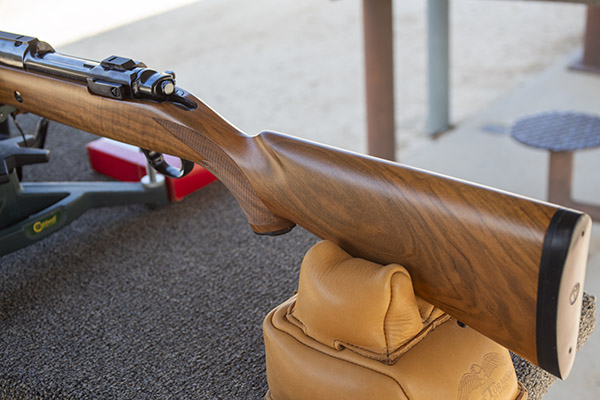

I named my .416 rifle Eleanor (get it? Eleanor Rigby?). It’s the only gun I’ve ever owned that I named. I bought the rifle for well under what it’s worth off the used gun rack at Turner’s in West Covina (a locale with demographics more in tune with bangers and black plastic 9mm pistols). I paid a thousand bucks for Eleanor; these rifles typically go for around $2500 when they show up on the used gun market. There are a couple on Gunbroker.com right now; one is listed at $3,000 and the other at $7,000 (hope springs eternal, I guess). Ruger quit making these a couple of decades ago because they were too expensive to manufacture, making the small number they did manufacture instantly collectible.
I want to use this rifle with open sights on my next pig hunt. That would be challenging on several fronts:
-
-
- I want to try for a Russian boar (instead of the more plentiful Ossabaw hogs I previously shot).
- I want to use open sights (instead of the scoped rifles I previously used).
- I’ll have to lug this anchor-weight firearm up and down in the Arizona hills where I hunt (instead of the lighter rifles I used on my prior hunts).
-
It should be fun. Stay tuned. You’ll get to read about it here.
Join our Facebook ExNotes page!
Never miss an ExNotes blog:
Help us keep the lights on:
Don’t forget: Visit our advertisers!