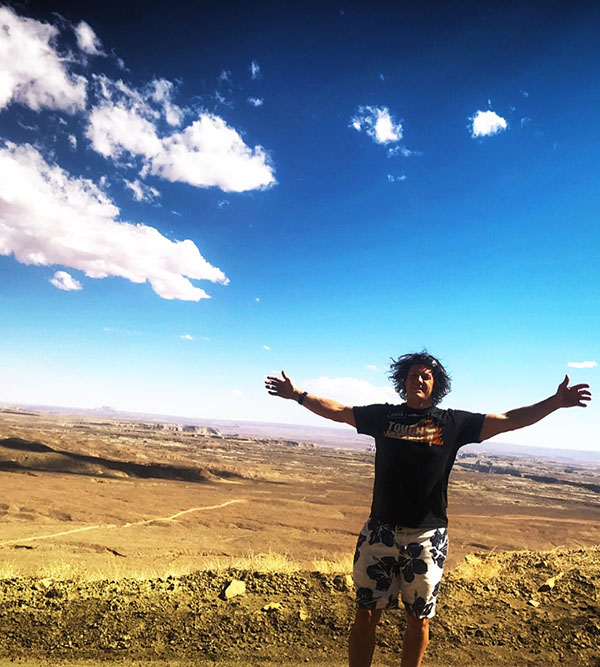
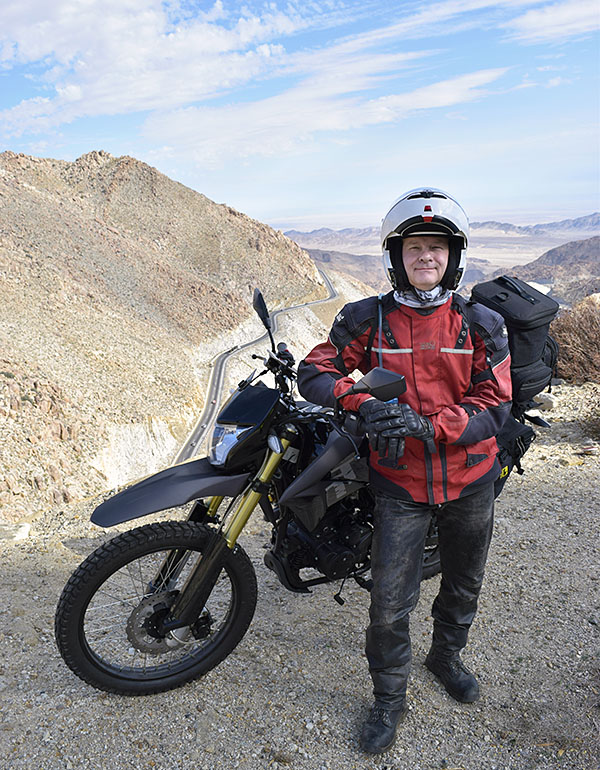
It’s mid-November here in southern New Mexico, nights are cold but our mid-day temperatures are still in the 70’s. That will change soon. I needed a break from concrete so I texted Mike and asked him if he wanted to take a little ride before it got cold. Mike always wants to ride.
Mike lives in Carrizozo about 50 miles north from Tinfiny Ranch. 50 miles is not a lot of distance but the weather is much wilder up at his place. Located at the crossroads of Highways 380 and 54 right between a dip in the Sacramento Mountains the landform, there funnels a steady stream of wind across the strange little town. Even though it sits at a lower elevation than Tinfiny, Carrizozo is colder in winter. Hollywood has found the old buildings of Carrizozo picturesque and it seems like there’s always a crew shooting a funky scene whenever I go through.
“Can we get a couple coffees?” The lady working at the Three Rivers trinket shop says she will have to make some. Mike tells her that’s okay, we’ll wait. The coffee making process is interrupted by two black dogs coming in the front door. The dogs seem really glad to see us. They fall to the ground and beg to be petted. The smaller dog wants to kiss, needs to kiss, will die if he doesn’t get a kiss. That coffee pot is taking forever so I grab a cold drink. Mike is eating a bag of chips. When the coffee is finally ready and the dogs are thoroughly petted, we’ve killed an hour.
The road to the petroglyphs heads east towards the mountains, if you keep going it turns into dirt and ends at the beautiful Three Rivers campground. From that point Ruidoso is only a 20-mile hike: uphill all the way. You should go camp there.
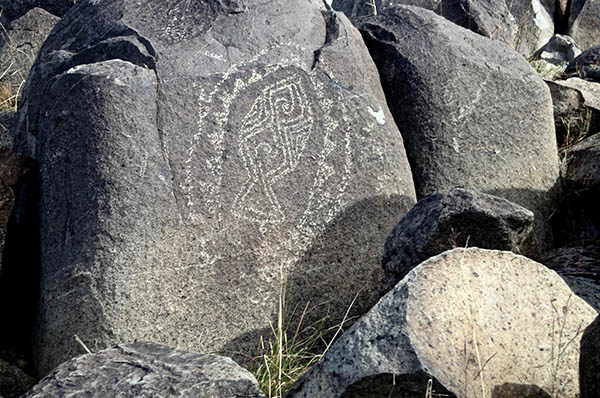
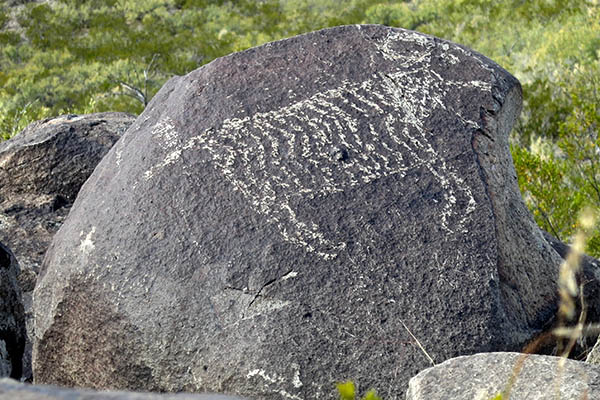
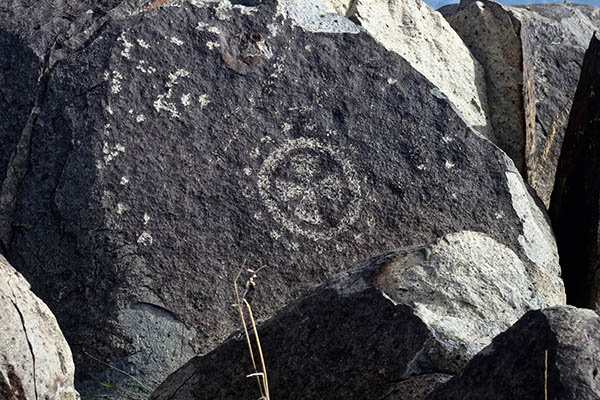
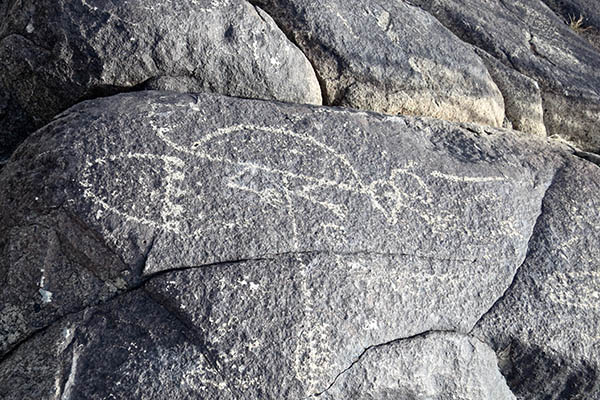
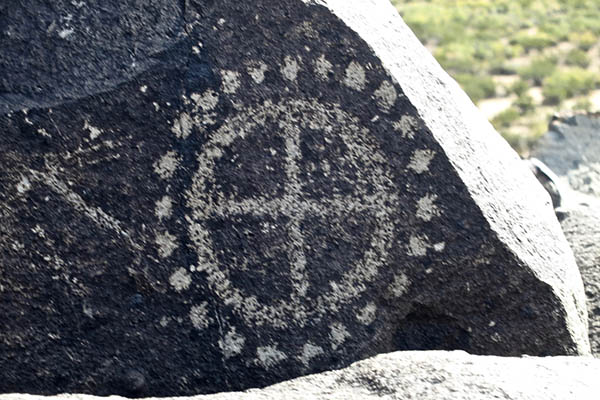
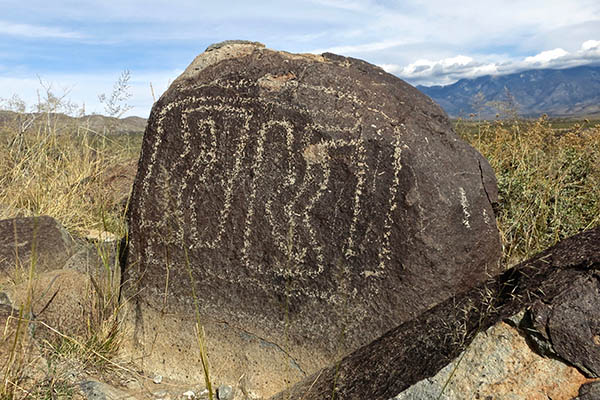
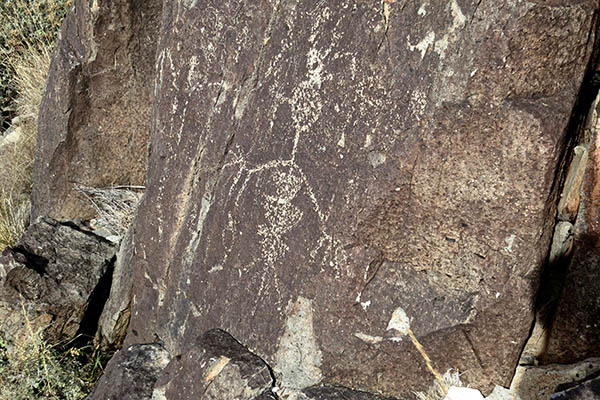
The rocks here have some kind of iron oxide-like coating and the petroglyphs are kind of pecked into the rock. Dimpled could be used to describe it. The dimple knocks off a small chunk of the oxide revealing the stone beneath. There are thousands of them along a three-mile round trip path at Petroglyphs State Park. The images are still very clear with lots of contrast. You can mostly tell what the artist was representing with maybe 25% of the artwork being symbolic of something that made sense thousands of years ago.
These pictures from the past aren’t fragile cave paintings or fading lines scraped into soft sandstone. These suckers are exposed to the elements and some look like they were made last week. We don’t know a lot about the Mogollon People who made the petroglyphs but I can tell you they built their artwork to last. These stone images will go another 10 thousand years no problem.
It’s late afternoon by the time we get back to the trinket shop for more coffee. “There’s only enough for one cup and it’s gotten cold, I’ll have to make another pot.” The dogs can’t be bothered to lift their heads and acknowledge our existence. We are old news. The coffee brews its slow drip. A BMW rider sees our bikes out front and stops in to chat.
Conversation is easy. The trinket lady joins in with strong opinions on which Medicare plan is best (Plan F). I snack on a bag of dry-aged peanuts and some hard candy. The BMW guy is staying at the Three Rivers campground. He trailers his motorcycle around the country stopping in different areas to ride. His wife got all the money and the 80-acre farm back in Wisconsin. We pay the trinket lady; she made 9 dollars from us today and it only took her 2 hours to do it.
It’s starting to cool down now. In a few weeks we will be getting started with winter here in Southern New Mexico. I don’t like riding at night so I say goodbye to the boys. We start our bikes and three motorcyclists go their separate ways: Mike to the north, me to the south and BMW guy to the east.
I moved my camping gear 510 miles today. The longest I’ve had to endure the Husqvarna’s ridiculous seat. I feel like the monk in that old joke.
This was the longest day. We covered a lot of miles so that tomorrow’s ride into camp will be short and sweet, leaving us plenty of time to ponder how the tent goes together.
Caliente is shut down. Nothing is open, the road into town is lined with old railroad cabins. The cabins are restored, Some people would call them cute. I see hard work. In a land of space, where the view goes on forever, the cabins are only feet apart. It must have felt safer together against the huge West. Tracks run behind the cabins rattling doors and windows. Man, I can sleep right through that sound.
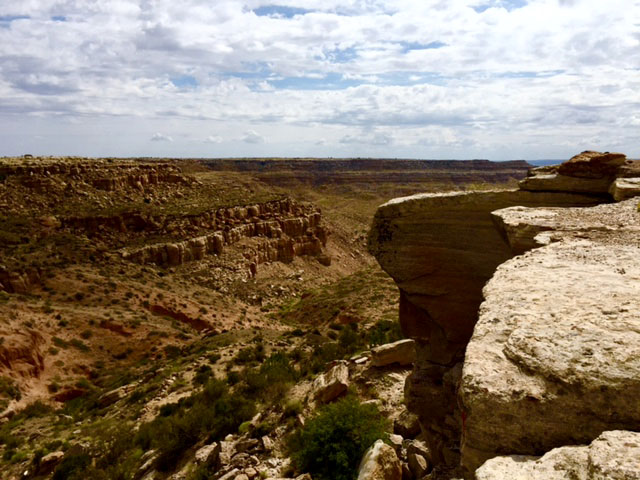
So many elevation changes and temperature variations on the road. You can feel agriculture. The spot humidity rises, a quarter mile of cold runs alongside dark green crops, all alive against the tan dirt. And then you are back in the desert. Warm, dry air fills the road. I can look ahead and predict the local weather.
On the long days there’s not much human interaction. Ride, gas, ride, gas. Repeat over and over, each fill up is 150 miles of seat time. The long passages give you a lot of time to think great thoughts, maybe a new idea for land terracing or a way to move 60-lb bags of concrete more efficiently. I thought about the Husqvarna seat.
Did I mention the seat? Because it’s all I think about. It’s a major player in my dreams and nightmares. I imagine the seats in hell are shaped like the Husqvarna thing-between-the-frame-and-your-butt.
What are the odds? The guy running our motel wants to build one of those bicycle motor things. I kid you not. I whipped out cell phone photos of Huffenstein and we both got excited about the project, me for the second time. I’m sure he’s gonna buy a motor.
I like going camping with a truck. You’ve got plenty of space to load your gear and when you get there you can set up a nice little spot. I guess I’ve already told you how much I hate carrying camping gear on a motorcycle and that motels near Bonneville, Utah are expensive. But it seems I can’t stop myself, I just keep complaining. I see those BMW earth-roamer types with all the gear piled up over their heads and I think, “Oh, Hell no! I’m cool as an ice cube, that’s not me.”
Yet here I am. Here I am piling camping junk over my head like a Starbucks-sipping, Hi-Vis wearing, midlevel manager-who-mistakenly-thinks-corporate-values-his-efforts, Beemer rider. The shame, it burns hot.
That’s not the worst of it. I just know the flimsy aluminum sub-frame on the Husqvarna is going to break. It has to. This bike was designed with two things in mind: to pop wheelies and flee from the Po-Po. Because I don’t have a running street bike I’ve turned the Husky into a single cylinder Gold Wing. It burns, man.
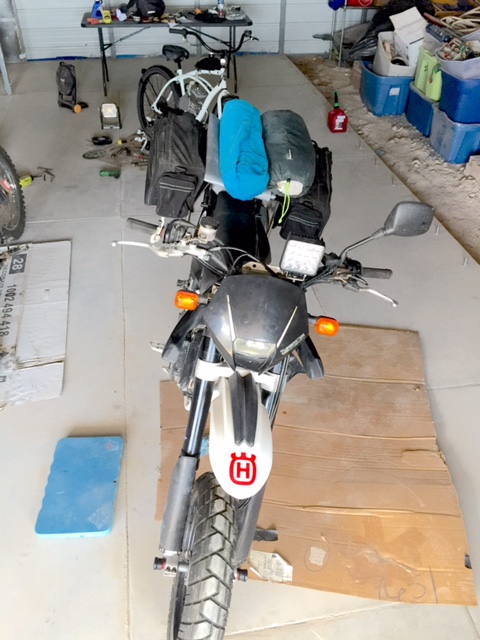
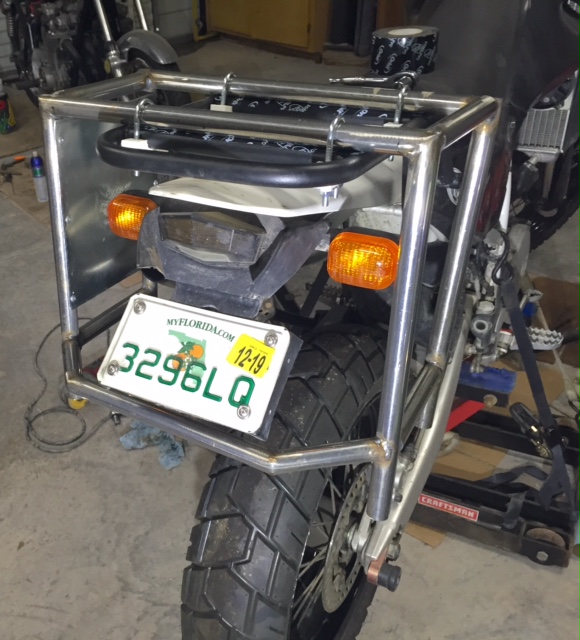
No way was I going to get all the camping stuff onto the Trophy Rack that the Husky was wearing. I had to dramatically expand capacity and the only way to do that was with saddlebags. To do bags I needed some infrastructure in place that would prevent the bags from tangling in the rear wheel and melting to the high mount, noisy, life saving, public opinion destroying, Arrow exhaust can.
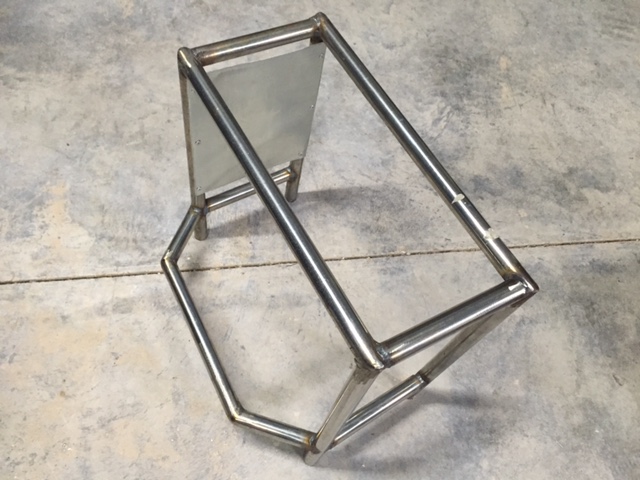
I have no way to weld stainless steel but I have a lot of stainless tubing so I chopped it up and took the sticks to Roy’s welding (out by the mini goat farm) and the fine crew at Roy’s stuck it all together.
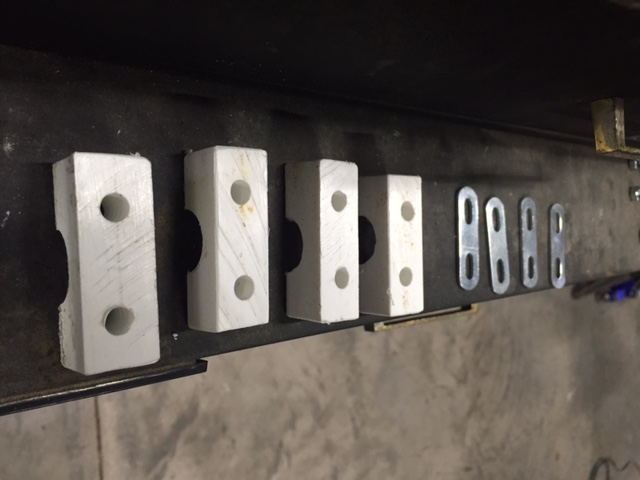
Next I needed a few plastic bits to fit the existing rack and give my U-bolts something to tighten against without bending the metal straps. I knocked these out of some thick plastic I had left over from a boat job 35 years ago.
My Safety Exhaust on the Husqvarna is high and tight so I riveted a metal heat shield on the left side of the Super MoTour bike. My buddy Mike loaned me the saddlebags, I don’t want them to catch fire in front of him. You’ll be hearing more about Mike, as this Bonneville ride is his idea. All told, I’ve probably doubled the poundage of the featherweight Husky with this jungle gym hanging off the back.
Unrelated to the luggage situation but still needing sorting was the Husky’s headlight. The normal bulb is an incandescent 35-watt, both high and low beam. The bulb works ok in the daytime but it casts a feeble light for night use. It’s like having a Black Hole on the front of your motorcycle. The pattern reaches only a few feet into the gloom. On moonless nights it struggles to illuminate the front fender. It’s so dim bugs fly away from it. Hey, I’m here all week, invite your friends.
The other problem with the stock bulb is that it constantly blows out. The tiny filament shatters and when that happens you get an intermittent headlight that turns on and off as the filament shakes around making contact now and then. Sometimes the bulb will self-heal, the wire re-welds itself and the light may stay on a few hundred miles. Despite all this, the inside of the bulb is usually broken into a million pieces by the time 1000 miles rolls past.
I tried a bunch of different bulbs. LED, Halogen, HID, and incandescent; most of them ran too hot for the Husqvarna’s plastic reflector. For this trip I’ve settled on a cheap LED bulb with no watt rating or any information stamped into the metal housing. It is a very crummy bulb, perhaps even weaker than the incandescent bulb but I’m hoping it stands up to vibration better. A strange side effect of the LED electronics is that the high beam indicator light stays on all the time. I’m sure the bulb won’t short out and fry my electrical system. What could go wrong?
That’s it. I’m leaving in a few days so I’ll be blogging from the road like Berk taught me to do. See you in Bonneville.
Hey, you! Yeah, you! Sign up for our automatic email blog updates!
Good buddy Jason, a Ruger No. 1 in .338 Win Mag, and a 400-lb, 7-ft Alaskan black bear.
As the title of this blog implies and in this case, my good buddy Jason was literally loaded for bear. For several years I had owned a Ruger No. 1 single-shot rifle in .338 Win Mag. That’s a monster of a magnum. I had never fired the rifle and I sold it to Jason. He told me he was going on a bear hunt in Alaska (something I’ve always wanted to do), and I was happy to the see the rifle go to a good home. Most recently, Jason sent the photo you see above and a recap of his hunt to me to share here on the ExNotes blog. Here you go, folks!
It all started in 2016 when I purchased my first Ruger No. 1 in 338 Win Mag from Joe. I’ve always wanted a Ruger No. 1, but I already had a Winchester Model 70 in 338 Win Mag. I planned to go on a bear hunt in 2018, so what I did was sell my Winchester Model 70 to my best friend, who went on the bear hunt, too. I would be using my Ruger No. 1. So this is a story about me and my new rifle and our quest for a big Southeast Alaskan black bear. It was a guided hunt through Alaskan Coastal Outfitters.
Our base camp was on a boat and in the evening we would take a skiff and cruise around all the little islands and bays looking for the right bear. We saw lots of bears (a lot of sows with cubs). We also saw a lot of boars. On Day 4 of our hunt we saw a really nice bear. We got as close as we could without spooking him. My guide told me to get out of the boat and he held the boat still for me. Then, as I was pulling my leg over the side of the boat I got hooked on to the edge of the boat and I fell face down in 8 inches of water.
The bear ran off and my beautiful Ruger No.1 was laying in 8 inches of salt water, so we raced back to the boat, took the rifle apart, and cleaned it up so it was like new.
The next day we went out again and this time I was extra cautious not to fall in when we came across the bear you see in the picture. He was about 300 yards from the skiff when we spotted him. We got as close as we could without spooking him, which was about 140 yards, and my guide kept on asking me if I could make the shot. I always answered “yes, no problem.” I lay down and rested my rifle on my pack. Wouldn’t you know it, I had to lay down in a little creek so I got wet again. We lay there for what seemed to be an eternity. My guide made sure it was a boar and not a sow. Finally, he gave me the OK.
Just then, the bear turned so he had his back to me (so I couldn’t shoot). It gave me an opportunity to situate my follow-up shot. I decided the quickest way to get a follow-up shot (if I needed one) was to shoot with the next round in my hand.
The bear finally turned broadside and I dropped the hammer. I hit him just behind the shoulder and he dropped. My guide backed me up with a 375 H&H rifle, but he didn’t need to fire it. The bear went down, and when we reached him, we saw he was the monster he appeared to be from a distance. The bear measured 7 feet and weighed about 400 lbs.
Jason, that’s an awesome story and a magnificent photograph. I was sorry to see that rifle go, but it obviously went to a good home and you sure put it to good use. You know, it takes a real sportsman to do what you did…going after bear with a single-shot rifle. Congratulations on a successful hunt, and thanks much for sharing your adventure with us here on the ExhaustNotes blog!
Would you like to write a guest blog for ExNotes? It could be a gun story, a hunting story, a motorcycle story, or any other idea you think might work for our audience. If you have an idea, please let us know at info@exhaustnotes.us. If we publish your story, you’ll get a signed copy of Destinations with our compliments and gratitude!
Berk and I have a busy ExhaustNotes.us August planned. You’ve already read about his Three Flags tour on the new, untested RX4 Zongshen and I’m finalizing plans for an assault on the Bonneville speed trials. No, I won’t be racing Mini Moto Madness but seeing as how I’ve never been to the salt for Speed Week and I’m not getting any younger I figured this is the year.
It wasn’t really my idea. It was Mike’s. Mike lives on a ranch in Carrizozo, New Mexico. I met Mike a hundred miles north at a little restaurant in Willard. I wanted shredded beef tacos but the restaurant was out of beef. I didn’t want to use up my private stash so I went back to the menu. That’s when Mike piped up and told me to try the pork tacos. I had three pork tacos with beans and rice. I recommend them highly.
Willard is kind of a slow place. The intersection of Highways 60 and 42 is the main topic of conversation in town. Mike and I got to shooting the breeze like all motorcyclists do and it turns out Mike likes to ride dirt trails on his BMW thumper 650. I mean you had me at dirt, you know? We started doing a few rides and then the Bonneville thing came up. We’re going to try and hit a few dirt roads on our way north.
We need to make pretty good time on this trip so Godzilla, while reliable, is too stressed out at 70 mph leaving The Wedge, my Husqvarna 510. The Husky’s fork seals are leaking badly. I’ve bought new seals to install. That should be interesting as I’ve never worked on upside down forks. The clutch lever is broken from a spill I took in Big Bend Park. I’m going to cut the end off a donor lever and weld it to the stub remaining from the original lever. It should make a nice, Frankenstein looking part when I’m through. I know I can buy a new lever. I just feel more at home doing things the hard way. The drive chain is still in fair shape but with 11,000 miles on the thing I’m going to change it as a prophylactic measure.
The tires are new-ish on the Husky but slanted towards street riding and not so good for dirt. Mike’s heavy BMW 650 has decent dirt tires. I’m hoping my bike being 200 pounds lighter will even us up on the trails. I’ll also bring along a leaking plastic jug of fuel so that all my camping gear and clothing will be soaked with gas after 15 miles.
Motorcycle camping is not my idea of fun. Either you carry no gear and enjoy the motorcycle ride only to suffer as you roll around in the dirt trying to sleep at night or you bring enough equipment to camp comfortably and have a miserable ride on your overloaded bike stopping every few miles to repack.
Mike and I will be at the KOA in West Wendover from August 12th to the 14th. If you’re around town stop by and visit us. Bring beer if you want us to be happy to see you. Our campsite is good for up to six people. I’ll have coffee. There will be fire. It’ll be fun. You’ll see.
This is a cool story that goes like this…several years ago I decided I wanted to hunt pigs. I had last chased hogs in the woods about 30 years earlier, but I never got one. That was a character flaw I wanted to correct. It was just something I needed to do, but there were consulting gigs overseas, lots of travel, a few epic motorcycle rides, and, well, you know how it goes. Pig hunting stayed tucked away in my mind but I hadn’t acted on it. Then another thing happened: I stopped in a gunshop in northern California and saw a rifle I just had to have. It’s the one at the top of this blog. Specifically, a Supergrade Model 70 Winchester in God’s caliber, the mighty .30 06.
Okay, back to the pig thing. Back in the 1910s folks imported Russian boar into California so rich guys could hunt them without having to spring for a boat ticket to Russia. I guess that worked out okay, but what happened next surprised everybody. The Russian boars loved it over here and I guess they felt right at home. They bred like rabbits. Then, being pigs, they crossbred with domestic hogs. The bottom line? Today, the US has a runaway wild pig problem. If you think you don’t have wild pigs, you either just don’t know it (the more likely case), or you don’t have them in your neighborhood yet (the less likely case, but if you don’t have them yet, you will). Wild pigs are everywhere and they’re destructive. Farmers know they’ll tear up an acre every night looking for food. That’s a problem that guys like me and my good friend Paul are only too happy to help solve.
So who’s Paul? Well, I’ve known Paul all my life. We were next-door neighbors back in rural New Jersey in the days when you could set up a range and shoot in your back yard. And we did. We fooled around with guns, we hunted, we fished, we rode bikes…we did the kinds of things kids did 60 or 70 years ago, before they invented ADHD drugs, safe spaces, cell phones, computers, social media, and all the stuff kids today get to struggle with. Rural New Jersey in the 1950s was a good time and a good place to grow up.
There’s more to the story: Our fathers were outdoorsmen, so Paul and I were, too. Both of our fathers were competitive shooters and hunters. Paul’s Dad had a Model 70 in .270 Winchester and my Dad had a Model 70 in .243. In their day, those two cartridges were the hottest and best things going. There have been newer cartridges and newer rifles since, but both the .270 and the .243 are still dynamite chamberings. And the Model 70 Winchester was (and I still think still is) the ultimate rifle. It’s been called the Rifleman’s Rifle. It’s that good. And it’s what our fathers shot.
So when I saw that new maple Model 70, I bought it. Just like that. I knew I would hunt pigs with it. It’s one of the finest rifles I’ve ever handled.
I suggested a pig hunt to Paul, and hey, who could turn down an offer like that? I took the Model 70 you see above, and Paul had his magnificent pre-’64 Model 70 in .270 Winchester. Paul’s Model 70 has a real pedigree: It was handed down to Paul by his father, and this particular Model 70 is rifle royalty. It doesn’t get any better than Paul’s pre-’64 Model 70, and the .270 Winchester cartridge is the quintessential chambering for it. Google Jack O’Connor, the guy who put the Model 70 and the .270 Winchester cartridge on the map, and you’ll see what I mean. O’Connor wrote a book (The Rifle), in which he explains his reasons for the .270’s superiority. I have O’Connor’s book and it’s a great read. That said, I just like the .30 06, but they’re both great cartridges.
Paul’s particular Model 70 (this very rifle, the one Paul used on our hunt) was my first exposure to high-powered, long-distance marksmanship a cool 60 years ago. Paul’s Dad used to fire that rifle across the fields behind our homes in the 1950s. We lived in a rural part of the state, and you could do that in those days. Before Paul’s Dad would send rounds downrange, though, little Pauly would always knock on our door to tell us all hell was about to break loose. That was mighty neighborly, as an unexpected bark from a .270 Winchester would have scared the bejesus out of us (I’m not sure what bejesus is, but I like the word so I’m using it here).
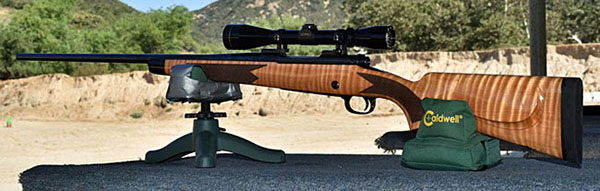
So, back to the more recent past. In preparation for our pig hunt, I worked up a load for my Model 70 and I found the Holy Grail..a load that was both hard-hitting and accurate. Two of them, actually.
The deal on reloading and these cartridge development efforts is that you experiment with different powders, primers, bullets, and propellant charge weights to find an individual rifle’s sweet spot, and like I said, I found two. Over the course of two days, I fired all of the above loads (at 100 yards), and the bottom one in yellow is the one I used for our hunt. That load uses a 150-grain Winchester jacketed soft point bullet with 48.0 grains of IMR 4320 propellant. I bought a bunch of the 150 grain jacketed Winchester bullets about 10 years ago when it looked liked reloading components might dry up altogether (shooting-gear-related shortages are cyclical, always coinciding with whoever has just moved into public housing at 1600 Pennsylvania Avenue). After I settled on my preferred load, I’ve shot even tighter groups with it. I once shot a 0.244-inch 3-shot group with my Model 70 with the same load. For the targets we would be shooting (hogs, which get big), that’s good enough for government work.
While I was doing all of the above, Paul had a similar load development effort underway with his .270 Winchester. I found the secret sauce for my Model 70, and Paul found the right recipe for his. We were ready.
My Model 70 is a current production rifle and it’s awesome. The Supergrade Model 70s are glass-bedded and free-floated from the factory, the bluing is deeply polished, and the fiddleback maple figure on mine is exhibition grade. It’s not the kind of a rifle you would ordinarily take on a hunt and some folks have told me it’s too pretty to shoot, but I didn’t buy it just to look at the thing. It’s a shooter and it’s very, very accurate. I actually think the quality of the modern Model 70 rifles is better than the pre-’64 rifles (which are generally regarded as Winchester’s best ever), but don’t tell that to Paul.
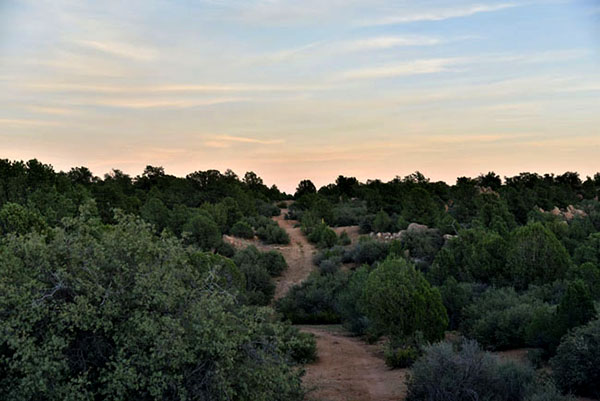
Our happy hunting grounds at dusk, east of Kingman, Arizona.
So how did we do? Well, it was one of the best weekends ever. We rolled out to a hilly desert area east of Kingman, Arizona (we were well out in the boonies) and our hunt was hugely successful. Paul got a monster hog the first night out, and I nailed one a bit smaller the next morning. I have great photos of Paul and me posing with our pigs, but if I posted them here it would generate the inevitable comments from folks whose BVDs contract into tight knots over such things. You know, the folks who hate guns and hunting…people who assume their hamburgers come from suicidal cows or whatever. So you’ll have to use your imagination. But they are great photos.
Paul and I both ate pork for a year after that. Roast pork. Barbequed pork. Pork chili. Pork meatballs (pretty good, actually). Pork sandwiches. Pork breakfast sausage (also very good). A special pork/wild mushroom/barley casserole (my favorite). But no bacon. Bacon comes from belly fat and wild hogs are lean, so there is no belly fat. Yep, we had over a hundred pounds of dressed-out pork after our hunt. I came home with a whole cooler full, and I had the little pig. When we figured the cost of the rifles, the ammo, our travel, and the hunt, that pork worked out to about $34 per pound. And it was worth every cent. I’d do it again in a heartbeat.
You guys remember our good buddy Mike Huber, whom we met on one of the Baja rides. Mike is a former US Army paratrooper, a GS rider, and a great guy. It was good to get an email from Mike a couple of days ago, along with the following guest blog…
Combining my two favorite passions in life of motorcycle and camping is new to me, but I quickly fell in love with the lifestyle and have grown to embrace moto camping so much that over the past two years I make it a point to moto camp at least once a month.
As I developed my passion for moto camping I began following blogs and Facebook groups to seek out tips and tricks that can make my moto camping experiences more exciting and comfortable. I began to notice that some moto campers on these pages camped in their hammocks full time and didn’t even own a tent. This awoke my curiosity since I always travel with an ENO double nest nylon hammock. On most nights when I camp I usually hang the hammock when I have a few hours to kill where I can get comfortable and read a book or just gaze into the campfire after a long day of riding. Even though I travel and use a hammock frequently I never thought of sleeping in my hammock while camping prior to reading these blogs.
A short time later I was traveling from Arizona to Colorado and I found myself in a beautiful state park camping where I had spent over an hour or so sitting in my hammock next to the fire. I decided to give this hammock camping thing a try. It was a clear night and the moon and stars were really popping so I threw a few logs on the fire, loaded my sleeping bag into the hammock ad settled in for a restful night’s sleep.
Below are a few pros and cons I have found with my limited hammocking experience:
Pros:
• Able to see the stars the entire night without having to leave your bed
• Lightweight and compact
• No pressure points in a hammock so it can be much more comfortable and warmer being off the ground
• A level area is not required so at times you can be closer to bodies of water
Cons:
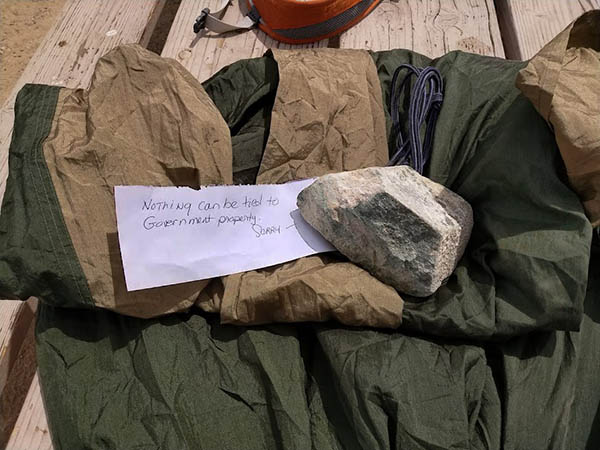
• Some parks do not allow hammocks to be hung on any park property or trees (see photo)
• If you are in an area with no trees (EX: deserts of the southwestern United States (and using a cactus is a really bad idea)) there may not be a place to safely hang your hammock
• Without a properly equipped hammock facing bad weather can be a challenge
I enjoy the unique experience of hammock camping and whenever conditions are right have continued to camp in my hammock. I am now in the habit of setting up both my tent and hammock at my campsites and go with how I feel, the weather, and my surroundings. Hammock camping is another option to have, and with moto camping having more options is never a bad thing.
Mike, that’s an awesome blog. Thanks for taking the time to think of us. Your photos are outstanding. Let’s get together for a taco or two the next time you’re in town. Gresh says he’s buying!
Our good buddy Dan from Colorado (the other Dan from Colorado; we know two of them) sent an email to me last night with a link to a very cool blog (the Maple Fiesta) about five guys who all bought new TT250s when they were first offered by CSC. They had a plan…they all bought the bikes to ride the Continental Divide Trail from Mexico to Canada.
A great read about a great adventure. Five men, five TT250 motorcycles, and three countries. Well done, guys!
Yeah, they had a few problems, but that’s what adventure riding is all about. They fixed the problems and trucked on, and they all made it. It’s a hell of story and it’s worth a read!
Former US Army paratrooper, GS rider, and good buddy Mike!
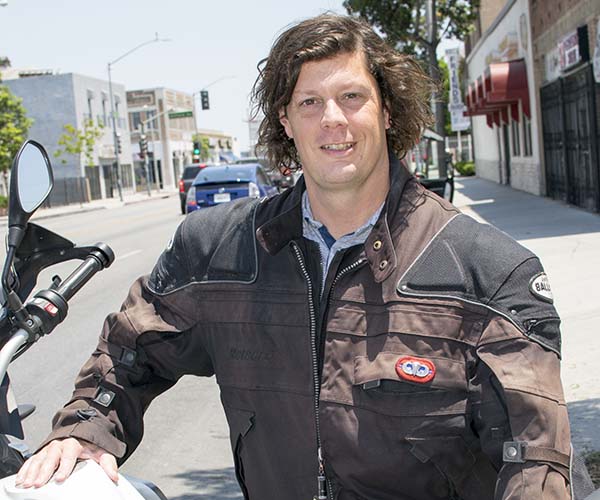
That’s good buddy Mike in the photo above, a very interesting guy I met on our most recent Baja ride. He’s a former US Army 82nd Airborne Division paratrooper, and for the last year or so he’s been living off his BMW and camping as he goes. Mike penned a piece on motocamping, and he sent it to us here on ExhaustNotes.
Here’s Mike’s take on this topic…
Camping can be fun and enjoyable for everyone if you plan properly and set realistic expectations. The same can be said for camping on a motorcycle. Over the past year and a half I have made it a point to camp on my moto at least once a week, and for the weeks I have not met this goal there are long weekends and vacations where I more than make up for it.
A man, a motorcycle, and a campsite. It just doesn’t get much better than this.
Throughout the past year I have been frequently asked how I choose a campsite on a moto. In this blog I wanted to answer that question from my personal experience.
For the first couple times using a KOA or other publicly-used campground is a great way to ease into camping. You will be camping, but close enough to stores and facilities that you can begin to gauge what you need and start to define your personal camping comfort zones.
After camping in that environment, and after you invariably get sick of listening to kids screaming and another annoyances from humans, you can experiment with camping for free in National Forests. A good note to remember is that National Forests are free to camp in, but National Parks are not.
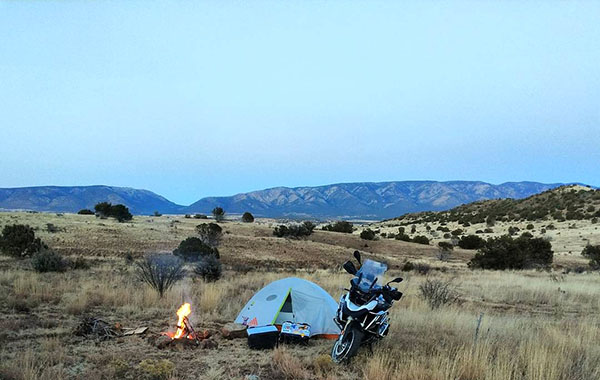
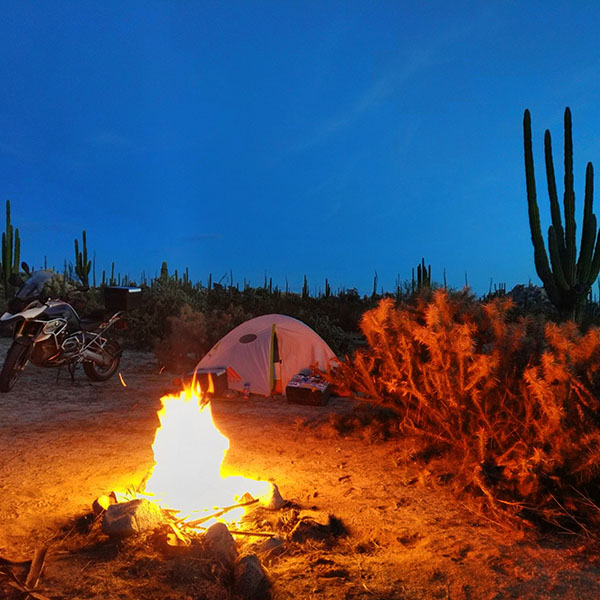
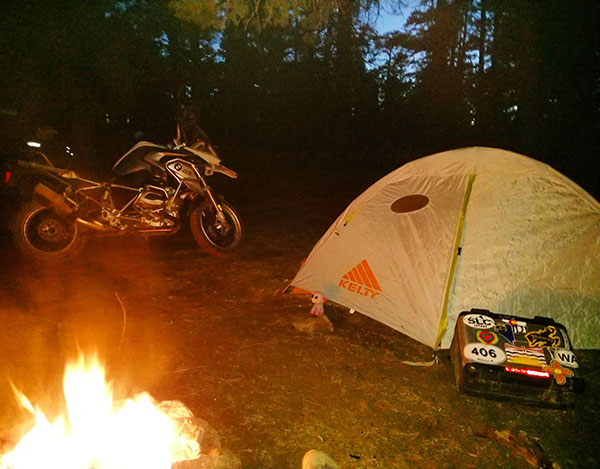
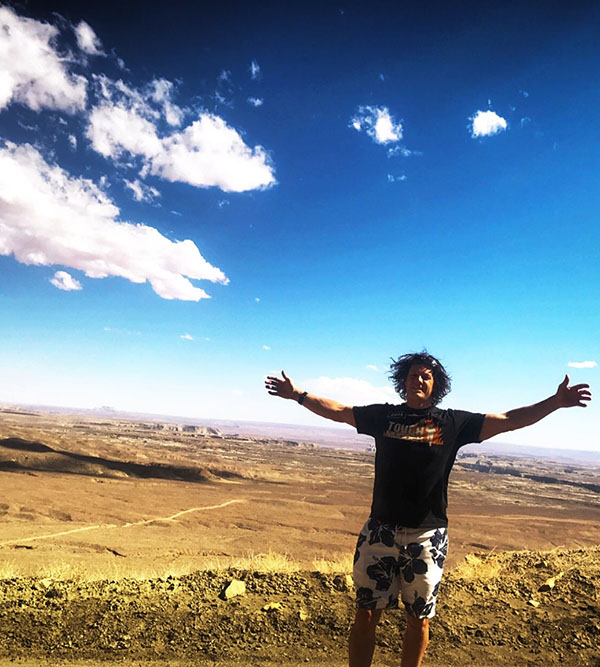
A Baja campsite.A National Forest campsite. Note Mike’s mascot peeking out from under the tent.Mike in the morning at one of his campsites. The floral-print shorts were not standard issue 82nd Airborne gear!
Over the past year I found a number of free remote campsites. I use www.freecampsites.com or I look for National Forests on maps. Once in a National Forest locate a Forest Road (FR) and ride a few miles down it. Many of these FR’s are doable even for street bikes but be aware of changing road conditions as you navigate them. You will often see the remains of a campsite marked with stones from a previous campfire. For me this is the perfect indication that someone has camped here before and is a safe location.
Moto camping is an easy and inexpensive way to escape the rat race with less effort then many would think. Moto camping experiences are some of the most rewarding that I have had throughout my adventures. Being so removed from everything as you sit relaxing in the glow of a warm campfire reflecting off your moto is a fulfilling feeling that few venture to achieve.
At the end of his email to me earlier today, Mike asked if I had any rides planned. Actually, Mike, the answer to that most excellent question is yes. I’m thinking about two motorcycle rides, either one of which might involve camping, so your blog today was very timely.
One ride I’m thinking about is another Baja adventure, and this one would involve more dirt riding than usual (at least for me). I’m thinking about a run up to Mike’s Sky Ranch in northern Baja (I’ve never made that trek, and I always wanted to). Another variation, perhaps part of the same ride, would include a leg from Chapala on the Transpenisular Highway near Catavina through Coco’s Corner to the Sea of Cortez (a 23-mile unpaved section). And another possibility is a run from San Felipe down to Bahia de Los Angeles on the Sea of Cortez, which involves about 70 miles on dirt. I’d like to do this on my CSC TT250, just to say that I did. I’m thinking maybe December for this ride.
There’s another ride on the horizon that my good buddy Dan the K is setting up, and he was kind enough to extend an invitation to me. Dan rode with me a couple of times in Baja on the CSC motorcycles, once on his RX3 and once on his TT250.
Dan the K with his TT 250 above Baja’s Rumarosa Grade.
The ride Dan is planning is a much longer adventure ride up to Inuvik in Canada’s Northwest Territories. That ride will involve a lot of camping. It’s coming up next summer, and I’ll keep you clued in on the planning right here on the ExhaustNotes blog.
I’m excited about both rides. On that Baja ride…anybody want to ride with me? Hey, let us know here at info@exhaustnotes.us!
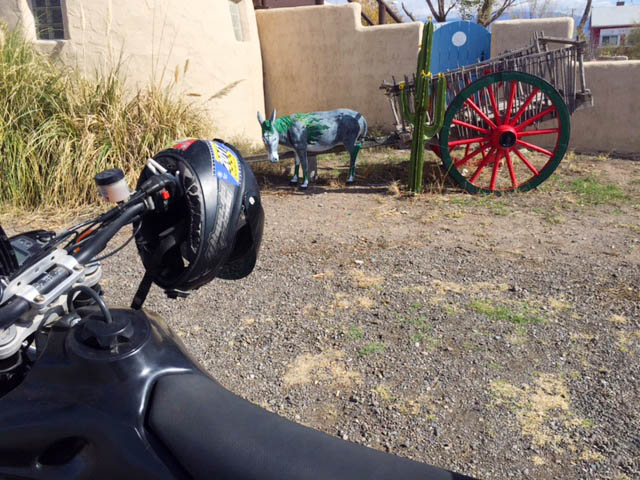
 Caliente, Nevada.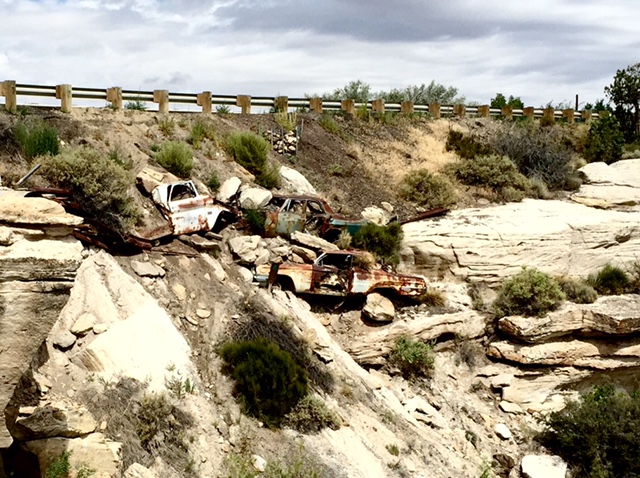
 I like going camping with a truck. You’ve got plenty of space to load your gear and when you get there you can set up a nice little spot. I guess I’ve already told you how much I hate carrying camping gear on a motorcycle and that motels near Bonneville, Utah are expensive. But it seems I can’t stop myself, I just keep complaining. I see those BMW earth-roamer types with all the gear piled up over their heads and I think, “Oh, Hell no! I’m cool as an ice cube, that’s not me.”
 Next I needed a few plastic bits to fit the existing rack and give my U-bolts something to tighten against without bending the metal straps. I knocked these out of some thick plastic I had left over from a boat job 35 years ago.
 My Safety Exhaust on the Husqvarna is high and tight so I riveted a metal heat shield on the left side of the Super MoTour bike. My buddy Mike loaned me the saddlebags, I don’t want them to catch fire in front of him. You’ll be hearing more about Mike, as this Bonneville ride is his idea. All told, I’ve probably doubled the poundage of the featherweight Husky with this jungle gym hanging off the back.
 Unrelated to the luggage situation but still needing sorting was the Husky’s headlight. The normal bulb is an incandescent 35-watt, both high and low beam. The bulb works ok in the daytime but it casts a feeble light for night use. It’s like having a Black Hole on the front of your motorcycle. The pattern reaches only a few feet into the gloom. On moonless nights it struggles to illuminate the front fender. It’s so dim bugs fly away from it. Hey, I’m here all week, invite your friends.
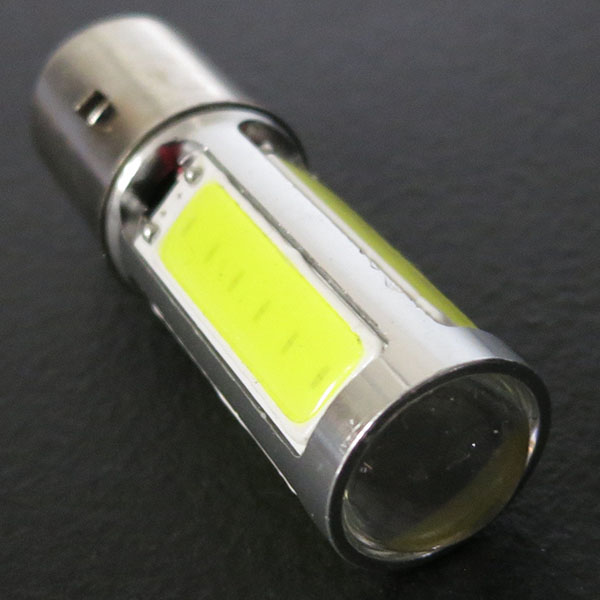 I tried a bunch of different bulbs. LED, Halogen, HID, and incandescent; most of them ran too hot for the Husqvarna’s plastic reflector. For this trip I’ve settled on a cheap LED bulb with no watt rating or any information stamped into the metal housing. It is a very crummy bulb, perhaps even weaker than the incandescent bulb but I’m hoping it stands up to vibration better. A strange side effect of the LED electronics is that the high beam indicator light stays on all the time. I’m sure the bulb won’t short out and fry my electrical system. What could go wrong?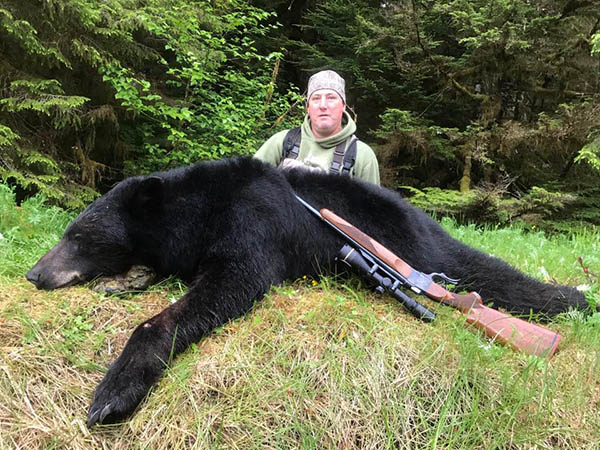
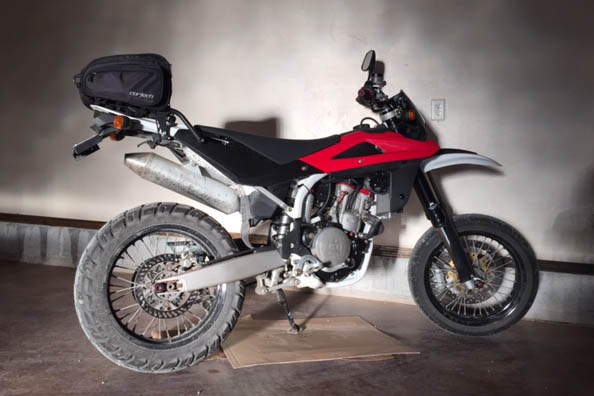 Berk and I have a busy ExhaustNotes.us August planned. You’ve already read about his Three Flags tour on the new, untested RX4 Zongshen and I’m finalizing plans for an assault on the Bonneville speed trials. No, I won’t be racing Mini Moto Madness but seeing as how I’ve never been to the salt for Speed Week and I’m not getting any younger I figured this is the year.
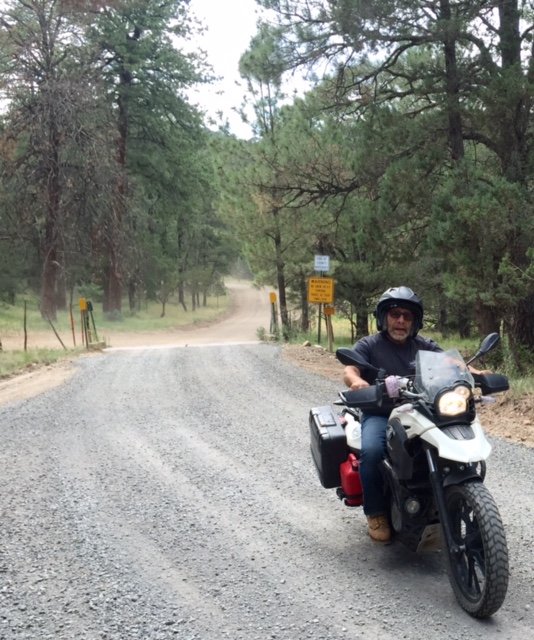 It wasn’t really my idea. It was Mike’s. Mike lives on a ranch in Carrizozo, New Mexico. I met Mike a hundred miles north at a little restaurant in Willard. I wanted shredded beef tacos but the restaurant was out of beef. I didn’t want to use up my private stash so I went back to the menu. That’s when Mike piped up and told me to try the pork tacos. I had three pork tacos with beans and rice. I recommend them highly.
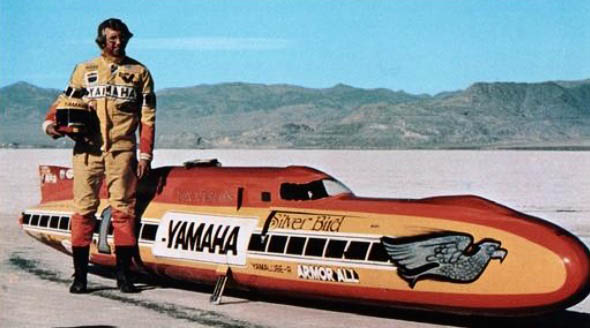 Mike and I will be at the KOA in West Wendover from August 12th to the 14th. If you’re around town stop by and visit us. Bring beer if you want us to be happy to see you. Our campsite is good for up to six people. I’ll have coffee. There will be fire. It’ll be fun. You’ll see.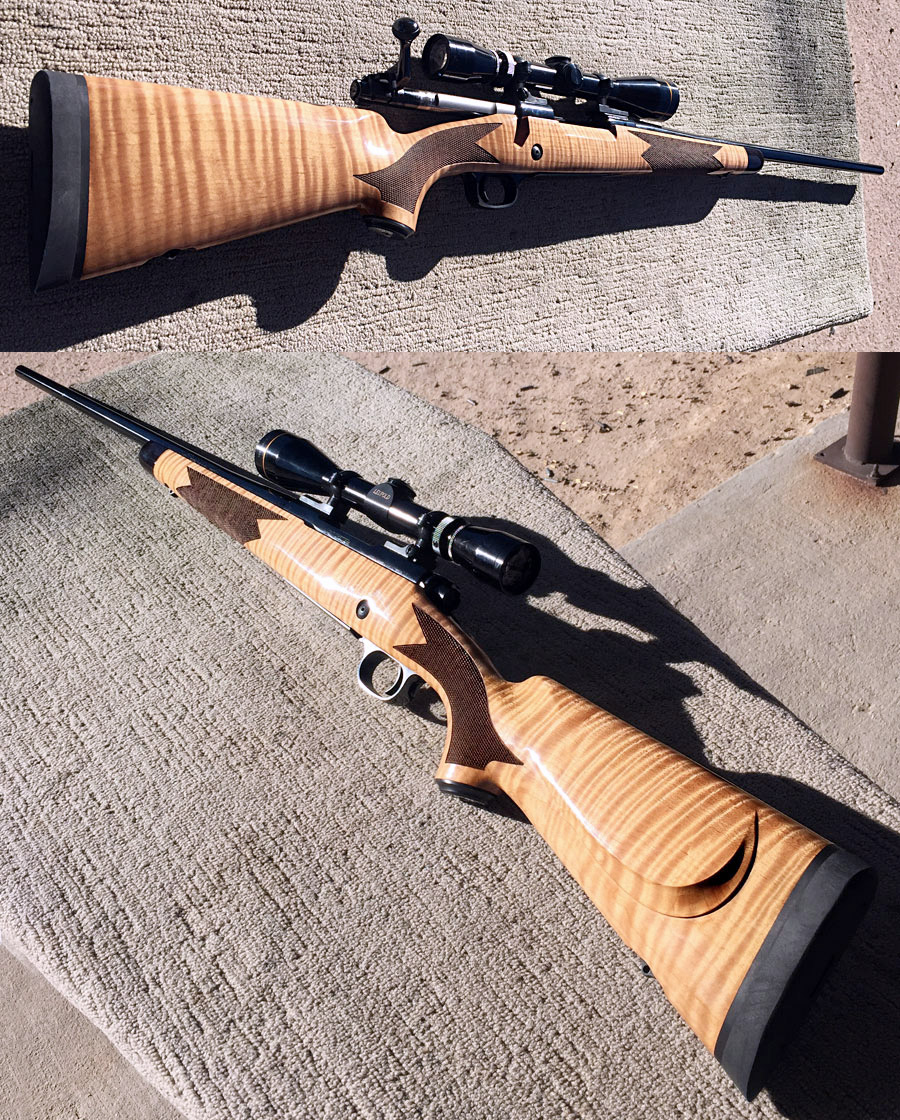

 As I developed my passion for moto camping I began following blogs and Facebook groups to seek out tips and tricks that can make my moto camping experiences more exciting and comfortable. I began to notice that some moto campers on these pages camped in their hammocks full time and didn’t even own a tent. This awoke my curiosity since I always travel with an ENO double nest nylon hammock. On most nights when I camp I usually hang the hammock when I have a few hours to kill where I can get comfortable and read a book or just gaze into the campfire after a long day of riding. Even though I travel and use a hammock frequently I never thought of sleeping in my hammock while camping prior to reading these blogs.
 I enjoy the unique experience of hammock camping and whenever conditions are right have continued to camp in my hammock. I am now in the habit of setting up both my tent and hammock at my campsites and go with how I feel, the weather, and my surroundings. Hammock camping is another option to have, and with moto camping having more options is never a bad thing.