New Jersey may not be a place you would ordinarily think of for a motorcycle ride, but I grew up back there and I’m here to tell you that you can have a good time on a motorcycle in the Garden State. One of the rides I particularly like is along the Jersey shore from Pt. Pleasant to the Atlantic Highlands. Once you’re in Pt. Pleasant, aim your front wheel north and do your best to hug the coastline. It’s Highway 36 for much of that run (it’s called a highway, but it’s really a nice non-highway ride all the way up). Your destination might be (as mine usually is) the Atlantic Highlands, Sandy Hook, and the Gateway National Recreation Area.
I have several recent photos from this area (I was there this past June), and rather than a long narrative, I thought I might simply share the captioned photos…
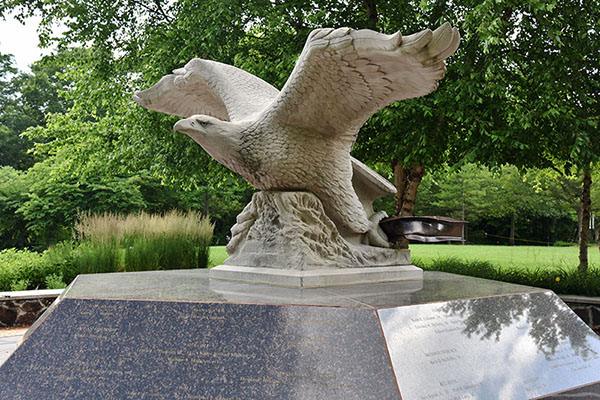
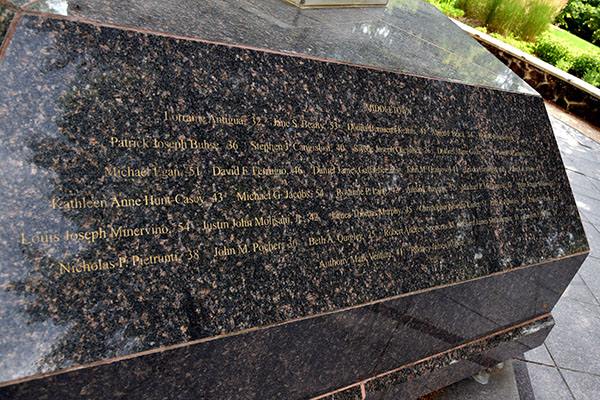
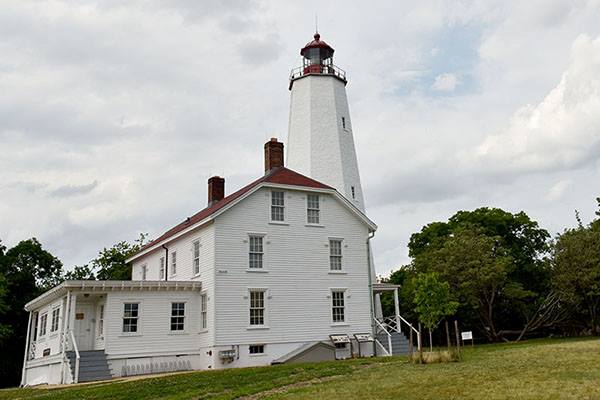
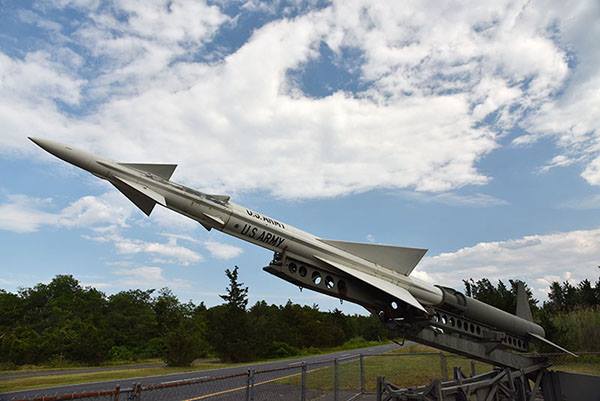
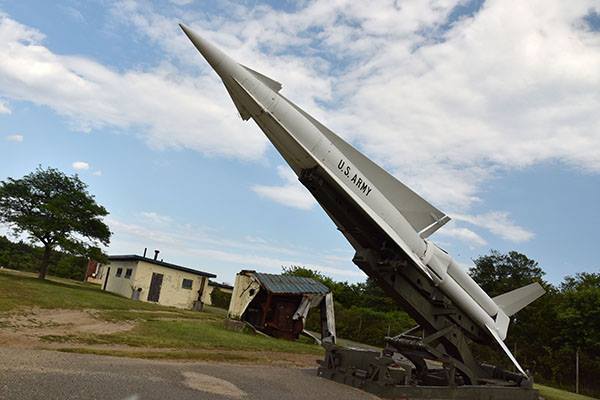
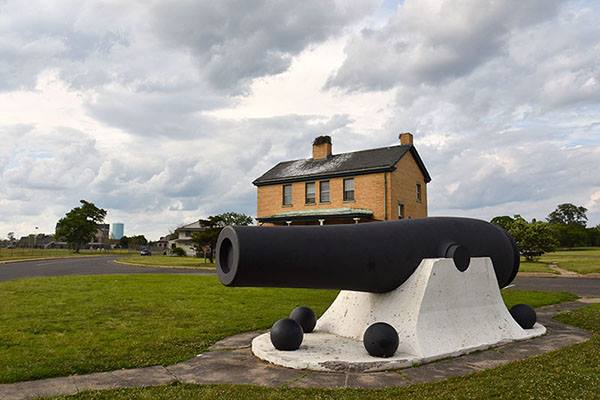
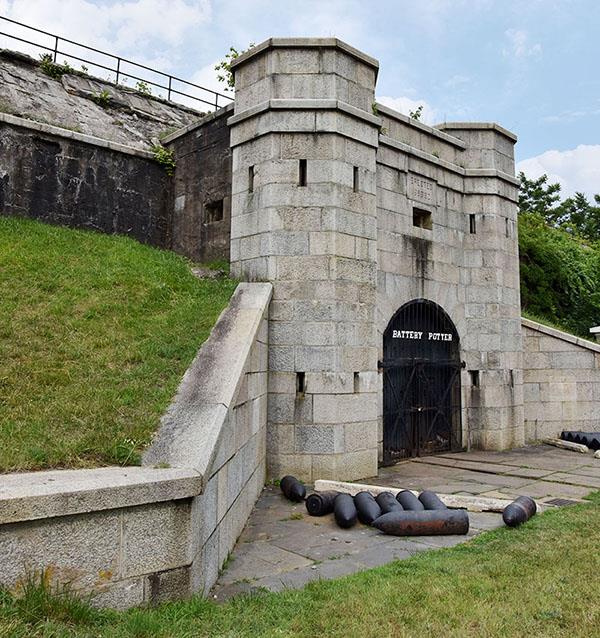
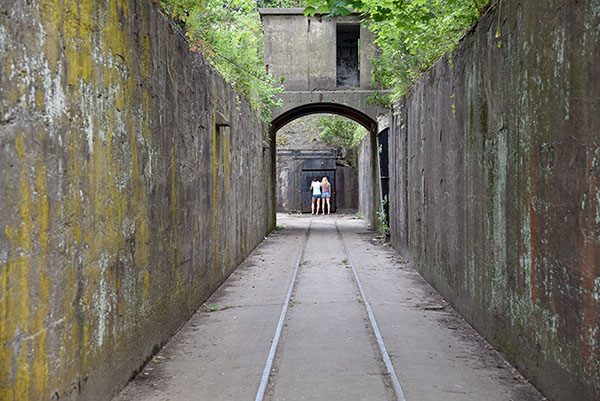
The view from Mt. Mitchill in the Atlantic Highlands, the highest point on the US east coast south of Maine. That’s the Manhattan skyline at the far horizon. The land across the bay is the actual “Sandy Hook.”The 9/11 memorial atop Mt. Mitchill. The eagle is carrying an actual piece of I-beam from the Twin Towers. Everyone who lives around here knew people who died on that day.Names of just a few who died in the Towers on the base of the 9/11 monument.Another view of Sandy Hook Bay from Mt. Mitchell.Sandy Hook Light, the oldest operating lighthouse in America. It was built in 1764, 12 years before American independence.A Nike Ajax along Hartshorne Road, the entrance to the Gateway National Recreation Area, on the way into Fort Hancock.The Nike Hercules air defense missile, directly across the street from the Nike Ajax shown above. These were a later missile, and they could be configured to carry a nuclear warhead.Before Fort Hancock provided air defense for New York City, it used coastal artillery to protect the region from seaborne invaders. Some of these guns go back to the early 1800s.Battery Potter, with steam-powered retractable hidden cannons. Sandy Hook was an early Army proving ground, and the advanced coastal artillery pieces hidden underground behind these walls were tested here. Boom boom!Two young ladies checking out a hidden mortar base on Fort Hancock. The photo ops here are amazing.An old Army building on Fort Hancock. Ah, the stories these places could tell…
And there you have it. I like visiting New Jersey, and I never miss an opportunity to ride the Jersey shore. I’m thinking it might make sense to keep a motorcycle back there.
Hmmmm…
Never miss an ExNotes blog: Subscribe here for free!
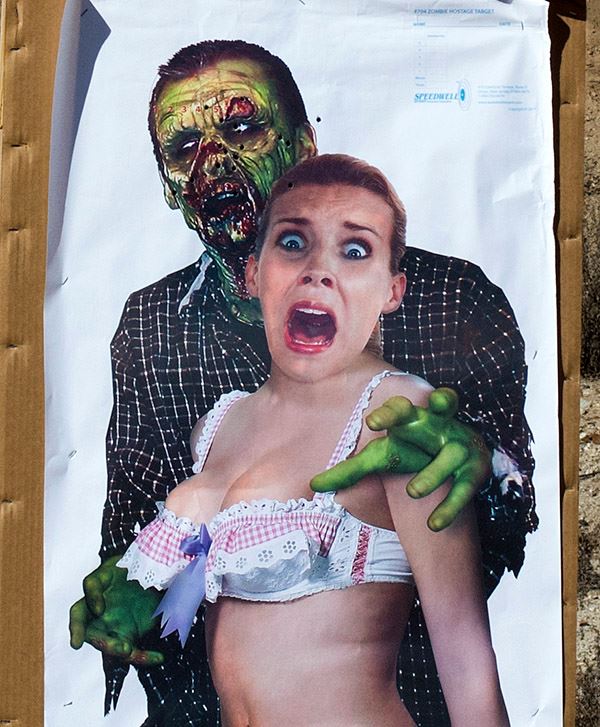
Zombies. No matter how many times you hit them, they won’t go down…goofy targets, to be sure, but lots of fun.
No motorcycle rides today…just a fun day at the range with some of my motorcycle and shooting buddies, and the milsurp rifles.
We get together every month or so to do this, and sometimes we let a few too many months slide by. That was the case this time; it had probably been 3 or 4 months since we last had one of our informal matches. We ordinarily have around 10 shooters show up. This one was on short notice but we still had 5 of us get together. It’s grand fun and we always have a great Mexican lunch following the match. There’s something about having a rifle match (informal or otherwise) with firearms that are 70 to 110 years old. It’s cool.
About this match business…it’s relaxed as hell, as you can probably tell from the targets, and it really isn’t a competition. It’s just a bunch of guys with a common interest getting together to have fun. Most of the time we don’t even bother to score the targets. The company and the conversation are the best parts; we really don’t care about declaring a winner. We have some interesting firearms, too.
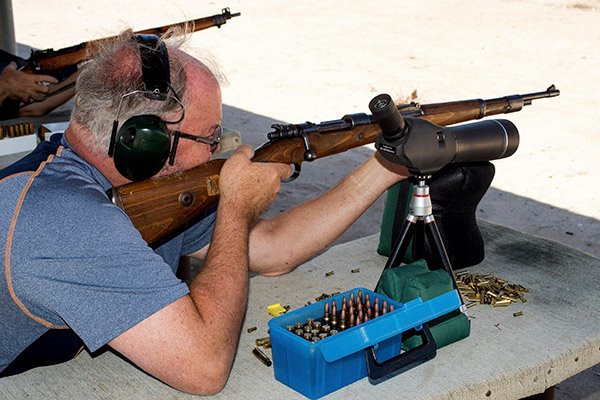
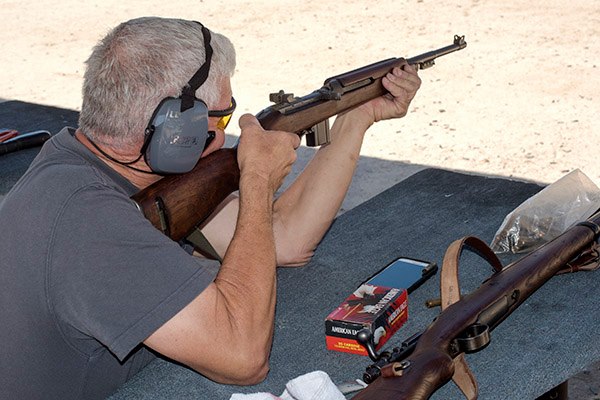
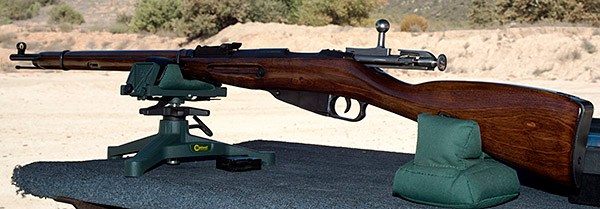
Duane and his German K98 Mauser. Duane rides an RX3 and an Indian. The rifle is a Nazi-proof-marked World War II weapon, which makes it about 70 years old.Willie and his US M1 Carbine. Willie also brought along a German Mauser (it’s to his right). Willie rides an RX3 and a TT250. The M1 is a World War II weapon.My Russian Mosin-Nagant. The Mosin-Nagant was designed in the early 1890s. This particular one was built in 1942, and most likely saw service in World War II. It’s very accurate.
Here’s a short video of Duane firing his World War II K98 Mauser…
You might wonder…why a gun article on a motorcycle blog?
Well, there are a couple of reasons. The first is that I’m always amazed at how many riders are also into shooting. The two interests seem to go hand in hand. And then there’s another aspect: The companies that manufactured both firearms and motorcycles. There are more than a few manufacturers who have done that.
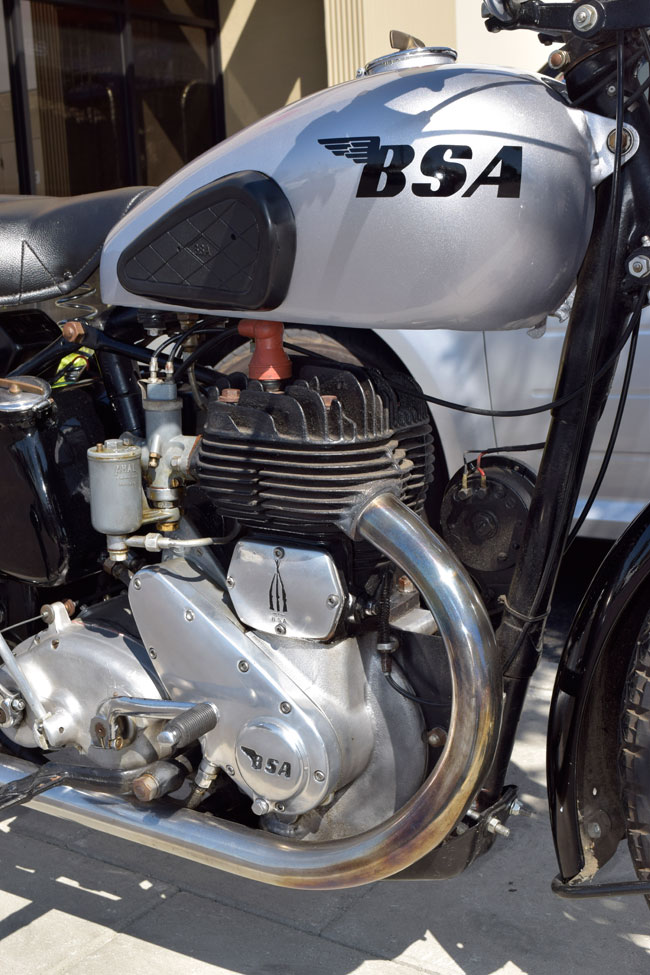
You guys and gals into vintage bikes certainly know of BSA. The BSA initials stand for Birmingham Small Arms, and if you look closely at the emblem on older BSAs, you’ll see it’s a set of three stacked rifles…
A 1939 BSA M20. Note the stacked rifle logo on the engine.
Royal Enfield is another company with a military lineage. Enfield was originally a British company (their motorcycles are manufactured in India today). Take another look at Rick’s Lee Enfield rifle up above. Yep, there’s a connection.
Hey, how about Benelli? That was an Italian motorcycle company (Benelli motorcycles are now made in China), but they also have a line of shotguns. Benelli made pistols for a while, too. I have a Benelli 9mm handgun.
Iver Johnson is yet another company with a dual lineage. They made motorcycles a century ago, and they are still manufacturing firearms.
I don’t know that Harley ever made guns, but they manufactured munitions components until very recently. I know about that because I used to work for a company in that industry.
I’m sure there are more companies than just the few I’ve listed here, and I’m going to research this a bit more. I don’t think it’s just coincidence that more than a few manufacturers decided to make both bikes and guns. Motorcycles and firearms are two products with something in common: They have a special feel to them, an appeal that reaches into our souls. They are more than just mashed-up machined metal mechanisms. There’s a commonality, a similarity, and maybe a sympatico between motorcycles and firearms, one that attracts both manufacturers and riders. We see it right here on the ExhaustNotes blog (every time we post a firearms-related piece, our hits go through the roof). I’ll post a more in-depth blog on this motorcycle/firearm connection down the road. It’s a fascinating topic. Maybe there’s a book in it!
One of the things we’ve done to publicize the ExhaustNotes site has been to issue a press release, our very first, and you can see it here. When I was with CSC, one of the guys we talked to early in the game was a young fellow named Mike Satterfield. Mike’s a cool guy who has a clothing line and a couple of cool websites (we’ll be telling you more about those in a subsequent blog).
Anyway, Mike mentioned the power of press releases, and when I was at CSC I put one together. The effect was phenomenal, and CSC sales and media coverage took off sharply. We thought we might try it for the ExNotes blog, and son of a gun, the same thing happened again. Our pageviews and site visits jumped sharply. This press release business works!
One of my favorite publications, Motorcycle Classics magazine (I write their Destinations column), recently published an article on Janus Motorcycles, one of the companies we featured just a few blogs down. Richard Backus (MC‘s Editor-In-Chief) penned this one himself. It’s an awesome motorcycle review titled Artisanal Ambitions: 2018 Janus Gryffin. You might want to take a peek; it’s a great read about a great motorcycle.
Wow, we mentioned good buddy Bill Murar’s endurance racing exploits just a few blogs down on a 150cc motorcycle circling Lake Erie, and while we were posting a blog, Bill was wrapping up a 400-mile bicycle ride. Good Lord!
Bill Murar, on the shores of Lake Erie.
Here’s Bill’s post describing the ride…
Today I finished riding the Ohio To Erie Trail, a 326+ mile bike route from Cincinnati (Ohio river) to Cleveland (Lake Erie). It took me 6 days to complete with a couple all time bests for me. Best speed 39.11 mph, most miles in a day 88+. It was a long, grueling affair that was both terrible and wonderful. Some needed recovery time is in order before contemplating anything like this again. But it’s over and done with and another goal’s been achieved. I couldn’t have done it without my loving wife and companion, Joyce. She followed me and procured all the campgrounds we needed, where we needed them. She fed me, encouraged me, stopped and bought stuff, etc., etc., etc. I’m exhausted, beat and very satisfied.
Bill, that’s most impressive, and thanks very much for allowing us to share it with our readers!
The ExhaustNotes post today has two videos, and both are from Janus Motorcycles.
Janus checks all of the boxes for us: Small displacement, custom crafted, ultra-high quality, hand-built-in-America motorcycles. What I found especially intriguing is that one of the Janus founders, Richard Worsham, rode his 250cc motorcycle across the United States. That, my friends, is extremely cool (it’s downright inspirational, in my opinion). It grabbed my attention because long trips on small-displacement motorcycles to demonstrate reliability is one of the things we did when I was at CSC Motorcycles. It’s a brilliant strategy.
We’ll be telling you more about the Janus line in the future, but one of the things I’ll mention up front is that Janus uses an overhead valve CG-clone engine, which is probably the most-frequently-used engine on the planet. My experience with these engines has been that they are bulletproof, and I say that because I’ve put tons of miles on them. They’re easy to maintain, as they should be. That’s what Honda had in mind when they designed the CG engine.
So, enough yakking. Let’s get to the videos. First, the ride across the United States…
And here’s another one about the Janus culture, and the inspiration for their motorcycles…
This was a trip I did almost 10 years ago with a few good friends, and we were all on 150cc hardtail Mustang replicas. California Scooters, to be precise. Just as they were being introduced to the market. Yep, we rode to Cabo San Lucas and back on 150s.
Anybody can ride Baja on a big bike. We wanted to do something different. It was all a big publicity thing. Dog bites man, no big deal. Man bites dog, that’s a story. Ride to Cabo and back on a motorcycle? No big deal. Do it on a 150cc repop of a bike made 70 years ago? That’s something the media would pick up, I reckoned, and I was right.
But first, let me introduce the crew…
Simon, Arlene, J, Baja John, and me. And the star of this show, the CSC 150 Mustang Replica.
I invited folks on this ride who had to meet two criteria: They had to be able to help maximize CSC’s exposure in digital and print media, and they had to say yes.
Simon Gandolfi is a British novelist who rode a 125cc bike all the way to the southernmost tip of South America and back, and then he rode another 125cc bike across India. He had a blog and he posted a lot on ADVRider.com.
My good friend Arlene Battishill is president and CEO of Go Go Gear, a maker of high end women’s riding apparel. Arlene had a custom California Scooter, she’s a tweeter, and she’s all over that great American institution fortuitously founded before the #MeToo movement, Facebook.
I wanted my longtime Mexico riding partner Baja John Welker to ride with us. John and I have been all over Mexico on our motorcycles. He keeps me from doing really stupid things on our Baja trips. To hear him tell it, it’s a full time job.
My good buddy J Brandon (president of American Sahara), tagged along in his Dodge Power Wagon, carrying spare parts and water. I thought having a chase vehicle might be a good idea. It turned out that having the chase vehicle along was just okay. Having J along, though, was great.
You might be wondering…how did I hook up with CSC? I kind of fell into the CSC gig. I was initially hired to duel the digital dufi, the cretins badmouthing CSC on Internet forums (dufi is the plural of dufus). I knew the digital dufi supply was infinite, so I reckoned this new gig might be a job for life. Dealing and Dueling with the Dufi. It almost sounded like a TV show (you know, Dancing with the Stars). What intrigued me beyond that, though, was the CSC motorcycle. I liked it. A modern Mustang. That could be a hell of a thing.
As I was being clever and outwitting unarmed digital opponents in the Great Forum Wars of the New Millenia, I pitched the Baja idea to Steve Seidner, the guy who owns CSC. Steve was all for it. “Don’t be gentle,” he said. “Take the bikes down there and break them.” Seidner wanted to unearth the modern Mustang’s weaknesses, and Baja’s broad badlands would bubble those up.
So, what was it like? Okay, here ya go…
A sneak preview of the next 2200 miles….on 150cc California Scooters!
I’ll tell you about the ride, and I’ll tell you a bit about each of the riders on this trip, and in this first installment, Simon Gandolfi gets the spotlight. Like I mentioned above, he’s a British author. A famous one. And he’s a blogger, too. I started reading Simon’s blog during his travels through South America, and I was hooked. He wrote Old Man On A Bike about that adventure. This guy would be perfect for our ride, I thought. World traveler, small bikes, and he has a following. And then Simon met the most important criteria: He said yes when I invited him. Simon blogged our Baja adventure, and his words were mesmerizing. Here’s one of his descriptions…
Joe and Arlene ride production bikes. John and I ride pre-production bikes. These are small bikes, pretty babies to treasure. The average owner will ride down to the store on a Sunday or drop by a neighbour’s – say twenty minutes max. Steve wants the bikes tested to destruction. John is massive and I’m no light-weight. Steve wants destruction, we’re his men. Day one south from Tijuana is horrific coastal-strip development on the cheap side of cheap. Pass Ensenada and I begin to understand Baja’s magic: clarity of light, range upon range of mountains, immense spaces across which merely to travel is an adventure. Even Big John becomes little more than a moving microdot.
Baja John, a microdot somewhere up there…riding south of Ensenada, headed for Cabo San Lucas…
This will be maybe six or seven blogs in total, spread out over the next month or so. It’s a good story and I like telling it. This has been the first installment.
That’s my good buddy Bill in the photo above, at speed, riding the Lake Erie Loop, a 600-mile scooter endurance rally. I first met Bill shortly after starting the CSC blog. Bill is a retired firefighter who is a serious Iron Butt rider, and he wanted a CSC scooter to ride in the Lake Erie endurance event back in those days. We were only too happy to oblige.
Yesterday, I received a nice note from Bill, and I want to share it with you…
Joe:
I’ve just registered for the Distinguished Gentleman’s Ride, a fundraising motorcycle ride to help beat prostate cancer. You’re receiving this because you happen to be in my phone directory and because you know what a fanatic I am about riding. This year’s ride is on September 30th and, ironically, my birthday is on September 29th. Now, I know you were going to send me some kind of gift (nudge nudge, hint hint), but in lieu of that, I’d prefer that you make a nominal donation in my name for this great cause. Or, better yet, join me on the ride. To do either (or both) go to www.gentlemansride.com/fundraiser/WilliamMurar227980
Thanks, Ride Aware, Bill
Bill, that’s awesome! Thanks for writing and we’re only too happy to post your request here on the ExNotes blog. How about it, folks…let’s help Bill in this most noble cause!
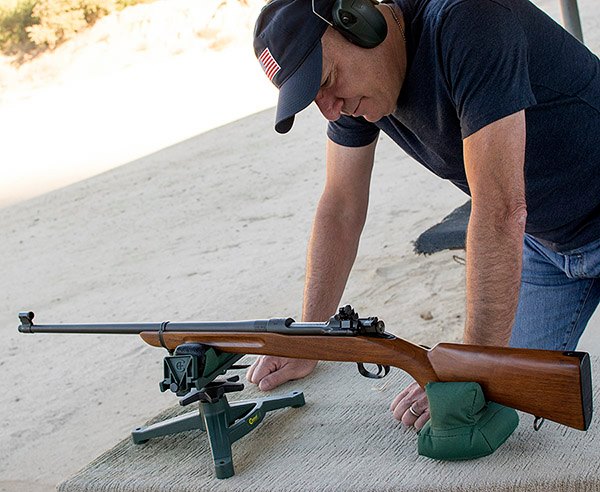
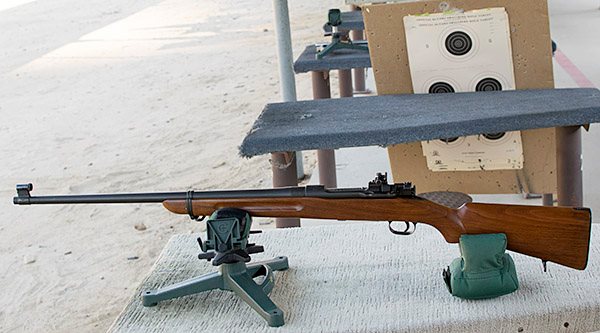
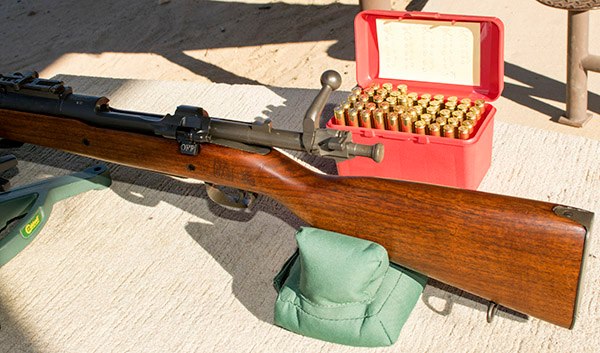
Good buddy Greg admiring my M1922 Springfield on the range this past weekend. This rifle is about as old as Greg is, but it looks like it left the factory last week. It’s super collectible.
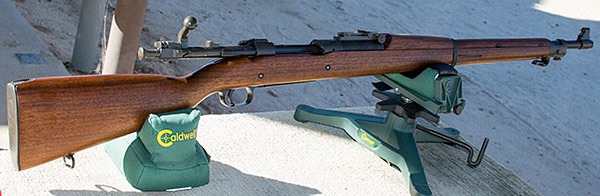
So, what’s this all about? A tale of two Springfields? Well, the topic is Springfield rifles, and specifically, the 1903 Springfield and its variants. I own two, and I think they are two of the finest firearms ever made. One is a 1903A1 with a scant stock (more on that in a bit). It’s a recent acquisition of a century-old rifle, and mine is essentially in as-new condition. It was gunsmithed from selected components so it’s not an original rifle, but I don’t care. I bought it to shoot it, and that’s what I’m doing. My other Springfield is an M1922, a special number chambered in .22 Long Rifle. It’s a magnificent rifle, it’s one I inherited from my father, and it is an amazing firearm. It’s in pristine condition, and boy oh boy, can it shoot!
The challenge here is to keep this blog short. There’s just so much to tell when the topic is the 1903 Springfield rifle and its variants. I’ll do my best to keep it manageable.
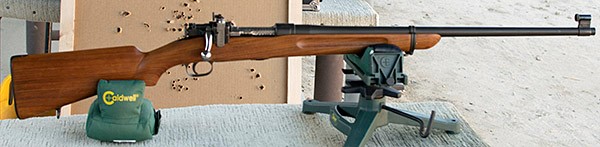
The M1903A1 Springfield, chambered in the mighty .30 06 cartridge.The M1922 Springfield, which shoots the much smaller .22 Long Rifle cartridge.
The Reader’s Digest version of the story goes like this…although we won the Spanish American War (and its Battle of San Juan Hill probably put Teddy Roosevelt in the White House), we very nearly got our butts kicked by the Spaniards. We were armed with antiquated, big-bore, rainbow-trajectory, single-shot rifles. The Spaniards had modern 7mm Mauser bolt action rifles, which were flatter shooting, faster (both in terms of reloading time and bullet velocity), and far more accurate. It was a dicey victory for us, and shortly after, the US Army incorporated the 1898 Krag rifle. We had to keep up with the Spanish Joneses.
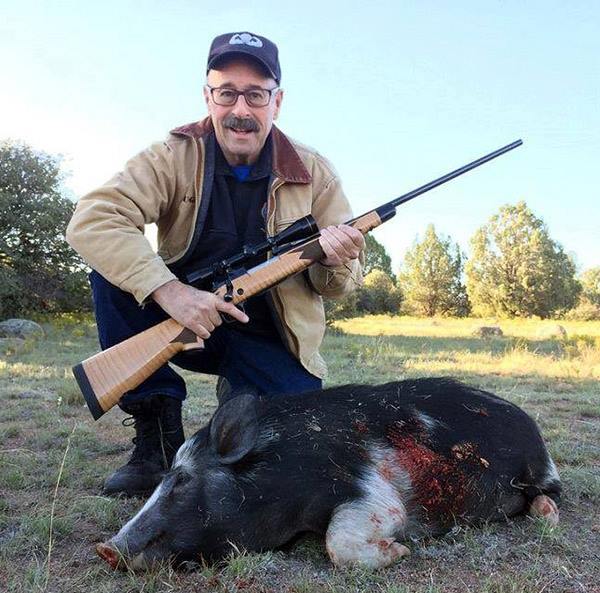
While the Krag was a bolt-action rifle, it was not without problems, and we quickly developed a new rifle based on a modernized Mauser action initially chambered in a round called the .30 03. It fired a .308-inch diameter bullet (which is where the .30 part of the .30 03 name came from) and it was adopted in 1903 (which is where the 03 came from). We then improved the cartridge a bit in 1906 and it became the .30 06, or simply, the ’06. The ’06 is one of the world’s premier hunting cartridges, and many folks think is the best all-around cartridge on the planet. I’m one of them, but I digress. One more photo, and then back to the story.
A modern Winchester Model 70, chambered in the 102-year-old .30 06 cartridge. That wild boar, late of Arizona, fed us for a year!
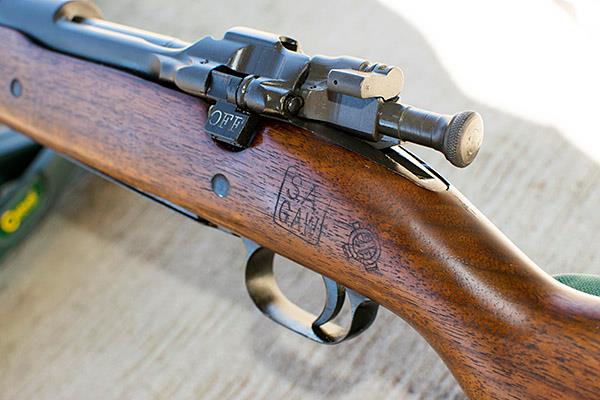
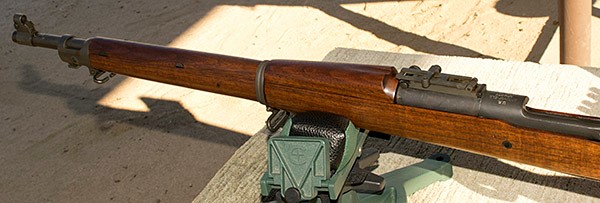
Like I said, the original Springfield rifle was cambered for the .30 03 and the rifle was designed as the Model 1903. The .30 03 only lasted a short time and all of the 1903 rifles chambered for it were recut for the improved .30 06, but the rifle’s name remained the Model 1903. These early ones were cool, with straight grip stocks and elegant (but complex) rear sights. Then the rifle got a pistol grip stock, which I think looked cooler, and they became the 1903A1 rifles. Then they were made with stocks that were supposed to be straight grip stocks, but the Army wanted the pistol grip and the arsenal’s walnut blanks did not have enough meat to allow for a full pistol grip. The solution was to get as close as possible to a pistol grip from a straight grip walnut blank, which resulted in a shallow pistol grip; these became the “scant” stocks (presumably so named because the wood was too scant to allow a full pistol grip).
The 1903A1 “scant” stock. Note the relaxed pistol grip aft of the trigger, and on this particular rifle, the crisp Springfield Armory cartouche stamped into the walnut.Check out the 1903’s early, complex, adjustable rear sight. There’s was a lot of machine time and money there. The Army needed something less expensive.Load development for the 1903A1. These were cast bullets loaded with IMR 3031 powder. This particular rifle prefers jacked bullets with IMR4320 powder.
Later, the Army realized that the 1903’s fancy rear sight and other features were overly-expensive for a standard-issue battle rifle, so the ’03 was “value engineered” to make it less costly to manufacture. These became the Model 1903A3 rifles, often referred to simply as the ‘03A3.
Somewhere while all this was going on, the Army introduced versions of this rifle chambered in .22 Long Rifle. They were intended to be trainers, but they proved to be exceptionally accurate and the Army’s shooting teams (and others) competed with them.
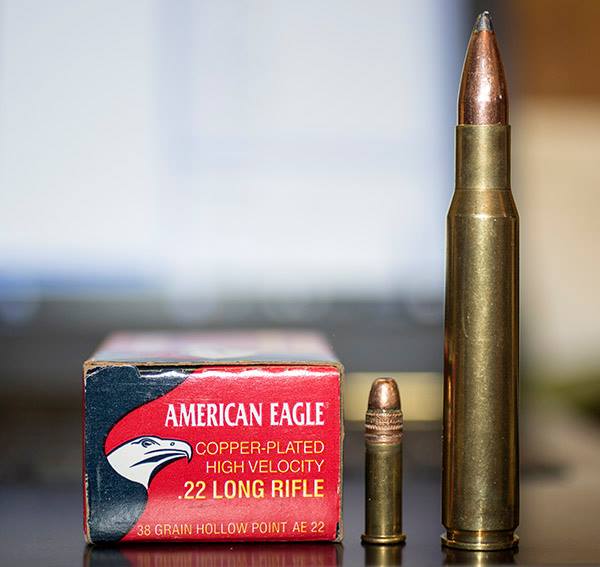
The .22 Long Rifle cartridge (fired in the M1922 rifle), and the .30 06 Springfield cartridge (fired in the Model 1903).
The M1922s are phenomenal rifles, they are rare, and they are expensive in those rare instances they come on the market. My Dad bought one released through the Civilian Marksmanship Program 60 years ago for $25. Today, when one changes hands, you can bet the price is somewhere around $3,000. They’re that rare, and they’re that good.
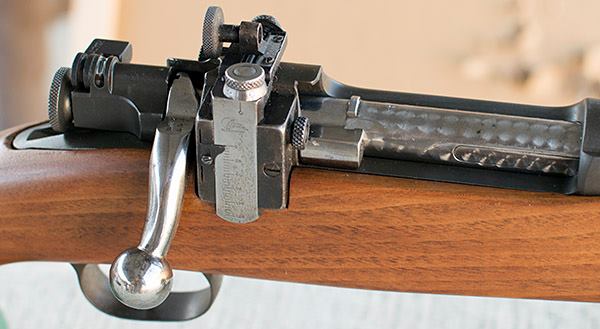
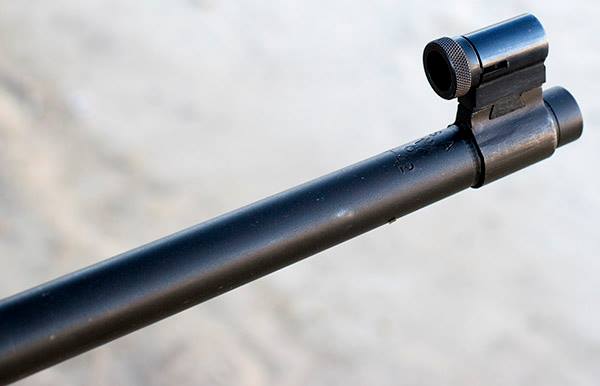
The starboard side of the M1922. It is an elegant rifle.Lyman competition aperture sights on the M1922.The M1922’s Lyman aperture front sight. This rifle has “peep-to-peep” sights; both the rear and the front sights have holes to allow “peeping” at the target. They work very, very well.
You might be wondering: How do these rifles shoot?
Very well, thank you.
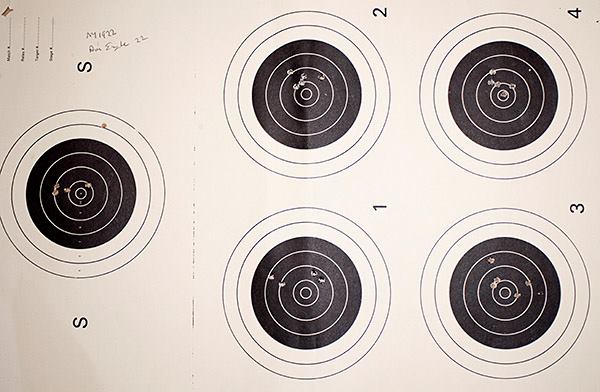
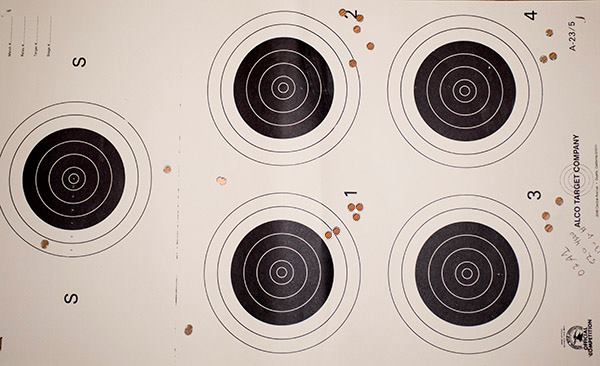
The M1922’s results at 50 yards. On the first bullseye on the left, the lone shot out of the black (at the 12:30 position) was the first shot of the day, fired from a cold and wet barrel.Targets shot with the Model 1903A1. The one on the left was terrible; I shot it with cast bullets at velocities too high for the bullet (the lead smeared in the barrel and the bullets wouldn’t group). The remaining four were shot with one of my favorite .30 06 loads (a 130 grain Hornady jacketed soft point bullet and 52.0 grains of IMR 4320 powder).
So, what happened to the 1903 as a military rifle? It served in World War I (although we couldn’t make them fast enough, so another rifle, the Model 1917, accounted for more than half the US battle rifles during the Great War). By the 1930s, we were already hard at work developing the Garand (that rifle fired the same .30 06 cartridge, and it was a semi-auto). The Garand became the US Army’s standard rifle in World War II. Interestingly, the US Marines stuck with the 1903 going into World War II, but they, too, soon switched to the Garand. The 1903 evolved into a specialty item. It was still recognized as phenomenally accurate and it became our sniper rifle in World War II (with a telescopic sight, it became the 1903A4).
Like I said, all of the above is the Reader’s Digest version of the story behind the Model 1903 rifle. The definitive reference on the 1903-series Springfield rifles is Joe Poyer’s The Model 1903 Springfield Rifle and Its Variations, and if you have a deeper interest in these historic and fine rifles, it is a book you should own. You can find it on Amazon.
Help us bring more stories to you: Please click on the popup ads!
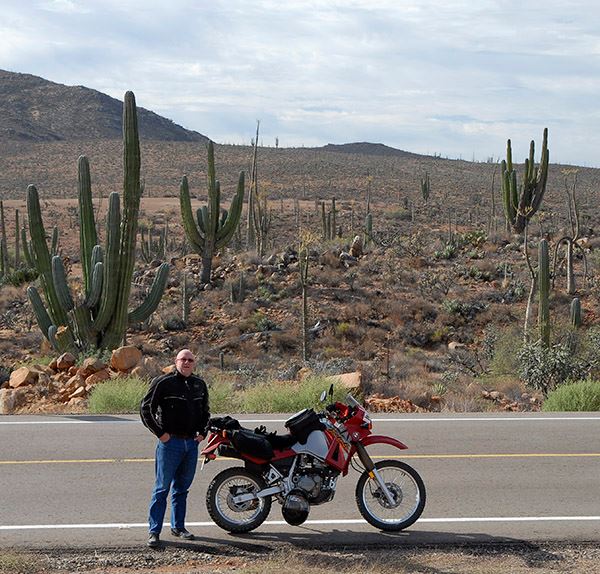
Baja John, somewhere in Baja’s Valle de los Cirios, making my old KLR look good.
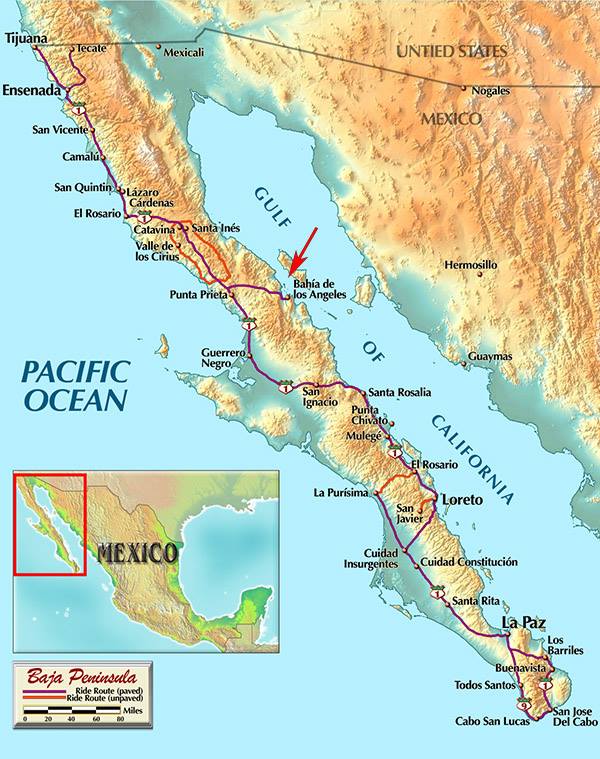
I just got a call from good buddy Baja John, a guy with whom I’ve been exploring Baja for the last 30 years. Part of the call was about what we’d be riding and where we’ll be going on our next Baja foray in December (more on that in a future blog), and part of was about keeping a bike in Mexico. John has a home in Mexico right on the water in Bahia de Los Angeles. The Bay of Los Angeles is about 400 miles south of the border on the Sea of Cortez. It’s a cool place.
Bahia de Los Angeles, denoted by the red arrow.
My good buddy John wants to buy a bike and keep it at his Baja beach house. I think that’s a cool idea. The question is: Which bike? John saw a CSC RX3 for sale near his home here in the US. He already owns an RX3 and he loves it, but the idea of picking up a second one and keeping it in Mexico is appealing.
A second RX3 isn’t the only bike John is considering. He also has an older KLR 650, and he might just move it to Mexico. And, old John is intrigued by the CSC TT250 (he’s heard me talk about its light weight, super handling, and simple maintainability enough and he’s interested). And then there’s the Royal Enfield Himalayan (that bike is getting great reviews, too).
I told John I had my ideas on the perfect beach front bike, and then I thought hey, I’m not the brightest bulb in the room (the room being the ExhaustNotes blog). I asked John if it was okay to post the question here and solicit your inputs, and he thought that would be a grand idea. So, the question is: Which bike would you keep in a Bahia de Los Angeles beach house, and why?
Let’s hear your thoughts in the Comments area of this blog, folks!